
Nordic Dietary Supplements Market Size and Share
Market Overview
| Study Period | 2021 - 2031 |
|---|---|
| Forecast Data Period | 2026 - 2031 |
| Base Year Market Size (2025) | USD 4.82 Billion |
| Market Size (2026) | USD 5.04 Billion |
| Market Size (2031) | USD 6.58 Billion |
| Growth Rate (2026 - 2031) | 5.46 % |
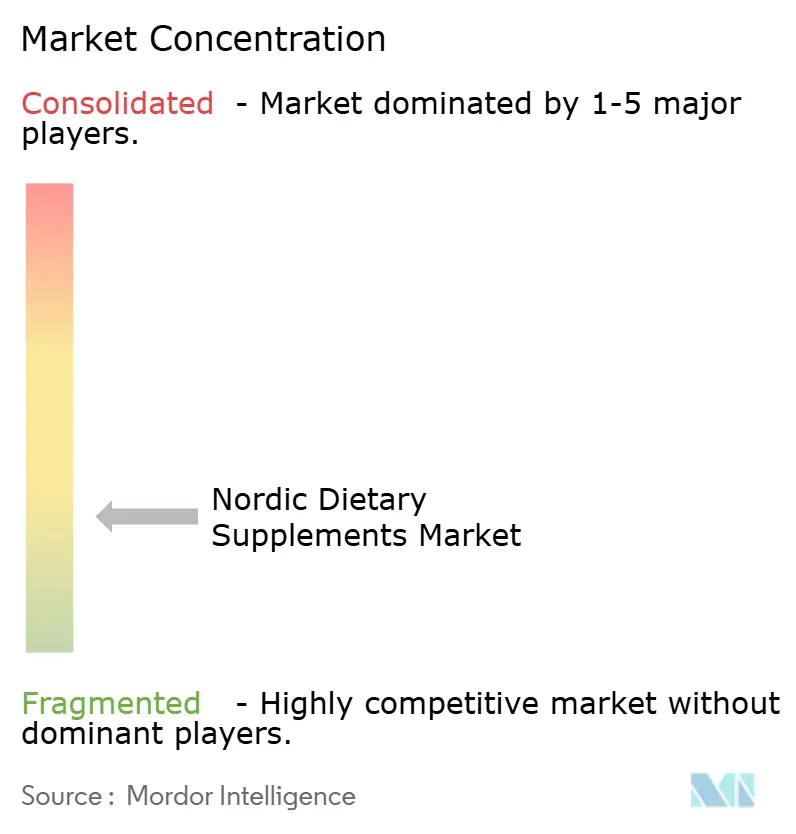
| Market Concentration | Low |
Major Players
*Disclaimer: Major Players sorted in no particular order Image © Mordor Intelligence. Reuse requires attribution under CC BY 4.0. |
|
Nordic Dietary Supplements Market Analysis by Mordor Intelligence
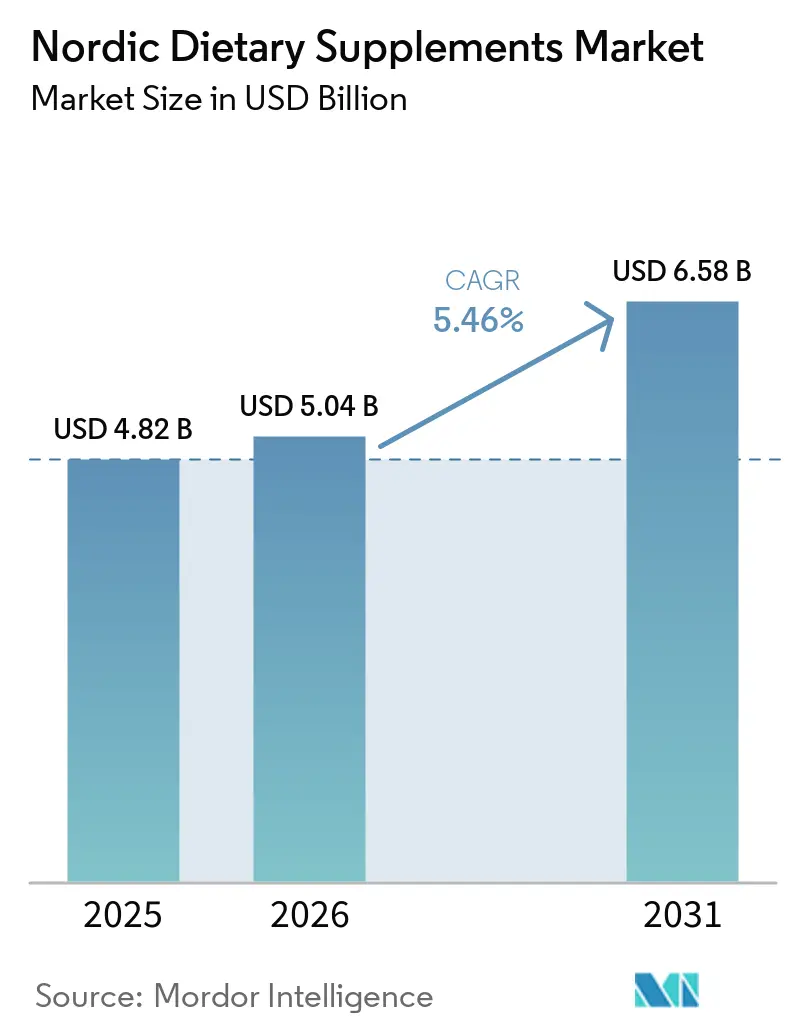
The Nordic dietary supplements market is expected to grow from USD 4.82 billion in 2025 to USD 5.04 billion in 2026, and is forecast to reach USD 6.58 billion by 2031 at a 5.46% CAGR over 2026-2031. The market is shifting from occasional purchases to planned daily nutrition routines. Preventive health, healthy aging, and targeted wellness needs continue to support repeat purchases across the region. National nutrition guidance also supports demand for vitamin D and other nutrients where dietary intake or seasonal sunlight exposure may be limited. Established brands gain an advantage in the Nordic dietary supplements market when they demonstrate clinical support, maintain reliable supply, and provide compliant product information. The market also creates opportunities for specialists that address gut health, women’s health, sports nutrition, and healthy aging with clear evidence and accessible formats.
Key Report Takeaways
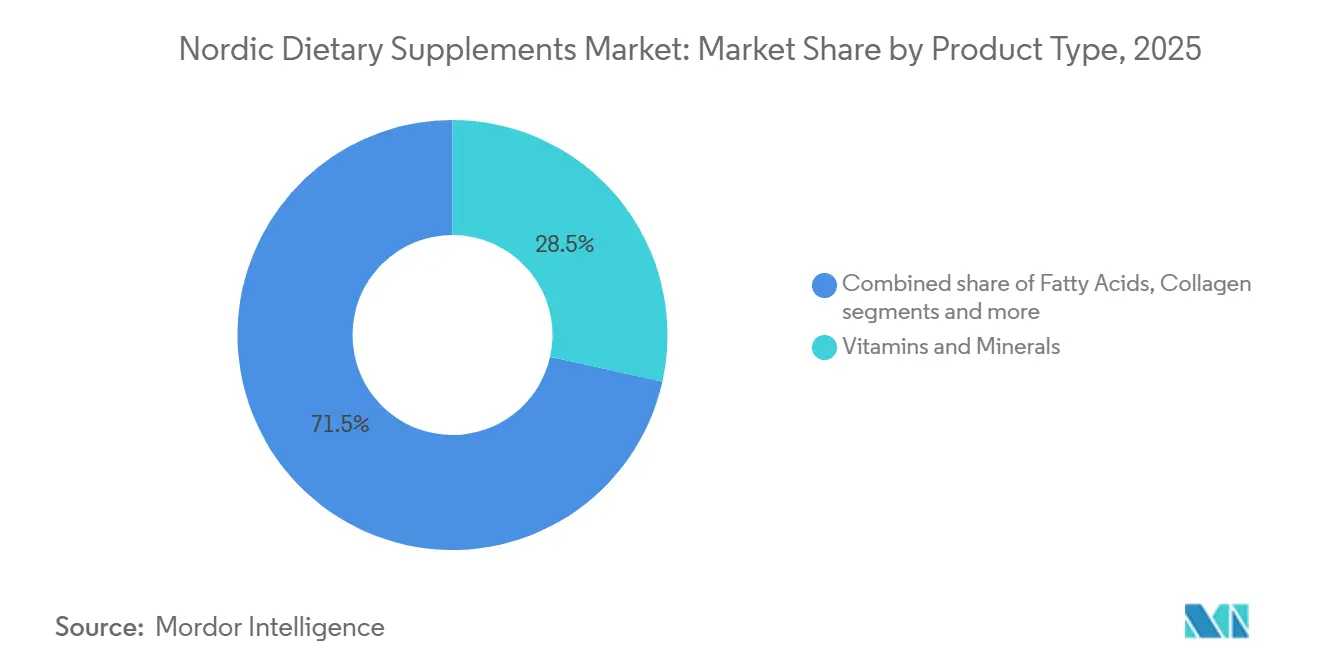
- By product type, vitamins and minerals led the Nordic dietary supplements market with a share of 28.48% in 2025, while collagen is anticipated to register the fastest CAGR of 7.01% during 2026-2031.
- By form, tablets retained 36.80% share in 2025, whereas gummies is forecast to expand at a 6.89% CAGR through 2031.
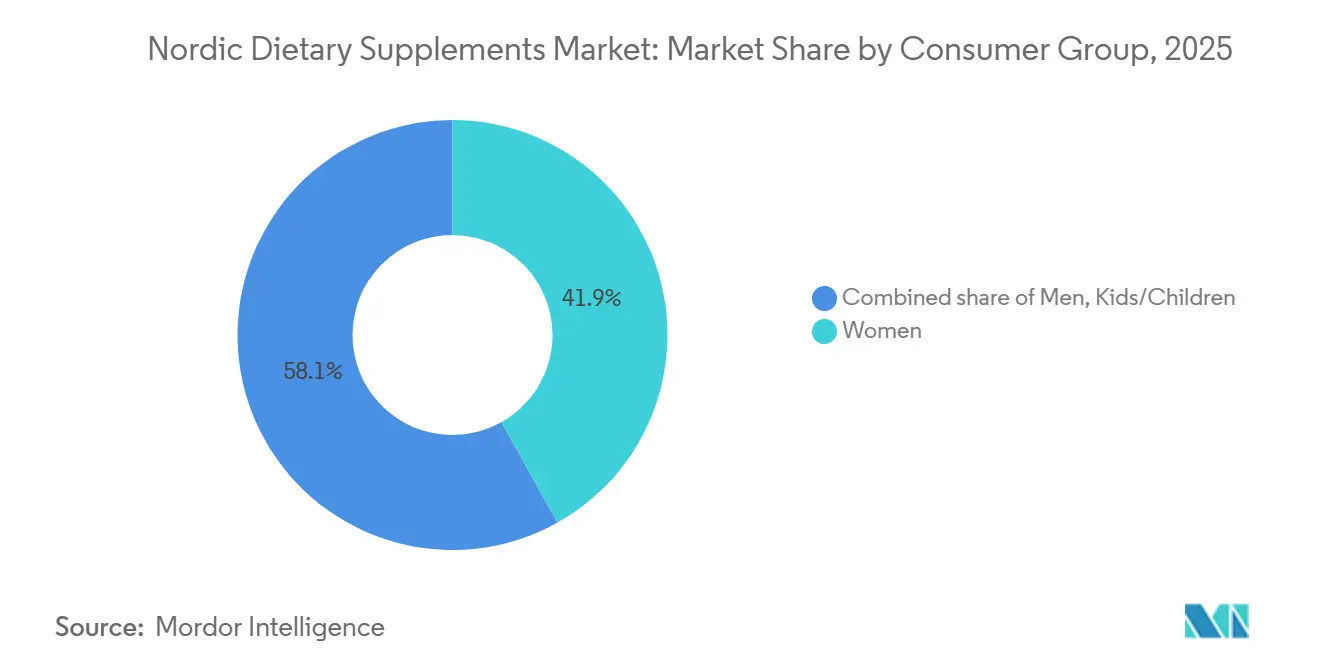
- By consumer group, women held 41.87% of 2025 revenue, while kids/children is expected to grow fastest at 6.22% through 2031.
- By health application, general health and wellness held 38.73% of 2025 revenue, while skin, hair, and nail care is expected to grow fastest at 6.76% through 2031.
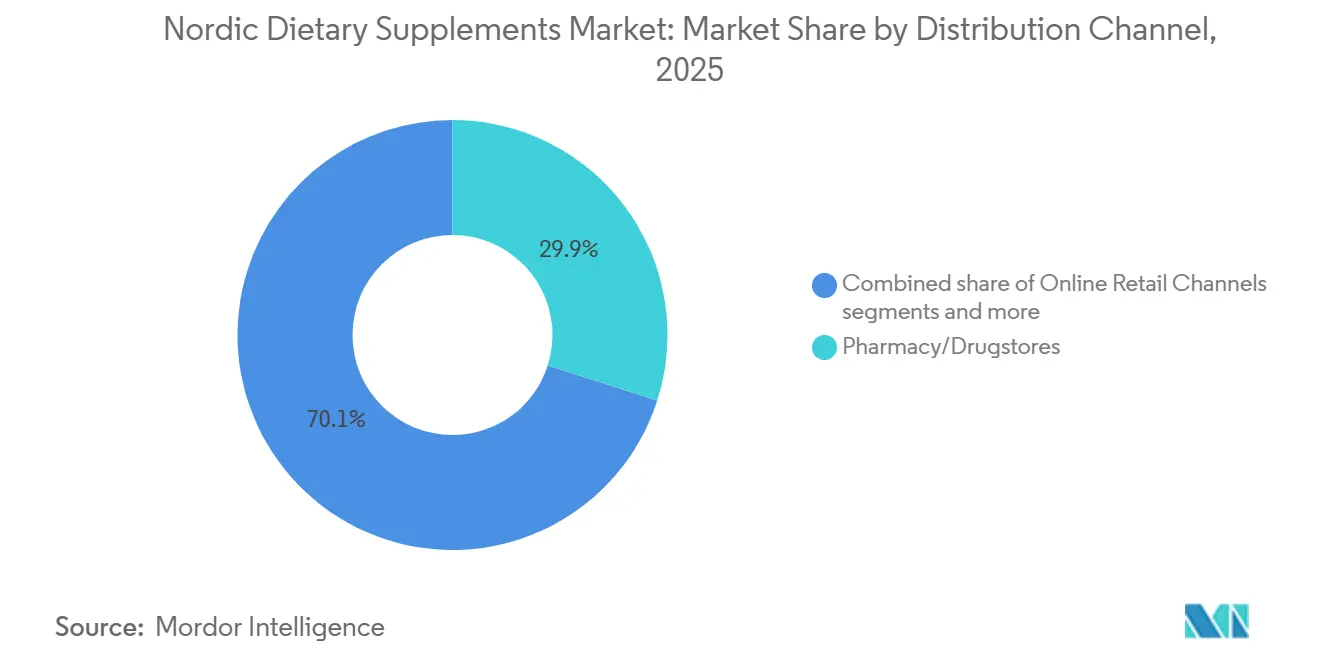
- By distribution channel, pharmacy/drugstores led the Nordic dietary supplements market with a share of 29.93% in 2025, while online retail channels is anticipated to register the fastest CAGR of 7.24% during 2026-2031.
- By geography, Sweden commanded 35.60% share of the Nordic dietary supplements market size in 2025, whereas Finland is climbing at a 6.17% CAGR between 2026-2031.
Note: Market size and forecast figures in this report are generated using Mordor Intelligence’s proprietary estimation framework, updated with the latest available data and insights as of January 2026.
Nordic Dietary Supplements Market Trends and Insights
Drivers Impact Analysis*
| Driver | % Impact on CAGR Forecast | Geographic Relevance | Impact Timeline |
|---|---|---|---|
| Aging population driving bone, joint, and healthy aging supplements | +1.2% | Concentration in Sweden, Denmark and Norway, Finland, Iceland | Long term (≥ 4 years) |
| Sports nutrition and active lifestyle participation | +0.9% | Sweden and Denmark, with spillover to Norway and Finland | Medium term (2-4 years) |
| Rising consumer focus on preventive healthcare and daily wellness | +0.8% | All five Nordic countries | Medium term (2-4 years) |
| Growing demand for clinically supported functional ingredients | +0.7% | Sweden, Denmark, and Finland | Medium term (2-4 years) |
| Government nutrition recommendations supporting supplement consumption | +0.5% | All five markets, especially Finland and Norway | Long term (≥ 4 years) |
| Increasing popularity of gut health and microbiome nutrition | +0.8% | Sweden, Denmark, Norway, and Iceland | Short term (≤ 2 years) |
| Source: Mordor Intelligence | |||
Aging Population Driving Bone, Joint, and Healthy Aging Supplements
The Nordic dietary supplements market benefits from a large and growing base of older consumers with daily nutritional needs. Products such as vitamin D, calcium, magnesium, collagen, and omega-3 address requirements related to bone health, mobility, and general health. In 2024, the Nordic Nutrition Recommendations advised a vitamin D intake of 20 µg per day for people over 75[1]Source: Nordic Council of Ministers, "NORDIC NUTRITION RECOMMENDATIONS 2023," pub.norden.org. Limited sun exposure during Nordic winters makes this recommendation particularly relevant for regular supplementation. Consumers who start with vitamin D for bone health may also consider collagen products for joint support and skin concerns. Orkla Health supports this demand through brands such as Möller’s and Sana-Sol, while its Q1 2026 presentation retained medium-term revenue growth guidance of 7-9%.
Sports Nutrition and Active Lifestyle Participation
Sports nutrition remains a key segment of the Nordic dietary supplements market, with active consumers regularly using protein, creatine, and recovery products. The category has expanded beyond competitive athletes to include runners, cyclists, gym users, and older adults seeking to maintain muscle function. This expansion supports demand for brands that offer broad retail availability and consistent product quality. The growing overlap between sports nutrition and healthy aging continues to broaden the addressable audience for performance-related formulations. Increasing interest in strength training, muscle preservation, and active lifestyles further encourages consumers to incorporate performance-focused supplements into their daily wellness routines.
Rising Consumer Focus on Preventive Healthcare and Daily Wellness
The Nordic dietary supplements market benefits from consumers using supplements proactively, before health concerns develop into symptoms. Vitamins, minerals, digestive products, and immunity formulas are increasingly becoming part of daily wellness routines. This behavior supports repeat purchases and targeted products rather than occasional purchases of broad multivitamins. Nestle Health Science stated that food supplements can help address micronutrient inadequacy when used appropriately. Consumers also seek support for energy, digestive comfort, immunity, and women’s health. Therefore, the Nordic dietary supplements market rewards brands that communicate clear benefits without making unsupported health claims.
Growing Demand for Clinically Supported Functional Ingredients
Clinical support is becoming increasingly important as consumers compare products in the Nordic dietary supplements market. Products backed by defined strains, measured ingredients, and published findings are easier to explain through pharmacies and digital retail channels. BioGaia’s reported growth in Europe highlights the commercial relevance of probiotic products with a documented research base. This requirement also applies to products targeting healthy aging, women’s health, and digestive well-being. While evidence does not eliminate the need for compliant product claims, it can strengthen consumer confidence. As a result, research capability has become an important competitive asset for companies operating in the Nordic dietary supplements market.
Restraints Impact Analysis*
| Restraint | (~) % Impact on CAGR Forecast | Geographic Relevance | Impact Timeline |
|---|---|---|---|
| Stringent regulatory approval and compliance requirements | -0.9% | Denmark, Norway, and all Nordic markets under the European Union framework | Medium term (2-4 years) |
| Consumer skepticism toward unsubstantiated health claims | -0.7% | All five markets, especially Swedish and Danish pharmacy shoppers | Medium term (2-4 years) |
| Premium product pricing limiting mass-market penetration | -0.6% | Finland and Iceland | Medium term (2-4 years) |
| Increasing competition from functional foods and fortified beverages | -0.5% | Sweden and Denmark | Short term (≤ 2 years) |
| Source: Mordor Intelligence | |||
Stringent Regulatory Approval and Compliance Requirements
Regulatory requirements can delay product launches in the Nordic dietary supplements market, particularly for smaller businesses. Denmark’s food authority Danish Veterinary and Food Administration, inspected 131 supplement businesses in 2024 and identified unauthorized health claims, representing 61% were sanctioned for using health or disease claims that were in breach of the rules [2]Source: Danish Veterinary and Food Administration, "Dietary supplements are sold with illegal claims," foedevarestyrelsen.dk. Norway revised its food supplement rules in September 2025 through amendments incorporating European Union Regulation 2025/352. Companies must ensure substantiated messaging, accurate labeling, and processes that comply with country-specific requirements. Larger firms can distribute these costs across broader portfolios and dedicated compliance teams. As a result, the Nordic dietary supplements market may become more difficult to enter for brands that rely on loosely defined wellness claims.
Consumer Skepticism Toward Unsubstantiated Health Claims
Consumers across the Nordic region are paying closer attention to scientific evidence when comparing dietary supplements, particularly in pharmacy-led purchasing environments, where healthcare professionals often influence buying decisions. This trend has increased the importance of clinically validated formulations and transparent product communication. According to the European Food Safety Authority (EFSA), it has evaluated more than 2,300 health claim applications and rejected over 70% due to insufficient scientific evidence. As a result, only scientifically substantiated claims are authorized for use across EU markets [3]Source: Health claims and nutrition claims, "Safe2Eat," efsa.europa.eu. This rigorous regulatory framework has further strengthened consumer expectations for evidence-based products and credible health benefit claims.
*Our forecasts treat driver/restraint impacts as directional, not additive. The impact forecasts reflect baseline growth, mix effects, and variable interactions.
Segment Analysis
By Product Type: Vitamins and Minerals Anchor Revenue, Collagen Drives Growth
Vitamins and minerals accounted for 28.48% of the Nordic dietary supplements market share in 2025. This position reflects long-standing pharmacy distribution and strong household familiarity. Vitamin D remains especially relevant, as Nordic dietary guidance identifies limited seasonal sunlight as a risk factor. Fatty acids, led by fish oil and cod liver oil, are expected to remain another major product group. Orkla noted elevated cod liver oil input costs in Q1 2026, highlighting the exposure of volume-oriented omega-3 brands to ingredient cost fluctuations. Herbal products and probiotics hold smaller but established positions in the Nordic dietary supplements market.
Collagen is forecasted to grow at a CAGR of 7.01% from 2026 to 2031. Demand is driven by consumers seeking skin, hair, and nail support, as well as older consumers looking for bone and joint support. This gives collagen a broader consumer base than many narrowly positioned beauty products. The same product can fit different health routines without requiring a change in format. Brands can therefore target women focused on skin elasticity and older consumers focused on mobility. The Nordic dietary supplements market size for collagen benefits from this overlap across consumer needs.



By Form: Tablets Maintain Volume Lead While Gummies Redefine Adult Dosage Habit
Tablets accounted for 36.80% of the Nordic dietary supplements market share in 2025, supported by cost efficiency, product stability, and strong placement on pharmacy shelves. Manufacturers commonly use tablets for vitamins, minerals, CoQ10, and selenium products. Consumers also associate this format with a pharmaceutical-style presentation. Capsules and softgels remain important formats for omega-3 and other fat-soluble ingredients, while powders serve sports nutrition and protein-related purchases.
Gummies are forecasted to register a CAGR of 6.89% from 2026 to 2031. Adults are increasingly choosing gummies for collagen, biotin, immunity, and other daily-use products. Parents also value gummies because they can improve product acceptance among children. Advances in formulation technologies have reduced some stability challenges for sensitive ingredients, supporting premium gummy products in vitamin and probiotic-related applications. In the Nordic dietary supplements market, format choice is becoming an increasingly important factor in product selection.
By Consumer Group: Women Drive Revenue, Kids/Children Accelerate Fastest
Women held 41.87% of revenue in 2025, making them the largest consumer group. Iron, folate, collagen, and perimenopause support remain key purchase areas. Formulations that combine fatty acids with women’s health positioning indicate a shift toward more focused product design. The category is moving beyond generic women’s multivitamins toward targeted formulations. Men remain important consumers of sports nutrition, testosterone support, and prostate-health products. The Nordic dietary supplements market continues to benefit from the distinct health needs of adult consumer groups.
Kids/Children is forecasted to grow at a CAGR of 6.22% from 2026 to 2031. Pediatric vitamin D guidance supports recurring demand among families. BioGaia launched Protectis Plus in May 2026, combining L. reuteri Protectis BG-R46 in an infant drop format. The launch indicates that child-focused products can include patent-protected and clinically oriented innovation. Gummies also remain relevant because parents often prioritize simple daily administration. The Nordic dietary supplements market size for children is supported by family health awareness and product convenience.
By Health Application: General Wellness Holds Anchor, Beauty-from-Within Accelerates
General Health and Wellness accounted for 38.73% of revenue in 2025. This application often serves as an entry point for new buyers who choose multivitamins, vitamin C, and basic immunity products. The category supports regular purchasing, as these products fit broad daily routines. Immunity Enhancement and Bone and Joint Health also remain significant application areas. Bone and joint products are relevant to aging populations and vitamin D guidance. These established wellness needs help the Nordic dietary supplements market maintain a stable base.
Skin, Hair, and Nail Care segment is forecasted to register a CAGR of 6.76% from 2026 to 2031. Oral collagen, biotin, and hyaluronic acid products remain central to this application. These products complement topical beauty routines rather than replace them. Retailers are increasingly placing supplements near lifestyle and beauty categories, which can improve visibility among consumers who do not routinely shop for traditional health products.
By Distribution Channel: Pharmacy Holds Largest Share, Online Reshapes the Competitive Map
Pharmacy/drugstores accounted for 29.93% of revenue in 2025, reflecting consumer preference for advice-led purchasing and clinically credible product presentation. Pharmacies remain particularly relevant for products associated with vitamins, minerals, and medical-adjacent wellness needs. Denmark’s product oversight and registration framework reinforces the value of a trusted retail environment. Supermarkets and hypermarkets provide broad access to mainstream products but face stronger price competition from private labels.
Online retail channels are forecasted to grow at a CAGR of 7.24% from 2026 to 2031. Digital stores support subscriptions, product bundles, and repeat ordering, reducing the effort required to replenish daily-use products. Global companies are increasing investments in European commerce activities, including in Sweden. This trend gives online retail greater influence over how consumers compare brands and formulations. In the Nordic dietary supplements market, online channels are likely to play a stronger role in brand visibility and customer retention.
Geography Analysis
Sweden accounts for 35.60% of the Nordic dietary supplements market share in 2025. The country has the region’s strongest e-commerce infrastructure and a large sports nutrition consumer base. Swedish consumers show strong interest in single-nutrient and evidence-backed products, which can benefit brands that offer focused formulations and credible documentation. Denmark is expected to remain the second-largest country market, supported by strong pharmacy penetration. Its regulatory oversight favors companies with reliable compliance processes.
Norway and Iceland offer distinct growth opportunities within the Nordic dietary supplements market. Norway’s September 2025 regulatory update align supplement regulations more clearly with European Union rules. Performance nutrition remains important in Norway, while the country also relies on imported products. Iceland is a smaller market with limited domestic manufacturing capacity. Scandinavian distribution networks primarily serve its demand. Premium positioning can remain relevant in Iceland, where consumers place a high value on health-related purchases.
Finland is forecast to register a CAGR of 6.17% from 2026 to 2031, the fastest rate among the five countries. The Finnish Nordic dietary supplements market size reflects an earlier stage of category development compared to Sweden. Demand is expected to grow in adaptogens, cognitive support, and digestive health. Global suppliers are treating the Nordic region as a connected cluster rather than a set of isolated national markets. Nestlé Health Science launched Compleat Paediatric Oral Blends in Finland and other Nordic countries in March 2026. This regional approach can help companies expand efficiently while adapting product communication to local rules.
Competitive Landscape
The Nordic dietary supplements market remains fragmented. Nordic specialists, such as Orkla Health, BioGaia, Midsona, NutraQ, and Pharma Nord, operate alongside global companies, including Haleon and Nestlé Health Science. No company holds a dominant cross-category position across all five countries. Orkla combines established nutrition brands with expansion into adjacent categories and acquired the Colon-C gut health brand in Poland in 2025.
The Nordic dietary supplements market favors companies that can support product claims with clinical evidence. BioGaia is expected to report 12% organic growth and a 33% operating margin in its Q2 2026 results. Haleon is expected to retain its global position in vitamin, mineral, and supplement categories, according to its 2025 annual report. Midsona broaden its position in adjacent healthy-food categories in 2026. Orkla continues to address gut health through its planned Colon-C acquisition. These developments indicate that leading companies are expanding their portfolios while protecting brand trust.
Smaller challengers in the Nordic dietary supplements market use direct online sales, subscriptions, and personalized product recommendations. This approach can improve access to younger and digitally active consumers. However, these companies must meet the same claim substantiation and labeling requirements as larger competitors. Patent protection can give specialized suppliers a stronger position in premium categories. BioGaia is expected to publish work on its LongevityGuard technology in April 2026, which is designed to improve probiotic shelf life. Therefore, competition depends on evidence, format, distribution access, and product quality rather than price alone.
Nordic Dietary Supplements Industry Leaders
-
Amway Corporation
-
Glanbia Plc
-
Haleon PLC
-
Jamieson Wellness Inc.
-
Perrigo Company plc
- *Disclaimer: Major Players sorted in no particular order

Recent Industry Developments
- March 2026: Nestle Health Science launched Compleat Paediatric Oral Blends across Denmark, Norway, Sweden, and other European markets. The launch introduced an oral nutritional supplement for children with special medical nutrition needs, packaged in an on-the-go pouch.
- February 2026: New Nordic Healthbrands announced the international launch of longevity supplements containing ergothioneine and creatine, along with GLP-1 support supplements containing berberine, probiotics, and dietary fiber.
- February 2026: AstaReal AB expands distribution of its newly launched Membralife dietary supplement, which contains organic sea buckthorn oil with omega-7 and vitamins A, C, and E, through Sweden’s Life retail chain following its anticipated 2025 market introduction.


Nordic Dietary Supplements Market Report Scope
Dietary supplements are products that supplement a normal diet by providing concentrated sources of nutrients or other bioactive ingredients, including vitamins, minerals, amino acids, botanicals, probiotics, enzymes, and other substances. The Nordic dietary supplements market is segmented by product type, form, consumer group, health application, and distribution channel. By product type, the market is segmented into Vitamins and minerals, fatty acids, collagen, prebiotic and probiotic supplements, herbal supplements, and others. By form, the market is segmented into tablets, capsules and softgels, powders, gummies, liquids, and others. By consumer group, the market is segmented into Men, Women, and Kids/Children. By health application, the market is segmented into general health and wellness, immunity enhancement, skin, hair, and nail care, bone and joint health, gastrointestinal and gut health, energy and weight management, and other health applications. By distribution channel, the market is segmented into supermarkets/hypermarkets, pharmacy/drugstores, online retail channels, and other distribution channel. The Market Forecasts are Provided in Terms of Value (USD).
| Vitamins and Minerals |
| Fatty Acids |
| Collagen |
| Prebiotic and Probiotic Supplements |
| Herbal Supplements |
| Others |
| Tablets |
| Capsules and Softgels |
| Powders |
| Gummies |
| Liquids |
| Others |
| Men |
| Women |
| Kids/Children |
| General Health and Wellness |
| Immunity Enhancement |
| Skin, Hair, and Nail Care |
| Bone and Joint Health |
| Gastrointestinal and Gut Health |
| Energy and Weight Management |
| Other Health Applications |
| Supermarkets/Hypermarkets |
| Pharmacy/Drugstores |
| Online Retail Channels |
| Other Distribution Channel |
| Sweden |
| Denmark |
| Norway |
| Iceland |
| Finland |
| By Product Type | Vitamins and Minerals |
| Fatty Acids | |
| Collagen | |
| Prebiotic and Probiotic Supplements | |
| Herbal Supplements | |
| Others | |
| By Form | Tablets |
| Capsules and Softgels | |
| Powders | |
| Gummies | |
| Liquids | |
| Others | |
| By Consumer Group | Men |
| Women | |
| Kids/Children | |
| By Health Application | General Health and Wellness |
| Immunity Enhancement | |
| Skin, Hair, and Nail Care | |
| Bone and Joint Health | |
| Gastrointestinal and Gut Health | |
| Energy and Weight Management | |
| Other Health Applications | |
| By Distribution Channel | Supermarkets/Hypermarkets |
| Pharmacy/Drugstores | |
| Online Retail Channels | |
| Other Distribution Channel | |
| By Country | Sweden |
| Denmark | |
| Norway | |
| Iceland | |
| Finland |


Key Questions Answered in the Report
What is the current size and future growth outlook of the Nordic dietary supplements market?
The Nordic dietary supplements market was valued at USD 4.82 billion in 2025 and is estimated to reach USD 5.04 billion in 2026. The market is projected to grow to USD 6.58 billion by 2031, registering a CAGR of 5.46% during 2026-2031.
Which product type held the largest share of the Nordic dietary supplements market in 2025?
Vitamins and Minerals was the largest product type segment in 2025, accounting for 28.48% of the market.
Which form dominated the Nordic dietary supplements market in 2025?
Tablets dominated the market in 2025, holding a 36.80% share.
Which supplement form is projected to grow the fastest through 2031?
Gummies are expected to be the fastest-growing supplement form, expanding at a CAGR of 6.89% during 2026-2031.
Which consumer group accounted for the largest market share in 2025?
Women represented the largest consumer group in 2025, accounting for 41.87% of the Nordic dietary supplements market.
Which health application generated the highest revenue in 2025?
General Health and Wellness was the leading health application segment in 2025, accounting for 38.73% of the market.
Which country dominated the Nordic dietary supplements market in 2025?
Sweden was the largest market within the Nordic region in 2025, holding a 35.60% share.
Page last updated on:





