
Netherlands Pet Veterinary Diet Market Size and Share
Market Overview
| Study Period | 2021 - 2031 |
|---|---|
| Forecast Data Period | 2026 - 2031 |
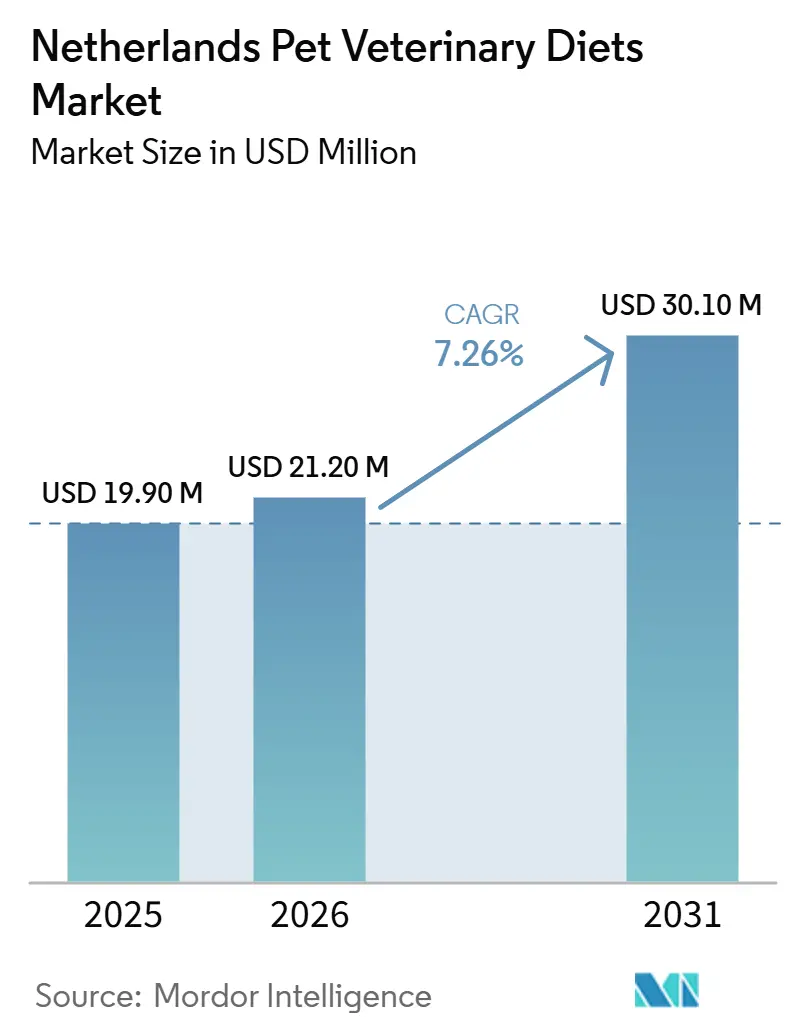
| Base Year Market Size (2025) | USD 19.90 Million |
| Market Size (2026) | USD 21.20 Million |
| Market Size (2031) | USD 30.10 Million |
| Growth Rate (2026 - 2031) | 7.26 % |
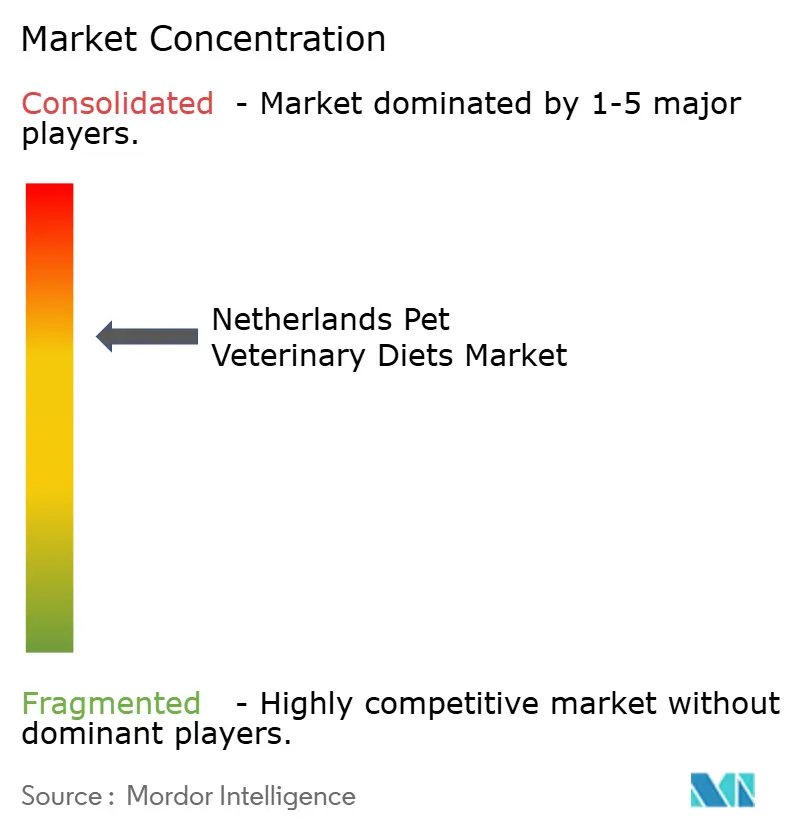
| Market Concentration | Medium |
Major Players *Disclaimer: Major Players sorted in no particular order Image © Mordor Intelligence. Reuse requires attribution under CC BY 4.0. | |
Netherlands Pet Veterinary Diet Market Analysis by Mordor Intelligence
The Netherlands pet veterinary diet market size is projected to expand from USD 19.9 million in 2025 and USD 21.2 million in 2026 to USD 30.1 million by 2031, registering a CAGR of 7.26% between 2026 and 2031. The Netherlands pet veterinary diet market is supported by a high level of veterinary engagement, a stable culture of companion animal care, and a pet-owner base receptive to clinically guided nutrition. The return of pet population growth in 2026 has widened the addressable base for long-term disease management diets, particularly for cats and dogs. The Netherlands' pet population reached around 3.2 million cats and 1.8 million dogs in 2026, supporting sustained demand for veterinary therapeutic nutrition[1]Source: Dibevo and Nederlandse Voedingsindustrie Gezelschapsdieren, “Huisdieren in Cijfers 2026,” Dibevo, dibevo.nl. The Netherlands pet veterinary diet market also benefits from strong repeat-purchase behavior, as therapeutic feeding often continues for months or years once a condition is diagnosed and a diet is prescribed. Local access to veterinary practices, specialty retail channels, and Dutch-language support from both international and domestic brands has kept prescription nutrition visible and accessible nationwide. Demand is also being sustained by growing clinical attention to kidney disease, urinary issues, weight management, and digestive disorders in companion animals.
Key Report Takeaways
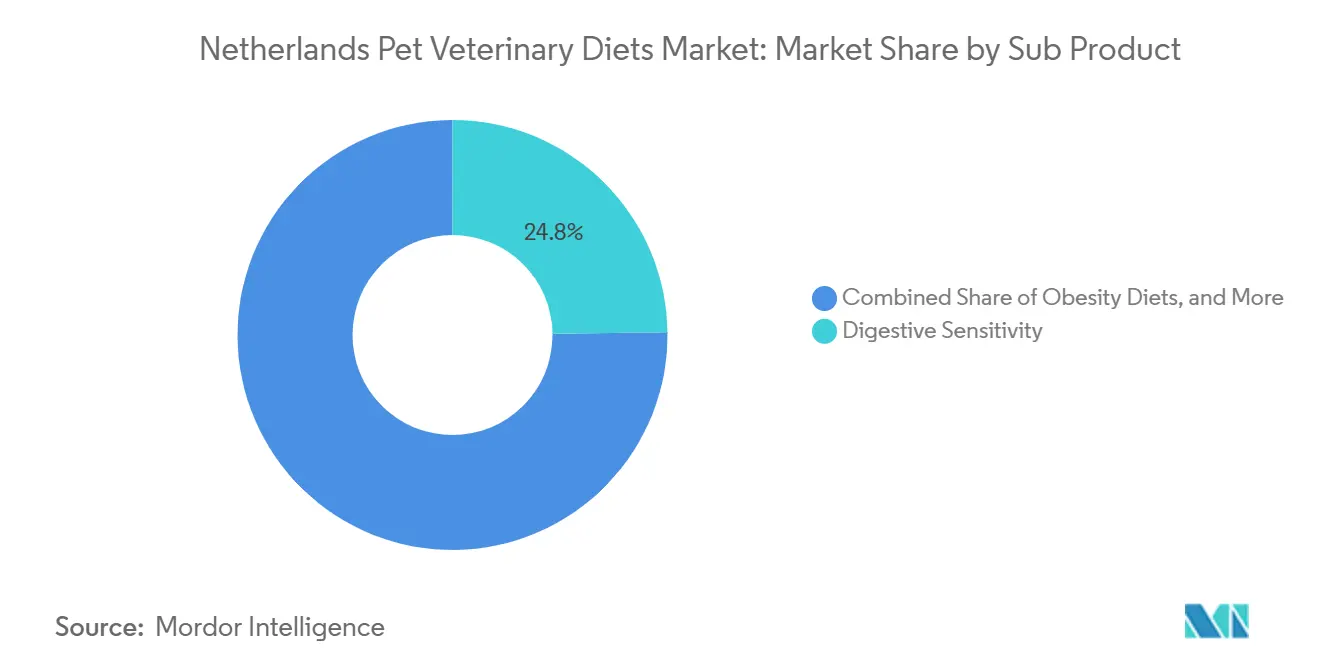
- By sub-product, digestive sensitivity accounted for 24.8% of the Netherlands pet veterinary diet market share in 2025, while obesity diets are forecast to expand at an 8.6% CAGR through 2031.
- By pets, dogs were the largest segment with 62.3% revenue share in 2025, while cats are the fastest-growing segment and are projected to grow at 7.9% CAGR from 2026-2031.
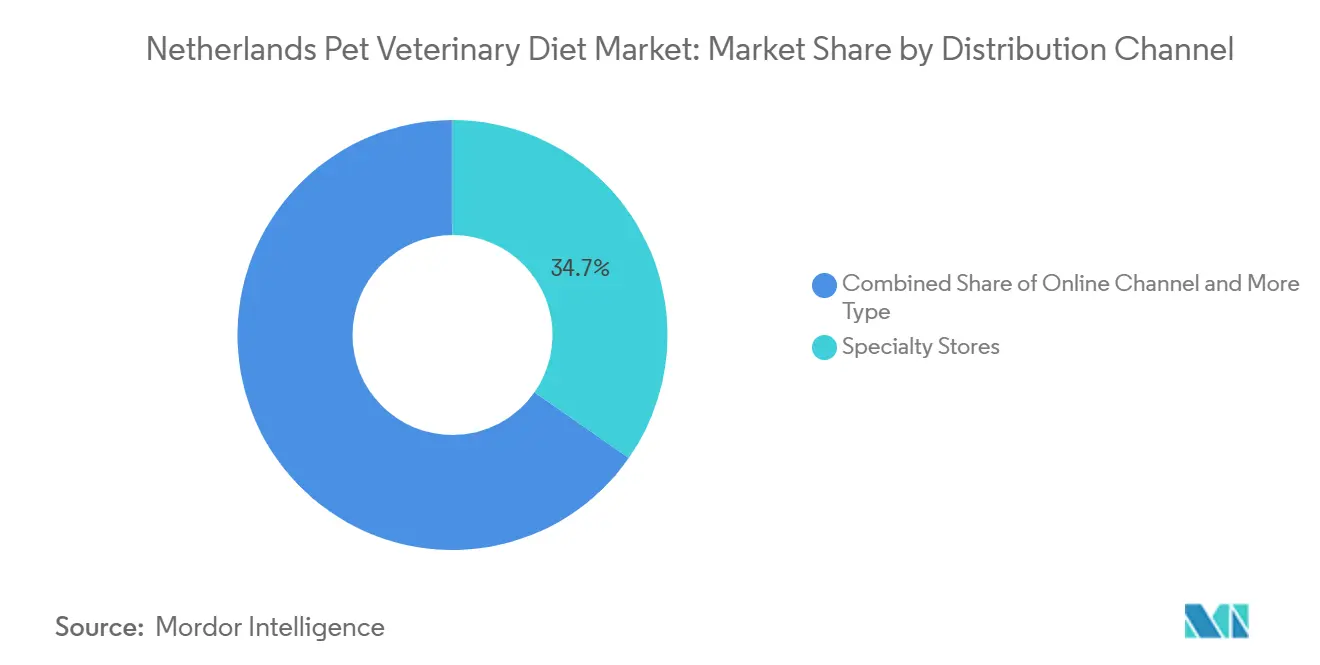
- By distribution channel, specialty stores were the largest segment with 34.7% revenue share in 2025, while the online channel is the fastest segment and is projected to grow at 10.1% CAGR from 2026-2031.
Note: Market size and forecast figures in this report are generated using Mordor Intelligence’s proprietary estimation framework, updated with the latest available data and insights as of January 2026.
Netherlands Pet Veterinary Diet Market Trends and Insights
Drivers Impact Analysis*
| Driver | (~) % Impact on CAGR Forecast | Geographic Relevance | Impact Timeline |
|---|---|---|---|
| Netherlands veterinary recommendation influence | +1.5% | Nationwide across the Netherlands, with high relevance in Randstad and northern provinces | Short term (≤ 2 years) |
| Netherlands online replenishment adoption | +1.2% | Nationwide across the Netherlands, with strongest relevance in digitally connected urban areas | Short term (≤ 2 years) |
| Premium pet-health spending in the Netherlands | +1.0% | Netherlands-wide, with strongest relevance in the Randstad urban area | Medium term (2-4 years) |
| Chronic condition management in Netherlands pets | +1.3% | Nationwide across the Netherlands | Medium term (2-4 years) |
| Netherlands specialty retail and veterinary access | +0.8% | Nationwide across the Netherlands, particularly in urban and suburban areas | Short term (≤ 2 years) |
| Netherlands localized therapeutic diet availability | +0.7% | Netherlands-wide, with relevance in Belgian border areas | Long term (≥ 4 years) |
| Source: Mordor Intelligence | |||
Netherlands Veterinary Recommendation Influence
Veterinary recommendations are the primary route into the Netherlands pet veterinary diet market, as therapeutic feeding usually begins after diagnosis. The Royal Dutch Society for Veterinary Medicine, accessed in 2026, provides professional information for veterinarians in the Netherlands, supporting the clinical setting in which therapeutic diet recommendations are made. This structure makes clinical education and practical feeding guidance more important than broad consumer promotion. It also gives veterinarians a strong role in helping owners distinguish prescription nutrition from premium mainstream food. Manufacturers that support clinics with education, reliable supply, and condition-specific portfolios are better placed to secure initial recommendations. The Netherlands pet veterinary diet market, therefore, responds strongly to the quality of veterinary communication and the availability of suitable products at the point of care.
Netherlands Online Replenishment Adoption
Online replenishment supports the Netherlands pet veterinary diet market because chronic feeding plans require regular, predictable product availability. Centraal Bureau voor de Statistiek, November 2025, reported that 92% of Dutch residents aged 12 years and older had made an online purchase during the preceding 12 months[2]Source: Centraal Bureau voor de Statistiek, “Internetaankopen, Persoonskenmerken,” CBS StatLine, cbs.nl. Centraal Bureau voor de Statistiek also reported year-on-year growth in internet retail turnover above 5.9% in November 2025. This digital readiness helps pet owners move from an initial clinic recommendation to a scheduled reorder without repeat visits. Subscription tools, prescription checks, and Dutch-language feeding guides can further reduce interruptions in long-term diet use. The Netherlands pet veterinary diet market benefits when brands combine the convenience of online ordering with the clinical direction provided at the first prescription.
Premium Pet-Health Spending in the Netherlands
Premium pet-health spending creates a supportive environment for the Netherlands pet veterinary diet market, as therapeutic formulas usually cost more than standard pet food. Dibevo and Nederlandse Voedingsindustrie Gezelschapsdieren (2026) reported that 52% of Dutch pet owners consider sustainability in purchase decisions, and 44% are willing to pay a 10% premium for sustainable products. These findings concern sustainability, but they also show that a substantial share of owners are willing to pay a higher price when a product offers a defined benefit. Fédération Européenne de l'Industrie des Aliments pour Animaux Familiers, September 2025, updated its nutritional guidelines for complete and complementary pet food for cats and dogs, reinforcing the scientific benchmarks used for therapeutic formulations. In urban households, proximity to specialist practices and greater attention to pet health can make it easier to adopt clinical nutrition after a recommendation. This spending environment can reduce price resistance for the Netherlands pet veterinary diet market, but it does not remove the need for clear clinical advice.
Chronic Condition Management in Netherlands Pets
Chronic condition management is a major driver, as the Netherlands' pet veterinary diet market depends on conditions requiring extended dietary support. Cornell University College of Veterinary Medicine states that chronic kidney disease affects up to 40% of cats older than 10 years and up to 80% of cats older than 15 years. Frontiers in Veterinary Science, 2025, reported a prevalence of chronic kidney disease of 0.5% to 3.0% in the general canine population, with higher rates in older dogs and susceptible breeds. Landelijk Informatiecentrum Gezelschapsdieren and Nederlandse Voedingsindustrie Gezelschapsdieren, accessed in 2026, reported that 46% of dogs and 33% of cats in the Netherlands are overweight, while 8% of dogs and 10% of cats are severely obese. Dibevo and Nederlandse Voedingsindustrie Gezelschapsdieren reported that the Dutch cat population increased from 3 million in 2025 to 3.2 million in 2026, widening the potential cohort for renal and urinary diet use. These combined health and population factors strengthen recurring demand across renal, urinary, obesity, diabetes, and digestive diet categories.
Restraints Impact Analysis*
| Restraint | (~) % Impact on CAGR Forecast | Geographic Relevance | Impact Timeline |
|---|---|---|---|
| Premium veterinary diet prices in the Netherlands | -1.30% | Nationwide across the Netherlands | Short term (≤ 2 years) |
| Netherlands veterinary recommendation dependence | -0.90% | Nationwide across the Netherlands | Medium term (2-4 years) |
| Limited condition-specific diet awareness in the Netherlands | -0.70% | Nationwide across the Netherlands, with greater relevance outside major urban areas | Medium term (2-4 years) |
| Long-term clinical feeding reluctance among Netherlands pet owners | -0.60% | Nationwide across the Netherlands | Long term (≥ 4 years) |
| Source: Mordor Intelligence | |||
Premium Veterinary Diet Prices In Netherlands
Therapeutic diets carry a price premium over standard and premium mainstream food, which can limit adoption and continued use. In April 2025, the Dutch Ministry of Agriculture, Nature and Food Quality reported that emergency veterinary consultation tariffs increased by 3 to 3.5 times faster than the consumer price index between 2019 and 2024[3]Source: Ministry of Agriculture, Fisheries, Food Security and Nature (LVVN), “Ministerie LVVN wil meer transparantie in prijzen spoedzorg voor dieren,” April 3, 2025, Government of the Netherlands, rijksoverheid.nl.. The Autoriteit Consument en Markt, in December 2025, published a concept report on intervention in veterinary-sector incentives, indicating that veterinary pricing practices had received formal regulatory attention. Higher consultation costs can reduce the budget available for recurring purchases of therapeutic diet after diagnosis. The effect is strongest when a condition requires months or years of feeding, and the owner does not see an immediate improvement in the pet’s health. Lower-priced private-label food does not offer the same condition-specific positioning, but it can still encourage some households to delay or stop prescribed feeding and slow repeat sales in the Netherlands' pet veterinary diet market.
Netherlands Veterinary Recommendation Dependence
Veterinary recommendation dependence can slow first-time adoption because many therapeutic diets are initiated only after clinical advice. The European Commission, 2020, established labeling and intended-use requirements for dietetic pet foods under Commission Regulation (EU) 2020/354, including guidance to seek veterinary consultation before use. This framework is important for animal health, but it adds time and consultation costs compared with a standard pet food purchase. A pet owner who notices early weight gain or intermittent digestive issues may delay arranging a clinic visit, delaying diagnosis and the purchase of the first therapeutic diet. Smaller brands also face a challenge because they depend more heavily on a veterinarian’s direct recommendation to gain entry into the owner’s consideration set. The Netherlands pet veterinary diet market, therefore, remains sensitive to how easily owners can access veterinary advice and begin a feeding plan.
*Our forecasts treat driver/restraint impacts as directional, not additive. The impact forecasts reflect baseline growth, mix effects, and variable interactions.
Segment Analysis
By Sub Product: Digestive Sensitivity Anchors Demand While Obesity Diets Lead Growth
Digestive Sensitivity held the largest position among sub-products with 24.8% of the Netherlands pet veterinary diet market share in 2025. This segment is broadly relevant because gastrointestinal issues are common in both cats and dogs and often require controlled, sustained feeding rather than short-term interventions. Digestive formulas benefit from frequent clinical use, straightforward owner understanding, and strong visibility across leading veterinary diet portfolios. Urban feeding patterns, indoor pet lifestyles, and the need for repeat management of recurring digestive disturbances keep this segment at the center of prescription nutrition demand. Its position is also strengthened by the fact that digestive conditions affect pets at different life stages, giving the segment a broader treatment base than several narrower disease categories do.
Obesity diets are the fastest-growing sub-product and are projected to expand at 8.6% CAGR from 2026 to 2031. The segment is growing as veterinary professionals link excess weight to diabetes, mobility concerns, orthopedic stress, and reduced quality of life. Landelijk Informatiecentrum Gezelschapsdieren and Nederlandse Vereniging van Fabrikanten van Huisdiervoedingsmiddelen (2026) reported that overweight affects a substantial share of Dutch dogs and cats, creating a large group that may require structured feeding support. Renal and urinary tract disease diets remain important adjacent categories because these conditions often require long-duration nutritional management after diagnosis.



By Pets: Dogs Drive Current Revenue While Cats Gain Clinical Momentum
Dogs were the largest pet segment, with a 62.3% revenue share in 2025, making them the core revenue base of the Netherlands pet veterinary diet market. Higher body weight increases daily food volume, and that alone increases spending per treated dog compared with smaller companion animals. Dogs also have well-established diagnosis and monitoring pathways for obesity, mobility-related issues, diabetes, renal disease, and gastrointestinal conditions, which support longer therapeutic feeding cycles. The Netherlands pet veterinary diet market has therefore continued to rely on the dog segment for present-day revenue stability. This is reinforced by clinical habits in canine care, where diet recommendations are often integrated into broader treatment plans over long follow-up periods.
Cats are the fastest-growing pet segment and are projected to grow at 7.9% CAGR from 2026 to 2031 in the Netherlands pet veterinary diet market. Cats are especially relevant to renal and urinary diet demand because chronic kidney disease and lower urinary tract conditions are common in older feline cohorts. The Netherlands pet veterinary diet market size for cats is also supported by rising screening activity among senior pets, which improves the rate of first diagnosis and enables earlier intervention. Virbac’s feline-focused Vikaly launch in 2025 showed how companies are building more specialized products around chronic cat conditions. Other Pets remain a niche segment, but the presence of rabbits, guinea pigs, ornamental birds, and aquarium fish in Dutch pet ownership keeps a smaller clinical nutrition tail in place. This area is still limited in revenue terms, yet it remains relevant for brands with veterinary-exclusive distribution and species-specific advisory support.
By Distribution Channel: Specialty Stores Lead While Online Builds Long-Term Reorder Strength
Specialty Stores were the largest channel with 34.7% share of the Netherlands pet veterinary diet market size in 2025. These outlets remain important because they extend the veterinarian’s recommendation into a physical retail setting where pet owners can receive product guidance and compare clinical options. In the Netherlands pet veterinary diet market, this channel works well because store staff can help owners interpret prescription needs, manage feeding transitions, and understand brand differences after the clinic visit. The channel also reduces uncertainty for first-time buyers who may be less confident completing a therapeutic purchase online without human support. Because many chronic conditions require stable daily adherence, the reassurance built at the specialty-store level still matters for repeat demand.
The Online channel is the fastest-growing format and is projected to grow at a 10.1% CAGR from 2026 to 2031, underscoring how digital purchasing is reshaping the Netherlands pet veterinary diet market. Online ordering is a strong fit for therapeutic diets because most feeding plans involve regular replenishment rather than one-time purchase behavior. Convenience stores, supermarkets, and hypermarkets play a smaller role in condition-specific nutrition because prescription workflows, staff knowledge, and brand depth are usually more limited in those channels. Other Distribution Channels, especially direct clinic dispensing, remain important because some brands continue to rely heavily on veterinary-exclusive distribution. The Netherlands pet veterinary diet industry is therefore moving toward a blended channel model where the clinic starts the relationship, specialty retail supports education, and online builds continuity over time. That combination favors manufacturers that can maintain steady product availability across all points of owner interaction.
Geography Analysis
With more than 44% of the Dutch households owning at least 1 pet in 2026 and a combined dog and cat population of 5 million, the country offers a large clinical nutrition base relative to its size. This matters because the Netherlands pet veterinary diet market depends on consistent diagnosis, follow-up care, and repeat dietary purchases rather than on occasional discretionary spending alone. Urban centers across the Randstad continue to shape demand by combining dense access to veterinary care, organized retail, and households already comfortable spending on companion animal health. In this setting, therapeutic diets fit naturally into a mature pet care culture, where owners closely monitor their pets' health and are more willing to act on veterinary recommendations.
Within Europe, the Netherlands' pet veterinary diet market stands out for its combination of a compact geography and advanced pet care behavior. The country’s smaller footprint makes national distribution easier, which supports faster replenishment, stronger clinic coverage, and better service levels for therapeutic brands. It also helps explain why both multinational producers and local veterinary diet companies have meaningful operational relevance in the Dutch setting. Farmina Pet Foods Holding B.V. maintains a European holding presence in Amsterdam, and TROVET operates from Bemmel, which highlights the country’s logistical appeal for veterinary diet activity. This setup improves supply responsiveness and helps keep the Netherlands pet veterinary diet market well served across both prescription and refill channels.
Consumer values also reinforce demand conditions in the Netherlands pet veterinary diet market. Sustainability is not the same as therapeutic nutrition, but both categories depend on willingness to accept a higher price in exchange for a perceived health or quality benefit. That overlap matters because households already used to premium pet spending are less likely to reject a prescription product purely on positioning. It also suggests that the addressable base for clinical diets extends beyond only the most intensive veterinary users. For the forecast period, the country’s dense pet ownership, mature care habits, and willingness to pay for specialized products should keep the Netherlands pet veterinary diet market on a steady growth path.
Competitive Landscape
The Netherlands pet veterinary diet market remained concentrated in 2025, with Mars, Incorporated, Hills Pet Nutrition (Colgate-Palmolive Company), Nestlé Purina PetCare (Nestlé S.A.), Virbac S.A., and Farmina Pet Foods Holding B.V. forming the top tier of competitors. These companies compete with broad prescription portfolios, strong veterinary relationships, and the ability to refresh formulations in line with evolving nutritional standards. Royal Canin, under Mars, continues to hold a strong position through its broad therapeutic range across renal, urinary, gastrointestinal, dermatological, and weight-management applications. Hill’s Pet Nutrition, under the Colgate-Palmolive Company, remains important because it continues to launch multi-condition prescription products that address the growing complexity of chronic pet health management. In the Netherlands pet veterinary diet market, scale still matters because consistent veterinary education, product availability, and brand familiarity are closely linked to prescription success.
Virbac has been following a distinct strategy that more closely connects nutrition with medicine. Its 2025 Vikaly launch introduced a 2-in-1 medicated feed for cats with chronic kidney disease, which showed a different route to category development than standard diet-only positioning. The company also acquired Thyronorm and Felanorm in 2025, strengthening its role in feline endocrine care and supporting a broader companion animal therapeutic platform. These moves suggest that the competitive field is not only about broad portfolios, but also about how effectively companies build integrated solutions around difficult chronic conditions. That approach could remain important as the Netherlands pet veterinary diet market moves further toward long-duration disease management.
The second tier includes Dutch-origin and regionally relevant brands such as TROVET, CLiNiC Petfood, and Prins Petfoods B.V., which compete through local relationships, service proximity, and pricing positions that can appeal to clinics and owners looking beyond the largest global names. TROVET benefits from local identity and established veterinary familiarity in the Netherlands. Farmina has been using technology as a differentiator through tools such as Farmina Genius AI, which can support consultations and product matching in local languages. VAFO Group also signaled stronger Western European ambition through its 2026 restructuring, which may sharpen competition in premium and functional nutrition categories. The Netherlands pet veterinary diet market is therefore led by global scale, but it remains open to challengers that combine evidence, channel execution, and localized support. Competitive advantage is likely to remain strongest where companies can align clinic trust, refill convenience, and clear therapeutic positioning across the full owner journey.
Netherlands Pet Veterinary Diet Industry Leaders
Mars, Incorporated
Virbac S.A.
Nestlé Purina PetCare (Nestlé S.A.)
Hills Pet Nutrition (Colgate-Palmolive Company)
Farmina Pet Foods Holding B.V.
- *Disclaimer: Major Players sorted in no particular order

Recent Industry Developments
- June 2026: Colgate-Palmolive Company (Hill's Pet Nutrition) announced 2 new prescription diet innovations for dogs, Hill's Prescription Diet k/d + Derm Complete and Hill's Prescription Diet k/d + z/d Hydrolyzed, both formulated with nutrition clinically shown to address concurrent renal and dermatological conditions, extending the multi-condition management portfolio in the therapeutic diet segment
- April 2026: Colgate-Palmolive Company (Hill's Pet Nutrition) launched Hill's Prescription Diet Metabolic + j/d for cats, a dual-formula diet addressing concurrent feline weight management and mobility impairment in a single product, reflecting growing clinical recognition of weight and mobility comorbidities in aging cats.
- January 2026: VAFO Group a.s. completed a corporate restructuring, separating into 3 entities, VAFO Praha, VAFO Production, and VAFO Private Labels, with the structure designed to accelerate Western European market penetration.


Netherlands Pet Veterinary Diet Market Report Scope
A pet veterinary diet, also known as a therapeutic or prescription diet, is a specialized pet food scientifically formulated to help manage, treat, or prevent specific medical conditions, including kidney disease, allergies, and obesity.
Pet Veterinary Diets are Specialized Nutritional Products Formulated to Manage Specific Animal Health Conditions. The Netherlands Pet Veterinary Diet Market Report is Segmented by Sub Product (Diabetes, Renal, Urinary Tract Disease, Digestive Sensitivity, and More), by Pets (Cats, Dogs, and More), and by Distribution Channel (Convenience Stores, Online Channel, and More). Forecasts are Provided in Value and Volume.
| Diabetes |
| Digestive Sensitivity |
| Oral Care Diets |
| Renal |
| Urinary Tract Disease |
| Obesity Diets |
| Derma Diets |
| Other Veterinary Diets |
| Cats |
| Dogs |
| Other Pets |
| Convenience Stores |
| Online Channel |
| Specialty Stores |
| Supermarkets/Hypermarkets |
| Other Channels |
| By Sub Product | Diabetes |
| Digestive Sensitivity | |
| Oral Care Diets | |
| Renal | |
| Urinary Tract Disease | |
| Obesity Diets | |
| Derma Diets | |
| Other Veterinary Diets | |
| By Pets | Cats |
| Dogs | |
| Other Pets | |
| By Distribution Channel | Convenience Stores |
| Online Channel | |
| Specialty Stores | |
| Supermarkets/Hypermarkets | |
| Other Channels |


Key Questions Answered in the Report
Which sub product category leads revenue in the Netherlands?
Digestive sensitivity was the largest sub product segment in 2025 with 24.8% revenue share.
Which pet type is creating the most revenue today?
Dogs generated the largest share in 2025 at 62.3%, supported by higher food volume per treated animal and longer clinical feeding cycles.
Which channel is expanding the fastest through 2031?
The online channel is the fastest-growing distribution format, with a projected 10.1% CAGR from 2026-2031.
What shapes competition in this category?
Broad prescription portfolios, strong veterinary relationships, refill convenience, and continued product innovation are shaping competition among global and local brands.
Page last updated on:





