
Market Overview
| Study Period | 2020 - 2031 |
|---|---|
| Forecast Data Period | 2026 - 2031 |
| Base Year Market Size (2025) | USD 180.64 Million |
| Market Size (2026) | USD 196.42 Million |
| Market Size (2031) | USD 298.57 Million |
| Growth Rate (2026 - 2031) | 8.73 % |
| Market Concentration | High |
Major Players *Disclaimer: Major Players sorted in no particular order Image © Mordor Intelligence. Reuse requires attribution under CC BY 4.0. | |
Middle-East And Africa Sodium-dependent Glucose Co-transporter 2 Inhibitors Market Analysis by Mordor Intelligence
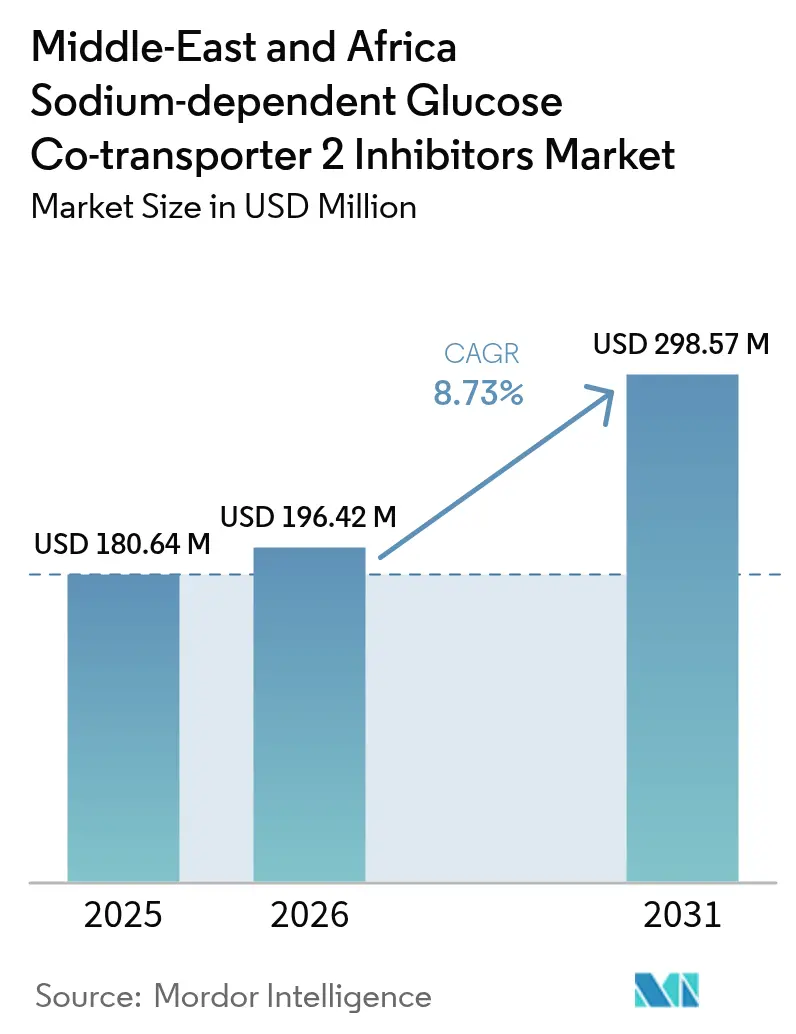
The Middle-East And Africa Sodium-dependent Glucose Co-transporter 2 Inhibitors market size is expected to grow from USD 180.64 million in 2025 to USD 196.42 million in 2026 and is forecast to reach USD 298.57 million by 2031 at 8.73% CAGR over 2026-2031.
The COVID-19 pandemic positively impacted the Asia-Pacific Sodium-Dependent Glucose Cotransporter 2 market. People with diabetes have a weak immune system so, with COVID-19, the immune system gets weaker very fast. People with diabetes have more chances to get into serious complications rather than normal people. The manufacturers of diabetes drugs have taken care during COVID-19 to deliver the medications to diabetes patients with the help of local governments. NovoNordisk stated on their website that 'Since the start of COVID-19, our commitment to patients, our employees and the communities where we operate has remained unchanged, we continue to supply our medicines and devices to people living with diabetes and other serious chronic diseases, safeguard the health of our employees, and take actions to support doctors and nurses as they work to defeat COVID-19.'
The Market is increasing mainly due to the drugs Jardiance and Farxiga/Forxiga. Jardiance is a once-daily oral medication that is used to control blood glucose levels in people suffering from type-2 diabetes. Patients prefer this drug, as it has a lesser risk of cardiovascular diseases when compared to other SGLT 2 class of drugs. The number of diabetic patients in Middle-East and Africa is increasing immensely over the past few years due to factors, including the increasing geriatric population in the region and the increase in the overweight and obese population, owing to unhealthy diets and physical inactivity. As diabetes can potentially increase the risk of cardiovascular diseases, it needs to be managed well by seeking suitable treatments at regular intervals of time.
Note: Market size and forecast figures in this report are generated using Mordor Intelligence’s proprietary estimation framework, updated with the latest available data and insights as of 2026.
Middle-East And Africa Sodium-dependent Glucose Co-transporter 2 Inhibitors Market Trends and Insights
Increasing Diabetic Population is Supporting the SGLT 2 Inhibitors Market to Grow in the Middle-East and Africa Region
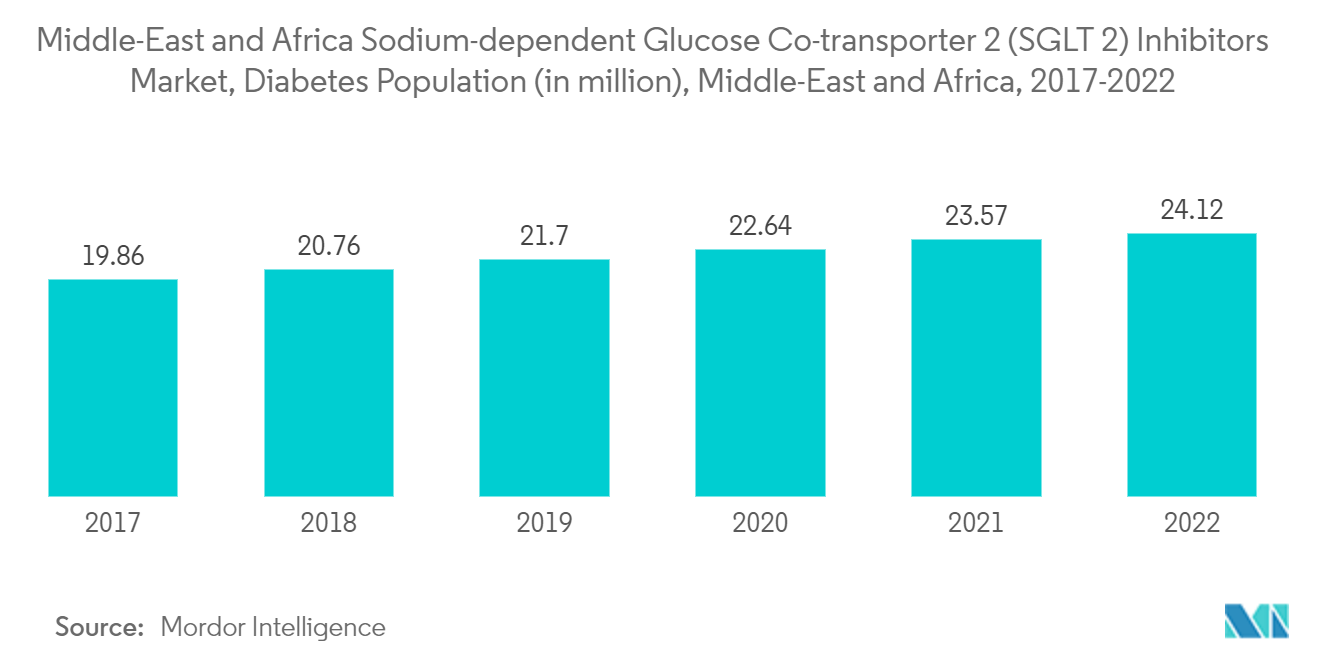
Currently, the IDF MENA Region will have 73 million individuals (20-79) with diabetes. This number is expected to rise to 95 million by 2030. Impaired Glucose Tolerance affects 48 million individuals in the IDF MENA Region, putting them at a higher risk of acquiring type 2 diabetes. In 2022, more than USD 33 billion was spent on diabetes healthcare.
The Middle East and African region witnessed an alarming increase in the prevalence of diabetes. In recent years, the rate of diabetes has been at an all-time high, mainly due to lifestyle changes. Diabetes is associated with many health complications. Patients with diabetes require many daily corrections to maintain nominal blood glucose levels, such as administering additional insulin or ingesting additional carbohydrates by monitoring their blood glucose levels. Diabetes poses an emerging healthcare burden across the region. People with diabetes may need to take antidiabetic drugs for their whole lives to control their blood glucose levels and avoid hypoglycemia and hyperglycemia. These agents present the advantages of easier management and lower cost, so they became an attractive alternative to insulin with better acceptance, which enhances adherence to the treatment.
Owing to the factors above, the studied market is anticipated to grow over the analysis period.


Saudi Arabia Holds the Highest Market Share in the Middle-East and Africa Region
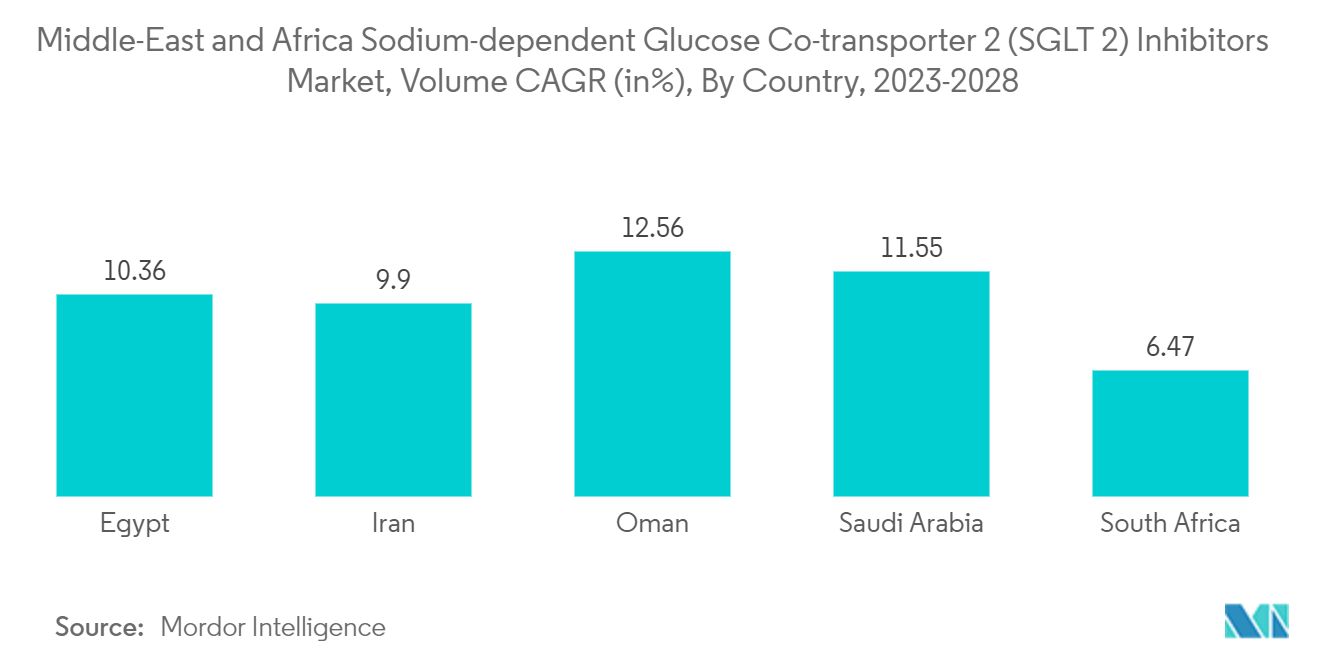
Saudi Arabia held more than 30% of the market share in the Middle East and Africa Region in the current year. Diabetes patients with COVID-19 may have high blood glucose levels, irregular glucose variability, and diabetic complications. Diabetes prevalence in adults with COVID-19 produced a substantial increase in COVID-19 severity and mortality in people with Type 1 (T1DM) or Type 2 diabetes mellitus (T2DM), particularly in connection with poor glycemic control. At the same time, new-onset hyperglycemia and diabetes (both T1DM and T2DM) have become more recognized in COVID-19 and have been linked to worse outcomes.
Saudi Arabia hopes to lower the disease's prevalence by 10% over the next decade. The government is launching several programs to combat the expanding disease, including a levy on sugary beverages, exercise activities, and an emphasis on preventative treatment. The government's focus on controlling diabetes and the country's increasing buying power may benefit the market for diabetes treatments, such as insulin drugs, throughout the projection period.
Competitive Landscape
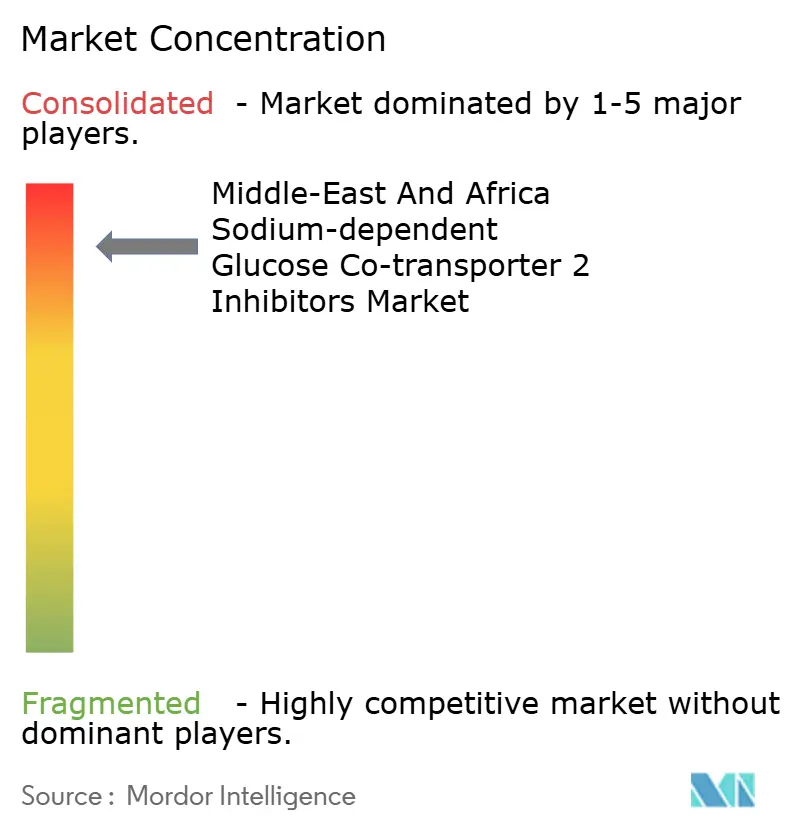
The Middle-East And Africa Sodium-dependent Glucose Co-transporter 2 Inhibitors Market is highly consolidated, with a few significant manufacturers having a Middle East and Africa market presence. The joint ventures between players in the recent past have helped the companies strengthen their market presence. For example, Eli Lilly and Boehringer Ingelheim manufacture Jardiance, a popular SGLT 2 class drug.
Middle-East And Africa Sodium-dependent Glucose Co-transporter 2 Inhibitors Industry Leaders
Astrazeneca
Bristol-Myers Squibb
Eli Lilly
Janssen
Astellas
- *Disclaimer: Major Players sorted in no particular order

Market Opportunities and Future Outlook
Opportunities for SGLT2 inhibitors in the Middle East and Africa are being shaped by renewed emphasis on clinical guidance alongside health-system programs that broaden treatment goals beyond glycemic control into cardio-renal risk management. In the Gulf, the Emirates Diabetes and Endocrine Society published an updated UAE-focused consensus for Type 2 diabetes management in April 2026, which supports more standardized use of contemporary therapies where appropriate. Real-world evidence from Saudi Arabia, published in June 2026, also indicates substantial SGLT2 inhibitor utilization among heart failure patients (57.9% in a 1,081-patient cohort), while showing lower use in clinical subgroups such as preserved ejection fraction and advanced chronic kidney disease, pointing to room for physician education, protocol refinement, and clearer patient pathways.
In Africa, payer and primary-care initiatives are creating additional access routes, particularly where out-of-pocket costs and tender coverage limit uptake of newer agents. Nigeria is an anchor market, with the Senate approving a NGN 108.6 billion health fund for diabetes and other NCDs in June 2026, including provisions that can channel sugar-sweetened beverage tax revenues toward treatment subsidies and improve affordability for chronic therapies. At the delivery level, decentralized NCD care models are being operationalized, including Ethiopia's national PEN-Plus operational plan launch event in January 2026 and Kenya's National Clinical Guidelines for Diabetes Mellitus (Version 15, 2024), both of which support earlier identification and continuity at lower levels of care. These shifts raise the emphasis on market access work alongside clinical positioning, with differentiated demand by phenotype (T2D with ASCVD/heart failure/CKD) and by country-specific financing capacity.
Recent Industry Developments
- June 2026: Arcera Life Sciences and Daewoong Pharmaceutical announced an expansion of their partnership to bring the SGLT2 inhibitor enavogliflozin to Middle Eastern markets, including a focus on the UAE and surrounding countries. This formalizes a regional go-to-market route for an additional SGLT2 option through a partner-led model, which can increase competitive intensity where incumbents have relied on established brands.
- April 2026: AstraZeneca advanced elecoglipron, an oral small-molecule GLP-1 receptor agonist, into Phase II development, including evaluation in combination with dapagliflozin. While elecoglipron is not an SGLT2 inhibitor, the trial strategy underscores continued investment in cardiometabolic combinations that can affect how SGLT2 inhibitors are positioned within multi-mechanism regimens.
- December 2024: Eli Lilly and EVA Pharma announced regulatory approval by the Egyptian Drug Authority and release of locally manufactured insulin glargine injection under their collaboration. This step supports regional diabetes medicine manufacturing and supply resilience in a key MEA market, which can help broaden chronic care scale-up and expand the treated population eligible for adjunct oral therapies such as SGLT2 inhibitors.


Research Methodology Framework and Report Scope
Market Definition and Coverage
This market is defined as the revenue generated from SGLT2 inhibitor medicines sold across Middle East and Africa, counted at manufacturer-level value in USD for the year, and tied to prescription-based use in clinical care.
Scope exclusions: We exclude non-SGLT2 diabetes therapies, insulin, and non-drug services such as diagnostics, devices, and hospital procedure charges.
Segmentation Overview
- Drug
- Sodium-dependent Glucose Co-transporter 2 (SGLT 2) Inhibitor
- Invokana (Canagliflozin)
- Jardiance (Empagliflozin)
- Farxiga/Forxiga (Dapagliflozin)
- Sodium-dependent Glucose Co-transporter 2 (SGLT 2) Inhibitor
- Geography
- Saudi Arabia
- Iran
- Egypt
- Oman
- South Africa
- Rest of Middle-East and Africa
Data Sources, Market Sizing, and Validation
Desk Research
Desk work starts by mapping the treated Type 2 diabetes pool and the expected prescribing space for SGLT2 inhibitors across Middle East and Africa. Public health sources, such as WHO diabetes profiles, World Bank population and income indicators, and the International Diabetes Federation factsheets, are used to anchor prevalence context and treatment coverage assumptions.
We also review national ministry of health publications and local drug authority updates where available, then we check peer-reviewed clinical and pharmacoepidemiology articles to understand adoption patterns and any safety or labeling related restrictions that affect uptake. For pricing and mix signals, we rely on public procurement bulletins and tender notices, plus company annual filings and investor presentations that describe regional performance and product focus. A paid subscription for company financials and a patent database are used selectively to sanity check launch timing, product maturity, and regional footprint cues. These examples are not exhaustive, and we also referenced other sources to collect, validate, and clarify inputs.
Primary Interviews and Surveys
Primary work focuses on translating desk assumptions into realistic uptake and pricing paths, using discussions with endocrinology clinicians, hospital pharmacy leaders, payers, and local distributors who see formulary status and patient affordability trends firsthand. We also speak with regional commercial and medical affairs respondents to confirm which countries contribute most to volume, how quickly guideline-driven use is moving into cardio-renal patients, and what changes are expected in reimbursement rules. We then cross-check inputs across sub-regions to avoid over-weighting one country signal.
Distribution of primary research fieldwork respondents
| Company type | Respondent position |
|---|---|
| Top tier: 28% | CXOs: 15% |
| Mid tier: 52% | Functional/Unit leaders: 27% |
| Smaller Players: 20% | Managers: 58% |
Market-Sizing & Forecasting
Sizing is built mainly through a top-down demand pool approach, where diabetes prevalence and treatment coverage are translated into an addressable treated population, and then filtered by expected SGLT2 prescribing share by country group. To keep the totals realistic, we run selective bottom-up checks using sampled price points and typical annual therapy volumes, followed by channel checks on how much hospital versus retail dispensing contributes in the region.
Key inputs include Type 2 diabetes prevalence and diagnosed share, access to reimbursed therapy, guideline and label driven expansion into heart failure and chronic kidney disease patients, average daily dose persistence, and net price progression that reflects tender outcomes and periodic currency moves. When country-level data is thin, we handle the gap by applying proxy uptake curves from similar reimbursement settings and then adjusting using expert feedback.
For forecasting, we use scenario analysis around two practical variables that drive the curve most, namely reimbursement breadth and the speed of switching from older oral therapies. Those scenarios are blended into a central case after primary respondents confirm what is more likely over the next five years.
Data Validation & Update Cycle
Outputs are checked in layers, where country totals must align with independent signals such as medicine access constraints, expected formulary coverage, and the pace of specialist prescribing. Large jumps are reviewed for reasonableness, and if a value is being driven by one assumption like price erosion or sudden penetration, that input is re-tested with a second set of respondents.
Before sign-off, the model and write-up go through multi-step internal review so that definitions, conversions, and assumptions stay consistent across the time series. Reports are refreshed annually, and interim updates are made when a material event occurs, such as a new indication, a major reimbursement change, or a large pricing reset. Right before delivery, a final pass is performed so clients receive the latest updated view.
Mordor Intelligence's Middle East and Africa Sodium Dependent Glucose Cotransporter 2 Inhibitors Market Size Compared Against Other Published Estimates
Published market numbers for MEA SGLT2 inhibitors can look far apart, even when the topic sounds identical, because the counted revenue point, year selection, and country coverage logic are not always consistent. Differences also show up when one model assumes faster guideline driven adoption, or when prices are taken from list levels instead of expected tender net levels.
The main gap comes from whether the estimate is built around treated patient demand in MEA countries versus a broader revenue capture that can fold in cross-border distribution and higher assumed net prices. In this area, Mordor Intelligence keeps the value tied to prescription use and country-level access signals rather than applying a single regional revenue multiplier.
Benchmark comparison
| Source | Market Size | Gaps in Research Methodology |
|---|---|---|
| Mordor Intelligence | USD 180.64 M (2025) | |
| Global Research Publisher A | USD 729.50 M (2024) | Uses a different base year and may apply broader revenue capture assumptions with less visibility into net price erosion from tenders, which can inflate the regional total when converted to a single MEA figure. |
| Syndicated Publisher B | USD 0.87 B (2024) | Likely includes wider application-led revenue pools and more aggressive uptake and price progression assumptions, and the stated forecast window suggests a different ramp timing versus a 2025 anchored model. |
The spread in the table is mainly explained by what is counted as MEA revenue and how pricing is normalized across countries with very different reimbursement rules. By keeping the model traceable to treated patients, uptake, and realistic net pricing checks, we arrive at a number that is easier to recreate and challenge in a client discussion.


Key Questions Answered in the Report
How big is the Middle-East And Africa Sodium-dependent Glucose Co-transporter 2 Inhibitors Market?
The Middle-East And Africa Sodium-dependent Glucose Co-transporter 2 Inhibitors Market size is expected to reach USD 196.42 million in 2026 and grow at a CAGR of 8.73% to reach USD 298.57 million by 2031.
What is the current Middle-East And Africa Sodium-dependent Glucose Co-transporter 2 Inhibitors Market size?
In 2026, the Middle-East And Africa Sodium-dependent Glucose Co-transporter 2 Inhibitors Market size is expected to reach USD 196.42 million.
Who are the key players in Middle-East And Africa Sodium-dependent Glucose Co-transporter 2 Inhibitors Market?
Astrazeneca, Bristol-Myers Squibb, Eli Lilly, Janssen and Astellas are the major companies operating in the MEA Sodium-dependent Glucose Co-transporter 2 Inhibitors Market.
What years does this Middle-East And Africa Sodium-dependent Glucose Co-transporter 2 Inhibitors Market cover, and what was the market size in 2025?
In 2025, the Middle-East And Africa Sodium-dependent Glucose Co-transporter 2 Inhibitors Market size was estimated at USD 196.42 million. The report covers the Middle-East And Africa Sodium-dependent Glucose Co-transporter 2 Inhibitors Market size for years: 2019, 2020, 2021, 2022, 2023 and 2024. The report also forecasts the Middle-East And Africa Sodium-dependent Glucose Co-transporter 2 Inhibitors Market size for years: 2026, 2027, 2028, 2029, 2030 and 2031.
Page last updated on:





