
Meningitis Vaccines Market Size and Share
Market Overview
| Study Period | 2020 - 2031 |
|---|---|
| Market Size (2026) | USD 4.65 Billion |
| Market Size (2031) | USD 6.61 Billion |
| Growth Rate (2026 - 2031) | 7.25 % |
| Fastest Growing Market | Asia-Pacific |
| Largest Market | North America |
| Market Concentration | Medium |
Major Players *Disclaimer: Major Players sorted in no particular order Image © Mordor Intelligence. Reuse requires attribution under CC BY 4.0. | |
Meningitis Vaccines Market Analysis by Mordor Intelligence
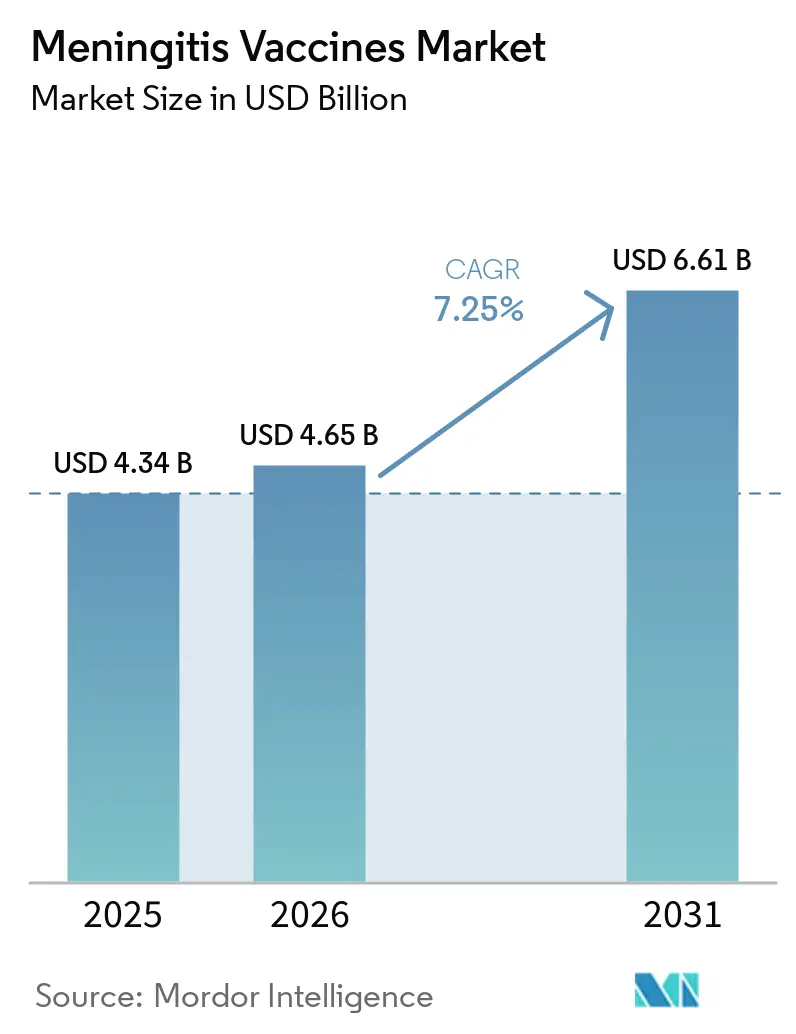
The Meningitis Vaccines Market size was valued at USD 4.34 billion in 2025 and is estimated to grow from USD 4.65 billion in 2026 to reach USD 6.61 billion by 2031, at a CAGR of 7.25% during the forecast period (2026-2031).
The meningitis vaccines market is shifting from outbreak-driven purchasing to routine immunization programs, supporting more predictable demand. The renewed burden of invasive meningococcal disease has strengthened the need for preventive vaccination, particularly for adolescents, infants, and high-risk populations. In the United States, the CDC reported 422 invasive meningococcal disease cases in 2024, the highest annual total since 2014, with an 18% case-fatality rate among serogroup Y cases under review. Regulatory approvals for broader age groups and combination vaccines are facilitating integration into existing immunization schedules. Government procurement in Africa, travel vaccination requirements for pilgrims, and the WHO Defeating Meningitis by 2030 roadmap continue to support vaccine access, surveillance, and prevention programs, although funding remains challenging in lower-incidence countries.
Key Report Takeaways
- By type, quadrivalent formulations held 53.45% of the meningitis vaccines market share in 2025, while bivalent formulations are projected to grow at an 8.78% CAGR through 2031.
- By brand, Bexsero held 34.56% share in 2025, while Menveo is projected to grow at a 9.44% CAGR through 2031.
- By age group, children aged 2 to 11 years held 58.54% share in 2025, while infants aged 0 to 2 years are projected to grow at a 10.25% CAGR through 2031.
- By serotype, serogroup Y held 32.98% share in 2025, while serogroup B is projected to grow at an 8.25% CAGR through 2031.
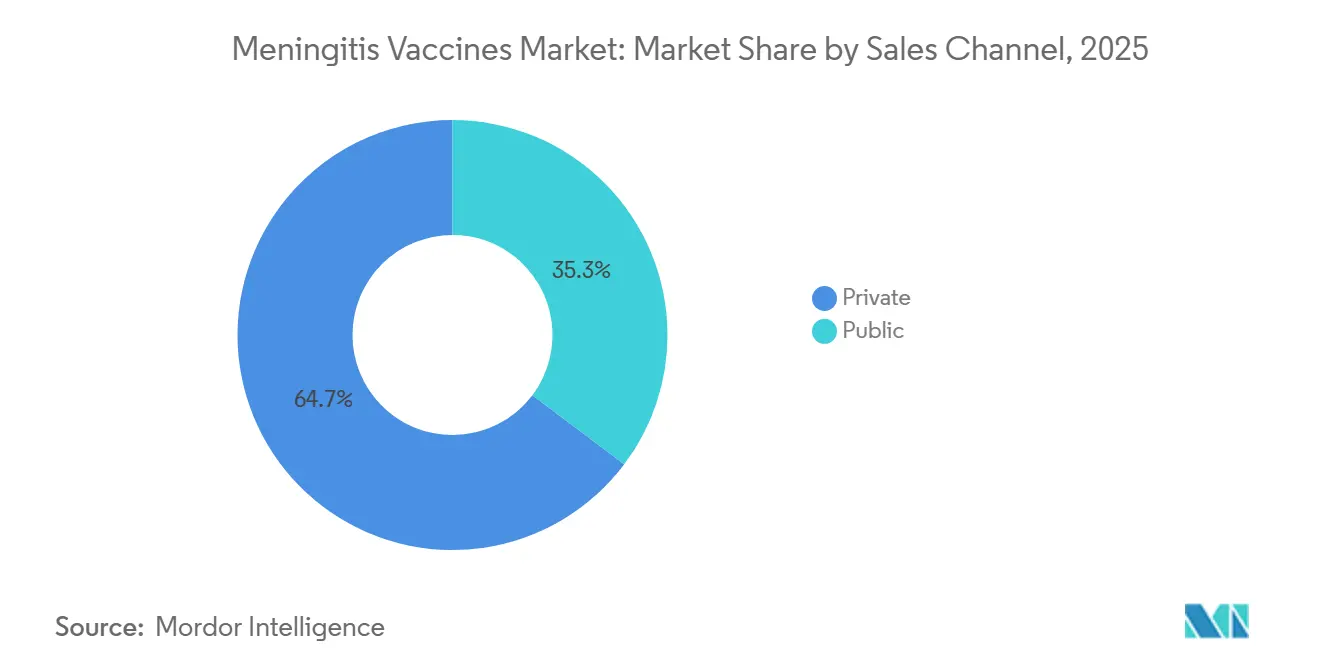
- By sales channel, private sales held 64.73% share in 2025, while public sales are projected to grow at an 8.65% CAGR through 2031.
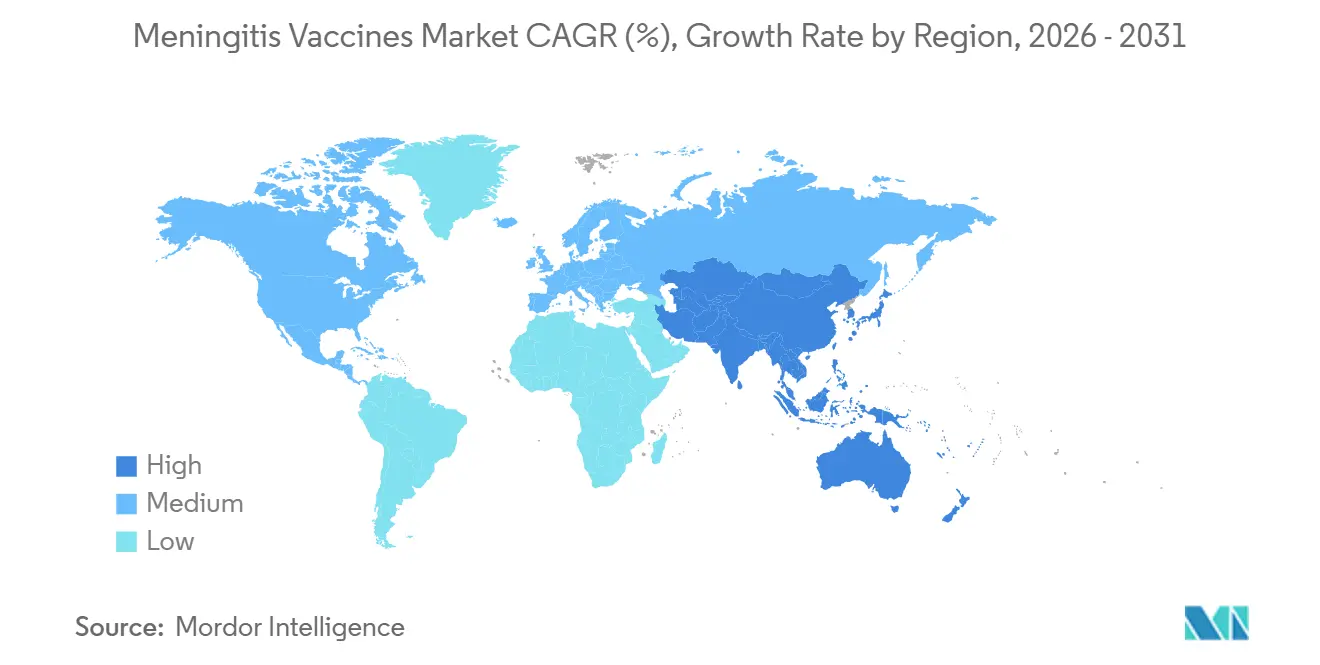
- By geography, North America held 45.67% share in 2025, while Asia-Pacific is projected to grow at an 8.94% CAGR through 2031.
Note: Market size and forecast figures in this report are generated using Mordor Intelligence’s proprietary estimation framework, updated with the latest available data and insights as of January 2026.
Global Meningitis Vaccines Market Trends and Insights
Drivers Impact Analysis*
| DRIVER | (~) % IMPACT ON CAGR FORECAST | GEOGRAPHIC RELEVANCE | IMPACT TIMELINE |
|---|---|---|---|
| Expansion of adolescent and young-adult immunization programs | +2.1% | North America and Europe, with spillover to the Asia-Pacific | Medium term (2-4 years) |
| Increasing adoption of MenB and MenABCWY vaccines | +2.0% | North America, Western Europe, and Australia | Short term (≤ 2 years) |
| Introduction of pentavalent vaccines in the African meningitis belt | +1.3% | Sub-Saharan Africa, with influence on the Middle East and Africa procurement | Medium term (2-4 years) |
| Greater public-health focus on outbreak prevention and travel immunization | +0.8% | Global, with a concentration in North America, Asia-Pacific, and GCC countries | Short term (≤ 2 years) |
| Serogroup replacement and post-pandemic resurgence of invasive meningococcal disease | +0.9% | North America and Europe, with emerging relevance in the Asia-Pacific | Short term (≤ 2 years) |
| MenB cross-protection and broader gonorrhea prevention potential | +0.5% | United Kingdom, Australia, and the United States public health programs | Long term (≥ 4 years) |
| Source: Mordor Intelligence | |||
Expansion Of Adolescent And Young-Adult Immunization Programs
Adolescent and young-adult immunization schedules remained a key demand driver in the meningitis vaccines market. The CDC recommended MenACWY vaccination for children aged 11 to 12 years, followed by a booster at age 16. By mid-2024, 26 U.S. states required MenACWY vaccination evidence for college or university entry, supporting recurring demand independent of outbreaks. U.S. invasive meningococcal disease cases increased from 312 in 2022 to 438 in 2023 and 477 in 2024, increasing focus on booster coverage.[1]Centers for Disease Control and Prevention, “Increase in Invasive Serogroup Y Meningococcal Disease in the United States,” CDC Health Alert Network Advisory, cdc.gov The ACIP review of MenACWY at ages 11 to 12 years and MenABCWY at age 16 could reduce injections and support demand for higher-value combination products.
Increasing Adoption Of MenB And MenABCWY Vaccines
The availability of two MenABCWY vaccines in the U.S. formulary strengthened competition in the meningitis vaccines market. The FDA approved GSK’s Penmenvy on February 14, 2025. On April 16, 2025, ACIP recommended Penmenvy for individuals aged 16 to 23 years through shared clinical decision-making and for risk-based groups aged 10 years and older. Fewer than 13% of eligible U.S. adolescents completed the two-dose MenB series, creating a coverage gap for combination vaccines to address. GSK reported that its MenB-4C component accounted for three of every four MenB doses administered in U.S. channels during 2024, while only 54% of surveyed physicians knew of the shared clinical decision-making recommendation.
Introduction Of Pentavalent Vaccines In The African Meningitis Belt
MenFive, also known as Men5CV, protects serogroups A, C, W, Y, and X, expanding prevention options in the African meningitis belt. The Serum Institute of India and PATH developed the vaccine over 13 years with U.K. government support. The vaccine received WHO prequalification in July 2023, and eligibility was expanded to infants aged 9 months and older in March 2024. Nigeria first deployed Men5CV in March 2024 and vaccinated more than 1 million people during a serogroup C outbreak. In April 2025, Nigeria received 1.5 million additional doses from the Gavi-funded ICG stockpile for a concurrent serogroup C and W outbreak that caused more than 70 deaths across 23 states; Niger’s 2025 campaign also demonstrated the value of storage at 40°C for up to 28 days.
Greater Public-Health Focus On Outbreak Prevention And Travel Immunization
Public health initiatives expanded demand beyond countries that traditionally used meningococcal vaccines most widely. In April 2025, the WHO published its first clinical guidelines for meningitis diagnosis, treatment, and care, providing member states with a common framework for surveillance and clinical response.[2]World Health Organization, “WHO Guidelines on Meningitis Diagnosis, Treatment and Care,” World Health Organization, who.int Saudi Arabia requires MenACWY conjugate vaccination for Hajj and Umrah pilgrims, sustaining annual demand among travelers from South and Southeast Asia. The serogroup Y ST-1466 strain increased focus on adult risk because cases often presented as bacteremia rather than meningitis. This trend supported broader consideration of quadrivalent and pentavalent vaccines, while MenB programs could gain support if research confirmed protection against gonorrhea.
Restraints Impact Analysis*
| RESTRAINT | (~) % IMPACT ON CAGR FORECAST | GEOGRAPHIC RELEVANCE | IMPACT TIMELINE |
|---|---|---|---|
| Low disease incidence and challenging vaccine cost-effectiveness | -1.4% | North America and Western Europe | Medium term (2-4 years) |
| Short duration of protection and requirement for booster doses | -0.9% | Global, with a concentration in low-resource settings | Short term (≤ 2 years) |
| Reconstitution and cold-chain complexity in meningitis-belt campaigns | -0.6% | Sub-Saharan African meningitis belt | Medium term (2-4 years) |
| Serogroup volatility and uncertain product-match requirements | -0.5% | Global, with a concentration in Asia-Pacific and Africa | Long term (≥ 4 years) |
| Source: Mordor Intelligence | |||
Low Disease Incidence And Challenging Vaccine Cost-Effectiveness
Low disease incidence in high-income countries limited the business case for expanding universal vaccination programs in the meningitis vaccines market. In the United States, incidence ranged from 0.10 to 0.11 cases per 100,000 people annually. Despite 477 reported U.S. cases in 2024, the disease burden remained lower than that of conditions commonly targeted through universal adult vaccination. ACIP economic modeling found that replacing MenACWY vaccination with Penmenvy costs USD 11.3 million per quality-adjusted life year gained. This estimate exceeded common public-payer thresholds and restricted broader MenB vaccination recommendations. Suppliers relied on provider education and advocacy in the absence of payer mandates, creating challenges for smaller companies without established relationships with public health institutions.
Short Duration Of Protection And Requirement For Booster Doses
Waning immunity complicated vaccination program planning, as additional doses increased theoretical demand but reduced real-world completion rates. In April 2025, ACIP changed the recommended MenB-4C dosing interval from at least 1 month to at least 6 months after reviewing evidence of stronger immune responses at the longer interval.[3]“Potential Use of Neisseria meningitidis Serogroup B Vaccines Against Gonorrhoeae,” Journal of the International AIDS Society, ovid.com Two-year persistence data showed similar seroprotective titers after two doses of Penmenvy and control vaccines, although evidence certainty remained low among healthy individuals. Observational evidence suggested that MenB-4C protection against gonorrhea began to decline 36 months after vaccination. In the meningitis belt, follow-up surveillance and potential revaccination increased the cost and logistical pressure on limited program budgets.
*Our forecasts treat driver/restraint impacts as directional, not additive. The impact forecasts reflect baseline growth, mix effects, and variable interactions.
Segment Analysis
By Type: Quadrivalent Formulations Retain Their Established Position
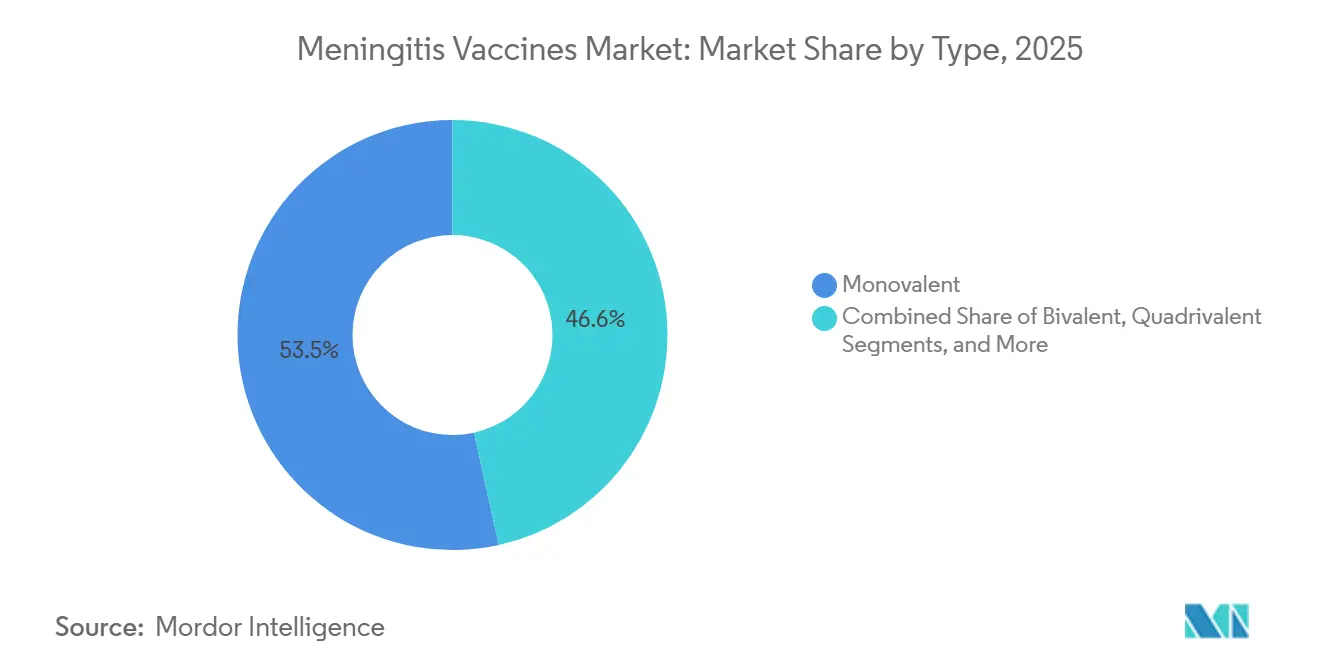
Quadrivalent formulations held 53.45% of the meningitis vaccines market share in 2025. Their position reflects established adolescent immunization schedules in North America and Europe, where providers and public programs are familiar with MenACWY products. MenQuadfi and Menveo support demand through broad U.S. age indications, covering infant, pediatric, adolescent, and adult vaccination. Monovalent products, including MenAfriVac and MenFive in Africa, depend primarily on Gavi funding and public tenders. The others category includes emerging combination products and polysaccharide vaccines used in lower-income settings transitioning to conjugate vaccination.
Bivalent formulations are forecast to register the highest CAGR of 8.78% through 2031. MenB and MenAC products support growth through national programs in the United Kingdom and state programs in Australia. The United Kingdom's established MenB-4C program provides a recurring demand base. As of December 2025, six randomized controlled trials were evaluating 4CMenB efficacy against gonorrhea, with most results expected by the end of 2026. These results could influence future program decisions but would not replace the established meningococcal indication.



By Brand: Bexsero Leads While Menveo Has The Highest Growth Rate
Bexsero accounted for 34.56% of the meningitis vaccines market share in 2025. Its position reflects adoption across 18 national immunization programs and the distribution of more than 110 million doses globally since 2015. Penmenvy combines Bexsero's MenB-4C antigen components with Menveo's ACWY coverage in a single product. GSK reported that its MenB-4C component accounted for three out of every four MenB doses administered through U.S. channels in 2024. This installed base supports GSK's position in combination vaccination.
Menveo is forecast to grow at a CAGR of 9.44% through 2031, the highest rate among the brands included in the estimates. As the MenACWY component of Penmenvy, it benefits from standalone demand and combination vaccine adoption. Penbraya and Penmenvy are positioned to benefit if adolescent schedules increasingly use pentavalent products. MenFive and MenAfriVac serve public-sector markets in the African meningitis belt, with prices benchmarked at or below USD 3 per dose. Nimenrix, MenQuadfi, and other branded vaccines compete primarily in private channels across Europe and Asia.
By Age Group: Children Provide The Largest Base And Infants Drive Growth
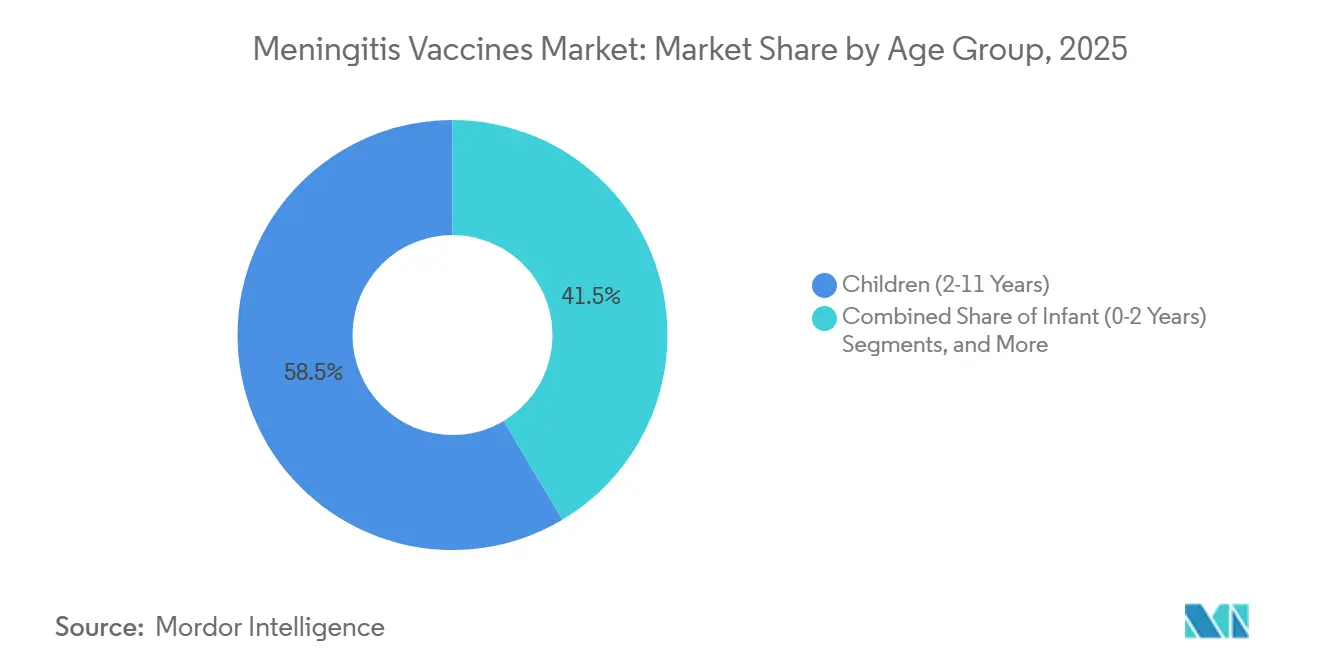
Children aged 2 to 11 years represented 58.54% of the meningitis vaccines market share in 2025. Pediatric schedules in North America and Europe support demand through routine vaccination, school-entry requirements, travel vaccination, and outbreak response. This age group includes both primary vaccination and preadolescent catch-up activity, supporting steady public and private purchasing volumes. Adolescents aged 12 to 17 years remain important, as MenACWY boosters and MenB vaccination initiation are concentrated during this period. College-entry requirements further support vaccination completion.
Infants aged 0 to 2 years are forecast to grow at a CAGR of 10.25% through 2031. The FDA approved MenQuadfi in May 2025 for children as young as 6 weeks, supported by three late-stage studies involving more than 6,000 participants aged 6 weeks to 19 months. The European Commission is expected to approve MenQuadfi for infants aged 6 weeks and older on August 4, 2026. This development would place Sanofi in direct competition with Menveo and Nimenrix for early-life national immunization tenders. ECDC surveillance data identified infants under 1 year as the group with the highest incidence of invasive meningococcal disease in the EU and EEA.
By Serotype: Serogroup Y Has The Largest Share And Serogroup B Expands Fastest
Serogroup Y held 32.98% of the meningitis vaccines market share in 2025. Its position reflects the wider circulation of the ST-1466 and ST-23 clonal complexes. The CDC reported that ST-1466 accounted for 68% of U.S. serogroup Y cases in 2023 and identified atypical bacteremia presentations and an 18% mortality rate among assessed cases. In Hubei Province, China, the first recorded serogroup Y outbreak in 2024 was linked to the ST-1655 strain of the ST-23 complex. The study reported a 12.2% carriage rate among classmates, while China's national immunization schedule covered serogroups A and C rather than serogroup Y.
Serogroup B is forecast to grow at a CAGR of 8.25% through 2031. Growth is supported by the expansion of MenB programs in countries where it remains the leading cause of invasive disease. In England, serogroup B caused 313 of 372 laboratory-confirmed cases during the 2024-2025 epidemiological year, up 4.3% from 300 cases in 2023-2024. A systematic review and meta-analysis found that MenB-4C had a pooled effectiveness of 32.4% against gonorrhea, with a 95% confidence interval of 26.2% to 38.7%, across eight peer-reviewed studies. This evidence could influence future funding discussions in the United Kingdom, Australia, and the United States.
By Sales Channel: Private Sales Lead While Public Procurement Grows Faster
Private sales held 64.73% of the meningitis vaccines market share in 2025. This channel benefits from demand for MenB and MenABCWY products in high-income settings, where insurance coverage varies. Commercial U.S. prices for MenB vaccines ranged from USD 150 to USD 180 per dose in private channels, supporting a high-value revenue base despite lower volumes than public programs. Private demand is also significant, where optional vaccination depends on provider recommendations or travel requirements. In China, private-market consumers use CanSino's Menhycia quadrivalent conjugate vaccine, while the national program funds polysaccharide MenA and MenAC vaccines.
Public sales are forecast to grow at a CAGR of 8.65% through 2031. Gavi-funded procurement of MenFive in the African meningitis belt supports growth, while the U.S. Vaccines for Children program includes Penbraya and Penmenvy for eligible pediatric populations. National program expansion in middle-income Asia-Pacific countries provides another avenue for public procurement. CanSino expanded Menhycia's approved age range to children aged 3 months to 6 years in February 2026. China's NMPA accepted a supplemental application in July 2026 to extend the indication to individuals aged 3 months to 17 years.
Geography Analysis
North America held 45.67% of the meningitis vaccines market share in 2025, supported by the U.S. adolescent immunization schedule, combined vaccine approvals, and MenQuadfi’s broader infant indication. U.S. cases increased from 208 in 2021 to 477 in 2024, highlighting coverage gaps among adults and immunocompromised individuals. In Quebec, the disease pattern shifted from predominantly serogroup B to serogroup Y after 2015, with 80.9% of MenY cases associated with the ST-23 clonal complex. Mexico’s private healthcare and travel vaccination demand created additional opportunities, while U.S. FDA and ACIP decisions continued to influence immunization schedule discussions in other countries.
Europe remained a significant source of public procurement for the meningitis vaccines market. The United Kingdom’s routine infant MenB-4C program and MenACWY adolescent schedule supported stable demand. The UK Health Security Agency reported 372 invasive meningococcal disease cases in 2024–2025, compared with 340 cases in 2023–2024, while MenW cases increased from 17 to 43. France, Germany, and Spain accounted for 57% of cases in the cited EU and EEA surveillance report, with serogroup B identified as the leading cause among individuals under 65 years.
Asia-Pacific is forecast to grow at a CAGR of 8.94% through 2031. China’s immunization program continued to rely on polysaccharide serogroup A and C vaccines, leaving adolescents without routine protection against serogroups Y and W, while the 2024 Hubei school outbreak increased attention to this gap. CanSino’s Menhycia offered a quadrivalent private-market option and expanded its approved age indications in 2026. South Korea launched MenQuadfi through SK Bioscience and Sanofi in January 2026 for infants aged 6 weeks to 24 months and other approved groups. The Middle East and Africa combined premium private travel vaccination demand in GCC countries with public procurement in the African meningitis belt, while South America remained at an earlier stage of quadrivalent adoption, led by Brazil’s meningococcal C program.

Competitive Landscape
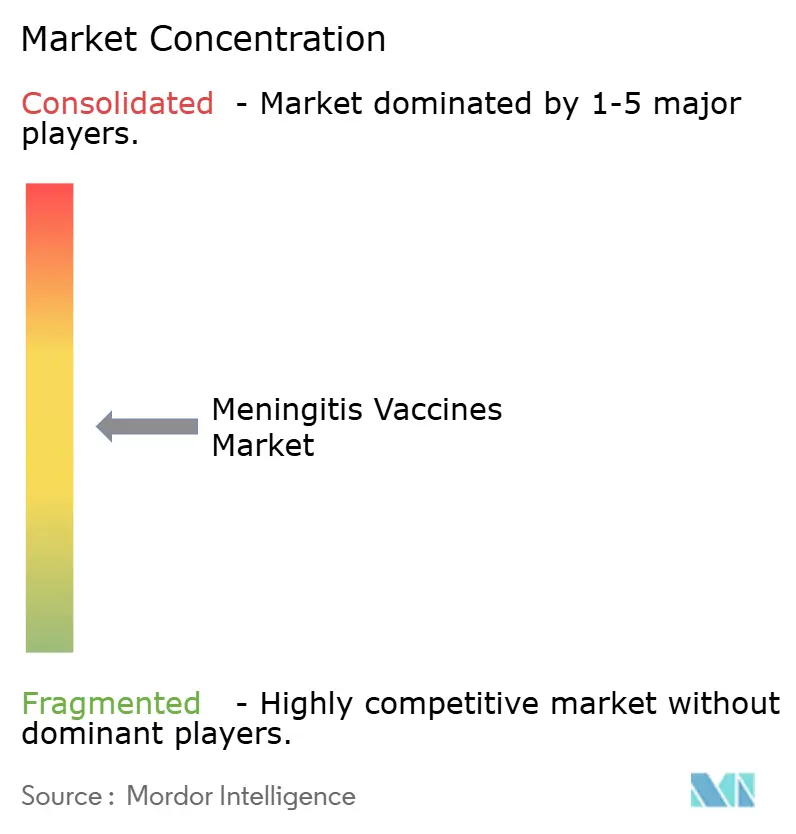
The meningitis vaccines market was moderately concentrated, with GSK, Pfizer, Sanofi, and the Serum Institute of India serving as the leading global suppliers. GSK and Pfizer competed directly in higher-value MenB and pentavalent products, while Sanofi held a significant position in MenACWY vaccination. The Serum Institute of India remained a key supplier for African public procurement. Competition varied by use case, with Penmenvy and Penbraya serving the U.S. adolescent pentavalent segment and MenQuadfi, Menveo, and Nimenrix competing in European infant MenACWY tenders.
GSK combined Bexsero and Menveo components in Penmenvy, enabling it to offer a combined option while maintaining its established MenB and MenACWY product portfolio. Sanofi expanded MenQuadfi coverage in the United States to individuals aged 6 weeks through adulthood. European approval for infants aged 6 weeks and older strengthened Sanofi’s position in national immunization tenders. Sanofi’s MenABCWY candidate, SP0230, was in mid-stage clinical development and could enable the company to enter the pentavalent segment currently served by GSK and Pfizer.
CanSino expanded the Menhycia age label to 6 years in February 2026 and submitted an application to extend coverage to 17 years in July 2026. Chongqing Zhifei, Walvax, Hualan Biological Engineering, Minhai Biotechnology, and Shenzhen Kangtai primarily supplied lower-priced polysaccharide vaccines to China’s national immunization program. Serum Institute’s MenFive remained the only licensed vaccine cited in the draft with serogroup X coverage, giving it a distinct role in African settings with serogroup X outbreaks. Clinical trial results expected by the end of 2026 could affect funding considerations for MenB products if cross-protection against gonorrhea is validated.
Meningitis Vaccines Industry Leaders
GSK plc
Pfizer Inc.
Sanofi
Merck & Co., Inc.
Serum Institute of India Pvt. Ltd.
- *Disclaimer: Major Players sorted in no particular order

Recent Industry Developments
- August 2026: The European Commission approved Sanofi’s MenQuadfi for infants aged 6 weeks and older, strengthening its position in EU national immunization program tenders against Menveo and Nimenrix.
- July 2026: China’s NMPA accepted CanSino Biologics’ supplemental application to expand Menhycia’s indication to individuals aged 3 months to 17 years, potentially making it China’s only ACYW135 conjugate vaccine for adolescents.
- May 2026: Sanofi updated MenQuadfi’s prescribing information following FDA approval, establishing it as the only U.S.-licensed MenACWY vaccine for individuals aged 6 weeks and older without an upper age limit.
- April 2025: Nigeria received over 1 million Men5CV doses from the Gavi-funded ICG stockpile to address a serogroup C and W outbreak, with an additional 1.5 million doses approved for deployment.


Global Meningitis Vaccines Market Report Scope
As per the scope of the report, a meningitis vaccine is a medical treatment designed to protect the body against serious bacterial infections caused by Neisseria meningitidis, which can lead to life-threatening swelling around the brain and spinal cord or dangerous bloodstream infections.
The meningitis vaccines market is segmented by type, brand, age group, serotype, sales channel, and geography. By type, the market is segmented into monovalent, bivalent, quadrivalent, and other vaccines. By brand, the market includes Bexsero, Menveo, Penmenvy, Penbraya, MenQuadfi, Nimenrix, MenFive, MenAfriVac, and other manufacturer-branded vaccines. By age group, the market is categorized into infants (0–2 years), children (2–11 years), adolescents (12–17 years), and adults (18 years and above). By serotype, the market is segmented into serogroups A, B, C, W, and Y, and others. By sales channel, the market is divided into public and private channels. By geography, the market is analyzed across North America, Europe, Asia-Pacific, the Middle East and Africa, and South America. The report also covers estimated market sizes and trends for 17 countries across major regions globally. The report provides market sizes and forecasts in terms of value (USD) for the above segments.
| Monovalent |
| Bivalent |
| Quadrivalent |
| Others |
| Bexsero |
| Menveo |
| Penmenvy |
| Penbraya |
| MenQuadfi |
| Nimenrix |
| MenFive |
| MenAfriVac |
| Other Manufacturer-Branded Vaccines |
| Infant (0-2 Years) |
| Children (2-11 Years) |
| Adolescents(12-17 Years) |
| Adults (18+ Years) |
| Serogroup A |
| Serogroup B |
| Serogroup C |
| Serogroup W |
| Serogroup Y |
| Others |
| Public |
| Private |
| North America | United States |
| Canada | |
| Mexico | |
| Europe | Germany |
| United Kingdom | |
| France | |
| Italy | |
| Spain | |
| Rest of Europe | |
| Asia-Pacific | China |
| India | |
| Japan | |
| Australia | |
| South Korea | |
| Rest of Asia-Pacific | |
| Middle East and Africa | GCC |
| South Africa | |
| Rest of Middle East and Africa | |
| South America | Brazil |
| Argentina | |
| Rest of South America |
| By Type | Monovalent | |
| Bivalent | ||
| Quadrivalent | ||
| Others | ||
| By Brand | Bexsero | |
| Menveo | ||
| Penmenvy | ||
| Penbraya | ||
| MenQuadfi | ||
| Nimenrix | ||
| MenFive | ||
| MenAfriVac | ||
| Other Manufacturer-Branded Vaccines | ||
| By Age Group | Infant (0-2 Years) | |
| Children (2-11 Years) | ||
| Adolescents(12-17 Years) | ||
| Adults (18+ Years) | ||
| By Serotype | Serogroup A | |
| Serogroup B | ||
| Serogroup C | ||
| Serogroup W | ||
| Serogroup Y | ||
| Others | ||
| By Sales Channel | Public | |
| Private | ||
| By Geography | North America | United States |
| Canada | ||
| Mexico | ||
| Europe | Germany | |
| United Kingdom | ||
| France | ||
| Italy | ||
| Spain | ||
| Rest of Europe | ||
| Asia-Pacific | China | |
| India | ||
| Japan | ||
| Australia | ||
| South Korea | ||
| Rest of Asia-Pacific | ||
| Middle East and Africa | GCC | |
| South Africa | ||
| Rest of Middle East and Africa | ||
| South America | Brazil | |
| Argentina | ||
| Rest of South America | ||


Key Questions Answered in the Report
What is the projected value of the meningitis vaccines market by 2031?
The meningitis vaccines market is forecast to reach USD 6.61 billion by 2031 from USD 4.65 billion in 2026. The forecast CAGR is 7.25% for 2026 to 2031.
Which vaccine type held the largest share in 2025?
Quadrivalent formulations held 53.45% share in 2025. Their position reflects established MenACWY use in adolescent schedules across North America and Europe.
Which age group is expected to grow fastest through 2031?
Infants aged 0 to 2 years are forecast to grow at a 10.25% CAGR through 2031. The FDA approved MenQuadfi for children as young as 6 weeks in May 2025, and the European Commission approved its use from 6 weeks in August 2026.
Which region is forecast to grow fastest?
Asia-Pacific is forecast to grow at an 8.94% CAGR through 2031. China's routine program continues to use serogroup A and C polysaccharide vaccines, while private purchasers can access quadrivalent conjugate products
What is driving public procurement of meningitis vaccines?
Gavi-funded MenFive deployment in Africa, access through the U.S. Vaccines for Children program, and broader national immunization efforts are increasing public purchases.
Which companies are leading the meningitis vaccine supply?
GSK, Pfizer, Sanofi, and the Serum Institute of India are the principal suppliers described in the supplied research. Their roles differ across MenB, pentavalent, MenACWY, and African public procurement. GSK and Pfizer compete in U.S. pentavalent vaccination, while Sanofi has expanded MenQuadfi age coverage and the Serum Institute supplies MenFive.
Why do combined MenABCWY vaccines matter for vaccination programs?
Combined MenABCWY vaccines can replace separate MenACWY and MenB appointments for eligible people. This may reduce the injection burden and make it easier to complete recommended protection.
Page last updated on:





