
Livestock Flooring Market Size and Share
Market Overview
| Study Period | 2021 - 2031 |
|---|---|
| Market Size (2026) | USD 1.83 Billion |
| Market Size (2031) | USD 2.25 Billion |
| Growth Rate (2026 - 2031) | 4.22 % |
| Fastest Growing Market | Asia-Pacific |
| Largest Market | North America |
| Market Concentration | Low |
Major Players *Disclaimer: Major Players sorted in no particular order Image © Mordor Intelligence. Reuse requires attribution under CC BY 4.0. | |
Livestock Flooring Market Analysis by Mordor Intelligence
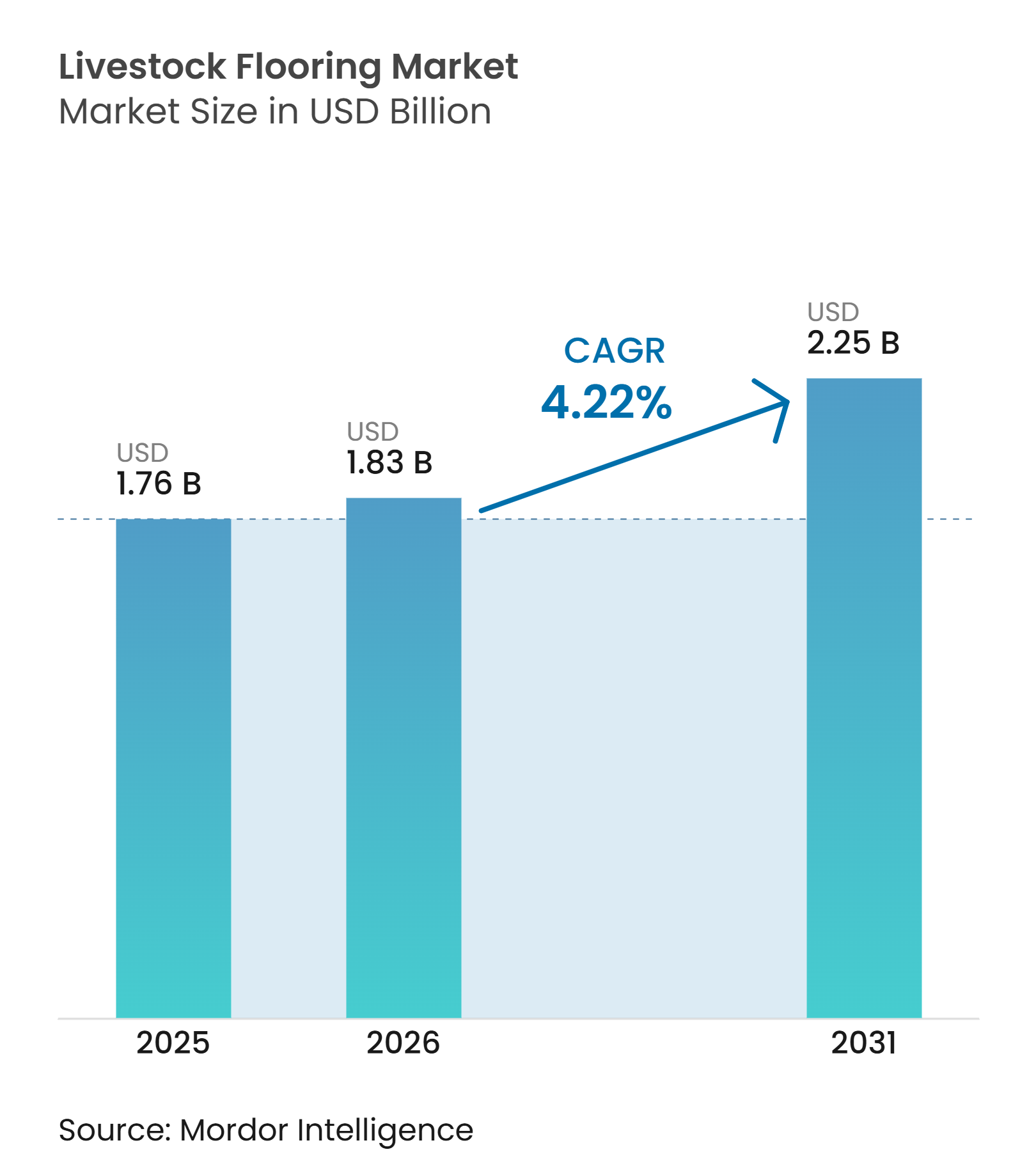
The livestock flooring market was valued at USD 1.76 billion in 2025 and is projected to grow from USD 1.83 billion in 2026 to USD 2.25 billion by 2031, at a CAGR of 4.22% during the forecast period (2026-2031). Demand is driven by commercial dairy, swine, and poultry production, where flooring affects animal movement, cleaning, and equipment use. Animal welfare regulations are increasing the need for surfaces that reduce the risk of slips, support hoof health, and enable effective sanitation. Commercial farms are also upgrading barns as herd sizes grow and automated systems become more common. Concrete remains widely used due to its low initial cost and long service life, while rubber and plastic products address comfort, traction, and cleaning requirements. The market is fragmented across materials, animal types, and regions, creating opportunities for suppliers with certified products and local technical support.
Key Report Takeaways
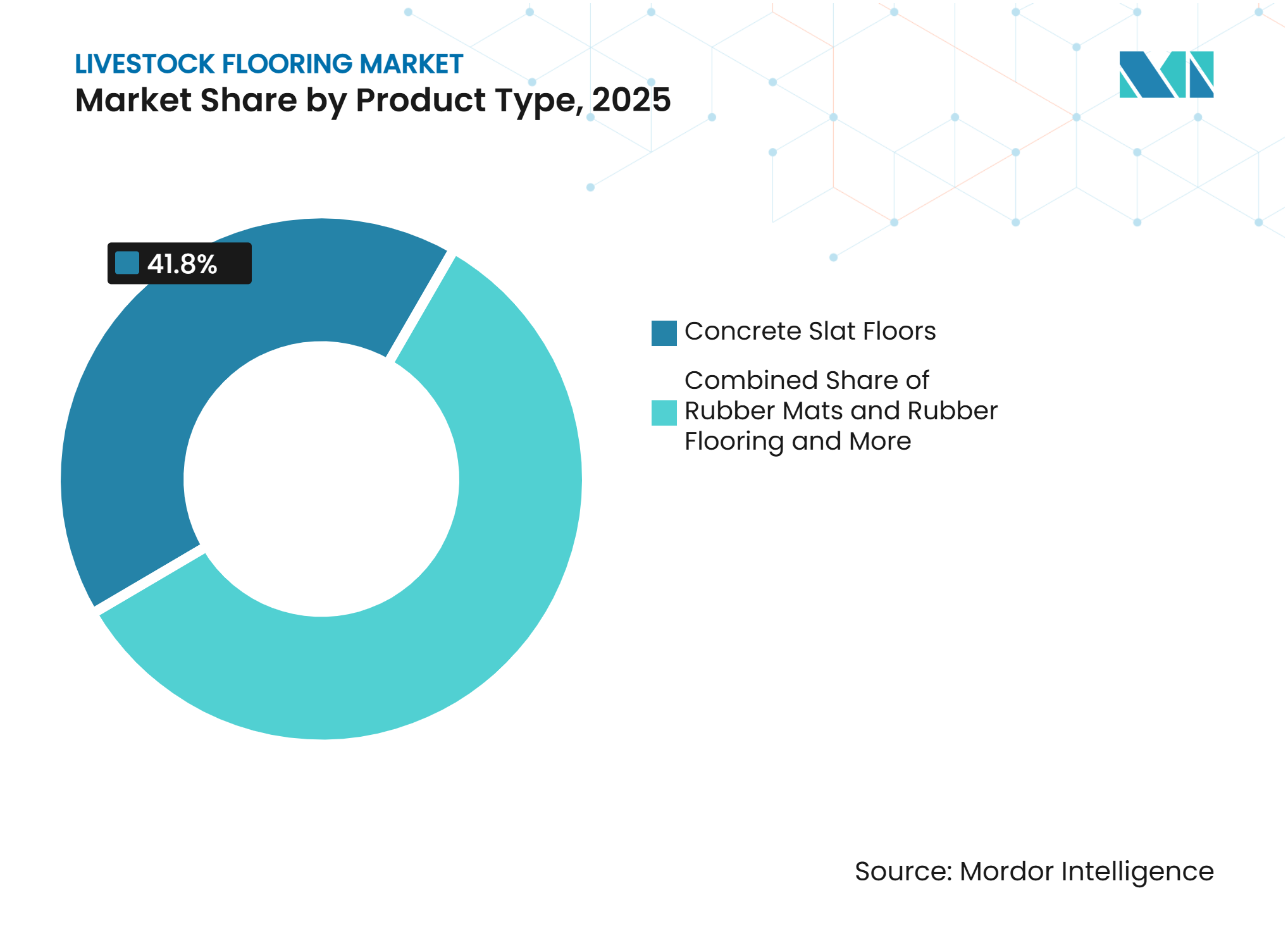
- By product type, concrete slat floors accounted for the largest 41.8% of the livestock flooring market share in 2025, while rubber mats and rubber flooring are projected to grow at the fastest CAGR of 6.2% from 2026 to 2031.
- By material type, concrete accounted for the largest share at 38.0% in 2025, while the livestock flooring market size for recycled rubber is projected to grow at the fastest CAGR of 6.7% from 2026 to 2031.
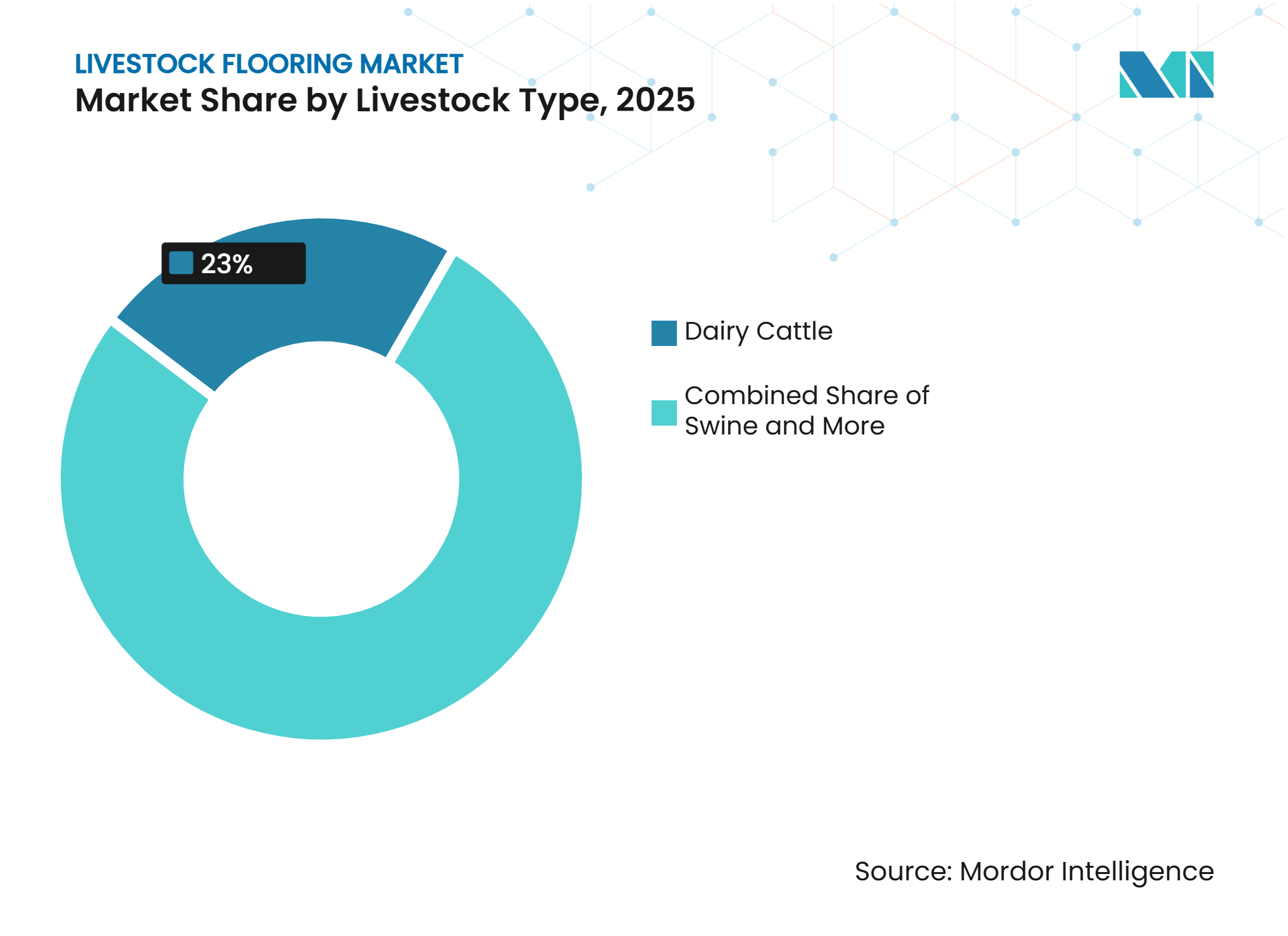
- By livestock type, dairy cattle accounted for the largest share at 23.0% 2025, while swine is projected to grow at the fastest CAGR of 6.1% from 2026 to 2031.
- By farm type, commercial farms accounted for the largest share at 48.4% in 2025, while small farms are projected to grow at the fastest CAGR of 5.4% from 2026 to 2031.
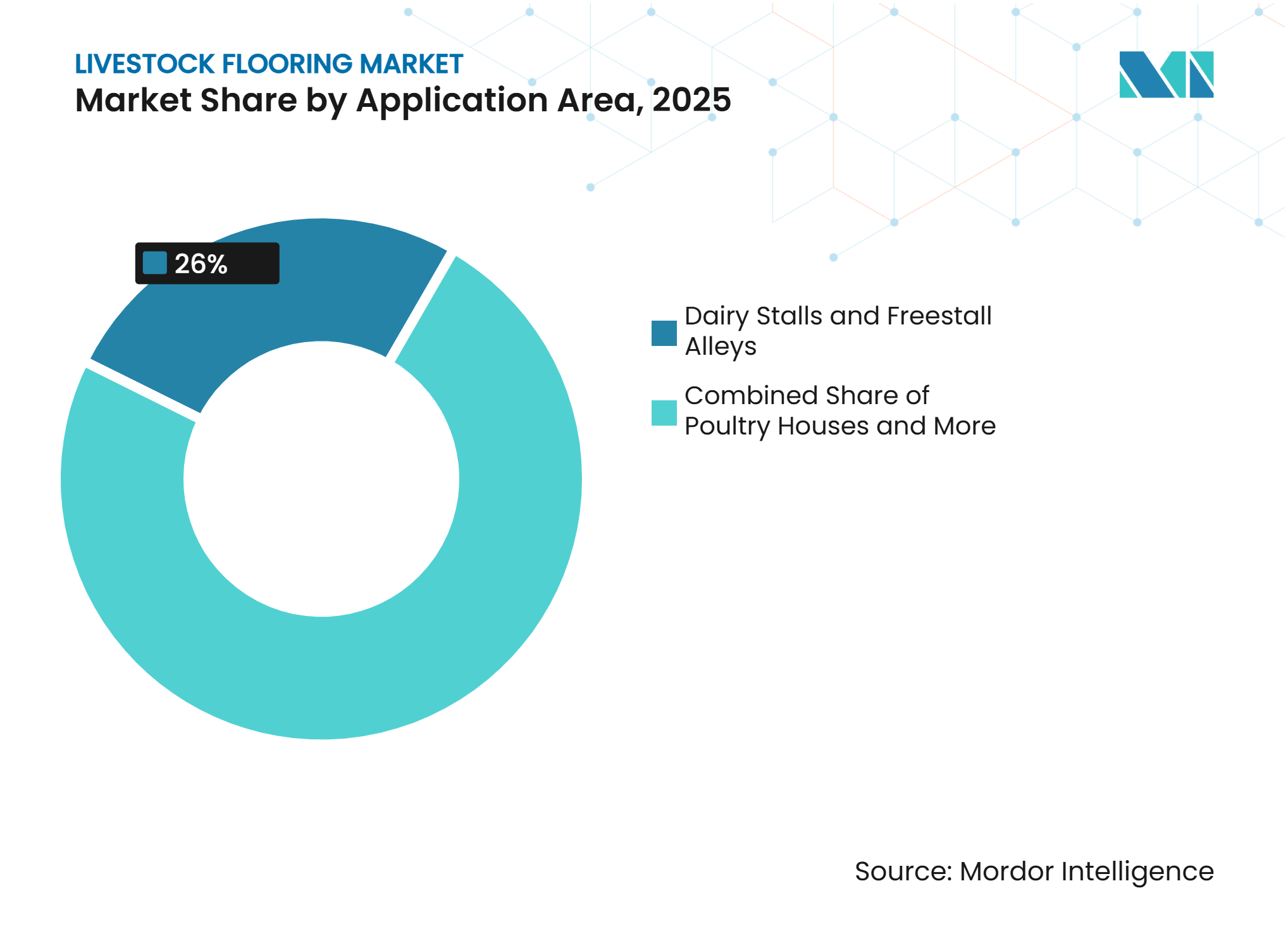
- By application area, dairy stalls and freestall alleys accounted for the largest share at 26.0% in 2025, while poultry houses are projected to grow at the fastest CAGR of 5.8% from 2026 to 2031.
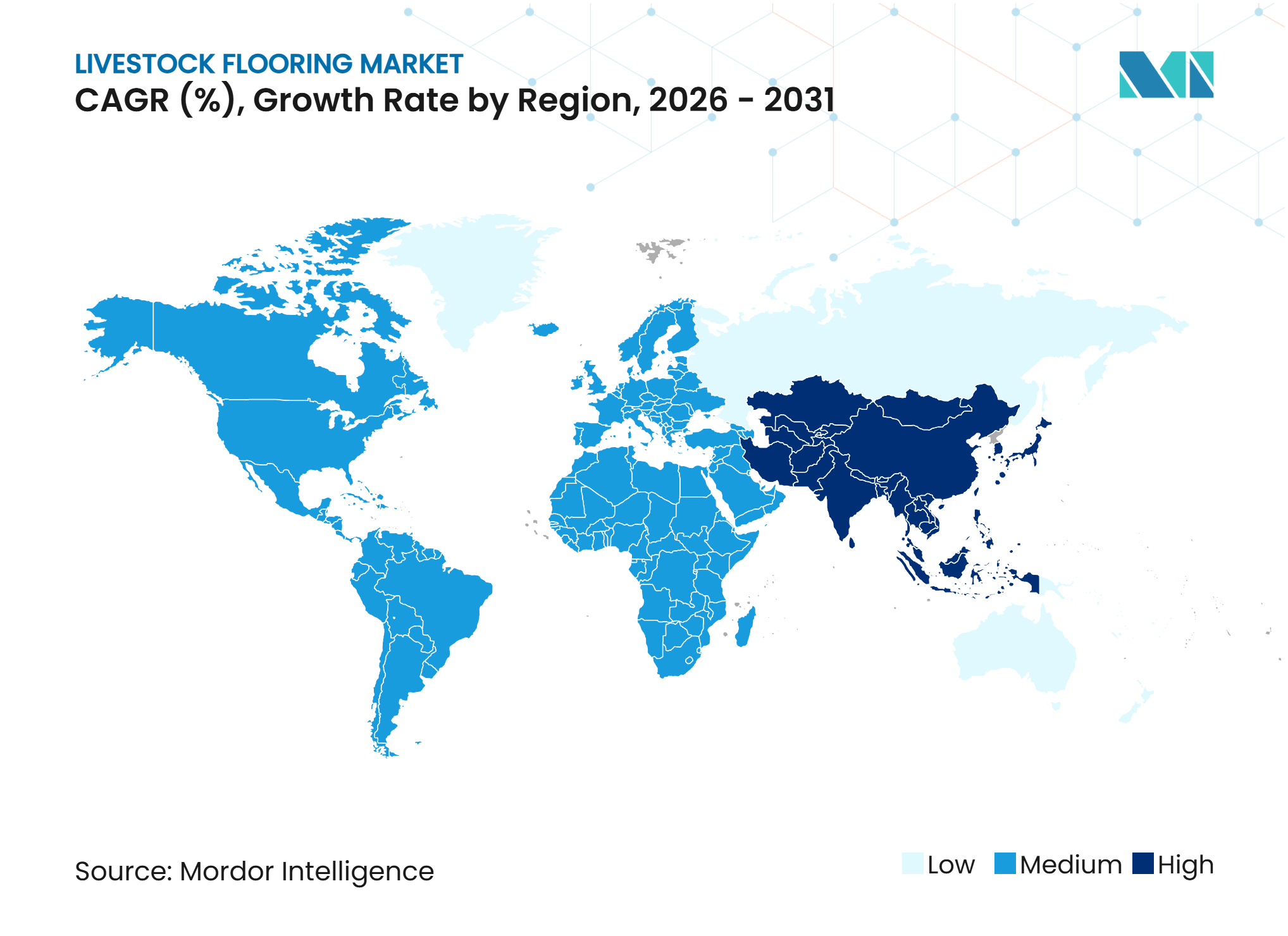
- By geography, North America accounted for the largest share at 34.2% in 2025, while Asia-Pacific is projected to grow at the fastest CAGR of 6.4% from 2026 to 2031.
Note: Market size and forecast figures in this report are generated using Mordor Intelligence’s proprietary estimation framework, updated with the latest available data and insights as of January 2026.
Market Trends and Insights
Drivers Impact Analysis of Livestock Flooring Market*
| Driver | (~) % Impact on CAGR Forecast | Geographic Relevance | Impact Timeline |
|---|---|---|---|
| Animal welfare and lameness reduction | +0.8% | Global, strongest in Europe and North America | Medium term (2-4 years) |
| Expansion of commercial livestock production | +0.7% | Asia-Pacific, Middle East and Africa, South America | Long term (≥ 4 years) |
| Hygiene, biosecurity, and disease control | +0.6% | Global, strongest in Europe and Asia-Pacific | Short term (≤ 2 years) |
| Demand for durable and easy-clean flooring | +0.4% | North America and Europe | Medium term (2-4 years) |
| Retrofit demand from automated manure removal and robotic milking | +0.5% | Europe, North America, and Australia | Medium term (2-4 years) |
| Sensor-ready flooring and data-enabled herd management | +0.3% | Europe, North America, and Australia | Long term (≥ 4 years) |
| Source: Mordor Intelligence | |||
Animal Welfare and Lameness Reduction
Hoof health outcomes increasingly influence flooring specification decisions in commercial dairy barns, where surface hardness affects lameness incidence. A cross-sectional study of 1,050 Holstein–Friesian cows, published in Frontiers in Veterinary Science in 2026, recorded metapodial and phalangeal lesion prevalence of 34.0% on the concrete-floored farm and 8.75% on the sand-floored farm, with concrete strongly associated with elevated lesion risk. As lameness leads to reduced milk yield, impaired fertility, and premature culling, producers treat cushioned rubber matting as a clinical intervention rather than a comfort upgrade, sustaining replacement demand across walking alleys and resting areas.
Expansion of Commercial Livestock Production
Livestock housing capital expenditure is determined by animal inventory, as floor area is specified per head at defined stocking densities. In their 2025 Agricultural Outlook, the Organization for Economic Co-operation and Development (OECD) and the Food and Agriculture Organization of the United Nations (FAO) projected that total global inventories of cattle, sheep, pigs, and poultry will expand by 7% over the decade to 2034[1]. As each animal requires a fixed floor area, this inventory growth translates directly into installed square meters of livestock flooring.
Hygiene, Biosecurity, and Disease Control
Floor specification in poultry and swine housing is governed by cleanability, as every surface must withstand repeated washdown and exposure to disinfectants without retaining organic residue. According to the World Organization for Animal Health (WOAH), 1,410 outbreaks of high-pathogenicity avian influenza in poultry were reported during the October 2024 to September 2025 seasonal wave[2]. Each outbreak triggers a depopulation and terminal disinfection cycle, and the resulting chemical and mechanical loading shortens service intervals across slatted concrete, plastic, and rubber systems, pulling resurfacing and replacement demand forward.
Demand for Durable and Easy-Clean Flooring
Livestock flooring is purchased on an installed area basis and evaluated over a replacement cycle rather than at a single purchase price. Specification therefore depends on measurable service attributes, including load rating, abrasion resistance, drainage geometry, slip resistance, and washdown time between groups. Because these attributes determine both labor hours and the interval before resurfacing, they govern buyer comparisons between competing systems beyond installed cost alone. This lifecycle basis sustains specification value across concrete, rubber, plastic, metal, composite, and interlocking systems as barns are renewed.
Restraints Impact Analysis of Livestock Flooring Market*
| Restraint | (~) % Impact on CAGR Forecast | Geographic Relevance | Impact Timeline |
|---|---|---|---|
| High installed cost and long farm payback | -0.9% | Global, strongest in South Asia and Africa | Short term (≤ 2 years) |
| Concrete’s low upfront cost and long service life | -0.7% | Global | Long term (≥ 4 years) |
| End-of-life recycling complexity for rubber and composite flooring | -0.3% | Europe, North America, and Australia | Medium term (2-4 years) |
| Compatibility constraints with legacy barn dimensions and manure equipment | -0.2% | Europe and North America | Medium term (2-4 years) |
| Source: Mordor Intelligence | |||
High Installed Cost and Long Farm Payback
Installed flooring is a financed capital item, and the investment case depends on payback measured against borrowing costs rather than purchase price alone. According to the Federal Reserve Bank of Kansas City, average interest rates on all types of farm loans stood at around 7.5% at the end of 2025, approximately 100 basis points above the 10-year average. Elevated financing costs extend payback periods beyond the horizon that many operations find acceptable, delaying specification decisions. As a result, purchasing is concentrated among operations with sufficient throughput to amortize the investment, which limits addressable demand.
Compatibility Constraints with Legacy Barn Dimensions and Manure Equipment
A retrofit floor must satisfy two independent constraints simultaneously: the fixed slat spans, gap profiles, and pit openings of the existing structure, and the systems accepted under permit. According to the Netherlands Enterprise Agency (RVO), emission factors for certain dairy barn floor systems have an end date of 1 January 2027[3], after which new construction or major renovation may use only systems that remain listed. Each system withdrawal narrows the range of flooring options compatible with legacy geometry, potentially delaying retrofits and deferring flooring purchases.
*Our forecasts treat driver/restraint impacts as directional, not additive. The impact forecasts reflect baseline growth, mix effects, and variable interactions.
Livestock Flooring Market Segment Analysis
By Product Type:
Concrete Slat Floors Leads While Rubber Mats and Rubber Flooring Gain GroundConcrete slat floors accounted for the largest 41.8% of the livestock flooring market share in 2025. Buyers select these systems for their load-bearing capacity, straightforward casting to standard bay dimensions, and familiarity among barn contractors. They are used in beef pens and feedlots, swine finishing rooms, and dairy freestall alleys. Plastic slat floors are specified in farrowing and nursery rooms where drainage geometry and surface temperature govern piglet placement. Metal grating floors and composite flooring systems are used on loading ramps, lairage areas, and equine aisles. Interlocking floor systems are suited to retrofits over uneven bases without adhesives.
Rubber mats and rubber flooring are projected to grow at the fastest CAGR of 6.2% from 2026 to 2031. This growth is driven by veterinary evidence linking softer walking and lying surfaces to lower hoof stress in housed cattle. Certified rubber systems hold a stronger position in Western Europe, where procurement files and environmental permit reviews require documented performance. Demand is concentrated in transfer lanes, holding areas, and freestall beds, where animals spend the most contact hours. Product choice remains tied to barn geometry, manure-handling method, and animal performance value.



By Material Type:
Concrete Leads While Recycled Rubber Grows FastestConcrete accounted for the largest share at 38.0% in 2025. Wide availability and predictable casting cost keep it the default structural layer. Natural rubber, synthetic rubber, plastic and polymer materials, steel and metal, and hybrid and composite materials each serve defined surface roles. Hybrid products pair a rubber wear layer with a concrete slat base, or combine reinforced polymer elements with a rubber contact surface. These constructions suit sites seeking to combine the structural properties of one material with the contact properties of another. Material selection follows animal type, surface location, cleaning method, and permit requirements.
The livestock flooring market size for recycled rubber is projected to grow at the fastest CAGR of 6.7% from 2026 to 2031. This growth reflects steady end-of-life tire feedstock availability and buyer interest in circular material sourcing. Food-contact and hygiene regulations restrict the use of certain recycled grades in poultry buildings and milking areas, so suppliers document their input streams and additive packages. National renovation support schemes in parts of Europe attach eligibility conditions to qualifying mat products, which increases the value of traceable material records. Compliance documentation now carries equal weight alongside physical performance in material selection.
By Livestock Type:
Dairy Cattle Lead While Swine Modernization ExpandsDairy cattle accounted for the largest share at 23.0% in 2025. Flooring plays an operational role in dairy housing, as cows walk, stand, and lie on the same surfaces throughout long daily cycles. Rubber and composite products are therefore common in alleys, holding areas, and stalls, while concrete remains standard where structural span and cost are the primary considerations. Beef cattle, equine, sheep, and goats add demand with varying durability and traction requirements. Equine facilities frequently specify rubber and composite surfaces for stable aisles, wash bays, and loading areas.
Swine is projected to grow at the fastest CAGR of 6.1% from 2026 to 2031. Herd rebuilding across Asia is shifting production into enclosed, biosecure units, and these buildings are designed around slatted floor systems from the outset. Plastic and rubber slats are suited to farrowing and nursery rooms, where drainage and surface temperature affect piglet survival. Poultry demand follows a similar trend as integrated broiler and layer houses replace open sheds. Regulatory review of pig and poultry housing standards in Europe continues to raise floor specifications as a topic of discussion among producers, equipment suppliers, and permitting authorities.

By Farm Type:
Commercial Farms Hold Value While Small Farms Grow FasterCommercial farms accounted for the largest share at 48.4% in 2025. Large dairy, swine, and poultry operations spend more per location and rebuild or extend housing more frequently than smaller operations. Their order volumes justify supplier tooling and custom panel runs. Scale also supports automated manure handling and robotic scraping, which place additional requirements on slat spacing and surface finish. Medium farms and specialty livestock operations serve narrower needs where animal comfort and product quality are weighed against initial price. Commercial farms account for a substantial share of product value and technical demand.
Small farms are projected to grow at the fastest CAGR of 5.4% from 2026 to 2031. Modular mats and lightweight polymer panels can be installed without structural rebuilding, making surfaced flooring accessible to holdings that cannot fund a full re-floor. Cooperative purchasing and state modernization programs further reduce entry costs in South Asia, Southeast Asia, and Sub-Saharan Africa, where producers are moving away from earthen and plain concrete surfaces. Uptake depends on systems that ship in manageable sizes, tolerate uneven bases, and can be extended pen by pen.
By Application Area:
Dairy Stalls and Freestall Alleys Lead While Poultry Houses ExpandDairy stalls and freestall alleys accounted for the largest share at 26.0% in 2025. These surfaces have the highest contact hours in a dairy building and influence cow mobility, resting time, and the risk of slips during turnout. Alley mats and freestall bedding are specified for traction and cushioning under repeated passage. Milking parlors and holding areas require a reliable footing during multiple collections each day. Loading ramps and handling chutes use composite or metal grating to provide traction on slopes. Lairage and livestock transport areas require non-slip surfacing under European Union transport rules.
Poultry houses are projected to grow at the fastest CAGR of 5.8% from 2026 to 2031. Closed broiler and layer buildings are being added across the Middle East and Asia-Pacific, and each cycle ends with a cleaning and disinfection round that the floor must withstand. Swine farrowing and nursery pens, beef pens and feedlots, and calf pens and hutches account for the remaining demand for applications. Pending welfare revisions for pig housing are keeping attention on heated, plastic-topped, and rubber-lined farrowing surfaces. Products in this segment are evaluated on drainage, sanitation, and safe animal movement.
Geography Analysis
North America accounted for the largest share at 34.2% in 2025. The region has mature commercial dairy and swine sectors, high per-site spending, and widespread freestall housing that concentrates animal traffic on surfaces. Rubber alley mats and stall mattresses are widely used in large dairy states, including California, Wisconsin, Idaho, and New York. Integrated broiler and turkey operations sustain steady demand for poultry-house surfacing. Canadian dairy and hog barns follow comparable specification practices. Contractor familiarity with precast slat systems keeps replacement projects on predictable schedules across the United States and Canada.
Asia-Pacific is projected to grow at the fastest CAGR of 6.4% from 2026 to 2031. Dairy herd expansion in India and swine rebuilding in China and Vietnam are moving animals into enclosed housing with specified floors rather than improvised ones. Integrated poultry groups are commissioning multi-house sites that standardize slat dimensions across buildings. Cooperative dairy structures in India are bringing modular mats within reach of smallholders through group purchasing. Australia and New Zealand contribute steady replacement volume from established dairy infrastructure. Local manufacturing in China and India shortens lead times and lowers landed costs.
Europe holds the second-largest market share and maintains the most detailed regulatory framework for livestock housing surfaces. Pig and dairy housing in the region is predominantly indoor, so the installed floor area tracks the confined animal base rather than pasture. According to Eurostat, the European Union held 132 million pigs at the end of 2024, concentrated in a small number of member states. These animals are housed on slatted or solid floors with defined replacement cycles, sustaining resurfacing activity across Western and Northern Europe. Certification and permit documentation requirements also shape supplier access in the region.
Competitive Landscape
Market Concentration
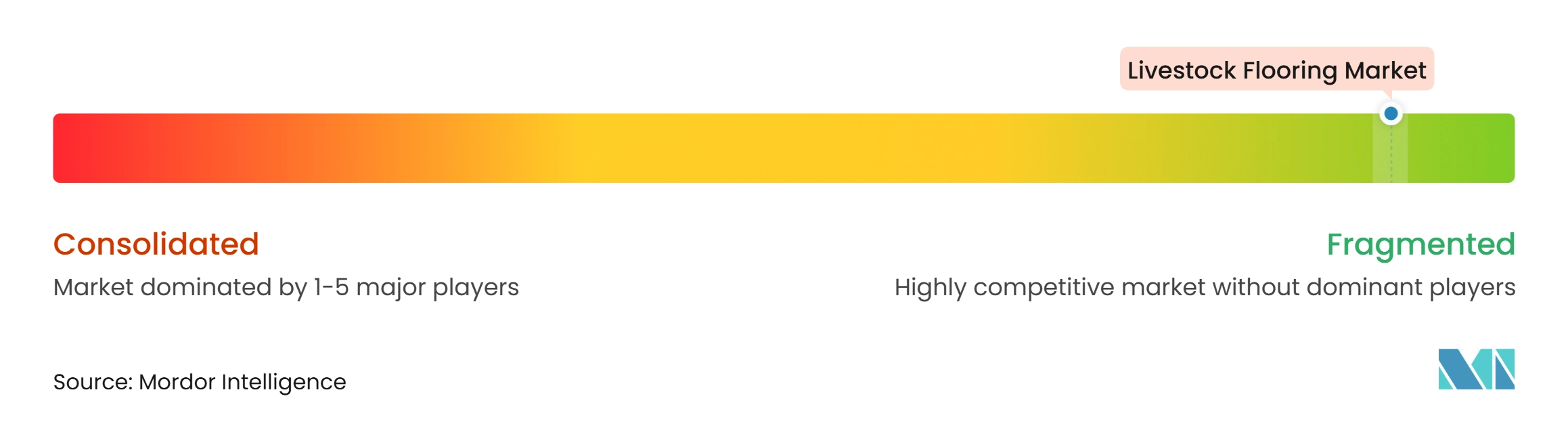
The livestock flooring market remained highly fragmented in 2025, with key players including North West Rubber Ltd. (TorQuest Partners), Nooyen Group B.V., Big Dutchman International GmbH (Big Dutchman AG), Gummiwerk KRAIBURG Elastik GmbH and Co. KG (KRAIBURG Holding SE and Co. KG), and Agriprom Stalmatten B.V. These companies supply rubber mats, precast and plastic slat systems, and complete housing equipment packages for dairy, swine, and calf buildings. No single manufacturer leads every product category. Suppliers that combine product reliability with technical support for local barn layouts hold the strongest market positions.
Competition is based on certification, emission registration, engineering capability, service coverage, and project delivery rather than price alone. Manufacturers holding Dutch registrations or German certifications help customers meet permit and subsidy requirements, shortening approval timelines for barn projects. Several producers have released emission-reducing rubber slat covers with profiled surfaces and mechanical fixing systems that separate urine from solids more quickly. Others compete through modular panel formats designed for retrofits over existing bases. Regional specialists retain firm positions in defined niches, as barn dimensions, manure systems, and permit rules differ significantly between countries.
Public conversion funding influences which suppliers secure contracts, as grant-backed projects impose fixed concepts, documentation requirements, and completion windows that only vendors equipped to meet these requirements can meet. According to the Federal Office for Agriculture and Food (BLE) in 2026, Germany's federal program for converting livestock housing granted up to 60% of the eligible investment for qualifying pig barn projects, with applications closing in August 2026. Programs of this kind concentrate orders into short, documented procurement cycles, favoring manufacturers with installation capacity and compliance documentation over suppliers competing on unit price alone within the German pig sector.
Livestock Flooring Industry Leaders
-
North West Rubber Ltd. (TorQuest Partners)
-
Nooyen Group B.V.
-
Big Dutchman International GmbH (Big Dutchman AG)
-
Gummiwerk KRAIBURG Elastik GmbH and Co. KG (KRAIBURG Holding SE and Co. KG)
-
Agriprom Stalmatten B.V.
- *Disclaimer: Major Players sorted in no particular order
Livestock Flooring Market Companies Covered in this Report
- North West Rubber Ltd. (TorQuest Partners)
- Nooyen Group B.V.
- Big Dutchman International GmbH (Big Dutchman AG)
- Hog Slat, Inc.
- Gummiwerk KRAIBURG Elastik GmbH and Co. KG (KRAIBURG Holding SE and Co. KG)
- Agri and Industrial Rubber Limited
- Bioret Agri SAS
- Wolfenden Concrete Limited
- J and D Manufacturing, Inc.
- Agri-Plastics Manufacturing
- MIK INTERNATIONAL GmbH and Co. KG
- VIKAS RUBBERS
- Kapoor Mats and Steel
- Matters Enterprises Pty Ltd
- Agriprom Stalmatten B.V.
Recent Industry Developments in Livestock Flooring Market
- April 2026: Big Dutchman International GmbH (Big Dutchman AG) introduced a modular pig flooring system with interlocking plastic slats that can be cut to size in 10 cm increments, integrate piglet heating plates, and be retrofitted into existing pig houses.
- September 2025: Bioret Agri SAS launched CalfCare Thermofloor, a low-temperature, hydronic-heated floor specifically designed for calf nurseries and pens, adding a temperature-controlled flooring solution to its livestock flooring portfolio.
- June 2024: Wolfenden Concrete Limited launched the AgriStride hybrid flooring range, comprising AgriStride Classic and AgriStride Vario. The range combines 50% rubber and 50% concrete to improve livestock comfort, traction, drainage, hoof health, and slurry management in dairy housing.
Global Livestock Flooring Market Report Scope
Livestock flooring comprises specialized flooring systems used in livestock housing and handling areas to provide animal comfort, traction, hygiene, drainage, and injury prevention, while supporting manure management, animal health, farm productivity, and safe livestock movement.
The livestock flooring market report is segmented by product type (concrete slat floors, rubber mats and rubber flooring, plastic slat floors, metal grating floors, composite flooring systems, and interlocking floor systems), by material type (concrete, natural rubber, synthetic rubber, recycled rubber, plastic and polymer materials, steel and metal, and hybrid and composite materials), by livestock type (dairy cattle, beef cattle, swine, poultry, equine, and sheep and goats), by farm type (commercial farms, small farms, medium farms, and specialty livestock operations), by application area (dairy stalls and freestall alleys, milking parlors and holding areas, beef pens and feedlots, swine farrowing and nursery pens, poultry houses, calf pens and hutches, loading ramps and handling chutes, and lairage and livestock transport areas), and by geography (North America, South America, Europe, Asia-Pacific, Middle East, and Africa). The market forecasts are provided in terms of value (USD).
Segmentation Overview
| Concrete Slat Floors |
| Rubber Mats and Rubber Flooring |
| Plastic Slat Floors |
| Metal Grating Floors |
| Composite Flooring Systems |
| Interlocking Floor Systems |
| Concrete |
| Natural Rubber |
| Synthetic Rubber |
| Recycled Rubber |
| Plastic and Polymer Materials |
| Steel and Metal |
| Hybrid and Composite Materials |
| Dairy Cattle |
| Beef Cattle |
| Swine |
| Poultry |
| Equine |
| Sheep and Goats |
| Commercial Farms |
| Small Farms |
| Medium Farms |
| Specialty Livestock Operations |
| Dairy Stalls and Freestall Alleys |
| Milking Parlors and Holding Areas |
| Beef Pens and Feedlots |
| Swine Farrowing and Nursery Pens |
| Poultry Houses |
| Calf Pens and Hutches |
| Loading Ramps and Handling Chutes |
| Lairage and Livestock Transport Areas |
| North America | United States |
| Canada | |
| Mexico | |
| Rest of North America | |
| South America | Brazil |
| Argentina | |
| Rest of South America | |
| Europe | Germany |
| Netherlands | |
| France | |
| United Kingdom | |
| Italy | |
| Russia | |
| Rest of Europe | |
| Asia-Pacific | China |
| India | |
| Japan | |
| Australia | |
| Rest of Asia-Pacific | |
| Middle East | Saudi Arabia |
| United Arab Emirates | |
| Turkey | |
| Rest of Middle East | |
| Africa | South Africa |
| Egypt | |
| Kenya | |
| Rest of Africa |
| By Product Type | Concrete Slat Floors | |
| Rubber Mats and Rubber Flooring | ||
| Plastic Slat Floors | ||
| Metal Grating Floors | ||
| Composite Flooring Systems | ||
| Interlocking Floor Systems | ||
| By Material Type | Concrete | |
| Natural Rubber | ||
| Synthetic Rubber | ||
| Recycled Rubber | ||
| Plastic and Polymer Materials | ||
| Steel and Metal | ||
| Hybrid and Composite Materials | ||
| By Livestock Type | Dairy Cattle | |
| Beef Cattle | ||
| Swine | ||
| Poultry | ||
| Equine | ||
| Sheep and Goats | ||
| By Farm Type | Commercial Farms | |
| Small Farms | ||
| Medium Farms | ||
| Specialty Livestock Operations | ||
| By Application Area | Dairy Stalls and Freestall Alleys | |
| Milking Parlors and Holding Areas | ||
| Beef Pens and Feedlots | ||
| Swine Farrowing and Nursery Pens | ||
| Poultry Houses | ||
| Calf Pens and Hutches | ||
| Loading Ramps and Handling Chutes | ||
| Lairage and Livestock Transport Areas | ||
| By Geography | North America | United States |
| Canada | ||
| Mexico | ||
| Rest of North America | ||
| South America | Brazil | |
| Argentina | ||
| Rest of South America | ||
| Europe | Germany | |
| Netherlands | ||
| France | ||
| United Kingdom | ||
| Italy | ||
| Russia | ||
| Rest of Europe | ||
| Asia-Pacific | China | |
| India | ||
| Japan | ||
| Australia | ||
| Rest of Asia-Pacific | ||
| Middle East | Saudi Arabia | |
| United Arab Emirates | ||
| Turkey | ||
| Rest of Middle East | ||
| Africa | South Africa | |
| Egypt | ||
| Kenya | ||
| Rest of Africa | ||
Key Questions Answered in the Report
What is the projected value of livestock flooring in 2031?
The livestock flooring market is forecast to reach USD 2.25 billion by 2031.
Which livestock flooring product holds the largest share?
Concrete slat floors led product demand with the largest 41.8% share in 2025 because of their cost and structural durability.
Which material is growing the fastest for animal housing floors?
Recycled rubber is forecast to grow at the fastest CAGR of 6.7% from 2026 to 2031, supported by end-of-life tire feedstock and circular-material use.
Which region is expanding the fastest for livestock floor systems?
Asia-Pacific market is forecast to grow at the fastest CAGR of 6.4% from 2026 to 2031, supported by dairy, swine, and poultry facility investment.