
Leprosy Treatment Market Size and Share
Market Overview
| Study Period | 2020 - 2031 |
|---|---|
| Market Size (2026) | USD 0.82 Billion |
| Market Size (2031) | USD 1.08 Billion |
| Growth Rate (2026 - 2031) | 5.74 % |
| Fastest Growing Market | Asia-Pacific |
| Largest Market | North America |
| Market Concentration | Medium |
Major Players *Disclaimer: Major Players sorted in no particular order Image © Mordor Intelligence. Reuse requires attribution under CC BY 4.0. | |
Leprosy Treatment Market Analysis by Mordor Intelligence
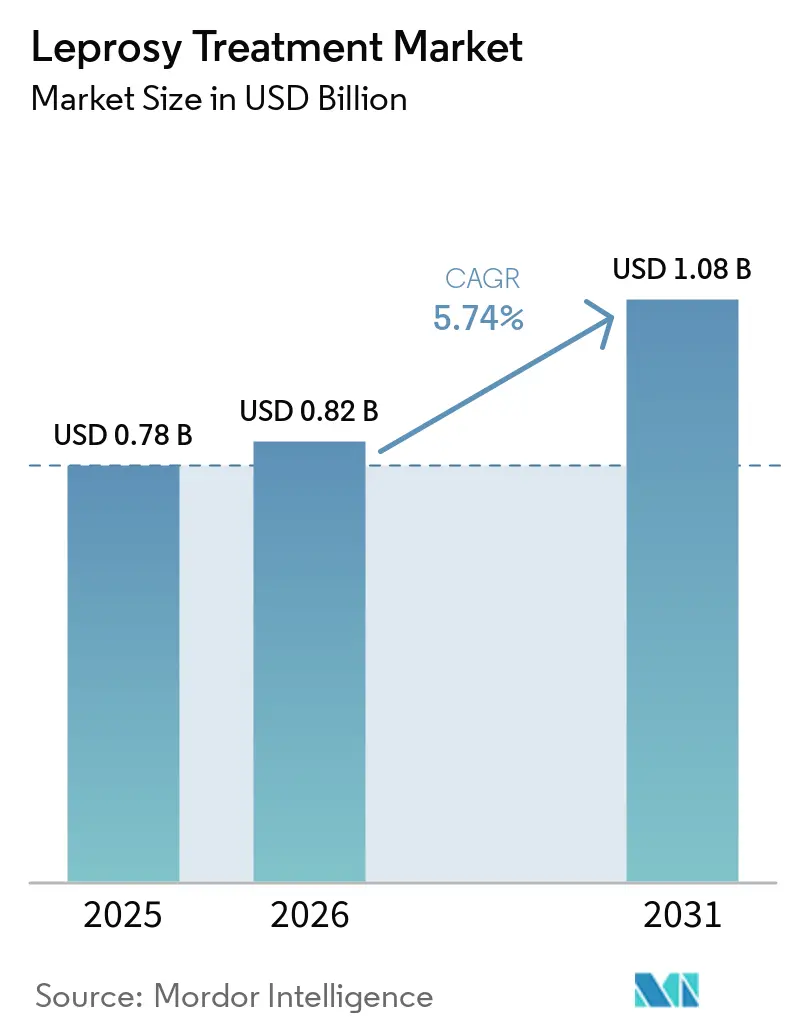
The leprosy treatment market is expected to increase from USD 0.78 billion in 2025 to USD 0.82 billion in 2026 and reach USD 1.08 billion by 2031, growing at a CAGR of 5.74% over 2026-2031. The leprosy treatment market continues to be shaped by a persistent disease burden across low and middle-income countries, with 172,717 new cases reported globally in 2024, and 72% of those cases coming from the WHO South-East Asia Region. The revenue pattern remains uneven because North America held 42.5% of global revenue in 2025 despite reporting fewer than 350 cases a year, which reflects higher treatment billing, stronger reimbursement, and more specialist care capacity than endemic low-income settings. The leprosy treatment market is also being supported by national program upgrades, broader contact tracing, expanding telemedicine-linked dispensing, and treatment delivery that is moving closer to primary care settings in endemic countries. Competitive conditions in the leprosy treatment market remain split between a WHO-linked donation system led by Novartis and Sandoz and a fragmented generic manufacturing base led by Indian suppliers competing for tenders and hospital channels.
Key Report Takeaways
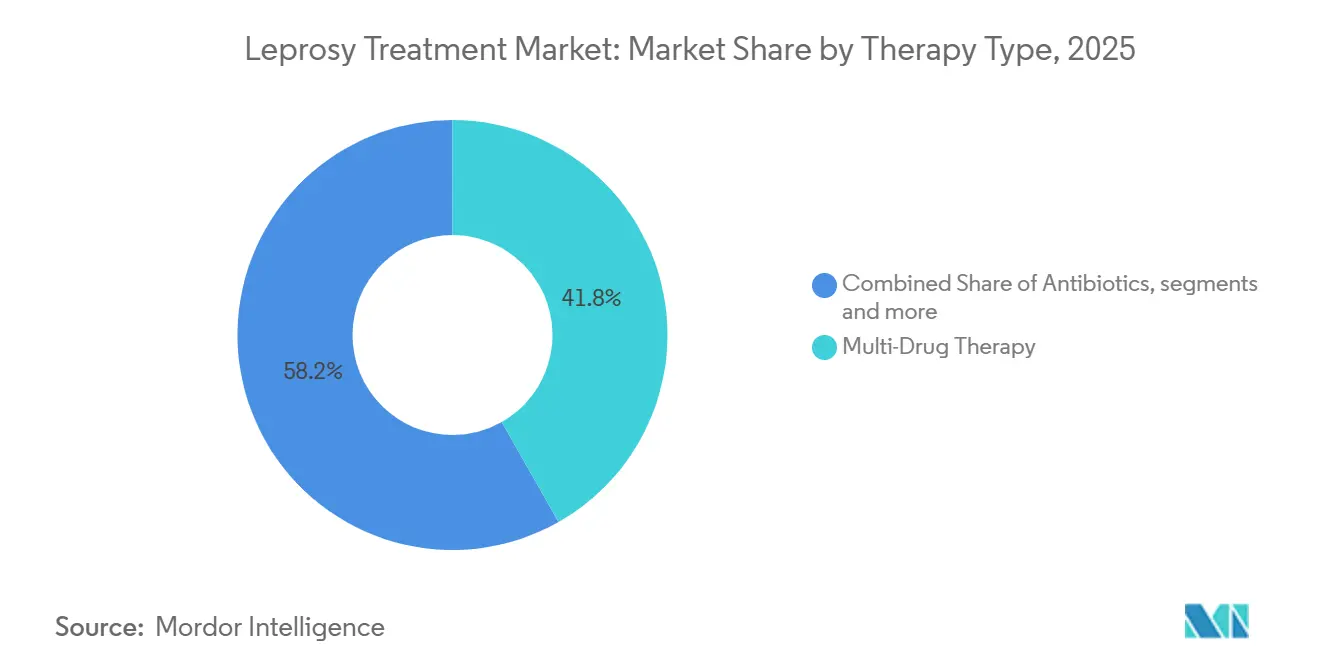
- By therapy type, multi-drug therapy led with 41.83% share in 2025, while antibiotics are projected to grow at a 6.26% CAGR through 2031.
- By disease type, paucibacillary leprosy held 54.67% share in 2025, while multibacillary leprosy is forecasted to expand at a 6.54% CAGR through 2031.
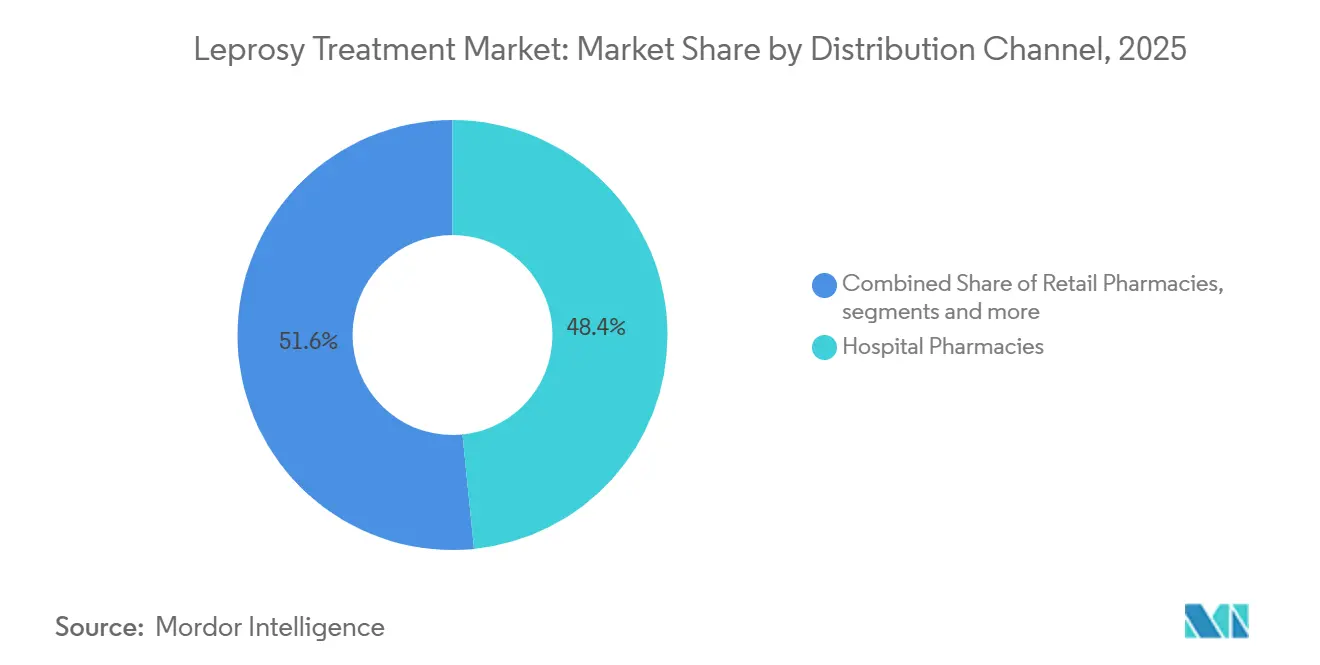
- By distribution channel, hospital pharmacies accounted for 48.36% share in 2025, while online pharmacies are projected to advance at a 7.17% CAGR through 2031.
- By end-user, hospitals and specialty clinics held 56.74% share in 2025, while primary healthcare centers are projected to grow at a 6.86% CAGR through 2031.
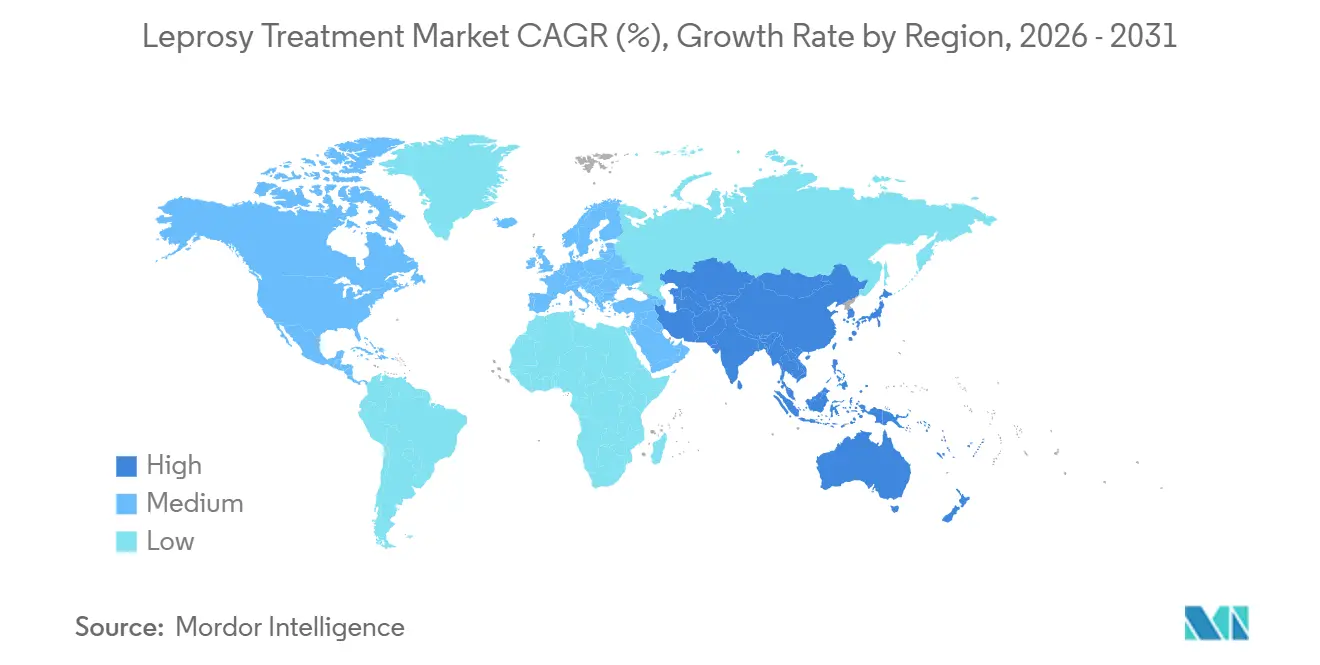
- By geography, North America held 42.47% share in 2025, while the Asia-Pacific is forecasted to expand at a 7.43% CAGR through 2031.
Note: Market size and forecast figures in this report are generated using Mordor Intelligence’s proprietary estimation framework, updated with the latest available data and insights as of January 2026.
Market Trends and Insights
Drivers Impact Analysis of Leprosy Treatment Market*
| Driver | (~) % Impact on CAGR Forecast | Geographic Relevance | Impact Timeline |
|---|---|---|---|
| Rising Multidrug Therapy Adoption Through National NTD Programs | +1.7% | Global, with highest uptake in South-East Asia, South America, and Sub-Saharan Africa | Long term (≥ 4 years) |
| Expanding Active Case Detection and Contact Tracing | +1.3% | APAC core, spill-over to South America and MEA | Medium term (2-4 years) |
| Improved Access to Fixed-Dose and Paucibacillary Treatment Protocols | +0.8% | Global, primarily South-East Asia and Sub-Saharan Africa | Medium term (2-4 years) |
| Greater Integration of Leprosy Care into Primary Health Systems | +0.7% | Global, critical in endemic low-income countries | Short term (≤ 2 years) |
| Growing Donor Support for Neglected Tropical Disease Elimination | +0.5% | South-East Asia, South America | Medium term (2-4 years) |
| Use of Digital Surveillance and Case Management Tools | +0.4% | South-East Asia, Africa, South America | Medium term (2-4 years) |
| Source: Mordor Intelligence | |||
Rising Multidrug Therapy Adoption Through National NTD Programs
The WHO-endorsed MDT regimen remains the foundation of the leprosy treatment market because it has delivered treatment success above 95% in non-resistant cases and remains the accepted standard across endemic national programs.[1] India expanded this treatment base further when its health ministry moved paucibacillary care from a 2-drug approach to a 3-drug combination from April 2025.[2] Single-dose rifampicin reached 1.7 million people in 37 countries during 2024, and that volume is likely to keep rising as contact examination coverage moves toward the WHO target of 90% from a 59% base. This means the leprosy treatment market is being lifted less by price expansion and more by protocol widening, better case classification, and the addition of funded prophylaxis. It also means generic manufacturers can capture added volume through public procurement even when first-line therapy itself remains donation-linked.
Expanding Active Case Detection and Contact Tracing
Active case detection is one of the strongest volume drivers in the leprosy treatment market because reported case counts still trail the likely underlying disease burden in several endemic regions. Brazil, India, and Indonesia accounted for nearly 80% of new global cases in 2024, yet contact examination coverage remained at 59%, which leaves a large pool of cases still outside treatment channels. India is using the Nikusth 2.0 platform for district-level reporting, and Nepal’s Global Leprosy Mapping Project recorded 11,844 cases across 237 municipalities in 31 districts between January and June 2025.[3]Digital mapping tools and GIS-based monitoring are making case finding more targeted, and the WHO-endorsed Leprosy Elimination Monitoring Tool is helping standardize burden review across endemic districts. Each newly identified patient starts a treatment cycle and adds directly to procurement demand, which makes early detection one of the clearest demand links in the leprosy treatment market.
Improved Access to Fixed-Dose and Paucibacillary Treatment Protocols
Treatment access in the leprosy treatment market depends heavily on blister pack reliability, regulatory clearance, and the ability of endemic programs to keep drug flow steady at the district level. Nigeria’s 2024-2025 MDT supply disruption showed how a single regulatory bottleneck tied to rifampicin testing could interrupt therapy for thousands of patients for more than a year. The episode highlighted how concentrated the blister-pack supply chain remains and why national programs are looking more closely at multi-supplier qualification. WHO’s NTDeliver system is now being used to monitor and improve NTD medicine flows in real time, and this is helping programs manage procurement and stock movement more actively. Together, these changes support steadier volume growth in the leprosy treatment market while making supply chain execution more important than before.
Growing Donor Support for Neglected Tropical Disease Elimination
The leprosy treatment market still relies heavily on the wider neglected tropical disease funding system because pharmaceutical donations and public health grants support most endemic-country treatment programs. WHO warned in June 2025 that official development assistance cuts were leaving these diseases more exposed and slowing progress against road map targets. That pressure raises the importance of domestic financing in countries such as India, Brazil, and Indonesia, where treatment demand is large enough to support more direct procurement over time. The renewed WHO partnership with Novartis and support from the Nippon Foundation also kept high-level advocacy and financing attention on leprosy elimination efforts. This keeps donor-linked continuity important for the leprosy treatment market even as endemic countries are pushed to strengthen their own funding base.
Restraints Impact Analysis of Leprosy Treatment Market*
| Restraint | (~) % Impact on CAGR Forecast | Geographic Relevance | Impact Timeline |
|---|---|---|---|
| Delayed Diagnosis and Late Treatment Initiation | -0.8% | Global, most acute in MEA and South-East Asia | Long term (≥ 4 years) |
| Stigma and Care-Seeking Suppression | -0.6% | Global, highest in South-East Asia and South America | Long term (≥ 4 years) |
| Weak Last-Mile Drug Delivery in Endemic Districts | -0.5% | South-East Asia, Africa, South America | Medium term (2-4 years) |
| Emergence of Drug Resistance Concerns in Long-Treatment Settings | -0.4% | South-East Asia, South America, Africa | Long term (≥ 4 years) |
| Source: Mordor Intelligence | |||
Delayed Diagnosis and Late Treatment Initiation
Late diagnosis remains a basic drag on the leprosy treatment market because M. leprae often has an incubation period of 5 to 7 years, and there is still no rapid, low-cost point-of-care test that can be deployed widely. In 2024, 9,157 new patients were reported with Grade 2 disabilities, which means treatment came too late to prevent permanent nerve damage in many cases. A 14-question machine learning-based Leprosy Suspicion Questionnaire published in 2025 offers a practical community screening tool that does not depend on a full clinical examination. The problem is that adoption of such tools into national field programs still takes time, especially across large rural systems. Until diagnosis improves, the leprosy treatment market will continue to face understated procurement signals and recurring stock planning gaps in endemic districts.
Stigma and Care-Seeking Suppression
Stigma continues to limit the leprosy treatment market because many patients delay or avoid formal care even when symptoms are already present. As of 2024, 81 discriminatory laws affecting people with leprosy remained in force across 6 countries, which kept social exclusion tied directly to health access. Brazil recorded 22,773 new cases in 2023, yet stigma-driven delays meant many patients still reached care after disability had already started. Community-connected telemedicine models showed that care can move around some of these barriers by linking trained local workers and physicians through digital channels. Even new regimens face limits when people are reluctant to identify themselves as affected, so better medicines alone do not solve the demand problem.
*Our forecasts treat driver/restraint impacts as directional, not additive. The impact forecasts reflect baseline growth, mix effects, and variable interactions.
Leprosy Treatment Market Segment Analysis
By Therapy Type:
MDT Anchors Volume While Novel Antibiotic Regimens Reshape the Treatment FrontierMulti-Drug Therapy held 41.83% leprosy treatment market share in 2025, which shows how deeply national protocols still center on the standard WHO regimen. That position came from long-standing program standardization rather than normal brand competition, because endemic countries continue to receive MDT through the WHO-Novartis donation structure. The donation model also limits price-based differentiation for generic suppliers, since first-line access is defined more by eligibility and supply continuity than by commercial promotion. The 2026-2030 arrangement that also funds single-dose rifampicin for post-exposure prophylaxis means the leprosy treatment market is still adding scope around MDT rather than moving away from it.
Antibiotics are projected to grow at 6.26% CAGR through 2031, making this the fastest-moving therapy line within the leprosy treatment market. The shift is being shaped by experimental regimens that aim to shorten treatment and respond better to resistance concerns than current first-line protocols. Lupin’s January 2026 collaboration with TB Alliance on telacebec also brought a first-in-class asset into the leprosy treatment market, with the possibility of premium pricing in drug-resistant settings if approval is secured.

By Disease Type:
Multibacillary Case Burden Drives Disproportionate Treatment RevenuePaucibacillary leprosy accounted for a 54.67% share of the leprosy treatment market size in 2025, which kept it as the larger disease group by patient volume. Multibacillary leprosy is expected to grow faster at a 6.54% CAGR through 2031 because active case finding is uncovering more patients who were previously missed, delayed, or misclassified. The revenue weight of multibacillary disease is higher because each patient usually requires a 12-month MDT course, while paucibacillary treatment generally runs for 6 months. That creates a stronger drug volume effect in the faster-growing disease segment across the leprosy treatment market.
Clinical pressure is also stronger in multibacillary care because this group drives most Type 1 and Type 2 reaction burden and therefore needs added spending on corticosteroids, thalidomide, and wound care. Brazil’s June 2025 RIMOXCLAMIN data also reported a 17.9% improvement in foot sensitivity against standard WHO-MDT, which matters most in patients with higher nerve damage risk. WHO also reported 289 new child Grade 2 disability cases in 2024, with 40% of them in the African Region, which shows that pediatric multibacillary management still remains under-addressed in the leprosy treatment market.
By Distribution Channel:
Online Pharmacies Disrupt Last-Mile Delivery While Hospital Pharmacies Retain Structural DominanceHospital pharmacies accounted for a 48.36% share of the leprosy treatment market in 2025, which reflects the way WHO treatment protocols are still tied to supervised dosing at facilities. Monthly supervised rifampicin dosing keeps hospitals and health centers at the center of drug dispensing by design, so this channel remains structurally important in endemic settings. Entry into hospital-linked supply also depends on quality and prequalification standards for active ingredients, which creates a meaningful gate for smaller producers.
Online pharmacies are projected to grow at a 7.17% CAGR through 2031, making them the most dynamic channel in the leprosy treatment market. Telemedicine expansion is creating valid digital prescription pathways for supplementary treatment and follow-up medications, especially in Southeast Asia and Latin America. The pace of adoption will still depend on prescription drug rules in each country, with India’s regulatory framework remaining an important reference point for how far online dispensing can expand within the leprosy treatment market.
By End-User:
Primary Healthcare Centers Gain Ground as Treatment Moves Closer to CommunitiesHospitals and specialty clinics held 56.74% share in 2025, which kept them as the main end-user base in the leprosy treatment market. That position reflects their role in nerve function assessment, disability grading, physiotherapy, and the management of complex lepra reactions that cannot be handled easily at lower care levels. In Germany, the United Kingdom, and France, imported cases are still managed through specialist infectious disease and tropical medicine units with reimbursed access to second-line treatment. NGO-linked community health programs also remain relevant for populations that stay outside formal systems, especially where stigma or distance affects routine access.
Primary healthcare centers are projected to expand at a 6.86% CAGR through 2031, which makes decentralization a major structural shift within the leprosy treatment market. India’s decentralization strategy and digital reporting tools are helping primary-level staff record and follow uncomplicated cases without waiting for referral in every instance. As this pattern expands, district and primary procurement channels will matter more across the leprosy treatment market, especially for manufacturers that already have rural distribution depth.
Geography Analysis
North America and Brazil Leprosy Treatment Market
North America held 42.47% leprosy treatment market share in 2025, even though the region accounted for very few cases compared with endemic parts of Asia, Africa, and Latin America. The United States reports only 150 to 250 autochthonous and imported cases a year, but per-patient spending is much higher because of specialist physician billing, insurance reimbursement, diagnostic workup costs, and regulated thalidomide use for ENL through the REMS system. Canada mainly manages imported cases through infectious disease and travel medicine services, while Mexico combines pockets of endemic disease with urban healthcare systems that have higher treatment economics. Fiocruz received authorization from Anvisa in October 2024 to lead the Phase 1b vaccine study in Brazil, which links North American research progress to South American field development.
APAC Leprosy Treatment Market
Asia-Pacific is projected to grow at a 7.43% CAGR through 2031, making it the fastest-growing regional block in the leprosy treatment market. India contributes around 50% of global new cases, and its National Strategic Plan and Roadmap for Leprosy 2023-2027 is pushing faster case finding, contact tracing, SDR rollout, and primary care decentralization. China, Indonesia, and the Philippines add meaningful regional volume, while Nepal’s mapping program showed how many cases can still be identified when surveillance is expanded across remote districts. Australia and South Korea matter less by case count but remain useful as research and digital health nodes for the leprosy treatment market as AI-supported screening tools move toward wider evaluation.
EMEA and South America Leprosy Treatment Market
Europe remained a small but high-value part of the leprosy treatment market, with 79 new cases in 2024, including 14 locally acquired cases concentrated in Türkiye, Uzbekistan, Ukraine, France, and Portugal. Germany, France, and the United Kingdom retain specialist treatment capacity for imported cases, which supports higher spending per patient than in donor-funded endemic settings. In the Middle East and Africa, South Africa manages rural endemic burden while GCC countries mostly see cases in expatriate worker populations, and Nigeria’s recent supply crisis showed how fragile last-mile delivery can remain in sub-Saharan Africa. South America is anchored by Brazil, where heavy disease burden sits alongside major clinical work such as the RIMOXCLAMIN submission and the Fiocruz LepVax study, giving the region a larger future role in the leprosy treatment market than its current revenue weight suggests.
Competitive Landscape
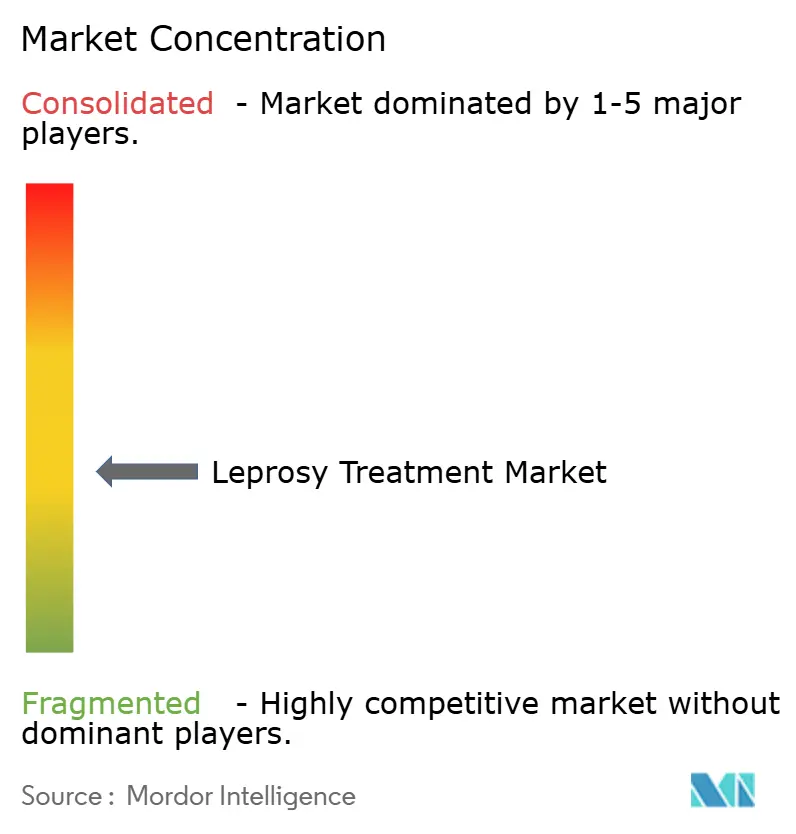
The leprosy treatment market is moderately fragmented and can be divided into two tiers that operate under distinct regulatory and procurement frameworks. Novartis AG and Sandoz Group AG sit in the institutionally dominant tier because they support the WHO-linked global MDT donation framework that has now been extended through 2030. The fragmented generic manufacturing base is led by Lupin, Macleods, Cipla, Sun Pharmaceutical, Aurobindo, Dr. Reddy’s, Hetero Labs, and Zydus Lifesciences. These companies compete in the leprosy treatment market through cost-controlled production of dapsone, rifampicin, and clofazimine for tenders and hospital channels, while quality compliance remains a practical barrier to entry.
Competitive differentiation in the leprosy treatment market is now moving toward pipeline quality, delivery reliability, and coverage across district-level supply networks. Lupin’s January 2026 partnership with TB Alliance on telacebec stands out because it adds a first-in-class candidate with activity against M. leprae and a possible premium revenue path in resistant disease. Novartis also strengthened its position by extending the long-running WHO arrangement and widening it to include funded single-dose rifampicin for prophylaxis. Macleods and Mankind Pharma are also well placed, where treatment is shifting toward primary facilities because rural distribution strength is becoming more commercially relevant in the leprosy treatment market.
There is still open space in pediatric formulations, local blister-pack assembly in endemic countries, and digital adherence tools, and no company yet has a clear lead across those areas. Companies with strong medical affairs capabilities in rare infectious diseases also have an edge in North America, where reimbursement and specialist care make revenue per patient unusually high. The leprosy treatment market therefore remains only partly consolidated, because the donation-linked supply chain is controlled by a few institutions while commercial generic demand is still spread across many producers. That mix keeps competition active in procurement and pipeline development even though first-line treatment access remains anchored by long-standing institutional partnerships.
Leprosy Treatment Industry Leaders
-
Novartis AG
-
Pfizer Inc.
-
Sanofi S.A.
-
Sun Pharmaceutical Industries Ltd.
-
Cadila Pharmaceuticals Ltd.
- *Disclaimer: Major Players sorted in no particular order
Leprosy Treatment Market Companies Covered in this Report
- Alkem Laboratories Ltd.
- Aurobindo Pharma
- Bristol-Myers Squibb
- Cadila Pharmaceuticals Ltd.
- Cipla
- Dr. Reddy’s Laboratories
- Glenmark Pharmaceuticals
- Hetero Labs Limited
- Lupin
- Macleods Pharmaceuticals Ltd.
- Mankind Pharma Ltd.
- Novartis
- Pfizer
- Sandoz Group AG
- Sanofi
- Sun Pharmaceuticals Industries
- Teva Pharmaceutical Industries
- Torrent Pharmaceuticals
- Viatris
- Zydus Lifesciences Ltd.
Recent Industry Developments in Leprosy Treatment Market
- January 2026: TB Alliance and Lupin Limited announced a global collaboration to advance and commercialize telacebec (formerly Q203) for tuberculosis, leprosy, and Buruli ulcer. Telacebec is the first investigational compound to target the cytochrome bc1 complex of M. leprae, offering a mechanism of action entirely distinct from MDT components and addressing the growing clinical urgency created by dapsone and rifampin resistance.
- January 2026: WHO and Novartis AG formally extended their Memorandum of Understanding for a further 5 years, 2026-2030, marking 25 years of sustained MDT donation to leprosy patients worldwide. The renewed agreement includes new provisions specifically funding the procurement and distribution of single-dose rifampicin for post-exposure prophylaxis, expanding the program’s scope from treatment into prevention for the first time under a funded partnership structure.
- July 2025: The first patient was enrolled in a multicentric non-inferiority clinical trial in India comparing the RMC regimen, rifampicin, moxifloxacin, and clarithromycin against the standard WHO MB-MDT, registered at the Clinical Trials Registry of India. Results were expected within 12-18 months and could form the evidentiary basis for a new antibiotic-based multibacillary protocol that challenges the current WHO-MDT standard.
Global Leprosy Treatment Market Report Scope
According to the report's scope, the leprosy treatment market comprises therapeutic products and treatment interventions used for the management of leprosy, a chronic infectious disease caused by Mycobacterium leprae. The market includes multidrug therapy (MDT), antibiotics, immunotherapies, and related treatment approaches aimed at eliminating infection, managing leprosy reactions, preventing nerve damage and disability, reducing disease transmission, and improving patient outcomes.
The leprosy treatment market is segmented into therapy type, disease type, distribution channel, end-user, and geography. By therapy type, the market is segmented into multi-drug therapy, antibiotics, immunotherapy, and other treatment types. By disease type, the market is segmented into paucibacillary leprosy and multibacillary leprosy. By distribution channel, the market is segmented into hospital pharmacies, retail pharmacies, and online pharmacies. By end-user, the market is segmented into hospitals and specialty clinics, primary healthcare centers, community health programs, and other end-users. By geography, the market is segmented into North America, Europe, Asia-Pacific, the Middle East and Africa, and South America. The report also covers the estimated market sizes and trends for 17 countries across major regions globally. The report offers values (USD) for all the above segments.
Segmentation Overview
| Multi-Drug Therapy |
| Antibiotics |
| Immunotherapy |
| Other Treatment Types |
| Paucibacillary Leprosy |
| Multibacillary Leprosy |
| Hospital Pharmacies |
| Retail Pharmacies |
| Online Pharmacies |
| Hospitals and Specialty Clinics |
| Primary Healthcare Centers |
| Community Health Programs |
| Other End-Users |
| North America | United States |
| Canada | |
| Mexico | |
| Europe | Germany |
| United Kingdom | |
| France | |
| Italy | |
| Spain | |
| Rest of Europe | |
| Asia-Pacific | China |
| Japan | |
| India | |
| Australia | |
| South Korea | |
| Rest of Asia-Pacific | |
| Middle East and Africa | GCC |
| South Africa | |
| Rest of Middle East and Africa | |
| South America | Brazil |
| Argentina | |
| Rest of South America |
| By Therapy Type | Multi-Drug Therapy | |
| Antibiotics | ||
| Immunotherapy | ||
| Other Treatment Types | ||
| By Disease Type | Paucibacillary Leprosy | |
| Multibacillary Leprosy | ||
| By Distribution Channel | Hospital Pharmacies | |
| Retail Pharmacies | ||
| Online Pharmacies | ||
| By End-User | Hospitals and Specialty Clinics | |
| Primary Healthcare Centers | ||
| Community Health Programs | ||
| Other End-Users | ||
| By Geography | North America | United States |
| Canada | ||
| Mexico | ||
| Europe | Germany | |
| United Kingdom | ||
| France | ||
| Italy | ||
| Spain | ||
| Rest of Europe | ||
| Asia-Pacific | China | |
| Japan | ||
| India | ||
| Australia | ||
| South Korea | ||
| Rest of Asia-Pacific | ||
| Middle East and Africa | GCC | |
| South Africa | ||
| Rest of Middle East and Africa | ||
| South America | Brazil | |
| Argentina | ||
| Rest of South America | ||
Key Questions Answered in the Report
What is the current outlook for the leprosy treatment market through 2031?
The leprosy treatment market is expected to grow from USD 0.78 billion in 2025 to USD 0.82 billion in 2026 and to reach USD 1.08 billion by 2031 at a 5.74% CAGR, supported by case finding, protocol expansion, and broader treatment access.
Why does North America lead in revenue despite low case numbers?
North America held 42.47% of 2025 revenue because treatment spending per patient is much higher, driven by specialist billing, insurance reimbursement, and higher-cost supportive care.
Which therapy type currently leads revenue?
Multi-drug therapy led with 61.83% share in 2025 because it remains the standard regimen across endemic programs and is backed by a long-running global donation framework.
Which part of the treatment is growing the fastest?
Antibiotics are projected to grow at a 6.26% CAGR, helped by RMC clinical development and Lupin’s telacebec collaboration with TB Alliance for resistant and next-generation treatment pathways.