
Latex Allergy Market Size and Share
Market Overview
| Study Period | 2020 - 2031 |
|---|---|
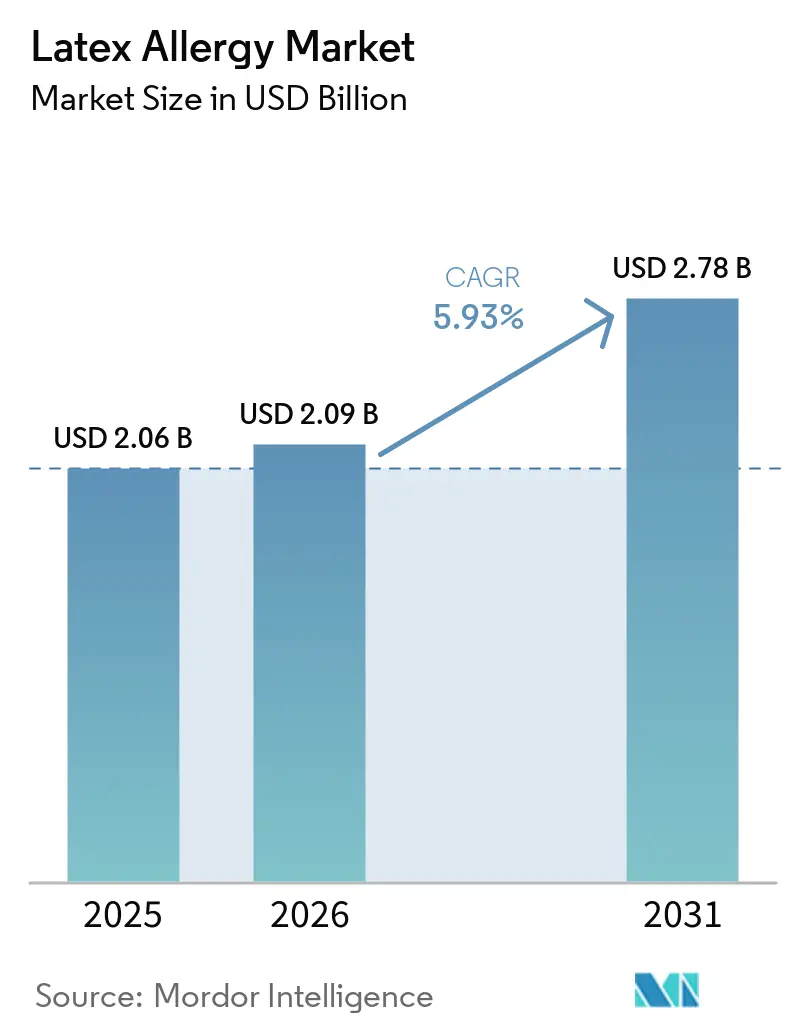
| Market Size (2026) | USD 2.09 Billion |
| Market Size (2031) | USD 2.78 Billion |
| Growth Rate (2026 - 2031) | 5.93 % |
| Fastest Growing Market | Asia-Pacific |
| Largest Market | North America |
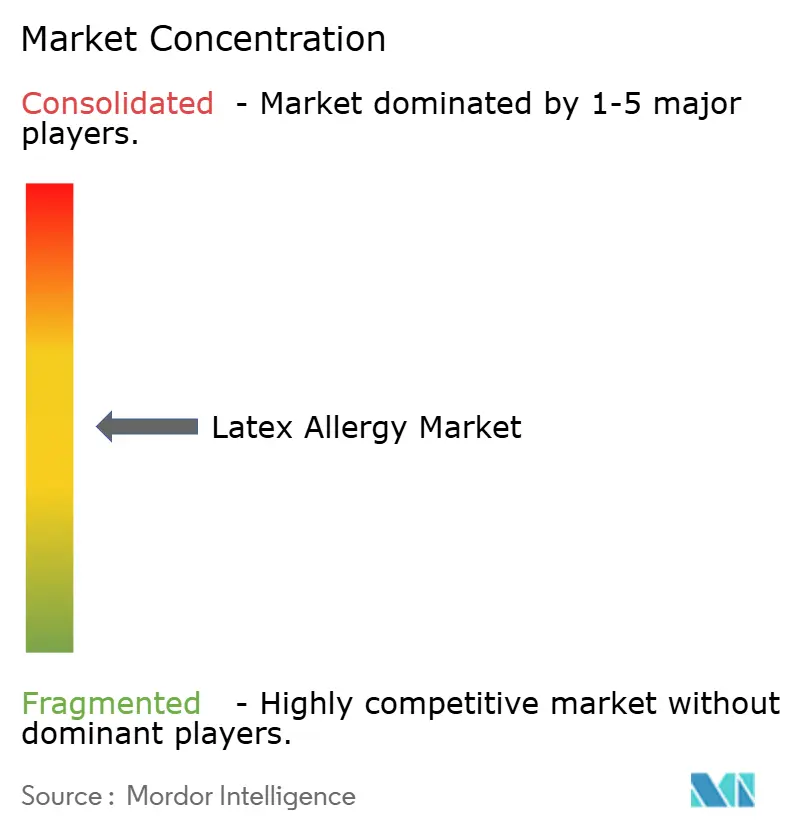
| Market Concentration | Medium |
Major Players
*Disclaimer: Major Players sorted in no particular order Image © Mordor Intelligence. Reuse requires attribution under CC BY 4.0. |
|
Latex Allergy Market Analysis by Mordor Intelligence
The Latex Allergy Market size is projected to expand from USD 2.06 billion in 2025 and USD 2.09 billion in 2026 to USD 2.78 billion by 2031, registering a CAGR of 5.93% between 2026 and 2031.
Demand is supported by continued screening and management needs among workers exposed to latex products. Healthcare workers have a higher reported prevalence of latex allergy than the general population, which keeps occupational testing and prevention programs relevant. The Latex allergy market is also supported by the gradual move toward clinical protocols that combine avoidance, substitution, and patient management. Hospitals are strengthening latex-free procurement requirements, while diagnostic services are becoming more important in pre-employment and periodic health assessments. Product suppliers, diagnostics companies, and immunotherapy specialists are pursuing different routes to address this demand, while variable testing practices and the cost of synthetic alternatives limit wider adoption.
Key Report Takeaways
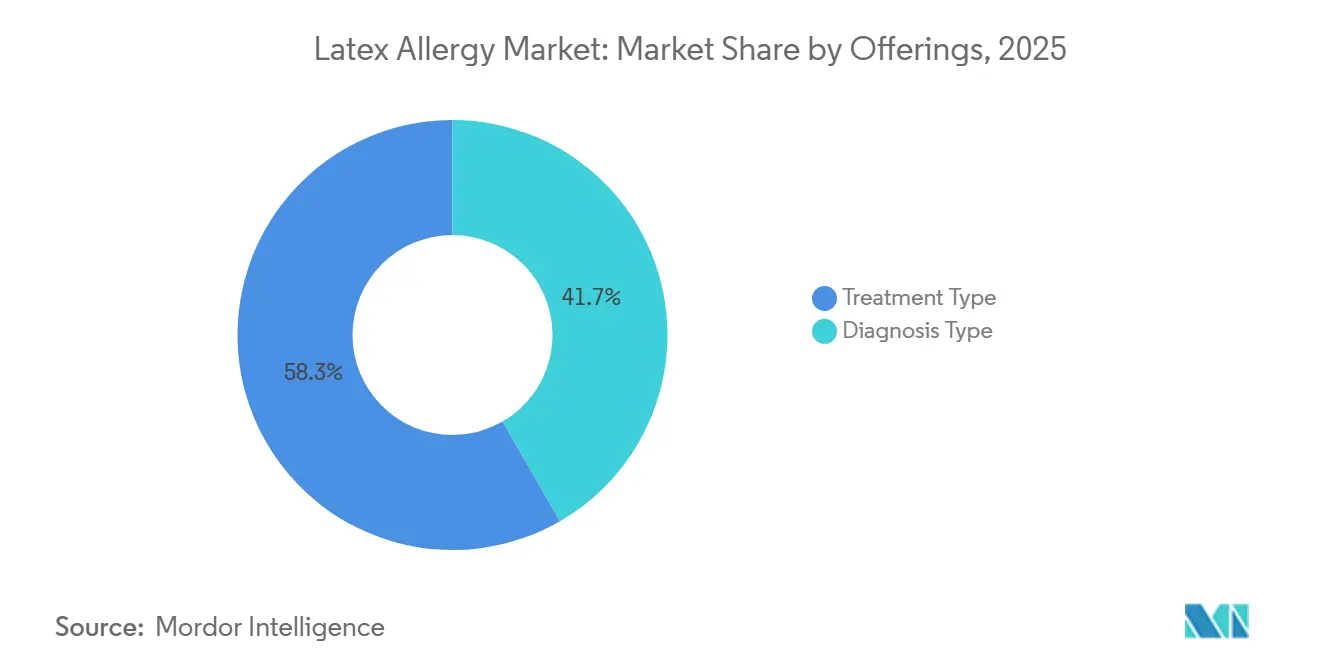
- By offerings, the treatment held 58.34% of the Latex allergy market share in 2025, while diagnosis is forecast to grow at an 8.72% CAGR through 2031.
- By allergen type, natural rubber latex accounted for 73.88% of the Latex allergy market share in 2025, while synthetic latex is forecast to expand at an 8.91% CAGR through 2031.
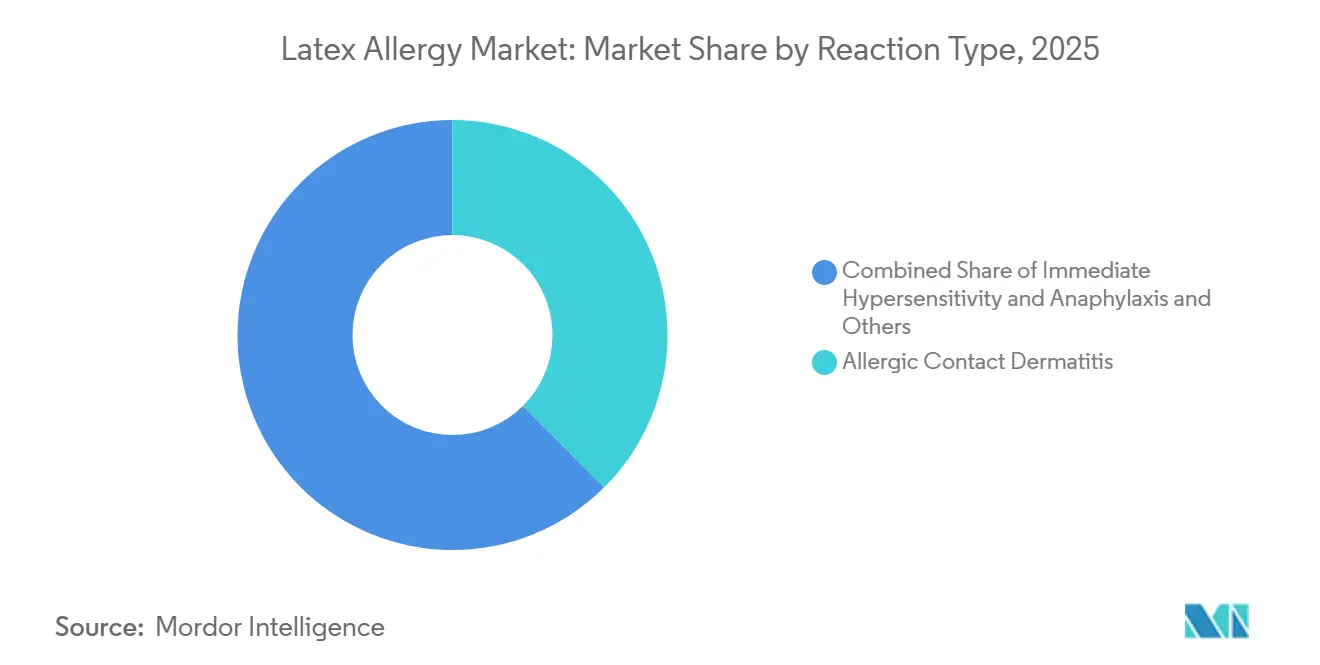
- By reaction type, allergic contact dermatitis held 37.56% of revenue in 2025, while immediate hypersensitivity and anaphylaxis are forecast to grow at an 8.37% CAGR through 2031.
- By end user, hospitals and clinics held 41.65% of revenue in 2025, while occupational health centers are forecast to grow at an 8.94% CAGR through 2031.
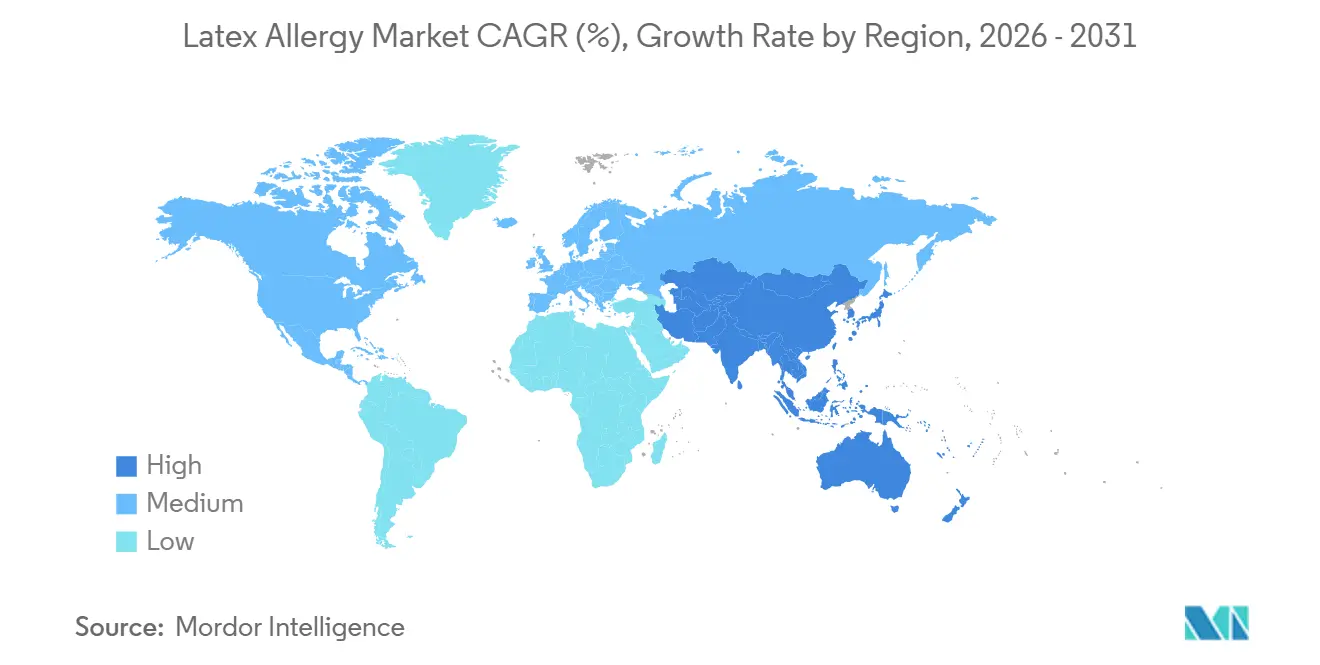
- By geography, North America held 39.87% of revenue in 2025, while Asia-Pacific is forecast to grow at a 9.26% CAGR through 2031.
Note: Market size and forecast figures in this report are generated using Mordor Intelligence’s proprietary estimation framework, updated with the latest available data and insights as of January 2026.
Market Trends and Insights
Drivers Impact Analysis of Latex Allergy Market*
| Driver | (~) % Impact on CAGR Forecast | Geographic Relevance | Impact Timeline |
|---|---|---|---|
| Healthcare Worker Screening | +1.60% | Global, concentrated in North America, Europe, and Asia-Pacific healthcare hubs | Medium term (2-4 years) |
| Latex-Free Medical Product Adoption | +1.30% | Global, with early adoption in North America and Europe | Short term (≤ 2 years) |
| Surgical and Diagnostic Procedure Volumes | +1.10% | Global, with faster uptake in Asia-Pacific and South America | Short term (≤ 2 years) |
| Occupational Safety and Device Labeling | +0.60% | North America and Europe, with spillover to GCC and ASEAN | Medium term (2-4 years) |
| Latex-Fruit Syndrome Testing and Awareness | +0.40% | North America, Europe, Japan, and emerging Asia-Pacific and South America | Medium term (2-4 years) |
| Accelerator-Free Synthetic Glove Innovation | +0.30% | Global, with manufacturing activity in Malaysia, India, and China | Long term (≥ 4 years) |
| Source: Mordor Intelligence | |||
Rising Latex Allergy Screening Among Healthcare Workers
Healthcare institutions are expanding latex sensitization monitoring as occupational risk records become more complete. A study published in the Journal of Occupational Medicine and Toxicology in 2024 found lower symptom prevalence among healthcare workers using low-protein latex gloves. The 2024 Journal of Occupational Medicine and Toxicology1"Reduced Protein Levels in Latex Gloves May Play an Alternative Approach to Lowering Latex Sensitization Risks Among Health Workers." Journal of Occupational Medicine and Toxicology, Springer Nature, 2024. https://link.springer.com/article/10.1186/s12995-024-00420-x study reported a 9.80% symptomatic prevalence in the low-protein glove group. Hospitals are responding by evaluating protein content alongside barrier performance during procurement. Workers identified through screening can require specific IgE tests, patch tests, and follow-up consultations. A 2026 review in Postępy Dermatologii i Alergologii reported latex allergy prevalence of 5.00%-17.00% among medical personnel and supported early diagnosis with a move toward synthetic alternatives.
Expansion of Latex-Free Medical Product Adoption
Healthcare providers are shifting from natural rubber products to synthetic products across surgical and examination settings. This shift includes gloves, catheters, drapes, and components used in intravenous tubing. Latex-free procurement reduces the clinical risk from an unrecognized patient sensitivity during a procedure. Higher selling prices for nitrile, polyisoprene, and neoprene products can raise the value of the Latex Allergy Market while reducing natural rubber demand. Mölnlycke Health Care’s 2024 annual report stated that revenue reached EUR 2,064.00 million, equivalent to USD 2,231.16 million, and increased 7.40%. Its latex-free Biogel PI range supported its surgical customer offering in the United States.
Increasing Surgical and Diagnostic Procedure Volumes
More surgical procedures increase the number of situations where staff must identify latex exposure risks before care begins. The Latex Allergy Market therefore gains demand from screening, testing, emergency readiness, and latex-free purchasing. Backlog clearance and aging populations also support procedure demand in many health systems. Ambulatory surgical centers are important because they require standardized supplies and often have less specialist allergy capacity than large hospitals. These facilities reinforce the need for routine testing protocols and latex-free product inventories. Their purchasing decisions can be standardized across repeated procedures. This supports demand for products that are easy to identify and use. Routine planning may reduce the risk of an unrecognized exposure in a time-sensitive setting. It also connects procedure growth with preventive purchasing decisions.
Accelerator-Free Synthetic Glove Innovation
Accelerator-free synthetic gloves address risks from rubber chemicals as well as proteins in natural rubber latex. Thiurams, carbamates, and mercaptobenzothiazoles can contribute to Type IV delayed hypersensitivity. US Patent 12,127,612, issued in October 2024, describes a chloroprene and nitrile laminate glove made without rubber accelerators. A 2026 study published in ACS Omega found that accelerator-free nitrile gloves could meet ASTM D6319 mechanical requirements under low-temperature curing conditions. Wider use of these products could reduce chemical sensitization, even as it may eventually moderate patch-testing demand. The Latex Allergy Market still gains from the transition because manufacturers and providers require validated alternatives. Manufacturers must balance material safety with grip, fit, strength, and barrier performance. Providers must evaluate these factors in the context of clinical tasks. This makes innovation relevant even when the goal is simply to eliminate an exposure source. The benefits of substitution depend on products being accepted by end users.
Restraints Impact Analysis of Latex Allergy Market*
| Restraint | (~) % Impact on CAGR Forecast | Geographic Relevance | Impact Timeline |
|---|---|---|---|
| Latex-Free Alternative Procurement Costs | -0.80% | Global, most acute in South America, Middle East and Africa, and emerging Asia-Pacific economies | Short term (≤ 2 years) |
| Limited Latex Allergen Test Standardization | -0.50% | Global, especially markets with fragmented laboratory accreditation | Medium term (2-4 years) |
| Verification of Latex-Free Product Claims | -0.40% | Global, with significant relevance in Asia-Pacific and South America | Medium term (2-4 years) |
| Performance Trade-Offs in Selected Alternatives | -0.30% | Global, concentrated in high-acuity surgical settings | Long term (≥ 4 years) |
| Source: Mordor Intelligence | |||
Higher Procurement Cost of Latex-Free Alternatives
The cost difference between latex and synthetic alternatives remains a barrier in price-sensitive healthcare systems. Polyisoprene and accelerator-free nitrile gloves can carry higher production costs than conventional latex gloves. Government hospitals may struggle to fund both broader latex-free procurement and systematic screening programs. This creates limits at the prevention stage and the diagnostic stage of the care pathway. Argentina considered a 2024 proposal to ban natural rubber latex products in public healthcare institutions. Implementation depended on public funding for substitute products, which illustrates a challenge present in many emerging markets.
Limited Standardization of Latex Allergen Testing
Testing practices differ across skin prick tests, specific IgE assays, patch tests, and component-resolved diagnostics. This variability can make clinical decisions and comparisons across epidemiological studies more difficult. In its medical-product labeling guidance, the U.S. Food and Drug Administration stated that latex-free labeling does not reliably assure the absence of latex allergens. The International Medical Device Regulators Forum noted in its April 2024 labeling guidance that globally consistent terminology for medical devices remains unavailable. A 2024 overview published in Asthma Allergy Immunology supported multi-parameter testing, although many emerging-market facilities lack this capability. These limits constrain the expansion of comparable population screening programs. Laboratories may use different methods depending on local training and equipment. Results are more useful when clinicians understand each method’s limits. Consistent terminology would also make product claims easier for purchasers to assess. Until then, providers must use several sources of evidence when managing potential latex exposure.
*Our forecasts treat driver/restraint impacts as directional, not additive. The impact forecasts reflect baseline growth, mix effects, and variable interactions.
Latex Allergy Market Segment Analysis
By Offerings:
Treatment Holds the Largest Revenue PositionTreatment represented 58.34% of the Latex Allergy Market size by offering in 2025. Medication management, epinephrine auto-injectors, and latex substitution protocols remain central to established care pathways. These services account for routine spending after sensitization is identified. Diagnosis is the fastest-growing offering and is forecast to register an 8.72% CAGR through 2031. Hospitals and occupational health centers are adding IgE panels and component-resolved diagnostics to employment and periodic assessments. Thermo Fisher Scientific lists the ImmunoCAP allergen k82 test in its product catalog for latex-specific testing. Skin testing continues to be used as a point-of-care option where immediate treatment for severe reactions is available. The wider use of testing supports earlier identification and more structured follow-up. It also makes testing part of a repeatable occupational health process. Providers can use results to guide product substitution and clinical referrals. This creates demand across testing materials, laboratory services, and patient counseling. The approach is most effective where employers and hospitals maintain documented exposure records.
Latex-fruit syndrome adds complexity to diagnostic visits for people with established latex allergy. A 2024 literature review published in the Journal of Clinical Medicine reported cross-reactivity with foods such as avocado, banana, chestnut, and kiwi. The 2024 Journal of Clinical Medicine review also reported systemic reactions in 73.00% of the clinical manifestations described among patients with latex-fruit syndrome. Clinicians may order latex and food-allergen tests during the same encounter. This increases the scope of a diagnostic workup without changing the clinical need for careful history-taking. The Latex Allergy Market benefits when providers use multi-allergen panels for these linked sensitivities. Testing providers must still interpret results alongside symptoms and exposure history. The approach supports more targeted advice on workplace and dietary exposures. It also allows clinicians to distinguish a related food reaction from a separate condition. Broader panels must be selected carefully because positive results still require clinical interpretation. Follow-up can include avoidance advice, emergency planning, and referral to an allergy specialist. These needs keep diagnosis linked closely with treatment and prevention.


By Allergen Type:
Natural Rubber Latex Remains the Main Exposure SourceNatural rubber latex products accounted for 73.88% of the Latex Allergy Market share by allergen type in 2025. Gloves, tubing, catheters, and adhesive products continue to expose users in healthcare supply chains. The share also reflects earlier workplace exposure patterns in systems that have not fully moved away from powdered gloves. Malaysia, Thailand, and Indonesia remain important production locations for natural rubber products. Large manufacturing workforces in these countries face ongoing occupational exposure. Synthetic latex products are forecast to grow at an 8.91% CAGR through 2031. Their growth reflects avoidance policies and improvements in nitrile, polyisoprene, and polychloroprene formulations. The Latex Allergy Market is therefore shifting toward lower-allergen material choices while still managing existing sensitization cases. Replacement decisions can differ between examination gloves, surgical gloves, and other medical components. Organizations often need to review each use point rather than make a single product change. This can extend the purchasing cycle but also broaden the addressable product base. Ongoing exposure among workers sustains the clinical need for assessment.
Natural rubber-related revenue also reflects the testing and treatment needs created by exposure. Organizations using these products can incur screening, clinical management, and worker compensation costs. Synthetic alternatives can reduce some of these costs when used consistently. Suppliers are working toward performance comparable with natural rubber through synthetic product development. The product example shows that suppliers are working toward performance comparable with natural rubber. Broader price parity would make procurement changes easier for hospitals and industrial employers. It would also reduce the relative role of natural rubber across the Latex Allergy Market over time. Product qualification and supply reliability will remain important purchase factors. Healthcare buyers must confirm that a replacement product is suitable for the intended procedure. They also need consistent access to the same specifications across departments. This makes supplier documentation and product testing relevant to purchasing decisions. The transition can be gradual where contracts and clinical preferences are already established.
By Reaction Type:
Dermatitis Leads While Severe Reactions Drive Urgent TestingAllergic contact dermatitis held 37.56% of the Latex Allergy Market size by reaction type in 2025. This condition is commonly linked to chemical accelerators and is classified as a Type IV delayed reaction. It's a relatively manageable presentation that supports its large recorded share in clinical practice. Immediate hypersensitivity and anaphylaxis are forecast to grow at an 8.37% CAGR through 2031. Greater access to serological testing allows clinicians to document more IgE-mediated Type I reactions. This can increase recorded cases among patients previously managed without formal classification. Irritant contact dermatitis and latex-associated asthma and rhinitis also remain part of the clinical burden. Powdered latex glove aerosolization has particular relevance for respiratory symptoms in workplaces. Providers need to separate irritant effects from allergic reactions before deciding on care. This can require a detailed exposure history as well as testing. Clear documentation helps employers choose appropriate controls for affected workers. It also supports safer decisions when workers return to areas with potential exposure.
Severe reactions require providers to prioritize rapid diagnosis and emergency preparedness. They also encourage hospitals to maintain latex-free environments for people at risk. A 2024 Asthma Allergy Immunology overview stated that prevention and patient education remained central elements of latex allergy management. Medication and immunotherapy can support care for clinically confirmed patients. Manufacturers must assess and label risks from natural-rubber devices that contact human tissue under the EU medical device framework. This supports documentation of potential reactions across device categories. The Latex Allergy Market gains from demand for products that help providers manage both routine dermatitis and severe allergic events. Care settings need different levels of preparation depending on the patient and procedure. Routine dermatitis may require product substitution and symptom management. Severe reactions require emergency medication and avoidance planning. The range of needs supports demand across more than one care pathway.
By End User:
Hospitals and Clinics Lead DemandHospitals and clinics accounted for 41.65% of the Latex Allergy Market size by end user in 2025. These settings purchase diagnostic tests, patch-test reagents, epinephrine products, and latex-free supplies. They also provide the first point of care for patients with serious allergic reactions. Occupational health centers are forecast to expand at an 8.94% CAGR through 2031. Employer programs in construction, food processing, and manufacturing support this growth. These sectors use natural rubber in gloves, belts, seals, and adhesives. Diagnostic laboratories, government agencies, and other users complete the end-user base. Outsourced allergy testing can become more important where health systems are limited in-house testing capacity. Hospitals may retain urgent care while using reference laboratories for more specialized assays. This arrangement can expand access without requiring every facility to buy advanced equipment. Turnaround time and referral processes remain important to the quality of care. Laboratories, therefore, occupy a supporting role within the broader end-user landscape.
Employers are increasingly treating latex sensitization as a measurable workforce risk. The Global Allergy and Asthma Patient Platform and the Argentina Latex Allergy Association ran a 2025 awareness campaign focused on industrial and occupational settings. Such programs can encourage formal screening investments by employers. A 2024 survey published by the Japan Society of Nursing Research found that 60.20% of nursing respondents continued to use latex-containing products. The result indicates that awareness and protocol adherence can remain incomplete even in mature healthcare systems. Occupational health centers can support education, screening, and product substitution in response. The Latex Allergy Market has room to grow where providers convert awareness into consistent workplace procedures. A program can include risk identification, education, testing, and product replacement. Each step requires coordination among employers, clinicians, laboratories, and procurement teams. The process is harder to sustain where budgets or protocol awareness are limited. It can become more routine as organizations integrate latex risk into standard safety programs.
Geography Analysis
North America Latex Allergy Market
North America held 39.87% of revenue in 2025. The United States supports regional demand through established hospital procurement practices and occupational health systems. Federal labeling requirements apply to medical devices that contain natural rubber and contact humans. These requirements help providers identify potential exposure risks. Canada and Mexico also contribute through healthcare coverage expansion and links to the United States supply chains. Employers in healthcare, food processing, and construction manage latex sensitivity as a workplace concern. More than 10,000 ambulatory surgical centers in the United States reinforce demand for latex-free inventory and standardized screening.
Europe Latex Allergy Market
Europe remains a major regional setting for diagnosis and treatment. The EU Medical Device Regulation provides a framework for device safety and labeling. Germany’s DIN EN 455-3:2024 standard addresses biological evaluation requirements for single-use medical gloves. Germany, the United Kingdom, France, Italy, and Spain have specialist capacity and occupational health registries that support care delivery. In July 2025, ALK-Abelló announced that NICE recommended ITULAZAX for eligible adults with birch pollen allergy in the United Kingdom. Siemens Healthineers announced the opening of its IMMULITE Centre of Excellence in Llanberis, Wales, in 2025. The site supports global production of allergy diagnostic systems. Its role also links regional manufacturing capability with wider access to testing platforms. Component allergen testing can help laboratories assess complex allergy presentations. Local clinical practice and reimbursement still influence whether providers adopt these tests. The regional setting remains important because regulatory expectations are paired with established diagnostic infrastructure. These conditions support the continued role of Europe in the Latex Allergy Market.
APAC, MEA and South America Latex Allergy Market
Asia-Pacific is forecast to record a 9.26% CAGR through 2031, the highest regional growth rate in the Latex Allergy Market. China is modernizing latex-free protocols and expanding diagnostic capacity, especially in major cities. India has a large healthcare workforce and improving access to care, which supports testing demand. Malaysia, Thailand, and Indonesia combine natural rubber production with high occupational exposure among glove manufacturing workers. Japan has continued gaps in awareness and adherence despite earlier warnings on powdered latex gloves3"Reduced Protein Levels in Latex Gloves May Play an Alternative Approach to Lowering Latex Sensitization Risks Among Health Workers." Journal of Occupational Medicine and Toxicology, Springer Nature, 2024. https://link.springer.com/article/10.1186/s12995-024-00420-x. Middle East and Africa demand is developing as GCC health systems adopt practices used by European and North American partners. South America is also seeing regulatory interest, including Argentina’s 2024 bill on natural latex use in public health institutions.

Competitive Landscape
The Latex Allergy Market is moderately fragmented because no single company holds a dominant share across diagnostics, immunotherapy, and protective products. Thermo Fisher Scientific and Siemens Healthineers have strong positions in allergy diagnostics. Thermo Fisher’s ImmunoCAP system includes a latex-specific k82 allergen test. Siemens Healthineers markets component allergen testing through the IMMULITE platform. ALK-Abelló, Stallergenes Greer, and HAL Allergy Group are established immunotherapy specialists. Their commercial programs are primarily centered on respiratory and food allergens rather than mass-market latex-specific products. This leaves latex desensitization more limited than other immunotherapy categories. Manufacturers are also competing in accelerator-free materials and latex-free protective product design.
Ansell stated in its August 2025 FY25 results that it completed its acquisition of Kimberly-Clark’s KBU business for USD 635.10 million on July 1, 2024. The transaction consolidated healthcare glove portfolios and strengthened Ansell’s distribution position. Hartalega reported in its FY2025 annual report that NGC 1.5 increased installed capacity to 37.00 billion pieces annually. The expansion positioned the company to serve demand from buyers seeking supply outside China. In September 2025, Siemens Healthineers announced the addition of 9 component allergens to its 3gAllergy portfolio. These moves show how leading companies are using acquisitions, capacity additions, and portfolio expansion to strengthen their positions.
Companies have not yet built a widely scaled offering that combines diagnostic testing, employer health monitoring, and product procurement. This leaves room for service models that link prevention and care delivery. Indian manufacturers are also entering accelerator-free nitrile glove categories that have historically been served by Malaysian and European suppliers. Product performance, price, regulatory evidence, and dependable supply will shape competitive outcomes. Specialist immunotherapy providers may benefit if latex-specific products achieve broad approval. Diagnostic companies can benefit from more standardized testing and wider occupational screening. Protective-product manufacturers can benefit from healthcare systems that formalize latex-safe purchasing. The Latex Allergy Market remains competitive across distinct product groups rather than around a single integrated leader. Diagnostic suppliers compete on the breadth of their assay menus, laboratory workflows, and clinical confidence in results. Immunotherapy specialists compete through research programs, regulatory engagement, and experience with allergy care. Protective-product suppliers compete through material innovation, capacity, product performance, and distribution coverage. These positions do not fully overlap, which limits direct comparison between companies. A hospital may purchase diagnostic tools, treatment products, and gloves from separate suppliers. Employers may also use separate partners for screening and protective-product purchasing. This structure supports a fragmented competitive setting even where individual product categories have established leaders. Collaboration between suppliers could simplify care pathways, but the input does not identify any scaled model of this kind. Competitive advantage will continue to depend on whether companies solve a clear clinical or procurement need. The need may involve safer materials, better diagnostic access, or more practical treatment options. This keeps the Latex Allergy Market open to both established companies and focused new entrants. The strongest offerings will need to fit existing clinical protocols and procurement rules. They will also need to address the practical concerns of workers, patients, and care providers. Evidence of safety and performance will remain essential when products replace familiar latex-based materials. The combination of these requirements limits easy substitution but rewards credible, well-supported product development consistently.
Latex Allergy Industry Leaders
-
Thermo Fisher Scientific
-
Siemens Healthineers
-
HYCOR Biomedical
-
Stallergenes Greer
-
Beckman Coulter
- *Disclaimer: Major Players sorted in no particular order
Latex Allergy Market Companies Covered in this Report
- 3M
- ALK-Abello
- Ansell
- B. Braun
- Bio-Rad Laboratories
- Cardinal Health
- Eurofins
- HAL Allergy Group
- Hartalega Holdings
- HYCOR Biomedical, Inc.
- INTCO Medical
- Kossan Rubber Industries Berhad
- Medline Industries
- Molnlycke Health Care
- Quest Diagnostics
- Semperit
- Siemens Healthineers
- Beckton Dickinson
- Stallergenes Greer
- Supermax
- Thermo Fisher Scientific

Recent Industry Developments in Latex Allergy Market
- June 2026: At the EAACI 2026 Congress in Istanbul, Stallergenes Greer shared new clinical evidence on the long-term benefits of allergen immunotherapy. The company presented updated findings from the VORAN real-world study and the landmark EfficAPSI study, the largest real-world investigation to date examining how sublingual immunotherapy (SLIT) may help prevent allergic asthma.
- September 2025: Siemens Healthineers expanded its 3gAllergy assay portfolio with nine new component allergens, six of which are peanut components. This addition increased the number of allergens available on the IMMULITE 2000 XPi System to more than 500. The company announced the expansion during the opening of the IMMULITE Center of Excellence in Llanberis, Wales, which was supported by a multi-million-pound investment from the Welsh Government.


Global Latex Allergy Market Report Scope
As per the scope of the report, latex allergy refers to hypersensitivity reactions triggered by exposure to proteins present in natural rubber latex and, in some cases, chemicals used in latex-containing products. Latex allergy can manifest as allergic contact dermatitis, irritant contact dermatitis, respiratory reactions, and severe IgE-mediated responses such as anaphylaxis. The condition is commonly observed among healthcare workers, laboratory personnel, industrial workers, patients undergoing repeated medical procedures, and individuals frequently exposed to latex-based products.
The latex allergy market is segmented by offerings into diagnosis type and treatment type. Diagnosis type is further segmented into skin test and allergy test; allergy test is further categorized into latex-specific immunoglobulin E (IgE) testing, patch testing, component-resolved diagnostics, and others. Treatment type is segmented into allergy medication, epinephrine injection, avoidance and latex-free substitution, immunotherapy and desensitization solutions, and others; by allergen type, the market is segmented into natural rubber latex products and synthetic latex products; by reaction type, the market is segmented into allergic contact dermatitis, immediate hypersensitivity and anaphylaxis, irritant contact dermatitis, latex-associated asthma and rhinitis, and others; by end user, the market is segmented into hospitals and clinics, occupational health centers, diagnostic laboratories, government and regulatory agencies, and others; and by geography into North America, Europe, Asia-Pacific, Middle East and Africa, and South America. The market report also covers the estimated market sizes and trends for 17 countries across major regions globally. For each segment, the market size and forecast are provided in terms of value (USD).
| By Diagnosis Type | Skin Test | |
| Allergy Test | Latex-Specific Immunoglobulin E Testing | |
| Patch Testing | ||
| Component-Resolved Diagnostics | ||
| Others | ||
| By Treatment Type | Allergy Medication | |
| Epinephrine Injection | ||
| Avoidance and Latex-Free Substitution | ||
| Immunotherapy and Desensitization Solutions | ||
| Others | ||
| Natural Rubber Latex Products |
| Synthetic Latex Products |
| Allergic Contact Dermatitis |
| Immediate Hypersensitivity and Anaphylaxis |
| Irritant Contact Dermatitis |
| Latex-Associated Asthma and Rhinitis |
| Others |
| Hospitals and Clinics |
| Occupational Health Centers |
| Diagnostic Laboratories |
| Government and Regulatory Agencies |
| Others |
| North America | United States |
| Canada | |
| Mexico | |
| Europe | Germany |
| United Kingdom | |
| France | |
| Italy | |
| Spain | |
| Rest of Europe | |
| Asia-Pacific | China |
| Japan | |
| India | |
| Australia | |
| South Korea | |
| Rest of Asia-Pacific | |
| Middle East and Africa | GCC |
| South Africa | |
| Rest of Middle East and Africa | |
| South America | Brazil |
| Argentina | |
| Rest of South America |
| By Offerings | By Diagnosis Type | Skin Test | |
| Allergy Test | Latex-Specific Immunoglobulin E Testing | ||
| Patch Testing | |||
| Component-Resolved Diagnostics | |||
| Others | |||
| By Treatment Type | Allergy Medication | ||
| Epinephrine Injection | |||
| Avoidance and Latex-Free Substitution | |||
| Immunotherapy and Desensitization Solutions | |||
| Others | |||
| By Allergen Type | Natural Rubber Latex Products | ||
| Synthetic Latex Products | |||
| By Reaction Type | Allergic Contact Dermatitis | ||
| Immediate Hypersensitivity and Anaphylaxis | |||
| Irritant Contact Dermatitis | |||
| Latex-Associated Asthma and Rhinitis | |||
| Others | |||
| By End User | Hospitals and Clinics | ||
| Occupational Health Centers | |||
| Diagnostic Laboratories | |||
| Government and Regulatory Agencies | |||
| Others | |||
| By Geography | North America | United States | |
| Canada | |||
| Mexico | |||
| Europe | Germany | ||
| United Kingdom | |||
| France | |||
| Italy | |||
| Spain | |||
| Rest of Europe | |||
| Asia-Pacific | China | ||
| Japan | |||
| India | |||
| Australia | |||
| South Korea | |||
| Rest of Asia-Pacific | |||
| Middle East and Africa | GCC | ||
| South Africa | |||
| Rest of Middle East and Africa | |||
| South America | Brazil | ||
| Argentina | |||
| Rest of South America | |||


Key Questions Answered in the Report
What is driving growth in the Latex Allergy Market?
The Latex Allergy Market is forecast to grow at a 5.93% CAGR from 2026 to 2031, supported by healthcare worker screening, latex-free procurement, and greater diagnostic use.
Which offering has the largest revenue position?
Treatment held 58.34% of revenue in 2025, while diagnosis is forecast to grow faster at an 8.72% CAGR through 2031.
Why are latex-free gloves important for healthcare providers?
They reduce exposure to natural rubber latex and may also address sensitization risks associated with selected rubber chemical accelerators.
Which region is growing fastest?
Asia-Pacific is forecast to expand at a 9.26% CAGR through 2031, supported by healthcare investment and exposure among natural rubber manufacturing workers.
What treatment approach is growing fastest?
Immunotherapy and desensitization are forecast to grow at an 11.24% CAGR through 2031, the fastest treatment subsegment rate.
Is the Latex Allergy Market concentrated?
The Latex Allergy Market concentration score is 5 of 10 because diagnostics, immunotherapy, and protective-product supply are led by different companies, with no top-player combined share disclosed that would indicate high concentration.
Page last updated on:





