
Laparoscopic Power Morcellators Market Size and Share
Market Overview
| Study Period | 2020 - 2031 |
|---|---|
| Market Size (2026) | USD 141.73 Million |
| Market Size (2031) | USD 211.75 Million |
| Growth Rate (2026 - 2031) | 8.36 % |
| Fastest Growing Market | Asia-Pacific |
| Largest Market | North America |
| Market Concentration | Medium |
Major Players *Disclaimer: Major Players sorted in no particular order Image © Mordor Intelligence. Reuse requires attribution under CC BY 4.0. | |
Laparoscopic Power Morcellators Market Analysis by Mordor Intelligence
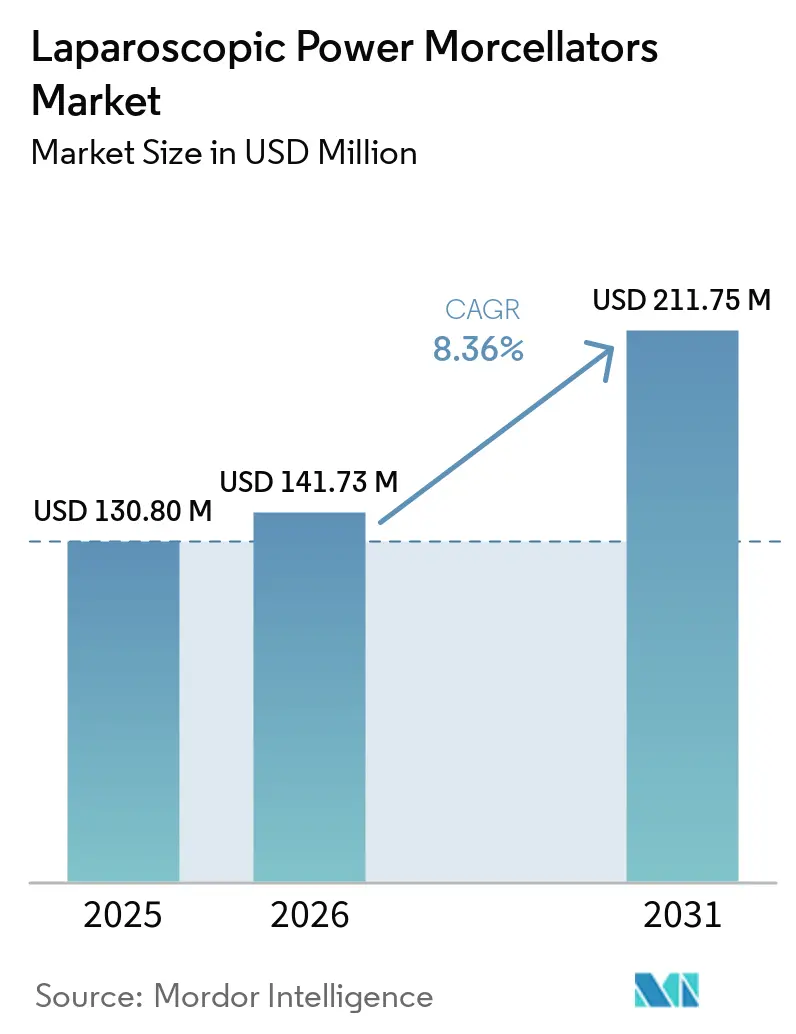
The Laparoscopic Power Morcellators Market size is expected to grow from USD 130.80 million in 2025 to USD 141.73 million in 2026 and is forecast to reach USD 211.75 million by 2031 at 8.36% CAGR over 2026-2031.
Demand is tied to the continued use of minimally invasive surgery for benign gynecological conditions that require the removal of large tissue through small access sites. Contained morcellation is becoming a central purchasing requirement because U.S. regulators advise use only with legally marketed compatible containment systems when power morcellation is appropriate. The July 2026 authorization of Claria Medical’s integrated system gives hospitals a single-device option and raises the commercial value of documented morcellator and containment compatibility. The laparoscopic power morcellators market also benefits when complex gynecological procedures move to outpatient settings, although these buyers place greater weight on setup time, disposable components, and total procedure cost. Clinical risk, patient selection, and compliance with containment protocols remain the main limits on wider use of the laparoscopic power morcellators market.
Key Report Takeaways
- By application, hysterectomy held 58.65% of the laparoscopic power morcellators market share in 2025, while gynecological tissue removal is forecast to grow at a 10.54% CAGR through 2031.
- By end user, hospitals held 62.43% of the laparoscopic power morcellators market share in 2025, while ambulatory surgical centers are forecast to grow at an 11.54% CAGR through 2031.
- By distribution channel, direct sales accounted for 47.65% of revenue in 2025, while online medical equipment platforms are forecast to grow at a 10.42% CAGR through 2031.
- By geography, North America accounted for 43.65% of revenue in 2025, while Asia-Pacific is projected to grow at a 9.54% CAGR through 2031.
Note: Market size and forecast figures in this report are generated using Mordor Intelligence’s proprietary estimation framework, updated with the latest available data and insights as of January 2026.
Market Trends and Insights
Drivers Impact Analysis of Laparoscopic Power Morcellators Market*
| Driver | (~) % Impact on CAGR Forecast | Geographic Relevance | Impact Timeline |
|---|---|---|---|
| Adoption of Minimally Invasive Gynecological Surgery | +2.40% | Global, concentrated in North America, Europe, and Japan | Medium term (2-4 years) |
| Persistent Burden of Uterine Fibroids and Endometriosis | +1.70% | Global, with the highest incidence volumes in India, the United States, and China | Long term (≥ 4 years) |
| Demand for Fertility-Preserving Myomectomy | +0.80% | Global, with higher intensity in high-SDI markets with delayed childbearing | Medium term (2-4 years) |
| Expansion of Ambulatory Surgical Centers | +0.70% | North America, with early expansion into Asia-Pacific and Western Europe | Short term (≤ 2 years) |
| Replacement of Legacy Systems With Contained Workflows | +0.50% | North America and EU MDR-compliance markets | Short term (≤ 2 years) |
| Procedure-Specific Training and Credentialing Pathways | +0.30% | Global, with program adoption in North America and academic centers in Asia-Pacific | Medium term (2-4 years) |
| Source: Mordor Intelligence | |||
Adoption of Minimally Invasive Gynecological Surgery
The move from open surgery to laparoscopic treatment supports procedure volumes that use tissue extraction devices. A 2026 retrospective study found that laparoscopic myomectomy involved a 2.06-day hospital stay, compared with 2.71 days for laparotomy, and lower opioid use[1]. These outcomes matter to hospitals because shorter stays can improve bed availability and reduce postoperative resource use. The laparoscopic power morcellators market gains a direct equipment demand link when laparoscopic myomectomy becomes the preferred pathway for eligible patients. Professional guidance issued by the European Society for Gynecological Endoscopy in 2024 supports laparoscopic abdominal myomectomy for fibroids up to 20 cm when surgeons have suitable experience. The laparoscopic power morcellators market, therefore, depends on training, operating room capacity, and surgeon confidence as much as on the number of women diagnosed with fibroids.
Persistent Burden of Uterine Fibroids and Endometriosis
Fibroids continue to create a large pool of patients who may need hysterectomy or myomectomy when symptoms cannot be managed conservatively. A 2026 study reported a global uterine-fibroid incidence rate of 250.93 per 100,000 women and an Indian rate of 326.08 per 100,000 women. The same work indicated that population growth would continue to support India’s fibroid case count through 2036. This disease burden supports the laparoscopic power morcellators market, where hospitals can provide trained minimally invasive gynecological care. It also makes the Asia-Pacific important because large case volumes can support equipment adoption once containment-compatible systems and training become available. Endometriosis remains relevant to the clinical setting, although fibroid treatment provides a more direct procedural base for tissue morcellation.
Demand for Fertility-Preserving Myomectomy
Myomectomy allows women with symptomatic fibroids to retain their uterus, making it important when fertility preservation is a clinical priority. The 2026 fibroid burden study found that global incidence was highest among women aged 35-39. Laparoscopic procedures require a way to remove fibroid tissue without extending the abdominal incision, which gives morcellation a specific role in this pathway. The laparoscopic power morcellators market benefits when surgeons can offer minimally invasive removal to patients who prefer uterus-preserving treatment. In countries with later childbearing, surgeons may see patients with larger or multiple fibroids during the years when fertility remains important. This can increase tissue extraction needs per procedure rather than only increasing the number of procedures.
Expansion of Ambulatory Surgical Centers
Ambulatory surgical centers are becoming a more important setting for procedures that previously took place mainly in hospitals. CMS added 37 procedures to the ASC covered-procedure list in 2024 and 21 procedures in 2025[2]. These changes widen the range of outpatient procedures that can receive Medicare payment. A Maryland center became the first ASC in its region to offer robotic-assisted minimally invasive gynecological surgery in January 2026, showing that providers are moving more complex care into outpatient facilities. The laparoscopic power morcellators market can gain from this shift, but ASC buyers often favor systems with short setup times and clear disposable-use economics. Group purchasing arrangements and constrained capital budgets can also make these sites less receptive to expensive reusable platforms.
Restraints Impact Analysis of Laparoscopic Power Morcellators Market*
| Restraint | (~) % Impact on CAGR Forecast | Geographic Relevance | Impact Timeline |
|---|---|---|---|
| Risk of Disseminating Occult Malignancy | -1.30% | Global, with the greatest effect in North America and the EU | Long term (≥ 4 years) |
| Stringent Patient-Selection and Containment Requirements | -0.70% | North America, EU MDR markets, and Japan | Medium term (2-4 years) |
| Containment-Bag Leakage and Workflow Complexity | -0.40% | Global, with greater friction in resource-constrained and under-trained settings | Medium term (2-4 years) |
| Limited Interoperability Between Morcellators and Containment Systems | -0.30% | Global, most pronounced where morcellator and containment purchases are managed by separate hospital departments | Short term (≤ 2 years) |
| Source: Mordor Intelligence | |||
Risk of Disseminating Occult Malignancy
The possibility of spreading unsuspected uterine cancer during morcellation remains the most serious clinical barrier in the laparoscopic power morcellators market. The FDA states that unsuspected uterine sarcoma may be present in 1 in 225 to 1 in 580 women undergoing surgery for presumed fibroids[3]. The agency also warns that power morcellation can spread cancerous tissue and reduce the likelihood of long-term survival. No preoperative test can reliably rule out uterine sarcoma in every patient with presumed fibroids, so selection decisions retain a clinical uncertainty. That uncertainty encourages hospitals and payers to limit use to carefully selected premenopausal patients. The laparoscopic power morcellators market must therefore compete with alternative surgical approaches, even when minimally invasive treatment would otherwise be preferred.
Stringent Patient-Selection and Containment Requirements
FDA guidance limits the use of laparoscopic power morcellation to appropriately selected patients and directs providers to use a legally marketed compatible containment system when the procedure is appropriate. Manufacturers must define the compatible morcellators in containment-system labeling, which requires formal evidence and creates an additional commercialization step. A 2025 survey of minimally invasive gynecologic surgery fellows reported that more than 80% did not consistently follow FDA-cleared containment protocols, and nearly half used specimen-retrieval bags off-label. These findings point to workflow and training barriers, not only to clinical disagreement. France’s medicines agency reported in 2025 that the 14 operators reviewed in its 2023 market-surveillance exercise had met the relevant labeling, patient-information, and risk-analysis recommendations. The laparoscopic power morcellators market will favor suppliers that make compatibility evidence and operating protocols simple for clinical teams to use.
*Our forecasts treat driver/restraint impacts as directional, not additive. The impact forecasts reflect baseline growth, mix effects, and variable interactions.
Laparoscopic Power Morcellators Market Segment Analysis
By Application:
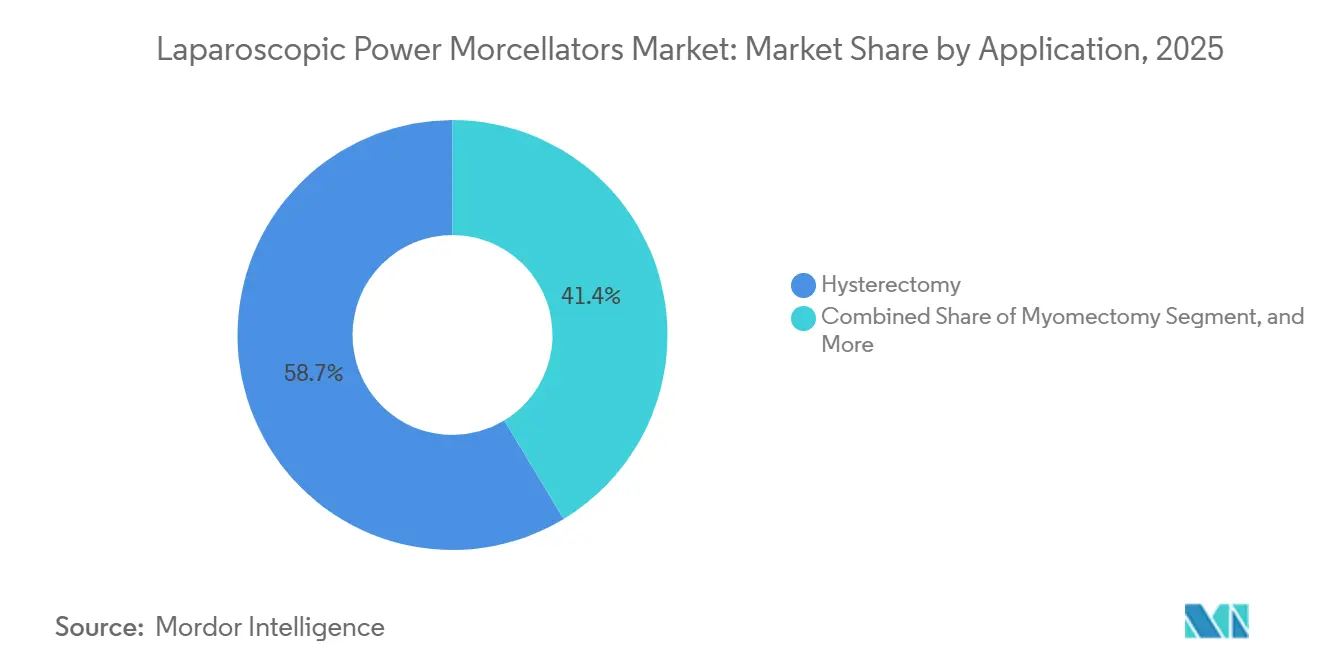
Hysterectomy Anchors Revenue While Tissue Removal Leads GrowthHysterectomy accounted for 58.7% of the laparoscopic power morcellators market share in 2025, making it the largest application. The United States performs an estimated 600,000 hysterectomies each year, and the supplied research identified enlarged uteri requiring specialized extraction techniques in 30% of these procedures. The scale of this procedural base helps preserve demand for compatible tissue extraction equipment. FDA recommendations have made containment a defining element of use when power morcellation is appropriate, rather than an optional add-on.
Gynecological tissue removal is projected to grow at a 10.5% CAGR through 2031, the fastest rate among applications. The laparoscopic power morcellators market size for this application expands as tissue extraction is used in procedures outside the traditional hysterectomy and myomectomy classifications. Some of this growth reflects more specific coding of tissue-removal steps that were previously included within broader procedures. The Claria System received FDA De Novo authorization in July 2026 as an integrated gynecologic power morcellator and containment system for laparoscopic hysterectomy in selected premenopausal patients. Its authorization encourages developers to consider integrated configurations for other gynecological tissue-removal uses, while myomectomy remains supported by fertility-preservation demand.

By End User:
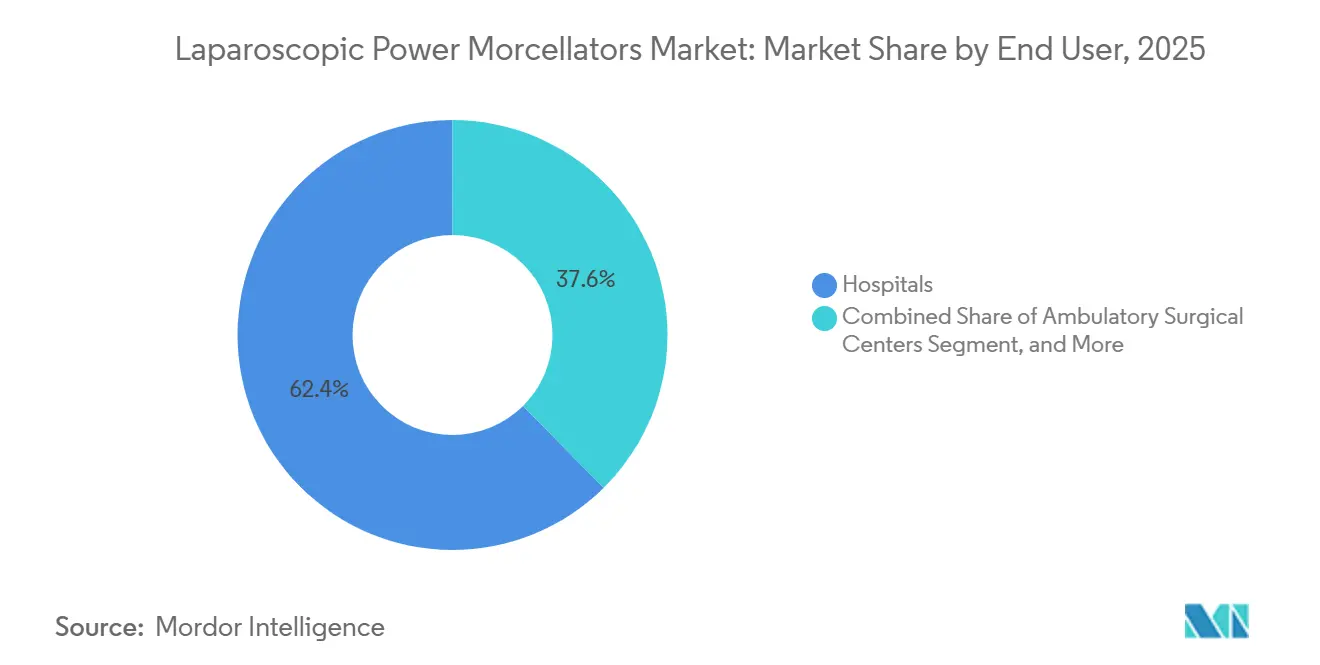
Hospitals Retain Scale While ASCs Change Buying PrioritiesHospitals held 62.4% of the laparoscopic power morcellators market share in 2025. Their position reflects the concentration of complex gynecological surgery, inpatient monitoring capacity, and established training programs within hospital systems. Academic medical centers also influence purchasing because they manage difficult cases and contribute clinical evidence on containment practices. Hospitals need product demonstrations, compatibility assessments, and formal surgeon training before adopting a new workflow. These requirements favor suppliers with direct clinical-support capabilities in the laparoscopic power morcellators market.
Ambulatory surgical centers are forecast to grow at an 11.5% CAGR through 2031, the fastest end-user rate. The expansion of covered outpatient procedures supports this movement, as does provider investment in robotic and minimally invasive gynecological care. ASCs are likely to favor lighter systems, single-use components, and predictable costs because their procedures must fit same-day schedules. This preference can shift product demand away from high-cost reusable capital platforms. It can also reward integrated containment approaches that reduce device coordination and setup steps.
By Distribution Channel:
Direct Sales Leads While Digital Procurement ExpandsDirect sales accounted for 47.7% of distribution-channel revenue in 2025. Capital morcellator systems need in-person clinical demonstrations, compatibility testing, and surgeon education, which makes a dedicated manufacturer sales force useful. Medical-device distributors and hospital procurement groups remain important where manufacturers do not have a strong direct presence. Third-party resellers serve price-sensitive facilities and regions that have limited access to primary inventories. These channels keep the laparoscopic power morcellators market accessible beyond large hospital accounts.
Online medical equipment platforms are forecast to grow at a 10.4% CAGR through 2031. Their growth is concentrated in consumables, including containment bags, disposable blade cartridges, and retrieval sacs, rather than in capital consoles. Digital systems can help hospitals and ASCs manage repeat orders and document product availability. Suppliers with proprietary disposable components can build recurring revenue through these purchasing routes. The shift does not replace direct sales for complex equipment, but it adds a digital channel for ongoing clinical supply needs.
Geography Analysis
North America Laparoscopic Power Morcellators Market
North America held 43.7% of the laparoscopic power morcellators market share in 2025. The region combines high gynecological procedure volumes with established laparoscopic infrastructure and regulatory requirements that influence global device design. FDA guidance requires compatible containment when laparoscopic power morcellation is appropriate, which makes product validation central to procurement. The FDA authorized the Claria System through the De Novo pathway in July 2026 and created the SIM product code for this device type. This gives hospitals a defined integrated-system option as they update legacy configurations. The growing ASC base also creates new outpatient demand, although these sites will assess device cost and workflow carefully. Canada and Mexico represent smaller opportunities shaped by public procurement and insurance arrangements.
Europe Laparoscopic Power Morcellators Market
Europe has stable demand from Germany, the United Kingdom, France, and Italy because these countries have trained specialist workforces and established hospital purchasing systems. The EU Medical Device Regulation increased post-market surveillance and evidence expectations for device suppliers. These requirements can limit smaller suppliers’ participation in tenders while rewarding firms with documented clinical and regulatory support. France’s ANSM stated in 2025 that all 14 audited operators had aligned their labeling, patient communication, and risk analysis with national recommendations. Europe consequently offers a setting where validated containment workflows may command stronger pricing than basic standalone devices.
APAC, MEA and South America Laparoscopic Power Morcellators Market
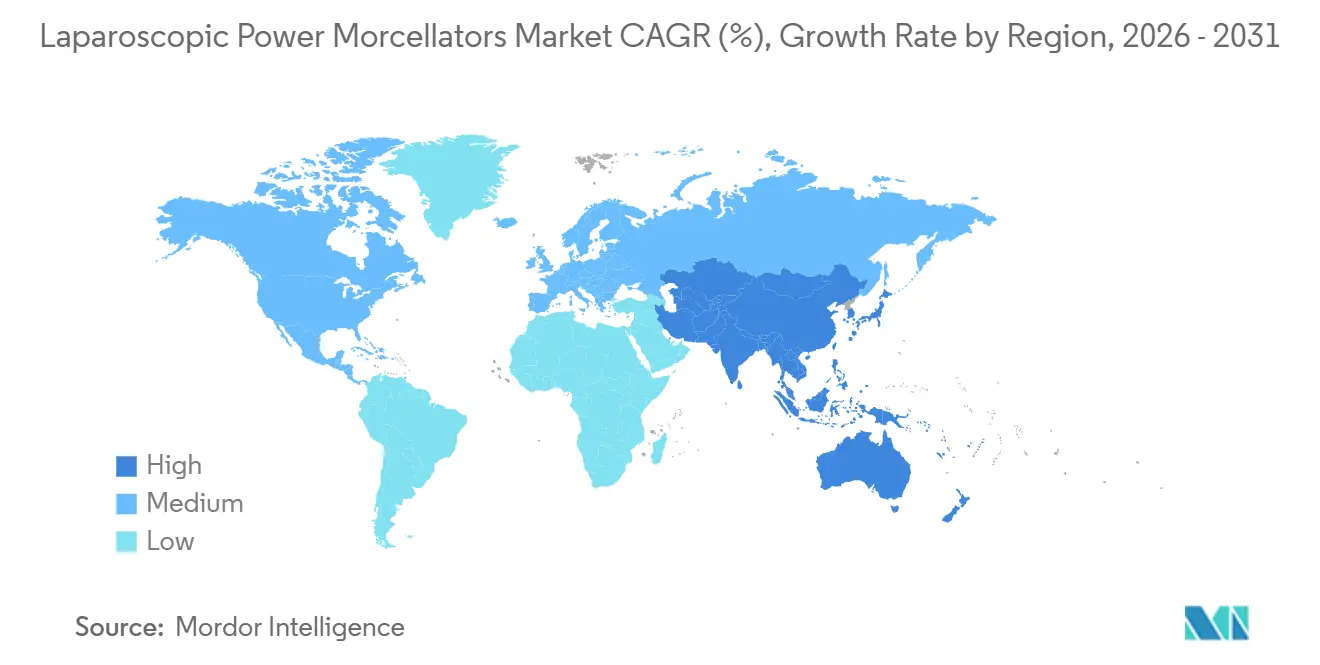
Asia-Pacific is forecast to grow at a 9.5% CAGR through 2031, the highest regional rate. India’s fibroid incidence rate of 326.08 per 100,000 women creates a substantial potential pool of surgically eligible patients. China recorded nearly 986,000 uterine-fibroid incident cases in 2021 in the supplied research, and expanding hospital training capacity supports procedure growth. Japan remains a more mature setting for laparoscopic myomectomy, with its existing precautions emphasizing safe use. The laparoscopic power morcellators market in the region will depend on hospital investment, training, and access to compatible containment products. Middle East and Africa and South America remain smaller, with demand concentrated in GCC private healthcare systems and Brazil’s large hospital networks.
Competitive Landscape
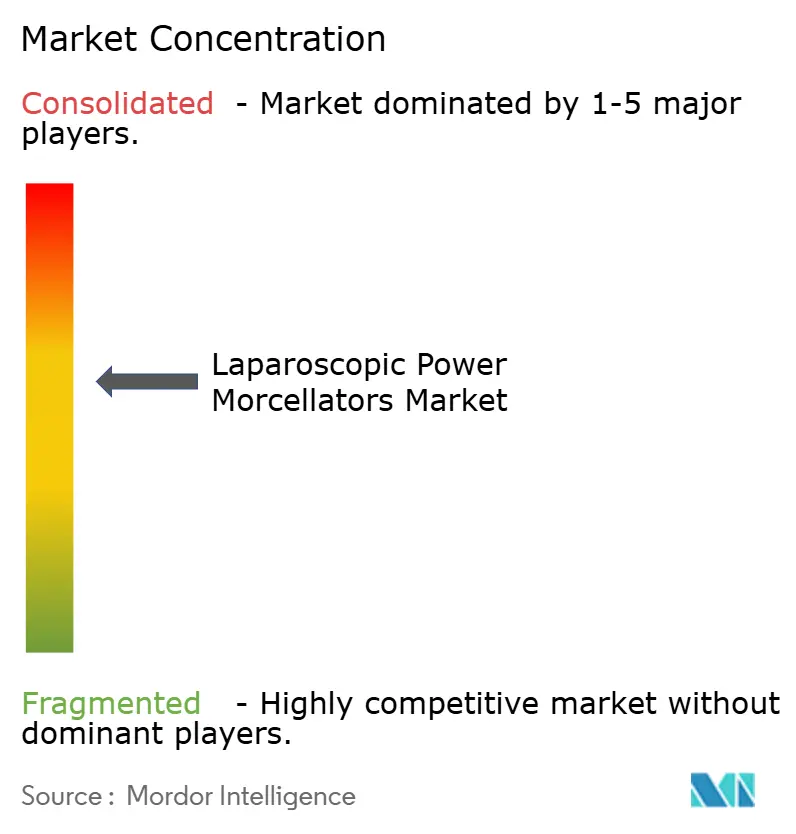
The laparoscopic power morcellators market is moderately consolidated because established surgical-device suppliers hold strong hospital relationships and broad operating-room portfolios. Medtronic, KARL STORZ, Olympus, and Johnson & Johnson are prominent diversified surgical-platform companies in the medical research. Richard Wolf, LiNA Medical, Nouvag, RUDOLF Medical, and BOWA-electronic are specialized European competitors with established clinical relationships. Competition increasingly depends on evidence that a morcellator can operate with a compatible containment system. This changes the basis of competition from handpiece performance alone to workflow validation, training, and documentation. The laparoscopic power morcellators market also includes companies that specialize in containment solutions, which can influence the purchase decision even when they do not sell the motorized platform.
Claria Medical’s July 2026 FDA De Novo authorization created an integrated category for a gynecologic power morcellator and containment system. The Claria System uses electronic communication between the container and handpiece to prevent use if a containment barrier is compromised. Olympus has positioned its PneumoLiner-based contained tissue-extraction offering around containment integration. Blue Endo’s More-Cell-System and Ark Surgical’s LapBox POWER represent other containment-focused approaches. Ark Surgical received FDA 510(k) clearance for its LapBox POWER Tissue Containment System in April 2025 for use with electromechanical laparoscopic power morcellators with 15 mm to 18 mm shaft diameters. These moves make the laparoscopic power morcellators market more dependent on coordinated device-and-containment offerings.
Emerging suppliers are focusing on price, single-use design, and simpler deployment. Espiner Medical announced CE Mark approval for its AC-powered single-use Morcell8OR in May 2026, with compatibility for the Espiner Morcellation Sac. Frontsurg launched an upgraded battery-powered uterine morcellator and contained in-bag system in June 2026. These products can appeal to ASCs and healthcare providers with limited capital budgets. Established companies retain an advantage through installed bases, surgical ecosystem relationships, and training infrastructure. New entrants must show compatibility, clinical utility, and reliable service to gain hospital acceptance.
Laparoscopic Power Morcellators Industry Leaders
-
LiNA Medical ApS
-
KARL STORZ SE & Co. KG
-
BOWA-electronic GmbH & Co. KG
-
Richard Wolf GmbH
-
Olympus Corporation
- *Disclaimer: Major Players sorted in no particular order
Laparoscopic Power Morcellators Market Companies Covered in this Report
- Advin Health Care
- Applied Medical Resources
- B. Braun
- Blue Endo
- Boston Scientific
- BOWA Medical
- The Cooper Companies
- Conmed
- Cook Group
- Richard Wolf
- Johnson & Johnson
- Karl Storz
- LiNA Medical ApS
- Medtronic
- Microline Surgical
- Nouvag
- Olympus
- Stryker
Recent Industry Developments in Laparoscopic Power Morcellators Market
- July 2026: Claria Medical received FDA De Novo marketing authorization for the Claria System, DEN250034, the first integrated gynecologic power morcellator and containment system cleared under the new SIM product code. The system includes SafeStop electronic communication between its tri-layer container and handpiece and is indicated for laparoscopic hysterectomy in appropriately selected premenopausal patients.
- June 2026: Frontsurg launched its upgraded Battery-Powered Uterine Morcellator and Contained In-Bag Morcellation System for hospitals, surgical centers, and medical distributors. The company stated that the line includes specimen-retrieval-bag compatibility and enhanced cutting mechanisms.
- April 2025: Ark Surgical received FDA 510(k) clearance for the LapBox POWER Tissue Containment System, a dual-wall system intended for use with electromechanical laparoscopic power morcellators with 15 mm to 18 mm shaft outer diameters.
Global Laparoscopic Power Morcellators Market Report Scope
According to the report’s scope, laparoscopic power morcellators are surgical devices used to cut and remove large tissue or fibroids into smaller pieces during minimally invasive laparoscopic procedures. They facilitate tissue extraction through small incisions, reducing recovery time.
The laparoscopic power morcellators market is segmented into product, application, end user, distribution channel, and geography. By application, the market is segmented into hysterectomy, myomectomy, gynecological tissue removal, and other applications. By end user, the market is segmented into hospitals, ambulatory surgical centers, academic medical centers, and other end users. By distribution channel, the market is segmented into direct sales, medical device distributors, hospital procurement groups, online medical equipment platforms, and third-party resellers. By geography, the market is segmented into North America, Europe, Asia-Pacific, the Middle East and Africa, and South America. The report also covers the estimated market sizes and trends for 17 countries across major regions globally. The report offers values (USD) for all the above segments.
Segmentation Overview
| Hysterectomy |
| Myomectomy |
| Gynecological Tissue Removal |
| Other Applications |
| Hospitals |
| Ambulatory Surgical Centers |
| Academic Medical Centers |
| Other End Users |
| Direct Sales |
| Medical Device Distributors |
| Hospital Procurement Groups |
| Online Medical Equipment Platforms |
| Third-Party Resellers |
| North America | United States |
| Canada | |
| Mexico | |
| Europe | Germany |
| United Kingdom | |
| France | |
| Italy | |
| Spain | |
| Rest of Europe | |
| Asia-Pacific | China |
| Japan | |
| India | |
| Australia | |
| South Korea | |
| Rest of Asia-Pacific | |
| Middle East and Africa | GCC |
| South Africa | |
| Rest of Middle East and Africa | |
| South America | Brazil |
| Argentina | |
| Rest of South America |
| By Application | Hysterectomy | |
| Myomectomy | ||
| Gynecological Tissue Removal | ||
| Other Applications | ||
| By End User | Hospitals | |
| Ambulatory Surgical Centers | ||
| Academic Medical Centers | ||
| Other End Users | ||
| By Distribution Channel | Direct Sales | |
| Medical Device Distributors | ||
| Hospital Procurement Groups | ||
| Online Medical Equipment Platforms | ||
| Third-Party Resellers | ||
| Geography | North America | United States |
| Canada | ||
| Mexico | ||
| Europe | Germany | |
| United Kingdom | ||
| France | ||
| Italy | ||
| Spain | ||
| Rest of Europe | ||
| Asia-Pacific | China | |
| Japan | ||
| India | ||
| Australia | ||
| South Korea | ||
| Rest of Asia-Pacific | ||
| Middle East and Africa | GCC | |
| South Africa | ||
| Rest of Middle East and Africa | ||
| South America | Brazil | |
| Argentina | ||
| Rest of South America | ||
Key Questions Answered in the Report
What is the forecast growth rate for laparoscopic power morcellators?
The laparoscopic power morcellators market is forecast to grow at an 8.4% CAGR from 2026 to 2031, reaching USD 211.8 million.
Which procedure generates the largest share of revenue?
Hysterectomy was the largest application, with 58.7% revenue share in 2025.
Why is contained morcellation important?
FDA guidance directs providers to use a legally marketed compatible containment system when laparoscopic power morcellation is appropriate.
Which end user is growing fastest?
Ambulatory surgical centers are forecast to grow at an 11.5% CAGR through 2031 as more procedures move into outpatient settings.
Which region is expanding most quickly?
Asia-Pacific is forecast to grow at a 9.5% CAGR through 2031, supported by fibroid burden and hospital investment.
What is the main risk affecting adoption?
The main risk is the potential dissemination of unsuspected uterine malignancy, which requires strict patient selection and containment practices.