
Keto Meal Delivery Market Size and Share
Market Overview
| Study Period | 2022 - 2032 |
|---|---|
| Market Size (2027) | USD 1.8 Billion |
| Market Size (2032) | USD 2.87 Billion |
| Growth Rate (2027 - 2032) | 9.80 % |
| Fastest Growing Market | Asia-Pacific |
| Largest Market | North America |
| Market Concentration | Low |
Major Players *Disclaimer: Major Players sorted in no particular order Image © Mordor Intelligence. Reuse requires attribution under CC BY 4.0. | |
Keto Meal Delivery Market Analysis by Mordor Intelligence
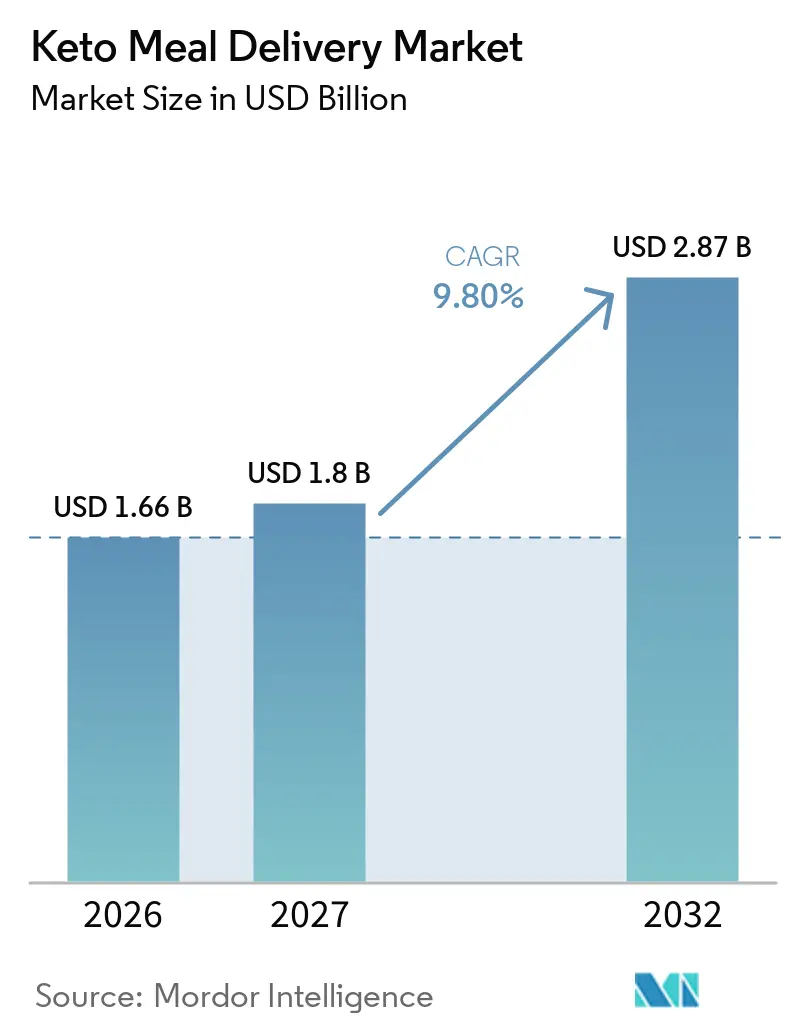
The Keto Meal Delivery market size was valued at USD 1.66 billion in 2026 and is projected to grow from to USD 1.8 billion in 2027 to USD 2.87 billion by 2032, at a CAGR of 9.8% between 2027 and 2032. Demand is supported by consumers who want structured low-carbohydrate meals without the time, planning, or macro calculation required to follow a ketogenic diet independently. A 2025 Global Burden of Disease forecasting study published in the lancet expects the global population living with overweight and obesity to reach 3.80 billion adults by 2050, with especially rapid increases expected in sub-Saharan Africa and South Asia. This creates a wider potential user base for meal plans that provide consistent portions and defined nutrition. Competition in the Keto meal delivery market is moving beyond basic convenience toward clinical positioning, subscription retention, and flexible ordering. The expanding use of GLP-1 medicines may reduce demand from consumers seeking weight loss through dietary restriction alone, while medically tailored meal programs may create new channels for providers.
Key Report Takeaways
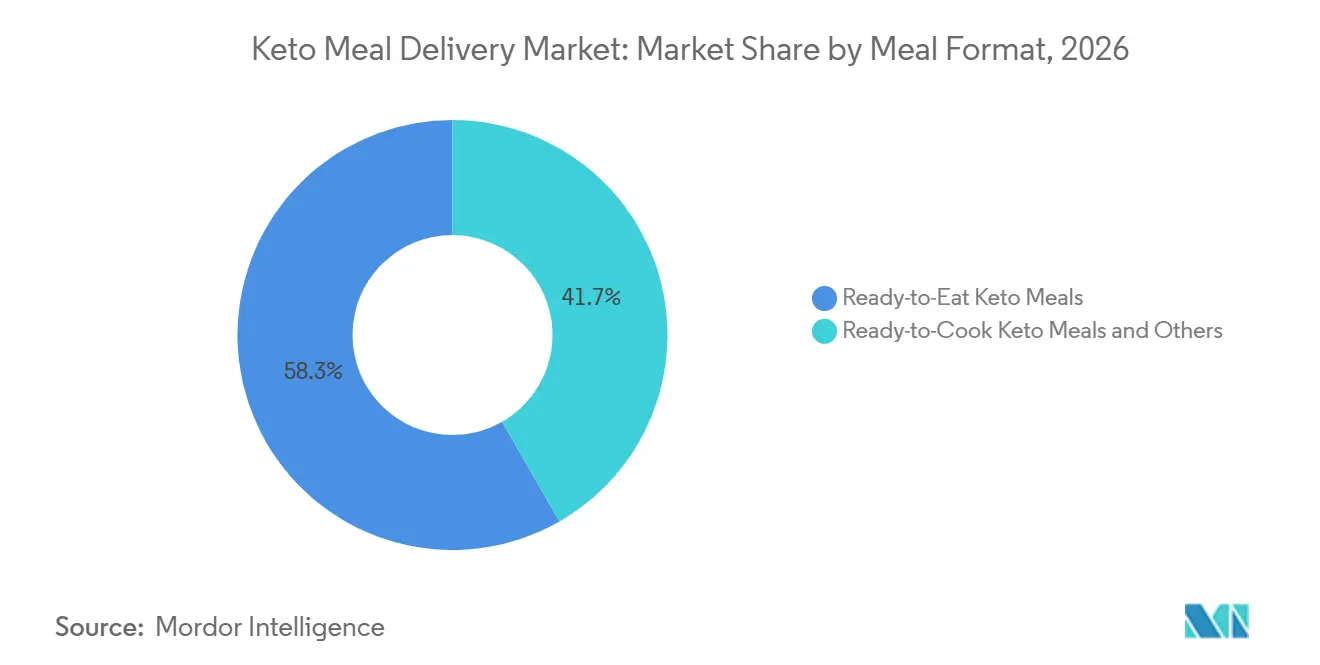
- By meal format, Ready-to-Eat Keto Meals held 58.3% of the Keto meal delivery market share in 2026, while Ready-to-Cook Keto Meals are forecast to grow at a 10.6% CAGR through 2032.
- By delivery model, Subscription-Based Delivery held 75.2% of the Keto meal delivery market share in 2026, while One-Time or On-Demand Delivery is forecast to grow at an 11.2% CAGR through 2032.
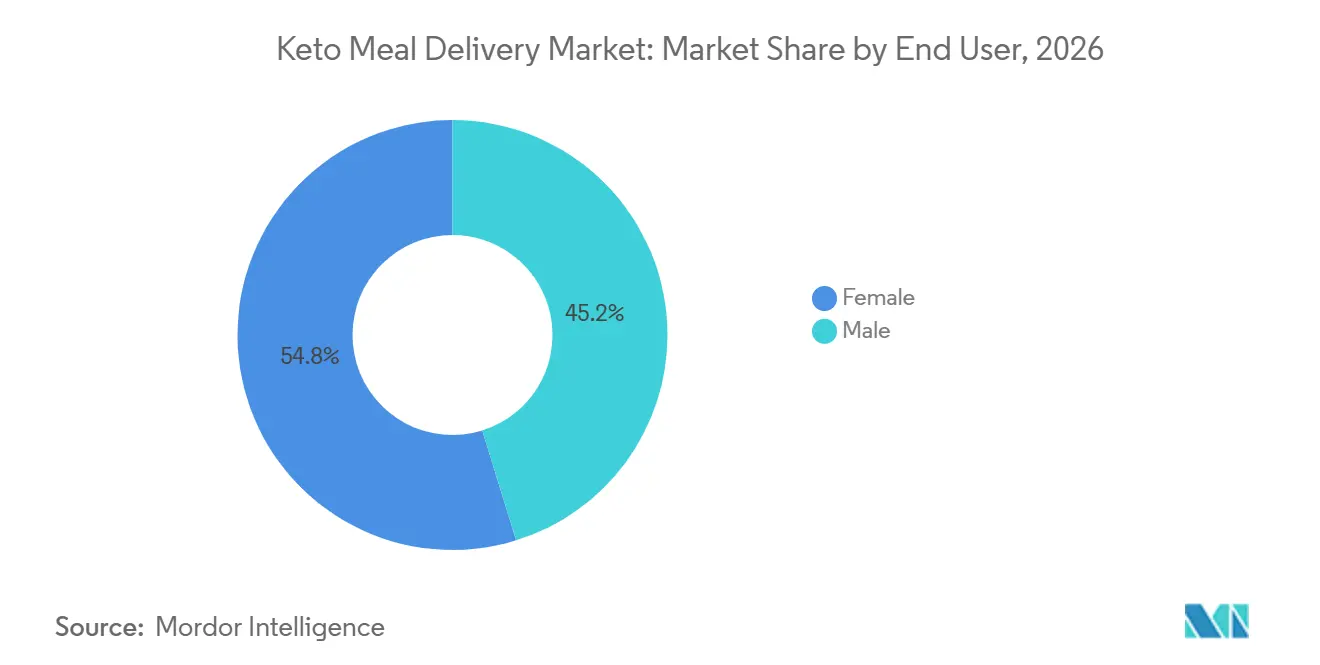
- By end user, Female consumers held a 54.8% share in 2026, while Male consumers are forecast to grow at a 10.8% CAGR through 2032.
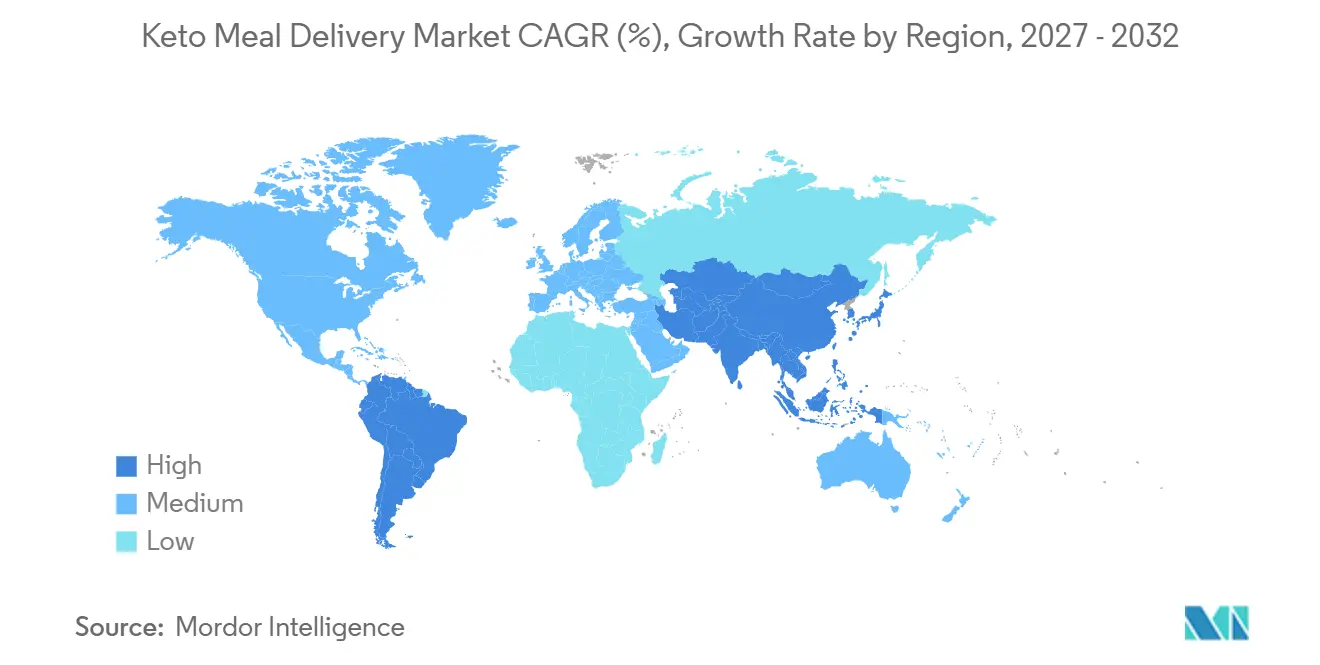
- By geography, North America held a 60.1% share in 2026, while Asia-Pacific is forecast to grow at an 11.4% CAGR through 2032.
Note: Market numbers in this report are based on Mordor Intelligence's proprietary estimation framework, which combines nine months of actuals with Q4 projections for base year 2026.
Market Trends and Insights
Drivers Impact Analysis of Keto Meal Delivery Market*
| Driver | (~) % Impact on CAGR Forecast | Geographic Relevance | Impact Timeline |
|---|---|---|---|
| Rising Health Consciousness and Demand for Specialized Diets | +2.0% | Global, concentrated in North America and Western Europe | Medium term (2-4 years) |
| Demand for Convenience and Time-Saving Solutions | +1.8% | Global, highest penetration in urban North America and Asia-Pacific | Short term (≤ 2 years) |
| Personalized Nutrition and Macro Customization | +1.5% | North America and Europe, with early adoption in Asia-Pacific | Medium term (2-4 years) |
| Advancements in E-Commerce and Delivery Infrastructure | +1.3% | Asia-Pacific and North America, broadening to Middle East and Africa | Medium term (2-4 years) |
| Rising Prevalence of Obesity and Metabolic Disorders | +1.2% | Global, accelerating in Asia-Pacific, Middle East and Africa, and South America | Long term (≥ 4 years) |
| Advancements in Cold-Chain Logistics and Food Preservation | +0.8% | North America, Europe, and urban Asia-Pacific | Long term (≥ 4 years) |
| Source: Mordor Intelligence | |||
Rising Health Consciousness and Demand for Specialized Diets
Consumers increasingly choose food plans for defined metabolic and health goals instead of broad wellness goals. A 2025 systematic review from clinical nutrition journal covering 33 randomized controlled trials and 2,821 individuals found that ketogenic and low-carbohydrate diets with carbohydrate intake of 100 g or less per day reduced body weight, body mass index, and body fat percentage. This evidence makes clinical credibility more useful in the Keto meal delivery market, particularly where a service needs to explain why a structured plan may be easier to follow than self-prepared meals. Factor presents keto meals with 15 g or fewer net carbohydrates per serving and emphasizes dietitian development and chef preparation. The offer addresses users who need measured nutrition but do not want to shop, calculate, or prepare every meal. Providers that connect meal design with credible health information can strengthen consumer trust and support retention.
Demand for Convenience and Time-Saving Solutions
Convenience remains a central reason consumers choose prepared keto meals over home cooking. Ready-to-eat products reduce preparation to heating, which can fit the routines of working professionals and highly active consumers. This convenience is important because ketogenic eating often requires careful ingredient selection and carbohydrate control. The Keto meal delivery market therefore benefits when consumers value reliable execution more than culinary involvement. Factor’s ready-to-eat positioning demonstrates how a provider can combine fast preparation with specific nutrition thresholds. Convenience also supports repeat ordering because a prepared plan removes the recurring planning burden associated with restrictive diets.
Personalized Nutrition and Macro Customization
Personalized nutrition is becoming a stronger point of differentiation for meal providers. A 2025 review published in frontiers organization describes how digital nutrition systems can combine wearable data, clinical markers, genetic profiles, and dietary surveys to support adaptive meal recommendations. This capability can help match meals to calorie needs, macronutrient targets, food sensitivities, and changing dietary adherence. It may also reduce the effort of deciding which meals to select in the first weeks of a plan. HelloFresh reported that its 2025 product investment program focused on broadening choice and improving product quality, while its operating work included technology-supported planning and personalization. In the Keto meal delivery market, these tools can make a specialized plan feel less rigid without changing the need for clear nutritional boundaries.
Advancements in E-Commerce and Delivery Infrastructure
Direct-to-consumer logistics and digital ordering systems allow meal providers to serve more customers without adding the same level of manual complexity. HelloFresh reported work across planning, procurement, menu development, and customer experience as part of its 2025 efficiency and product programs. These capabilities can lower the incremental effort of adding keto-focused options to an existing food delivery network. CookUnity secured up to USD 250 million in growth financing in November 2025 to support customer acquisition, brand expansion, and chef partnerships. Its funding shows that profitable prepared-meal platforms can attract capital for continued expansion. Better ordering, planning, and delivery systems widen the reach of the Keto meal delivery market, although chilled food delivery still requires dependable cold-chain capacity.
Restraints Impact Analysis of Keto Meal Delivery Market*
| Restraint | (~) % Impact on CAGR Forecast | Geographic Relevance | Impact Timeline |
|---|---|---|---|
| Strict Dietary Adherence and Keto Fatigue | -0.5% | Global, most pronounced in North America and Europe | Short term (≤ 2 years) |
| Cold-Chain and Logistics Challenges | -0.4% | Asia-Pacific, Middle East and Africa, and South America, with rural constraints globally | Long term (≥ 4 years) |
| Regulatory Compliance and Labeling Requirements | -0.3% | North America and Europe, with emerging relevance in Asia-Pacific | Medium term (2-4 years) |
| Supply Chain Disruptions and Ingredient Sourcing | -0.3% | Global, amplified in import-dependent regions | Medium term (2-4 years) |
| Source: Mordor Intelligence | |||
Strict Dietary Adherence and Keto Fatigue
Maintaining a ketogenic diet over time remains a practical challenge for many consumers. A 2025 scoping review reported that people beginning a ketogenic diet can experience headache, fatigue, light-headedness, and gastrointestinal symptoms within 2-3 days, often described as keto flu[1]. A separate 2025 review also identified substantial variation in adherence and continuing questions around consistent adherence measurement. These factors make the first 4-8 weeks important for customer retention. Providers can respond with dietary flexibility, support for broader metabolic wellness goals, and clear guidance for new users. HelloFresh’s 2026 update referenced specialized GLP-1 recipe lines and new product choices, indicating that providers are adapting their menus to consumers whose commitment to strict macro ratios has softened.
Cold-Chain and Logistics Challenges
Cold-chain reliability limits the quality and geographic coverage of the Keto meal delivery market. The challenge is most acute in markets where refrigerated storage, reliable power, and last-mile distribution are uneven. It also raises the operating costs borne by smaller providers that do not have large delivery volumes. This gives scale advantages to companies that can spread refrigerated logistics costs across more orders. Ingredient sourcing disruptions can add further pressure in import-dependent areas because specialized proteins and diet-specific inputs may be less available. Food labeling requirements are another operating consideration, and the U.S. Food and Drug Administration proposed front-of-package nutrition labeling requirements in January 2025[2]. Clear nutrition information and reliable temperature control are both needed for providers that want to compete on health-oriented claims.
*Our forecasts treat driver/restraint impacts as directional, not additive. The impact forecasts reflect baseline growth, mix effects, and variable interactions.
Keto Meal Delivery Market Segment Analysis
By Meal Format:
Ready-to-Eat Meals Lead While Cooking Kits Gain GroundReady-to-Eat Keto Meals held a 58.3% share in 2026. The format removes nearly all meal preparation and gives consumers chef-prepared meals with defined macronutrients. Factor’s keto line includes meals with 15 g or fewer net carbohydrates per serving and is developed by dietitians before being prepared by chefs. These features suit professionals and active consumers who have limited time for ingredient sourcing or meal preparation. The leading position of ready-to-eat meals reflects a willingness to pay for certainty and speed. Other formats, including snack packs and supplement-bundled kits, remain smaller and are mainly used for product experimentation rather than as the core revenue source.
Ready-to-Cook Keto Meals are forecast to grow at a 10.6% CAGR through 2032, which is faster than the ready-to-eat format. Their appeal lies in offering pre-portioned ingredients and macro guidance while preserving the consumer’s role in cooking. This can lower the per-meal cost compared with fully prepared options and make the format more accessible. The Keto meal delivery market can use adaptive recommendations to support meal planning based on biological markers and dietary compliance information. HelloFresh described broader product choice and improved ingredient quality as important elements of its 2025 product program. The format may build loyalty among users who want to learn keto-compliant cooking techniques rather than only purchase convenience.

By Delivery Model:
Subscriptions Support Revenue While On-Demand Orders ExpandSubscription-Based Delivery accounted for 75.2% of the Keto meal delivery market size in 2026. Weekly recurring plans, pause options, and meal selection tools help providers forecast purchasing, production, and delivery needs. For users following a restrictive diet, a subscription also provides regular access to calorie-controlled and carbohydrate-compliant meals. The Keto meal delivery market depends on repeat use when a service delivers dependable product quality. HelloFresh reported that nearly two-thirds of its meal-kit orders came from customers with more than 20 lifetime orders. Subscription plans remain central to revenue because they create a predictable ordering relationship for both the provider and the user.
One-Time or On-Demand Delivery is forecast to grow at an 11.2% CAGR through 2032. This model responds to consumers who do not want a weekly commitment but will purchase prepared keto meals for selected occasions. It can serve as a trial route for people who are new to keto eating or unsure whether they can sustain a plan. On-demand catalogs can also provide a path toward later subscription enrollment when meals meet user expectations. Flexibility is increasingly valuable because strict dietary adherence can be difficult in the early stages. The Keto meal delivery market can benefit when providers give trial customers a clear option to move from occasional orders to recurring plans. This approach supports conversion without making commitment a condition of first use.
By End User:
Female Consumers Form the Largest Base While Male Use Grows FasterFemale consumers accounted for a 54.8% share in 2026. Their buying pattern aligns with demand for structured dietary programs that combine practical support with visible health objectives. Services can address this group through macro transparency, dietitian access, and meal options linked to hormone health and broader wellness goals. Clinical positioning also matters where consumers want a clearer rationale for a specialized meal plan. A 2025 review found that low-carbohydrate and ketogenic dietary approaches were associated with reductions in body weight, body mass index, and body fat in the randomized trials assessed. These outcomes support the need for clear and responsible nutrition communication. Pause and resume functions are also useful because they can preserve a relationship with consumers who temporarily stop following a strict plan.
Male consumers are forecast to grow at a 10.8% CAGR through 2032. Demand is connected to performance nutrition, muscle preservation, and metabolic goals. Providers can reach these consumers through gym networks, personal trainers, fitness communities, and athletic sponsorships. Factor’s partnership with the New York Yankees in August 2025 showed how sports connections can support nutrition-focused brand positioning. The same product logic also applies to women active in sport and fitness. Higher-protein meal formats give providers a way to position keto offers around performance as well as weight management. This broadens the relevance of the Keto meal delivery market among consumers who may not identify with a conventional diet program.
Geography Analysis
North America
North America held 60.1% of the Keto meal delivery market size in 2026. The region benefits from established direct-to-consumer delivery systems, high familiarity with subscriptions, and a large presence of national prepared-meal providers. Factor, Trifecta Nutrition, Territory Foods, Fresh n’ Lean, CookUnity, and Snap Kitchen operate in the region through refrigerated distribution networks and centralized production. The Keto meal delivery market in North America increasingly differentiates through lifestyle relevance and clinical positioning rather than category education. Factor’s New York Yankees partnership illustrates how companies use sports affiliations to reinforce nutrition and performance credentials. CookUnity launched in Ontario in June 2025, extending a chef-led model into Canada. North America also has a strong base for medically oriented offerings, which can move specialized meals closer to preventive health use.
Asia-Pacific
Asia-Pacific is forecast to grow at an 11.4% CAGR through 2032. Rising disposable income, urban living, and greater interest in fitness among professional consumers support demand in China, India, Singapore, and Australia. The regional share remains lower than in North America because delivery infrastructure and adoption levels vary widely across the region. Singapore, Australia, and major Chinese cities offer more immediate routes to entry because they combine stronger e-commerce capability with higher income levels. India and parts of Southeast Asia present greater cold-chain constraints, which can raise the cost of delivering chilled products at consistent quality. As a result, expansion is likely to begin in gateway cities and then extend as storage and delivery networks improve. Regulatory influence and food safety compliance will remain important as providers scale across markets with different labeling rules and consumer expectations.
Europe, South America, and Middle East and Africa
Europe is the closest commercial expansion area after North America because it has established food delivery systems and growing interest in diet-specific meal solutions. Factor entered Germany in February 2025 with a fresh meal service offering keto, pescatarian, and high-protein choices. European Union food information requirements under Regulation 1169/2011 increase the importance of accurate nutrition claims and label design. This compliance burden can favor better-capitalized providers that can manage country-specific requirements. South America remains an early-stage opportunity among higher-income consumers in cities such as São Paulo, Buenos Aires, and Santiago, although cold-chain quality and subscription payment use remain constraints. In the Middle East and Africa, the United Arab Emirates, Saudi Arabia, and South Africa offer more accessible near-term demand because of urbanization and affluent consumer groups. Nigeria, Egypt, and Morocco have longer-term potential as obesity and smartphone use increase, but infrastructure investment will determine how quickly organized delivery services develop.
Competitive Landscape
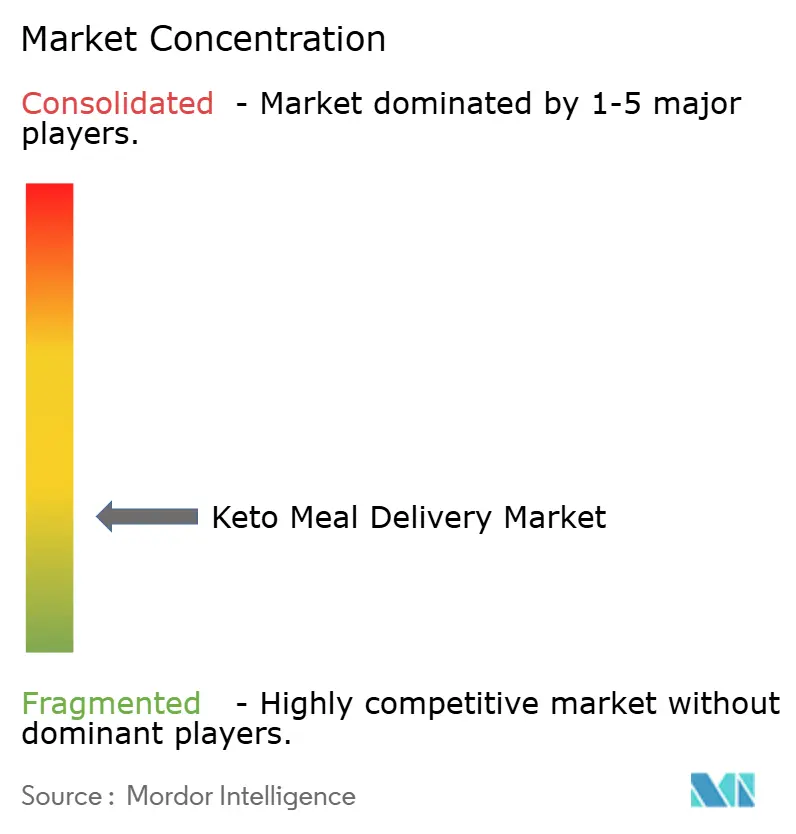
The Keto meal delivery market is fragmented, with no single company holding a defensible position across all regions, formats, and delivery models. Factor, a HelloFresh Group brand, and Trifecta Nutrition have strong recognition and national distribution in North America. CookUnity uses a chef-sourced marketplace model and reported more than USD 750 million in annual recurring revenue with more than 43 million meals delivered in 2025. The competitive focus is on menu range, delivery reliability, clinical relevance, and the economics of recurring orders. Providers are also differentiating through lifestyle partnerships and more flexible ways to purchase meals. This structure gives smaller providers an opportunity to specialize, but it also rewards companies that can manage cold-chain operations at scale.
Clinical credibility is an important competitive route because it can position prepared meals as part of a broader health program. Trifecta Nutrition’s KetoFLEX 12/3 partnership with Apollo Health showed how a company can link meal delivery to a cognitive health plan. Factor also expanded its ready-to-eat range through a high-protein and high-fiber salad collaboration with Sakara in November 2025. These moves show a shift from a narrow keto proposition toward broader health and performance nutrition. Providers that can offer clinical reassurance without overpromising may be better placed to retain consumers who find strict ketogenic rules difficult. The opportunity is especially relevant for medically tailored meals and corporate wellness channels, where demand is still developing.
Technology and operating capability can widen the gap between large platforms and smaller specialists. HelloFresh described 2025 efforts that combined product investment, choice expansion, planning efficiency, and technology-supported personalization. These tools can lower the added cost of expanding menus and help a provider manage procurement and production. Smaller companies compete through local sourcing, specific consumer groups, and focused clinical claims. The Keto meal delivery market also faces rising expectations for nutrition transparency because of the U.S. Food and Drug Administration's (FDA) proposed front-of-package labeling rule. Companies that already maintain strong nutrition data and label processes may have an advantage as requirements develop. Competition is therefore likely to remain broad rather than consolidate around one dominant model.
Keto Meal Delivery Industry Leaders
-
Factor_
-
Green Chef
-
Trifecta Nutrition
-
HelloFresh
-
Territory Foods
- *Disclaimer: Major Players sorted in no particular order
Keto Meal Delivery Market Companies Covered in this Report
- Factor_
- Green Chef
- Trifecta Nutrition
- Territory Foods
- Fresh n’ Lean
- CookUnity
- Diet-to-Go
- Pete’s Real Food
- The Good Kitchen
- BistroMD
- Snap Kitchen
- HelloFresh
- Sunbasket
- Home Chef
- Blue Apron
- Freshly
- Hungryroot
- The Farmer’s Dog
- MagicKitchen.com
- Ice Age Meals
Recent Industry Developments in Keto Meal Delivery Market
- June 2026: CookUnity celebrated 1 year in Canada after selling more than 1 million meals and serving nearly 20,000 Canadians through 11 chef partnerships. The company stated that it would add chefs and expand family and kids’ meal options during 2026.
- November 2025: CookUnity secured up to USD 250 million in growth financing from General Catalyst to support customer acquisition, brand expansion, and chef partnerships across North America.
- November 2025: Factor and Sakara launched ready-to-eat salads with up to 37 g of protein and up to 12 g of fiber per serving, adding plant-based and fiber-focused options to Factor’s performance nutrition range.
- September 2025: Factor expanded its weekly menu to more than 100 options, including high-protein meals, glucagon-like peptide-1 (GLP-1) support choices, and chef-crafted dishes.
Global Keto Meal Delivery Market Report Scope
The Keto Meal Delivery Market refers to the market for prepared or partially prepared meal solutions delivered to consumers and formulated to align with a ketogenic dietary approach, typically emphasizing high fat, moderate protein, and low carbohydrate content. By meal format, the market is segmented into ready-to-eat keto meals, ready-to-cook keto meals, and other meal formats. By delivery model, the market is divided into subscription-based delivery and one-time or on-demand delivery. By end-user, the market is segmented into male and female consumers. Geographically, the market covers North America, Europe, Asia-Pacific, South America, and the Middle East and Africa, with country-level coverage across major markets, including the United States, Canada, Mexico, Germany, the United Kingdom, Italy, France, Spain, the Netherlands, Poland, Belgium, Sweden, China, India, Japan, Australia, Indonesia, South Korea, Thailand, Singapore, Brazil, Argentina, Colombia, Chile, Peru, South Africa, Saudi Arabia, the United Arab Emirates, Nigeria, Egypt, Morocco, and Turkey, along with the respective regional rest-of-country categories. Market size and growth forecasts are presented in terms of value (USD).
Segmentation Overview
| Ready-to-Eat Keto Meals |
| Ready-to-Cook Keto Meals |
| Others |
| Subscription-Based Delivery |
| One-Time or On-Demand Delivery |
| Male |
| Female |
| North America | United States |
| Canada | |
| Mexico | |
| Rest of North America | |
| Europe | Germany |
| United Kingdom | |
| Italy | |
| France | |
| Spain | |
| Netherlands | |
| Poland | |
| Belgium | |
| Sweden | |
| Rest of Europe | |
| Asia-Pacific | China |
| India | |
| Japan | |
| Australia | |
| Indonesia | |
| South Korea | |
| Thailand | |
| Singapore | |
| Rest of Asia-Pacific | |
| South America | Brazil |
| Argentina | |
| Colombia | |
| Chile | |
| Peru | |
| Rest of South America | |
| Middle East and Africa | South Africa |
| Saudi Arabia | |
| United Arab Emirates | |
| Nigeria | |
| Egypt | |
| Morocco | |
| Turkey | |
| Rest of Middle East and Africa |
| By Meal Format | Ready-to-Eat Keto Meals | |
| Ready-to-Cook Keto Meals | ||
| Others | ||
| By Delivery Model | Subscription-Based Delivery | |
| One-Time or On-Demand Delivery | ||
| By End User | Male | |
| Female | ||
| By Geography | North America | United States |
| Canada | ||
| Mexico | ||
| Rest of North America | ||
| Europe | Germany | |
| United Kingdom | ||
| Italy | ||
| France | ||
| Spain | ||
| Netherlands | ||
| Poland | ||
| Belgium | ||
| Sweden | ||
| Rest of Europe | ||
| Asia-Pacific | China | |
| India | ||
| Japan | ||
| Australia | ||
| Indonesia | ||
| South Korea | ||
| Thailand | ||
| Singapore | ||
| Rest of Asia-Pacific | ||
| South America | Brazil | |
| Argentina | ||
| Colombia | ||
| Chile | ||
| Peru | ||
| Rest of South America | ||
| Middle East and Africa | South Africa | |
| Saudi Arabia | ||
| United Arab Emirates | ||
| Nigeria | ||
| Egypt | ||
| Morocco | ||
| Turkey | ||
| Rest of Middle East and Africa | ||
Key Questions Answered in the Report
What is driving demand for keto meal delivery services?
The Keto meal delivery market is supported by consumers who want structured low-carbohydrate meals without the planning, shopping, and macro calculation burden of preparing them at home.
How large is the keto meal delivery market?
The Keto meal delivery market is valued at USD 1.66 billion in 2026 and is projected to reach USD 2.87 billion by 2032 at a 9.8% CAGR.
Which keto meal format has the largest share?
Ready-to-Eat Keto Meals hold the largest share at 58.3% in 2026 because they eliminate most meal preparation work.
Which delivery model is growing fastest for keto meals?
One-Time or On-Demand Delivery is the fastest-growing model, with an 11.2% CAGR forecast through 2032.