
Kava Extract Market Size and Share
Market Overview
| Study Period | 2022 - 2032 |
|---|---|
| Market Size (2027) | USD 331.87 Million |
| Market Size (2032) | USD 468.08 Million |
| Growth Rate (2027 - 2032) | 7.12 % |
| Fastest Growing Market | Asia-Pacific |
| Largest Market | Asia-Pacific |
| Market Concentration | Low |
Major Players *Disclaimer: Major Players sorted in no particular order Image © Mordor Intelligence. Reuse requires attribution under CC BY 4.0. | |
Kava Extract Market Analysis by Mordor Intelligence
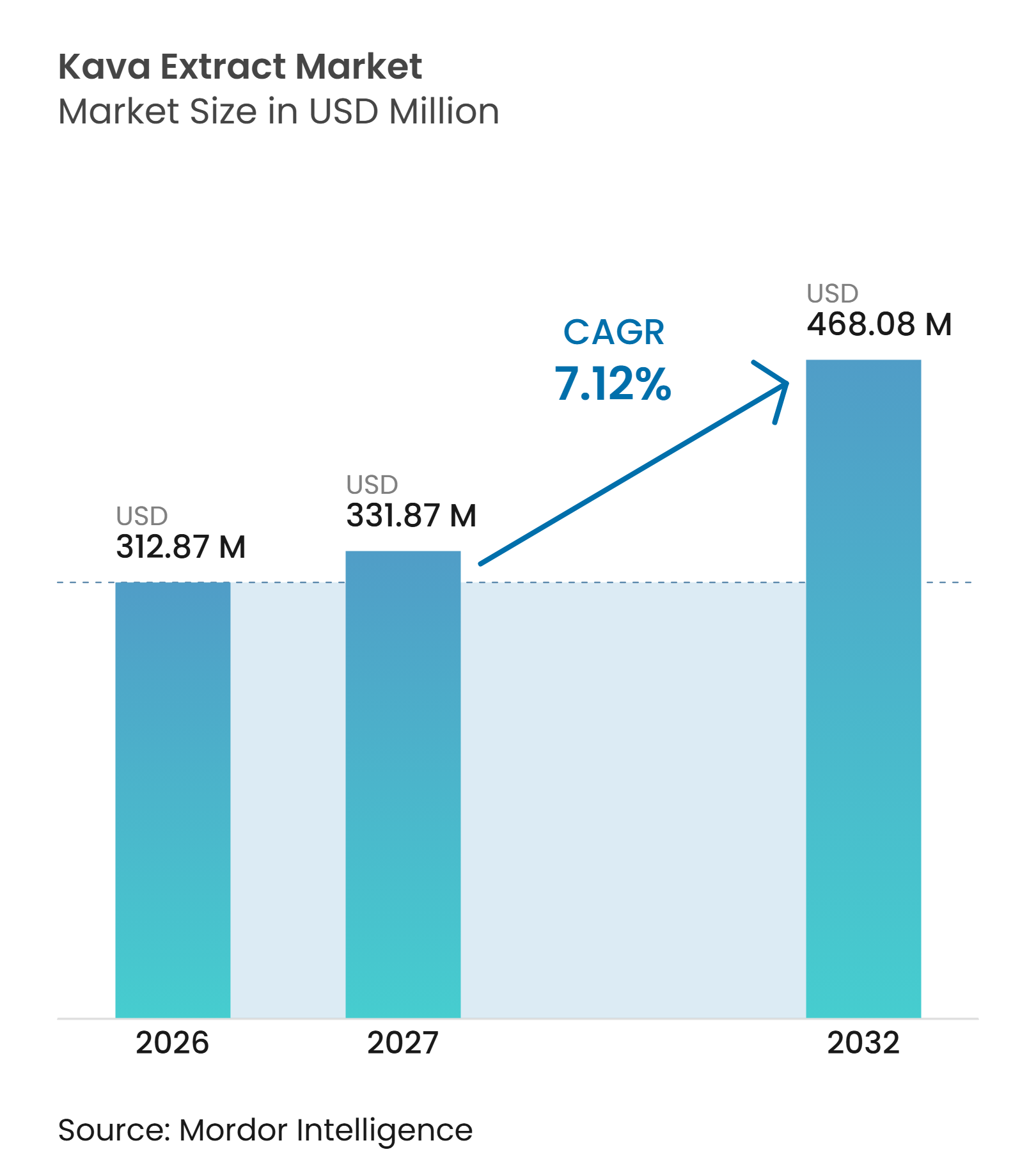
The kava extract market size was valued at USD 312.87 million in 2026 and estimated to grow from USD 331.87 million in 2027 to reach USD 468.08 million by 2032, at a CAGR of 7.12% during the forecast period (2027-2032). The kava extract market is driven by growing demand for alcohol alternatives, botanical relaxation products, and convenient beverage formats. These factors are expanding consumption beyond traditional Pacific Island use into retail, foodservice, and direct-to-consumer channels. Uneven regulatory treatment also makes product classification, labeling, and distribution planning critical commercial considerations. Companies that establish reliable grower relationships, demonstrate product provenance, and adapt offerings to local regulations are better positioned to compete in the kava extract market.
Key Report Takeaways
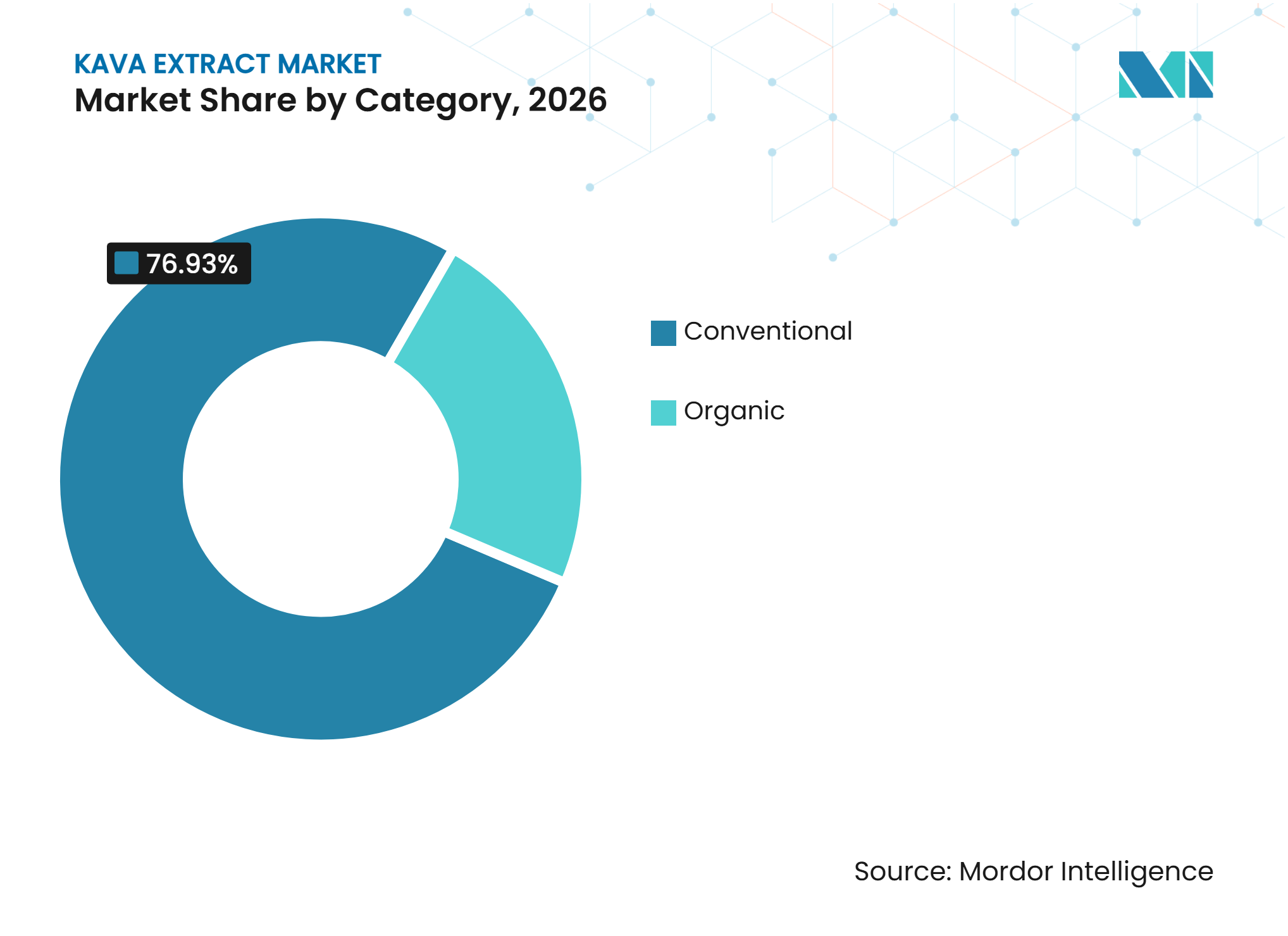
- By category, conventional dominated the market with a share of 76.93% in 2026, while organic kava is anticipated to register the fastest CAGR of 8.80% during 2027-2032.
- By form, powder dominated the market with a share of 68.31% in 2026, while liquid is anticipated to register the fastest CAGR of 8.58% during 2027-2032.
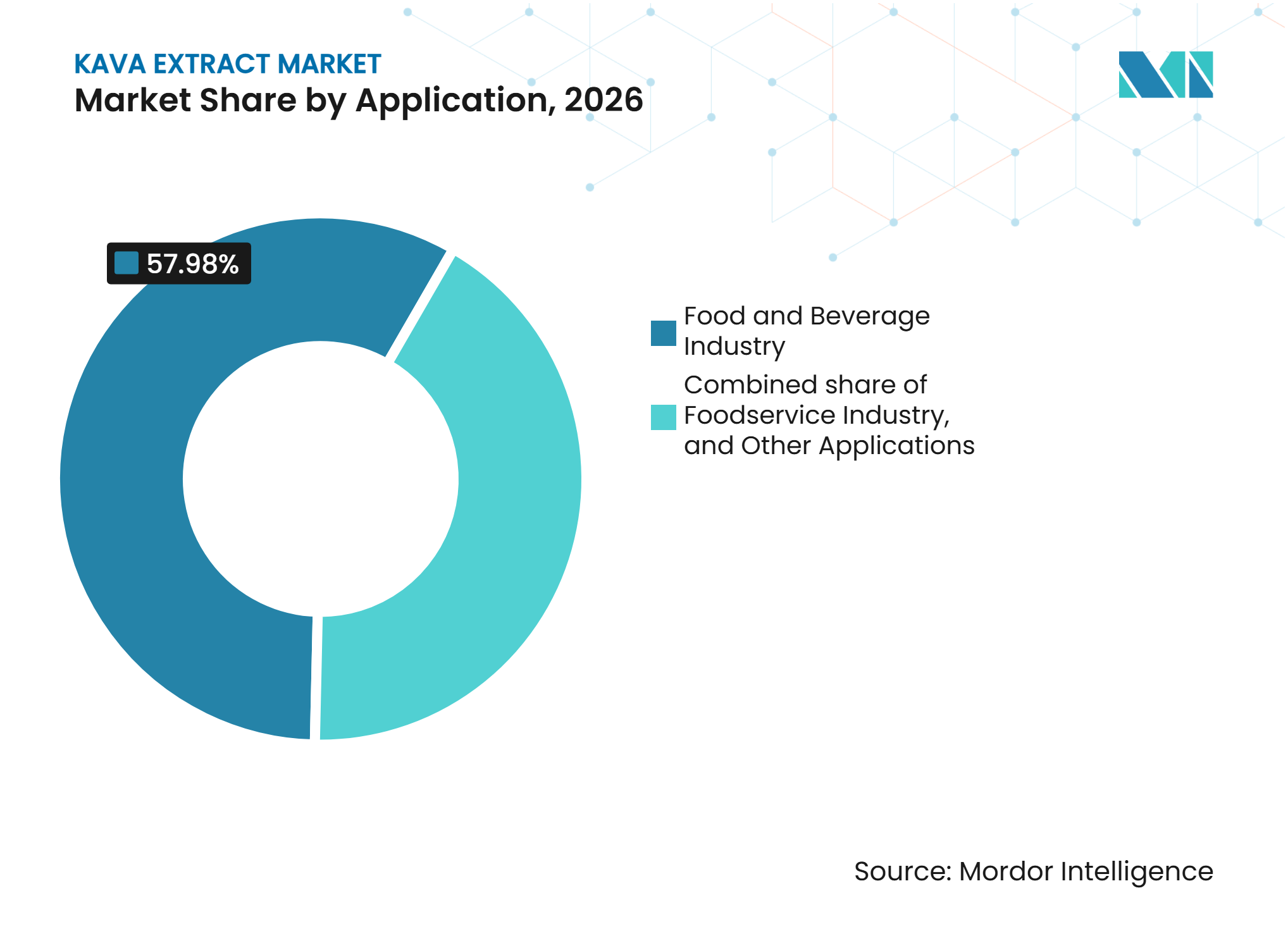
- By application, the food and beverage industry dominated the market with a share of 57.98% in 2026, while the foodservice industry is anticipated to register the fastest CAGR of 8.38% during 2027-2032.
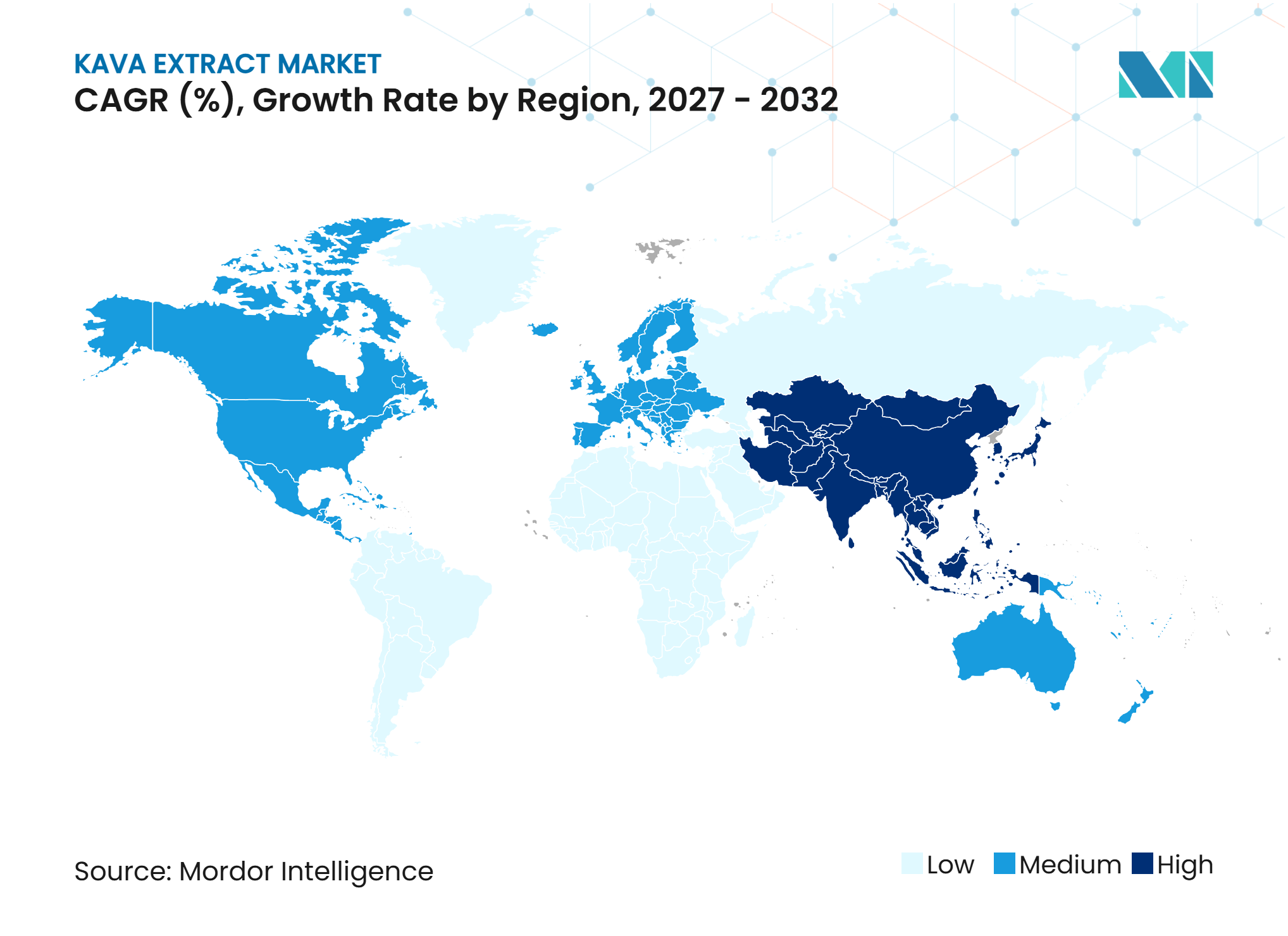
- By geography, Asia-Pacific dominated the kava extract market with a share of 41.82% in 2026 and is also anticipated to register the fastest CAGR of 7.93% during 2027-2032.
Note: Market numbers in this report are based on Mordor Intelligence's proprietary estimation framework, which combines nine months of actuals with Q4 projections for base year 2026.
Market Trends and Insights
Drivers Impact Analysis of Kava Extract Market*
| Driver | (~) % Impact on CAGR Forecast | Geographic Relevance | Impact Timeline |
|---|---|---|---|
| Rising demand for non-alcoholic and alcohol-alternative beverages | +2.5% | Global, with North America and Asia-Pacific as core adoption markets | Short term (≤ 2 years) |
| Consumer preference for functional and botanical beverages | +1.8% | Global, strongest in North America, Australia, and Western Europe | Short term (≤ 2 years) |
| Traditional pacific island beverage culture | +0.5% | Asia-Pacific core, with spillover to diaspora communities in Australia, New Zealand, and North America | Long term (≥ 4 years) |
| Advancements in kava processing and instant formulations | +0.8% | Global, with manufacturing concentration in North America and the Pacific Islands | Medium term (2-4 years) |
| Expansion of RTD ava beverage portfolios | +1.2% | North America and Asia-Pacific | Short term (≤ 2 years) |
| Increasing demand for plant-derived ingredients in specialised beverage formulations | +0.9% | Global, strongest in North America and Europe | Medium term (2-4 years) |
| Source: Mordor Intelligence | |||
Rising Demand for Non-Alcoholic and Alcohol-Alternative Beverages
Declining alcohol consumption in high-income markets is supporting demand for kava extract in social settings. The kava extract market benefits as bars and beverage manufacturers introduce relaxation-focused alternatives to traditional alcoholic beverages. Kava bars can operate without liquor licenses or full kitchens, making the format viable for certain operators and landlords. As new venues open, this network generates recurring demand for standardized bulk ingredients. Product positioning is also expanding beyond conventional supplements to include social occasions and evening consumption. This shift encourages suppliers to develop formats suitable for foodservice menus, ready-to-drink products, and retail shelves. Additionally, the introduction of convenient kava-based beverage mixes and pre-prepared formulations enables operators to serve customers more efficiently while broadening the ingredient's commercial applications across hospitality and retail channels.
Consumer Preference for Functional and Botanical Beverages
Consumer Preference for Functional and Botanical Beverages: Growing consumer interest in plant-based and functional beverages is creating opportunities for botanical ingredients, including kava, in the food and beverage industry. In July 2025, the United Kingdom Government, through its Scientific Advisory Committee on Nutrition (SACN), reported that approximately 10% of respondents to the National Diet and Nutrition Survey 2019-2023 consumed plant-based drinks[1]. Oat, soy, and almond drinks were identified as the leading varieties. This trend indicates an established consumer base for plant-derived beverage alternatives and creates opportunities for kava-based beverage manufacturers to develop botanical drink formulations, instant mixes, and ready-to-drink products for consumers seeking alternatives to conventional beverages.
Advancements in Kava Processing and Instant Formulations
Advancements in kava processing, powder preparation, drying, quality testing, and packaging are enabling the development of more convenient and consistent kava products for commercial beverage applications. In May 2026, New Zealand’s Ministry for Primary Industries published the outcome of its consultation on proposed amendments to the kava food standard, including requirements for processing aids, additives, and the use of noble kava varieties[2]. These developments underscore the importance of standardized processing and consistent product quality across the kava supply chain. Improved control over processing and powder preparation can help manufacturers supply consistent raw materials for traditional beverage preparation, dry mixes, and other permitted beverage applications, thereby supporting the commercial development of the kava market.
Expansion of Ready-to-Drink Kava Beverage Portfolios
Ready-to-drink (RTD) formats make kava more accessible to consumers who do not prepare traditional beverages. As a result, the kava extract market can reach consumers through smaller, portable formats. RTD products also compete with adjacent relaxation beverages, functional waters, and non-alcoholic beverage offerings. To convert broader consumer interest into repeat retail sales, brands require consistent flavor, accurate dosage, and comprehensive regulatory documentation. Bottled kava drinks, canned formulations, and concentrated kava shots enable manufacturers to target convenience-oriented consumption occasions, including social gatherings and on-the-go purchases. Furthermore, expanding RTD portfolios allows brands to experiment with flavor profiles and formulations, helping differentiate kava beverages within the broader functional beverage and alcohol-alternative categories.
Restraints Impact Analysis of Kava Extract Market*
| Restraint | (~) % Impact on CAGR Forecast | Geographic Relevance | Impact Timeline |
|---|---|---|---|
| Regulatory restrictions on kava-based food and beverage products | -1.5% | European Union, United Kingdom, New York, Japan, South Korea, and the Netherlands | Long term (≥ 4 years) |
| Concerns regarding potential liver toxicity and consumer safety | -0.9% | Global, most acute in Europe and regulatory-sensitive United States | Medium term (2-4 years) |
| Limited availability of quality-controlled noble kava roots and varieties | -0.7% | Asia-Pacific supply base, with global effects | Medium term (2-4 years) |
| Inconsistent product quality and standardization | -0.4% | Global, most acute in the United States commercial market | Short term (≤ 2 years) |
| Source: Mordor Intelligence | |||
Regulatory Restrictions on Kava-Based Food and Beverage Products
Stringent food safety regulations and restrictions on permitted kava formulations challenge manufacturers seeking to commercialize kava-based products in international markets. Requirements related to approved plant varieties, processing methods, product formulations, import permits, and labeling can constrain product innovation, particularly for ready-to-drink beverages, extracts, and concentrates. In October 2026, the Australian Department of Agriculture, Fisheries and Forestry specified that kava products permitted for sale as food must be beverages prepared only with cold water and raw or dried Noble kava root, including root chips and powder[3]. Other kava forms, including products containing food additives or processing aids, will not be permitted. These restrictions will limit the range of kava formulations that manufacturers can supply to the Australian food and beverage market.
Concerns Regarding Potential Liver Toxicity and Consumer Safety
Safety concerns remain commercially significant, even for products that use noble kava varieties and traditional preparation methods. This concern can influence public perceptions of kava products, including formulations that differ from the exposures under assessment. Regulatory authorities and industry stakeholders therefore place emphasis on identifying suitable kava varieties, controlling contaminants and maintaining consistent processing practices throughout the supply chain. Suppliers require robust quality controls, responsible labeling, and clear evidence of ingredient composition. Increased safety scrutiny also heightens the need to differentiate kava-only products from those that combine kava with other botanicals. While these requirements may slow product adoption, they can strengthen the market position of suppliers that demonstrate documented traceability and testing.
*Our forecasts treat driver/restraint impacts as directional, not additive. The impact forecasts reflect baseline growth, mix effects, and variable interactions.
Kava Extract Market Segment Analysis
By Category:
Organic Premium Gains Ground Against Conventional ScaleConventional kava extract accounted for 76.93% of the kava extract market in 2026. Its leading position reflects lower production costs, broader supply availability, and established use across foodservice and manufacturing applications. Pacific Island export networks have invested in conventional drying, milling, and standardization infrastructure for many years, making conventional products easier to source at scale. Conventional kava extract also remains well suited for bulk applications, where price and reliable volumes drive purchasing decisions. These factors sustain its role as the volume base of the kava extract market. Established supplier relationships and familiarity with conventional kava ingredients among commercial buyers further support consistent procurement across beverage manufacturing and foodservice channels.
Organic kava extract is forecast to grow at a CAGR of 8.80% through 2032. Premium supplement brands and specialty retailers increasingly require certification as part of their product and sourcing criteria. Organic products can command higher wholesale prices in North America; however, this premium depends on credible certification and verification. Organic suppliers can therefore compete based on provenance and documented quality, while conventional suppliers primarily compete on price and scale. The development of certified cultivation practices and improved traceability systems can further help organic suppliers address procurement requirements from premium ingredient buyers and differentiate their offerings in international markets.



By Form:
Powder Remains Established While Liquid Formats ExpandPowder accounted for 68.31% of the kava extract market in 2026. Its versatility supports applications across kava bars, home preparation, supplement capsules, and food ingredients. Kava bar operators commonly use powder because it aligns with established preparation methods. It also serves direct-to-consumer and foodservice channels, where consumers expect a familiar product format. Instant powder formats can simplify preparation for online and café customers. Therefore, powder is expected to retain a central role in the kava extract market, even as alternative formats gain wider distribution.
Liquid extract is projected to grow at a CAGR of 8.58% through 2032. This format aligns with ready-to-drink beverage requirements and reduces the need for traditional kneading and straining. Nano-emulsification and microencapsulation technologies aim to address the water insolubility of kavalactones. Other forms, including capsules, oleoresins, and concentrated pastes, cater to demand for precise dosing in supplements. Liquid products are positioned to gain traction among manufacturers, while powder remains relevant for direct preparation and foodservice applications.
By Application:
Food and Beverage Leads While Foodservice Builds DemandThe food and beverage industry accounted for 57.98% of the kava extract market size in 2026. This application includes ready-to-drink beverages, supplements, bars, and ready-to-mix products, each with distinct ingredient, packaging, and consumer communication requirements. Ready-to-drink products remain active in new product development, as they make kava more accessible to consumers. Kava is also used in supplements that feature standardized extract formats. This broad range of applications keeps the food and beverage industry at the center of the kava extract market.
The foodservice industry is projected to grow at a CAGR of 8.38% through 2032. Kava bars and botanical lounge concepts generate recurring demand for standardized ingredients. Growth in this channel depends on venues converting consumer interest into repeat visits and regular purchases. Foodservice operators can position kava products as alternatives to conventional cocktail programs, creating demand without the retail listing costs typically faced by packaged goods brands. This application also enables extract suppliers to build direct relationships with operators and distributors.

Geography Analysis
Asia-Pacific
Asia-Pacific accounted for 41.82% of the kava extract market in 2026 and is forecast to grow at a CAGR of 7.93% through 2032. The region combines a Pacific Island production base with rising commercial demand in Australia and New Zealand. Expanded retail availability has introduced kava to consumers beyond Pacific diaspora communities. The Pacific Islands Forum’s regional strategy emphasizes supply chain formalization and quality certification. In November 2025, the Solomon Islands completed its first commercial airfreight shipment of dried kava to Fiji, creating an additional route for supply diversification. However, cyclone damage and kava dieback disease continue to strain supply planning. Restrictions on kava in supplements in Japan and South Korea limit access to parts of the regional consumer base.
North America
North America has emerged as an important commercial market for kava extracts. The United States combines a growing network of kava bars with expanding placement in mainstream retail channels. Local restrictions remain relevant, including the New York City ruling that affected kava bar operations. In January 2025, Botanic Tonics raised USD 25 million and allocated part of the funding to acquire land in Vanuatu and expanded its Oklahoma manufacturing facility from 30,000 to 122,000 square feet. This investment highlights the importance of ingredient access and domestic processing capacity. Canada’s Natural Health Product pathway provides a regulated route for kava supplements. Collectively, these developments position compliance planning and origin transparency as key regional differentiators.
Europe, South America, and the Middle East and Africa
Europe faces structural constraints in the kava extract market, as food and dietary supplement regulations restrict commercial access. The European Union Novel Food framework and national restrictions limit broad retail development across several countries. South America shows early demand through specialty health channels in Brazil and Peru; however, formal product classifications have not yet supported mainstream retail expansion in these countries. The Middle East and Africa account for lower values but benefit from diaspora demand and cross-border e-commerce. South Africa’s dietary supplement sector and Saudi Arabia’s wellness retail channels offer potential avenues for future development. Market access across these regions will depend on regulatory alignment, local import requirements, and credible quality documentation.
Competitive Landscape
Market Concentration
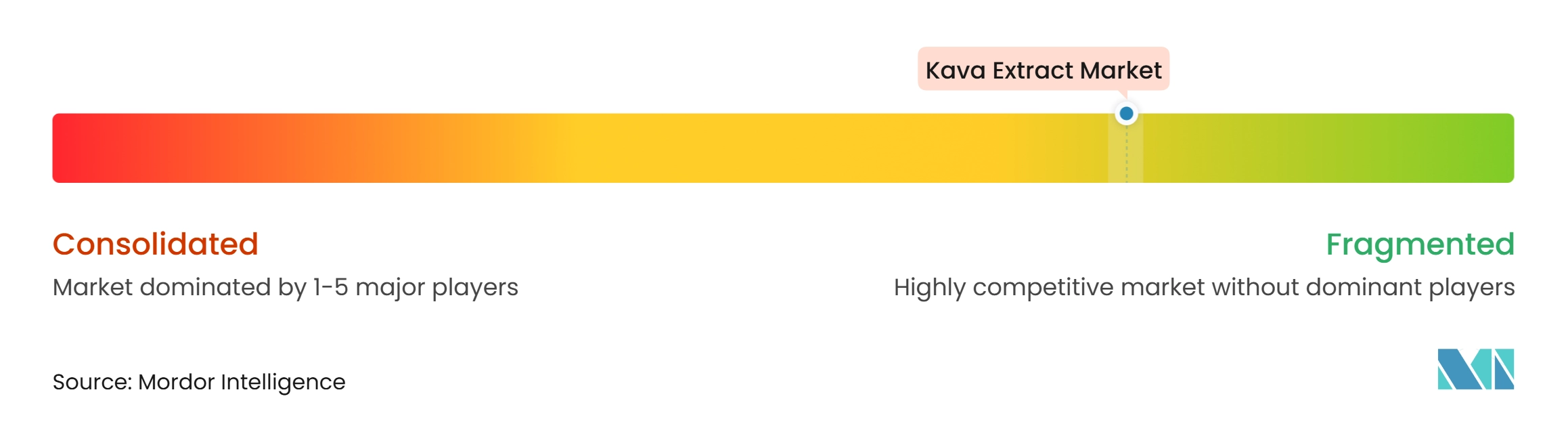
The kava extract market is fragmented, with no participant holding pricing authority across the full value chain. Competition includes upstream growers and extraction businesses, as well as consumer brands targeting retail, foodservice, and direct-to-consumer demand. Origin control, standardized processing, and finished-product distribution do not always reside within a single company. Companies with secured grower relationships can reduce their exposure to short-term supply disruptions. This fragmented environment also creates opportunities for specialized ingredient suppliers and smaller consumer brands.
Some participants use direct-to-consumer products and wholesale ingredients to establish distinct market positions. KEANU launched premium noble kava kit in November 2025 through direct-to-consumer channels, emphasizing cultivar selection and educational materials. These models can build brand recognition without the initial cost of broad retail shelf placement. Wholesale liquid extracts provide another route for suppliers serving operators and manufacturers. The kava extract market enables these companies to differentiate through format, origin, and product education. However, their scale remains dependent on stable supply and consumer trust.
Retail-focused companies are investing in formats suited to convenience and functional beverage channels. Botanic Tonics planned to accelerate the nationwide rollout of KavaMaté and has announced another product for 2027. These initiatives demonstrate how leading brands are expanding kava into new consumption occasions. Regulatory barriers in Europe could create a meaningful advantage for a company that completes an authorization pathway. Smaller suppliers that develop direct relationships with Pacific growers may also gain supply security and provenance advantages. Competitive outcomes will continue to depend on product safety, documented sourcing, and channel execution.
Kava Extract Industry Leaders
-
eKAVA
-
Kavain
-
Qamea Kava
-
Pacifikava
-
Botanic Tonics
- *Disclaimer: Major Players sorted in no particular order
Kava Extract Market Companies Covered in this Report
- eKAVA
- Kavain
- Kava Korporesen Pte Ltd
- MT Kava Limited
- Qamea Kava
- Serenco Labs
- Pacifikava
- Botanic Tonics
- Forney Enterprises
- Kava Time Pte Ltd
- Heritage Kava
- Kalm with Kava
- Taki Mai
- Nukava
- Royal Fiji Kava
- Coral Sea Kava
- Runke Natural
- Canurta Naturals USA
- The Noble Kava Farmer
- United BioScience
Recent Industry Developments in Kava Extract Market
- November 2026: Kalm with Kava began selling fresh-frozen Hawaiian ʻawa from Pūʻiwa Farms Hawaiʻi, marking the first United States origin kava product to enter the commercial wholesale market.
- October 2026: Botanic Tonics launched feel free Kava, a noble kava tonic shot, along with feel free Focused Energy and Sleep functional stick packs at the NACS Show in Las Vegas. The company planned a nationwide rollout in 2027. This launch marked the company’s first expansion of its kava-centric portfolio into the convenience retail channel.
- October 2025: IMCD launched Super.Kavaton, a supercritical carbon dioxide kava extract derived from Fiji-grown noble kava varieties, for the United States and Canadian markets.
Global Kava Extract Market Report Scope
Kava extract is a concentrated ingredient derived from the roots of the kava plant through extraction processes that isolate its active compounds, particularly kavalactones.
The kava extract market is segmented by category, form, application, and geography. By category, the market is segmented into organic and conventional. By form, the market is segmented into powder, liquid, and others. By application, the market is segmented into food and beverage industry (ready-to-drink beverage, supplements, bars and ready-to-mix beverages, and others), foodservice industry, and other applications. Based on geography, the market is classified into North America, Europe, South America, Asia-Pacific, and the Middle East and Africa. The market forecasts are provided in terms of value (USD).
Segmentation Overview
| Organic |
| Conventional |
| Powder |
| Liquid |
| Others |
| Food and Beverage Industry | Ready-to-drink Beverages |
| Supplements | |
| Bars and Ready-to-mix Beverages | |
| Others | |
| Foodservice Industry | |
| Other Applications |
| North America | United States |
| Canada | |
| Mexico | |
| Rest of North America | |
| Europe | Germany |
| United Kingdom | |
| Italy | |
| France | |
| Spain | |
| Netherlands | |
| Rest of Europe | |
| Asia-Pacific | China |
| India | |
| Japan | |
| Australia | |
| Indonesia | |
| Rest of Asia-Pacific | |
| South America | Brazil |
| Argentina | |
| Peru | |
| Rest of South America | |
| Middle East and Africa | South Africa |
| Saudi Arabia | |
| Rest of Middle East and Africa |
| By Category | Organic | |
| Conventional | ||
| By Form | Powder | |
| Liquid | ||
| Others | ||
| By Application | Food and Beverage Industry | Ready-to-drink Beverages |
| Supplements | ||
| Bars and Ready-to-mix Beverages | ||
| Others | ||
| Foodservice Industry | ||
| Other Applications | ||
| By Geography | North America | United States |
| Canada | ||
| Mexico | ||
| Rest of North America | ||
| Europe | Germany | |
| United Kingdom | ||
| Italy | ||
| France | ||
| Spain | ||
| Netherlands | ||
| Rest of Europe | ||
| Asia-Pacific | China | |
| India | ||
| Japan | ||
| Australia | ||
| Indonesia | ||
| Rest of Asia-Pacific | ||
| South America | Brazil | |
| Argentina | ||
| Peru | ||
| Rest of South America | ||
| Middle East and Africa | South Africa | |
| Saudi Arabia | ||
| Rest of Middle East and Africa | ||
Key Questions Answered in the Report
What is the current size and future growth outlook of the kava extract market?
The kava extract market was valued at USD 312.87 million in 2026 and is estimated to reach USD 331.87 million in 2027. The market is projected to grow to USD 468.08 million by 2032, registering a CAGR of 7.12% during 2027–2032.
Which category held the largest share of the kava extract market in 2026?
Conventional kava extract was the largest category segment in 2026, accounting for 76.93% of kava extract market.
Which form held the largest share of the kava extract market in 2026?
Powder was the largest form segment in 2026, accounting for 68.31% of kava extract market.
Which application held the largest share of the kava extract market in 2026?
The food and beverage industry was the largest application segment in 2026, accounting for 57.98% of kava extract market.
Which region held the largest share of the kava extract market in 2026?
Asia-Pacific was the largest regional market in 2026, accounting for 41.82% of kava extract market.