
Isatoic Acid Anhydride Market Size and Share
Market Overview
| Study Period | 2021 - 2031 |
|---|---|
| Market Size (2026) | USD 330.13 Million |
| Market Size (2031) | USD 402.23 Million |
| Growth Rate (2026 - 2031) | 4.03 % |
| Fastest Growing Market | Asia-Pacific |
| Largest Market | Asia-Pacific |
| Market Concentration | Medium |
Major Players *Disclaimer: Major Players sorted in no particular order Image © Mordor Intelligence. Reuse requires attribution under CC BY 4.0. | |
Isatoic Acid Anhydride Market Analysis by Mordor Intelligence
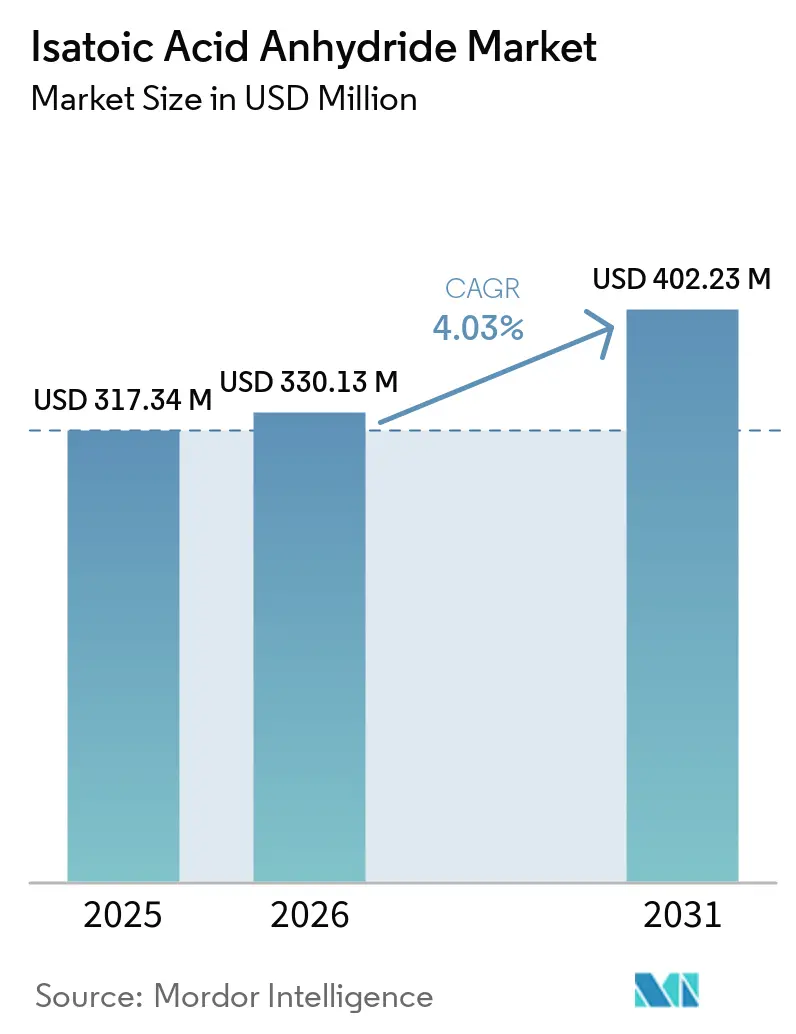
The Isatoic Acid Anhydride Market size was valued at USD 317.34 million in 2025 and is estimated to grow from USD 330.13 million in 2026 to reach USD 402.23 million by 2031, at a CAGR of 4.03% during the forecast period (2026-2031). The isatoic acid anhydride market is supported by the compound’s use in quinazolinone and benzodiazepine synthesis, which places it within regulated pharmaceutical development and manufacturing workflows. The same material also serves agrochemical, dye, pigment, flavor, and fragrance applications, which gives the isatoic acid anhydride market a broader demand base and reduces dependence on a single customer group or end-use setting. Buyers in regulated pharmaceutical supply chains place greater weight on reliable quality systems, traceability, and documentation than on short-term price movements. That purchasing behavior favors suppliers that can maintain consistent specifications and manage formal change-control processes throughout customer qualification, commercial supply, and any approved manufacturing changes. Producers with secure access to anthranilic acid and established compliance systems are therefore better placed to serve both high-purity and industrial demand.
Key Report Takeaways
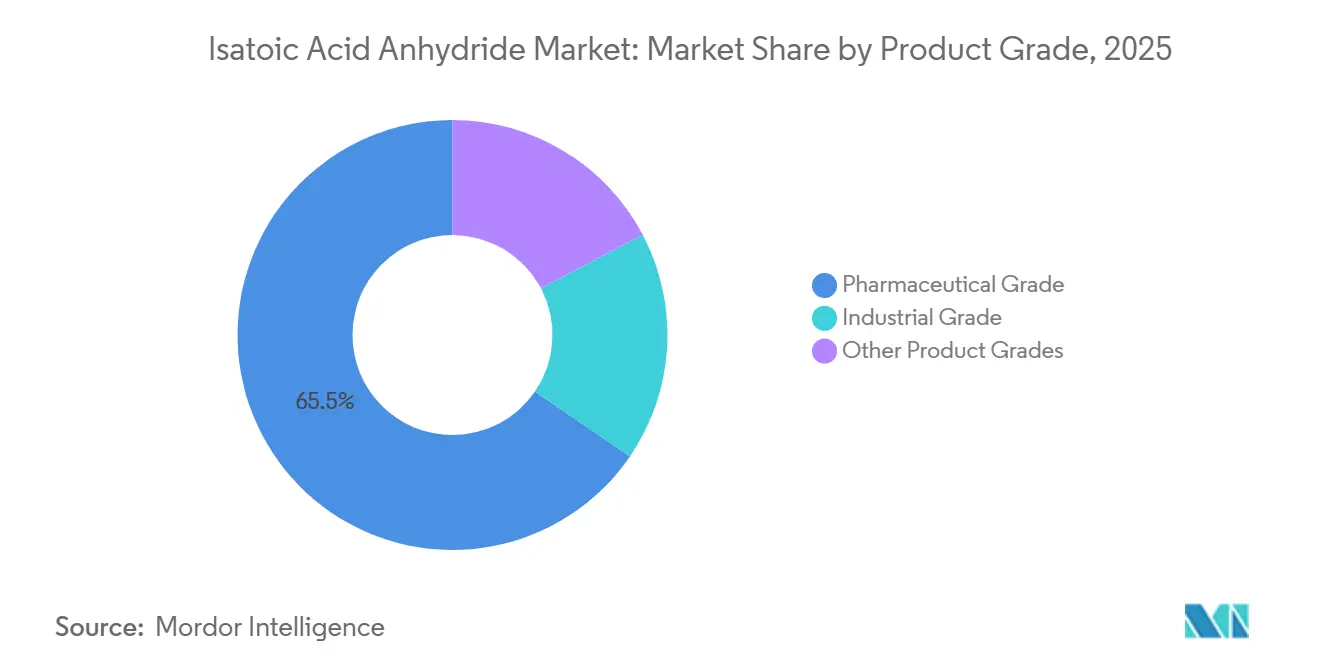
- By product grade, pharmaceutical grade held 65.45% of the isatoic acid anhydride market share in 2025, while industrial grade is projected to advance at a 4.78% CAGR through 2031.
- By form, powder held 55.24% of the isatoic acid anhydride market share in 2025 and is projected to advance at a 5.89% CAGR through 2031.
- By application, dyes and pigments held 30.13% of the isatoic acid anhydride market share in 2025, while pesticides are projected to advance at a 5.13% CAGR through 2031.
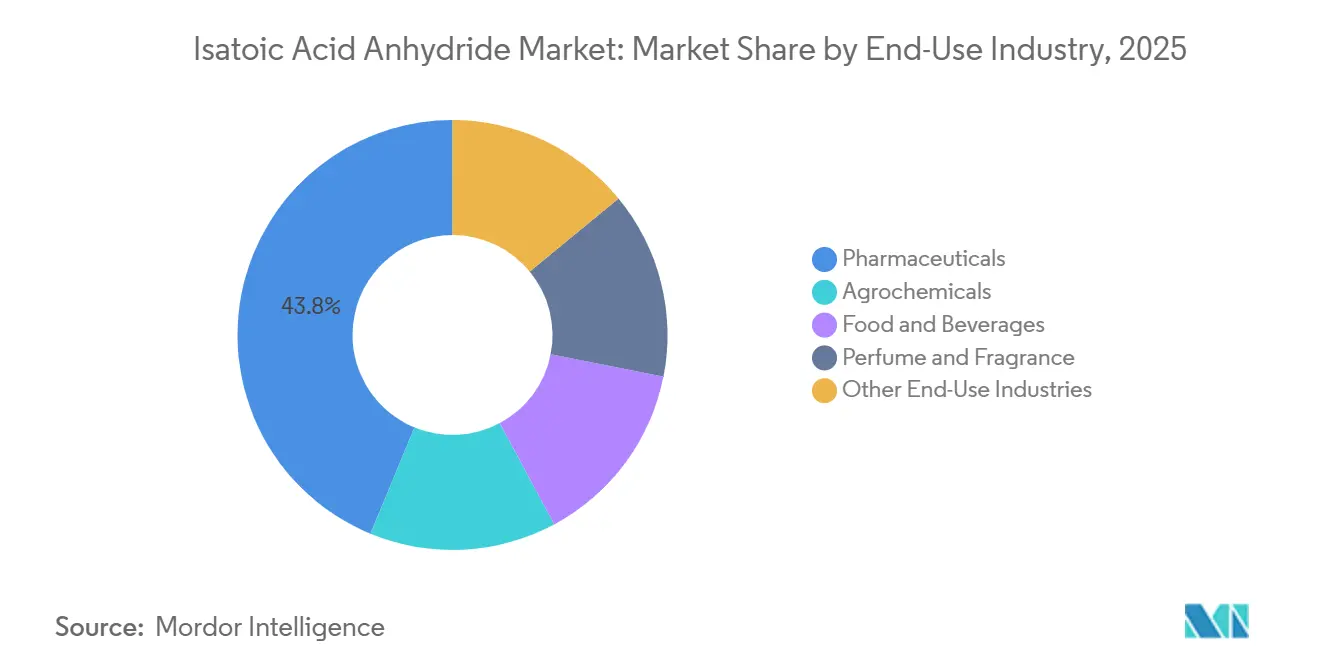
- By end-use industry, pharmaceuticals held 43.78% of the isatoic acid anhydride market share in 2025 and are projected to advance at a 5.45% CAGR through 2031.
- By geography, Asia-Pacific held 34.84% of the isatoic acid anhydride market share in 2025 and is projected to advance at a 4.74% CAGR through 2031.
Note: Market size and forecast figures in this report are generated using Mordor Intelligence’s proprietary estimation framework, updated with the latest available data and insights as of January 2026.
Market Trends and Insights
Drivers Impact Analysis of Isatoic Acid Anhydride Market*
| Driver | (~) % Impact on CAGR Forecast | Geographic Relevance | Impact Timeline |
|---|---|---|---|
| Rising Pharmaceutical Intermediate Demand | +1.8% | Global, concentrated in Asia-Pacific (China, India) and Europe | Short term (≤ 2 years) |
| Expanding Agrochemical Synthesis | +0.9% | Asia-Pacific (China, India), North America | Short term (≤ 2 years) |
| Asia-Pacific Manufacturing Localization and Generic API Outsourcing | +0.7% | Asia-Pacific core, with downstream effects on North America and EU | Medium term (2–4 years) |
| Growth in Specialty Dyes, Pigments and Polymer Additives | +0.6% | Asia-Pacific (China, India), Europe | Medium term (2–4 years) |
| Continuous-Flow and Low-Waste Synthesis Adoption | +0.4% | Europe, North America, with adoption spreading to Asia-Pacific | Long term (≥ 4 years) |
| Source: Mordor Intelligence | |||
Rising Pharmaceutical Intermediate Demand
Isatoic acid anhydride sits within benzodiazepine and quinazolinone synthesis routes, which link the isatoic acid anhydride market to several drug development programs. The benzodiazepine active pharmaceutical ingredients (APIs) segment reached USD 717.90 million in 2025, supporting demand for related high-purity intermediates. A 2026 study described a continuous manufacturing route to 2-benzodiazepines that avoided transition metals and reduced intermediate isolation steps. These routes require carefully controlled material quality, which supports demand for consistently specified isatoic acid anhydride batches. The European Fine Chemicals Group stated that each added intermediate in an API synthesis chain increases quality-control and change-control requirements[1]European Fine Chemicals Group, “The Role of Intermediates in the Manufacturing of APIs,” European Fine Chemicals Group, efcg.cefic.org. Long-term supply agreements with Good Manufacturing Practice (GMP)-certified suppliers can therefore reduce procurement and regulatory risks for pharmaceutical customers, especially when production schedules, qualification records, and product-release expectations must remain aligned across several manufacturing stages.
Expanding Agrochemical Synthesis
Bentazone herbicide production uses isatoic acid anhydride as a synthetic intermediate, linking the isatoic acid anhydride market to rice and soybean crop-protection value chains. Demand from agrochemical formulations gives producers an outlet outside regulated pharmaceutical production. Asian producers are expanding their manufacturing capabilities for herbicides and other crop-protection chemicals. Some producers are also developing captive isatoic acid anhydride capacity to reduce their reliance on merchant supply. This can limit volumes traded through distributors even when consumption across the supply chain increases. Suppliers serving independent formulators remain relevant where customers require flexible volumes or consistent material specifications, because local formulation schedules can change with planting cycles, crop conditions, and customer inventory needs.
Growth in Specialty Dyes, Pigments and Polymer Additives
Isatoic acid anhydride supports anthranilamide and 2-aminobenzamide routes used in reactive and functional dye chemistry. This link supports the isatoic acid anhydride market in textile, technical-fiber, functional-colorant, and optical-brightener applications. Dye and pigment producers require intermediates with dependable quality because impurities can affect color consistency and downstream processing. Isatoic acid anhydride-derived amine-functional monomers also serve as curing agents in specialty epoxy systems. These materials are used in wind blade resins and electronics encapsulants, where performance requirements support specialized chemical demand and where customers generally value consistent input quality over simple bulk availability. BASF commissioned world-scale menthol, linalool, and citral plants in April 2026, reinforcing its specialty chemicals infrastructure in Germany and China.
Asia-Pacific Manufacturing Localization and Generic API Outsourcing
The movement of API manufacturing toward India and China supports the isatoic acid anhydride market through higher regional demand for pharmaceutical intermediates. Regulated-market customers increasingly seek dual sourcing for critical materials to manage supply continuity. This approach can create longer procurement cycles and a stronger focus on qualified suppliers. Manufacturers with Registration, Evaluation, Authorisation and Restriction of Chemicals (REACH) registration and GMP certifications can meet a wider range of regulated customer requirements. The resulting procurement pattern separates multi-year pharmaceutical contracts from short-cycle industrial buying. That split gives suppliers different volume, margin, and qualification profiles across the isatoic acid anhydride market, with pharmaceutical purchasing placing more weight on continuity and industrial purchasing responding more directly to operating requirements.
Restraints Impact Analysis of Isatoic Acid Anhydride Market*
| Restraint | (~) % Impact on CAGR Forecast | Geographic Relevance | Impact Timeline |
|---|---|---|---|
| Precursor Price and Availability Volatility | -0.9% | Global; concentrated in China's anthranilic acid and petrochemical supply chain | Short term (≤ 2 years), recurring |
| Phosgene-Related EHS and Compliance Costs | -0.6% | North America, Europe; escalating in China's eastern provinces under MEE enforcement | Long term (≥ 4 years) |
| Analytical Release Testing and Change-Control Burden | -0.4% | Regulated markets such as North America, Europe, Japan | Medium term (2–4 years) |
| Source: Mordor Intelligence | |||
Precursor Price and Availability Volatility
Anthranilic acid is the primary isatoic acid anhydride precursor and is produced from phthalic anhydride and ammonia within the petrochemical value chain. This makes the isatoic acid anhydride market exposed to crude oil cycles and changes in aromatic feedstock availability. Cost increases in upstream inputs may not be fully passed through to buyers of pharmaceutical or industrial intermediates. Smaller producers without feedstock hedging or backward integration are more exposed to those movements. Integrated producers can better manage procurement disruptions because they have closer control over raw material supply. This advantage can shift purchasing toward larger suppliers that offer more stable deliveries and pricing, while limiting the ability of smaller businesses to absorb abrupt raw-material cost changes without affecting their own margins.
Phosgene-Related EHS and Compliance Costs
The dominant commercial isatoic acid anhydride synthesis route uses phosgene or triphosgene as a cyclizing reagent. Facilities using these materials must follow U.S. Process Safety Management requirements for highly hazardous chemicals. The American Chemistry Council’s Phosgene Panel provides safe-practice guidance for controls, emergency planning, and operational management. In March 2026, the U.S. Environmental Protection Agency finalized amendments to national emission standards for chemical manufacturing area sources[2]“Chemical Manufacturing Area Sources National Emission Standards Final Rule Amendments,” U.S. Environmental Protection Agency, epa.gov. Compliance investments can be harder for smaller producers to absorb than for larger integrated companies. Alternative non-phosgene cyclization routes remain at pilot-scale validation, which limits rapid replacement of the prevailing route within the forecast period and leaves established producers responsible for meeting demanding safety and emissions obligations.
*Our forecasts treat driver/restraint impacts as directional, not additive. The impact forecasts reflect baseline growth, mix effects, and variable interactions.
Isatoic Acid Anhydride Market Segment Analysis
By Product Grade:
Pharmaceutical Grade Commands Premium Demand and GrowthPharmaceutical grade held 65.45% of the isatoic acid anhydride market share in 2025. Its leading position reflects the role of isatoic acid anhydride in GMP-controlled API synthesis, where manufacturers require impurity profiling, specification verification, and documented change control. Pharmaceutical customers cannot readily substitute industrial material when manufacturing regulated products. The European Fine Chemicals Group noted that additional intermediates in an API chain create added quality-control and quality-assurance requirements. This requirement supports demand for validated, high-purity isatoic acid anhydride supply and makes detailed technical documentation a practical part of the purchasing decision. It also creates a clear distinction between procurement for pharmaceutical and industrial uses.
Industrial grade is projected to advance at a 4.78% CAGR through 2031 as dye and agrochemical producers expand output in China and India. Industrial users generally place more emphasis on cost, availability, and the requirements of their specific formulation processes. Chinese producers in Jiangsu serve much of this demand through high-throughput batch synthesis. Indian suppliers with REACH registration and GMP certifications are more relevant to pharmaceutical procurement in regulated markets. BASF expanded chloroformate and acid chloride production at its Ludwigshafen Verbund site in 2026, strengthening its related specialty phosgene-chemistry capabilities. Supplier qualification for pharmaceutical grade isatoic acid anhydride can take 12 to 18 months of audit and analytical validation. These requirements create switching costs for customers in the pharmaceutical tier.



By Form:
Powder Supports Controlled Processing RequirementsPowder held 55.24% of the isatoic acid anhydride market share in 2025. It is also projected to advance at a 5.89% CAGR through 2031, reflecting its importance in applications that require controlled, repeatable material addition. Particle-size-controlled powder supports accurate dosing in pharmaceutical synthesis. It can reduce handling complications associated with larger solid materials. Flow processes also rely on materials that can be introduced at stable and reproducible rates. These needs reinforce powder’s central role in the isatoic acid anhydride market, particularly where production teams need dependable addition, transfer, and batch-to-batch handling performance.
A 2026 study on continuous albuterol sulfate manufacturing demonstrated that controlled flow-rate parameters can support a 99.3% solution yield. The finding illustrates why manufacturers value consistent powder handling in continuous process settings. Solid form remains useful where storage stability during transport is more important than immediate dosing precision. This form is used in industrial dye and polymer applications that have established in-house dissolution methods. The isatoic acid anhydride market, therefore, reflects differing handling needs across pharmaceutical, industrial, and research applications.
By Application:
Dyes and Pigments Lead While Pesticides Expand FasterDyes and pigments accounted for 30.13% of the isatoic acid anhydride market share in 2025. Isatoic acid anhydride serves as an aminobenzoic acid-derived intermediate in reactive and azo dye synthesis. The application supports textile dyeing, functional colorants, and optical brightener production. Customers in these uses require reliable raw material quality to maintain downstream performance. Traceability and low impurity levels can be important where producers face tighter environmental and production controls. The segment provides a large industrial outlet for the isatoic acid anhydride market, with demand shaped by production needs for textile colorants and other functional dye products.
Pesticides are projected to advance at a 5.13% CAGR through 2031. This growth reflects isatoic acid anhydride’s role in bentazone herbicide synthesis and continued demand from crop-protection formulations. Agrochemical producers seek dependable intermediate supply as they manage seasonal production schedules and formulation demand. Saccharin synthesis also uses isatoic acid anhydride through anthranilic acid chemistry and supports food and beverage applications. Flavors and fragrances have purity requirements for fragrance building blocks.
By End-Use Industry:
Pharmaceuticals Combine Scale with Faster GrowthPharmaceuticals held 43.78% of the isatoic acid anhydride market share in 2025 and are projected to advance at a 5.45% CAGR through 2031, making it both the leading and fastest-growing demand area. The position reflects use across multiple drug classes rather than reliance on a single therapeutic category. Pharmaceutical production requires consistent batches and formal documentation for intermediate materials. These requirements encourage long-term procurement relationships with qualified suppliers, as customer teams seek to avoid repeated qualification work or unexpected changes in intermediate material quality. The isatoic acid anhydride market is therefore closely tied to the continued need for high-purity, controlled pharmaceutical inputs.
Thermo Fisher Scientific stated that Patheon services were involved in manufacturing 14% of all small molecules approved by the U.S. Food and Drug Administration (FDA) in 2024. This example shows the role of integrated supply chains in pharmaceutical manufacturing. Agrochemicals provide another important end-use through bentazone and herbicide production. Perfume and fragrance uses isatoic acid anhydride-derived amide chemistry in synthetic musks and jasmine-family fragrance compounds. Food and beverages use isatoic acid anhydride in saccharin production.
Geography Analysis
APAC Isatoic Acid Anhydride Market
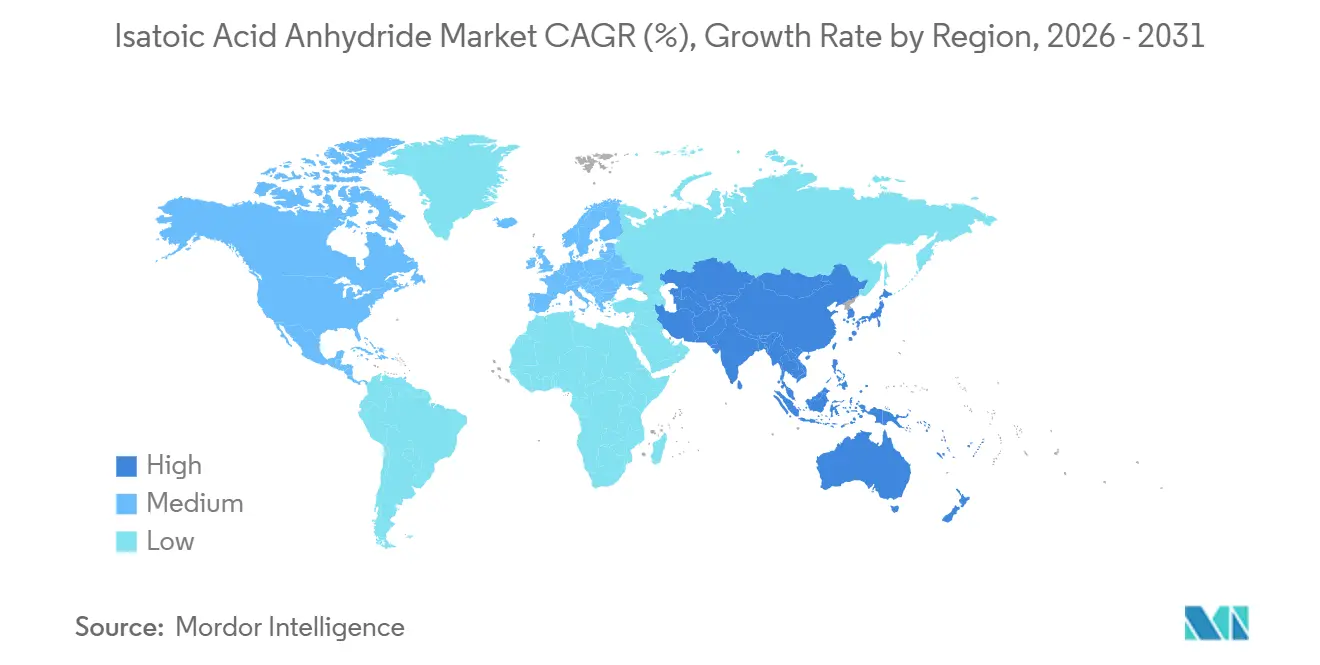
Asia-Pacific held 34.84% of the isatoic acid anhydride market share in 2025. The region is projected to advance at a 4.74% CAGR through 2031. China anchors production through manufacturing activity in Jiangsu and Shandong, which support anthranilic acid production and downstream isatoic acid anhydride cyclization. India’s Gujarat pharmaceutical belt includes GMP-certified finishing facilities that serve regulated export markets. Japan, South Korea, and the Association of Southeast Asian Nations (ASEAN) countries add demand from research grade and specialized applications. Quality and environmental compliance are becoming more important across the regional supply base, increasing the relevance of suppliers that can provide reliable records and maintain consistent production practices.
North America and Europe Isatoic Acid Anhydride Market
The isatoic acid anhydride market in North America is shaped by imports and procurement requirements for traceability and quality documentation. Pharmaceutical manufacturers and contract development and manufacturing organizations (CDMOs) commonly use long-term qualified-supplier arrangements for critical intermediates. The EPA’s March 2026 amendments raised compliance requirements for chemical manufacturing area sources that handle hazardous air pollutants. Europe also depends on specification-verified and REACH-compliant procurement. Germany, France, and the United Kingdom are important pharmaceutical consumption centers. BASF maintains specialty phosgene-chemistry production capabilities at Ludwigshafen that support a documented supply base for regulated customers.
MEA and South America Isatoic Acid Anhydride Market
South America and Middle East and Africa are smaller and import-dependent areas of the isatoic acid anhydride market. Brazil’s soy and corn production supports agrochemical grade demand linked to bentazone herbicide manufacturing. Saudi Arabia’s Vision 2030 initiatives support specialty chemical activity. South Africa’s generic pharmaceutical sector creates additional but limited demand. Their opportunities are primarily tied to import supply, local formulation, and the development of pharmaceutical and agrochemical capacity.

Competitive Landscape
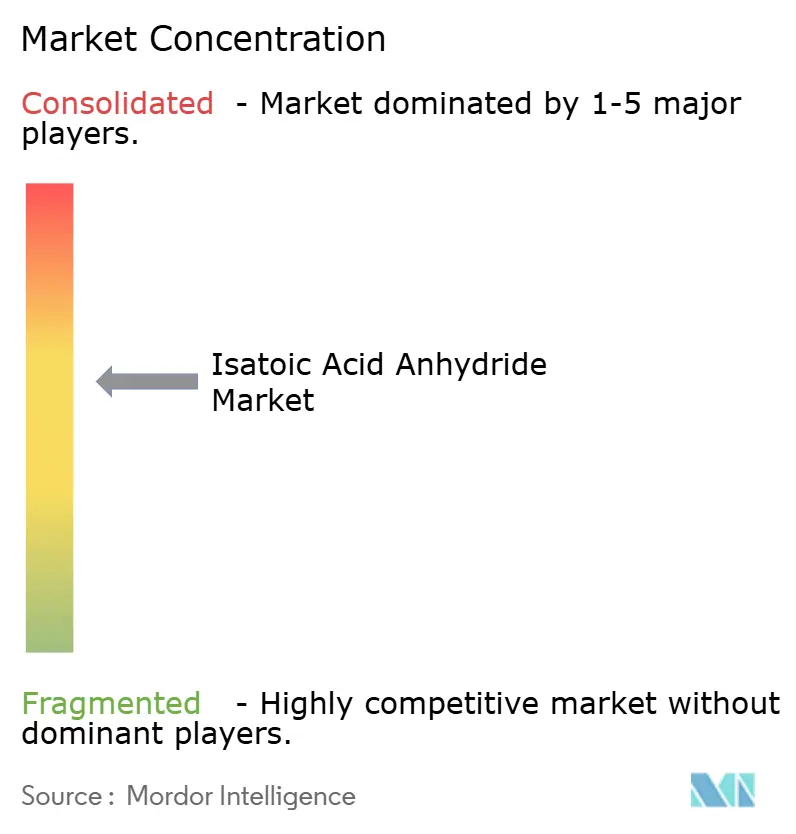
The isatoic acid anhydride market is moderately concentrated. Chinese producers serve the industrial grade products through cost-competitive batch synthesis. Indian manufacturers and Western specialty chemical companies are more active in pharmaceutical grade and research grade supply. The competitive difference between these tiers is tied to analytical validation, batch traceability, and documented change-control capability. Suppliers that meet these requirements can be more attractive to regulated pharmaceutical customers. This creates a quality-based advantage that is separate from industrial grade price competition and gives qualified suppliers a stronger position when customers prioritize reliability over spot-market purchasing.
Continuous-flow isatoic acid anhydride manufacturing at a commercial scale remains an important opportunity for suppliers. A 2025 review found that the continuous-flow examples studied had E-factors of 5 to 10, compared with levels above 40 for batch routes. This could encourage manufacturers to evaluate more controlled production processes. The capital required for phosgene-route capacity additions favors companies with established infrastructure. Merck KGaA inaugurated its EUR 160 million (approximately USD 188 million) Launch and Technology Center in Darmstadt in September 2025 to support small-molecule pharmaceutical production. BASF also expanded chloroformate and acid chloride production at Ludwigshafen during 2026.
The isatoic acid anhydride market is likely to remain divided between high-volume industrial supply and quality-differentiated pharmaceutical supply. Larger integrated producers have advantages in feedstock access, compliance investment, and the ability to support customer qualification. Environmental enforcement can increase pressure on smaller facilities that have limited capital for upgrades. Mid-tier Chinese producers may respond through consolidation or by focusing on cost-competitive industrial supply. Smaller specialty suppliers can remain relevant by serving narrow, certified, pharmaceutical grade requirements. BASF inaugurated its world-scale Verbund site in Zhanjiang, China, in March 2026, adding broad chemicals infrastructure for pharmaceutical, agrochemical, and consumer goods applications in Asia-Pacific.
Isatoic Acid Anhydride Industry Leaders
BASF
Muby Chem Private Limited
Merck KGaA
Thermo Fisher Scientific Inc.
Wujiang New Sunlion Chemical Co., Ltd.
- *Disclaimer: Major Players sorted in no particular order
Isatoic Acid Anhydride Market Companies Covered in this Report
- Anmol Chemicals
- Anshul Specialty Molecules Private Limited
- BASF
- Changzhou Waston Chemical Technology Co., Ltd.
- Hebei Chuanghai Biotechnology Co., Ltd.
- Hefei Lbao Physical & Chemical Science Co., Ltd.
- Hefei TNJ Chemical Industry Co., Ltd.
- Jiangsu Juming Chemical Process Technology Co., Ltd.
- Jinan Finer Chemical Co., Ltd.
- Merck KGaA
- Muby Chem Private Limited
- Thermo Fisher Scientific Inc.
- Tokyo Chemical Industry Co., Ltd. (TCI)
- Wujiang New Sunlion Chemical Co., Ltd.

Recent Industry Developments in Isatoic Acid Anhydride Market
- April 2026: BASF commissioned world-scale menthol and linalool plants in Ludwigshafen and a citral plant in Zhanjiang, expanding specialty chemical production capacity. This supports downstream demand for chemical intermediates used in pharmaceutical and specialty synthesis, including isatoic acid anhydride.
- September 2025: Merck KGaA inaugurated its EUR 160 million (approximately USD 188 million) Launch and Technology Center in Darmstadt to support small-molecule pharmaceutical production. The expansion supports demand for specialty intermediates used in pharmaceutical synthesis, including isatoic acid anhydride.


Global Isatoic Acid Anhydride Market Report Scope
Isatoic acid anhydride is a heterocyclic chemical intermediate used in the synthesis of various organic compounds and specialty chemicals. Its reactive structure enables its use in processes that require controlled chemical transformations for producing downstream intermediates and formulated products.
The Isatoic Acid Anhydride Market is segmented by product grade, form, application, end-use industry, and geography. By product grade, the market is segmented into pharmaceutical grade, industrial grade, and other product grades. By form, the market is segmented into solid, powder, and other forms. By application, the market is segmented into dyes and pigments, pesticides, herbicides, saccharin, flavors and fragrances, and other applications. By end-use industry, the market is segmented into pharmaceuticals, agrochemicals, perfume and fragrance, food and beverages, and other end-use industries. The report also covers the market size and forecasts for isatoic acid anhydride in 15 countries across major regions. For each segment, the market sizing and forecasts have been done on the basis of value (USD).
| Pharmaceutical Grade |
| Industrial Grade |
| Other Product Grades |
| Solid |
| Powder |
| Other Forms |
| Dyes and Pigments |
| Pesticides |
| Herbicides |
| Saccharin |
| Flavors and Fragrances |
| Other Applications |
| Pharmaceuticals |
| Agrochemicals |
| Perfume and Fragrance |
| Food and Beverages |
| Other End-Use Industries |
| Asia-Pacific | China |
| India | |
| Japan | |
| South Korea | |
| ASEAN Countries | |
| Rest of Asia-Pacific | |
| North America | United States |
| Canada | |
| Mexico | |
| Europe | Germany |
| United Kingdom | |
| France | |
| Italy | |
| NORDIC Countries | |
| Rest of Europe | |
| South America | Brazil |
| Argentina | |
| Rest of South America | |
| Middle East and Africa | Saudi Arabia |
| South Africa | |
| Rest of Middle East and Africa |
| By Product Grade | Pharmaceutical Grade | |
| Industrial Grade | ||
| Other Product Grades | ||
| By Form | Solid | |
| Powder | ||
| Other Forms | ||
| By Application | Dyes and Pigments | |
| Pesticides | ||
| Herbicides | ||
| Saccharin | ||
| Flavors and Fragrances | ||
| Other Applications | ||
| By End-Use Industry | Pharmaceuticals | |
| Agrochemicals | ||
| Perfume and Fragrance | ||
| Food and Beverages | ||
| Other End-Use Industries | ||
| By Geography | Asia-Pacific | China |
| India | ||
| Japan | ||
| South Korea | ||
| ASEAN Countries | ||
| Rest of Asia-Pacific | ||
| North America | United States | |
| Canada | ||
| Mexico | ||
| Europe | Germany | |
| United Kingdom | ||
| France | ||
| Italy | ||
| NORDIC Countries | ||
| Rest of Europe | ||
| South America | Brazil | |
| Argentina | ||
| Rest of South America | ||
| Middle East and Africa | Saudi Arabia | |
| South Africa | ||
| Rest of Middle East and Africa | ||


Key Questions Answered in the Report
What is the size of the isatoic acid anhydride market?
The isatoic acid anhydride market stands at USD 330.13 million in 2026 and is projected to reach USD 402.23 million by 2031.
What is driving demand for isatoic acid anhydride?
Pharmaceutical intermediate demand, agrochemical synthesis, dyes and pigments, and specialty chemical applications support demand.
Which product grade held the largest share in 2025?
Pharmaceutical grade held 65.45% of demand in 2025 because regulated API production requires high-purity, documented inputs.
Which form is projected to grow fastest through 2031?
Powder is projected to advance at a 5.89% CAGR through 2031 because controlled dosing supports pharmaceutical and continuous processing feed rates.
Page last updated on:





