
India Robotic Lawn Mower Market Size and Share
Market Overview
| Study Period | 2021 - 2031 |
|---|---|
| Forecast Data Period | 2026 - 2031 |
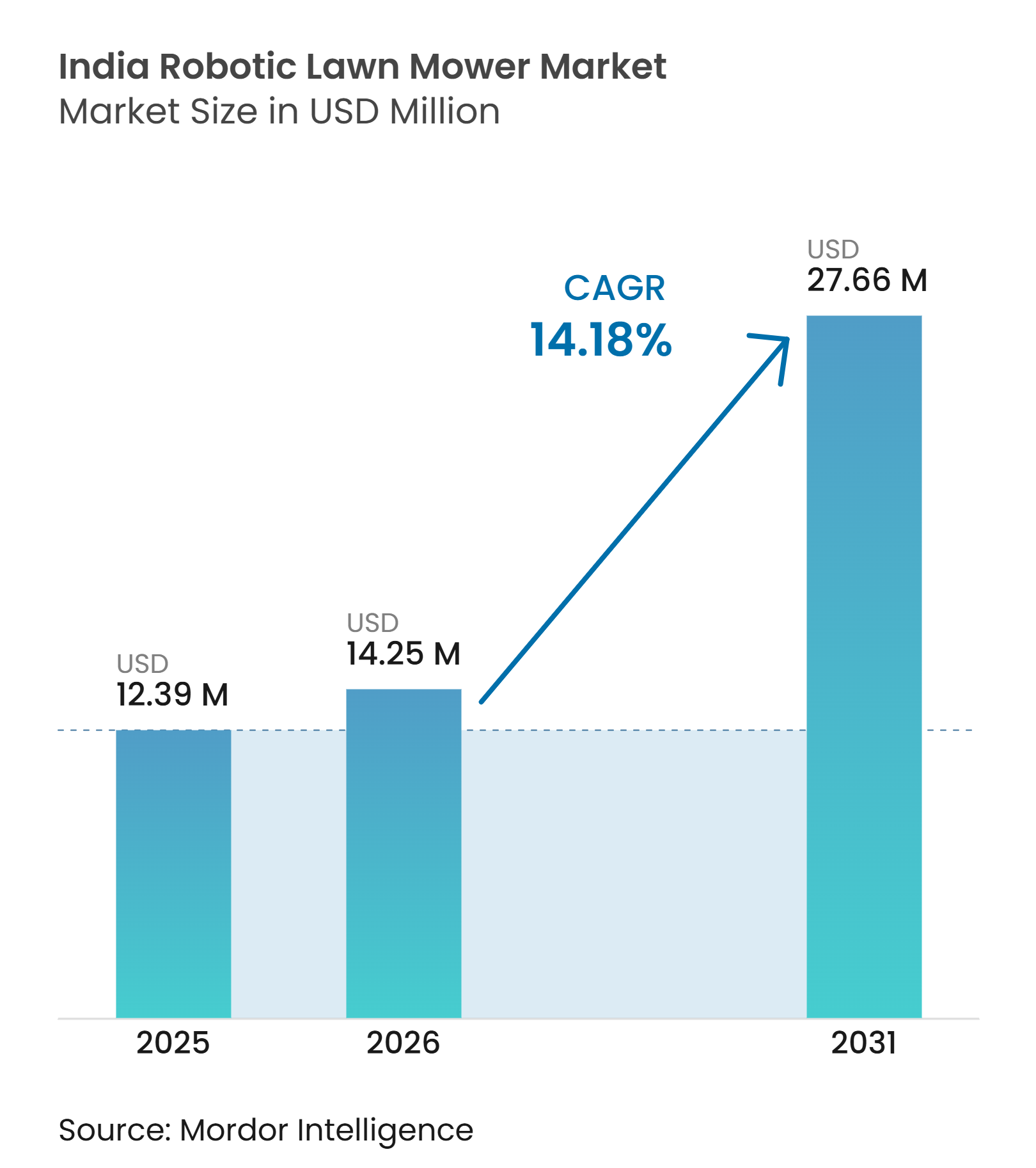
| Base Year Market Size (2025) | USD 12.39 Million |
| Market Size (2026) | USD 14.25 Million |
| Market Size (2031) | USD 27.66 Million |
| Growth Rate (2026 - 2031) | 14.18 % |
| Market Concentration | Medium |
Major Players *Disclaimer: Major Players sorted in no particular order Image © Mordor Intelligence. Reuse requires attribution under CC BY 4.0. | |
India Robotic Lawn Mower Market Analysis by Mordor Intelligence
The India robotic lawn mower market size is projected to expand from USD 12.39 million in 2025 and USD 14.25 million in 2026 to reach USD 27.66 million by 2031, registering a CAGR of 14.18% during the forecast period (2026-2031). India’s robotic lawn mower market is gradually moving beyond early adoption, with demand centered on premium residences, resorts, golf courses, sports facilities, and institutional campuses where consistent turf quality and scheduled maintenance deliver clear operational value. The growing availability of wire-free navigation is reducing installation complexity and expanding adoption across properties with irregular boundaries. Product durability, battery and charging performance, and service availability will remain critical as machines operate through India’s heat, monsoon conditions, and dusty environments. Institutional buyers offer a relatively stable opportunity, assessing robotic mowing solutions based on service continuity, labor optimization, and turf maintenance standards. Meanwhile, competition is evolving around established international brands, emerging wire-free systems, and an expanding yet geographically concentrated service network, particularly beyond major metropolitan areas.
Key Report Takeaways
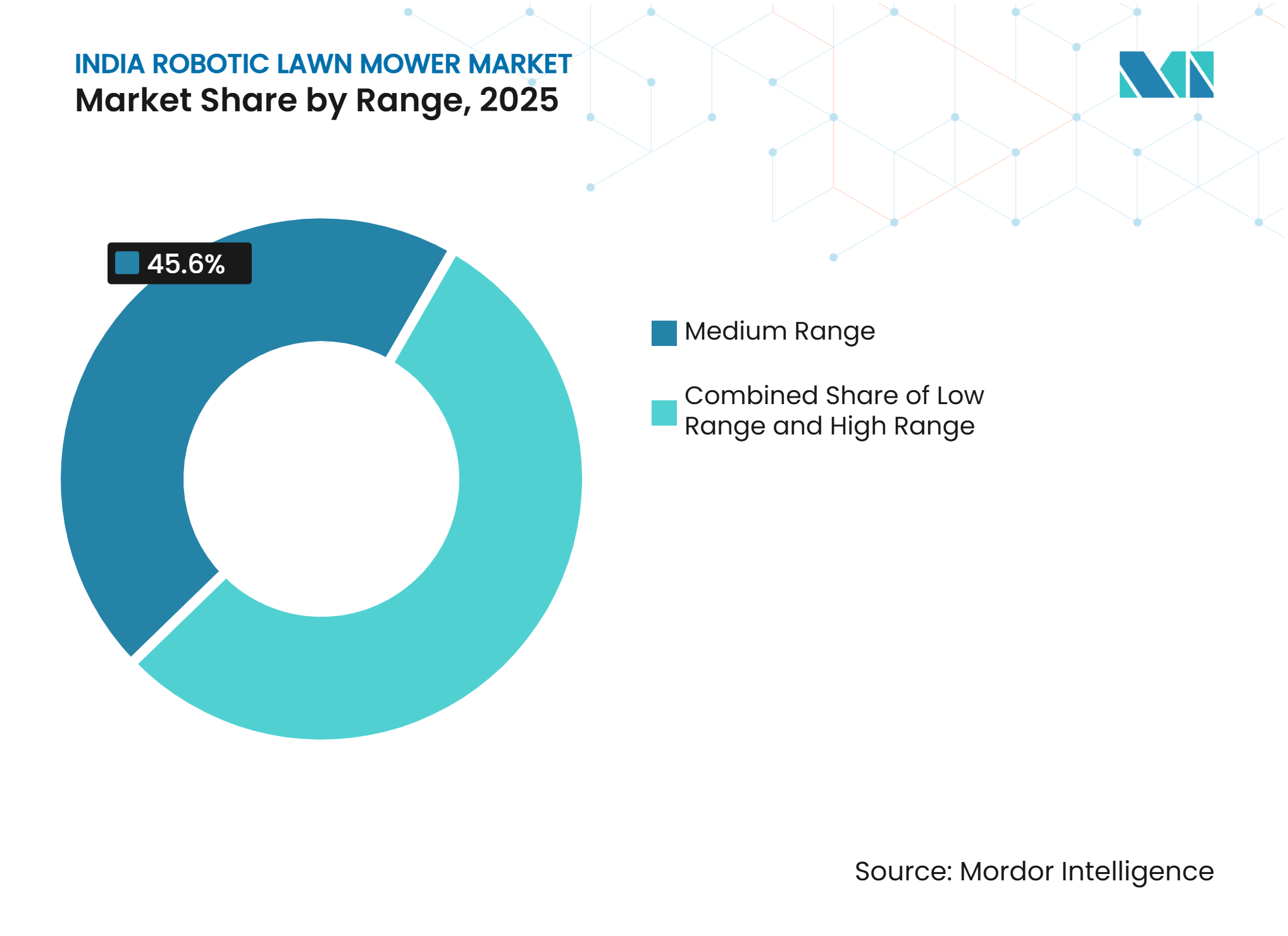
By range, medium-range units accounted for 45.6% of the India robotic lawn mower market share in 2025, whereas high-range models are forecast to grow at the fastest CAGR of 15.1% from 2026 to 2031.
By battery capacity, the 20-30 V segment accounted for a 51.6% share of the India robotic lawn mower market size in 2025, while more-than-30 V systems are forecast to grow at the highest CAGR of 14.8% from 2026 to 2031.
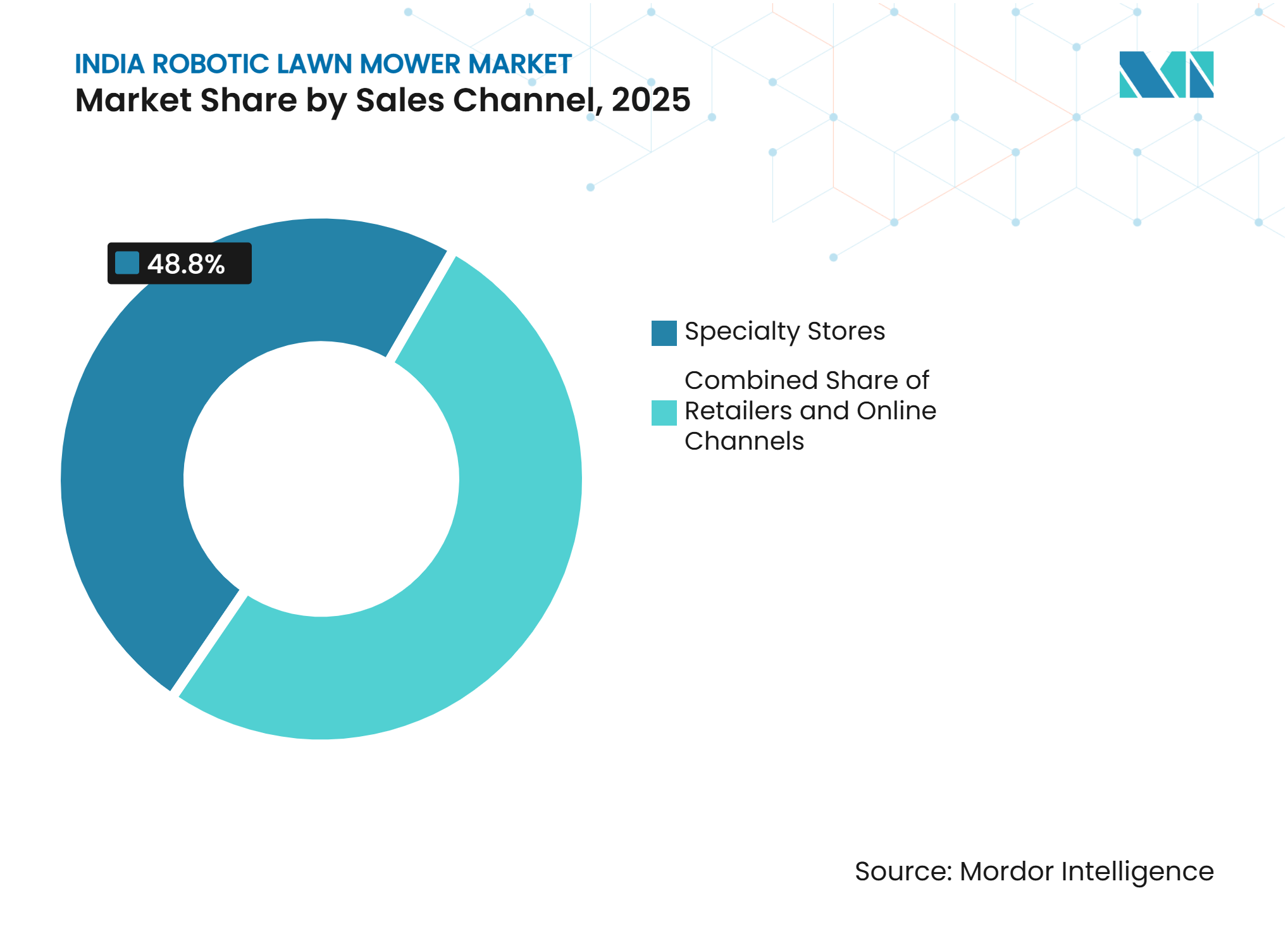
By sales channel, specialty stores accounted for 48.8% of the India robotic lawn mower market share in 2025, whereas online platforms are forecast to grow at the fastest CAGR of 15.5% from 2026 to 2031.
By application, residential mowing represented 55.1% of the India robotic lawn mower market share in 2025, while the commercial segment is forecast to grow at the highest CAGR of 15.4% from 2026 to 2031.
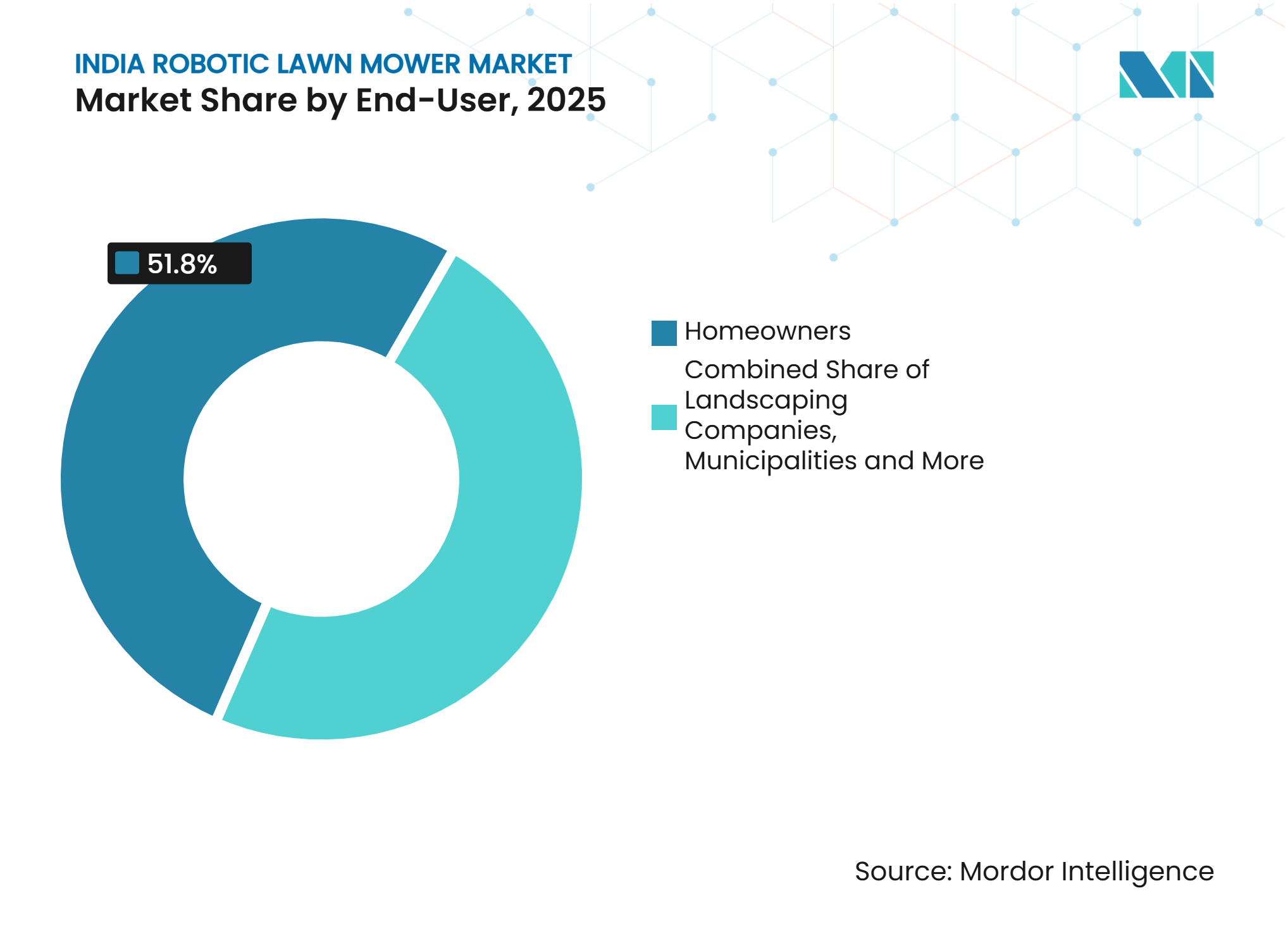
By end-user, homeowners held a 51.8% share of the India robotic lawn mower market in 2025, while landscaping companies are estimated to grow at the highest CAGR of 15.2% from 2026 to 2031.
By connectivity, boundary-wire models accounted for 57.3% of the India robotic lawn mower market in 2025, while while vision-guided camera and LiDAR systems are forecast to grow at a CAGR of 15.6% from 2026 to 2031.
Note: Market size and forecast figures in this report are generated using Mordor Intelligence’s proprietary estimation framework, updated with the latest available data and insights as of January 2026.
Market Trends and Insights
Drivers Impact Analysis of India Robotic Lawn Mower Market*
| Driver | (~) % Impact on CAGR Forecast | Geographic Relevance | Impact Timeline |
|---|---|---|---|
| Premium Landscaping and Hospitality Automation | +2.50% | Pan-India, with concentration in Bengaluru, Mumbai, Delhi National Capital Region, Hyderabad, and hill resort corridors | Medium term (2-4 years) |
| Expansion of Smart, Wire-Free Navigation | +2.80% | Pan-India, with strongest use in gated communities and institutional campuses | Medium term (2-4 years) |
| Institutional Demand for Consistent Turf Maintenance | +2.30% | Major metro areas and state capitals investing in sports infrastructure | Long term (≥ 4 years) |
| Battery and Charging Improvements | +1.90% | Pan-India, with higher relevance in tier-1 adoption hubs | Medium term (2-4 years) |
| Growth of Organized Online and Specialty Distribution | +2.10% | Tier-1 and tier-2 cities with stronger e-commerce reach | Short term (≤ 2 years) |
| Local Product Launches Increasing Category Visibility | +1.70% | National, with early gains in Delhi, Bengaluru, and Mumbai | Short term (≤ 2 years) |
| Source: Mordor Intelligence | |||
Premium Landscaping and Hospitality Automation
Premium residential developments, resorts, golf properties, and institutional campuses are establishing the clearest demand base for the India robotic lawn mower market, as these locations maintain highly visible lawns that require regular trimming and a consistent finish. Automation enables property teams to maintain predictable mowing schedules across multiple lawn zones while reducing dependence on manual intervention. The use case is particularly relevant where landscape presentation contributes directly to the guest, resident, or visitor experience. Husqvarna Group’s robotic mowing solutions for sports clubs and football pitches demonstrate the applicability of autonomous systems across professionally maintained grounds. As more commercial properties adopt these solutions, successful installations can create practical reference points for nearby villa owners evaluating the technology. This connection between commercial visibility and residential confidence can strengthen category awareness and encourage adoption, particularly as property managers increasingly prioritize consistent landscape standards, predictable maintenance schedules, and efficient use of outdoor maintenance resources.
Expansion of Smart, Wire-Free Navigation
The shift toward wire-free navigation is reducing installation complexity and strengthening adoption potential in the India robotic lawn mower market. Traditional boundary-wire systems require precise perimeter installation and physical modifications when landscaping layouts change, increasing setup effort for complex properties. RTK positioning, LiDAR, and camera-based technologies allow users to define and manage mowing areas through connected controls, making robotic mowing more adaptable to multi-zone lawns and irregular boundaries. Segway Navimow states that RTK navigation can achieve 1–2 centimeter accuracy under suitable operating conditions, supporting precise operation across larger and more complex landscapes. Husqvarna Group’s introduction of 13 boundary-wire-free robotic mowers in 2025[1] further indicates the industry’s shift toward easier-to-deploy systems. As these solutions become more available in India, lower installation requirements and greater layout flexibility can expand adoption among premium properties while reducing dependence on specialized installation and repeated perimeter wiring changes.
Institutional Demand for Consistent Turf Maintenance
Institutional grounds provide a durable demand route for the India robotic lawn mower market because turf quality affects daily operations and user experience. Sports grounds, golf courses, resorts, corporate campuses, and educational properties often require mowing on fixed schedules, creating recurring maintenance needs that favor automation. India allocated INR 3,794 crore (USD 435.3 million) to the Ministry of Youth Affairs and Sports for FY2025–26, a 17% increase from the revised FY2024–25 allocation, while 343 sports infrastructure projects had been sanctioned nationally in 2024[2]. These investments are supporting the development and upgrading of managed sports facilities, potentially expanding the addressable base for automated turf maintenance. Robotic systems can make mowing more repeatable across large lawns and multiple zones, while Husqvarna Group markets dedicated solutions for football pitches and other sports-club applications in India. Institutional buyers typically place greater weight on uptime, service response, and cut consistency than product novelty. Their procurement can therefore support maintenance arrangements rather than only one-time equipment sales, creating a channel less dependent on discretionary household spending and more closely tied to defined maintenance requirements and long-term property management needs.
Battery and Charging Improvements
Battery capability directly influences operating range, charging requirements, and the ownership economics of robotic lawn mowers in India. Lithium iron phosphate batteries can deliver 2,000 to 3,000 charge cycles, compared with 500 to 800 cycles cited for standard lithium-ion cells in Segway Navimow guidance, potentially extending replacement intervals for frequently used equipment. This is particularly relevant for commercial users managing large lawns and regular mowing schedules. Makita Corporation lists the RM350D on its India product page with a 40-minute fast-charging time and up to 135 minutes of continuous mowing, with coverage of lawns up to 3,500 square meters[3]. Battery thermal management is also important because high summer temperatures can place additional stress on outdoor battery systems. Improvements in charging speed, operating time, cycle life, and heat resilience can reduce downtime and replacement requirements, strengthening the value proposition of robotic mowers for institutional and commercial users that prioritize reliable operation and predictable maintenance costs.
Restraints Impact Analysis of India Robotic Lawn Mower Market*
| Restraint | (~) % Impact on CAGR Forecast | Geographic Relevance | Impact Timeline |
|---|---|---|---|
| High Upfront Cost Versus Manual Gardening Labor | -3.20% | Pan-India, most acute in tier-2 and tier-3 locations where labor costs are lower | Long term (≥ 4 years) |
| Monsoon, Dust, and Drainage-Related Reliability Risk | -2.10% | Western Ghats, Kerala, Mumbai, and coastal zones with rainfall above 2,000 millimeters annually | Medium term (2-4 years) |
| Limited Installation and After-Sales Coverage Beyond Major Cities | -1.80% | India outside Mumbai, Delhi, and Bengaluru | Medium term (2-4 years) |
| Fragmented Lawns and Weak Positioning Under Tree Canopies | -1.50% | Dense urban residential zones and properties with high tree coverage in southern and northeastern India | Long term (≥ 4 years) |
| Source: Mordor Intelligence | |||
High Upfront Cost Versus Manual Gardening Labor
High upfront purchase costs remain a major constraint on the India robotic lawn mower market, particularly for households with smaller lawns where manual gardening labor is widely available. Milagrow Humantech lists the Robo Nicklaus 4.0 at INR 250,990 (USD 2,988) on its official lawn mower page, illustrating the premium investment required for residential users. Husqvarna Group’s positioning of robotic equipment for professional sports-club applications further reflects the category’s focus on higher-value turf maintenance requirements. The financial case becomes more attractive where lawns are larger, mowing is frequent, or labor requirements are substantial, but smaller residential plots may not generate sufficient savings to justify the initial investment. Import-related costs and applicable taxes can further raise the final price of imported equipment. Consequently, adoption is likely to remain concentrated among premium residential and institutional buyers until lower-cost models, broader local availability, and improved ownership economics make robotic mowing more accessible to smaller households.
Monsoon, Dust, and Drainage-Related Reliability Risk
India’s monsoon conditions create operating risks that can constrain adoption in the India robotic lawn mower market. Heavy rainfall, high humidity, dust, and poor drainage can affect outdoor electronics, sensors, wheels, and charging stations, making weather resistance an important purchase consideration. The India Meteorological Department publishes national rainfall and climate information, highlighting the substantial variation in rainfall conditions across regions[4]. Milagrow Humantech lists models with IP56 protection and operating tolerance of up to 40°C, reflecting the importance of specifications suited to Indian outdoor conditions. However, even weather-resistant equipment can face performance disruptions when lawns remain waterlogged, or charging areas lack adequate drainage. Regular cleaning, pre-monsoon inspections, and appropriate dock placement can reduce avoidable downtime. Service providers capable of supporting these requirements will therefore remain important to market development, as reliable performance depends not only on mower specifications but also on site preparation, seasonal maintenance, and local operating conditions.
*Our forecasts treat driver/restraint impacts as directional, not additive. The impact forecasts reflect baseline growth, mix effects, and variable interactions.
India Robotic Lawn Mower Market Segment Analysis
By Range:
Medium Range Anchors the Base While High Range Pulls GrowthMedium range accounted for 45.6% of India’s robotic lawn mower sales in 2025, making it the largest range category. Its position reflects demand from premium residences, resort properties, and managed villa communities, where users require a balance between lawn coverage, charging frequency, and purchase cost. These systems provide a practical entry point for first-time buyers seeking automated maintenance without moving into higher-priced professional equipment. Low Range systems remain suited to compact villa gardens and shared lawns, while Medium Range models serve the broader base of properties requiring regular automated upkeep throughout the year.
High range is projected to grow at the highest CAGR of 15.1% through 2031, representing the fastest growth among range categories. Demand is supported by golf courses, cricket grounds, resorts, and institutional estates that require longer operating windows, multi-zone coverage, and frequent cutting schedules. Husqvarna Group offers the CEORA platform for green spaces of up to 50,000 square meters, demonstrating the applicability of high-capacity systems to professional grounds. While High Range equipment is increasingly relevant to commercial and institutional deployments, Low Range products remain suited to compact properties and Medium Range systems continue to address the largest residential demand base.



By Battery Capacity:
Lower-Voltage Products Build Residential AccessThe 20–30 V segment accounted for 51.6% of the India robotic lawn mower market size in 2025, making it the leading category. Its position reflects demand for systems that balance operating capability, battery weight, and equipment cost across premium residential lawns and other routine applications. Products from Positec Technology Co., Ltd., Navimow (Segway-Ninebot), and Milagrow Humantech illustrate the availability of systems within this mainstream capacity range. Less than 20 V models remain suited to smaller gardens and lighter mowing requirements, while More Than 30 V systems address larger lawns and more demanding commercial applications.
More than 30 V systems are forecast to grow at a CAGR of 14.8% from 2026 to 2031, the fastest rate among battery-capacity categories. Their growth is supported by commercial and institutional users requiring longer operating cycles, greater mowing capacity, and reliable performance across larger properties. The 20–30 V range is expected to retain its broad residential base because of its balance between runtime and equipment cost, while Less Than 20 V systems remain relevant for compact lawns. Segway Navimow notes that lithium iron phosphate batteries can provide 2,000–3,000 charge cycles for heavy-use applications, supporting the longer operating requirements associated with higher-capacity systems.
By Sales Channel:
Specialty Stores Lead While Online Channels ExpandSpecialty Stores accounted for 48.8% of India’s robotic lawn mower sales in 2025, making them the leading sales channel. Their position reflects the importance of product demonstrations, site assessment, installation guidance, warranty clarification, and service support for relatively high-value equipment. Specialty retailers, including garden-equipment dealers and premium home-improvement stores, can connect product selection with local operating requirements and post-purchase assistance. Online Channels support product discovery and model comparison, while Specialty Stores remain important where buyers require greater confidence in installation, servicing, and long-term equipment support.
Online channels are projected to grow at a CAGR of 15.5% through 2031, the fastest rate among sales channels. Digital platforms allow buyers to compare lawn coverage, navigation technologies, battery specifications, accessories, and prices before approaching a dealer or service provider. Specialty Stores are expected to retain an important role because installation and service assurance remain relevant for premium equipment. Milagrow Humantech markets its domestic lawn mower portfolio through its official website, supporting online product research before buyers proceed to specialist consultation, installation, warranty, and service discussions. This combination of digital research and specialist support can broaden access while retaining an important role for offline conversion.

By Application:
Residential Leads While Commercial Use AcceleratesResidential applications accounted for 55.1% of India’s robotic lawn mower sales in 2025, making them the largest application segment. High-net-worth homeowners in gated villa communities form the core demand base, where robotic mowing aligns with smart-home adoption and premium landscape-maintenance requirements. Commercial applications include sports facilities, hospitality properties, corporate campuses, and private educational institutions, where scheduled turf maintenance is required across visible lawns and shared green spaces. These properties can also provide demonstration value as commercial installations increase awareness of robotic mowing among nearby residential buyers.
The commercial segment is projected to grow at a CAGR of 15.4% from 2026 to 2031, the fastest rate among application segments. Growth is supported by buyers who evaluate robotic mowing based on operating efficiency, schedule consistency, service response, and downtime risk rather than convenience alone. Husqvarna Group markets dedicated robotic solutions for sports-club grounds in India, demonstrating the applicability of autonomous mowing to professionally managed turf. While residential applications currently provide the larger installed base, commercial adoption is expected to expand as more properties seek predictable maintenance, consistent turf quality, and reduced reliance on manual mowing.
By End-User:
Homeowners Lead While Landscaping Companies Scale UseHomeowners accounted for 51.8% of India’s robotic lawn mower sales in 2025, making them the largest end-user segment. Private villa and bungalow owners form the core installed base, either managing lawns themselves or through gardening staff. Landscaping Companies serve commercial properties and managed residential developments with recurring maintenance requirements, while Sports Grounds and Parks, Municipalities, Golf Courses, and other users such as campuses and hospitals provide additional demand across institutional and professionally managed properties.
Landscaping Companies are projected to grow at a CAGR of 15.2% through 2031, the fastest rate among end-user segments. These providers can expand from labor-based services toward equipment-plus-service models that incorporate robotic mower installation, inspection, maintenance, and operational adjustments. Sports Grounds and Parks require consistent turf conditions, while Municipalities and Golf Courses can support larger-scale adoption by demonstrating service practices across managed landscapes. Husqvarna Group’s robotic solutions for sports-club grounds in India illustrate the applicability of autonomous mowing in professional settings, linking equipment demand with recurring maintenance and service opportunities.
By Connectivity:
Boundary-Wire Leads While Vision-Guided Systems AdvanceBoundary-Wire systems accounted for 57.3% of India’s robotic lawn mower sales in 2025, making them the leading navigation technology. Husqvarna Group’s established Automower range has supported this installed base, particularly among buyers with established lawn layouts and predictable mowing areas. Smart Global Positioning System and Wi-Fi systems add scheduling, monitoring, and connectivity features for users seeking greater control over routine mowing. Boundary-Wire models remain suitable for stable properties, while newer navigation technologies are gaining relevance for irregular gardens, tree-lined plots, and multi-zone lawns where physical perimeter wiring can increase installation complexity.
Vision-Guided Camera and LiDAR systems are projected to grow at a CAGR of 15.6% through 2031, the fastest rate among navigation technology segments. Growing availability of wire-free operation, improved sensing capabilities, and greater suitability for complex lawn layouts are supporting this shift. Navimow (Segway-Ninebot), Shenzhen Mammotion Technology Co., Ltd., and ECOVACS Robotics Co., Ltd. offer robotic mowers incorporating RTK, LiDAR, or camera-based navigation technologies. Smart Global Positioning System and Wi-Fi systems will continue to serve buyers prioritizing connected scheduling and monitoring, while vision-guided and sensor-based solutions are positioned for properties requiring greater navigation flexibility.
Geography Analysis
Bengaluru, Mumbai, Delhi National Capital Region, and Hyderabad represent the strongest near-term demand centers for robotic lawn mowers because they concentrate premium villa communities, integrated townships, serviced properties, and managed green spaces. Bengaluru also offers potential through technology parks and corporate campuses that can support adoption of RTK-equipped systems. Husqvarna Group’s Annual Report 2025 highlights continued development of its robotic mowing portfolio, including boundary-wire-free launches, supporting the broader technology transition across the Asia-Pacific market.
Resort corridors across Maharashtra, Goa, Rajasthan, and Kerala provide an additional commercial opportunity, as hospitality properties maintain common lawns, landscaped areas, and outdoor recreational spaces requiring scheduled upkeep. These properties can support multi-zone robotic mowing where labor-intensive maintenance is frequent. However, high-rainfall locations require greater attention to mower protection, drainage, and charging-station placement. The India Meteorological Department’s rainfall and climate data can help identify locations where weather-related operating conditions require additional equipment and service considerations. Established metropolitan markets are therefore likely to remain important service hubs as adoption expands into nearby premium and hospitality corridors.
Southern state capitals, northeastern cities, and smaller urban markets represent an emerging opportunity as robotic mowing becomes more accessible beyond major metropolitan areas. Demand can develop among cricket academies, public parks, educational campuses, and high-income residential developments, although adoption will depend on local installation and maintenance support. Wire-free technologies can improve suitability for fragmented, tree-lined, or irregular lawns where fixed perimeter wiring is difficult to install. Segway Navimow’s RTK systems use satellite corrections to support precise navigation, potentially improving the suitability of robotic mowers for complex properties and supporting gradual expansion into underserved urban markets.
Competitive Landscape
Market Concentration
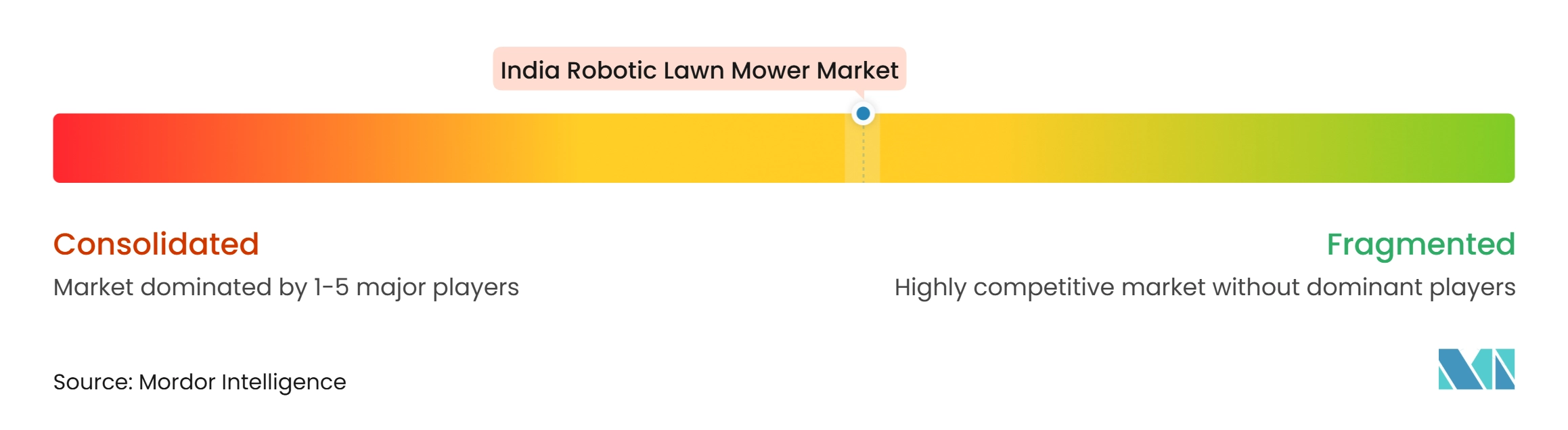
The India robotic lawn mower market includes established international manufacturers alongside emerging technology-focused and domestic players. Husqvarna Group addresses residential and professional applications through its Automower and CEORA portfolios, covering applications from private gardens to sports grounds and larger managed landscapes. Positec Technology Co., Ltd. competes in the premium segment, while Navimow (Segway-Ninebot) focuses on wire-free RTK-based systems that reduce reliance on physical boundary installation.
Shenzhen Mammotion Technology Co., Ltd. differentiates its portfolio through all-wheel-drive systems and a combination of LiDAR, vision, and RTK technologies designed for complex terrain and irregular lawn layouts. ECOVACS Robotics Co., Ltd. has also expanded into robotic lawn mowing through its GOAT range, increasing the availability of wire-free and sensor-enabled solutions for residential users. The growing presence of these technology-oriented brands is broadening product choice and increasing competition around navigation accuracy, terrain adaptability, and ease of installation.
Milagrow Humantech provides a domestic alternative with products positioned for Indian operating conditions and direct local market availability. Its portfolio includes robotic mowers designed for outdoor environments with features such as weather protection, app-based monitoring, and operation under high temperatures. The availability of locally marketed products can support adoption by reducing barriers related to product access and after-sales assistance. Going forward, installation capability, maintenance responsiveness, spare-parts availability, and service coverage beyond major metropolitan markets are likely to influence brand selection, particularly among institutional and commercial buyers.
India Robotic Lawn Mower Industry Leaders
-
Positec Technology Co., Ltd.
-
Husqvarna Group
-
Robert Bosch GmbH
-
Navimow (Segway-Ninebot)
-
Milagrow Humantech
- *Disclaimer: Major Players sorted in no particular order
India Robotic Lawn Mower Market Companies Covered in this Report
- Husqvarna Group
- Positec Technology Co., Ltd.
- Navimow (Segway-Ninebot)
- Shenzhen Mammotion Technology Co., Ltd.
- Milagrow Humantech
- ECOVACS Robotics Co., Ltd.
- Makita Corporation
- Dreame Technology
- Robert Bosch GmbH
- The Toro Company
- Honda Motor Co., Ltd.
- STIGA S.p.A.
- Ambrogio Robot (Zucchetti Centro Sistemi S.p.A.)
- AL-KO (Ningbo Daye Garden Machinery Co.,Ltd.)
- ANDREAS STIHL AG and Co. KG
Recent Industry Developments in India Robotic Lawn Mower Market
- January 2026: Milagrow Humantech launched the Robo Nicklaus 4.0, Robo Tiger 3.0, and Robo Tiger Pro in India, with IP56 protection, a 40°C operating tolerance, Wi-Fi app monitoring, and working areas of up to 40,000 square feet.
- December 2025: Husqvarna Group introduced seven robotic lawnmowers featuring AI Vision technology for the 2026 season, combining camera-based navigation, real-time obstacle avoidance, and wire-free operation. The new portfolio targets residential and professional users, expanding autonomous mowing capabilities across lawns ranging from 400 to 7,500 square meters.
- September 2025: ANDREAS STIHL AG and Co. KG launched a battery-powered outdoor product range in India, including the RCA 20 Handheld Pressure Washer, ASA 20 Pruning Secateurs, and GTA 40 Garden Pruner.
India Robotic Lawn Mower Market Report Scope
A robotic lawn mower is an autonomous device equipped with sensors and programming to perform grass-cutting tasks without human intervention. These are used for residential and commercial purposes by homeowners, apartment owners, in parks and playgrounds, and other places.
The scope of the India Robotic Lawn Mower Market is segmented by Range (Low, Medium, and High), by Battery Capacity (Less than 20V, 20V to 30V, and More Than 30V), by Sales Channel (Retailers, Specialty Stores, and Online Channels), by Application (Residential and Commercial), by End User (Homeowners, Landscaping Companies, Sports Grounds & Parks, Municipalities, Golf Courses and Other End-Users) and by Connectivity (Boundary-Wire, Smart-GPS and Wi-Fi, and Vision-Guided Camera and LiDAR). The report offers the market size in value (USD) and forecasts for all the above segments.
Segmentation Overview
| Low Range |
| Medium Range |
| High Range |
| Less Than 20 V |
| 20 to 30 V |
| More Than 30 V |
| Retailers |
| Specialty Stores |
| Online Channels |
| Residential |
| Commercial |
| Homeowners |
| Landscaping Companies |
| Sports Grounds and Parks |
| Municipalities |
| Golf Courses |
| Other End-Users |
| Boundary-Wire |
| Smart-GPS and Wi-Fi |
| Vision-Guided Camera and LiDAR |
| By Range | Low Range |
| Medium Range | |
| High Range | |
| By Battery Capacity | Less Than 20 V |
| 20 to 30 V | |
| More Than 30 V | |
| By Sales Channel | Retailers |
| Specialty Stores | |
| Online Channels | |
| By Application | Residential |
| Commercial | |
| By End-User | Homeowners |
| Landscaping Companies | |
| Sports Grounds and Parks | |
| Municipalities | |
| Golf Courses | |
| Other End-Users | |
| By Connectivity | Boundary-Wire |
| Smart-GPS and Wi-Fi | |
| Vision-Guided Camera and LiDAR |
Key Questions Answered in the Report
What is the forecast for the India robotic lawn mower market?
The India robotic lawn mower market is projected to reach USD 27.66 million by 2031, registering a CAGR of 14.18% during the forecast period (2026-2031).
Which application leads robotic lawn mower adoption in India?
Residential mowing represented 55.1% of the India robotic lawn mower market share in 2025, supported by premium homeowners in villa communities and other properties with managed lawns.
Which Indian customer group will grow fastest through 2031?
Landscaping companies are estimated to grow at a CAGR of 15.2% as they adopt equipment-plus-service contracts for managed grounds.
Why are wire-free robotic lawn mowers gaining interest in India?
RTK, camera, and LiDAR systems reduce the need for boundary-wire installation and can help manage irregular or multi-zone lawns.