
Immunogenetics Market Size and Share
Market Overview
| Study Period | 2020 - 2031 |
|---|---|
| Market Size (2026) | USD 6.77 Billion |
| Market Size (2031) | USD 10.51 Billion |
| Growth Rate (2026 - 2031) | 9.20 % |
| Fastest Growing Market | Asia-Pacific |
| Largest Market | North America |
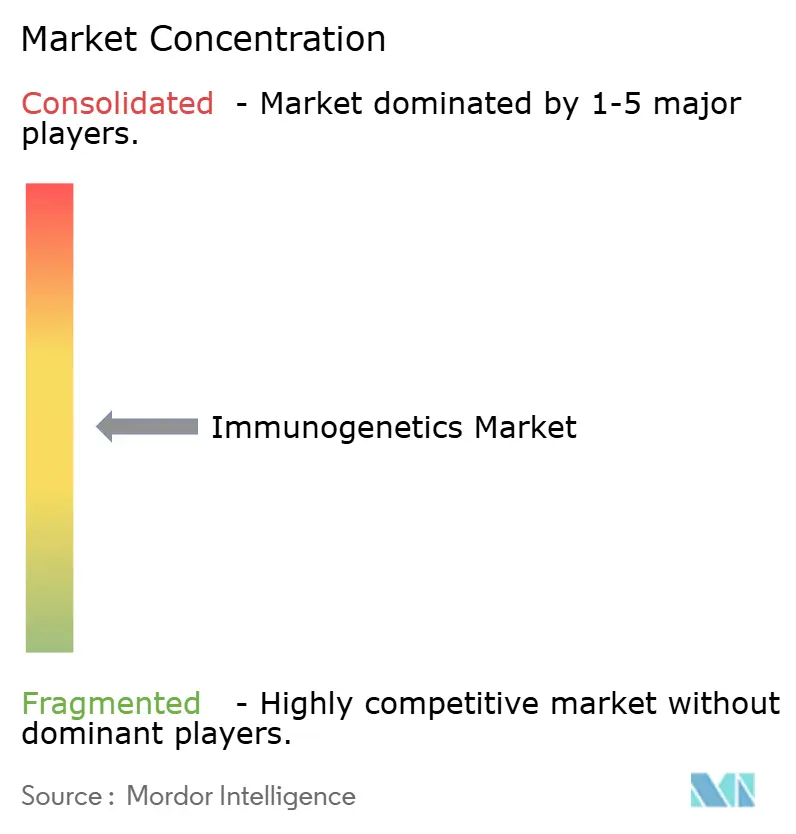
| Market Concentration | Medium |
Major Players *Disclaimer: Major Players sorted in no particular order Image © Mordor Intelligence. Reuse requires attribution under CC BY 4.0. | |
Immunogenetics Market Analysis by Mordor Intelligence
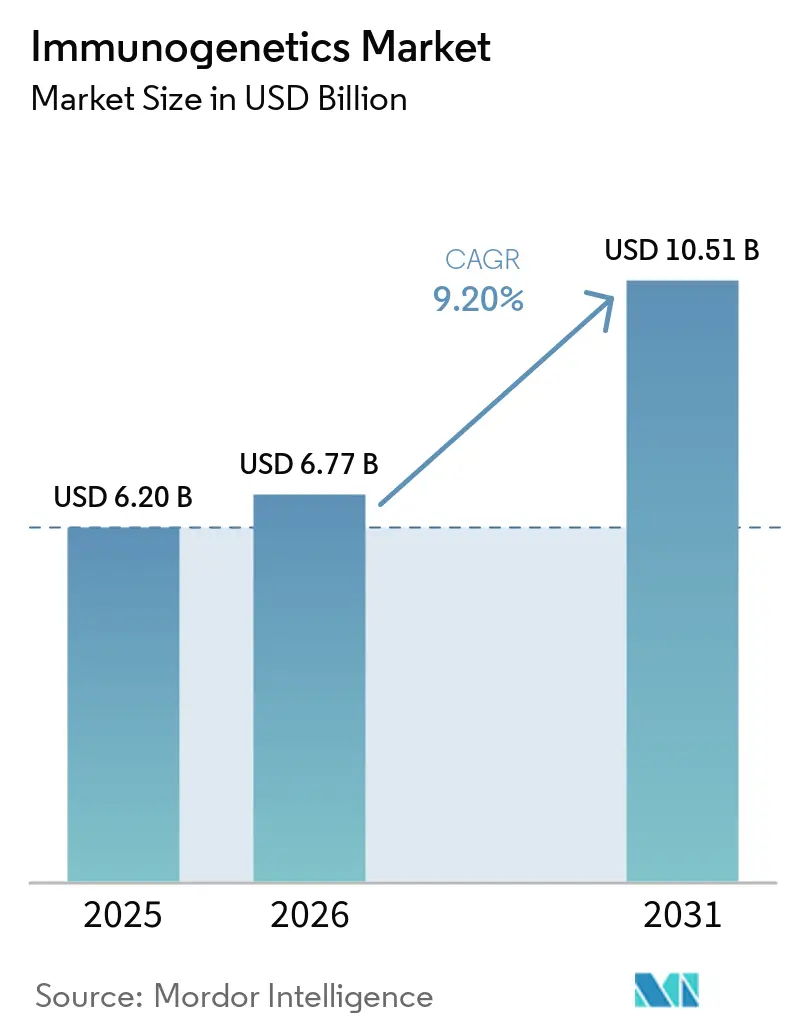
The Immunogenetics Market size is expected to grow from USD 6.20 billion in 2025 to USD 6.77 billion in 2026 and is forecast to reach USD 10.51 billion by 2031 at 9.20% CAGR over 2026-2031.
Rising organ and hematopoietic stem-cell transplant activity supports a larger and recurring need for compatibility testing. Clinical laboratories are moving from serology toward high-resolution molecular workflows because these methods provide more detailed allele information. This shift also raises demand for reagents, sequencing capacity, and validated software. Companies that combine rapid typing tools with reliable analysis and regulatory support are better placed to serve transplant laboratories. Cost, reimbursement differences, and uneven donor representation continue to limit wider adoption in some settings.
Key Report Takeaways
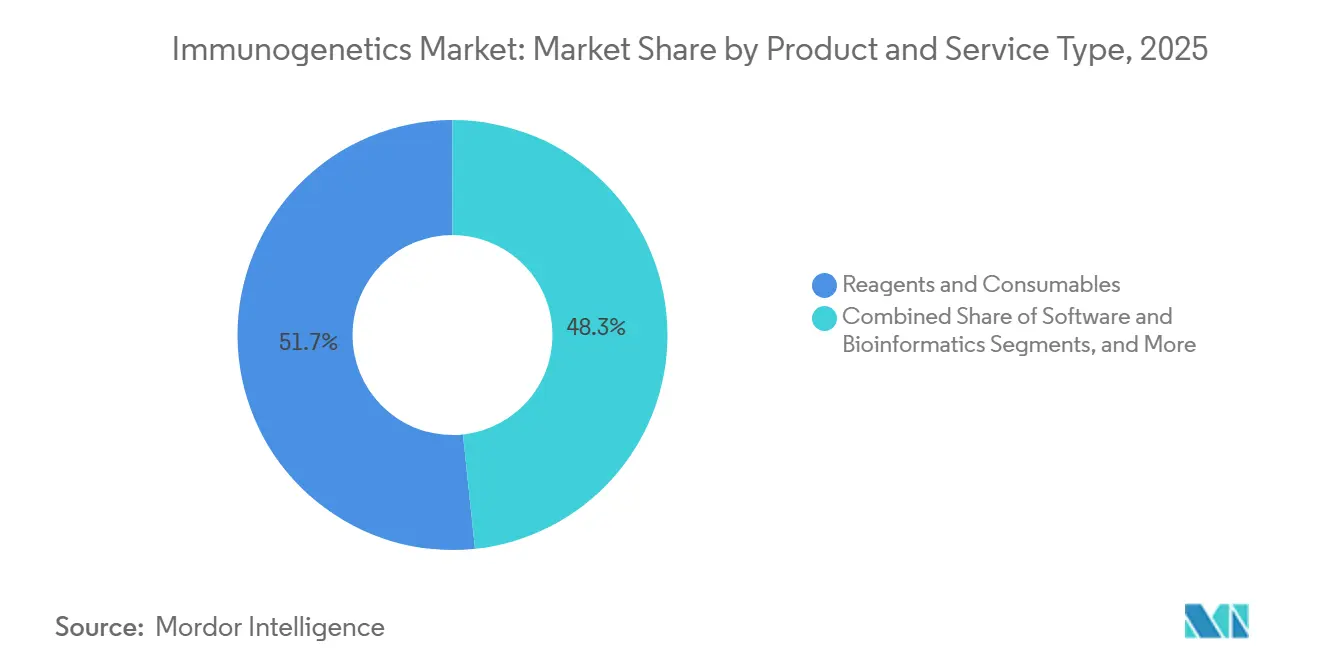
- By product and service type, reagents and consumables held 51.67% of revenue in 2025, while software and bioinformatics recorded the highest projected CAGR at 11.20% through 2031.
- By technology, molecular assays accounted for 55.45% of revenue in 2025 and recorded the highest projected CAGR at 10.46% through 2031.
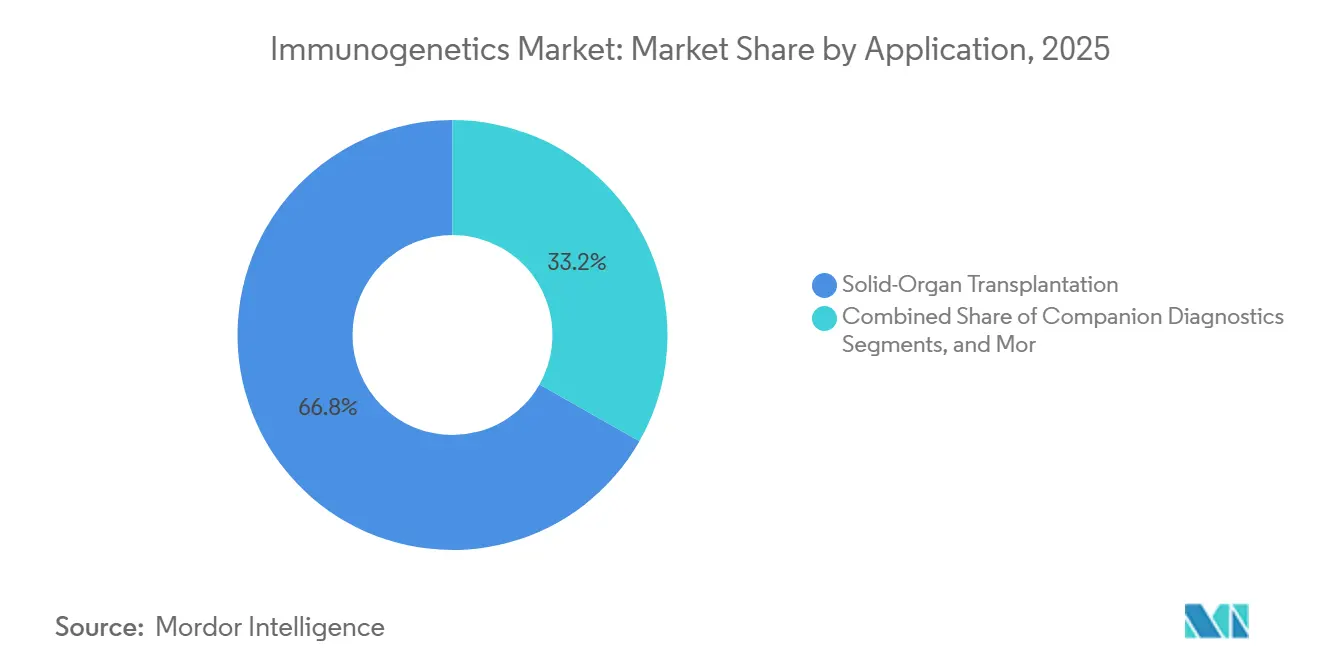
- By application, solid-organ transplantation accounted for 66.78% of revenue in 2025, while hematopoietic stem-cell transplantation recorded the highest projected CAGR at 11.67% through 2031.
- By end user, hospitals and transplant centers held 55.89% of revenue in 2025, while blood banks and transfusion centers recorded the highest projected CAGR at 12.77% through 2031.
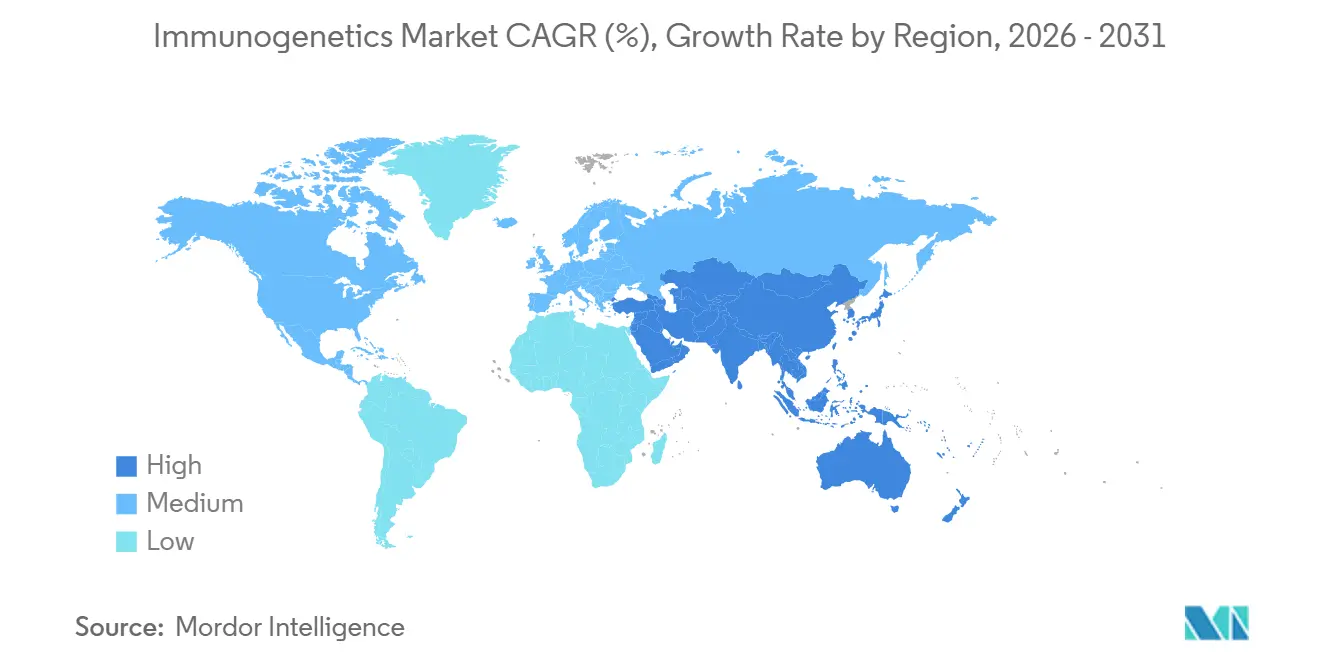
- By geography, North America held 41.23% of global revenue in 2025, while Asia-Pacific recorded the highest projected CAGR at 12.98% through 2031.
Note: Market size and forecast figures in this report are generated using Mordor Intelligence’s proprietary estimation framework, updated with the latest available data and insights as of January 2026.
Market Trends and Insights
Drivers Impact Analysis of Immunogenetics Market*
| DRIVER | (~) % IMPACT ON CAGR FORECAST | GEOGRAPHIC RELEVANCE | IMPACT TIMELINE |
|---|---|---|---|
| Rising solid-organ and HSCT transplant volumes | +2.5% | Global | Short term (≤ 2 years) |
| Expansion of high-resolution NGS-based HLA typing | +2.0% | Global, concentrated in North America and Europe | Medium term (2-4 years) |
| Growing use of HLA testing in pharmacogenomics and companion diagnostics | +1.2% | North America, Europe, and East Asia | Medium term (2-4 years) |
| Expansion of donor registries and transplant infrastructure | +0.7% | Asia-Pacific, Middle East and Africa, and South America | Long term (≥ 4 years) |
| HLA and KIR complexity driving allele-level resolution | +0.6% | Global, especially Asia-Pacific and underrepresented populations | Medium term (2-4 years) |
| Faster deceased-donor workflows through long-read sequencing | +0.5% | North America, Europe, and advanced Asia-Pacific markets | Medium term (2-4 years) |
| Source: Mordor Intelligence | |||
Rising Solid-Organ and HSCT Transplant Volumes
Transplant activity remained the primary source of testing demand in the immunogenetics market. Transplant procedures required testing for donor assessment, recipient preparation, compatibility evaluation, and post-transplant monitoring. The Global Observatory on Donation and Transplantation (GODT) recorded 173,727 solid-organ transplants in 2024, including 110,467 kidney transplants. The 2024 EBMT survey recorded 21,023 allogeneic hematopoietic cell transplants across 688 centers in 53 countries. Unrelated-donor procedures reached 11,716, a 5% increase from the previous year, requiring more detailed matching than sibling transplants.[1] The U.S. registry facilitated more than 8,400 unrelated blood stem-cell transplants in FY2025, expanding demand for high-resolution testing.
Expansion of High-Resolution NGS-Based HLA Typing
High-resolution NGS-based HLA typing gained importance as laboratories sought definitive allele calls and reduced phasing uncertainties. The immunogenetics market benefited as laboratories replaced lower-resolution serology methods with workflows supporting detailed donor-recipient matching. QIAGEN launched QIAseq xHYB Long Read Panels for HLA typing on PacBio HiFi platforms in July 2025. Illumina’s February 2026 NovaSeq X roadmap included a 40% output increase and DRAGEN enhancements for 4-field HLA typing, while its installed base reached 890 NovaSeq X systems globally by the end of FY2025. Long-read methods supported pre-transplant typing and post-transplant monitoring from a single library, changing laboratory workflows and reagent requirements.
Growing Use of HLA Testing in Pharmacogenomics and Companion Diagnostics
HLA testing expanded beyond transplant laboratories into clinical drug-selection workflows, broadening the buyer base for the immunogenetics market. A 2026 CERSI-PGx guideline recommended HLA genotyping for carbamazepine, oxcarbazepine, and eslicarbazepine to assess severe hypersensitivity risk. A 2026 scientific review linked HLA alleles with anti-infective drug toxicity and vaccine immune response. These applications generated demand beyond transplant volumes and created purchasing opportunities across clinical pharmacy, companion diagnostics, and treatment planning.[2]
HLA and KIR Complexity Driving Demand for Allele-Level Resolution
The growing diversity of immune gene variants increased the need for allele-level resolution in the immunogenetics market. The IPD-IMGT/HLA database recorded 43,758 alleles in release 3.63 in January 2025. China’s 2025 catalog increased common, intermediate, and well-documented HLA designations from 676 alleles in the 2018 edition to 1,144 alleles across five loci. KIR typing gained attention because KIR-HLA interaction profiles affected allogeneic transplant outcomes in patients with hematological malignancies. The SpecImmune framework achieved 98% accuracy for 4-field HLA typing across 1,019 samples while supporting KIR and germline IG/TCR genotyping from long-read data. Broader HLA and KIR panels enabled laboratories to obtain more clinical information from each sample.
Restraints Impact Analysis of Immunogenetics Market*
| RESTRAINT | (~) % IMPACT ON CAGR FORECAST | GEOGRAPHIC RELEVANCE | IMPACT TIMELINE |
|---|---|---|---|
| High cost of molecular testing | -1.5% | Global, especially Middle East and Africa, South America, and Tier-2 Asia-Pacific markets | Medium term (2-4 years) |
| Sequencing infrastructure cost and capacity barriers | Included within -1.5% | Global, especially Middle East and Africa, South America, and Tier-2 Asia-Pacific markets | Medium term (2-4 years) |
| Uneven reimbursement for high-resolution HLA testing | -1.0% | Global, concentrated in Europe, Asia-Pacific, and Middle East and Africa | Medium term (2-4 years) |
| Regulatory requirements across countries | Included within -1.0% | Global, concentrated in Europe, Asia-Pacific, the Middle East and Africa | Medium term (2-4 years) |
| Source: Mordor Intelligence | |||
High Cost of Molecular Testing and Sequencing Infrastructure
The cost of molecular typing remains a barrier to broader access in the immunogenetics market, particularly for mid-tier hospitals and public transplant programs. NGS-based workflows require investment in instruments, library reagents, sequencing flow cells, software, staff training, and quality controls. A 2025 study of a nanopore multiplexed HLA typing protocol found that cost competitiveness depended heavily on batch-size optimization. Smaller laboratories often cannot achieve the required volumes, while ISO 15189 accreditation increases spending on quality management, calibration, and personnel training.[3] As a result, regional hospitals may rely on external reference laboratories, extending turnaround times for urgent deceased-donor cases.
Uneven Reimbursement and Regulatory Requirements Across Countries
Reimbursement policies and regulatory requirements create uneven incentives for high-resolution HLA testing across countries in the immunogenetics market. The European Union requires HLA typing devices to meet the IVDR conformity certification deadline in December 2027, including technical documentation, clinical evaluation, and quality-management audits under Regulation (EU) 2017/746. China issued registration review guidance for HLA genotyping reagents in January 2026, covering PCR, high-throughput sequencing, and related methods. These requirements can favor companies with the resources to complete validation and certification programs. In countries without dedicated reimbursement for high-resolution NGS testing, laboratories can continue using lower-cost methods despite the clinical value of more detailed testing.
*Our forecasts treat driver/restraint impacts as directional, not additive. The impact forecasts reflect baseline growth, mix effects, and variable interactions.
Immunogenetics Market Segment Analysis
By Product and Service Type:
Reagents and Consumables Anchor Revenue While Software ExpandsReagents and consumables held 51.67% of revenue in 2025, representing the largest share in this segmentation. Each NGS typing run requires new library-preparation chemistry, target-capture panels, and sequencing flow cells, creating recurring demand that increases with transplant testing volumes. Services remain essential for transplant centers that lack the volume or capital to operate in-house NGS workflows, while instruments remain critical because laboratory protocols, staff training, and validation processes are often platform-specific.
Software and bioinformatics is the fastest-growing category, with the immunogenetics market size for this segment expected to grow at an 11.20% CAGR from 2026 to 2031. Laboratories are shifting from manual reviews of ambiguous allele calls to integrated tools that support data interpretation and laboratory information system workflows. QIAGEN’s long-read panels, launched in July 2025, separate target-enrichment chemistry from sequencing platform selection. Werfen’s NanoTYPER software integrates with the NanoTYPE HLA-11 Plus CE-IVD assay, while IVDR documentation requirements can increase compliance costs and strengthen the position of validated software providers.

By Technology:
Molecular Assays Lead Scale and GrowthMolecular assays accounted for 55.45% of revenue in 2025 and led the technology segment. The category includes NGS-based high-resolution typing, real-time PCR, and sequence-specific oligonucleotide probe methods that provide the detailed HLA information required for transplant-matching decisions. The shift from short-read NGS to long-read sequencing on Oxford Nanopore and PacBio platforms can reduce phasing ambiguity and support full-gene characterization in time-sensitive settings.
Molecular assays also recorded the highest projected CAGR at 10.46% from 2026 to 2031. Werfen’s NanoTYPE HLA-11 Plus is a CE-IVD product that provides full-gene coverage from 5′UTR to 3′UTR across 11 classical HLA loci. Non-molecular assays continue to support complement-dependent cytotoxicity crossmatch testing and solid-phase antibody detection, particularly in high-throughput blood bank and transfusion center workflows. A 2025 study reported 100% concordance for a nanopore multiplex PCR method across 90 apheresis platelet donors compared with established approaches.
By Application:
Solid-Organ Transplantation Leads While Stem-Cell Transplantation GrowsSolid-organ transplantation accounted for 66.78% of revenue in 2025 and represented the largest application in the immunogenetics market. Kidney transplantation remains the primary demand driver, with 110,467 procedures performed globally in 2024, each requiring donor-recipient typing, compatibility assessment, and crossmatch testing. Donation after circulatory determination of death increased by 17% in 2024, increasing the need for typing results within hours of organ procurement.
Hematopoietic stem-cell transplantation recorded the highest projected CAGR at 11.67% from 2026 to 2031. EBMT-area allogeneic hematopoietic cell transplants reached 21,023 in 2024, an increase of 2.6% from 2023, and unrelated donors accounted for 56% of cases, requiring intensive high-resolution typing. CAR-T recipients in Europe increased by 24.5% to 6,082 patients in 2024. Companion diagnostics, pharmacogenomics, disease-association testing, immunotherapy, and vaccine research continue to broaden the use of HLA characterization.
By End User:
Hospitals Lead Revenue While Blood Banks ExpandHospitals and transplant centers accounted for 55.89% of revenue in 2025 and held the largest revenue share among end users. Major transplant programs often operate in-house histocompatibility laboratories under ASHI and EFI accreditation requirements, supporting demand for validated typing methods and minimum equipment standards. Independent reference laboratories manage overflow testing and serve pediatric and community hospitals without dedicated programs, while pharmaceutical and biotechnology companies use HLA characterization in CAR-T and TCR-T manufacturing, companion diagnostic development, and clinical trial patient selection.
Blood banks and transfusion centers recorded the highest projected CAGR at 12.77% from 2026 to 2031. Molecular blood typing is expanding beyond ABO and Rh serology to include HLA and human platelet antigen profiling, helping prevent platelet refractoriness and other transfusion-related complications. The National Kidney Registry reported in Q1 2026 that DQ molecular mismatch is an emerging prognostic biomarker for primary alloimmunity in living-donor kidney transplantation. DKMS Lab had submitted more than 10,000 HLA sequences, including 6,500 novel alleles, to the IPD-IMGT/HLA Database by January 2025.
Geography Analysis
North America Immunogenetics Market
North America held a 41.23% share of the global immunogenetics market in 2025. The United States supported the regional market through its established transplant infrastructure and molecular testing investments. The OPTN recorded more than 48,000 organ transplants in the United States in 2024, driving recurring pre- and post-transplant testing volumes. The U.S. registry included more than 9.4 million potential adult donors and facilitated over 8,400 unrelated blood stem-cell transplants in FY2025. More than 36,000 new diverse registrants joined the registry in the first quarter of FY2026.
Europe Immunogenetics Market
Europe represented the second-largest region in the immunogenetics market, led by Germany, the United Kingdom, and France. NHS Blood and Transplant reported 4,666 organ transplants during the 2025-2026 reporting year and 8,296 patients on the active transplant list as of March 31, 2026. Eurotransplant recorded 4,039 transplants across its seven member countries in the first half of 2026. Germany remained a major HSCT center and contributed significant reference data through DKMS. CareDx received IVDR certification for AlloSeq Tx and QTYPE in October 2025, while Werfen introduced NanoTYPE HLA-11 Plus, a fully certified full-gene HLA assay under the new regulation.
APAC, MEA and South America Immunogenetics Market
Asia-Pacific is projected to record the highest regional CAGR of 12.98% through 2031. China formalized its registration pathway for HLA genotyping reagents through guidance issued on January 9, 2026. In India, a 2025 study of 130,518 stem-cell donors across eight population groups found 10/10 HLA match probabilities below 15% for most subpopulations, highlighting the need for population-specific, high-resolution reference data. The Middle East and Africa faced registry representation and capacity constraints, while Gulf Cooperation Council states expanded transplant capacity. In South America, Brazil advanced through the HEMOAM center’s 2025 integration of NGS-based HLA typing into the REDOME registry.
Competitive Landscape
The immunogenetics market is moderately concentrated, with Thermo Fisher Scientific, GenDx, Illumina, QIAGEN, Werfen, and Bio-Rad Laboratories holding significant positions. These companies compete across instruments, reagents, software, and transplant monitoring workflows. Agilent Technologies participates through target-enrichment panels used in immunogenomics workflows, while Pacific Biosciences and Oxford Nanopore Technologies provide long-read sequencing platforms for a growing assay ecosystem. BAG Diagnostics, TBG Biotechnology Corporation, and Fujirebio retain focused positions in their home regions. The combination of platform providers and specialist diagnostics suppliers maintains distinct competitive roles across the value chain.
Eurobio Scientific completed its acquisition of CareDx’s Lab Products business in June 2026 for USD 171.2 million. GenDx integrated the CareDx Lab Products portfolio in July 2026, creating a product line spanning rapid deceased-donor PCR typing, NGS recipient typing, and post-transplant monitoring. The transaction expanded the combined company’s coverage across the immunogenetics market. CareDx introduced AlloSeq Nano in April 2026, delivering allele-level results across 11 HLA loci and ABO in under three hours. Illumina’s 2026 NovaSeq X roadmap added output and HLA bioinformatics capabilities. These developments highlight speed, workflow integration, and regulatory readiness as key competitive factors.
Werfen and Omixon demonstrate the value of integrated software and reagent offerings through the NanoTYPE HLA-11 Plus platform. Immucor and Bio-Rad Laboratories remain active in HLA antibody detection for post-transplant panel-reactive antibody screening, while Revvity competes in sample preparation and genomics chemistry for HLA workflows. Opportunities remain in molecular HLA and HPA typing for blood banks, where simple workflows and batch scalability are critical. Lower-income Asian and African settings offer NGS adoption potential, while pharmacogenomics companion diagnostics present an additional opportunity for specialized developers as regulatory pathways evolve.
Immunogenetics Industry Leaders
-
QIAGEN N.V.
-
Illumina, Inc.
-
Thermo Fisher Scientific Inc.
-
CareDx, Inc.
-
Omixon, Inc.
- *Disclaimer: Major Players sorted in no particular order
Immunogenetics Market Companies Covered in this Report
- Agilent Technologies
- BAG Diagnostics GmbH
- Beckton Dickinson
- Bio-Rad Laboratories
- CareDx, Inc.
- Eurobio Scientific
- Roche
- Fujirebio Co., Ltd.
- GenDx B.V.
- Illumina
- Immucor
- Mylab Discovery Solutions Pvt. Ltd.
- NeoGenomics Laboratories
- Omixon
- Oxford Nanopore Technologies plc
- Pacific Bioscience
- QIAGEN
- Revvity, Inc.
- Takara Bio
- TBG Biotechnology Corporation
- Thermo Fisher Scientific
- Werfen
Recent Industry Developments in Immunogenetics Market
- July 2026: GenDx integrated the CareDx Lab Products portfolio following Eurobio Scientific’s acquisition, expanding its offering of IVD PCR kits, NGS recipient-typing assays, and post-transplant monitoring products across the United States, Europe, and Asia-Pacific.
- June 2026: CareDx completed the sale of its Lab Products business to Eurobio Scientific for USD 171.7 million in cash after receiving Swedish regulatory clearance. The portfolio included IVD PCR kits, NGS recipient-typing kits, and monitoring assays for transplant recipients outside North America.
- January 2026: China’s NMPA Center for Medical Device Evaluation issued guidance on HLA genotyping reagents, establishing requirements for PCR, high-throughput sequencing, and fluorescent melting-curve methods used in HSCT and solid-organ transplant matching.
Global Immunogenetics Market Report Scope
As per the scope of the report, immunogenetics is a specialized branch of medical genetics and immunology that explores the relationship between the immune system and genetics. It focuses on identifying how specific genes control the immune response, regulate susceptibility to diseases, and influence the body's ability to fight off infections.
The immunogenetics market is segmented by product and service type, technology, application, end user, and geography. By product and service type, the market includes instruments, reagents and consumables, software and bioinformatics, and services. By technology, the market is segmented into non-molecular assays and molecular assays. By application, the market is categorized into solid organ transplantation, hematopoietic stem cell transplantation, transfusion medicine, cellular therapy, companion diagnostics, disease association and risk testing, pharmacogenomics, immunotherapy and vaccine research, and others. By end user, the market is segmented into hospitals and transplant centers, independent reference laboratories, blood banks and transfusion centers, research laboratories and academic institutes, pharmaceutical and biotechnology companies, and others. By geography, the market is analyzed across North America, Europe, Asia-Pacific, the Middle East and Africa, and South America. The report also covers the estimated market sizes and trends for 17 countries across major regions globally. The report offers market sizes and forecasts in terms of value (USD) for the above segments.
Segmentation Overview
| Instruments |
| Reagents and Consumables |
| Software and Bioinformatics |
| Services |
| Non-Molecular Assays |
| Molecular Assays |
| Solid-Organ Transplantation |
| Hematopoietic Stem-Cell Transplantation |
| Transfusion Medicine |
| Cellular Therapy |
| Companion Diagnostics |
| Disease Association and Risk Testing |
| Pharmacogenomics |
| Immunotherapy and Vaccine Research |
| Others |
| Hospitals and Transplant Centers |
| Independent Reference Laboratories |
| Blood Banks and Transfusion Centers |
| Research Laboratories and Academic Institutes |
| Pharmaceutical and Biotechnology Companies |
| Others |
| North America | United States |
| Canada | |
| Mexico | |
| Europe | Germany |
| United Kingdom | |
| France | |
| Italy | |
| Spain | |
| Rest of Europe | |
| Asia-Pacific | China |
| India | |
| Japan | |
| Australia | |
| South Korea | |
| Rest of Asia-Pacific | |
| Middle East and Africa | GCC |
| South Africa | |
| Rest of Middle East and Africa | |
| South America | Brazil |
| Argentina | |
| Rest of South America |
| By Product and Service Type | Instruments | |
| Reagents and Consumables | ||
| Software and Bioinformatics | ||
| Services | ||
| By Technology | Non-Molecular Assays | |
| Molecular Assays | ||
| By Application | Solid-Organ Transplantation | |
| Hematopoietic Stem-Cell Transplantation | ||
| Transfusion Medicine | ||
| Cellular Therapy | ||
| Companion Diagnostics | ||
| Disease Association and Risk Testing | ||
| Pharmacogenomics | ||
| Immunotherapy and Vaccine Research | ||
| Others | ||
| By End User | Hospitals and Transplant Centers | |
| Independent Reference Laboratories | ||
| Blood Banks and Transfusion Centers | ||
| Research Laboratories and Academic Institutes | ||
| Pharmaceutical and Biotechnology Companies | ||
| Others | ||
| By Geography | North America | United States |
| Canada | ||
| Mexico | ||
| Europe | Germany | |
| United Kingdom | ||
| France | ||
| Italy | ||
| Spain | ||
| Rest of Europe | ||
| Asia-Pacific | China | |
| India | ||
| Japan | ||
| Australia | ||
| South Korea | ||
| Rest of Asia-Pacific | ||
| Middle East and Africa | GCC | |
| South Africa | ||
| Rest of Middle East and Africa | ||
| South America | Brazil | |
| Argentina | ||
| Rest of South America | ||
Key Questions Answered in the Report
What is the projected value of immunogenetics by 2031?
The immunogenetics market is projected to reach USD 10.51 billion by 2031, from USD 6.77 billion in 2026, at a 9.20% CAGR.
What is driving demand for immunogenetics testing?
Higher solid-organ and allogeneic stem-cell transplant activity, together with high-resolution HLA typing adoption, supports demand in the immunogenetics market.
Which product category leads immunogenetics revenue?
Reagents and consumables led revenue with a 51.67% share in 2025, supported by recurring NGS material needs across the immunogenetics market.
Which immunogenetics technology is growing the fastest?
Molecular assays recorded the highest projected CAGR at 10.46% through 2031, supported by NGS and long-read sequencing adoption in the immunogenetics market.
Which application uses the most immunogenetics testing?
Solid-organ transplantation held 66.78% of application revenue in 2025 and remains the largest use area in the immunogenetics market.
Which region is expanding fastest for immunogenetics testing?
Asia-Pacific is projected to expand at a 12.98% CAGR through 2031 as transplant capacity and local diagnostic infrastructure develop.