
Hypoxia Chamber Market Size and Share
Market Overview
| Study Period | 2020 - 2031 |
|---|---|
| Market Size (2026) | USD 470.47 Million |
| Market Size (2031) | USD 671.36 Million |
| Growth Rate (2026 - 2031) | 7.37 % |
| Fastest Growing Market | Asia-Pacific |
| Largest Market | North America |
| Market Concentration | Medium |
Major Players *Disclaimer: Major Players sorted in no particular order Image © Mordor Intelligence. Reuse requires attribution under CC BY 4.0. | |
Hypoxia Chamber Market Analysis by Mordor Intelligence
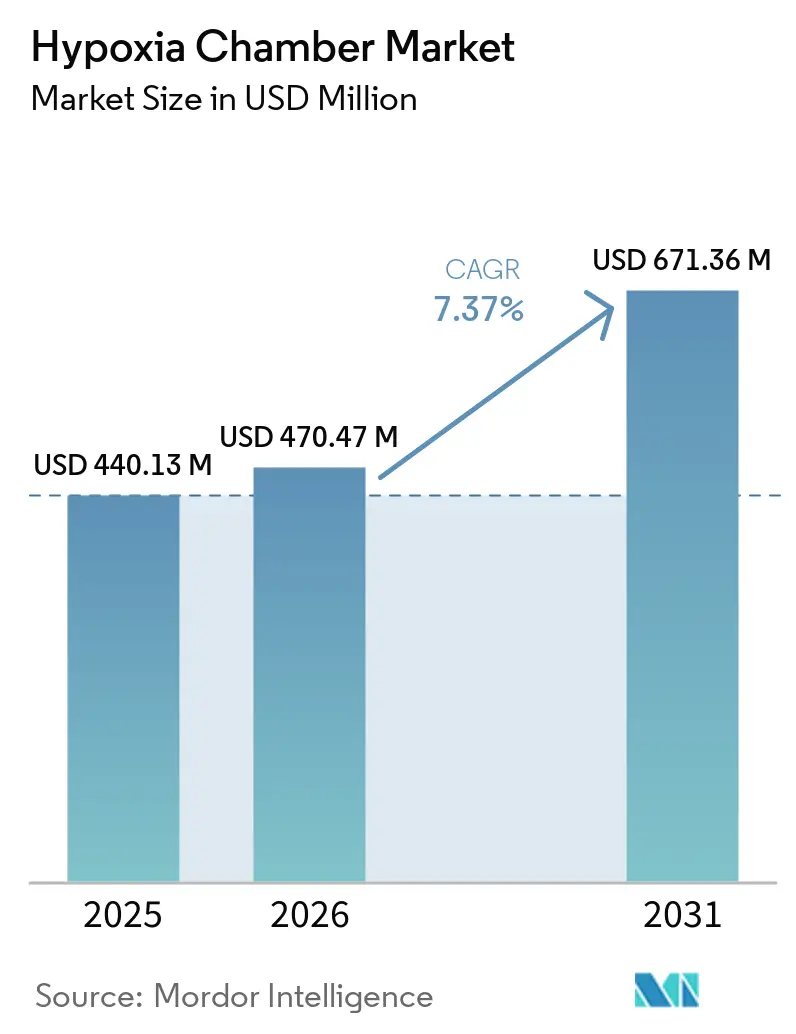
The hypoxia chambers market is projected to grow from USD 440.13 million in 2025 to USD 470.47 million in 2026 and further reach USD 671.36 million by 2031, registering a CAGR of 7.37% during the forecast period (2026-2031). The hypoxia chambers market is supported by research teams that need controlled oxygen conditions for cell culture and preclinical work. Standard incubator settings can create different oxygen conditions near dense cell layers, which can affect metabolism, gene expression, and assay results. Laboratories are moving toward continuous physioxic workflows rather than occasional hypoxia experiments. This increases demand for equipment with efficient gas use, multiple chambers, and documented environmental control. North America remains the largest regional market, while Asia-Pacific is expected to record the fastest regional growth.
Key Report Takeaways
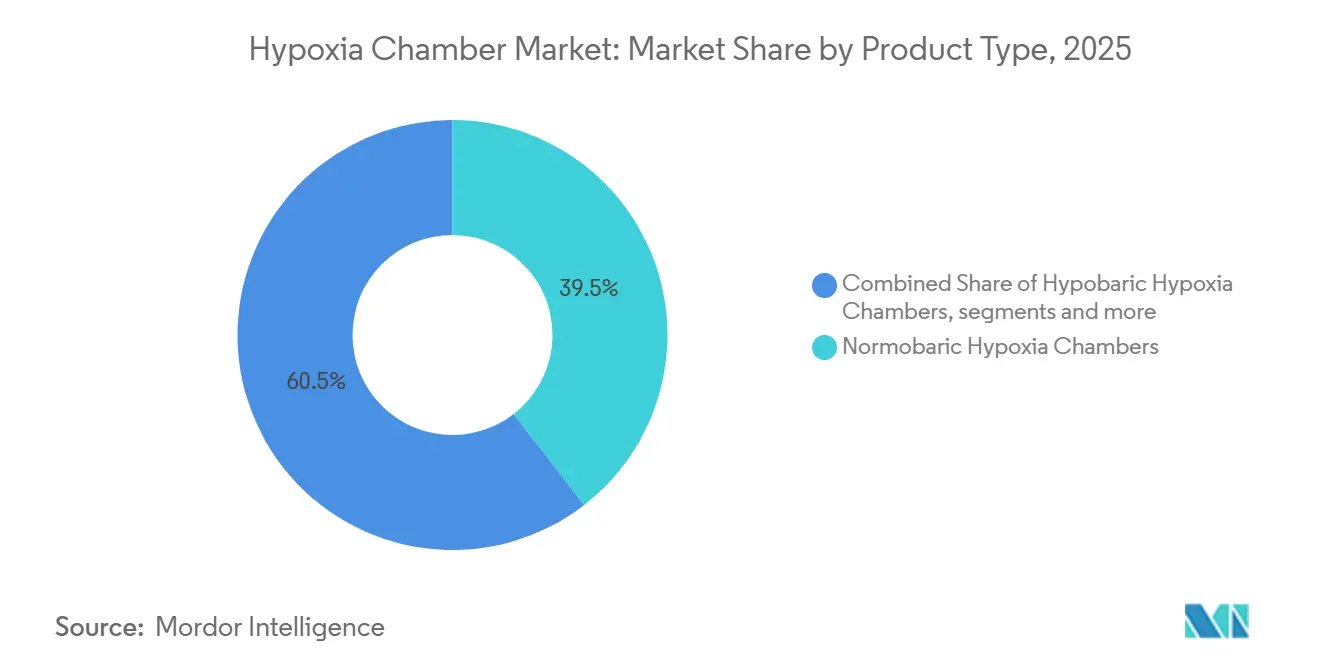
- By product type, normobaric hypoxia systems held 39.46% of the hypoxia chambers market share in 2025, while portable hypoxia chambers are forecasted to grow at an 8.15% CAGR through 2031.
- By application, cell culture accounted for 40.32% of the market in 2025, while pharmaceutical research is forecasted to grow at a 9.12% CAGR through 2031.
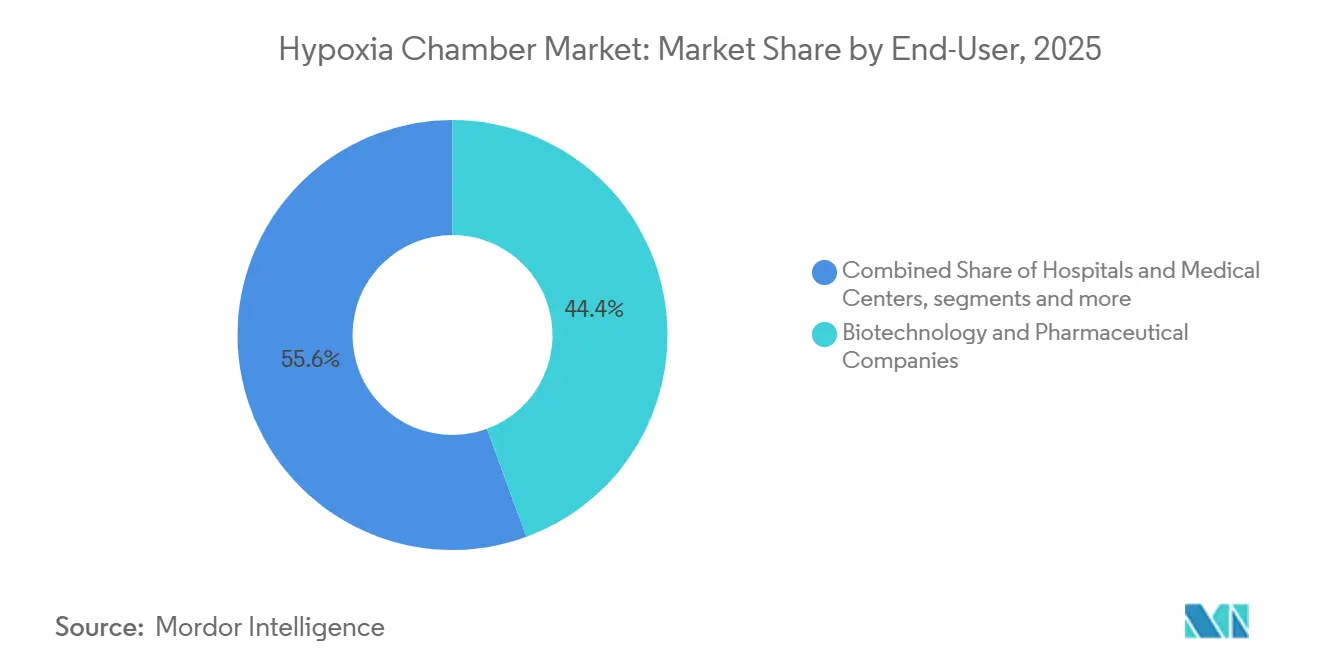
- By end-user, biotechnology and pharmaceutical companies held 44.36% of the market in 2025, while clinical laboratories are projected to grow at a 7.66% CAGR through 2031.
- By geography, North America held 47.15% of the market in 2025, while Asia-Pacific is projected to grow at a 10.22% CAGR through 2031.
Note: Market size and forecast figures in this report are generated using Mordor Intelligence’s proprietary estimation framework, updated with the latest available data and insights as of January 2026.
Global Hypoxia Chamber Market Trends and Insights
Drivers Impact Analysis*
| Driver | (~) % Impact on CAGR Forecast | Geographic Relevance | Impact Timeline |
|---|---|---|---|
| Hypoxia-Enabled Drug Discovery and Tumor Microenvironment Research | +2.3% | Global, concentrated in North America and Europe | Medium term (2-4 years) |
| Physiological Oxygen Cell Culture Adoption | +1.7% | Global, with early gains in North America, Europe, and core APAC markets | Medium term (2-4 years) |
| Sports Performance and Altitude-Acclimatization Facilities | +0.8% | North America, Europe, and the Middle East and Africa | Short term (≤ 2 years) |
| Reproducible, Regulated Preclinical Workflows | +1.0% | North America and Europe, with spillover to Asia-Pacific | Long term (≥ 4 years) |
| Multi-Condition and Multi-Chamber Experimental Workflows | +0.6% | Global, led by North America and China | Medium term (2-4 years) |
| Retrofittable, Low-Gas-Consumption Systems | +0.5% | Global, particularly Asia-Pacific and South America | Medium term (2-4 years) |
| Source: Mordor Intelligence | |||
Expansion of Hypoxia-Enabled Drug Discovery and Tumor Microenvironment Research
Oncology drug discovery increasingly uses controlled hypoxic conditions because solid tumors commonly have oxygen tensions of 1% to 4%, far below the 21% oxygen setting used in many historical preclinical assays. The 2024 EMBO Journal study found that standard culture conditions created local hypoxia in metabolically active monolayers, affecting mitochondrial respiration, glycolytic flux, metabolism, and gene expression.[1]Joycelyn Tan, Sam Virtue, Dougall M. Norris, et al., “Limited Oxygen in Standard Cell Culture Alters Metabolism and Function of Differentiated Cells,” EMBO Journal, link.springer.com It also identified differences in dose-response readouts when cells were tested under different oxygen conditions, which makes precise control relevant to translational research and candidate selection. The hypoxia chambers market benefits from work on tumor organoids and immune checkpoint inhibitor development because T-cell infiltration and tumor immunosuppression are oxygen-regulated processes. Researchers are consequently using controlled environments in PD-L1 pathway studies where intermittent exposure to room air can affect the experiment.
Increasing Adoption of Physiological Oxygen Cell Culture
Cell biology, regenerative medicine, and biopharmaceutical teams increasingly treat atmospheric oxygen as an experimental variable that requires control. The 2024 EMBO Journal study reported that changes in pericellular oxygen affected HIF-1α activity, insulin-stimulated GLUT4 translocation, and lipolysis sensitivity in adipocyte cultures. The study found that higher pericellular oxygen eliminated HIF-1α activity within 5 minutes of switching and increased lipolysis sensitivity by more than 15-fold. Medium depth, cell density, and respiration mean that an incubator oxygen setting alone cannot consistently address these conditions. The hypoxia chambers market serves laboratories that need oxygen, carbon dioxide, temperature, and humidity control during extended protocols, rather than a setting that changes whenever samples are removed.
Growth of Sports Performance and Altitude-Acclimatization Facilities
University athletic programs, professional training facilities, and military centers are installing normobaric hypoxia equipment for research and conditioning. In September 2025, the Korey Stringer Institute at the University of Connecticut completed a USD 1 million expansion that combined heat and altitude stressors in a single chamber environment. The installation enabled altitude simulation of up to 12,000 feet for athlete and warfighter research, adding altitude capability to an existing environmental research setting. JFJ GmbH also delivered the ergoHI² multi-room normobaric system to the Austrian Armed Forces in Hochfilzen with the Austrian Ski Federation, including active and passive exposure in training rooms and specialized dormitories.[2]“JFJ Delivers and Hands Over the ergoHI² System to ÖBH in Hochfilzen,” JFJ GmbH, jfj.at The hypoxia chambers market gains from institutions that need deployable and operationally simple altitude environments instead of permanent hypobaric facilities. These users favor normobaric systems because they avoid decompression procedures while supporting both research and training activity.
Rising Demand for Reproducible, Regulated Preclinical Workflows
The hypoxia chambers market gains support from preclinical studies that require documented environmental conditions and traceable equipment performance. FDA Good Laboratory Practice requirements call for equipment records, periodic maintenance documentation, and reporting of deviations in nonclinical laboratory studies.[3]“Good Laboratory Practice 101, Regulations and Compliance,” U.S. Food and Drug Administration, fda.gov HypOxygen offers GMP workstation configurations with validation features that address temperature mapping, HEPA performance, and calibration records. Contract research organizations must consider the records that pharmaceutical sponsors need for regulatory submissions, since inadequately documented hypoxic studies can lead to questions or additional work. This makes data logging, audit trails, and traceable calibration important features even in settings where the capital budget is limited.
Restraints Impact Analysis*
| Restraint | (~) % Impact on CAGR Forecast | Geographic Relevance | Impact Timeline |
|---|---|---|---|
| Acquisition, Installation, and Operating Costs | -1.5% | Global, most acute in South America, the Middle East and Africa, and emerging Asia-Pacific markets | Long term (≥ 4 years) |
| Validation, Calibration, and Safety Requirements | -1.0% | Global, concentrated where GLP and GMP compliance is required | Medium term (2-4 years) |
| Cross-Vendor Performance Standardization Gaps | -0.7% | Global | Long term (≥ 4 years) |
| Limited Specialized Operators and Service Technicians | -0.5% | Asia-Pacific, the Middle East and Africa, and South America | Long term (≥ 4 years) |
| Source: Mordor Intelligence | |||
High Acquisition, Installation, and Operating Costs
Research-grade workstations require capital spending that extends beyond the initial purchase price. Nitrogen consumption creates a recurring cost for laboratories that run continuous physioxic protocols, especially when several chambers operate in parallel. Eppendorf presents reduced nitrogen consumption as a cost-saving feature of its CellXpert C170i hypoxia incubator, indicating that gas use is an important ownership consideration. Large fixed chambers and GMP-grade isolators can also require gas lines, safety ventilation, and, in some cases, structural work that does not appear in a basic equipment budget. The hypoxia chambers market is therefore less accessible to smaller academic institutions and cost-constrained contract laboratories, particularly where facility upgrades are difficult to fund. Lower-cost modular chambers reduce entry costs, but their measurement limitations can constrain regulatory use, publication confidence, and cross-study comparability.
Complex Validation, Calibration, and Safety Requirements
Calibration and safety qualification can interrupt laboratory operations and add to total ownership costs. Oxygen and carbon dioxide sensors commonly require calibration every 6 to 12 months under manufacturer specifications, and GLP studies can require interim performance checks. HEPA filter testing, gas-line leak checks, and oxygen-depletion safety procedures add tasks that require trained technicians and careful scheduling. Service limitations can extend downtime in South America, Sub-Saharan Africa, and parts of Southeast Asia where manufacturer networks are less available. The hypoxia chambers market also faces comparison challenges when multi-vendor chamber arrays use different measurement approaches, including percentage oxygen and partial pressure.
*Our forecasts treat driver/restraint impacts as directional, not additive. The impact forecasts reflect baseline growth, mix effects, and variable interactions.
Segment Analysis
By Product Type: Normobaric Systems Support Routine Research Workflows
Normobaric hypoxia systems held 39.46% of the hypoxia chambers market in 2025, reflecting their central position in pharmaceutical and academic cell culture. These systems maintain ambient barometric pressure while reducing inspired oxygen through nitrogen displacement or membrane separation. The operating model suits laboratories that need repeated intervention while maintaining an oxygen-controlled environment, including work that requires ongoing observation, cell manipulation, and recovery from routine handling without an uncontrolled air break.
Hypobaric chambers retain a defined role in aerospace medicine, high-altitude physiology, and military acclimatization work. Their lower-pressure operating environment requires purpose-built facilities, restricted access, and more extensive safety measures. Portable hypoxia chambers are forecasted to grow at an 8.15% CAGR through 2031, the fastest rate among product types, as smaller research groups and field-based users seek capability without permanent infrastructure.



By Application: Pharmaceutical Research Has the Fastest Growth Rate
Cell culture held 40.32% of the hypoxia chambers market in 2025, reflecting its use in cancer biology, stem cell research, and metabolic disease studies. Researchers use oxygen-controlled in vitro environments when conventional incubator settings do not represent the conditions that cells experience near a dense monolayer, where metabolic activity can lower local oxygen well below the incubator setpoint. Animal studies form a separate application, using hermetically sealed in vivo housings for intermittent hypoxia models of sleep apnea, myocardial ischemia, and pulmonary hypertension.
Pharmaceutical research is expected to grow at a 9.12% CAGR through 2031, exceeding the overall growth rate as sponsors embed hypoxia chambers in IND-enabling work. Sponsors need preclinical pharmacology data generated under physiologically relevant oxygen conditions and supported by clear environmental documentation. Athletic performance and altitude training remain a smaller but separate application, where sports centers use altitude simulation as a service rather than only as a premium feature.
By End-User: Pharmaceutical Companies Account for the Largest Value Share
Biotechnology and pharmaceutical companies held 44.36% of the hypoxia chambers market in 2025. Their demand is shaped by protocol standardization, regulatory documentation, and the need for validated instrument performance records. They may specify factory acceptance testing, HEPA filtration, temperature mapping, and calibrated partial-pressure oxygen sensors with their equipment, reflecting the need to maintain traceable performance records.
Clinical laboratories are forecasted to grow at a 7.66% CAGR through 2031. Academic medical centers and independent testing organizations are expanding translational research, ex vivo tissue analysis, biomarker validation, and cell-based assay development. Academic research institutes, sports science centers, and contract research organizations complete the customer base, with contract research organizations gaining work as sponsors outsource hypoxia-dependent assays.
Geography Analysis
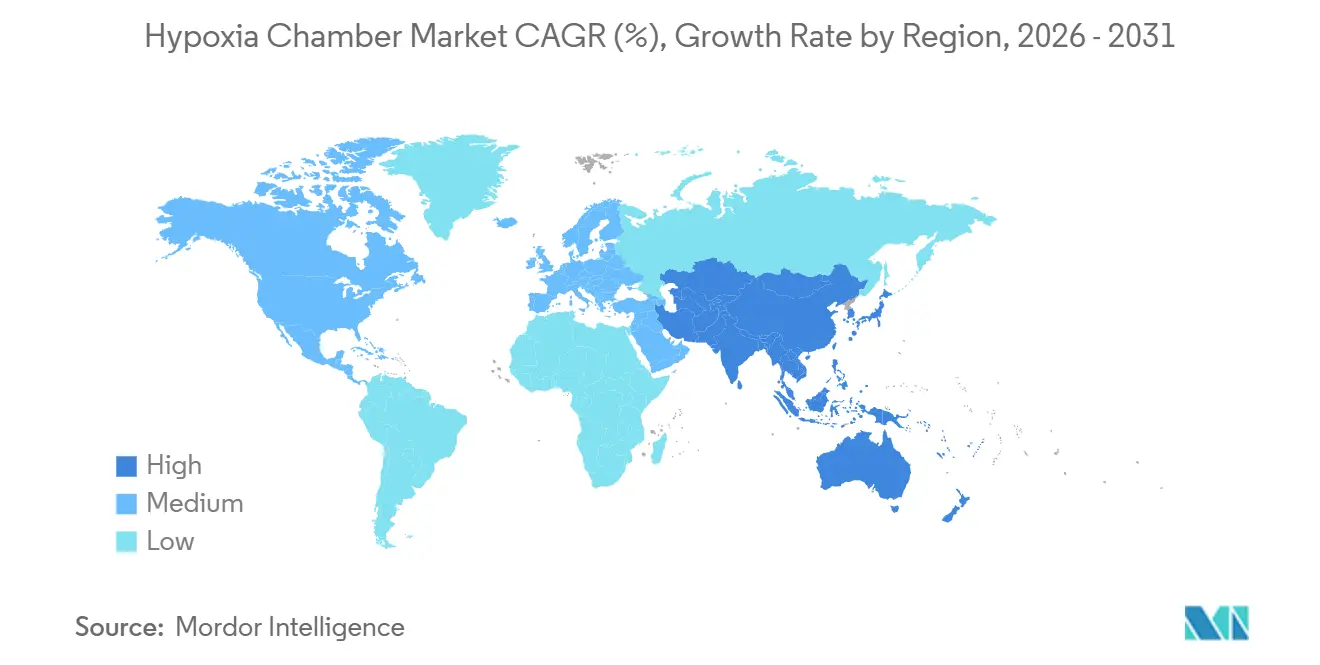
North America held 47.15% of the hypoxia chambers market share in 2025. The region combines a high concentration of oncology-focused biopharmaceutical companies, well-funded academic research programs, and established GLP compliance practices. The United States accounts for most regional spending through cancer and cardiovascular research and through contract research providers that support oncology studies, where controlled oxygen capability can be a qualification factor for specialized study work. Hypoxia capability has become relevant to study bids where sponsors need controlled oxygen environments and documented instrument performance. Canada has regenerative medicine and cell therapy activity in Toronto and Vancouver, while Mexico remains an early-stage market for laboratory-grade systems.
Europe is the second-largest regional market, and Germany, the United Kingdom, and France account for much of the demand. The United Kingdom benefits from specialist manufacturers and their technology relationships with university and NHS-linked research programs. France has durable academic research infrastructure, including the IBISA-accredited HypE platform at Université Grenoble Alpes, while European cleanroom and electronic data requirements influence chamber selection.
Asia-Pacific is projected to grow at a 10.22% CAGR through 2031, making it the fastest-growing regional part of the hypoxia chambers market. China’s biopharmaceutical research investment, India’s expanding contract research activity, and South Korea’s cell therapy manufacturing support demand for validated environmental-control equipment and related laboratory infrastructure. Japan supports clinical demand through research on altitude acclimatization and sleep apnea, while South America and the Middle East and Africa remain smaller markets with growing needs related to regulatory alignment and sports science investment.

Competitive Landscape
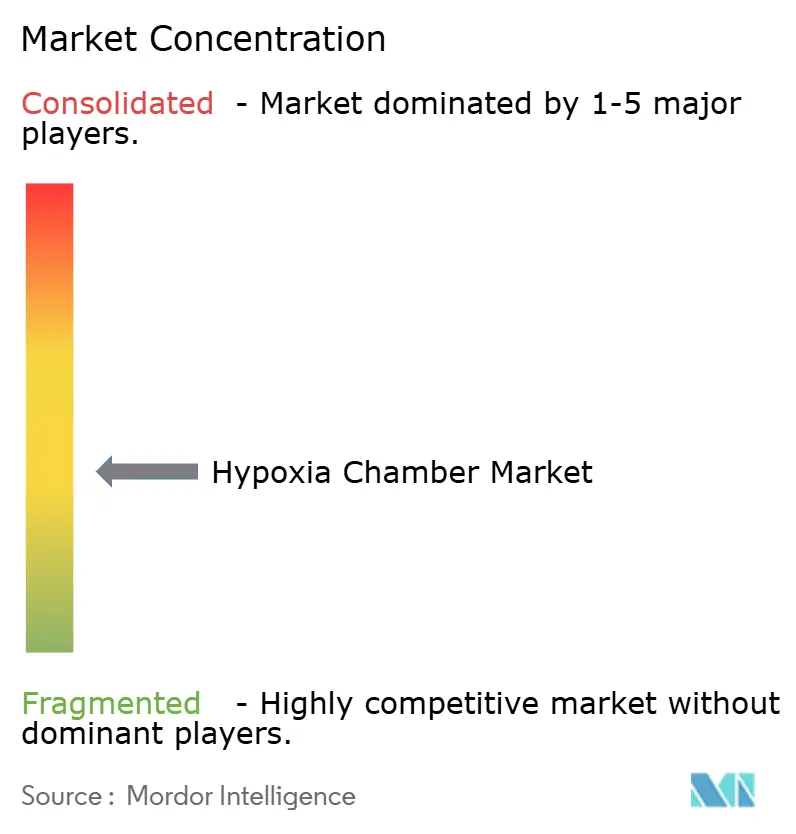
The hypoxia chambers market is moderately fragmented, with competition split between specialist hypoxia-chamber manufacturers and broader life-science equipment companies. BioSpherix, Don Whitley Scientific, Oxford Optronix, HypOxygen, and Coy Laboratory Products are specialist suppliers that compete on precision engineering, sensor methods, gas efficiency, and detailed configurations. They have established positions in regulated pharmaceutical and academic research applications. Their specialist focus does not provide the distribution and service scale of larger equipment groups. Eppendorf, Thermo Fisher Scientific, Sartorius, and BINDER address related demand through oxygen-control incubators, live-cell systems, and bioprocess platforms.
Larger suppliers can use customer relationships and enterprise purchasing agreements to support sales volume. Specialist vendors compete where buyers require detailed oxygen control, application depth, and specific regulatory support. Mid-range research laboratories remain underserved when portable systems are too limited, but full GMP workstations are too costly. This leaves room for fixed-installation systems with digital audit trails that do not include full cleanroom certification. The hypoxia chambers market also has an incomplete connection between oxygen control and real-time live-cell imaging.
Sartorius launched the Incucyte CX3 system in July 2025 for 3D cell culture applications, showing movement toward connected imaging workflows. BioSpherix documented in March 2026 that its OxyCycler A84XOV supports up to 4 chambers and multiple gas setpoints, while Eppendorf positions lower nitrogen use as an operating-cost feature in the CellXpert C170i. The field remains fragmented because the input does not provide a combined market share for leading suppliers.
Hypoxia Chamber Industry Leaders
Baker
BioSpherix, LLC
Coy Laboratory Products, Inc.
Oxford Optronix Ltd
HypOxygen Ltd
- *Disclaimer: Major Players sorted in no particular order

Recent Industry Developments
- May 2026: Eppendorf SE launches BioFlo 120 Bioprocess Control Station: Eppendorf introduced the BioFlo 120, a compact bioprocess control system supporting cell and microbial culture from 0.5 L benchtop to small-scale production, with modular reactor compatibility. The platform expands Eppendorf's position in oxygen-controlled bioprocess environments and enables scale-up pathways relevant to hypoxia-dependent cell therapy manufacturing workflows.
- July 2025: Sartorius launches Incucyte CX3 Live-Cell Analysis System. Sartorius launched the Incucyte CX3, the company's most advanced live-cell analysis platform for 3D cell culture, incorporating confocal fluorescence imaging, flexible multi-plate throughput (up to six 96-well plates simultaneously), and seamless 2D/3D workflow transition. This launch represents a step toward integrating environmental oxygen control with real-time imaging in cell culture workflows.
- May 2025: Oxford Optronix releases Version 2 firmware for HypoxyLab. Oxford Optronix released a major firmware update for the HypoxyLab workstation, adding automated oxygen profiling (up to 250 programmable profiles, loopable indefinitely), extending the oxygen control range to 175 mmHg/23%, expanding CO₂ control to 18%, and optimizing system recovery times. The upgrade was made available as a free update to all existing generation-3 system users, supporting calibration continuity in GLP-compliant labs.


Global Hypoxia Chamber Market Report Scope
According to the report’s scope, the hypoxia chamber market refers to the specialized segment of biomedical research equipment designed to simulate low‑oxygen environments, enabling controlled studies of cellular, physiological, and therapeutic responses to hypoxia for applications in drug discovery, disease modeling, and regenerative medicine.
The hypoxia chamber market is segmented into product type, application, end-user, and geography. By product type, the market is segmented into normobaric hypoxia chambers, hypobaric hypoxia chambers, portable hypoxia chambers, and other product types. By application, the market is segmented into cell culture, animal studies, pharmaceutical research, athletic performance and altitude training, and other applications. By end-user, the market is segmented into biotechnology and pharmaceutical companies, hospitals and medical centers, clinical laboratories, and other end-users. By geography, the market is segmented into North America, Europe, Asia-Pacific, the Middle East and Africa, and South America. The report also covers the estimated market sizes and trends for 17 countries across major regions globally. The report offers values (USD) for all the above segments.
| Normobaric Hypoxia Chambers |
| Hypobaric Hypoxia Chambers |
| Portable Hypoxia Chambers |
| Other Product Types |
| Cell Culture |
| Animal Studies |
| Pharmaceutical Research |
| Athletic Performance and Altitude Training |
| Other Applications |
| Biotechnology and Pharmaceutical Companies |
| Hospitals and Medical Centers |
| Clinical Laboratories |
| Other End-Users |
| North America | United States |
| Canada | |
| Mexico | |
| Europe | Germany |
| United Kingdom | |
| France | |
| Italy | |
| Spain | |
| Rest of Europe | |
| Asia-Pacific | China |
| Japan | |
| India | |
| Australia | |
| South Korea | |
| Rest of Asia-Pacific | |
| Middle East and Africa | GCC |
| South Africa | |
| Rest of Middle East and Africa | |
| South America | Brazil |
| Argentina | |
| Rest of South America |
| By Product Type | Normobaric Hypoxia Chambers | |
| Hypobaric Hypoxia Chambers | ||
| Portable Hypoxia Chambers | ||
| Other Product Types | ||
| By Application | Cell Culture | |
| Animal Studies | ||
| Pharmaceutical Research | ||
| Athletic Performance and Altitude Training | ||
| Other Applications | ||
| By End-User | Biotechnology and Pharmaceutical Companies | |
| Hospitals and Medical Centers | ||
| Clinical Laboratories | ||
| Other End-Users | ||
| By Geography | North America | United States |
| Canada | ||
| Mexico | ||
| Europe | Germany | |
| United Kingdom | ||
| France | ||
| Italy | ||
| Spain | ||
| Rest of Europe | ||
| Asia-Pacific | China | |
| Japan | ||
| India | ||
| Australia | ||
| South Korea | ||
| Rest of Asia-Pacific | ||
| Middle East and Africa | GCC | |
| South Africa | ||
| Rest of Middle East and Africa | ||
| South America | Brazil | |
| Argentina | ||
| Rest of South America | ||


Key Questions Answered in the Report
How large is the hypoxia chambers market?
The market is estimated at USD 440.13 million in 2025 to USD 470.47 million in 2026 and is forecasted to reach USD 671.36 million by 2031 at a 7.37% CAGR.
Which hypoxia chamber product type leads demand?
Normobaric hypoxia systems led product demand with 39.46% share in 2025 because they support routine laboratory access at ambient barometric pressure.
Which application is growing fastest through 2031?
Pharmaceutical research is projected to grow at a 9.12% CAGR through 2031, supported by preclinical workflows that need documented oxygen control.
Which region is growing fastest for hypoxia chambers?
Asia-Pacific is projected to grow at a 10.22% CAGR through 2031, supported by biopharmaceutical research, contract research, and cell therapy activity.
Page last updated on:





