
Hospital EMR Systems Market Size and Share
Market Overview
| Study Period | 2020 - 2031 |
|---|---|
| Market Size (2026) | USD 21.42 Billion |
| Market Size (2031) | USD 27.92 Billion |
| Growth Rate (2026 - 2031) | 5.45 % |
| Fastest Growing Market | Asia-Pacific |
| Largest Market | North America |
| Market Concentration | Medium |
Major Players *Disclaimer: Major Players sorted in no particular order Image © Mordor Intelligence. Reuse requires attribution under CC BY 4.0. | |
Hospital EMR Systems Market Analysis by Mordor Intelligence
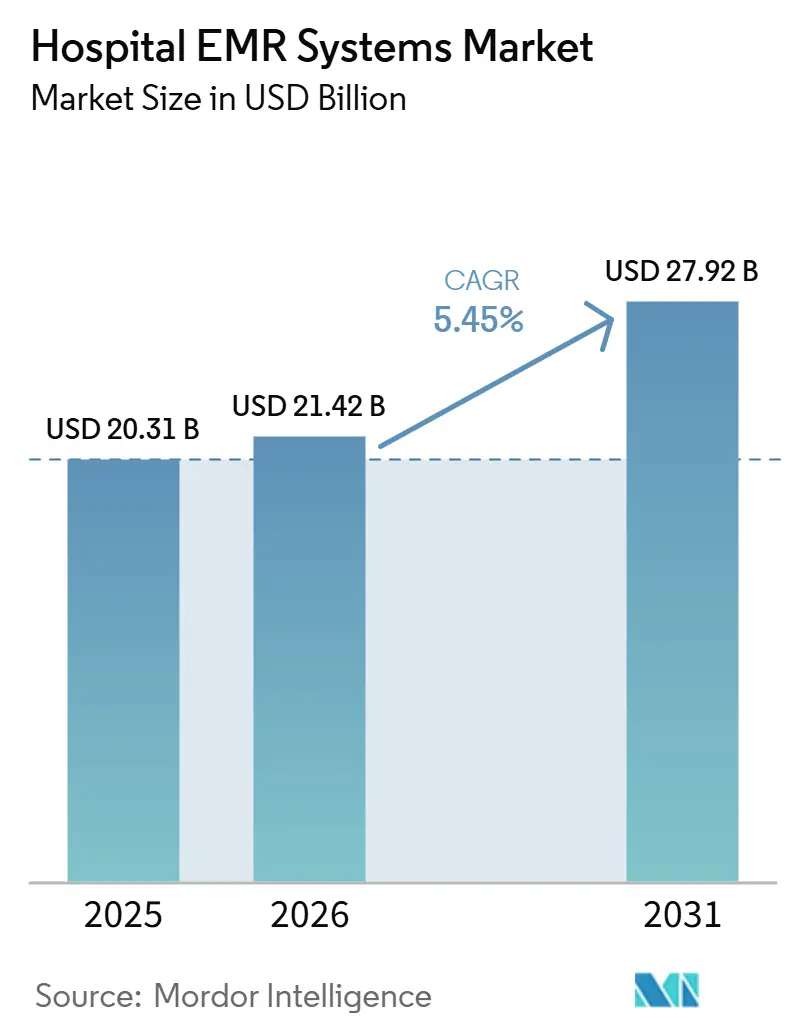
The Hospital EMR Systems Market size is projected to expand from USD 20.31 billion in 2025 and USD 21.42 billion in 2026 to USD 27.92 billion by 2031, registering a CAGR of 5.45% between 2026 to 2031.
Government reimbursement rules, digital health programs, and interoperability requirements are making EMR adoption a necessary investment for hospitals. Providers are adopting platforms that integrate clinical documentation, billing, scheduling, analytics, and patient engagement in a single operating environment. The hospital EMR systems market is experiencing stronger demand for cloud and hybrid deployments, as providers need flexible infrastructure while maintaining control over sensitive patient data. AI-enabled documentation tools are strengthening core EMR workflows, while cybersecurity risks and implementation costs remain key constraints, especially for community hospitals with limited technical staff and capital resources.
Key Report Takeaways
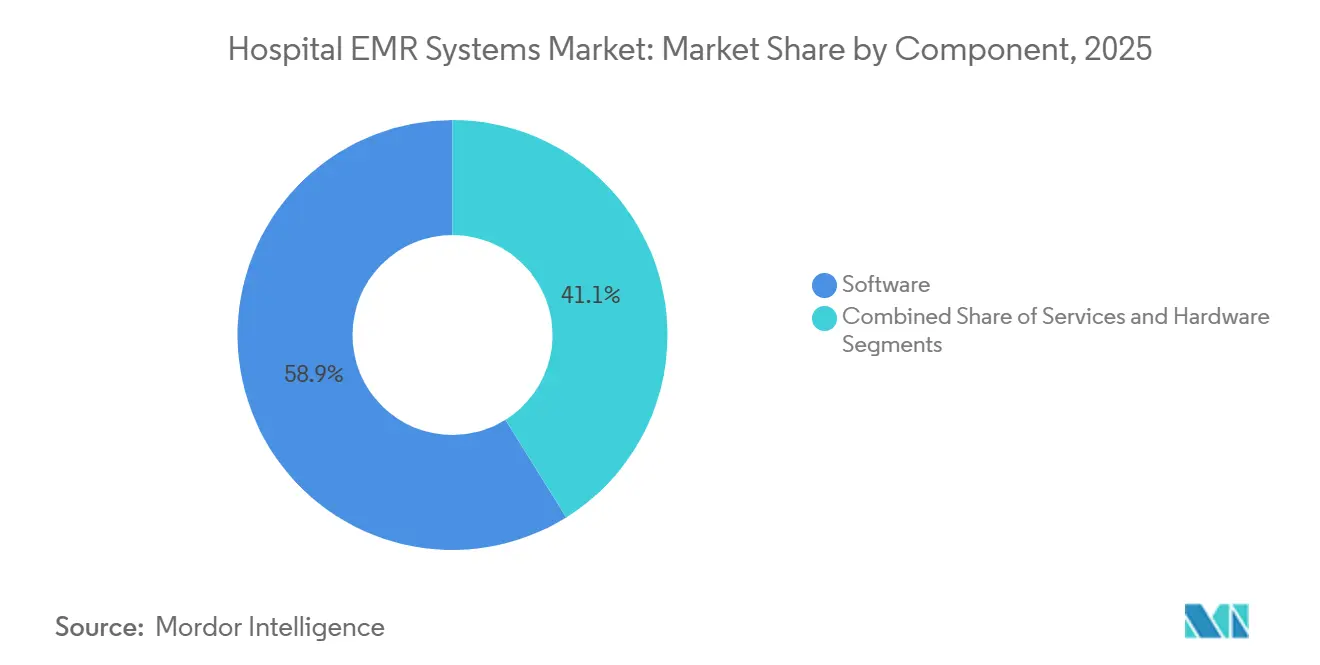
- By component, software held 58.88% of the hospital EMR systems market share in 2025, while services is projected to record the highest CAGR of 7.15% through 2031.
- By deployment model, cloud-based systems accounted for 56.34% of the hospital EMR systems market size in 2025, while hybrid deployment is forecast to grow at a CAGR of 5.80% through 2031.
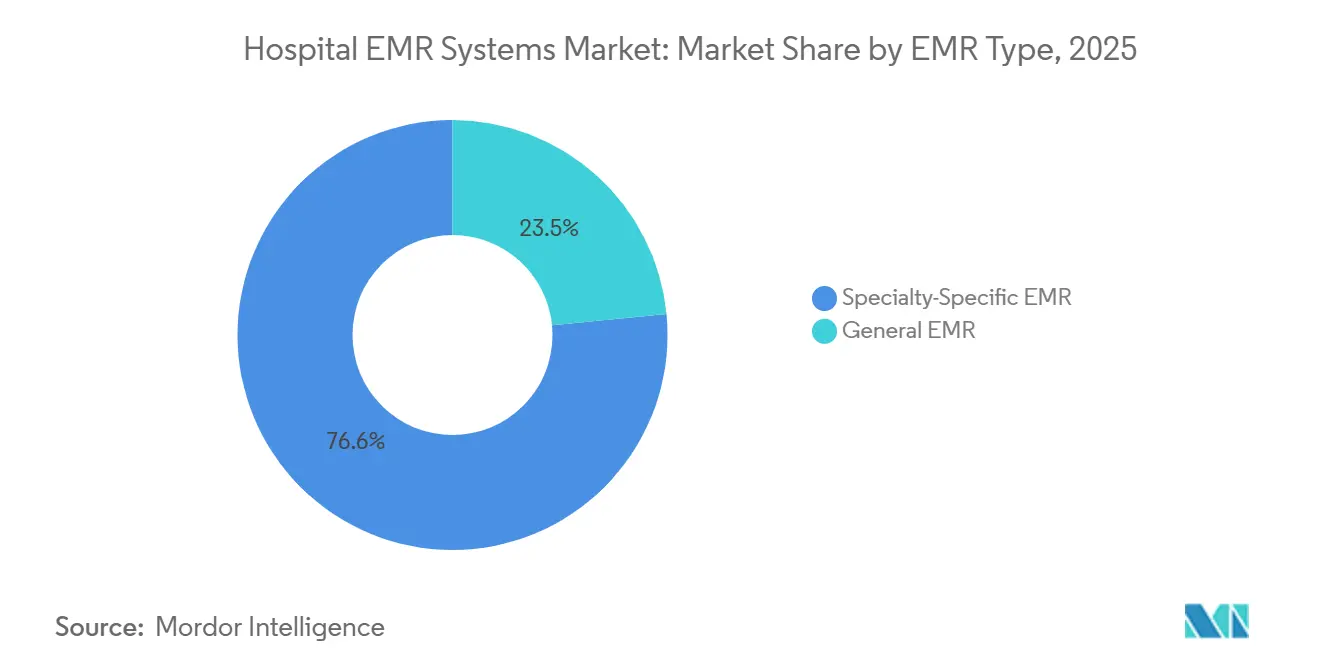
- By EMR type, general EMR held 23.45% of the hospital EMR systems market share in 2025, while specialty-specific EMR is forecast to expand at a CAGR of 6.45% through 2031.
- By application, cardiology accounted for 39.88% of the hospital EMR systems market size in 2025, while oncology is projected to grow at a CAGR of 7.56% through 2031.
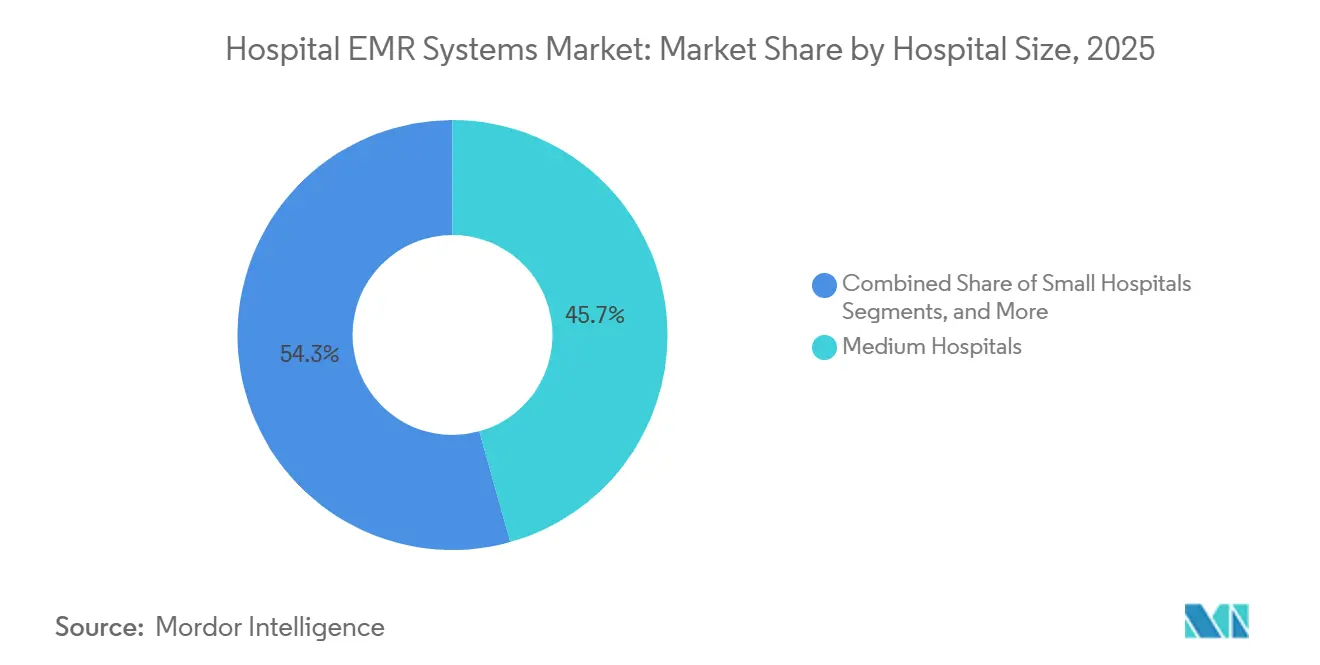
- By hospital size, medium hospitals held 45.67% of revenue in 2025, while large hospitals are expected to record the highest CAGR of 6.88% through 2031.
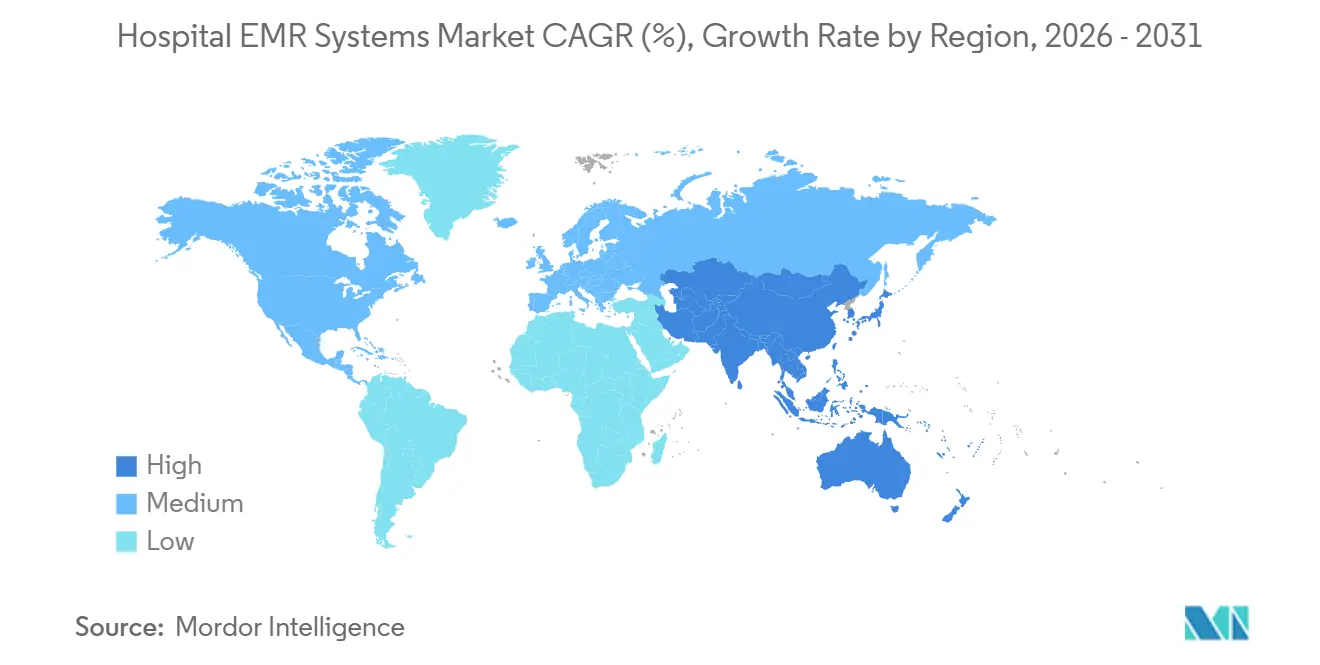
- By geography, North America held 39.89% of the share in 2025, while Asia-Pacific is projected to grow at an 6.56% CAGR through 2031.
Note: Market size and forecast figures in this report are generated using Mordor Intelligence’s proprietary estimation framework, updated with the latest available data and insights as of January 2026.
Market Trends and Insights
Drivers Impact Analysis of Hospital EMR Systems Market*
| DRIVER | (~) % IMPACT ON CAGR FORECAST | GEOGRAPHIC RELEVANCE | IMPACT TIMELINE |
|---|---|---|---|
| Government-led digital health and certified EHR adoption | +1.2% | Global, with concentrated near-term gains in the United States, Europe, and South Asia | Short term (≤ 2 years) |
| Cloud migration and subscription-based hospital IT | +0.9% | Global, with faster migration across Asia-Pacific and Latin America | Medium term (2-4 years) |
| Demand for integrated clinical and administrative workflows | +0.7% | Global, especially North America and Western Europe | Medium term (2-4 years) |
| Interoperability, FHIR APIs, and nationwide health information exchange | +0.6% | United States, Europe, and Asia-Pacific, with early adoption in the Middle East and Africa and Latin America | Medium term (2-4 years) |
| AI-assisted documentation and clinical decision support | +0.8% | North America and Europe, with adoption extending to South Korea, Japan, and Australia | Short term (≤ 2 years) |
| Shared data foundations for hospital research and population health | +0.4% | Global, with early activity in the United Kingdom, United States, Singapore, and Nordic countries | Long term (≥ 4 years) |
| Source: Mordor Intelligence | |||
Government-Led Digital Health and Certified EHR Adoption
Government policies are making certified electronic medical records essential for hospital reimbursement and compliance. The U.S. Centers for Medicare & Medicaid Services links 9% of Medicare physician payments to EMR-enabled quality reporting through its Promoting Interoperability Program. The European Commission committed EUR 1.2 billion (approximately USD 1.3 billion) in March 2025 for health data infrastructure under the Digital Europe Programme. These initiatives support the hospital EMR systems market by encouraging secure patient data exchange across care settings and linking demand to policy, public funding, and reimbursement structures.
AI-Assisted Documentation and Clinical Decision Support
AI-assisted documentation moved from limited pilots into regular hospital workflows. Epic introduced its clinician-facing Art suite in February 2026, including AI charting and chart summary functions, according to the supplied draft. Abridge expanded its clinician intelligence platform in June 2026 to cover documentation, billing reconciliation, and evidence-based decision support. These developments are influencing the hospital EMR systems market as hospitals increasingly favor platforms that reduce documentation workloads and integrate AI into established clinical workflows.
Cloud Migration and Subscription-Based Hospital IT
Cloud deployment is changing how hospitals purchase, operate, and update EMR platforms. Cloud-based systems held 56.34% of the hospital EMR systems market in 2025, reflecting demand for scalable infrastructure and lower upfront hardware requirements. Subscription models shift spending from large capital purchases to recurring operating expenses and help hospitals update systems more frequently. Cloud adoption also strengthens vendor relationships as patient data, workflows, and connected applications become embedded in a platform.
Interoperability, FHIR APIs and Nationwide Health Information Exchange
Interoperability has become a central requirement in hospital technology planning. The 2026 State of FHIR Report stated that 80% of countries regulating health data exchange either required or formally recommended FHIR standards. The report also found that FHIR REST API use increased from 38% of implementations in 2025 to 46% in 2026. This shift is driving demand for hospital EMR systems with open interfaces, stronger third-party application support, and easier data exchange across laboratories, specialists, payers, public health agencies, and other providers.
Restraints Impact Analysis of Hospital EMR Systems Market*
| RESTRAINT | (~) % IMPACT ON CAGR FORECAST | GEOGRAPHIC RELEVANCE | IMPACT TIMELINE |
|---|---|---|---|
| Implementation complexity and workflow disruption | -0.7% | Global, with greater pressure in community hospitals and emerging markets | Medium term (2-4 years) |
| Cybersecurity, privacy, and ransomware exposure | -0.6% | Global, with high exposure in North America and Northwest Europe | Short term (≤ 2 years) |
| Ehr downtime safety and local resilience requirements | -0.3% | Global, especially in multi-hospital network deployments | Medium term (2-4 years) |
| Clinician trust, alert fatigue, and ai liability | -0.4% | North America and Europe, with growing relevance in South Korea and Australia | Long term (≥ 4 years) |
| Source: Mordor Intelligence | |||
Cybersecurity, Privacy, and Ransomware Exposure
Cybersecurity has become a patient safety concern and a financial and operational risk for hospitals. In May 2025, a ransomware incident at Kettering Health disrupted nearly 600 applications, including its Epic EMR, for more than two weeks. In February 2026, the University of Mississippi Medical Center also had its Epic system taken offline during a ransomware attack. These incidents highlight that EMR downtime can disrupt clinical operations, patient communication, scheduling, and access to records, prompting hospitals to prioritize vendor resilience, backup processes, and cyber recovery capabilities during procurement.
Implementation Complexity and Workflow Disruption
EMR implementation remains one of the most complex technology projects for hospitals, affecting clinical documentation, revenue cycle processes, patient registration, reporting, training, and daily staff responsibilities. U.S. acute care EHR purchase decisions fell by 40% in 2025 compared to 2024, reflecting delays linked to implementation uncertainty. Large academic centers can allocate substantial resources to these projects, while smaller facilities often struggle with similar operational changes. Charité in Berlin awarded Epic a contract for a new hospital information system in July 2026, with a planned budget of EUR 200 million (approximately USD 0.22 billion) and a target go-live date of 2029.
*Our forecasts treat driver/restraint impacts as directional, not additive. The impact forecasts reflect baseline growth, mix effects, and variable interactions.
Hospital EMR Systems Market Segment Analysis
By Component:
Services Growth Reflects More Complex Hospital DeploymentsSoftware is expected to hold 58.88% of the hospital EMR systems market share in 2025. The segment remains the largest because hospitals rely on clinical applications for records management, order entry, scheduling, billing, reporting, and patient communication. Established vendors continue to generate recurring software revenue from existing hospital accounts. Software platforms are also becoming the primary access point for connected tools, such as AI documentation, analytics, and specialty applications. This position gives core software providers significant influence over how hospitals select supporting technologies.
Services are forecast to grow at a CAGR of 7.15% through 2031, the highest rate among component categories. Demand for cloud migration, FHIR integration, AI workflow configuration, and compliance updates supports the hospital EMR systems market size for services. Hospitals increasingly require ongoing assistance rather than one-time installation services. Hardware is losing relevance in new deployments as virtualized and cloud-hosted architectures reduce the need for on-site server infrastructure. As a result, the hospital EMR systems industry is shifting toward longer vendor engagements that include implementation, training, optimization, data conversion, and managed support.



By Deployment Model:
Cloud Leads While Hybrid Supports Data ControlCloud-based deployment is expected to account for 56.34% of revenue in 2025, making it the largest deployment model in the hospital EMR systems market. Hospitals use cloud systems to scale applications across sites and reduce the cost of managing local servers. Providers also gain more consistent access to software updates and security improvements. Cloud deployment supports remote access for clinicians and creates a common environment for multi-site health systems. These advantages are particularly relevant when hospitals need to integrate clinical data across facilities.
Hybrid deployment is projected to grow at a CAGR of 5.80% through 2031. This model allows hospitals to keep sensitive workloads on local infrastructure while moving selected applications to the cloud. It is useful for providers managing data residency rules, cybersecurity requirements, and legacy system integrations. On-premise deployment remains relevant for older hospital systems with extensive custom configurations. The hospital EMR systems market is likely to retain hybrid demand because many providers need flexibility without making a complete and immediate move away from local data control.
By EMR Type:
Specialty Platforms Gain Momentum in High-Acuity CareGeneral EMR is expected to hold 23.45% of the hospital EMR systems market share in 2025, making it the largest segment within the EMR type category. General systems serve as the common documentation base across departments and help hospitals maintain a unified patient record. They support organizations that require a consistent approach to registration, billing, orders, discharge management, and reporting. Their broad functionality enables hospital-wide deployment and reduces the need to maintain separate records across departments. General EMR platforms will remain important for providers seeking a single operating system for core clinical and administrative functions.
Specialty-specific EMR is forecast to grow at a CAGR of 6.45% through 2031. These platforms address complex workflows in oncology, cardiology, neurology, and other disciplines that require more detailed clinical structures. Oncology systems can support staging, chemotherapy order sets, adverse-event tracking, and treatment protocols that general systems may not fully address. Flatiron Health stated that more than 4,200 oncology providers in the United States use its OncoEMR platform, according to the supplied draft. The hospital EMR systems market is responding to the need for specialty workflows by connecting disease-specific modules more closely with general hospital record platforms.
By Application:
Cardiology Remains Largest While Oncology Expands FastestCardiology is expected to hold 39.88% of the hospital EMR systems market share in 2025. The segment generates substantial documentation because providers manage cardiac monitoring, catheterization laboratories, echocardiography reports, heart failure care, and arrhythmia treatment. Cardiology departments also need frequent access to longitudinal patient data because many cardiac conditions require continued monitoring. This requirement creates sustained demand for EMR functions that connect diagnostics, treatment plans, follow-up care, and hospital admissions. Cardiology will remain a major revenue source for suppliers serving acute and chronic cardiovascular care.
Oncology is expected to record the highest CAGR of 7.56% through 2031. The documentation requirements of chemotherapy, immunotherapy, biomarker testing, and molecular treatment selection support the hospital EMR systems market size for oncology. Cancer care often requires providers to coordinate multiple protocols, care teams, and data sources over extended treatment periods. Specialty EMR functions can help teams structure treatment histories and manage adverse events. The growth of oncology platforms also reflects the need to combine clinical records with real-world evidence and research-related data.
By Hospital Size:
Medium Hospitals Lead While Large Systems Drive GrowthMedium hospitals are expected to account for 45.67% of the hospital EMR systems market size in 2025. These facilities are large enough to require comprehensive EMR coverage across clinical and administrative departments. At the same time, they often have fewer resources than academic centers to support long implementation and customization programs. Their buying decisions tend to prioritize systems that offer established functionality, manageable deployment schedules, and dependable support. Medium hospitals remain an important customer base because they need broad capabilities without the complexity of the largest health systems.
Large hospitals are forecast to grow at a CAGR of 6.88% through 2031. Hospital consolidation and multi-site integration needs are encouraging large systems to adopt advanced EMR platforms. These providers often require enterprise-wide data access, population health functions, analytics, advanced AI tools, and unified governance across multiple hospitals. Large systems can also invest more heavily in customized integrations and long-term digital programs. The hospital EMR systems market will continue to benefit from this segment as major providers replace older systems and bring acquired facilities onto common record platforms.
Geography Analysis
North America Hospital EMR Systems Market
North America held 39.89% of global revenue in 2025, representing the largest regional hospital EMR systems market size. The United States has a mature certified EHR environment shaped by meaningful use requirements and reimbursement-linked reporting programs. With a large installed base, demand is increasingly driven by system replacement, upgrades, cloud migration, AI integration, and interoperability requirements. The July 2026 USCDI v3 requirement maintained pressure on hospitals to update data-sharing capabilities, while Canada and Mexico also supported regional demand, with spending intensity higher in the United States.
APAC Hospital EMR Systems Market
Asia-Pacific is forecast to grow at a CAGR of 6.58% through 2031, the highest rate among major regions. Public digital health programs and private hospital investment support growth across markets with varying levels of EMR maturity. India’s digital health program is expanding connected health records and supporting demand from public hospitals and private hospital groups. China is developing hospital digitization infrastructure, while Japan and South Korea continue to strengthen national health technology capabilities, leaving substantial room for new installations across the region.
EMEA and South America Hospital EMR Systems Market
Europe remained the second-largest regional contributor to the hospital EMR systems market, with Germany, the United Kingdom, and France serving as core markets. The European Health Data Space regulation pushed member states toward more consistent health data exchange and stronger interoperability requirements. South America is expanding from a smaller base, with Brazil advancing digital hospital programs across federal university hospitals, while the Middle East is increasing investment in AI-enabled hospital records and Africa remains at an earlier stage of structured hospital EMR adoption.

Competitive Landscape
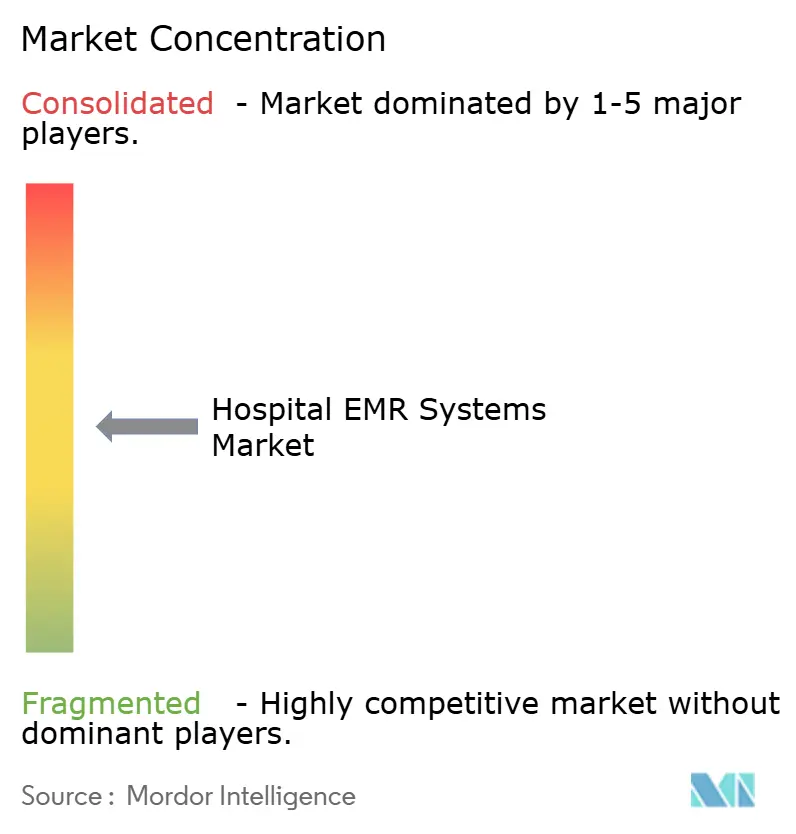
The hospital EMR systems market is moderately concentrated among leading platform vendors, while smaller suppliers address regional, specialty, and mid-market requirements. Epic, Oracle Health, and MEDITECH are key suppliers in the U.S. acute care environment. Epic’s position reflects strong adoption by large health systems and the network value created when neighboring hospitals use the same platform. Outside the United States, local regulations, language requirements, public procurement systems, and established vendors shape regional market structures, with Dedalus, InterSystems, CompuGroup Medical, and other suppliers maintaining important roles in European hospital technology markets.
AI platform integration is becoming an important competitive factor in the hospital EMR systems market. Epic introduced its Art suite to integrate AI charting, summaries, and clinical workflow support into its record platform. Abridge expanded its platform in June 2026 to combine clinical documentation, billing reconciliation, and evidence-based decision support. InterSystems also advanced its IntelliCare offering in the European market, highlighting how suppliers compete on embedded AI capabilities as well as core record functions.
Interoperability is another major area of competition in the hospital EMR systems market. Suppliers that support FHIR and SMART on FHIR tools can give hospitals broader access to specialty applications, analytics tools, patient engagement platforms, and AI functions. The 2026 State of FHIR Report highlighted continued growth in FHIR-based APIs and health data exchange requirements. The market concentration score is 7 out of 10, as leading suppliers hold strong positions in major hospital markets, while regional vendors and specialty suppliers sustain competition below the top tier.
Hospital EMR Systems Industry Leaders
athenahealth, Inc.
Epic Systems Corporation
Oracle Corporation
Veradigm LLC
eClinicalWorks LLC
- *Disclaimer: Major Players sorted in no particular order
Hospital EMR Systems Market Companies Covered in this Report
- Altera Digital Health
- Amazon Web Services, Inc.
- Athenahealth
- CompuGroup Medical SE & Co. KGaA
- Dedalus S.p.A.
- eClinicalWorks LLC
- Epic Systems
- GE HealthCare Technologies Inc.
- Greenway Health
- Harris Computer Corporation
- Infor, Inc.
- Intersystems
- Koninklijke Philips
- MEDFAR Clinical Solutions
- Medhost
- Medical Information Technology
- Netsmart Technologies, Inc.
- NextGen Healthcare
- Oracle
- Siemens Healthineers
- Tietoevry Corporation
- TruBridge, Inc.
- Veradigm
- WellSky Corporation
- Wolters Kluwer

Recent Industry Developments in Hospital EMR Systems Market
- July 2027: Charité – Universitätsmedizin Berlin awarded Epic Systems a EUR 200 million contract for a new Hospital Information System, with go-live planned by end-2029.
- June 2026: Abridge launched its AI-native clinician intelligence platform in New York, integrating clinical documentation, real-time billing reconciliation, and evidence-based decision support.
- February 2026: UCHealth deployed Abridge across more than 2,300 providers systemwide after a nine-month pilot with 250 providers in 2025.


Global Hospital EMR Systems Market Report Scope
As per the scope of the report, hospital EMR systems are digital versions of traditional paper charts, containing patient medical history, diagnoses, and treatments used within a single medical facility.
The hospital EMR systems market is segmented by component, deployment model, EMR type, application, hospital size, and geography. By component, the market includes software, services, and hardware. By deployment model, the market is segmented into cloud-based, on-premise, and hybrid. By EMR type, the market is categorized into general EMR and specialty-specific EMR. By application, the market is segmented into cardiology, neurology, radiology, oncology, emergency and trauma, obstetrics and gynecology, and other applications. By hospital size, the market is segmented into small hospitals, medium hospitals, and large hospitals. By geography, the market is analyzed across North America, Europe, Asia-Pacific, the Middle East and Africa, and South America. The report also covers the estimated market sizes and trends for 17 countries across major regions globally. The report offers the market sizes and forecasts in terms of value (USD) for the above segments.
| Software |
| Services |
| Hardware |
| Cloud-Based |
| On-Premise |
| Hybrid |
| General EMR |
| Specialty-Specific EMR |
| Cardiology |
| Neurology |
| Radiology |
| Oncology |
| Emergency and Trauma |
| Obstetrics and Gynecology |
| Other Applications |
| Small Hospitals |
| Medium Hospitals |
| Large Hospitals |
| North America | United States |
| Canada | |
| Mexico | |
| Europe | Germany |
| United Kingdom | |
| France | |
| Italy | |
| Spain | |
| Rest of Europe | |
| Asia-Pacific | China |
| India | |
| Japan | |
| Australia | |
| South Korea | |
| Rest of Asia-Pacific | |
| Middle East and Africa | GCC |
| South Africa | |
| Rest of Middle East and Africa | |
| South America | Brazil |
| Argentina | |
| Rest of South America |
| By Component | Software | |
| Services | ||
| Hardware | ||
| By Deployment Model | Cloud-Based | |
| On-Premise | ||
| Hybrid | ||
| By EMR Type | General EMR | |
| Specialty-Specific EMR | ||
| By Application | Cardiology | |
| Neurology | ||
| Radiology | ||
| Oncology | ||
| Emergency and Trauma | ||
| Obstetrics and Gynecology | ||
| Other Applications | ||
| By Hospital Size | Small Hospitals | |
| Medium Hospitals | ||
| Large Hospitals | ||
| By Geography | North America | United States |
| Canada | ||
| Mexico | ||
| Europe | Germany | |
| United Kingdom | ||
| France | ||
| Italy | ||
| Spain | ||
| Rest of Europe | ||
| Asia-Pacific | China | |
| India | ||
| Japan | ||
| Australia | ||
| South Korea | ||
| Rest of Asia-Pacific | ||
| Middle East and Africa | GCC | |
| South Africa | ||
| Rest of Middle East and Africa | ||
| South America | Brazil | |
| Argentina | ||
| Rest of South America | ||


Key Questions Answered in the Report
What is the projected value of hospital EMR systems by 2031?
The hospital EMR systems market is projected to reach USD 27.92 billion by 2031, rising from USD 21.42 billion in 2026 at a CAGR of 5.45%.
Which hospital EMR deployment model has the largest share?
Cloud-based deployment held 56.34% of revenue in 2025 because hospitals value scalability, lower hardware dependence, and easier system updates.
Which application is growing fastest for hospital EMR providers?
Oncology is forecast to expand at a CAGR of 7.56% through 2031 due to complex treatment protocols, molecular data requirements, and long-term care coordination needs.
Why are hospitals adopting hybrid EMR deployment models?
Hybrid models allow hospitals to use cloud functions while retaining local control over sensitive data, legacy systems, and selected clinical workloads.
What is the main challenge in implementing hospital EMR systems?
Implementation can disrupt clinical workflows, staff routines, billing processes, and data management, particularly in hospitals with limited IT capacity.
How is AI changing hospital EMR platforms?
AI is being embedded into EMR platforms to support clinical documentation, chart summaries, billing workflows, and decision support within existing provider processes.
Page last updated on:





