
Home Healthcare Software As A Medical Device (SaMD) Market Size and Share
Market Overview
| Study Period | 2020 - 2031 |
|---|---|
| Market Size (2026) | USD 3.16 Billion |
| Market Size (2031) | USD 5.89 Billion |
| Growth Rate (2026 - 2031) | 13.25 % |
| Fastest Growing Market | Asia-Pacific |
| Largest Market | North America |
| Market Concentration | Medium |
Major Players *Disclaimer: Major Players sorted in no particular order Image © Mordor Intelligence. Reuse requires attribution under CC BY 4.0. | |
Home Healthcare Software As A Medical Device (SaMD) Market Analysis by Mordor Intelligence
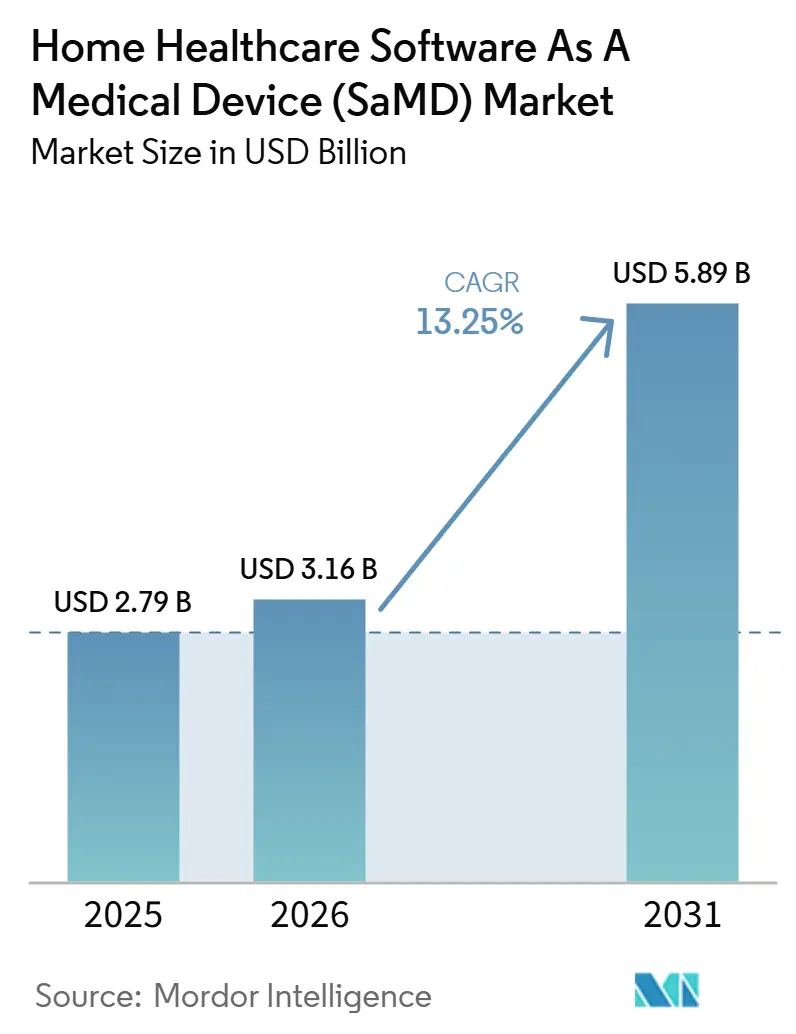
The Home Healthcare Software As A Medical Device Market size was valued at USD 2.79 billion in 2025 and is estimated to grow from USD 3.16 billion in 2026 to reach USD 5.89 billion by 2031, at a CAGR of 13.25% during the forecast period (2026-2031).
Chronic disease care is moving into the home as providers and payers seek models that support patients outside clinical settings. The Home Healthcare SaMD Market benefits when providers can monitor patients, assess risks, and update care plans in the patient’s daily environment. FDA guidance issued in August 2025 allows manufacturers to include planned AI and ML software modifications in an initial marketing submission, shortening later update cycles when accepted. Providers are also prioritizing secure data handling, as cybersecurity events can extend procurement reviews and raise compliance costs, favoring suppliers with workflow support, reliable integrations, and clear update governance.
Key Report Takeaways
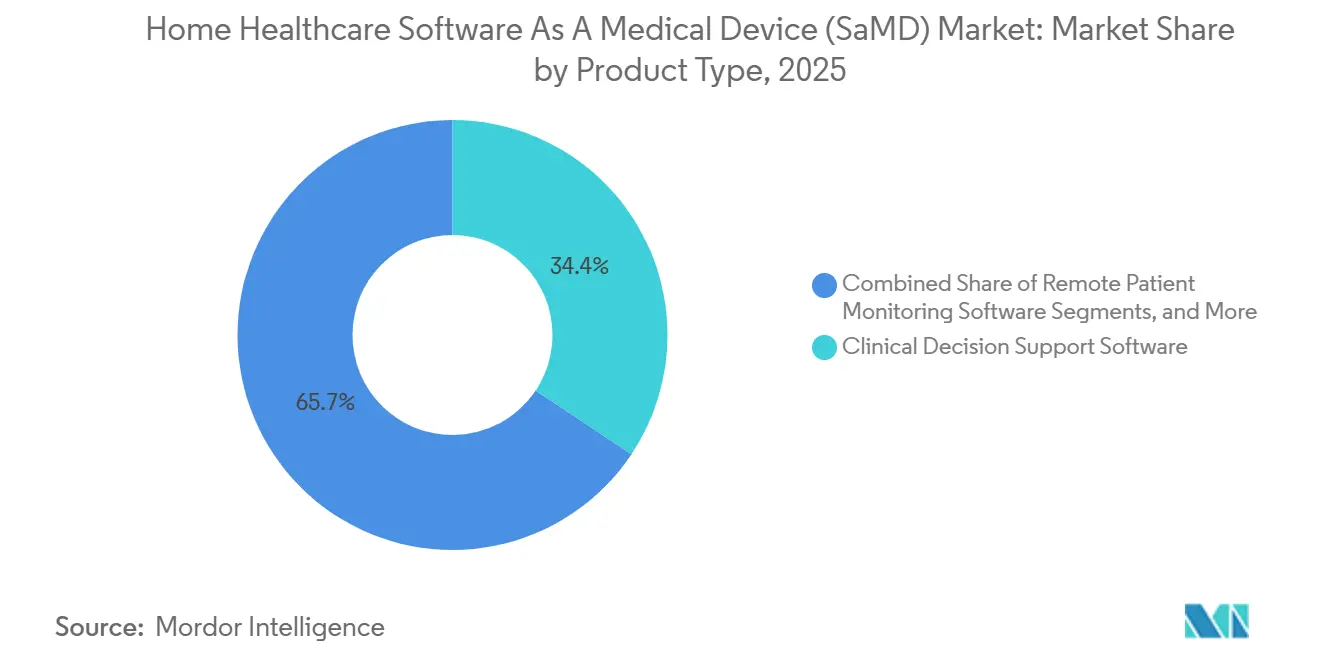
- By product type, clinical decision support software held 34.35% of the Home Healthcare SaMD Market in 2025, while remote patient monitoring software is projected to grow at a 15.93% CAGR through 2031.
- By SaMD risk classification, moderate-risk SaMD held 55.45% of the Home Healthcare SaMD Market in 2025, while low-risk SaMD is projected to grow at a 17.67% CAGR through 2031.
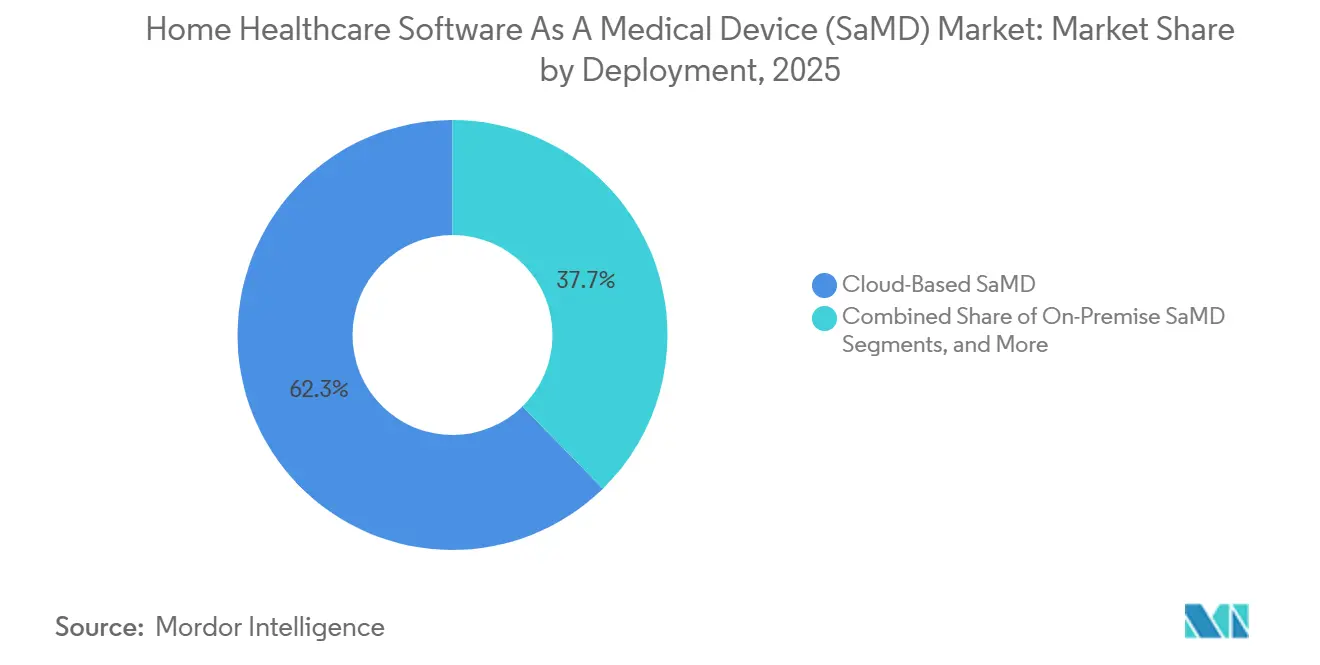
- By deployment, cloud-based SaMD held 62.33% of the Home Healthcare SaMD Market in 2025, while hybrid deployment is projected to grow at a 16.35% CAGR through 2031.
- By application, cardiovascular disease management held 28.88% of the Home Healthcare SaMD Market in 2025, while neurological disorder management is projected to grow at a 17.78% CAGR through 2031.
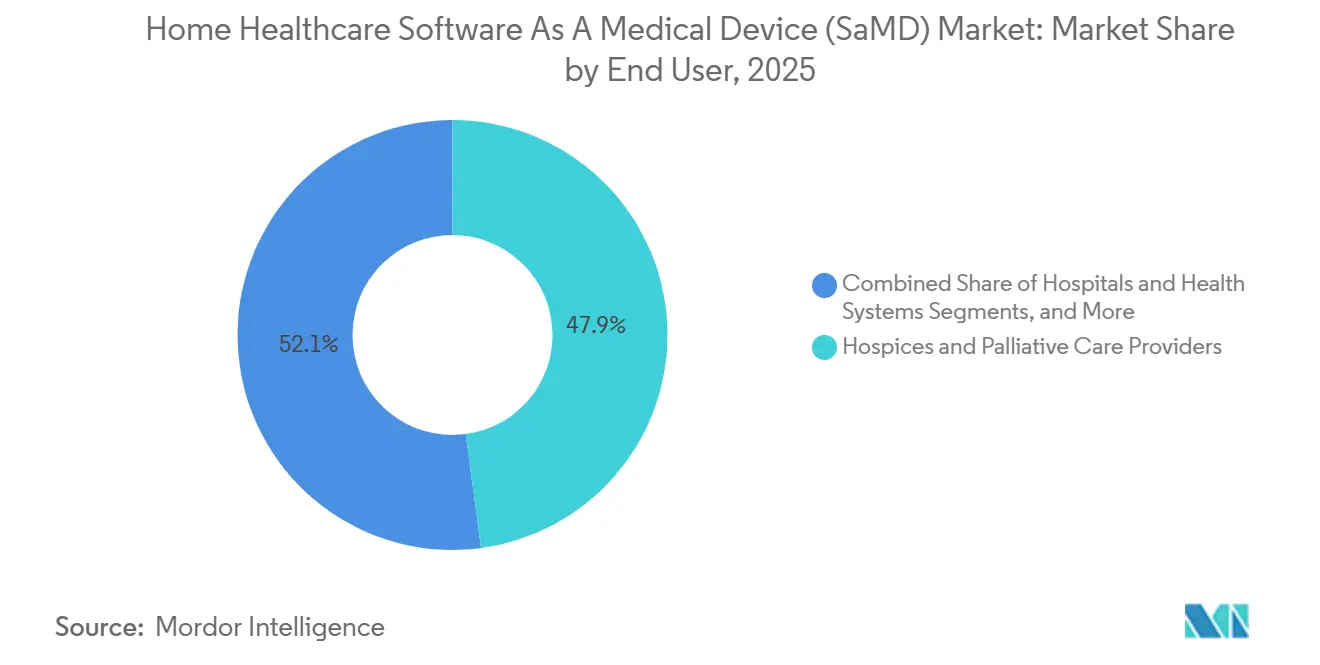
- By end user, hospices and palliative care providers held 47.89% of the Home Healthcare SaMD Market in 2025, while home health agencies are projected to grow at a 16.45% CAGR through 2031.
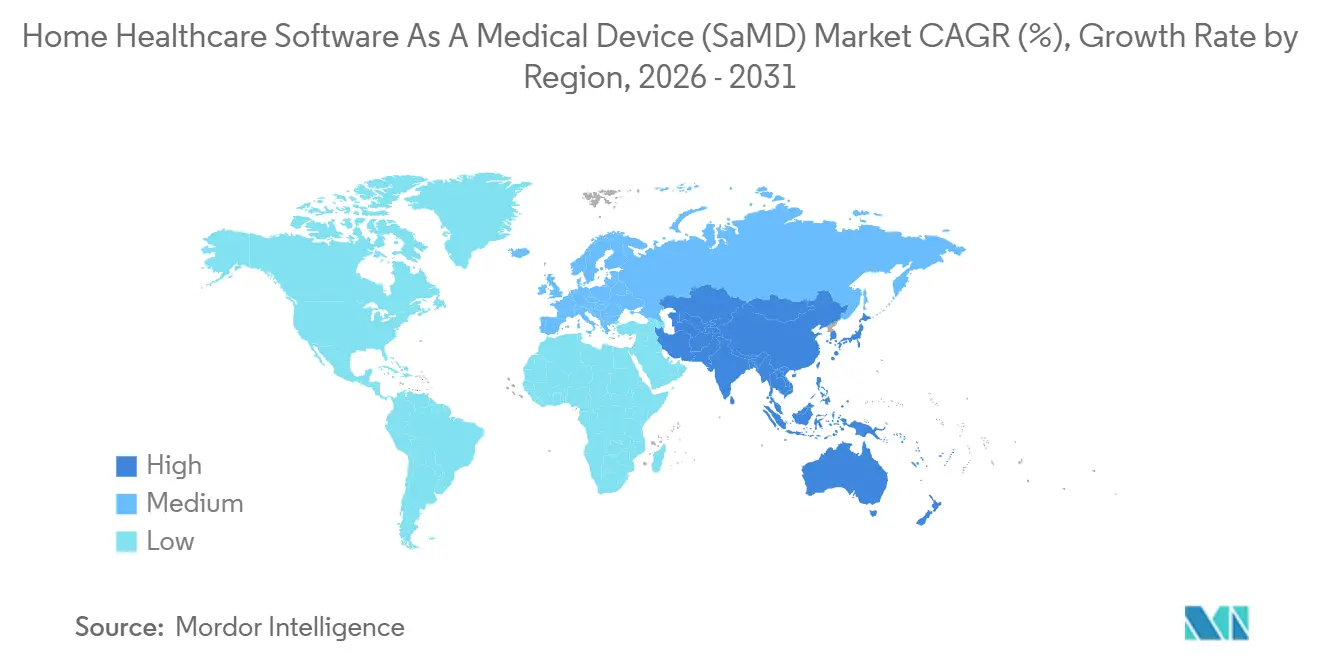
- By geography, North America held 39.66% of the Home Healthcare SaMD Market in 2025, while Asia-Pacific is forecast to grow at a 15.56% CAGR through 2031.
Note: Market size and forecast figures in this report are generated using Mordor Intelligence’s proprietary estimation framework, updated with the latest available data and insights as of January 2026.
Global Home Healthcare Software As A Medical Device (SaMD) Market Trends and Insights
Drivers Impact Analysis*
| DRIVER | (~) % IMPACT ON CAGR FORECAST | GEOGRAPHIC RELEVANCE | IMPACT TIMELINE |
|---|---|---|---|
| Home-based chronic disease management | +2.5% | Global | Medium term (2-4 years) |
| Clinical automation for workforce constraints | +2.0% | North America and Europe | Short term (≤ 2 years) |
| Remote patient monitoring and virtual care | +2.3% | Global | Medium term (2-4 years) |
| Reimbursement, value-based care, and AI change controls | +1.8% | North America and Western Europe | Medium term (2-4 years) |
| Home-based real-world evidence and decentralized trials | +1.2% | Global, with early gains in the United States and Europe | Long term (≥ 4 years) |
| Source: Mordor Intelligence | |||
Expansion of Home-Based Chronic Disease Management
Cardiovascular disease, diabetes, and respiratory conditions continued to increase pressure on care teams beyond clinic-based care. The Home Healthcare SaMD Market supports remote measurement, clinical risk assessment, and care plan adjustments for patients at home. In June 2026, Dexcom reported that its CONNECT randomized controlled study showed a statistically significant HbA1c reduction among people with Type 2 diabetes who were not using insulin and used G7-based monitoring compared with routine care. This evidence gave payers a clearer basis for evaluating home-based monitoring in chronic disease programs.
Workforce Shortages Increasing Demand for Clinical Automation
Staffing pressure increased the value of scheduling, documentation, and care coordination tools in home care. In January 2026, Axxess reported that more than 60% of care-at-home organizations identified recruitment and retention as their main challenge entering 2026. The Home Healthcare SaMD Market is responding with tools that reduce repetitive administrative work and improve clinician schedule management. In March 2026, Homecare Homebase introduced Curate Scribe, which is designed to reduce start-of-care documentation by 35-45 minutes per admission.
Growth of Remote Patient Monitoring and Virtual Care
Remote patient monitoring expanded as organizations built services connecting hospital discharge, home monitoring, and clinical follow-up. The Home Healthcare SaMD Market includes tools that integrate connected device data into clinical workflows. In June 2026, Dexcom was selected as the first participant in the FDA TEMPO Digital Health Devices Pilot Program for an artificial intelligence-enabled glucose program combining G7 and Stelo data with nutrition, activity, sleep, and stress information. These programs increased the need for reliable links between devices, patient records, and clinical teams.
Reimbursement and Value-Based Care Incentives
Value-based care contracts increased demand for tools that demonstrate the link between home monitoring and patient outcomes. The Home Healthcare SaMD Market becomes more attractive to providers when software supports reporting for payer performance measures. Teladoc Health stated in its 2025 annual report that it is deploying artificial intelligence-enabled stratification capabilities in 2026 to help care teams personalize chronic condition management and reduce hospitalizations among higher-risk members. The FDA’s August 2025 final guidance on Predetermined Change Control Plans also provided a path for accepted planned modifications to AI-enabled device software functions.
Restraints Impact Analysis*
| RESTRAINT | (~) % IMPACT ON CAGR FORECAST | GEOGRAPHIC RELEVANCE | IMPACT TIMELINE |
|---|---|---|---|
| Cybersecurity, privacy, and data-protection requirements | -1.8% | Global | Short term (≤ 2 years) |
| Fragmented reimbursement, regulation, and clinical liability | -1.5% | North America and Global | Medium term (2-4 years) |
| Home-environment data quality and algorithm generalizability | -1.2% | Asia-Pacific, Middle East and Africa, and South America | Long term (≥ 4 years) |
| Clinical liability for automated recommendations | -1.0% | North America and Europe | Medium term (2-4 years) |
| Source: Mordor Intelligence | |||
Cybersecurity, Privacy, and Healthcare Data-Protection Requirements
Cybersecurity has become a key purchasing consideration for connected home care systems. In July 2026, AdaptHealth disclosed that a threat actor gained unauthorized access to certain cloud-based patient management systems, document storage platforms, and external electronic health record portals through a social-engineering incident. The incident involved protected health information and insurance billing credentials, highlighting the sensitivity of home care systems. The Home Healthcare SaMD Market faces longer vendor review cycles as agencies assess cloud controls, third-party access, native access controls, anomaly detection, independent security assurance, HIPAA Security Rule compliance, clinical liability, and data quality controls.
Home-Environment Data Quality and Algorithm Generalizability Risk
Home-based data can vary as patients use different devices, follow different routines, and receive care in diverse settings. An algorithm that performs well with one monitoring device may not deliver the same performance after a patient changes equipment, especially in regions with uneven device access and connectivity. Data quality checks, device-specific validation, and continuous model performance monitoring can reduce this risk, but they require time and technical resources that may slow implementation for smaller providers. The issue remains especially relevant when software supports clinical recommendations.
*Our forecasts treat driver/restraint impacts as directional, not additive. The impact forecasts reflect baseline growth, mix effects, and variable interactions.
Segment Analysis
By Product Type: Clinical Decision Support Leads While Remote Monitoring Grows Quickly
Clinical Decision Support Software held 34.35% of Home Healthcare SaMD Market share in 2025. It supported chronic disease programs by embedding risk assessment, protocol guidance, and alerts within the home health electronic record workflow, reducing the need for clinicians to switch between applications during care delivery. WellSky launched its Point of Care app in May 2026, combining AI-supported workflows, clinical intelligence, and patient records on a clinician’s mobile device. The company stated that its Scribe feature could reduce charting time by up to 50% across more than 400 home health agencies.
Remote Patient Monitoring Software is forecast to expand at a 15.93% CAGR through 2031. Growth reflects the broader installed base of home monitoring hardware and the value of continuous patient data after hospital or clinic discharge. Digital therapeutics also contribute to the product mix, with Omada Health reporting more than 2 million members and more than 2,000 employer and health-plan clients in its 2025 results. Suppliers are linking documentation, communication, and patient monitoring within one workflow to reduce duplicate entry and support timely clinical action.



By SaMD Risk Classification: Moderate-Risk Systems Lead While Low-Risk Tools Expand
Moderate-Risk SaMD accounted for 55.45% of the Home Healthcare SaMD Market in 2025. This classification includes many clinically used cardiovascular and diabetes management tools that require 510(k) clearance but not the more demanding premarket approval route. These systems often combine diagnostic support with care coordination, and manufacturers must validate performance because malfunctions could affect patient safety. Device makers with established evidence and regulatory documentation can gain an advantage in this segment.
Low-Risk SaMD is forecast to grow at a 17.67% CAGR through 2031. Growth reflects opportunities in wellness coaching, sleep analysis, and lifestyle data applications with lower direct clinical risk. The FDA issued updated guidance for Clinical Decision Support Software in January 2026, clarifying criteria that help distinguish certain non-device clinical decision support functions. High-Risk SaMD remains smaller but strategically important for autonomous diagnostic tools and closed-loop insulin delivery, with Medtronic announcing FDA clearance of its MiniMed Flex system in 2025, including the SmartGuard algorithm and Meal Detection technology.
By Deployment: Cloud-Based Platforms Lead While Hybrid Systems Address Security Needs
Cloud-Based SaMD held 62.33% of the Home Healthcare SaMD Market in 2025. Cloud delivery supports expansion across dispersed care teams, consolidates reporting data, and enables regular updates and integration with care-management services. AlayaCare introduced autonomous agents in March 2026 and stated that these capabilities could reduce manual workload by up to 80%. It also established an API integration with Inovalon ScriptMed in January 2026 to connect nursing management and pharmacy workflows.
Hybrid Deployment is forecast to grow at a 16.35% CAGR through 2031. It allows health systems to keep selected patient identifiers within local infrastructure while using cloud resources for defined analytical workloads. This model is relevant for organizations with strict data protection policies or sensitive information storage requirements. On-Premise SaMD remains relevant for hospital-affiliated programs and jurisdictions with data localization requirements.
By Application: Cardiovascular Care Leads While Neurological Monitoring Gains Pace
Cardiovascular Disease Management accounted for 28.88% of the Home Healthcare SaMD Market in 2025. The application supports hypertension, arrhythmia, and heart failure management, where early identification of worsening symptoms can help care teams respond. Team Select Home Care expanded CareSightAI to cardiac patients in 2026 after deploying the platform nationally for respiratory patients in December 2025. Dexcom received FDA clearance in May 2026 for the Stelo Glucose Biosensor System, including a Glucose Response Score for logged meals and AI-generated insight summaries.
Neurological Disorder Management is forecast to grow at a 17.78% CAGR through 2031. Home-based care remains relevant for people with Alzheimer’s disease, Parkinson’s disease, and post-stroke rehabilitation needs that require regular observation. Wearable electroencephalogram devices, gait assessment platforms, and speech-pattern tools are emerging for this purpose. ResMed launched AirConnect Dx for United Kingdom National Health Service sleep services in May 2026, combining referral management, home sleep testing, reporting, logistics, and patient support.
By End User: Hospices Lead Adoption While Home Health Agencies Grow Fastest
Hospices and Palliative Care Providers accounted for 47.89% of the Home Healthcare SaMD Market in 2025. These settings require coordinated symptom monitoring, medication management, family communication, and timely documentation. Their quality reporting responsibilities increase the value of tools that support complete care records. Axxess stated in July 2026 that its Axxess Intelligence ecosystem served more than 10,000 organizations globally and provided business intelligence tools for care-at-home providers.
Home Health Agencies are forecast to grow at a 16.45% CAGR through 2031. Value-based purchasing and higher referral volumes are increasing the need for systems that improve efficiency without reducing care quality. HHAeXchange presented a redesigned caregiver mobile application, a Visit Maintenance dashboard, and embedded payroll tools at Care Forward 2026. Sensi.AI stated in July 2026 that its Care Intelligence platform had been extended through a preferred partnership with SYNERGY HomeCare across more than 250 franchise locations.
Geography Analysis
North America held 39.66% of the Home Healthcare SaMD Market share in 2025. The region had a large base of home health agencies, established reimbursement structures, and mature clinical technology use. The United States remained the key demand center, as home-based care providers needed tools for monitoring, documentation, and care coordination. Canada and Mexico remained secondary markets as virtual care was incorporated into home and community care services.
Asia-Pacific is forecast to expand at a 15.56% CAGR through 2031. Rising chronic disease needs and national digital health programs are supporting demand for home monitoring and care-management systems. China, India, Japan, and South Korea each have different health financing and regulatory approaches. Suppliers entering the region need to account for national registration requirements as broader SaMD frameworks become more aligned.
Europe has a meaningful regional position, led by Germany, the United Kingdom, France, Italy, and Spain. Publicly funded systems create demand for tools that can expand service capacity without equivalent capital investment. The Middle East and Africa and South America remain smaller but developing areas of demand, supported by digital health infrastructure investments in Saudi Arabia and the United Arab Emirates and Brazil’s telehealth reimbursement framework. Regional growth will not follow a uniform path, making local partnerships, adaptable workflows, and country-specific implementation plans critical for long-term adoption.

Competitive Landscape
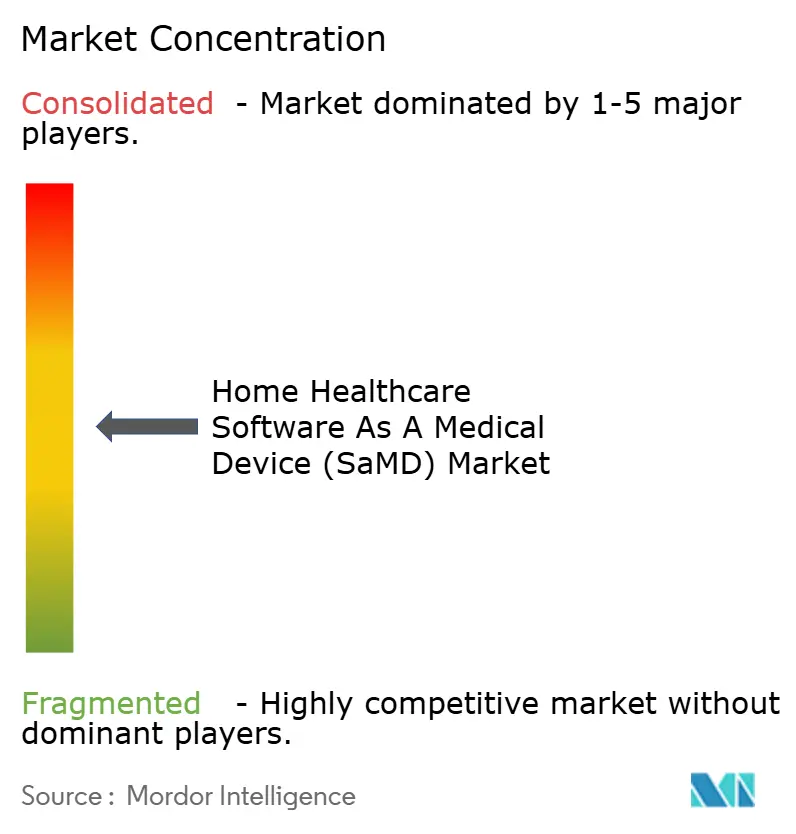
The Home Healthcare SaMD Market is moderately consolidated. Axxess, AlayaCare, WellSky, HHAeXchange, Homecare Homebase, and Netsmart compete on workflow integration, compliance support, and documentation efficiency. Dexcom, ResMed, and Medtronic benefit from established hardware ecosystems, including continuous glucose monitors, sleep therapy devices, and insulin pumps, which make related software harder to replace. In July 2026, ResMed entered a definitive agreement to sell MatrixCare to Frazier Healthcare Partners for USD 490 million in cash, allowing it to focus on sleep, respiratory, and connected-care services. Supplier positioning depends on workflow depth, clinical device integration, existing customer relationships, and fit with providers’ technology environments.
Regulatory planning is becoming a key competitive factor alongside product design. In May 2026, Dexcom received FDA clearance for the Stelo Glucose Biosensor System, including AI-generated insight summaries and a Glucose Response Score for logged meal events. In April 2026, AlayaCare and Eitan Medical announced a partnership to integrate Eitan Insights cloud data with AlayaCare software, enabling infusion pump data to flow into clinical documentation without manual transcription. Providers are likely to favor systems that support clinical and revenue-cycle workflows, reduce record gaps, strengthen data quality, and maintain clear access controls.
Opportunities remain in neurological care, medication adherence, and care coordination for rural populations. Sensi.AI uses ambient voice technology to identify changes in care needs without requiring patients to wear a device, offering an alternative to hardware-linked monitoring platforms. Its partnership model with SYNERGY HomeCare can help it reach agencies without relying only on long enterprise sales processes. Overlay software within existing electronic health record systems may appeal to smaller agencies with limited internal technology staff and lower capacity for full platform replacement.
Home Healthcare Software As A Medical Device (SaMD) Industry Leaders
Medtronic plc
Abbott Laboratories
Omada Health, Inc.
Teladoc Health, Inc.
Dexcom, Inc.
- *Disclaimer: Major Players sorted in no particular order

Recent Industry Developments
- June 2026: Dexcom became the first participant selected for the FDA TEMPO Digital Health Devices Pilot Program, integrating G7 and Stelo data with nutrition, activity, sleep, and stress insights.
- May 2026: WellSky launched its AI Point of Care app for home health clinicians, with WellSky Scribe expected to reduce charting time by up to 50% across more than 400 agencies.
- May 2026: ResMed launched AirConnect Dx for United Kingdom National Health Service sleep services, integrating referral management, home sleep testing, reporting, logistics, and patient support.
- April 2026: AlayaCare and Eitan Medical integrated Eitan Insights with AlayaCare software, enabling near-real-time infusion pump data capture and eliminating manual transcription for home infusion nurses.


Global Home Healthcare Software As A Medical Device (SaMD) Market Report Scope
As per the scope of the report, Home Healthcare Software as a Medical Device (SaMD) refers to software intended to perform one or more medical functions independently of a hardware medical device for use in home care settings. It enables patients and caregivers to monitor health conditions, support diagnosis, manage chronic diseases, guide treatment, facilitate rehabilitation, and communicate clinical data with healthcare providers remotely, improving continuity of care outside traditional healthcare facilities.
The home healthcare software as a medical device (SaMD) market is segmented by product type, SaMD risk classification, deployment, application, end user, and geography. By product type, the market includes clinical decision support software, remote patient monitoring software, digital therapeutics software, patient engagement and self-management software, clinical documentation and care planning software, care coordination and referral management software, and others. By SaMD risk classification, the market is categorized into low-risk SaMD, moderate-risk SaMD, and high-risk SaMD. By deployment, the market is segmented into cloud-based SaMD, on-premise SaMD, and hybrid deployment. By application, the market includes cardiovascular disease management, diabetes management, respiratory disease management, sleep disorder management, neurological disorder management, oncology support and remote monitoring, medication adherence and safety, post-acute care monitoring, and others. By end user, the market is segmented into home health agencies, hospitals and health systems, hospices and palliative care providers, skilled nursing facilities, senior living and life plan communities, physician groups and ambulatory care providers, and others. By geography, the market is analyzed across North America, Europe, Asia-Pacific, the Middle East and Africa, and South America. The report also covers the estimated market sizes and trends for 17 countries across major regions globally. The report offers the market sizes and forecasts in terms of value (USD) for the above segments.
| Clinical Decision Support Software |
| Remote Patient Monitoring Software |
| Digital Therapeutics Software |
| Patient Engagement and Self-Management Software |
| Clinical Documentation and Care-Planning Software |
| Care Coordination and Referral Management Software |
| Others |
| Low-Risk SaMD |
| Moderate-Risk SaMD |
| High-Risk SaMD |
| Cloud-Based SaMD |
| On-Premise SaMD |
| Hybrid Deployment |
| Cardiovascular Disease Management |
| Diabetes Management |
| Respiratory Disease Management |
| Sleep Disorder Management |
| Neurological Disorder Management |
| Oncology Support and Remote Monitoring |
| Medication Adherence and Safety |
| Post-Acute Care Monitoring |
| Others |
| Home Health Agencies |
| Hospitals and Health Systems |
| Hospices and Palliative Care Providers |
| Skilled Nursing Facilities |
| Senior Living and Life Plan Communities |
| Physician Groups and Ambulatory Care Providers |
| Others |
| North America | United States |
| Canada | |
| Mexico | |
| Europe | Germany |
| United Kingdom | |
| France | |
| Italy | |
| Spain | |
| Rest of Europe | |
| Asia-Pacific | China |
| India | |
| Japan | |
| Australia | |
| South Korea | |
| Rest of Asia-Pacific | |
| Middle East and Africa | GCC |
| South Africa | |
| Rest of Middle East and Africa | |
| South America | Brazil |
| Argentina | |
| Rest of South America |
| By Product Type | Clinical Decision Support Software | |
| Remote Patient Monitoring Software | ||
| Digital Therapeutics Software | ||
| Patient Engagement and Self-Management Software | ||
| Clinical Documentation and Care-Planning Software | ||
| Care Coordination and Referral Management Software | ||
| Others | ||
| By SaMD Risk Classification | Low-Risk SaMD | |
| Moderate-Risk SaMD | ||
| High-Risk SaMD | ||
| By Deployment | Cloud-Based SaMD | |
| On-Premise SaMD | ||
| Hybrid Deployment | ||
| By Application | Cardiovascular Disease Management | |
| Diabetes Management | ||
| Respiratory Disease Management | ||
| Sleep Disorder Management | ||
| Neurological Disorder Management | ||
| Oncology Support and Remote Monitoring | ||
| Medication Adherence and Safety | ||
| Post-Acute Care Monitoring | ||
| Others | ||
| By End User | Home Health Agencies | |
| Hospitals and Health Systems | ||
| Hospices and Palliative Care Providers | ||
| Skilled Nursing Facilities | ||
| Senior Living and Life Plan Communities | ||
| Physician Groups and Ambulatory Care Providers | ||
| Others | ||
| By Geography | North America | United States |
| Canada | ||
| Mexico | ||
| Europe | Germany | |
| United Kingdom | ||
| France | ||
| Italy | ||
| Spain | ||
| Rest of Europe | ||
| Asia-Pacific | China | |
| India | ||
| Japan | ||
| Australia | ||
| South Korea | ||
| Rest of Asia-Pacific | ||
| Middle East and Africa | GCC | |
| South Africa | ||
| Rest of Middle East and Africa | ||
| South America | Brazil | |
| Argentina | ||
| Rest of South America | ||


Key Questions Answered in the Report
What is the projected value of the home healthcare SaMD sector by 2031?
The Home Healthcare SaMD Market is forecast to reach USD 5.89 billion by 2031, from USD 3.16 billion in 2026, at a 13.25% CAGR.
Which home healthcare software product is growing fastest?
Remote Patient Monitoring Software is forecast to grow at a 15.93% CAGR through 2031.
Which deployment approach is most widely used for home healthcare SaMD?
Cloud-Based SaMD held 62.33% share in 2025, while Hybrid Deployment is forecast to grow at a 16.35% CAGR through 2031.
Which clinical application has the largest home healthcare SaMD share?
Cardiovascular Disease Management accounted for 28.88% of applications in 2025.
What are the main barriers to adoption of home healthcare SaMD?
Cybersecurity, privacy requirements, uneven reimbursement, differing regulatory pathways, and data consistency concerns can slow adoption.
Which region is growing fastest for home healthcare SaMD?
Asia-Pacific is forecast to grow at a 15.56% CAGR through 2031, supported by chronic disease needs and digital health programs.
Page last updated on:





