
Breathwork and Meditation Therapy Market Size and Share
Market Overview
| Study Period | 2022 - 2032 |
|---|---|
| Market Size (2027) | USD 8.72 Billion |
| Market Size (2032) | USD 14.39 Billion |
| Growth Rate (2027 - 2032) | 10.51 % |
| Fastest Growing Market | Asia-Pacific |
| Largest Market | North America |
| Market Concentration | Low |
Major Players *Disclaimer: Major Players sorted in no particular order Image © Mordor Intelligence. Reuse requires attribution under CC BY 4.0. | |
Breathwork and Meditation Therapy Market Analysis by Mordor Intelligence
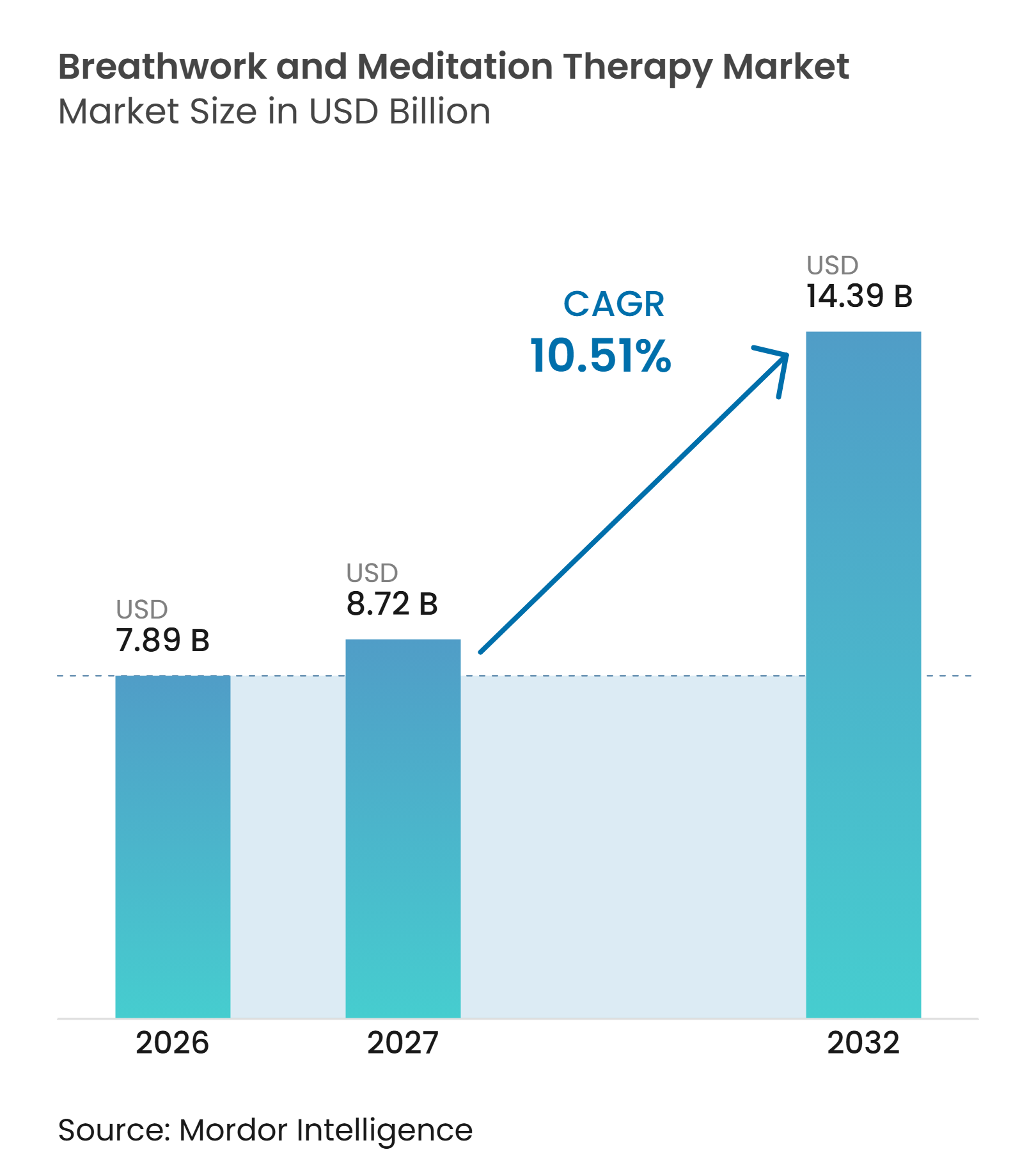
The global Breathwork and meditation therapy market size was valued at USD 7.89 billion in 2026 and is estimated to grow from USD 8.72 billion in 2027 to reach USD 14.39 billion by 2032, at a CAGR of 10.51% during the forecast period (2027-2032). The global Breathwork and meditation therapy market is supported by a large and persistent need for mental health services, with more than 1 billion people worldwide living with a mental health condition in 2025[1]. Employers and healthcare systems are expanding their focus beyond treatment to include prevention, early intervention, and stress management. Digital delivery enables providers to serve consumers seeking guided at-home practice at a lower cost, while live and in-person formats remain important for support and safety. Consequently, the market is shifting toward hybrid service models that combine on-demand content with human guidance. Evidence-based offerings, privacy protections, and sustained user engagement will determine which providers convert trial users into recurring revenue.
Key Report Takeaways
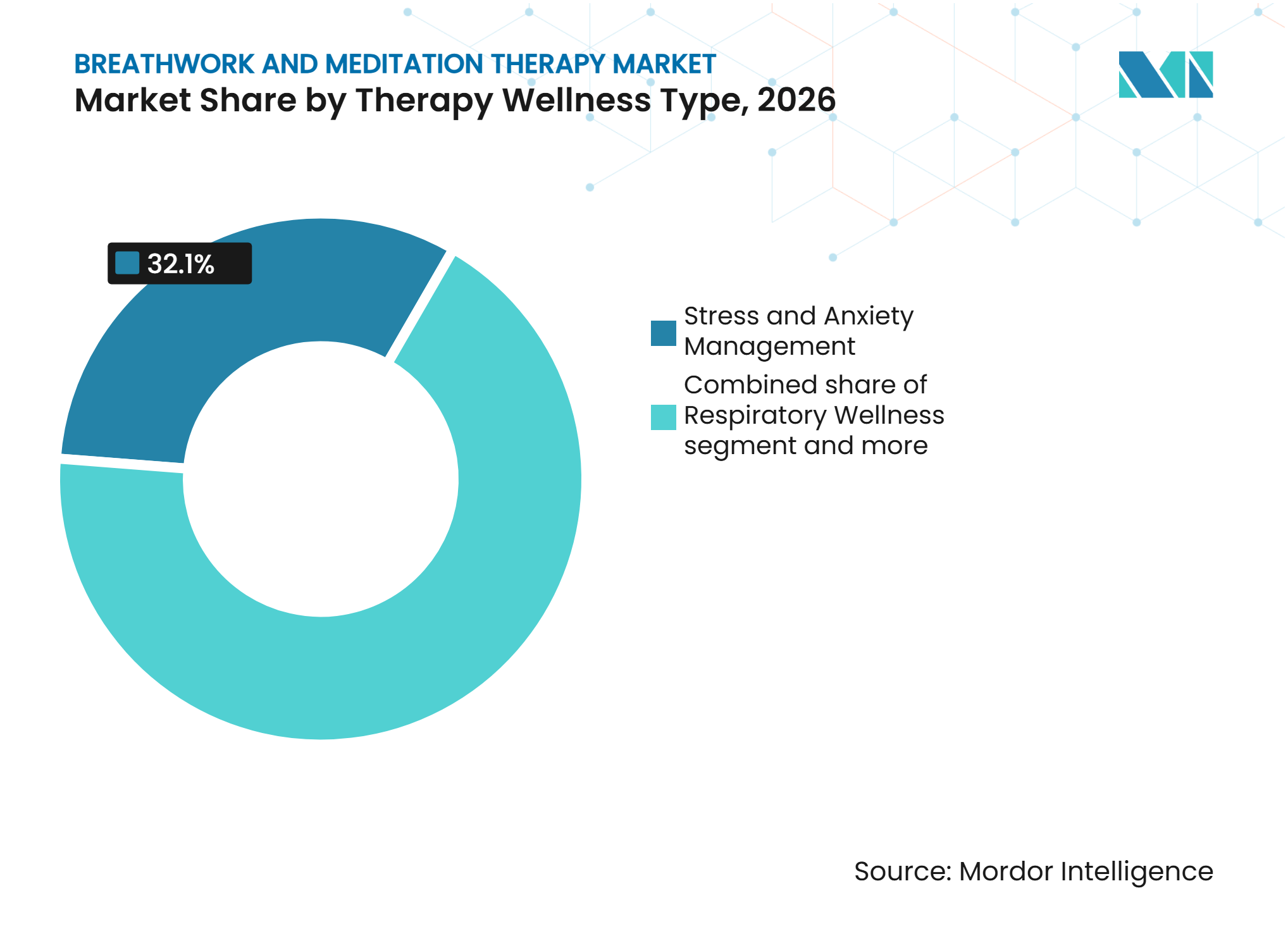
- By therapy and wellness type, stress and anxiety management accounted for 32.10% of the global Breathwork and meditation therapy market share in 2026 and sleep improvement and relaxation are projected to grow at an 11.03% CAGR through 2032.
- By technique/practice type, mindfulness and breath-awareness meditation accounted for 36.70% of theglobal Breathwork and meditation therapy market share in 2026 and body scan and progressive relaxation are projected to grow at a 10.90% CAGR through 2032.
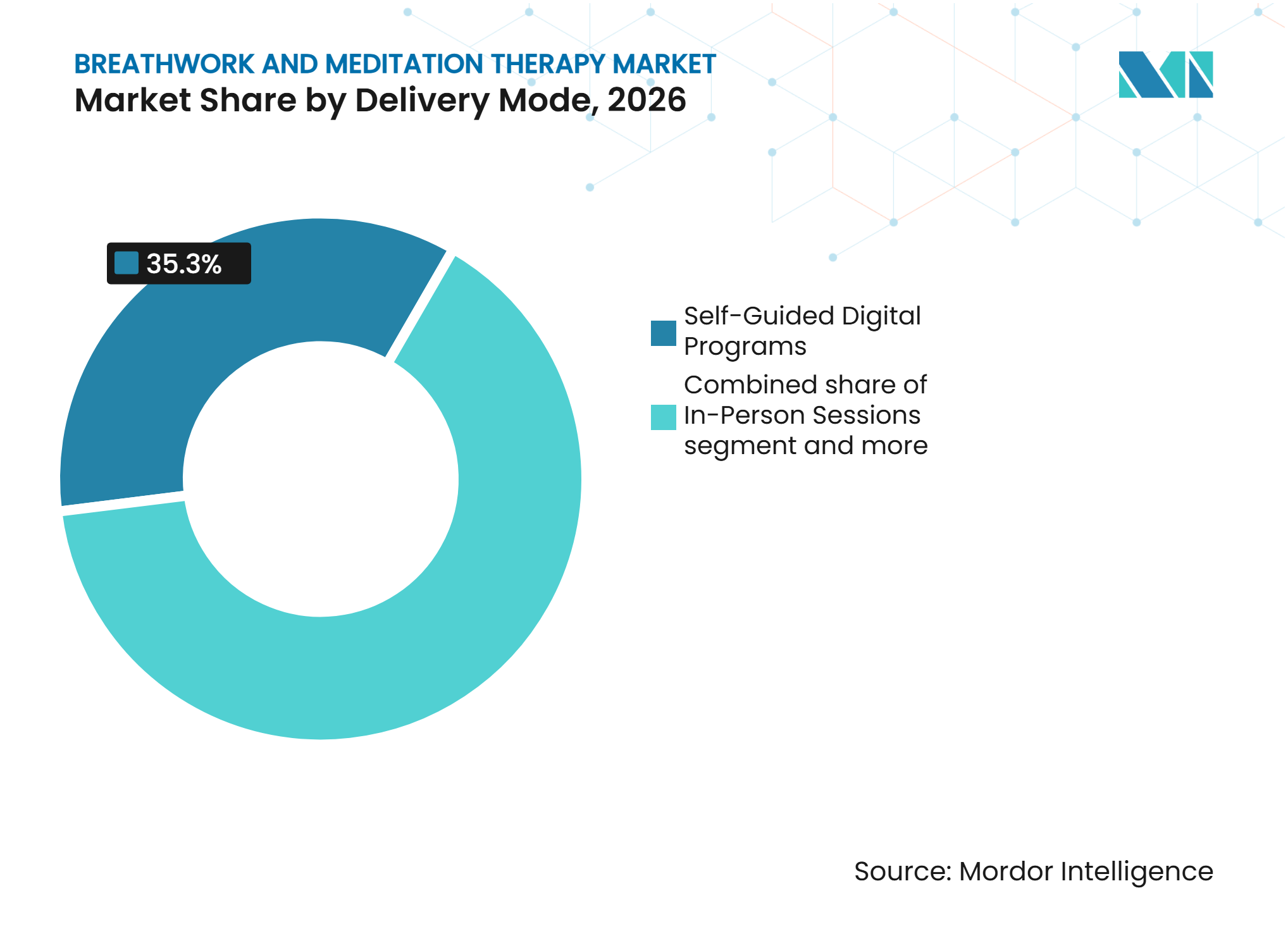
- By delivery mode, self-guided digital programs accounted for 35.30% of the global Breathwork and meditation therapy market share in 2026 and hybrid programs are projected to grow at an 11.88% CAGR through 2032.
- By end user, individual consumers accounted for 60.60% of the global Breathwork and meditation therapy market share in 2026 and corporate organizations are projected to grow at a 10.88% CAGR through 2032.
- By geography, North America accounted for 54.70% of the global Breathwork and meditation therapy market share in 2026, and Asia-Pacific is projected to grow at a 13.10% CAGR through 2032.
Note: Market numbers in this report are based on Mordor Intelligence's proprietary estimation framework, which combines nine months of actuals with Q4 projections for base year 2026.
Market Trends and Insights
Drivers Impact Analysis of Breathwork and Meditation Therapy Market*
| Driver | (~) % Impact on CAGR Forecast | Geographic Relevance | Impact Timeline |
|---|---|---|---|
| Rising Stress, Anxiety, Burnout, and Sleep Disruption | +2.8% | Global, with intensity in North America, Europe, and urbanized Asia-Pacific | Short term (≤ 2 years) |
| Growing Acceptance of Non-Pharmacological Mind-Body Therapies | +1.9% | Global, with concentrated adoption in North America, the United Kingdom, Australia, and Japan | Medium term (2-4 years) |
| Expansion of Digital Meditation and Breathwork Platforms | +2.1% | Global, with rapid adoption in Asia-Pacific and South America | Short term (≤ 2 years) to medium term (2-4 years) |
| Rising Corporate and Institutional Adoption of Mental-Wellness Programs | +1.4% | North America and Europe, with expansion into Southeast Asia and the Gulf Cooperation Council | Medium term (2-4 years) |
| Integration of Wearables, Biofeedback, and Personalized Training | +0.9% | North America, South Korea, Japan, and Western Europe | Medium term (2-4 years) to long term (≥ 4 years) |
| Growing Demand for Personalized and Immersive Mind-Body Experiences | +0.6% | North America, Western Europe, Australia, and the United Arab Emirates | Long term (≥ 4 years) |
| Source: Mordor Intelligence | |||
Rising Stress, Anxiety, Burnout, and Sleep Disruption
The breathwork and meditation therapy market is driven by the rising prevalence of stress, anxiety, burnout, and sleep disruption. Anxiety disorders affected an estimated 470 million people globally in 2025, yet only 27.6% of those requiring care received treatment. The International Labour Organization linked workplace psychosocial risks to 840,000 deaths and 45 million disability-adjusted life years in 2026. This burden increases demand for accessible programs, particularly in areas where clinical services are limited or difficult to access. A meta-analysis published in 2025, covering 18 randomized controlled trials and 4,870 participants, found that standalone digital mindfulness interventions improved sleep health, with a Hedges’ g of 0.38[2].
Growing Acceptance of Non-Pharmacological Mind-Body Therapies
Growing interest in complementary wellness practices is driving demand for breathwork and meditation therapy across personal wellness and corporate well-being programs. A 2025 systematic review of six randomized controlled trials involving 517 patients found that pranayama reduced mental health symptom severity, with an effect size of -0.27 in intention-to-treat analyses compared with passive controls[3]. Separately, a meta-analysis of seven trials involving 683 participants reported a reduction in heart rate, with a standardized mean difference of -0.43. These findings reinforce the evidence base for structured breathing practices and may support their integration into stress-management programs, guided meditation subscriptions, and wellness services. In India, widespread familiarity with yoga and pranayama provides an established foundation for consumer engagement, while digital platforms expand access beyond in-person sessions. Providers can capitalize on this interest by offering guided programs, flexible delivery formats, and qualified instruction.
Expansion of Digital Meditation and Breathwork Platforms
Digital platforms expand the reach of the breathwork and meditation therapy market by offering guided sessions without requiring clinic or studio visits. A review published by American Psychologist in 2025 reported that the 10 leading meditation apps had collectively been downloaded more than 300 million times and produced modest but consistent reductions in depression and anxiety. The review also noted that digital products often provide less interpersonal support than in-person services, highlighting the need for live coaching and moderation formats. Providers are testing immersive and biofeedback-enabled experiences, including Calm’s Android XR application and Shift bilateral audio product. Adoption depends on transparent data practices and clear consumer value.
Rising Corporate and Institutional Adoption of Mental-Wellness Programs
Corporate demand is creating opportunities in the global Breathwork and meditation therapy market as employers expand workplace mental health and wellness benefits. Employee Benefit Research Institute's (EBRI) 2025 Employer Mental Health Survey, covering approximately 400 United States employers, found that 74% offered mindfulness or meditation apps and 54% provided wellness programs. However, benefit availability does not ensure employee awareness or participation. A 2025 cross-sectional study published in BMC Public Health, involving 15,302 employees across six Southeast Asian countries, found that only 29.04% were aware of access to employer-provided employee assistance programs. This gap creates opportunities for breathwork and meditation therapy providers to partner with employers on guided sessions, digital programs, and facilitator-led workshops. Clear communication, accessible delivery formats, and privacy assurances can improve employee awareness and engagement.
Restraints Impact Analysis of Breathwork and Meditation Therapy Market*
| Restraint | (~) % Impact on CAGR Forecast | Geographic Relevance | Impact Timeline |
|---|---|---|---|
| Uneven Clinical Validation and Reimbursement Coverage | -0.5% | Global, with greater relevance in Europe and the United States | Medium term (2-4 years) |
| Privacy, Data-Security, and Digital-Engagement Concerns | -0.3% | Global, with heightened relevance in Europe and North America | Short term (≤ 2 years) to Medium term (2-4 years) |
| Safety Risks and Contraindications in High-Ventilation Breathwork | -0.1% | Global, with higher risk where facilitator regulation is limited | Short term (≤ 2 years) |
| Fragmented Facilitator Training and Inconsistent Session Quality | -0.1% | Global, including emerging Asia-Pacific and Middle East and Africa markets | Medium term (2-4 years) to Long term (≥ 4 years) |
| Source: Mordor Intelligence | |||
Uneven Clinical Validation, Safety, and Reimbursement Coverage
The breathwork and meditation therapy market faces constraints from uneven clinical validation and limited reimbursement. A 2025 American Psychologist review found that many meditation applications lacked interpersonal support and robust privacy and large-scale data-capture practices. A 2025 meta-analysis of consumer-grade neurofeedback devices found no evidence of improved cognition, mindfulness, or physiological health versus controls across 16 randomized controlled trials. These evidence gaps may hinder payer coverage, particularly for products making health-related claims. High-ventilation practices require participant screening, informed consent, trained facilitation, and clear escalation protocols for individuals experiencing distress. Inconsistent facilitator training creates service-quality risks, particularly in fragmented local markets where consumers may be unable to assess practitioner credentials.
Privacy, Data-Security, and Digital-Engagement Concerns
Privacy concerns and low sustained engagement can restrain revenue growth in the breathwork and meditation therapy market. A University of Wisconsin–Madison study published in 2025 found that meditation applications can improve mental health but require improvements in privacy and user engagement. A 2025 cross-sectional study of 536 users across 5 countries found that regular app use was associated with education, openness to experience, and users’ belief in the app’s effectiveness. These factors can hinder broad-based user retention, particularly when users do not perceive immediate value or understand how providers use their personal data. European General Data Protection Regulation requirements increase the need for explicit consent and robust controls when providers collect emotional, health-related, or biometric data. Indian providers should build trust through clear consent processes, minimal data collection, accessible privacy notices, and separation between employer reporting and identifiable employee information.
*Our forecasts treat driver/restraint impacts as directional, not additive. The impact forecasts reflect baseline growth, mix effects, and variable interactions.
Consumer Preferences & Spending Patterns
Consumer preferences in the global Breathwork and meditation therapy market increasingly focus on sleep quality, mental well-being, convenience, and credible outcomes. The Global State of Health & Wellness survey in 2025, covering nearly 19,000 consumers across 19 countries, found that 63% placed greater importance on quality sleep and mental health than five years earlier. Additionally, 35% planned to increase their participation in yoga and meditation. Trust remained a key conversion barrier, with 25% citing doubts about the effectiveness of wellness products and services as an obstacle to healthier choices. Meanwhile, 82% wanted clearer health-related information. In India, a YouGov–Amazon Alexa survey in 2025 of more than 1,000 respondents across 10 cities found that 54% reported better sleep through a regular routine, while more than 50% intended to add wellness activities, including meditation, to future routines. Providers can address these preferences through short, sleep-focused sessions, transparent benefit claims, and locally relevant content aligned with daily habits.
Service Market Performance Intelligence
The market’s pricing structure ranges from free access to recurring subscriptions. Insight Timer provides more than 300,000 guided practices free of charge, while its MemberPlus plan costs USD 9.99 per month or USD 59.99 annually, reducing the monthly cost by approximately 50% under the annual plan. This freemium model lowers trial barriers while reserving courses, offline downloads, and exclusive content for paying users. Providers must demonstrate measurable value through structured programs, personalization, and expert-led sessions to convert free users and sustain subscription revenue.
A mixed-methods study published in 2025, ‘Employee Preference and Use of Employee Mental Health Programs: Mixed Methods Study’, involving 1,134 employees in Germany, found that 58.73% preferred digital workplace mental health programs and 52.03% preferred self-guided interventions. Cost coverage (30.42%) and ease of use (29.72%) were key uptake facilitators. Although the study covered workplace mental health programs broadly, its findings indicate that employer-sponsored digital delivery can help breathwork providers reach defined audiences and reduce reliance on paid consumer advertising. Simple onboarding, free introductory sessions, and employer-funded access can support acquisition, while positive workplace culture and ongoing engagement remain important for sustained use.
Breathwork and Meditation Therapy Market Segment Analysis
By Therapy / Wellness Type:
Stress Management Anchors Volume, Sleep Drives GrowthStress and anxiety management accounted for 32.10% of the breathwork and meditation therapy market in 2026, reflecting demand for accessible support. The World Health Organization reported that anxiety disorders affected 470 million people in 2025, while treatment coverage remained limited. Digital and guided practices can offer a low-barrier entry point but should not replace clinical assessment or treatment when professional support is required. Long-term value depends on practical outcomes and sustained participation.
Sleep improvement and relaxation are forecast to grow at a CAGR of 11.03% through 2032. A 2025 review of 18 randomized controlled trials found that standalone digital mindfulness-based interventions moderately improved sleep health. Emotional regulation and mental well-being remain relevant for day-to-day support. Respiratory wellness may gain attention where pranayama complements established care, supported by evidence of reduced heart rate in hypertensive populations. Cognitive focus and personal development support users managing digitally demanding work routines.



By Technique / Practice Type:
Mindfulness Leads, Somatic Practices AccelerateMindfulness and breath-awareness meditation accounted for 36.70% of the technique segment in 2026. Strong consumer familiarity and substantial academic research support the breathwork and meditation therapy market size for this practice category. A 2025 review reported widespread adoption of meditation applications and modest, consistent effects on depression and anxiety. Mindfulness protocols are easy to explain, digitally deliverable, and adaptable to brief daily sessions. Employers and educational institutions also use them as low-complexity interventions. In India, providers can position mindfulness alongside established yogic practices without treating distinct traditions as interchangeable.
Body scan and progressive relaxation techniques are projected to grow at a CAGR of 10.90% through 2032. A 2025 randomized controlled trial found that mindfulness meditation combined with progressive muscle relaxation improved sleep quality, anxiety, and quality of life among hemodialysis patients with sarcopenia. Focused-attention and open-monitoring practices serve experienced users, while standalone breathwork appeals to experiential wellness users. Providers should communicate contraindications and evidence limitations. Transcendental, Vedic, and Zen methods retain committed practitioner communities but may require specialized teachers.
By Delivery Mode:
Digital Leads, Hybrid Closes the GapSelf-guided digital programs accounted for 35.30% of delivery-mode value in 2026. They provide flexible access to short sessions for stress, sleep, and daily recovery at relatively low delivery costs. However, an American Psychologist review found that apps often lack interpersonal support, which may limit engagement. Providers must improve onboarding, content discovery, referrals, and privacy practices for sensitive emotional or health-related information.
Hybrid programs are forecast to grow at a CAGR of 11.88% through 2032. They combine self-guided content with live online or in-person touchpoints that provide accountability and support. Virtual sessions enable scheduled practice without travel, while in-person sessions offer higher-touch guidance. Hybrid models may re-engage users who discontinue app use. Retreat-based programs remain the most intensive delivery model and may serve as entry or renewal points. Providers should tailor delivery models to user needs, particularly for practices requiring careful facilitation.

By End User:
Individuals Dominate, Corporates Accelerate FastestIndividual consumers accounted for 60.60% of the Breathwork and Meditation Therapy Market by end user in 2026, reflecting the long availability of consumer-facing meditation content and direct app subscriptions. They use these services for stress management, sleep, relaxation, and personal development, often starting with free content before paying for additional access. Diverse needs require varied pricing and content. Sustained engagement depends on users’ perceived effectiveness and openness to the app experience.
Corporate organizations are projected to grow at a CAGR of 10.88% through 2032, driven by concerns about workforce stress, burnout, retention, and mental health benefits. In 2025, 74% of surveyed United States employers offered mindfulness or meditation applications. Growth through workplace programs depends on confidentiality and clear communication. Healthcare providers, wellness facilities, and educational institutions also offer expansion opportunities through complementary, recovery, retention, and preventive programs with appropriate evidence and safeguarding standards.
Geography Analysis
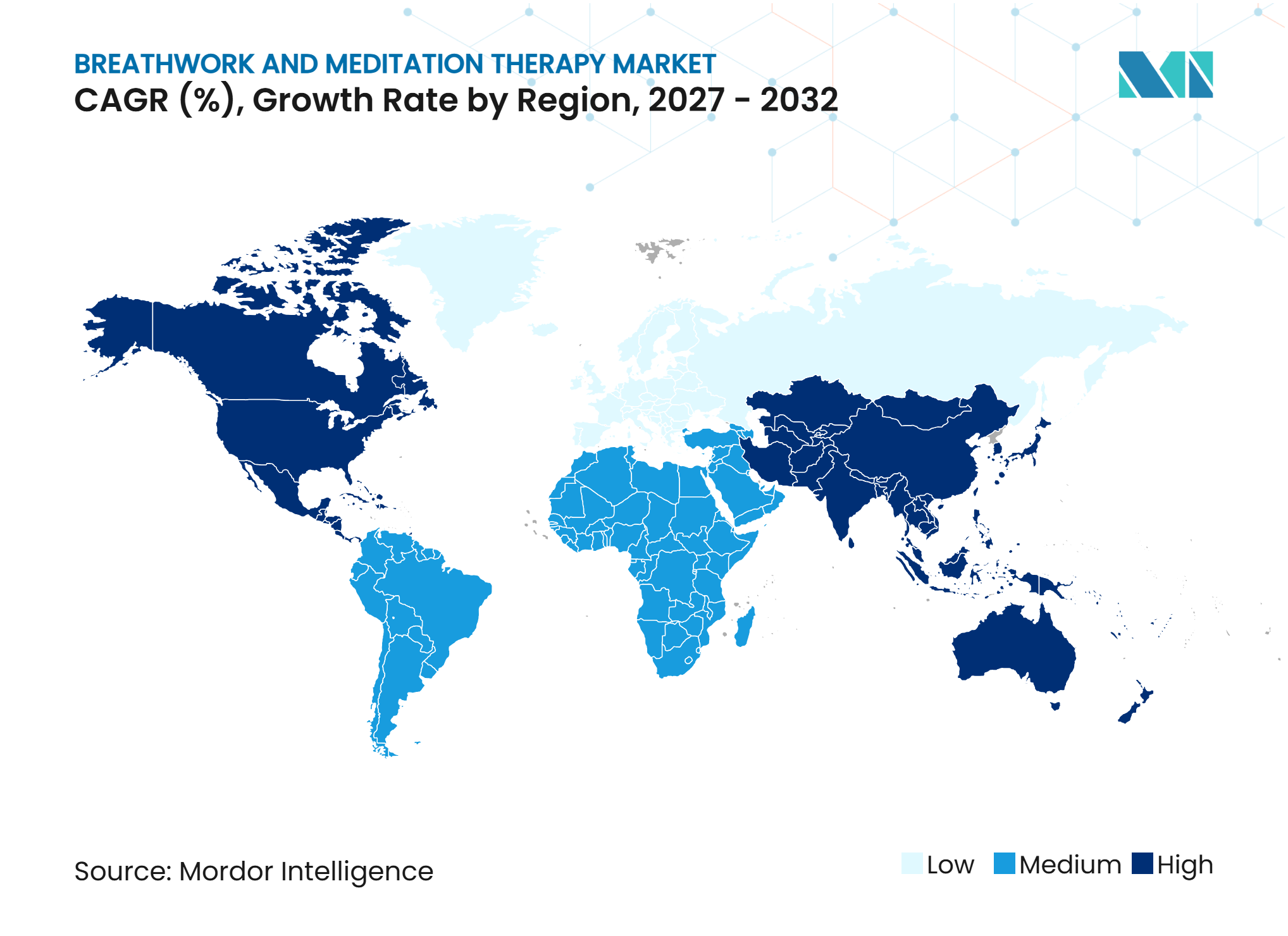
North America accounted for 54.70% of global value in 2026, supported by established app adoption, corporate wellness benefits, and consumer wellness companies. In 2025, 74% of surveyed United States employers offered mindfulness or meditation apps. Corporate distribution, subscriptions, and studios support spending. Peloton’s Breathwrk acquisition and Calm’s Android XR launch reflect innovation in connected fitness and immersive digital formats. Sustained participation and trust in personal data handling remain key constraints.
Asia-Pacific is forecast to grow at a 13.10% CAGR through 2032. Growth is supported by mental well-being awareness, mobile usage, and yoga and contemplative traditions. India offers opportunities, but digital services must align with local pricing and language needs. Insight Timer launched in India in March 2026, offering over 300,000 free guided meditations from more than 20,000 instructors[4]. In 2025, over 90% of surveyed Singaporean firms had implemented at least one mental well-being initiative. Europe requires clear consent and General Data Protection Regulation (GDPR) compliance for sensitive data. South America supports digital and destination-based services, although standards vary. The Middle East and Africa show early demand through wellness hospitality and cross-border subscriptions.
Service Provider Network & Expansion Intelligence
The global Breathwork and meditation therapy market includes subscription apps, free-content platforms, wellness studios, retreat operators, and corporate programs. Competition increasingly depends on content depth, accessibility, and user engagement. Insight Timer entered India in March 2026, offering more than 300,000 guided meditations, music tracks, and talks from over 20,000 teachers. Its free-access model reduces price barriers and helps instructors reach new audiences.
Calm expanded through Android XR with more than 50 audio experiences, immersive 360-degree environments, and a 3D breathing exercise. These approaches reflect two routes to scale: broad, low-cost content access and differentiated experiences. Studios and retreats compete through instructor interaction, structured practice, and community, while digital providers must convert content libraries into sustained engagement and paid subscriptions. Market expansion increasingly relies on partnerships, bundled subscriptions, and new delivery formats. Peloton acquired Breathwrk in October 2025 and included access to the app for eligible All-Access and App+ members at no additional charge. These developments highlight three expansion strategies in the market: subscription bundling, technology-led differentiation, and free localized access. Sustainable growth depends on localized content, distribution partnerships, repeat use, and paid engagement.
Competitive Landscape
Market Concentration
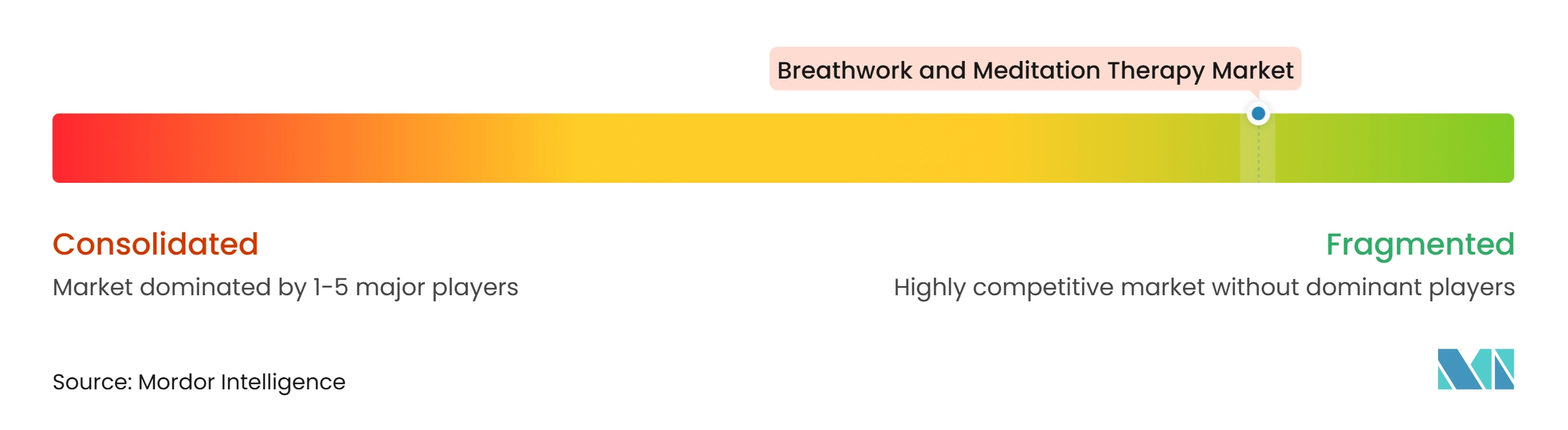
The global breathwork and meditation therapy market is highly fragmented. Competitors include Calm, Headspace, Insight Timer, Aura, facilitated providers, and technique-led brands. Low switching costs limit the value of content breadth alone. Providers differentiate through enterprise channels, clinical evidence, community, hardware integration, and specialized formats.
Peloton acquired Breathwrk in October 2025, adding guided breathing to its member offering. Kodeon Inc. announced its acquisition of Breethe in August 2026; Breethe had reached 18 million downloads and USD 50 million in lifetime revenue. Calm expanded through Android XR in 2025 and Shift in 2026. In India, global platforms face local wellness ecosystems and may require regional content, accessible pricing, and evidence-led communication.
Opportunities remain in referral models, regional-language services, and privacy-conscious biofeedback. Digital services should adapt content without making unsupported medical claims. App research supports guided practice but highlights the need for interpersonal support for some users. Provider competitiveness depends on repeat use, clear safety procedures, privacy terms, practitioner qualifications, and intended use.
Breathwork and Meditation Therapy Industry Leaders
-
Headspace Inc.
-
Calm.com, Inc.
-
Gaia, Inc.
-
Aura Health Inc.
-
Insight Network, Inc. (Insight Timer)
- *Disclaimer: Major Players sorted in no particular order
Breathwork and Meditation Therapy Market Companies Covered in this Report
- Headspace Inc.
- Calm.com, Inc.
- Insight Network, Inc. (Insight Timer)
- Aura Health Inc.
- Meditopia
- Breethe, Inc.
- Ten Percent Happier, Inc.
- Waking Up, LLC
- Unplug Meditation, LLC
- Sattva Life Pvt. Ltd.
- Yoga International
- Prana Breath
- Breathwrk, Inc.
- Othership Inc.
- SOMA Breath
- Wim Hof Method
- Open, Inc.
- Gaia, Inc.
- HeartMath LLC
- Chopra Global, LLC
Recent Industry Developments in Breathwork and Meditation Therapy Market
- October 2026: Calm launched Shift, an in-app bilateral-audio experience with Focus, Release, Uplift, and Sleep states. The product includes more than 20 custom tracks for Premium subscribers in the United States.
- August 2026: Kodeon AI announced the acquisition of Breethe in its largest transaction to date. Breethe had 18 million downloads and USD 50 million in lifetime revenue. The company joined Kodeon’s portfolio of AI-native wellness applications.
- March 2026: Insight Timer launched in India with access to 300,000 free guided meditations from more than 20,000 global instructors. The service used a free-library freemium model for the Indian user base.
- February 2026: Founders Row and Jamie Weeks announced a strategic investment in Ohm Health. Ohm Health’s Resonance Lamp delivers resonance-breathing biofeedback through light, sound, and touch cues in a screen-free device.
Global Breathwork and Meditation Therapy Market Report Scope
The global Breathwork and meditation therapy market report analyzes breathwork, meditation, and related mind-body wellness services delivered through digital platforms, live sessions, wellness facilities, corporate programs, and retreats worldwide. The market is segmented by therapy and wellness type, technique, delivery mode, end user, and geography. The study examines key drivers, including rising stress and sleep concerns, acceptance of non-pharmacological therapies, digital platform expansion, corporate wellness adoption, wearable integration, and demand for personalized experiences, alongside restraints such as uneven clinical validation, limited reimbursement, data-privacy concerns, safety risks, and inconsistent facilitator training. It evaluates service-provider networks, new launches, geographic expansion, pricing, customer acquisition, consumer preferences, and spending patterns. The report provides market size and growth forecasts, competitive landscape analysis, market concentration and share assessments, strategic developments, and profiles of leading providers. It also explores opportunities in clinically informed wellness programs, employer-sponsored services, localized digital content, wearable-enabled practices, and immersive experiences. Market estimates and forecasts are presented in value (USD) across all covered segments.
Segmentation Overview
Key Questions Answered in the Report
What is driving demand for breathwork and meditation therapy services?
Raising stress, anxiety, sleep disruption, and limited access to care are key demand factors. WHO reported that 470 million people lived with anxiety disorders in 2025.
How large is the breathwork and meditation therapy sector?
It is projected to grow from USD 7.89 billion in 2026 and USD 8.72 billion in 2027 to USD 14.39 billion by 2032, at 10.51% CAGR.
Which delivery format is growing fastest in breathwork and meditation therapy?
Hybrid programs are projected to grow at 11.88% CAGR through 2032 because they combine digital access with human support.
What is the opportunity for breathwork and meditation therapy in India?
India combines cultural familiarity with yoga and pranayama with a growing digital wellness user base. Insight Timer’s 2026 Indian launch used more than 300,000 free meditations to build reach.
What are the main risks for breathwork and meditation providers?
Uneven clinical evidence, safety concerns for high-ventilation techniques, low user retention, and privacy risks can limit adoption and payer acceptance.