
Anti-Pollution Skincare Products Market Size and Share
Market Overview
| Study Period | 2022 - 2032 |
|---|---|
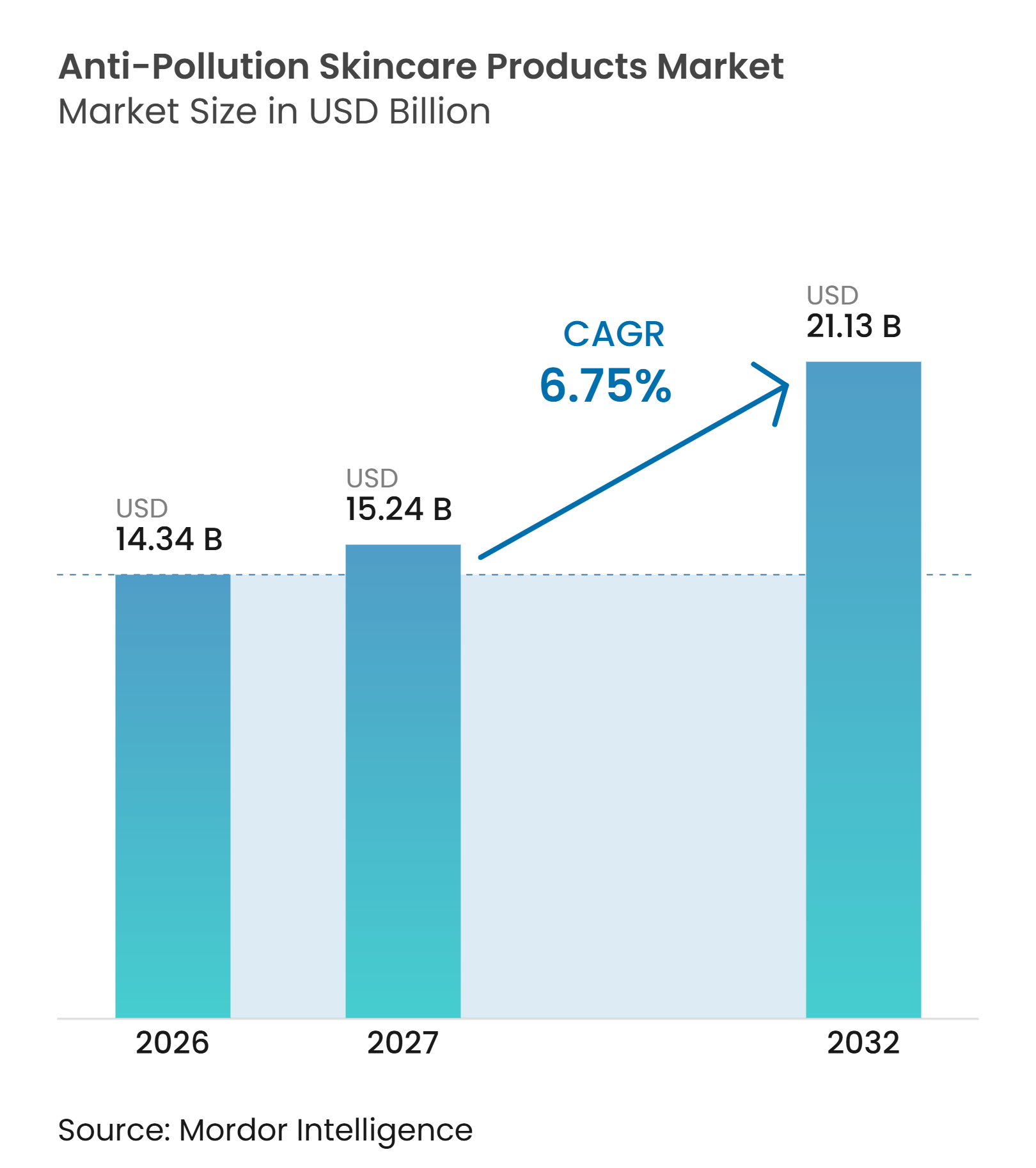
| Market Size (2027) | USD 15.24 Billion |
| Market Size (2032) | USD 21.13 Billion |
| Growth Rate (2027 - 2032) | 6.75 % |
| Fastest Growing Market | Asia-Pacific |
| Largest Market | Asia-Pacific |
| Market Concentration | Medium |
Major Players *Disclaimer: Major Players sorted in no particular order Image © Mordor Intelligence. Reuse requires attribution under CC BY 4.0. | |
Anti-Pollution Skincare Products Market Analysis by Mordor Intelligence
The anti-pollution skincare products market is valued at USD 14.34 billion in 2026 and is projected to grow from USD 15.24 billion in 2027 to USD 21.13 billion by 2032, at a CAGR of 6.75% from 2027 to 2032. Growing urban exposure to fine particulate matter is increasing the relevance of daily skin protection and barrier repair among a broader consumer base. A study found that PM2.5 can penetrate the skin via hair follicles and sweat glands, trigger oxidative stress, and activate matrix metalloproteinases that degrade collagen and elastin. The review also linked exposure to changes in DNA methylation and histone acetylation that may continue after acute exposure, driving interest in reparative skincare products. Consequently, the anti-pollution skincare products market is evolving beyond occasional beauty applications toward everyday products that offer barrier support, antioxidant benefits, and credible claims.
Key Report Takeaways
-
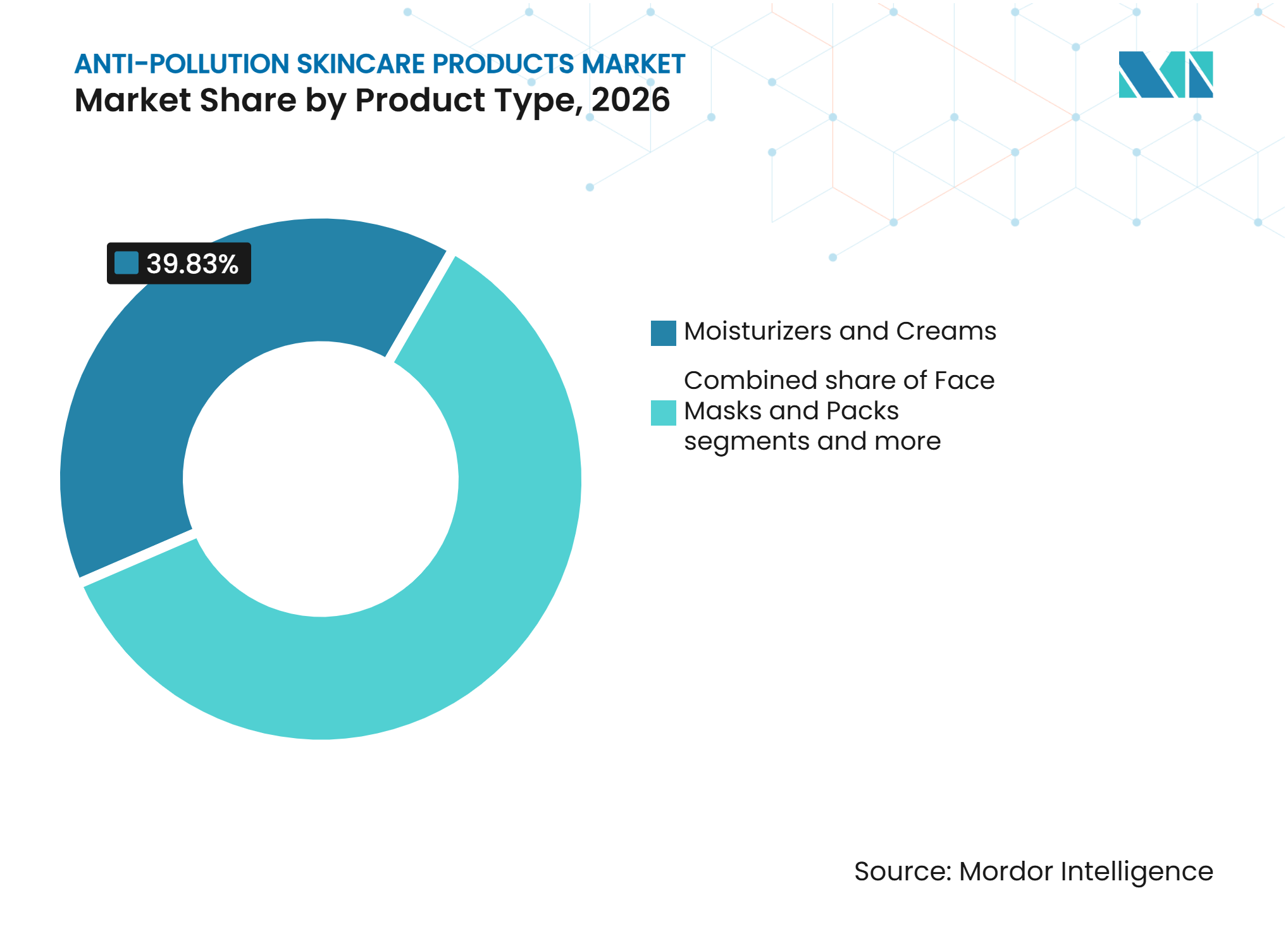
By product type, moisturizers and creams held 39.83% of the anti-pollution skincare products market share in 2026, while face masks and packs are projected to grow at a 7.91% CAGR through 2032.
-
By category, conventional formulations held a 57.86% share of the anti-pollution skincare products market in 2026, while organic formulations are forecast to grow at an 8.24% CAGR through 2032.
-
By price range, the mass tier accounted for 64.07% of revenue in the anti-pollution skincare products market in 2026, while the premium tier is forecast to expand at an 8.13% CAGR through 2032.
-
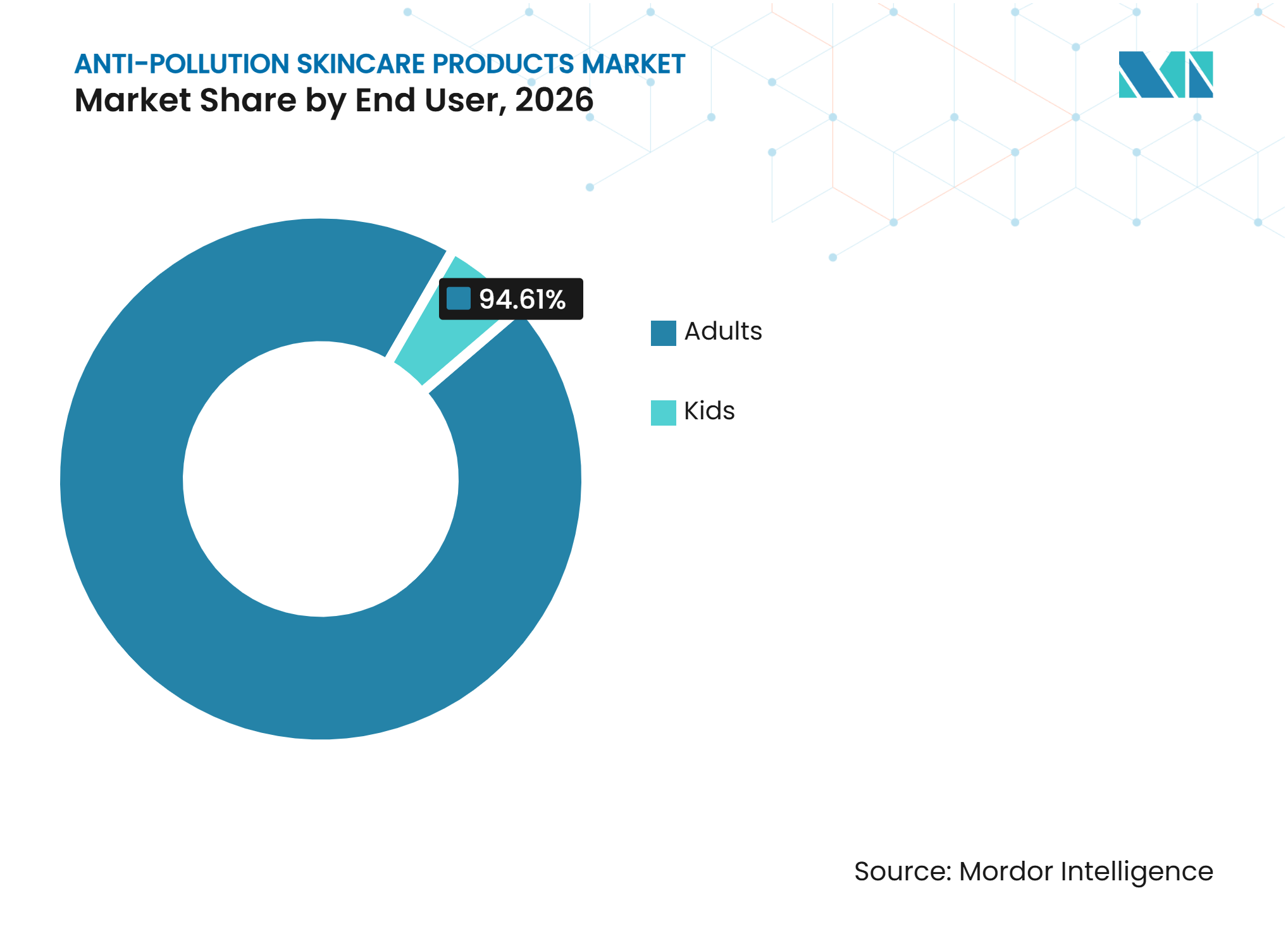
By end user, adults accounted for 94.61% of revenue in the anti-pollution skincare products market in 2026, while the kids segment is projected to grow at a 7.02% CAGR through 2032.
-
By distribution channel, supermarkets and hypermarkets held a 36.75% share of the anti-pollution skincare products market in 2026, while online retail stores are forecast to grow at an 8.28% CAGR through 2032.
-
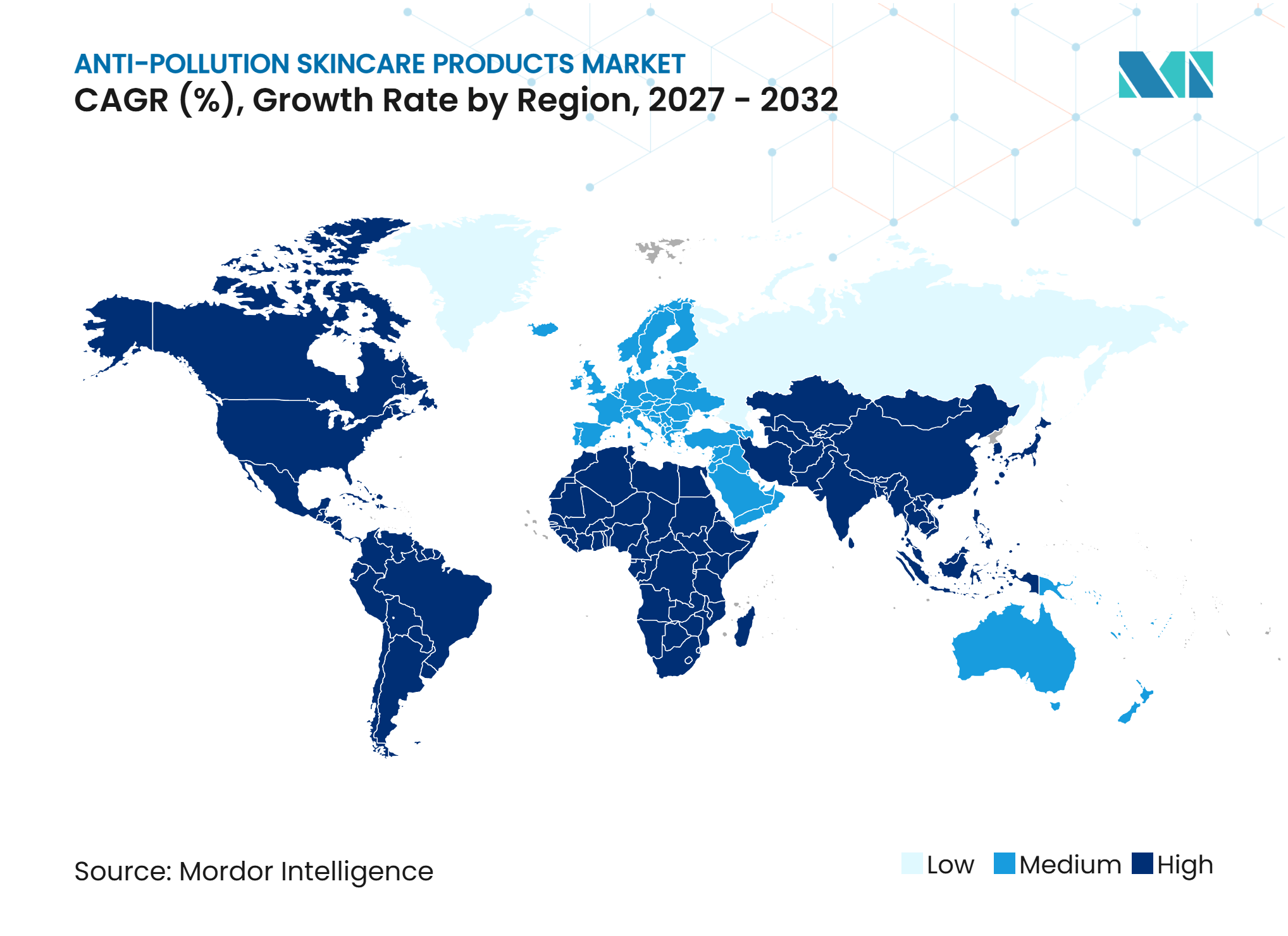
By geography, Asia-Pacific accounted for 43.47% of the anti-pollution skincare products market in 2026 and is forecast to grow at a 7.95% CAGR through 2032.
Note: Market numbers in this report are based on Mordor Intelligence's proprietary estimation framework, which combines nine months of actuals with Q4 projections for base year 2026.
Market Trends and Insights
Drivers Impact Analysis of Anti-Pollution Skincare Products Market*
| Driver | (~) % Impact on CAGR Forecast | Geographic Relevance | Impact Timeline |
|---|---|---|---|
| Growing Awareness of Skin Health and Environmental Damage | +1.8% | Global, strongest in Asia-Pacific and South America | Long term (4 years or less) |
| Influence of Social Media and Beauty Influencers | +1.3% | Global, most pronounced in North America, Southeast Asia, and Europe | Short to medium term (4 years or less) |
| Increasing Skin Sensitivity and Skin Barrier Concerns | +1.1% | Asia-Pacific and North America core; spillover to the Middle East and Africa | Medium term (2–4 years) |
| Strengthening Demand for Natural and Plant-Based Skincare Ingredients | +0.8% | Europe and Asia-Pacific core; spill-over to North America | Medium to long term (2–5 years) |
| Rising Dermatologist Recommendations and Clinical Skincare Adoption | +0.7% | North America and Europe; emerging in Asia-Pacific | Medium term (2–4 years) |
| Expansion of Men's Grooming and Skincare Categories | +0.5% | North America core; accelerating in Asia-Pacific and the Middle East and Africa | Short to medium term (4 years or less) |
| Source: Mordor Intelligence | |||
Growing Awareness of Skin Health and Environmental Damage
Increasing exposure to air pollution and growing awareness of its adverse effects on skin health are driving demand for anti-pollution skincare products. According to the State of Global Air 2025 report, 36% of the global population was exposed to PM2.5 concentrations above the World Health Organization's least stringent interim target of 35 µg/m³, highlighting the widespread risk of pollution-related skin damage, particularly in urban areas[1]. Fine particulate matter can contribute to oxidative stress, premature skin aging, inflammation, and impaired skin barrier function, increasing consumer interest in protective skincare solutions. A 2025 clinical study published in the Journal of Cosmetic Dermatology found that an antioxidant formulation containing vitamin C, ferulic acid, and vitamin E protected skin collagen, elastin, and barrier proteins from particulate matter-induced damage. These findings are encouraging manufacturers to develop and launch antioxidant serums, protective moisturizers, and pollution-defense formulations that help mitigate environmental stressors and support skin health, thereby strengthening demand across urban consumer markets.
Influence of Social Media and Beauty Influencers
The growing digital consumer base and the increasing influence of social media are improving product awareness, consumer engagement, and purchase consideration in the global anti-pollution skincare products market. According to the World Bank, 73.6% of the global population used the internet in 2025, providing skincare brands with access to a broader online audience[2]. Social media platforms, including Instagram, TikTok, and YouTube, allow manufacturers to showcase product applications, explain the benefits of antioxidant ingredients, and highlight protection against pollution-related skin concerns through tutorials, skincare routines, product reviews, and influencer collaborations. Consequently, manufacturers are increasing investments in digital marketing, educational campaigns, and partnerships with beauty creators to engage younger consumers, build brand credibility, and support the adoption of anti-pollution skincare products.
Increasing Skin Sensitivity and Skin Barrier Concerns
Growing concerns about skin sensitivity, dryness, and the visible effects of environmental exposure are supporting global demand for anti-pollution skincare products. According to a July 2026 global study conducted by Galderma among more than 11,000 participants across 11 countries, 40% of respondents reported dry skin, 37% experienced dull skin, and 41% reported fine lines and wrinkles[3]. These concerns are driving consumers to adopt skincare products that address dryness, irritation, dullness, and premature signs of skin aging caused by pollution and other external stressors. In response, manufacturers are expanding their product portfolios with ceramide-based moisturizers, antioxidant serums, gentle cleansers, and barrier-repair creams designed to strengthen the skin barrier, maintain hydration, and improve the skin’s resilience against environmental pollutants and oxidative stress.
Strengthening Demand for Natural and Plant-Based Skincare Ingredients
Increasing consumer interest in natural, plant-based, and clean-label formulations is driving product differentiation in the global anti-pollution skincare products market. Consumers are seeking products formulated with botanical antioxidants and naturally derived ingredients that help combat oxidative stress and support skin barrier function. Green tea extract, aloe vera, vitamin C, vitamin E, niacinamide, and coenzyme Q10 are increasingly used in antioxidant serums, protective moisturizers, and facial cleansers. Manufacturers are also incorporating plant-derived and fermentation-based actives to deliver consistent ingredient quality and functional benefits. This trend is prompting brands to focus on ingredient transparency, sustainable sourcing, dermatological compatibility, and scientifically validated product claims to build consumer trust.
Restraints Impact Analysis of Anti-Pollution Skincare Products Market*
| Restraint | (~) % Impact on CAGR Forecast | Geographic Relevance | Impact Timeline |
|---|---|---|---|
| Risk of Counterfeit and Low-Quality Anti-Pollution Skincare Products | -0.8% | Global, most acute in Asia-Pacific and emerging e-commerce markets | Medium to long term (2–5 years) |
| Risk of Skin Irritation and Ingredient Sensitivity | -0.5% | Global, highest visibility in North America and Europe | Medium term (2–4 years) |
| High Prices of Premium Anti-Pollution Skincare Products | -0.6% | Emerging markets in South America, the Middle East and Africa, and Southeast Asia | Short to medium term (4 years or less) |
| Competition from Conventional Skincare Products | -0.7% | Global, most pronounced in mass-market price tiers | Long term (4 years or less) |
| Source: Mordor Intelligence | |||
Risk of Counterfeit and Low-Quality Anti-Pollution Skincare Products
Counterfeit and low-quality skincare products hinder the growth of the global anti-pollution skincare products market by eroding consumer trust and damaging product credibility. Unauthorized producers may use inferior ingredients, inaccurate formulations, or deceptive claims while failing to comply with established safety and quality standards. This issue is especially relevant to anti-pollution skincare products, which depend on active ingredients, including antioxidants, niacinamide, and barrier-support compounds, to provide their intended benefits. The expanding use of e-commerce and social commerce further exposes consumers to unauthorized sellers and counterfeit products, making it more difficult to verify product authenticity. Consequently, manufacturers must enhance supply chain monitoring, product traceability, authorized distribution networks, and quality-control practices. These efforts increase compliance costs and may restrict consumer adoption.
Risk of Skin Irritation and Ingredient Sensitivity
Skin irritation and ingredient sensitivity may hinder growth in the global anti-pollution skincare products market, especially among consumers with sensitive skin or weakened skin barriers. Anti-pollution skincare formulations commonly include active ingredients, such as vitamin C, exfoliating acids, retinoids, and botanical extracts, which can cause redness, dryness, or irritation if used at inappropriate concentrations or in incompatible combinations. In addition, variations in formulation quality and the lack of standardized benchmarks for anti-pollution efficacy may prevent consumers from evaluating product suitability and anticipated benefits. Consumers who experience adverse reactions may limit their use of or avoid specialized skincare products. These concerns compel manufacturers to invest in dermatological testing, ingredient compatibility evaluations, hypoallergenic formulations, and clear product labeling, which may increase product development costs and extend time to market.
*Our forecasts treat driver/restraint impacts as directional, not additive. The impact forecasts reflect baseline growth, mix effects, and variable interactions.
Anti-Pollution Skincare Products Market Segment Analysis
By Product Type:
Barrier-Repair Formats Support Daily UseMoisturizers and creams accounted for 39.83% of the anti-pollution skincare products market size in 2026. Their leading position reflects the familiarity of leave-on formats and their daily role in supporting hydration and skin barrier function. Clinical literature links PM2.5 exposure to oxidative stress and the degradation of collagen and elastin, underscoring the relevance of barrier-support claims in everyday skincare routines. These products provide an accessible entry point for consumers, as they align with established morning and evening routines. Their widespread use across income groups also supports their availability in both mass- and premium-price ranges.
Face masks and packs are projected to grow at a CAGR of 7.91% through 2032, driven by the increasing adoption of treatment-focused routines that consumers can easily incorporate into their regular cleansing and moisturizing routines. Facial cleansers remain the initial step for removing surface residues, while serums and essences attract consumers seeking targeted antioxidant delivery. Facial mists and sprays provide a portable option for commuters. Shiseido’s development of a unique suncare product using its AI-powered VOYAGER formulation platform demonstrates the continued evolution of protective skincare formats beyond conventional single-product applications.



By Category:
Organic Formulations Gain Momentum Within a Conventional BaseConventional formulations accounted for 57.86% of revenue in 2026, supported by lower production costs and the use of precisely formulated, widely recognized active ingredients such as niacinamide and coenzyme Q10. These ingredients are commonly used in moisturizers, serums, cleansers, and sun protection products, reinforcing consumer familiarity. Conventional formulations remain relevant because they balance product performance with affordability, while supporting broad-volume availability across the anti-pollution skincare products industry.
Organic formulations are anticipated to expand at a CAGR of 8.24% through 2032, driven by growing consumer interest in botanical ingredients and health- and wellness-oriented products. A 2025 PubMed Central review noted that access and benefit-sharing frameworks may impose additional traceability requirements for botanical sourcing. These requirements may benefit larger brands with established sourcing systems and compliance capabilities. Fermentation-based production offers high-purity, plant-derived compounds while reducing dependence on agricultural harvesting. Natural products can strengthen their credibility when brands clearly communicate their antioxidant or skin barrier-supporting benefits.
By Price Range:
Mass Access Coexists With Premium Efficacy DemandMass-priced anti-pollution skincare products accounted for 64.07% of revenue in 2026, driven by demand for affordable, daily-use products in high-exposure, price-sensitive settings. Familiar product formats, widespread retail availability, and simple skincare routines support the segment's position. These products enable consumers to incorporate cleansing, moisturizing, and basic protection into their routines without investing in expensive regimens. Broad accessibility remains essential to the anti-pollution skincare products market, as environmental exposure affects a large consumer base and encourages repeat purchases of daily-use products.
The premium tier is projected to grow at a CAGR of 8.13% through 2032, supported by consumers' association of premium products with clinical validation, concentrated active ingredients, and dermatologist-informed positioning. In August 2025, Beiersdorf launched the NIVEA Cellular Epigenetics Rejuvenating Serum with EPICELLINE®, extending an ingredient previously used in premium Eucerin products to the mass market. This launch highlights the movement of innovation across price tiers and raises consumer expectations for mass-market products. Premium brands must therefore communicate specific product benefits and provide strong evidence of efficacy, rather than relying solely on extensive ingredient lists, to justify premium pricing and differentiation.
By End User:
Adult Spending Leads While Children Create a Focused NeedAdults accounted for 94.61% of revenue in 2026, driven by established skincare routines and higher purchasing power for recurring skincare products. Adults are the primary consumers of anti-aging, hydration, pigmentation, and skin barrier repair products, and anti-pollution formulations are increasingly part of their daily skincare regimens. Rising awareness of the impact of environmental pollutants on skin health continues to support demand for cleansing, moisturizing, and protective skincare products among adult consumers.
The kids segment is projected to grow at a CAGR of 7.02% through 2032, supported by increasing parental awareness of children's skin sensitivity to environmental pollutants. Children's delicate skin is more susceptible to external irritants, including airborne particulate matter, which is driving demand for gentle and dermatologically tested skincare products. Manufacturers are developing hypoallergenic, mild, and age-appropriate formulations that support skin hydration and the skin's natural barrier while addressing parents' concerns about product safety and suitability.

By Distribution Channel:
Physical Retail Retains Reach as Online Retail ExpandsSupermarkets and hypermarkets accounted for 36.75% of revenue in 2026, driven by consumer preference for familiar brands, physical product availability, and convenient replenishment. This channel is particularly important for mass-market products, where price comparisons and shelf visibility influence purchasing decisions. Established brands benefit from extensive shelf space and recognizable packaging, while physical stores allow consumers to evaluate product size, format, and price before purchase. Consequently, supermarkets and hypermarkets remain important channels for routine and accessible purchases in the anti-pollution skincare products market.
Online retail stores are projected to grow at a CAGR of 8.28% through 2032, supported by access to ingredient information, customer reviews, skincare recommendations, and brand content. The channel also improves access to specialized products in areas with limited pharmacy and specialty retail coverage. However, companies must closely monitor authorized sellers, as counterfeit products can undermine consumer confidence. The 2025 KIPO (Korean Intellectual Property Office) case highlights the importance of product verification in online distribution. Pharmacies and drugstores continue to provide clinical credibility, while a balanced distribution strategy can combine mass reach, product guidance, and authenticity control as online access expands.
Geography Analysis
Asia-Pacific
Asia-Pacific accounted for 43.47% of the anti-pollution skincare products market in 2026 and is projected to expand at a CAGR of 7.95% through 2032. The region benefits from densely populated urban areas, well-established multistep skincare routines, and growing consumer demand for products that protect against visible and everyday environmental exposure. China, India, Indonesia, Thailand, South Korea, Japan, and Singapore offer varied demand environments, ranging from large urban consumer populations to advanced formulation capabilities. Evidence linking particulate matter with oxidative stress and compromised skin function reinforces the demand for protective daily skincare formats in the region. South Korea and Japan continue to drive product and ingredient innovation. Shiseido developed its first proprietary suncare product using its AI-powered VOYAGER formulation platform, trained on more than 500,000 formulation data points. Such formulation technologies can accelerate the transition from research to consumer-ready products
North America
North America benefits from high skincare expenditure, strong dermatology awareness, and a well-developed digital retail landscape. Consumers in the region increasingly seek ingredient transparency, product testing, and clear benefit claims. The United States Food and Drug Administration’s Modernization of Cosmetics Regulation Act strengthens the regulatory framework for cosmetic safety, facility registration, product listing, and adverse event reporting. These requirements increase the importance of documented safety assessments and responsible product claims. The anti-pollution skincare products market in North America also benefits from demand for products that combine cosmetic care with dermatological support. Research linking PM2.5 exposure to atopic dermatitis-related care continues to support interest in gentle, barrier-strengthening products.
Europe, South America, and the Middle East and Africa
Europe benefits from well-informed consumers, robust pharmacy and para-pharmacy networks, and the European Union Cosmetic Regulation, which sets product safety and labeling standards. Germany, France, the United Kingdom, and Scandinavia are key markets for dermocosmetics and premium products. Consumer focus on barrier care and substantiated environmental claims supports the anti-pollution skincare products market size across these countries. Brazil leads the South American market, where lightweight, reapplication-friendly products align with warm urban climates and established sun-care routines. Saudi Arabia, the United Arab Emirates, South Africa, and Turkey represent emerging opportunities in the Middle East and Africa, supported by the growth of specialty retail and e-commerce channels. Across these diverse regions, compliance standards, affordable pricing, and channel-specific consumer education influence category adoption.
Competitive Landscape
Market Concentration
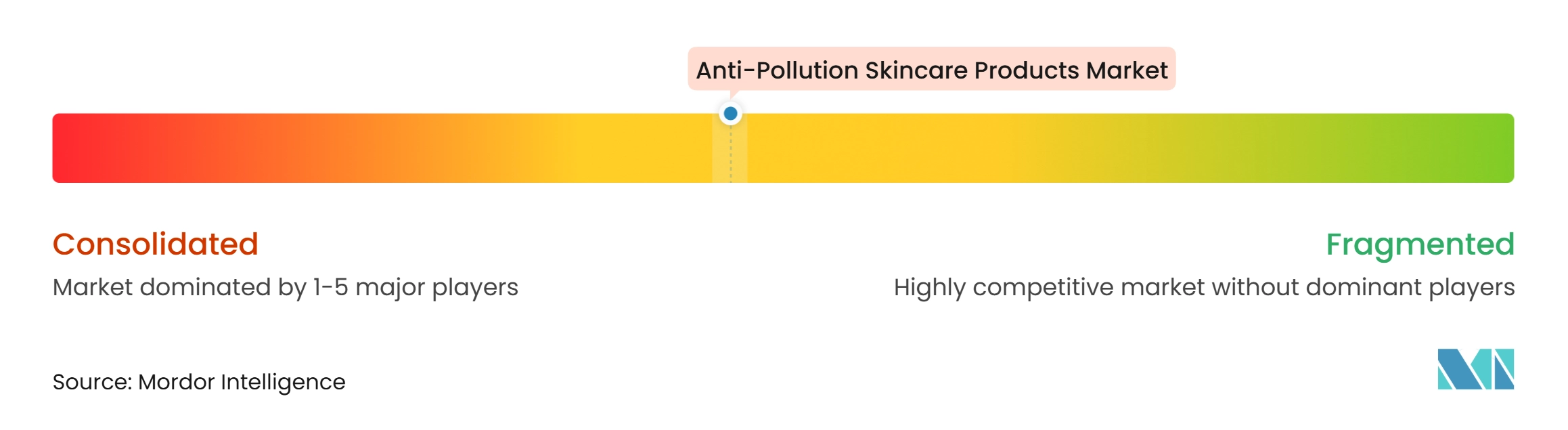
The anti-pollution skincare products market is moderately consolidated, with companies such as L’Oréal S.A., The Estée Lauder Companies Inc., Unilever PLC, Shiseido Company, Limited, and The Procter & Gamble Company maintaining strong positions through established brand portfolios, formulation capabilities, and broad distribution networks. These companies compete in the mass-market and premium skincare categories by offering products with antioxidant, hydrating, cleansing, and skin-barrier-support benefits. Product efficacy, ingredient innovation, brand reputation, and the ability to address pollution-related skin concerns among different consumer groups increasingly drive competitive differentiation.
Product innovation and formulation development are key strategies for manufacturers seeking to expand their anti-pollution skincare portfolios. Shiseido uses its AI-powered VOYAGER formulation platform, which draws on more than 500,000 formulation data points, to develop innovative suncare products. In May 2025, the company launched Sengan Serum, a washable serum formulated to provide hydration during morning cleansing. Similarly, in August 2025, Beiersdorf incorporated its EPICELLINE® technology into a NIVEA mass-market serum, expanding the use of an innovation previously featured in its Eucerin portfolio. These developments highlight how established companies use research capabilities and proprietary ingredients to differentiate their offerings across price ranges.
Distribution expansion, digital commerce, and consumer trust also shape competitive positioning in the global anti-pollution skincare products market. Leading manufacturers use pharmacies, specialty beauty retailers, department stores, and e-commerce platforms to improve product accessibility and engage consumers. Online channels enable companies to reach younger consumers and broaden international sales; however, counterfeit products and unauthorized listings continue to challenge established brands. Companies also focus on transparent ingredient information, product safety, and substantiated skincare claims to build consumer confidence. Maintaining consistent product quality, strong brand recognition, and effective omnichannel distribution remains essential to sustaining competitiveness.
Anti-Pollution Skincare Products Industry Leaders
-
L’Oréal S.A.
-
The Estée Lauder Companies Inc.
-
Unilever PLC
-
The Procter & Gamble Company
-
Shiseido Company, Limited
- *Disclaimer: Major Players sorted in no particular order
Anti-Pollution Skincare Products Market Companies Covered in this Report
- L’Oréal S.A.
- The Estée Lauder Companies Inc.
- Unilever PLC
- Shiseido Company, Limited
- The Procter & Gamble Company
- Beiersdorf AG
- Kao Corporation
- Johnson & Johnson
- Amorepacific Corporation
- LG H&H Co., Ltd.
- Natura &Co
- KOSÉ Corporation
- Coty Inc.
- Clarins Group
- Pierre Fabre Laboratories
- Mary Kay Inc.
- The Avon Company
- LVMH Moët Hennessy Louis Vuitton SE
- L'Occitane Group
- Colgate-Palmolive Company
Recent Industry Developments in Anti-Pollution Skincare Products Market
- March 2026: Galderma launched Cetaphil AM/PM Antioxidant Serums, featuring its patent-pending Gallic-AOX Power Technology. This technology combines gallic acid and vitamin E to strengthen antioxidant protection and improve skin resilience.
- December 2025: Shiseido presented results on a water-based sunscreen technology that adjusts its moisture retention in response to changes in external humidity. The technology eliminates UV-scattering agents and improves cleansing performance.
- July 2025: Pour Moi Skincare launched its AI-powered Drop Finder for Smoke Alarm Drops, a pollution-protection serum booster formulated to shield the skin from industrial emissions, traffic pollution, wildfire smoke, and secondhand smoke.
- May 2025: Shiseido launched Sengan Serum, a washable-type beauty serum that delivers hydration during morning cleansing. The product merges cleansing and serum steps and was initially available at Shiseido Beauty Park.
Global Anti-Pollution Skincare Products Market Report Scope
Anti-pollution skincare products are designed to protect the skin from environmental pollutants and other external stressors. The global anti-pollution skincare products market is segmented by product type, category, price range, end user, distribution channel, and geography. By product type, the market includes facial cleansers, moisturizers and creams, serums and essences, face masks and packs, facial mists and sprays, and other product types. By category, it is divided into organic and conventional products. By price range, the market is classified into mass and premium segments. By end user, it is segmented into kids and adults. By distribution channel, it includes supermarkets/hypermarkets, pharmacies and drugstores, online retail stores, and other distribution channels. Geographically, the market covers North America, Europe, Asia-Pacific, South America, and the Middle East and Africa. Market sizing and forecasts are provided in value (USD).
Segmentation Overview
| Facial Cleansers |
| Moisturizers and Creams |
| Serums and Essences |
| Face Masks and Packs |
| Facial Mists and Sprays |
| Other Product Types |
| Organic |
| Conventional |
| Mass |
| Premium |
| Kids |
| Adults |
| Supermarkets/Hypermarkets |
| Pharmacies and Drugstores |
| Online Retail Stores |
| Other Distribution Channels |
| North America | United States |
| Canada | |
| Mexico | |
| Rest of North America | |
| Europe | Germany |
| United Kingdom | |
| Italy | |
| France | |
| Spain | |
| Poland | |
| Belgium | |
| Sweden | |
| Rest of Europe | |
| Asia-Pacific | China |
| Japan | |
| India | |
| Australia | |
| Indonesia | |
| South Korea | |
| Thailand | |
| Singapore | |
| Rest of Asia-Pacific | |
| South America | Brazil |
| Argentina | |
| Colombia | |
| Chile | |
| Peru | |
| Rest of South America | |
| Middle East and Africa | South Africa |
| Saudi Arabia | |
| United Arab Emirates | |
| Nigeria | |
| Egypt | |
| Morocco | |
| Turkey | |
| Rest of Middle East and Africa |
| By Product Type | Facial Cleansers | |
| Moisturizers and Creams | ||
| Serums and Essences | ||
| Face Masks and Packs | ||
| Facial Mists and Sprays | ||
| Other Product Types | ||
| By Category | Organic | |
| Conventional | ||
| By Price Range | Mass | |
| Premium | ||
| By End User | Kids | |
| Adults | ||
| By Distribution Channel | Supermarkets/Hypermarkets | |
| Pharmacies and Drugstores | ||
| Online Retail Stores | ||
| Other Distribution Channels | ||
| By Geography | North America | United States |
| Canada | ||
| Mexico | ||
| Rest of North America | ||
| Europe | Germany | |
| United Kingdom | ||
| Italy | ||
| France | ||
| Spain | ||
| Poland | ||
| Belgium | ||
| Sweden | ||
| Rest of Europe | ||
| Asia-Pacific | China | |
| Japan | ||
| India | ||
| Australia | ||
| Indonesia | ||
| South Korea | ||
| Thailand | ||
| Singapore | ||
| Rest of Asia-Pacific | ||
| South America | Brazil | |
| Argentina | ||
| Colombia | ||
| Chile | ||
| Peru | ||
| Rest of South America | ||
| Middle East and Africa | South Africa | |
| Saudi Arabia | ||
| United Arab Emirates | ||
| Nigeria | ||
| Egypt | ||
| Morocco | ||
| Turkey | ||
| Rest of Middle East and Africa | ||
Key Questions Answered in the Report
How large is the global anti-pollution skincare products category?
The category is valued at USD 14.34 billion in 2026 and is projected to reach USD 21.13 billion by 2032 at a 6.75% CAGR. Growth reflects demand for daily protective and reparative products.
Which anti-pollution skincare product type leads sales?
Moisturizers and creams lead with 39.83% of 2026 revenue because their leave-on format fits daily barrier-support routines. They are familiar products across mass and premium price tiers.
Which distribution channel is growing fastest for anti-pollution skincare products?
Online retail stores are projected to grow at an 8.28% CAGR through 2032, supported by digital product discovery and wider access. Authorized sellers remain important to protect product authenticity.
Why are natural anti-pollution skincare formulations gaining traction?
Organic and natural formulations are forecast to grow at an 8.24% CAGR through 2032 as consumers seek botanical ingredients, traceability, and documented efficacy. Fermentation-derived ingredients can support reliable supply and purity.