
Gastrin Hormone Market Size and Share
Market Overview
| Study Period | 2020 - 2031 |
|---|---|
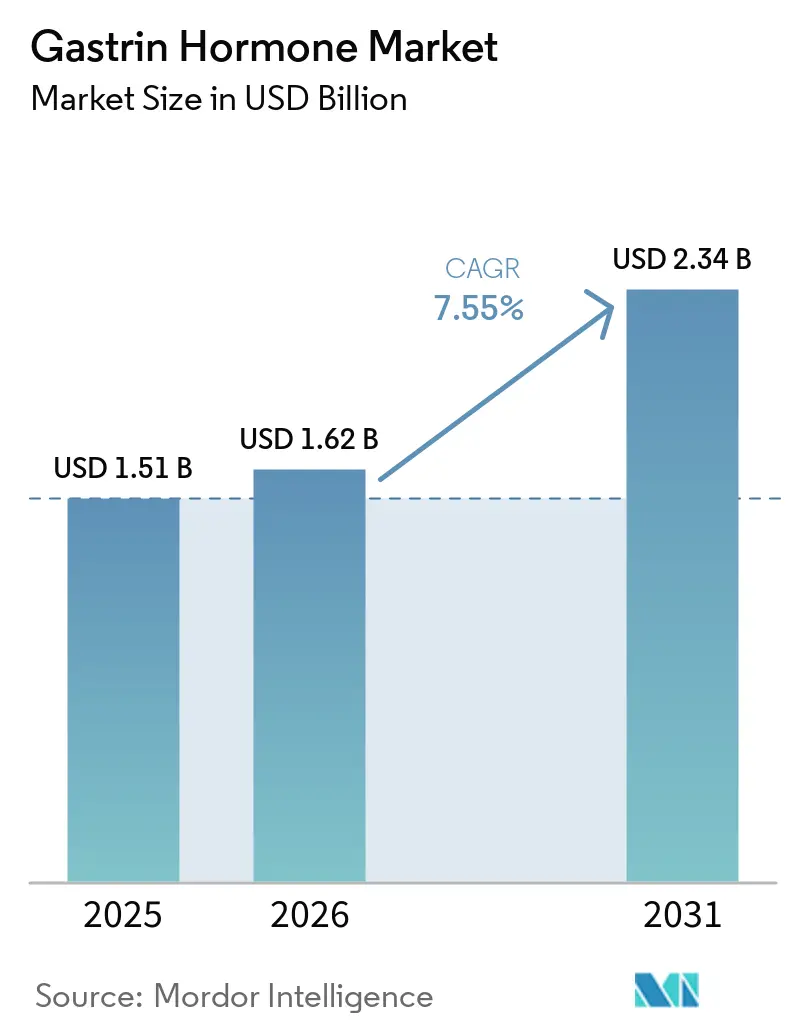
| Market Size (2026) | USD 1.62 Billion |
| Market Size (2031) | USD 2.34 Billion |
| Growth Rate (2026 - 2031) | 7.55 % |
| Fastest Growing Market | Asia-Pacific |
| Largest Market | North America |
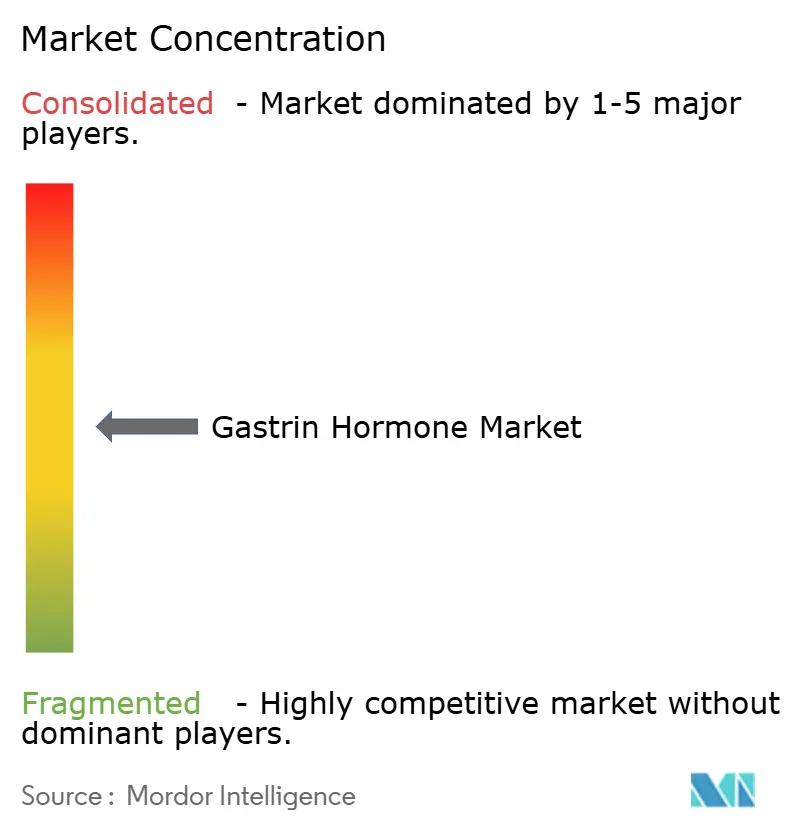
| Market Concentration | Medium |
Major Players *Disclaimer: Major Players sorted in no particular order Image © Mordor Intelligence. Reuse requires attribution under CC BY 4.0. | |
Gastrin Hormone Market Analysis by Mordor Intelligence
The Gastrin Hormone Market size is projected to expand from USD 1.51 billion in 2025 and USD 1.62 billion in 2026 to USD 2.34 billion by 2031, registering a CAGR of 7.55% between 2026 and 2031.
The Gastrin hormone market is supported by broader use of synthetic peptides in diagnostic reagents, research consumables, and receptor-focused oncology research. Improvements in solid-phase peptide synthesis have raised purity and shortened production times, which supports a more reliable supply for laboratories. Clinical screening pathways for atrophic gastritis and Helicobacter pylori infection are increasing the use of Gastrin-17 panel testing. Suppliers are also adjusting their offerings as laboratories seek platform-specific assays, reference materials, and near-patient testing formats. Regulatory requirements for in vitro diagnostics and peptide quality continue to shape product development and laboratory purchasing.
Key Report Takeaways
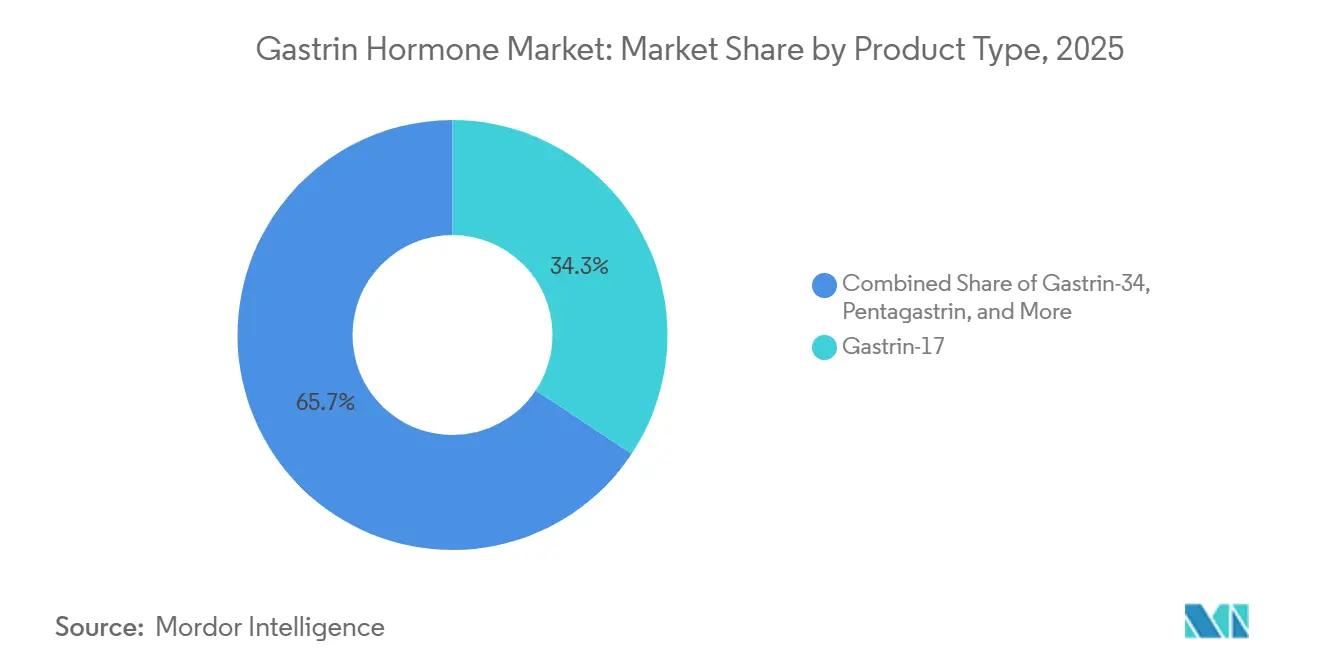
- By product type, Gastrin-17 held 34.31% of the Gastrin hormone market in 2025 and is expected to record the highest CAGR at 8.25% through 2031.
- By salt type, ammonium acetate held 45.24% in 2025, while trifluoroacetate is projected at 8.22% CAGR through 2031.
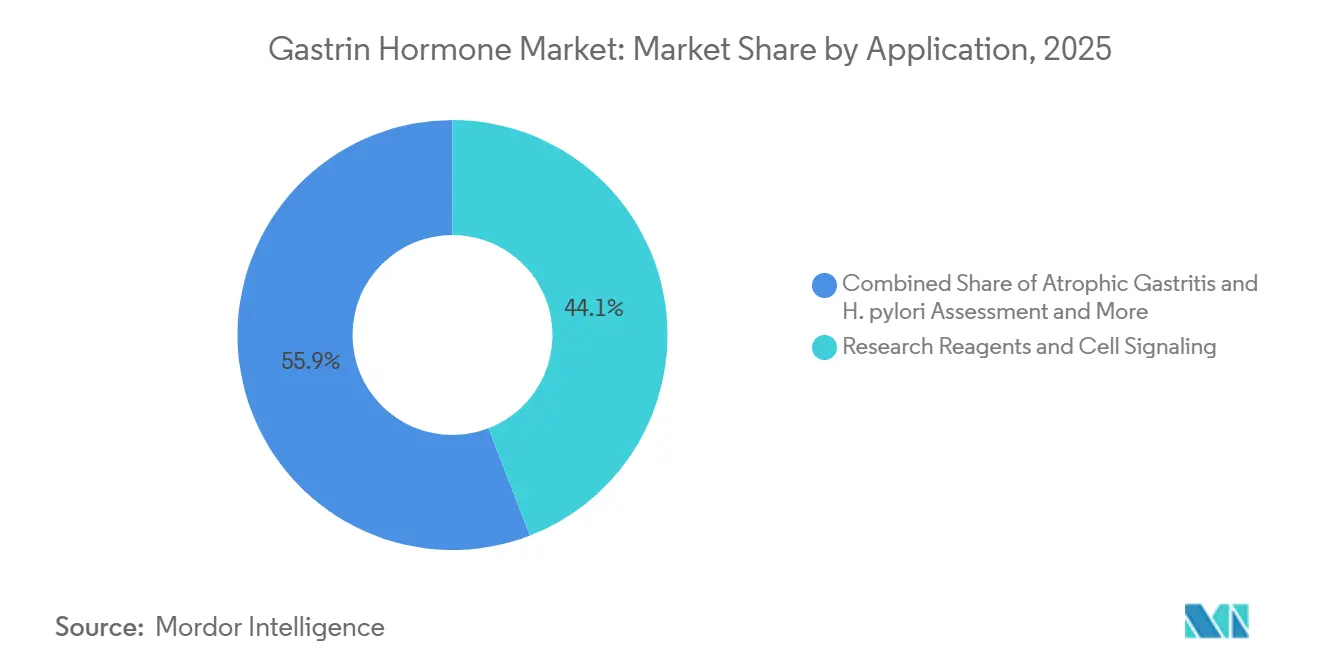
- By application, research reagents and cell signaling held 44.14% in 2025, while atrophic gastritis and Helicobacter pylori assessment are expected to record the highest CAGR at 8.42% through 2031.
- By end user, hospitals held 46.14% in 2025, while diagnostic laboratories are expected to record the highest CAGR at 8.12% through 2031.
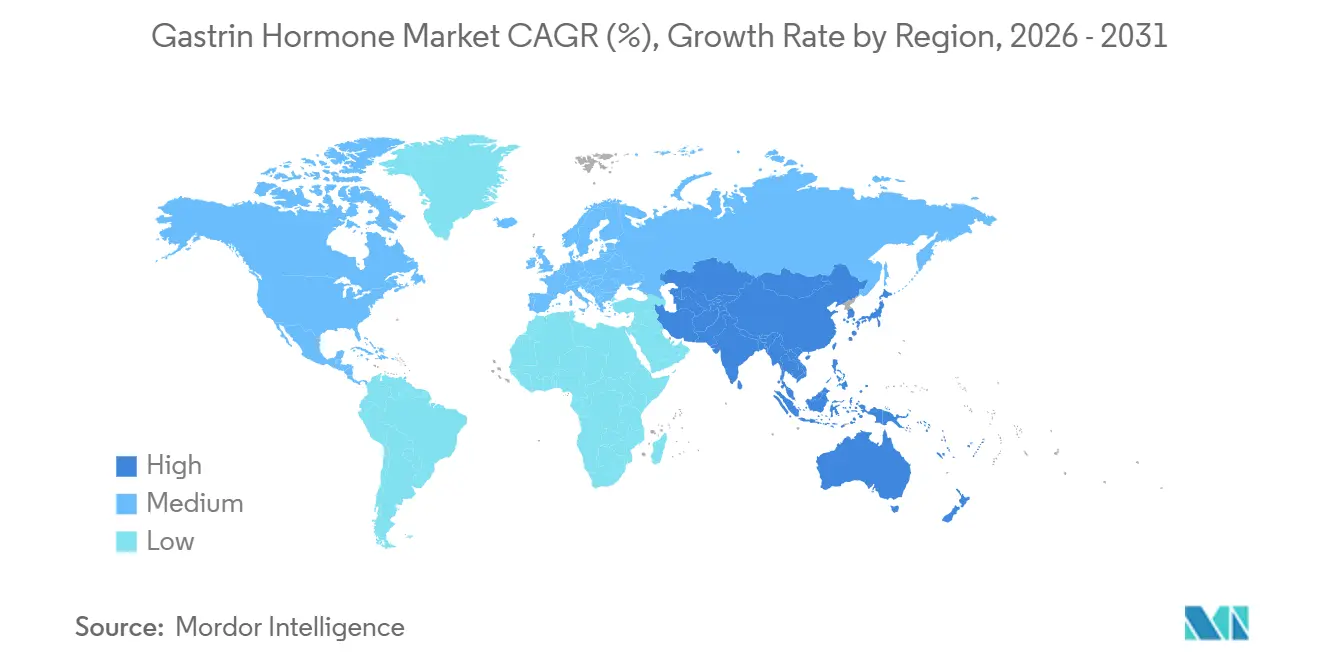
- By geography, North America held 35.61% of revenue in 2025, while Asia-Pacific is projected to grow at a CAGR of 8.25% through 2031.
Note: Market size and forecast figures in this report are generated using Mordor Intelligence’s proprietary estimation framework, updated with the latest available data and insights as of January 2026.
Market Trends and Insights
Drivers Impact Analysis of Gastrin Hormone Market*
| Driver | (~) % Impact on CAGR Forecast | Geographic Relevance | Impact Timeline |
|---|---|---|---|
| Synthetic Gastrin and Pentagastrin Reagent Availability | +1.8% | Global, with production concentration in North America, Europe, and China | Short term (≤ 2 years) |
| Gastrin-17 Testing for Atrophic Gastritis and H. pylori Disease | +1.5% | Asia-Pacific core, with expansion into Europe and the Middle East and Africa | Medium term (2-4 years) |
| Gastric Organoid and Cancer Research Use | +1.0% | North America and Europe academic research hubs, with growth in Asia-Pacific | Medium term (2-4 years) |
| Hypergastrinemia and Zollinger-Ellison Syndrome Referrals | +0.7% | North America and Europe, with specialist gastroenterology centers globally | Medium term (2-4 years) |
| Near-Patient Gastric Biomarker Testing | +1.2% | Asia-Pacific and South America, with early use in India, Chile, and the United Kingdom | Medium term (2-4 years) |
| Gastrin-Targeted Oncology and Receptor Research | +0.8% | North America and Europe for clinical work, Asia-Pacific for preclinical work | Long term (≥ 4 years) |
| Source: Mordor Intelligence | |||
Rising Availability of Synthetic Gastrin and Pentagastrin Reagents
The Gastrin hormone market benefits from synthetic supply that is less dependent on biological sourcing. GenScript states that its microwave-assisted PepPower platform achieves a synthesis success rate above 95% and can deliver peptides at 95% purity or higher within 5 business days. Faster synthesis can improve access to research-grade gastrin and pentagastrin for laboratories that require custom peptides. Merck KGaA lists its Sigma-Aldrich Gastrin I product at 95% or higher HPLC purity, showing the continued availability of catalog synthetic material. A 2025 study reported that residual trifluoroacetic acid in synthetic peptides can affect cell-based work when counterion exchange is not performed. These quality considerations can increase demand for materials with validated purity and counterion profiles.
Expansion of Gastrin-17 Testing for Atrophic Gastritis and Helicobacter pylori-Associated Disease
The Gastrin hormone market gains clinical support as Gastrin-17 becomes part of noninvasive gastric risk assessment. The 2025 MAPS III guideline recommends serum pepsinogen I and the pepsinogen I to pepsinogen II ratio for identifying advanced atrophic gastritis that requires endoscopic surveillance. A 2025 BMC Gastroenterology study found that a panel of pepsinogen I, pepsinogen II, pepsinogen ratio, and Gastrin-17 achieved an AUC of 0.759 for progressive atrophic gastritis. Biohit reported that its GastroPanel program in Chile was associated with an 87% reduction in endoscopy waiting lists. Near-patient formats can extend this testing beyond central laboratories when referral pathways support their use. These programs create recurring demand for assay kits, calibrators, and other consumables.
Growing Use of Gastrin in Gastric Organoid and Cancer Research
The Gastrin hormone market also serves academic and biopharmaceutical research through gastric organoid culture. A 2025 Nature Communications study used 10 nM gastrin in primary human 3D gastric tumor organoid media for large-scale CRISPR screening[1]. Protocol-based use can make gastrin a recurring research reagent as organoid models are used in drug discovery. This research also supports work on the cholecystokinin-2 receptor, which is a target for receptor-directed radioligands. A 2026 RSC Advances study found that gastramide theranostic compounds GA4 and GA13 extended median survival by 22-23.5 days in AR42J xenograft studies, compared with 6 days for CP04. The Gastrin hormone industry could see further demand for receptor-grade fragments if these programs move beyond preclinical research.
Increasing Referral for Hypergastrinemia and Zollinger-Ellison Syndrome Workups
The Gastrin hormone market is supported by referrals for hypergastrinemia and Zollinger-Ellison syndrome workups. Clinical testing requires patients using proton pump inhibitors to stop treatment before fasting serum gastrin measurement, which can complicate test scheduling. The secretin stimulation test uses serial gastrin measurements and has reported sensitivity of 85-87% for Zollinger-Ellison syndrome at a threshold of 200 pg/mL or higher. A 2025 analysis of 59 ENETS Centers of Excellence found that 98% used fasting serum gastrin, while 55% combined it with gastric pH or provocative testing. Variation in diagnostic practice can lead to repeat testing and continued use of immunoassay reagents. The same care pathway limits routine ordering because testing remains linked to specific clinical questions.
Restraints Impact Analysis of Gastrin Hormone Market*
| Restraint | (~) % Impact on CAGR Forecast | Geographic Relevance | Impact Timeline |
|---|---|---|---|
| Preanalytical Variability From Fasting, PPI Use, Kidney Failure, and Biotin | -0.8% | Global, with the strongest effect in ambulatory and community settings without pretest protocols | Medium term (2-4 years) |
| Limited Clinical Translation of CCK2 Receptor Antagonists | -0.6% | North America and Europe clinical pipeline, with global preclinical activity | Long term (≥ 4 years) |
| Low Disease-Specific Gastrin Test Ordering | -0.5% | Global, with a stronger effect in primary care and lower-income settings | Short term (≤ 2 years) |
| Cold-Chain, Purity, and Lot-Consistency Requirements | -0.4% | Global, with added challenges in tropical climates and emerging markets | Medium term (2-4 years) |
| Source: Mordor Intelligence | |||
Preanalytical Variability From Fasting, Proton Pump Inhibitor Use, Kidney Failure, and Biotin
Preanalytical variability limits more routine use across the Gastrin hormone market. Proton pump inhibitors elevate fasting serum gastrin by suppressing gastric acid, and patients are generally asked to discontinue them before testing. Biotin can interfere with assays that use streptavidin-biotin technology, which adds another preparation requirement for patients. A Heidelberg laboratory reported in July 2026 that repeated Siemens IMMULITE reagent supply disruptions led it to switch to the Yhlo iFlash Gastrin-17 assay on August 1, 2026. Such disruptions can interrupt laboratory workflows and require revised reference intervals and test procedures. Laboratories need validated collection, storage, and assay procedures to reduce avoidable result variation.
Limited Clinical Translation of CCK2 Receptor Antagonists
The Gastrin hormone market has limited therapeutic demand from CCK2 receptor antagonists because no marketed therapy has yet emerged. Netazepide remains in clinical development for type 1 gastric neuroendocrine tumors, while nastorazepide has been evaluated in pancreatic cancer. A 2026 Theranostics study reported that [177Lu]Lu-DOTAGA-NPP radioligands had 93.1% intact drug at 1 hour, compared with 66.1% for DOTA-MGS5[2]. The study did not report significant tumor growth inhibition in the xenograft model. This leaves oncology use concentrated in research compounds and preclinical reagent volumes. Cold-chain control, purity assurance, and lot consistency also remain essential for peptide products moving through research and diagnostic workflows.
*Our forecasts treat driver/restraint impacts as directional, not additive. The impact forecasts reflect baseline growth, mix effects, and variable interactions.
Gastrin Hormone Market Segment Analysis
By Product Type:
Gastrin-17 Commands Both Scale and GrowthGastrin-17 held 34.31% of the Gastrin hormone market share in 2025 and is projected to grow at a CAGR of 8.25% through 2031. Gastrin-17 represents 80-90% of biologically active circulating gastrin, supporting its use in clinical testing and research. The PZ Cormay AURYX 90 Gastrin-17 ECLIA kit has a measuring range of 0.6-500 pmol/L and 56-day onboard stability. These features support use on laboratory platforms that need consistent throughput and reagent stability.
Gastrin-34, minigastrin, and other fragments address more specialized work in neuroendocrine research and tumor biology. Pentagastrin retains a role in gastric acid secretion testing and maximal acid output assessment. Control and reference materials become more important as laboratories use different platforms and measurement units. The July 2026 method change at a German laboratory moved gastrin reporting from ng/L to pmol/L after a platform migration. This transition creates a need for suitable calibrators, controls, and method verification.

By Salt Type:
Trifluoroacetate Gains Ground on Emerging Assay Specificity DemandsAmmonium acetate held the largest salt type share at 45.24% in 2025. Acetate-form gastrin remains relevant in cell-based and bioassay applications where residual trifluoroacetic acid can be a concern. A 2025 scientific review discussed the importance of counterion analysis and exchange for synthetic peptides. This supports continued use of salt forms selected for specific assay conditions.
Trifluoroacetate is projected to grow at a CAGR of 8.22% through 2031. Fmoc solid-phase peptide synthesis commonly produces trifluoroacetate-salt peptides, and trifluoroacetic acid is also used in HPLC-based purity work. The 2025 United States Pharmacopeia chapter on trifluoroacetic acid in peptides sets quantification expectations for the substance as an impurity and counterion. This raises quality-control needs for materials supplied for chemistry, manufacturing, and controls work. Other salt types, including acetonitrile and hydrochloride variants, remain specialized formulations.
By Application:
Atrophic Gastritis Testing Outpaces All Other ApplicationsResearch reagents and cell signaling held 44.14% of the Gastrin hormone market in 2025. Researchers use gastrin as a culture media supplement, receptor ligand, and probe of secretory pathways. Gastric organoid models embed the reagent in recurring laboratory protocols. A 2025 Nature Communications study illustrates this use through gastrin supplementation in primary human gastric organoid media.
Atrophic gastritis and Helicobacter pylori assessment are projected to grow at a CAGR of 8.42% through 2031. A 2025 analysis estimated that Helicobacter pylori infection was attributable to 76% of expected future gastric cancer cases, representing 15.6 million lifetime cases among people born from 2008-2017. Published 2024 multicenter data from China reported 87.21% sensitivity and 91.86% specificity for combined pepsinogen and Gastrin-17 testing in early gastric cancer screening. Hypergastrinemia and Zollinger-Ellison syndrome workups remain specialized applications, while autoimmune gastritis and achlorhydria assessment support additional demand. The Gastrin hormone industry also serves these clinical applications through assay consumables and reference materials.
By End User:
Diagnostic Laboratories Outpace Hospitals in Growth MomentumHospitals held 46.14% of the Gastrin hormone market share in 2025. They remain important for complex immunoassay workups, secretin stimulation tests, and inpatient gastroenterology panels. Siemens lists the IMMULITE 2000 XPi among its laboratory immunoassay systems and assay menus. Hospital demand remains tied to specialist care and established testing protocols.
Diagnostic laboratories are projected to grow at a CAGR of 8.12% through 2031. Standalone laboratories can use standardized platforms for higher-volume routine testing. The Yhlo iFlash assay used in the 2026 German laboratory change specifically measures Gastrin-17 at a precision range of 1.5-7.5 pmol/L. Specialty clinics, research institutes, and biopharmaceutical companies add demand through eradication programs, organoid research, and peptide development work. CPC Scientific states that its Rocklin facility can produce more than 1,000 kg of peptide API annually[3].
Geography Analysis
North America Gastrin Hormone Market
North America held a 35.61% regional share of the Gastrin hormone market in 2025. The United States supports testing through advanced immunoassay infrastructure, gastroenterology services, and specialist endocrinology networks. Thermo Fisher Scientific lists its Human Gastrin ELISA Kit with 9.38 pg/mL sensitivity and an assay range of 15.63-1,000 pg/mL. Canada maintains testing through centralized provincial reference laboratories. Mexico could develop additional testing capacity as population-based Helicobacter pylori screen-and-treat programs are implemented.
Europe Gastrin Hormone Market
Europe ranks second and has varied national approaches to gastrin testing. Germany, the United Kingdom, France, Italy, and Spain support demand through hospitals and specialist laboratories. The MAPS III guideline supports greater consistency in serology-based assessment of atrophic gastritis. In August 2026, MVZ Labor Dr. Limbach changed from Siemens IMMULITE to the Yhlo iFlash Gastrin-17 assay after recurrent reagent supply difficulties. The change shows why laboratories may seek alternatives to single-platform dependence.
APAC and South America Gastrin Hormone Market
Asia-Pacific is projected to record the highest regional CAGR at 8.25% through 2031. China, Japan, India, South Korea, and Australia have substantial Helicobacter pylori and atrophic gastritis testing needs. China published national standard T/GDMDMA 0054-2026 for Gastrin-17 CLIA testing kits in 2026. Japan combines Helicobacter pylori serology and pepsinogen testing within established gastric cancer screening practices. India was a clinical trial site for Biohit GastroPanel Quick Test in 2025, where biopsy-confirmed atrophic gastritis was found in 15.3% of gastroscopy referral patients, and the test achieved an AUC of 0.990 for corpus atrophy. South America, particularly Brazil and Chile, is also building structured gastric biomarker screening programs.
Competitive Landscape
The Gastrin hormone market is moderately fragmented across peptide synthesis and in vitro diagnostics. Siemens Healthineers has an established laboratory base through the IMMULITE chemiluminescent immunoassay platform. Thermo Fisher Scientific and Merck KGaA participate through research reagents and laboratory supply channels. PZ Cormay offers the AURYX 90 Gastrin-17 ECLIA system as a CE-marked option with 56-day onboard stability. Reagent supply issues can create opportunities for competing diagnostic platforms.
In August 2026, the Heidelberg reference laboratory MVZ Labor Dr. Limbach moved its gastrin testing from Siemens IMMULITE to the Yhlo iFlash Gastrin-17 assay. Merck KGaA announced an agreement in June 2026 to acquire Bio-Techne Corporation for USD 11.3 billion, which would combine Merck’s Sigma-Aldrich catalog with Bio-Techne’s immunoassay kits, recombinant proteins, and antibodies. The proposed transaction is expected to close in late 2026 or early 2027, subject to regulatory approvals. GenScript competes through automated peptide synthesis, while CPC Scientific and Creative Peptides compete through custom and GMP-grade peptide services.
Biohit’s GastroPanel Quick Test NT measures Gastrin-17 and 3 complementary biomarkers from a fingertip blood sample in 15 minutes. Biohit also has a licensing arrangement with Randox for a multiplex CE-labeled gastrointestinal panel, which can extend distribution. The Gastrin hormone market has an unmet need for standardized cross-platform Gastrin-17 reference materials. Differences between ng/L and pmol/L reporting illustrate this need during assay platform changes.
Gastrin Hormone Industry Leaders
-
Merck KGaA
-
Bio-Techne Corporation
-
RayBiotech Life, Inc.
-
Thermo Fisher Scientific Inc.
-
Biohit Oyj
- *Disclaimer: Major Players sorted in no particular order
Gastrin Hormone Market Companies Covered in this Report
- Abcam
- Abcepta
- Biohit
- Bio-Techne
- Cayman Chemical Company
- CPC Scientific, Inc.
- Creative Peptides
- Epitope Diagnostics
- Genscript
- Hello Bio Ltd.
- Isca Biochemicals
- KareBay Biochem, Inc.
- Merck
- PZ Cormay S.A.
- Qingdao Echemi Technology Co., Ltd.
- RayBiotech Life, Inc.
- Siemens Healthineers
- Thermo Fisher Scientific
- Tocris Bioscience
Recent Industry Developments in Gastrin Hormone Market
- July 2026: MVZ Labor Dr. Limbach & Kollegen in Heidelberg, Germany, migrated serum gastrin testing from the Siemens IMMULITE platform to the Yhlo iFlash G-17-specific assay following repeated reagent supply difficulties, shifting the unit of measurement from ng/L to pmol/L and updating reference intervals, a development that underscores supply chain fragility in the European gastrin assay market.
- June 2026: Merck KGaA, Darmstadt, Germany, announced a definitive agreement to acquire Bio-Techne Corporation for USD 11.3 billion, a 36% premium to Bio-Techne's one-month VWAP, combining Merck's Sigma-Aldrich gastrin peptide and reagent catalog with Bio-Techne's immunoassay kits, recombinant proteins, and antibodies. The transaction is expected to close by late 2026 or early 2027, pending customary regulatory approvals.
Global Gastrin Hormone Market Report Scope
According to the scope of the report, gastrin hormone products refer to substances or formulations that involve or stimulate the production of gastrin, a peptide hormone produced by G cells in the stomach lining. Gastrin plays a key role in regulating gastric acid secretion, promoting gastric motility, and supporting the growth of the gastric mucosa. These products may be used in medical research, diagnostic testing, or therapeutic applications related to gastrointestinal function.
The gastrin hormone market is segmented by product type into Gastrin-17, Gastrin-34, minigastrin and gastrin fragments, pentagastrin, and gastrin-related control and reference materials; by salt type into ammonium acetate, trifluoroacetate, and other salt types; by application into research reagents and cell signaling, gastrin and Gastrin-17 testing, atrophic gastritis and H. pylori assessment, hypergastrinemia and Zollinger–Ellison syndrome workup, pernicious anemia and achlorhydria assessment, and other applications; by end user into hospitals, diagnostic laboratories, specialty clinics and gastroenterology centers, biopharmaceutical and pharmaceutical companies, academic and research institutes, and other end users; and by geography into North America, Europe, Asia-Pacific, the Middle East and Africa, and South America. The market report also covers the estimated market sizes and trends for 17 countries across major regions globally. For each segment, the market size and forecast are provided in terms of value (USD).
Segmentation Overview
| Gastrin-17 |
| Gastrin-34 |
| Minigastrin and Gastrin Fragments |
| Pentagastrin |
| Gastrin-Related Control and Reference Materials |
| Ammonium Acetate |
| Trifluoroacetate |
| Other Salt Types |
| Research Reagents and Cell Signaling |
| Gastrin and Gastrin-17 Testing |
| Atrophic Gastritis and H. pylori Assessment |
| Hypergastrinemia and Zollinger-Ellison Syndrome Workup |
| Pernicious Anemia and Achlorhydria Assessment |
| Other Applications |
| Hospitals |
| Diagnostic Laboratories |
| Specialty Clinics and Gastroenterology Centers |
| Biopharmaceutical and Pharmaceutical Companies |
| Academic and Research Institutes |
| Other End Users |
| North America | United States |
| Canada | |
| Mexico | |
| Europe | Germany |
| United Kingdom | |
| France | |
| Italy | |
| Spain | |
| Rest of Europe | |
| Asia-Pacific | China |
| Japan | |
| India | |
| Australia | |
| South Korea | |
| Rest of Asia-Pacific | |
| Middle East and Africa | GCC |
| South Africa | |
| Rest of Middle East and Africa | |
| South America | Brazil |
| Argentina | |
| Rest of South America |
| By Product Type | Gastrin-17 | |
| Gastrin-34 | ||
| Minigastrin and Gastrin Fragments | ||
| Pentagastrin | ||
| Gastrin-Related Control and Reference Materials | ||
| By Salt Type | Ammonium Acetate | |
| Trifluoroacetate | ||
| Other Salt Types | ||
| By Application | Research Reagents and Cell Signaling | |
| Gastrin and Gastrin-17 Testing | ||
| Atrophic Gastritis and H. pylori Assessment | ||
| Hypergastrinemia and Zollinger-Ellison Syndrome Workup | ||
| Pernicious Anemia and Achlorhydria Assessment | ||
| Other Applications | ||
| By End User | Hospitals | |
| Diagnostic Laboratories | ||
| Specialty Clinics and Gastroenterology Centers | ||
| Biopharmaceutical and Pharmaceutical Companies | ||
| Academic and Research Institutes | ||
| Other End Users | ||
| By Geography | North America | United States |
| Canada | ||
| Mexico | ||
| Europe | Germany | |
| United Kingdom | ||
| France | ||
| Italy | ||
| Spain | ||
| Rest of Europe | ||
| Asia-Pacific | China | |
| Japan | ||
| India | ||
| Australia | ||
| South Korea | ||
| Rest of Asia-Pacific | ||
| Middle East and Africa | GCC | |
| South Africa | ||
| Rest of Middle East and Africa | ||
| South America | Brazil | |
| Argentina | ||
| Rest of South America | ||
Key Questions Answered in the Report
What drives the Gastrin hormone market?
The Gastrin hormone market is supported by synthetic peptide supply, Gastrin-17 testing for atrophic gastritis, Helicobacter pylori assessment, and gastric organoid research.
What is the projected growth rate for the Gastrin hormone market?
The Gastrin hormone market is projected to grow at a CAGR of 7.55% from 2026 to 2031, reaching USD 2.34 billion by 2031.
Which Gastrin hormone market product has the largest share?
Gastrin-17 held the largest product type share at 34.31% in 2025 and is projected to grow at a CAGR of 8.25% through 2031.
Which Gastrin hormone market application is growing fastest?
Atrophic gastritis and Helicobacter pylori assessment is projected to grow at a CAGR of 8.42% through 2031.
Which Gastrin hormone market region is expected to grow fastest?
Asia-Pacific is projected to record the highest regional CAGR at 8.25% through 2031.
What limits wider Gastrin hormone market test use?
Proton pump inhibitor use, fasting requirements, biotin interference, and laboratory reagent supply disruptions can affect testing workflows.