
France Pet Veterinary Diets Market Size and Share
Market Overview
| Study Period | 2021 - 2031 |
|---|---|
| Forecast Data Period | 2026 - 2031 |
| Base Year Market Size (2025) | USD 499.10 Million |
| Market Size (2026) | USD 522.20 Million |
| Market Size (2031) | USD 653.10 Million |
| Growth Rate (2026 - 2031) | 4.58 % |
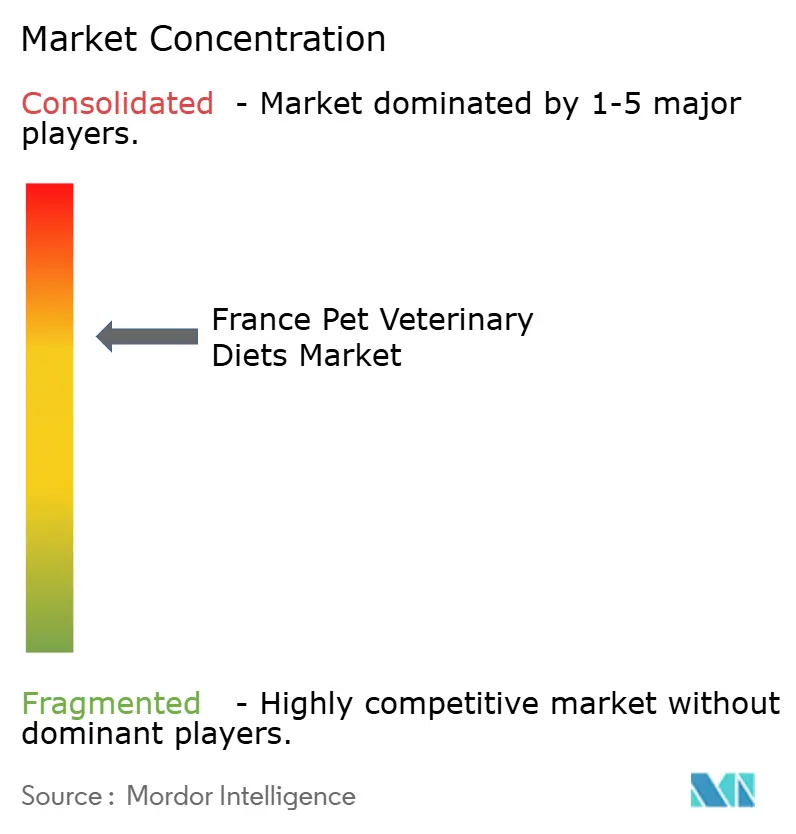
| Market Concentration | Medium |
Major Players *Disclaimer: Major Players sorted in no particular order Image © Mordor Intelligence. Reuse requires attribution under CC BY 4.0. | |
France Pet Veterinary Diets Market Analysis by Mordor Intelligence
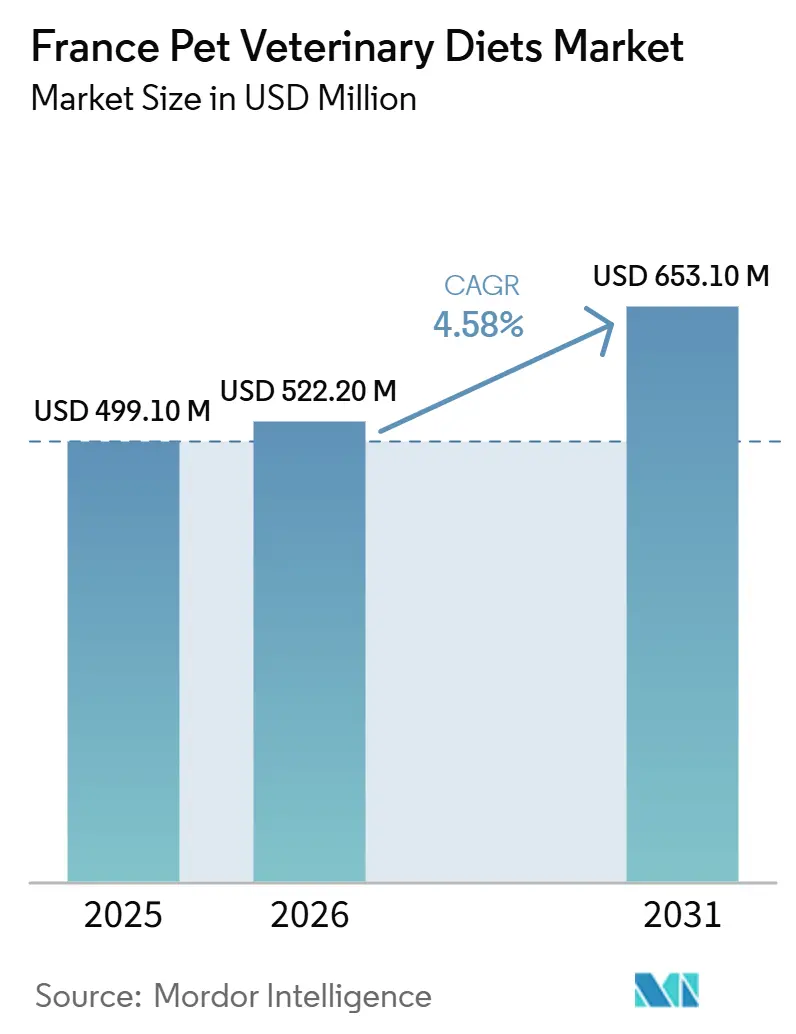
The France pet veterinary diets market size is projected to increase from USD 499.1 million in 2025 to USD 522.2 million in 2026 and reach USD 653.1 million by 2031, growing at a compound annual growth rate (CAGR) of 4.58% over 2026-2031. Growth in the France pet veterinary diets market reflects a shift in pet owner behavior, with condition-specific nutrition increasingly recognized as a component of disease management rather than an optional premium purchase. Veterinarians continue to play a central role in driving this transition, as therapeutic nutrition is typically introduced at the time of diagnosis and reinforced through follow-up consultations. Demand is also expanding beyond long-established chronic conditions, supported by earlier disease detection and preventive health screening that enable timely nutritional intervention. Online refill services and repeat-delivery models are improving treatment continuity by making it easier for pet owners to purchase prescribed diets while remaining within the veterinary care pathway. As a result, competition in the France pet veterinary diets market is increasingly centered on clinically validated formulations, improved palatability, and innovations that enhance long-term compliance with therapeutic nutrition plans.
Key Report Takeaways
- By sub-product, the renal segment held the largest share of the France pet veterinary diets market at 22% in 2025, while the obesity diets segment is projected to register the fastest CAGR of 6.8% from 2026 to 2031.
- By pet type, dogs accounted for the largest share of the France pet veterinary diets market at 56% in 2025, while the other pets segment is projected to register the fastest CAGR of 5.4% from 2026 to 2031.
- By distribution channel, specialty stores held the largest share of the France pet veterinary diets market at 34% in 2025, while the online channel is projected to register the fastest CAGR of 7.2% from 2026 to 2031.
Note: Market size and forecast figures in this report are generated using Mordor Intelligence’s proprietary estimation framework, updated with the latest available data and insights as of January 2026.
France Pet Veterinary Diets Market Trends and Insights
Drivers Impact Analysis*
| Driver | (~) % Impact on CAGR Forecast | Geographic Relevance | Impact Timeline |
|---|---|---|---|
| High Veterinary Visit Frequency for Chronic Pet Conditions in France | +1.0% | France, with stronger effect in major urban care clusters | Medium term (2-4 years) |
| Strong Preference for Veterinarian-Recommended Nutrition in France | +0.9% | France, national | Long term (≥ 4 years) |
| Rising Demand for Prescription Diets for Obesity and Digestive Sensitivities | +0.8% | France, especially urban and peri-urban areas | Medium term (2-4 years) |
| Expansion of E-Commerce and Direct-to-Consumer Access in France | +0.7% | France, led by large cities | Short term (≤ 2 years) |
| Greater Willingness to Trade Up to Premium Functional Pet Food | +0.6% | France, strongest in higher-income urban centers | Medium term (2-4 years) |
| Wider Adoption of Preventive Pet Health Management by French Pet Owners | +0.4% | France, national | Long term (≥ 4 years) |
| Source: Mordor Intelligence | |||
High Veterinary Visit Frequency for Chronic Pet Conditions in France
The France pet veterinary diets market benefits from a care pathway in which many chronic conditions are identified during regular veterinary visits rather than through emergency interventions. Therapeutic diets are typically included in the treatment plan after a clinician explains the condition, the feeding protocol, and the anticipated duration of use. France was home to approximately 16.6 million cats and 9.9 million dogs in 2024, providing a large companion animal population that is progressively aging and contributing to a higher prevalence of renal, urinary, digestive, and weight-related conditions requiring long-term nutritional management. Cats are particularly significant in this pattern, as chronic kidney disease and urinary disorders often require sustained dietary intervention, supporting stable demand in the France pet veterinary diets market. Regions with higher veterinary density can convert diagnoses into diet initiation more quickly than regions with limited access. As preventive screening becomes more common in senior pet care, earlier disease detection is anticipated to increase the adoption of therapeutic diets, benefiting the France pet veterinary diets market.
Strong Preference for Veterinarian-Recommended Nutrition in France
The France pet veterinary diets market remains closely tied to veterinary recommendations, as pet owners continue to rely on veterinarians as the primary source of guidance for therapeutic nutrition. This gives companies that invest in veterinary education, clinical communication, and prescription-channel support a structural competitive advantage. As a result, veterinary clinics play a central role in product selection, refill guidance, and long-term treatment compliance. This high level of professional trust helps the France pet veterinary diets market remain more resilient than conventional premium pet food categories when therapeutic nutrition is clinically indicated. The French Agency for Food, Environmental and Occupational Health and Safety (ANSES) supports the scientific evaluation and regulatory oversight of animal feed safety and nutrition within the broader European Union regulatory framework. This contributes to veterinarian confidence in the clinically formulated therapeutic diets market[1]Source: French Agency for Food, Environmental and Occupational Health and Safety, “Title of the ANSES Page Used,” ANSES, anses.fr.
Rising Demand for Prescription Diets for Obesity and Digestive Sensitivities
The increasing prevalence of obesity and digestive disorders among companion animals is driving demand for prescription veterinary diets in France. Increasing numbers of companion animals present with multiple chronic conditions requiring integrated nutritional management. Digestive prescription diets are also seeing increased adoption as veterinarians manage gastrointestinal disorders associated with food sensitivities, chronic enteropathies, aging, and other underlying health conditions. As more companion animals require nutritional support for multiple concurrent conditions, veterinary professionals are increasingly recommending clinically formulated diets that provide targeted nutritional management while supporting long-term health outcomes. This trend is reinforcing the role of prescription nutrition as a component of veterinary treatment plans in France.
Wider Adoption of Preventive Pet Health Management by French Pet Owners
The growing emphasis on preventive pet healthcare among French pet owners is supporting earlier adoption of veterinary diets as part of routine health management. Veterinarians are increasingly recommending therapeutic nutrition not only for disease treatment but also to manage early-stage health risks and support long-term well-being in companion animals. This trend is particularly evident among senior dogs and cats, as well as pets identified during routine wellness examinations with nutritional vulnerabilities or an increased risk of developing chronic conditions. As preventive healthcare becomes more widely adopted, pet owners are more willing to introduce prescription diets before diseases progress, extending the duration of nutritional management and reinforcing the role of veterinary diets as a component of preventive pet care in France.
Restraints Impact Analysis*
| Restraint | (~) % Impact on CAGR Forecast | Geographic Relevance | Impact Timeline |
|---|---|---|---|
| High Price Premium Versus Standard Pet Food in France | -0.90% | France, national, with greater pressure outside affluent urban areas | Short term (≤ 2 years) |
| Limited Repeat Purchase Compliance for Long-Term Veterinary Diets | -0.60% | France, national | Medium term (2-4 years) |
| Veterinary Prescription Dependency Slowing Unassisted Purchase Conversion | -0.50% | France, with higher friction in lower-access areas | Medium term (2-4 years) |
| Fragmented Consumer Understanding of Clinical Diet Benefits | -0.40% | France, national | Long term (≥ 4 years) |
| Source: Mordor Intelligence | |||
High Price Premium Versus Standard Pet Food in France
The relatively high cost of prescription veterinary diets is a key restraint in the France pet veterinary diets market. Therapeutic formulations are typically priced higher than standard pet food and are often required for long-term management of chronic conditions. While pet owners generally adopt veterinary diets following a clinical diagnosis, maintaining long-term adherence can be challenging due to the recurring financial commitment. This is particularly relevant for households that bear veterinary and nutritional expenses out of pocket without pet insurance support. In addition, prescription diets increasingly compete with premium non-prescription pet foods marketed for general health and wellness, which are not clinically formulated to manage specific medical conditions. As a result, cost considerations and the availability of lower-priced alternatives can reduce long-term compliance with prescribed nutritional regimens, limiting sustained demand for veterinary diets in France.
Fragmented Consumer Understanding of Clinical Diet Benefits
Limited consumer understanding of therapeutic nutrition remains a restraint in the France pet veterinary diets market. Many pet owners do not fully distinguish between prescription veterinary diets and premium pet foods formulated for general health and wellness. This misunderstanding is particularly common when clinical symptoms improve, leading some owners to underestimate the importance of continuing condition-specific nutritional management as recommended by veterinarians. As a result, prescription diets may be discontinued prematurely or replaced with non-therapeutic alternatives that are not designed to manage specific medical conditions. Until consumer understanding improves, misconceptions regarding therapeutic nutrition are likely to constrain adherence to prescribed feeding regimens and limit repeat purchases in the France pet veterinary diets market.
*Our forecasts treat driver/restraint impacts as directional, not additive. The impact forecasts reflect baseline growth, mix effects, and variable interactions.
Segment Analysis
By Sub Product: Renal Holds the Largest Share as Obesity Diets Gain Pace
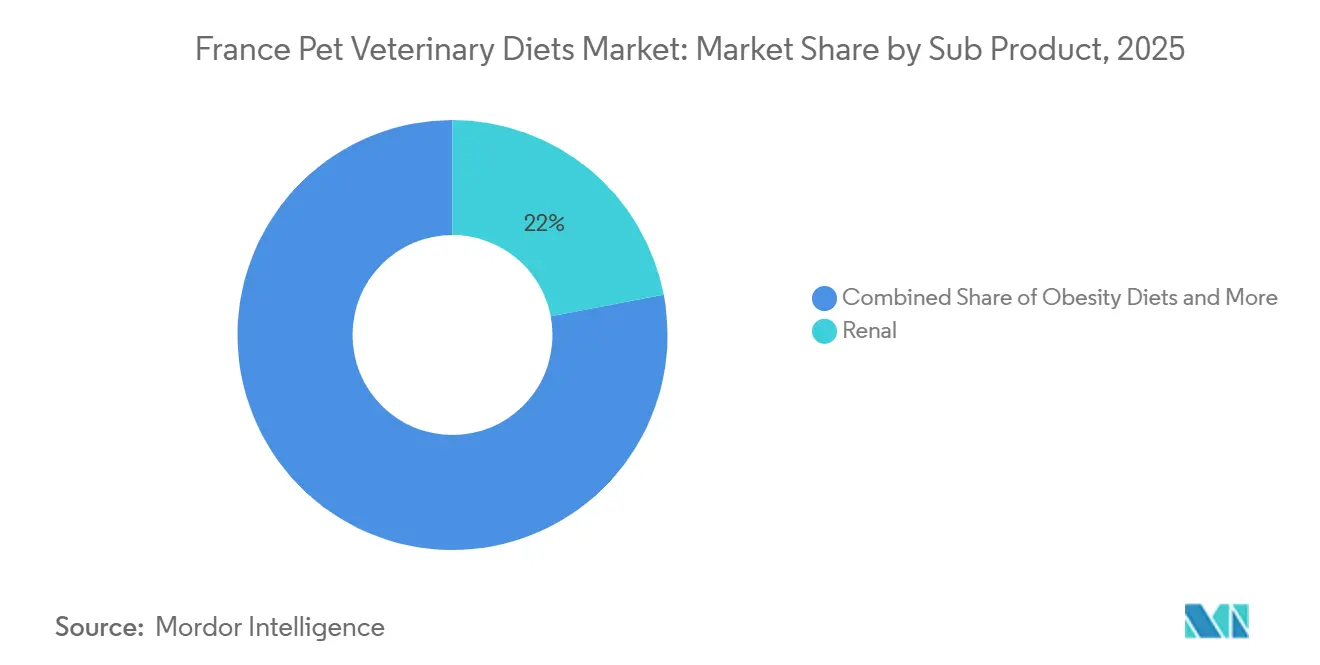
Renal accounted for 22% of France pet veterinary diets market share within the sub product segment in 2025, making it the largest category. This position reflects the long treatment duration associated with kidney disease and the strong clinical reliance on nutrition in disease management. Virbac launched Vikaly in September 2025 as a medicated feed for cats that combines renal kibble with benazepril and requires a veterinary prescription. That move shows that renal nutrition is no longer competing only on base formulation, but also on treatment simplicity and owner adherence. It also raises the barrier to entry, as products in this niche must meet both nutritional and therapeutic expectations.
Obesity diets are the fastest-growing sub-product with a 6.8% CAGR in 2026-2031, which broadens the France pet veterinary diets market beyond traditional renal and urinary cases. Weight-management diets are gaining traction because excess body weight is being handled more like a persistent medical condition than a temporary lifestyle issue. Digestive sensitivity diets also benefit from multi-condition cases, especially in older pets that need gastrointestinal support alongside another clinical need. Diabetes, urinary tract disease, derma diets, oral care diets, and other veterinary diets keep demand diversified across specialist use cases. As more products are tailored to overlapping conditions, the France pet veterinary diets industry is moving from single-issue formulas toward more flexible clinical nutrition.



By Pets: Dogs Drive Current Revenue as Other Pets Represent the Fastest-Growing Opportunity
Dogs held a 56% share of the France pet veterinary diet market in 2025, keeping canines as the largest revenue base. Dogs usually incur higher veterinary care costs because they are treated for obesity, renal, digestive, and dermatological conditions. That broader treatment mix supports a wider basket of prescriptions and more frequent diet changes across life stages. At the same time, cats remain central to formulation strategy because renal and urinary conditions often require long-term feeding discipline. The France pet veterinary diets market, therefore, balances stronger current canine revenue with a strong feline clinical pull.
Other pets are projected to advance at a 5.4% CAGR in 2026-2031, making them the fastest-growing opportunity within the pets breakdown. This growth reflects a wider willingness among veterinarians to use species-specific nutritional tools for rabbits, guinea pigs, ferrets, and companion birds. Virbac developed Vikaly specifically for cats and manufactures it in France, which underlines how species-specific compliance challenges are shaping new product design. As manufacturers deepen cat-focused and small-animal ranges, the revenue gap between dogs and the rest of the segment could narrow over time. Within the France pet veterinary diets market, species specialization is becoming more important than a one-size-fits-all feeding approach.
By Distribution Channel: Specialty Stores Anchor Prescription Access as Online Fulfillment Scales
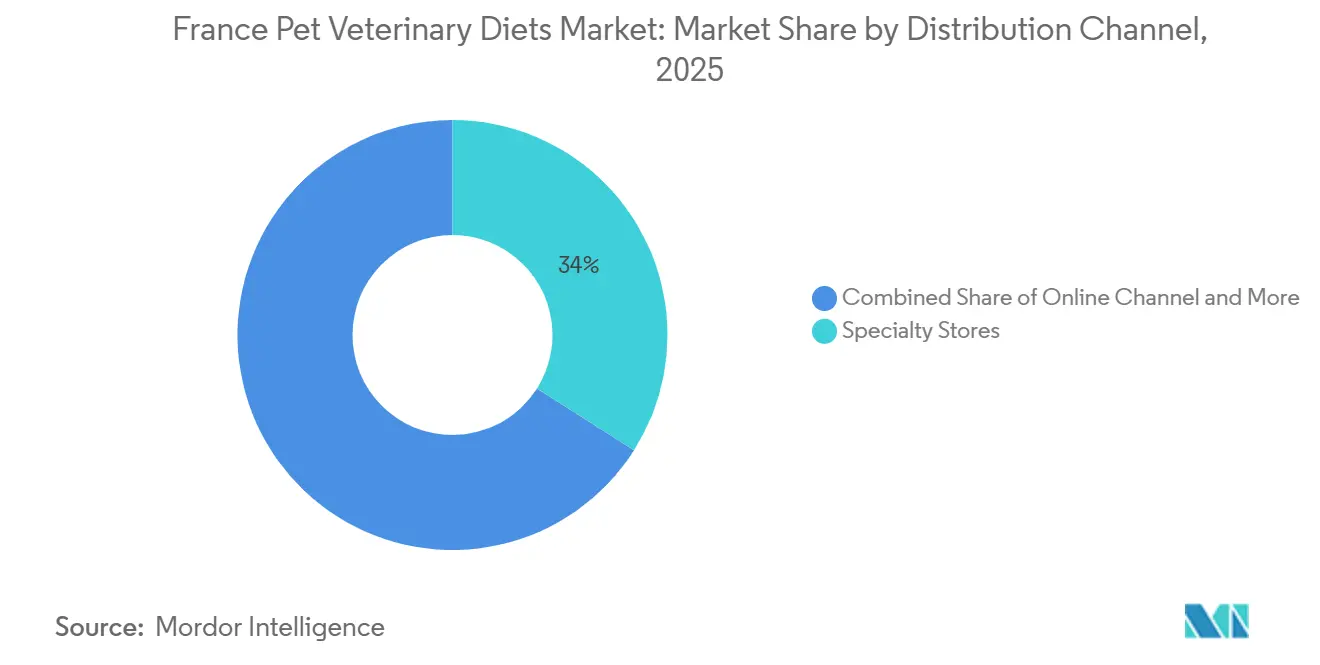
Specialty stores held a 34% share of the France pet veterinary diet market within distribution channels in 2025, making them the largest fulfillment route. Their role remains strong because they sit close to veterinary practices and can offer a broader therapeutic selection than mass retail outlets. Supermarkets and hypermarkets still matter for general pet food, but prescription diets are less suited to those shelves because purchase decisions need clinical guidance. Convenience stores and other smaller outlets are of limited importance because they do not easily support verification or product counseling. The France pet veterinary diets market still depends on controlled distribution, even as buying behavior becomes more digital.
The online channel is projected to grow at a 7.2% CAGR in 2026-2031, making it the fastest distribution format in the France pet veterinary diets market. Online fulfillment is especially useful after the first prescription, as it reduces the need for repeat trips to restock food. Subscription delivery also supports adherence by turning a monthly purchase into a scheduled routine. Nestlé Purina announced in May 2024 that Purina Pro Plan Veterinary Diets was available on Amazon, demonstrating how manufacturers are testing verified online access for clinical nutrition. As prescription verification tools improve, e-commerce can expand reach without weakening veterinary control over the therapeutic diet journey.
Geography Analysis
Demand for pet veterinary diets was strongest in 2025 in regions with dense veterinary networks and higher spending on specialized companion animal care. Île-de-France remained the largest regional market, as its high concentration of veterinary clinics, urban pet ownership, and stronger household purchasing power supported greater adoption of condition-specific therapeutic nutrition. Auvergne-Rhône-Alpes and Nouvelle-Aquitaine were also important markets due to their large companion animal populations and extensive veterinary infrastructure, which facilitated diagnosis and long-term nutritional management of chronic conditions.
In September 2025, Virbac launched Vikaly, a prescription-only medicated feline renal diet, developed and manufactured in France at its Carros and Vauvert facilities. The launch strengthened the availability of locally developed veterinary therapeutic nutrition products and reflected continued innovation in prescription diets for chronic kidney disease management.
France also stands out as a manufacturing base within the wider European companion animal health value chain. Purina France operates five manufacturing facilities that produce 77% of the pet food volumes it sells in France. Between 2020 and 2024, the company invested nearly EUR 300 million (USD 327 million) to modernize and expand these production sites[2]Source: Purina France, “Purina Strengthens Its Regional Presence with an Investment Plan for Its Montfort-sur-Risle Factory,” Purina, purina.fr..
The France pet veterinary diets market also benefited from greater adoption of digital purchasing and refill services in urban areas, where veterinary clinics and specialized pet retailers are more concentrated. Greater Paris, Lyon, and Bordeaux were better positioned to support repeat purchases through online ordering and home delivery, enabling pet owners to maintain long-term adherence to prescribed therapeutic diets. In contrast, rural areas faced lower veterinary density and fewer specialized distribution channels, making follow-up purchases less convenient. As a result, market growth remained strongest in regions where veterinary care, digital retail infrastructure, and higher consumer spending on veterinary therapeutic nutrition converged.
Competitive Landscape
In 2025, the France pet veterinary diets market was modertaely concentrated, with major players including Mars, Incorporated, Nestlé S.A., Colgate-Palmolive Company, and Virbac S.A. The market was dominated by companies with established veterinary nutrition brands, strong clinical evidence, and long-standing relationships with veterinary professionals in France. Competition centered on veterinarian trust, therapeutic product breadth, clinical efficacy, and the ability to support the long-term nutritional management of renal, urinary, gastrointestinal, obesity-related, and other chronic conditions. Smaller participants remained active mainly in specialized therapeutic niches, while companies with broad prescription diet portfolios and strong veterinary-channel access held a structural advantage.
In September 2025, Virbac strengthened its position in the France pet veterinary diets market through the launch of Vikaly, a prescription-only medicated feline renal diet combining therapeutic nutrition with benazepril for cats with chronic kidney disease[3]Source: Virbac S.A., “Virbac Introduces World-First Medicated Feed for Cats,” Virbac Corporate, corporate.virbac.com. These moves show that competition is shifting toward multi-condition care, species-specific adherence, and tighter links between nutrition and therapeutic management.
Competition in the France pet veterinary diets market remained closely linked to veterinarian recommendation, demonstrated clinical performance, species- and condition-specific product development, and owner compliance with prescribed feeding protocols. Companies that maintained strong veterinary relationships and supported long-term therapeutic use were better positioned to defend their market share.
France Pet Veterinary Diets Industry Leaders
Mars, Incorporated
Nestlé S.A.
Colgate-Palmolive Company
Virbac S.A.
Dechra Pharmaceuticals PLC
- *Disclaimer: Major Players sorted in no particular order

Recent Industry Developments
- September 2025: Virbac introduced Vikaly, described as the first medicated cat feed, developed and manufactured in France. The product combines a renal veterinary diet with an approved medication available under veterinary prescription, reflecting the growing integration of therapeutic nutrition and pharmaceutical treatment in companion animal healthcare.
- June 2025: Virbac refreshed its Veterinary HPM nutrition range across Europe, including France, with updated packaging, recyclable materials, improved product information, and selected nutritional enhancements, while maintaining its veterinary therapeutic positioning. This update strengthened the company's veterinary nutrition portfolio and supported prescription diet adoption through veterinary clinics.
- April 2024: Royal Canin expanded its Veterinary Gastrointestinal portfolio with 5 new therapeutic diets in April 2024, including hydrolyzed protein options, a high-fiber loaf in sauce for canine microbiome support, a low-fat small dog diet, and a feline fiber response wet format. This supports the France pet veterinary market by widening condition-specific gastrointestinal options available to French veterinary clinics.


France Pet Veterinary Diets Market Report Scope
Pet Veterinary Diets are Specialized Nutritional Products Formulated to Manage Specific Animal Health Conditions. The France Pet Veterinary Diets Market Report is Segmented by Sub Product (Diabetes, Renal, Urinary tract disease, Digestive sensitivity, Oral care diets, Derma diets, Obesity diets, and other veterinary diets), by Pets (Cats, Dogs, and other pets), and by Distribution Channel (Convenience stores, Online channel, Specialty stores, Supermarkets and hypermarkets and Other distribution channels). Forecasts are Provided in Value (USD) and Volume (Metric Tons).
| Diabetes |
| Renal |
| Urinary Tract Disease |
| Digestive Sensitivity |
| Oral Care Diets |
| Derma Diets |
| Obesity Diets |
| Other Veterinary Diets |
| Cats |
| Dogs |
| Other Pets |
| Convenience Stores |
| Online Channel |
| Specialty Stores |
| Supermarkets and Hypermarkets |
| Other Distribution Channels |
| By Sub Product | Diabetes |
| Renal | |
| Urinary Tract Disease | |
| Digestive Sensitivity | |
| Oral Care Diets | |
| Derma Diets | |
| Obesity Diets | |
| Other Veterinary Diets | |
| By Pets | Cats |
| Dogs | |
| Other Pets | |
| By Distribution Channel | Convenience Stores |
| Online Channel | |
| Specialty Stores | |
| Supermarkets and Hypermarkets | |
| Other Distribution Channels |


Key Questions Answered in the Report
What is the size of the France pet veterinary diets market in 2026?
The France pet veterinary diets market size stands at USD 522.2 million in 2026 and is projected to reach USD 653.1 million by 2031.
Which sub product leads demand in France?
Renal is the largest sub product with 22% share in 2025, reflecting the importance of long-duration nutritional management in kidney-related conditions.
Why do specialty stores still lead sales?
Specialty stores held 34% share in 2025 because they remain closely linked to veterinary prescribing and can support therapeutic assortment depth better than mass retail.
What is shaping competition in France right now?
Competition is shifting toward clinically validated multi-condition products, better palatability, and stronger adherence tools, with recent examples from Virbac, Hill's, Nestlé Purina, and Elanco.
Page last updated on:





