
Forage Harvesters Market Size and Share
Market Overview
| Study Period | 2022 - 2032 |
|---|---|
| Market Size (2027) | USD 3.36 Billion |
| Market Size (2032) | USD 4.33 Billion |
| Growth Rate (2027 - 2032) | 5.18 % |
| Fastest Growing Market | Asia-Pacific |
| Largest Market | Europe |
| Market Concentration | High |
Major Players *Disclaimer: Major Players sorted in no particular order Image © Mordor Intelligence. Reuse requires attribution under CC BY 4.0. | |
Forage Harvesters Market Analysis by Mordor Intelligence
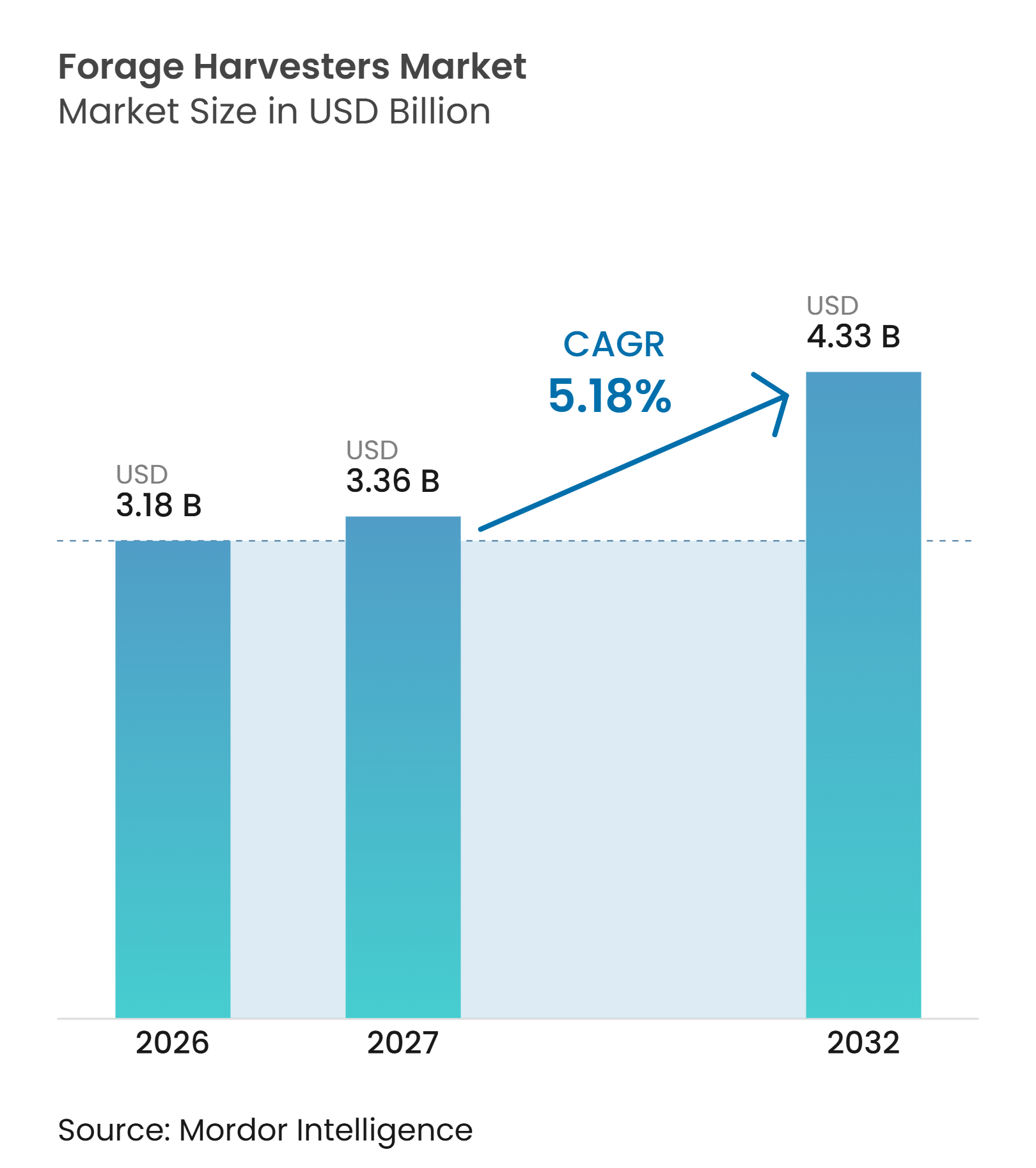
The forage harvesters market size was valued at USD 3,177.42 million in 2026 and is projected to grow from USD 3,361.36 million in 2027 to USD 4,327.10 million by 2032, at a CAGR of 5.18% during the forecast period 2027 to 2032. Growth in the market is supported by the need to preserve silage quality, which directly affects dairy rations, feed efficiency, and livestock productivity. Labor shortages are also increasing demand for mechanized harvesting solutions that can operate efficiently within narrow crop-moisture windows. Larger dairy farms and custom-hiring fleets are prioritizing high-throughput equipment, automation, and connected crop-quality monitoring technologies to improve harvesting efficiency and reduce operational losses. In addition, the expansion of biogas projects is creating demand for reliable silage supplies, particularly where long-term feedstock contracts require consistent harvesting volumes. However, high equipment acquisition costs, financing constraints, fluctuating farm profitability, and uncertainty in agricultural investment remain important challenges, as replacement and expansion decisions depend on operators' ability to justify substantial capital expenditure.
Key Report Takeaways
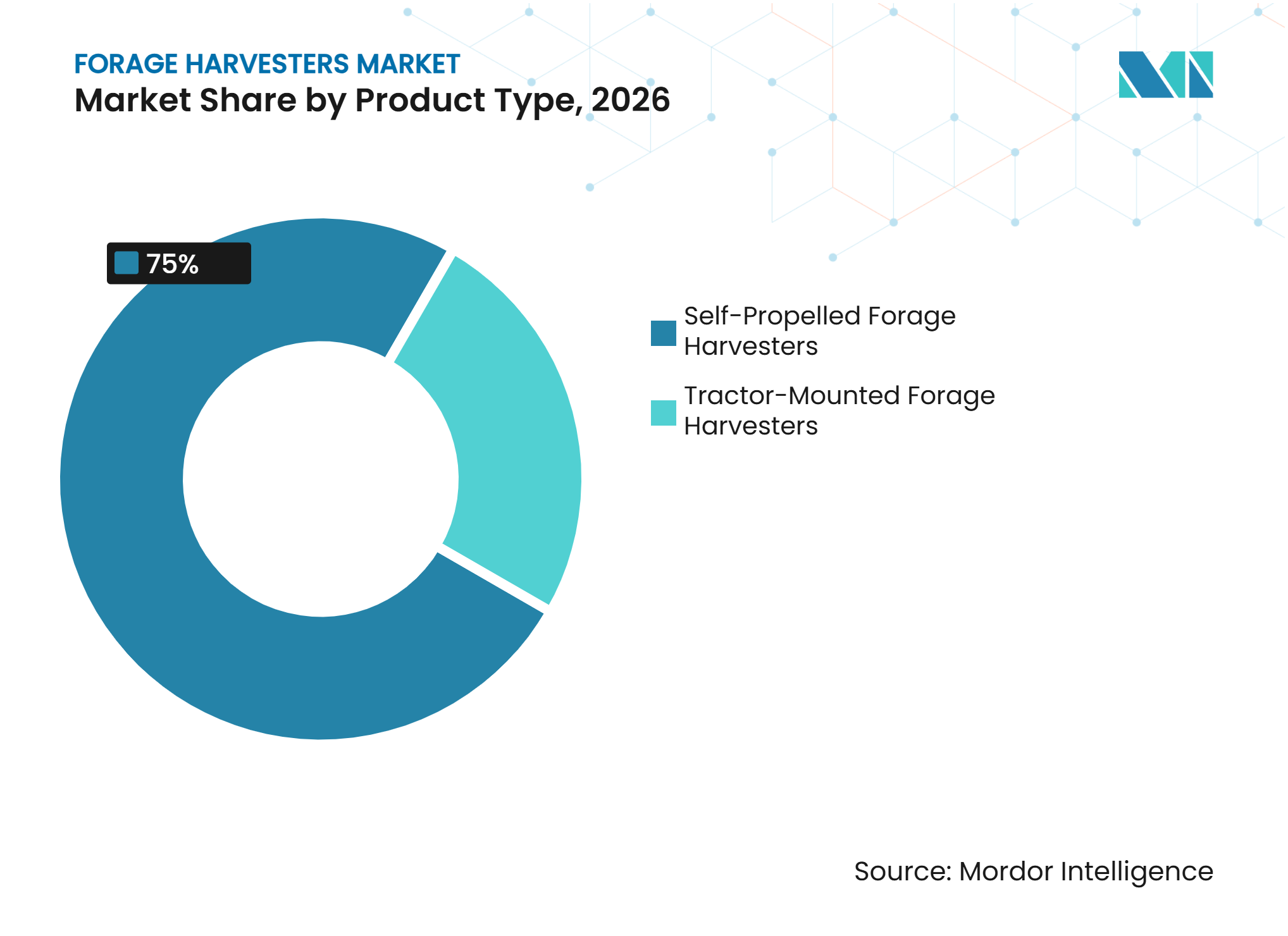
- By product type, self-propelled forage harvesters were the largest segment and held 75.0% of the market share in 2026, while they are also the fastest-growing segment and are forecast to expand at a 5.9% CAGR between 2027 and 2032.
- By crop type, corn was the largest segment and held 48.0% of the forage harvesters market size in 2026, while sorghum is the fastest-growing segment and is forecast to expand at a 6.6% CAGR between 2027 and 2032.
- By power output, the 400-600 HP segment was the largest segment and held 50.9% of the market share in 2026, while the above 600 HP segment is the fastest-growing segment and is forecast to expand at a 6.2% CAGR between 2027 and 2032.
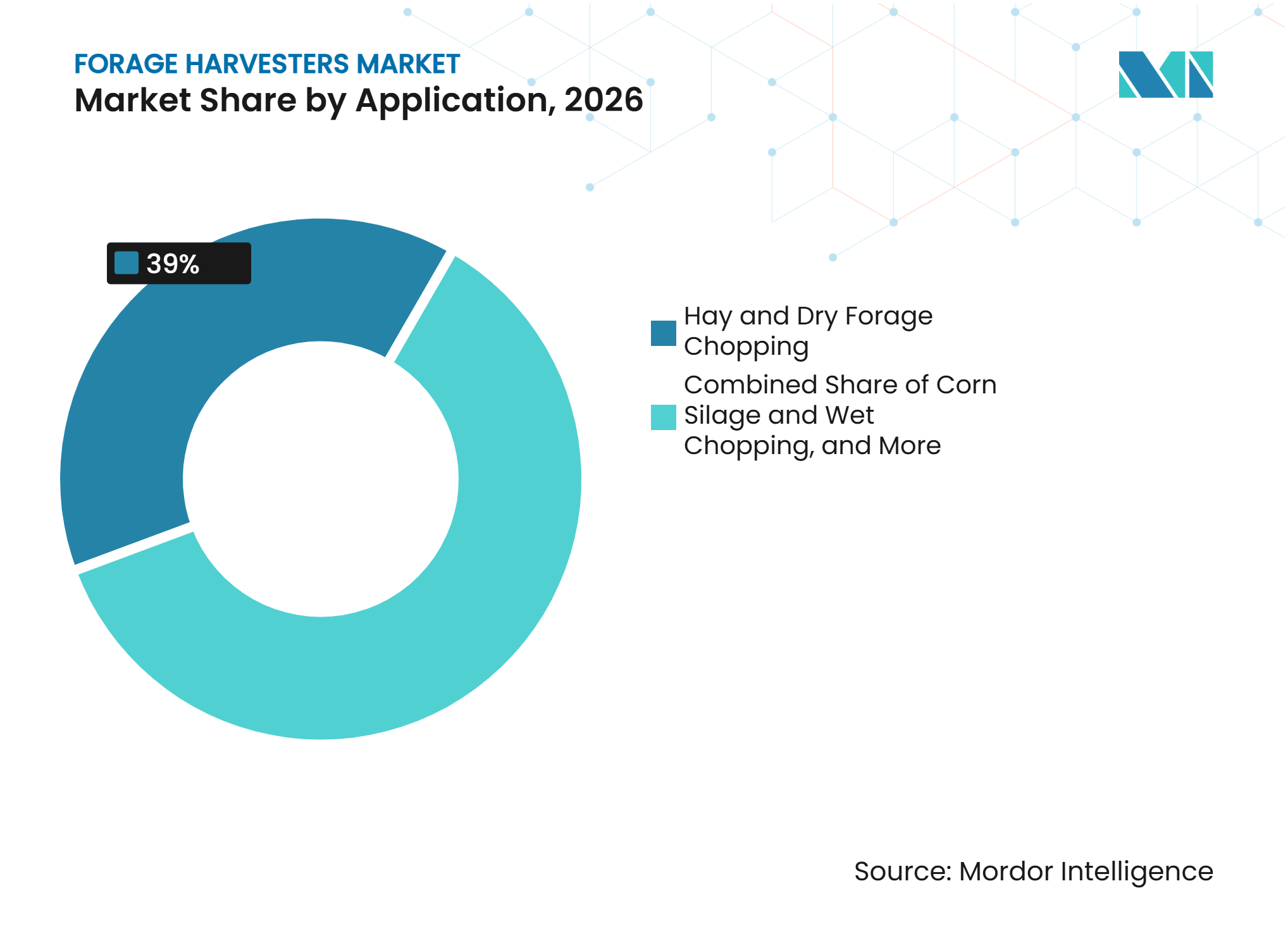
- By application, hay and dry forage chopping was the largest segment and held 39.0% of the market share in 2026, while corn silage and wet chopping is the fastest-growing segment and is forecast to expand at a 7.1% CAGR between 2027 and 2032.
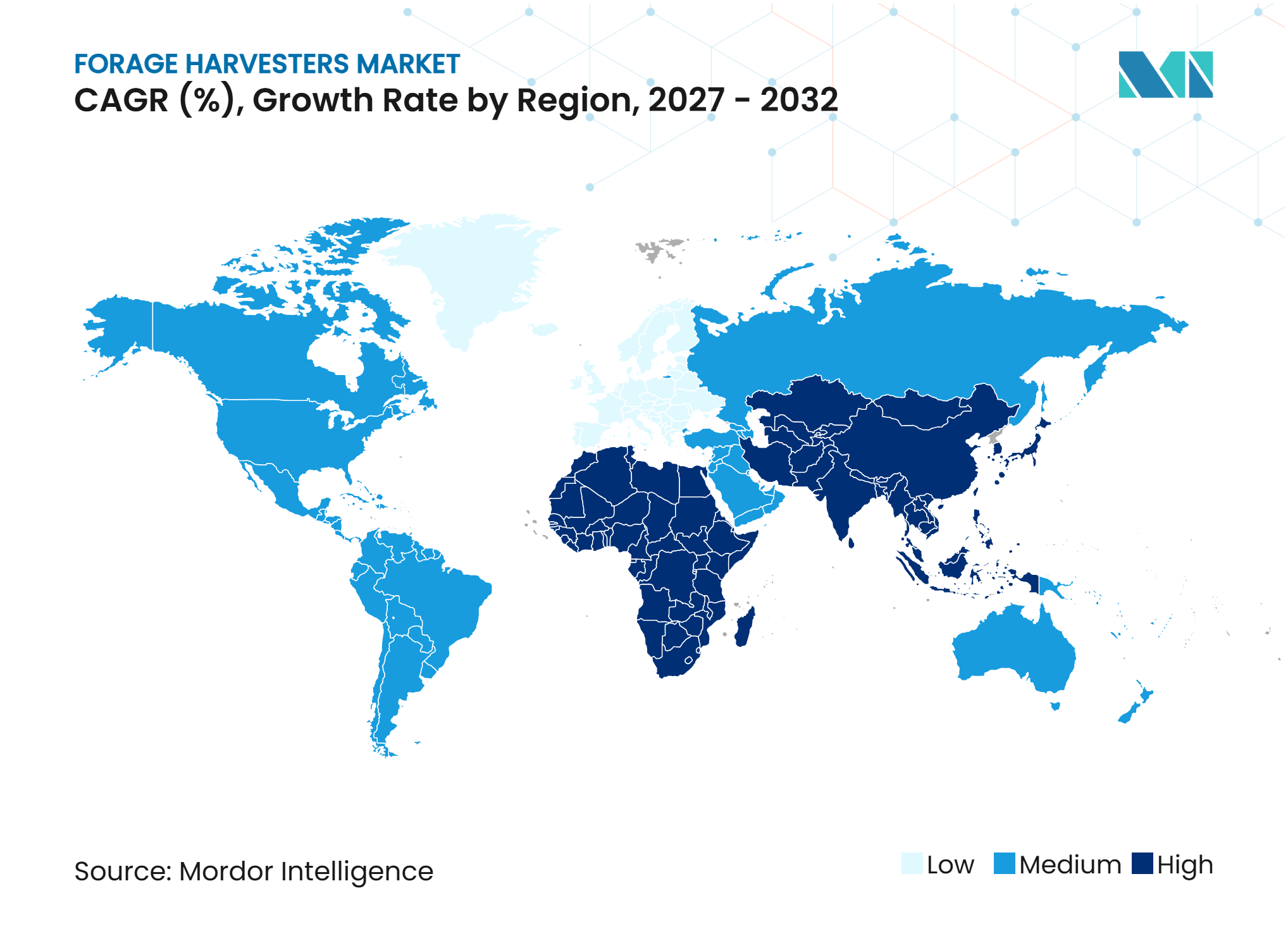
- By geography, Europe was the largest region and held 39.6% of the market share in 2026, while Asia-Pacific is the fastest-growing region and is forecast to expand at a 7.1% CAGR between 2027 and 2032.
Note: Market numbers in this report are based on Mordor Intelligence's proprietary estimation framework, which combines nine months of actuals with Q4 projections for base year 2026.
Market Trends and Insights
Drivers Impact Analysis of Forage Harvesters Market*
| Driver | (~) % Impact on CAGR Forecast | Geographic Relevance | Impact Timeline |
|---|---|---|---|
| Rising Demand for High-Quality Silage and Livestock Feed | +1.2% | Global, with emphasis on North America, Europe, China, India, and Brazil | Medium term (2-4 years) |
| Agricultural Labor Scarcity and Narrow Harvest Windows | +0.9% | North America and the European Union (EU), with spillover to Asia-Pacific | Medium term (2-4 years) |
| Farm Consolidation and Higher Throughput Requirements | +0.8% | North America and Europe | Long term (≥ 4 years) |
| Precision Sensing, Telematics and Automated Crop Processing | +0.7% | North America, European Union, and Australia | Long term (≥ 4 years) |
| Mechanization Subsidies and Custom-Hiring Services in Emerging Markets | +0.9% | Asia-Pacific, with spillover to South America, the Middle East, and Africa | Short term (≤ 2 years) |
| Biogas Feedstock Demand for Corn Silage | +0.5% | Europe, including Germany, France, Italy, and the United Kingdom | Medium term (2-4 years) |
| Source: Mordor Intelligence | |||
Rising Demand for High-Quality Silage and Livestock Feed
The need to produce consistent, nutritionally valuable silage is supporting demand in the forage harvesters market, particularly among commercial dairy and livestock operations where feed quality influences animal performance and feeding costs. Uniform chopping, consistent crop flow, and timely harvesting help operators prepare forage for effective compaction and preservation during ensiling. According to Teagasc, Ireland’s Agriculture and Food Development Authority, only 30% of farms surveyed in its 2025 National Fodder Survey intended to analyse silage quality, despite the recommendation that silage for freshly calved cows achieve at least 70% dry matter digestibility (DMD)[1]. This highlights the importance of improving forage-quality management across livestock operations. Forage harvesters equipped with adjustable chop-length settings and crop-processing systems can help operators manage harvested material according to ensiling and feed requirements. As commercial livestock producers seek to improve feed consistency and reduce reliance on purchased concentrates, investment in reliable forage-harvesting equipment can become increasingly important, particularly on larger farms and among contractors providing mechanized harvesting services.
Agricultural Labor Scarcity and Narrow Harvest Windows
Labor shortages and narrow harvesting windows are increasing demand for high-capacity equipment in the forage harvesters market, particularly across commercial livestock and forage-production systems. Corn and grass silage must be harvested at suitable crop maturity and moisture levels, making delays costly when unfavorable weather or limited labor availability disrupt field operations. According to a peer-reviewed study published in Applied Economic Perspectives and Policy in May 2025, 29% of surveyed California farmers reported experiencing labor shortages on average over 2014–2018, highlighting persistent workforce constraints in agricultural production. Self-propelled forage harvesters with high chopping capacity can help operators harvest larger areas within limited timeframes, while contractor services allow farms to access specialized machinery without bearing the full cost of ownership. For contractors, serving multiple farms can spread equipment costs across a wider customer base and improve seasonal utilization. These factors support demand for high-capacity forage harvesters where labor availability, harvesting schedules, and field productivity strongly influence operating economics.
Farm Consolidation and Higher Throughput Requirements
Farm consolidation and the expansion of commercial livestock operations are supporting demand in the forage harvesters market for high-capacity machines that can process larger crop volumes within narrow harvesting windows. Larger dairy farms and agricultural contractors need to coordinate harvesting with transport, labor availability, and silage storage, making machine throughput, crop-flow consistency, and operational reliability important purchasing considerations. In November 2025, CLAAS introduced its JAGUAR 1000 series, with manufacturer-reported processing capacity of up to 500 metric tons per hour. The company also reported that a custom-harvesting operator using the JAGUAR 1200 achieved 25–30% higher throughput than the operator’s other machines under the reported operating conditions. This example illustrates the productivity advantages that high-capacity equipment can offer to contractors and large-scale forage operations. Higher throughput can help reduce harvesting time and operating costs per metric ton when machinery is sufficiently utilized throughout the season. However, the high purchase price and maintenance requirements of advanced harvesters can limit individual ownership, encouraging some medium-sized farms to use custom-harvesting services instead.
Precision Sensing, Telematics and Automated Crop Processing
The adoption of precision sensing and data-driven crop management is creating opportunities for forage harvesters equipped with crop-monitoring, processing, and digital control technologies. Near-infrared (NIR) spectroscopy can help assess forage moisture and nutritional composition, while sensors monitoring crop flow and machine load can support operational decisions during harvesting. According to a review published in Grass and Forage Science in January 2025, NIR spectrometers can measure forage-quality parameters, including dry-matter content, while combining multiple sensor technologies can improve biomass-flow estimation despite variations in crop density, moisture, and texture. In July 2025, Eurofins Agro Testing and trinamiX, a subsidiary of BASF, launched on-farm nutritional analysis applications for the trinamiX PAL Two handheld NIR spectrometer, covering fresh maize, maize silage, grass and clover silage, corn cob mix, and haylage. These technologies can provide timely information for forage-quality assessment and feed management. Forage harvesters equipped with compatible onboard sensors and automation can also support crop monitoring and processing adjustments where these functions are available. As commercial livestock farms and contractors manage larger crop volumes, integrated sensing, telematics, and machine-performance data can support quality monitoring, maintenance planning, and more informed harvesting decisions.
Restraints Impact Analysis of Forage Harvesters Market*
| Restraint | (~) % Impact on CAGR Forecast | Geographic Relevance | Impact Timeline |
|---|---|---|---|
| High Upfront Cost and Long Payback Periods | -1.2% | Asia-Pacific, the Middle East, Africa, and South America | Medium term (2-4 years) |
| Commodity-Margin and Interest-Rate Volatility | -0.9% | Global, with emphasis on North America, Europe, Brazil, and Argentina | Short term (≤ 2 years) |
| Fragmented Landholdings and Low Annual Machine Utilization | -0.9% | Asia-Pacific, the Middle East, Africa, and South America | Long term (≥ 4 years) |
| Rural Service, Technician and Spare-Parts Gaps | -0.7% | Asia-Pacific, the Middle East, Africa, and South America | Long term (≥ 4 years) |
| Source: Mordor Intelligence | |||
High Upfront Cost and Long Payback Periods
High acquisition costs can constrain the adoption of self-propelled forage harvesters, particularly among small farms and operators with limited annual harvesting volumes. The purchase price can increase further when machines require specialized headers, crop-processing equipment, precision sensing, and telematics packages. Financing costs, maintenance expenses, fuel consumption, and seasonal utilization also influence the total cost of ownership and the time required to recover the investment. According to the Government of India’s Economic Survey 2024–25, 26,662 Custom Hiring Centres had been established under the Sub-Mission on Agricultural Mechanization by December 31, 2024, reflecting the importance of shared machinery access in addressing the high cost of individual ownership[2]. Such arrangements allow farmers to access specialized equipment without bearing the full purchase cost. Advanced features such as near-infrared sensing, GPS guidance, and predictive-maintenance tools can provide operational benefits for large commercial farms and contractor fleets but may be difficult to justify where annual crop volumes are insufficient. Contractors can distribute equipment costs across multiple customers. Consequently, high upfront investment and uncertain payback periods can encourage smaller farms to rely on custom-harvesting services or retain older equipment, restraining demand for new forage harvesters.
Rural Service, Technician and Spare-Parts Gaps
Limited access to trained technicians, repair facilities, and replacement parts can constrain the adoption of advanced forage harvesters in remote agricultural regions. Self-propelled machines with complex hydraulic systems, electronic crop processors, and calibrated sensors require timely maintenance to avoid prolonged downtime during short harvesting windows. According to a 2025 Consultative Group on International Agricultural Research (CGIAR) study surveying 326 agricultural mechanization service providers across five regions of Ethiopia, machinery breakdowns, prolonged repair times, and limited access to spare parts were operational challenges affecting mechanization services[3]. These constraints are particularly relevant to high-capacity forage harvesters, where breakdowns during peak harvesting periods can disrupt field schedules and silage preparation. Long travel distances can further increase service costs and delay technician dispatch and replacement-part delivery. Operators in areas with limited dealer coverage may therefore favor simpler equipment or rely on contractors with established maintenance arrangements. Expanding technician training, regional parts inventories, and authorized service networks can improve equipment reliability and support wider adoption. Until these support systems become more accessible, service and maintenance limitations are likely to restrain forage harvester uptake in underserved markets.
*Our forecasts treat driver/restraint impacts as directional, not additive. The impact forecasts reflect baseline growth, mix effects, and variable interactions.
Forage Harvesters Market Segment Analysis
By Product Type:
Self-Propelled Machines Lead Premium DemandSelf-propelled forage harvesters accounted for 75.0% of the forage harvesters market share in 2026, making them the leading product category. Their position reflects high harvesting capacity and suitability for large-scale forage production, where substantial crop volumes must be processed within narrow seasonal windows. Integrated chopping and crop-processing systems support consistent forage preparation, while available moisture sensors, adjustable chop-length controls, and telematics help operators monitor harvesting performance and plan maintenance. These capabilities support demand among large dairy farms and agricultural contractors seeking to improve productivity and maximize equipment utilization across multiple farms.
Self-propelled forage harvesters are forecast to grow at a CAGR of 5.9% from 2027 to 2032, supported by demand for higher-capacity machinery and technology-enabled harvesting operations. Their ability to combine high throughput with digital monitoring and automated processing features can help contractors coordinate harvesting schedules and manage large volumes of forage. Tractor-mounted forage harvesters remain relevant among smaller farms and operators with lower annual harvesting requirements, as they can use existing tractors and reduce the need for a dedicated harvesting machine. These systems are particularly suitable where fragmented landholdings, limited capital, and lower machinery utilization influence purchasing decisions. Consequently, self-propelled models retain the leading position, while tractor-mounted equipment continues to serve cost-conscious and smaller-scale operations.



By Crop Type:
Corn Retains Scale While Sorghum Gains UseCorn accounted for 48.0% of the forage harvesters market share in 2026, making it the largest crop-type segment. Its leading position reflects widespread use in silage production for dairy and livestock operations, where corn provides an energy-rich feed source and supports consistent feed availability. Large-scale corn silage production generates demand for forage harvesters with high throughput, efficient chopping, and crop-processing capabilities that help operators prepare forage for storage. Recurring harvesting requirements across major livestock-producing regions also support demand for replacement machines, specialized headers, and equipment upgrades. Grass and alfalfa remain important forage crops, particularly in dairy systems that prioritize repeated grass cuts or high-protein feed for livestock rations.
Sorghum is forecast to be the fastest-growing crop-type segment, expanding at a CAGR of 6.6% from 2027 to 2032. Its growth prospects are supported by its suitability for water-constrained growing regions, where farmers may use sorghum as an alternative to more water-intensive forage crops. Harvesting requirements vary with crop height, moisture content, and intended feed use, increasing the importance of suitable chop-length settings and compatible crop-processing systems. This creates opportunities for versatile forage harvesters that can accommodate different crops and operating conditions. As farms and agricultural contractors diversify forage production to manage water availability and local growing conditions, demand for equipment capable of handling multiple forage crops may increase.
By Power Output:
The 400-600 HP Class Holds the Broadest BaseThe 400–600 HP segment accounted for 50.9% of the forage harvesters market share in 2026, making it the largest power-output category. Its leading position reflects the balance between harvesting capacity, operational flexibility, and acquisition cost for commercial forage operations. Machines in this range can support substantial crop volumes while accommodating features such as crop-processing systems, precision monitoring, and automated harvesting controls. These capabilities make them suitable for established dairy farms and agricultural contractor fleets in major forage-producing regions of Europe and North America. Equipment below 400 HP continues to serve smaller farms and fragmented landholdings, where lower harvesting requirements and investment constraints influence purchasing decisions.
The above 600 HP segment is forecast to grow at a CAGR of 6.2% from 2027 to 2032, making it the fastest-growing power-output category. Its growth is supported by demand from large dairy farms and agricultural contractors seeking to harvest greater crop volumes within narrow seasonal windows. Higher engine power enables these machines to operate with wider headers and sustain high throughput under demanding field conditions, provided that transport capacity and crop-flow logistics are adequately coordinated. However, their higher purchase and operating costs make sufficient annual utilization essential to justify investment. Consequently, adoption is likely to remain concentrated among large commercial farms and contractors serving multiple customers, where high harvesting volumes can improve equipment utilization and investment returns.
By Application:
Hay and Dry Forage Chopping Leads While Corn Silage and Wet Chopping Gains MomentumHay and dry forage chopping accounted for 39.0% of the forage harvesters market share in 2026, making it the largest application segment. Its leading position reflects the widespread use of harvested forage as a feed source for beef cattle, sheep, and mixed-livestock operations, particularly in regions where stored feed is required during periods of limited pasture availability. These applications support demand for forage harvesters capable of delivering reliable chopping performance across established hay and dry-forage production systems. Green fodder and fresh forage harvesting also remain important in markets where smaller farms prioritize immediate livestock feeding and limited silage-storage infrastructure reduces the need for fermentation-based feed preservation.
Corn silage and wet chopping is forecast to grow at a CAGR of 7.1% from 2027 to 2032, making it the fastest-growing application segment. Its growth prospects are supported by the expansion of intensive dairy production, which requires consistent volumes of chopped forage for year-round feeding. Biogas facilities also create demand for prepared agricultural feedstock, including silage, under suitable supply arrangements. A study published in Energies in January 2025 found that Shredlage-treated corn silage achieved higher biogas and methane yields per unit of organic dry matter than conventionally processed silage under the study's experimental conditions. This highlights the potential importance of chopping and processing methods in applications where feedstock quality and energy yield influence operating outcomes. As livestock and bioenergy operators place greater emphasis on consistent forage preparation, demand may increase for harvesters with crop-processing configurations suited to wet-chop applications.

Geography Analysis
Europe accounted for 39.6% of the forage harvesters market share in 2026, making it the largest regional market. Its leading position reflects established dairy and livestock industries, widespread silage production, and a mature base of mechanized forage-harvesting operations. Countries such as Germany, France, and Ireland support demand through established grass and corn silage systems, while agricultural contractors and commercial farms rely on high-capacity equipment to complete harvesting within narrow seasonal windows. Established dealer networks and after-sales service infrastructure also support equipment replacement and technology upgrades. Additionally, demand for agricultural feedstock from biogas facilities contributes to the need for reliable forage harvesting and handling systems.
Asia-Pacific is forecast to be the fastest-growing regional market, expanding at a CAGR of 7.1% from 2027 to 2032. Growth prospects are supported by increasing mechanization, the development of commercial livestock operations, and government initiatives that improve access to agricultural machinery. In India, the Sub-Mission on Agricultural Mechanization provides financial assistance for eligible machinery, helping reduce ownership costs for qualifying farmers and organizations. Custom-hiring services and contractor fleets can further improve access by allowing smaller farms to use forage harvesters without purchasing the equipment outright. However, adoption across the region will depend on farm size, machinery affordability, local service networks, and the availability of equipment suited to diverse farming systems.
North America benefits from large dairy operations, established custom-harvesting networks, and demand for efficient corn silage production. South America is supported by commercial livestock farming and forage production, although financing conditions and equipment costs can influence purchasing decisions. Africa presents longer-term growth opportunities as commercial livestock operations and agricultural mechanization develop from a lower installed base. In the Middle East, demand is linked partly to domestic forage production, including alfalfa and sorghum cultivation under water-constrained conditions. Across these regions, the expansion of forage harvesters will depend on livestock-sector development, access to financing, machinery utilization rates, and the availability of maintenance and replacement parts.
Competitive Landscape
Market Concentration
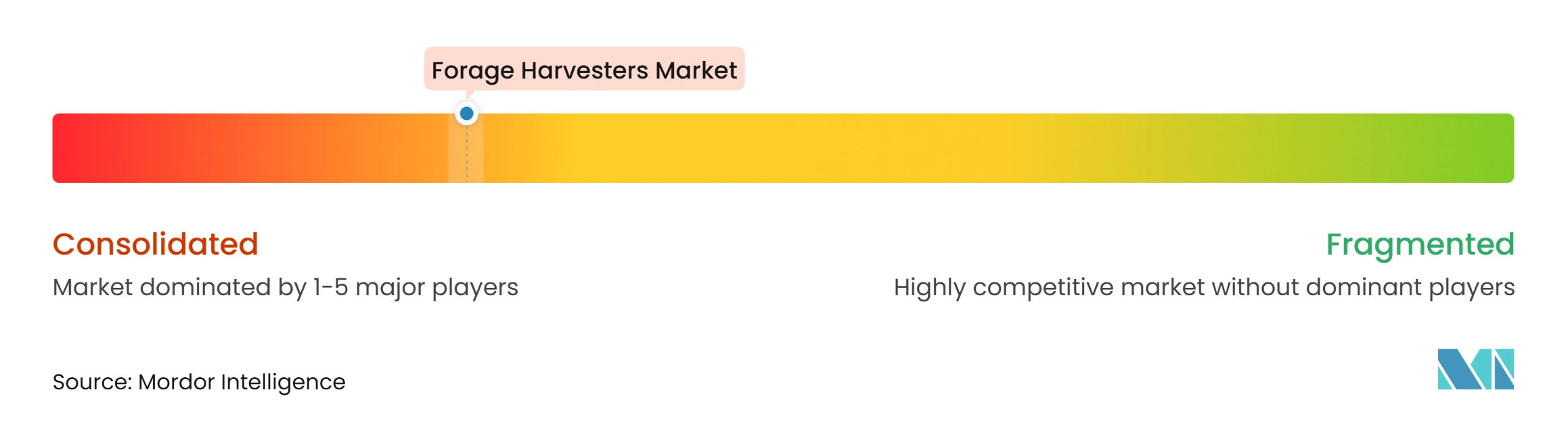
The global forage harvesters industry was concentrated among established agricultural machinery manufacturers, particularly in the premium self-propelled segment in 2026. CLAAS KGaA mbH, Deere and Company, Bernard Krone Holding GmbH & Co. KG, CNH Industrial N.V., and AGCO Corporation were among the major players. These companies compete through harvesting capacity, engine power, chopping and crop-processing technologies, precision agriculture features, and established dealer networks. Their competitive strengths include product engineering, application-specific harvesting configurations, after-sales service, and access to replacement parts. Regional manufacturers and specialized equipment providers also serve markets with different farm sizes, crop requirements, and machinery budgets. This structure allows smaller players to compete through localized service, cost-effective equipment, and solutions tailored to regional forage production systems.
Competitive differentiation is increasingly extending beyond machine capacity to automated crop monitoring, precision controls, and operator-support technologies. In September 2026, CLAAS expanded the available harvesting configurations for its JAGUAR 1000 series with the ORBIS 12000 16-row corn header and the DD 8400 Direct Disc header for whole-crop harvesting. These additions broaden the range of crop types and harvesting conditions the platform can accommodate. In September 2026, New Holland also announced ForageCam for its FR Forage Cruiser models, using camera-based analysis to provide real-time kernel-processing scores and help operators adjust processing performance. These developments illustrate the forage harvesters industry's focus on improving crop-processing consistency and integrating digital tools into forage harvesting. Manufacturers that combine high-throughput equipment with crop-quality monitoring and practical operator support can strengthen their position among large dairy farms and agricultural contractors.
Product innovation, regional expansion, service coverage, and equipment reliability remain important factors shaping competition. In August 2025, CLAAS introduced the JAGUAR 1000 series, comprising four models rated from 850 to 1,110 HP, with manufacturer-reported throughput of up to 500 metric tons per hour. In July 2025, Deere introduced its F8 and F9 self-propelled forage harvester series in Australia and New Zealand, extending the regional availability of its harvesting platform. These launches highlight investment in high-capacity machinery and wider market access. Opportunities remain in automated crop-quality management, multi-crop harvesting configurations, precision farming integration, and improved maintenance support. However, high acquisition costs, seasonal equipment utilization, and the need for timely servicing can influence purchasing decisions. Consequently, competitive positioning in the global forage harvesters industry depends on combining machinery performance, technology, dependable dealer support, and lifecycle operating value rather than relying solely on engine power or product range.
Forage Harvesters Industry Leaders
-
CLAAS KGaA mbH
-
Deere and Company
-
Bernard Krone Holding GmbH and Co. KG
-
CNH Industrial N.V.
-
AGCO Corporation
- *Disclaimer: Major Players sorted in no particular order
Forage Harvesters Market Companies Covered in this Report
- CNH Industrial N.V.
- Bernard Krone Holding GmbH and Co. KG
- Krone Gruppe
- AGCO Corporation
- OJSC Gomselmash
- Combine Plant Rostselmash LLC
- Carlos Mainero y Cía. S.A.I.C.F.I.
- Deere & Company
- PÖTTINGER Landtechnik GmbH
- Yanmar Holdings Co., Ltd.
- Lely International N.V.
- MASCHIO GASPARDO S.p.A.
Recent Industry Developments in Forage Harvesters Market
- September 2026: New Holland announced the release of ForageCam for its FR Forage Cruiser self-propelled forage harvesters for the 2027 season. The camera-based system uses AI-powered vision to analyze chopped corn flow and provide real-time kernel-processing scores, helping operators adjust processing to meet forage-quality targets.
- September 2026: CLAAS announced additional harvesting equipment and automation features, including the ORBIS 12000, a 16-row corn header designed for the JAGUAR 1000 series, and the DD 8400 Direct Disc header, with a 27.5-foot working width for whole-crop harvesting. These additions extend the harvesting configurations available to operators and support higher-capacity forage harvesting across different crop conditions.
- November 2025: New Holland presented updated FR Forage Cruiser forage harvesters at Agritechnica 2025, incorporating ForageCam, upgraded Big Drum Pro maize headers, and crop-flow improvements. The 2026 models also introduced ComfortRide and ComfortProtect features for switching between field and road modes, a water-injection system for handling sticky crop residues, and expanded field-data functionality.
- July 2025: John Deere announced the F8 and F9 self-propelled forage harvester series for Australian farmers. The redesigned machines feature updated operator cabins, automation, precision-farming technology, and crop-processing options. The launch expanded the regional offering of John Deere’s forage-harvesting platform and strengthened its presence in the Australian and New Zealand markets.
Global Forage Harvesters Market Report Scope
The forage harvesters market comprises agricultural machines used to cut, chop, and collect forage crops such as corn, grass, sorghum, and alfalfa for livestock feed and silage production. The market includes self-propelled and tractor-mounted forage harvesters equipped with cutting, chopping, and crop-processing systems to prepare harvested material for fresh feeding, storage, or ensiling. It covers machines across different power-output classes and applications in commercial livestock farming, dairy production, and agricultural contracting. The market excludes standalone mowers, balers, and other forage-handling equipment that do not perform integrated forage harvesting and chopping.
The Forage Harvesters Market is Segmented by Product Type (Self-Propelled Forage Harvesters and Tractor-Mounted Forage Harvesters), by Crop Type (Corn, Grass, Alfalfa, Sorghum, Rest of Crop Types), by Power Output (Below 400 HP, 400-600 HP, Above 600 HP), by Application (Hay and Dry Forage Chopping, Corn Silage and Wet Chopping, Green Fodder and Fresh Forage, and Biogas Feedstock Preparation), and by Geography (North America, South America, Europe, and More). The Market Forecasts are Provided in Terms of Value (USD).
Segmentation Overview
| Self-Propelled Forage Harvesters |
| Tractor-Mounted Forage Harvesters |
| Corn |
| Grass |
| Alfalfa |
| Sorghum |
| Rest of Crop Types |
| Below 400 HP |
| 400-600 HP |
| Above 600 HP |
| Hay and Dry Forage Chopping |
| Corn Silage and Wet Chopping |
| Green Fodder and Fresh Forage |
| Biogas Feedstock Preparation |
| North America | United States |
| Canada | |
| Mexico | |
| Rest of North America | |
| South America | Brazil |
| Argentina | |
| Rest of South America | |
| Europe | Germany |
| France | |
| United Kingdom | |
| Italy | |
| Spain | |
| Russia | |
| Rest of Europe | |
| Asia-Pacific | China |
| India | |
| Japan | |
| South Korea | |
| Australia | |
| Vietnam | |
| Rest of Asia-Pacific | |
| Middle East | Turkey |
| Saudi Arabia | |
| United Arab Emirates | |
| Rest of Middle East | |
| Africa | South Africa |
| Egypt | |
| Rest of Africa |
| By Product Type | Self-Propelled Forage Harvesters | |
| Tractor-Mounted Forage Harvesters | ||
| By Crop Type | Corn | |
| Grass | ||
| Alfalfa | ||
| Sorghum | ||
| Rest of Crop Types | ||
| By Power Output | Below 400 HP | |
| 400-600 HP | ||
| Above 600 HP | ||
| By Application | Hay and Dry Forage Chopping | |
| Corn Silage and Wet Chopping | ||
| Green Fodder and Fresh Forage | ||
| Biogas Feedstock Preparation | ||
| By Geography | North America | United States |
| Canada | ||
| Mexico | ||
| Rest of North America | ||
| South America | Brazil | |
| Argentina | ||
| Rest of South America | ||
| Europe | Germany | |
| France | ||
| United Kingdom | ||
| Italy | ||
| Spain | ||
| Russia | ||
| Rest of Europe | ||
| Asia-Pacific | China | |
| India | ||
| Japan | ||
| South Korea | ||
| Australia | ||
| Vietnam | ||
| Rest of Asia-Pacific | ||
| Middle East | Turkey | |
| Saudi Arabia | ||
| United Arab Emirates | ||
| Rest of Middle East | ||
| Africa | South Africa | |
| Egypt | ||
| Rest of Africa | ||
Key Questions Answered in the Report
What is the size of the forage harvesters market?
The forage harvesters market was valued at USD 3,177.42 million in 2026 and is projected to grow from USD 3,361.36 million in 2027 to USD 4,327.10 million by 2032, at a CAGR of 5.18% during the forecast period 2027 to 2032.
Which product type leads forage harvester demand?
Self-propelled forage harvesters held 75.0% market share in 2026 and are forecast to expand at a 5.9% CAGR from 2027 to 2032, supported by high throughput and crop-quality tools.
Which crop supports the largest demand for forage harvesters?
Corn held 48.0% market share in 2026 because it is widely used for dairy rations and anaerobic digestion feedstock.
What is limiting forage harvester adoption?
High purchase costs, financing pressures, fragmented landholdings, and shortages of qualified rural service support can make ownership difficult, particularly for smaller farms and remote operations.