
Food Pathogen Testing Market Size and Share
Market Overview
| Study Period | 2021 - 2031 |
|---|---|
| Market Size (2026) | USD 16.54 Billion |
| Market Size (2031) | USD 23.74 Billion |
| Growth Rate (2026 - 2031) | 8.04 % |
| Fastest Growing Market | Asia-Pacific |
| Largest Market | North America |
| Market Concentration | Low |
Major Players *Disclaimer: Major Players sorted in no particular order Image © Mordor Intelligence. Reuse requires attribution under CC BY 4.0. | |
Food Pathogen Testing Market Analysis by Mordor Intelligence
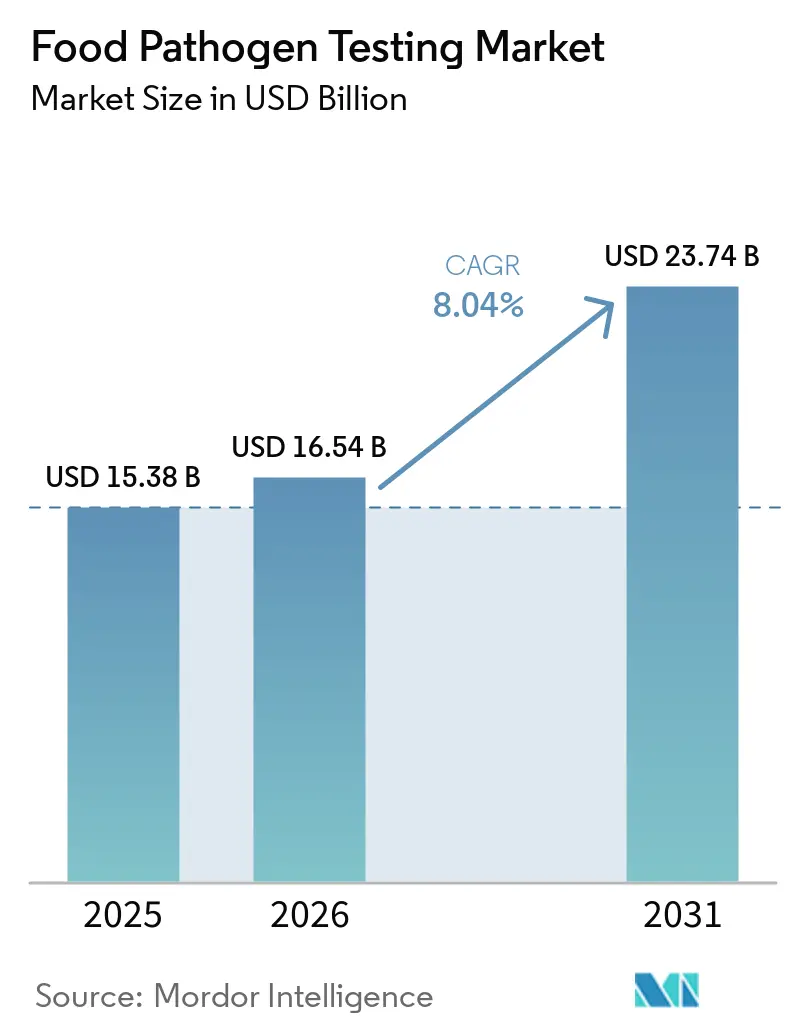
The Food pathogen testing market size is expected to increase from USD 15.38 billion in 2025 to USD 16.54 billion in 2026 and reach USD 23.74 billion by 2031, growing at a CAGR of 8.04% over 2026-2031. Food manufacturers are treating pathogen screening as a routine part of risk control rather than a response after an incident. Unsafe food caused 866 million illnesses and 1.52 million deaths each year, while its economic cost reached USD 647 billion after purchasing-power adjustment, which supports regular testing investment across processing operations[1]Source: World Health Organization, “Unsafe Food Causes 866 Million Illnesses and 1.5 Million Deaths Annually, Young Children at Highest Risk,” World Health Organization, who.int. Regulatory requirements, outbreak investigations, and faster detection methods are increasing the value of rapid and traceable testing workflows. Suppliers are responding through acquisitions, local method validation, and instruments that connect results with laboratory information systems. Price barriers, inconsistent protocols, and difficult food matrices continue to limit adoption in some markets.
Key Report Takeaways
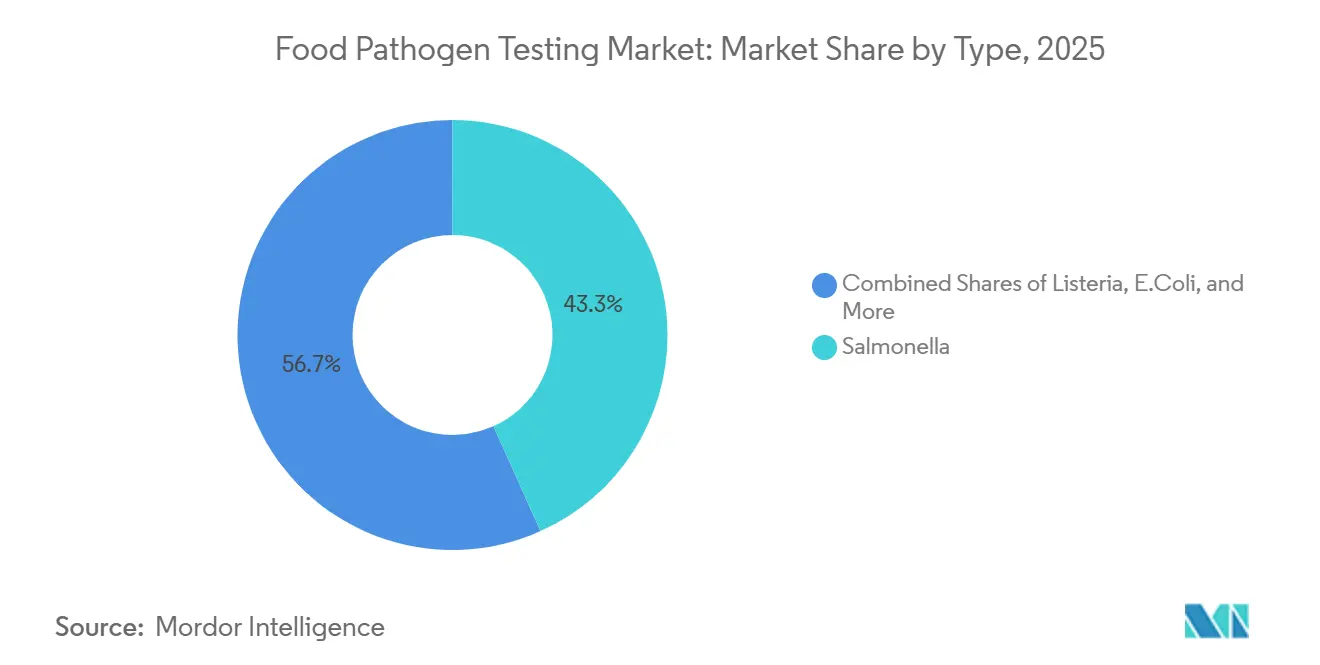
- By type, Salmonella held 43.28% of the food pathogen testing market share in 2025, while E. coli is forecast to grow at a 9.55% CAGR through 2031.
- By food type, meat and poultry accounted for 38.54% of the food pathogen testing market share in 2025, while dairy products are forecast to grow at a 9.42% CAGR through 2031.
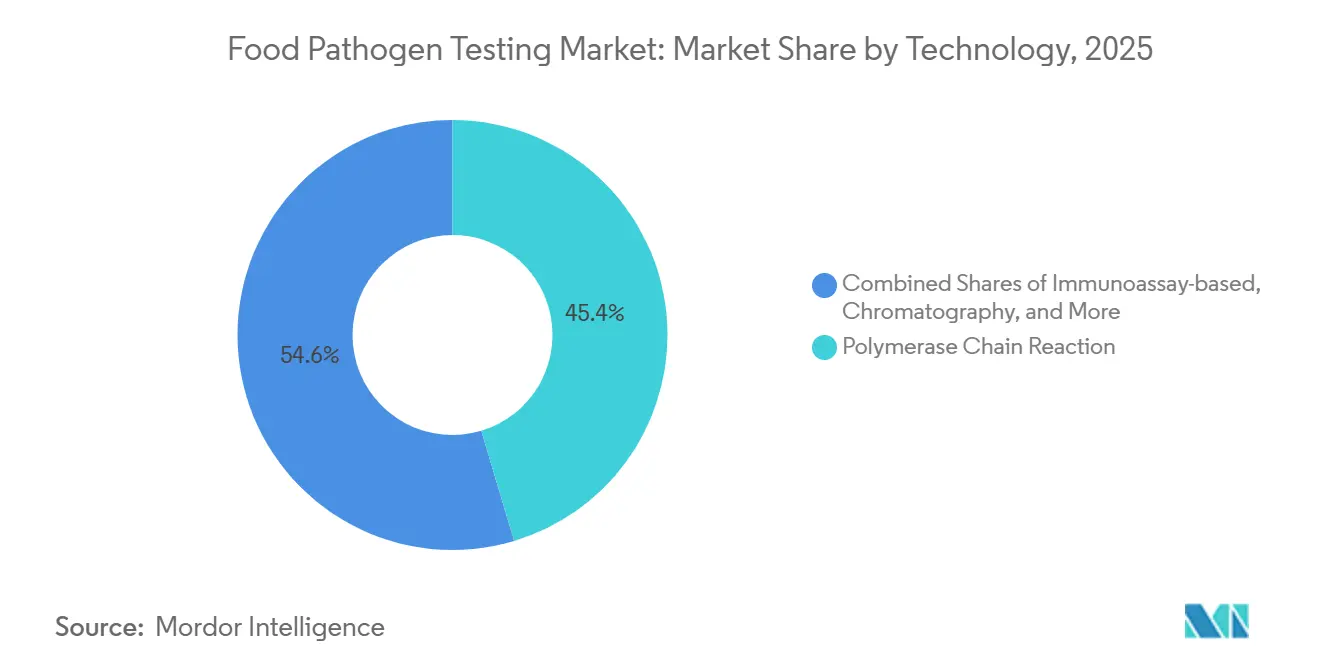
- By technology, Polymerase Chain Reaction held 45.36% of the food pathogen testing market share in 2025, while immunoassay-based testing is forecast to grow at a 9.78% CAGR through 2031.
- By geography, North America held 41.36% of the food pathogen testing market share in 2025, while Asia-Pacific is forecast to grow at a 9.57% CAGR through 2031.
Note: Market size and forecast figures in this report are generated using Mordor Intelligence’s proprietary estimation framework, updated with the latest available data and insights as of January 2026.
Global Food Pathogen Testing Market Trends and Insights
Drivers Impact Analysis*
| Driver | (~) % Impact on CAGR Forecasts | Geographic Relevance | Impact Timeline |
|---|---|---|---|
| Increasing incidence of foodborne diseases | +2.0% | Global | Short term (≤ 2 years) |
| Growing demand for food safety and quality | +1.6% | Global, strongest in North America & EU | Medium term (2–4 years) |
| Increasing adoption of rapid testing technologies | +1.5% | Global | Medium term (2–4 years) |
| Growing emphasis on preventive food safety systems | +1.1% | North America & EU | Long term (≥ 4 years) |
| Expansion of food processing industries in emerging markets | +0.9% | APAC core, spill-over to South America & MEA | Medium term (2–4 years) |
| Stringent food safety and government regulations on pathogen testing | +0.8% | North America, EU, APAC | Medium term (2–4 years) |
| Source: Mordor Intelligence | |||
Escalating Foodborne Disease Burden Sustaining Persistent Testing Demand
World Health Organization reported 866 million foodborne illness episodes each year and USD 310 billion in productivity losses in 2026, which gives food processors an economic reason to strengthen testing programs. Salmonella causes 200 million to 1 billion cases globally and an estimated 155,000 deaths each year, with 85.00% of cases linked to contaminated food. The FoodNet system recorded 24,624 laboratory-confirmed enteric infections across United States surveillance sites in 2024[2]Source: United States Department of Agriculture Food Safety and Inspection Service, “Salmonella Verification Testing, April 27, 2025 Through April 25, 2026,” Food Safety and Inspection Service, fsis.usda.gov. Hospitalization rates remained elevated against the 2016-2018 reference baseline, which maintains pressure for more environmental monitoring and verification testing. Africa and South-East Asia account for nearly three-quarters of global foodborne illnesses, leaving a substantial need for testing capacity as laboratory infrastructure develops
Rapid Testing Technologies Reshaping Laboratory Workflows
The shift from culture-based methods to molecular detection is changing laboratory workflows in the Food pathogen testing market. Automated PCR workflows can provide sample-to-answer results in under 4 hours, while mid-range real-time PCR instruments are available below USD 40,000.00. These conditions allow regional contract laboratories to use molecular diagnostics with lower capital requirements than earlier platforms. Thermo Fisher Scientific launched InstaFlux in July 2026, and the system prepares enrichment media in under 30 minutes with gravimetric dispensing and digital audit trails that can connect with laboratory information systems. A 2026 review of 80 studies found that nanopore platforms can identify pathogens in under 24 hours with 95.00%-98.00% species-level accuracy, more than 90.00% antimicrobial-resistance gene sensitivity, and per-sample costs of USD 50.00-USD 200.00, compared with USD 300.00-USD 800.00 for conventional whole-genome sequencing.
Preventive Food Safety Systems Driving Environmental Monitoring Volumes
Preventive food safety systems are shifting testing from end-product release toward environmental monitoring in the Food pathogen testing market. HACCP and the Preventive Controls for Human Food requirements under 21 CFR Part 117 increase the number of testing events at each facility. Neogen introduced Listeria Right Now at IAFP 2025 as an enrichment-free solution that provides actionable environmental monitoring results in 2 hours. Commission Implementing Regulation 2025/179 takes effect on August 23, 2026, and requires whole-genome sequencing of isolates from foodborne outbreaks involving Salmonella, Campylobacter, Listeria monocytogenes, and E. coli[3]Source: European Commission, “Commission Implementing Regulation (EU) 2025/179,” EUR-Lex, data.europa.eu. National Reference Laboratories must achieve EN ISO/IEC 17025:2017 accreditation for whole-genome sequencing by mid-2028, which supports investment in molecular infrastructure and favors producers that can provide source attribution.
Food Processing Sector Expansion in Emerging Markets Opening New Testing Volumes
Food processing expansion and compliance changes are opening new testing volumes in emerging markets. India issued its Contaminants, Toxins and Residues Amendment Regulations in May 2026, and the revised requirements take effect in December 2026 for manufacturers, importers, and seafood processors. China issued GB/T 27405-2026 for laboratory quality control in food microbiological testing, effective in March 2026. China also introduced T/GDFCA 110-2025 for fluorescent PCR detection of 11 pathogens, including Salmonella and E. coli O157:H7, effective in August 2025. These standards favor suppliers with local method validation, while Vietnam and Indonesia face continued pressure to improve infrastructure because their agricultural exports must meet European and United States import requirements.
Restraints Impact Analysis*
| Restraint | (~) % Impact on CAGR Forecasts | Geographic Relevance | Impact Timeline |
|---|---|---|---|
| High cost of advanced testing technologies | -1.8% | Global, most acute in South America & MEA | Long term (≥ 4 years) |
| Long testing and confirmation procedures | -1.0% | Global | Short term (≤ 2 years) |
| Lack of standardization across testing protocols | -0.8% | APAC, South America, MEA | Medium term (2–4 years) |
| Complexity of food matrices | -0.6% | Global | Medium term (2–4 years) |
| Source: Mordor Intelligence | |||
High Capital and Operating Costs Limiting Adoption in Price-Sensitive Markets
High capital and operating costs limit adoption of advanced testing technologies in price-sensitive markets. Molecular platforms require instrument investment, reagent spending, maintenance contracts, specialist calibration, and bioinformatics support. A 2025 study found that whole-genome sequencing costs per sample exceed traditional typing methods during initial implementation. Cost parity occurs only when platforms are fully transitioned and used for several purposes, including serotyping and antimicrobial-resistance characterization. Lower investment reduces outbreak surveillance, which can weaken the documented basis for tighter regulations and slow laboratory development in South America and sub-Saharan Africa.
Lack of Standardization Impeding Cross-Border Testing Recognition
Different accepted reference methods make cross-border testing more complex for exporters. Importing countries may require a different method from the protocol recognized in the exporter’s domestic market. Producers can therefore need duplicate confirmation analyses and more documentation for the same shipment. Japan, South Korea, Vietnam, Indonesia, and India maintain separate approved-method lists under their food safety authorities. AOAC Official Methods of Analysis and ISO 16140 offer a path toward consistency, but regulatory acceptance of validated molecular methods often trails technology development. This gap acts as a non-tariff barrier for emerging-market processors and supports demand for local laboratories that can operate under multiple frameworks.
*Our forecasts treat driver/restraint impacts as directional, not additive. The impact forecasts reflect baseline growth, mix effects, and variable interactions.
Segment Analysis
By Type: Salmonella Anchors Revenue While E. Coli Gains Ground Fastest
Salmonella held 43.28% of the Food pathogen testing market size by type in 2025. Its position reflects broad testing requirements across poultry, meat, and egg supply chains. The Food Safety and Inspection Service continued Salmonella verification testing across young chicken carcasses, comminuted poultry, and raw chicken parts through the April 2025-April 2026 cycle. This program maintains testing demand through slaughter, processing, and further-processing operations. The proposed Food Safety and Inspection Service framework for raw poultry included statistical process control monitoring requirements in early 2025. If finalized, this framework would raise testing frequency at individual establishments. Salmonella testing also remains central to outbreak investigation and supplier verification. These requirements support its leading revenue position in the Food pathogen testing market.
E. coli is forecast to record the highest type-level CAGR of 9.55% from 2026 to 2031. Testing demand comes from dairy, produce, and meat channels. The Food and Drug Administration’s evolving pre-harvest agricultural water requirements under the Produce Safety Rule add to this demand. Listeria and other pathogens account for the remaining type revenue. A multistate Listeria outbreak linked to soft cheese in June 2026 caused 1 death and 7 hospitalizations. The event reinforced the case for continuous environmental Listeria monitoring in dairy facilities. Testing programs increasingly need to address distinct risks across raw materials, equipment surfaces, and finished products. This supports a broader pathogen panel beyond the largest target category.



By Food Type: Meat and Poultry Dominates, Dairy Leads in Growth Momentum
Meat and poultry accounted for 38.54% of the Food pathogen testing market size by food type in 2025. Decades of HACCP and Food Safety and Inspection Service infrastructure have embedded routine testing across slaughter and processing stages. Pathogen screening is required through carcass handling, comminution, and further processing. These controls make testing a regular production activity rather than a limited final-product check. Meat processors also face extensive verification obligations for Salmonella. Poultry operations require monitoring across young chicken carcasses, raw chicken parts, and comminuted products. Processed food, fruits and vegetables, and crops hold mid-tier testing volumes. Pet food and animal feed form a separate growing area as food safety expectations extend to companion animal nutrition.
Dairy products are forecast to grow at a 9.42% CAGR from 2026 to 2031. Two United States dairy-linked outbreaks in 2026 increased scrutiny of the segment. An E. coli outbreak was linked to raw cheddar cheese in March 2026. A Listeria outbreak was linked to soft ricotta in June 2026. The recalls and regulatory attention increased environmental monitoring among dairy processors beyond the raw-dairy niche. Added-value formats such as aged cheeses, fresh ricotta, and specialty fermented products have greater Listeria exposure than pasteurized commodity dairy. This increases the need for facility monitoring and product verification. The Food pathogen testing market therefore benefits from dairy’s expansion into more specialized formats.
By Technology: PCR Leads by Share, Immunoassay Methods Capture Fastest Growth
PCR held 45.36% of the Food pathogen testing market size by technology in 2025. The method offers detection specificity and supports testing for multiple pathogens. Lower instrument costs have also improved its availability across commercial laboratories. bioMérieux introduced GENE-UP TYPER SLM in June 2026 for rapid Salmonella strain discrimination. The system combines real-time PCR with the AUGMENTED-DX portal to support source attribution. Chromatography and spectrometry remain useful for toxin characterization and confirmatory analysis. They do not match PCR throughput for routine screening. Neogen’s MDA2QSAL96, validated for quantitative Salmonella enumeration on poultry rinses, shows how PCR-based methods are moving into process-control work.
Immunoassay-based testing is forecast to grow at a 9.78% CAGR from 2026 to 2031. It is suited to decentralized, point-of-process, and resource-constrained settings. These settings may not have the laboratory infrastructure required for PCR. New lateral flow approaches include multiplex detection and smartphone-assisted machine-learning readout. CRISPR-Cas12a signal transduction can also support sub-CFU/mL sensitivity. Portable devices allow testing at production lines and retail distribution points. PCR systems are less suited to these locations. Immunoassays therefore retain a distinct operating role in emerging markets and distributed food operations.
Geography Analysis
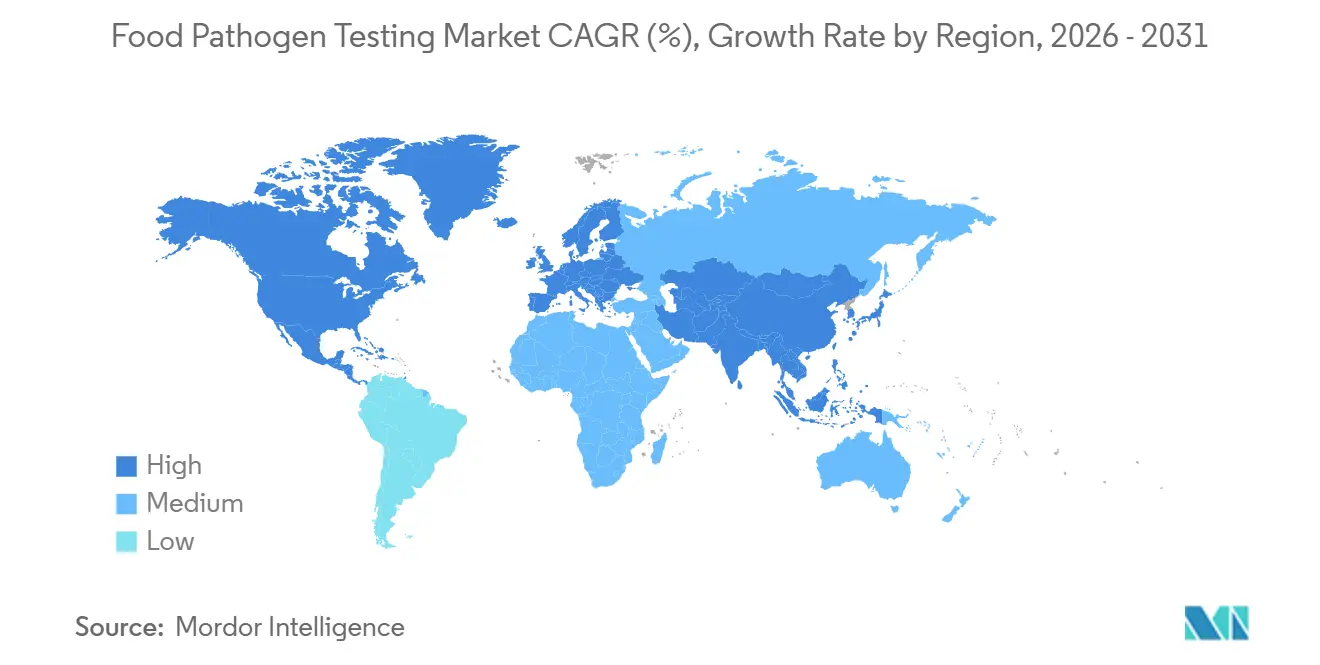
North America held 41.36% of the Food pathogen testing market share in 2025. Preventive controls under the Food Safety Modernization Act and comprehensive verification programs by the Food Safety and Inspection Service reinforce the region’s position. The United States accounts for most regional revenue, with active Salmonella verification testing across poultry and meat establishments through 2026. E. coli and Listeria events in dairy during 2026 are increasing environmental monitoring among affected producers. SGS acquired Murray-Brown Laboratories in March 2026, expanding its North American PCR and advanced microbial detection capabilities.
Europe is the second-largest regional area, led by Germany, the United Kingdom, France, Italy, and the Netherlands. Demand is supported by major food processing activity and harmonized microbiological criteria under Regulation (EC) 2073/2005. Commission Implementing Regulation (EU) 2025/179 requires whole-genome sequencing of outbreak isolates for 4 key pathogens from August 23, 2026. National Reference Laboratories must obtain ISO/IEC 17025:2017 accreditation for this work by mid-2028. Eurofins Agro Testing completed the acquisition of Laboratoř Postoloprty in the Czech Republic in June 2026. Brazil and Argentina drive South American demand through meat, soy, and aquaculture export certification. bioMérieux acquired Neoprospecta in Brazil in January 2025, strengthening its data and genomics offering in Latin America. Mérieux NutriSciences also expanded its footprint through the acquisition of Bureau Veritas food testing activities.
Asia-Pacific is forecast to grow at a 9.57% CAGR from 2026 to 2031. China, India, Vietnam, and Indonesia are adopting molecular methods on new testing infrastructure rather than primarily replacing mature culture-based systems. China’s GB/T 27405-2026 and GB/T 27403-2026 create national frameworks for laboratory quality control and molecular biological testing. India’s FSSAI amendment takes effect in December 2026 and creates a concentrated procurement need for manufacturers, importers, and seafood processors. Middle East and Africa is the smallest regional area, but the United Arab Emirates and Saudi Arabia maintain institutional demand as major food importers. Africa’s large foodborne disease burden points to a continuing gap between testing needs and available laboratory capacity. Laboratory investment and food-safety assistance could help narrow this gap over time.

Competitive Landscape
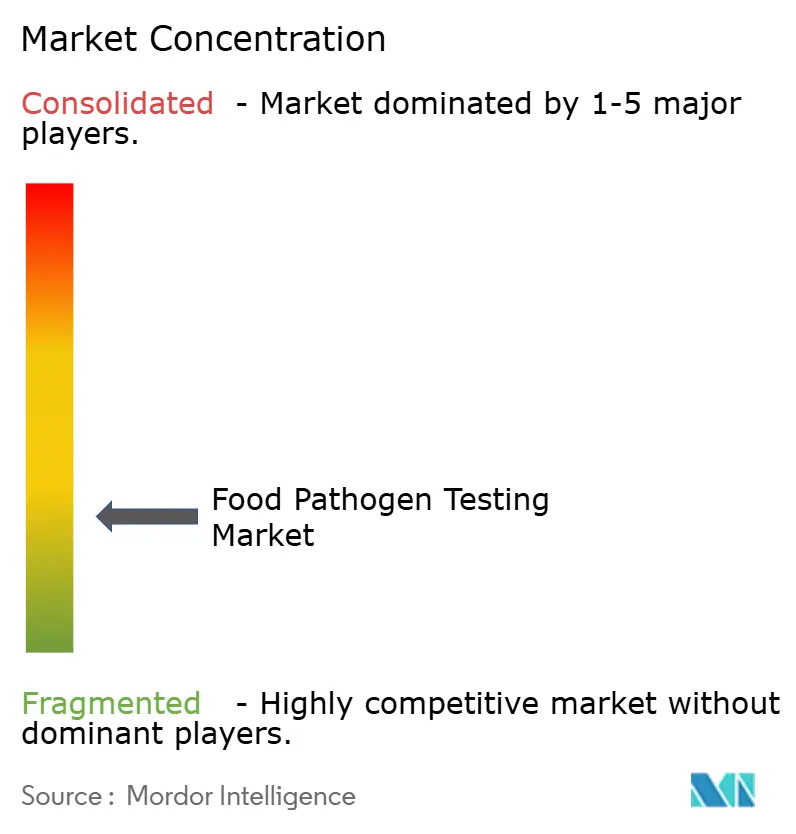
The Food pathogen testing market is fragmented, with no single company leading across all geographies, food categories, and technology platforms. Global integrated testing organizations include Eurofins Scientific, SGS, and Mérieux NutriSciences. Instrument and assay suppliers include Thermo Fisher Scientific, bioMérieux, Neogen, QIAGEN, and Bio-Rad Laboratories. Regional contract laboratories include Microbac Laboratories, Tentamus Group, Certified Group, and AsureQuality. Competition is moving beyond price toward turnaround time and digital traceability. Food manufacturers increasingly require service contracts that include laboratory information system integration and real-time audit trails. These requirements favor laboratory networks that can maintain sustained technology investment.
Mérieux NutriSciences completed its global acquisition of Bureau Veritas’ food testing business across 15 countries in September 2025. SGS acquired Murray-Brown Laboratories in March 2026 to expand its food safety and nutraceutical testing capabilities in North America. Eurofins Agro Testing acquired Laboratoř Postoloprty in June 2026, strengthening its Central European network. These moves place pressure on mid-sized independent laboratories to specialize or combine with larger networks. Smaller participants can compete through expertise in specific pathogens, food matrices, or regional export corridors. The Food pathogen testing market also offers scope for local suppliers that can meet country-specific validation requirements. Consolidation is therefore occurring alongside continued local specialization.
Product development centers on speed, multiplex capability, and source-attribution software. bioMérieux’s GENE-UP TYPER platform connects PCR detection with machine-learning genomic databases for strain-level discrimination. The platform is relevant to root-cause investigations in food manufacturing. Whole-genome sequencing remains less integrated into routine food safety programs than PCR-based methods. Per-sample sequencing costs are declining, but interpretation capability and enterprise risk-management processes remain barriers. This leaves room for partnerships between sequencing providers and food-safety data specialists. The Food pathogen testing market remains competitive because large networks, instrument vendors, and specialized laboratories address different parts of the value chain.
Food Pathogen Testing Industry Leaders
Eurofins Scientific
SGS S.A.
Mérieux NutriSciences
Intertek Group plc
Thermo Fisher Scientific Inc.
- *Disclaimer: Major Players sorted in no particular order

Recent Industry Developments
- July 2026: Thermo Fisher Scientific launched Thermo Scientific InstaFlux, an automated media preparation and sample enrichment workflow for food pathogen and environmental testing that prepares enrichment media in under 30 minutes with gravimetric dispensing and LIMS-ready digital audit trails. The solution targets throughput bottlenecks in high-volume contract testing facilities seeking to standardize workflows across multiple sites.
- June 2026: bioMérieux introduced GENE-UP TYPER SLM, a real-time PCR assay for rapid Salmonella strain discrimination in food manufacturing environments, developed in partnership with Mérieux NutriSciences. The system integrates with the AUGMENTED-DX machine-learning portal, powered by a genomic database, to accelerate root-cause investigations. Mérieux NutriSciences retains co-exclusive outsourced testing rights in key geographies.
- September 2025: Mérieux NutriSciences completed the global acquisition of Bureau Veritas’ food testing business across 15 countries in the Americas, Africa, and Asia-Pacific, closing the final stage in Peru and adding 2 laboratories, over 220 employees, and deep expertise in seafood, aquaculture, and agri busines.


Global Food Pathogen Testing Market Report Scope
| Salmonella |
| E-Coli |
| Listeria |
| Other Pathogens |
| Food | Meat and Poultry |
| Dairy Products | |
| Fruits and Vegetables | |
| Processed Food | |
| Crops | |
| Other Foods (Spices, Infant Formula) | |
| Pet Food and Animal Feed |
| Polymerase Chain Reaction |
| Immunoassay-based |
| Chromatography and Spectrometry |
| Others |
| North America | United States |
| Canada | |
| Mexico | |
| Rest of North America | |
| Europe | Germany |
| United Kingdom | |
| France | |
| Italy | |
| Spain | |
| Netherlands | |
| Sweden | |
| Poland | |
| Belgium | |
| Rest of Europe | |
| Asia-Pacific | China |
| India | |
| Japan | |
| Australia | |
| South Korea | |
| Vietnam | |
| Indonesia | |
| Rest of Asia-Pacific | |
| South America | Brazil |
| Argentina | |
| Chile | |
| Peru | |
| Colombia | |
| Rest of South America | |
| Middle East and Africa | United Arab Emirates |
| Saudi Arabia | |
| South Africa | |
| Nigeria | |
| Rest of Middle East and Africa |
| By Type | Salmonella | |
| E-Coli | ||
| Listeria | ||
| Other Pathogens | ||
| By Food Type | Food | Meat and Poultry |
| Dairy Products | ||
| Fruits and Vegetables | ||
| Processed Food | ||
| Crops | ||
| Other Foods (Spices, Infant Formula) | ||
| Pet Food and Animal Feed | ||
| By Technology | Polymerase Chain Reaction | |
| Immunoassay-based | ||
| Chromatography and Spectrometry | ||
| Others | ||
| By Geography | North America | United States |
| Canada | ||
| Mexico | ||
| Rest of North America | ||
| Europe | Germany | |
| United Kingdom | ||
| France | ||
| Italy | ||
| Spain | ||
| Netherlands | ||
| Sweden | ||
| Poland | ||
| Belgium | ||
| Rest of Europe | ||
| Asia-Pacific | China | |
| India | ||
| Japan | ||
| Australia | ||
| South Korea | ||
| Vietnam | ||
| Indonesia | ||
| Rest of Asia-Pacific | ||
| South America | Brazil | |
| Argentina | ||
| Chile | ||
| Peru | ||
| Colombia | ||
| Rest of South America | ||
| Middle East and Africa | United Arab Emirates | |
| Saudi Arabia | ||
| South Africa | ||
| Nigeria | ||
| Rest of Middle East and Africa | ||


Key Questions Answered in the Report
What is the Food pathogen testing market size?
The Food pathogen testing market size is expected to rise from USD 16.54 billion in 2026 to USD 23.74 billion by 2031 at an 8.04% CAGR.
Which pathogen category has the largest revenue share?
Salmonella led with 43.28% revenue share in 2025 because it is a core target across poultry, meat, and egg supply chains.
Which food category is growing fastest for pathogen testing?
Dairy products are projected to expand at a 9.42% CAGR through 2031, supported by greater environmental monitoring after recent outbreak events.
Which region is growing fastest?
Asia-Pacific is forecast to grow at a 9.57% CAGR through 2031, supported by new molecular testing infrastructure and changing compliance requirements.
Page last updated on:


 Your data is secure and never sold or shared.


