
Flow Chemistry Market Size and Share
Market Overview
| Study Period | 2022 - 2032 |
|---|---|
| Market Size (2027) | USD 2.69 Billion |
| Market Size (2032) | USD 4.60 Billion |
| Growth Rate (2027 - 2032) | 11.36 % |
| Fastest Growing Market | Asia-Pacific |
| Largest Market | Asia-Pacific |
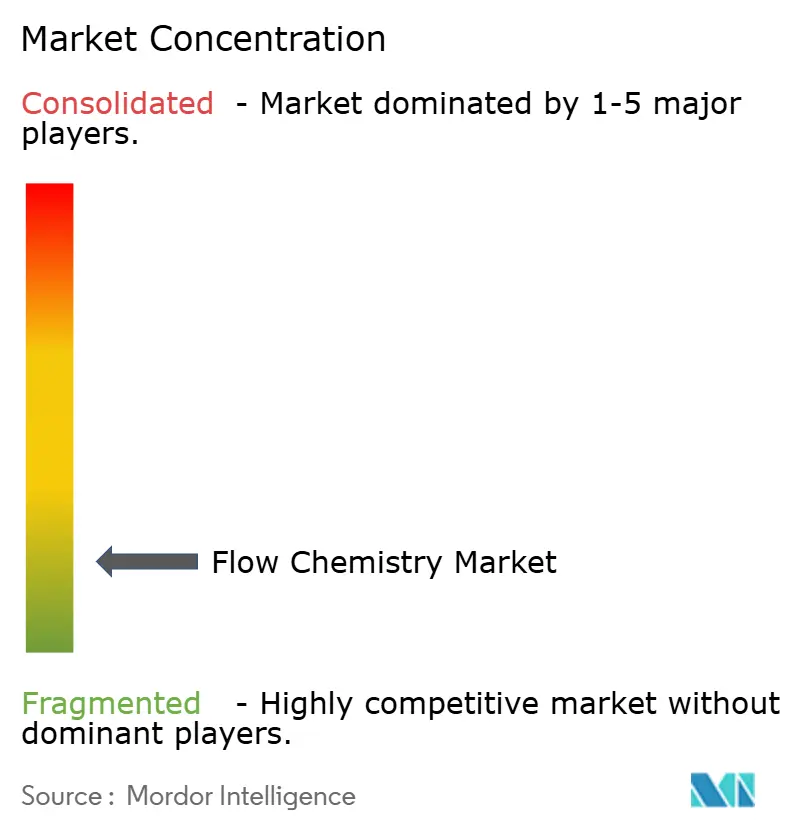
| Market Concentration | Low |
Major Players *Disclaimer: Major Players sorted in no particular order Image © Mordor Intelligence. Reuse requires attribution under CC BY 4.0. | |
Flow Chemistry Market Analysis by Mordor Intelligence
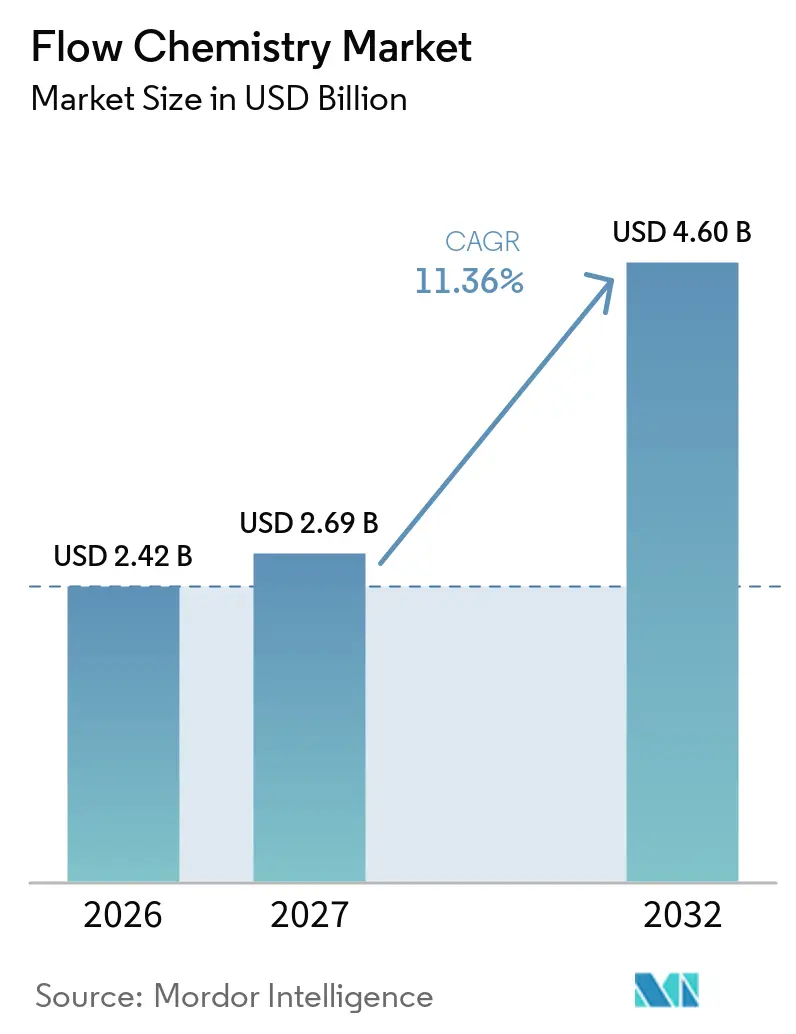
The Flow Chemistry Market size was valued at USD 2.42 billion in 2026 and is estimated to grow from USD 2.69 billion in 2027 to USD 4.60 billion by 2032, at a CAGR of 11.36% during the forecast period (2027-2032). The flow chemistry market is expanding as chemical producers shift toward continuous processing for reactions that require tighter temperature control and safer containment. Small reactor sizes, closed systems, and controlled residence times reduce the risks associated with hazardous intermediates and strong exothermic reactions. Pharmaceutical demand for continuous production of active pharmaceutical ingredients that meet quality-by-design expectations is also supporting market growth. Sustainability requirements are encouraging manufacturers to reduce solvent use, waste, and energy consumption. Equipment suppliers are responding by offering modular systems, automation, and services to support a phased transition from laboratory development to commercial production.
Key Report Takeaways
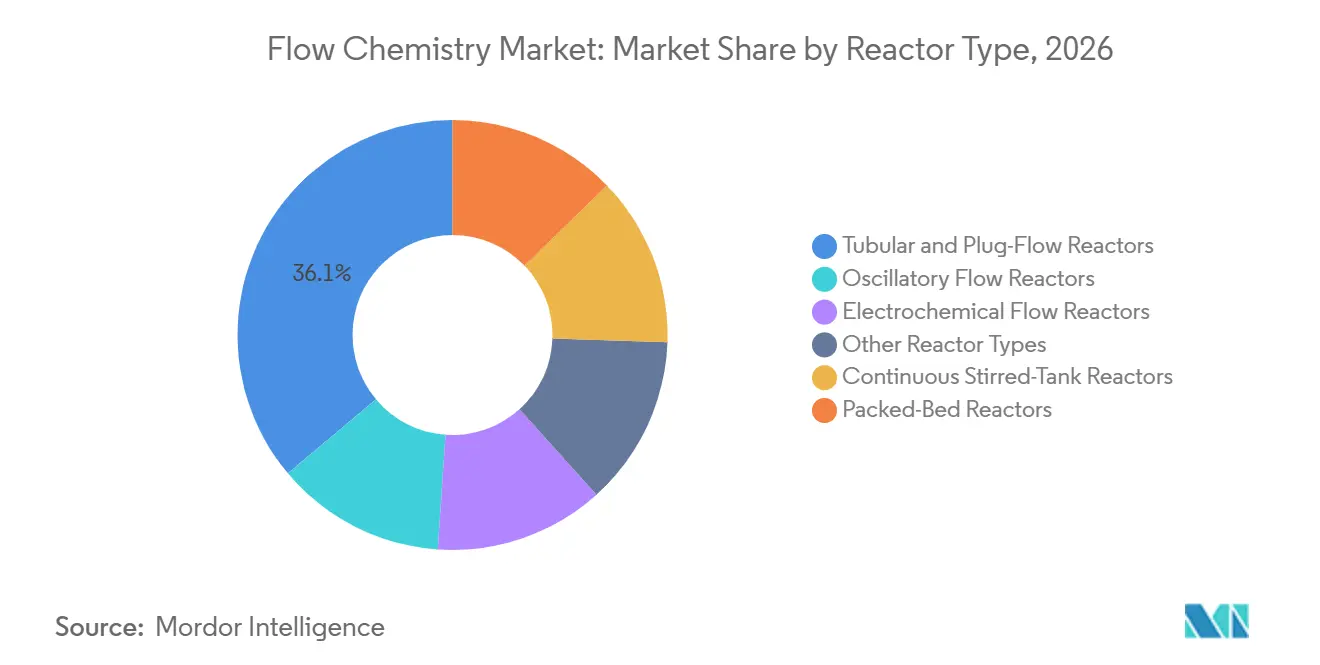
- By reactor type, Tubular and Plug-Flow Reactors held 36.12% of the Flow Chemistry Market share in 2026, while Electrochemical Flow Reactors are forecast to grow at a 12.07% CAGR through 2032.
- By purification method, Chromatography accounted for 30.56% of the Flow Chemistry Market share in 2026 and is forecast to expand at a 12.51% CAGR through 2032.
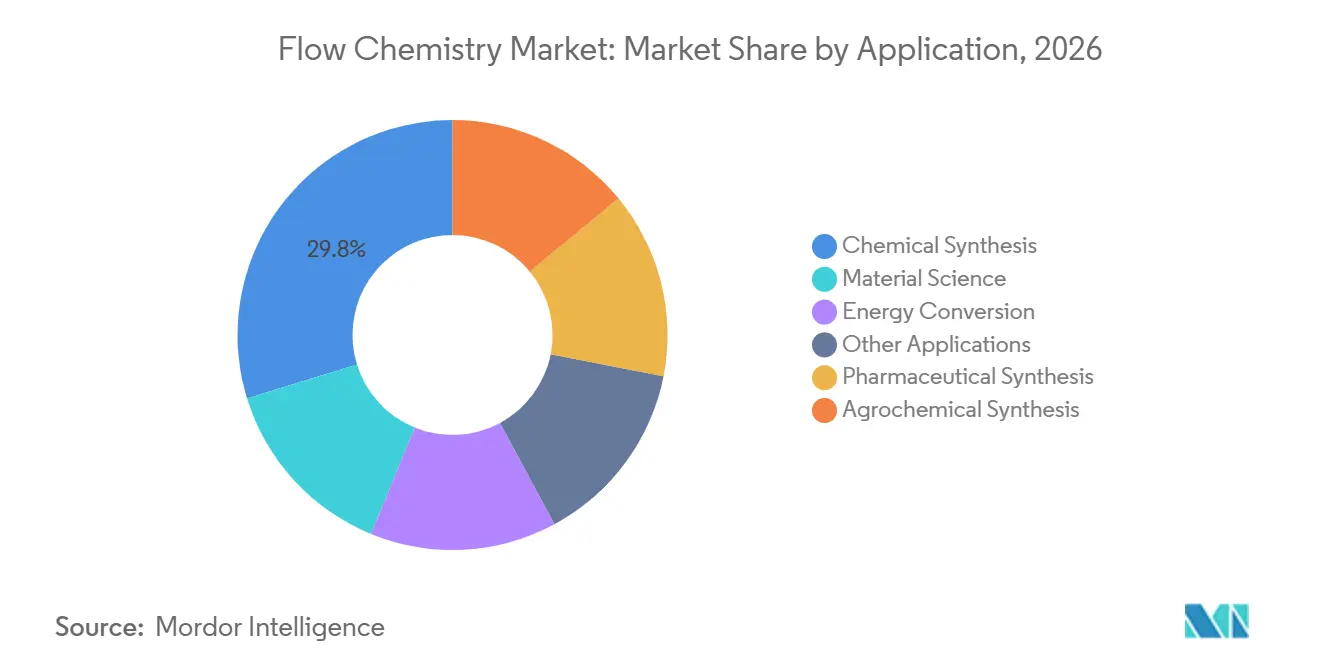
- By application, Chemical Synthesis held 29.77% of the Flow Chemistry Market share in 2026, while Pharmaceutical Synthesis is projected to grow at a 13.14% CAGR through 2032.
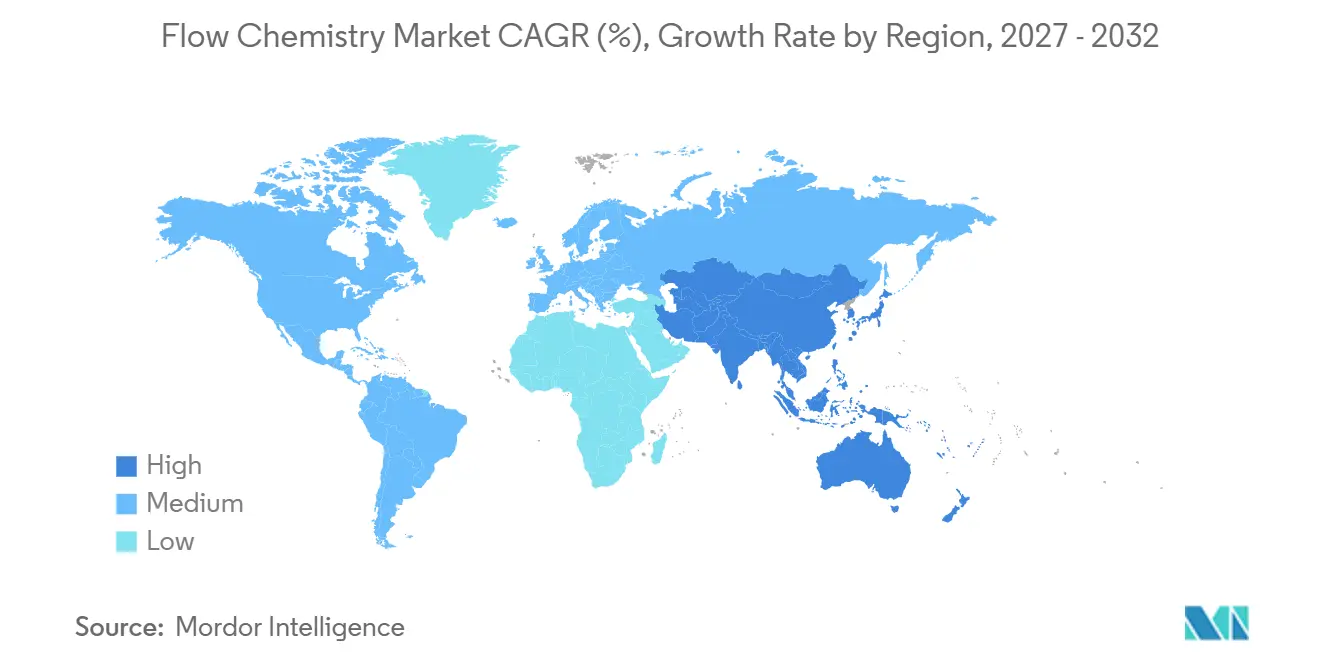
- By geography, Asia-Pacific held 27.73% of the Flow Chemistry Market share in 2026 and is forecast to grow at a 12.72% CAGR through 2032.
Note: Market numbers in this report are based on Mordor Intelligence's proprietary estimation framework, which combines nine months of actuals with Q4 projections for base year 2026.
Market Trends and Insights
Drivers Impact Analysis of Flow Chemistry Market*
| Drivers | (~) % Impact on CAGR Forecast | Geographic Relevance | Impact Timeline |
|---|---|---|---|
| Safer Processing of Hazardous and Exothermic Reactions | +2.4% | Global, concentrated in Asia-Pacific and Europe | Short term (≤ 2 years) |
| Sustainability, Waste Reduction, and Energy Efficiency Requirements | +1.8% | EU and North America core, with spillover to Asia-Pacific | Medium term (2-4 years) |
| Pharmaceutical and Specialty Chemical Manufacturing Expansion | +2.6% | Asia-Pacific core and North America | Medium term (2-4 years) |
| Process Intensification and Shorter Development Cycles | +1.9% | Global, strongest in the North American and EU Contract Development and Manufacturing Organization (CDMO) sectors | Short term (≤ 2 years) |
| Modular Flow Skids for Reshoring and Supply Chain Resilience | +1.4% | North America and Europe | Medium term (2-4 years) |
| Source: Mordor Intelligence | |||
Demand for Safer Processing of Hazardous and Exothermic Reactions
Flow chemistry equipment keeps hazardous reactions within small, enclosed reaction spaces, which is relevant to nitration, azide processing, ozonation, and organometallic synthesis, where batch vessels can hold larger inventories of unstable material. A 2025 review found that continuous nitration reduces hazardous intermediate inventory and provides tighter control of exothermic conditions than batch processing. Apeloa Pharmaceutical reported that its continuous platform reduced the azide chemistry cycle time from 12 hours in batch processing to 10 minutes and enabled room-temperature ozonation instead of operating at -60°C. These operating characteristics are increasingly relevant as occupational limits and process safety expectations around reactive intermediates tighten. They also make flow chemistry more applicable to agrochemical and specialty chemical plants seeking safer production routes.
Expansion of Pharmaceutical and Specialty-Chemical Manufacturing
Pharmaceutical manufacturers require precise reaction control, reliable quality systems, and production approaches that can be validated for regulated environments. Continuous platforms address these requirements by incorporating process analytical technology, real-time monitoring, and defined control strategies. A 2025 review documented commercial-scale applications of multi-step flow routes in active pharmaceutical ingredient synthesis across an expanding range of molecular structures. China has introduced pilot pathways for continuous manufacturing review, while Japan is coordinating regional work on continuous manufacturing through the Asia-Pacific Economic Cooperation framework. These policy developments support the adoption of continuous platforms by contract development and manufacturing organizations, making continuous manufacturing capability an increasingly important factor in outsourced pharmaceutical production decisions.
Demand for Process Intensification and Shorter Development Cycles
Manufacturers seeking to shorten development timelines and reduce material use during process optimization are supporting growth in the flow chemistry market. Continuous systems can combine several reaction steps, remove intermediate isolation, and enable screening under controlled operating conditions. The National Institute of Advanced Industrial Science and Technology (AIST) reported in September 2025 that its continuous synthesis of safinamide mesylate eliminated the need for intermediate isolation and purification, improved production efficiency by 3.4 times, and reduced waste by 20% compared with conventional batch processing. A University of Liverpool study found that flow-integrated high-throughput experimentation broadened usable process windows and addressed scale-up challenges in process development. Equipment providers are combining modular reactors with automation, in-line analytics, Bayesian optimization, and digital modeling, thereby reducing the number of experiments, material consumption, and the time between early development and scale-up decisions.
Modular Flow Skids Supporting Reshoring and Supply-Chain Resilience
Modular flow skids are increasing the practical appeal of flow chemistry for manufacturers seeking local, flexible production capacity. Phlow and Antheia formed a partnership in July 2025 to use advanced manufacturing technologies to produce domestically key starting materials and active pharmaceutical ingredients for 15 critical medicines. Hovione and Microinnova Engineering announced a September 2025 partnership to test modular, plug-and-play equipment at an industrial pharmaceutical scale[1]. AIST and iFactory also received support from the New Energy and Industrial Technology Development Organization (NEDO) in July 2025 for modular, remotely controlled continuous manufacturing modules for hemostatic agents. Pre-delivery testing and redeployment across product lines can help mid-sized manufacturers avoid committing capital to a dedicated facility at the outset. These attributes connect flow systems with reshoring plans and emergency production requirements.
Restraints Impact Analysis of Flow Chemistry Market*
| Restraints | (~) % Impact on CAGR Forecast | Geographic Relevance | Impact Timeline |
|---|---|---|---|
| Initial Capital Investment and Retrofitting Costs | -1.8% | Global, most acute in South America, the Middle East, and Africa | Long term (≥ 4 years) |
| Shortage of Flow Chemistry, Automation, and Process Validation Expertise | -1.2% | Asia-Pacific and South America | Medium term (2-4 years) |
| Fouling, Clogging, and Solid Handling Constraints | -0.9% | Global, most acute in agrochemical and materials science applications | Long term (≥ 4 years) |
| Source: Mordor Intelligence | |||
High Initial Capital Investment and Retrofitting Costs
Equipment acquisition costs for continuous flow systems can be higher than those for batch vessels, particularly when a site must retrofit existing infrastructure. Converting a batch-validated pharmaceutical process may also require supplemental regulatory submissions and bridging data, which can extend project timelines by 12 to 24 months and increase planning risk. The International Society for Pharmaceutical Engineering (ISPE) noted that the planned revision of EU pharmaceutical legislation aims to reduce compliance complexity, although uncertainty about the final requirements continues to influence capital decisions[2]. This challenge is significant for smaller specialty chemical producers in South America and the Middle East, where financing options and qualified supplier networks are limited. Equipment-as-a-service models may reduce the initial financial burden, but they are not yet widely available across the supplier base.
Shortage of Flow-Chemistry, Automation, and Process-Validation Expertise
The flow chemistry market requires expertise in continuous organic synthesis, process analytical technology, automation, and regulatory validation. A 2025 survey of 17 pharmaceutical companies found that respondents viewed electrochemical flow chemistry as strategically promising, yet none had commercialized a flow-based electrochemical process. The survey identified gaps in expertise and equipment scalability as ongoing obstacles. A Nature primer also cited a perceived high barrier to entry and limited academic exposure as factors slowing broader adoption. This constraint is more pronounced in India and ASEAN markets, where local technical service capacity is limited. Supplier training programs and application laboratories provide some support, but they do not substitute for long-term academic and workforce development.
*Our forecasts treat driver/restraint impacts as directional, not additive. The impact forecasts reflect baseline growth, mix effects, and variable interactions.
Flow Chemistry Market Segment Analysis
By Reactor Type:
Electrochemical Flow Reactors Gain Pharmaceutical MomentumTubular and Plug-Flow Reactors held 36.12% of the Flow Chemistry Market share in 2026. Their widespread use reflects compatibility with liquid-phase reactions such as nitration, Grignard chemistry, and continuous hydrogenation. Scale-up can be achieved by increasing residence time with a larger coil size rather than by redesigning the vessel, thereby reducing technical uncertainty during successive capacity increases. Continuous Stirred-Tank Reactors remain useful when reactions require longer residence times or produce solid by-products. Asynt's fReactor platform was used in 2025 for photochemistry and cascade biocatalysis applications.
Electrochemical Flow Reactors are projected to expand at a 12.07% CAGR through 2032, making this the fastest-growing reactor category. Pharmaceutical developers are using electrochemical routes for selective oxidation, C-H functionalization, and reductive processes, replacing stoichiometric reagents with electricity. A 2025 study demonstrated multi-gram selective oxidation of thioethers in a parallel-plate flow electrolysis cell, with pantoprazole included among the tested active pharmaceutical ingredient substrates. Oscillatory Flow Reactors are relevant to biocatalysis and crystallization because they decouple mixing intensity from flow rate. Flow photochemistry is also advancing, with reactor and LED modules enabling photochemical synthesis at kilogram-per-day output levels. These alternatives expand the range of reactions that producers can consider for continuous processing.

By Purification Method:
Chromatography Integration Reshapes End-to-End Flow ProcessingChromatography accounted for 30.56% of the Flow Chemistry Market share in 2026. Its position reflects the purification demands of complex therapeutics, including peptides, oligonucleotide conjugates, and Glucagon-like peptide-1 (GLP-1) agonists. These molecules often require selectivity that distillation, crystallization, and liquid-liquid extraction cannot consistently provide. YMC presented a two-step preparative chromatography process that raised a dual Glucose-dependent insulinotropic polypeptide (GIP)/GLP-1 receptor agonist from 20% crude purity to 99.6% pharmaceutical grade. Continuous chromatography, including twin-column simulated moving bed systems, connects conventional purification with end-to-end continuous manufacturing, making it increasingly relevant to the Flow Chemistry Market as biopharmaceutical molecules become more complex.
Chromatography is also forecast to grow at a 12.51% CAGR through 2032. Crystallization, distillation, and liquid-liquid extraction remain appropriate when molecular complexity is lower and cost per gram is a greater priority. A 2025 preprint described an acetaminophen production process that integrated a plug-flow reactor with cooling crystallization, filtration, drying, and packaging into a single continuous campaign. Membrane filtration plays a stronger role in bioseparation and crossflow applications, supporting continuous bioprocessing. YMC reported that its N-Rich twin-column technology can provide purification at greater than 95% purity for peptides, oligonucleotides, and monoclonal antibodies. The expanding range of purification options allows producers to select systems based on the molecule, throughput, and final quality target.
By Application:
Pharmaceutical Synthesis Leads Growth as Regulatory Acceptance MaturesChemical Synthesis held 29.77% of the Flow Chemistry Market share in 2026. The category reflects established use in fine and specialty chemical processes, including azide chemistry, fluorination, and organometallic coupling. Safety and temperature control are particularly valuable for reactions involving reactive intermediates. Apeloa Pharmaceutical reported energy savings above 60% for organometallic flow reactions compared with batch equivalents. A 2025 review of green process intensification documented energy reductions of 40% to 90% across the approaches assessed. This base of chemical production continues to support demand in the Flow Chemistry Market.
Pharmaceutical Synthesis is forecast to grow at a 13.14% CAGR through 2032, supported by regulatory acceptance of continuous production and demand for a reliable supply of active pharmaceutical ingredients. A 2025 review found that multi-step pharmaceutical flow synthesis delivered commercial-grade outcomes across a growing range of active ingredients and intermediates. Agrochemical Synthesis remains relevant because chlorination, nitration, and phosgenation require strong safety and exotherm control. Materials science applications include nanoparticles, polymers, and precursor materials that require consistent mixing and adequate residence time. Energy conversion represents a longer-term application, illustrated by a University of Cambridge solar-powered flow reactor that converted atmospheric carbon dioxide into syngas.
Geography Analysis
Asia-Pacific
Asia-Pacific held 27.73% of the flow chemistry market share in 2026 and is forecast to grow at a 12.72% CAGR through 2032. The region has a large production base for active pharmaceutical ingredients, agrochemicals, and specialty chemicals. Japan is incorporating continuous processing into its industrial technology agenda. In July 2025, the New Energy and Industrial Technology Development Organization (NEDO) supported AIST and iFactory in developing distributed modular manufacturing for hemostatic agents. China has established pilot pathways for evaluating continuous manufacturing. Jiangsu Province included trials of continuous drug production in its August 2025 pharmaceutical regulatory reform measures. India and South Korea are also expanding export-oriented pharmaceutical capacity. Their producers face International Council for Harmonization (ICH) Q13-aligned expectations from overseas regulators, which reinforces the value of continuous platforms for maintaining market access.
North America
North America holds a strong position in the flow chemistry market, driven by pharmaceutical research demand and public support for domestic manufacturing. In July 2025, the U.S. Department of Health and Human Services identified the need for continued support for domestic pharmaceutical manufacturing capacity. Phlow's facility and its partnership with Antheia address supply chain needs for 15 essential medicines. This policy supports continuous processing on the basis of supply security rather than plant efficiency alone. Pharmaceutical developers also use automation and real-time data to shorten development cycles. The regional opportunity therefore extends from research reactors to commercial systems. Suppliers that can connect process development, scale-up, and validation are well-positioned to serve this demand.
Europe, South America, the Middle East, and Africa
Europe supports the flow chemistry market through equipment innovation, pharmaceutical quality standards, and regulatory focus on industrial competitiveness. The European Commission's 2025 Chemical Industry Action Plan identified process intensification as a priority for chemical sector competitiveness. Germany remains a key equipment manufacturing center, while the United Kingdom combines specialist suppliers with research activity at Cambridge and Liverpool. Asymchem expanded its flow chemistry capabilities at its Sandwich site in the United Kingdom in 2025 to support development and scale-up for pharmaceutical customers. South America, the Middle East, and Africa remain earlier-stage markets where import substitution and petrochemical process intensification shape adoption. Brazil and Saudi Arabia have the largest underlying manufacturing bases in their respective regions. Brazil's Agência Nacional de Vigilância Sanitária (ANVISA) has specialized pathways for biosimilar continuous manufacturing, signaling gradual alignment with ICH-based approaches. Modular skid systems may be suitable where sites require lower preparation requirements and staged capacity additions, although skills and regulatory maturity remain constraints.
Competitive Landscape
The flow chemistry market is fragmented, with specialist equipment companies competing on reactor design, application support, and service. A second group of modular skid integrators focuses on plug-and-play deployment. No single supplier holds a dominant global position. Portfolio breadth, ranging from laboratory screening systems to commercial production equipment, is an important competitive factor. Good Manufacturing Practice (GMP) capability is also important for pharmaceutical customers. Corning introduced its Low-Flow Reactor System 2 in May 2025, extending its platform across research and development applications. The company uses cross-scale compatibility to retain customers as projects progress from screening to larger production systems.
Automation and digital integration are increasingly differentiating established suppliers in the flow chemistry market. Vapourtec introduced its Reaction Controller and Data Logger Module in May 2025 to integrate third-party pumps, mass-flow controllers, and sensors with its software environment. This approach gives research organizations a platform for connected equipment and data collection. Ehrfeld Mikrotechnik combined its modular reactor platform with automated experimentation and digital modeling for customers working under pharmaceutical development timelines. Vapourtec also introduced a high-temperature packed-bed reactor in March 2025 with operating conditions up to 250°C and 50 bar. These developments indicate that suppliers are competing through operating range, automation, and integration rather than reactor hardware alone.
Smaller suppliers address lower-cost laboratory entry through modular building-block systems. Uniqsis announced such modules in November 2025 for laboratories transitioning from batch processing to flow chemistry. ISO 9001 certification is a basic quality marker among established producers. GMP-ready systems from suppliers such as Ehrfeld Mikrotechnik, Corning, and AM Technology can provide access to regulated pharmaceutical work. Post-installation service quality remains important, as customers require support with optimization, validation, and scale-up. The flow chemistry market, therefore, rewards firms that can provide a reactor, the associated controls, and application knowledge. Available information does not include combined market shares of leading suppliers, so a quantitative concentration measure cannot be derived from it.
Flow Chemistry Industry Leaders
-
Corning Incorporated
-
Syrris Ltd
-
ThalesNano Inc.
-
Chemtrix
-
Vapourtec Ltd.
- *Disclaimer: Major Players sorted in no particular order
Flow Chemistry Market Companies Covered in this Report
- AM Technology
- Asynt Ltd.
- Cambridge Reactor Design Ltd.
- CEM Corporation
- Chemtrix
- Corning Incorporated
- Ehrfeld Mikrotechnik GmbH
- FutureChemistry Holding BV
- HEL Limited
- Parr Instrument Company
- Syrris Ltd
- ThalesNano Inc.
- Uniqsis Ltd.
- Vapourtec Ltd.
- YMC CO., LTD.
Recent Industry Developments in Flow Chemistry Market
- December 2025: Ehrfeld Mikrotechnik GmbH delivered a Modular MicroReaction System (MMRS) to the University of Birmingham's School of Metallurgy and Materials. The system incorporated a Valve-Assisted Mixer, FLUSYS XPUMP gear pump, and Bronkhorst ES-Flow ultrasonic sensor for precision rapid-mixing and precipitation research. This installation extended Ehrfeld's presence in flow chemistry beyond the pharmaceutical and fine chemical sectors into advanced materials science research.
- December 2025: Parr Instrument Company completed a USD 22.5 million expansion and renovation of its Moline, Illinois, manufacturing facility. The project added 54,000 sq ft of production space, new Mazak CNC machining capabilities, and expanded capacity for larger reactor models, including newly launched 30 L and 40 L configurations. The investment addressed demand for high-pressure batch and flow reactor systems in pharmaceutical and chemical synthesis applications.
Global Flow Chemistry Market Report Scope
Flow chemistry is a method in which chemical reactions are carried out in a continuously flowing stream of reagents, rather than in traditional static batch vessels (such as round-bottom flasks). In this approach, reactants are pumped through tubes or microreactors where they mix and react under controlled conditions.
The flow chemistry market is segmented by reactor type, purification method, application, and geography. By reactor type, the market is segmented into tubular and plug-flow reactors, continuous stirred-tank reactors, packed-bed reactors, oscillatory flow reactors, electrochemical flow reactors, and other reactor types. By purification method, the market is segmented into chromatography, crystallization, distillation, liquid-liquid extraction, membrane filtration, and other purification methods. By application, the market is segmented into chemical synthesis, pharmaceutical synthesis, agrochemical synthesis, material science, energy conversion, and other applications. The report also covers market sizes and forecasts for flow chemistry across 15 countries in major regions. The market sizes and forecasts are provided in terms of value (USD).
Segmentation Overview
| Tubular and Plug-Flow Reactors |
| Continuous Stirred-Tank Reactors |
| Packed-Bed Reactors |
| Oscillatory Flow Reactors |
| Electrochemical Flow Reactors |
| Other Reactor Types |
| Chromatography |
| Crystallization |
| Distillation |
| Liquid-Liquid Extraction |
| Membrane Filtration |
| Other Purification Methods |
| Chemical Synthesis |
| Pharmaceutical Synthesis |
| Agrochemical Synthesis |
| Material Science |
| Energy Conversion |
| Other Applications |
| Asia-Pacific | China |
| India | |
| Japan | |
| South Korea | |
| ASEAN Countries | |
| Rest of Asia-Pacific | |
| North America | United States |
| Canada | |
| Mexico | |
| Europe | Germany |
| United Kingdom | |
| France | |
| Italy | |
| NORDIC Countries | |
| Rest of Europe | |
| South America | Brazil |
| Argentina | |
| Rest of South America | |
| Middle East and Africa | Saudi Arabia |
| South Africa | |
| Rest of Middle East and Africa |
| By Reactor Type | Tubular and Plug-Flow Reactors | |
| Continuous Stirred-Tank Reactors | ||
| Packed-Bed Reactors | ||
| Oscillatory Flow Reactors | ||
| Electrochemical Flow Reactors | ||
| Other Reactor Types | ||
| By Purification Method | Chromatography | |
| Crystallization | ||
| Distillation | ||
| Liquid-Liquid Extraction | ||
| Membrane Filtration | ||
| Other Purification Methods | ||
| By Application | Chemical Synthesis | |
| Pharmaceutical Synthesis | ||
| Agrochemical Synthesis | ||
| Material Science | ||
| Energy Conversion | ||
| Other Applications | ||
| By Geography | Asia-Pacific | China |
| India | ||
| Japan | ||
| South Korea | ||
| ASEAN Countries | ||
| Rest of Asia-Pacific | ||
| North America | United States | |
| Canada | ||
| Mexico | ||
| Europe | Germany | |
| United Kingdom | ||
| France | ||
| Italy | ||
| NORDIC Countries | ||
| Rest of Europe | ||
| South America | Brazil | |
| Argentina | ||
| Rest of South America | ||
| Middle East and Africa | Saudi Arabia | |
| South Africa | ||
| Rest of Middle East and Africa | ||
Key Questions Answered in the Report
What is current market size of Flow Chemistry Market?
The Flow Chemistry Market size was valued at USD 2.42 billion in 2026 and is estimated to grow from USD 2.69 billion in 2027 to USD 4.60 billion by 2032, at a CAGR of 11.36% during the forecast period (2027-2032).
Which reactor type holds the largest share in flow chemistry?
Tubular and Plug-Flow Reactors held 36.12% share in 2026 because they support a wide range of liquid-phase reactions and established scale-up methods.
Which purification method is growing fastest in continuous processing?
Chromatography held 30.56% share in 2026 and is projected to expand at a 12.51% CAGR through 2032.
Which region has the leading position in flow chemistry?
Asia-Pacific held 27.73% share in 2026 and is forecast to grow at a 12.72% CAGR through 2032.