
Fipronil Market Size and Share
Market Overview
| Study Period | 2020 - 2031 |
|---|---|
| Market Size (2026) | USD 2.25 Billion |
| Market Size (2031) | USD 2.80 Billion |
| Growth Rate (2026 - 2031) | 4.53 % |
| Fastest Growing Market | Asia-Pacific |
| Largest Market | North America |
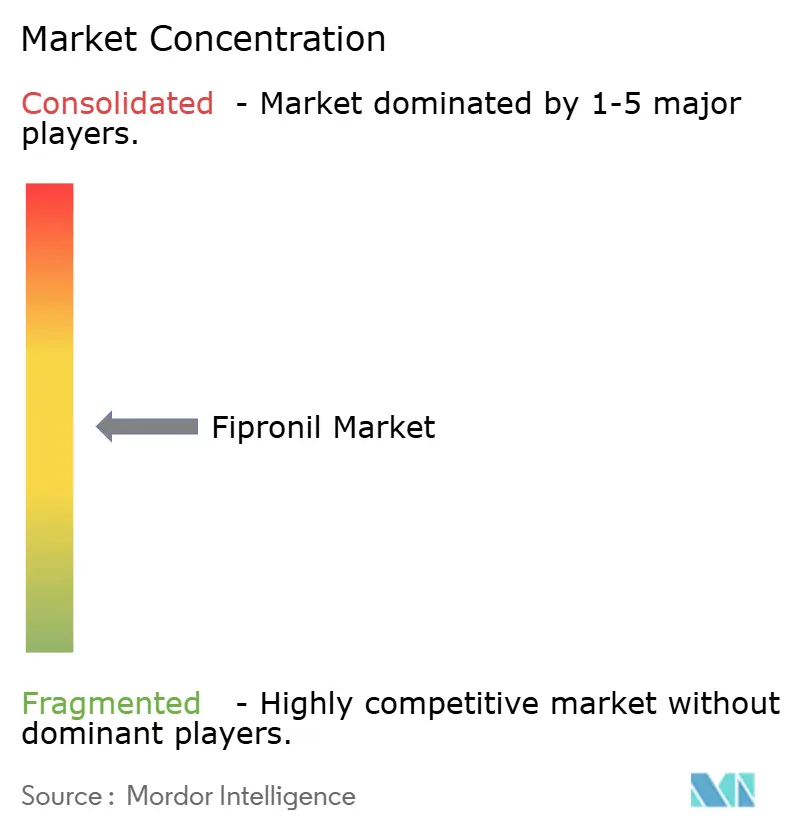
| Market Concentration | Medium |
Major Players *Disclaimer: Major Players sorted in no particular order Image © Mordor Intelligence. Reuse requires attribution under CC BY 4.0. | |
Fipronil Market Analysis by Mordor Intelligence
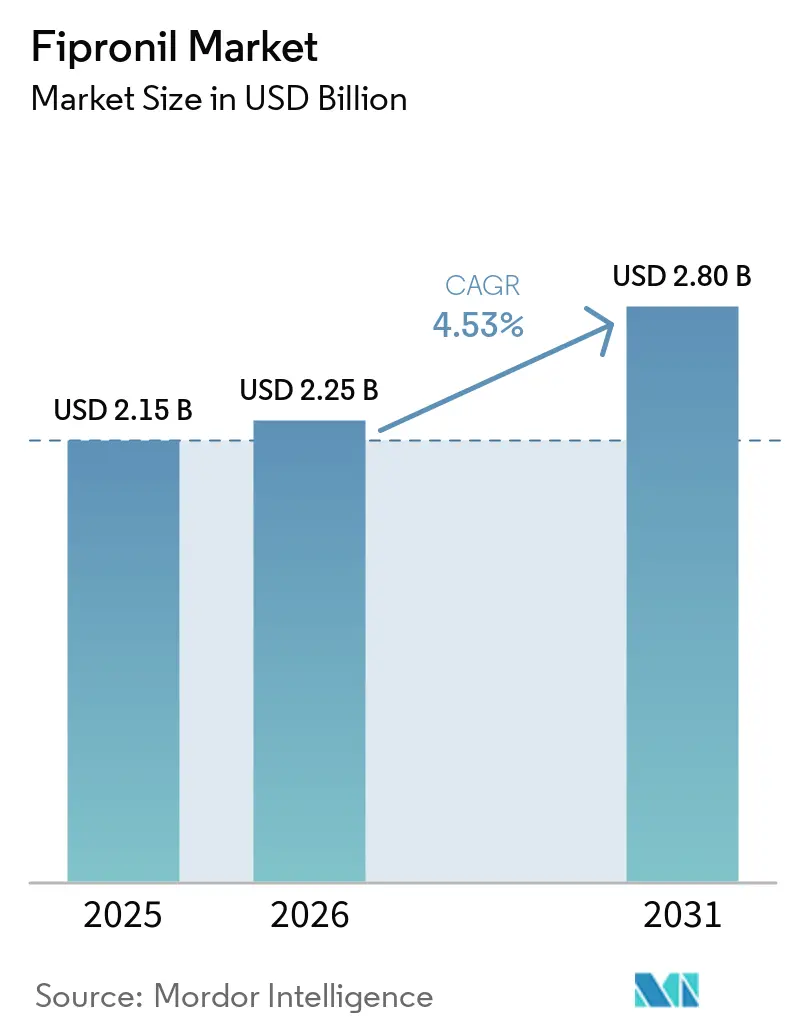
The Fipronil Market size is expected to grow from USD 2.15 billion in 2025 to USD 2.25 billion in 2026 and is forecast to reach USD 2.80 billion by 2031 at 4.53% CAGR over 2026-2031.
The category continues to address demand from pet owners for established and accessible parasite protection, particularly in markets where cost influences purchasing decisions. Fipronil-based topical products retain an important role in preventive care due to their broad availability and strong familiarity among veterinarians and consumers. While oral combination products are reshaping the prescription channel, lower-cost topical alternatives continue to generate demand. Category growth is driven by recurring companion animal care needs, increasing awareness of tick exposure, and expanded access through retail and digital channels. Environmental reviews in Europe and the United Kingdom may affect the requirements for over-the-counter distribution, while emerging economies offer significant potential to increase treatment adoption.
Key Report Takeaways
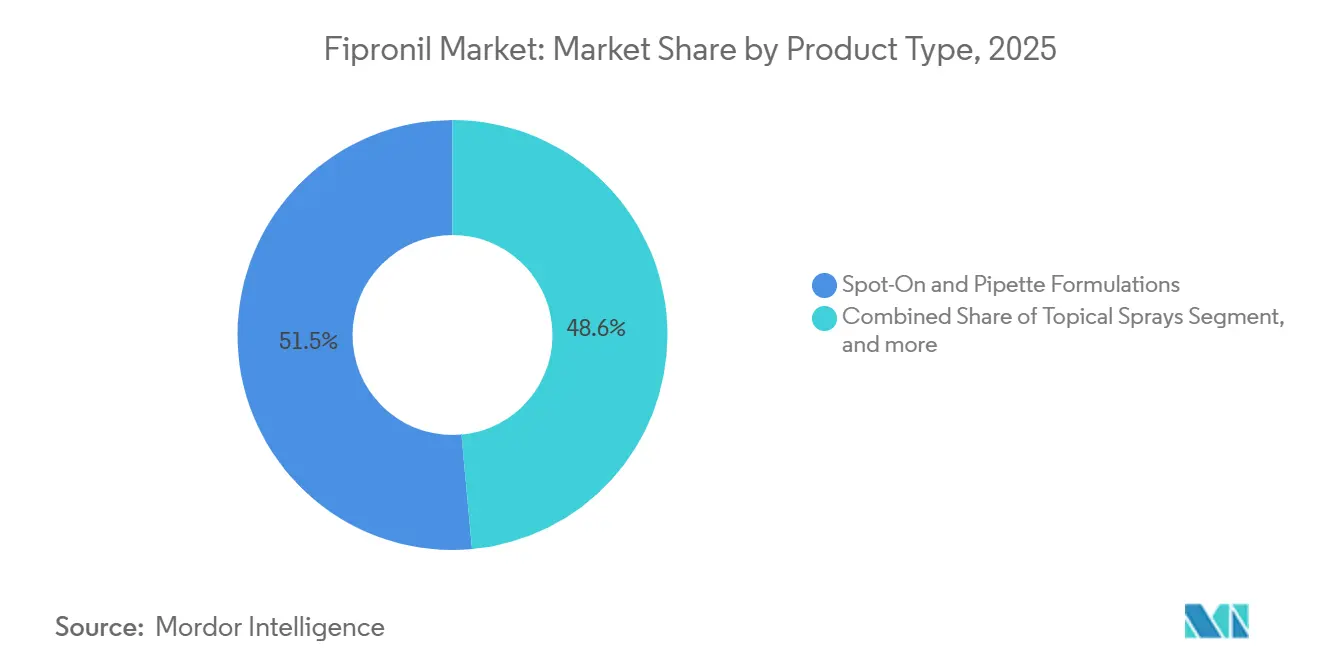
- By product type, spot-on and pipette formulations held 51.5% of the fipronil market share in 2025, while topical sprays recorded the highest projected CAGR at 6.8% through 2031.
- By animal type, dogs held 58.7% of the fipronil market share in 2025, while cats recorded the highest projected CAGR at 7.0% through 2031.
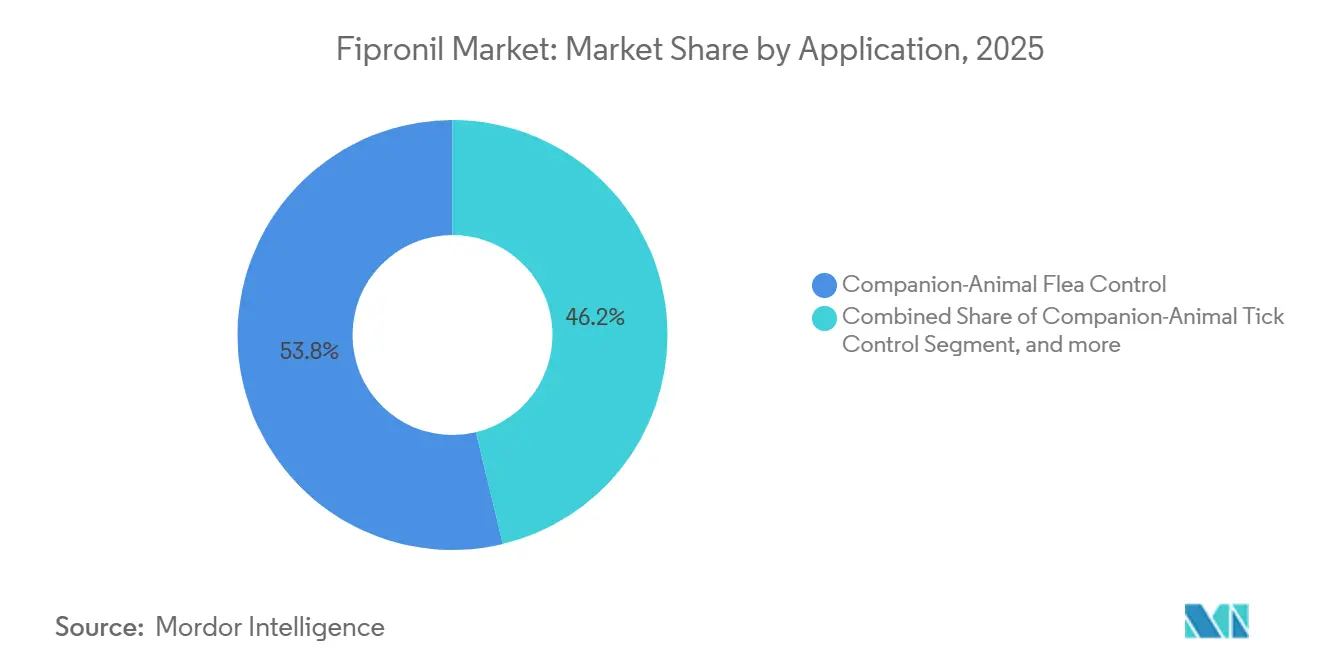
- By application, companion-animal flea control accounted for 53.8% of the fipronil market size in 2025, while tick control recorded the highest projected CAGR at 7.3% through 2031.
- By distribution channel, veterinary clinics and hospitals held 43.7% of global distribution value in 2025, while online pharmacies and e-commerce recorded the highest projected CAGR at 7.5% through 2031.
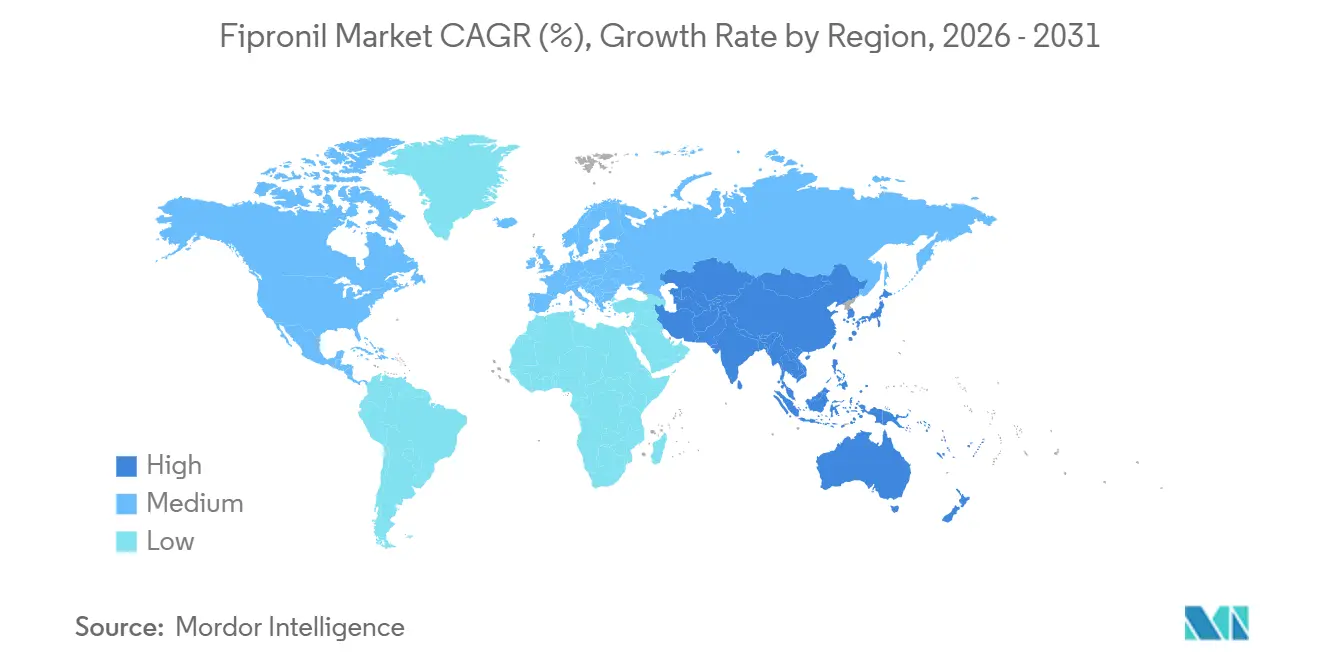
- By geography, North America accounted for 43.5% of market value in 2025, while Asia-Pacific recorded the highest projected CAGR at 5.6% through 2031.
Note: Market size and forecast figures in this report are generated using Mordor Intelligence’s proprietary estimation framework, updated with the latest available data and insights as of January 2026.
Market Trends and Insights
Drivers Impact Analysis of Fipronil Market*
| Driver | (~) % Impact on CAGR Forecast | Geographic Relevance | Impact Timeline |
|---|---|---|---|
| Rising Companion-Animal Ownership and Preventive Care Spending | +1.30% | Global, concentrated in North America and Western Europe | Short term (≤ 2 years) |
| Increasing Flea- and Tick-Borne Disease Awareness | +1.10% | North America and EU core, with spillover to APAC | Medium term (2-4 years) |
| Affordability of Fipronil-Based Topical Treatments | +0.70% | APAC, MEA, and South America core, with OTC demand in North America | Short term (≤ 2 years) |
| Expansion of Veterinary E-Commerce and Subscription Replenishment | +0.60% | North America and Western Europe, with rapid uptake in China and South Korea | Medium term (2-4 years) |
| One Health Demand for Reducing Parasite Transmission Between Animals and Humans | +0.40% | Global, with early gains in North America and the EU | Long term (≥ 4 years) |
| Source: Mordor Intelligence | |||
Rising Companion-Animal Ownership and Preventive Care Spending
Pet ownership remains a sustained household priority, creating a recurring demand base for parasite treatments. U.S. dog ownership reached 53% of households, equivalent to 71 million households, in 2025. Cat ownership increased by 5% year over year, reaching 39% of U.S. households in 2025. Veterinary care accounted for 32.4% of pet-related household spending, with average expenditures of USD 598 among dog owners and USD 529 among cat owners in 2025. Preventive care was the primary reason for veterinary visits among 81.6% of dog owners and 76.4% of cat owners. These spending patterns support the fipronil market, particularly for products that combine over-the-counter availability with veterinary recommendations.
Increasing Flea- and Tick-Borne Disease Awareness
The expanding range of tick habitats is increasing demand for consistent flea and tick prevention. Weekly emergency department visits for tick bites reached their highest level since 2017 in April 2026. The CDC estimates that ticks bite 31 million Americans annually and that Lyme disease affects nearly 476,000 people each year. A 2025 report identified Borrelia burgdorferi in 39.6% of adult Ixodes scapularis ticks tested in western North Carolina[1]Centers for Disease Control and Prevention, “Southward Expansion of Ixodes scapularis Tick Pathogens, Western North Carolina, November 2024 to August 2025,” MMWR, cdc.gov. The 2026 CAPC forecast identified continued tick-borne disease risks across the Upper Midwest, Northeast, and Southern Appalachians. These factors support the regular monthly use of topical preventive products in the fipronil market.
Affordability of Fipronil-Based Topical Treatments
Generic availability provides fipronil with a cost advantage that newer prescription treatments cannot easily match. European manufacturers, including KRKA and Clément Thékan, offer fipronil-based products that expand access to lower-priced retail options. The Fyperix range is a relevant example of a generic fipronil product for dogs. These lower-cost formats are particularly important for multi-pet households and cost-sensitive consumers. As a result, fipronil remains a preferred ectoparasiticide in markets where new product approvals take longer or premium products are less accessible. This positioning supports volume growth in emerging companion-animal care markets.
Expansion of Veterinary E-Commerce and Subscription Replenishment
Online pharmacies and e-commerce channels are projected to grow at a CAGR of 7.5% through 2031 in the fipronil market. Digital ordering streamlines routine replenishment for products used on a monthly schedule. Elanco reported double-digit growth in sales to pet retailers during the first quarter of 2026 and added Costco and Dollar General as distribution partners for its over-the-counter offering. Broader availability across online, mass retail, and specialty channels increases the visibility and accessibility of topical parasite treatments. Subscription-based replenishment also aligns with the established monthly application schedule of fipronil products.
Restraints Impact Analysis of Fipronil Market*
| Restraint | (~) % Impact on CAGR Forecast | Geographic Relevance | Impact Timeline |
|---|---|---|---|
| Competition From Oral Isoxazoline Parasiticides | -1.20% | North America and EU core, spreading to APAC premium segments | Short term (≤ 2 years) |
| Environmental Scrutiny of Topical Veterinary Ectoparasiticides | -0.70% | EU and United Kingdom core, with early signals in North America | Medium term (2-4 years) |
| Flea Resistance and Declining Treatment Confidence | -0.50% | North America, Western Europe, and emerging South America | Medium term (2-4 years) |
| Product Misuse, Counterfeiting and Cross-Species Safety Risks | -0.20% | South America and MEA, with spillover to APAC | Long term (≥ 4 years) |
| Source: Mordor Intelligence | |||
Competition From Oral Isoxazoline Parasiticides
Oral isoxazolines provide veterinary clinics with a multi-parasite treatment option, offering dosing intervals of one, two, or 12 months. Elanco reported that Credelio Quattro reached USD 100 million in annual net sales by September 2025. Controlled canine and feline trials cited by the BSAVA demonstrated flea-control efficacy of 99.1% to 99.9% for isoxazoline-class products. Their dosing convenience strengthens their position in prescription settings, where ease of administration is a key purchasing consideration. However, the fipronil market maintains resilience across OTC, generic, and price-sensitive channels.
Environmental Scrutiny of Topical Veterinary Ectoparasiticides
Growing environmental concerns have increased regulatory scrutiny of topical fipronil products in the United Kingdom and Europe. The UK Veterinary Medicines Directorate is scheduled to begin a distribution category review of fipronil and imidacloprid products in April 2026[2]UK Veterinary Medicines Directorate, “Pet Owners Urged to Take Care When Using Flea and Tick Treatments to Help Protect Our Waterways,” UK Government News, gov.uk. The review will assess whether professional advice at the point of sale should become mandatory. The European Commission has already amended maximum residue limits for fipronil in certain food products under Regulation (EU) 2024/347[3]European Commission, “Commission Regulation (EU) 2024/347 Amending Maximum Residue Levels for Fipronil,” EU Official Journal, ec.europa.eu. Additionally, the VICH environmental risk assessment guidelines are under review and may introduce post-marketing monitoring requirements. Any transition from unrestricted retail availability would materially affect distribution conditions in the fipronil market.
*Our forecasts treat driver/restraint impacts as directional, not additive. The impact forecasts reflect baseline growth, mix effects, and variable interactions.
Fipronil Market Segment Analysis
By Product Type:
Spot-Ons Anchor Value, Sprays Gain on Flexibility and PriceSpot-on and pipette formulations are estimated to account for 51.5% of fipronil market value in 2025. These formats remain well established among dog and cat owners using monthly topical treatments. Their market position is supported by longstanding veterinary recommendations and broad retail availability. Generic spot-on products further strengthen demand by providing lower-priced alternatives. KRKA’s Fyperix range highlights the availability of bioequivalent fipronil options across European retail channels. However, brand premiums face pressure as consumers can easily compare similar products.
Topical sprays are forecast to grow at a CAGR of 6.8% through 2031. Their flexibility across a broad range of animal weights and ages makes them suitable for household and kennel environments. A 2025 study reported 100% flea efficacy in cats from day 2 through day 14 for a topical fipronil combination product, followed by efficacy ranging from 92% to 97% between weeks 3 and 7. Shampoos, dips, powders, and dusts continue to address demand in price-sensitive and multi-animal settings. Pour-on products remain a smaller, livestock-focused category in authorized markets. For instance, Ceva’s Fiproline Duo is a concentrated fipronil pour-on product for cattle.



By Animal Type:
Dogs Drive Revenue, Cats Command the Fastest GrowthDogs are estimated to account for 58.7% of the fipronil market value in 2025. Their higher average body weight can increase the dose required per treatment, supporting higher revenue per treatment cycle. Dog owners also reported higher veterinary care expenditure than cat owners in 2025, with average spending of USD 598 and USD 529, respectively. U.S. dog ownership reached 71 million households in 2025. Together, these factors support recurring demand for canine topical parasite prevention products.
The cat segment is forecast to grow at a CAGR of 7.0% through 2031. Growth is supported by rising cat ownership and the need for species-specific treatment options. U.S. cat ownership reached 39% of households following a 5% year-over-year increase in 2025. Safety limitations associated with certain canine parasite treatments also support demand for cat-labeled fipronil products. The Istanbul study did not identify fipronil-resistance mutations in the sampled cat flea population, supporting the continued relevance of feline applications in an emerging companion-animal setting. Authorized livestock applications represent a small but stable source of demand in tropical regions with significant tick pressure.
By Application:
Flea Control Anchors Revenue, Tick Control Accelerates FastestCompanion-animal flea control is estimated to account for 53.8% of fipronil market value in 2025. Fleas remain the primary driver of external parasite treatment purchases across OTC and veterinary channels. Flea allergy dermatitis requires closer adherence to treatment schedules and may require more frequent treatment, further supporting product demand. Fipronil retains value in these applications due to its established dermatological use profile. Other applications include authorized livestock ectoparasite management, which provides a stable source of demand rather than a primary growth opportunity.
Companion-animal tick control is forecast to grow at a CAGR of 7.3% through 2031. CDC surveillance and CAPC forecasts indicate the continued expansion of tick-related risks in the United States. A 2026 study found that a fipronil and permethrin combination provided 100% protection against Dirofilaria immitis transmission in naturally exposed dogs. Combination products can therefore address mosquito-borne heartworm risk alongside tick prevention, expanding their addressable use cases. This broader claim base supports demand for fipronil combination products. However, oral products continue to compete by offering longer protection intervals.
By Distribution Channel:
Clinics Hold Dominant Share, E-Commerce Restructures the CategoryVeterinary clinics and hospitals are estimated to account for 43.7% of fipronil market distribution value in 2025. Veterinary recommendations remain influential in first-time purchases of companion-animal parasite treatments. Clinics also provide product selection guidance for owners seeking professional support. However, the channel may be less accessible to households that do not regularly use veterinary services. The AVMA reported that 16.1% of dog owners and 28.0% of cat owners spent nothing on veterinary care in the prior year. Veterinary pharmacies also remain relevant for professional guidance and prescription renewals.
Online pharmacies and e-commerce are forecast to grow at a CAGR of 7.5% through 2031. The channel expands access to established OTC products while supporting recurring purchases. Retail partnerships by animal health companies further strengthen the connection between mass retail and digital ordering. In 2026, Elanco added Costco and Dollar General to support its OTC distribution. Auto-replenishment models align with fipronil’s monthly treatment schedule, while price transparency increases competition among generic spot-on products. As a result, the fipronil market is shifting toward a broader and more integrated mix of clinic, retail, and online access channels.
Geography Analysis
North America Fipronil Market
North America is projected to account for 43.5% of the global fipronil market value in 2025. The region benefits from a large companion-animal population and a well-established OTC retail network. U.S. pet industry expenditure is projected to reach USD 158 billion in 2025 and USD 165 billion in 2026. Tick-bite emergency department visits are expected to reach their highest level since 2017 in April 2026, supporting demand for accessible tick-control products. The Companion Animal Parasite Council (CAPC) has identified elevated risk across the Upper Midwest, Northeast, and Southern Appalachians.
Europe Fipronil Market
Europe is the second-largest regional market for fipronil products. Generic suppliers have influenced the competitive landscape since fipronil entered off-patent retail channels. France, Germany, and the United Kingdom support diverse OTC product portfolios offered by multiple manufacturers. The United Kingdom’s regulatory review could alter the fipronil market distribution model if professional advice becomes mandatory at the point of sale. Virbac expects continued growth in companion-animal parasiticides in Western Europe during 2025 and plans to progressively introduce its 8-month parasite collar in Germany, the Netherlands, and Slovenia.
APAC, South America and MEA Fipronil Market
Asia-Pacific is forecast to grow at a CAGR of 5.6% through 2031, making it the fastest-growing regional market. Growth is supported by expanding pet populations in China, India, South Korea, and Southeast Asia. China’s tier-1 cities and India’s metropolitan veterinary corridors are key centers for premium pet healthcare. Southeast Asia remains at an earlier stage of market development, where accessible pricing can support the adoption of routine treatment practices. Virbac projects companion-animal growth of 9% in China and 6.5% in Japan at constant exchange rates during the first quarter of 2025. South America and the Middle East and Africa remain early-stage markets, where large untreated pet populations present significant opportunities for basic parasite-control products.

Competitive Landscape
The fipronil market is moderately fragmented. Global animal health companies maintain strong brand recognition, while generic manufacturers compete aggressively on price. Boehringer Ingelheim offers fipronil combination products under the Frontline Tri-Act brand. Elanco and Zoetis are directing much of their premium companion-animal portfolios toward newer prescription therapies, creating a distinction between premium clinical competition and the OTC topical segment. Virbac plans to maintain research and development expenditure at 7.9% of revenue in 2025.
Virbac is leveraging long-duration collar technology to complement its topical protection portfolio in Europe. The company plans to progressively launch its 8-month collar in Germany, the Netherlands, and Slovenia. Ceva serves the livestock segment with Fiproline Duo, a 3x-concentrated fipronil pour-on product for cattle. Hartz Mountain, Central Garden & Pet, PetIQ, and Wellmark International compete in North American mass retail through shelf presence, pack-size variety, and promotional pricing. This approach reflects the importance of convenience and value in the OTC fipronil market.
Generic manufacturers from Slovenia, France, and other established exporting countries are reducing branded product price premiums. KRKA, Clément Thékan, and Laboratoires Francodex illustrate this competitive pressure. Fipronil combination products enable manufacturers to differentiate their offerings beyond stand-alone formulations. The 2026 Frontline Tri-Act study is expected to report 100% protection against Dirofilaria immitis transmission in naturally exposed dogs. Smaller suppliers, including Bimeda, Norbrook, Huvepharma, and Troy Laboratories, compete through manufacturing efficiency and regional distribution networks. In some markets, compliance with local registration requirements carries greater importance than brand equity.
Fipronil Industry Leaders
Boehringer Ingelheim
Virbac
Elanco Animal Health Incorporated
Zoetis Inc.
Vetoquinol S.A.
- *Disclaimer: Major Players sorted in no particular order
Fipronil Market Companies Covered in this Report
- Bimeda Animal Health
- Boehringer Ingelheim
- Central Garden & Pet Company
- Ceva Santé Animale
- Dechra Pharmaceuticals Limited
- Elanco
- Hartz Mountain Corporation
- Huvepharma EOOD
- Laboratoires Expanscience
- Merck
- Norbrook Laboratories Limited
- PetIQ, Inc.
- Troy Laboratories Pty Ltd.
- Vetoquinol
- Vetoquinol
- Wellmark International
- Zoetis

Recent Industry Developments in Fipronil Market
- June 2026: Elanco Animal Health received USDA approval for TruCan Ultra Lyme-L4, the first and only 0.5 mL combination vaccine protecting dogs against both Lyme disease and leptospirosis. Built on Elanco’s proprietary PureFilter Technology, the approval broadens the tick-disease management portfolio and strengthens the clinical rationale for companion-animal tick preventives, including fipronil-based topicals, as complementary tools in a multi-modal prevention framework.
- May 2026: The UK Government’s VMD issued a public campaign warning that fipronil and imidacloprid from topical pet treatments had been detected in UK waterways at ecologically harmful concentrations. The VMD simultaneously confirmed that a distribution category review, considering mandatory prescription requirements at point of sale, was underway, with a Call for Evidence that ran from April to June 2026.
- April 2026: Elanco Animal Health launched the Advantage Collar for Dogs in the United States, providing 4-month continuous flea, tick, and mosquito protection for dogs and puppies aged 12 weeks and older. Available at mass retail and specialty pet stores, the product expands Elanco’s OTC topical footprint in direct competition with fipronil-based collar and spot-on products.
- February 2026: Boehringer Ingelheim received FDA Emergency Use Authorizations for NexGard in dogs and NexGard COMBO in cats for treatment of New World screwworm infestations, following confirmed NWS cases in northern Mexico. The action underscores growing concern about novel ectoparasitic threats and the strategic importance of maintaining authorized prescription parasiticide access for emerging pest events.


Global Fipronil Market Report Scope
According to the report’s scope, Fipronil in healthcare refers to its use as an insecticide in veterinary medicine for controlling pests such as fleas and ticks on animals. It involves the manufacturing and distribution of fipronil-based veterinary products designed to protect animal health and prevent diseases transmitted by pests.
The fipronil market is segmented into procedure type, end user, and geography. By product type, the market is segmented into spot-on and pipette formulations, topical sprays, shampoos and dips, powders and dusts, and pour-on formulations for authorized livestock use. By animal type, the market is segmented into dogs, cats, and other animal types. By application, the market is segmented into companion-animal flea control, companion-animal tick control, flea allergy dermatitis management, and other applications. By distribution channel, the market is segmented into veterinary clinics and hospitals, veterinary pharmacies, online pharmacies and e-commerce, and other distribution channels. By geography, the market is segmented into North America, Europe, Asia-Pacific, the Middle East and Africa, and South America. The report also covers the estimated market sizes and trends for 17 countries across major regions globally. The report offers values (USD) for all the above segments.
| Spot-On and Pipette Formulations |
| Topical Sprays |
| Shampoos and Dips |
| Powders and Dusts |
| Pour-On Formulations for Authorized Livestock Use |
| Dogs |
| Cats |
| Other Animal Types |
| Companion-Animal Flea Control |
| Companion-Animal Tick Control |
| Flea Allergy Dermatitis Management |
| Other Applications |
| Veterinary Clinics and Hospitals |
| Veterinary Pharmacies |
| Online Pharmacies and E-Commerce |
| Other Distribution Channels |
| North America | United States |
| Canada | |
| Mexico | |
| Europe | Germany |
| United Kingdom | |
| France | |
| Italy | |
| Spain | |
| Rest of Europe | |
| Asia-Pacific | China |
| Japan | |
| India | |
| Australia | |
| South Korea | |
| Rest of Asia-Pacific | |
| Middle East and Africa | GCC |
| South Africa | |
| Rest of Middle East and Africa | |
| South America | Brazil |
| Argentina | |
| Rest of South America |
| By Product Type | Spot-On and Pipette Formulations | |
| Topical Sprays | ||
| Shampoos and Dips | ||
| Powders and Dusts | ||
| Pour-On Formulations for Authorized Livestock Use | ||
| By Animal Type | Dogs | |
| Cats | ||
| Other Animal Types | ||
| By Application | Companion-Animal Flea Control | |
| Companion-Animal Tick Control | ||
| Flea Allergy Dermatitis Management | ||
| Other Applications | ||
| By Distribution Channel | Veterinary Clinics and Hospitals | |
| Veterinary Pharmacies | ||
| Online Pharmacies and E-Commerce | ||
| Other Distribution Channels | ||
| Geography | North America | United States |
| Canada | ||
| Mexico | ||
| Europe | Germany | |
| United Kingdom | ||
| France | ||
| Italy | ||
| Spain | ||
| Rest of Europe | ||
| Asia-Pacific | China | |
| Japan | ||
| India | ||
| Australia | ||
| South Korea | ||
| Rest of Asia-Pacific | ||
| Middle East and Africa | GCC | |
| South Africa | ||
| Rest of Middle East and Africa | ||
| South America | Brazil | |
| Argentina | ||
| Rest of South America | ||


Key Questions Answered in the Report
What is projected value of fipronil market by 2031?
Fipronil market is projected to reach USD 2.80 billion by 2031.
Which fipronil product format is growing fastest?
Topical sprays are forecast to grow at a 6.8% CAGR through 2031, supported by flexible application and value positioning.
Why are fipronil products still used when oral treatments are available?
Fipronil products remain accessible, familiar, and suitable for OTC and price-sensitive channels, while oral products are stronger in premium prescription settings.
Which animal type offers the strongest growth opportunity?
Cats are forecast to grow at a 7.0% CAGR through 2031, supported by rising ownership and species-specific treatment needs.
Which region is expanding fastest for fipronil products?
Asia-Pacific is forecast to grow at a 5.6% CAGR through 2031 as companion-animal care develops across major regional markets.
What could limit future use of fipronil topicals?
Competition from long-duration oral therapies, environmental scrutiny, misuse, and resistance concerns can affect product selection and distribution.
Page last updated on:





