
Egypt Robotic Lawn Mower Market Size and Share
Market Overview
| Study Period | 2021 - 2031 |
|---|---|
| Forecast Data Period | 2026 - 2031 |
| Base Year Market Size (2025) | USD 5.81 Million |
| Market Size (2026) | USD 6.67 Million |
| Market Size (2031) | USD 12.09 Million |
| Growth Rate (2026 - 2031) | 12.63 % |
| Market Concentration | Medium |
Major Players *Disclaimer: Major Players sorted in no particular order Image © Mordor Intelligence. Reuse requires attribution under CC BY 4.0. | |
Egypt Robotic Lawn Mower Market Analysis by Mordor Intelligence
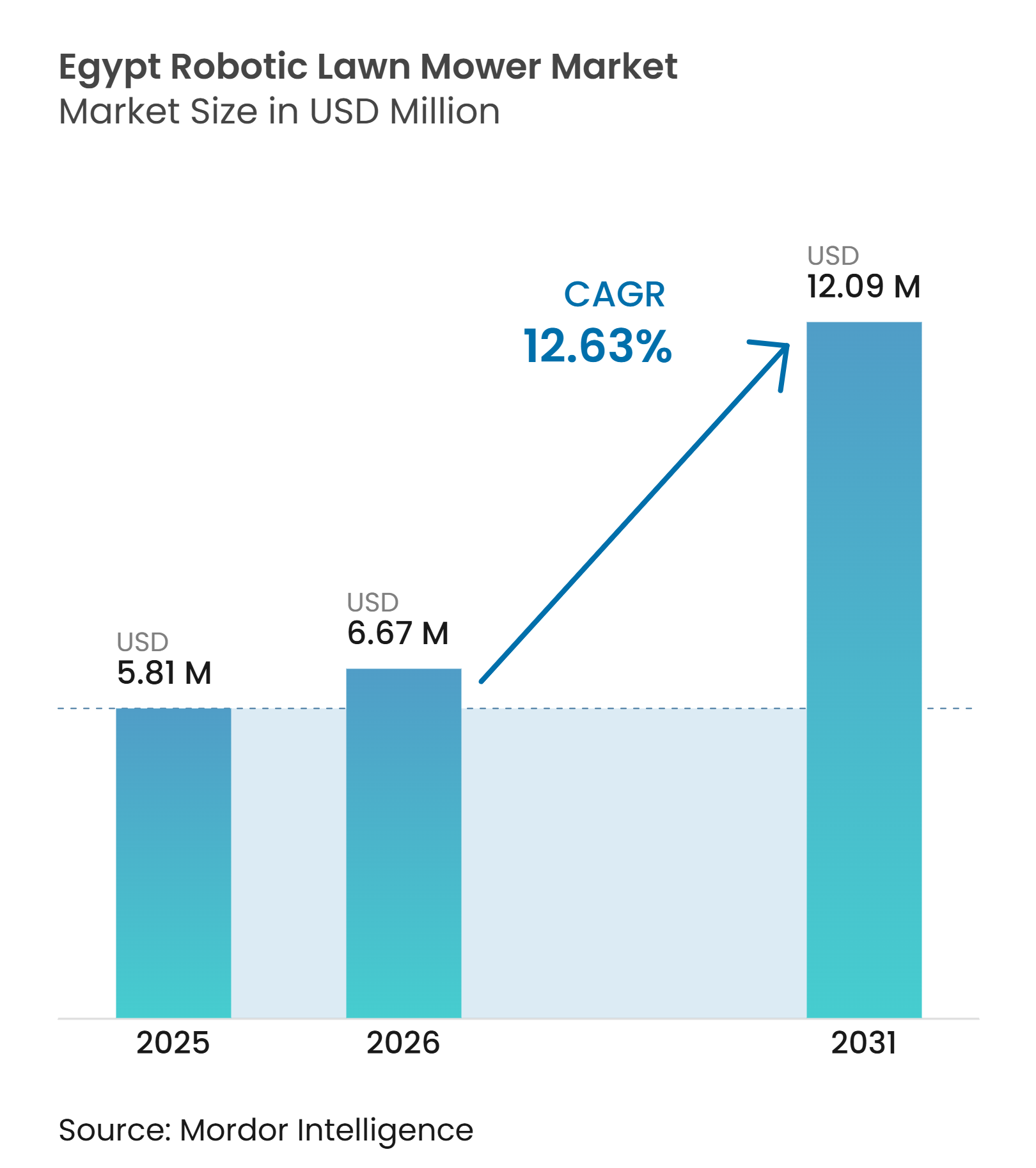
The Egypt robotic lawn mower market size is projected to expand from USD 5.81 million in 2025 and USD 6.67 million in 2026 to reach USD 12.09 million by 2031, registering a CAGR of 12.63% during the forecast period (2026-2031). Egypt’s robotic lawn mower demand is developing from a small base as gated communities, resort properties, and public landscaping projects expand their maintained green areas. Property-management companies are emerging as important buyers, as automated mowing can replace recurring labor requirements across multiple properties with a one-time equipment investment. Battery-powered systems also align with sustainability objectives gaining visibility among hospitality operators. Managed sites with irrigated lawns, reliable maintenance budgets, and access to installation and service support therefore offer the clearest opportunities for robotic mower adoption. Water constraints, imported-product pricing, and uneven after-sales service coverage are likely to limit broader household adoption.
Key Report Takeaways
- By range, medium-range units accounted for 44.1% of the Egypt robotic lawn mower market share in 2025, whereas high-range models are forecast to grow at a CAGR of 13.5% from 2026 to 2031.
- By battery capacity, the 20-30 V segment accounted for 55.2% share of the Egypt robotic lawn mower market size in 2025, while more-than-30 V systems are forecast to grow at a CAGR of 13.2% from 2026 to 2031.
- By sales channel, retailers accounted for 62.1% of the Egypt robotic lawn mower market share in 2025, whereas online platforms are forecast to grow at a CAGR of 14.0% from 2026 to 2031.
- By application, residential mowing represented 54.1% of the Egypt robotic lawn mower market share in 2025, while the commercial segment is forecast to grow at a CAGR of 13.4% from 2026 to 2031.
- By end-user, homeowners held a 70.5% share of the Egypt robotic lawn mower market in 2025, landscaping companies are estimated to grow at the highest CAGR of 12.8% from 2026 to 2031.
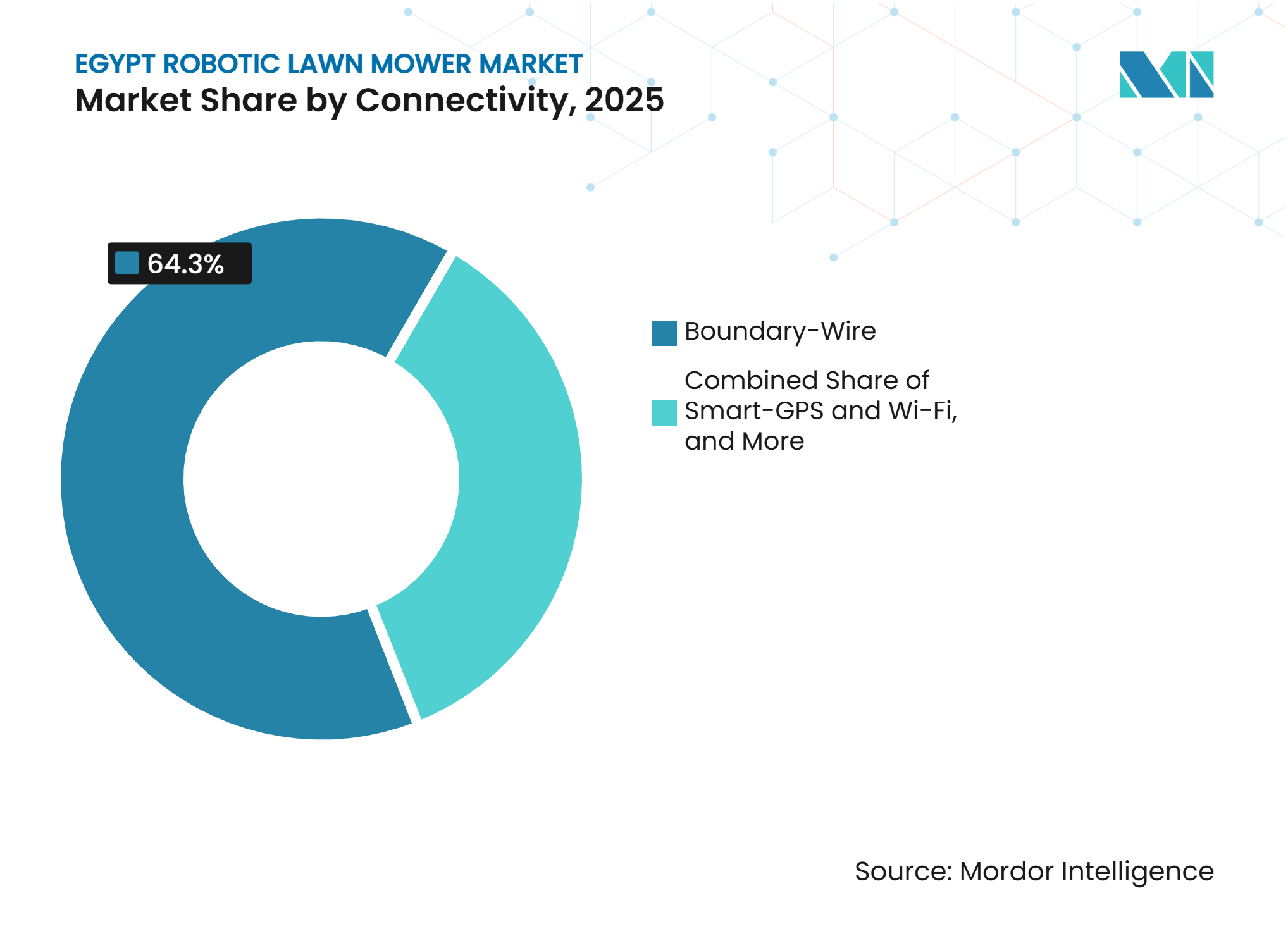
- By connectivity, boundary-wire models accounted for 64.3% of the Egypt robotic lawn mower market in 2025, while while vision-guided camera and LiDAR systems are forecast to grow at a CAGR of 13.6% from 2026 to 2031.
Note: Market size and forecast figures in this report are generated using Mordor Intelligence’s proprietary estimation framework, updated with the latest available data and insights as of January 2026.
Market Trends and Insights
Drivers Impact Analysis of Egypt Robotic Lawn Mower Market*
| Driver | (~) % Impact on CAGR Forecast | Geographic Relevance | Impact Timeline |
|---|---|---|---|
| Rising Demand for Time-Saving Home-Automation Devices | +2.00% | Greater Cairo, New Administrative Capital, Alexandria premium segments | Medium term (2-4 years) |
| Growth of Smart Irrigation and Connected Garden Management | +1.60% | New Cairo compound clusters, Red Sea resort corridors | Medium term (2-4 years) |
| Expansion of Professional Landscaping and Hospitality Green Spaces | +2.20% | Red Sea coast, North Coast, and Greater Cairo | Short term (≤ 2 years) |
| Rising Availability of Wire-Free Navigation and Remote Fleet Management | +2.00% | Commercial sites across Egypt, with strength in resorts and facilities | Medium term (2-4 years) |
| Limited Availability of Skilled Groundskeeping Labor | +1.80% | Resort towns, golf courses, and new cities across Egypt | Short term (≤ 2 years) |
| Increasing Adoption of Battery-Powered Outdoor Equipment | +1.60% | Egypt, supported by national energy-transition investment | Long term (≥ 4 years) |
| Source: Mordor Intelligence | |||
Rising Demand for Time-Saving Home-Automation Devices
Connected equipment is gaining interest in Egypt, supporting demand for robotic mowers that can be scheduled and monitored through mobile applications. These systems can also integrate with irrigation controllers, making them relevant to households and property managers maintaining irrigated lawns. Their appeal is strongest in high-income compounds, where residents already pay recurring landscape service charges. In these settings, purchase decisions often focus on replacing repeated manual work with a predictable equipment cost. Developers in New Cairo, Mostakbal City, and the New Administrative Capital are incorporating smart outdoor systems into premium property specifications. This is increasing product awareness among buyers who can absorb the initial equipment cost. The Egypt robotic lawn mower market benefits from this familiarity, as robotic mowing becomes part of a broader connected-home purchase decision. The demand base remains limited to properties with suitable lawns and active maintenance needs.
Growth of Smart Irrigation and Connected Garden Management
Connected mowing offers greater value where landscape managers must also coordinate irrigation and water use. Egypt’s annual water demand reached 88.55 billion cubic meters in 2026, according to the Ministry of Water Resources and Irrigation[1]. Robotic systems can integrate with geofencing tools, soil-moisture data, and irrigation heads used across managed gardens. This allows robotic mowing to be considered alongside broader site-management tools rather than solely as a substitute for labor. The approach is particularly relevant in compounds and resorts where irrigation schedules are centrally managed. GNSS-based fleet platforms can also coordinate multiple machines across campuses or multi-building developments. The Egypt robotic lawn mower market benefits when property managers can connect mowing, irrigation, and monitoring within a single operating process. The commercial case is stronger where managers already invest in connected garden-control systems.
Expansion of Professional Landscaping and Hospitality Green Spaces
Egypt’s expanding hospitality sector is increasing the area of managed green space that requires regular maintenance. In January 2025, MIDAR, an Egyptian developer, signed a memorandum of understanding with Saudi Arabia’s Sumou Holding, ADEER International, and Hassan Allam Properties. The strategic alliance will inject USD 2 billion into Egypt’s hospitality and leisure sectors, with projects planned along the Nile in Cairo and within MIDAR cities[2]. Somabay, a luxury resort and self-contained community, opened nine holes at Hidden Coves in December 2025 and plans to complete the full 18-hole course by the end of 2026. These developments require consistent turf care across large and sometimes irregular sites. The Egypt robotic lawn mower market benefits from this expansion, as commercial robotic mowers can address routine, labor-intensive maintenance across resorts, golf courses, parks, and sports facilities.
Rising Availability of Wire-Free Navigation and Remote Fleet Management
Wire-free navigation is gaining relevance because it removes the need to install buried perimeter infrastructure across large landscapes. This is particularly valuable in resort campuses where gardens are irregular, and site layouts can change over time. Wire-free products also enable remote monitoring, multi-zone scheduling, and fleet supervision through connected applications. Husqvarna Group’s 2026 range includes 24 wire-free models covering lawns from 400 square meters to more than 50,000 square meters[3]. Segway Inc. introduced the H5 Pro at IFA 2026, featuring edge trimming supported by LiDAR, vision, and NRTK navigation. These capabilities are relevant to hospitality sites that require precise edging and remote oversight. As the cost difference between boundary-wire and wire-free products narrows, the Egypt robotic lawn mower market could shift toward systems requiring less site preparation. The near-term impact is likely to be more visible among commercial operators than mass residential buyers.
Restraints Impact Analysis of Egypt Robotic Lawn Mower Market*
| Restraint | (~) % Impact on CAGR Forecast | Geographic Relevance | Impact Timeline |
|---|---|---|---|
| High Upfront Cost Versus Conventional Mowers | -2.50% | Egypt, most acute for price-sensitive residential buyers | Short term (≤ 2 years) |
| Limited Consumer Awareness and Specialist Dealer Coverage | -2.20% | Egypt, with the greatest constraint outside Greater Cairo and Alexandria | Short term (≤ 2 years) |
| Water Scarcity and Uneven Turf Quality Reducing Residential Applicability | -1.80% | Egypt, most severe in Upper Egypt and arid inland areas | Long term (≥ 4 years) |
| Theft and Unattended-Equipment Risk in Open Commercial Landscapes | -1.50% | Egypt, concentrated in open compounds and facility settings | Medium term (2-4 years) |
| Source: Mordor Intelligence | |||
High Upfront Cost Versus Conventional Mowers
Robotic mowers remain considerably more expensive than conventional mowing equipment in Egypt, with a mid-range boundary-wire unit generally costing two to three times as much as a quality walk-behind petrol mower. Wire-free GNSS models can cost five times or more than conventional alternatives, creating a higher upfront barrier for buyers. Currency depreciation further increases the local cost of imported equipment and extends the payback period for residential users. Installation support, replacement blade sets, and extended warranty packages can add to the overall ownership cost. Property-management companies and hospitality operators can more readily justify the investment by comparing it with recurring labor costs across several sites. Individual homeowners face a less favorable calculation because one machine is typically used on a smaller lawn. The Egypt robotic lawn mower market therefore remains concentrated in high-income compounds and coastal resort areas, with price pressure particularly strong for specialized wire-free products carrying import duties and logistics costs.
Limited Consumer Awareness and Specialist Dealer Coverage
Many buyers first encounter robotic mowing equipment through retail outlets or online listings, making product demonstrations, mapping guidance, installation support, and access to replacement parts important to the purchase decision. Specialist service coverage remains concentrated in Greater Cairo and Alexandria, leaving fewer dependable support options in secondary cities. Buyers in these areas may hesitate when local installation and repair services are difficult to confirm. Retailers can provide basic product guidance, but complex systems often require technical assistance after purchase. Online sales can broaden product access, although they cannot fully compensate for limited local service capacity. The Egypt robotic lawn mower market will remain constrained until distributors expand certified installer and maintenance networks across more cities. Wider service coverage would also strengthen buyer confidence in wire-free systems that require initial setup, software configuration, and ongoing technical support.
*Our forecasts treat driver/restraint impacts as directional, not additive. The impact forecasts reflect baseline growth, mix effects, and variable interactions.
Egypt Robotic Lawn Mower Market Segment Analysis
By Range:
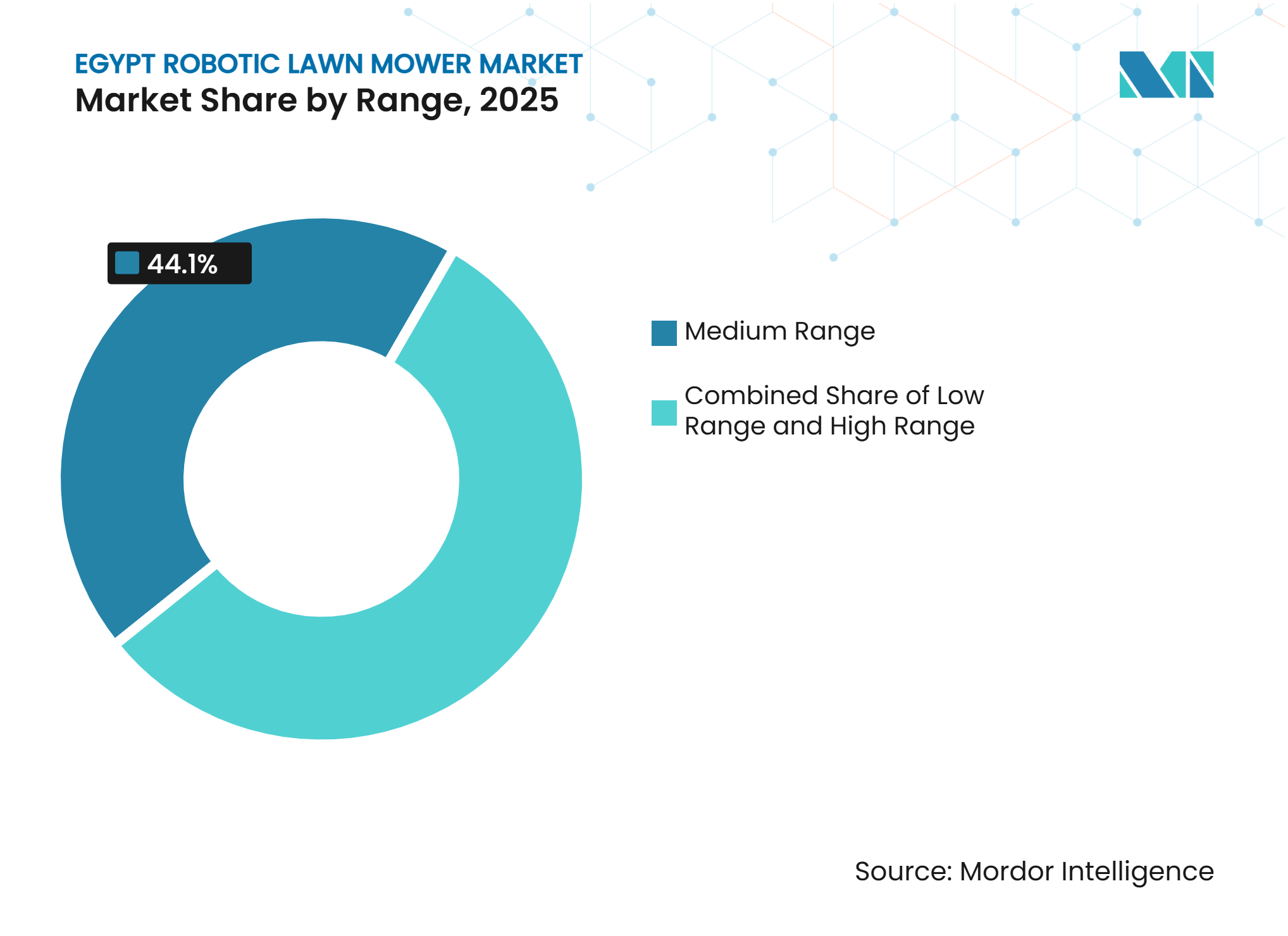
Medium Range Anchors Revenue While High Range Opens Commercial DoorsMedium-range robotic mowers accounted for 44.1% of the Egypt robotic lawn mower market in 2025, making them the largest range category. Their positioning suits garden sizes commonly found in New Cairo, Sheikh Zayed, and North Coast villa developments, where outdoor areas typically span 300 to 900 square meters. Medium-range machines can address these requirements without the higher cost associated with professional fleet platforms. Property managers can also incorporate them into routine maintenance packages for suitable villa plots. Low-range products serve smaller apartments and urban townhouses with limited garden space, where price-sensitive buyers are less likely to adopt autonomous lawn care. This range profile indicates that current demand remains centered on established residential compounds.
High-range models are forecast to grow at the highest CAGR of 13.5% through 2031 in the Egypt robotic lawn mower market, supported by their suitability for sites exceeding 2,500 square meters, including resorts, golf courses, sports facilities, and large public green spaces. These customers can justify higher equipment costs by reducing recurring labor requirements across extensive areas. Growing hospitality and golf development will support high-range adoption, while medium-range units will continue providing the largest revenue base. The shift toward larger commercial sites positions high-range products as the main pathway for future market expansion.



By Battery Capacity:
20-to-30 V Systems Lead While More-Than-30 V Systems Support Commercial WorkThe 20-to-30 V tier accounted for 55.2% of the Egypt robotic lawn mower market in 2025, making it the largest battery category. It supports many residential mid-range models sold through retail and specialty channels, with lithium-ion packs typically providing 60 to 120 minutes of run time per charge. This capacity is sufficient for gardens within compound communities and offers a balance between equipment cost, weight, and routine mowing requirements. Lower-voltage products can serve compact lawns but have a narrower application range. Buyers favor the 20-to-30 V tier because it provides practical coverage without the higher cost of commercial platforms, making it the core battery option across the current residential base.
More-than-30 V systems are forecast to register the fastest CAGR of 13.2% from 2026 to 2031, supported by their ability to provide greater run time and torque across larger sites and uneven or sloped terrain. Egypt’s 300 MWh battery storage project, commissioned in 2025, is also increasing familiarity with battery technology. Higher-voltage systems are therefore positioned to gain ground as commercial applications expand, while 20-to-30 V products are expected to remain the primary residential volume base.
By Sales Channel:
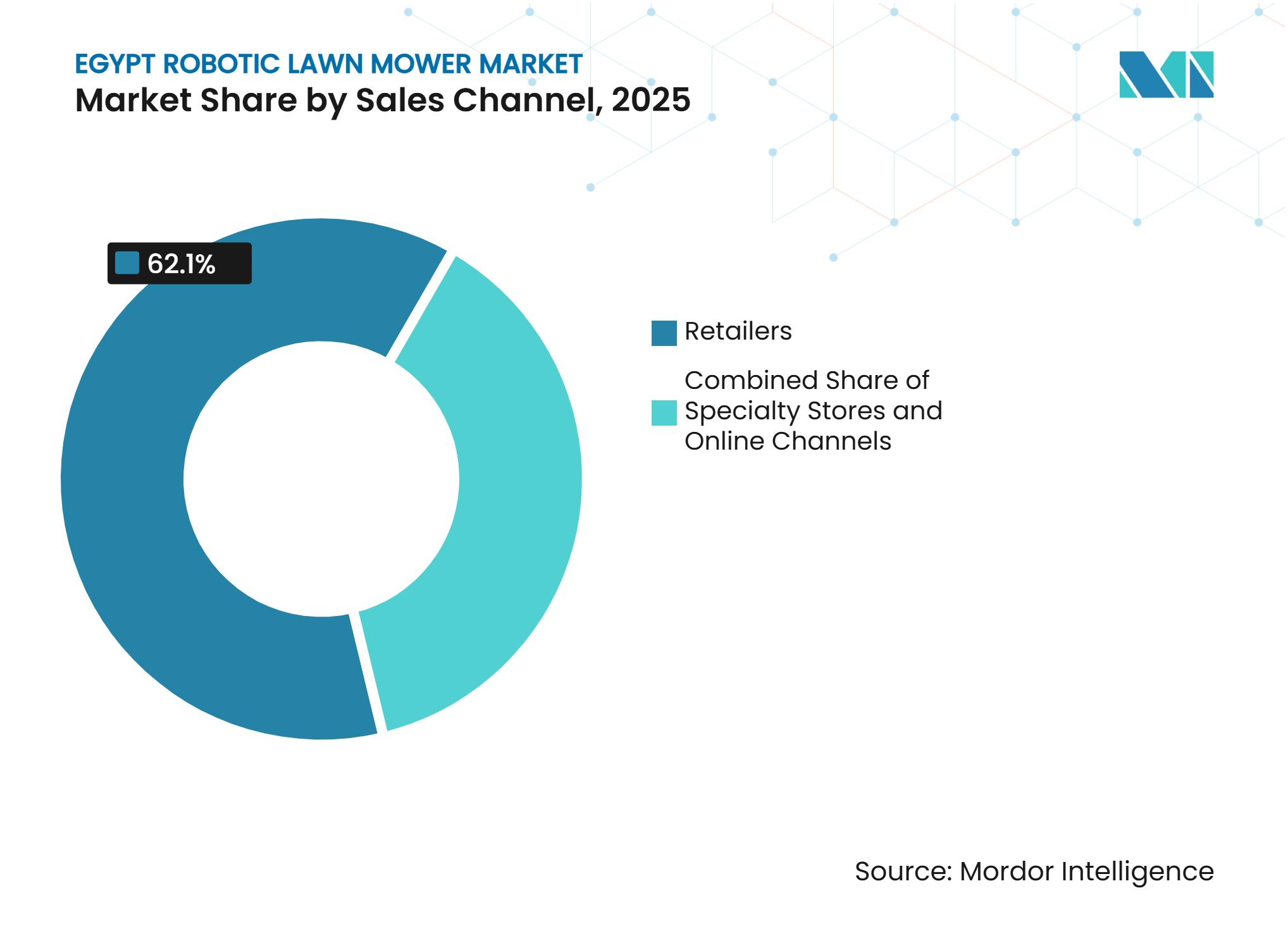
Retailers Lead While Online Channels Improve AccessRetailers accounted for 62.1% of the Egypt robotic lawn mower market in 2025, making them the leading sales channel. Their position reflects the importance of in-store demonstrations for a product that many buyers are encountering for the first time. Retail staff can provide basic installation guidance and explain key product features, helping customers assess suitability before purchase. Specialty stores also serve landscape professionals and enthusiasts who require more detailed product advice, higher-specification models, and stronger post-sale support. Their customer base remains relatively narrow and concentrated in major urban areas. Retailers therefore continue to serve as the primary channel for residential buyers seeking greater confidence before investing in robotic mowing equipment. This established offline role is expected to remain important while product awareness continues to develop.
Online channels are forecast to grow at a CAGR of 14.0% from 2026 to 2031, supported by broader access to international brands beyond formal dealer networks. Shenzhen Mammotion Technology Co., Ltd. and ECOVACS Robotics Co., Ltd. were listed on Amazon Egypt and Ubuy Egypt in the supplied source material. Wire-free products are particularly suited to online sales because they can require less on-site installation, while remote setup and application-guided calibration can further reduce reliance on local technicians. Online availability can also reach buyers in Alexandria, Hurghada, and Port Said, where specialist coverage remains limited. The channel will therefore expand product access across Egypt, although local installation and service support will remain important for sustaining customer confidence.

By Application:
Residential Use Leads While Commercial Use Grows FasterResidential use accounted for 54.1% of the Egypt robotic lawn mower market in 2025, making it the largest application segment. High-income homeowners in villa compounds form the main early-adopter group, supported by irrigated lawns and premium property positioning that make automated maintenance more feasible. Demand is concentrated in compound developments across Greater Cairo and the North Coast, where suitable lawns and established landscaping services are more common. Price sensitivity and inconsistent turf conditions limit adoption beyond these locations. Villas recorded the highest subsegment growth rate of 10.8% in the supplied material, reinforcing their role in market expansion. Residential use is therefore expected to remain the revenue anchor, supported by the concentration of the installed base in properties suitable for robotic mowing.
The commercial segment is forecast to grow at the highest CAGR of 13.4% from 2026 to 2031. , supported by hotels, resorts, sports facilities, landscaping contractors, and public spaces with larger managed green areas. These users can spread equipment costs across extensive landscapes and have a stronger incentive to replace recurring labor with autonomous mowing. Fustat Gardens in Cairo covers 500 acres, with 75% of its area dedicated to green space, illustrating the scale of public landscapes requiring regular maintenance. Green Sharm standards also encourage low-emission groundskeeping equipment in hospitality settings. Commercial adoption will therefore expand through managed sites where operating efficiencies are more visible, although residential applications are expected to remain the leading revenue category throughout the forecast period.
By End User:
Homeowners Lead Revenue While Landscaping Companies Drive GrowthHomeowners accounted for 70.5% of the Egypt robotic lawn mower market in 2025, making them the largest end-user group. The segment is led by high-income residents of villa compounds in New Cairo, Sheikh Zayed, and North Coast developments, where properties are more likely to have irrigated lawns and budgets for autonomous equipment. Buyers also value a consistent garden appearance without arranging frequent manual mowing. This demand base supports the current market because robotic mower adoption is already established within private compounds. Golf courses, parks, municipalities, and sports grounds represent smaller end-user groups, offering specialized opportunities but remaining below the homeowner revenue base. Residential buyers are therefore expected to remain essential to the Egypt robotic lawn mower market throughout the forecast period.
Landscaping companies are estimated to grow at the highest CAGR of 12.8% from 2026 to 2031, supported by their ability to deploy robotic fleets across multiple client properties. This allows companies to reduce routine mowing requirements while reallocating staff toward planting, hedging, landscape design, and other higher-value services. Golf course development also strengthens the professional use case by creating larger areas requiring consistent turf maintenance. As the portfolio of managed commercial grounds expands, landscaping companies will have greater opportunities to integrate robotic fleets into recurring maintenance contracts. This segment is therefore positioned to become an important source of future commercial demand, even though homeowners remain the dominant end-user base.
By Connectivity:
Boundary-Wire Systems Lead While Vision-Guided Systems Gain MomentumBoundary-wire systems accounted for 64.3% of the Egypt robotic lawn mower market in 2025, retaining the leading connectivity position. Their earlier market introduction has made the technology familiar to installers and buyers, while lower equipment costs provide an advantage over more advanced wire-free systems. Boundary wires also suit the compact, clearly defined gardens common in villa compounds, where stable layouts allow buyers to treat installation as a one-time expense and follow an established maintenance routine. This approach is particularly suitable where garden layouts remain unchanged, and irrigation systems are reliable. Smart GPS and Wi-Fi products occupy a middle position between conventional boundary-wire equipment and advanced vision-based systems. Boundary-wire technology is therefore expected to remain important by serving the requirements of the existing residential installation base.
Vision-guided camera and LiDAR are forecast to grow at the highest CAGR of 13.6% from 2026 to 2031, supported by increasing demand from commercial sites requiring flexible mowing across complex landscapes. Resort properties and golf courses can benefit from wire-free systems because installing physical boundary wires across irregular terrain can be impractical and costly. Husqvarna Group introduced AI Vision technology across seven robotic mower models in February 2026, while the Automower 540 EPOS was designed for facilities of up to 8,000 square meters[4]. Vision-guided systems are therefore positioned to lead technology growth as commercial operators increasingly adopt remote monitoring and flexible mowing solutions.
Geography Analysis
Greater Cairo represents the main residential growth corridor for the Egypt robotic lawn mower market, encompassing New Cairo, Mostakbal City, the New Administrative Capital, Sheikh Zayed, and 6th October. The area has the country’s strongest concentration of gated compounds, villas, and townhouse communities. Cairo added 4,500 residential units in the second quarter of 2026, bringing total inventory to 338,100 units, while another 29,500 units were anticipated during the remainder of 2026, mainly in the New Administrative Capital and Mostakbal City. As these developments transition from construction to occupation, demand for regular outdoor maintenance is expected to increase among homeowners and property managers. The New Administrative Capital also includes planned parks, landscaped boulevards, and government-managed spaces, creating potential opportunities for institutional procurement of autonomous maintenance equipment.
The Red Sea coast represents the leading commercial demand corridor, with Hurghada, Sharm El Sheikh, El Gouna, Somabay, and other resort destinations supporting concentrated hospitality and golf development. Operators in these locations face labor constraints alongside increasing environmental reporting requirements, strengthening the case for automated grounds maintenance. Resort projects and new golf courses also provide suitable terrain for professional wire-free robotic mowers, particularly where large or irregular landscaped areas make boundary-wire installation less practical. Commercial adoption is therefore likely to develop more rapidly in established resort clusters than in other regions.
Alexandria, Port Said, Ismailia, and cities across Upper Egypt represent smaller but emerging markets. Alexandria has affluent coastal compounds with a buyer profile similar to New Cairo, although its development pipeline and awareness of robotic mowing remain less established. New Sohag City provides an example of residential expansion beyond the Cairo-to-Red-Sea corridor. Secondary cities are expected to gain relevance as distributor coverage, installation support, and product awareness improve, although their contribution will remain smaller than that of Greater Cairo and the Red Sea coast during the forecast period.
Competitive Landscape
Market Concentration
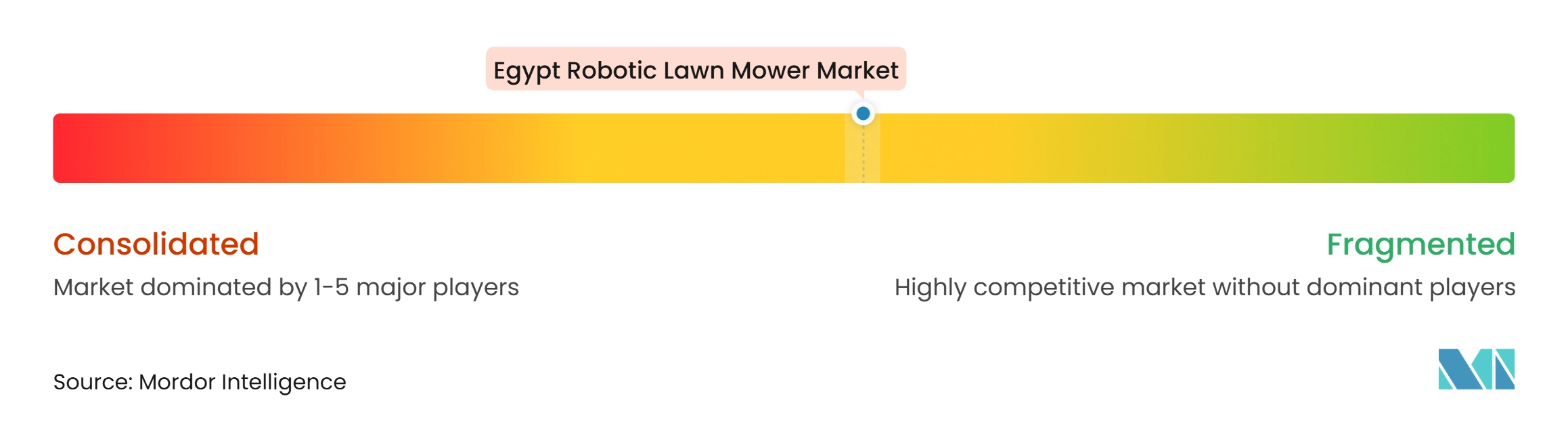
The Egypt robotic lawn mower market remains import-led, with competition shaped by international brands, local distribution networks, and the availability of installation and after-sales services. Husqvarna Group has established a strong position through its presence in Egypt and broad robotic mower portfolio, while other international producers compete through distributors, project sales, and online marketplaces. The competitive environment is developing around product availability, brand recognition, technical support, and the ability to serve Egypt’s growing residential and commercial demand. Local representation and service coverage remain important factors because buyers require installation, maintenance, replacement parts, and technical assistance after purchase.
Husqvarna Group is expanding its commercial offering through wire-free navigation, including the Automower 560 EPOS for larger green spaces. Fleet Management connectivity also supports remote supervision of multiple machines, making the technology relevant to municipalities, resort operators, landscaping companies, and facility managers in Egypt. ANDREAS STIHL AG and Co. KG also competes in the market through its iMOW robotic mower range. Meanwhile, Shenzhen Mammotion Technology Co., Ltd. and ECOVACS Robotics Co., Ltd. are increasing competition in the wire-free segment, particularly through digital and marketplace channels.
The market presents opportunities for companies that can strengthen fleet-management solutions for hospitality and commercial sites, expand certified installation and maintenance coverage beyond Cairo, and offer competitively priced wire-free products for residential compounds. Online distribution can improve access to international brands, but limited local service capacity remains a competitive constraint. Companies with stronger distributor relationships, installation capabilities, replacement-part availability, and technical support will be better positioned to convert product availability into sustained demand across Egypt. Commercial applications are likely to create additional opportunities as resorts, golf courses, landscaping companies, and managed green spaces increase their use of autonomous mowing equipment.
Egypt Robotic Lawn Mower Industry Leaders
-
Husqvarna Group
-
Robert Bosch GmbH
-
Honda Motor Co., Ltd.
-
ANDREAS STIHL AG and Co. KG
-
Navimow (Segway-Ninebot)
- *Disclaimer: Major Players sorted in no particular order
Egypt Robotic Lawn Mower Market Companies Covered in this Report
- Husqvarna Group
- Robert Bosch GmbH
- ANDREAS STIHL AG and Co. KG
- Honda Motor Co., Ltd.
- Navimow (Segway-Ninebot)
- Shenzhen Mammotion Technology Co., Ltd.
- Worx (Positec Tool Corporation)
- STIGA S.p.A.
- Ambrogio Robot (Zucchetti Centro Sistemi S.p.A.)
- AL-KO (Ningbo Daye Garden Machinery Co.,Ltd.)
- ECOVACS Robotics Co., Ltd.
- Makita Corporation
- The Toro Company
- FJDynamics Technology Co., Ltd.
Recent Industry Developments in Egypt Robotic Lawn Mower Market
- April 2026: Husqvarna Group introduced the Automower 560 EPOS, a wire-free commercial robotic mower for municipalities, campuses, parks, and institutional properties. Using satellite-based virtual boundaries, it can maintain up to 1.5 acres in 24 hours and supports remote fleet management. The product supports Egypt’s growing demand across resorts, public landscapes, golf courses, and large managed properties.
- February 2026: Robert Bosch GmbH introduced the VISIMOW18V semi-autonomous mower within its 18V Power for All System. The VISIMOW18V-100 and VISIMOW18V-200 use SmartVision camera technology for gardens up to 100 and 200 square meters, respectively. Their wire-free, installation-free designs are distributed through Egypt’s existing Bosch retail and online channels, giving residential buyers access to a simpler robotic mowing option for smaller villa gardens.
- January 2026: Cairo added 4,500 residential units in the second quarter of 2026, bringing the total housing inventory to 338,100 units. The continued expansion of residential compounds is increasing the number of properties where robotic lawn mowers can be adopted.
Egypt Robotic Lawn Mower Market Report Scope
A robotic lawn mower is an autonomous device equipped with sensors and programming to perform grass-cutting tasks without human intervention. These are used for residential and commercial purposes by homeowners, apartment owners, in parks and playgrounds, and other places.
The scope of the Egypt Robotic Lawn Mower Market is segmented by Range (Low, Medium, and High), by Battery Capacity (Less than 20V, 20V to 30V, and More Than 30V), by Sales Channel (Retailers, Specialty Stores, and Online Channels), by Application (Residential and Commercial), by End User (Homeowners, Landscaping Companies, Sports Grounds & Parks, Municipalities, Golf Courses and Other End-Users) and by Connectivity (Boundary-Wire, Smart-GPS and Wi-Fi, and Vision-Guided Camera and LiDAR). The report offers the market size in value (USD) and forecasts for all the above segments.
Segmentation Overview
| Low Range |
| Medium Range |
| High Range |
| Less Than 20 V |
| 20 to 30 V |
| More Than 30 V |
| Retailers |
| Specialty Stores |
| Online |
| Residential |
| Commercial |
| Homeowners |
| Landscaping Companies |
| Sports Grounds and Parks |
| Municipalities |
| Golf Courses |
| Other End-Users |
| Boundary-Wire |
| Smart-GPS and Wi-Fi |
| Vision-Guided Camera and LiDAR |
| By Range | Low Range |
| Medium Range | |
| High Range | |
| By Battery Capacity | Less Than 20 V |
| 20 to 30 V | |
| More Than 30 V | |
| By Sales Channel | Retailers |
| Specialty Stores | |
| Online | |
| By Application | Residential |
| Commercial | |
| By End-User | Homeowners |
| Landscaping Companies | |
| Sports Grounds and Parks | |
| Municipalities | |
| Golf Courses | |
| Other End-Users | |
| By Connectivity | Boundary-Wire |
| Smart-GPS and Wi-Fi | |
| Vision-Guided Camera and LiDAR |
Key Questions Answered in the Report
What is the size of the Egypt robotic lawn mower market?
The Egypt robotic lawn mower market size is valued at USD 5.81 million in 2025 and USD 6.67 million in 2026.
Which application is growing fastest in Egypt?
Commercial segment is forecast to grow at a CAGR of 13.4% from 2026 to 2031, supported by resorts, golf courses, and landscaping contractors.
Which robotic lawn mower connectivity type is growing fastest?
Vision-guided camera and LiDAR systems are forecast to grow at a CAGR of 13.6% from 2026 to 2031.
Why are robotic lawn mowers being adopted in Egyptian resorts?
Resort operators can use wire-free equipment to maintain large green spaces, address labor constraints, and support lower-emission operating practices.