
DHA Supplements Market Size and Share
Market Overview
| Study Period | 2021 - 2032 |
|---|---|
| Market Size (2027) | USD 2.05 Billion |
| Market Size (2032) | USD 2.94 Billion |
| Growth Rate (2027 - 2032) | 7.46 % |
| Fastest Growing Market | Asia-Pacific |
| Largest Market | North America |
| Market Concentration | Medium |
Major Players *Disclaimer: Major Players sorted in no particular order Image © Mordor Intelligence. Reuse requires attribution under CC BY 4.0. | |
DHA Supplements Market Analysis by Mordor Intelligence
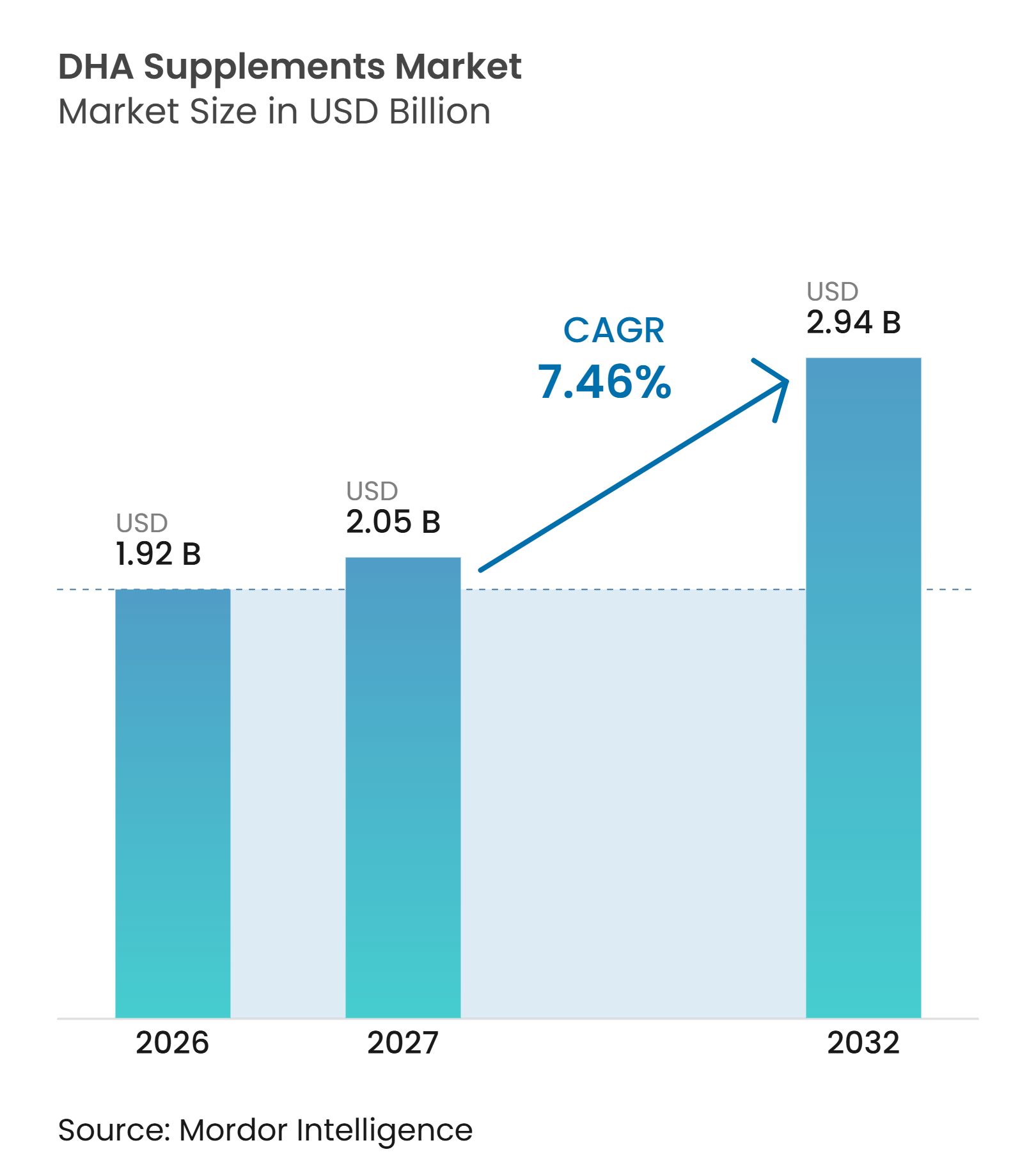
The DHA Supplements Market size is expected to increase from USD 1.92 billion in 2026 to USD 2.05 billion in 2027 and reach USD 2.94 billion by 2032, growing at a CAGR of 7.46% over 2027-2032.
Consumer interest has widened from condition-led use to preventive nutrition for cognitive, visual, and cardiovascular health. Global omega-3 ingredient volume recovered to 131,183 metric tons in 2024, up 2.5% from 2023, with ingredient value reaching USD 2,379.7 million. This recovery supports DHA supplements market availability, although it does not remove exposure to marine raw material volatility. Product makers are directing investment toward better-tasting formats, plant-based ingredients, and digital replenishment models. These approaches broaden access while allowing manufacturers to serve prenatal, pediatric, adult, and healthy-aging use cases with more targeted products.
Key Report Takeaways
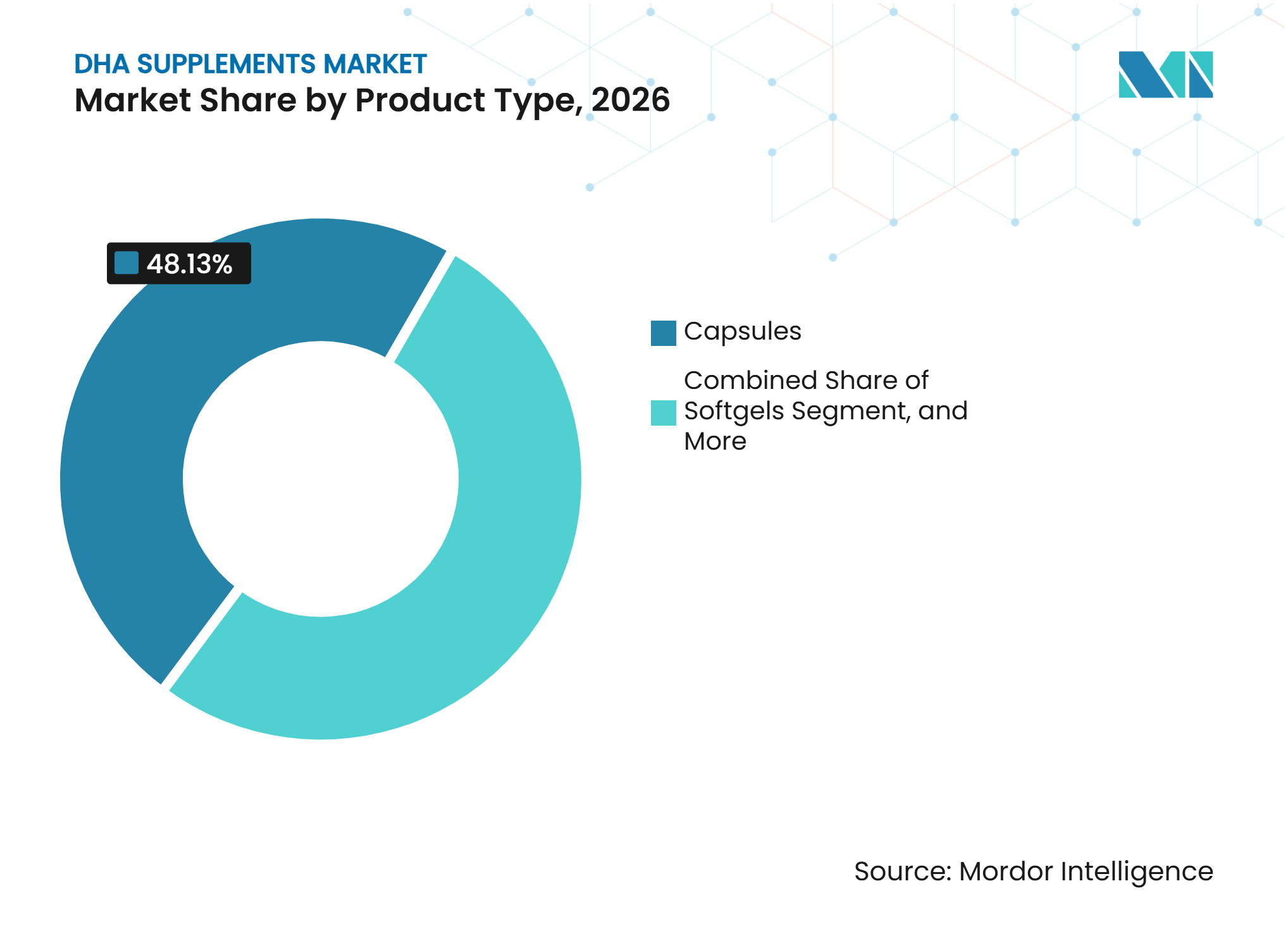
- By product type, capsules held 48.13% of DHA supplements market share in 2026, while gummies and chewables are projected to grow at a 7.73% CAGR through 2032.
- By source, fish oil held 58.38% of the share in the DHA supplements market in 2026, while algal oil is projected to grow at a 9.03% CAGR through 2032.
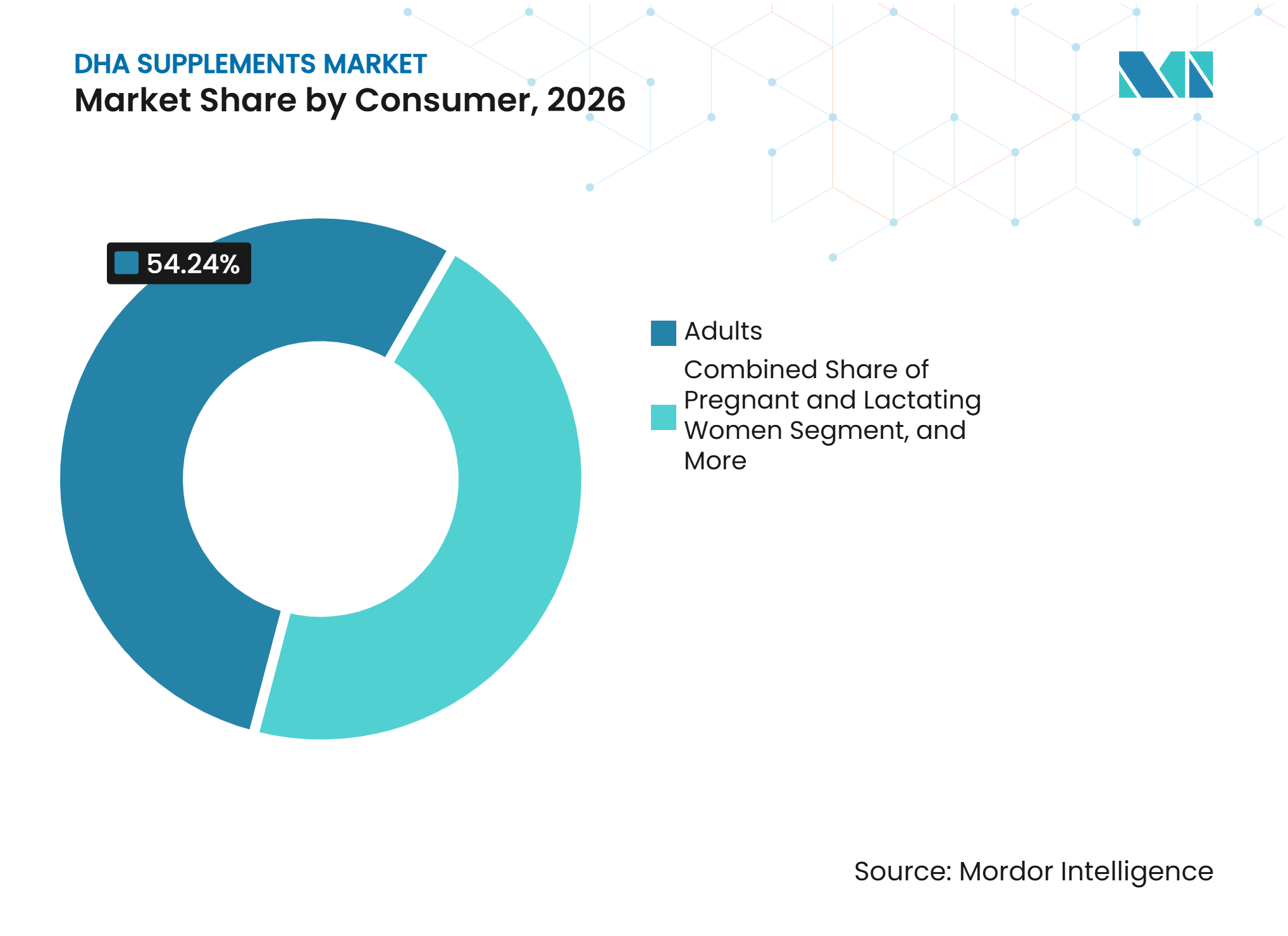
- By consumer, adults held a 54.24% share in 2026, while children and infants are projected to grow at an 8.23% CAGR through 2032.
- By application, dietary supplements accounted for a 53.16% share in 2026, while infant formula and infant nutrition are projected to grow at an 8.73% CAGR through 2032.
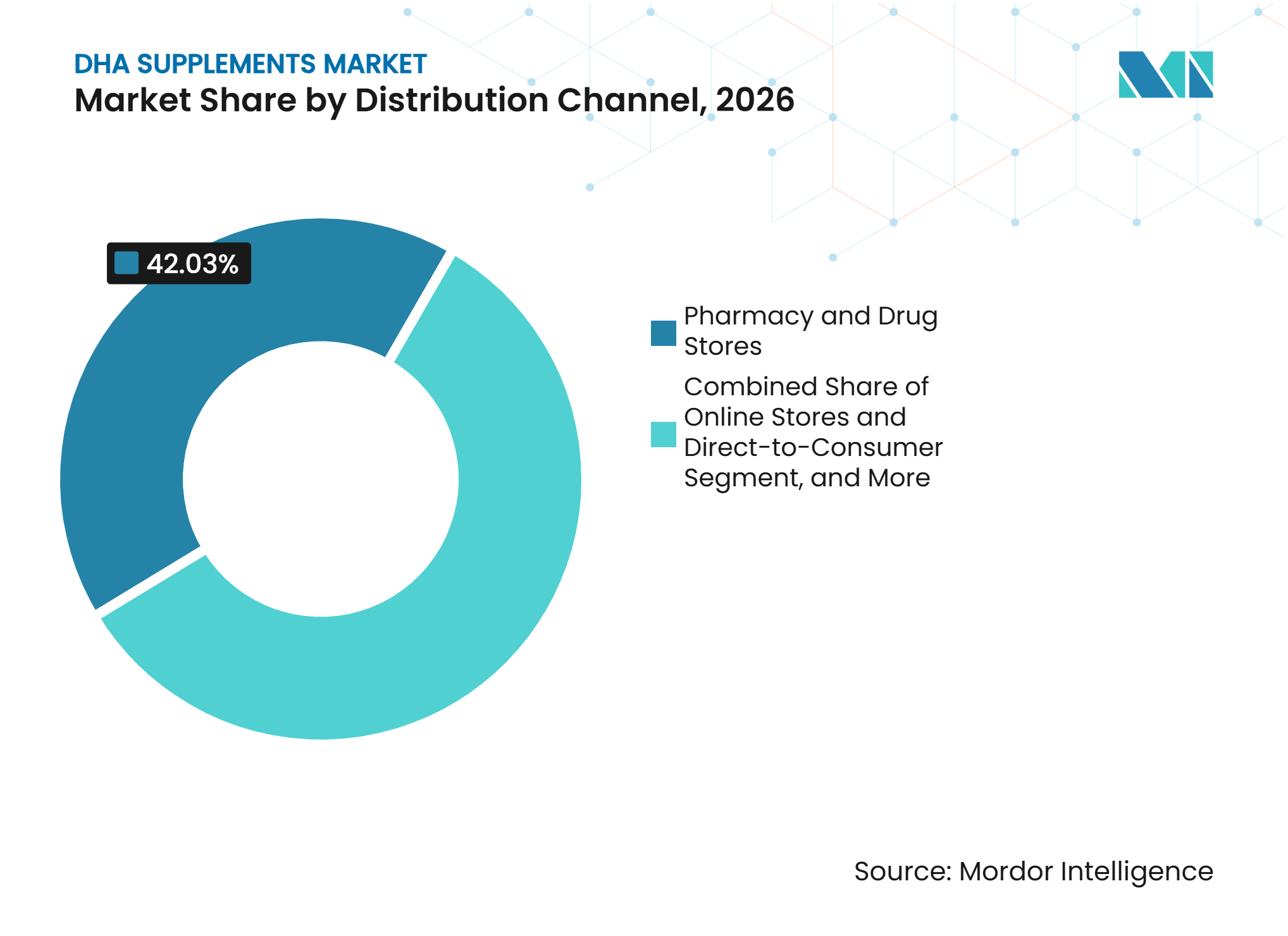
- By distribution channel, pharmacy and drug stores held a 42.03% share in 2026, while online stores and direct-to-consumer channels are projected to grow at an 8.01% CAGR through 2032.
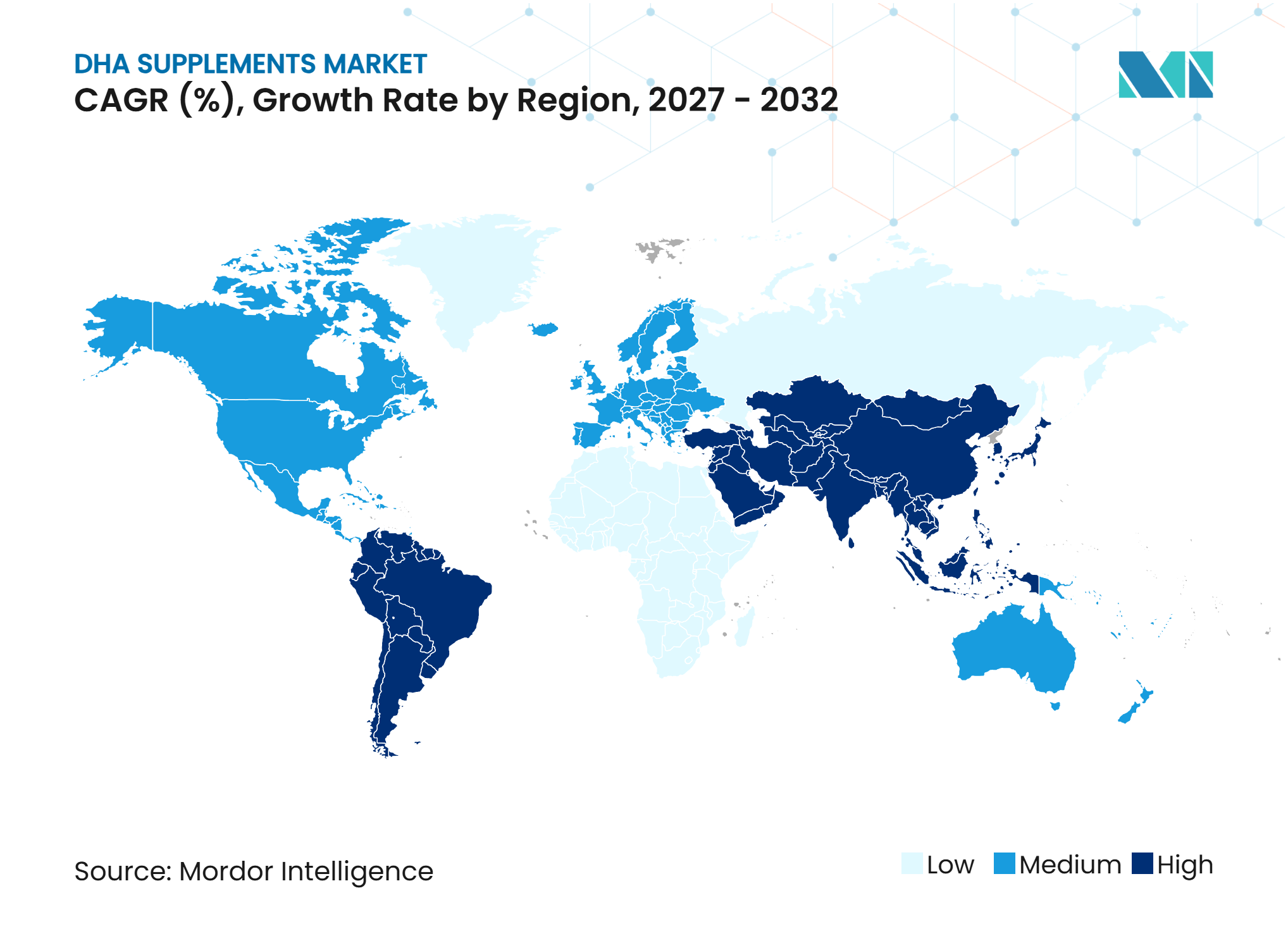
- By geography, North America held a 39.31% share in 2026, while Asia-Pacific is projected to grow at a 7.95% CAGR through 2032.
Note: Market numbers in this report are based on Mordor Intelligence's proprietary estimation framework, which combines nine months of actuals with Q4 projections for base year 2026.
Market Trends and Insights
Drivers Impact Analysis of DHA Supplements Market*
| Driver | (~) % Impact on CAGR Forecast | Geographic Relevance | Impact Timeline |
|---|---|---|---|
| Preventive Brain, Eye, and Cardiovascular Health Adoption | +2.0% | Global, with concentration in North America and Western Europe | Long term (≥ 4 years) |
| Prenatal and Infant DHA Fortification | +1.5% | Global, strongest in North America, Europe, and China | Medium term (2-4 years) |
| Aging and Nutritional-Gap Supplementation | +1.2% | North America, Europe, Japan, and South Korea | Long term (≥ 4 years) |
| Vegan and Sustainable Algal DHA Adoption | +1.0% | North America, Europe, and Asia-Pacific, with early gains in China and India | Medium term (2-4 years) |
| E-Commerce, Subscription Replenishment, and Personalized Nutrition | +0.8% | China, the United States, South Korea, Australia, and selected Middle East and Africa markets | Short term (≤ 2 years) |
| High-Load Microencapsulation and Pleasant-Taste Formats | +0.7% | Global, with strongest relevance in North America, Western Europe, and China | Medium term (2-4 years) |
| Source: Mordor Intelligence | |||
Preventive Brain, Eye, and Cardiovascular Health Adoption
Evidence from recent clinical research is affecting how companies position DHA supplement products. A 2025 Scientific Reports dose-response meta-analysis covering 58 randomized controlled trials associated omega-3 supplementation at 1,000 mg to 2,500 mg daily with improvements in attention, primary memory, and visuospatial function.[1] The analysis found that the benefit window was dose-specific rather than linear, which supports more precise formulation and communication choices. A 2025 JACC Advances meta-analysis of 16 trials involving 127,771 patients found a cardiovascular mortality hazard ratio of 0.79 for purified EPA and 0.92 for EPA and DHA combinations.[2] This distinction separates cardiovascular-oriented EPA propositions from DHA-centered brain and vision products. It also gives manufacturers a clearer basis for matching ingredient ratios to the health need addressed by each DHA supplement market offering.
Prenatal and Infant DHA Fortification
Maternal and infant nutrition is providing a demand base that is less dependent on discretionary wellness spending. The U.S. National Institutes of Health Office of Dietary Supplements issued guidance in 2025 recommending at least 250 mg daily of DHA plus EPA for women of childbearing age and an additional 100 mg to 200 mg of DHA during pregnancy. The World Health Organization and the European Food Safety Authority support a daily DHA intake of 200 mg for pregnant and lactating women. A 2025 Nutrients article reported average DHA and EPA intake near 100 mg per day in high-income countries, showing a substantial intake gap.[3] DSM-Firmenich offers maternal oils and powders that deliver 350 mg DHA in either a softgel or 2-gummy serving. These formats allow DHA supplements market brands to address the need for high-dose, odor-controlled prenatal products.
Aging and Nutritional-Gap Supplementation
Aging populations are widening the role of DHA beyond conventional cognition claims. The 2025 DO-HEALTH trial reported that omega-3 supplementation slowed biological aging by as much as 3.8 months over 3 years according to DNA methylation clocks. An overview of systematic reviews covering 26,881 people aged 40 years and older found a modest improvement in Mini-Mental State Examination scores among n-3 PUFA supplement users. A separate 2025 review linked long-chain omega-3 fatty acids with a possible role in sarcopenia prevention. These findings give the DHA supplements market a broader healthspan proposition for older consumers. They also support investment in convenient, tolerable formats for people managing several health and nutrition needs.
Vegan and Sustainable Algal DHA Adoption
Algal DHA is becoming a supply and formulation choice, rather than only a vegan alternative. Controlled fermentation can offer consistent DHA quality without seasonal fishery exposure, which is useful for infant formula and premium supplements. Sumitomo Corporation signed an exclusive agreement in January 2025 to distribute Huvepharma algal DHA in Japan. Aker BioMarine expanded the commercial reach of its Revervia algae ingredient during 2025, including an India entry in January 2026. Online subscriptions and personalized product bundles can further help suppliers retain buyers of premium algal formats, while microencapsulation makes DHA easier to place in gummies and chewables. These changes may reduce the DHA supplements market dependence on large softgels and conventional marine oils over time.
Restraints Impact Analysis of DHA Supplements Market*
| Restraint | (~) % Impact on CAGR Forecast | Geographic Relevance | Impact Timeline |
|---|---|---|---|
| Marine Supply Volatility and Quota Exposure | -1.1% | Global, with greatest exposure in import-dependent North American and European markets | Short term (≤ 2 years) |
| Oxidation, Dose Loading, and Shelf-Life Constraints | -0.8% | Global, with higher exposure in tropical distribution markets in Southeast Asia and the Middle East and Africa | Medium term (2-4 years) |
| Regulatory Fragmentation and Health-Claim Substantiation | -0.7% | Europe, North America, and Asia-Pacific | Long term (≥ 4 years) |
| Premium Algal Price Gap and Repeat-Purchase Elasticity | -0.6% | Emerging markets in Asia-Pacific, South America, and the Middle East and Africa | Medium term (2-4 years) |
| Source: Mordor Intelligence | |||
Marine Supply Volatility and Quota Exposure
The DHA supplements market remains exposed to concentrated and climate-sensitive marine supply. Peru set its first 2025 anchovy season quota at 3 million metric tons, but the reported 15% EPA and 15% DHA profile did not match the preferred ratios used by many supplement manufacturers. IFFO reported global fish oil production of 1.2 million to 1.3 million tons for 2025. Competing uses in dietary supplements, premium pet nutrition, and aquaculture can redirect available fish oil and raise costs. GOED has encouraged diversification across algae, krill, calanus, sardine, and tuna oil to reduce concentration risk. This exposure can compress margins during a fishery cycle even when finished-product demand remains resilient.
Oxidation, Dose Loading, and Shelf-Life Constraints
DHA is highly unsaturated and therefore vulnerable to oxidation during processing, storage, and distribution. A 2025 review in the Journal of the American Oil Chemists’ Society found that encapsulation can improve DHA bioavailability by 50% to 150% while protecting the ingredient against oxidation. Spray drying, coacervation, and nanoemulsion systems can be costly for smaller manufacturers. The issue is especially relevant in gummies because heat can degrade unprotected oils during manufacturing. DSM-Firmenich stated that its life's OMEGA 033-P100 powder can deliver up to 500 mg omega-3 in a 2-piece gummy while protecting the oil from heat, oxygen, and light. Regulatory claim requirements and the higher price of algal inputs add further pressure on product economics, particularly in price-sensitive markets.
*Our forecasts treat driver/restraint impacts as directional, not additive. The impact forecasts reflect baseline growth, mix effects, and variable interactions.
DHA Supplements Market Segment Analysis
By Product Type:
Capsules Lead, Gummies Reshape UptakeCapsules held 48.13% of DHA supplements market share in 2026, supported by dose precision, physician familiarity, and established molecular-distillation supply chains. Their familiar format remains useful for adults seeking concentrated daily intake. Softgels continue to serve premium users who value enteric delivery and higher omega-3 loading. Ghost Sports Nutrition introduced Basics Fish Oil in March 2025 with 2.4 g of enteric-coated omega-3 per 2-capsule serving using an Epax Norway AS ingredient. This example reflects continued demand for performance and wellness products built around conventional softgel delivery.
Gummies and chewables are projected to grow at a 7.73% CAGR through 2032, the fastest product-format rate in the DHA supplements market. Their growth reflects the need to reduce taste, odor, and swallowing barriers for children, pregnant consumers, and occasional supplement users. Encapsulation makes it possible to increase DHA loading while reducing oxidation risk. Sirio introduced XtraGummies in March 2025 with 125 mg DHA per gummy, illustrating how the format is moving toward clinically relevant doses. Powders and liquids also support flexible dosing in pediatric sachets and maternal nutrition, particularly where clinical dispensing affects purchase choices.



By Source:
Fish Oil Leads as Algal Oil Gains Structural GroundFish oil held 58.38% of share in the DHA supplements market by source in 2026. Its infrastructure, established consumer awareness, and cost profile retain advantages in mass-market formulations. High-value fish oil producers increasingly compete through concentration, low-oxidation processing, and third-party sustainability credentials. Epax Norway AS, GC Rieber VivoMega, and Golden Omega S.A. represent suppliers that use these attributes to move beyond volume-price competition. This strategy allows fish oil products to remain relevant while buyers place greater emphasis on quality and traceability.
Algal oil is projected to grow at a 9.03% CAGR through 2032, the highest rate among source segments in the DHA supplements market. It benefits from vegan demand, infant-formula use, and controlled fermentation conditions that reduce dependence on seasonal fisheries. Sumitomo Corporation’s Japanese distribution agreement for Huvepharma algal DHA demonstrates a sourcing shift toward fermentation-based supply. Aker BioMarine’s 2025 expansion of its Revervia algae ingredient also shows growing business-to-business interest. Krill oil retains a phospholipid-based absorption proposition, while calanus and other oils remain smaller diversification options.
By Consumer:
Adults Command Share, Children and Infant Demand AcceleratesAdults accounted for 54.24% of share in the DHA supplements market in 2026. This group includes consumers focused on cardiovascular wellness, cognition, vision, sports performance, and healthy aging. Adult demand supports a broad range of price points and formulations. Pregnant and lactating women remain an underpenetrated adult subsegment because intake often falls below recommended levels. This gap gives manufacturers room to develop high-dose products with simpler dosing and better taste control.
Children and infants are projected to grow at an 8.23% CAGR through 2032 in the DHA supplements market. Physician guidance and parental concern about early brain and visual development support this demand. Product acceptance depends on age-appropriate flavor, form, and dose presentation. The 2025 International Society of Sports Nutrition position stand also reported that EPA and DHA can support endurance capacity, adding a clinical reference for active-nutrition communication to adult consumers. The result is a consumer base where life stage shapes both product design and channel choice.

By Application:
Dietary Supplements Dominant, Infant Nutrition Grows FastestDietary supplements represented 53.16% of share in the DHA supplements market by application in 2026. The category addresses preventive cardiovascular, cognitive, and eye-health needs across adult populations. Functional foods and beverages are gaining relevance as encapsulation allows DHA to enter dairy alternatives and meal-replacement formats. Pharmaceuticals and clinical nutrition remain smaller but high-value applications. Corbion identified algae-derived omega-3 DHA for pet nutrition and human nutrition as a driver of its 2025 performance. These adjacent applications can support ingredient utilization beyond conventional supplements.
Infant formula and infant nutrition are projected to grow at an 8.73% CAGR through 2032 in the DHA supplements market. Their growth is supported by regulation and clinical guidance rather than consumer preference alone. The European Union requires DHA in infant formula under its compositional rules. The U.S. Food and Drug Administration reviewed infant-formula nutrient requirements, including DHA, through its Operation Stork Speed Expert Panel process in 2025. These requirements create a durable foundation for specialized DHA ingredients.
By Distribution Channel:
Pharmacy Anchors Revenue, Online Redraws GrowthPharmacy and drug stores held a 42.03% share in the DHA supplements market in 2026. Pharmacist guidance and physician recommendations remain important for prenatal, geriatric, and clinical DHA uses. The channel also reassures buyers who seek help selecting dose and format. Supermarkets and hypermarkets give private-label products access to high-volume, value-oriented shoppers. Specialty stores remain relevant for algal DHA, krill oil, and pharmaceutical-grade concentrates that require more detailed product explanation.
Online stores and direct-to-consumer channels are projected to grow at an 8.01% CAGR through 2032 in the DHA supplements market. Subscription replenishment and digital product bundles can improve repeat purchase behavior. Practitioner channels combine clinical trust with direct fulfillment. Duly Health and Care partnered with Fullscript in April 2025 to recommend and ship supplements directly to patients. This model shows how clinical channels can extend into direct-to-consumer logistics without losing their advisory role.
Geography Analysis
North America
North America accounted for 39.31% of the share in the DHA supplements market in 2026. High per-capita supplement spending, mature pharmacy networks, and regular clinical recommendations support the region’s established position. In the United States, the American Heart Association recommends 1 g of EPA and DHA daily for secondary prevention in patients with coronary heart disease. The 2025 NIH guidance on omega-3 intake during pregnancy also strengthens the basis for prenatal products. Canada adds ingredient innovation through companies such as Mara Renewables, while Mexico offers room for lower-priced pharmacy products. Product development is increasingly focused on algal oils, maternal formats, and products that meet U.S. dietary-supplement labeling and quality expectations.
Asia-Pacific
Asia-Pacific is projected to grow at a 7.95% CAGR through 2032, the fastest geographic rate in the DHA supplements market. China, India, South Korea, Japan, and Australia are expanding demand through urbanization, online retail, and preventive health spending. In Japan, Sumitomo Corporation’s 2025 agreement and Rohto Pharmaceutical’s 100% algae-derived DHA and EPA supplement launch point to broader acceptance of plant-based omega-3 products. India is building awareness around maternal and pediatric DHA, while Australia has a defined pathway for listed complementary medicines through the Therapeutic Goods Administration. Localized digital communication and convenient child-friendly formats are likely to shape supplier strategies. These conditions make the region important for both volume growth and algal DHA adoption.
Europe, Middle East, Africa, and South America
Europe benefits from an established regulatory influence through authorized European Food Safety Authority health claims for DHA and normal brain function, vision, and cardiac function when intake conditions are met. The DHA supplements market size in Europe is supported by aging populations and a growing vegan consumer base, especially in Germany, France, and the United Kingdom. BTC Europe signed an EU27 distribution agreement with Solutex for the Omegatex range in April 2025, supporting access to fish- and algae-oil ingredients. The Middle East and Africa have higher penetration in Gulf Cooperation Council countries, where halal certification can complement vegan algal positioning. South America is developing retail infrastructure in Brazil and Argentina, while proximity to Peruvian and Chilean fish-oil sources could support future downstream manufacturing. These mixed regions require different pricing, certification, and distribution approaches rather than a single regional proposition.
Competitive Landscape
Market Concentration

The DHA supplements market has a concentrated upstream ingredient layer and a more fragmented branded consumer layer. Ingredient competition depends on marine extraction, fermentation, concentration, and quality-control capabilities. KD Pharma Group acquired DSM-Firmenich’s Marine Lipids business in October 2024, including the MEG-3 brand and production assets in Peru and Canada. In December 2025, KD Pharma signed a further agreement for DSM-Firmenich’s food-grade oil distribution and supply business, strengthening its omega-3 position. Louis Dreyfus Company completed the acquisition of BASF’s Food and Health Performance Ingredients business in October 2025, adding an omega-3 oil portfolio for human nutrition.
Downstream competition centers on format quality, clinical support, ingredient provenance, and channel access. Aker BioMarine uses phospholipid-bound delivery technology to differentiate on absorption, while DSM-Firmenich is developing maternal formulations that deliver 350 mg DHA in softgels or gummies. Corbion is expanding algae-derived DHA across aquaculture, pet nutrition, and human nutrition applications. Companies with encapsulation capabilities can respond more effectively to demand for gummies and other pleasant-tasting formats. Smaller brands face higher barriers where formulation stability and substantiated health claims require specialized expertise.
The European Union Food Supplements Directive provides a basic framework for national food-supplement rules, while Commission Regulation (EU) No 432/2012 sets conditions for communicating DHA health benefits. In the United States, dietary supplement firms must meet applicable labeling and current good manufacturing practice requirements. These requirements can favor established manufacturers with stronger regulatory, clinical, and quality resources. The DHA supplements market rewards scale upstream but still leaves downstream room for brands with clear consumer propositions.
DHA Supplements Industry Leaders
-
BASF SE
-
Croda International Plc
-
DSM-Firmenich AG
-
Nordic Naturals, Inc.
-
Corbion N.V.
- *Disclaimer: Major Players sorted in no particular order
DHA Supplements Market Companies Covered in this Report
- Aenova Group
- Aker BioMarine ASA
- Arjuna Natural Extracts Ltd.
- BASF
- Carlson Laboratories, Inc.
- Clover Corporation Limited
- Corbion N.V.
- Croda International Plc
- DSM-Firmenich AG
- Epax Norway AS
- GC Rieber VivoMega AS
- Golden Omega S.A.
- KD Pharma Group SA
- LYSI hf.
- Nature’s Bounty
- Nordic Naturals, Inc.
- NOW Foods
- OLVEA Fish Oils
- Omega Protein Corporation
- Pharmavite LLC
- Solutex GC, S.L.
- TASA
Recent Industry Developments in DHA Supplements Market
- October 2026: SourceOne Global Partners launched LysOmega, an LPC-rich DHA and EPA formulation paired with VESIsorb delivery technology, designed to cross the blood-brain and blood-retina barriers. The delivery mechanism increases plasma LPC-DHA levels, enabling the nutrient to reach the MFSD2A transporter. The company plans to conduct a human pharmacokinetic and biomarker trial in Q4 2026, focusing on APOE4 carriers.
- December 2025: SourceOne Global Partners launched LysOmega, an LPC-rich DHA and EPA formulation paired with VESIsorb delivery technology, designed to cross the blood-brain and blood-retina barriers. The delivery mechanism increases plasma LPC-DHA levels, enabling the nutrient to reach the MFSD2A transporter. The company plans to conduct a human pharmacokinetic and biomarker trial in Q4 2026, focusing on APOE4 carriers.
- October 2025: Louis Dreyfus Company completed its acquisition of BASF’s Food and Health Performance Ingredients business, including an omega-3 oil portfolio for human nutrition.
- September 2025: Rohto Pharmaceutical, through Rohto F Okinawa Co., Ltd., launched a 100% algae-derived DHA and EPA supplement in Japan for vegan, fish-allergy, and sustainability-focused consumers.
Global DHA Supplements Market Report Scope
The DHA Supplements Market comprises products containing docosahexaenoic acid (DHA), an omega-3 long-chain polyunsaturated fatty acid essential for brain, eye, heart, and cognitive health. These supplements are derived from sources such as fish oil, algal oil, krill oil, and other marine or plant-based ingredients and are consumed across various age groups, including infants, children, adults, pregnant women, and elderly populations.
The DHA supplements market is segmented based on product type, source, consumer group, application, distribution channel, and geography. By product type, the market includes capsules, softgels, gummies and chewables, powders, liquids and emulsions, and other product formats. Based on source, the market is categorized into fish oil, algal oil, krill oil, and other marine and plant-based sources. By consumer group, the study analyzes demand from adults, pregnant and lactating women, children and infants, geriatric consumers, and sports and active-nutrition consumers. By application, the market covers dietary supplements, infant formula and infant nutrition, functional foods and beverages, pharmaceuticals and clinical nutrition, and pet nutrition and animal feed. Based on distribution channel, the market is assessed across pharmacy and drug stores, online and direct-to-consumer platforms, supermarkets and hypermarkets, specialty and wellness stores, and practitioner-prescribed channels. Geographically, the market analysis spans North America (United States, Canada, Mexico), Europe (Germany, United Kingdom, France, Italy, Spain, and Rest of Europe), Asia-Pacific (China, Japan, India, Australia, South Korea, and Rest of Asia-Pacific), Middle East & Africa (GCC, South Africa, and Rest of Middle East & Africa), and South America (Brazil, Argentina, and Rest of South America).
Segmentation Overview
| Capsules |
| Softgels |
| Gummies and Chewables |
| Powders |
| Liquids and Emulsions |
| Other Product Types |
| Fish Oil |
| Algal Oil |
| Krill Oil |
| Other Marine and Plant Sources |
| Adults |
| Pregnant and Lactating Women |
| Children and Infants |
| Geriatric Consumers |
| Sports and Active-Nutrition Consumers |
| Dietary Supplements |
| Infant Formula and Infant Nutrition |
| Functional Food and Beverages |
| Pharmaceuticals and Clinical Nutrition |
| Pet Nutrition and Animal Feed |
| Pharmacy and Drug Stores |
| Online Stores and Direct-to-Consumer |
| Supermarkets and Hypermarkets |
| Specialty and Wellness Stores |
| Practitioner and Prescribed Channels |
| North America | United States |
| Canada | |
| Mexico | |
| Europe | Germany |
| United Kingdom | |
| France | |
| Italy | |
| Spain | |
| Rest of Europe | |
| Asia-Pacific | China |
| Japan | |
| India | |
| Australia | |
| South Korea | |
| Rest of Asia-Pacific | |
| Middle East & Africa | GCC |
| South Africa | |
| Rest of Middle East & Africa | |
| South America | Brazil |
| Argentina | |
| Rest of South America |
| By Product Type | Capsules | |
| Softgels | ||
| Gummies and Chewables | ||
| Powders | ||
| Liquids and Emulsions | ||
| Other Product Types | ||
| By Source | Fish Oil | |
| Algal Oil | ||
| Krill Oil | ||
| Other Marine and Plant Sources | ||
| By Consumer | Adults | |
| Pregnant and Lactating Women | ||
| Children and Infants | ||
| Geriatric Consumers | ||
| Sports and Active-Nutrition Consumers | ||
| By Application | Dietary Supplements | |
| Infant Formula and Infant Nutrition | ||
| Functional Food and Beverages | ||
| Pharmaceuticals and Clinical Nutrition | ||
| Pet Nutrition and Animal Feed | ||
| By Distribution Channel | Pharmacy and Drug Stores | |
| Online Stores and Direct-to-Consumer | ||
| Supermarkets and Hypermarkets | ||
| Specialty and Wellness Stores | ||
| Practitioner and Prescribed Channels | ||
| By Geography | North America | United States |
| Canada | ||
| Mexico | ||
| Europe | Germany | |
| United Kingdom | ||
| France | ||
| Italy | ||
| Spain | ||
| Rest of Europe | ||
| Asia-Pacific | China | |
| Japan | ||
| India | ||
| Australia | ||
| South Korea | ||
| Rest of Asia-Pacific | ||
| Middle East & Africa | GCC | |
| South Africa | ||
| Rest of Middle East & Africa | ||
| South America | Brazil | |
| Argentina | ||
| Rest of South America | ||
Key Questions Answered in the Report
What is the projected value of the DHA supplements market by 2032?
The DHA supplements market is projected to reach USD 2.94 billion by 2032, growing at a 7.46% CAGR from 2027 to 2032.
Which DHA supplement format has the largest share?
Capsules hold the largest product-format share at 48.13% in 2026, supported by familiar dosing and established supply chains.
Why are DHA gummies growing faster than capsules?
Gummies and chewables are projected to grow at a 7.73% CAGR because they can improve taste, ease of use, and acceptance among children and prenatal consumers.
Which DHA source is growing the fastest?
Algal oil is forecast to grow at a 9.03% CAGR through 2032, supported by vegan demand, infant nutrition use, and controlled fermentation supply.
Which application is creating the strongest DHA demand growth?
Infant formula and infant nutrition are forecast to grow at an 8.73% CAGR through 2032, supported by nutritional rules and maternal-health guidance.
Which region is expected to grow fastest for DHA products?
Asia-Pacific is projected to grow at a 7.95% CAGR through 2032 as online retail, preventive-health spending, and algal DHA adoption expand.