
Desmoid Tumors Market Size and Share
Market Overview
| Study Period | 2020 - 2031 |
|---|---|
| Market Size (2026) | USD 3.20 Billion |
| Market Size (2031) | USD 4.51 Billion |
| Growth Rate (2026 - 2031) | 7.13 % |
| Fastest Growing Market | Asia-Pacific |
| Largest Market | North America |
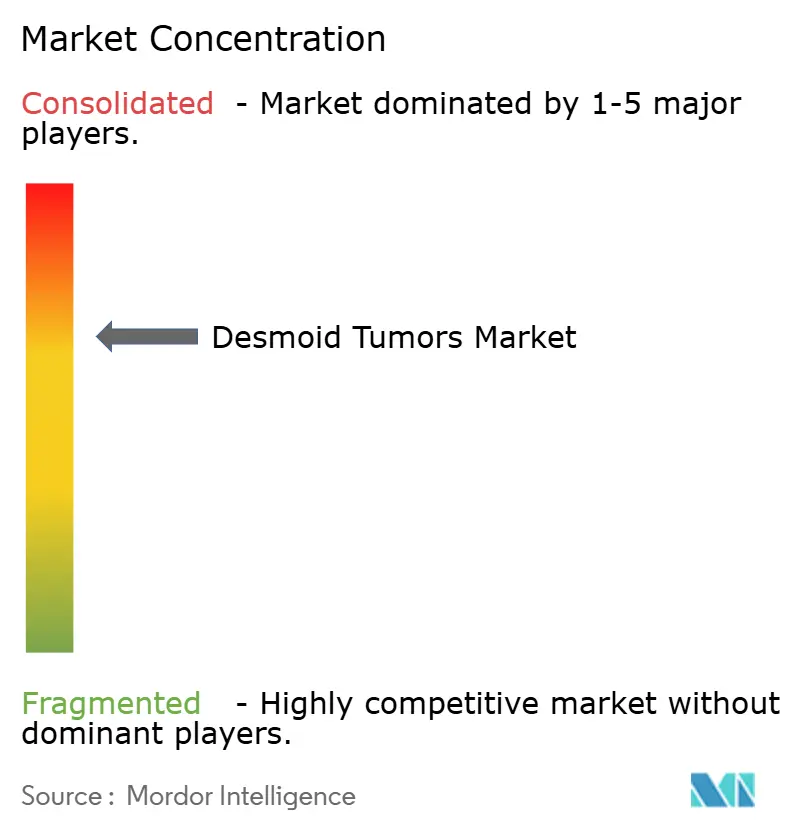
| Market Concentration | Medium |
Major Players *Disclaimer: Major Players sorted in no particular order Image © Mordor Intelligence. Reuse requires attribution under CC BY 4.0. | |
Desmoid Tumors Market Analysis by Mordor Intelligence
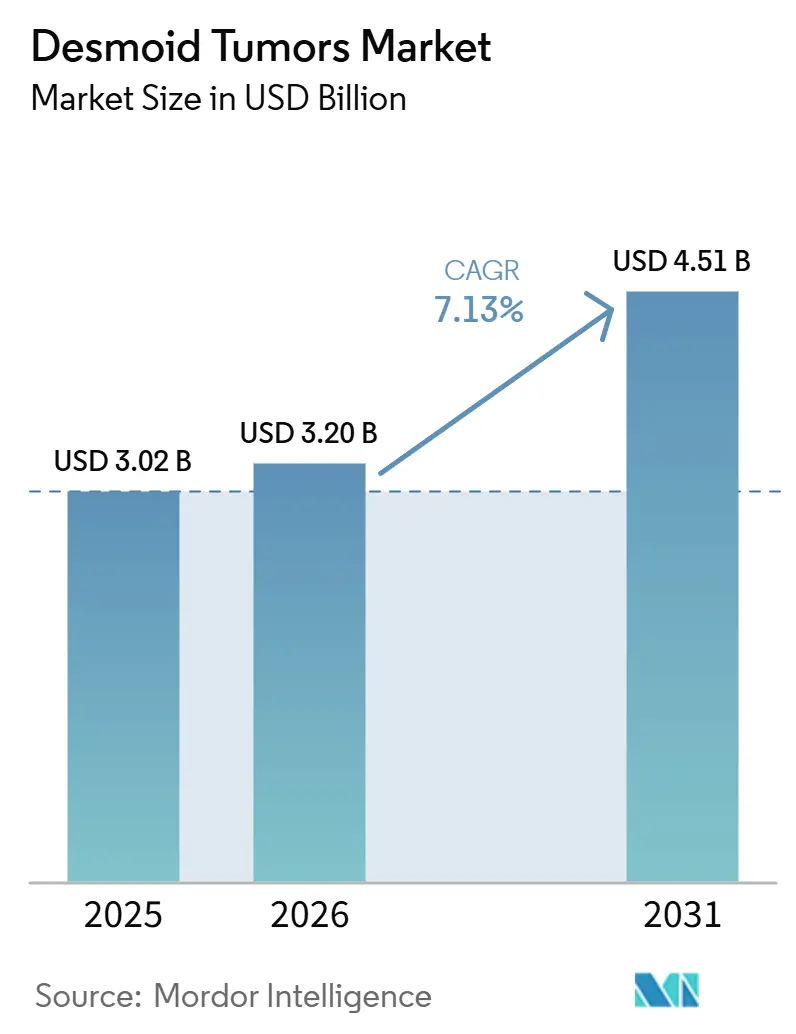
The desmoid tumors market is projected to be USD 3.02 billion in 2025, USD 3.20 billion in 2026, and reach USD 4.51 billion by 2031, growing at a CAGR of 7.13% from 2026 to 2031. The desmoid tumors market in 2026 is being reshaped by the shift from a setting with no approved systemic option to one where nirogacestat already has U.S. and EU approval and varegacestat is moving through the U.S. review process. Desmoid tumors remain a rare and locally aggressive soft tissue neoplasm, and most sporadic cases are linked to somatic CTNNB1 mutations that activate the Wnt and β-catenin pathway, which keeps molecular diagnosis central to clinical decision making. In the United States, the disease burden stayed limited at 1,000 to 1,650 new cases each year and 10,000 to 11,000 patients under active management, so growth in the desmoid tumors market is tied more to higher treatment intensity per patient than to a large increase in patient volume. The main limit remains that many patients can stay on surveillance for years without treatment, and reimbursement gaps outside the U.S. and Western Europe still narrow the near-term addressable population in the desmoid tumors market.
Key Report Takeaways
- By treatment type, targeted therapy held 41.23% share of the desmoid tumors market in 2025, while chemotherapy is forecasted to expand at an 8.84% CAGR through 2031.
- By tumor type and location, abdominal wall desmoid tumors captured 40.33% share of the desmoid tumors market in 2025, while head and neck desmoid tumors are projected to grow at an 8.32% CAGR through 2031.
- By end-user, hospitals held 49.32% of the desmoid tumors market share in 2025, while ambulatory surgical centers recorded the highest projected CAGR at 7.44% through 2031.
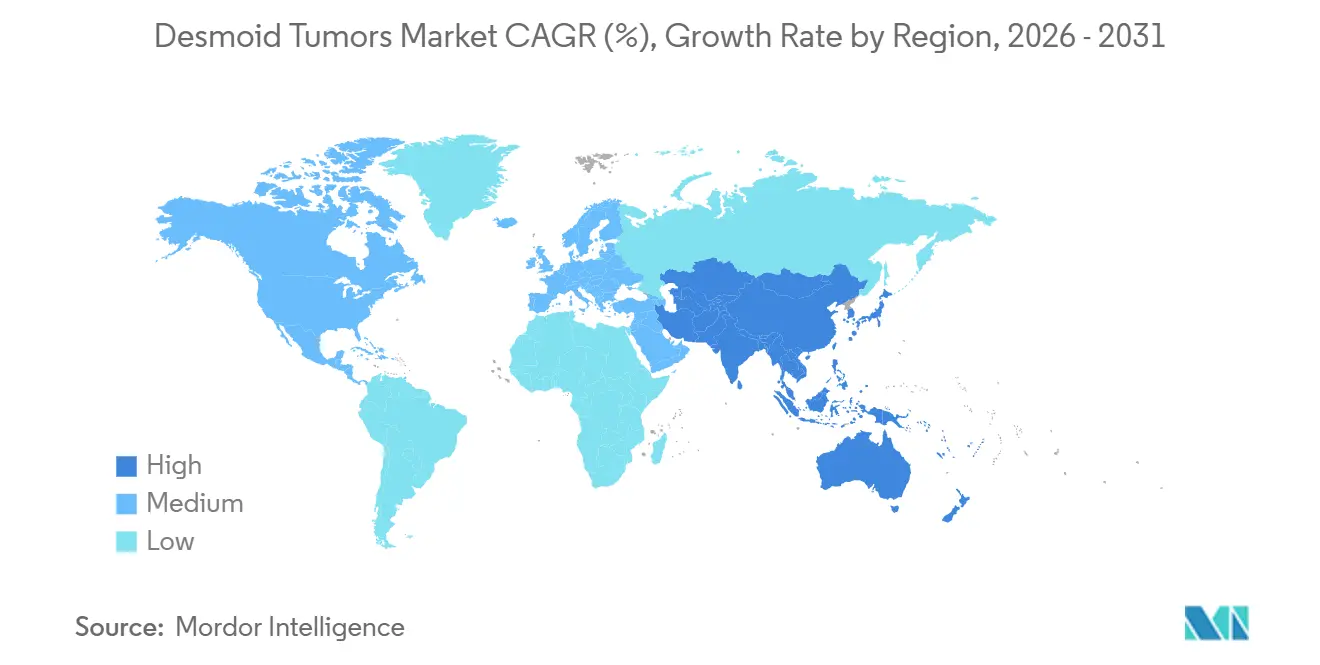
- By geography, North America held 46.22% of the desmoid tumors market share in 2025, while Asia-Pacific recorded the highest projected CAGR at 9.44% through 2031.
Note: Market size and forecast figures in this report are generated using Mordor Intelligence’s proprietary estimation framework, updated with the latest available data and insights as of January 2026.
Global Desmoid Tumors Market Trends and Insights
Drivers Impact Analysis*
| Driver | (~) % Impact on CAGR Forecast | Geographic Relevance | Impact Timeline |
|---|---|---|---|
| Rising Diagnosis of Rare Soft Tissue Tumors | +1.2% | Global, U.S., Germany, UK, and Australia as early adopters | Medium term (2-4 years) |
| Expanding Clinical Pipeline for Targeted Therapies | +1.8% | Global, primary commercial impact in North America and EU | Short term (≤ 2 years) |
| Broader Use of Oral, Non-Surgical Treatment Pathways | +1.4% | North America and EU, spill-over to APAC core | Short term (≤ 2 years) |
| Genetic Profiling and Mutation-Guided Therapy Selection | +0.9% | North America, Germany, Japan, emerging in India | Medium term (2-4 years) |
| Rare Disease Registries Improving Case Identification and Referral | +0.5% | Global, strongest in North America and Western Europe | Long term (≥ 4 years) |
| Expanded Payer Acceptance for Orphan-Drug Innovation | +0.7% | U.S., EU, emerging in South Korea and Australia | Medium term (2-4 years) |
| Source: Mordor Intelligence | |||
Rising Diagnosis of Rare Soft Tissue Tumors
Improved diagnostic specificity is bringing more patients into formal treatment pathways in the desmoid tumors market, instead of leaving them grouped under broad fibrous lesion labels. The Desmoid Tumour Working Group recommends routine CTNNB1 mutational analysis on biopsy samples to confirm the diagnosis and guide management, and this standard is spreading across major cancer centers in North America and Europe.[1]Desmoid Tumor Research Foundation, “The Impact of Desmoid Tumors, Insights from the Desmoid Tumor Research Foundation Natural History Study, 2017–2023,” Orphanet Journal of Rare Diseases, link.springer.com Wider use of next-generation sequencing panels in soft tissue tumor clinics is also helping clinicians identify cases that were once labeled as nonspecific fibromatoses, even when the true incidence does not change. For the desmoid tumors market, this means the diagnosed pool can expand even in a rare disease setting where patient numbers remain naturally constrained.
Expanding Clinical Pipeline for Targeted Therapies
The desmoid tumors market in 2026 has its most active targeted therapy pipeline so far, with one approved oral gamma secretase inhibitor, a second late-stage oral agent, and several earlier programs using different Wnt and β-catenin approaches. Immunome reported that varegacestat delivered a 56% objective response rate versus 9% for placebo in the Phase 3 RINGSIDE trial, along with a median tumor volume reduction of 83%, which supported the NDA submission in April 2026 and FDA acceptance in July 2026.[2]Immunome, Inc., “Immunome Announces U.S. FDA Acceptance of New Drug Application for Varegacestat for the Treatment of Adults with Desmoid Tumors,” Immunome Investor Relations, immunome.comThose results were also presented at the 2026 ASCO Annual Meeting, which raised prescriber awareness before any approval decision in 2027.[3]Chiara Colombo, “Active Surveillance in Patients with Extra-abdominal Desmoid-Type Fibromatosis, A Pooled Analysis of Three Prospective Observational Studies,” Clinical Cancer Research, doi.org As more products enter the field, the desmoid tumors market is likely to gain from higher physician attention, better case finding, and broader treatment discussion beyond specialist sarcoma networks.
Broader Use of Oral, Non-Surgical Treatment Pathways
The move toward oral and non-surgical care is changing where treatment is delivered in the desmoid tumors market. Nirogacestat, and potentially varegacestat later, can move through specialty pharmacy channels and be monitored in outpatient settings, which reduces dependence on infusion infrastructure and repeated hospital visits. CMS updated its 2026 Hospital Outpatient Prospective Payment System and Ambulatory Surgical Center Payment System rules in a way that supports care delivery outside the inpatient hospital setting. Evidence from same-day cancer surgeries at a freestanding ambulatory surgery center also showed low anesthesia-related adverse outcomes, which supports the broader shift toward outpatient care when the case profile allows it. This matters because oral therapy can help extend access in rural U.S. locations, smaller European markets, and tier 2 cities in India and China where travel to major sarcoma centers is harder.
Genetic Profiling and Mutation-Guided Therapy Selection
Mutation profiling is becoming a stronger treatment selection tool in the desmoid tumors market, not only a diagnostic check. The S45F variant is especially important because it is linked with a lower chance of spontaneous regression and a higher recurrence risk, which supports earlier treatment rather than long surveillance in selected cases. A retrospective study in India showed mutation patterns that were broadly similar to Western cohorts and reported a median diagnosis age of 29.5 years, which keeps fertility-preserving options and long-term tolerability under close review. Plasma monitoring is also emerging, with mutated β-catenin detected in 65% of samples in one study and linked to tumor size in trunk tumors, suggesting a future noninvasive way to track response. As this approach matures, the desmoid tumors market should see a clearer split between patients who can remain on surveillance and patients who are more likely to need earlier systemic care.
Restraints Impact Analysis*
| Restraint | (~) % Impact on CAGR Forecast | Geographic Relevance | Impact Timeline |
|---|---|---|---|
| Limited Number of Approved Therapies | -0.8% | Global, most acute in APAC, South America, and MEA | Short term (≤ 2 years) |
| High Treatment Cost and Reimbursement Friction | -1.0% | Global, most pronounced outside U.S. and Western EU | Long term (≥ 4 years) |
| Active Surveillance Reducing Immediate Drug Demand | -0.7% | Global, most systematically applied in Europe | Medium term (2-4 years) |
| Clinical Heterogeneity and Small Patient Pool | -0.4% | Global | Long term (≥ 4 years) |
| Source: Mordor Intelligence | |||
High Treatment Cost and Reimbursement Friction
High orphan drug pricing remains a direct limit on patient access in the desmoid tumors market, especially outside the few countries with strong rare disease reimbursement systems. In the United States, Medicare Part D reforms that took effect in 2025 capped annual out-of-pocket drug spending at USD 2,000 and removed the coverage gap, which improved access for eligible patients using high-cost therapies. The same kind of support is still weaker or absent in many growth markets, including Brazil, Gulf healthcare systems, and India, which leaves access divided between well-funded specialist settings and everyone else. Prior authorization through specialty pharmacy channels also slows uptake because it adds paperwork, multi-week review periods, and appeals that many general oncology practices do not want to manage. This keeps prescribing concentrated in a small set of expert centers and limits how fast the desmoid tumors market can widen beyond established referral networks.
Active Surveillance Reducing Immediate Drug Demand
Active surveillance is a formal first-line approach for many newly diagnosed and asymptomatic patients, and that directly holds back immediate drug demand in the desmoid tumors market. A multicenter radiomics study reached an area under the curve of 0.7 when predicting surveillance failure, which shows progress but also confirms that clinicians still lack a fully reliable way to identify early progressors. This affects more than volume because it also shapes trial design, since studies must separate true drug effect from cases that may have stabilized on their own. Companies that combine treatment with mutation screening and close imaging follow-up are better placed to find the subgroup that is most likely to move from surveillance to therapy early.
*Our forecasts treat driver/restraint impacts as directional, not additive. The impact forecasts reflect baseline growth, mix effects, and variable interactions.
Segment Analysis
By Treatment Type: Targeted Therapy Sets the Prescribing Standard
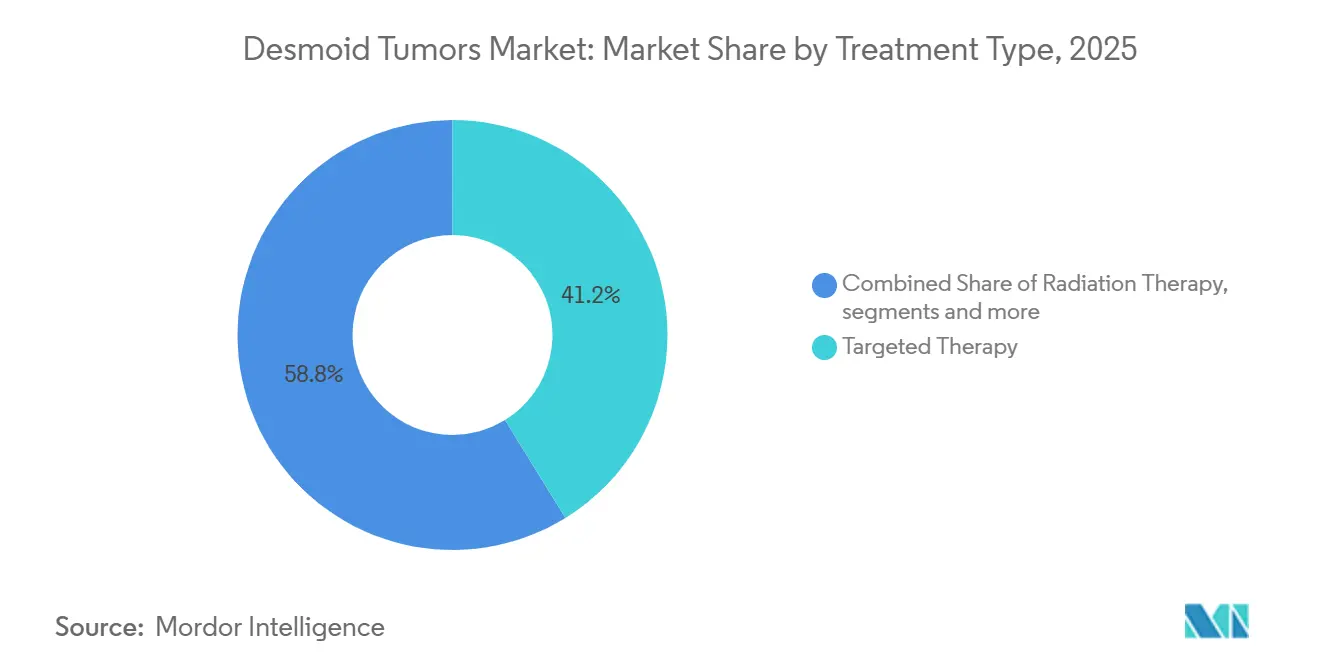
Targeted therapy held 41.23% share of the desmoid tumors market size in 2025, which made it the leading treatment category after years in which the field had no approved systemic option. Nirogacestat remains the commercial anchor, and 4-year follow-up from the DeFi Phase 3 trial showed the objective response rate rising from 34.3% at year 1 to 45.7% after 4 years of continuous treatment, with a median best tumor size reduction of 75.8% among long-term completers. It also helps explain why targeted therapy is becoming the reference standard across much of the desmoid tumors industry, even though watchful waiting still remains important for selected patients.
Chemotherapy is expected to be the fastest-growing treatment category, with the desmoid tumors market for this segment expected to expand at an 8.84% CAGR through 2031. This does not suggest a return to older practice patterns, but it does show that metronomic regimens such as methotrexate plus vinblastine still meet a real need in pediatric cases, lower-resource settings, and periods when patients are waiting for access to newer drugs. Radiation therapy, cryoablation, radiofrequency ablation, and embolization remain part of the broader toolkit, which means the desmoid tumors market continues to reflect a mixed treatment structure rather than a single-pathway model.



By Tumor Type and Location: Abdominal Prevalence Masks Head and Neck Urgency
Abdominal wall desmoid tumors captured 40.33% share of the desmoid tumors market size in 2025, reflecting the high visibility and common presentation of disease at this site. Intra-abdominal disease remains clinically distinct because its proximity to bowel loops and mesenteric vessels can make surgery highly risky, especially in patients with familial adenomatous polyposis and APC-related disease. As a result, systemic therapy often moves earlier in the care path for intra-abdominal cases than it does for abdominal wall disease.
Head and neck desmoid tumors are anticipated to be the fastest-growing location category, with the desmoid tumors market for this segment projected to rise at an 8.32% CAGR through 2031. The reason is not higher incidence, but the fact that surgery in this area can carry major functional consequences such as cranial nerve injury, dysphagia, or airway compromise, which pushes clinicians toward medical treatment sooner. Chest wall and thoracic cases are also drawing interest for MR-guided high-intensity focused ultrasound in situations where open surgery is harder or more harmful, which adds another site-specific treatment path to the desmoid tumors industry.
By End-User: Hospitals Lead, Ambulatory Centers Accelerate
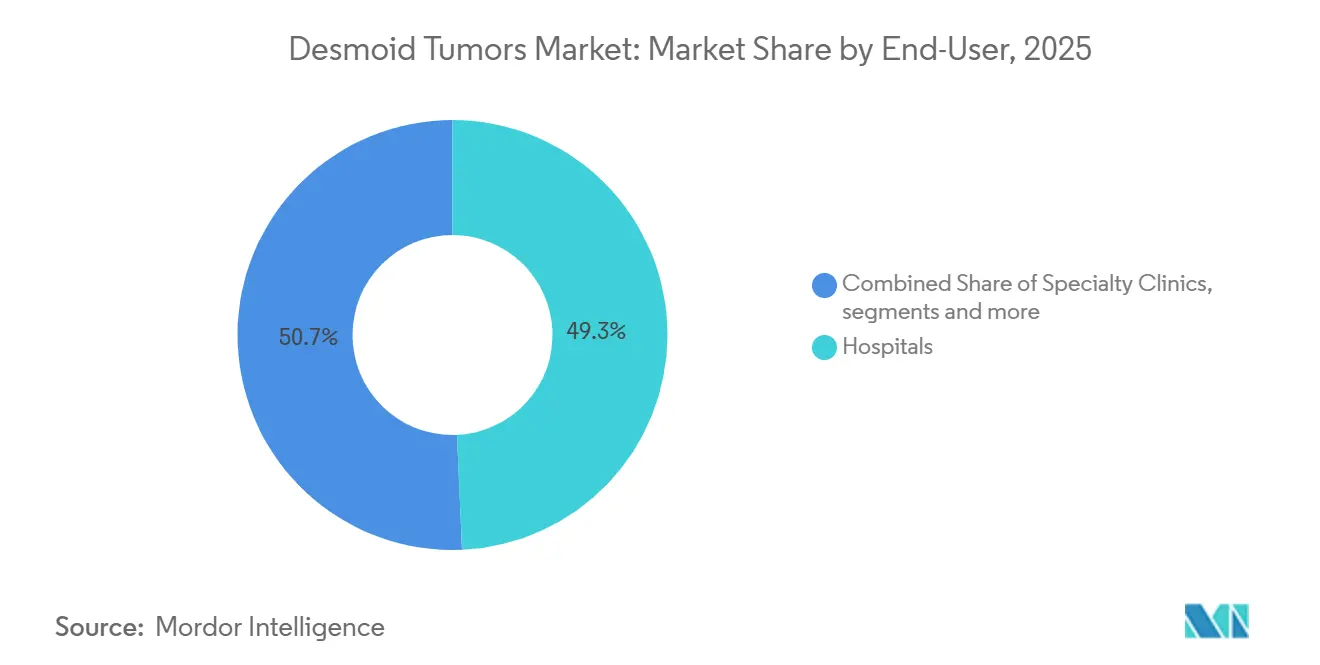
Hospitals accounted for 49.32% of the 2025 end-user base, giving them the largest role in the desmoid tumors market because diagnosis still depends on MRI, core needle biopsy, CTNNB1 profiling, and multidisciplinary review. Guideline-led care also favors tertiary oncology centers, since sarcoma specialists, pathologists, surgeons, and radiologists all need to align before treatment begins. Specialty sarcoma clinics are also growing inside integrated hospital and cancer center networks, which helps concentrate rare tumor expertise in a small number of high-volume settings.
Ambulatory surgical centers are expected to be the fastest-growing end-user group, with the desmoid tumors market for this setting projected to expand at a 7.44% CAGR through 2031. Their growth is being enabled by oral therapy, because follow-up visits, imaging review, toxicity monitoring, and minor biopsy procedures can shift away from inpatient care when infusion support is not needed. The 2026 CMS payment update supports this migration by broadening outpatient reimbursement for eligible procedures. Evidence from freestanding cancer surgery centers also showed consistently low anesthesia-related adverse outcomes, which supports the practicality of this setting for selected patients.
Geography Analysis
North America held 46.22% of the desmoid tumors market in 2025, and the region remains the main commercial center because the United States already has an approved systemic therapy and a functioning specialty pharmacy support structure. The U.S. also had 10,000 to 11,000 patients under active management in 2026, which gives the region the largest treated patient pool and the most established payer environment for orphan oncology products. Canada still has a slower commercial path while Mexico faces affordability limits because it lacks an orphan reimbursement structure comparable to the United States.
Europe remained the second-largest regional block in the desmoid tumors market in 2025, and the most important recent event was the European Commission approval of Ogsiveo in August 2025 as the first and only approved therapy in the region. Germany looks well placed for early uptake because of its specialist sarcoma infrastructure and the weight of clinical leadership involved in the DeFi development program. The joint assessment approach under the EU HTA framework could help streamline evaluation for orphan oncology products across member states once national pricing discussions begin. The UK remains on a separate track through MHRA and NICE review, which extends the time needed for full commercial rollout compared with the EU approval path.
Asia-Pacific is projected to be the fastest-growing regional area, with the desmoid tumors market expected to rise at a 9.44% CAGR through 2031. Japan stands out because its National Cancer Center listed nirogacestat in 2025 as an unapproved drug with high medical necessity, which points to a clearer regulatory path than many other regional markets. China is building relevance through growing academic experience and new investigational activity, including the April 2026 launch of the ES014 Phase 2 study. Australia, South Korea, and India are also becoming more relevant as oncology infrastructure, rare disease awareness, and insurance support improve, but the region still starts from lower penetration than North America or Western Europe. South America and the Middle East and Africa remain longer-term opportunities, with the Gulf states supported by hospital investment and Brazil and Argentina providing a narrower base through public systems and academic oncology centers.

Competitive Landscape
The desmoid tumors market is moderately concentrated in commercial terms because SpringWorks Therapeutics, now within Merck KGaA, still has the only approved systemic therapy in active global rollout as of 2026. SpringWorks also reinforced its position through publication of 4-year DeFi follow-up data in October 2025, showing deeper and more durable responses over time. In practice, that combination of regulatory lead and long-duration data has set the efficacy and persistence benchmark that later entrants will need to match or beat.
Immunome is the strongest near-term challenger in the desmoid tumors market because its Phase 3 RINGSIDE data showed an 84% reduction in progression risk and a 56% objective response rate against 9% for placebo. Immunome also plans to submit an EMA marketing application by the end of 2026, which shows a clear intention to challenge nirogacestat on both sides of the Atlantic. If both products remain active in the field, competition is likely to shift from simple availability to differences in tolerability, durability, payer positioning, and physician familiarity. That is why the next phase of the desmoid tumors market looks more like a structured 2-product contest than a single-brand expansion story.
Beyond gamma secretase inhibitors, the field is trying to differentiate by mechanism rather than by small changes around the same target. Iterion Therapeutics is also pursuing Wnt pathway modulation through tegavivint, which targets TBL1 and points to a broader effort to act further upstream in β-catenin biology. The biggest open spaces remain pediatric and adolescent patients, FAP-associated intra-abdominal disease, and combinations that join systemic therapy with locoregional approaches such as embolization or focused ultrasound. Those gaps suggest that the desmoid tumors market will stay innovation-led, but the winning products will need to show clear clinical value in very specific patient subsets rather than rely on broad volume expansion.
Desmoid Tumors Industry Leaders
SpringWorks Therapeutics, Inc.
Immunome, Inc.
Ayala Pharmaceuticals, Inc.
Iterion Therapeutics, Inc.
Apollomics Inc.
- *Disclaimer: Major Players sorted in no particular order

Recent Industry Developments
- July 2026: The United States FDA accepted Immunome's NDA for varegacestat (formerly AL102), an oral once-daily gamma secretase inhibitor for adults with desmoid tumors, setting a PDUFA target action date of April 28, 2027. Immunome plans to submit an EMA Marketing Authorization Application by end of 2026, establishing a transatlantic regulatory strategy for the second oral GSI in this indication.
- April 2026: A Phase 2 clinical study of ES014, an intravenous investigational agent (700 mg every 14 days), was initiated for adult desmoid tumor patients in an open-label, multicenter, single-arm design, adding a novel IV-administered agent to a pipeline dominated by oral gamma secretase inhibitors.
- March 2026: Parabilis Medicines' zolucatetide (FOG-001) received FDA Orphan Drug Designation for desmoid tumors. The drug is the first direct inhibitor of the β-catenin to TCF protein-protein interaction, a historically undruggable Wnt pathway node, and carries both Fast Track and Orphan Drug Designation from the FDA.


Global Desmoid Tumors Market Report Scope
According to the report’s scope, the desmoid tumors market refers to the global industry focused on the development, manufacturing, and commercialization of therapies for the treatment of desmoid tumors. It includes targeted therapies, chemotherapy, hormonal therapies, NSAIDs, and other treatment approaches aimed at controlling tumor growth, reducing symptoms, and improving patient outcomes.
The desmoid tumors market is segmented into treatment type, tumor type and location, end-user, and geography. By treatment type, the market is segmented into targeted therapy, radiation therapy, chemotherapy, and other treatment types. By tumor type and location, the market is segmented into abdominal wall desmoid tumors, intra-abdominal desmoid tumors, extra-abdominal desmoid tumors, head and neck desmoid tumors, and thoracic and chest wall desmoid tumors. By end-user, the market is segmented into hospitals, specialty clinics, ambulatory surgical centers, and other end-users. By geography, the market is segmented into North America, Europe, Asia-Pacific, the Middle East and Africa, and South America. The report also covers the estimated market sizes and trends for 17 countries across major regions globally. The report offers values (USD) for all the above segments.
| Targeted Therapy |
| Radiation Therapy |
| Chemotherapy |
| Other Treatment Types |
| Abdominal Wall Desmoid Tumors |
| Intra-Abdominal Desmoid Tumors |
| Extra-Abdominal Desmoid Tumors |
| Head and Neck Desmoid Tumors |
| Thoracic and Chest Wall Desmoid Tumors |
| Hospitals |
| Specialty Clinics |
| Ambulatory Surgical Centers |
| Other End-Users |
| North America | United States |
| Canada | |
| Mexico | |
| Europe | Germany |
| United Kingdom | |
| France | |
| Italy | |
| Spain | |
| Rest of Europe | |
| Asia-Pacific | China |
| Japan | |
| India | |
| Australia | |
| South Korea | |
| Rest of Asia-Pacific | |
| Middle East and Africa | GCC |
| South Africa | |
| Rest of Middle East and Africa | |
| South America | Brazil |
| Argentina | |
| Rest of South America |
| By Treatment Type | Targeted Therapy | |
| Radiation Therapy | ||
| Chemotherapy | ||
| Other Treatment Types | ||
| By Tumor Type and Location | Abdominal Wall Desmoid Tumors | |
| Intra-Abdominal Desmoid Tumors | ||
| Extra-Abdominal Desmoid Tumors | ||
| Head and Neck Desmoid Tumors | ||
| Thoracic and Chest Wall Desmoid Tumors | ||
| By End-User | Hospitals | |
| Specialty Clinics | ||
| Ambulatory Surgical Centers | ||
| Other End-Users | ||
| By Geography | North America | United States |
| Canada | ||
| Mexico | ||
| Europe | Germany | |
| United Kingdom | ||
| France | ||
| Italy | ||
| Spain | ||
| Rest of Europe | ||
| Asia-Pacific | China | |
| Japan | ||
| India | ||
| Australia | ||
| South Korea | ||
| Rest of Asia-Pacific | ||
| Middle East and Africa | GCC | |
| South Africa | ||
| Rest of Middle East and Africa | ||
| South America | Brazil | |
| Argentina | ||
| Rest of South America | ||


Key Questions Answered in the Report
What is the current outlook for desmoid tumors market demand through 2031?
The market is projected to rise from USD 3.02 billion in 2025 to USD 3.20 billion in 2026 to USD 4.51 billion by 2031 at a 7.13% CAGR, with demand driven more by treatment intensity per patient than by a large jump in case volume.
Which tumor type and location segment leads revenue?
Abdominal wall desmoid tumors led the market with 40.33% of revenue in 2025, driven by their relatively higher diagnosis rates, favorable accessibility for treatment, and increased use of surgery and systemic therapies in specialized care settings.
Which treatment category leads revenue today?
Targeted therapy led with 41.23% of revenue in 2025, supported by nirogacestat’s approved status and long-term efficacy data from the DeFi trial.
Which region offers the strongest near-term commercial opportunity?
North America remains the largest base with 46.22% share in 2025 because the U.S. has the deepest treated patient pool, orphan drug reimbursement support, and the most mature specialty access structure.
Page last updated on:





