
Clean-in-Place (CIP) Market Size and Share
Market Overview
| Study Period | 2022 - 2032 |
|---|---|
| Market Size (2027) | USD 17.21 Billion |
| Market Size (2032) | USD 27.15 Billion |
| Growth Rate (2027 - 2032) | 9.55 % |
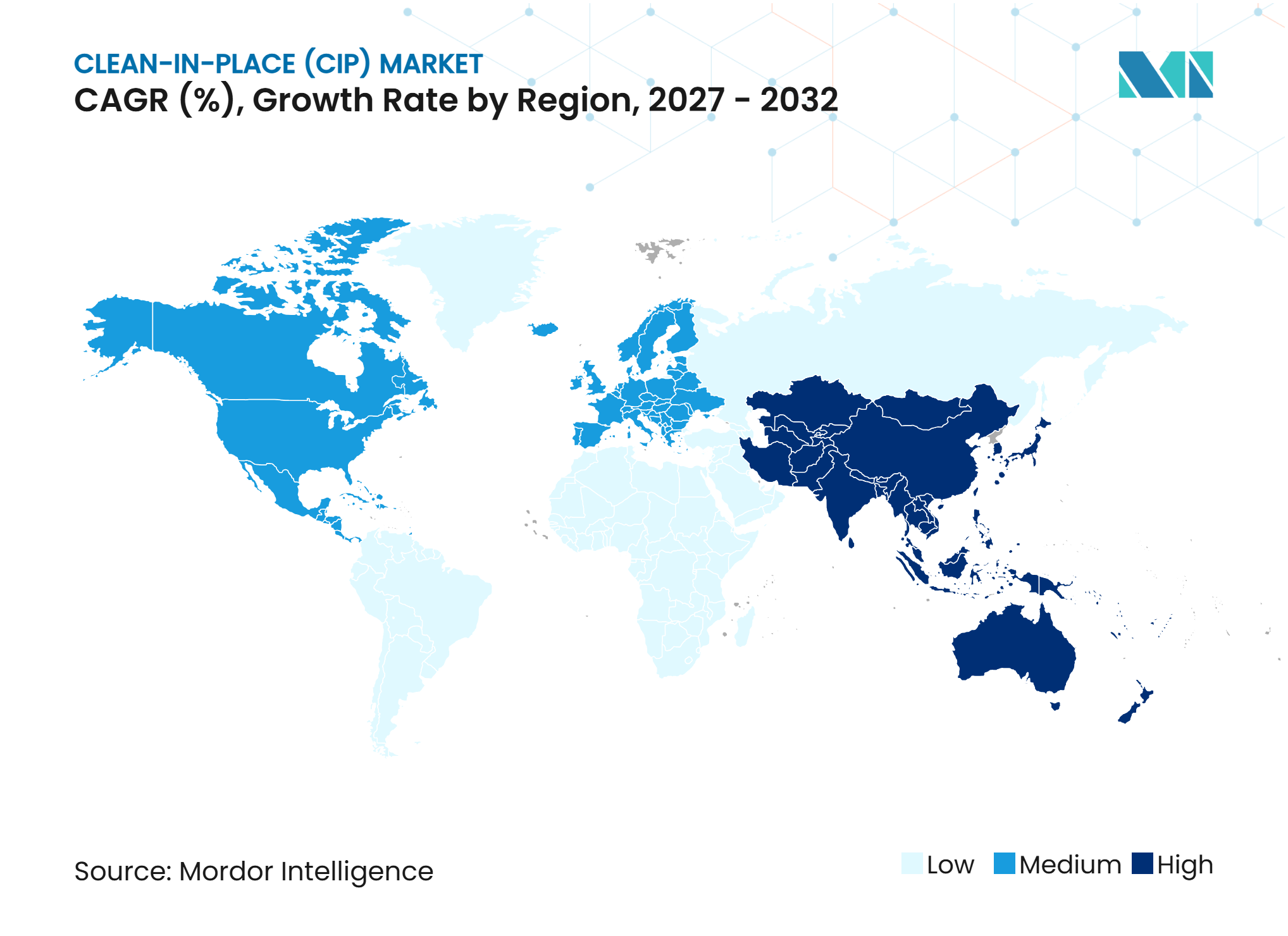
| Fastest Growing Market | Asia-Pacific |
| Largest Market | North America |
| Market Concentration | Medium |
Major Players *Disclaimer: Major Players sorted in no particular order Image © Mordor Intelligence. Reuse requires attribution under CC BY 4.0. | |
Clean-in-Place (CIP) Market Analysis by Mordor Intelligence
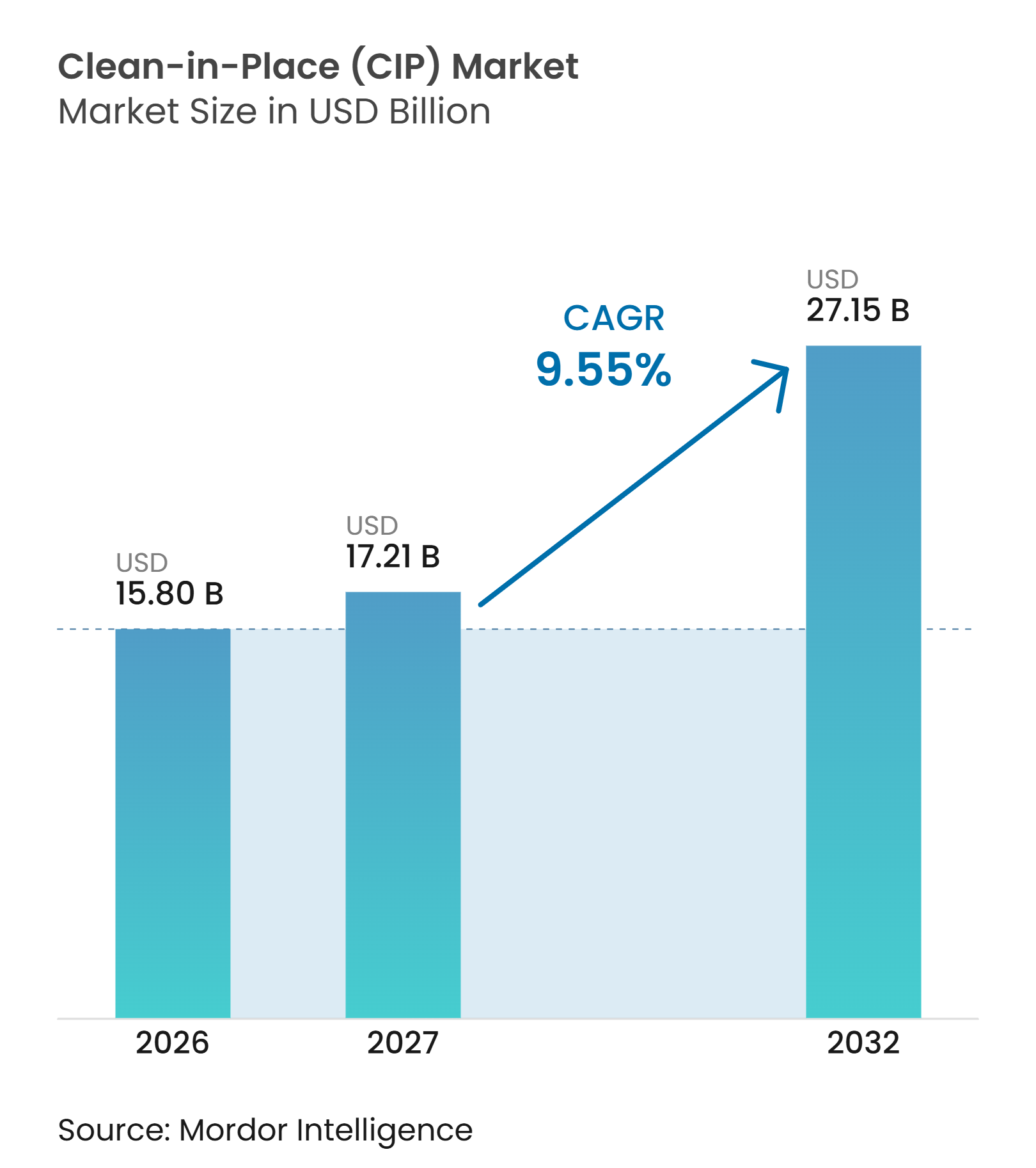
The Clean-in-Place (CIP) Market size was valued at USD 15.80 billion in 2026 and is estimated to grow from USD 17.21 billion in 2027 to reach USD 27.15 billion by 2032, at a CAGR of 9.55% during the forecast period (2027-2032). The clean-in-place (CIP) market is moving toward automated, monitored systems because food, beverage, pharmaceutical, and personal care operators need repeatable cleaning and stronger audit records. Buyers increasingly assess water, energy, chemical, and production-time savings alongside hygiene requirements, which favors suppliers that can document performance. This shift is raising demand for sensors, controls, recipe management, and validated records rather than stand-alone equipment. Large process plants remain the primary buyers, while smaller operators face higher funding and integration barriers. The clean-in-place (CIP) market also has room for modular systems and digital optimization tools that reduce chemical use and support compliance.
Key Report Takeaways
- By system type, multi-tank CIP systems held 42.63% of the clean-in-place (CIP) market share in 2026, while single-use CIP systems are projected to advance at an 11.05% CAGR through 2032.
- By cleaning method, chemical cleaning held 59.11% of the clean-in-place (CIP) market share in 2026, while hybrid cleaning is projected to advance at a 10.67% CAGR through 2032.
- By end-use industry, food and beverage held 48.36% of the clean-in-place (CIP) market share in 2026, while pharmaceuticals and biotechnology are projected to advance at an 11.78% CAGR through 2032.
- By geography, North America held 33.77% of the clean-in-place (CIP) market share in 2026, while Asia-Pacific is projected to advance at a 10.98% CAGR through 2032.
Note: Market numbers in this report are based on Mordor Intelligence's proprietary estimation framework, which combines nine months of actuals with Q4 projections for base year 2026.
Market Trends and Insights
Drivers Impact Analysis of Clean-in-Place (CIP) Market*
| Driver | (~) % Impact on CAGR Forecast | Geographic Relevance | Impact Timeline |
|---|---|---|---|
| Expansion of Automated Hygienic Processing | +3.0% | Global | Short term (≤ 2 years) |
| Stricter Food and Pharmaceutical Hygiene Validation | +2.5% | Global, with intensity in North America & EU | Medium term (2-4 years) |
| Growth of Biopharmaceutical and Aseptic Manufacturing | +2.0% | North America, Europe, APAC core | Medium term (2-4 years) |
| Demand for Water, Chemical and Energy Efficiency | +1.3% | Global, with early gains in EU, North America | Medium to Long term (2-6 years) |
| AI-Enabled Cleaning Verification and Predictive Optimization | +0.9% | North America & EU, spillover to APAC | Long term (≥ 4 years) |
| Source: Mordor Intelligence | |||
Expansion of Automated Hygienic Processing
Automated systems are replacing manual and semi-automated cleaning in more food, beverage, and pharmaceutical plants. Labor costs, throughput needs, and hygiene requirements are encouraging this transition in the clean-in-place (CIP) market. The Association for Packaging and Processing Technologies (PMMI) reported in 2025 that food and beverage manufacturers identified expanded CIP and Clean-out-of-Place system use, digital monitoring, and hygienic machine design as operational investment priorities. Automated cycles reduce variation created by operator-dependent cleaning and produce repeatable records for quality teams and auditors. The European Hygienic Engineering and Design Group published the fourth edition of its Hygienic Design Principles guideline in December 2025, reinforcing the value of equipment designed for effective cleaning. Once a facility automates one line, a common control approach can make further upgrades easier to justify during later capital programs.
Stricter Food and Pharmaceutical Hygiene Validation
Cleaning documentation is becoming more important for equipment selection in the clean-in-place (CIP) market. U.S. Food and Drug Administration regulations require written procedures and records for cleaning and maintenance of pharmaceutical equipment[1]. European Union Good Manufacturing Practice Annex 15 requires cleaning processes to be qualified and validated against predefined limits. ISO/CD 14159 is progressing through revision and sets out hygienic design requirements for machinery, which has implications for CIP-compatible equipment. European Hygienic Engineering and Design Group certification and 3-A Sanitary Standards certification are increasingly relevant in dairy and beverage procurement. Suppliers that provide audit-ready records can reduce the validation burden for regulated operators.
Growth of Biopharmaceutical and Aseptic Manufacturing
Biopharmaceutical production creates distinct requirements for the clean-in-place (CIP) market because cleaning programs must support sterile operations, flexible production campaigns, and extensive records. A 2025 peer-reviewed study found that spray-based CIP concepts can be adapted for biopharmaceutical manufacturing, while self-draining surfaces and closed drain-to-container systems remain important design considerations. Multi-product facilities need rapid recipe changes, but each recipe requires validated documentation. This requirement increases the value of multi-tank systems with recipe management and electronic batch records. Single-use configurations can reduce cross-contamination concerns and limit requalification work in clinical-stage and small-batch settings. These needs encourage suppliers to pair hygienic equipment with controls, traceability, and service support.
Demand for Water, Chemical and Energy Efficiency
Water, chemical, and energy savings are strengthening the business case for upgrades in the clean-in-place (CIP) market. Older time-based programs can be replaced by systems that use sensor data to align cleaning cycles with operating conditions. ALFA LAVAL introduced Extend commercially in January 2025 for dairy heat exchangers. The company reported that a 12-month dairy trial saved 7,000 cubic meters of water, 100,000 kilowatt-hours of energy, and 35 metric tons of cleaning chemicals while extending the cleaning interval to 12 hours from 8 hours. The reported results show how lower utility and chemical consumption can support investment decisions beyond compliance. Demand for data-led cleaning verification is likely to continue as operators evaluate production uptime and resource use together.
Restraints Impact Analysis of Clean-in-Place (CIP) Market*
| Restraint | (~) % Impact on CAGR Forecast | Geographic Relevance | Impact Timeline |
|---|---|---|---|
| High Initial Cost of Automated CIP Installations | -1.5% | Global, most acute in South America, MEA, South & Southeast Asia | Short term (≤ 2 years) |
| Integration, Validation and Maintenance Complexity | -1.0% | Global | Medium term (2-4 years) |
| Chemical Compatibility and Wastewater Treatment Constraints | -0.7% | APAC core, MEA, spillover to South America | Medium to Long term (2-6 years) |
| Source: Mordor Intelligence | |||
High Initial Cost of Automated CIP Installations
Turnkey installations require significant upfront spending for equipment, controls, engineering, and commissioning. The cost can slow adoption in the clean-in-place (CIP) market among smaller processors and operators in emerging economies. Paul Mueller Company designs pharmaceutical-grade stainless steel processing vessels for Good Manufacturing Practice, Clean-in-Place, and Steam-in-Place applications, illustrating the specialized engineering involved in validated systems. Facilities must also fund control integration, staff training, spare parts, and ongoing support to sustain validated operation. Large multinational companies can spread these investments across broader operating networks. Smaller producers may retain manual programs, which can make it harder to meet export requirements that depend on documented hygiene practices.
Integration, Validation and Maintenance Complexity
Integration and maintenance requirements can delay projects in the clean-in-place (CIP) market, particularly when equipment is added to an operating plant. Any change to a validated pharmaceutical cleaning process can require change control, testing, updated procedures, and quality review. Legacy sites may also need to connect new controls with existing supervisory control and data acquisition or distributed control systems. Solenis stated in 2025 that 75% of food and beverage CIP systems operate with their original, unvalidated settings, highlighting a persistent performance and validation challenge. The same gap creates demand for optimization, verification, and validation services. Suppliers that simplify commissioning and preserve data continuity can reduce risk for retrofit customers.
*Our forecasts treat driver/restraint impacts as directional, not additive. The impact forecasts reflect baseline growth, mix effects, and variable interactions.
Clean-in-Place (CIP) Market Segment Analysis
By System Type:
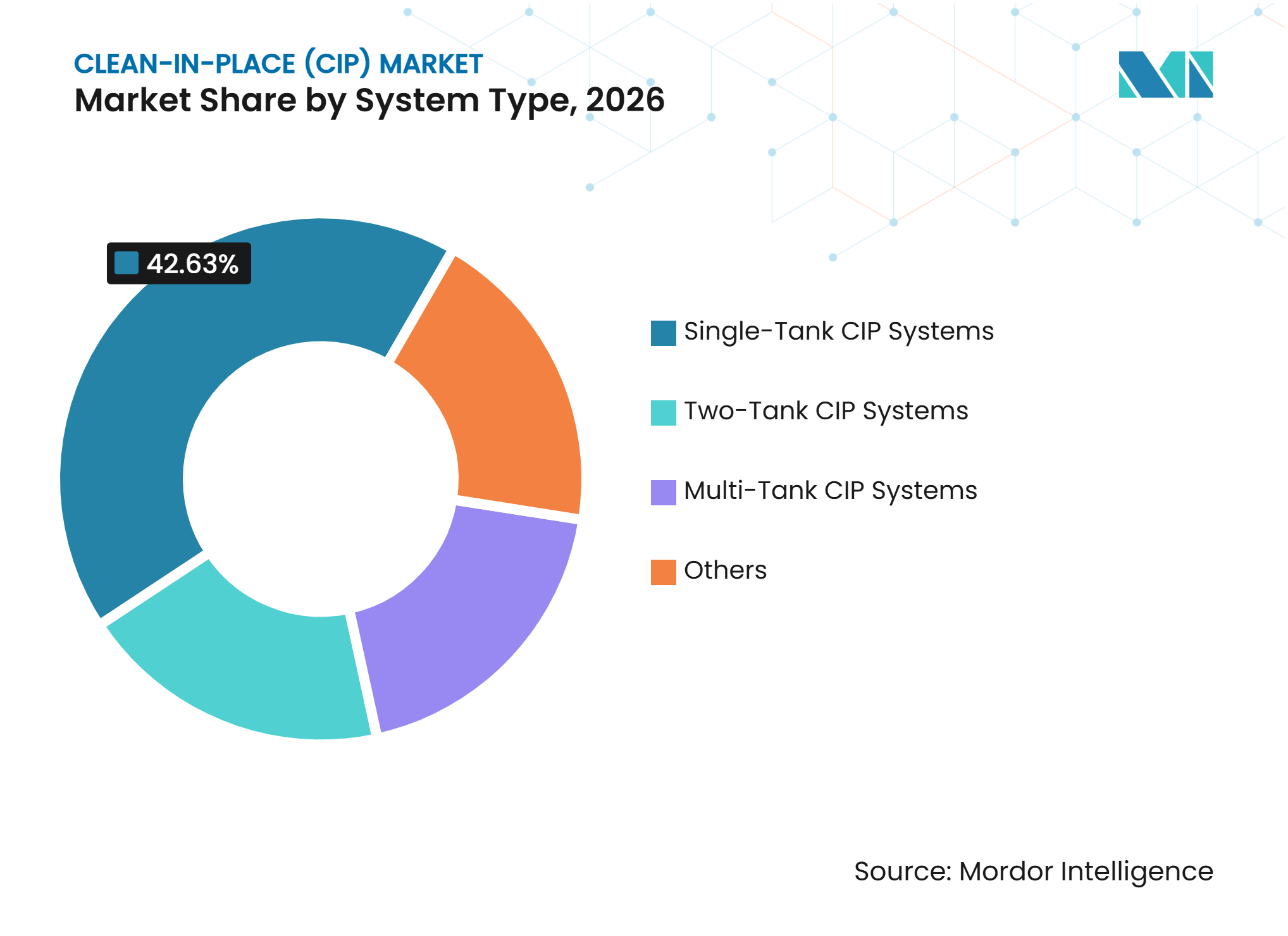
Multi-Tank CIP Systems Lead, Single-Use CIP Systems ExpandMulti-tank CIP systems held 42.63% of the clean-in-place (CIP) market share in 2026. They are widely used in large continuous food and beverage operations because dedicated rinse, acid, and caustic tanks support parallel cleaning of multiple circuits. Pre-heated solutions can reduce cleaning time and help maintain production uptime. Dairy, brewing, and juice facilities commonly need several cleaning cycles each day. KHS GmbH offers its Innopro CIP system for beverage plants with cleaning capacity of up to 125 cubic meters per hour. This operating profile supports the continued role of multi-tank designs in high-volume facilities.
Single-use CIP systems are projected to advance at an 11.05% CAGR through 2032. Their lower complexity can be attractive, although they may have longer cycle times. Two-tank configurations offer an intermediate option for food ingredient and dairy plants that need a dedicated rinse tank but do not require a full multi-tank layout. Sani-Matic offers the American Society of Mechanical Engineers (ASME) Bioprocessing Equipment (BPE)-compliant TACTaFlow range for pharmaceutical applications. These systems address biopharmaceutical demand for lower cross-contamination risk and fewer requalification steps.



By Cleaning Method:
Chemical Cleaning Dominates, Hybrid Cleaning Accelerates Through Efficiency LogicChemical cleaning held a 59.11% share in 2026. The approach is established across food, beverage, and pharmaceutical sites through caustic, acid, and rinse sequences. Chemical supplier networks and longstanding operating procedures reinforce its position. Ecolab designs and installs CIP process control systems alongside cleaning programs for food, beverage, and life sciences customers. This installed base supports the continued use of chemical methods even as optimization requirements rise.
Mechanical cleaning has a narrower role where high-flow recirculation or spray devices supplement chemical action. It is relevant when chemical residues need close control or when rinsing needs are extensive. Hybrid cleaning is projected to advance at a 10.67% CAGR through 2032, making it the faster-moving method within the clean-in-place (CIP) market. It combines controlled chemical dosing with mechanical spray or flow settings to shorten cleaning cycles and lower discharge volumes. Solenis offers Diversey Intelligent CIP, which uses real-time data against validated parameters to identify over-cleaning and under-cleaning events. This approach can help facilities connect resource savings with cleaning verification.
By End-Use Industry:
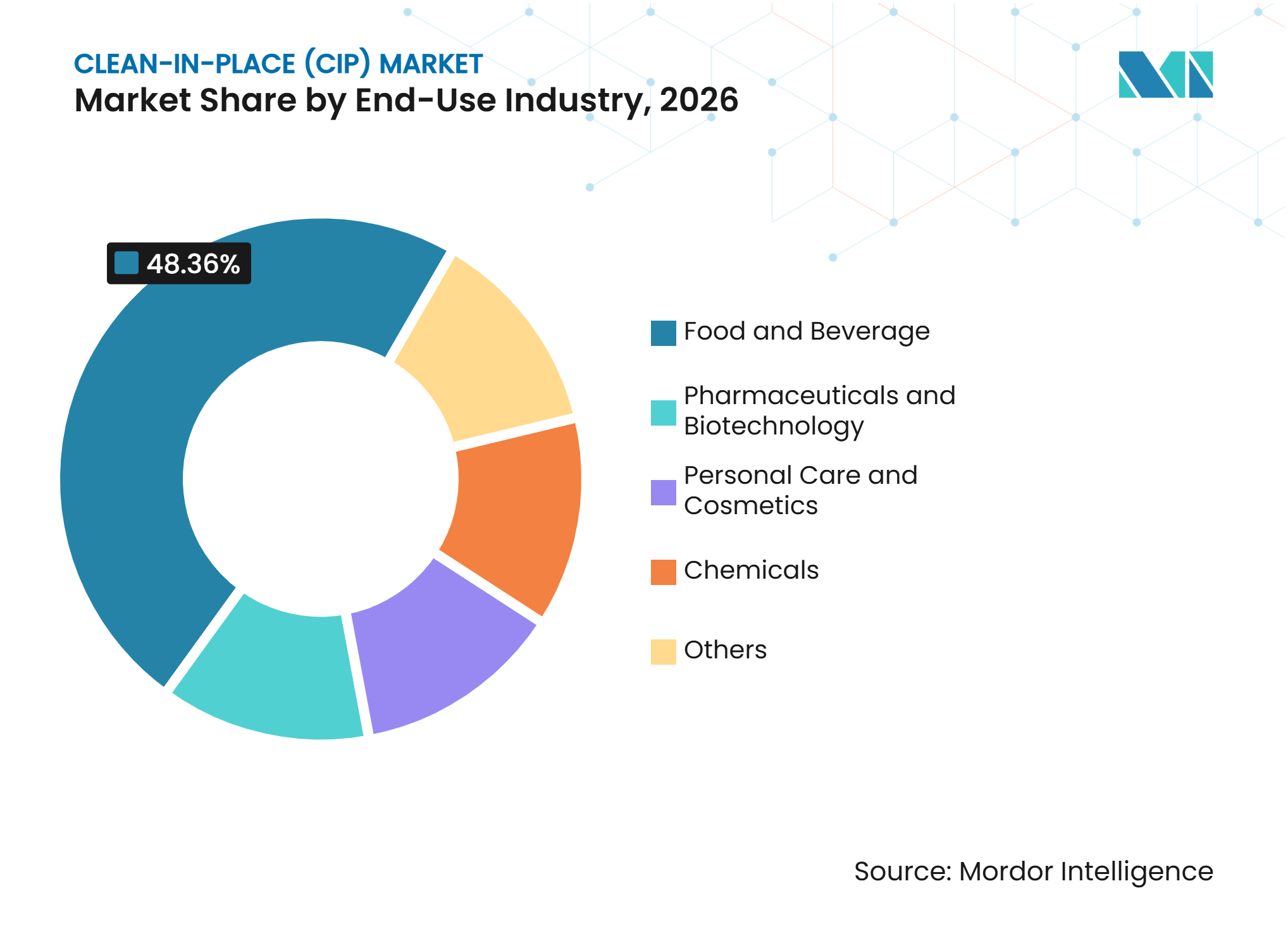
Food and Beverage Anchor Revenue, Pharmaceuticals and Biotechnology AccelerateFood and beverage held a 48.36% share in 2026. Breweries, dairies, beverage bottlers, meat and poultry plants, and ingredient facilities require frequent cleaning cycles as part of normal production. The broad facility base sustains demand for systems across a range of sizes and levels of automation. PMMI identified broader CIP adoption, digital monitoring, and hygienic design as leading investment themes among manufacturers in 2025. Suppliers therefore seek differentiation through water recovery, energy recovery, remote monitoring, and documented cleaning outcomes.
Pharmaceuticals and biotechnology are projected to advance at an 11.78% CAGR through 2032. Growth is linked to bioreactor capacity, monoclonal antibody production, and more demanding cleaning validation requirements. These customers require detailed process records and consistent cleaning performance across batches. Personal care and cosmetics manufacturers also use CIP systems to manage allergen cross-contamination and maintain batch consistency in emulsion and topical formulation lines. Chemicals, nutraceuticals, and other ingredient applications add demand where production campaigns must be separated. The Clean-in-Place (CIP) industry is therefore shaped by food and beverage demand, while regulated life sciences applications influence system specifications and digital capabilities.

Geography Analysis
North America: Regulatory Depth and Pharma Investment Define the Largest Market
North America held 33.77% of the clean-in-place (CIP) market share in 2026. The region has a high concentration of Food and Drug Administration-regulated pharmaceutical and dairy facilities, as well as established funding for food and beverage plant upgrades. U.S. requirements for documented equipment cleaning support demand for validated systems. Ecolab reported USD 16 billion in annual group sales in 2025 and stated that its programs help protect one-third of the world’s food production. Canada continues to invest in dairy and meat processing automation, while Mexico is developing as food exporters build facilities that meet external hygiene requirements. Aftermarket service and validation networks reduce operating risk for buyers of automated systems. Early use of AI-enabled monitoring also supports a more data-led approach to cleaning verification.
Asia-Pacific: Infrastructure Buildout and Pharma Ambition Drive the Fastest Growth
Asia-Pacific is projected to advance at a 10.98% CAGR through 2032, making it the fastest-growing geography in the clean-in-place (CIP) market. China, India, Japan, South Korea, and Association of Southeast Asian Nations (ASEAN) economies are adding food safety infrastructure and pharmaceutical capacity. China has export-oriented dairy and beverage producers that already use international cleaning practices, while a wider domestic base provides scope for automation upgrades. India’s pharmaceutical manufacturers face closer compliance expectations from the Central Drugs Standard Control Organization, which supports investment in facility controls and validation. Japan and South Korea remain high-specification markets where fine food and biotechnology production require precise cleaning. Regional growth combines new plant construction with modernization of existing lines.
Regulatory Convergence and Sustainability Create Momentum Across Remaining Geographies
Europe is a mature but actively upgrading area of the clean-in-place (CIP) market. GEA Group Aktiengesellschaft introduced MaxiClean at IFFA 2025 and reported reductions of 80% in water use and 91% in hot water use compared with conventional systems. KHS GmbH introduced SmartCan Eco in September 2025 with a hygiene area reduced by up to 93%, allowing simultaneous interior and exterior CIP. South America is developing through food exports and beverage consumption, although import costs and limited-service networks constrain adoption. The Middle East and Africa are emerging opportunities linked to Saudi Arabia’s Vision 2030 food processing programs and South Africa’s packaged beverage sector. Multinational operators are generally leading adoption in these mixed geographies, while resource efficiency and compliance requirements create longer-term openings for local manufacturers.
Competitive Landscape
Market Concentration
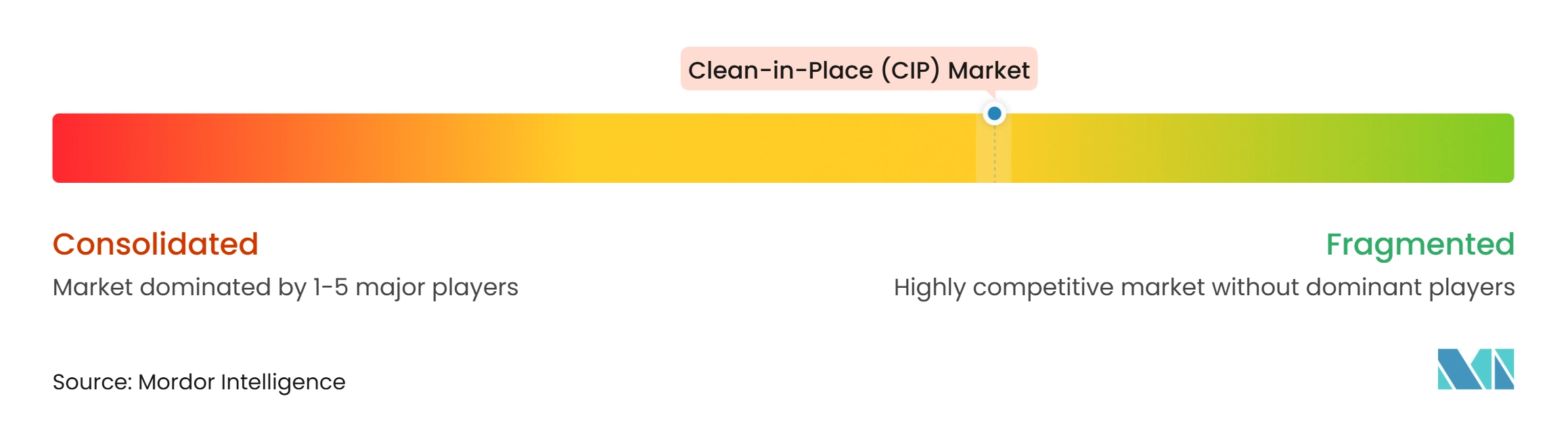
The clean-in-place (CIP) market is moderately concentrated, with top players including ALFA LAVAL, GEA Group Aktiengesellschaft, Tetra Pak International S.A., ITT Inc., and Sani-Matic. Full-system suppliers increasingly combine equipment, cleaning chemistry, sensing, and controls in longer-term service relationships. This model can make it harder for hardware-only providers to compete on a single component or installation. The European Hygienic Engineering and Design Group’s Guideline 50 provides a technical reference for hygienic CIP installation design and sensor-based optimization. Suppliers are using documentation, resource performance, and digital verification to differentiate their offers.
JBT Marel received U.S. Patent 12,427,549 B2 in September 2025 for a system that compares cleaning-session data with a statistical baseline from prior cleaning runs[2]. The patent reflects a competitive focus on automated deviation detection and documented cleaning performance. ALFA LAVAL commercialized Extend in January 2025 to reduce biofilm buildup in dairy heat exchangers and lengthen cleaning intervals. GEA Group Aktiengesellschaft presented MaxiClean in May 2025 as an automated cleaning solution that emphasizes water and hot water reduction. These moves show that suppliers are competing through verified process outcomes as well as equipment design.
There is scope for solutions designed for cell and gene therapy facilities, where current architectures may not address all dry-powder and adherent-cell cleaning needs. Modular systems with built-in validation documentation may also serve mid-tier food and beverage operators in emerging markets. The connected data layer remains an area of development because customers need to compare performance across different plant systems. ITT INC. announced an agreement in December 2025 to acquire SPX FLOW for USD 4.775 billion, including USD 4.075 billion in cash and 3.84 million ITT shares. Endress+Hauser Group activated its strategic process automation partnership with SICK in January 2025, expanding its process analytics and instrumentation portfolio. These developments strengthen the role of components, sensing, and analytics in the clean-in-place (CIP) market.
Clean-in-Place (CIP) Industry Leaders
-
ALFA LAVAL
-
GEA Group Aktiengesellschaft
-
Tetra Pak International S.A.
-
ITT INC.
-
Sani-Matic
- *Disclaimer: Major Players sorted in no particular order
Clean-in-Place (CIP) Market Companies Covered in this Report
- ALFA LAVAL
- Bürkert Werke GmbH and Co. KG
- Ecolab Inc.
- Endress+Hauser Group
- Fristam Pumps USA, LLC
- GEA Group Aktiengesellschaft
- ITT INC.
- JBT Marel
- KHS GmbH
- Krones AG
- Paul Mueller Company
- Sani-Matic
- Sidel Group
- Solenis
- Tetra Pak International S.A.
Recent Industry Developments in Clean-in-Place (CIP) Market
- November 2026: ALFA LAVAL and Tetra Pak International S.A. reported progress on a joint initiative to reduce cleaning media consumption in dairy plants through optimized CIP processes and valve-cleaning technology. The project has demonstrated potential reductions of 70–90% in CIP media use, supporting demand for resource-efficient cleaning systems in the clean-in-place (CIP) market.
- September 2025: JBT Marel, through its A&B Process Systems brand, launched the CIPure Cleaning System, a modular, digitally controlled CIP platform for food, dairy, beverage, and pharmaceutical facilities. CIPure features real-time monitoring, solution recovery to reduce water and chemical use, and OmniBlu connectivity for centralized compliance documentation.
Global Clean-in-Place (CIP) Market Report Scope
Clean-in-place (CIP) systems are automated cleaning solutions designed to clean the internal surfaces of tanks, pipelines, vessels, and processing equipment without requiring disassembly. These systems use controlled circulation of cleaning agents, water, and sanitizing solutions to remove product residues, contaminants, and microorganisms. They help improve operational efficiency, maintain hygiene standards, and reduce equipment downtime across industries with stringent cleaning requirements.
The Clean-in-Place (CIP) Market is segmented by system type, cleaning method, end-use industry, and geography. By system type, the market is segmented into single-tank CIP systems, two-tank CIP systems, multi-tank CIP systems, and others. By cleaning method, the market is segmented into chemical cleaning, mechanical cleaning, hybrid cleaning, and others. By end-use industry, the market is segmented into food and beverage, pharmaceuticals and biotechnology, personal care and cosmetics, chemicals, and others. The report also covers the market size and forecasts for clean-in-place (CIP) in 15 countries across major regions. For each segment, the market sizing and forecasts have been done on the basis of value (USD).
Segmentation Overview
| Single-Tank CIP Systems |
| Two-Tank CIP Systems |
| Multi-Tank CIP Systems |
| Others |
| Chemical Cleaning |
| Mechanical Cleaning |
| Hybrid Cleaning |
| Others |
| Food and Beverage |
| Pharmaceuticals and Biotechnology |
| Personal Care and Cosmetics |
| Chemicals |
| Others |
| Asia-Pacific | China |
| India | |
| Japan | |
| South Korea | |
| ASEAN Countries | |
| Rest of Asia-Pacific | |
| North America | United States |
| Canada | |
| Mexico | |
| Europe | Germany |
| United Kingdom | |
| France | |
| Italy | |
| NORDIC Countries | |
| Rest of Europe | |
| South America | Brazil |
| Argentina | |
| Rest of South America | |
| Middle East and Africa | Saudi Arabia |
| South Africa | |
| Rest of Middle East and Africa |
| By System Type | Single-Tank CIP Systems | |
| Two-Tank CIP Systems | ||
| Multi-Tank CIP Systems | ||
| Others | ||
| By Cleaning Method | Chemical Cleaning | |
| Mechanical Cleaning | ||
| Hybrid Cleaning | ||
| Others | ||
| By End-Use Industry | Food and Beverage | |
| Pharmaceuticals and Biotechnology | ||
| Personal Care and Cosmetics | ||
| Chemicals | ||
| Others | ||
| By Geography | Asia-Pacific | China |
| India | ||
| Japan | ||
| South Korea | ||
| ASEAN Countries | ||
| Rest of Asia-Pacific | ||
| North America | United States | |
| Canada | ||
| Mexico | ||
| Europe | Germany | |
| United Kingdom | ||
| France | ||
| Italy | ||
| NORDIC Countries | ||
| Rest of Europe | ||
| South America | Brazil | |
| Argentina | ||
| Rest of South America | ||
| Middle East and Africa | Saudi Arabia | |
| South Africa | ||
| Rest of Middle East and Africa | ||
Key Questions Answered in the Report
What is the size of the clean-in-place (CIP) market?
The clean-in-place (CIP) market size was valued at USD 15.80 billion in 2026 and is estimated to grow from USD 17.21 billion in 2027 to reach USD 27.15 billion by 2032, at a CAGR of 9.55% during the forecast period (2027-2032).
Which system type held the largest share in 2026?
Multi-tank CIP systems held a 42.63% share in 2026 because large dairy, brewing, and juice plants require frequent, parallel cleaning cycles.
Which cleaning method is expanding fastest?
Hybrid cleaning is projected to advance at a 10.67% CAGR through 2032 as operators combine controlled chemical dosing with mechanical action and sensor-based verification.
Which end-use industry is projected to advance fastest through 2032?
Pharmaceuticals and biotechnology are projected to advance at an 11.78% CAGR through 2032 because regulated facilities need validated cleaning and detailed records.