
Chickpea Protein Market Size and Share
Market Overview
| Study Period | 2021 - 2031 |
|---|---|
| Market Size (2026) | USD 211.03 Million |
| Market Size (2031) | USD 297.51 Million |
| Growth Rate (2026 - 2031) | 7.11 % |
| Fastest Growing Market | Asia-Pacific |
| Largest Market | North America |
| Market Concentration | Low |
Major Players
*Disclaimer: Major Players sorted in no particular order Image © Mordor Intelligence. Reuse requires attribution under CC BY 4.0. |
|
Chickpea Protein Market Analysis by Mordor Intelligence
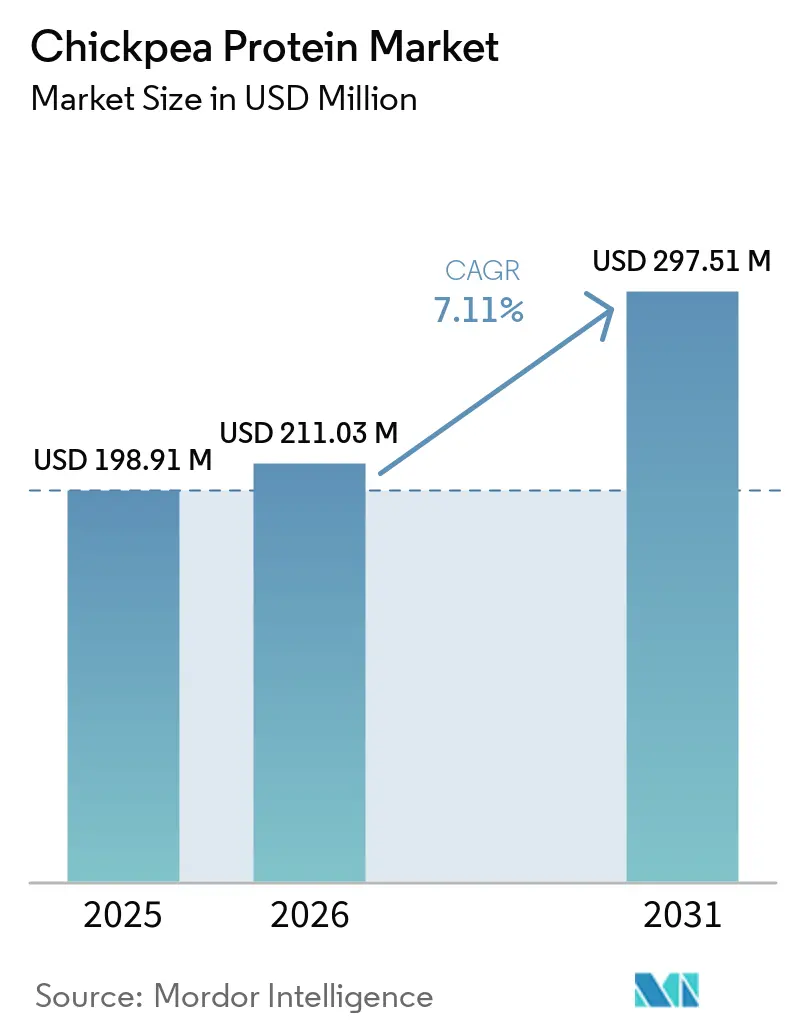
The global chickpea protein market was valued at USD 198.91 million in 2025 and is estimated at USD 211.03 million in 2026. The market is projected to reach USD 297.51 million by 2031, expanding at a CAGR of 7.11% during 2026–2031. Chickpea protein is gaining wider acceptance due to its balanced amino acid profile, allergen-friendly characteristics, and multifunctional properties, including emulsification, water binding, foaming, and texturization, which support its incorporation across a broad range of processed foods. Continuous advancements in protein extraction and fractionation technologies are improving protein purity, solubility, sensory characteristics, and processing performance, enabling its adoption in more sophisticated formulations.
Key Report Takeaways
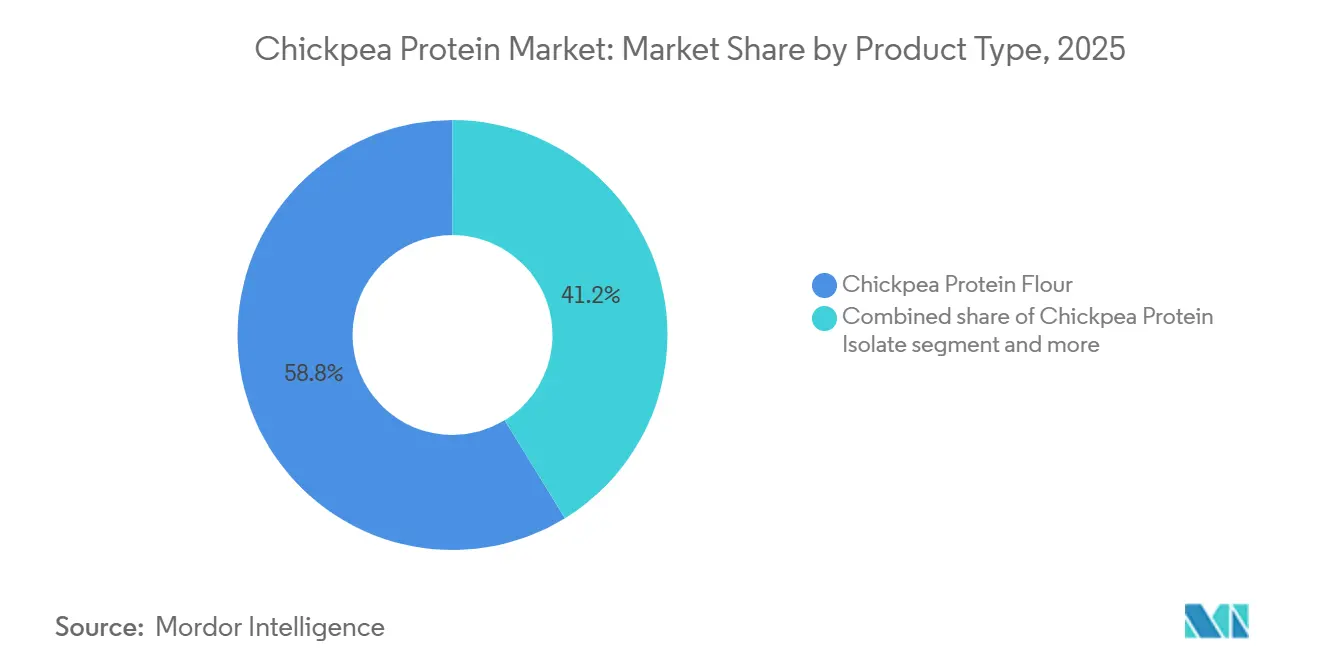
- By product type, chickpea protein flour held 58.76% of the chickpea protein market share in 2025, while chickpea protein isolate is forecast to grow at a 8.12% CAGR through 2031.
- By nature, conventional chickpea protein held 83.45% of the chickpea protein market share in 2025, while organic chickpea protein is forecast to grow at a 7.56% CAGR through 2031.
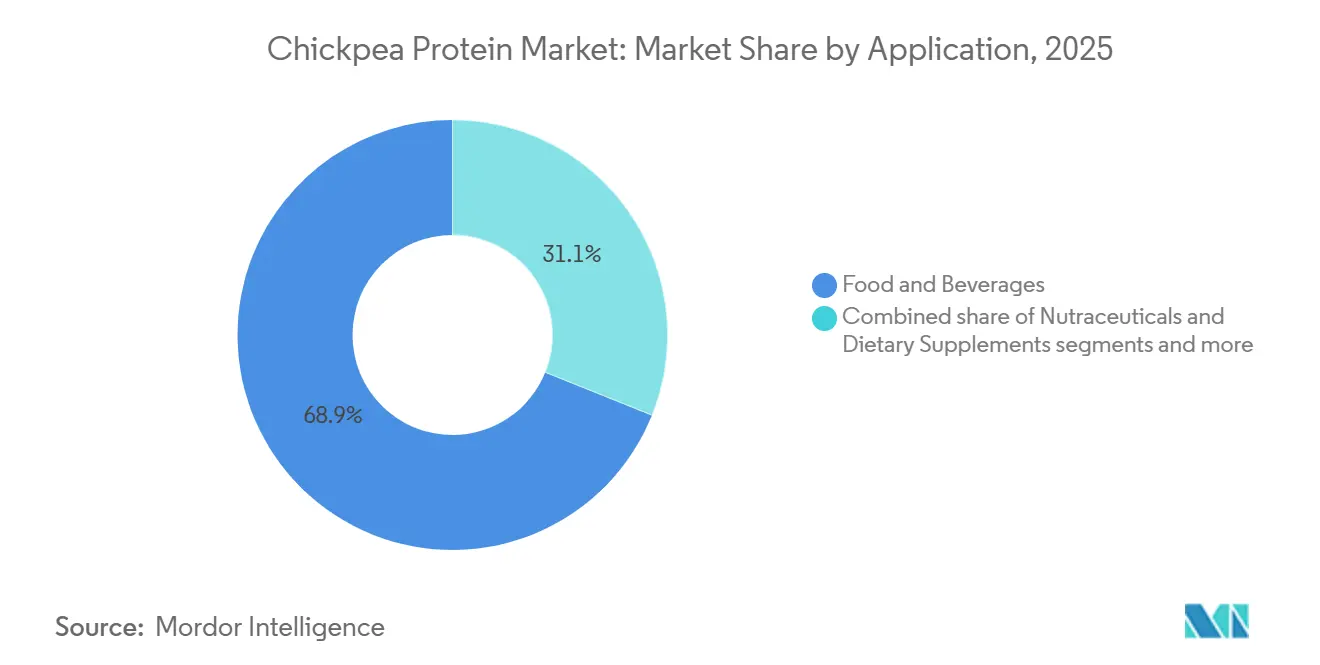
- By application, food and beverages accounted for 68.92% of the chickpea protein market size in 2025, while nutraceuticals and dietary supplements are forecast to expand at a 8.87% CAGR through 2031.
- By geography, North America held 33.24% of revenue in 2025, while Asia-Pacific is forecast to grow at a 8.45% CAGR through 2031.
Note: Market size and forecast figures in this report are generated using Mordor Intelligence’s proprietary estimation framework, updated with the latest available data and insights as of January 2026.
Market Trends and Insights
Drivers Impact Analysis of Chickpea Protein Market*
| Driver | (~) % Impact on CAGR Forecast | Geographic Relevance | Impact Timeline |
|---|---|---|---|
| Demand for plant-based protein ingredients in food and beverage formulations | +2.0% | Global, led by North America and Europe | Short term (≤ 2 years) |
| Consumer preference for clean-label and minimally processed ingredients | +1.5% | North America and Europe core, spill-over to Asia-Pacific | Short term (≤ 2 years) |
| Rising adoption of allergen-friendly protein alternatives | +1.3% | Global, highest in North America and Europe | Medium term (2–4 years) |
| Advancements in protein extraction and fractionation technologies | +0.9% | Global, with early gains in North America and Europe | Medium term (2–4 years) |
| Increasing utilization in infant nutrition and specialized clinical nutrition formulations | +0.6% | Europe (regulatory-led), North America, Asia-Pacific | Long term (≥ 4 years) |
| Preference for non-GMO and naturally sourced protein ingredients | +0.5% | North America and Europe, early spill-over to Japan and South Korea | Medium term (2–4 years) |
| Source: Mordor Intelligence | |||
Demand for Plant-Based Protein Ingredients in Food and Beverage Formulations
Food manufacturers are increasingly reformulating existing products and developing new offerings with plant-derived proteins to enhance nutritional value, improve functional performance, and diversify protein sources beyond soy and wheat. Chickpea protein has emerged as a preferred ingredient due to its favorable nutritional profile and processing characteristics, including water absorption, emulsification, foaming, gelation, and texturization. These functional attributes enable manufacturers to improve product structure, mouthfeel, moisture retention, and stability while increasing protein content across a wide range of food formulations. Its neutral sensory profile and compatibility with various processing technologies, such as extrusion, baking, blending, and beverage manufacturing, allow incorporation without extensive formulation changes.
Consumer Preference for Clean-Label and Minimally Processed Ingredients
Growing consumer preference for clean-label and minimally processed ingredients is supporting demand for chickpea protein. Chickpea protein aligns with this trend as it is derived from a recognizable pulse crop and can be produced through relatively simple processing techniques while retaining desirable nutritional and functional properties. Its suitability for products with short, easy-to-understand ingredient lists enables manufacturers to meet clean-label requirements and strengthen consumer trust. The preference for natural ingredient sourcing is also encouraging greater use of chickpea protein in premium formulations positioned around transparency and authenticity. Supporting this trend, National Sanitation Foundation's 2024 consumer research found that 74% of consumers considered organic ingredients important in personal care products, while 65% wanted clear ingredient lists to identify potentially harmful ingredients[1]Source: NSF, "74% of Consumers Consider Organic Ingredients Important in Personal Care Products", nsf.org. These shifting purchasing preferences continue to drive the adoption of chickpea protein as a clean-label, minimally processed ingredient across multiple industries.
Rising Adoption of Allergen-Friendly Protein Alternatives
The rising adoption of allergen-friendly protein alternatives is a key driver of the chickpea protein market. Chickpea protein is naturally free from several major allergens, making it an attractive alternative that supports the development of inclusive formulations for consumers with dietary restrictions and food sensitivities. Its functional properties, including emulsification, water binding, and texturization, allow manufacturers to replace traditional proteins without significantly affecting product structure or processing efficiency. The ingredient also supports the development of free-from, gluten-free, and plant-based products that meet evolving food labeling requirements and consumer expectations. As regulatory focus on allergen declaration increases and demand for allergen-conscious products grows, manufacturers are incorporating chickpea protein into new product development, supporting sustained expansion of the global chickpea protein market.
Advancements in Protein Extraction and Fractionation Technologies
Advancements in protein extraction and fractionation technologies are significantly driving the chickpea protein market by improving ingredient quality, functionality, and commercial applicability. Innovations in extraction processes are overcoming these limitations, enabling manufacturers to produce chickpea proteins with improved taste, color, solubility, and functional performance. Modern fractionation techniques also enhance protein yield while preserving key functional properties such as emulsification, foaming, gelation, and water-binding capacity, allowing chickpea protein to perform more effectively across diverse applications. These technological improvements have expanded the ingredient's suitability for products requiring superior sensory characteristics and consistent processing performance. For instance, sequential acid–alkali extraction has demonstrated a significant reduction in lipoxygenase activity to 0.75 U/g compared with 3.27 U/g using conventional alkali extraction methods, substantially lowering the formation of off-flavor volatile compounds such as hexanal and octanal.
Restraints Impact Analysis of Chickpea Protein Market*
| Restraint | (~) % Impact on CAGR Forecast | Geographic Relevance | Impact Timeline |
|---|---|---|---|
| Lower protein concentration compared to soy and pea protein isolates | -0.9% | Global, most acute in North America and Europe premium ingredient segments | Medium term (2–4 years) |
| Functional limitations in certain food applications | -0.6% | Global; most pronounced in high-pH beverage and emulsified dairy-alternative applications | Medium term (2–4 years) |
| Limited consumer awareness compared to established plant proteins | -0.4% | Asia-Pacific core (excluding India), South America, Middle East and Africa | Long term (≥ 4 years) |
| Higher complexity in protein extraction and purification processes | -0.3% | Global, with capital impact concentrated in mid-scale processors | Short term (≤ 2 years) |
| Source: Mordor Intelligence | |||
Lower Protein Concentration Compared to Soy and Pea Protein Isolates
The relatively lower protein concentration of chickpea protein, particularly in flour and concentrate forms, limits its competitiveness against established protein ingredients such as soy and pea protein isolates. Many food and nutraceutical manufacturers prioritize ingredients with higher protein purity to meet protein content claims while minimizing the inclusion of non-protein components such as starch and fiber. Because chickpea protein generally contains lower protein levels, larger inclusion rates are often required to achieve targeted nutritional specifications, which can affect formulation efficiency, texture, viscosity, and processing characteristics. This increases the complexity of product development, especially in applications requiring high protein density without compromising product quality. As a result, manufacturers producing high-protein beverages, nutritional supplements, and specialized formulations frequently favor soy or pea protein isolates.
Functional Limitations in Certain Food Applications
Functional limitations in specific food applications continue to restrain the growth of the chickpea protein market. Although chickpea protein exhibits desirable properties such as emulsification, water binding, and foaming, its performance is not consistent across all food matrices and processing conditions. Challenges related to solubility, heat stability, gel strength, viscosity control, and dispersion can affect the texture, appearance, and shelf stability of finished products, particularly in complex formulations. These limitations are more pronounced in high-protein beverages, acidic drinks, dairy alternatives, and certain processed foods, where ingredient functionality must remain stable throughout production and storage. Consequently, manufacturers often require additional stabilizers, hydrocolloids, or blended protein systems to achieve the desired product performance, increasing formulation complexity and development time.
*Our forecasts treat driver/restraint impacts as directional, not additive. The impact forecasts reflect baseline growth, mix effects, and variable interactions.
Chickpea Protein Market Segment Analysis
By Product Type:
Chickpea Protein Flour Drives Volume, Isolate Commands Premium InnovationChickpea protein flour accounted for 58.76% of the global chickpea protein market revenue in 2025. Its dominant position is driven by its ability to retain the natural nutritional composition of chickpeas while requiring minimal processing, making it a versatile and cost-efficient protein ingredient. The flour offers a balanced combination of protein, dietary fiber, starch, vitamins, and minerals, enabling manufacturers to enhance nutritional profiles without relying on highly refined ingredients. Its water absorption, binding, thickening, and emulsification properties improve texture, moisture retention, and processing stability, making it suitable for a wide range of food formulations. In addition, chickpea protein flour aligns with the growing preference for clean-label, minimally processed, and pulse-based ingredients, while its compatibility with gluten-free and plant-based formulations further supports its commercial adoption.
Chickpea protein isolate is projected to register the fastest CAGR of 8.12% during 2026–2031. Growth is primarily supported by the increasing shift toward precision protein ingredients that enable manufacturers to meet high-protein formulation targets while maintaining product consistency. Isolates provide greater formulation flexibility as they contribute minimal starch, fiber, and other non-protein components, allowing developers to achieve desired nutritional specifications with smaller inclusion rates. The expansion of membrane filtration and protein purification technologies has further improved isolate quality and production efficiency. In addition, growing investment in next-generation plant protein ingredients by ingredient manufacturers is accelerating innovation in chickpea protein isolates, making them a preferred choice for premium protein formulations that require high functionality, standardized composition, and enhanced processing performance.



By Nature:
Conventional Scale Meets Organic PremiumizationConventional chickpea protein accounted for 83.45% of the global chickpea protein market revenue in 2025. The segment maintains its dominant position because conventional chickpea cultivation provides a stable and scalable supply of raw materials suitable for industrial protein extraction. Standard agricultural practices enable consistent crop quality, supporting efficient production of isolates, concentrates, and flours with uniform functional properties. Conventional chickpeas also offer greater sourcing flexibility across major pulse-producing regions, ensuring uninterrupted manufacturing operations and reliable ingredient availability throughout the year. Their compatibility with established processing infrastructure reduces production complexity and supports large-scale manufacturing, making conventional chickpea protein the preferred choice for commercial ingredient producers serving high-volume markets.
Organic chickpea protein is projected to register a CAGR of 7.56% during 2026–2031. The segment is expanding as food manufacturers increasingly incorporate certified organic ingredients into premium product portfolios to meet organic certification requirements and ingredient traceability standards. Organic chickpea protein also benefits from growing consumer confidence in certified organic food systems, particularly in developed markets where demand for organically produced foods continues to strengthen. For instance, according to the German Federation of Organic Food Producers (BÖLW), Germany's organic food and beverage sales increased from EUR 17.09 billion (USD 19.73 billion) in 2024 to EUR 18.23 billion (USD 21.04 billion) in 2025, reflecting sustained consumer preference for certified organic products[2]Source: German Federation of Organic Food Producers (BÖLW), "Revenue from organic food in Germany", boelw.de. This expanding organic food ecosystem is encouraging manufacturers to increase the use of organic chickpea protein in new product development, supporting the segment's steady growth.
By Application:
Food and Beverages Anchors Revenue, Nutraceuticals Leads Value ExpansionFood and beverages accounted for 68.92% of the global chickpea protein market revenue in 2025. The segment leads the market because chickpea protein offers multifunctional properties that improve product structure, moisture retention, emulsification, and texture while enhancing protein content. Its neutral formulation profile enables seamless incorporation into diverse processed food recipes without requiring major manufacturing modifications. The ingredient also supports gluten-free, high-protein, and pulse-based product development, allowing manufacturers to reformulate existing products and introduce new offerings with improved nutritional value. Its compatibility with thermal processing, extrusion, baking, and mixing operations further strengthens its adoption across large-scale food manufacturing, making the food and beverage industry the primary consumer of chickpea protein.
Nutraceuticals and dietary supplements are projected to register the fastest CAGR of 8.87% during 2026–2031. The segment is expanding due to the increasing use of chickpea protein as a functional ingredient in protein powders, meal replacement formulations, nutrition blends, and specialized wellness products. Its balanced amino acid composition, good digestibility, and compatibility with plant-based formulations make it suitable for high-protein nutritional products requiring standardized ingredient quality. The growing emphasis on preventive nutrition and protein fortification has encouraged supplement manufacturers to diversify beyond traditional protein sources by incorporating pulse-derived proteins. Continuous innovation in plant-based nutritional formulations and clean ingredient declarations is further strengthening the adoption of chickpea protein across the nutraceutical and dietary supplement industry.
Geography Analysis
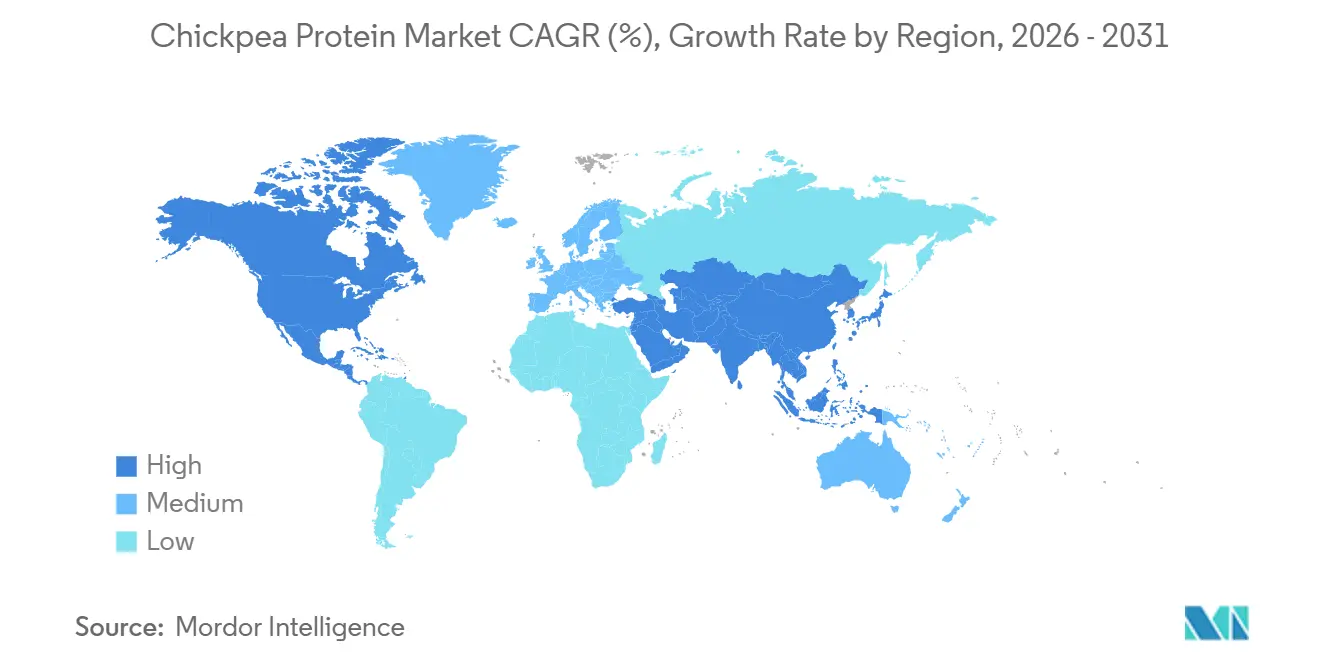
North America accounted for 33.24% of the global chickpea protein market revenue in 2025. The region's position reflects a well-established pulse processing ecosystem, advanced protein extraction capabilities, and a mature ingredient manufacturing industry that has commercialized chickpea protein at scale. The availability of abundant raw materials further strengthens regional competitiveness. According to the Saskatchewan Pulse Growers, North America produces approximately 186,000 ton's of chickpeas annually, with Saskatchewan contributing nearly 85% of the region's total production[3]Source: Saskatchewan Pulse Growers, "Chickpea Market Opportunities", saskpulse.com. This domestic supply supports a stable value chain for chickpea protein manufacturers, reducing dependence on imported raw materials and enabling consistent production.
Asia-Pacific is projected to register the fastest CAGR of 8.45% during 2026–2031. The region's growth is supported by its position as one of the world's largest chickpea cultivation and processing hubs, providing abundant access to raw materials for protein extraction. Continuous expansion of pulse processing facilities, increasing investments in value-added plant protein manufacturing, and the development of modern ingredient processing technologies are enhancing regional production capacity. The presence of large chickpea-producing countries, coupled with expanding food ingredient manufacturing capabilities, is positioning Asia-Pacific as the fastest-growing regional market for chickpea protein.
Europe is emerging as a steadily growing market, supported by stringent sustainability initiatives, increasing investment in alternative protein innovation, and the expansion of domestic pulse processing to strengthen regional protein self-sufficiency. South America is witnessing gradual growth owing to expanding chickpea cultivation, improving agricultural diversification, and increasing investments in pulse value-addition industries. The Middle East and Africa is also gaining traction as governments encourage local food manufacturing and alternative protein production, while regional processors continue to expand pulse-based ingredient portfolios to reduce reliance on imported protein ingredients.

Competitive Landscape
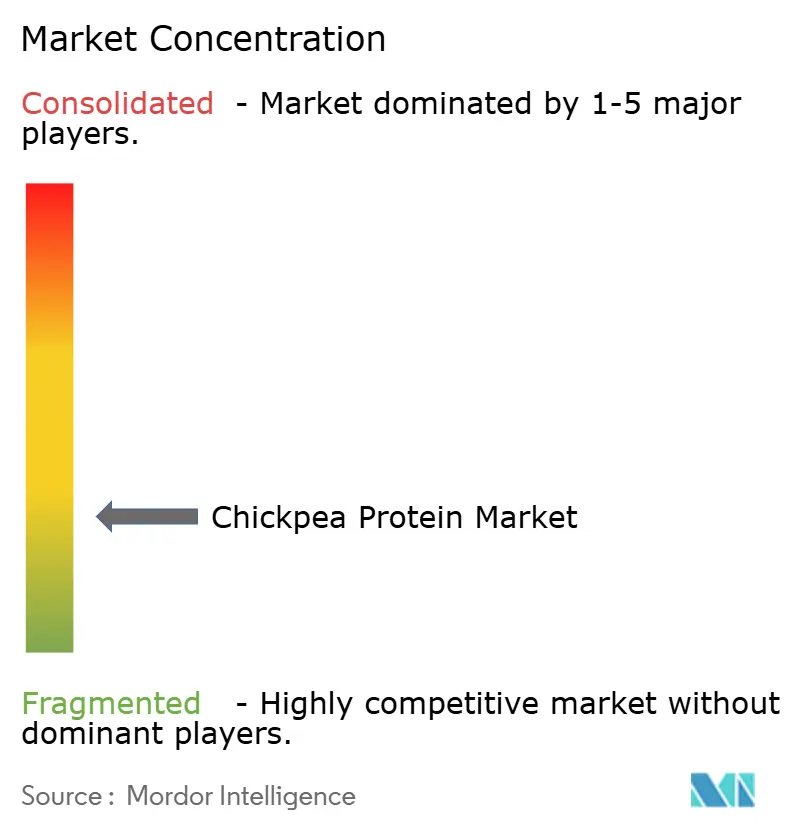
The global chickpea protein market is moderately fragmented, with competition characterized by a mix of multinational ingredient manufacturers and specialized plant-protein producers. Companies compete on technological capabilities, product functionality, and application-specific ingredient solutions. Key players such as Archer Daniels Midland Company, Cargill, Incorporated, International Flavors & Fragrances Inc., Kerry Group plc, and Ingredion Incorporated leverage their extensive ingredient portfolios, global manufacturing footprints, and established customer relationships to strengthen their market presence. Their ability to integrate chickpea protein into broader plant-protein offerings enables them to serve diverse food and nutrition manufacturers across multiple regions.
Competition is increasingly centered on advanced protein extraction technologies, customized formulation expertise, and global supply chain capabilities rather than price alone. Major players continue investing in wet-extraction and fractionation infrastructure to improve protein purity, solubility, flavor profile, and functional performance while expanding production capacity. Multi-geography distribution networks ensure reliable raw material sourcing and efficient ingredient supply, while application-specific formulation capabilities allow manufacturers to develop tailored chickpea protein solutions optimized for different processing conditions and product requirements, creating strong differentiation in the market.
Companies are also accelerating innovation in chickpea breeding and raw material development to improve ingredient economics and processing efficiency. AI-driven genomic selection and precision breeding technologies are enabling the development of naturally high-protein chickpea varieties, increasing protein yield at the crop level while reducing dependence on intensive downstream processing. These next-generation cultivars have the potential to eliminate or reduce costly processing steps such as defatting, improving manufacturing efficiency and lowering production costs. Combined with investments in sustainable sourcing, advanced processing technologies, and continuous product innovation, these developments are reshaping the competitive dynamics of the global chickpea protein market.
Chickpea Protein Industry Leaders
-
Archer Daniels Midland Company
-
Cargill, Incorporated
-
International Flavors & Fragrances Inc.
-
Kerry Group plc
-
Ingredion Incorporated
- *Disclaimer: Major Players sorted in no particular order
Chickpea Protein Market Companies Covered in this Report
- Archer Daniels Midland Company
- Cargill, Incorporated
- International Flavors & Fragrances Inc.
- Kerry Group plc
- Ingredion Incorporated
- SunOpta Inc.
- Roquette Freres
- AGT Food and Ingredients Inc.
- ChickP Protein Ltd.
- InnovoPro Ltd.
- The Scoular Company
- Vestkorn Milling AS
- Cambridge Commodities Limited
- Nutriati, Inc.
- PLT Health Solutions, L.P.
- Puris Proteins, LLC
- Batory Foods, Inc.
- Chickplease
- Relsus Pte. Ltd.
- Atura Proteins

Recent Industry Developments in Chickpea Protein Market
- July 2026: NuCicer developed its first commercial chickpea brand, Nuchi. Compatible with existing pea protein processing infrastructure, Nuchi was available in high-protein flour, low-fat flour, protein concentrate, and protein isolate.
- February 2026: Kerry Group plc opened a new Kerry Customer Co-Creation Centre in Medellín, Colombia. The center was designed to deepen collaboration with customers and accelerate the development of solutions across multiple food and beverage categories for the Andean region.


Global Chickpea Protein Market Report Scope
Chickpea protein is the protein extracted from chickpeas (also known as garbanzo beans). The chickpea protein market is segmented by product type, nature, application, and geography. Based on product type, the market is segmented into chickpea protein isolate, chickpea protein concentrate, chickpea protein flour, and others. Based on nature, the market is segmented into conventional and organic. Based on application, the market is segmented into food and beverages, nutraceuticals and dietary supplements, personal care and cosmetics, animal feed and pet food, and others. Based on geography, the market is segmented into North America, Europe, Asia-Pacific, South America, and Middle East and Africa. The report provides market size and forecasts in both value (USD) and volume (tons) for all the mentioned segments.
| Chickpea Protein Isolate |
| Chickpea Protein Concentrate |
| Chickpea Protein Flour |
| Others |
| Conventional |
| Organic |
| Food and Beverages |
| Nutraceuticals and Dietary Supplements |
| Personal Care and Cosmetics |
| Animal Feed and Pet Food |
| Others |
| North America | United States |
| Canada | |
| Mexico | |
| Rest of North America | |
| Europe | Germany |
| United Kingdom | |
| Italy | |
| France | |
| Spain | |
| Rest of Europe | |
| Asia-Pacific | China |
| India | |
| Japan | |
| Rest of Asia-Pacific | |
| South America | |
| Middle East and Africa |
| By Product Type | Chickpea Protein Isolate | |
| Chickpea Protein Concentrate | ||
| Chickpea Protein Flour | ||
| Others | ||
| By Nature | Conventional | |
| Organic | ||
| By Application | Food and Beverages | |
| Nutraceuticals and Dietary Supplements | ||
| Personal Care and Cosmetics | ||
| Animal Feed and Pet Food | ||
| Others | ||
| By Geography | North America | United States |
| Canada | ||
| Mexico | ||
| Rest of North America | ||
| Europe | Germany | |
| United Kingdom | ||
| Italy | ||
| France | ||
| Spain | ||
| Rest of Europe | ||
| Asia-Pacific | China | |
| India | ||
| Japan | ||
| Rest of Asia-Pacific | ||
| South America | ||
| Middle East and Africa | ||


Key Questions Answered in the Report
What is the projected value of the chickpea protein market by 2031?
The chickpea protein market is projected to reach USD 297.51 million by 2031, growing at a 7.11% CAGR from 2026.
Which chickpea protein format has the largest share?
Chickpea protein flour held 58.76% of revenue in 2025 because it is widely used in bakery, snacks, and pasta.
Which application is growing fastest for chickpea protein?
Nutraceuticals and dietary supplements are forecast to grow at an 8.87% CAGR through 2031.
Why are food manufacturers using chickpea protein?
Manufacturers use it to support protein enrichment, clean-label positioning, and formulations that avoid soy or wheat ingredients.
Page last updated on:


 Your data is secure and never sold or shared.


