
Canada Pet Veterinary Diet Market Size and Share
Market Overview
| Study Period | 2021 - 2031 |
|---|---|
| Forecast Data Period | 2026 - 2031 |
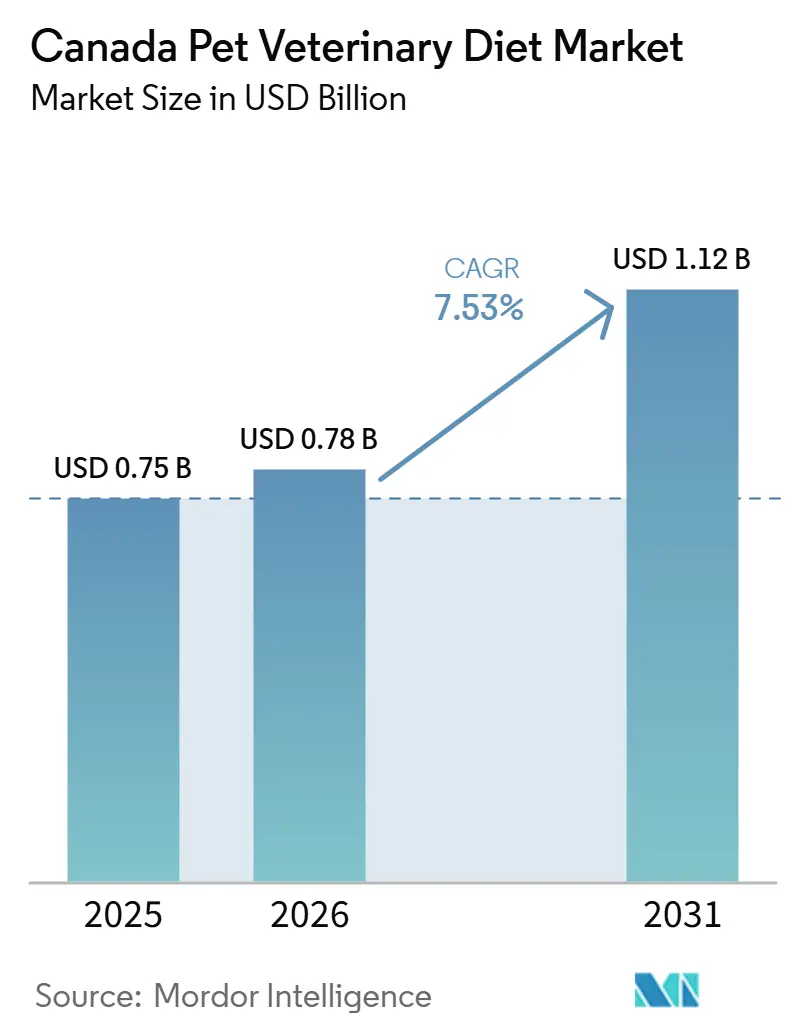
| Base Year Market Size (2025) | USD 0.75 Billion |
| Market Size (2026) | USD 0.78 Billion |
| Market Size (2031) | USD 1.12 Billion |
| Growth Rate (2026 - 2031) | 7.53% CAGR |
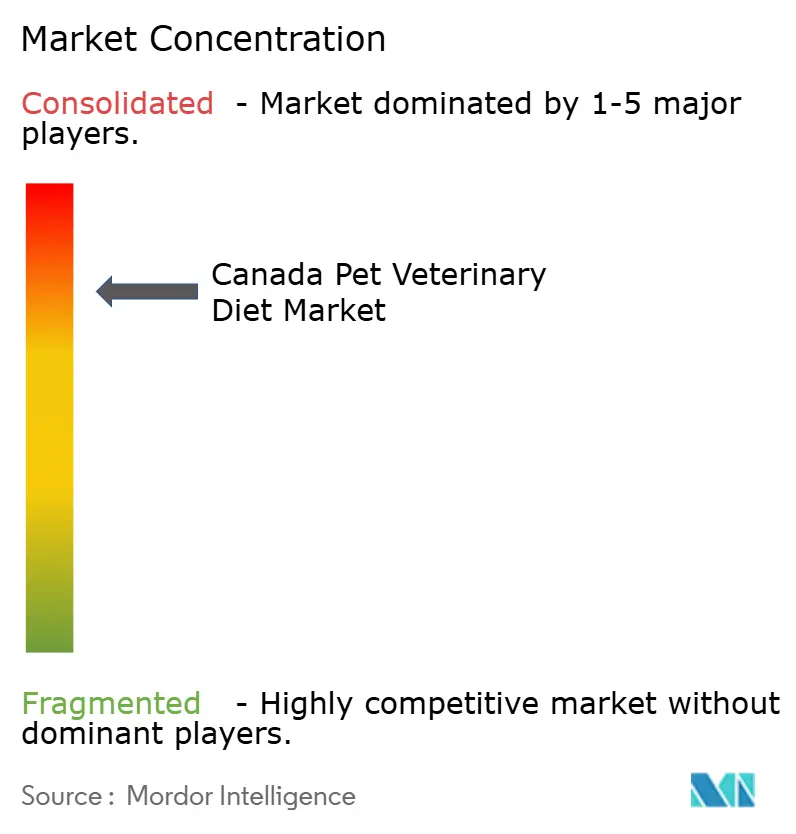
| Market Concentration | High |
Major Players
*Disclaimer: Major Players sorted in no particular order Image © Mordor Intelligence. Reuse requires attribution under CC BY 4.0. |
|
Canada Pet Veterinary Diet Market Analysis by Mordor Intelligence
The Canada pet veterinary diet market size is USD 746.12 million in 2025, projected to reach USD 784.55 million in 2026, and further anticipated to reach USD 1,124.40 million by 2031, growing at a CAGR of 7.53% during the forecast period (2026 to 2031). The market is expanding as more companion animals are diagnosed with renal, urinary, digestive, dermatological, and obesity-related conditions that require long-term nutritional management. The market is also benefiting from a stronger link between veterinary recommendations and repeat purchases, as therapeutic diets are commonly used for months or years once a pet enters a clinically managed feeding protocol. Online refill models and remote follow-up are reducing barriers to ongoing diet adherence, making long-duration therapeutic nutrition easier to sustain across both urban and remote settings. Product competition is also shifting toward microbiome science, multi-condition formulas, and clinically differentiated platforms that raise the standard for evidence-backed innovation. The market remains concentrated around a few brands with strong clinic relationships. However, digital dispensing and refill expansion are creating more room for challengers that can combine scientific positioning with easier access and continuity of care.
Key Report Takeaways
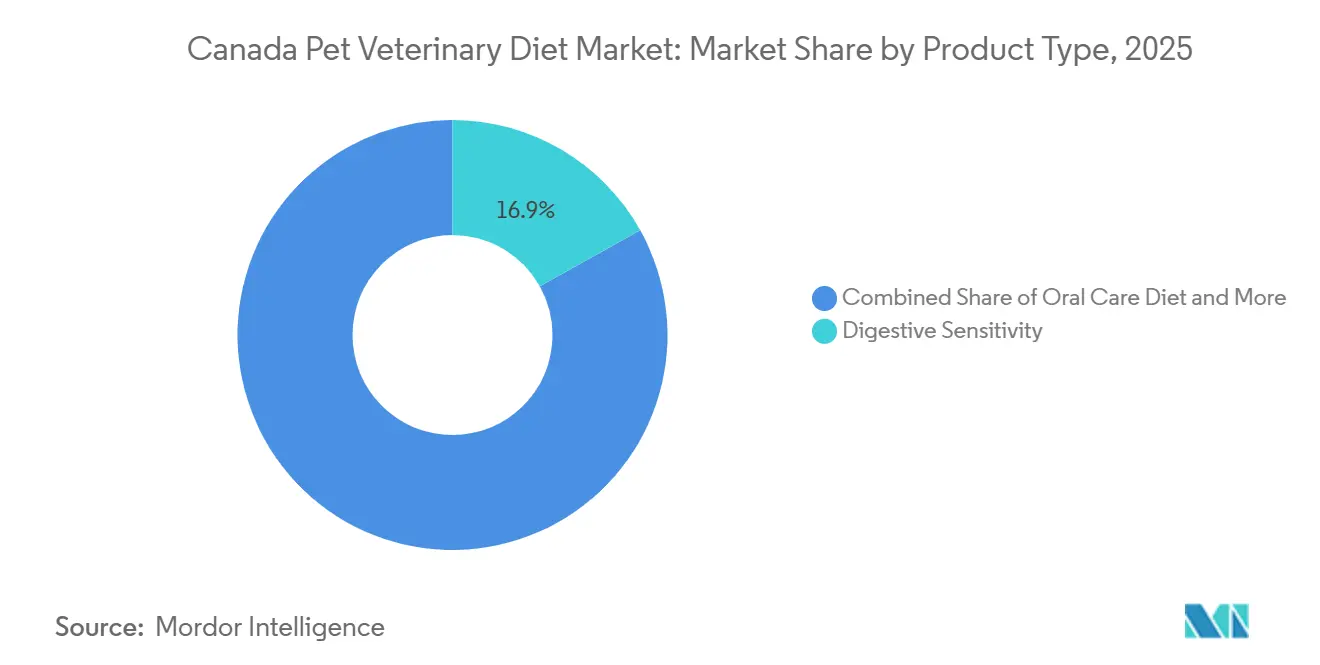
- By product type, digestive sensitivity was the largest segment, accounted for 16.9% of the Canadian pet veterinary diet market share in 2025, while oral care diets are projected to be the fastest-growing segment at a CAGR of 8.2% between 2026 and 2031.
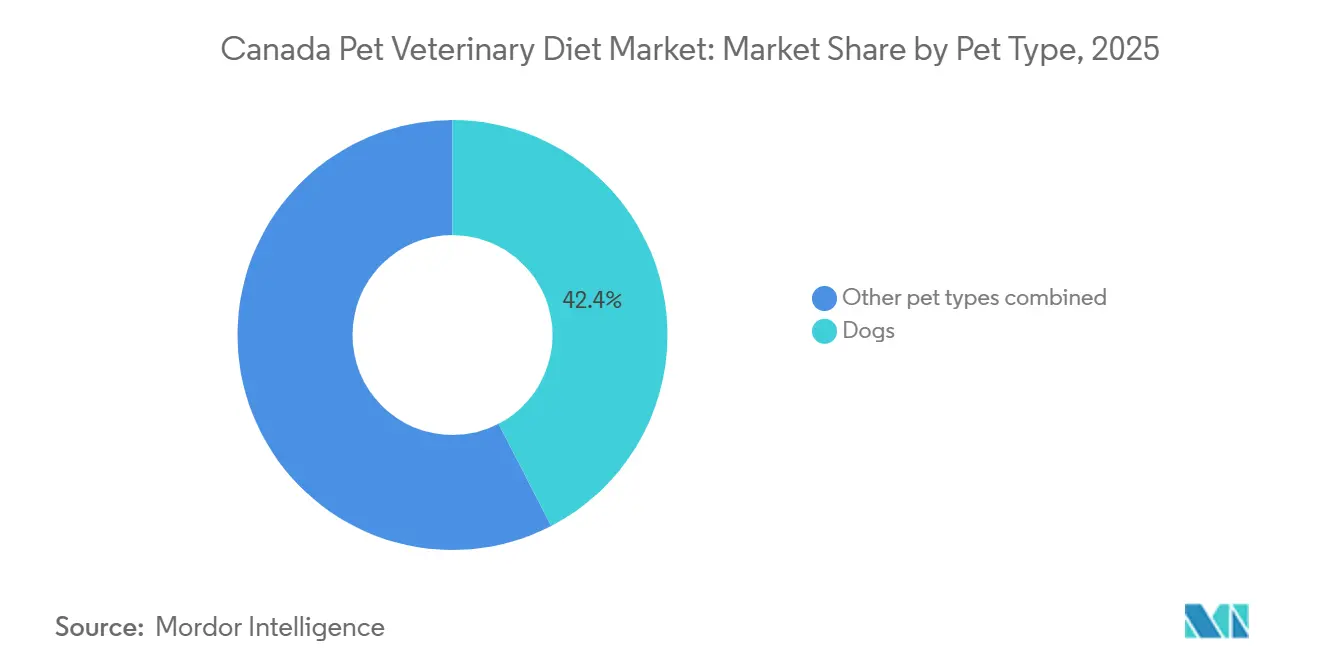
- By pet type, dogs were the largest segment and held 42.4% of the Canada pet veterinary diet market size in 2025, while dogs are also the fastest-growing segment and are anticipated to expand at an 8.9% CAGR between 2026 and 2031.
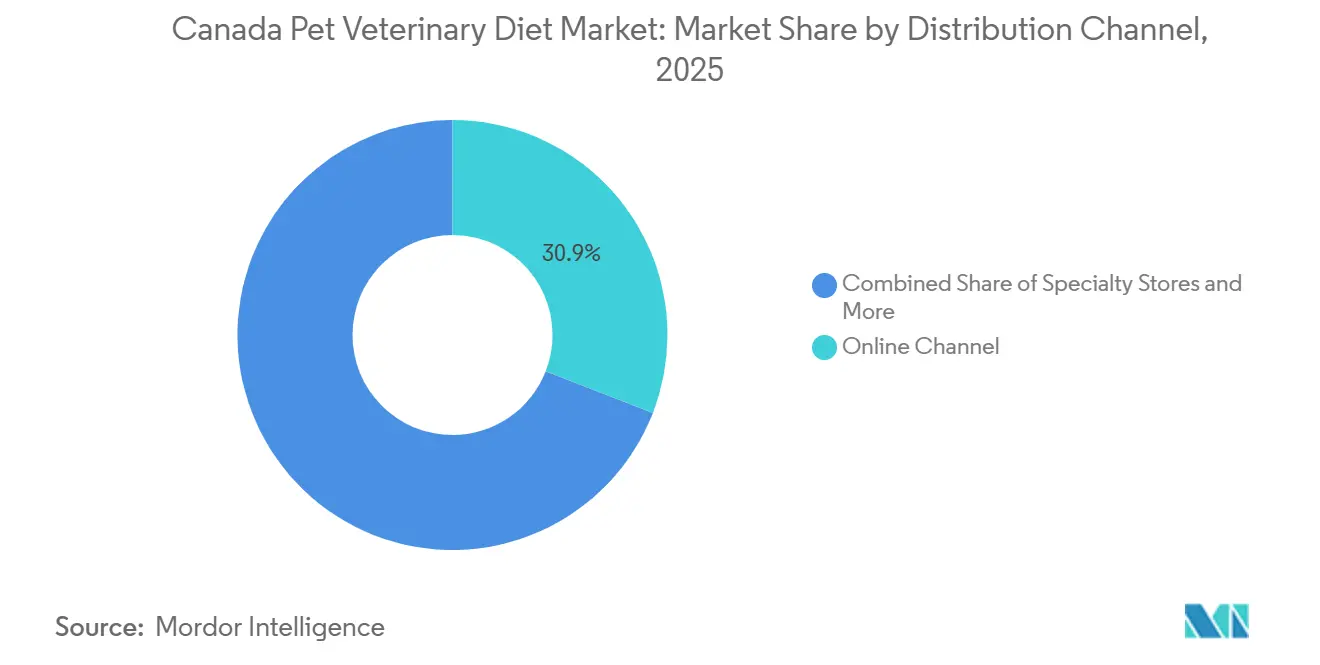
- By distribution channel, the online Channel was the largest segment and represented 30.9% of the Canada pet veterinary diet market size in 2025, and is also the fastest-growing segment and is anticipated to grow at a 9.7% CAGR between 2026 and 2031.
Note: Market size and forecast figures in this report are generated using Mordor Intelligence’s proprietary estimation framework, updated with the latest available data and insights as of January 2026.
Canada Pet Veterinary Diet Market Trends and Insights
Drivers Impact Analysis*
| Driver | (~) % Impact on CAGR Forecast | Geographic Relevance | Impact Timeline |
|---|---|---|---|
| Rising diagnosis rates for chronic pet conditions | +2.0% | Pan-Canadian, strongest in Ontario, British Columbia, and Quebec where veterinary density is highest | Short term (≤ 2 years) |
| Expansion of veterinary-linked prescription commerce | +1.6% | Pan-Canadian, with clinic-linked authorization embedded in urban specialist practices and rural telemedicine workflows | Medium term (2-4 years) |
| Humanization of pet health spending | +1.4% | Urban and suburban centers in Ontario and British Columbia, with relevance across younger owner cohorts nationally | Medium term (2-4 years) |
| Tele-veterinary follow-up and digital refill adoption | +0.9% | Province-wide, with stronger uptake in rural and remote regions including British Columbia, Manitoba, and Atlantic Canada | Medium term (2-4 years) |
| Growth in microbiome-targeted and functional therapeutic formulations | +0.8% | Global innovation with adoption concentrated in Canadian urban veterinary practices | Long term (≥ 4 years) |
| Refill loyalty supported by clinic-brand protocol alignment | +0.6% | Pan-Canadian, most impactful where provincial colleges enforce strict veterinary-client-patient relationship requirements | Long term (≥ 4 years) |
| Source: Mordor Intelligence | |||
Rising Diagnosis Rates for Chronic Pet Conditions
Higher diagnosis rates for chronic conditions in dogs and cats are supporting growth in the Canada pet veterinary diet market. The high prevalence of health conditions among companion animals continues to require condition-specific nutrition. This trend is significant because therapeutic diets are often used as part of ongoing disease management rather than short-term support. According to a 2025 study published in the Journal of Veterinary Internal Medicine, repeated health screening and routine clinical monitoring facilitate earlier detection of chronic diseases in aging companion animals, enabling earlier clinical intervention and potentially extending the duration over which therapeutic nutritional management can be implemented[1]Source: Journal Article, "Exploring the Importance of Repeated Health Screening in Healthy Older Dogs," Journal of Veterinary Internal Medicine (2025).. As a result, the market is benefiting from both broader diagnosis rates and longer durations of nutritional intervention.
Expansion of Veterinary-Linked Prescription Commerce
The market is supported by prescription commerce that remains closely tied to veterinary care. Once a veterinarian recommends a specific formula and the pet owner begins purchasing it through an authorized channel, refill patterns tend to stabilize, as product substitution is less common in clinically managed feeding routines. This creates a demand structure that is more predictable than general premium pet food and more resistant to switching. This framework is now extending into digital refill pathways, as prescription-linked nutrition claims and authorization processes remain within the professional care channel even when product fulfillment moves online.
Humanization of Pet Health Spending
The Canada pet veterinary diet market is supported by a growing tendency among pet owners to treat nutrition as part of healthcare rather than a routine food purchase. This is relevant because therapeutic formulas require greater owner commitment, particularly for conditions that require daily compliance over extended periods. Once a diagnosis is made, pet owners are more willing to follow veterinary advice on diets for digestive, urinary, renal, and weight-related needs. In multi-pet households, therapeutic feeding patterns can extend beyond the originally diagnosed animal when preventive or precautionary use aligns with veterinary guidance. This behavior drives volume demand in the Canada pet veterinary diet market beyond what diagnosis counts alone would suggest.
Tele-Veterinary Follow-Up and Digital Refill Adoption
Remote care models are improving continuity of dietary management after diagnosis in the Canada pet veterinary diet market. A 2025 study in Frontiers in Veterinary Science reported that 33% of Canadian animal healthcare organizations surveyed used telehealth services to reduce geographic accessibility barriers, with clinic adoption rising sharply during the pandemic period[2]Source: Research Article, "Access to veterinary care in Canada: a cross-sectional survey of animal healthcare organizations and interventions,"frontiersin.org. This is relevant because chronic therapeutic diets are most effective when owners receive timely follow-up on adherence, refill timing, and condition monitoring. Remote care infrastructure is particularly important in provinces and communities where access to in-person veterinary visits is limited. As digital follow-up becomes more common, the Canada pet veterinary diet market is likely to see stronger retention in long-duration therapeutic categories.
Restraints Impact Analysis*
| Restraint | (~) % Impact on CAGR Forecast | Geographic Relevance | Impact Timeline |
|---|---|---|---|
| Premium pricing limits mass-market penetration | -1.5% | Pan-Canadian, most acute in lower-income households and multi-pet homes where cumulative therapeutic diet cost is prohibitive | Short term (≤ 2 years) |
| Prescription dependency slows impulse purchase conversion | -1.2% | Pan-Canadian, relevant in provinces where veterinary-client-patient relationship requirements mandate authorization for prescription diet access | Medium term (2-4 years) |
| Provincial veterinary dispensing friction | -0.8% | Province-specific, most pronounced where provincial rules limit cross-channel dispensing flexibility | Medium term (2-4 years) |
| Limited shelf space outside specialty and clinic channels | -0.5% | Pan-Canadian, affecting product discoverability in mass retail formats including supermarkets and convenience stores | Long term (≥ 4 years) |
| Source: Mordor Intelligence | |||
Premium Pricing Limits Mass-Market Penetration
The Canada pet veterinary diet market faces an affordability constraint, as therapeutic formulas are priced at a clear premium over standard pet food. This is most apparent in households managing multiple pets or multiple conditions simultaneously, where cumulative feeding costs can become difficult to sustain. The pricing challenge is more pronounced in categories that require prolonged feeding rather than short-term nutritional intervention. This creates a practical ceiling on household penetration even when the clinical need for the product is evident. The result is a gap between medical relevance and the number of owners who can maintain long-term adherence.
Prescription Dependency Slows Impulse Purchase Conversion
Access to many veterinary therapeutic diets is commercially linked to veterinary recommendations, clinic distribution, or retailer authorization procedures. However, legal and professional requirements vary by province, and veterinary diets are not uniformly regulated as prescription drugs across Canada. An active veterinary client-patient relationship remains central to the use of therapeutic diets, narrowing the buying pool to owners already engaged in structured veterinary care. This framework supports clinical credibility but slows spontaneous trial and reduces category discovery compared with over-the-counter nutrition. The regulatory and professional controls that protect therapeutic positioning also make channel expansion more procedural and less flexible. As a result, the Canada pet veterinary diet market remains strongest among high-adherence owner groups already participating in formal veterinary care pathways.
*Our forecasts treat driver/restraint impacts as directional, not additive. The impact forecasts reflect baseline growth, mix effects, and variable interactions.
Segment Analysis
By Product Type: Digestive Sensitivity Dominates, Oral Care Diets Accelerate
Digestive sensitivity held 16.9% of the Canada pet veterinary diet market in 2025, making it the largest product group in the market. Digestive formulas held this position because gastrointestinal conditions are common across both dogs and cats and often require prolonged dietary management once diagnosed. This gives the segment a broader and steadier refill base than narrower therapeutic categories tied to fewer clinical indications. The category also benefits from stronger clinical acceptance because digestive outcomes are visible to owners and easier to monitor through day-to-day changes in stool quality, appetite, and tolerance. A 2025 randomized controlled trial published in Frontiers in Veterinary Science showed that a prescription diet containing Bacillus velezensis DSM 15544, fructo-oligosaccharides, plasma immunoglobulin, yeast, and sepiolite reduced the time to normalization of fecal consistency in dogs with acute diarrhea.
Oral care diets are projected to grow at a 8.2% CAGR between 2026 and 2031, making it the fastest-growing category in the market. Oral care diets are growing faster because dental disease is common in companion animals, and nutritional management has seen lower conversion rates to therapeutic diets than renal or gastrointestinal care. Periodontal disease is the most common clinical condition in companion animals, leaving a large addressable base for diet-led oral care intervention as veterinary recommendations increase. Renal and urinary tract disease diets remain a strong mid-tier category because feline kidney disease and urinary condition management are closely linked to long-duration feeding protocols, while obesity, dermatology, and diabetes formulas are gaining traction as brands introduce more targeted and multi-condition products to market.



By Pet Type: Canine Demand Drives Volume and Value Leadership
Dogs accounted for 42.4% of the Canada pet veterinary diet market share in 2025 and are also the fastest-growing pet type segment, expanding at a CAGR of 8.9% between 2026 and 2031. Their dominant position reflects higher average body weight, broader use across multiple therapeutic conditions, and stronger owner compliance with long-term dietary management. Dogs also tend to visit veterinarians more frequently than other companion animals, creating additional opportunities for diagnosis, therapeutic diet recommendations, and follow-up, which supports both current market leadership and future growth.
Cats represent a significant opportunity within the Canada pet veterinary diet market. They account for a substantial share of demand for renal, urinary, and gastrointestinal diets, where feline-specific therapeutic nutrition plays an important role in long-term disease management. Compared with dogs, sustained adoption of veterinary diets among cats depends more on owner adherence following diagnosis than on repeated veterinary consultations. Other pets account for a relatively small share of demand but reflect the gradual diversification of companion animal ownership in Canada. Canine demand continues to anchor the market, while feline therapeutic nutrition offers significant potential for further expansion in specialized veterinary diets.
By Distribution Channel: Online Channel Leads Growth While Specialty Stores Maintain Proximity to Clinical Recommendations
The online channel accounted for 30.9% of the Canada pet veterinary diet market in 2025 and is forecast to grow at a CAGR of 9.7% between 2026 and 2031. It is both the largest and fastest-growing distribution channel, as autoship programs, refill subscriptions, and clinic-linked digital purchasing align with the repeat-buying nature of chronic therapeutic nutrition. Once an owner establishes a digital refill pattern, continuation is easier than switching, which supports retention in categories where compliance is important. The channel is also gaining credibility because digital refills can remain within professional authorization pathways rather than operating outside them.
Growing remote care adoption is reinforcing this shift in the market, as tele-veterinary follow-up keeps owners connected to veterinary guidance even when repeat physical visits are less frequent. Specialty stores remain a key distribution format due to their proximity to veterinary recommendations and their appeal to owners seeking premium and condition-specific nutrition. Supermarkets and hypermarkets remain relevant in the broader premium pet food market, but therapeutic product stocking is more limited given higher product complexity and limited trained guidance. Convenience stores remain peripheral, as the category does not rely on impulse purchases and carries a higher unit value than routine food purchases. Other channels, including direct clinic dispensing and clinic linked e-commerce portals, remain important for first-time therapeutic diet activation due to their strong clinical authority at the point of recommendation.
Geography Analysis
Canada represents a mature pet veterinary diet market, supported by high pet ownership, well-developed veterinary infrastructure, and strong consumer willingness to invest in preventive and therapeutic pet healthcare. The market is sufficient to support both multinational brands and specialized therapeutic lines. Demand is strongest in Ontario and British Columbia, where veterinary clinic density is higher and premium pet care adoption is more prevalent. These provinces are better positioned to convert diagnoses into long-duration therapeutic feeding, given more developed access, follow-up infrastructure, and owner willingness to spend.
The market also shows clear variation between urban centers and rural or remote communities. In underserved areas, physical clinic access is more limited, but the need for nutritional management in chronic disease cases remains unchanged. As a result, telemedicine and community-based follow-up are becoming more important in maintaining prescribed feeding routines over time. This dynamic increases the strategic value of digital refill and remote care solutions in provinces where geographic dispersion reduces the frequency of in-person veterinary visits.
Federal regulation shapes geographic development, as therapeutic nutrition must align with Canada's feed and labeling framework, as well as professional rules governing veterinary recommendation and dispensing. Provincial practice standards add another layer, as the first therapeutic recommendation is closely tied to veterinary-client-patient relationship requirements that influence how products enter the care pathway. As a result, channel maturation can progress at different speeds across the country, even when national demand conditions remain favorable.
Competitive Landscape
The Canada pet veterinary diet market is highly concentrated, with the top five players holding a major share in 2025. This structure reflects years of investment in veterinary relationships, clinical evidence platforms, and controlled access at the point of prescription. Brands operating in this space must secure veterinarian endorsement and maintain consistent clinical engagement to sustain their market position. Competitive strength is therefore determined by clinic credibility, scientific backing, and repeat refill capture rather than shelf visibility alone.
In June 2026, Champion Petfoods, a subsidiary of Mars, Incorporated, opened a CAD 32 million (USD 23.5 million) Global Innovation and Discovery Centre in Acheson, Alberta, to strengthen pet nutrition research and product development. The company also announced plans to invest an additional CAD 15 million (USD 11 million) in its Canadian operations over the next five years. The expanded research capabilities are expected to support innovation across the broader pet food portfolio, including specialized and veterinary nutrition products, reinforcing Canada's position as a key hub for pet nutrition research.
In February 2026, French pet food group Nasta Pet Food acquired British Columbia-based FirstMate Pet Foods, supported by a EUR 120 million (USD 126 million) financing package[3]Source: News Article, "Nasta Pet Food acquires Canadian manufacturer FirstMate," globalpetindustry.com. This created a combined annual production platform of 45,000 metric tons of dry food and 4,000 metric tons of wet food across Europe and North America, strengthening its position in limited-ingredient and single-protein diet categories. In March 2026, Canadian manufacturer Petcurean launched its Go! Solutions Dental + Immune Health Chicken + Salmon range, an over-the-counter functional diet targeting oral care and immune health through pet specialty and e-commerce channels across Canada. On the prescription side, Rayne Clinical Nutrition expanded its dermatology portfolio with the April 2025 relaunch of Skin Relief Dry Dog Food, a veterinary-exclusive, whole-food diet formulated by board-certified veterinarians and PhD nutritionists for dogs with atopic dermatitis, osteoarthritis, and related conditions.
Canada Pet Veterinary Diet Industry Leaders
-
Mars, Incorporated (Royal Canin)
-
Nestlé S.A. (Nestlé Purina PetCare)
-
Colgate-Palmolive Company (Hill's Pet Nutrition)
-
General Mills, Inc. (Blue Buffalo)
-
Schell and Kampeter, Inc. (Diamond Pet Foods)
- *Disclaimer: Major Players sorted in no particular order

Recent Industry Developments
- June 2026: Mars, Incorporated opened its Global Innovation and Discovery Center at Champion Petfoods' NorthStar Kitchen in Acheson, Alberta, with further investments committed to Canadian facilities over the next 5 years. The facility partners with the University of Calgary and the University of Guelph, which strengthens Canada's role as a global hub for premium and functional pet nutrition innovation, including veterinary diets.
- March 2025: Hill's Pet Nutrition introduced Prescription Diet ONC Care to the Canadian veterinary clinic channel as part of its North America launch, the first dry-and-wet therapeutic diet formulated specifically for dogs and cats with cancer. The addition created an entirely new prescription SKU category within Canadian clinics, expanding the addressable market beyond traditional chronic-disease indications such as kidney, gastrointestinal, and weight management
- April 2025: Rayne Clinical Nutrition, a British Columbia-based, veterinary-exclusive Canadian manufacturer, relaunched its Skin Relief Dry Dog Food. The reformulated diet is positioned as a multi-indication solution covering atopic dermatitis, osteoarthritis, and pancreatitis, sold exclusively through Canadian veterinary clinics. This signals growing domestic investment in the prescription diet segment from a Canadian-origin brand.


Canada Pet Veterinary Diet Market Report Scope
Veterinary diet pet food refers to condition-specific nutrition formulated to support companion animals with diagnosed health conditions such as diabetes, digestive sensitivity, oral health issues, renal disorders, urinary tract disease, dermatological conditions, and obesity.
The Canada pet veterinary diet market is segmented by product type (Diabetes, Digestive Sensitivity, Oral Care Diet, Renal, Urinary Tract Disease, Derma Diet, Obesity Diet, and Other Veterinary Diet), by pet type (Dogs, Cats, and Other Pets), and by distribution channel (Online Channel, Specialty Stores, Supermarkets and Hypermarkets, Convenience Stores, and Other Channels). The Market Forecasts are Provided in Terms of Value (USD) and Volume (Metric Tons).
| Diabetes |
| Renal |
| Urinary Tract Disease |
| Digestive Sensitivity |
| Oral Care Diet |
| Derma Diet |
| Obesity Diet |
| Other Veterinary Diet |
| Dogs |
| Cats |
| Other Pets |
| Convenience Stores |
| Online Channel |
| Specialty Stores |
| Supermarkets and Hypermarkets |
| Other Channels |
| By Product Type | Diabetes |
| Renal | |
| Urinary Tract Disease | |
| Digestive Sensitivity | |
| Oral Care Diet | |
| Derma Diet | |
| Obesity Diet | |
| Other Veterinary Diet | |
| By Pet Type | Dogs |
| Cats | |
| Other Pets | |
| By Distribution Channel | Convenience Stores |
| Online Channel | |
| Specialty Stores | |
| Supermarkets and Hypermarkets | |
| Other Channels |


Key Questions Answered in the Report
What is the size of the Canada pet veterinary diet market in 2026?
The Canada pet veterinary diet market is valued at USD 784.55 million in 2026 and is forecast to reach USD 1,124.40 million by 2031 at a CAGR of 7.53%.
Which product type leads therapeutic diet demand in Canada?
Digestive Sensitivity is the leading product type, accounting for 16.9% of 2025 revenue, supported by broad gastrointestinal use across dogs and cats.
Which product category is growing the fastest through 2031?
Oral Care Diets are the fastest-growing product category, with a projected CAGR of 8.2% during 2026 to 2031.
How important is e-commerce in therapeutic pet nutrition in Canada?
The Online Channel represented 30.9% of 2025 value and is projected to expand at a CAGR of 9.68%, supported by auto ship, refill subscriptions, and tele-veterinary follow-up.
Page last updated on:






