
Blue Tea Market Size and Share
Market Overview
| Study Period | 2021 - 2031 |
|---|---|
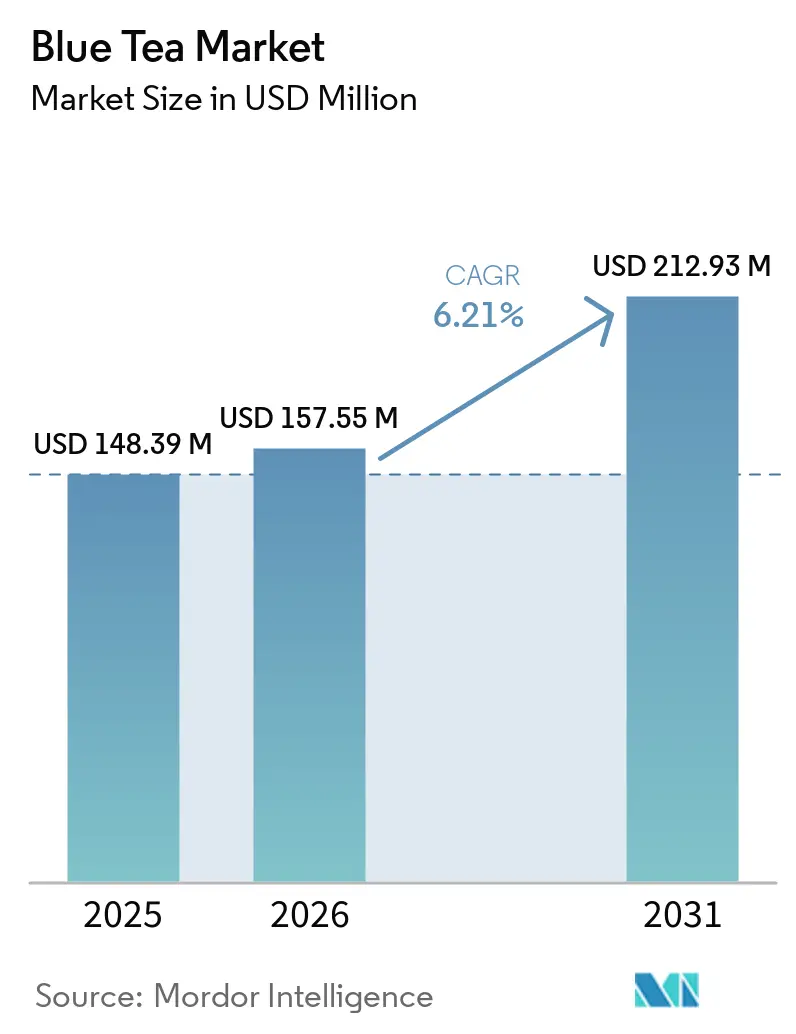
| Market Size (2026) | USD 157.55 Million |
| Market Size (2031) | USD 212.93 Million |
| Growth Rate (2026 - 2031) | 6.21 % |
| Fastest Growing Market | North America |
| Largest Market | Asia-Pacific |
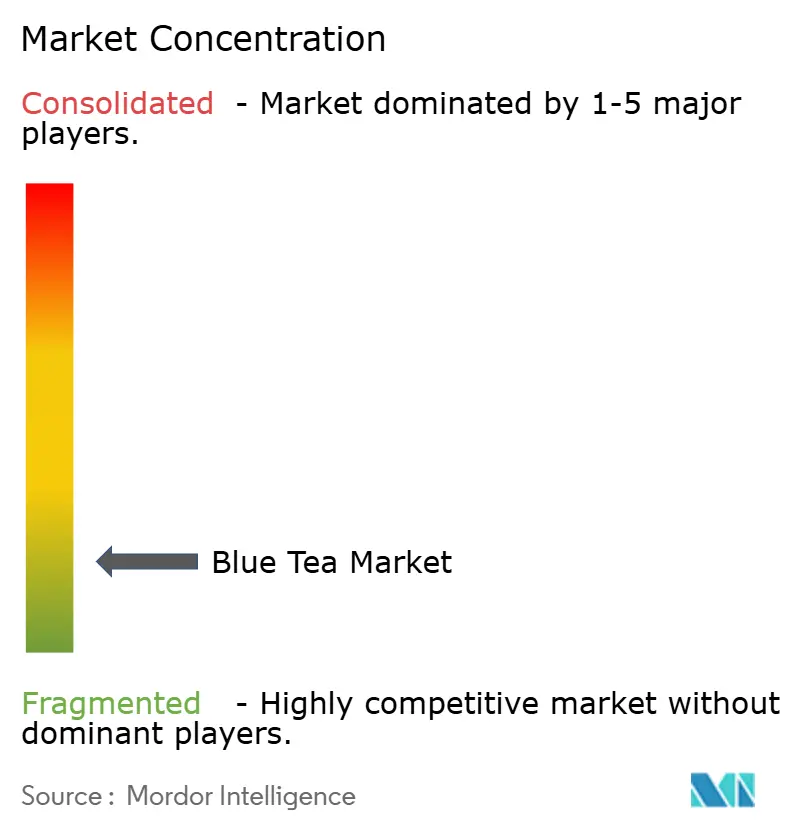
| Market Concentration | Low |
Major Players *Disclaimer: Major Players sorted in no particular order Image © Mordor Intelligence. Reuse requires attribution under CC BY 4.0. | |
Blue Tea Market Analysis by Mordor Intelligence
The blue tea market size is expected to grow from USD 148.39 million in 2025 to USD 157.55 million in 2026, and is forecast to reach USD 212.93 million by 2031, at a 6.21% CAGR over 2026-2031. The blue tea market is built around Clitoria ternatea, or butterfly pea flower, and its naturally caffeine-free profile, antioxidant compounds, and pH-sensitive color. These attributes give brands several ways to position a single ingredient across packaged tea, cafés, and beverage menus. The blue tea market benefits when retail demand for wellness products overlaps with foodservice interest in visually distinctive drinks. Supply reliability is becoming as important as branding because Thailand remains a major source of butterfly pea flowers. Companies that combine traceable sourcing, consistent quality, and wider distribution can strengthen their position as the category develops.
Key Report Takeaways
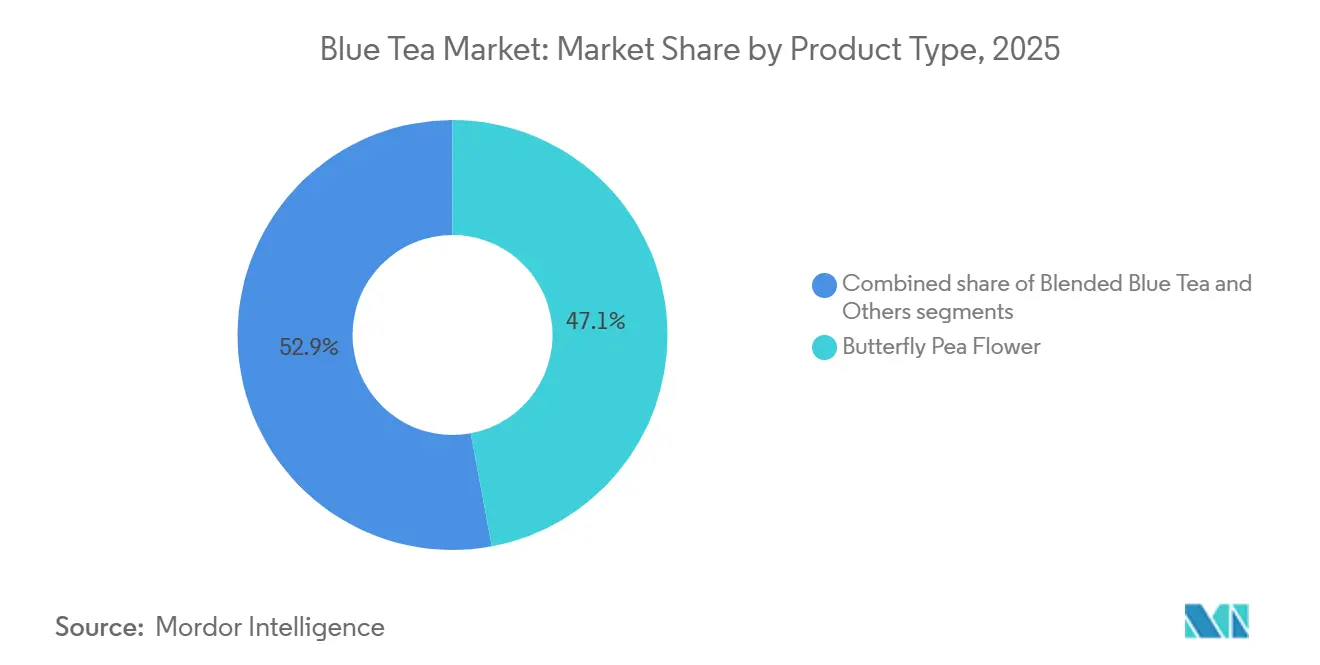
- By product type, butterfly pea flower held 47.07% of the global category in 2025, while blended blue tea is forecast to grow at a 7.05% CAGR through 2031.
- By format, loose leaves accounted for 56.35% of the global category in 2025, while tea bags are forecast to expand at a 7.14% CAGR through 2031.
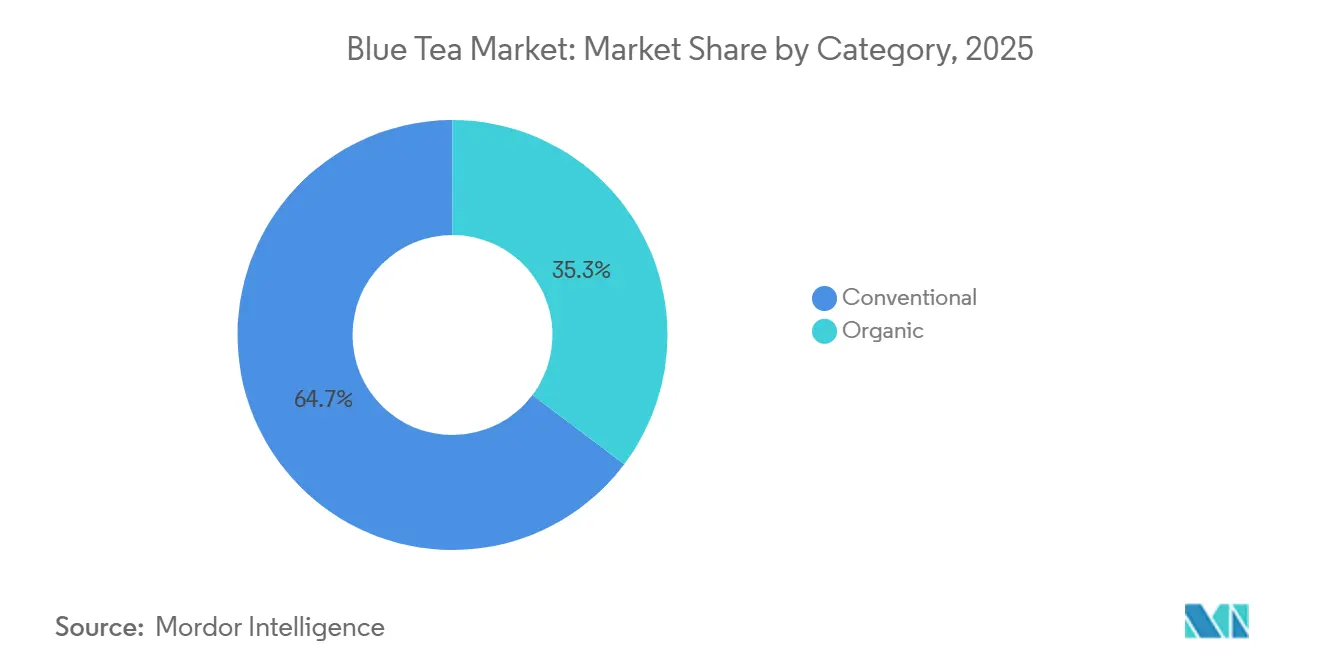
- By category, conventional blue tea held 64.74% of the market in 2025, while organic blue tea is forecast to grow at a 7.53% CAGR through 2031.
- By distribution channel, off-trade held 58.18% of the market in 2025, while on-trade is forecast to grow at a 7.82% CAGR through 2031.
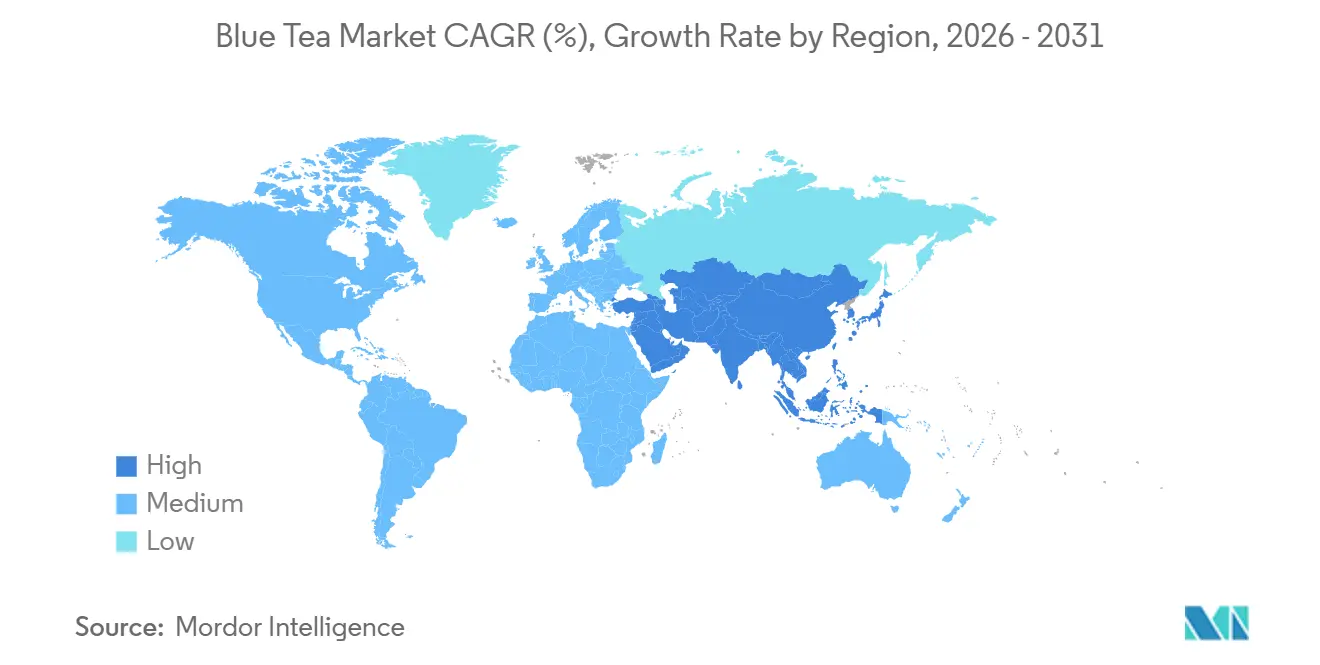
- By geography, Asia-Pacific held 43.77% of the market in 2025, while North America is forecast to grow at a 7.57% CAGR through 2031.
Note: Market size and forecast figures in this report are generated using Mordor Intelligence’s proprietary estimation framework, updated with the latest available data and insights as of January 2026.
Market Trends and Insights
Drivers Impact Analysis of Blue Tea Market*
| Driver | (~) % Impact on CAGR Forecast | Geographic Relevance | Impact Timeline |
|---|---|---|---|
| Growing demand for functional and wellness beverages | +1.5% | Global, most pronounced in North America and Asia-Pacific core | Short term (≤ 2 years) |
| Increasing preference for natural and clean-label ingredients | +1.2% | North America and Europe, spill-over to Asia-Pacific urban markets | Short term (≤ 2 years) |
| Growing café and foodservice adoption | +1.0% | Asia-Pacific core, North America on-trade | Medium term (2–4 years) |
| Rising popularity of caffeine-free beverages | +0.9% | Global, especially Japan, South Korea, and the United States | Short term (≤ 2 years) |
| Product innovation and flavor blending | +0.7% | Global, led by India and North America innovation ecosystems | Medium term (2–4 years) |
| Interest in visually appealing beverages | +0.6% | Global, highest traction in North America and Western Europe | Short term (≤ 2 years) |
| Source: Mordor Intelligence | |||
Growing Demand for Functional and Wellness Beverages
The rising emphasis on health and wellness among consumers is driving demand for blue tea as a natural, caffeine-free functional beverage. Consumers increasingly seek beverages that align with healthier lifestyles, particularly products containing plant-based ingredients and perceived nutritional benefits. According to the 2025 Food and Health Survey by the International Food Information Council (IFIC), 57% of Americans reported that healthfulness influenced their food and beverage purchasing decisions, underscoring the growing role of wellness attributes in consumer beverage choices[1]. Blue tea, primarily derived from butterfly pea flowers, contains naturally occurring anthocyanins and other bioactive compounds that have demonstrated antioxidant and other potential health-promoting activities in research. Its naturally vibrant blue color, herbal profile, and versatility as both a hot and a cold beverage further enhance its consumer appeal. These characteristics position blue tea as a differentiated beverage option for consumers seeking visually appealing, natural, and wellness-oriented alternatives to conventional tea and caffeinated drinks.
Increasing Preference for Natural and Clean-Label Ingredients
The rising consumer preference for natural, clean-label, and plant-based ingredients is driving demand for blue tea, as butterfly pea flower provides a naturally derived source of vivid blue color and a distinctive botanical profile. This ingredient aligns with manufacturers’ efforts to reduce reliance on synthetic food colors while developing visually appealing products that meet evolving consumer expectations for ingredient transparency. In the United States, the U.S. Food and Drug Administration (FDA) lists butterfly pea flower extract as a color additive exempt from certification for specified food applications, providing manufacturers with greater regulatory clarity for its use[2]. Effective June 26, 2025, the FDA expanded the approved applications of butterfly pea flower extract to include ready-to-eat cereals, crackers, snack mixes, and various types of chips. This broader regulatory acceptance is expected to support product innovation across beverages and food categories, while also strengthening the use of butterfly pea flower as a naturally sourced colorant in blue tea and related functional beverage formulations.
Growing Café and Foodservice Adoption
The increasing use of blue tea across cafés, restaurants, hotels, and specialty beverage outlets is expanding consumption occasions and improving consumer awareness of butterfly pea flower-based beverages. Blue tea’s distinctive visual appeal, particularly its ability to change from blue to purple or magenta when mixed with citrus ingredients, makes it well-suited for mocktails, cocktails, specialty teas, and other premium, visually engaging beverage offerings. This characteristic enables foodservice operators to differentiate their menus while responding to consumer demand for innovative botanical drinks and experiential beverage options. Bacardi’s 2025 Cocktail Trends Report noted a 15% year-over-year increase in North American on-trade consumer interest in herbaceous ingredients during 2024, reflecting the growing preference for botanical flavors and supporting experimentation with ingredients such as butterfly pea flower. Additionally, the National Restaurant Association’s 2025 Culinary Forecast identified Southeast Asian flavors and botanicals as notable culinary trends, creating further opportunities for foodservice establishments to incorporate butterfly pea flower into beverage menus and complementary food applications.
Rising Popularity of Caffeine-Free Beverages
Rising consumer efforts to reduce or avoid caffeine consumption are creating favorable opportunities for naturally caffeine-free beverages such as blue tea. A December 2025 survey published in the International Journal of Pharmaceutical Sciences (IJPS) found that 94.6% of respondents consumed caffeine, underscoring the widespread reliance on caffeinated beverages and the growing potential for alternatives among consumers seeking to moderate their intake[3]. Blue tea offers a naturally caffeine-free option that can meet demand for refreshing beverages throughout the day, particularly during the afternoon and evening, when consumers may prefer to avoid caffeinated tea, coffee, or energy drinks. Its versatility across hot tea, iced tea, mocktails, and other specialty beverage applications further broadens its appeal. Moreover, blue tea’s distinctive natural color provides a visually differentiated experience, strengthening its positioning as an innovative alternative to conventional herbal infusions.
Restraints Impact Analysis of Blue Tea Market*
| Restraint | (~) % Impact on CAGR Forecast | Geographic Relevance | Impact Timeline |
|---|---|---|---|
| Variability in raw material quality | -0.8% | Asia-Pacific supply origin (Thailand, India); global contract manufacturing impact | Medium term (2–4 years) |
| Strong competition from established herbal teas | -0.7% | Global, most acute in Europe and North America | Long term (≥ 4 years) |
| Higher prices compared with conventional teas | -0.6% | Global, especially price-sensitive markets in South America and Middle East and Africa | Medium term (2–4 years) |
| Limited product availability in traditional retail channels | -0.5% | Europe, South America, Middle East and Africa | Medium term (2–4 years) |
| Source: Mordor Intelligence | |||
Strong Competition from Established Herbal Teas
The blue tea market faces competition from established herbal tea varieties, including chamomile, ginger, and hibiscus, which have strong consumer recognition, long-standing health associations, and extensive retail availability. Consumers often select these conventional herbal teas based on familiarity with their perceived wellness benefits, taste profiles, and affordability. A 2025 systematic review published in Critical Reviews in Food Science and Nutrition found that consumers’ familiarity with specific health associations can influence their choices of herbal tea. In comparison, blue tea remains a relatively niche product in several markets, which may limit initial consumer adoption, particularly when established alternatives are available at lower price points and across a wider range of supermarkets, specialty stores, and foodservice outlets. While blue tea offers differentiation through its naturally vibrant color and versatility in hot, iced, and specialty beverage applications, brands must increase consumer awareness, communicate product attributes effectively, maintain competitive pricing, and expand retail shelf presence to strengthen market penetration and compete with established herbal tea products.
Higher Prices Compared with Conventional Teas
Higher prices than conventional teas can restrain growth in the blue tea market, particularly in price-sensitive markets where consumers can choose from widely available, lower-cost black, green, and herbal tea alternatives. Butterfly pea flowers, the primary ingredient in blue tea, are often regarded as premium botanical inputs, and costs can increase further due to organic certification, specialized sourcing, quality control requirements, limited production volumes, and processing expenses. These factors lead to higher retail prices, which may discourage first-time purchases and reduce repeat consumption, especially among consumers who remain unfamiliar with blue tea and its perceived health and visual-appeal benefits. In addition, premium pricing can limit blue tea's accessibility across mass-market retail channels and constrain its adoption beyond health-conscious and affluent consumer segments. Therefore, manufacturers and retailers need to balance premium product positioning with competitive pricing, smaller pack sizes, promotional offers, and consumer education initiatives to encourage product trials and support broader market penetration.
*Our forecasts treat driver/restraint impacts as directional, not additive. The impact forecasts reflect baseline growth, mix effects, and variable interactions.
Blue Tea Market Segment Analysis
By Product Type:
Butterfly Pea Flower Anchors a Diversifying PortfolioButterfly Pea Flower accounted for 47.07% of the blue tea market in 2025, making it the largest product type and the ingredient most closely associated with the category. Its naturally vibrant blue color, caffeine-free profile, and perceived antioxidant and wellness benefits continue to attract health-conscious consumers. The ingredient supports a broad range of applications, including traditional herbal infusions, specialty café beverages, and functional drink formulations. Its ability to change color when combined with acidic ingredients also enhances its appeal in premium and visually distinctive beverage offerings.
Blended Blue Tea is projected to grow at a CAGR of 7.05% during 2026-2031, driven by rising consumer demand for innovative flavors and functional herbal beverages. Manufacturers are combining butterfly pea flower with fruits, herbs, spices, and other botanicals to create differentiated taste profiles and additional wellness-oriented attributes. These blends enable brands to expand product portfolios and cater to consumers seeking convenient, flavorful, and caffeine-free alternatives. Continued product innovation and the increasing popularity of visually appealing beverages are expected to support the segment’s growth over the forecast period.

By Format:
Convenience Formats Gain Ground Against Loose-Leaf TraditionLoose leaves accounted for 56.35% of the blue tea market in 2025, retaining the largest share among available product formats. Consumers continue to prefer loose-leaf blue tea for its traditional brewing experience, perceived freshness, and premium quality. This format allows consumers to assess the botanical ingredients directly and customize brewing strength according to their preferences. Specialty tea stores and online retail platforms particularly support demand for loose leaves by offering a wider selection of premium and single-origin products. The segment is expected to remain important as consumers increasingly seek authentic herbal tea experiences.
Tea bags are projected to grow at a CAGR of 7.14% through 2031, driven by rising demand for convenient and easy-to-prepare blue tea formats. Individually portioned tea bags offer consistent serving sizes and reduce preparation time, making them suitable for consumers with busy lifestyles. Their growing availability across supermarkets, convenience stores, and online retail channels is further improving product accessibility. Manufacturers are also expanding packaged blue tea offerings to address demand for portable and user-friendly herbal beverage options. As convenience becomes a stronger purchase consideration, tea bags are expected to gain market share relative to loose-leaf formats over the forecast period.
By Category:
Conventional Holds Ground as Organic AcceleratesConventional blue tea accounted for 64.74% of the market in 2025, supported by its relatively lower price and widespread availability across key retail channels. Established supply chains enable manufacturers to offer conventional products at competitive price points, making them accessible to a broader consumer base. The segment benefits from strong distribution through supermarkets, specialty stores, and online retail platforms. Familiarity with conventional tea products and consistent product availability are expected to sustain demand over the forecast period.
Organic blue tea is projected to grow at a 7.53% CAGR from 2026 to 2031, driven by rising consumer preference for clean-label and naturally sourced beverages. Increasing health consciousness is encouraging consumers to seek products made from organically cultivated butterfly pea flowers and other herbal ingredients. The growing availability of certified organic blue tea across specialty stores and e-commerce platforms is further supporting segment expansion. Manufacturers are also introducing premium organic offerings to address demand for sustainable, transparent, and minimally processed tea products.
By Distribution Channel:
Foodservice Channels Outpace Retail GrowthOff-trade accounted for 58.18% of the blue tea market in 2025, driven by the broad accessibility of products through supermarkets, convenience stores, and online retail platforms. Consumers increasingly prefer off-trade channels for purchasing blue tea for at-home consumption, as these outlets offer convenience, product variety, and competitive pricing. The growing availability of packaged formats, including tea bags, loose leaves, and powdered blue tea, further supports sales through these channels. Online retail is also gaining traction as consumers seek specialty and premium blue tea products through digital platforms. The continued expansion of organized retail networks is expected to sustain growth in the off-trade channel.
On-trade is projected to grow at a CAGR of 7.82% from 2026 to 2031, making it the fastest-growing distribution channel in the global blue tea market. Cafés, restaurants, hotels, and specialty beverage outlets are increasingly incorporating blue tea into their menus to offer visually distinctive and premium beverage options. Its natural blue color allows foodservice operators to create innovative hot and cold beverages, cocktails, and wellness-focused drink offerings. Rising consumer interest in experiential dining and unique beverage presentations is further driving adoption across on-trade establishments. The expansion of premium cafés and health-focused foodservice outlets is expected to support the channel's growth during the forecast period.
Geography Analysis
APAC Blue Tea Market
Asia-Pacific accounted for 43.77% of the blue tea market in 2025, supported by established butterfly pea cultivation and strong cultural familiarity with herbal infusions in Thailand, Malaysia, Vietnam, and India. Thailand remains a major production hub due to its established cultivation base and export capabilities. India is emerging as one of the region’s fastest-growing domestic markets, supported by its Ayurvedic heritage and the expansion of integrated blue tea brands. However, extreme heat and declining organic output in parts of Thailand highlight supply chain vulnerabilities and reinforce the need for diversified sourcing strategies. Blue Tea
North America Blue Tea Market
North America is projected to be the fastest-growing regional market, registering a CAGR of 7.57% from 2026 to 2031. Growth is driven by rising consumer demand for functional beverages, increasing e-commerce penetration, and growing interest in botanical ingredients. The United States supports regional expansion through broader adoption in mainstream retail and growing consumer awareness of wellness-oriented tea products. In 2025, Bigelow expanded its butterfly pea flower tea range nationwide, reflecting the category’s increasing retail presence. Regulatory clarity regarding permitted uses of butterfly pea flower extract further supports product development and formulation opportunities. Bigelow Tea
EMEA and South America Blue Tea Market
Europe, South America, and the Middle East and Africa offer additional growth opportunities for the blue tea market, supported by demand for wellness beverages and naturally colored botanical products. The United Kingdom, Germany, and France lead demand in Europe, driven by developed specialty tea markets and consumer interest in premium herbal infusions. Brazil and Argentina present emerging opportunities for premium beverage brands as interest in functional and botanical drinks increases. In the Middle East & Africa, Saudi Arabia, the United Arab Emirates, and South Africa offer potential through hospitality channels and established herbal tea consumption. However, price sensitivity and limited consumer awareness may constrain broader adoption across these regions.
Competitive Landscape
The global blue tea market remains highly fragmented, with competition distributed among small and medium-sized enterprises, regional exporters, and specialty tea manufacturers. Prominent participants include Redplum Private Limited (Blue Tea), Madhu Jayanti International Pvt. Ltd. (TE-A-ME), Sancha Tea Boutique, Nuts Delish Pvt. Ltd. (Tea Better), and Kolar Herbs Pvt. Ltd. These companies compete by expanding product portfolios, securing high-quality botanical ingredients, and strengthening organic product offerings. Their competitive strategies also focus on increasing visibility through e-commerce platforms, specialty retail stores, and direct-to-consumer channels. Blue Tea
Market participants are using differentiated strategies to expand their brand presence and address evolving consumer preferences for wellness-oriented beverages. Specialist blue tea brands emphasize direct relationships with farmers, traceable sourcing, product authenticity, and digital consumer engagement to differentiate their offerings. For instance, Blue Tea has highlighted its direct engagement with farmers and partnerships, including its collaboration with IndiGo Airlines. In contrast, established tea companies use their broader distribution capabilities to reach mainstream consumers, as demonstrated by Bigelow Tea’s 2025 expansion of its Butterfly Pea Flower tea range across major U.S. retailers. Bigelow Tea
Competitive activity is increasingly moving beyond conventional herbal tea formats toward functional beverages, botanical blends, and innovative ready-to-drink applications. Manufacturers are exploring formulations that combine butterfly pea flower with ingredients such as chia seeds and stevia to enhance functional appeal and flavor differentiation. Technological advancements in anthocyanin stabilization, extraction efficiency, and microencapsulation may further support the use of blue tea ingredients across a wider range of beverage and food applications. Companies that maintain consistent quality, establish reliable supply networks, develop differentiated formulations, and make responsible wellness claims are likely to strengthen their market positioning.
Blue Tea Industry Leaders
-
Redplum Private Limited (Blue Tea)
-
Madhu Jayanti International Pvt. Ltd. (TE-A-ME)
-
Kolar Herbs Pvt. Ltd.
-
Nuts Delish Pvt. Ltd. (Tea Better)
-
Sancha Tea Boutique
- *Disclaimer: Major Players sorted in no particular order
Blue Tea Market Companies Covered in this Report
- Redplum Private Limited (Blue Tea)
- Madhu Jayanti International Pvt. Ltd. (TE-A-ME)
- Budwhite Teas Pvt. Ltd.
- Farm Club/Horizon Holdings
- Amritam Spices
- Woodherbs
- HNCO Infusions Pvt. Ltd.
- Chahaa Exporters
- Pranacharya Greenshield
- Sancha Tea Boutique
- Nuts Delish Pvt. Ltd. (Tea Better)
- Nirogi Jeevan Trading Company
- Shree Surjal Mata Marketing Pvt. Ltd. (The Tea Trove)
- Kolar Herbs Pvt. Ltd.
- Azure Harvest Private Limited
- Deesha Trade Endeavours Pvt. Ltd.
- Adept Impex Pvt. Ltd.
- Royalleaf Exports Pvt. Ltd.
- Herbqraft Industries Pvt. Ltd.
- The Tea Shelf
Recent Industry Developments in Blue Tea Market
- August 2026: Blue Tea India expanded its presence in Walmart’s offline retail network, with its products becoming available at six Walmart stores across India, strengthening the company’s physical retail footprint.
- May 2026: Starbucks introduced the Tropical Butterfly Refresher, featuring guava and passionfruit flavors, mango-pineapple-flavored pearls, and a splash of butterfly pea flower infusion that creates a vibrant, color-changing effect.
- August 2025: Bigelow Tea broadened the availability of its Butterfly Pea Flower tea line across major U.S. retailers, offering its caffeine-free Sapphire Bay and Vanilla Midnight herbal blends through additional retail outlets and online channels.
- June 2024: Bigelow Tea entered the butterfly pea flower tea segment with the launch of its Butterfly Pea Flower tea brand, featuring the caffeine-free Sapphire Bay and Vanilla Midnight herbal blends. The products were initially available exclusively at select Walmart stores and on Walmart.com.
Global Blue Tea Market Report Scope
Blue tea is an herbal infusion made primarily from butterfly pea flowers (Clitoria Ternatea) and is known for its naturally vibrant blue color. By product type, the market is segmented into butterfly pea flower, blended blue tea, and others. By format, it is segmented into loose leaves, tea bags, powder, and others. By category, the market is divided into organic and conventional. By distribution channel, it is categorized into on-trade and off-trade. Geographically, the market covers North America, Europe, Asia Pacific, Latin America, the Middle East, and Africa. Market forecasts are presented in terms of value (USD).
Segmentation Overview
| Butterfly Pea Flower |
| Blended Blue Tea |
| Others |
| Loose Leaves |
| Tea Bags |
| Powder |
| Others |
| Organic |
| Conventional |
| On-Trade | |
| Off-Trade | Supermarkets/Hypermarkets |
| Convenience Stores | |
| Online Retail Stores | |
| Other Off-Trade Channels |
| North America | United States |
| Canada | |
| Mexico | |
| Rest of North America | |
| Europe | Germany |
| United Kingdom | |
| Italy | |
| France | |
| Spain | |
| Rest of Europe | |
| Asia-Pacific | China |
| Japan | |
| India | |
| Australia | |
| Rest of Asia-Pacific | |
| South America | Brazil |
| Argentina | |
| Rest of South America | |
| Middle East and Africa | South Africa |
| Saudi Arabia | |
| United Arab Emirates | |
| Rest of Middle East and Africa |
| By Product Type | Butterfly Pea Flower | |
| Blended Blue Tea | ||
| Others | ||
| By Format | Loose Leaves | |
| Tea Bags | ||
| Powder | ||
| Others | ||
| By Category | Organic | |
| Conventional | ||
| By Distribution Channel | On-Trade | |
| Off-Trade | Supermarkets/Hypermarkets | |
| Convenience Stores | ||
| Online Retail Stores | ||
| Other Off-Trade Channels | ||
| By Geography | North America | United States |
| Canada | ||
| Mexico | ||
| Rest of North America | ||
| Europe | Germany | |
| United Kingdom | ||
| Italy | ||
| France | ||
| Spain | ||
| Rest of Europe | ||
| Asia-Pacific | China | |
| Japan | ||
| India | ||
| Australia | ||
| Rest of Asia-Pacific | ||
| South America | Brazil | |
| Argentina | ||
| Rest of South America | ||
| Middle East and Africa | South Africa | |
| Saudi Arabia | ||
| United Arab Emirates | ||
| Rest of Middle East and Africa | ||
Key Questions Answered in the Report
What is the projected growth rate for blue tea through 2031?
The global category is forecast to grow at a 6.21% CAGR from 2026 to 2031, reaching USD 212.93 million by 2031.
Which blue tea product type has the largest share?
Butterfly pea flower led product types with a 47.07% share in 2025, while blended products are expected to grow faster at a 7.05% CAGR.
Why are tea bags gaining importance in blue tea?
Tea bags are forecast to grow at a 7.14% CAGR through 2031 because they offer portion control, convenience, and a route into wider retail distribution.
Which region leads global demand for blue tea?
Asia-Pacific led with a 43.77% share in 2025, supported by regional familiarity with butterfly pea flower and a strong production base.