
Blepharitis Treatment Market Size and Share
Market Overview
| Study Period | 2020 - 2031 |
|---|---|
| Market Size (2026) | USD 1.55 Billion |
| Market Size (2031) | USD 2.06 Billion |
| Growth Rate (2026 - 2031) | 5.75% CAGR |
| Fastest Growing Market | Asia-Pacific |
| Largest Market | North America |
| Market Concentration | Low |
Major Players *Disclaimer: Major Players sorted in no particular order Image © Mordor Intelligence. Reuse requires attribution under CC BY 4.0. | |
Blepharitis Treatment Market Analysis by Mordor Intelligence
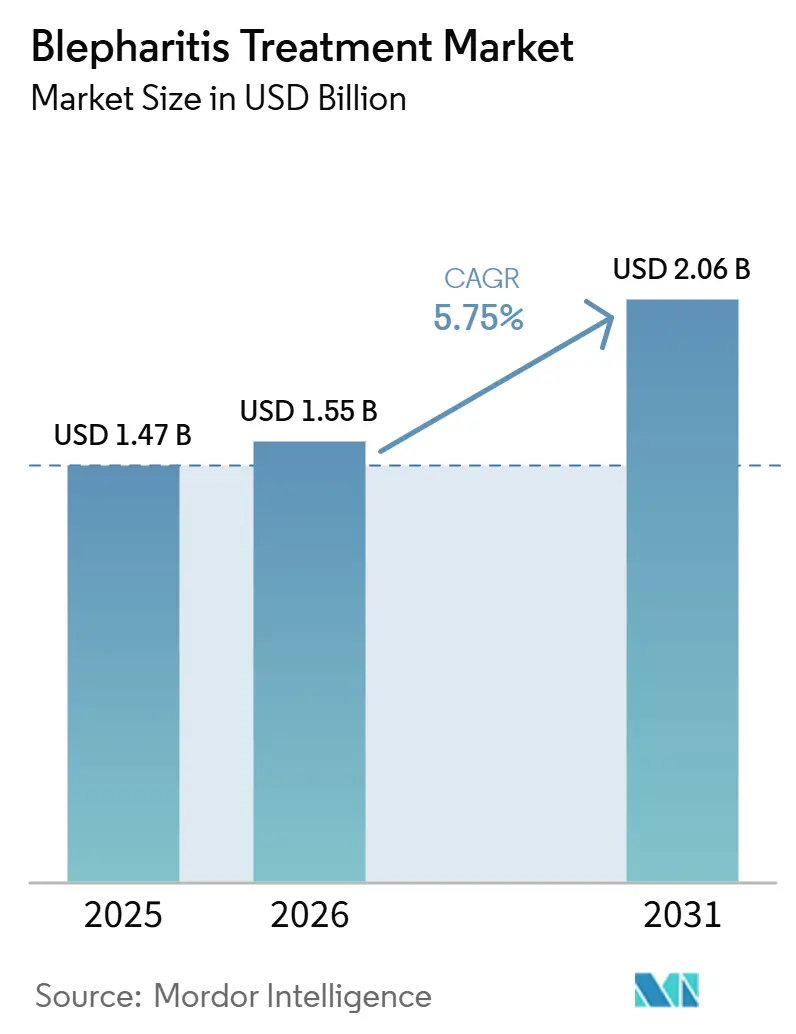
The Blepharitis Treatment Market size is projected to expand from USD 1.47 billion in 2025 and USD 1.55 billion in 2026 to USD 2.06 billion by 2031, registering a CAGR of 5.75% between 2026 to 2031.
The blepharitis treatment market is supported by a larger diagnosed patient base, the availability of a Demodex-specific prescription treatment, and the continuing burden of chronic ocular-surface disease. Aging populations add to the need for recurring care because ocular-surface symptoms and meibomian gland dysfunction become more common with age. Greater use of eyelid imaging can identify diseases that were previously missed and may make treatment decisions more consistent. Companies are pursuing prescription therapies, devices, and repeat-purchase hygiene products, while opportunities remain for care models that combine diagnosis with treatment. Patient adherence, limited coverage for certain procedures, and antimicrobial stewardship continue to constrain the blepharitis treatment market.
Key Report Takeaways
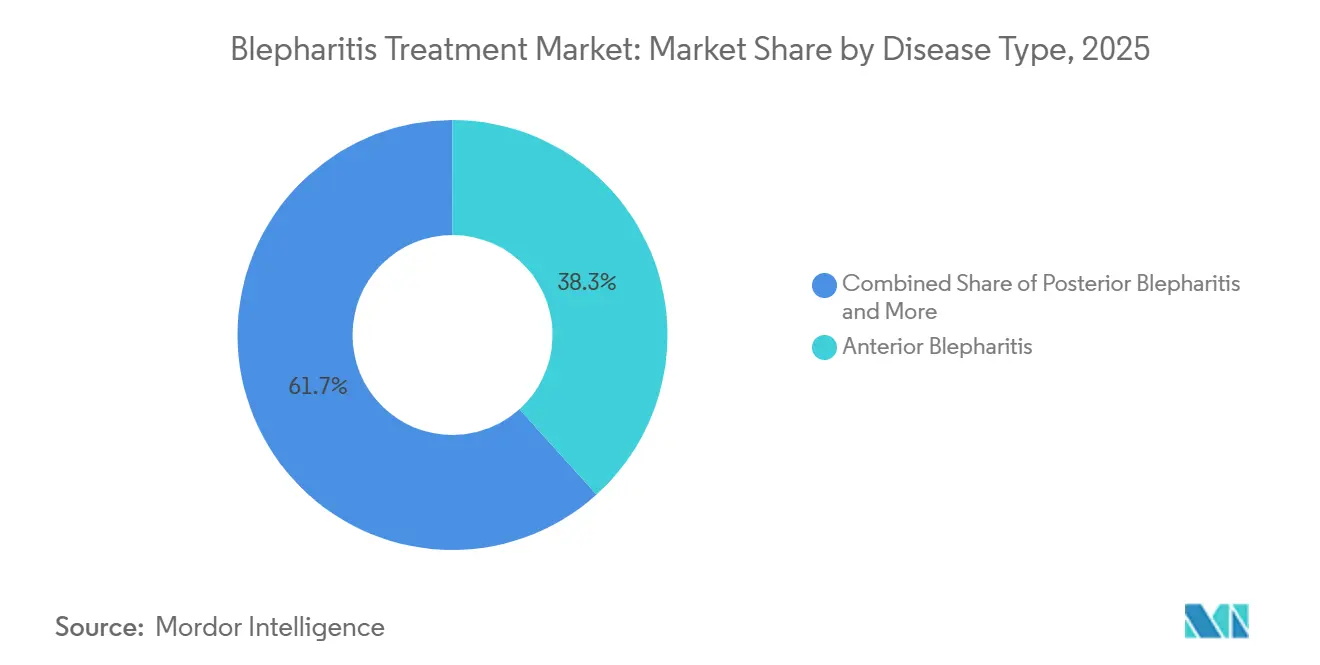
- By disease type, anterior blepharitis held 38.31% of the Blepharitis Treatment Market share in 2025, while posterior blepharitis is expected to record the highest CAGR at 8.58% through 2031.
- By treatment type, artificial tears and lubricants accounted for 36.24% of the Blepharitis Treatment Market size in 2026, while device-assisted therapies are expected to advance at an 8.22% CAGR through 2031.
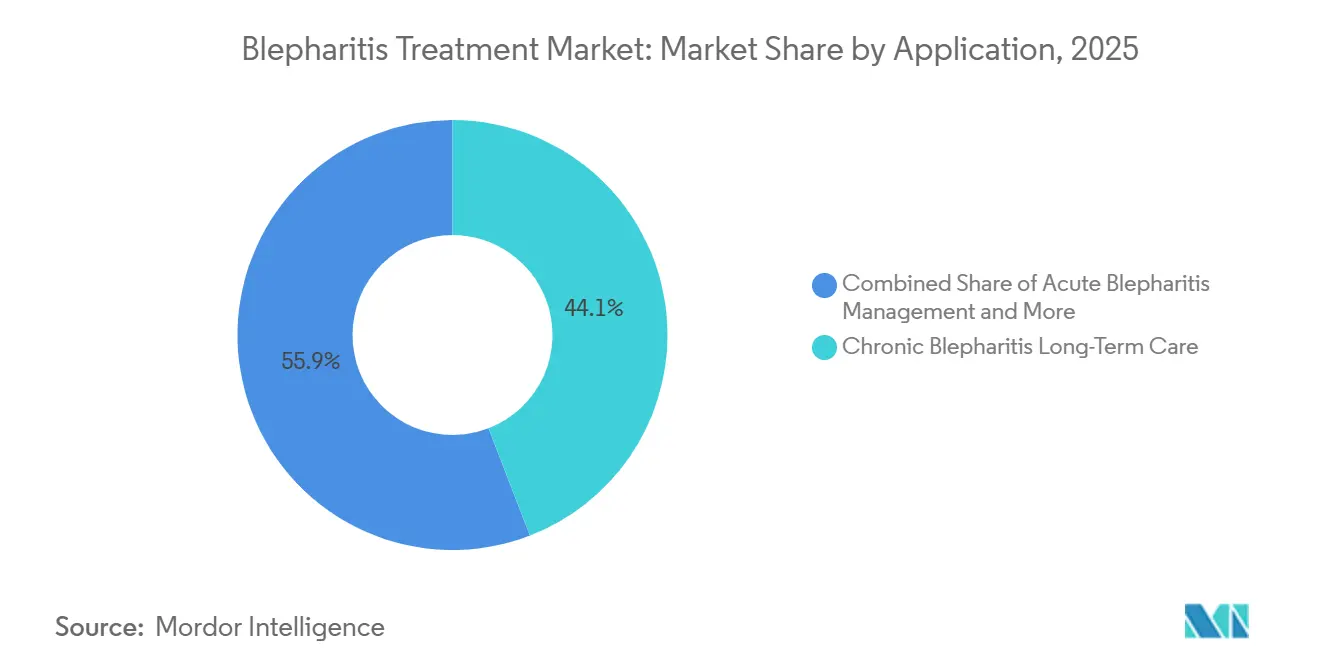
- By application, chronic blepharitis long-term care held 44.14% share in 2025 and is expected to record the highest CAGR at 6.82% through 2031.
- By distribution channel, retail pharmacies and drug stores held 38.65% share in 2025, while online pharmacies and e-commerce are expected to record the highest projected CAGR at 8.95% through 2031.
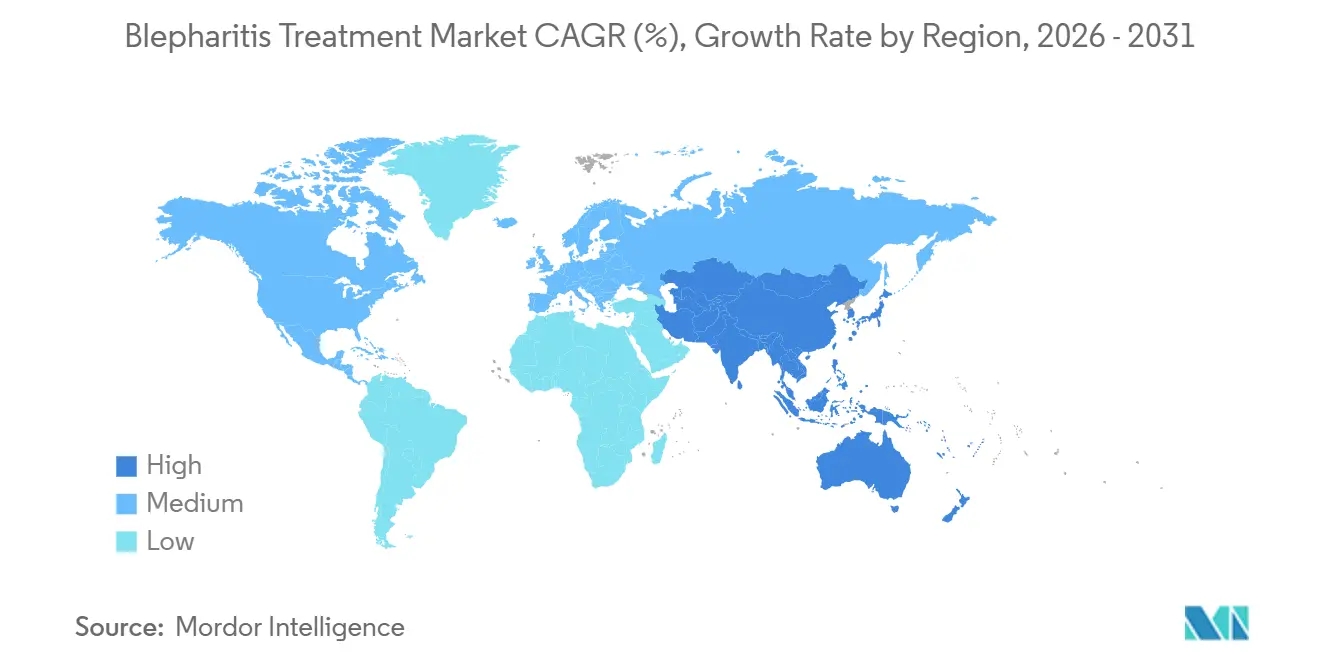
- By geography, North America held 40.61% share in 2025, while the Asia-Pacific is expected to record the highest CAGR at 8.25% through 2031.
Note: Market size and forecast figures in this report are generated using Mordor Intelligence’s proprietary estimation framework, updated with the latest available data and insights as of January 2026.
Global Blepharitis Treatment Market Trends and Insights
Drivers Impact Analysis*
| Driver | (~) % Impact on CAGR Forecast | Geographic Relevance | Impact Timeline |
|---|---|---|---|
| Rising Diagnosis Of Meibomian Gland Dysfunction And Dry-Eye Overlap | +1.8% | Global, with acute concentration in East Asia and Southern Europe | Medium term (2-4 years) |
| FDA-Led Commercialization Of Root-Cause Demodex Therapy | +1.5% | North America, expanding to Greater China and Europe | Short term (≤ 2 years) |
| Aging-Related Growth In Chronic Ocular-Surface Disease | +0.9% | Global, highest in Japan, Western Europe, and South Korea | Long term (≥ 4 years) |
| Expansion Of Specialist Eye-Care And Retail Optical Networks In Asia-Pacific | +0.5% | Asia-Pacific core, with spillover to the Middle East and Africa | Medium term (2-4 years) |
| Screen-Exposure-Related Ocular-Surface Symptoms | +0.6% | Global, concentrated in working-age urban populations in the Asia-Pacific and North America | Medium term (2-4 years) |
| AI-Assisted Eyelid Imaging And Severity Grading | +0.3% | North America, China, South Korea, Germany, and Japan | Long term (≥ 4 years) |
| Source: Mordor Intelligence | |||
FDA-Led Commercialization Of Root-Cause Demodex Therapy
Before 2023, clinicians had no FDA-approved drug that addressed the root cause of Demodex blepharitis. The approval of lotilaner ophthalmic solution 0.25%, marketed as XDEMVY by Tarsus Pharmaceuticals, gave prescribers a targeted option for eliminating Demodex mites. The therapy selectively inhibits parasite-specific GABA-gated chloride channels rather than only managing symptoms. Tarsus reported USD 102.7 million in XDEMVY net product sales during Q2 2025, a 152% year-over-year increase, with more than 20,000 eye-care professionals prescribing the product[1]Tarsus Pharmaceuticals, “Tarsus Reports Second Quarter 2025 Financial Results and Recent Business Achievements,” Tarsus Pharmaceuticals, tarsusrx.com. The company stated that coverage reached more than 90% of commercial, Medicare, and Medicaid lives, reducing a major access barrier for many eligible patients. Tarsus currently guides for USD 670 million to USD 700 million in 2026 sales and cited peak sales potential above USD 2 billion, demonstrating the commercial importance of a category-creating approval.
Rising Diagnosis Of Meibomian Gland Dysfunction And Dry-Eye Overlap
Meibomian gland dysfunction and posterior blepharitis share obstructed gland openings, poor-quality meibum, and tear-film instability. A 2026 systematic review found a pooled asymptomatic meibomian gland dysfunction prevalence of 72.86% across 3,637 participants. Many patients can therefore be identified during assessments for conditions other than blepharitis. The Eos Study found collarettes in 54% of European ophthalmology clinic attendees and severe infestation in 32%. Collarette prevalence rose to 62% among patients aged 70 and older, which strengthens the rationale for routine assessment in older clinical populations. Dry-eye questionnaires, tear assessment, and meibography can also expand identification of patients who need ongoing blepharitis care.
Screen-Exposure-Related Ocular-Surface Symptoms
Long screen exposure can reduce blink frequency and complete blinking, which disrupts meibum distribution across the ocular surface. This can worsen gland function and contribute to persistent symptoms that lead patients to seek eye care. The clinical relationship still supports attention to working-age patients, who are not always associated with chronic ocular-surface disease. This broadens the potential patient pathway beyond older adults and supports education through digital consumer channels. Tarsus reported a 400% increase in XDEMVY consumer engagement since early 2025, indicating that digital outreach has become a meaningful patient-activation channel.
AI-Assisted Eyelid Imaging And Severity Grading
AI-assisted meibography can shorten the time required to assess meibomian gland structure and grade disease severity. A 2025 multicenter study evaluated a U-Net model using 1,350 annotated infrared meibography images. The model achieved 97.49% segmentation accuracy and a Kappa value of 0.93 against manual gland grading. Its area-under-the-curve results exceeded 0.99 across 4 external validation cohorts. A separate OASIS tool reduced analysis time by 87% compared with conventional manual grading. More consistent grading can support earlier treatment, reduce variation among clinicians, and provide clearer records for discussions with payers.
Restraints Impact Analysis*
| Restraint | (~) % Impact on CAGR Forecast | Geographic Relevance | Impact Timeline |
|---|---|---|---|
| Low Persistence With Daily Lid-Hygiene Regimens | -0.5% | Global, most acute where chronic disease management pathways are limited | Long term (≥ 4 years) |
| Limited Reimbursement For Thermal And Light-Based Procedures | -0.8% | North America and Western Europe | Medium term (2-4 years) |
| Antimicrobial Resistance And Stewardship Constraints | -0.4% | Global, with higher risk in Asia and Sub-Saharan Africa | Long term (≥ 4 years) |
| Fragmented Diagnosis Of Mixed And Demodex Disease | -0.3% | Global, especially in primary care-led markets in South Asia, Southeast Asia, and Latin America | Medium term (2-4 years) |
| Source: Mordor Intelligence | |||
Limited Reimbursement For Thermal And Light-Based Procedures
Many U.S. private payers classify thermal pulsation and intense pulsed light procedures as investigational or elective, limiting reimbursement for LipiFlow, TearCare, and similar interventions. The American Academy of Ophthalmology noted that independent, randomized, masked clinical trials had not yet established the evidence base needed for broad coverage decisions[2]American Academy of Ophthalmology, “Preferred Practice Pattern Guidelines for Blepharitis,” American Academy of Ophthalmology, blueshieldca.com. This leaves patients to make an out-of-pocket decision even when a clinician sees a potential benefit. It also narrows demand to patients with stronger clinical motivation or greater ability to pay. Manufacturers need stronger independent evidence to support future coverage discussions and wider access.
Antimicrobial Resistance And Stewardship Constraints
Topical azithromycin, bacitracin-polymyxin B, and oral doxycycline remain part of care for selected blepharitis presentations. A Shanghai surveillance study covering 2020 to 2024 found a significant increase in methicillin-resistant Staphylococcus aureus among bacterial conjunctivitis isolates and identified multidrug-resistant Acinetobacter baumannii. These patterns encourage clinicians to limit empirical antibiotics, especially for chronic or recurrent cases. Antibiotics may be reserved more often for culture-confirmed susceptible organisms. The Blepharitis Treatment Market may therefore see greater reliance on hygiene, antiparasitic drops, and gland-clearance procedures. This shift can restrain routine antibiotic use while supporting other treatment approaches.
*Our forecasts treat driver/restraint impacts as directional, not additive. The impact forecasts reflect baseline growth, mix effects, and variable interactions.
Segment Analysis
By Disease Type: Posterior Cases Gain Attention Through Better Recognition
Anterior blepharitis held 38.31% of the disease-type segment in 2025, reflecting established hygiene and medication pathways. Posterior blepharitis is forecast to grow at 8.58% CAGR through 2031. Its growth is linked to greater recognition of meibomian gland dysfunction and increased availability of root-cause Demodex treatment. The Eos Study found collarettes in 54% of European ophthalmology clinic attendees, even though many attended for unrelated reasons. This supports the view that posterior and Demodex-associated disease can be missed rather than absent. The Blepharitis Treatment Market is therefore moving toward more structured assessment of lid findings in routine eye-care visits. This makes routine identification more relevant to treatment planning, particularly when symptoms do not clearly indicate a single cause. A focused lid examination can be especially useful when patients present with persistent dryness, irritation, or visual discomfort.
Mixed anterior and posterior blepharitis remained the smallest disease-type category. These patients often require a combination of hygiene products, anti-inflammatory therapies, and antiparasitic drops. This makes care more complex than treatment for a single disease pattern. Better meibography may identify mixed cases that were previously not classified clearly. Earlier classification can help clinicians choose therapies that address both surface inflammation and an underlying mite or gland component. The Blepharitis Treatment Market can benefit from this clearer classification because combination cases need more than one form of care. Japanese evidence showed that topical azithromycin improved lid heaviness, foreign-body sensation, and difficulty opening the eyes in patients with blepharitis and meibomian gland dysfunction. These reported quality-of-life outcomes support the continued role of specialized pharmacological options for posterior presentations. They also show why posterior cases may require evaluation beyond basic symptom relief and routine hygiene. Treatment selection may depend on whether inflammation, meibomian gland obstruction, or Demodex findings are present.



By Treatment Type: Devices Extend Care Beyond Symptom Relief
Artificial tears and lubricants accounted for 36.24% of the Blepharitis Treatment Market size in 2026. Their position reflects continued use for regular symptom relief and long-term ocular-surface support. Device-assisted therapies are forecast to grow at an 8.22% CAGR through 2031. This category includes thermal pulsation systems, such as LipiFlow and TearCare, and intense pulsed light devices. A 2025 network meta-analysis found that meibomian gland expression showed the highest efficacy for improving gland secretion. The same analysis found strong composite benefits from intense pulsed light combinations, including IPL with diquafosol sodium.
Topical antibiotics retain a meaningful role, particularly where bacterial involvement is suspected. Antimicrobial stewardship, however, is reducing the suitability of routine antibiotics in chronic presentations. Eyelid-hygiene products, including cleansing wipes, hypochlorous acid sprays, and warm compresses, remain accessible through retail and online channels. Their lower cost and over-the-counter availability support frequent use. Oral antibiotics and anti-inflammatory products are generally used for severe or refractory disease. Topical corticosteroids also retain a role during acute flares, including in short-course combination regimens. The Blepharitis Treatment Market increasingly combines symptom relief with options intended to address gland obstruction or Demodex infestation. This allows treatment plans to reflect the source of symptoms rather than relying on a single product category. It also preserves a role for products that manage discomfort while the underlying condition is assessed. This is important because treatment intensity can differ between mild symptoms and persistent gland-related disease.
By Application: Chronic Care Sustains Treatment Demand
Chronic blepharitis long-term care accounted for 44.14% of the application segment in 2025 and is projected to grow at 6.82% CAGR through 2031. It was both the largest and fastest-growing application. This indicates that new demand is being added within chronic care pathways rather than only shifting between acute treatment categories. Demodex-related disease often requires follow-up because symptoms and lid findings can persist for years. The availability of a targeted therapy gives clinicians a specific option when Demodex is identified. The Blepharitis Treatment Market is consequently supported by recurring management needs rather than one-time care alone.
Meibomian gland dysfunction-associated treatment is another important application because it is closely linked to posterior blepharitis. Device-based gland-clearance protocols are becoming more relevant as clinicians focus on obstruction and tear-film stability. Acute blepharitis management and bacterial blepharitis treatment serve more time-limited needs. Demodex blepharitis treatment is becoming more formally defined following the launch of XDEMVY. Some patients previously labeled as chronic anterior cases may be reclassified when clinicians identify underlying Demodex disease. That change can redirect treatment toward antiparasitic therapies while maintaining the need for hygiene and ocular-surface support. The Blepharitis Treatment Market can retain demand from these patients because diagnosis changes the treatment approach without removing the need for chronic care. Regular review remains important where lid inflammation, gland dysfunction, and ocular-surface symptoms occur together. A continuing care plan can combine prescription treatment with supportive therapies when clinically appropriate.
By Distribution Channel: Retail Retains Scale as Online Access Expands
Retail pharmacies and drug stores held 38.65% share in 2025, making them the largest distribution channel. The channel benefits from over-the-counter access to eyelid-hygiene products, artificial tears, and hypochlorous acid cleansers. These products are used repeatedly and are familiar to consumers managing chronic symptoms. Online pharmacies and e-commerce are forecast to grow at 8.95% CAGR through 2031. The faster growth reflects how patients reorder maintenance products and seek convenient access to recurring therapies. Tarsus reported a 400% increase in consumer engagement on the XDEMVY website since early 2025.
Hospital pharmacies remain important for prescription-only therapies and dispensing linked to specialist care. They are especially relevant in European settings where hospital-based dispensing is established. Mail-order programs can help eligible patients maintain access to prescription treatments. This may partly address poor persistence with recurring regimens. The reported coverage of more than 90% of U.S. commercial, Medicare, and Medicaid lives for XDEMVY supports this pathway. Optical retail networks and ophthalmology-adjacent clinics are also gaining relevance in the Asia-Pacific. The Blepharitis Treatment Market can therefore use retail, clinical, and digital channels to reach patients with different treatment needs. This mix is useful for a condition in which treatment products and prescription needs can change over time. It also allows patients to obtain routine maintenance products without replacing clinician involvement for prescription treatment. This distinction matters because over-the-counter care and prescription therapies meet different patient needs.
Geography Analysis
North America held 40.61% of the regional segment in 2025. The region benefits from a high concentration of eye-care specialists, prescription coverage, and the initial commercial rollout of XDEMVY after its 2023 FDA approval. The United States is the main contributor to regional demand. Blepharitis affected an estimated 37% to 47% of patients seen by eye-care specialists in clinical practice. Canada and Mexico add established markets for generic antibiotics and artificial tears. Device-assisted therapy remains at an earlier stage of adoption across much of the region. Wider use will depend on clinical evidence, reimbursement decisions, and the willingness of providers to add procedures. The Blepharitis Treatment Market in North America also benefits from early experience with targeted prescription treatment.
Asia-Pacific is forecast to grow at 8.25% CAGR through 2031, the fastest rate among regions. Its growth is supported by a larger untreated population, wider specialist capacity, and greater recognition of meibomian gland disease. China approved TP-03, lotilaner ophthalmic solution 0.25%, for Demodex blepharitis in March 2026[3]Tarsus Pharmaceuticals, “TP-03 Lotilaner Ophthalmic Solution 0.25% Now Approved in China for the Treatment of Demodex Blepharitis,” Tarsus Pharmaceuticals, wedbush.com. The approval opened a prescription route for root-cause Demodex therapy in Greater China. East Asian populations may carry a higher burden of meibomian gland dysfunction and earlier gland atrophy, which reinforces the region’s treatment need. Japan also provides a premium environment for novel ophthalmic formulations and clinical collaboration. Regional collaborations can support clinical learning as new Demodex treatments become available. The Blepharitis Treatment Market in Asia-Pacific has room to expand as diagnosis becomes more consistent across specialist networks. Greater access to clinicians can move patients from self-treatment toward more clearly defined treatment pathways. This can improve recognition of posterior disease, mixed disease, and Demodex-related findings.
Europe held the second-largest regional share in 2025, supported by established ophthalmic care and the presence of major country markets. The Eos Study found collarettes in 54% of European ophthalmology clinic patients. The same study reported 66% proportions in the United Kingdom and Belgium. These results show a gap between disease signs and prescription treatment volumes. South America and the Middle East and Africa represent smaller but growing regional opportunities. In South America, a 2024 review found dry-eye disease prevalence of 70% among indoor workers and 71% among students. As specialist capacity grows, this population may generate related demand for assessment and treatment. The relationship between dry-eye symptoms and blepharitis can make routine ocular-surface assessment more relevant. The Blepharitis Treatment Market can develop more gradually in these regions as clinical awareness and access improve. Local availability of specialist services will influence how quickly symptomatic patients receive formal assessment. The pace of adoption will also depend on the availability of suitable prescription and device options.

Competitive Landscape
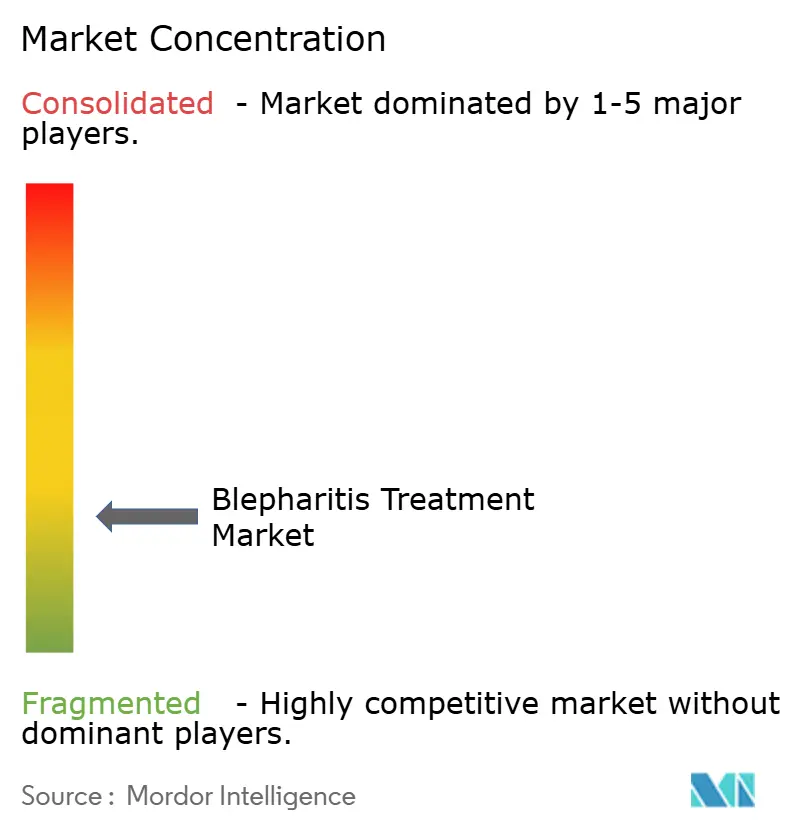
The blepharitis treatment market is fragmented across pharmaceutical therapies, eyelid-hygiene products, and medical devices. No single company has equal strength across all 3 categories. AbbVie, Novartis, and Santen hold broad ophthalmic portfolios that include products relevant to blepharitis care. Tarsus Pharmaceuticals has established a distinct position through XDEMVY and its focus on Demodex eradication. Device companies compete through procedure throughput, clinical workflow, and the evidence supporting their platforms. Consumer hygiene brands compete through repeat purchasing, retail distribution, and direct patient access. Their position reflects the ongoing need for daily cleansing and symptom support in chronic care routines. The blepharitis treatment market, therefore, includes several distinct competitive models rather than one uniform approach.
Tarsus expanded its position by commercializing XDEMVY after FDA approval and building reimbursement coverage across more than 90% of commercial, Medicare, and Medicaid lives. The company also currently advances TP-04 for ocular rosacea and TP-05 for Lyme disease prevention, extending its pipeline beyond Demodex blepharitis. Grand Pharmaceutical Group brought TP-03 to the Chinese market after the March 2026 approval. Johnson & Johnson and Sight Sciences participate in device-assisted care through thermal pulsation systems. These companies need broader reimbursement and independent clinical evidence to increase procedure adoption. Procedure providers also need systems that fit appointment time, staff workflow, and patient expectations. Their work is relevant to the blepharitis treatment market because device use depends on both clinical acceptance and payment decisions.
AI-enabled meibography is becoming a differentiation tool because it can make eyelid assessment more objective. Standardized severity records may also help providers explain treatment decisions to payers and patients. Companies offering diagnostic tools, drugs, devices, and hygiene products have an opening to create more coordinated treatment pathways. Telehealth-led lid photography and home-hygiene subscriptions remain emerging approaches. They align with online growth and the preference of some patients for self-managed chronic care. These models can support recurring hygiene purchases while still requiring referral when clinical findings need evaluation. The blepharitis treatment market remains open to partnerships because end-to-end diagnostic and treatment ownership has not yet been established. This leaves room for companies to align patient identification, product supply, and follow-up care without replacing the role of specialist assessment. The blepharitis treatment market may therefore reward companies that support continuity across repeated treatment decisions. A coordinated pathway can make it easier to connect diagnostic results with the appropriate therapy and follow-up.
Blepharitis Treatment Industry Leaders
AbbVie Inc.
Bausch + Lomb Corporation
Alcon Inc.
Tarsus Pharmaceuticals, Inc.
Santen Pharmaceutical Co., Ltd.
- *Disclaimer: Major Players sorted in no particular order

Recent Industry Developments
- June 2026: Glaukos Corporation, an ophthalmic pharmaceutical and medical technology company, completed patient enrollment for its Phase 2 clinical study evaluating GLK-321 as a treatment for Demodex blepharitis.
- March 2026: China's National Medical Products Administration (NMPA) approved TP-03 (lotilaner ophthalmic solution 0.25%) for the treatment of Demodex blepharitis, marketed by Grand Pharmaceutical Group as Tarsus's exclusive licensee for Greater China.


Global Blepharitis Treatment Market Report Scope
As per the scope of the report, blepharitis treatment involves managing inflammation of the eyelids to reduce symptoms and prevent complications. It typically includes good eyelid hygiene, warm compresses, eyelid scrubs, and, in some cases, medications such as antibiotic or anti-inflammatory eye drops or ointments.
The blepharitis treatment market is segmented by disease type into anterior blepharitis, posterior blepharitis, and mixed anterior and posterior blepharitis. By treatment type, the market is segmented into eyelid hygiene products, artificial tears and lubricants, topical antibiotics, topical corticosteroids and anti-inflammatories, oral antibiotics and anti-inflammatories, device-assisted therapies, and other treatment types. By application, the market is segmented into acute blepharitis management, chronic blepharitis long-term care, bacterial blepharitis treatment, demodex blepharitis treatment, and meibomian gland dysfunction-associated treatment. By distribution channel, the market is segmented into hospital pharmacies, retail pharmacies and drug stores, online pharmacies and e-commerce, and other distribution channels. By geography, the market is segmented into North America, Europe, Asia-Pacific, the Middle East and Africa, and South America. The market report also covers the estimated market sizes and trends for 17 countries across major regions globally. For each segment, the market size and forecast are provided in terms of value (USD).
| Anterior Blepharitis |
| Posterior Blepharitis |
| Mixed Anterior and Posterior Blepharitis |
| Eyelid-Hygiene Products |
| Artificial Tears and Lubricants |
| Topical Antibiotics |
| Topical Corticosteroids and Anti-Inflammatories |
| Oral Antibiotics and Anti-Inflammatories |
| Device-Assisted Therapies |
| Other Treatment Types |
| Acute Blepharitis Management |
| Chronic Blepharitis Long-Term Care |
| Bacterial Blepharitis Treatment |
| Demodex Blepharitis Treatment |
| Meibomian Gland Dysfunction-Associated Treatment |
| Hospital Pharmacies |
| Retail Pharmacies and Drug Stores |
| Online Pharmacies and E-Commerce |
| Other Distribution Channels |
| North America | United States |
| Canada | |
| Mexico | |
| Europe | Germany |
| United Kingdom | |
| France | |
| Italy | |
| Spain | |
| Rest of Europe | |
| Asia-Pacific | China |
| Japan | |
| India | |
| Australia | |
| South Korea | |
| Rest of Asia-Pacific | |
| Middle East and Africa | GCC |
| South Africa | |
| Rest of Middle East and Africa | |
| South America | Brazil |
| Argentina | |
| Rest of South America |
| By Disease Type | Anterior Blepharitis | |
| Posterior Blepharitis | ||
| Mixed Anterior and Posterior Blepharitis | ||
| By Treatment Type | Eyelid-Hygiene Products | |
| Artificial Tears and Lubricants | ||
| Topical Antibiotics | ||
| Topical Corticosteroids and Anti-Inflammatories | ||
| Oral Antibiotics and Anti-Inflammatories | ||
| Device-Assisted Therapies | ||
| Other Treatment Types | ||
| By Application | Acute Blepharitis Management | |
| Chronic Blepharitis Long-Term Care | ||
| Bacterial Blepharitis Treatment | ||
| Demodex Blepharitis Treatment | ||
| Meibomian Gland Dysfunction-Associated Treatment | ||
| By Distribution Channel | Hospital Pharmacies | |
| Retail Pharmacies and Drug Stores | ||
| Online Pharmacies and E-Commerce | ||
| Other Distribution Channels | ||
| By Geography | North America | United States |
| Canada | ||
| Mexico | ||
| Europe | Germany | |
| United Kingdom | ||
| France | ||
| Italy | ||
| Spain | ||
| Rest of Europe | ||
| Asia-Pacific | China | |
| Japan | ||
| India | ||
| Australia | ||
| South Korea | ||
| Rest of Asia-Pacific | ||
| Middle East and Africa | GCC | |
| South Africa | ||
| Rest of Middle East and Africa | ||
| South America | Brazil | |
| Argentina | ||
| Rest of South America | ||


Key Questions Answered in the Report
What is the projected value of the blepharitis treatment market by 2031?
The blepharitis treatment market is forecast to reach USD 2.06 billion by 2031, growing from USD 1.55 billion in 2026 at a 5.75% CAGR. Its growth is supported by more diagnoses, chronic care needs, and targeted Demodex treatment.
Which disease type is growing fastest in blepharitis treatment?
Posterior blepharitis is the fastest-growing disease type, with an expected CAGR of 8.58% through 2031. Greater recognition of meibomian gland dysfunction is a central factor in this outlook.
Why is Demodex blepharitis receiving more clinical attention?
Lotilaner ophthalmic solution 0.25% provides an FDA-approved targeted treatment, while European clinic data found collarettes in 54% of attendees.
Which treatment category is expanding most quickly?
Device-assisted therapies are projected to grow at 8.22% CAGR through 2031, supported by interest in therapies that address meibomian gland obstruction.
Which region has the strongest growth outlook?
Asia-Pacific is forecast to grow at 8.25% CAGR through 2031, supported by wider specialist access and a growing focus on meibomian gland dysfunction.
Page last updated on:






