
Black Lung Disease Market Size and Share
Market Overview
| Study Period | 2020 - 2031 |
|---|---|
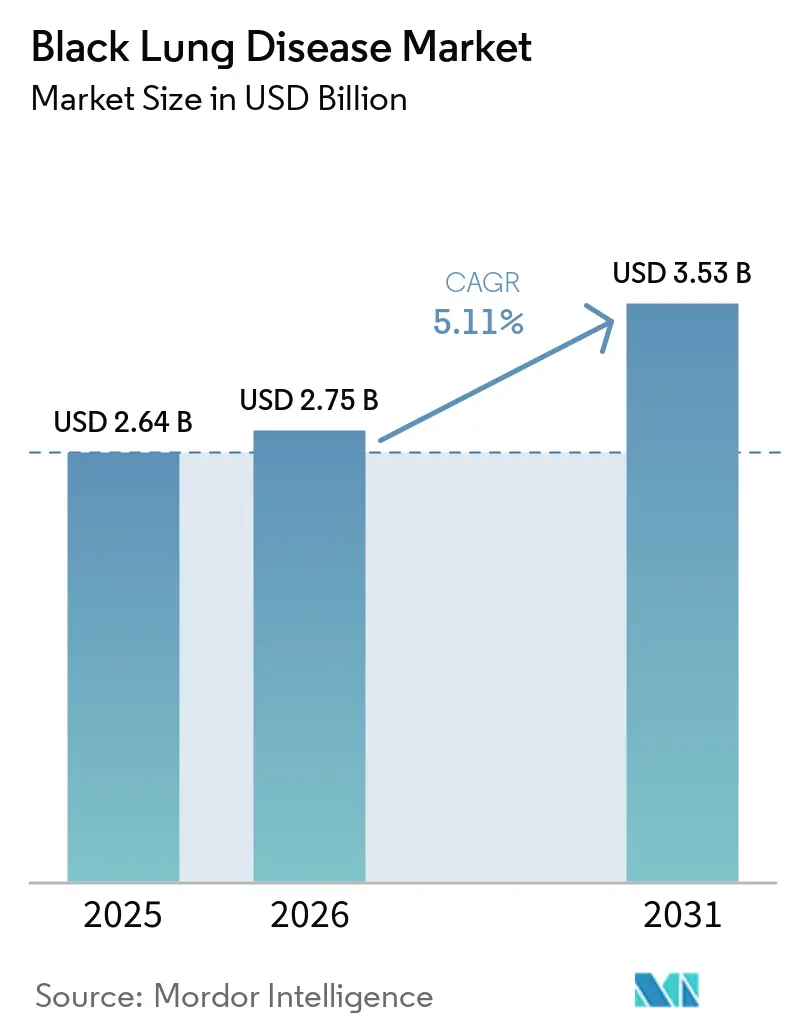
| Market Size (2026) | USD 2.75 Billion |
| Market Size (2031) | USD 3.53 Billion |
| Growth Rate (2026 - 2031) | 5.11 % |
| Fastest Growing Market | Asia-Pacific |
| Largest Market | North America |
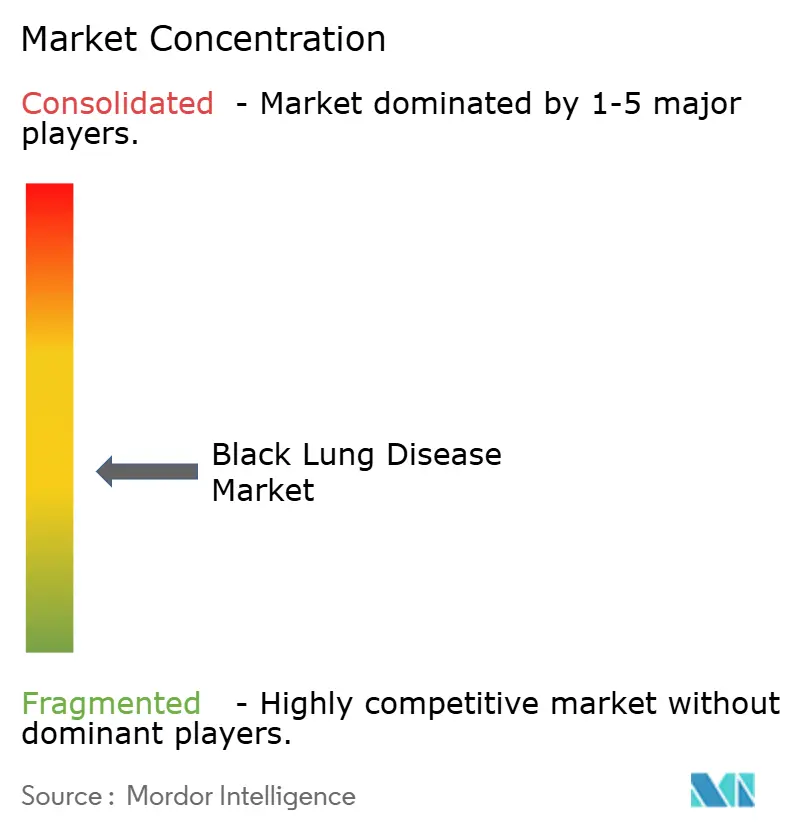
| Market Concentration | Medium |
Major Players *Disclaimer: Major Players sorted in no particular order Image © Mordor Intelligence. Reuse requires attribution under CC BY 4.0. | |
Black Lung Disease Market Analysis by Mordor Intelligence
The black lung disease market is expected to grow from USD 2.64 billion in 2025 to USD 2.75 billion in 2026 and is forecasted to reach USD 3.53 billion by 2031 at 5.11% CAGR over 2026-2031. The black lung disease market is moving on two tracks, with stricter occupational controls lowering new case intensity in better-regulated economies, while industrializing coal regions continue to add demand for diagnosis, follow-up, and long-term respiratory support. The black lung disease market also remains shaped by the absence of a curative therapy, which keeps revenue spread across imaging, pulmonary testing, medication, oxygen support, rehabilitation, and specialist care rather than around a single dominant drug class. Expanded surveillance, stronger screening pathways, and AI-assisted image interpretation are pushing the black lung disease market toward earlier case identification, which should widen the treated patient pool before advanced functional decline sets in. At the same time, long appeals timelines, uneven medical benefit monitoring, and low beneficiary income can still slow actual treatment uptake, which means headline prevalence does not always convert cleanly into realized care utilization in the black lung disease market.
Key Report Takeaways
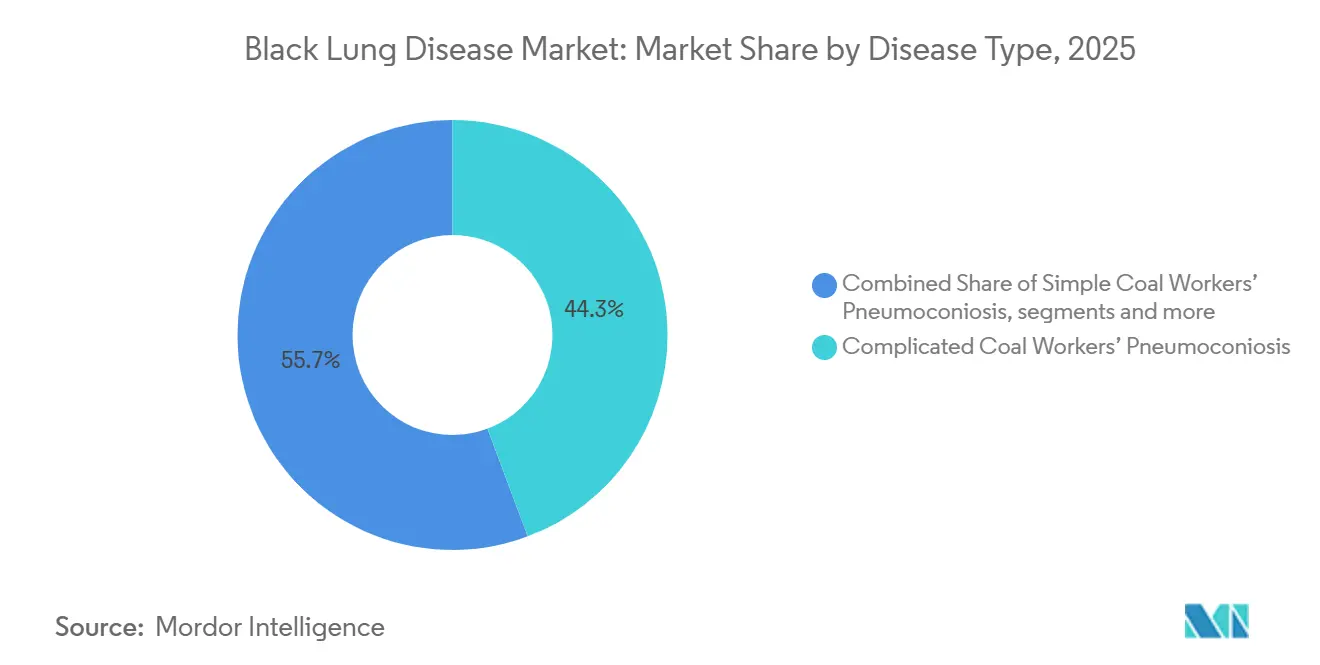
- By disease type, complicated coal workers' pneumoconiosis held 44.31% of the black lung disease market share in 2025, while simple coal workers' pneumoconiosis is projected to record the highest growth at 5.54% CAGR through 2031.
- By component, the treatment type segment led with 51.48% revenue share in 2025, and is expected to grow the fastest at 6.74% CAGR through 2031.
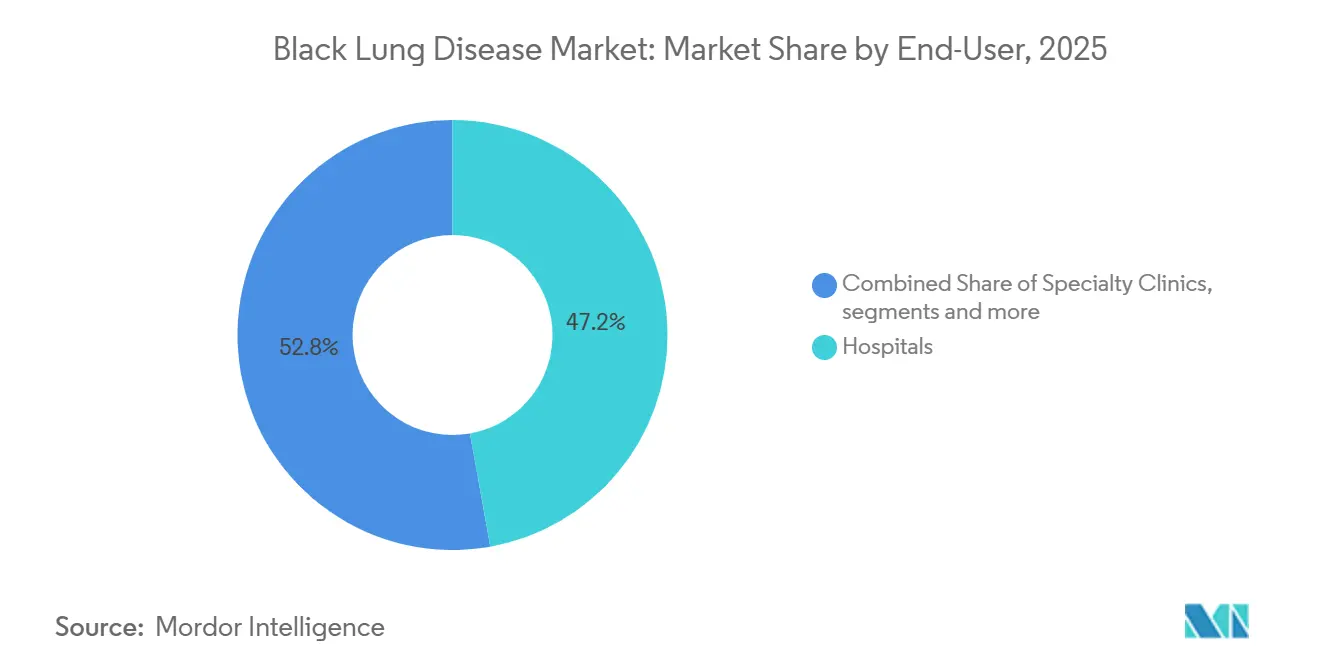
- By end-user, hospitals represented 47.22% share in 2025, while diagnostic laboratories are projected to advance at the highest CAGR of 5.9% through 2031.
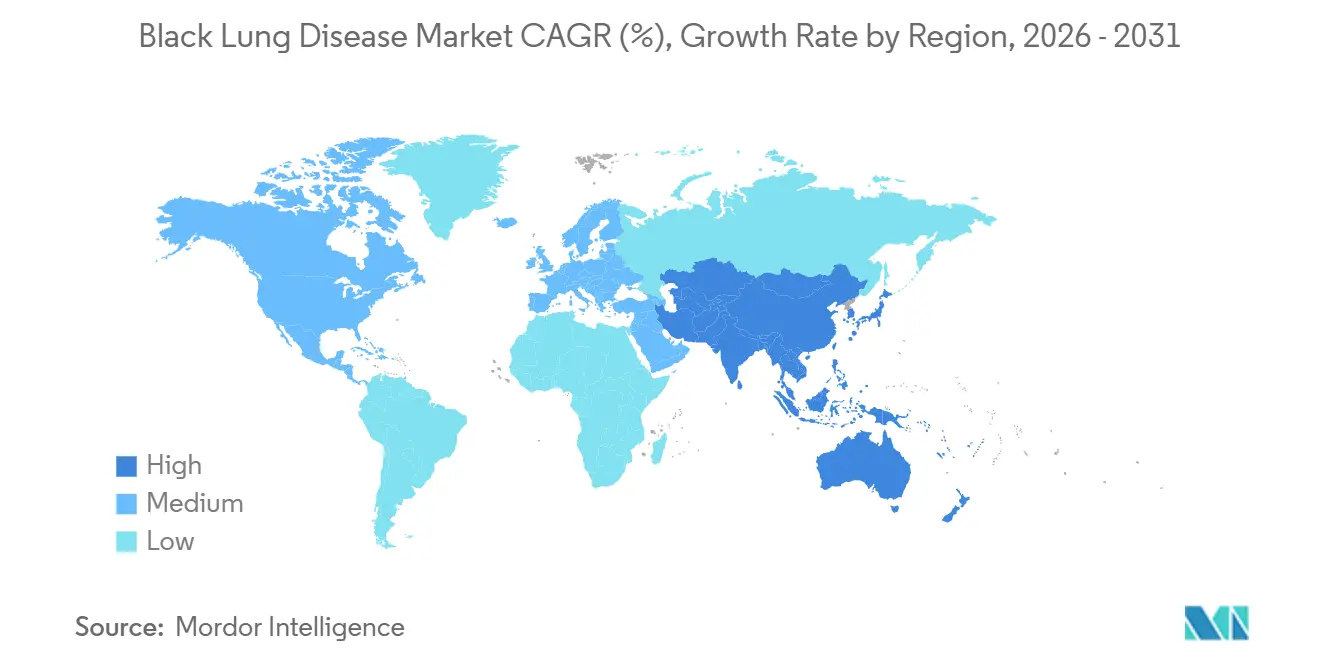
- By geography, North America led with 47.16% share in 2025, while Asia-Pacific is forecasted to grow the fastest at 7.27% CAGR through 2031.
Note: Market size and forecast figures in this report are generated using Mordor Intelligence’s proprietary estimation framework, updated with the latest available data and insights as of January 2026.
Market Trends and Insights
Drivers Impact Analysis of Black Lung Disease Market*
| Driver | (~) % Impact on CAGR Forecast | Geographic Relevance | Impact Timeline |
|---|---|---|---|
| Rising Coal Dust Exposure in Mining Operations | +1.4% | North America, East Asia, South Asia | Medium term (2-4 years) |
| Expanded Occupational Health Screening Programs | +1.8% | North America, East Asia, South Asia | Medium term (2-4 years) |
| AI-Enabled Radiology Improves Early Case Detection | +1.2% | Global, with early adoption in North America and East Asia | Medium term (2-4 years) |
| Reimbursement Pressure Favors Earlier Diagnosis and Monitoring | +0.9% | North America, Western Europe | Short term (≤ 2 years) |
| Long-Term Survivor Management Increases Chronic Care Demand | +0.8% | North America, Europe, high-income Asia-Pacific | Long term (≥ 4 years) |
| Underdiagnosis in Informal Mining Networks Drives Latent Demand | +0.6% | South Asia, Sub-Saharan Africa, South America | Long term (≥ 4 years) |
| Source: Mordor Intelligence | |||
Rising Coal Dust Exposure in Mining Operations
The black lung disease market continues to be driven by the changing composition of coal mine dust rather than by coal tonnage alone. Operators working thinner seams are exposing miners to higher respirable crystalline silica concentrations, and that exposure pattern is linked with faster disease progression and greater rates of progressive massive fibrosis in hard-hit coal regions. A 2025 CDC report showed that mortality remained heavily concentrated in Kentucky, West Virginia, Virginia, and Pennsylvania, and underground mining machine operators carried a sharply elevated proportionate mortality ratio relative to other extraction workers.[1] For the black lung disease market, that means each diagnosed patient increasingly represents a higher-acuity care profile with more imaging, closer pulmonary follow-up, and greater dependence on supportive treatment pathways.
Expanded Occupational Health Screening Programs
The black lung disease market gains support when health surveillance programs expand because screening is the point where latent illness becomes billable, diagnostic, and treatment demand. Periodic chest imaging, spirometry, and reporting obligations under established surveillance frameworks create recurring demand that does not depend solely on acute hospital visits or severe disease presentation. This matters because a wider screening net identifies more early-stage cases, and those patients typically enter a longer sequence of follow-up testing, medication use, counseling, and rehabilitation over time. In the black lung disease market, broader surveillance also shifts care from reactive management toward structured monitoring, which improves visibility for laboratories, occupational clinics, and imaging providers. The link between institutional surveillance and recurring diagnostic utilization is reinforced by the continuing role of the Coal Workers' Health Surveillance Program in routine screening workflows.
AI-Enabled Radiology Improves Early Case Detection
The black lung disease market is also benefiting from AI-enabled radiology because computational tools are shortening the gap between exposure, image capture, and usable diagnosis. A 2025 peer-reviewed study found that a DenseNet model combined with an Efficient Channel Attention Network achieved 98% classification accuracy on HRCT images from 217 confirmed coal workers' pneumoconiosis patients, which materially improved confidence in automated pattern recognition.[2]A separate 2025 study that combined CT radiomics with occupational surveillance records improved sensitivity for preclinical disease detection, supporting the value of multi-input tools in settings where conventional chest X-rays miss subtle changes. For the black lung disease market, earlier image-based recognition widens the addressable patient base because more workers enter testing and treatment pathways before obvious functional decline. That creates added pull-through demand for CT, pulmonary function testing, specialist consultations, and longer-term case management in the black lung disease market.
Reimbursement Pressure Favors Earlier Diagnosis and Monitoring
The black lung disease market in the United States is supported by a payer structure that increasingly rewards earlier diagnosis and more formal medical monitoring. The U.S. federal Black Lung Benefits Program now covers 22,500 beneficiaries, with fiscal year 2025 spending above USD 153 million in income benefits and near USD 23 million in medical reimbursements, including inhalers and oral bronchodilators.[3]A final rule effective in January 2025 tightened self-insurance authorization requirements for coal mine operators, which reduces the risk that entitled benefits will fail because of weak financial backing from responsible employers. For the black lung disease market, which improves the visibility of demand for oxygen support, maintenance drug therapy, rehabilitation, and other services that depend on predictable reimbursement rather than on one-time self-pay spending.
Restraints Impact Analysis of Black Lung Disease Market*
| Restraint | (~) % Impact on CAGR Forecast | Geographic Relevance | Impact Timeline |
|---|---|---|---|
| Limited Disease-Specific Therapeutic Options | -1.3% | Global | Long term (≥ 4 years) |
| High Cost of Advanced Care and Long-Term Oxygen Support | -0.8% | North America, Europe | Medium term (2-4 years) |
| Uneven Access to Occupational Lung Screening in Emerging Markets | -0.7% | South Asia, Sub-Saharan Africa, South America | Long term (≥ 4 years) |
| Medico-Legal Underreporting Slows Case Recognition and Treatment Uptake | -0.4% | Global, most pronounced in low-middle SDI regions | Medium term (2-4 years) |
| Source: Mordor Intelligence | |||
Limited Disease-Specific Therapeutic Options
The black lung disease market remains constrained because there is still no approved curative or disease-modifying therapy labeled specifically for coal workers' pneumoconiosis. Current care depends on bronchodilators, corticosteroids, oxygen support, and antifibrotic agents that were developed for other fibrotic or interstitial lung conditions rather than for this disease itself. That weakens reimbursement certainty, narrows pharmaceutical differentiation, and keeps much of the black lung disease market centered on diagnostics and supportive care instead of branded therapy expansion. It also makes the revenue profile of this market very different from adjacent respiratory categories, where richer drug pipelines support stronger pricing and clearer treatment protocols. The same gap still leaves a meaningful opening for the first company that secures a labeled indication in coal workers' pneumoconiosis or progressive massive fibrosis, especially after progressive fibrosis approvals have shown that regulators will recognize adjacent fibrotic pathways.
High Cost of Advanced Care and Long-Term Oxygen Support
The black lung disease market also faces a structural brake from the high cost of advanced respiratory care and the long delay before many eligible patients gain stable benefit access. GAO found that median claim processing time was 0.7 years from filing to initial decision, while appealed claims averaged more than 3 years at the Administrative Law Judge stage and more than 7 years through the U.S. Court of Appeals. That delay creates a split system where patients with immediate resources can move into imaging, oxygen therapy, and pulmonary follow-up quickly, while many others postpone care despite clinical need. In the black lung disease market, those delays suppress realized utilization for high-value diagnostics and long-duration supportive therapy, even when disease burden is already evident. The regulatory framework under 30 CFR Part 90 still shapes surveillance and work-transfer protections, but weaker monitoring of benefit delivery limits how fully those rules translate into demand for consistent medical care.
*Our forecasts treat driver/restraint impacts as directional, not additive. The impact forecasts reflect baseline growth, mix effects, and variable interactions.
Black Lung Disease Market Segment Analysis
By Disease Type:
Advanced Cases Still Anchor Revenue While Early Detection Lifts Simple CWPComplicated coal workers' pneumoconiosis captured 44.31% of the black lung disease market share in 2025, which reflects the higher care intensity, heavier imaging needs, and broader treatment burden seen once patients reach advanced fibrotic disease. Within the black lung disease market, progressive massive fibrosis carries strategic importance beyond its case volume because it is associated with severe functional loss, higher mortality, and the greatest per-patient demand for specialist respiratory management. The revenue weight of advanced disease also shows why late-stage presentation still matters commercially, even as prevention and earlier surveillance continue to improve in selected regions.
Simple coal workers' pneumoconiosis is projected to expand at 5.54% CAGR through 2031, making it the fastest-growing disease category in the black lung disease market. That growth is being supported by broader screening coverage and by AI-assisted image review that can surface cases before clear functional deterioration is visible in routine workflows. In practical terms, rising simple CWP diagnoses in the black lung disease market often signal better case discovery rather than a straightforward increase in severe clinical burden within mature surveillance systems.

By Component:
Diagnostic Methods Anchor Current Demand, Treatment Advances Drive Future GrowthThe treatment type segment accounted for 51.48% of the black lung disease market in 2025 and is projected to grow at a CAGR of 6.74% through 2031, making it the fastest-expanding component of the black lung disease market. Medication continues to form the foundation of disease management, with bronchodilators, inhaled corticosteroids, and other symptomatic therapies widely used across the patient population. Oxygen therapy remains a structurally important treatment category as more respiratory care shifts to home-based settings, enabling patients with advanced disease to receive long-term support outside hospitals. Lung transplantation represents a smaller but high-value segment reserved for patients with end-stage respiratory impairment, while investigational approaches such as stem cell therapy continue to attract research interest due to their potential antifibrotic and anti-inflammatory properties.
The diagnostic methods segment is reflecting the essential role of screening, disease confirmation, staging, and long-term surveillance in occupational respiratory care. Chest X-ray remained the most widely utilized diagnostic modality due to its established use in worker surveillance programs, compensation evaluations, and routine clinical assessment of coal workers' pneumoconiosis. The segment is further strengthened by the adoption of digital spirometry and emerging biomarker-based approaches, which enhance functional assessment and documentation quality. As a result, the market is gradually shifting from a reliance on basic imaging toward a more integrated diagnostic pathway combining screening, functional evaluation, confirmatory imaging, and longitudinal patient monitoring.
By End-User:
Hospitals Hold the Base While Diagnostic Labs Expand Their RoleHospitals held 47.22% of end-user revenue in 2025, reflecting their central role in advanced-stage management, inpatient respiratory complications, multidisciplinary review, and access to the most specialized pulmonary services in the black lung disease market. Diagnostic laboratories are forecasted to grow at 5.86% CAGR through 2031 as spirometry, HRCT interpretation support, and biomarker testing are increasingly handled outside tertiary hospitals and closer to occupational health pathways. The black lung disease market, therefore, gives hospitals the largest current revenue base while still allowing faster growth for labs that can serve distributed testing demand with lower operating intensity.
Specialty clinics are also gaining relevance in the black lung disease market because miners covered under Part 90 monitoring provisions may need long-term follow-up while continuing work in reduced-dust settings. This creates durable outpatient relationships that sit between acute hospital care and one-off laboratory transactions, which broadens the service structure of the market. As that model expands, the black lung disease market may reward providers that can bundle testing, interpretation, documentation, and follow-up instead of competing on single-service delivery alone.
Geography Analysis
North America Black Lung Disease Market
North America represented 47.16% of the black lung disease market in 2025, which made it the largest regional revenue center in the current period. The region benefits from a mature mix of compensation programs, surveillance obligations, specialist provider networks, and home respiratory care infrastructure that supports recurring treatment demand. Mexico still presents latent demand because informal mining activity in Coahuila remains less visible in formal occupational health systems, which means diagnosed care demand can rise later as access and documentation improve.
Europe Black Lung Disease Market
Europe is a more mature part of the black lung disease market, and demand there is weighted more toward long-term management of existing patients than toward rapid growth in new diagnoses. Western European countries benefit from sustained occupational safety enforcement, which has reduced fresh case intensity and shifted the care mix toward older survivors who need monitoring, symptom control, and fibrosis management rather than large screening expansion. In July 2026, the UK MHRA approved nerandomilast for idiopathic pulmonary fibrosis and progressive pulmonary fibrosis, which supports the region's role in premium respiratory therapy adoption and may have relevance for advanced coal-related fibrotic disease over time. Eastern Europe, especially Poland, remains a mid-tier opportunity where coal activity, legacy disease burden, and compliance investment can still support measured expansion within the black lung disease market.
APAC, MEA and South America Black Lung Disease Market
Asia-Pacific is forecasted to grow at 7.27% CAGR through 2031, which makes it the fastest-expanding regional block in the black lung disease market. The region's growth reflects the continuing role of coal in energy security across China, India, and South Korea, and the persistence of screening and dust-control gaps in several mining systems. Australia shows a different profile because stronger regulatory enforcement supports earlier detection and more consistent treatment uptake per diagnosed case. Middle East and Africa and South America remain emerging opportunities where mining activity is growing faster than occupational health investment, leaving meaningful latent demand that could surface more clearly as surveillance depth improves.
Competitive Landscape
The black lung disease market remains moderately fragmented because no company holds a disease-modifying therapy approved specifically for coal workers' pneumoconiosis. Competition is spread across respiratory devices, generic respiratory medication, fibrosis-adjacent innovator drugs, imaging hardware, pulmonary testing, rehabilitation services, and occupational health delivery. That structure means companies rarely compete across the entire care pathway, and most participants still win share through a narrow product or service position rather than through end-to-end disease ownership. In the black lung disease market, this keeps pricing power uneven and makes integration across diagnosis, support, and follow-up more important than single-product scale.
Boehringer Ingelheim has strengthened its position in fibrosis-adjacent therapy through the July 2026 UK approval of nerandomilast for idiopathic pulmonary fibrosis and progressive pulmonary fibrosis, which gives it a credible lead in adjacent fibrotic disease management with relevance to severe coal-related lung damage. Generic drug suppliers still matter because bronchodilator and corticosteroid use remains broad, but margin pressure makes service adjacencies and device-linked care pathways more attractive in the black lung disease market. These moves suggest that the black lung disease market rewards firms that can widen their role around the patient rather than compete only on a single treatment unit.
AI-enabled diagnostics are becoming the clearest competitive battleground in the black lung disease market because they can compress turnaround times and reduce dependence on scarce expert readers. Peer-reviewed studies now show that deep learning tools for pneumoconiosis grading can match or exceed conventional single-reader performance under controlled conditions, which lowers entry barriers for specialized software providers. Home-based pulmonary rehabilitation platforms also represent a visible white-space opportunity because the treatment model fits a disease that needs long-duration functional support rather than repeated acute intervention. Mobile spirometry services that combine equipment, AI interpretation, and compliance reporting may become a practical route for serving mine operators and distributed worker populations.
Black Lung Disease Industry Leaders
-
Boehringer Ingelheim International GmbH
-
AstraZeneca plc
-
GlaxoSmithKline plc
-
Pfizer Inc.
-
Novartis AG
- *Disclaimer: Major Players sorted in no particular order
Black Lung Disease Market Companies Covered in this Report
- Abbvie
- AstraZeneca
- Boehringer Ingelheim
- Chiesi Farmaceutici
- Cipla
- Dr. Reddy’s Laboratories
- Roche
- GE HealthCare Technologies Inc.
- GlaxoSmithKline
- Inogen
- Merck
- Novartis
- Pfizer
- Koninklijke Philips
- Resmed
- Sanofi
- Siemens Healthineers
- Sun Pharmaceuticals Industries
- Teva Pharmaceutical Industries
- Veracyte, Inc.
Recent Industry Developments in Black Lung Disease Market
- July 2026: The UK MHRA approved Boehringer Ingelheim's nerandomilast (JASCAYD) for both idiopathic pulmonary fibrosis and progressive pulmonary fibrosis in adults, the first PDE4B inhibitor approved in the UK for these indications, with direct relevance to PMF management in advanced coal workers' pneumoconiosis, given overlapping fibrotic mechanisms.
- May 2026: The U.S. GAO released Report GAO-26-107612 documenting systemic gaps in the federal Black Lung Benefits Program, including inadequate monitoring of medical benefits provision by coal operators and benefit amounts insufficient for subsistence, recommending DOL reforms that could expand medical care utilization among 22,500 program beneficiaries.
- February 2026: Inogen, Inc. guided full-year 2026 revenue at USD 366–373 million (approximately 6% growth), driven by its expanded portfolio, including the Voxi 5 stationary oxygen concentrator and Aurora CPAP masks, products directly serving long-term respiratory therapy patients with chronic occupational lung disease.
Global Black Lung Disease Market Report Scope
According to the report’s scope, the black lung disease market refers to the global market for the diagnosis, treatment, monitoring, and management of black lung disease, also known as coal workers' pneumoconiosis (CWP). This market encompasses diagnostic imaging technologies, pulmonary function tests, pharmaceutical therapies, oxygen therapy equipment, respiratory support devices, and healthcare services aimed at detecting and managing the disease among individuals exposed to coal mine dust.
The black lung disease market is segmented into disease type, component, end-user, and geography. By disease type, the market is segmented into simple coal workers’ pneumoconiosis, complicated coal workers’ pneumoconiosis, and progressive massive fibrosis. By component, the market is segmented into diagnostic method and treatment type. The diagnostic method is further segmented into chest X-Ray, CT scan, pulmonary function test, and other diagnostic methods. The treatment type is further segmented into medication, oxygen therapy, pulmonary rehabilitation, lung transplant, stem cell therapy, and other treatment types. By end-user, the market is segmented into hospitals, specialty clinics, diagnostic laboratories, and other end-users. By geography, the market is segmented into North America, Europe, Asia-Pacific, the Middle East and Africa, and South America. The report also covers the estimated market sizes and trends for 17 countries across major regions globally. The report offers values (USD) for all the above segments.
Segmentation Overview
| Simple Coal Workers' Pneumoconiosis |
| Complicated Coal Workers' Pneumoconiosis |
| Progressive Massive Fibrosis |
| Diagnostic Method | Chest X-Ray |
| CT Scan | |
| Pulmonary Function Test | |
| Other Diagnostic Methods | |
| Treatment Type | Medication |
| Oxygen Therapy | |
| Pulmonary Rehabilitation | |
| Lung Transplant | |
| Stem Cell Therapy | |
| Other Treatment Types |
| Hospitals |
| Specialty Clinics |
| Diagnostic Laboratories |
| Other End-Users |
| North America | United States |
| Canada | |
| Mexico | |
| Europe | Germany |
| United Kingdom | |
| France | |
| Italy | |
| Spain | |
| Rest of Europe | |
| Asia-Pacific | China |
| Japan | |
| India | |
| Australia | |
| South Korea | |
| Rest of Asia-Pacific | |
| Middle East and Africa | GCC |
| South Africa | |
| Rest of Middle East and Africa | |
| South America | Brazil |
| Argentina | |
| Rest of South America |
| By Disease Type | Simple Coal Workers' Pneumoconiosis | |
| Complicated Coal Workers' Pneumoconiosis | ||
| Progressive Massive Fibrosis | ||
| By Component | Diagnostic Method | Chest X-Ray |
| CT Scan | ||
| Pulmonary Function Test | ||
| Other Diagnostic Methods | ||
| Treatment Type | Medication | |
| Oxygen Therapy | ||
| Pulmonary Rehabilitation | ||
| Lung Transplant | ||
| Stem Cell Therapy | ||
| Other Treatment Types | ||
| By End-User | Hospitals | |
| Specialty Clinics | ||
| Diagnostic Laboratories | ||
| Other End-Users | ||
| By Geography | North America | United States |
| Canada | ||
| Mexico | ||
| Europe | Germany | |
| United Kingdom | ||
| France | ||
| Italy | ||
| Spain | ||
| Rest of Europe | ||
| Asia-Pacific | China | |
| Japan | ||
| India | ||
| Australia | ||
| South Korea | ||
| Rest of Asia-Pacific | ||
| Middle East and Africa | GCC | |
| South Africa | ||
| Rest of Middle East and Africa | ||
| South America | Brazil | |
| Argentina | ||
| Rest of South America | ||
Key Questions Answered in the Report
What is the black lung disease market in 2026?
The black lung disease market is expected to grow from USD 2.64 billion in 2025 to USD 2.75 billion in 2026 and to reach USD 3.53 billion by 2031 at a 5.11% CAGR.
Which region leads in revenue in black lung disease care?
North America led in 2025 with 47.16% share, supported by compensation programs, surveillance systems, and concentrated disease burden in major U.S. coal states.
Which segment is growing fastest by disease type?
Simple coal workers' pneumoconiosis is expected to be the fastest-growing disease category, with a projected growth of 5.54% CAGR through 2031 as screening and earlier detection expand.
Why is treatment type gaining traction in this space?
The treatment segment is projected to grow at a CAGR of 6.74% through 2031, driven by growing emphasis on long-term symptom management and quality-of-life improvement for patients with black lung disease.