
Birch Allergy Market Size and Share
Market Overview
| Study Period | 2020 - 2031 |
|---|---|
| Market Size (2026) | USD 0.78 Billion |
| Market Size (2031) | USD 1.12 Billion |
| Growth Rate (2026 - 2031) | 7.42 % |
| Fastest Growing Market | Asia-Pacific |
| Largest Market | North America |
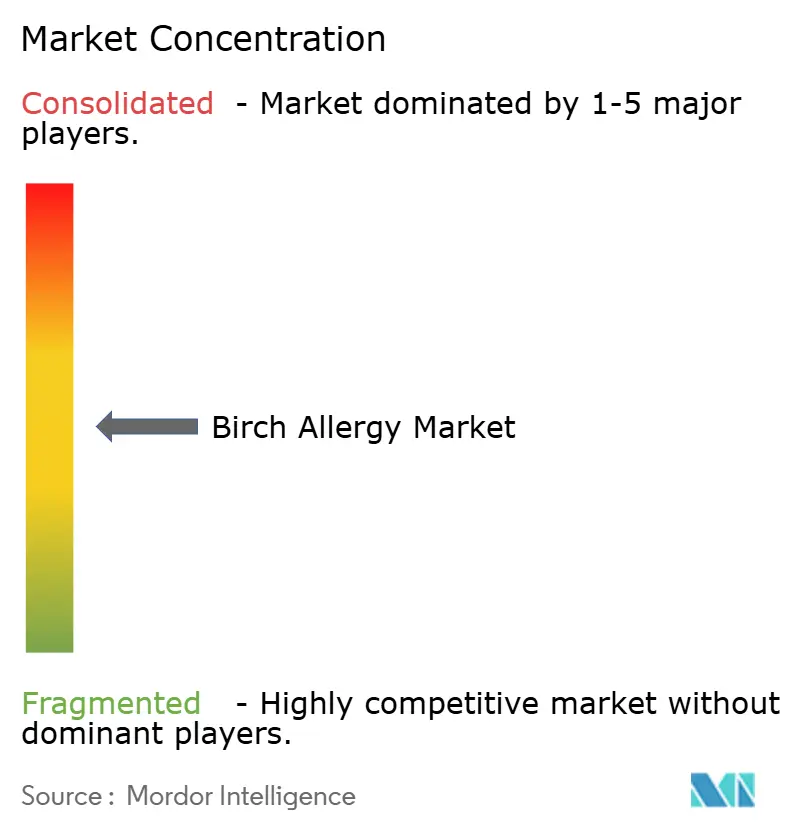
| Market Concentration | Medium |
Major Players *Disclaimer: Major Players sorted in no particular order Image © Mordor Intelligence. Reuse requires attribution under CC BY 4.0. | |
Birch Allergy Market Analysis by Mordor Intelligence
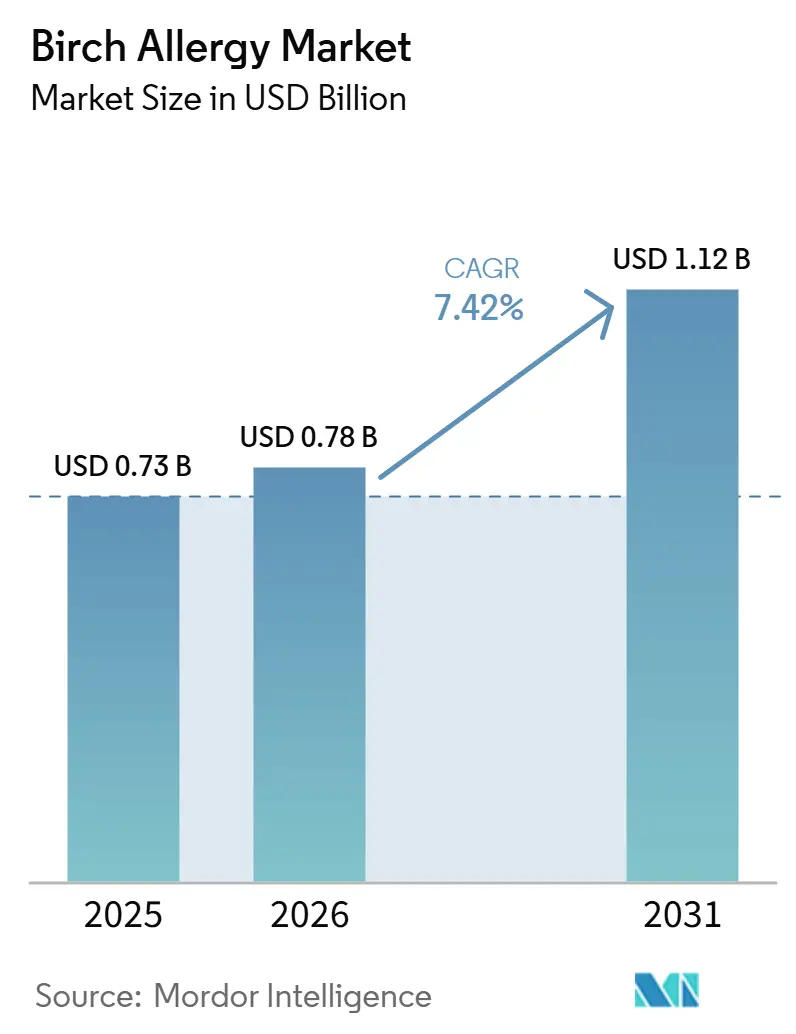
The Birch Allergy Market size is expected to grow from USD 0.73 billion in 2025 to USD 0.78 billion in 2026 and is forecast to reach USD 1.12 billion by 2031 at 7.42% CAGR over 2026-2031.
The birch allergy market is supported by a growing burden of sensitization and a longer pollen exposure period in several temperate regions. Treatment is gradually moving beyond seasonal symptom control toward therapies intended to modify disease progression. This shift gives the birch allergy market a larger role for specialist assessment, molecular testing, and home-based sublingual immunotherapy. The birch allergy market also benefits when clinicians identify pollen-food allergy syndrome alongside airway symptoms, since this can widen the need for assessment and symptomatic care. Uneven reimbursement, limited specialist capacity, and the long duration of immunotherapy continue to limit treatment uptake in some settings.
Key Report Takeaways
- By product, therapies held 85.31% of Birch Allergy Market share in 2025, while diagnostics is forecast to grow at a 9.58% CAGR through 2031.
- By allergy manifestation, allergic rhinitis held 66.31% of Birch Allergy Market share in 2025, while oral allergy syndrome and pollen-food syndrome are forecast to grow at 9.58% CAGR through 2031.
- By distribution channel, retail pharmacy held 51.24% of Birch Allergy Market share in 2025, while online pharmacy is forecast to grow at a 10.22% CAGR through 2031.
- By end user, hospitals held 38.65% of Birch Allergy Market share in 2025, while homecare settings are forecast to grow at a 9.25% CAGR through 2031.
- By geography, North America held 39.61% of Birch Allergy Market share in 2025, while Asia-Pacific is forecast to grow at an 8.25% CAGR through 2031.
Note: Market size and forecast figures in this report are generated using Mordor Intelligence’s proprietary estimation framework, updated with the latest available data and insights as of January 2026.
Market Trends and Insights
Drivers Impact Analysis of Birch Allergy Market*
| Driver | (~) % Impact on CAGR Forecast | Geographic Relevance | Impact Timeline |
|---|---|---|---|
| Rising Birch Pollen Sensitization and Allergic Rhinitis Burden | +1.8% | Global, with highest intensity in Northern and Central Europe, Hokkaido, Japan, and South Korea | Long term (≥ 4 years) |
| Wider Adoption of Sublingual Allergen Immunotherapy | +1.5% | Europe, the United Kingdom, Canada, and Japan | Medium term (2-4 years) |
| Expansion of Component-Resolved Allergy Diagnostics | +0.9% | Global, led by Europe and North America, with early uptake in Asia-Pacific | Medium term (2-4 years) |
| Climate-Driven Earlier and More Intense Birch Pollen Seasons | +1.2% | Europe and temperate Asia-Pacific areas | Long term (≥ 4 years) |
| Cross-Reactive Birch Homolog Exposure Extending the Treatment Window | +0.6% | Western and Central Europe, Japan, Asia-Pacific, and South America | Medium term (2-4 years) |
| Digitized Pollen Forecasting and Season-Linked Medication Demand | +0.4% | North America, Europe, and Japan | Short term (≤ 2 years) |
| Source: Mordor Intelligence | |||
Rising Birch Pollen Sensitization and Allergic Rhinitis Burden
Birch sensitization is more widespread than prescription volumes alone suggest. Sensitization to Bet v 1 reaches 25% in Scandinavian and Central European subregions, while European prevalence ranges from 8% to 16%. A 2026 Hokkaido study reported a substantial quality-of-life burden from birch pollinosis and oral allergy syndrome, with sensitization rising since 1972. Around 70% of birch-sensitized patients can develop reactions to apples, hazelnuts, and soy through Bet v 1-related proteins. These reactions may bring patients to care for oral symptoms before nasal symptoms, which can delay referral but sustain demand for over-the-counter medicines. The 16-year BAMSE cohort found that more than 50% of adolescents with pollen allergic rhinitis had uncontrolled symptoms despite using medication.
Wider Adoption of Sublingual Allergen Immunotherapy
The birch allergy market is gaining support from broader access to sublingual allergen immunotherapy, commonly called SLIT. ALK-Abelló received approval for ITULAZAX for children and adolescents aged 5-17 across 17 European countries in April 2025. NICE recommended ITULAZAX for severe birch tree pollen allergy in England in July 2025, with access intended for up to 27,000 patients. Stallergenes Greer reported a 41% improvement in the ARC total combined score versus placebo in its Phase IIIb pediatric YOBI study in October 2025. A German study of more than 44,000 patients found that 3-tree SLIT-liquid reduced asthma onset risk by 41% versus symptomatic controls. These developments strengthen the clinical and economic case for treatment that goes beyond seasonal symptom relief.
Component-Resolved Diagnostics and Digital Pollen Tools
Component-resolved diagnostics help clinicians distinguish primary Bet v 1 sensitization from Bet v 2 profilin or Bet v 6 cross-reactivity. This distinction can improve therapy selection because a profilin-dominant profile may not be suitable for birch monosensitized SLIT. Siemens Healthineers expanded its 3gAllergy portfolio to more than 500 allergen components in September 2025[1]. Molecular profiling can reveal immunotherapy candidates who would not be identified through conventional testing alone. Digital pollen forecasts also encourage earlier medication use and can link retail demand more closely with local exposure. A controlled trial found that allergy app users with real-time pollen forecasts used medication more proactively and reported lower symptom burden.
Earlier Pollen Seasons and Cross-Reactive Exposure
The birch allergy market is affected by changes in the timing and intensity of pollen seasons. A 2026 analysis in Poland found that the birch season advanced by 12 days for each 10-year interval, linked to rising April temperatures. Earlier and longer seasons can increase exposure for people whose symptoms previously remained below a treatment threshold. This may favor pre-seasonal SLIT tablets because patients can begin treatment at home before an erratic pollen season starts. Cross-reactivity also extends the clinical discussion beyond respiratory symptoms to food-related reactions. As awareness of these reactions improves, clinicians may identify a broader group needing diagnostic clarification, avoidance advice, and acute symptom management.
Restraints Impact Analysis of Birch Allergy Market*
| Restraint | (~) % Impact on CAGR Forecast | Geographic Relevance | Impact Timeline |
|---|---|---|---|
| High Cost and Long Duration of Disease-Modifying Immunotherapy | -1.5% | Global, especially markets with limited reimbursement in the Middle East, Africa, South America, and parts of Asia-Pacific | Long term (≥ 4 years) |
| Local and Systemic Adverse Reactions to Allergen Immunotherapy | -0.9% | Global | Short term (≤ 2 years) |
| Low Specialist Capacity and Uneven Reimbursement | -0.7% | Middle East, Africa, South America, and rural North America and Europe | Medium term (2-4 years) |
| Variability in Birch Pollen Composition Weakening Extract Standardization | -0.5% | Global, most relevant outside Central and Northern Europe | Medium term (2-4 years) |
| Source: Mordor Intelligence | |||
Cost, Treatment Duration, and Access Constraints
Allergen immunotherapy usually requires 3-5 years of sustained treatment, which can restrict uptake among uninsured and lower-income households. Subcutaneous regimens can require 30-80 clinic visits and post-injection observation during a treatment course. SLIT reduces clinic visits, but it can shift costs to households where reimbursement remains partial or unavailable. In Germany, statutory reimbursement for allergen immunotherapy is conditioned on approved preparations under the Therapieallergene-Verordnung framework. These requirements can restrict access for non-standardized formulations and preserve reliance on antihistamines and corticosteroids. Specialist shortages and long appointment waits create a further barrier, especially in rural areas and countries without mature allergy services.
Adverse Reactions and Product Standardization Limits
Adverse reactions can discourage patients during the first weeks of immunotherapy and increase institutional caution around treatment. Oral pruritus and throat irritation were frequent treatment-related events for the SQ tree SLIT-tablet, although they were generally mild to moderate. Real-world persistence can therefore remain lower than controlled trial persistence when patients stop treatment before tolerance develops. A Phase I study of the hypoallergenic Bet v 1 variant BM41 found more adverse events than conventional birch extract despite lower pre-clinical IgE binding. Systemic reactions to subcutaneous treatment require supervised administration with emergency equipment, which limits reach in under-resourced care settings. Geographic differences in birch pollen composition can also complicate extract standardization outside the established European treatment base.
*Our forecasts treat driver/restraint impacts as directional, not additive. The impact forecasts reflect baseline growth, mix effects, and variable interactions.
Birch Allergy Market Segment Analysis
By Product:
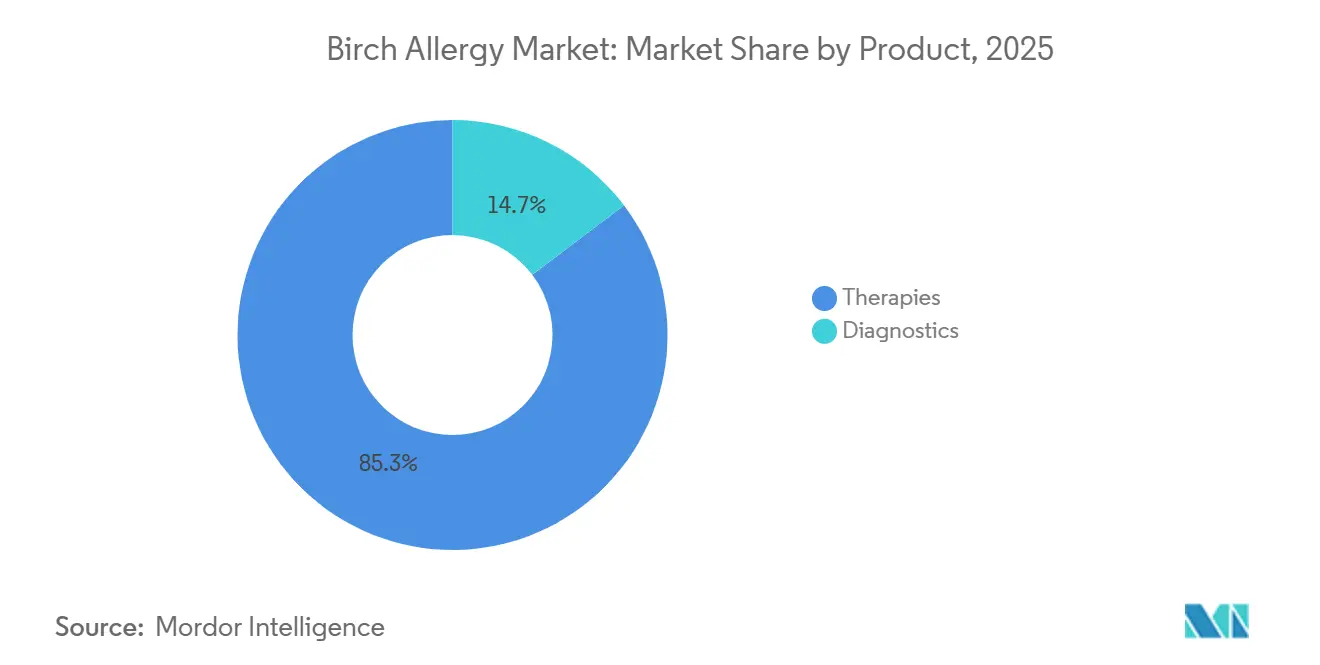
Therapies Maintain Revenue Leadership While Diagnostics ExpandTherapies accounted for 85.31% of Birch Allergy Market revenue in 2025, supported by generic antihistamines and intranasal corticosteroids across retail, hospital, and homecare settings. Leukotriene receptor antagonists, decongestants, and mast cell stabilizers remain relevant for patients with multiple symptoms or asthma-related presentations. Immunotherapy has higher annual revenue per treated patient, and pediatric SLIT approvals are expanding eligibility in Europe and Canada. A German study covering more than 44,000 patients associated 3-tree SLIT-liquid with reduced allergic rhinitis risk and asthma progression versus symptomatic care. This evidence gives payers a long-term cost argument that seasonal antihistamines alone cannot provide.
Diagnostics is the fastest-growing product category, with a 9.58% CAGR through 2031, as multiplex platforms evaluate many molecular allergens in one run. The Birch Allergy Market size for diagnostics is supported by their ability to replace single-component skin prick testing in high-volume hospital laboratories, generating wider clinical information and higher billing value per episode. Component-resolved testing can identify immunotherapy candidates who would otherwise remain outside the treatment pathway. This diagnostic-to-therapy linkage can increase therapy use rather than only testing revenues. European clinical guidance supporting component-informed candidate selection reinforces this development.
By Allergy Manifestation:
Rhinitis Leads While Oral Allergy Syndrome Gains RecognitionAllergic rhinitis held 66.31% of Birch Allergy Market share in 2025, because nasal and ocular symptoms remain the usual route into diagnosis and medicine use. Allergic conjunctivitis frequently occurs with rhinitis, which supports recurring use of antihistamines and intranasal corticosteroids through one rhinoconjunctivitis pathway. Allergic asthma, atopic dermatitis, and contact urticaria have different care pathways and account for the remaining manifestations. A 2026 English case-time series study associated medium birch pollen exposure with a relative risk of 1.131 for asthma-related admissions among children aged 0-4. This shows why the smaller asthma category can still create a material healthcare burden during peak exposure.
Oral allergy syndrome and pollen-food syndrome is the fastest-growing manifestation, at a 9.58% CAGR through 2031, as recognition and coding improve. Around 70% of birch-pollen allergic patients can experience cross-reactive food hypersensitivity. A 2024 international Delphi consensus established guidance for education, dietary avoidance, and epinephrine autoinjector prescribing in pollen-food allergy syndrome. Patients with this comorbidity may therefore require antihistamines and, in higher-risk cases, epinephrine autoinjectors alongside management of their pollen allergy.
By Distribution Channel:
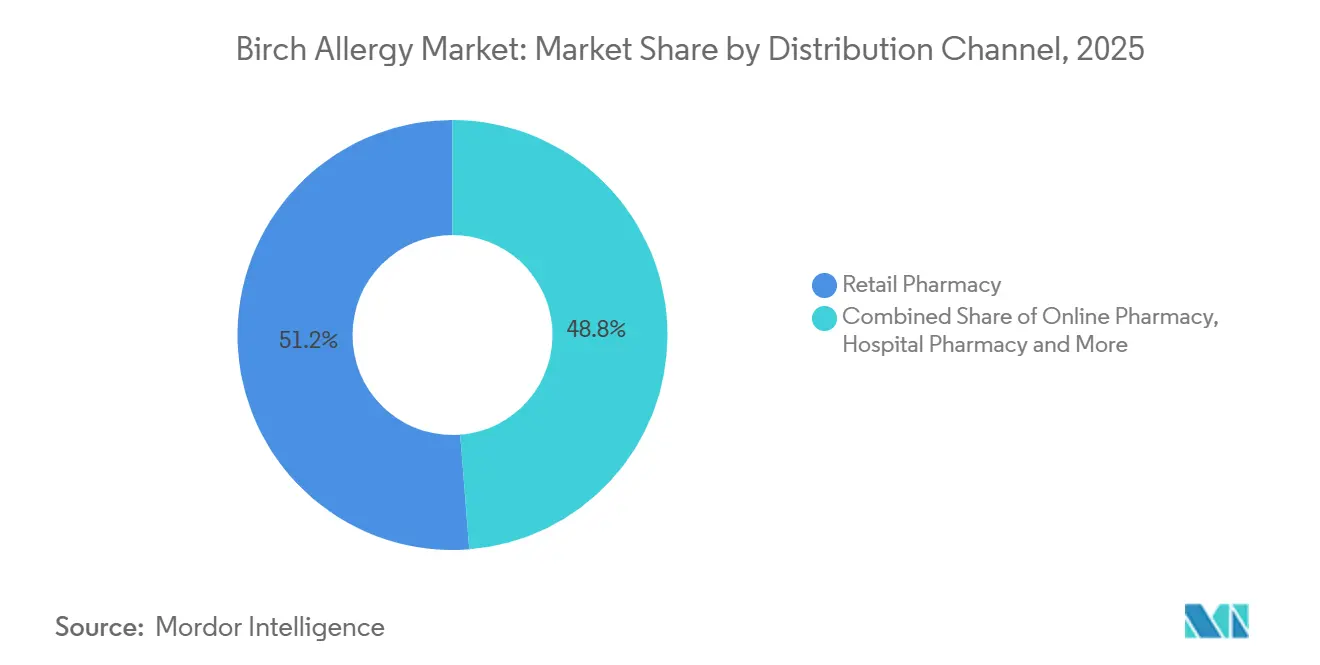
Retail Pharmacy Leads While Online Pharmacy AcceleratesRetail pharmacy held 51.24% of the Birch Allergy Market share in 2025, making it the principal first-response channel for over-the-counter antihistamines and decongestants. These medicines are purchased frequently, and demand responds closely to local pollen conditions and recurring symptoms. A longer exposure season can add purchase cycles for patients who use medicines repeatedly. Hospital pharmacies serve specialist-managed patients receiving prescription immunotherapy and corticosteroids. Their role remains important because SCIT initiation and dose escalation require clinical oversight.
Online pharmacy is the fastest-growing distribution channel at a 10.22% CAGR through 2031, supported by antihistamine subscriptions and digital replenishment. Real-time pollen information can prompt earlier ordering and medicine use during seasonal exposure. A controlled trial of a pollen forecast application found more proactive medicine use among people receiving real-time information. Telemedicine prescribing in North America and Europe also widens the channel for prescription allergy products. The birch allergy market can therefore combine physical retail access with increasingly digital refill and prescription pathways.

By End User:
Hospitals Lead Today While Homecare Settings ExpandHospitals accounted for 38.65% of Birch Allergy Market revenue in 2025, as they conduct allergy workups, administer SCIT, and manage polysensitized patients needing supervised escalation. Allergy and immunology clinics interpret component-resolved testing and decide whether a patient is suitable for SLIT. Primary care screening and telemedicine-adjacent practices have a smaller revenue role but can identify patients who need specialist referral. This gatekeeper role is particularly relevant where allergist density is limited. Hospital care will remain necessary for complex cases even as home administration becomes more common.
Homecare settings is the fastest-growing end-user category at a 9.25% CAGR through 2031, as pediatric SLIT approvals enable once-daily self-administration after an initial supervised dose. The Birch Allergy Market size for homecare is expanding after the 2025 European ITULAZAX authorization for patients aged 5-17. Home-compatible treatment can serve patients facing long allergy appointment waits without equivalent growth in clinic infrastructure. Electronic decision support may assist patient identification and documentation of initiation requirements. It does not remove specialist oversight, but it can lower the burden of repeat visits for stable, eligible patients.
Geography Analysis
North America Birch Allergy Market
North America held 39.61% of Birch Allergy Market share in 2025. The United States combines broad over-the-counter antihistamine use with an established specialist base that supports institutional SCIT demand. Canada expanded pediatric SLIT access after the 2025 authorization of ITULATEK for patients aged 5-17. Mexico is showing greater allergy specialist activity beyond major metropolitan areas. Digital prescription surveillance can help pharmacies anticipate pollen-linked demand and align inventory with local conditions.
Europe Birch Allergy Market
Europe remains the core clinical and commercial base for birch pollen allergy. Bet v 1 sensitization reaches 25% in Scandinavian and Central European subregions. Germany is a regulatory anchor because approved allergen immunotherapy preparations can receive statutory reimbursement under the TAV framework. NICE recommended ITULAZAX in England in July 2025, which can improve access in a system that historically used less allergen immunotherapy than some European peers[2]. Poland, Hungary, and the Czech Republic offer expansion potential as pollen seasons change and specialist access develops.
APAC, MEA and South America Birch Allergy Market
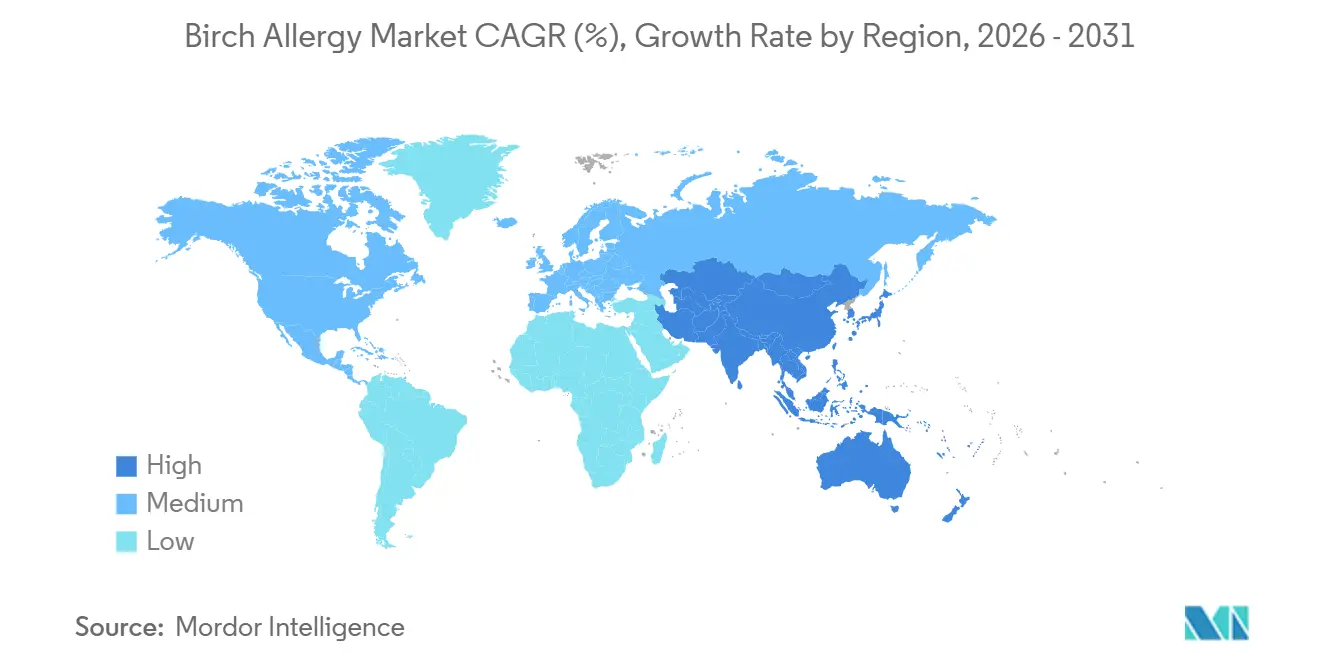
Asia-Pacific is the fastest-growing regional area, at an 8.25% CAGR through 2031. Japan has a meaningful non-European burden, and the 2026 Hokkaido study confirmed the health impact of birch pollinosis and oral allergy syndrome. South Korea recorded a 10.2% birch sensitization rate, supporting demand for diagnostic platforms and SLIT options. ALK and GenSci formed a 2025 China partnership that signals long-term in-country infrastructure development for allergen immunotherapy. The Middle East, Africa, and South America remain early-stage areas because birch distribution and specialist networks are limited, although diagnostic adoption can support later therapeutic entry.
Competitive Landscape
The birch allergy market includes connected therapeutic and diagnostic arenas that meet at patient access and treatment selection. ALK-Abelló and Stallergenes Greer lead immunotherapy through product portfolios, geographic reach, and advanced clinical programs. ALK-Abelló's ITULAZAX is approved for adults and patients aged 5-17 in multiple countries. Stallergenes Greer's Staloral Birch SLIT-liquid remains established in European settings where physicians use liquid formulations. Thermo Fisher Scientific and Siemens Healthineers have strong positions in laboratory-based IgE testing.
Siemens Healthineers expanded its 3gAllergy portfolio beyond 500 allergen components in September 2025. Regeneron is developing a Bet v 1-blocking antibody combination that could alter options for patients unable to maintain multiyear SLIT. REGN5713 and REGN5715 achieved 51% ocular itch reduction, 46% conjunctival redness reduction, and 44% skin prick reactivity reduction after a single dose in September 2025[3]. HAL Allergy and Advanz Pharma entered a multiyear distribution partnership across Germany and Austria in March 2026. This move combines allergen immunotherapy experience with specialty distribution and market access capabilities.
Clinical evidence, pediatric access, and adherence will remain important competitive factors in the Birch Allergy Market. Stallergenes Greer's Phase IIIb YOBI result provides a pediatric evidence point for its SLIT-liquid program. ALK-Abelló's European pediatric authorization gives its tablet platform a broader addressable patient group. Competition is moderate because a small group has clear positions, while different treatment formats and diagnostic platforms remain available.
Birch Allergy Industry Leaders
-
ALK-Abelló A/S
-
Stallergenes Greer plc
-
HAL Allergy Group
-
Allergy Therapeutics Plc
-
Laboratorios LETI, S.L.
- *Disclaimer: Major Players sorted in no particular order
Birch Allergy Market Companies Covered in this Report
- ALK-Abello
- Allergy Therapeutics Plc
- Anergis SA
- Bayer
- Bencard Allergie GmbH
- Biomay
- Danaher
- Desentum Oy
- HAL Allergy Group
- Haleon plc
- Kenvue Inc.
- Laboratorios LETI, S.L.
- Merck
- Novartis
- Regeneron Pharmaceuticals
- Roxall Medizin GmbH
- Sanofi
- Siemens Healthineers
- Stallergenes Greer plc
- Thermo Fisher Scientific
- Viatris
Recent Industry Developments in Birch Allergy Market
- March 2026: HAL Allergy Group and Advanz Pharma entered a multi-year strategic distribution partnership spanning dermatology, pulmonology, and allergology across Germany and Austria, combining HAL Allergy's allergen immunotherapy expertise with Advanz Pharma's specialty biosimilar capabilities and market access infrastructure.
- October 2025: Stallergenes Greer reported that the Phase IIIb YOBI study, evaluating Staloral Birch SLIT-liquid in children and adolescents aged 5-17 with birch pollen-induced allergic rhinoconjunctivitis, successfully met its primary endpoint, with a 41% improvement in the ARC total combined score versus placebo, completing the company's pediatric development program for birch SLIT-liquid.
Global Birch Allergy Market Report Scope
As per the scope of the report, birch allergy is an allergic reaction caused by sensitivity to pollen produced by birch trees. It is a common form of hay fever (allergic rhinitis) and can also trigger allergic reactions in some individuals when they come into contact with birch pollen or related substances.
The birch allergy market is segmented by product into therapies and diagnostics. Therapies include antihistamines, intranasal corticosteroids, leukotriene receptor antagonists, decongestants, mast cell stabilizers, immunotherapy, and other therapies. Diagnostics include skin prick and intradermal tests, serum-specific IgE tests, and component-resolved diagnostics. By allergy manifestation, the market is segmented into allergic rhinitis, allergic rhinoconjunctivitis, allergic asthma exacerbation, and oral allergy syndrome and pollen-food syndrome. By distribution channel, the market is segmented into retail pharmacy, hospital pharmacy, online pharmacy, and other distribution channels. By end user, the market is segmented into hospitals, allergy and immunology clinics, homecare settings, and other end users. By geography, the market is segmented into North America, Europe, Asia-Pacific, the Middle East and Africa, and South America. The market report also covers the estimated market sizes and trends for 17 countries across major regions globally. For each segment, the market size and forecast are provided in terms of value (USD).
Segmentation Overview
| Therapies | Antihistamines |
| Intranasal Corticosteroids | |
| Leukotriene Receptor Antagonists | |
| Decongestants | |
| Mast Cell Stabilizers | |
| Immunotherapy | |
| Other Therapies | |
| Diagnostics | Skin Prick and Intradermal Tests |
| Serum Specific IgE Tests | |
| Component-Resolved Diagnostics |
| Allergic Rhinitis |
| Allergic Rhinoconjunctivitis |
| Allergic Asthma Exacerbation |
| Oral Allergy Syndrome and Pollen-Food Syndrome |
| Retail Pharmacy |
| Hospital Pharmacy |
| Online Pharmacy |
| Other Distribution Channels |
| Hospitals |
| Allergy and Immunology Clinics |
| Homecare Settings |
| Other End Users |
| North America | United States |
| Canada | |
| Mexico | |
| Europe | Germany |
| United Kingdom | |
| France | |
| Italy | |
| Spain | |
| Rest of Europe | |
| Asia-Pacific | China |
| Japan | |
| India | |
| Australia | |
| South Korea | |
| Rest of Asia-Pacific | |
| Middle East and Africa | GCC |
| South Africa | |
| Rest of Middle East and Africa | |
| South America | Brazil |
| Argentina | |
| Rest of South America |
| By Product | Therapies | Antihistamines |
| Intranasal Corticosteroids | ||
| Leukotriene Receptor Antagonists | ||
| Decongestants | ||
| Mast Cell Stabilizers | ||
| Immunotherapy | ||
| Other Therapies | ||
| Diagnostics | Skin Prick and Intradermal Tests | |
| Serum Specific IgE Tests | ||
| Component-Resolved Diagnostics | ||
| By Allergy Manifestation | Allergic Rhinitis | |
| Allergic Rhinoconjunctivitis | ||
| Allergic Asthma Exacerbation | ||
| Oral Allergy Syndrome and Pollen-Food Syndrome | ||
| By Distribution Channel | Retail Pharmacy | |
| Hospital Pharmacy | ||
| Online Pharmacy | ||
| Other Distribution Channels | ||
| By End User | Hospitals | |
| Allergy and Immunology Clinics | ||
| Homecare Settings | ||
| Other End Users | ||
| By Geography | North America | United States |
| Canada | ||
| Mexico | ||
| Europe | Germany | |
| United Kingdom | ||
| France | ||
| Italy | ||
| Spain | ||
| Rest of Europe | ||
| Asia-Pacific | China | |
| Japan | ||
| India | ||
| Australia | ||
| South Korea | ||
| Rest of Asia-Pacific | ||
| Middle East and Africa | GCC | |
| South Africa | ||
| Rest of Middle East and Africa | ||
| South America | Brazil | |
| Argentina | ||
| Rest of South America | ||
Key Questions Answered in the Report
What is driving growth in birch allergy care?
The birch allergy market is projected to reach USD 1.12 billion by 2031 at a 7.42% CAGR, supported by sensitization, changing pollen seasons, and wider SLIT access.
Which product category leads birch allergy care?
Therapies held 85.31% of revenue in 2025, while diagnostics is the fastest-growing product category at a 9.58% CAGR through 2031.
Why are molecular diagnostics important for birch allergy?
Component-resolved diagnostics can separate primary Bet v 1 sensitization from cross-reactivity, helping clinicians select patients more appropriately for immunotherapy.
Which distribution channel is growing fastest for birch allergy treatment?
Online pharmacy is forecast to grow at a 10.22% CAGR through 2031, supported by digital refills, pollen information, and telemedicine prescribing.
Which region is growing fastest for birch allergy products?
Asia-Pacific is forecast to grow at an 8.25% CAGR through 2031, supported by demand in Japan and South Korea and developing infrastructure in China.
How concentrated is competition in birch allergy care?
Leading companies have clear positions in immunotherapy and diagnostic testing, while several treatment formats and platforms remain available.