
Benign Positional Vertigo Market Size and Share
Market Overview
| Study Period | 2020 - 2031 |
|---|---|
| Market Size (2026) | USD 2.79 Billion |
| Market Size (2031) | USD 4.11 Billion |
| Growth Rate (2026 - 2031) | 8.05 % |
| Fastest Growing Market | Asia-Pacific |
| Largest Market | North America |
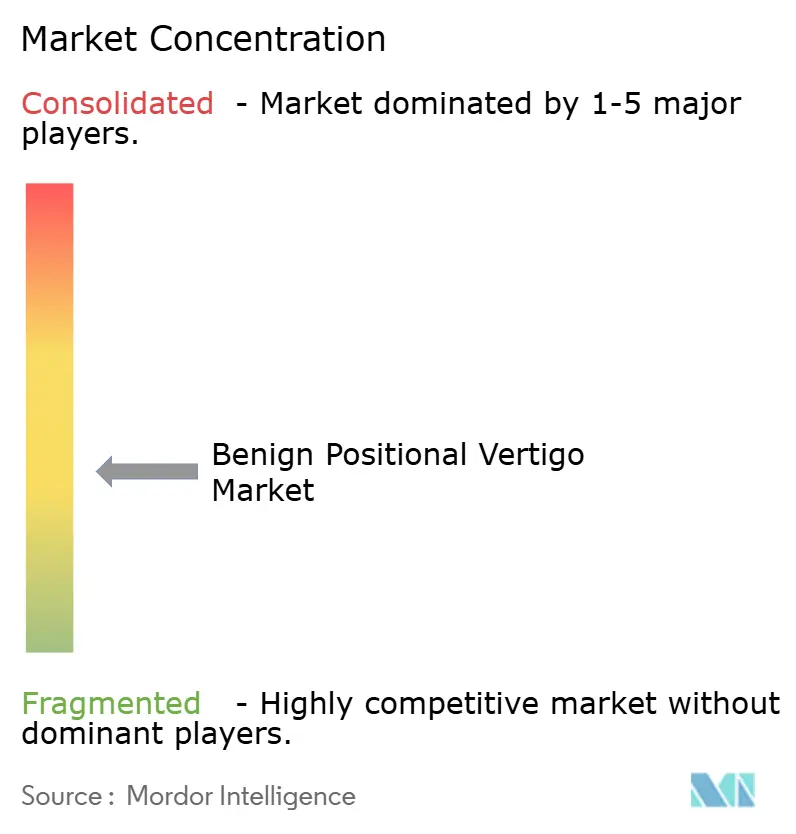
| Market Concentration | Medium |
Major Players *Disclaimer: Major Players sorted in no particular order Image © Mordor Intelligence. Reuse requires attribution under CC BY 4.0. | |
Benign Positional Vertigo Market Analysis by Mordor Intelligence
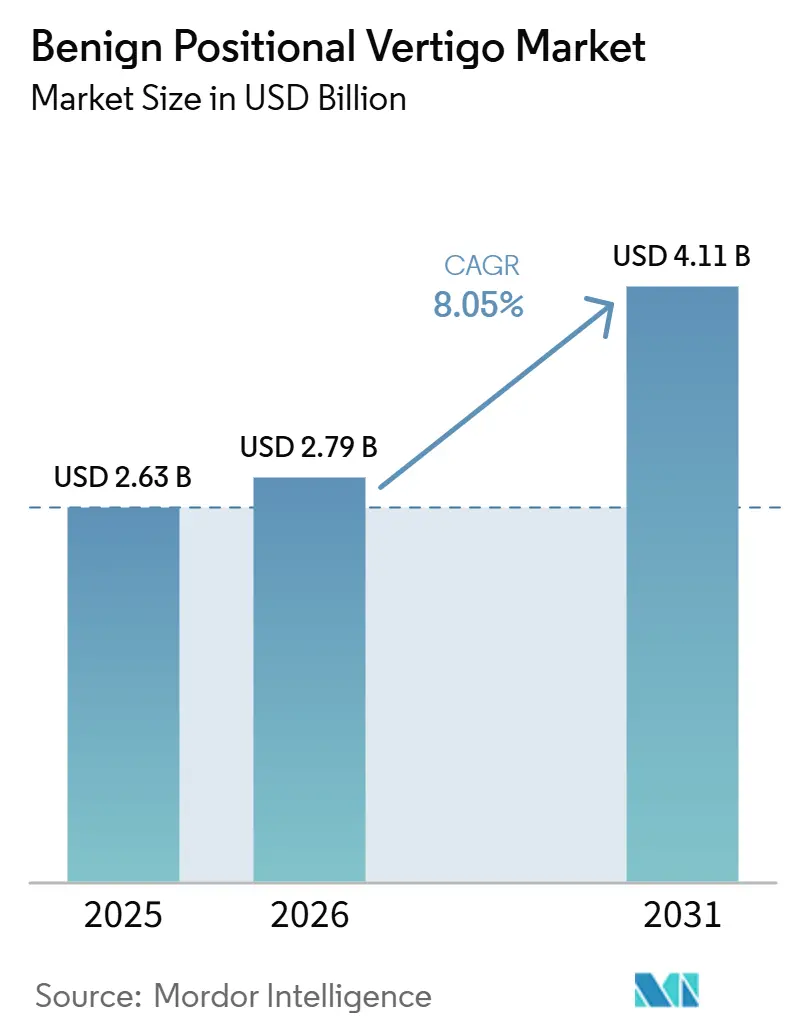
The Benign Positional Vertigo Market size was valued at USD 2.63 billion in 2025 and is estimated to grow from USD 2.79 billion in 2026 to reach USD 4.11 billion by 2031, at a CAGR of 8.05% during the forecast period (2026-2031).
BPPV remains the most common cause of peripheral vestibular dysfunction, and it affected 2.4% of the global population, with incidence occurring 2.2 times more often in women than in men, which keeps the patient base broad across routine ENT and neurology care pathways[1]PubMed Central, “Risk Factors for Recurrence in Benign Paroxysmal Positional Vertigo Patients and Construction of a Predictive Nomogram,” PubMed Central, pmc.ncbi.nlm.nih.gov. The 5-year recurrence rate reached 39.8%, and 44.7% of relapses occurred within the first year after treatment, which keeps care utilization elevated even after an initial episode has resolved. That repeat-visit pattern is strengthened by comorbidities such as hypertension, osteoporosis, and vitamin D deficiency, because these conditions raise relapse risk and extend the treatment cycle across diagnosis, repositioning, and follow-up care. The benign positional vertigo market is also being supported by portable vestibular diagnostics, stronger outpatient vestibular capacity, and wider use of rehabilitation after repositioning, which together make the care pathway easier to access and harder to defer.
Key Report Takeaways
- By offering, the treatment type segment held 62.32% of the benign positional vertigo market share in 2025, while the diagnosis method is forecast to expand at 10.56% CAGR through 2031.
- By age group, adults held 45.65% share in 2025, while the elderly segment is projected to grow at 10.56% CAGR through 2031.
- By application, posterior canal BPPV accounted for 65.47% of the benign positional vertigo market size in 2025, while the other segment is projected to advance at 11.38% CAGR through 2031.
- By end user, hospitals held 42.38% share in 2025, while rehabilitation centers are expected to expand at 11.82% CAGR through 2031.
- By geography, North America held 37.86% share in 2025, while Asia-Pacific is projected to grow at 11.62% CAGR through 2031.
Note: Market size and forecast figures in this report are generated using Mordor Intelligence’s proprietary estimation framework, updated with the latest available data and insights as of January 2026.
Global Benign Positional Vertigo Market Trends and Insights
Drivers Impact Analysis*
| Driver | (~) % Impact on CAGR Forecast | Geographic Relevance | Impact Timeline |
|---|---|---|---|
| Rising BPPV Recurrence Driving Repeat Care Pathways | +1.5% | Global | Short term (≤ 2 years) |
| Aging Population Increasing Peripheral Vestibular Dysfunction | +1.7% | Global, strongest in APAC, Japan, China, and Western Europe | Long term (≥ 4 years) |
| Wider Use of Bedside and Portable Vestibular Diagnostics | +1.1% | North America and Europe, with early gains in urban APAC | Medium term (2-4 years) |
| Shift Toward Non-Invasive Repositioning and Rehabilitation | +0.9% | Global | Medium term (2-4 years) |
| Expansion of ENT and Neurology Outpatient Capacity | +0.8% | North America, Europe, and urban APAC | Medium term (2-4 years) |
| Tele-Vestibular Care and Remote Follow-Up Adoption | +0.6% | North America, Europe, with spillover to APAC | Long term (≥ 4 years) |
| Source: Mordor Intelligence | |||
Rising BPPV Recurrence Driving Repeat Care Pathways
The benign positional vertigo market is shaped by a relapse pattern that keeps patients in active care long after the first episode has been treated. A 2025 multicenter study reported a 39.17% 1-year recurrence rate after successful canalith repositioning, and it linked hypertension, hyperlipidemia, and vitamin D deficiency to a higher probability of return visits[2]Frontiers in Neurology, “Comparative Efficacy and Safety of Repositioning Maneuvers for Posterior Canal BPPV: A Network Meta-Analysis,” Frontiers in Neurology, doi.org. A randomized clinical study published in 2025 found that cholecalciferol supplementation reduced recurrence by 50% over 24 months compared with placebo, which shows that recurrence management is becoming a practical part of follow-up care rather than a side issue.
Another 2025 study found that hypertension staging was associated with both earlier recurrence and a higher number of repositioning maneuvers needed for symptom resolution, which points to a longer and more resource-intensive care cycle in patients with vascular risk. That pattern gives the benign positional vertigo market a repeat-utilization base that is less dependent on first-time incidence alone.
Aging Population Increasing Peripheral Vestibular Dysfunction
The benign positional vertigo market is also being lifted by population aging, especially in countries where the elderly cohort is expanding quickly. Japan reported that 29.1% of its population was aged 65 or older, and that demographic structure supports sustained demand for vestibular diagnosis, repositioning, and rehabilitation services. A 2025 study on older patients found that diagnostic delay rose with age, and that delays beyond 14 days were more common in elderly patients because symptoms were less distinct and care pathways were slower. A 2025 analysis in Frontiers in Aging also showed that age-related hearing loss and balance disorders often share the same deterioration pathway, which means dizziness in older adults often arrives with a broader sensory burden and a longer care episode.
Wider Use of Bedside and Portable Vestibular Diagnostics
The benign positional vertigo market is benefiting from a gradual shift away from lab-bound diagnostic setups toward portable and clinic-ready systems. Natus Sensory presented ICS Dizcovery as an integrated VNG platform that brings VNG[3]Natus Sensory, “ICS Dizcovery: Balance Assessment Innovation,” Natus Sensory, natussensory.com, vHIT support, and caloric testing into one system, which lowers setup complexity for community ENT clinics. Interacoustics expanded in the same direction in 2025 with the VisualEyes 3.2 update[4]Interacoustics, “What’s New in VisualEyes 3.2?” Interacoustics, interacoustics.com, which added fvHIT, a Self-Paced Saccade test, and Cervical-Ocular testing to support a broader vestibular workflow. A 2025 JMIR study also showed that wearable augmented reality tools achieved preliminary diagnostic agreement with conventional video-oculography and reached 82% sensitivity in feasibility testing.
Shift Toward Non-Invasive Repositioning and Rehabilitation
The benign positional vertigo market continues to move toward non-invasive care because repositioning and rehabilitation fit both the clinical profile of BPPV and the practical needs of outpatient care. A 2026 network meta-analysis covering 20 randomized trials and 2,089 patients ranked the Epley maneuver highest for posterior canal BPPV, with a SUCRA score of 97.84% and no significant safety penalty against other common maneuvers. A 2025 randomized study in European Archives of Oto-Rhino-Laryngology found that combining canalith repositioning with structured rehabilitation produced the strongest gains in vestibular composite scores and dizziness-related function. The 2024 SEORL-CCC consensus guideline also reinforces posterior canal repositioning as the core approach for guideline-based management, which supports steady use of maneuver-based care across ENT services.
Restraints Impact Analysis*
| Restraint | (~) % Impact on CAGR Forecast | Geographic Relevance | Impact Timeline |
|---|---|---|---|
| Underdiagnosis and Misclassification of Dizziness Episodes | -1.2% | Global, pronounced in the Middle East and Africa, South America, and rural APAC | Short term (≤ 2 years) |
| Limited Specialist Availability Outside Major Urban Centers | -1.0% | APAC periphery, the Middle East and Africa, and South America | Long term (≥ 4 years) |
| Low Persistence With Symptom-Relief Medicines | -0.7% | Global | Short term (≤ 2 years) |
| Reimbursement Gaps for Vestibular Rehabilitation and Digital Tools | -0.9% | Global, most acute in emerging economies | Medium term (2-4 years) |
| Source: Mordor Intelligence | |||
Underdiagnosis and Misclassification of Dizziness Episodes
The benign positional vertigo market is still constrained by weak diagnosis at the first point of care, where dizziness remains a broad and often poorly differentiated complaint. A 2026 retrospective study from Mongolia found that only 3.7% of patients received a correct diagnosis before specialist referral, and 54.3% underwent MRI first, which extended diagnosis by a mean of 16.8 days. A population-based 2025 primary care study reported that non-specific dizziness diagnoses were 8.5 times more frequent than specific ones, while BPPV accounted for only 9.3% of dizziness encounters in that setting.
A U.S. chart review available through Duke University found that 54.4% of BPPV patients in primary care did not receive a diagnostic examination, and only 11.1% received the Epley maneuver, which shows how often definitive care is missed even when patients are seen.That pattern limits the benign positional vertigo market in the near term because patients may cycle through imaging or symptom relief without entering the formal vestibular care pathway
Reimbursement Gaps for Vestibular Rehabilitation and Digital Tools
The benign positional vertigo market also faces uneven payment support for rehabilitation and digitally assisted follow-up, especially outside mature payer systems. A 2025 analysis in npj Digital Medicine found that the lack of a streamlined reimbursement framework for prescription digital therapeutics continues to slow adoption, particularly in underserved settings where remote care could fill provider gaps. This gap matters because vestibular rehabilitation can extend care beyond the maneuver itself, but patients often face partial coverage or direct out-of-pocket costs when follow-up shifts into home-based or app-enabled formats.
*Our forecasts treat driver/restraint impacts as directional, not additive. The impact forecasts reflect baseline growth, mix effects, and variable interactions.
Segment Analysis
By Offering: Treatment Modalities Lead as Diagnostics Accelerate
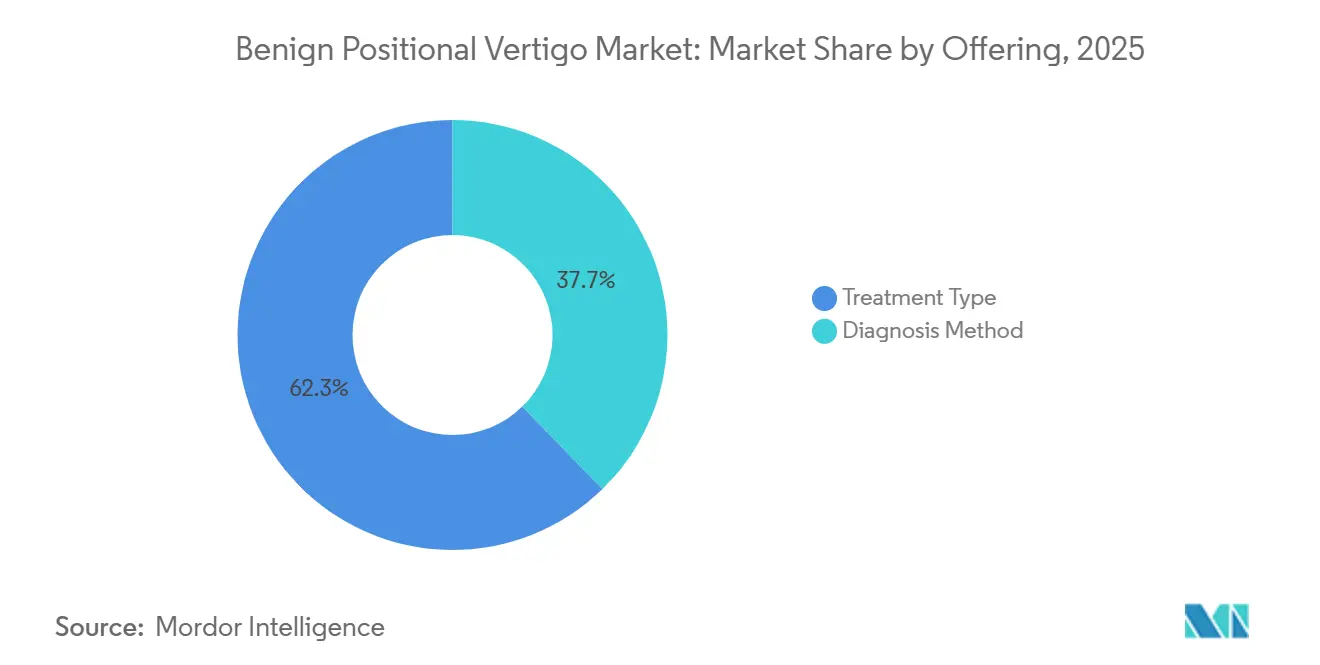
Treatment type represented 62.32% of the by-offering share in 2025, making it the largest commercial component of the benign positional vertigo market. Canalith repositioning maneuvers held the largest treatment sub-segment share at 36.32% in 2025, reflecting their established role in treating posterior canal BPPV. A 2025 randomized trial found that structured rehabilitation combined with canalith repositioning produced greater improvements in vestibular composite scores and Dizziness Handicap Inventory functional outcomes than repositioning alone.
The diagnosis method is projected to grow at 10.56% CAGR from 2026 to 2031, reflecting a need for more accurate canal-specific diagnosis in primary and emergency care settings. Clinical examination retained the largest diagnostic share at 40.34% in 2025 because the Dix-Hallpike and supine roll tests can be performed at the bedside without capital equipment. A 2025 JMIR feasibility study reported 82% sensitivity for augmented reality-based nystagmus examination against conventional video-oculography, indicating that wearable tools could shorten the referral path for selected patients.


By Age Group: Elderly Cohort as the High-Frequency-Repeat-Visit Segment
Adults held 45.65% share in 2025, which reflects the concentration of first-presentation episodes in the middle-aged population across the benign positional vertigo market. This group benefits from relatively strong responsiveness to repositioning and usually carries a lower comorbidity burden than elderly patients, which supports shorter average care episodes. A 2025 review found that repositioning success can approach 90% when reassessment and repeat Epley are built into the short-term protocol.
The elderly segment is projected to grow at 10.56% CAGR through 2031, and that makes it the most important age-based expansion pool in the benign positional vertigo market. A 2025 study showed that time to diagnosis increased with age and that delays beyond 14 days were more common in older patients, which points to longer and more resource-intensive care episodes.
By Application: Posterior Canal BPPV Commands Demand While Atypical Cases Lift Complexity
Posterior canal BPPV accounted for 65.47% of the benign positional vertigo market size in 2025, which keeps it as the largest application segment across the benign positional vertigo market. Its dominance comes from well-established diagnostic criteria, strong clinical familiarity, and maneuver protocols that are already embedded in routine ENT practice. The Dix-Hallpike test works particularly well in this subtype, which helps shorten the path from suspicion to treatment when the examination is performed correctly.
The others segment, which includes multicanal and recurrent BPPV, is projected to grow at 11.38% CAGR through 2031 and is becoming the more technically demanding application area in the benign positional vertigo market. These cases often need more than standard bedside confirmation because multiple canals or atypical patterns can complicate both diagnosis and maneuver choice.
By End User: Rehabilitation Centers as the Structural Growth Lever
Rehabilitation centers are projected to grow at 11.82% CAGR through 2031, which makes them the fastest-growing end-user category in the benign positional vertigo market. Their role is expanding because many patients improve after repositioning yet continue to experience residual dizziness, imbalance, or reduced confidence in movement, all of which fit the rehabilitation setting well.
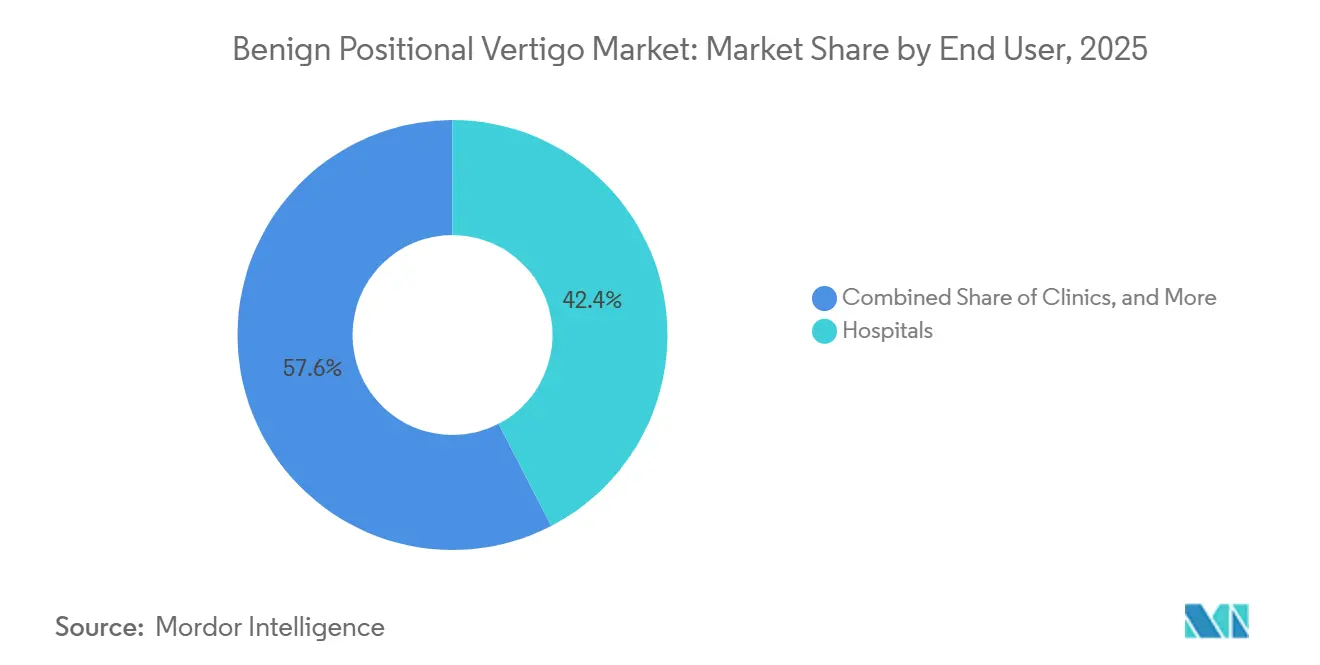
Hospitals held 42.38% share in 2025 because they remain the main first-contact site for acute vertigo visits and complicated cases across the benign positional vertigo market. Their position is supported by access to supervised repositioning, cross-specialty referral, and more complete diagnostic resources for difficult presentations. Clinics also retain a meaningful role because they handle many community-level assessments, routine repositioning encounters, and follow-up visits after symptom recurrence.

Geography Analysis
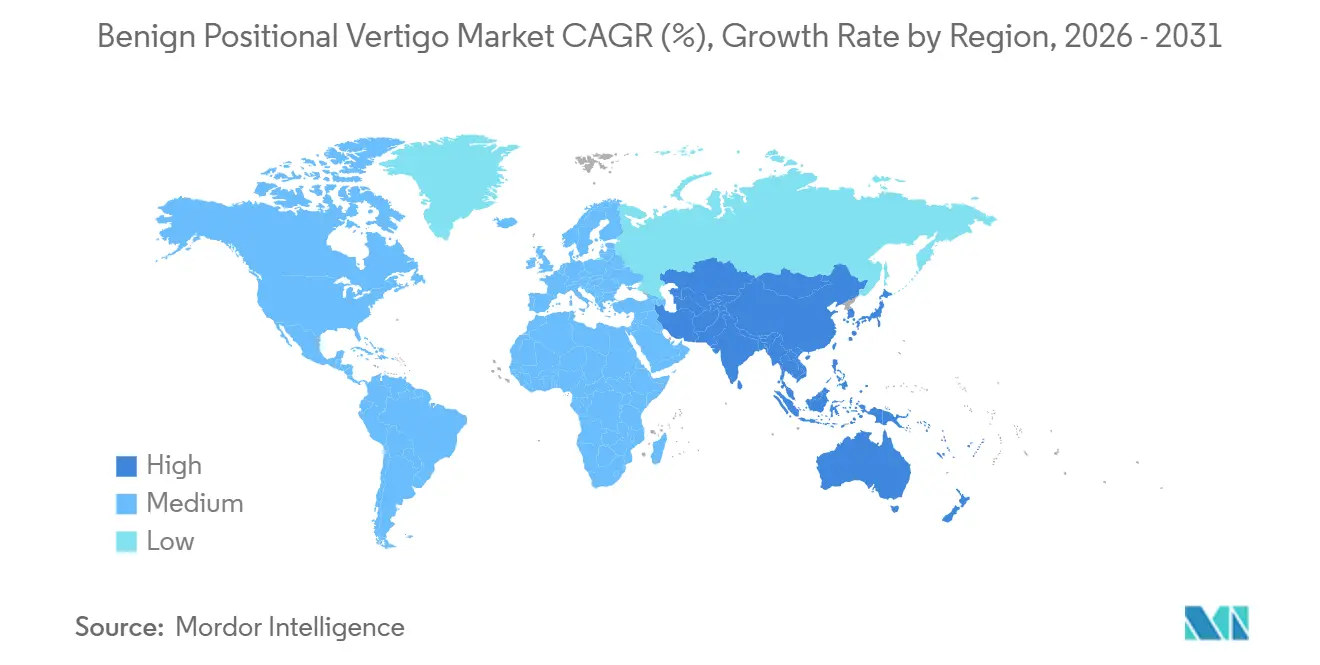
North America held 37.86% of the benign positional vertigo market share in 2025, which kept it as the largest regional cluster. The United States supports this approach through broad access to vestibular diagnostics in ENT and audiology practices, along with a dense outpatient network that can perform positional testing, maneuver-based treatment, and follow-up care in one pathway. Community adoption of clinic-ready systems also gives the benign positional vertigo market a stronger same-visit diagnostic base in North America than in many other regions.
Asia-Pacific is set to record the fastest regional benign positional vertigo market size expansion at 11.62% CAGR through 2031, which makes it the main growth engine for the benign positional vertigo market. Japan remains the most mature regional base because 29.1% of its population is aged 65 or older, and that age profile supports steady demand for vestibular care. The Middle East and Africa, and South America still account for the smallest combined portion of the benign positional vertigo market. Demand in these regions is concentrated in large urban centers, where private hospitals and specialist ENT clinics are more likely to offer formal vestibular diagnostics and rehabilitation services.

Competitive Landscape
The benign positional vertigo market is moderately fragmented because no single company controls both the vestibular diagnostics device segment and the symptom-management medicine segment at the same time. Competition in diagnostics centers on platform breadth, portability, and software depth, with companies such as Interacoustics, Natus Sensory, Framiral, Synapsys, and Micromedical Technologies competing on how efficiently they can support real clinical workflows.
Strategic moves in the benign positional vertigo market show a clear push toward integrated diagnostic ecosystems. Natus Sensory used ICS Dizcovery to combine VNG, caloric testing, and vHIT support into one platform, which directly targets the long-standing need to simplify setup for outpatient clinics. Patent activity also points to future competition around training and guided care, with a 2025 U.S. patent application describing augmented reality visualization of BPPV anatomy for clinical use and patient communication.
Benign Positional Vertigo Industry Leaders
Interacoustics A/S
Natus Medical Incorporated (Otometrics)
Neuro Kinetics, Inc.
Bertec Corporation
INVENTIS S.r.l.
- *Disclaimer: Major Players sorted in no particular order

Recent Industry Developments
- April 2026: Natus Sensory restored the Otometrics brand as the umbrella platform for its hearing and balance diagnostic portfolio, including ICS vestibular diagnostic solutions used in vertigo and BPPV assessment, while outlining additional product developments planned for 2026 and beyond.
- May 2025: Interacoustics released VisualEyes 3.2, a major update to its VNG platform adding the Functional Vision Head Impulse Test (fvHIT), Self-Paced Saccade test, and Cervical-Ocular tests, bridging vestibular diagnostics and rehabilitation monitoring within a single software ecosystem and expanding the clinical scope of VNG beyond traditional testing boundaries


Global Benign Positional Vertigo Market Report Scope
The benign positional vertigo market comprises diagnostic procedures, treatment interventions, rehabilitation therapies, and healthcare services used in the detection and management of BPPV, a common vestibular disorder characterized by brief episodes of dizziness triggered by changes in head position.
The benign positional vertigo market is segmented by offering, which includes treatment type and diagnosis methods. Treatment type is categorized into canalith repositioning maneuvers, vestibular rehabilitation therapy, pharmacological treatment, and others. The diagnosis method includes clinical examination, imaging, and vestibular testing. By age group, including adults and elderly patients, by application, including posterior, horizontal, anterior canal BPPV, and others. By end user, including hospitals, clinics, rehabilitation centers, and others, and by geography, including North America, Europe, Asia-Pacific, the Middle East and Africa, and South America. The market report also covers the estimated market sizes and trends for 17 countries across major regions globally. Forecasts are presented in terms of value in USD.
| Treatment Type | Canalith Repositioning Maneuvers |
| Vestibular Rehabilitation Therapy | |
| Pharmacological Treatment | |
| Others (Surgical Treatment, Home-Based Exercises) | |
| Diagnosis Method | Clinical Examination |
| Imaging Techniques | |
| Vestibular Testing |
| Adults |
| Elderly |
| Posterior Canal BPPV |
| Horizontal Canal BPPV |
| Anterior Canal BPPV |
| Others (Multicanal BPPV, Recurrent BPPV) |
| Hospitals |
| Clinics |
| Rehabilitation Centers |
| Others (Home Healthcare, Specialty Ent Centers) |
| North America | United States |
| Canada | |
| Mexico | |
| Europe | Germany |
| United Kingdom | |
| France | |
| Italy | |
| Spain | |
| Rest of Europe | |
| Asia-Pacific | China |
| India | |
| Japan | |
| Australia | |
| South Korea | |
| Rest of Asia-Pacific | |
| Middle East and Africa | GCC |
| South Africa | |
| Rest of Middle East and Africa | |
| South America | Brazil |
| Argentina | |
| Rest of South America |
| By Offering | Treatment Type | Canalith Repositioning Maneuvers |
| Vestibular Rehabilitation Therapy | ||
| Pharmacological Treatment | ||
| Others (Surgical Treatment, Home-Based Exercises) | ||
| Diagnosis Method | Clinical Examination | |
| Imaging Techniques | ||
| Vestibular Testing | ||
| By Age Group | Adults | |
| Elderly | ||
| By Application | Posterior Canal BPPV | |
| Horizontal Canal BPPV | ||
| Anterior Canal BPPV | ||
| Others (Multicanal BPPV, Recurrent BPPV) | ||
| By End User | Hospitals | |
| Clinics | ||
| Rehabilitation Centers | ||
| Others (Home Healthcare, Specialty Ent Centers) | ||
| By Geography | North America | United States |
| Canada | ||
| Mexico | ||
| Europe | Germany | |
| United Kingdom | ||
| France | ||
| Italy | ||
| Spain | ||
| Rest of Europe | ||
| Asia-Pacific | China | |
| India | ||
| Japan | ||
| Australia | ||
| South Korea | ||
| Rest of Asia-Pacific | ||
| Middle East and Africa | GCC | |
| South Africa | ||
| Rest of Middle East and Africa | ||
| South America | Brazil | |
| Argentina | ||
| Rest of South America | ||


Key Questions Answered in the Report
What is driving growth in benign positional vertigo demand through 2031?
Growth is being supported by rising recurrence, aging populations, wider use of portable diagnostics, and stronger uptake of vestibular rehabilitation after repositioning. The market is projected to reach USD 4.11 billion by 2031 at an 8.05% CAGR.
Why does recurrence matter so much in BPPV care economics?
Recurrence keeps patients in the care system after the first episode. The 5-year recurrence rate reached 39.8%, and many relapses occurred within the first year, which raises follow-up visits, repeat maneuvers, and rehabilitation use.
Which region currently leads revenue, and which region is growing the fastest?
North America led with 37.86% share in 2025, while Asia-Pacific is the fastest-growing region with an expected 11.62% CAGR through 2031.
What is the biggest barrier to better commercial capture in BPPV care?
Underdiagnosis at first contact remains the largest barrier. Studies showed missed diagnostic exams in primary care and unnecessary MRI use, both of which delay treatment and reduce entry into formal vestibular care.
Which end-user setting offers the strongest expansion potential?
Rehabilitation centers offer the strongest expansion potential, with an expected 11.82% CAGR through 2031, because they address residual dizziness and structured balance recovery after initial repositioning.
Page last updated on:





