
Beauty Pillowcases Market Size and Share
Market Overview
| Study Period | 2021 - 2031 |
|---|---|
| Market Size (2026) | USD 1.10 Billion |
| Market Size (2031) | USD 1.53 Billion |
| Growth Rate (2026 - 2031) | 6.73 % |
| Fastest Growing Market | Asia-Pacific |
| Largest Market | Europe |
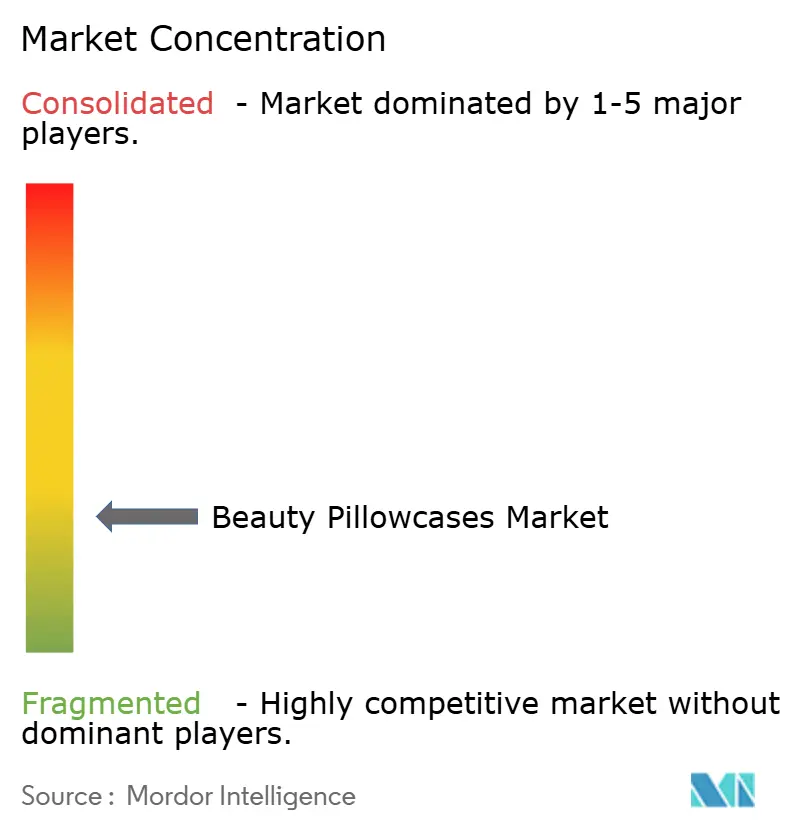
| Market Concentration | Low |
Major Players
*Disclaimer: Major Players sorted in no particular order Image © Mordor Intelligence. Reuse requires attribution under CC BY 4.0. |
|
Beauty Pillowcases Market Analysis by Mordor Intelligence
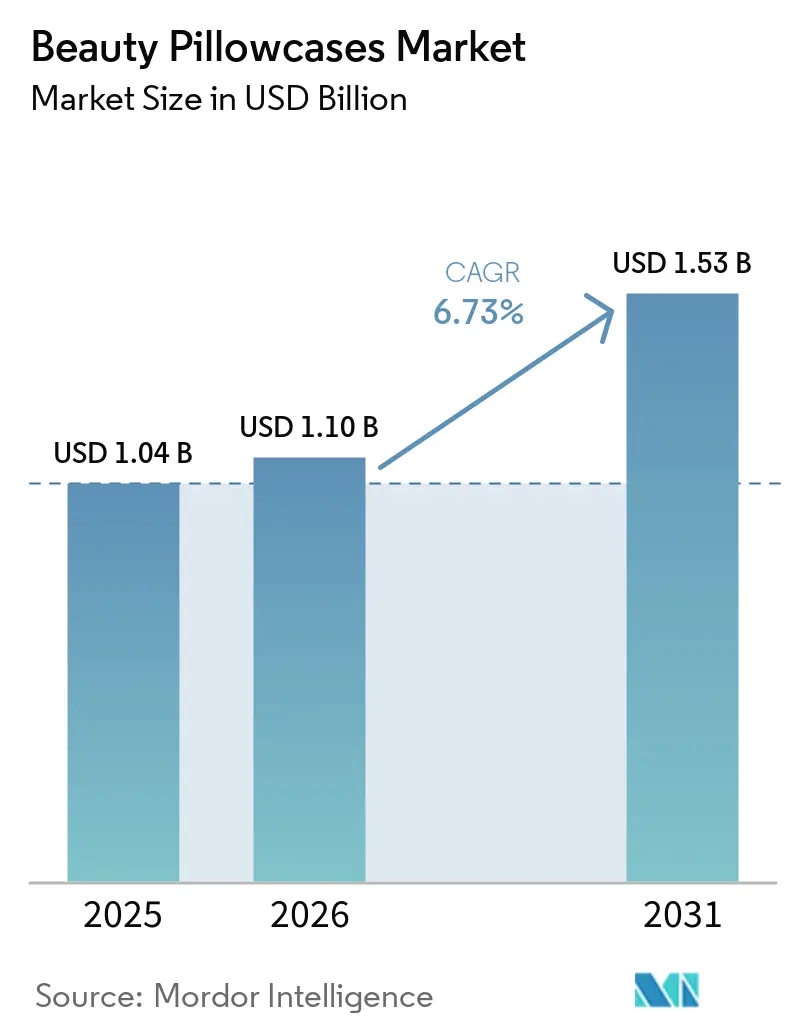
The beauty pillowcases market size was valued at USD 1.04 billion in 2025 to USD 1.10 billion in 2026, and is forecast to reach USD 1.53 billion by 2031 at a 6.73% CAGR over 2026-2031. Demand is shifting toward products that promote skin hydration, maintain hair condition, and reduce friction during sleep, particularly as consumers view sleep surfaces as part of a broader personal-care routine. This shift has positioned the beauty pillowcases market beyond conventional bedding purchases and closer to premium beauty accessories, increasing competition between pillowcase brands and skin-care and hair-care companies. Clinical evidence, recognized material certifications, clear fiber specifications, and direct consumer relationships increasingly influence brand pricing and distribution strategies. Lower-priced polyester satin products continue to pressure mid-tier pricing, while established premium brands defend higher price points through superior product quality, product validation, and detailed consumer education. The beauty pillowcases market also benefits as consumers increasingly incorporate overnight care into their regular beauty routines rather than treating it as a one-time luxury purchase. This trend supports replacement demand and creates opportunities for gifting, subscription-style communication, and targeted direct-to-consumer outreach.
Key Report Takeaways
- By material type, silk led the beauty pillowcases market with a share of 47.83% in 2025, while bamboo is anticipated to register the fastest CAGR of 7.83% during 2026-2031.
- By product type, zippered retained 49.58% share in 2025, whereas envelope are forecast to expand at a 7.75% CAGR through 2031.
- By distribution channel, hypermarkets and supermarkets led the market with a share of 43.89% in 2025, while online retail stores are anticipated to register the fastest CAGR of 8.12% during 2026-2031.
- By geography, Europe led the beauty pillowcases market in 2025 with a 35.39% share, while Asia-Pacific is projected to advance at an 8.01% CAGR through 2031.
Note: Market size and forecast figures in this report are generated using Mordor Intelligence’s proprietary estimation framework, updated with the latest available data and insights as of January 2026.
Global Beauty Pillowcases Market Trends and Insights
Drivers Impact Analysis*
| Driver | (~) % Impact on CAGR Forecast | Geographic Relevance | Impact Timeline |
|---|---|---|---|
| Growing demand for anti-aging and preventive beauty solutions | +1.8% | Global, concentrated in North America and Europe | Medium term (2-4 years) |
| Increasing focus on hair health and damage prevention | +1.3% | Global, strongest in Asia-Pacific and North America | Short term (≤ 2 years) |
| Demand for premium and luxury bedding | +0.5% | Europe, North America, and Middle East | Long term (≥ 4 years) |
| Expansion of self-care and at-home beauty routines | +0.7% | North America, Europe, and Asia-Pacific | Medium term (2-4 years) |
| Rapid expansion of e-commerce and direct-to-consumer beauty brands | +1.0% | Global, with Asia-Pacific at the core and spillover to South America | Short term (≤ 2 years) |
| Preference for natural, sustainable, and hypoallergenic materials | +0.6% | Europe and North America | Medium term (2-4 years) |
| Source: Mordor Intelligence | |||
Growing Demand for Anti-Aging and Preventive Beauty Solutions
Clinical validation is reshaping consumer perceptions of beauty pillowcases, particularly as part of preventive skincare routines that complement established nightly cleansing and treatment regimens. A 2025 Kosmoscience study involving 55 participants reported a mean skin irritation index of 0.00 for a 22-momme mulberry silk surface. The study also found that 83% of participants experienced reduced wrinkle intensity after 28 nights, based on dermatologist-graded photographic assessments. Additionally, a 2025 article published in the Archives of Dermatological Research indicated that poor sleep quality may impair skin hydration and increase transepidermal water loss [1]Source: Springer, " Can good sleep quality enhance the benefits of oral collagen supplementation," link.springer.com. These findings support product positioning that links sleep conditions with skincare routines rather than presenting pillowcases solely as decorative bedding products. In the beauty pillowcases market, brands use this evidence to target dermatology clinics, medical aesthetics practices, and beauty-focused retail channels, where a product’s functional value proposition may hold greater significance.
Increasing Focus on Hair Health and Damage Prevention
Hair protection provides a second practical reason to purchase a specialty sleep surface, particularly among consumers already investing in products designed to reduce breakage and preserve hair condition. Laboratory testing that Mulberry Park Silks commissioned in October 2025 found that 22-momme mulberry silk generates 34% less friction on human hair than cotton. The testing is also expected to find that cotton creates 51% more hair-damaging resistance across several hair types. This use case enables brands to address both bedding replacement and beauty-led purchases by positioning hair-care benefits alongside sleep comfort in consumers’ purchase decisions. In November 2025, haru by nijito is expected to introduce its Grade 6A Silk Drape Cover, promoting sleep time as an opportunity to nurture hair.
Rapid Expansion of E-Commerce and Direct-to-Consumer Beauty Brands
Digital retail expands access to the beauty pillowcases market by enabling brands to demonstrate and explain specialty products at the point of purchase, without relying on consumers’ prior familiarity with fabric grades or closure designs. Platform data highlight the importance of live commerce and user-generated content for specialty sleep accessories, as visual demonstrations and personal-use experiences can reduce consumer uncertainty. The direct-to-consumer model also enables brands to present material specifications, product reviews, and clinical evidence at the point of purchase. In addition, consumer purchase histories allow direct-to-consumer operators to target replacement purchases more precisely than conventional wholesale businesses, which typically have limited visibility into individual consumer behavior.
Expansion of Self-Care and At-Home Beauty Routines
Beauty pillowcases support routine-based self-care, as consumers can use them regularly without adding steps to their evening regimen. This convenience enables seamless integration into existing overnight beauty routines. A 2026 DHL eCommerce survey of 29,000 consumers across Australia, China, India, Malaysia, and Thailand reported increasing interest in AI-led and subscription-based beauty and wellness products. This trend suggests that consumers increasingly value consistent at-home routines and products that support sustained personal-care habits. Replacement cycles of 12–18 months can drive recurring demand after the initial purchase, while gifting can introduce new consumers to the category. Consequently, the combination of effortless daily use, repeat purchases, and the growing personalization of beauty routines strengthens the position of beauty pillowcases as an accessible self-care product.
Restraints Impact Analysis*
| Restraint | (~) % Impact on CAGR Forecast | Geographic Relevance | Impact Timeline |
|---|---|---|---|
| Sustainability concerns associated with textile and silk production | -0.5% | Europe and North America | Long term (≥ 4 years) |
| Competition from lower-cost substitutes | -0.4% | Global, strongest in Asia-Pacific and South America | Short term (≤ 2 years) |
| Specialized care and maintenance requirements | -0.2% | Global | Short term (≤ 2 years) |
| Quality and material authenticity concerns | -0.2% | Global, highest in online channels | Medium term (2-4 years) |
| Source: Mordor Intelligence | |||
Sustainability Concerns Associated with Textile and Silk Production
Silk production presents a sustainability challenge for the premium segment of the beauty pillowcases market, as its natural-material image does not inherently address broader production concerns. Traditional mulberry silk production involves silkworm rearing, reeling, and degumming, which require significant energy and water use. This environmental profile can conflict with the sustainable beauty positioning pursued by many premium brands and influence retailers’ supplier selection decisions. European retail buyers increasingly require OEKO-TEX MADE IN GREEN certification and ZDHC MRSL Level 1+ conformance for premium listings, particularly for suppliers seeking access to higher-value channels. This divide favors certified silk and bamboo lyocell suppliers while creating market-entry challenges for undifferentiated producers and increasing the importance of documented sourcing.
Competition from Lower-Cost Substitutes
Polyester satin products priced below USD 20 continue to create price confusion, particularly when online listings use silk-related terminology without clearly disclosing the fiber content. In many markets, limited mandatory material-disclosure requirements allow this ambiguity to persist. Consumers who have negative experiences with lower-quality products may exit the category rather than upgrade to a higher-quality alternative, limiting premium brands’ ability to convert them later. Authentic silk also requires careful laundering, low-heat exposure, and separate storage, which some first-time buyers perceive as an added burden after purchase. These care requirements increase the appeal of machine-washable polyester substitutes, particularly across price-sensitive channels and regions. Quality and authenticity concerns further compound the issue, as consumers cannot always distinguish 22-momme mulberry silk from blended or mislabeled products on marketplace platforms.
*Our forecasts treat driver/restraint impacts as directional, not additive. The impact forecasts reflect baseline growth, mix effects, and variable interactions.
Segment Analysis
By Material: Silk Retains Leadership While Bamboo Expands Its Sustainable Position
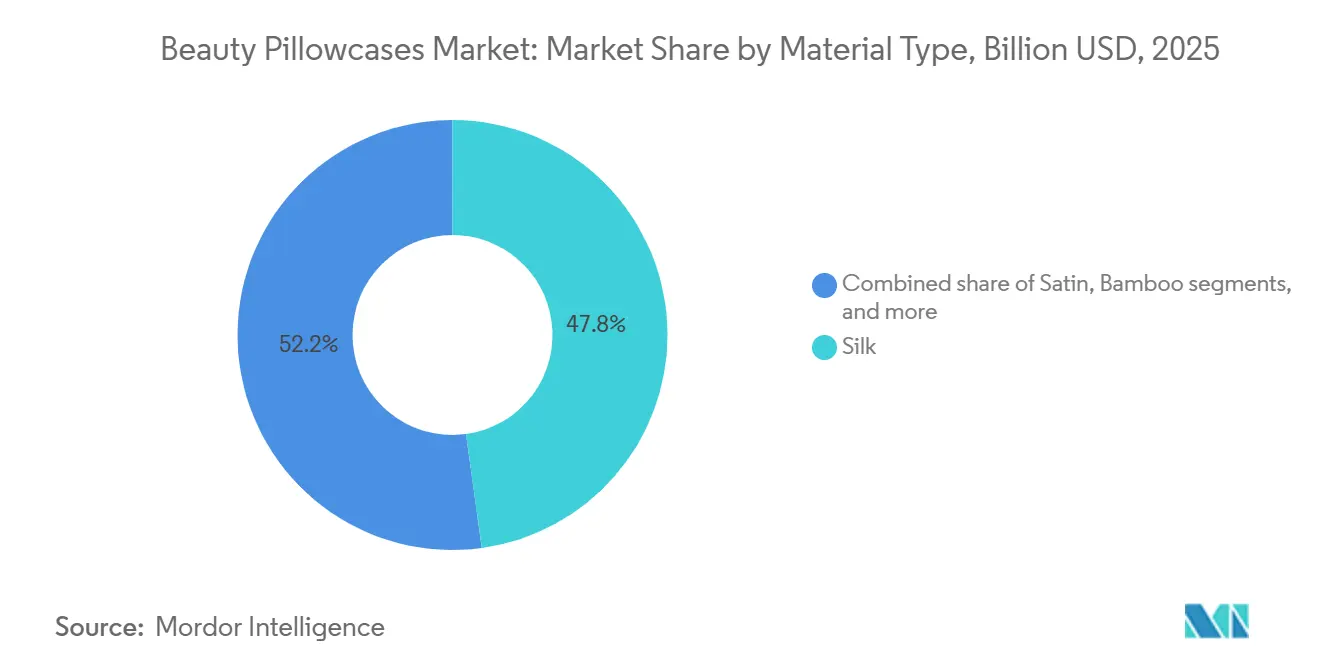
Silk held a 47.83% share of the beauty pillowcases market in 2025, maintaining its position as the leading material. Its low-friction surface, natural protein composition, and long-standing association with premium bedding support the skin- and hair-care benefits promoted by brands. The premium mulberry silk segment is characterized by a 22–25 momme weight and Grade 6A long-fiber quality. Products in this segment are typically priced between USD 55 and USD 110 or more per unit, with demand concentrated in the United Kingdom, Germany, France, and North America. Satin, which is predominantly polyester in the mass-market segment, serves as a lower-priced entry option. Cotton continues to cater to natural-fiber consumers but holds less relevance in the specialty category.
Bamboo-derived fabrics are projected to register a CAGR of 7.83% through 2031, the fastest growth rate among materials in the beauty pillowcases market. This growth is driven by their lower environmental impact relative to conventional silk sericulture, as well as their moisture-management, temperature-regulation, breathability, and natural antimicrobial properties. These attributes appeal to wellness-focused consumers seeking low-friction performance while considering environmental and sourcing factors in their material choices. This positioning enables bamboo suppliers to address consumers seeking practical comfort, transparent material information, and products aligned with their stated sustainability preferences. Ettitude targets consumers who have concerns about silk sericulture ethics but still seek a smooth sleep surface, positioning bamboo-based products without relying on direct price competition with silk.



By Product Type: Zippered Designs Lead While Envelope Closures Gain Ground
Zippered pillowcases account for 49.58% of the beauty pillowcases market size in 2025. Hidden zippers are common among Grade 6A mulberry silk brands because they provide a polished finish without altering the product’s core material proposition. This format also supports beauty-accessory gifting, with mother’s day, birthdays, and holiday seasons accounting for a disproportionate share of initial purchases. Secure closure, product presentation, and storage protection therefore reinforce the leading position of zippered designs. This preference indicates that consumers value durability and ease of use alongside fabric performance.
Envelope closures are projected to grow at a 7.75% CAGR through 2031, supported by lower unit production costs, a simpler care format, and alignment with the housewife-style pillowcase format common in Germany and France, where 40 × 80 cm sizing is standard. The absence of a zipper eliminates a component that requires maintenance and avoids potential metal contact at the closure point. Sensitive-skin-focused brands, including fabrena’s Rescue Silk and Drowsy Sleep Co.’s Hyalo Silk, have incorporated hidden envelope closures into their product propositions. Other designs include contour-cut and ergonomic anti-sleep-crease pillowcases, which support the category’s clinical positioning and may benefit from design patents that generic products cannot easily replicate. These formats expand consumer choice while maintaining the product focus on overnight beauty and comfort benefits.
By Distribution Channel: Physical Stores Support Discovery While Online Retail Accelerates
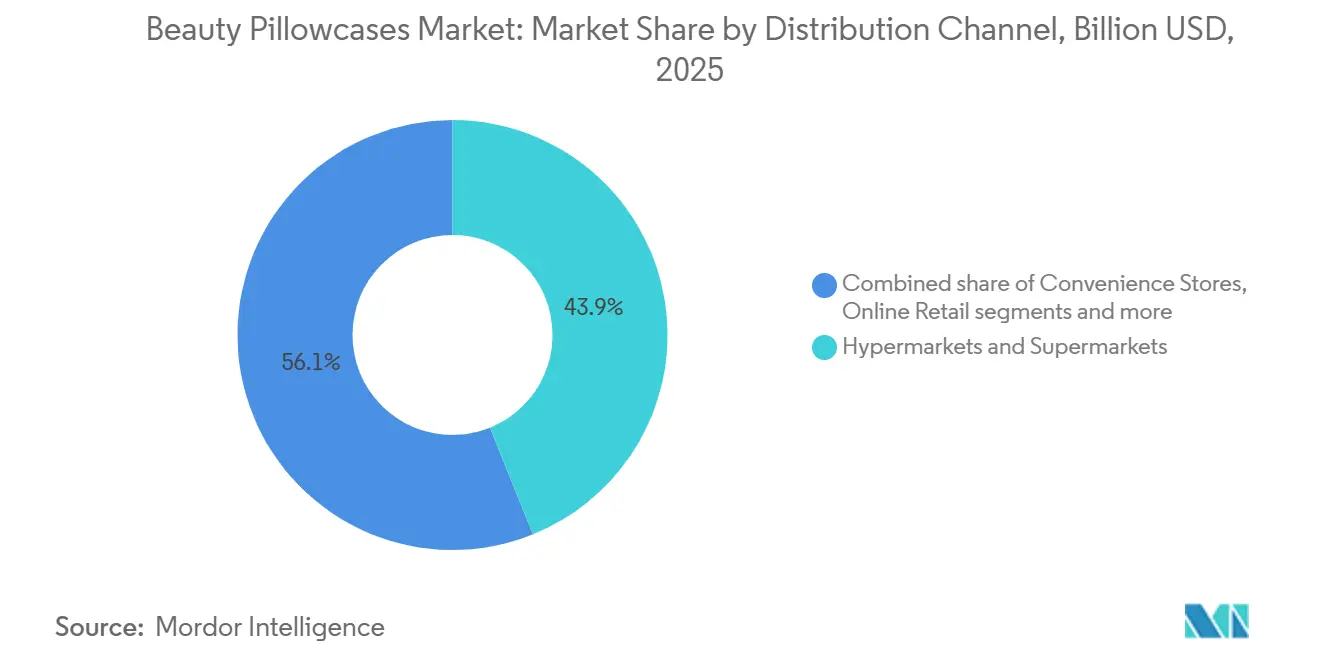
Hypermarkets and supermarkets accounted for 43.89% of the beauty pillowcases market in 2025. Their high-traffic environments allow consumers to discover the category, assess product texture, and compare silk weight and finish before making an initial purchase. Physical retail provides a key advantage for products whose value proposition depends heavily on surface feel, which product photography and standard online descriptions cannot fully convey. Convenience stores hold a smaller but stable share, particularly in Asia-Pacific markets, where proximity retail remains common for personal-care purchases. Specialty beauty retailers, pharmacies, dermatology clinics, and hospitality procurement represent a smaller combined channel base but can enhance product credibility.
Online retail is forecast to register an 8.12% CAGR through 2031, making it the fastest-growing distribution channel in the beauty pillowcases market. Social commerce, user reviews, and detailed product pages are reducing product discovery barriers. Digital listings enable brands to present material specifications, customer experiences, and clinical support in greater detail than conventional in-store labels. They also allow consumers to compare momme weight, fiber type, care instructions, and certifications before purchase, helping reduce confusion between authentic silk and synthetic substitutes. Direct-to-consumer sellers can retain purchase histories and use this information to engage consumers approaching replacement periods. This capability gives digitally native brands an advantage over wholesale suppliers, which have less direct visibility into individual customer behavior.
Geography Analysis
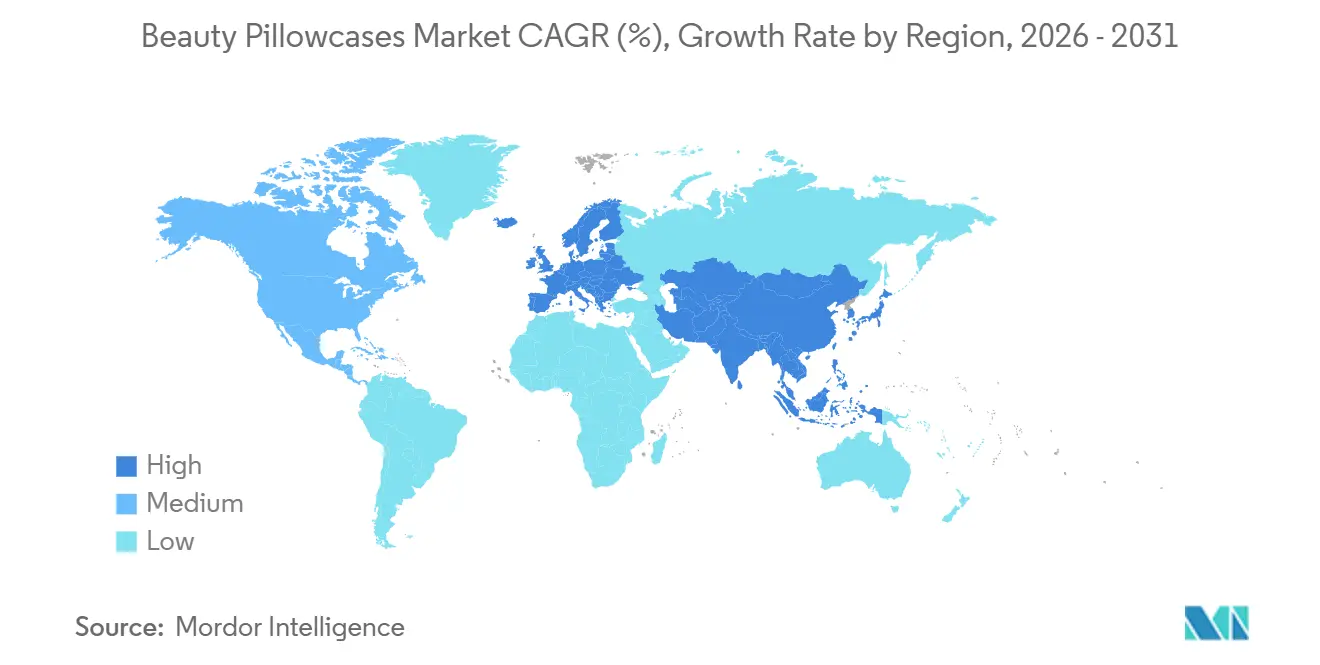
Europe accounted for 35.39% of the beauty pillowcases market share in 2025, maintaining its position as the leading regional market. Luxury bedding traditions across the United Kingdom, Germany, France, Italy, the Netherlands, Belgium, and Sweden support this leadership. In these countries, brands can position beauty pillowcases as functional beauty accessories rather than solely as decorative bedding. The region places significant emphasis on product provenance, verified sourcing, material quality, and certifications that facilitate access to premium retail channels. Italian silk-weaving heritage provides a provenance advantage for brands sourcing Italian-woven mulberry silk, while the EU Ecolabel and OEKO-TEX frameworks remain important credentials for entering demanding regional retail channels.
North America represents the second-largest region by value in the beauty pillowcases market, with the United States accounting for the majority of demand. Clinically positioned beauty products, direct-to-consumer brands, and social media-driven awareness have expanded adoption beyond early luxury consumers. The regional market favors brands that clearly communicate the connection between sleep surfaces, skin care, hair protection, and premium material specifications. This environment benefits retailers and brands that explain fabric characteristics in accessible terms rather than assuming that consumers understand specialty material grades. South America remains an earlier-stage opportunity, where exposure to North American and European beauty influencers may accelerate adoption, although price sensitivity remains a key consideration.
Asia-Pacific is projected to grow at an 8.01% CAGR through 2031, making it the fastest-growing region in the beauty pillowcases market. China, South Korea, Japan, Australia, India, Indonesia, Singapore, and Thailand serve as the principal demand centers. Digital commerce and live-streaming platforms reduce the geographic barriers that previously limited access to premium beauty pillowcases in lower-tier Chinese cities and other regional markets. Southeast Asia’s digital infrastructure also enables smaller brands to reach beauty-conscious consumers without the capital investment required for conventional physical distribution.

Competitive Landscape
The beauty pillowcases market is fragmented, with more than 12 brands operating across overlapping price tiers, material categories, and regions. Premium mulberry silk brands compete through clinical validation, momme weight, recognized certifications, and perceived product-construction quality. Mid-tier companies offer 19–22 momme products at lower price points to attract value-focused buyers, while sustainability-led suppliers leverage bamboo lyocell credentials to challenge silk’s established position. Most brands initially pursue a direct-to-consumer strategy before expanding selectively into retail after building product reviews, material credibility, and an established customer base. This structure allows new entrants to reach consumers quickly but makes it difficult for brands to sustain pricing power without a clear material, design, or validation advantage.
Product innovation is creating a more specialized competitive landscape in the beauty pillowcases market, particularly as companies seek to differentiate functional offerings from standard silk or satin pillowcases. Drowsy Sleep Co. has incorporated hyaluronic acid into its Hyalo Silk line, GOKUMIN has introduced CICA-infused silk products, and LOONÉRA has developed its patented Glow Cover around probiotics. These products offer differentiation that conventional bedding manufacturers cannot easily replicate without investing in product development and functional-material capabilities. They also enable brands to position pillowcases alongside adjacent beauty products in consumer communications rather than relying solely on luxury bedding messaging.
Brand credibility in the beauty pillowcases market depends on material quality and recognizable third-party validation. Fishers Finery received a Good Housekeeping 2025 Bedding Award for its 30-momme mulberry silk pillowcase following a five-month evaluation conducted by the Textile Lab and involving more than 600 consumer testers. Design-led releases also demonstrate how prints and limited-edition collections can encourage repeat purchases in a category where consumers can easily compare base material specifications. Established brands use certifications, product development, review ecosystems, and carefully selected retail expansion to compete in a category where new labels can enter quickly through original equipment manufacturing.
Beauty Pillowcases Industry Leaders
-
Slip Silk Pillowcase LLC.
-
Fishers Finery
-
JOHN LEWIS PLC
-
Alaska Bear
-
Blissy
- *Disclaimer: Major Players sorted in no particular order

Recent Industry Developments
- August 2026: Mayfairsilk launched its Flamingo mulberry silk pillowcase line in London. The collection features 25-momme, Grade 6A mulberry silk certified under OEKO-TEX STANDARD 100. The launch addresses the growing demand for premium natural-fiber bedding and strengthens Mayfairsilk’s position in the European luxury silk pillowcase segment.
- November 2025: Nicole Miller and Blissy launched a new luxury silk collection, combining Nicole Miller’s signature fashion prints with Blissy’s 100% mulberry silk essentials. The collection includes silk pillowcases, sleep masks, and scrunchies in two new prints, Cheetah and NY to Paris, and was launched through Blissy’s website and Amazon.
- November 2025: GOKUMIN launched a CICA-infused silk pillowcase designed to combine sleep comfort with nighttime hair and skin care. The product uses natural 25-momme silk to reduce friction against the hair and skin, while incorporating CICA derived from Centella asiatica to support a moisturising and gentle care experience.


Global Beauty Pillowcases Market Report Scope
Beauty pillowcases are specialized pillow covers made from low-friction materials, such as silk, satin, and bamboo. They help reduce friction and pressure on the skin and hair during sleep.
The beauty pillowcases market is segmented by material, product type, distribution channel, and geography. By material, the market is segmented into silk, satin, bamboo, cotton, and others. By product type, the market is segmented into zippered, envelope, and others. By distribution channel, the market is segmented into supermarkets and hypermarkets, convenience stores, online retail, and other distribution channels. Based on geography, the market is classified into North America, Europe, South America, Asia-Pacific, and the Middle East and Africa. The Market Forecasts are Provided in Terms of Value (USD).
| Silk |
| Satin |
| Bamboo |
| Cotton |
| Others |
| Zippered |
| Envelope |
| Others |
| Hypermarkets and Supermarkets |
| Convenience Stores |
| Online Retail |
| Other Distribution Channels |
| North America | United States |
| Canada | |
| Mexico | |
| Rest of North America | |
| Europe | Germany |
| United Kingdom | |
| Italy | |
| France | |
| Spain | |
| Netherlands | |
| Poland | |
| Belgium | |
| Sweden | |
| Rest of Europe | |
| Asia-Pacific | China |
| India | |
| Japan | |
| Australia | |
| Indonesia | |
| South Korea | |
| Thailand | |
| Singapore | |
| Rest of Asia-Pacific | |
| South America | Brazil |
| Argentina | |
| Colombia | |
| Chile | |
| Peru | |
| Rest of South America | |
| Middle East and Africa | South Africa |
| Saudi Arabia | |
| United Arab Emirates | |
| Nigeria | |
| Egypt | |
| Morocco | |
| Turkey | |
| Rest of Middle East and Africa |
| By Material | Silk | |
| Satin | ||
| Bamboo | ||
| Cotton | ||
| Others | ||
| By Product Type | Zippered | |
| Envelope | ||
| Others | ||
| By Distribution Channel | Hypermarkets and Supermarkets | |
| Convenience Stores | ||
| Online Retail | ||
| Other Distribution Channels | ||
| By Geography | North America | United States |
| Canada | ||
| Mexico | ||
| Rest of North America | ||
| Europe | Germany | |
| United Kingdom | ||
| Italy | ||
| France | ||
| Spain | ||
| Netherlands | ||
| Poland | ||
| Belgium | ||
| Sweden | ||
| Rest of Europe | ||
| Asia-Pacific | China | |
| India | ||
| Japan | ||
| Australia | ||
| Indonesia | ||
| South Korea | ||
| Thailand | ||
| Singapore | ||
| Rest of Asia-Pacific | ||
| South America | Brazil | |
| Argentina | ||
| Colombia | ||
| Chile | ||
| Peru | ||
| Rest of South America | ||
| Middle East and Africa | South Africa | |
| Saudi Arabia | ||
| United Arab Emirates | ||
| Nigeria | ||
| Egypt | ||
| Morocco | ||
| Turkey | ||
| Rest of Middle East and Africa | ||


Key Questions Answered in the Report
What is the current size and growth outlook of the Beauty Pillowcases Market?
The Beauty Pillowcases Market was valued at USD 1.04 billion in 2025 and is projected to grow to USD 1.53 billion by 2031, expanding at a CAGR of 6.73% during 2026-2031, driven by increasing consumer focus on hair and skincare benefits.
Which material segment held the largest share of the beauty pillowcases market in 2025?
The silk segment dominated the market in 2025, accounting for 47.83% of total revenue.
What was the leading product type in the beauty pillowcases market in 2025?
Zippered beauty pillowcases held the largest market share in 2025, representing 49.58% of sales.
Which distribution channel accounted for the largest market share in 2025?
Hypermarkets and supermarkets were the leading distribution channel, capturing 43.89% of the market in 2025.
Which region dominated the beauty pillowcases market in 2025?
Europe led the market with a 35.39% share in 2025.
Page last updated on:





