
Barotrauma Market Size and Share
Market Overview
| Study Period | 2020 - 2031 |
|---|---|
| Market Size (2026) | USD 4.35 Billion |
| Market Size (2031) | USD 5.76 Billion |
| Growth Rate (2026 - 2031) | 5.76 % |
| Fastest Growing Market | Asia-Pacific |
| Largest Market | North America |
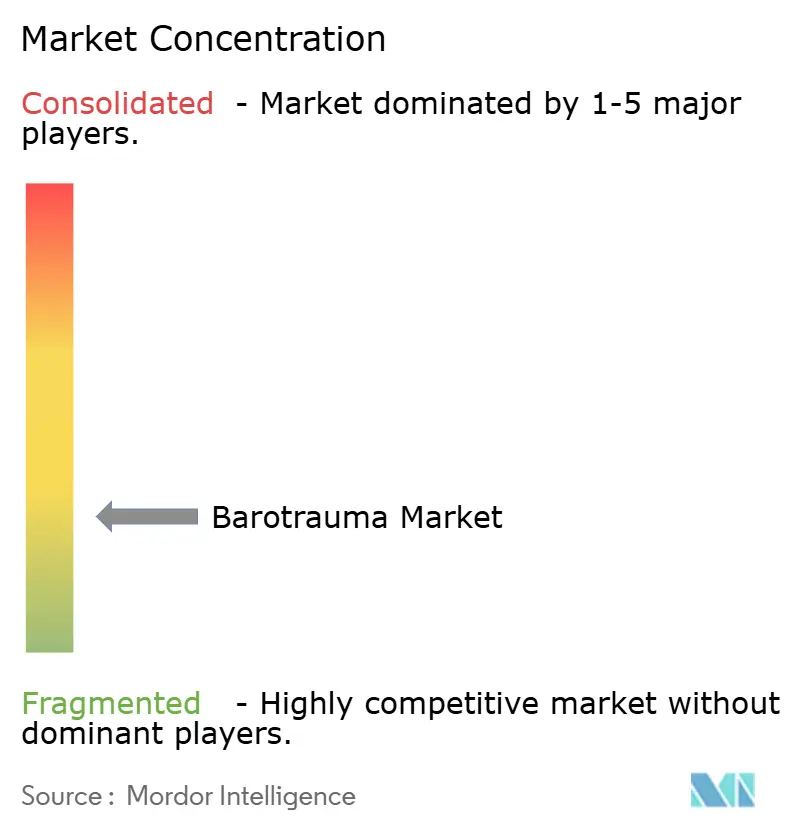
| Market Concentration | Low |
Major Players *Disclaimer: Major Players sorted in no particular order Image © Mordor Intelligence. Reuse requires attribution under CC BY 4.0. | |
Barotrauma Market Analysis by Mordor Intelligence
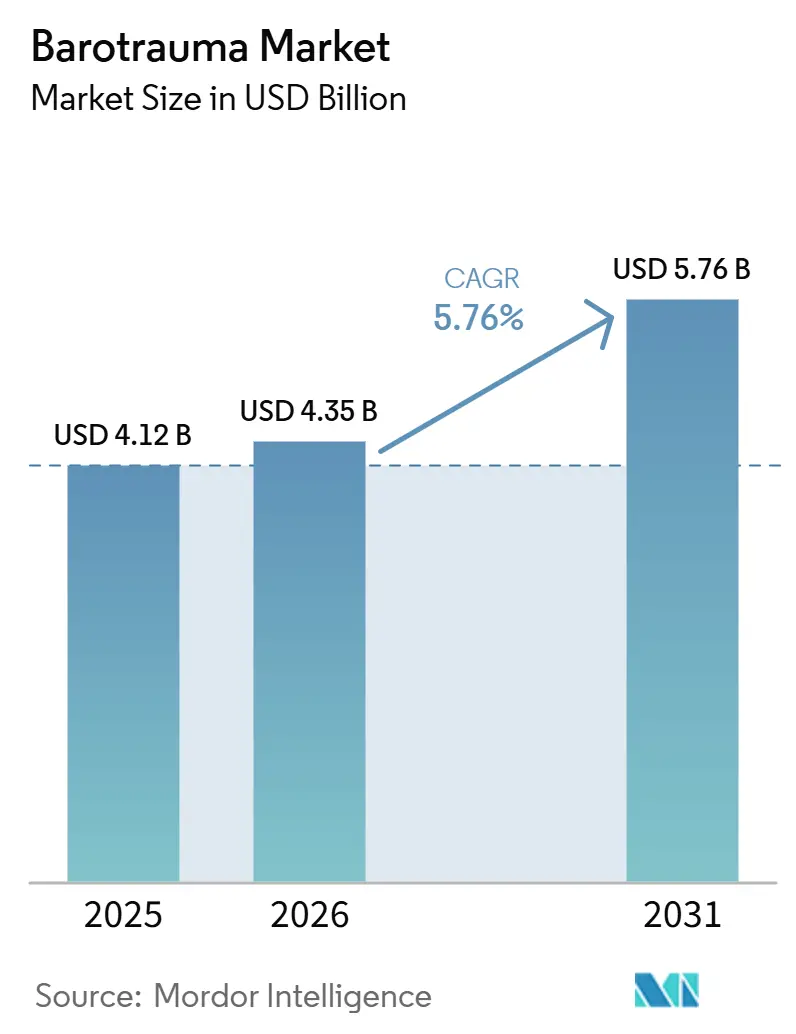
The Barotrauma Market size is expected to increase from USD 4.12 billion in 2025 to USD 4.35 billion in 2026 and reach USD 5.76 billion by 2031, growing at a CAGR of 5.76% over 2026-2031.
The barotrauma market remains anchored by high outpatient ENT visit volumes, while ICU-led pulmonary care is widening the addressable treatment base in higher-acuity settings. Growth is also supported by broader access to hyperbaric facilities, office-based ear procedures, and imaging tools that help clinicians separate mild presentations from structural complications and escalate care sooner when needed. Competitive activity is split between lower-margin medication categories and more defensible device positions, where installed chambers, imaging systems, and procedural workflows create stronger customer stickiness and longer service relationships.
Key Report Takeaways
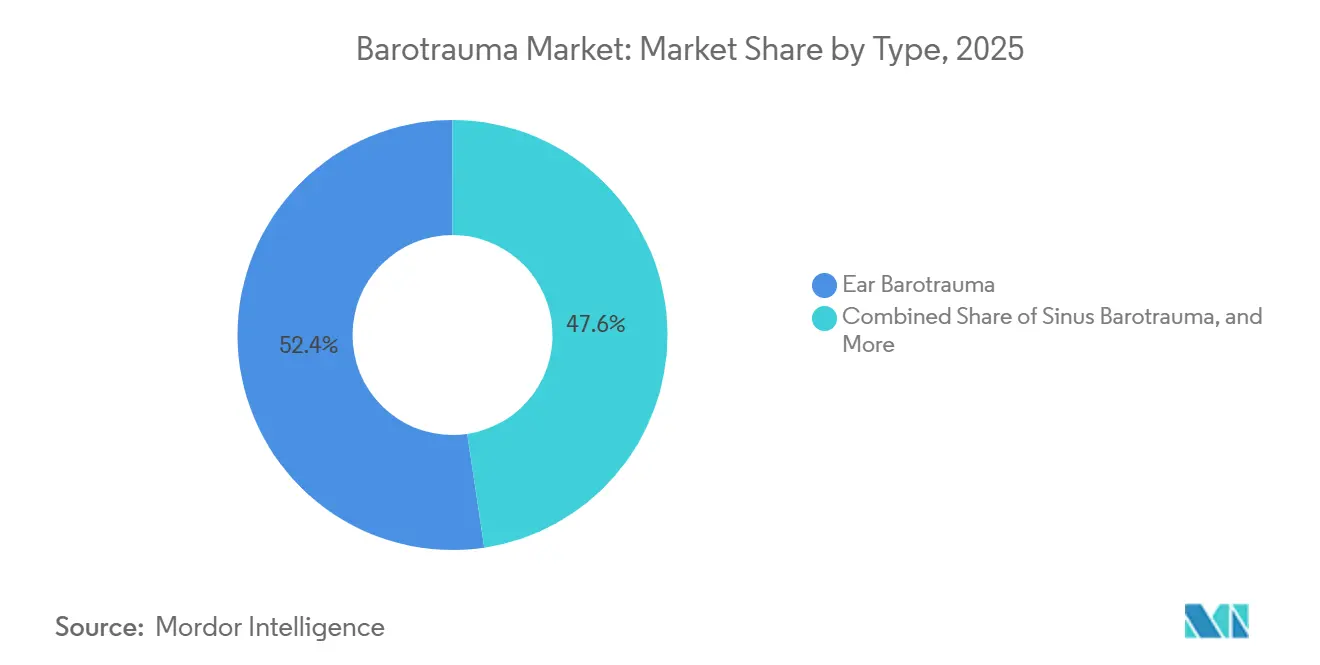
- By type, ear barotrauma led with 52.36% share in 2025, while pulmonary barotrauma is forecast to expand at 6.87% CAGR through 2031.
- By offering segment, treatment held 68.32% share in 2025, and is projected to grow at 7.62% CAGR through 2031.
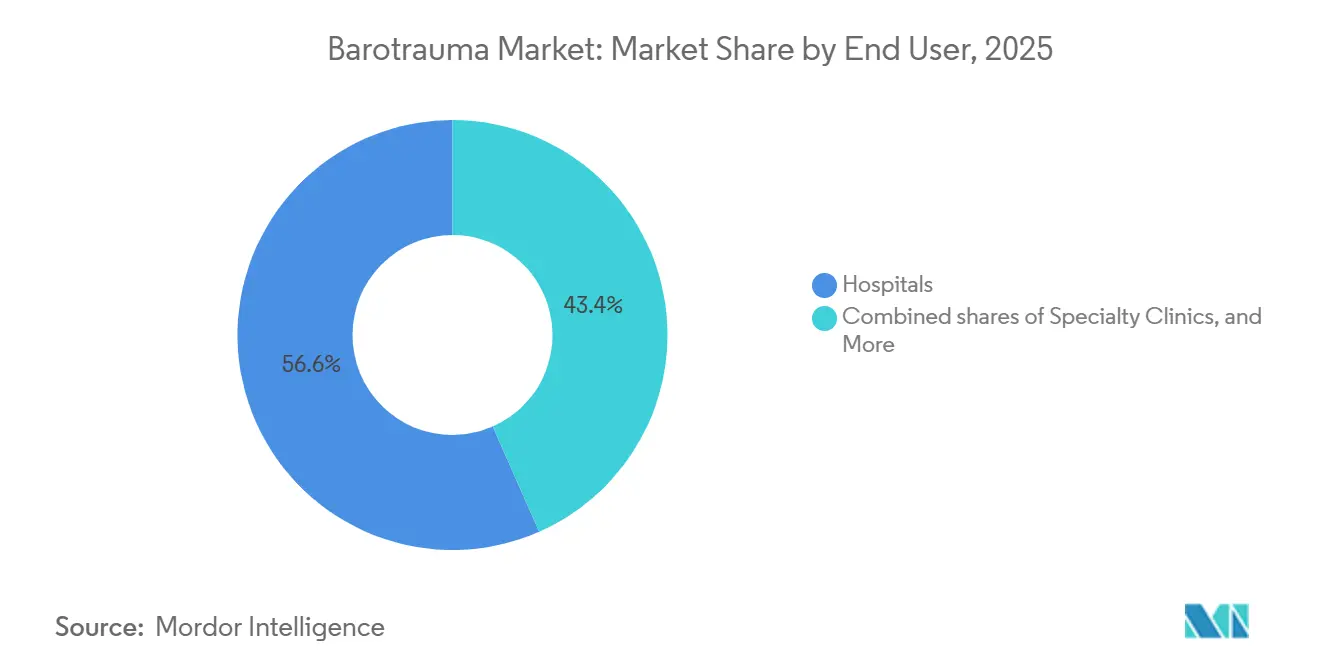
- By end user, hospitals held 56.61% share in 2025, while hyperbaric treatment centers are expected to grow at 7.43% CAGR through 2031.
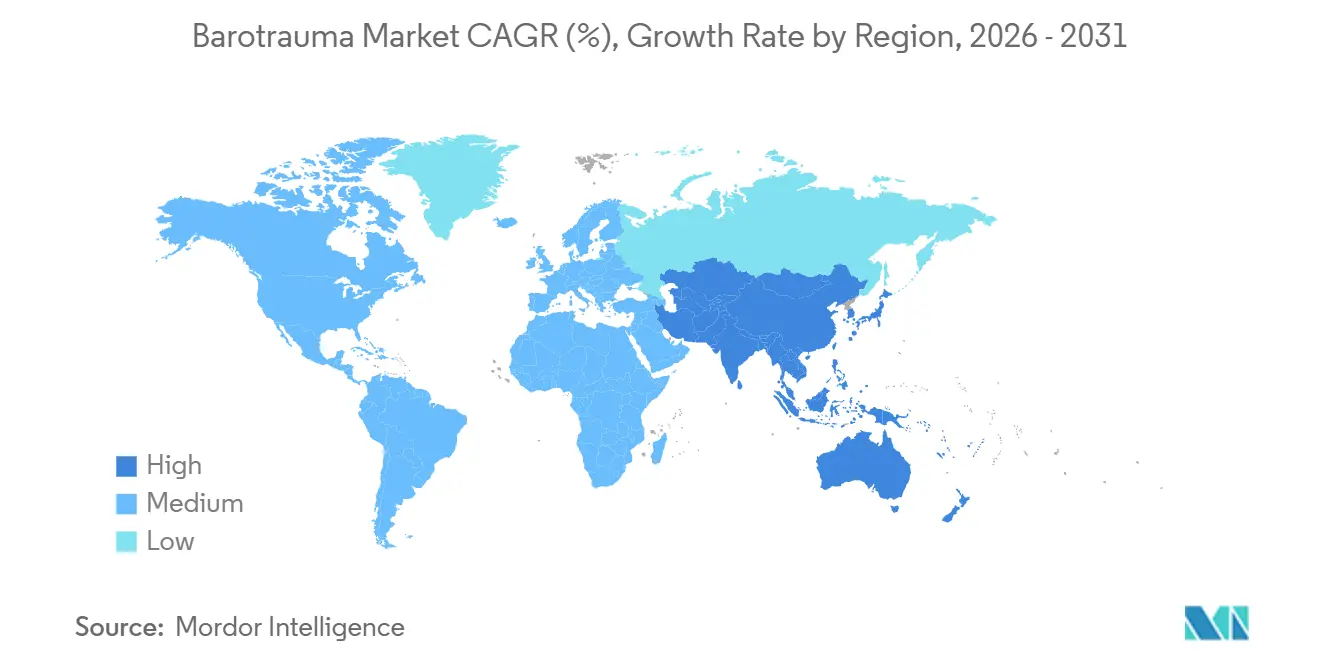
- By geography, North America held 41.34% share in 2025, while the Asia-Pacific region is expected to grow at 7.23% CAGR through 2031.
Note: Market size and forecast figures in this report are generated using Mordor Intelligence’s proprietary estimation framework, updated with the latest available data and insights as of January 2026.
Global Barotrauma Market Trends and Insights
Drivers Impact Analysis*
| Driver | (~) % Impact on CAGR Forecast | Geographic Relevance | Impact Timeline |
|---|---|---|---|
| Rising Recreational Diving and Aviation Exposure | +1.4% | Global, with concentration in North America, Europe, and Asia-Pacific | Short term (≤ 2 years) |
| Expanding ICU Ventilation and Pressure Injury Detection | +1.2% | Global, Asia-Pacific core with spill-over to Middle East and Africa | Medium term (2-4 years) |
| Wider Access to Hyperbaric and ENT Care | +1.0% | North America, Europe, GCC | Medium term (2-4 years) |
| AI-Assisted Early Diagnosis and Triage | +0.8% | North America and Europe, early gains in Asia-Pacific | Long term (≥ 4 years) |
| Hyperbaric Facility Modernization in High-Volume Centers | +0.7% | North America, Europe, GCC | Medium term (2-4 years) |
| Pressure-Injury Awareness Among Divers and Pilots | +0.6% | Global, highest in recreational diving hubs | Short term (≤ 2 years) |
| Source: Mordor Intelligence | |||
Rising Recreational Diving and Aviation Exposure Driving Barotrauma Incidence
The barotrauma market is exposed to a steadily larger traveler base as global air traffic reached 4.97 billion passengers in 2025, while demand rose 5.3% and the global load factor reached 83.5%. The United States alone recorded 890.1 million passengers in 2025[1]International Air Transport Association, “IATA Releases 2025 World Air Transport Statistics Report,” International Air Transport Association, iata.org, which shows how large the recurring exposure base has become for aviation-related ear and sinus presentations in routine care settings. Recreational diving adds another meaningful layer because the CDC estimated 0.6 million to 3.5 million active scuba divers in the United States, and this population experiences repeated pressure transitions rather than one-time exposure.[2]Centers for Disease Control and Prevention, “Scuba Diving, Decompression Illness and Other Dive-Related Injuries,” CDC Yellow Book, cdc.gov
This exposure pattern matters because ear and sinus cases often begin as mild events, but they still create recurring medication demand, ENT consultations, and follow-up visits within the formal care pathway. Even though IATA expects traffic growth to moderate in 2026, the installed base of frequent flyers remains large enough to support steady case generation for the barotrauma market across primary care, urgent care, and specialist ENT channels.
Expanding ICU Ventilation and Pressure Injury Detection Broadening the Clinical Landscape
The barotrauma market is also expanding through critical care because pulmonary injury in mechanically ventilated patients now contributes a larger and more visible share of case identification. A 2025 clinical review stated that pulmonary barotrauma in ventilated adults now averages 10% or less under modern low-tidal-volume practice, yet the absolute number of ventilated patients remains high across aging and higher-capacity hospital systems.
A 2025 Bayesian meta-analysis across 4,298 ICU patients found that respiratory rate and driving pressure were more important correlates than peak inspiratory pressure alone[3]Authors, “Barotrauma, The Statistical Fallacy, A Non-Conventional Scoping Review with Bayesian Meta-Analysis,” Journal of Mechanical Ventilation, journalmechanicalventilation.com, which is pushing clinicians toward broader monitoring logic. That shift supports stronger demand for respiratory monitoring, CT-based escalation, and multidisciplinary ICU workflows within the barotrauma market because complex pulmonary cases rarely fit a single-parameter protocol.
Wider Access to Hyperbaric and ENT Care Extending the Patient Catchment
The barotrauma market is gaining from wider access to hyperbaric and ENT care as providers replace small emergency setups with systems that can manage larger patient throughput and more structured referral flows. HAUX-LIFE-SUPPORT commissioned Europe's largest single-site pressure chamber system at Pasteur II Hospital in Nice in August 2025[4]HAUX-LIFE-SUPPORT GmbH, “Europe's Largest Pressure Chamber System at Pasteur II Hospital in Nice,” HAUX-LIFE-SUPPORT, hauxlifesupport.de, replacing an older setup with materially larger treatment capacity and greater clinical flexibility.
Sheba Medical Center opened Israel's only protected hyperbaric medicine center in 2025 with an investment of NIS 22 million (USD 6.0 million), which shows that capacity growth is extending beyond a few mature chamber markets. ENT access is also improving because CMS established HCPCS Code G0561 effective January 1, 2025, enabling reimbursement for in-office tympanostomy procedures using Preceptis Medical's system without general anesthesia. Lower procedural barriers in ear care and stronger chamber capacity can bring more diagnosed cases into the formal barotrauma market, especially where patients previously relied on conservative treatment or delayed referral.
AI-Assisted Early Diagnosis and Triage Reshaping Diagnostic Workflows
The barotrauma market still loses volume when mild ear and sinus cases are missed early, and AI tools are starting to address that gap in frontline settings. A 2026 study in Health and Technology reported that a dual-knowledge large language model with retrieval-augmented generation achieved expert-comparable diagnostic accuracy across ENT scenarios.
A second 2026 study in the Journal of Emergency Medicine found that guideline-linked language model support improved accuracy and safety for acute ENT triage in emergency departments. Another 2026 study showed that structured multimodal prompting improved diagnostic reasoning for sinus disease presentations that overlap with sinus barotrauma workups. As these tools move into primary care and emergency settings, the barotrauma market can capture more cases earlier and direct a larger share of ambiguous patients toward imaging, specialist review, and formal treatment episodes.
Restraints Impact Analysis*
| Restraint | (~) % Impact on CAGR Forecast | Geographic Relevance | Impact Timeline |
|---|---|---|---|
| High Cost of Hyperbaric and Specialist Care | -0.9% | Global, most acute in South America, Middle East and Africa, and smaller Asia-Pacific markets | Long term (≥ 4 years) |
| Underdiagnosis of Mild Cases in Primary Care | -0.7% | Global, most severe in rural and lower-income markets | Medium term (2-4 years) |
| Specialist and Chamber Capacity Shortages | -0.5% | Global, acute in Sub-Saharan Africa, South Asia, and Latin America | Long term (≥ 4 years) |
| Limited Reimbursement for Advanced Therapies | -0.6% | North America for non-standard indications, Europe with country-level variation | Medium term (2-4 years) |
| Source: Mordor Intelligence | |||
High Cost of Hyperbaric and Specialist Care Limiting Access in Constrained Markets
Cost remains a clear brake on the barotrauma market, especially where hyperbaric treatment sits outside routine coverage or depends on long travel to a single center. Hyperbaric oxygen therapy typically costs USD 200 to USD 400 per session, and severe decompression illness may require 20 to 40 sessions, which pushes total episode costs to USD 4,000 to USD 16,000 based on the treatment. Many private insurers still treat HBOT as experimental or investigational for selected indications, which leaves patients with significant out-of-pocket exposure and makes referral decisions less predictable. Capacity expansion is expensive at the provider level as well, and Baraga County Memorial Hospital awarded a USD 300,000 construction contract in 2025 for its first HBOT facility in Michigan. The capital burden rises much further for multiplace systems, while recompression remains the accepted standard for severe decompression illness, so financially constrained regions face both supply and affordability barriers at the same time.
Underdiagnosis of Mild Cases in Primary Care Compressing the Addressable Market
The barotrauma market also remains constrained by underdiagnosis because mild ear squeeze and sinus symptoms often resemble common respiratory infections or allergic complaints during the first clinical contact. A 2024 modeling study in PLOS ONE indicated that underdiagnosis rates for pressure-sensitive ear and sinus conditions likely exceeded 20% to 30% in rural and socioeconomically deprived populations within the NHS, which provides a useful proxy for other stretched primary care systems.
A 2025 survey of 478 divers in Saudi Arabia found that 62.8% experienced middle ear barotrauma and 54.4% experienced sinus barotrauma, while formal diagnosis and structured treatment rates remained disproportionately low. This pattern keeps many treatment episodes outside specialist channels and prevents those cases from converting into recorded diagnostic, medication, and procedure revenue. The barotrauma market can recover part of this missed demand over time, but primary care screening, patient education, and referral behavior will likely improve more slowly than hospital-based capacity expansion.
*Our forecasts treat driver/restraint impacts as directional, not additive. The impact forecasts reflect baseline growth, mix effects, and variable interactions.
Segment Analysis
By Type: Ear Barotrauma's Dominance Coexists with a Rapidly Expanding Pulmonary Segment
Ear barotrauma held 52.36% of 2025 revenue, the largest share within the barotrauma market share, because it remains the most common pressure-related injury across diving, aviation, and therapeutic exposure pathways. The segment benefits from a familiar care path that starts with decongestants and nasal corticosteroids and moves to office-based or surgical procedures only when symptoms persist or structural damage is suspected. Repeated exposure from air travel and recreational diving keeps case volumes high, which supports steady outpatient ENT demand and reliable refill activity within the barotrauma market.
Pulmonary barotrauma is projected to grow at 6.87% CAGR, giving it the fastest pace in the barotrauma market size by type through 2031. Its rise is tied to a larger mechanically ventilated ICU population and to more detailed monitoring of respiratory rate and driving pressure rather than reliance on a single pressure threshold.



By Offering: Treatment Revenues Anchor the Market as Diagnostic Precision Improves
Treatment accounted for 68.32% of offering revenue in 2025 and is forecast to grow at 7.62% CAGR through 2031, making it the largest and fastest-growing offering category in the barotrauma market. Its commercial weight comes from therapeutic protocols that generate recurring treatment episodes, unlike one-time diagnostic fees that usually carry a lower value per encounter.
Diagnosis made up second largest segment in the offering in 2025, as the standard entry point for ear barotrauma assessment in emergency and ENT settings. A 2026 prospective study found normal otoscopy in 90% of auricular barotrauma cases, while audiometric abnormalities appeared in 14% of patients, showing that visual examination alone can miss clinically relevant injury.
By End User: Hospitals Anchor Revenue, Hyperbaric Centers Accelerate
Hospitals accounted for 56.61% of 2025 revenue and held the largest barotrauma market share by end user because they manage the full severity range from outpatient ENT visits to ICU pulmonary events. Their role is strongest in pulmonary barotrauma because imaging, monitoring, chest procedures, and surgical backup sit inside the same care setting and can be mobilized without referral delay. Specialty clinics and ambulatory surgical centers extend follow-up care for chronic ear and sinus issues and support middle ear procedures when admission is unnecessary or avoidable. This structure keeps hospitals at the center of the barotrauma market even as care pathways become more distributed and office-based options become more available.
Hyperbaric treatment centers are forecast to expand at 7.43% CAGR, which is the fastest pace among end users in the barotrauma market. Growth reflects the shift from one-person emergency chambers to larger multi-patient facilities that support higher throughput, stronger safety processes, and more formal documentation requirements.
Geography Analysis
North America held 41.34% of 2025 revenue and accounted for the largest share of the barotrauma market size by geography. The United States recorded 890.1 million passengers in 2025, which gives the region the largest continuous exposure base for aviation-related ear and sinus presentations in the global barotrauma market. The CDC also estimated 0.6 million to 3.5 million active scuba divers in the United States, which adds a large recreational diving layer to regional demand and supports recurrent outpatient ENT volumes.
Europe remained the second-largest regional cluster in the barotrauma market, supported by Germany, France, and the United Kingdom through established specialist networks and deeper hyperbaric infrastructure. Capacity expansion accelerated in 2025 and 2026 as HAUX installed Europe's largest single-site pressure chamber system in Nice, reinforcing the region's installed base and its role in chamber-centered care.
Asia-Pacific is forecast to grow at 7.23% CAGR, making it the fastest regional section of the barotrauma market. China recorded 776.1 million passengers in 2025, and Southeast Asian coastal markets add rising diving exposure on top of hospital infrastructure investment, which broadens both outpatient and acute care demand. Japan's 2025 national survey of HBO devices showed active tracking of installed hyperbaric capacity and operational readiness, which supports the region's structured growth base and suggests sustained policy and provider interest in pressure medicine.

Competitive Landscape
The barotrauma market has a fragmented competitive structure with one group centered on medications and another centered on chambers, imaging systems, diagnostic tools, and procedural devices. Drug companies such as GSK, AstraZeneca, Pfizer, Merck & Co., Cipla, Teva, and Novartis compete in categories where generic overlap keeps pricing pressure high and product differentiation relatively limited. Device companies operate in a firmer position because chamber installations, visualization systems, and service support create higher switching costs and longer replacement cycles within the barotrauma market. No single company holds more than a low single-digit global share, so niche positioning, product fit, and clinical pathway relevance matter more than scale alone in the current barotrauma market.
Recent strategic moves show where competitive energy is building in the barotrauma market. Olympus expanded its ENT and pulmonary visualization portfolio in 2026 through the E-SteriScope launch in Canada and pediatric-use clearance for two single-use bronchoscopes, which strengthens its position across both diagnosis and respiratory workflow support.
Barotrauma Industry Leaders
GSK plc
Novartis AG
Pfizer Inc.
Olympus Corporation
Solventum Corporation
- *Disclaimer: Major Players sorted in no particular order

Recent Industry Developments
- May 2026: Olympus Corporation launched the E-SteriScope single-use flexible video rhinolaryngoscope in Canada, exclusively distributing the Hunan Vathin Medical product through its ENT portfolio. The launch extends high-definition, reprocessing-free otorhinolaryngological visualization and strengthens Olympus's single-use endoscopy pipeline for ENT diagnostics.
- February 2026: Olympus received FDA 510(k) clearance for pediatric use indication for two H-SteriScope single-use flexible bronchoscopes, enabling respiratory visualization in children from 6 months of age. The clearance significantly broadens Olympus's pulmonary diagnostic portfolio relevant to pediatric pulmonary barotrauma evaluation.


Global Barotrauma Market Report Scope
The barotrauma market comprises diagnostics, treatment modalities, oxygen therapy solutions, hyperbaric medicines, and related healthcare products used for the diagnosis, management, and treatment of barotrauma.
The barotrauma market reports are segmented by type, including ear barotrauma, sinus barotrauma, pulmonary barotrauma, and others. It also categorizes the market by offering in diagnosis and treatment. The diagnosis, covering physical examination, otoscopy, audiometry, X-ray, CT scan, and others. The market is further segmented by treatment, including conservative management, medications, oxygen therapy, recompression therapy, and surgery. End-user segmentation comprises hospitals, specialty clinics, ambulatory surgical centers, trauma & emergency centers, and hyperbaric treatment centers. Geographically, the market is segmented into North America, Europe, Asia-Pacific, the Middle East & Africa, and South America. The report also covers market size estimates and forecasts for major countries across these regions. For each segment, market sizing and forecasts are provided in terms of value (USD).
| Ear Barotrauma |
| Sinus Barotrauma |
| Pulmonary Barotrauma |
| Others |
| Diagnosis | Physical Examination |
| Otoscopy | |
| Audiometry | |
| X-Ray | |
| CT Scan | |
| Others | |
| Treatment | Conservative Management |
| Medications | |
| Oxygen Therapy | |
| Recompression Therapy | |
| Surgery |
| Hospitals |
| Specialty Clinics |
| Ambulatory Surgical Centers |
| Trauma & Emergency Centers |
| Hyperbaric Treatment Centers |
| North America | United States |
| Canada | |
| Mexico | |
| Europe | Germany |
| United Kingdom | |
| France | |
| Italy | |
| Spain | |
| Rest of Europe | |
| Asia-Pacific | China |
| India | |
| Japan | |
| Australia | |
| South Korea | |
| Rest of Asia-Pacific | |
| Middle East and Africa | GCC |
| South Africa | |
| Rest of Middle East and Africa | |
| South America | Brazil |
| Argentina | |
| Rest of South America |
| By Type | Ear Barotrauma | |
| Sinus Barotrauma | ||
| Pulmonary Barotrauma | ||
| Others | ||
| By Offerings | Diagnosis | Physical Examination |
| Otoscopy | ||
| Audiometry | ||
| X-Ray | ||
| CT Scan | ||
| Others | ||
| Treatment | Conservative Management | |
| Medications | ||
| Oxygen Therapy | ||
| Recompression Therapy | ||
| Surgery | ||
| By End User | Hospitals | |
| Specialty Clinics | ||
| Ambulatory Surgical Centers | ||
| Trauma & Emergency Centers | ||
| Hyperbaric Treatment Centers | ||
| By Geography | North America | United States |
| Canada | ||
| Mexico | ||
| Europe | Germany | |
| United Kingdom | ||
| France | ||
| Italy | ||
| Spain | ||
| Rest of Europe | ||
| Asia-Pacific | China | |
| India | ||
| Japan | ||
| Australia | ||
| South Korea | ||
| Rest of Asia-Pacific | ||
| Middle East and Africa | GCC | |
| South Africa | ||
| Rest of Middle East and Africa | ||
| South America | Brazil | |
| Argentina | ||
| Rest of South America | ||


Key Questions Answered in the Report
What is driving barotrauma demand through 2031?
The main drivers are rising exposure to air travel and diving, wider ICU monitoring for pulmonary injury, stronger hyperbaric and ENT access, and earlier diagnosis supported by AI-enabled workflows.
How large is barotrauma expected to become by 2031?
The barotrauma market was USD 4.12 billion in 2025 and is forecast to reach USD 5.76 billion by 2031 at a 5.76% CAGR over 2026-2031.
Which type of barotrauma generates the most revenue today?
Ear barotrauma led with 52.36% share in 2025 because it remains the most common pressure-related injury across diving, aviation, and therapeutic exposure pathways.
Why does North America lead global revenue?
North America held 41.34% of 2025 revenue because it combines a large aviation exposure base, a sizable diving population, deep ENT networks, and more developed hyperbaric infrastructure.
Where is the strongest regional growth expected?
Asia-Pacific is expected to grow the fastest at 7.23% CAGR through 2031, supported by China's large passenger base, Southeast Asia's diving exposure, and ongoing hospital and hyperbaric capacity expansion.
Page last updated on:





