
Bacterial Meningitis Market Size and Share
Market Overview
| Study Period | 2021 - 2032 |
|---|---|
| Market Size (2027) | USD 154.19 Million |
| Market Size (2032) | USD 189.61 Million |
| Growth Rate (2027 - 2032) | 4.22 % |
| Fastest Growing Market | Asia-Pacific |
| Largest Market | North America |
| Market Concentration | Medium |
Major Players *Disclaimer: Major Players sorted in no particular order Image © Mordor Intelligence. Reuse requires attribution under CC BY 4.0. | |
Bacterial Meningitis Market Analysis by Mordor Intelligence
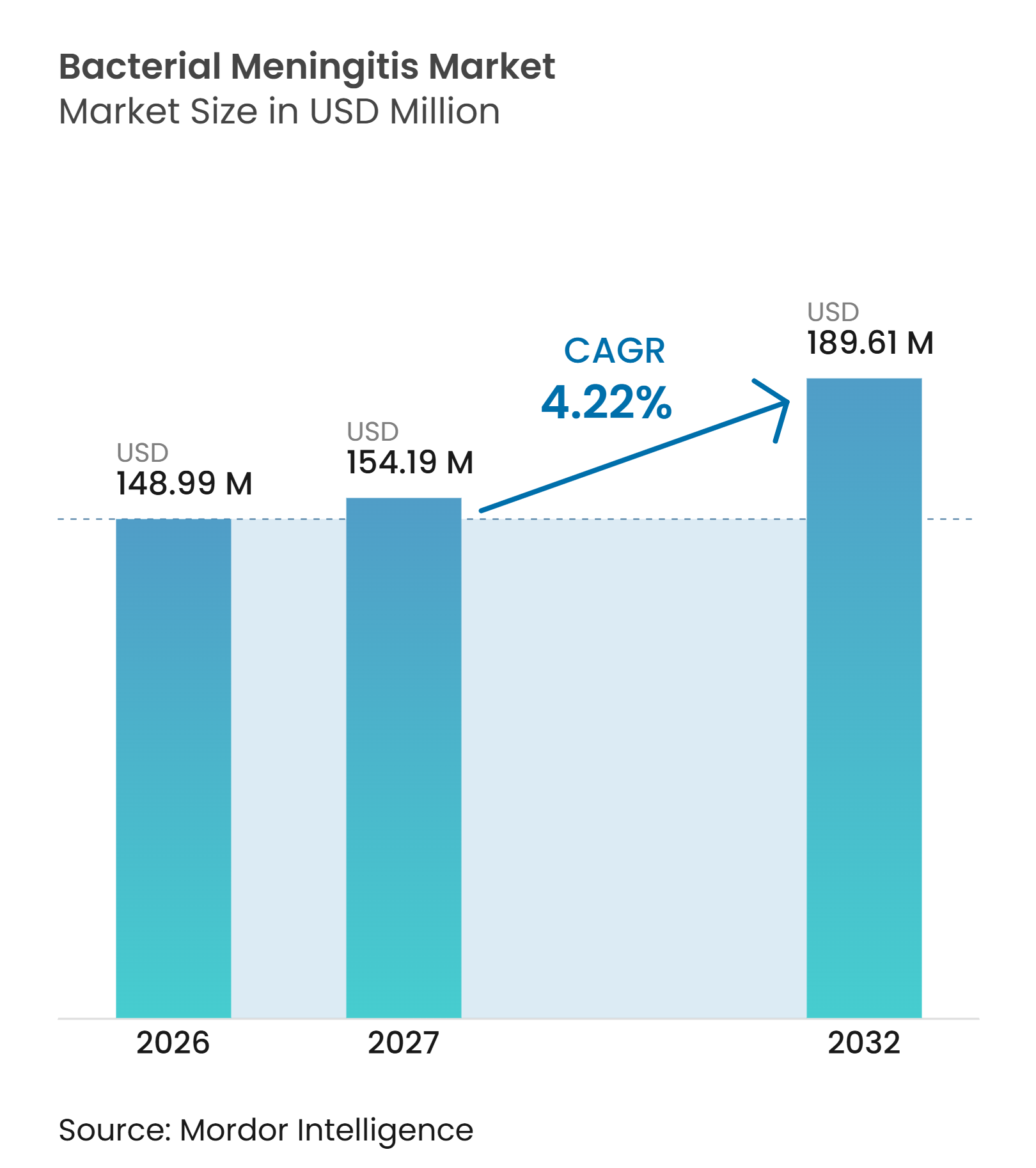
The Bacterial Meningitis Market size was valued at USD 148.99 million in 2026 and is estimated to grow from USD 154.19 million in 2027 to reach USD 189.61 million by 2032, at a CAGR of 4.22% during the forecast period (2027-2032).
The bacterial meningitis market is supported by demand for antibiotics, corticosteroids, vaccines, supportive care, and faster diagnostic pathways. In 2023, meningitis caused 259,000 deaths and 2.54 million incident cases globally, while bacterial pathogens caused more than 75% of meningitis-related deaths. More than 500,000 survivors experienced hearing loss, cognitive deficits, limb amputations, or other lasting impairments in 2023. Vaccine rollouts increasingly require post-vaccination surveillance, which links vaccine procurement to molecular testing demand. The bacterial meningitis market also faces barriers from high molecular testing costs, uneven reimbursement, cold-chain constraints, and limited sampling capacity in lower-resource settings.
Key Report Takeaways
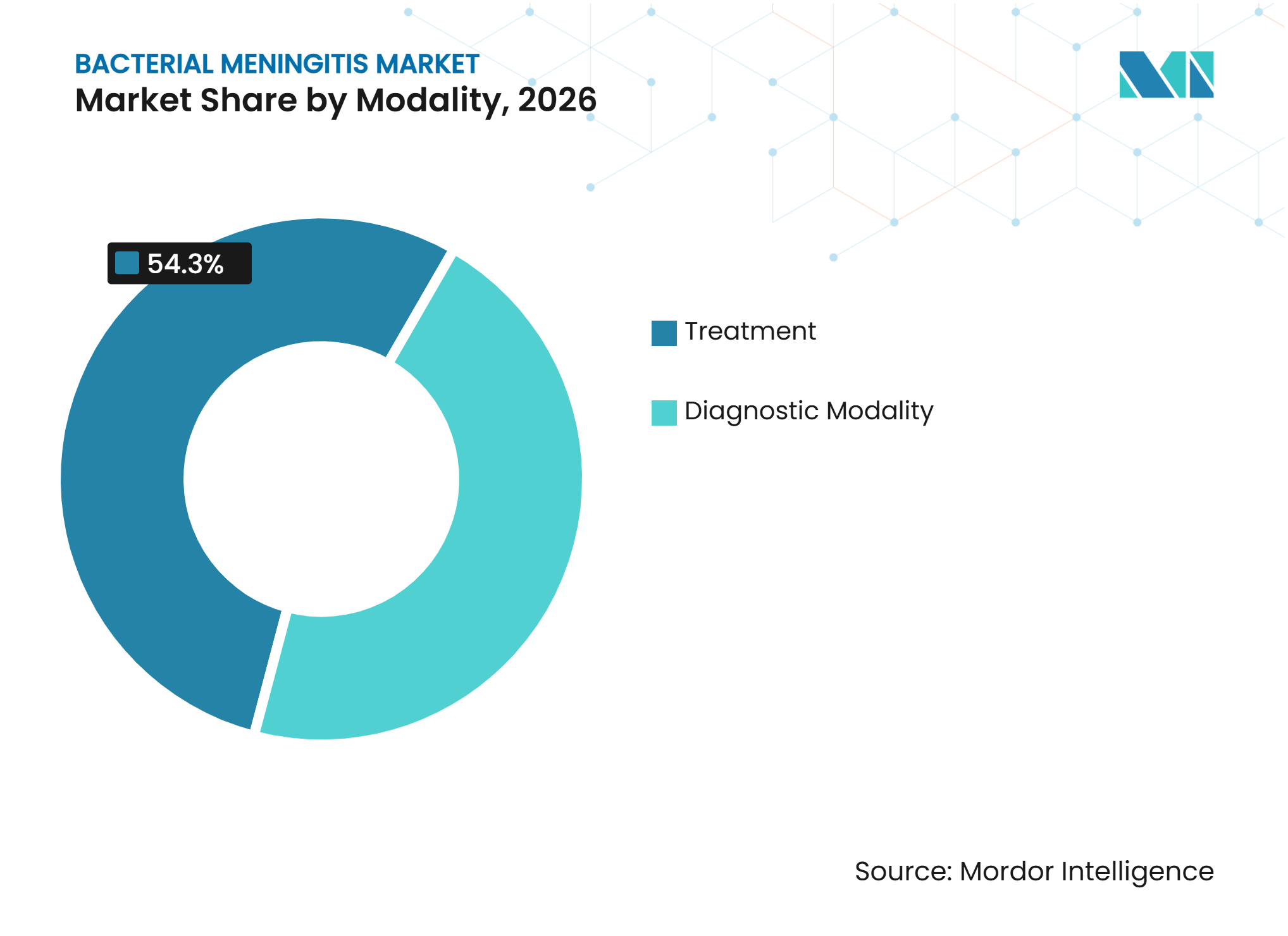
- By modality, treatment held 54.25% of the bacterial meningitis market share in 2026, while the diagnostic modality is forecast to grow at a 5.16% CAGR through 2032.
- By age group, children and adolescents held a 40.14% share in 2026, while adults are projected to grow at a 5.83% CAGR through 2032.
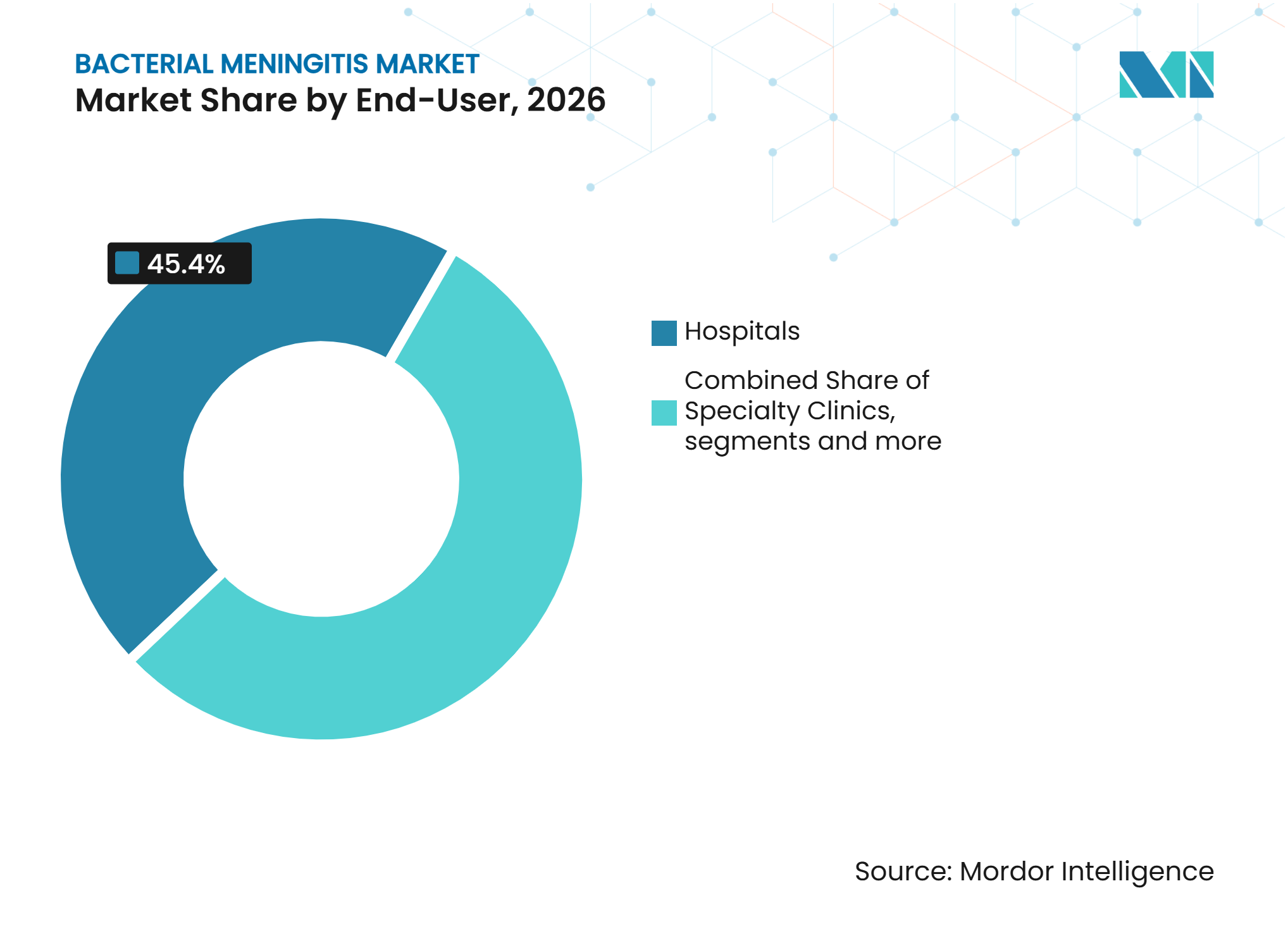
- By end-user, hospitals held a 45.36% share in 2026, while diagnostic laboratories are projected to grow at a 4.76% CAGR through 2032.
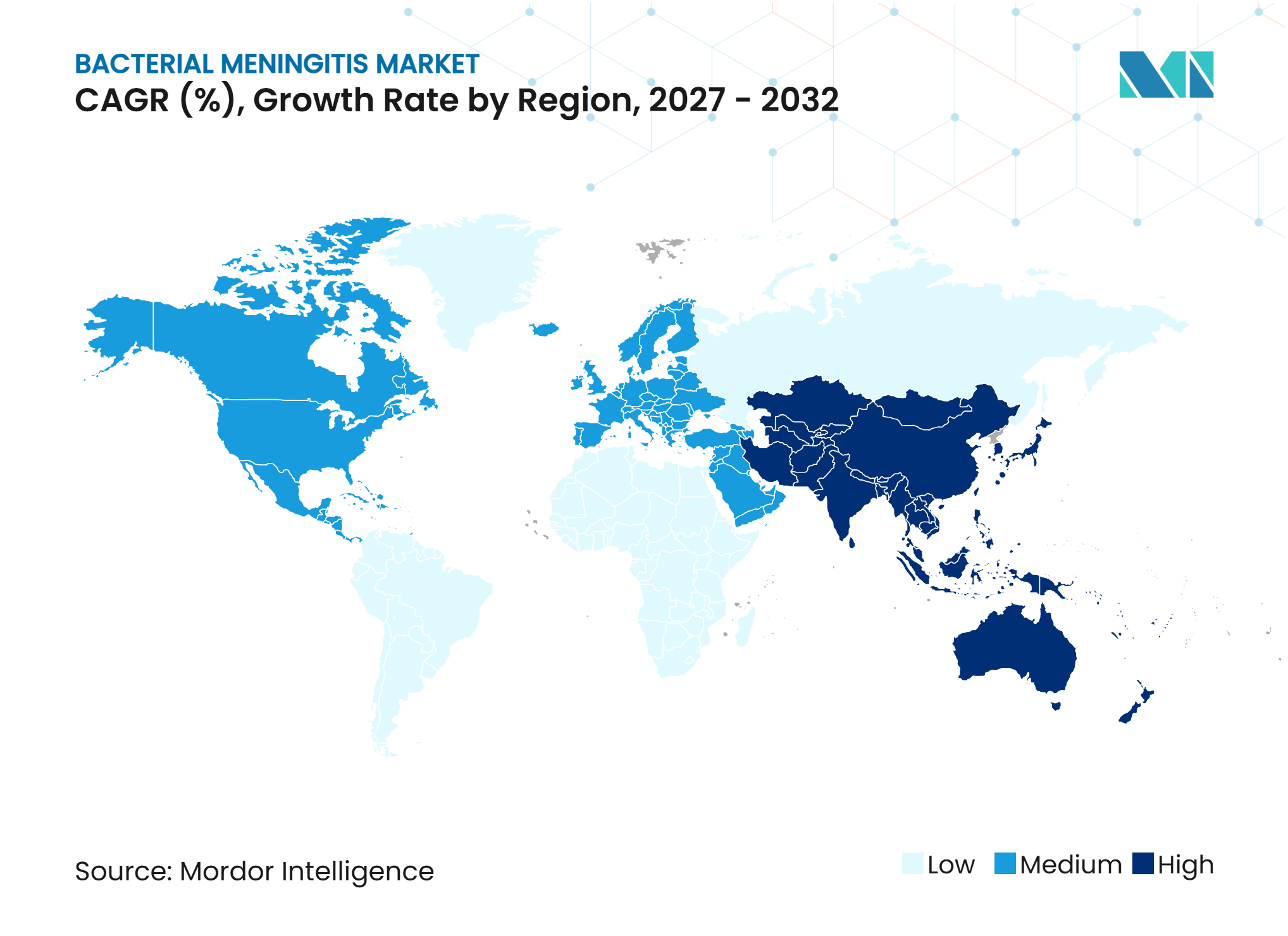
- By geography, North America held a 46.22% share in 2026, while Asia-Pacific is expected to grow at a 6.13% CAGR through 2032.
Note: Market numbers in this report are based on Mordor Intelligence's proprietary estimation framework, which combines nine months of actuals with Q4 projections for base year 2026.
Market Trends and Insights
Drivers Impact Analysis of Bacterial Meningitis Market*
| Driver | (~) % Impact on CAGR Forecast | Geographic Relevance | Impact Timeline |
|---|---|---|---|
| High Mortality and Long-Term Disability Burden | +0.5% | Global, with peak impact in Sub-Saharan Africa and South Asia | Long term (≥ 4 years) |
| Recurrent Meningococcal Epidemics and Outbreak Preparedness | +0.6% | Africa, South America, and Southeast Asia | Medium term (2-4 years) |
| Expansion of Conjugate and Combination Vaccination Programs | +1.0% | North America and Europe, with expansion to Asia-Pacific and the Middle East and Africa through Gavi | Medium term (2-4 years) |
| Rapid Syndromic Diagnostics Supporting Empiric-Therapy De-Escalation | +0.7% | North America and Europe, with early uptake in Asia-Pacific | Short term (≤ 2 years) |
| Ultra-Low-Volume and Heat-Stable Testing for Meningitis Belt Access | +0.4% | Sub-Saharan Africa and South Asia | Long term (≥ 4 years) |
| Post-Vaccination Serogroup Surveillance and Pathogen Genomic Monitoring | +0.3% | Global, with concentration in Europe, North America, and meningitis belt countries | Medium term (2-4 years) |
| Source: Mordor Intelligence | |||
Expansion of Conjugate and Combination Vaccination Programs
The bacterial meningitis market is gaining support from vaccines that combine coverage for several meningococcal serogroups in one product. The U.S. Food and Drug Administration approved GSK’s Penmenvy in February 2025 for people aged 10 to 25 years. The Advisory Committee on Immunization Practices recommended its use in April 2025 when MenACWY and MenB vaccination are both indicated.[1]In August 2026, the European Commission approved MenQuadfi for infants from 6 weeks of age, extending Sanofi’s pediatric vaccine offering in Europe. Nigeria introduced Serum Institute of India’s heat-stable MenFive vaccine in March 2024, and Niger followed with a national preventive campaign in 2025.[2]These programs reduce cold-chain dependence and create ongoing needs for serogroup surveillance after rollout.
Rapid Syndromic Diagnostics Supporting Empiric-Therapy De-Escalation
Rapid syndromic testing is increasing the clinical value of the bacterial meningitis market by reducing the time required to identify likely pathogens. QIAGEN received U.S. clearance for the QIAstat-Dx Meningitis and Encephalitis Panel in November 2024. The panel introduced another multiplex testing option alongside bioMérieux’s FilmArray platform. A 2025 study found that the BIOFIRE FILMARRAY Meningitis and Encephalitis Panel reduced per-episode costs by 8.4% in adults and 15.7% in children compared with real-time PCR.[3]Earlier identification can help clinicians narrow antibiotic treatment and reduce unnecessary corticosteroid exposure. The bacterial meningitis market, therefore, benefits from testing coverage that addresses emerging pathogens as well as faster turnaround times.
High Mortality and Long-Term Disability Burden
The bacterial meningitis market remains tied to a severe disease burden despite progress in immunization. The 4 bacterial pathogens covered by the World Health Organization’s prevention framework caused 98,700 deaths and 594,000 cases in 2023. Low- and lower-middle-income countries accounted for 86% of meningitis deaths that year. Long-term neurological and physical consequences increase the value placed on early diagnosis, targeted therapy, and rehabilitation. Current progress indicates that global targets for a 50% reduction in cases and a 70% reduction in deaths by 2030 are not on track. This gap maintains public health pressure for procurement, surveillance, and product development. It also keeps treatment demand relevant even where vaccination has reduced incidence.
Recurrent Meningococcal Epidemics and Outbreak Preparedness
Repeated outbreaks sustain vaccine, antibiotic, and diagnostic demand across the bacterial meningitis market. The African meningitis belt spans 26 countries from Senegal to Ethiopia. In epidemiological weeks 1 to 39 of 2025, the World Health Organization Africa Region reported 16,394 suspected cases and 802 deaths. Niger recorded 4,182 confirmed and suspected cases in 2024, compared with 2,991 in 2023, with serogroups C and W dominant. The United States recorded 463 confirmed or probable cases in 2025, driven by a serogroup Y ST1466 clonal expansion. These events show that countries with established vaccine programs still require responsive surveillance and outbreak preparedness. The bacterial meningitis market gains a linked demand stream when Men5CV deployment requires PCR-based monitoring of circulating serogroups.
Restraints Impact Analysis of Bacterial Meningitis Market*
| Restraint | (~) % Impact on CAGR Forecast | Geographic Relevance | Impact Timeline |
|---|---|---|---|
| High Cost of Molecular Instruments, Reagents, and Vaccine Procurement | -0.4% | Global, with the strongest effect in lower- and middle-income health systems | Long term (≥ 4 years) |
| Limited Cerebrospinal-Fluid Sampling Capacity in Neonates and Low-Resource Settings | -0.3% | Sub-Saharan Africa, South Asia, and rural Asia-Pacific | Long term (≥ 4 years) |
| Reimbursement and Procurement Gaps for Rapid Point-of-Care Testing | -0.3% | Middle-income countries and selected European markets | Medium term (2-4 years) |
| Critical-Input Concentration and Cold-Chain Fragility | -0.2% | Meningitis belt countries, lower-income countries, and island nations | Medium term (2-4 years) |
| Source: Mordor Intelligence | |||
High Cost of Molecular Instruments, Reagents, and Vaccine Procurement
High instrument, reagent, and vaccine costs restrict access across the bacterial meningitis market, especially where the disease burden is greatest. Multiplex PCR testing can cost USD 94 per run, while analyzer purchases require substantial upfront spending. These costs can prevent public hospitals from adopting molecular platforms when testing volumes are uncertain. Pentavalent meningococcal vaccines also cost more than older quadrivalent products, which places pressure on public procurement budgets. Limited cerebrospinal fluid sampling capacity in neonates and lower-resource facilities further reduces the number of patients who can benefit from laboratory confirmation. Heat-stable, low-volume assays could reduce this limitation over time, but these tools remain under development. Cold-chain fragility and a concentrated supply base can further disrupt access during outbreak periods.
Reimbursement and Procurement Gaps for Rapid Point-of-Care Testing
Reimbursement uncertainty constrains the adoption of rapid molecular panels in the bacterial meningitis market. The U.S. Department of Health and Human Services identified uncertain reimbursement as a major barrier to novel bacterial infection diagnostics. Hospitals may hesitate to place panels in emergency settings when payment differs by episode or payer. Europe’s IVDR transition also raises compliance costs for manufacturers and can favor centralized laboratory pathways. In Sub-Saharan Africa and South Asia, limited public reimbursement and incomplete donor coverage can shift molecular testing toward surveillance rather than routine care. This limits commercial diagnostic use despite a high disease burden. The bacterial meningitis market must therefore rely on procurement models that balance patient access, public health surveillance, and sustainable laboratory operations.
*Our forecasts treat driver/restraint impacts as directional, not additive. The impact forecasts reflect baseline growth, mix effects, and variable interactions.
Bacterial Meningitis Market Segment Analysis
By Modality:
Treatment Remains the Revenue Base, While Diagnostics Expand Clinical ValueTreatment held 54.25% of the bacterial meningitis market share in 2026, reflecting the central role of antibiotics and corticosteroids in acute care. Intravenous broad-spectrum cephalosporins, including ceftriaxone, remain the empiric treatment base across care settings. Dexamethasone is used to reduce neuroinflammation and the risk of sequelae in many developed-market protocols. Vaccine procurement is expanding within treatment following recent product approvals and pediatric indication extensions.
Diagnostic modality is projected to grow at a 5.16% CAGR from 2027 to 2032, the fastest rate among type categories. Lumbar puncture and blood culture remain core diagnostic approaches, but PCR has become a significant complementary method. This is particularly relevant after antibiotics have reduced culture sensitivity. A 2025 study at a North Indian tertiary center detected pathogens in 9.3% of cerebrospinal fluid samples using multiplex PCR, compared with 2.3% using culture. Serology and imaging remain useful in atypical cases, particularly for older adults and immunocompromised patients.


By Age Group:
Pediatric Demand Leads, While Adult Cases GrowChildren and adolescents accounted for 40.14% of the bacterial meningitis market share in 2026, supported by their elevated historical susceptibility and pediatric vaccination activity. Pediatric care settings also account for substantial antibiotic and vaccine procurement. Routine conjugate vaccination has reduced incidence in children in high-income countries. Adolescent vaccine programs remain commercially important as pentavalent MenABCWY products reshape immunization options.
Adults are expected to grow at a 5.83% CAGR from 2027 to 2032, making this the fastest-growing age group. Adults aged 60 years and older account for up to 25% of invasive meningococcal disease cases in developed countries. Immunosenescence and chronic disease increase clinical risk among older patients. Pneumococcal meningitis is the dominant bacterial cause in adults, while pneumococcal conjugate vaccine coverage still trails pediatric uptake in many settings. The bacterial meningitis market size for adults is therefore supported by aging populations and a greater need for rapid diagnosis of atypical presentations.
By End-User:
Hospitals Lead, While Diagnostic Laboratories Build Specialized CapacityHospitals held 45.36% of the bacterial meningitis market share in 2026 because diagnosis and treatment often require hospital-grade infrastructure. Lumbar puncture, cerebrospinal fluid culture, multiplex PCR, neuroimaging, intensive care, and intravenous antibiotics are closely connected within hospital workflows. Hospitals that already operate syndromic analyzers for respiratory or gastrointestinal testing can add meningitis testing without purchasing an entirely new platform. Specialty clinics serve narrower roles in outpatient vaccination, neurological follow-up, and care of immunocompromised patients.
Diagnostic laboratories are anticipated to expand at a 4.76% CAGR through 2032. These facilities provide outsourced confirmation, complex culture services, and sequencing that smaller hospitals may not perform internally. ISO 15189 quality requirements increase technical entry barriers and favor laboratories with established molecular platforms. This part of the bacterial meningitis industry is gaining importance as public health and reference testing needs become more specialized.


Geography Analysis
North America
North America held 46.22% of the bacterial meningitis market share in 2026, supported by hospital molecular infrastructure, established vaccination schedules, and reimbursement for culture and PCR testing. The United States reported 463 confirmed or probable meningococcal cases in 2025, its second-highest count. Canada updated its guidance on quadrivalent conjugate meningococcal vaccines in March 2025. The U.S. recommendation for Penmenvy and FDA clearance for QIAstat-Dx created overlapping vaccine and diagnostic procurement activity. Mexico offers additional opportunities as public health investment expands diagnostic laboratory infrastructure.
Europe
Europe has significant revenue from Germany, the United Kingdom, France, Italy, and Spain. Regulation under IVDR and rigorous vaccine assessment support premium product requirements despite lower incidence levels. Whole-genome sequencing of Neisseria meningitidis is routinely used by major European health systems. An observational study in Lombardy found rising Streptococcus pneumoniae meningitis incidence among adults older than 65 years from 2014 to 2024. Eastern European markets remain less penetrated for advanced diagnostics, which leaves room for future panel adoption.
Asia-Pacific, Middle East and Africa, and South America
Asia-Pacific is projected to grow at a 6.13% CAGR through 2032, making it the fastest-growing regional bacterial meningitis market. The World Health Organization South-East Asia Region recorded 438,000 meningitis cases and 22,689 deaths in 2023. Growth reflects a shift from underdiagnosis to more complete diagnosis, particularly in reference laboratories. India’s multiplex PCR evidence supports this change in clinical practice. In the Middle East and Africa, Gavi and the International Coordinating Group stockpile remain central procurement channels. South America’s post-pandemic rise in serogroup B disease is also strengthening the case for vaccine and diagnostic investment.
Competitive Landscape
Market Concentration
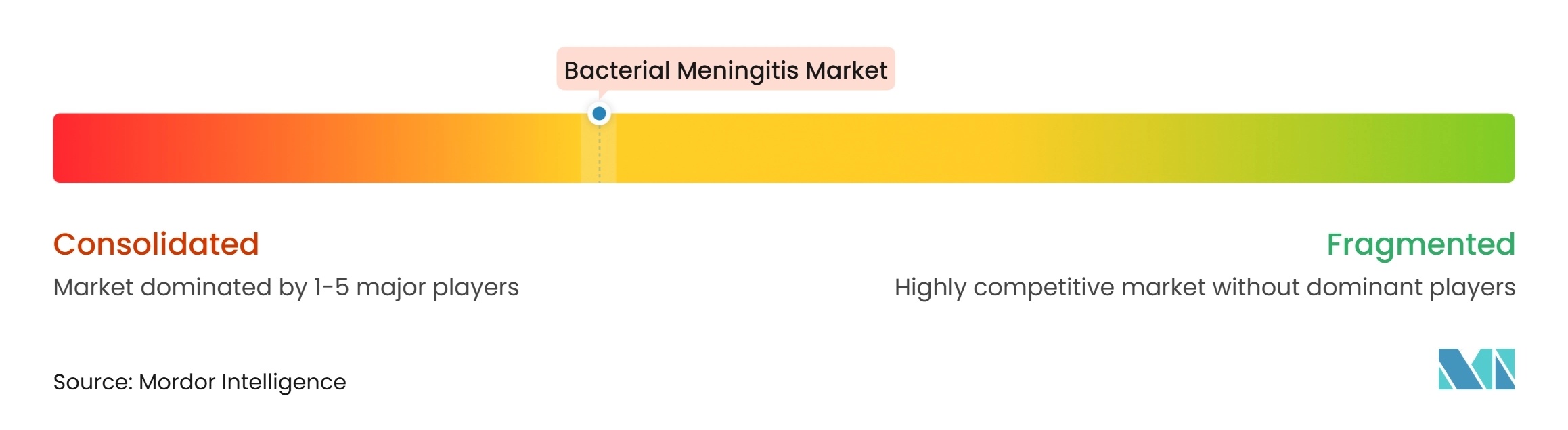
The bacterial meningitis market has different competitive structures in vaccines and diagnostics. GSK, Pfizer, and Sanofi lead the vaccine segment through meningococcal products and new pentavalent launches. Pfizer withdrew Penbraya’s European authorization for commercial reasons in January 2025. GSK’s Penmenvy combines MenACWY and MenB coverage for eligible U.S. patients. Sanofi expanded MenQuadfi to infants from 6 weeks of age in the European Union in August 2026.
Diagnostics are more fragmented, with bioMérieux, QIAGEN, Abbott, Roche, Siemens Healthineers, Becton Dickinson, and Thermo Fisher competing across panels, culture, serology, and sequencing. bioMérieux acquired SpinChip Diagnostics in January 2025 to strengthen its near-patient immunoassay position. These moves combine hospital testing, near-patient diagnostics, and genomic confirmation capabilities. QIAGEN’s cleared QIAstat-Dx panel adds another major multiplex testing option for emergency diagnostics. Competitive success depends on test coverage, workflow fit, reimbursement, and laboratory quality standards.
Emerging products for the meningitis belt include heat-stable, low-volume molecular tests that could operate with fewer laboratory resources. An isothermal CRISPR-based lateral-flow assay for N. meningitidis was described in 2024. Serum Institute of India’s WHO-prequalified MenFive has a strong position in donor-supported meningitis belt procurement. WHO prequalification and laboratory quality requirements remain important for tender eligibility and market access. The bacterial meningitis market is therefore concentrated in vaccines but more dispersed in diagnostics, with local-access technologies still developing.
Bacterial Meningitis Industry Leaders
-
Pfizer Inc.
-
GSK plc
-
Sanofi S.A.
-
bioMérieux S.A.
-
QIAGEN N.V.
- *Disclaimer: Major Players sorted in no particular order
Bacterial Meningitis Market Companies Covered in this Report
- Abbott Laboratories
- Beckton Dickinson
- Bharat Biotech International Limited
- bioMerieux S.A.
- Bio-Rad Laboratories
- CSL Behring
- DiaSorin
- Roche
- GlaxoSmithKline
- Hualan Biological
- Incepta Pharmaceuticals Limited
- Merck
- Pfizer
- QIAGEN
- Sanofi
- Seegene
- Serum Institute of India
- Siemens Healthineers
- Thermo Fisher Scientific
- Walvax Biotechnology Co., Ltd.
Recent Industry Developments in Bacterial Meningitis Market
- August 2026: The European Commission approved an expanded indication for Sanofi's MenQuadfi (MenACWY conjugate vaccine) to include infants from 6 weeks of age, following a positive CHMP opinion in June 2026. This extension addresses the youngest and highest-risk immunization window and cements Sanofi's pediatric vaccine reach across EU markets, positioning MenQuadfi for additional pediatric procurement tenders.
- June 2025: bioMérieux announced the acquisition of Day Zero Diagnostics' assets, a U.S. company using genome sequencing and machine learning to combat antibiotic-resistant infections, for under USD 25 million. The deal strengthens bioMérieux's next-generation sequencing capabilities, directly applicable to meningitis reference laboratory workflows and antimicrobial stewardship programs.
- April 2025: The U.S. CDC's Advisory Committee on Immunization Practices voted to recommend GSK's Penmenvy for persons aged 10 years and older when both MenACWY and MenB vaccines are co-indicated. The recommendation follows FDA approval in February 2025, and GSK has cited a USD 1-2 billion peak sales potential for the product.
Global Bacterial Meningitis Market Report Scope
According to the report’s scope, the bacterial meningitis market encompasses therapies, vaccines, diagnostics, and supportive care solutions aimed at managing bacterial meningitis. It includes antibiotics, advanced diagnostic tools, hospital care equipment, and preventive vaccines, serving hospitals, clinics, and public health programs worldwide.
The bacterial meningitis market is segmented into modality, age group, end-user, and geography. By modality, the market is segmented into treatment and diagnostic modality. The treatment segment is further segmented into antibiotics, corticosteroids, vaccines, supportive care, and antiviral medication. The diagnostic modality segment is further segmented into lumbar puncture, blood cultures, polymerase chain reaction, serological tests, and imaging techniques. By age group, the market is segmented into children and adolescents, adults, and older adults. By end-user, the market is segmented into hospitals, specialty clinics, diagnostic laboratories, and other end-users. By geography, the market is segmented into North America, Europe, Asia-Pacific, the Middle East and Africa, and South America. The report also covers the estimated market sizes and trends for 17 countries across major regions globally. The report offers values (USD) for all the above segments.
Segmentation Overview
| Treatment | Antibiotics |
| Corticosteroids | |
| Vaccines | |
| Supportive Care | |
| Antiviral Medication | |
| Diagnostic Modality | Lumbar Puncture |
| Blood Cultures | |
| Polymerase Chain Reaction | |
| Serological Tests | |
| Imaging Techniques |
| Children and Adolescents |
| Adults |
| Older Adults |
| Hospitals |
| Specialty Clinics |
| Diagnostic Laboratories |
| Other End-Users |
| North America | United States |
| Canada | |
| Mexico | |
| Europe | Germany |
| United Kingdom | |
| France | |
| Italy | |
| Spain | |
| Rest of Europe | |
| Asia-Pacific | China |
| Japan | |
| India | |
| Australia | |
| South Korea | |
| Rest of Asia-Pacific | |
| Middle East and Africa | GCC |
| South Africa | |
| Rest of Middle East and Africa | |
| South America | Brazil |
| Argentina | |
| Rest of South America |
| By Modality | Treatment | Antibiotics |
| Corticosteroids | ||
| Vaccines | ||
| Supportive Care | ||
| Antiviral Medication | ||
| Diagnostic Modality | Lumbar Puncture | |
| Blood Cultures | ||
| Polymerase Chain Reaction | ||
| Serological Tests | ||
| Imaging Techniques | ||
| By Age Group | Children and Adolescents | |
| Adults | ||
| Older Adults | ||
| By End-User | Hospitals | |
| Specialty Clinics | ||
| Diagnostic Laboratories | ||
| Other End-Users | ||
| By Geography | North America | United States |
| Canada | ||
| Mexico | ||
| Europe | Germany | |
| United Kingdom | ||
| France | ||
| Italy | ||
| Spain | ||
| Rest of Europe | ||
| Asia-Pacific | China | |
| Japan | ||
| India | ||
| Australia | ||
| South Korea | ||
| Rest of Asia-Pacific | ||
| Middle East and Africa | GCC | |
| South Africa | ||
| Rest of Middle East and Africa | ||
| South America | Brazil | |
| Argentina | ||
| Rest of South America | ||
Key Questions Answered in the Report
What is the projected growth of the bacterial meningitis market?
The bacterial meningitis market is projected to grow from USD 148.99 million in 2026 to USD 154.19 million in 2027 to USD 189.61 million by 2032 at a 4.22% CAGR.
Which bacterial meningitis treatment type leads to revenue?
Treatment led with 54.25% share in 2026, supported by antibiotics, corticosteroids, vaccines, and supportive care.
Which region is growing fastest for bacterial meningitis products?
Asia-Pacific is projected to expand at a 6.13% CAGR through 2032 as laboratory capacity and diagnosis improve.
Who are the major companies in bacterial meningitis vaccines and diagnostics?
GSK, Pfizer, and Sanofi lead vaccine activity, while bioMérieux, QIAGEN, Abbott, Roche, Siemens Healthineers, Becton Dickinson, and Thermo Fisher compete in diagnostics.