
Azelaic Acid Cosmetics Market Size and Share
Market Overview
| Study Period | 2022 - 2032 |
|---|---|
| Market Size (2027) | USD 407.27 Million |
| Market Size (2032) | USD 724.5 Million |
| Growth Rate (2027 - 2032) | 12.21 % |
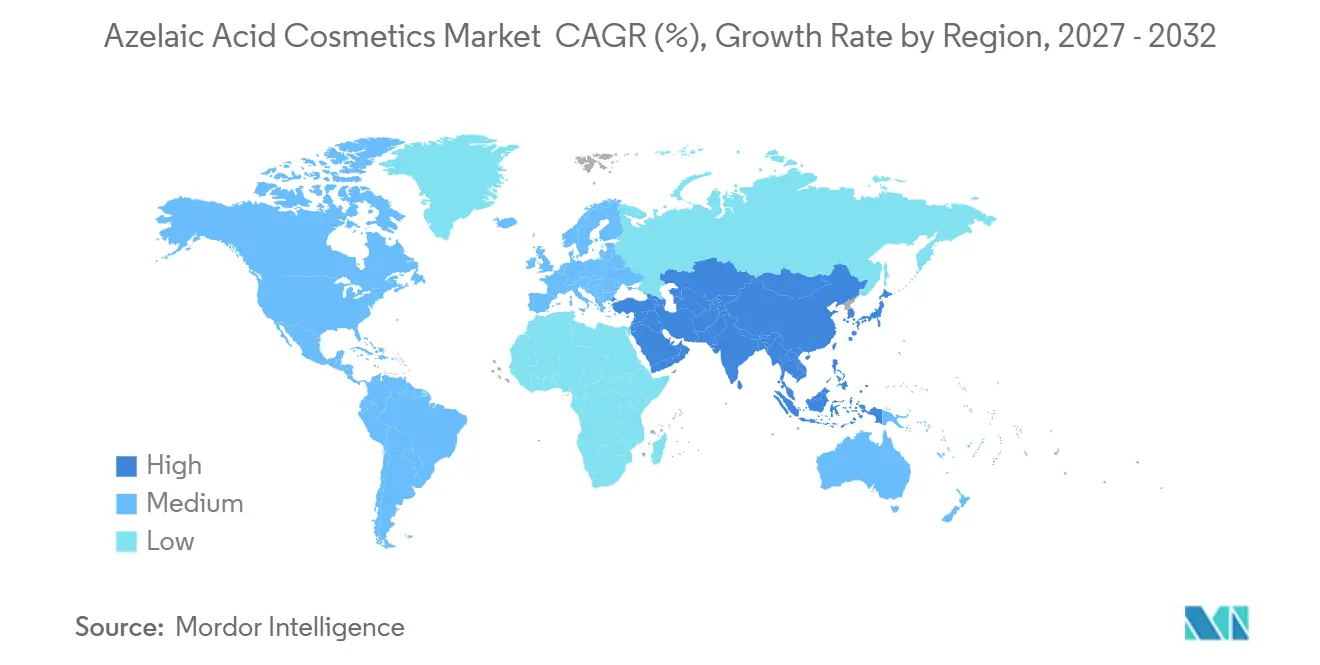
| Fastest Growing Market | Asia-Pacific |
| Largest Market | North America |
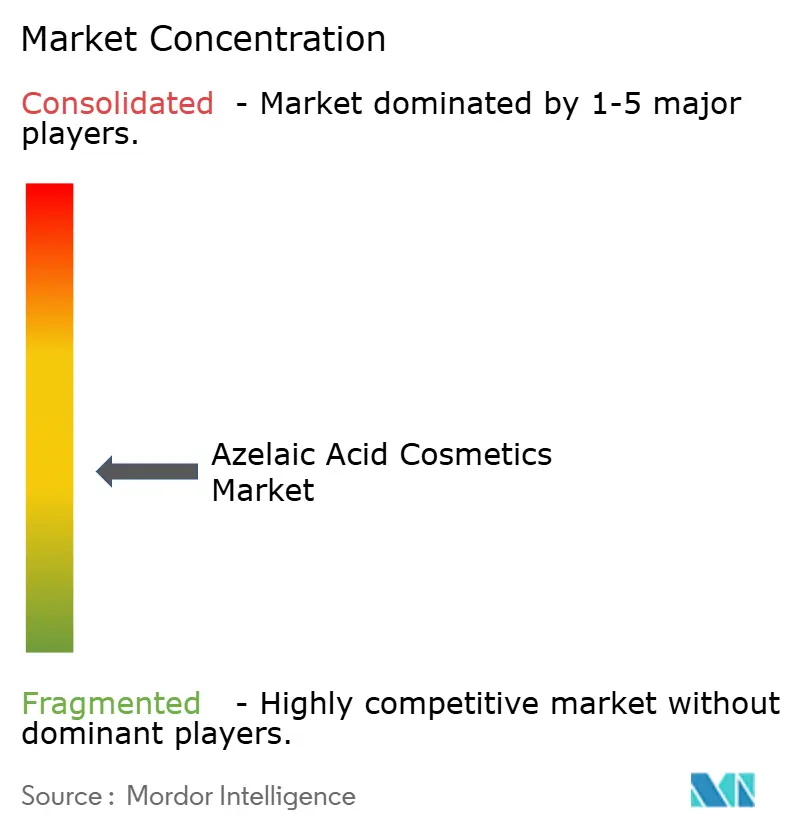
| Market Concentration | Medium |
Major Players *Disclaimer: Major Players sorted in no particular order Image © Mordor Intelligence. Reuse requires attribution under CC BY 4.0. | |
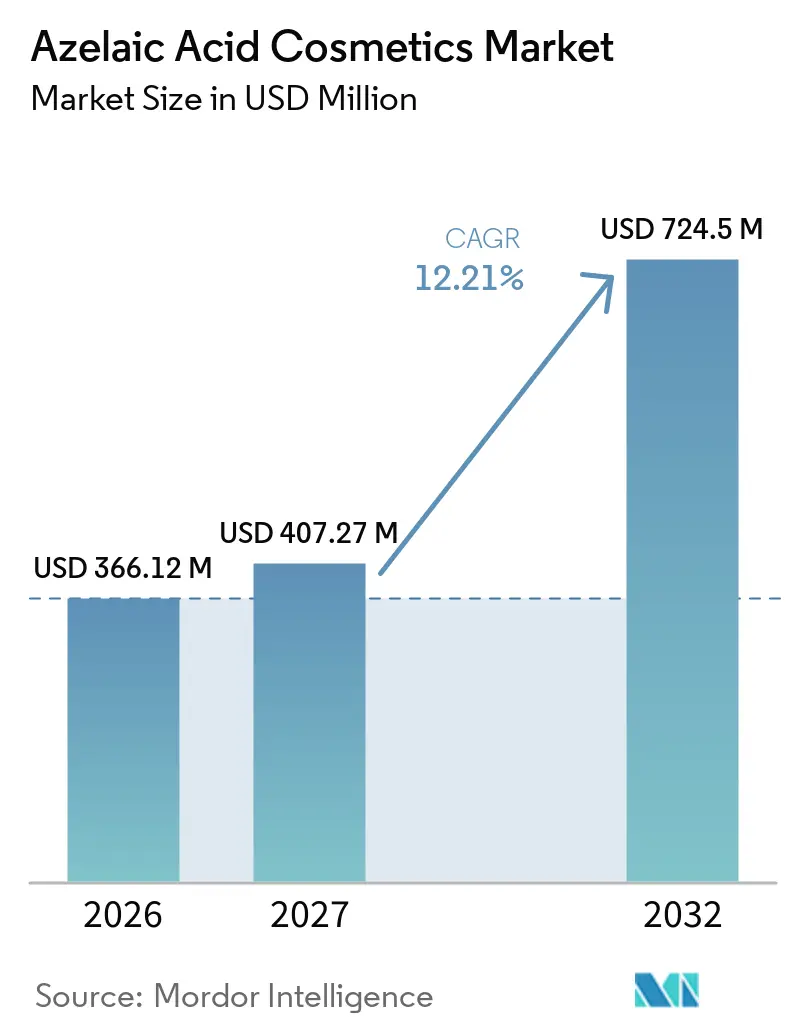
Azelaic Acid Cosmetics Market Analysis by Mordor Intelligence
The Azelaic Acid Cosmetics Market was valued at USD 366.12 million in 2026 and is estimated to grow from USD 407.27 million in 2027 to reach USD 724.5 million by 2032, registering a CAGR of 12.21% during the forecast period (2027–2032). Market growth is driven by rising consumer demand for targeted skincare solutions that address acne, blemishes, post-acne marks, uneven skin tone, and visible redness. Growing awareness of active skincare ingredients and their functional benefits is encouraging consumers to seek formulations that combine targeted efficacy with skin compatibility. Increasing interest in dermatologist-inspired skincare, ingredient transparency, and evidence-based cosmetic formulations is further supporting product adoption.
Key Report Takeaways
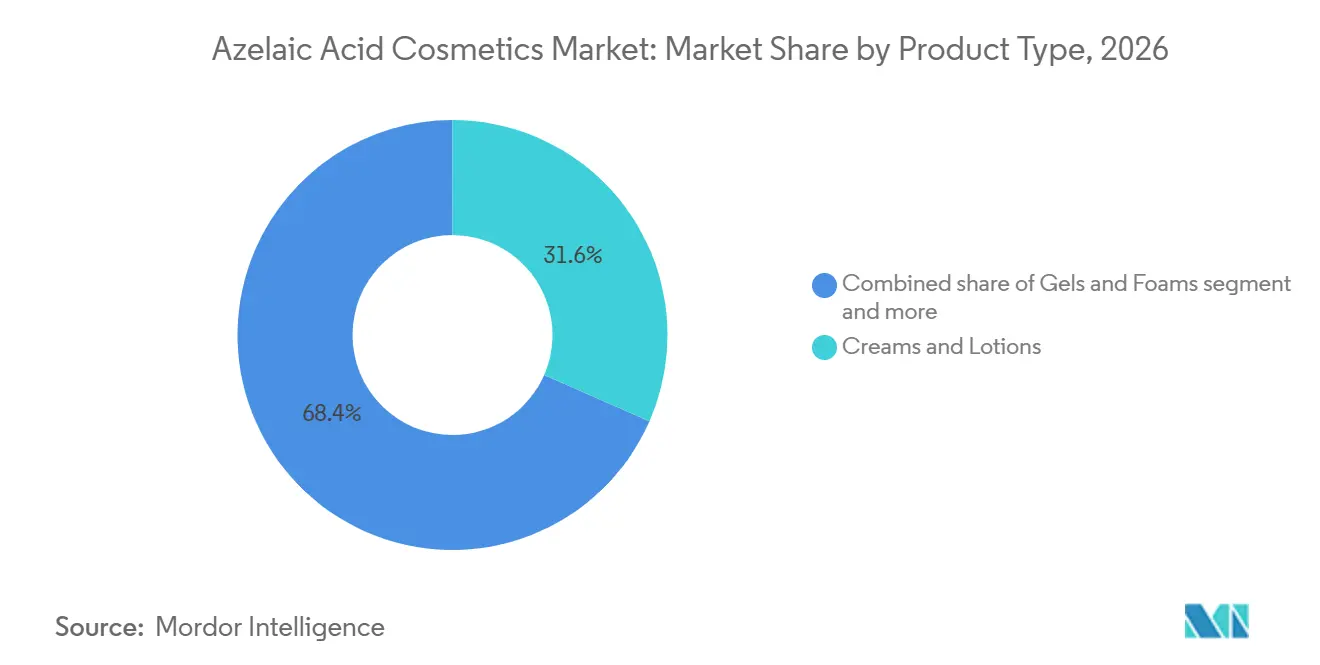
- By product type, Creams and Lotions held a 31.56% share of the azelaic acid cosmetics products market in 2026, while Serums, Ampoules, and Essences are projected to grow at a 13.45% CAGR through 2032.
- By concentration, Moderate Concentration products held a 46.55% share in 2026, while Medical-Grade Cosmetics are forecast to expand at a 13.86% CAGR through 2032.
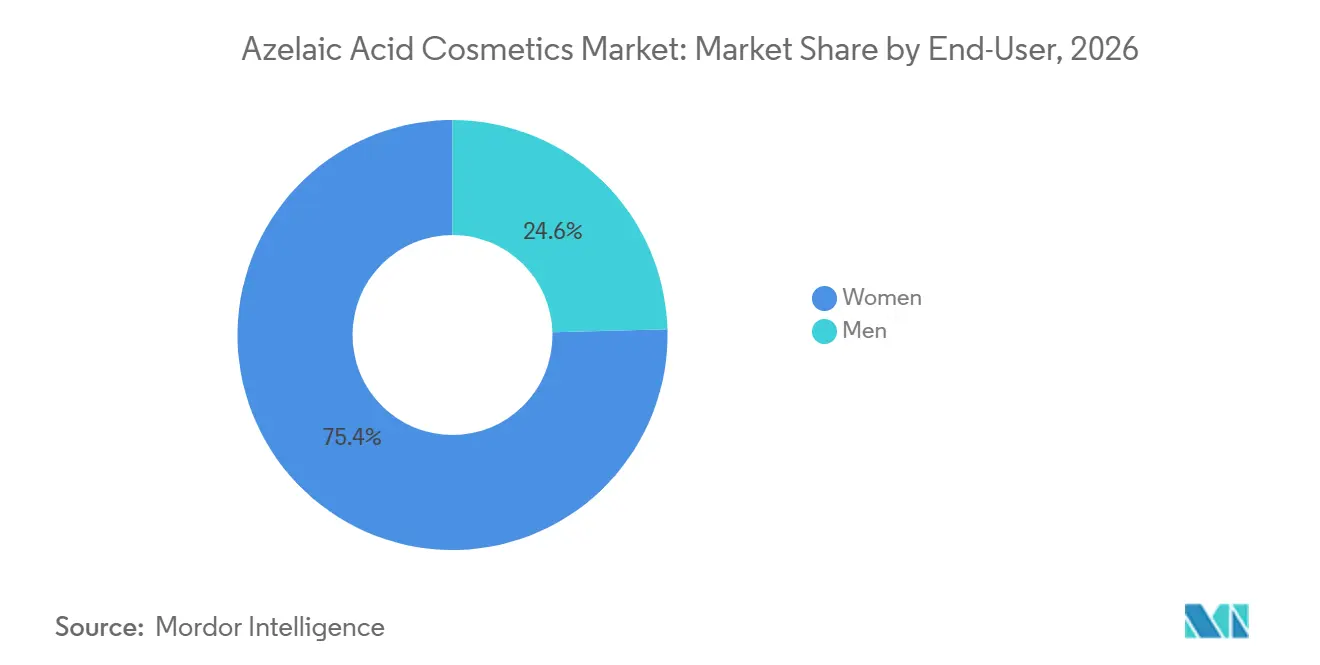
- By end-user, Women accounted for a 75.43% share in 2026, while Men are projected to record the highest growth at a 12.89% CAGR through 2032.
- By distribution channel, Specialty Beauty and Health Stores held a 41.03% share in 2026, while Online Retail Stores are forecast to grow at a 14.56% CAGR through 2032.
- By geography, North America accounted for a 33.12% share in 2026, while Asia-Pacific is projected to expand at a 14.09% CAGR through 2032.
Note: Market numbers in this report are based on Mordor Intelligence's proprietary estimation framework, which combines nine months of actuals with Q4 projections for base year 2026.
Global Azelaic Acid Cosmetics Market Trends and Insights
Drivers Impact Analysis*
| Driver | (~) % Impact on CAGR Forecast | Geographic Relevance | Impact Timeline |
|---|---|---|---|
| Rising prevalence of acne-prone skin and blemishes | +2.8% | Global; highest in North America, East Asia, and South America | Short term (≤ 2 years) |
| Growing preference for multifunctional skincare ingredients | +2.2% | Global; strongest in North America and Western Europe | Medium term (2–4 years) |
| Rising interest in redness-conscious skincare | +1.8% | North America and Western Europe; emerging in South Korea and Japan | Medium term (2–4 years) |
| Adoption of dermatologist-inspired cosmetic products | +1.6% | North America, Europe; rapid uptake in India and Southeast Asia | Medium term (2–4 years) |
| Growing use of azelaic acid in combination formulations | +1.2% | Global; strongest in Asia-Pacific and Europe | Long term (≥ 4 years) |
| Increasing product innovation using cosmetic-grade azelaic acid | +0.9% | Global; spearheaded by North America and South Korea | Medium term (2–4 years) |
| Source: Mordor Intelligence | |||
Rising Prevalence of Acne-Prone Skin and Blemishes
The persistent prevalence of acne and recurring blemishes is driving demand for azelaic acid cosmetics, as consumers seek skincare products that address breakouts, uneven skin texture, and post-acne discoloration. Acne-related concerns can continue beyond adolescence into adulthood, creating demand for products suitable for ongoing skincare routines and the management of residual marks after blemishes subside. Azelaic acid is relevant to this demand due to its comedolytic and anti-inflammatory properties and its ability to help improve the appearance of post-acne dark spots. For instance, the American Academy of Dermatology Association (AADA) reports that acne affects nearly 50 million Americans annually[1]. This widespread prevalence supports opportunities for azelaic acid-based cosmetic formulations positioned to improve the appearance of blemishes and residual discoloration.
Growing Preference for Multifunctional Skincare Ingredients
The growing preference for multifunctional skincare ingredients is driving demand for azelaic acid cosmetics, as consumers increasingly seek formulations that address multiple skin concerns without requiring separate products for each need. Azelaic acid's versatility in improving the appearance of blemishes, uneven skin tone, post-acne marks, and skin texture makes it suitable for combination formulations containing complementary ingredients. This allows manufacturers to develop products that combine targeted cosmetic benefits with hydration, oil balance, and skin-barrier support. The ability to formulate products around several compatible skincare objectives also creates opportunities for differentiation through ingredient combinations and formulation design, strengthening azelaic acid's relevance in multifunctional skincare routines.
Rising Interest in Redness-Conscious Skincare
Growing consumer interest in skincare products that reduce the appearance of facial redness is supporting demand for azelaic acid-based cosmetics. Consumers increasingly seek targeted formulations that improve visible skin unevenness while maintaining skin comfort, particularly when redness occurs alongside blemishes or sensitivity. Azelaic acid's anti-inflammatory properties make it a useful ingredient in cosmetic formulations designed for redness-prone skin. This is encouraging the development of products that combine azelaic acid with soothing and moisturizing ingredients to improve the appearance of an even complexion. As consumers place emphasis on skin appearance and formulation tolerability, redness-conscious skincare is creating additional opportunities for azelaic acid products beyond conventional blemish-focused routines.
Adoption of Dermatologist-Inspired Cosmetic Products
The growing adoption of dermatologist-inspired cosmetic products is supporting demand in the azelaic acid cosmetics market, as consumers increasingly seek targeted formulations for blemishes, post-acne marks, uneven skin tone, and visible redness. This trend encourages brands to develop products that combine active ingredients with complementary skin-conditioning components to address multiple concerns within a single skincare routine. For instance, COSRX offers its Azelaic Acid 10 B5 Redness Soothing Cream, formulated with 10% azelaic acid and panthenol alongside other skin-conditioning ingredients to target blemish-prone skin, visible redness, and post-blemish marks, illustrating how dermatologist-inspired formulations are driving demand for specialized azelaic acid cosmetic products.
Restraints Impact Analysis*
| Restraint | (~) % Impact on CAGR Forecast | Geographic Relevance | Impact Timeline |
|---|---|---|---|
| Regulatory restrictions on ingredient concentrations | -1.5% | North America (FDA), China (NMPA), EU (EC 1223/2009), Australia (TGA) | Short term (≤ 2 years) |
| Limited consumer awareness of azelaic acid | -1.0% | Global; most acute in South America, Southeast Asia, and Middle-East and Africa | Medium term (2–4 years) |
| Intense competition from alternative skincare actives | -0.8% | Global; highest in North America and Western Europe | Medium term (2–4 years) |
| Raw material sourcing and quality consistency challenges | -0.5% | Global, particularly Asia-Pacific sourced supply chains | Long term (≥ 4 years) |
| Source: Mordor Intelligence | |||
Regulatory Restrictions on Ingredient Concentrations
Regulatory requirements governing ingredient testing and verification may restrain the growth of the azelaic acid cosmetics market by increasing compliance costs and extending product development timelines, particularly for manufacturers entering China. In 2025, the National Medical Products Administration (NMPA) introduced a standardized analytical method for determining azelaic acid and its salts in cosmetics through amendments to the Technical Specification for the Safety of Cosmetics[2]. Compliance with the prescribed testing methodology requires manufacturers to ensure accurate ingredient identification, concentration measurement, and supporting test documentation during product registration, filing, and quality control procedures. These requirements may increase reliance on specialized laboratory testing, analytical validation, and regulatory expertise, creating additional financial and administrative burdens for smaller brands and overseas suppliers.
Intense Competition from Alternative Skincare Actives
Intense competition from alternative skincare actives may restrain the growth of the azelaic acid cosmetics market. Consumers and skincare brands have access to a wide range of ingredients that address similar concerns, including acne, uneven skin tone, post-acne marks, and excess sebum. Ingredients such as salicylic acid, niacinamide, retinol, and alpha-arbutin compete with azelaic acid in blemish-control and skin-brightening applications. These alternatives benefit from established consumer awareness, extensive product availability, and incorporation into cleansers, serums, moisturizers, and targeted treatments. Consumers may also select alternatives based on familiarity with an ingredient, formulation preferences, perceived suitability for their skin type, or product availability across different price points.
*Our forecasts treat driver/restraint impacts as directional, not additive. The impact forecasts reflect baseline growth, mix effects, and variable interactions.
Segment Analysis
By Product Type: Creams and Lotions Hold Ground as Serum Formats Accelerate
Creams and lotions account for 31.56% of the Azelaic Acid Cosmetics Market in 2026, supported by their formulation flexibility and established role in topical skincare product development. These formats allow manufacturers to adjust emulsion structure, viscosity, spreadability, and absorption characteristics while incorporating azelaic acid into different cosmetic bases. Cream formulations can accommodate richer emollient systems, whereas lotions provide lighter consistencies and easier distribution across the skin. The ability to optimize ingredient dispersion and maintain physical stability throughout a product's shelf life is particularly important when developing formulations containing active ingredients. Improvements in emulsification techniques, stabilizing agents, and packaging compatibility further support the development of consistent products with desirable sensory properties.
Serums, ampoules, and essences are projected to grow at a CAGR of 13.45% from 2027 to 2032, driven by advances in low-viscosity formulation systems that enable azelaic acid to be incorporated into lightweight, leave-on products. A key segment-specific driver is the development of formulations that balance active-ingredient dispersion with skin feel, as azelaic acid's limited water solubility presents technical challenges when designing predominantly aqueous products. Manufacturers are therefore focusing on suspension systems, emulsion-based serums, and suitable stabilizers to maintain uniformity and consistency. The segment also benefits from the flexibility to formulate products with different active concentrations and complementary ingredients without relying on the richer emollient bases commonly used in creams.

By Concentration: Moderate Tier Anchors Volume; Medical-Grade Breaks Away
Moderate-concentration formulations hold a 46.55% share of the Azelaic Acid Cosmetics Market in 2026, supported by their balance between active-ingredient strength and formulation flexibility. Developing products within this concentration range requires manufacturers to maintain consistent azelaic acid dispersion, suitable product viscosity, and physical stability throughout the intended shelf life. These requirements encourage the use of optimized suspension and emulsion systems that help prevent ingredient settling or uneven distribution during storage. Moderate concentrations also provide formulators with the flexibility to incorporate complementary ingredients without excessively complicating the overall formulation.
The medical-grade cosmetic concentration segment is forecast to grow at a CAGR of 13.86% from 2027 to 2032, driven by demand for higher-strength formulations designed for targeted skincare routines. Developing products at these concentrations requires careful control of ingredient dispersion, formulation uniformity, and skin tolerability, as higher azelaic acid loading can increase the likelihood of gritty textures or application-related discomfort if the formulation is not optimized. This drives advances in suspension technology, emulsion design, and the selection of compatible stabilizing and skin-conditioning ingredients. Formulation developers must also ensure that products remain physically stable and deliver consistent quality throughout their shelf life.
By End-User: Women Sustain Market Volume; Men Redefine Growth Arithmetic
Women account for 75.43% of the Azelaic Acid Cosmetics Market revenue in 2026, supported by their strong engagement with skincare routines and demand for targeted cosmetic products addressing uneven skin tone, blemish marks, and visible redness. For instance, according to Cosmetics Europe, in 2026, 76% of European consumers considered cosmetics and personal care products important or very important in their personal care routines[3]. This highlights the importance of skincare within consumers' daily routines and supports demand for specialized cosmetic formulations. The growing focus on maintaining skin appearance and incorporating targeted products into regular skincare regimens supports the prominence of women in the azelaic acid cosmetics market.
Men represent the fastest-growing end-user segment in the Azelaic Acid Cosmetics Market, with a projected CAGR of 12.89% from 2027 to 2032. Growth is supported by increasing male engagement in targeted skincare routines and interest in products that address uneven skin tone, post-blemish marks, and visible skin irritation. As men's facial care routines expand beyond basic cleansing and shaving, they create opportunities for active-ingredient products that fit into daily skincare regimens. Demand for lightweight, non-greasy formulations and simplified skincare routines also supports the appeal of azelaic acid serums, gels, and moisturizers among male consumers. Growing awareness of ingredient-focused skincare through digital education and online beauty content is further helping men identify products suited to specific skin concerns.
By Distribution Channel: Specialty Stores Anchor Adoption; Online Channels Drive Scale
Specialty beauty and health stores account for 41.03% of the Azelaic Acid Cosmetics Market in 2026, supported by their ability to offer specialized skincare assortments and ingredient-focused product selection. These retailers typically carry a more concentrated range of active-ingredient skincare products than general merchandise outlets, allowing consumers to compare formulations, concentrations, and product characteristics within a dedicated category. Trained beauty advisors and product-specific guidance help shoppers understand ingredient compatibility, usage instructions, and differences between cosmetic formulations. Specialty retailers also tend to organize products by skincare concern and formulation type, making it easier for consumers to identify azelaic acid products among competing active ingredients.
Online retail stores in the Azelaic Acid Cosmetics Market are forecast to grow at a CAGR of 14.56% from 2027 to 2032, driven by the availability of detailed ingredient information, product comparisons, and consumer reviews across e-commerce platforms. Online channels allow shoppers to examine azelaic acid concentrations, formulation ingredients, usage instructions, and compatibility considerations before making purchasing decisions. Access to a broader range of specialized skincare products enables consumers to find formulations that may be less readily available through local retail outlets. Additionally, subscription options, replenishment reminders, and direct-to-consumer purchasing support repeat buying for products used consistently over extended periods.
Geography Analysis
North America holds a 33.12% share of the Azelaic Acid Cosmetics Market in 2026, supported by established skincare retail infrastructure, strong availability of active-ingredient formulations, and consumer familiarity with targeted skincare products. The region benefits from the presence of specialty beauty retailers, pharmacy networks, and direct-to-consumer platforms that provide access to a broad range of cosmetic treatments. Consumer interest in products addressing uneven skin tone, blemish marks, and visible redness also supports demand for azelaic acid formulations. The availability of ingredient-focused product information and dermatologist-led skincare education helps consumers compare active ingredients and incorporate targeted treatments into their routines, reinforcing North America's position in the global market.
Asia-Pacific is the fastest-growing region in the Azelaic Acid Cosmetics Market, with a projected CAGR of 14.09% from 2027 to 2032. Growth is supported by the region's expanding skincare industry, strong engagement with multi-step skincare routines, and rising interest in products featuring recognizable active ingredients. The popularity of serums, ampoules, and lightweight formulations creates opportunities for azelaic acid products designed for targeted cosmetic concerns. E-commerce platforms and beauty-focused digital content improve product discovery, allowing consumers to access specialized formulations and compare ingredient profiles. The established skincare manufacturing ecosystem across several Asian markets supports continuous product development and a diverse range of cosmetic formats, contributing to the region's growth potential.
Europe is gaining traction through established dermocosmetic retail channels, growing interest in ingredient transparency, and demand for targeted facial skincare. Consumer focus on product quality, formulation suitability, and clearly communicated cosmetic benefits supports opportunities for azelaic acid products. In South America, demand is supported by interest in skincare addressing blemish marks and uneven skin tone, alongside the expansion of online beauty retail and specialized product availability. In the Middle East and Africa, emerging opportunities are developing as modern beauty retail, e-commerce access, and specialized skincare assortments expand.
Competitive Landscape
The azelaic acid cosmetics market is moderately fragmented, with competition involving large diversified personal care groups and established skincare manufacturers. Major players, including L'Oréal S.A., The Estée Lauder Companies Inc., The Procter & Gamble Company, Unilever PLC, and Beiersdorf AG, benefit from established research and development capabilities, formulation expertise, brand recognition, and extensive distribution networks. These strengths enable companies to respond to evolving skincare preferences, expand their product portfolios, and compete on product quality, innovation, and consumer trust.
Product differentiation increasingly depends on multi-ingredient formulations that combine azelaic acid with complementary cosmetic ingredients to address multiple skin concerns within a single product. Manufacturers focus on ingredient compatibility, formulation stability, skin tolerability, and texture to develop products suited to different skincare needs. Incorporating active ingredients alongside moisturizing, soothing, and skin-conditioning components helps improve the overall formulation experience and appeals to consumers seeking targeted skincare solutions.
Beyond formulation development, competitive strategies are shaped by digital marketing, consumer education, pricing, packaging innovation, and access to retail and e-commerce channels. Companies seek to strengthen consumer engagement by communicating ingredient benefits, providing transparent product information, and building trust through consistent product quality. Brand positioning and the ability to respond to changing skincare preferences influence purchasing decisions, while investments in product testing and quality assurance help manufacturers maintain credibility and competitiveness in the market.
Azelaic Acid Cosmetics Industry Leaders
-
L'Oréal S.A.
-
The Estée Lauder Companies Inc.
-
The Procter & Gamble Company
-
Unilever PLC
-
Beiersdorf AG
- *Disclaimer: Major Players sorted in no particular order
Recent Industry Developments
- October 2026: Galderma Group AG signed an agreement to acquire ZO Skin Health Inc. for an enterprise value of USD 1.5 billion in an all-cash transaction. The acquisition aims to strengthen Galderma's physician-dispensed skincare portfolio.
- October 2026: Myntra Beauty announced a strategic expansion of its K-Beauty portfolio with the launch of Anua. The launch adds to Myntra Beauty's portfolio of more than 100 Korean beauty brands, which also includes Azelaic Acid 10 Hyaluron Redness Soothing Serum with Cica.
- April 2026: DSR Co., Ltd. launched Advanced Essence RO, a serum containing 10% azelaic acid and five types of ceramides. The product was developed to address consumer concerns about dryness and irritation through barrier-supporting formulation design, and is available in a trial size.
Global Azelaic Acid Cosmetics Market Report Scope
Azelaic acid in cosmetics refers to a naturally occurring dicarboxylic acid used as a topical ingredient in creams, gels, and serums to treat acne, rosacea, and dark spots. The Azelaic Acid Cosmetics Market is segmented by product type, concentration, end-user, distribution channel, and geography. Based on product type, the market is segmented into creams and lotions, gels and foams, serums, ampoules, and essences, masks and peels, and other product types. Based on concentration, the market is segmented into low concentration, moderate concentration, high concentration, and medical-grade cosmetics. Based on end-user, the market is segmented into men and women. Based on distribution channel, the market is segmented into supermarkets and hypermarkets, specialty beauty and health stores, online retail stores, and other distribution channels. Based on geography, the market is segmented into North America, Europe, Asia-Pacific, South America, and the Middle East and Africa. For each segment, the market sizing and forecast have been done based on value (in USD).
| Creams and Lotions |
| Gels and Foams |
| Serums, Ampoules, and Essences |
| Masks and Peels |
| Other Product Types |
| Low Concentration |
| Moderate Concentration |
| High Concentration |
| Medical-Grade Cosmetic |
| Men |
| Women |
| Supermarkets and Hypermarkets |
| Specialty Beauty and Health Stores |
| Online Retail Stores |
| Other Distribution Channel |
| North America | United States |
| Canada | |
| Mexico | |
| Rest of North America | |
| Europe | United Kingdom |
| Germany | |
| France | |
| Italy | |
| Spain | |
| Netherlands | |
| Rest of Europe | |
| Asia-Pacific | China |
| Japan | |
| India | |
| Australia | |
| Indonesia | |
| South Korea | |
| Rest of Asia-Pacific | |
| South America | |
| Middle East and Africa |
| By Product Type | Creams and Lotions | |
| Gels and Foams | ||
| Serums, Ampoules, and Essences | ||
| Masks and Peels | ||
| Other Product Types | ||
| By Concentration | Low Concentration | |
| Moderate Concentration | ||
| High Concentration | ||
| Medical-Grade Cosmetic | ||
| By End-User | Men | |
| Women | ||
| By Distribution Channel | Supermarkets and Hypermarkets | |
| Specialty Beauty and Health Stores | ||
| Online Retail Stores | ||
| Other Distribution Channel | ||
| By Geography | North America | United States |
| Canada | ||
| Mexico | ||
| Rest of North America | ||
| Europe | United Kingdom | |
| Germany | ||
| France | ||
| Italy | ||
| Spain | ||
| Netherlands | ||
| Rest of Europe | ||
| Asia-Pacific | China | |
| Japan | ||
| India | ||
| Australia | ||
| Indonesia | ||
| South Korea | ||
| Rest of Asia-Pacific | ||
| South America | ||
| Middle East and Africa | ||
Key Questions Answered in the Report
What is the projected value of the azelaic acid cosmetics products market by 2032?
The azelaic acid cosmetics products market is projected to reach USD 724.50 million by 2032, rising from USD 366.12 million in 2026 at a 12.21% CAGR from 2027 to 2032.
Which product format is growing fastest in azelaic acid cosmetics?
Serums, ampoules, and essences are the fastest-growing product format, with a projected CAGR of 13.45% through 2032. Lightweight formats align with demand for transparent formulations and multi-step skin care routines.
Which azelaic acid concentration tier has the strongest growth outlook?
Medical-Grade Cosmetic products are expected to grow at a 13.86% CAGR through 2032. Demand is supported by consumers seeking high-potency products that offer clinical positioning without a prescription visit.
Which region offers the highest growth potential through 2032?
Asia-Pacific is forecast to grow at a 14.09% CAGR through 2032. Strong online beauty sales, consumer interest in ingredient transparency, and expansion by dermo cosmetic brands support regional demand.