
Asia Pacific Insect Feed Market Size and Share
Market Overview
| Study Period | 2021 - 2031 |
|---|---|
| Forecast Data Period | 2026 - 2031 |
| Base Year Market Size (2025) | USD 330.14 Million |
| Market Size (2026) | USD 390.59 Million |
| Market Size (2031) | USD 730.13 Million |
| Growth Rate (2026 - 2031) | 13.33 % |
| Market Concentration | Low |
Major Players *Disclaimer: Major Players sorted in no particular order Image © Mordor Intelligence. Reuse requires attribution under CC BY 4.0. | |
Asia Pacific Insect Feed Market Analysis by Mordor Intelligence
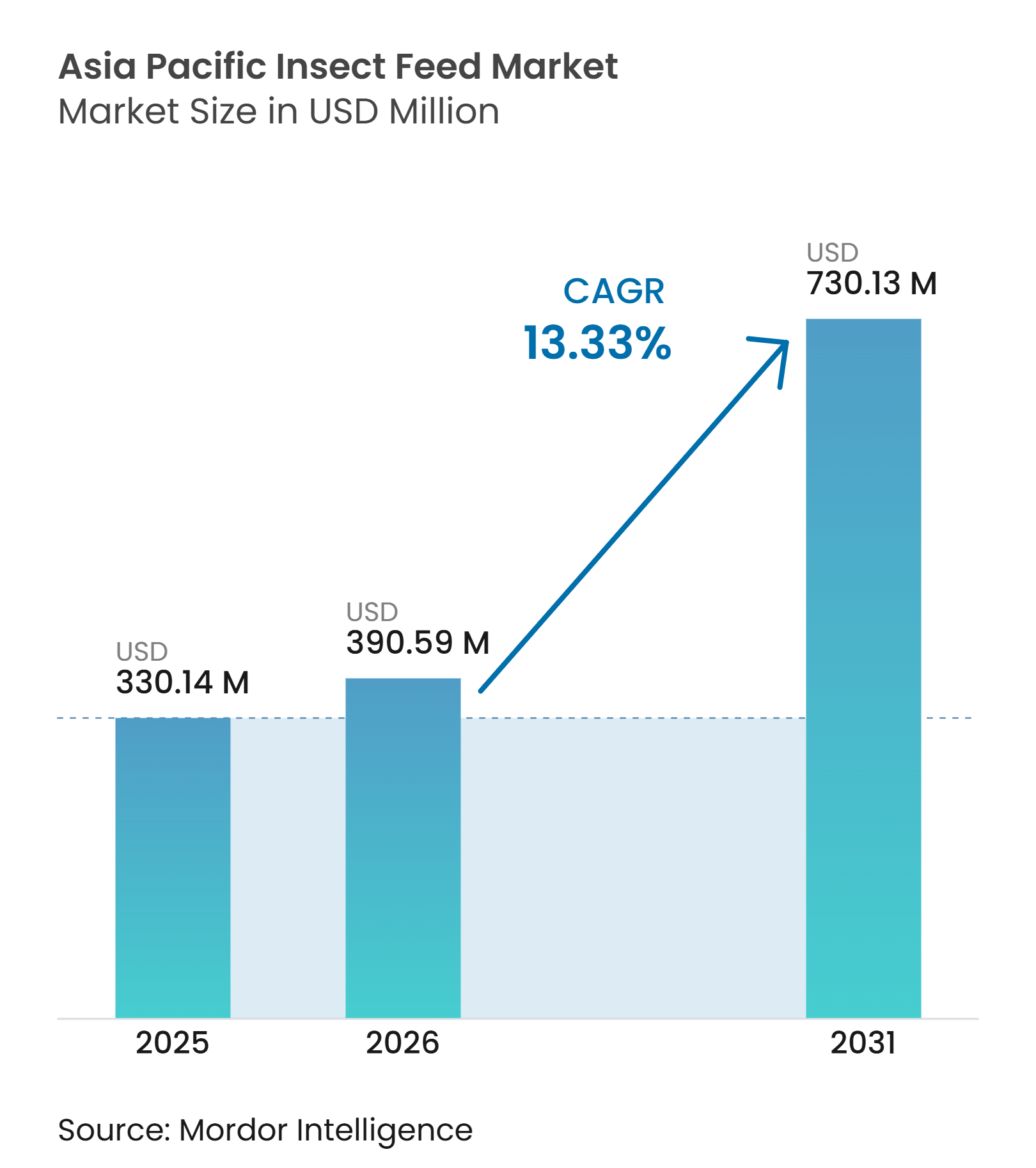
The Asia-Pacific insect feed market is projected to grow from USD 330.14 million in 2025 to USD 390.59 million in 2026, and is forecast to reach USD 730.13 million by 2031, registering a CAGR of 13.33% during 2026-2031. The market is supported by the region's large aquaculture industry and the growing need for reliable protein feed ingredients. Fluctuations in fishmeal availability, particularly due to anchovy catch quotas, are creating pricing pressure for shrimp and tilapia producers. This is driving interest in insect meal as a complementary protein source to diversify feed formulations and reduce raw material supply risk. Regulatory approvals in China and other early-adopting countries are advancing the market from pilot-scale adoption toward commercial feed mill procurement. Competitive activity is also increasing as European producers establish regional partnerships, while local manufacturers leverage favorable climatic conditions and proximity to feedstock sources to maintain cost competitiveness.
Key Report Takeaways
- By insect type, Black Soldier Fly held the largest Asia-Pacific insect feed market share of 45.8% in 2025 and is projected to register the fastest growth at a CAGR of 13.8% through 2031.
- By product form, insect meal held the largest Asia-Pacific insect feed market size share of 54.5% in 2025, while insect oil is projected to record the fastest growth at a CAGR of 14.2% through 2031.
- By application, aquaculture held the largest Asia-Pacific insect feed market share of 46.6% in 2025, while pet food is projected to register the fastest growth at a CAGR of 14.8% through 2031.
- By end user, commercial feed mills held the largest Asia-Pacific insect feed market share of 44.8% in 2025, while integrated livestock producers are projected to record the fastest growth at a CAGR of 13.8% through 2031.
- By geography, China held the largest Asia-Pacific insect feed market share of 39.9% in 2025, while Vietnam is projected to register the fastest growth at a CAGR of 14.5% through 2031.
Note: Market size and forecast figures in this report are generated using Mordor Intelligence’s proprietary estimation framework, updated with the latest available data and insights as of January 2026.
Market Trends and Insights
Drivers Impact Analysis of Asia Pacific Insect Feed Market*
| Driver | (~) % Impact on CAGR Forecast | Geographic Relevance | Impact Timeline |
|---|---|---|---|
| Aquaculture feed demand and fishmeal replacement | +3.5% | China, Vietnam, Indonesia, Thailand, India | Short term (≤ 2 years) |
| Regulatory approvals for insect-processed animal proteins | +2.0% | China, Japan, South Korea, Thailand, Vietnam | Medium term (2-4 years) |
| Feed-conversion efficiency and functional nutrition benefits | +1.5% | China, Vietnam, Indonesia, Thailand, India | Medium term (2-4 years) |
| Circular use of food and agro-industrial by-products | +1.0% | Vietnam, Thailand, China, South Korea | Long term (≥ 4 years) |
| Tropical production economics in Southeast Asia | +1.2% | Vietnam, Indonesia, Thailand, Malaysia | Short term (≤ 2 years) |
| Strategic procurement by integrated feed and aquaculture producers | +0.8% | China, Vietnam, Thailand, India | Medium term (2-4 years) |
| Source: Mordor Intelligence | |||
Aquaculture Feed Demand and Fishmeal Replacement
Aquaculture is a major driver of demand for the Asia-Pacific insect feed market due to its large and growing feed requirements. Black Soldier Fly meal can replace 10% to 30% of fishmeal in shrimp and pangasius diets without performance losses in commercial trials. Trials conducted by InnovaFeed and Onda reported 100% survival rates and dose-dependent improvements in feed intake over an 84-day period. China also plans to reduce soybean meal inclusion in animal feed rations to 10% by 2030, thereby increasing the need for locally produced alternative protein sources[1].
Feed-Conversion Efficiency and Functional Nutrition Benefits
Insect meal provides functional benefits beyond its protein content. Black Soldier Fly larvae contain chitin, lauric acid, and antimicrobial peptides, supporting their use in aquaculture and poultry feed formulations. In January 2026, NaturAlleva incorporated InnovaFeed's Hilucia ingredients across its sea bass and sea bream feed portfolio, reflecting the growing commercial acceptance of insect-based ingredients. This adoption reinforces the transition of insect ingredients from trial-stage inputs to established feed components. A 2025 journal article reported crude protein levels of up to 61% in Black Soldier Fly larvae and a rearing cycle of 15 to 18 days[2]. These attributes enhance the value of insect ingredients in feed applications where nutritional performance and functional benefits are key considerations in formulation.
Circular Use of Food and Agro-Industrial By-Products
Agricultural processing by-products provide several Southeast Asian countries with access to cost-effective substrates for insect rearing. Cassava pulp in Thailand, palm oil processing side streams in Indonesia and Malaysia, and brewery by-products in Vietnam can be sourced close to major aquaculture production areas. In November 2025, Full Circle Biotechnology commissioned a 7,000-metric-ton insect protein facility in Kanchanaburi, Thailand, utilizing cassava pulp and agri-food by-products as feedstock. A 2025 study highlighted the potential of insect-based waste management systems to convert organic waste streams into protein while reducing reliance on landfills and associated emissions[3]. This feedstock advantage supports a production model in the Asia-Pacific insect feed market that aligns with regional circular economy and resource-efficiency objectives.
Tropical Production Economics in Southeast Asia
Year-round warm temperatures in Vietnam, Indonesia, and Thailand reduce the need for extensive climate control in insect-rearing facilities, lowering operating costs compared with facilities in temperate regions. Entobel integrated vertical rearing systems, robotics, and real-time data monitoring at its Ba Ria-Vung Tau facility in Vietnam, supporting lower capital expenditure per metric ton of production. Tropical production conditions can enhance the efficiency gains achieved through automation rather than substitute for them. This cost advantage strengthens the Asia-Pacific insect feed market's competitiveness in meeting regional demand and supporting export opportunities in markets facing increasing feedstock constraints.
Restraints Impact Analysis of Asia Pacific Insect Feed Market*
| Restraint | (~) % Impact on CAGR Forecast | Geographic Relevance | Impact Timeline |
|---|---|---|---|
| High-cost relative to soybean meal and fishmeal | -1.8% | China, India, Indonesia | Short term (≤ 2 years) |
| Feedstock traceability and biosecurity requirements | -1.0% | Japan, South Korea, Australia, Vietnam, Thailand | Medium term (2-4 years) |
| Inconsistent national standards for insect substrates | -0.8% | ASEAN markets, India, Australia | Long term (≥ 4 years) |
| Limited demonstrated performance at mass-market inclusion rates | -0.7% | China, India, Vietnam, Indonesia | Medium term (2-4 years) |
| Source: Mordor Intelligence | |||
High-Cost Relative to Soybean Meal and Fishmeal
The higher cost of insect meal remains a key constraint to its adoption in cost-sensitive feed formulations. Feed manufacturers evaluate ingredients based on protein efficiency, amino acid profile, supply reliability, and overall formulation economics. While insect meal offers nutritional and sustainability advantages, it remains less cost-competitive than conventional protein sources such as soybean meal in many swine and value-oriented poultry feed applications. Ongoing investments in production scale and process efficiency are projected to improve cost competitiveness over time, although widespread price parity with conventional protein ingredients is likely to remain a medium-term objective.
Limited Demonstrated Performance at Mass-Market Inclusion Rates
Commercial trials support the use of insect ingredients in several aquaculture settings, but evidence for broad mass-market inclusion remains limited. Feed mills require consistent performance data before modifying established swine and poultry formulations. Their decisions also depend on the nutritional profile, availability, and cost of insect meal relative to other ingredients in each feed recipe. This slows adoption in applications where insect meal does not offer a clear functional advantage. The challenge is more pronounced in China, India, Vietnam, and Indonesia, where large feed markets demand reliable supply at scale. Greater long-term commercial use may reduce qualification periods, but the evidence base for lower-cost applications remains limited.
*Our forecasts treat driver/restraint impacts as directional, not additive. The impact forecasts reflect baseline growth, mix effects, and variable interactions.
Asia Pacific Insect Feed Market Segment Analysis
By Insect Type:
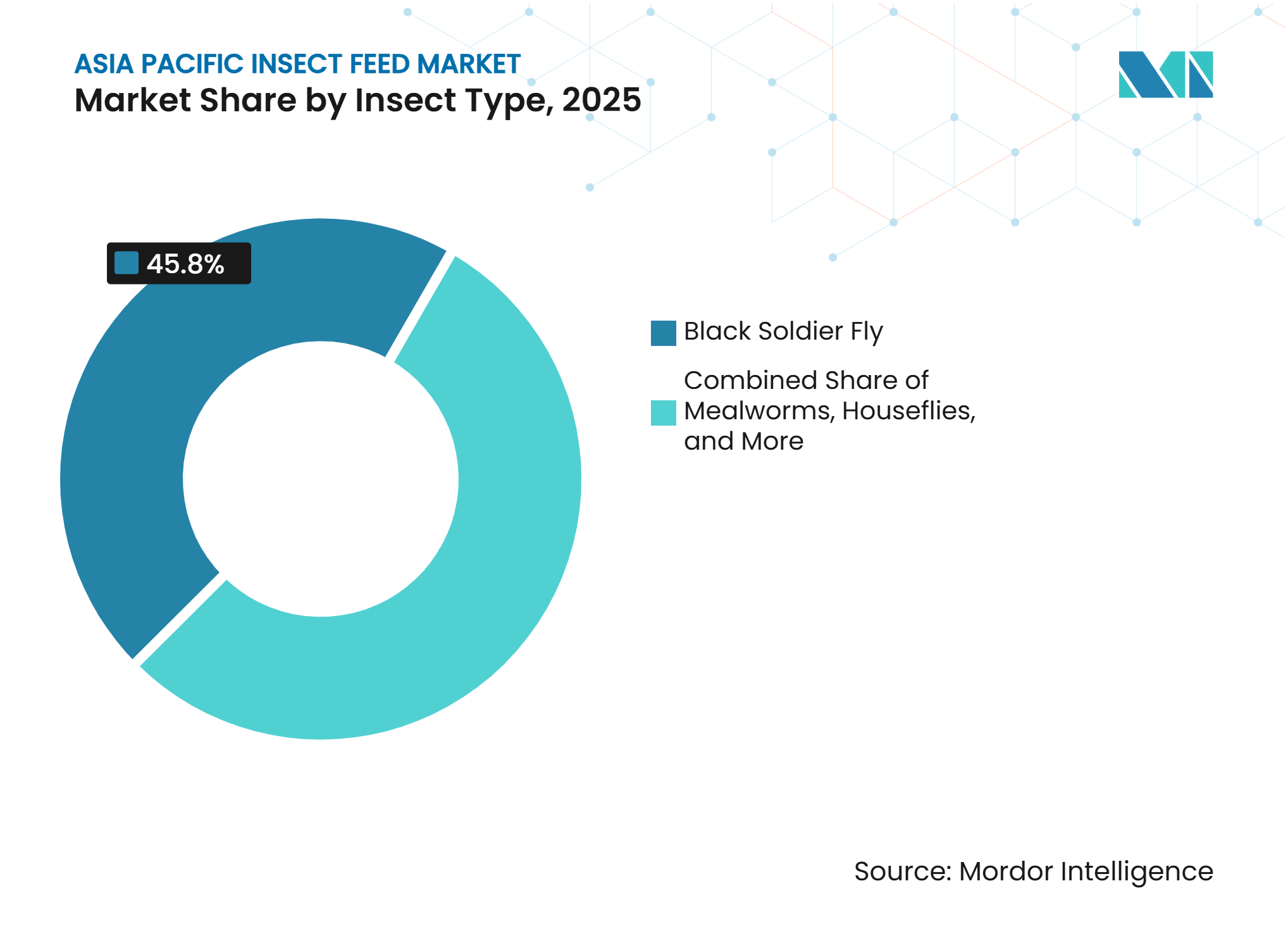
Black Soldier Fly Leads on Share and Growth RateBlack Soldier Fly held 45.8% of the Asia-Pacific insect feed market share in 2025 and is projected to grow at a CAGR of 13.8% through 2031. Its market leadership is supported by flexible substrate utilization and a short rearing cycle of 15 to 18 days. Producers can utilize cassava pulp, palm oil processing side streams, brewery waste, and food-processing by-products in Black Soldier Fly production systems. This flexibility supports localized production near feedstock sources and can reduce working capital requirements compared with fish-based protein supply chains. In April 2026, the China Food Industry Association Society published its national Code of Practice for Black Soldier Fly larvae production for feed. The standard establishes a common production framework for commercial feed manufacturers in China.
Mealworms represent the second-largest insect type in the Asia-Pacific insect feed market. Their use is concentrated in premium aquaculture applications in Japan and South Korea, where buyers require high-specification feed ingredients. Crickets maintain a smaller presence in Thailand's emerging pet food segment, where specialty pet food brands use them in products targeting urban consumers seeking hypoallergenic protein sources. Housefly larvae are primarily associated with organic waste management programs in Indonesia and China. Other insect types include silkworm pupae, which Loopworm is developing in India for animal nutrition and biopharmaceutical applications. This highlights the growing overlap between feed ingredients and higher-value specialty applications within the market.



By Product Form:
Insect Oil Is the Fastest-Growing Product FormInsect meal held 54.5% of the Asia-Pacific insect feed market in 2025, while insect oil is projected to grow at the fastest CAGR of 14.2% through 2031. Insect meal remains the dominant product form due to its ability to partially replace fishmeal in feed formulations. Vietnam, Thailand, and China have established processing capabilities for insect protein powder production, making meal the most widely accepted format among commercial feed manufacturers. Its compatibility with existing aquaculture feed systems that rely on dry ingredients further supports its market position. Whole dried insects represented 18% of market value in 2025 and are primarily used in smallholder and on-farm feeding systems. These applications are common in Indonesia, Vietnam, and rural India, where feed-processing infrastructure remains underdeveloped.
Insect oil is gaining traction as aquaculture nutritionists seek alternatives to conventional fish oil. Black Soldier Fly oil contains lauric acid, which is associated with antiviral and antibacterial properties. In January 2026, NaturAlleva incorporated InnovaFeed's Hilucia ingredient range across its sea bass and sea bream feed portfolio, demonstrating the growing commercial adoption of insect-derived ingredients beyond pilot and trial-stage applications. Other product forms include chitin extracts and insect frass. Frass can provide an additional fertilizer revenue stream for integrated Black Soldier Fly production facilities, improving overall operational economics while maintaining a primary focus on feed ingredient production.
By Application:
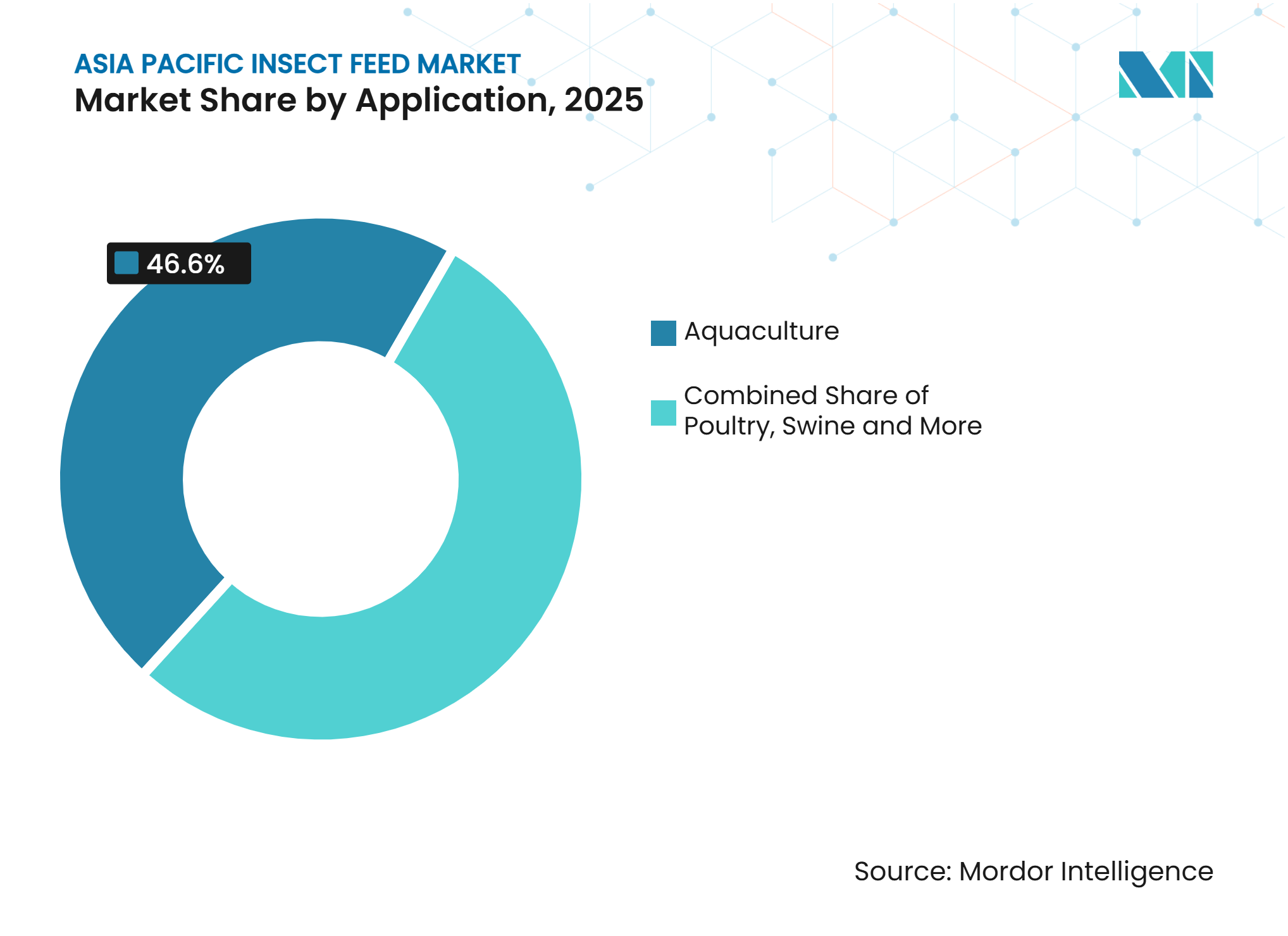
Aquaculture Anchors Demand, Pet Food AcceleratesAquaculture held 46.6% of the Asia-Pacific insect feed market share in 2025, while pet food is projected to grow at the fastest CAGR of 14.8% through 2031. Feed formulations for shrimp, tilapia, pangasius, yellowtail, and sea bream increasingly require alternatives to conventional fishmeal. Commercial feed trials have demonstrated insect meal inclusion rates of 10% to 30% in selected aquaculture diets. In September 2025, Loopworm received approval from India's Coastal Aquaculture Authority for its insect protein and fat products to be used as feed additives, attractants, and palatants. This approval represented an important commercial milestone for insect-based aquafeed ingredients in India. Aquaculture continues to offer the largest volume opportunity in the Asia-Pacific insect feed market.
Pet food is the fastest-growing application segment, as premium brands increasingly leverage sustainability credentials and ingredient differentiation to position their products. Growth is supported by rising urban pet ownership across China, Japan, and South Korea. Poultry remains an important application area due to the nutritional value of insect-based ingredients in feed formulations. Adoption in swine feed remains limited by partial regulatory approvals in several Asia-Pacific countries. Other feed applications include aquaculture hatcheries and ornamental fish, which broaden the customer base but remain secondary to aquaculture in overall demand generation.

By End User:
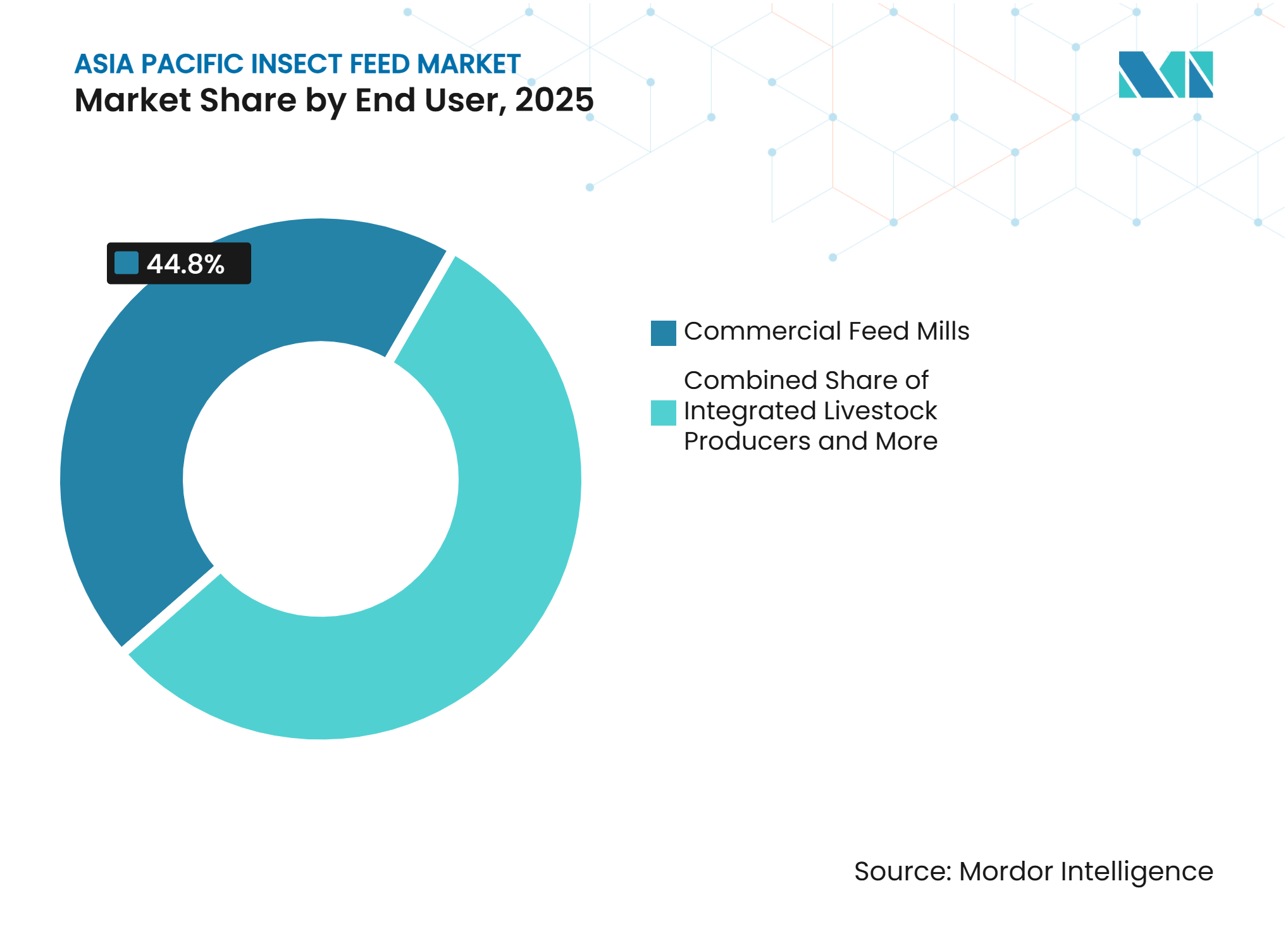
Integrated Producers Accelerate at 13.8% CAGRCommercial feed mills held 44.8% of end-user value in 2025, while integrated livestock producers are forecast to grow at a 13.8% CAGR through 2031. Feed mills remain the primary channel for volume, as they have established product catalogs and customer relationships across China, Vietnam, and Thailand. Their purchasing patterns determine whether insect ingredients move from specialty lines into standard formulas. Insect producers, therefore, need consistent product quality and sufficient capacity to meet feed mill requirements. Insect-based products are increasingly appearing in regular aquafeed catalogs, making commercial feed mills central to scaling up the Asia-Pacific insect feed industry. This also concentrates the need for clear specifications and reliable delivery.
Integrated livestock producers control feed production, animal farming, and processing within their own operations. This structure encourages direct sourcing and longer-term purchasing arrangements for insect protein. These buyers seek greater visibility over raw material costs and access to shared feeding-trial results. They can also link certified ingredient sourcing to sustainability reporting for branded meat and seafood. Smallholder and on-farm systems still use whole dried larvae directly in Indonesia, Vietnam, and India. However, tighter biosecurity and traceability requirements may pressure informal operations, potentially favoring feed mills and integrated producers that can meet formal procurement requirements.
Geography Analysis
China held 39.9% of the Asia-Pacific insect feed market share in 2025. The country combines large aquaculture and pork industries with a regulatory framework that recognizes key insect-derived feed ingredients. The Ministry of Agriculture and Rural Affairs (MARA) of China's catalog revision in mid-2024 included Black Soldier Fly, mealworm, and housefly larvae. China also plans to reduce soybean meal inclusion in animal feed rations to 10% by 2030, supporting demand for alternative protein sources. Black Soldier Fly farming clusters in Guangdong, Sichuan, and Hebei provide a strong foundation for regional supply. The April 2026 production code further establishes a national quality benchmark for commercial feed manufacturers.
Vietnam is projected to register the fastest growth at a CAGR of 14.5% through 2031. Its tropical climate, supportive regulatory environment, and large aquaculture sector support commercial Black Soldier Fly production. Entobel operates a major facility in Vung Tau, serving both domestic and export markets. Vietnam is also attracting investment in circular economy-based Black Soldier Fly farming systems. Thailand continues to expand production capacity, supported by facilities that use agricultural by-products as feedstocks, strengthening the country's position in sustainable insect protein production.
India and Indonesia are emerging as important growth markets for insect-based feed ingredients. India benefits from regulatory approvals that support the use of insect-derived products in aquaculture feed. Indonesia offers favorable access to palm oil processing by-products in regions near major shrimp and tilapia production. South Korea is supported by approvals for aquaculture and poultry feed applications, while Japan's demand remains concentrated in premium aquaculture segments with stringent quality requirements. Australia, New Zealand, Malaysia, the Philippines, and Myanmar represent smaller but developing markets driven by aquaculture, pet food demand, and investments in new production capacity. Malaysia has also expanded its industrial base by establishing Black Soldier Fly facilities that serve both the animal feed and organic fertilizer markets.
Competitive Landscape
Market Concentration
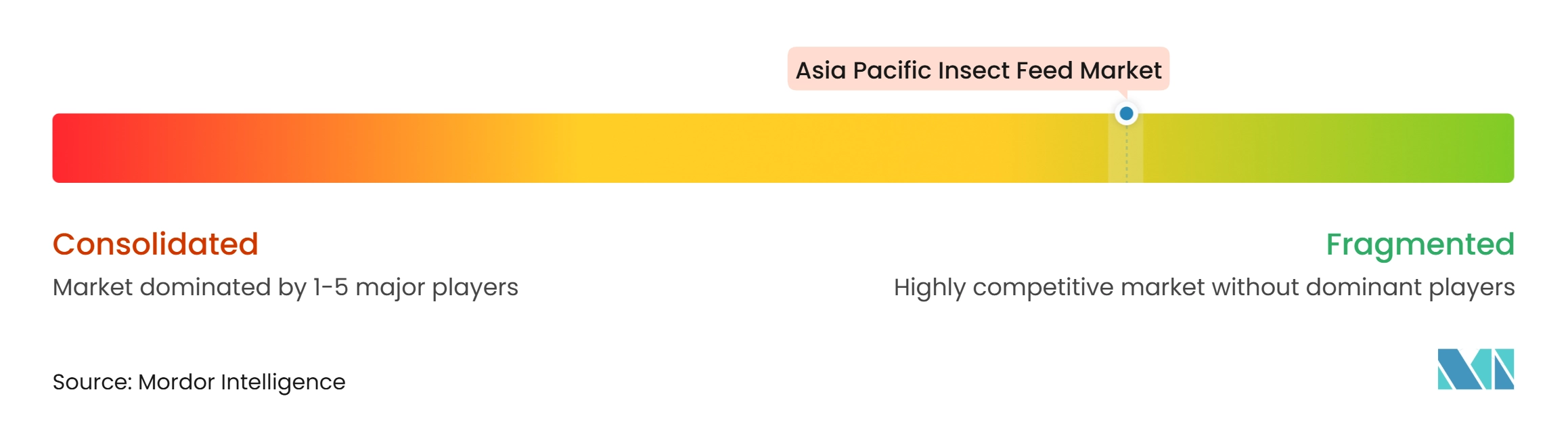
The Asia-Pacific insect feed market is fragmented in 2025, with leading companies collectively accounting for a limited share of regional revenue. Key participants operating across the region include Protix B.V., Entobel Holding, Innovafeed, Loopworm Pvt. Ltd., and Entomal Biotech Sdn Bhd. Market activity remains geographically distributed, as producers must adapt to varying regulatory frameworks, feedstock availability, and end-user requirements across individual countries. Entobel Holding has established a strong regional presence through its production operations in Vietnam, supported by infrastructure designed to serve the aquaculture feed and manufacturing sectors. This competitive structure creates opportunities for regional players to strengthen their positions in specific markets, while limiting any single producer's ability to supply the entire region from a single location.
Protix B.V. follows a partnership-oriented strategy that combines insect production expertise with local feedstock networks and market access. Innovafeed continues to focus on scaling commercial operations, optimizing production efficiency, and supporting customers who require traceable, sustainability-oriented ingredient solutions. Across the market, producers are investing in production technologies, supply chain development, and quality assurance systems to improve commercial adoption. These efforts are contributing to the gradual transition of insect-derived ingredients from emerging alternatives to recognized feed components within aquaculture, livestock, and pet food applications.
Loopworm Pvt. Ltd. is expanding beyond conventional insect protein applications by developing specialized nutrition and biotechnology-focused products. Domestic feed manufacturers in China with integrated insect production capabilities represent a competitive challenge for international suppliers, given their established customer relationships and distribution networks. Smaller producers located near aquaculture clusters in Indonesia and Vietnam benefit from proximity to feedstock sources and end users. Companies are increasingly differentiating their offerings through attributes such as lauric acid content, chitin functionality, and antimicrobial peptide profiles. As a result, competition is shifting toward demonstrated ingredient performance, long-term supply partnerships, and higher-value feed formulations.
Asia Pacific Insect Feed Industry Leaders
-
Protix B.V.
-
Entobel Holding
-
Innovafeed
-
Loopworm Pvt. Ltd.
-
Entomal Biotech Sdn Bhd.
- *Disclaimer: Major Players sorted in no particular order
Asia Pacific Insect Feed Market Companies Covered in this Report
- Protix B.V.
- Innovafeed
- Entobel Holding
- Entomo Farms Inc. (Next Millennium Farms Inc.)
- Loopworm Pvt. Ltd.
- Nutrition Technologies Pte. Ltd.
- Ynsect SAS
- AgriProtein Holdings Ltd.
- EnviroFlight LLC
- Enterra Feed Corporation
- Hexafly Enterprises Ltd.
- Hipromine S.A.
- nextProtein SAS
- Nasekomo AD
- Protenga Pte. Ltd.
- Entomal Biotech Sdn Bhd.
Recent Industry Developments in Asia Pacific Insect Feed Market
- July 2026: Fly Technology Agriculture Sdn Bhd strengthened its presence in the Asia-Pacific insect feed market through a strategic partnership with Taiwan’s Monster Biotech to supply Black Soldier Fly-based animal feed ingredients and expand regional export opportunities.
- September 2025: Loopworm Pvt. Ltd. strengthened its presence in the Asia-Pacific insect feed market by securing regulatory approval for insect-based aquaculture feed ingredients and expanding commercial supply to international aquafeed manufacturers.
- April 2025: Protix B.V. advanced its Asia-Pacific insect feed market expansion strategy by securing USD 1.1 million in development funding to evaluate a Black Soldier Fly production facility in South Korea, supporting regional circular feed ingredient production.
Asia Pacific Insect Feed Market Report Scope
This market covers the value of insect-derived ingredients sold into animal feed, including insect meal and insect oil used in feed formulations for aquaculture and other livestock, across major producing and consuming regions.
Scope exclusions: We exclude sales of insects meant for direct human consumption, and we do not count on-farm waste disposal services that do not result in a commercial feed ingredient sale.
The Asia Pacific Insect Feed Market Report is Segmented by Animal Type (Aquaculture, Poultry, Swine, and More), by Insect Species (Black Soldier Fly, Mealworm, and More), by Product Form (Protein Meal, Whole Dried Larvae, and More), by End User (Commercial Feed Mills, Integrated Livestock Producers, and More), and by Geography (China, India, Japan, Indonesia, and More). The Market Forecasts are Provided in Terms of Value (USD).
Segmentation Overview
| Black Soldier Fly |
| Mealworms |
| Houseflies |
| Crickets |
| Rest of Insect Types |
| Insect Meal |
| Insect Oil |
| Whole Dried Insects |
| Rest of Product Forms |
| Aquaculture |
| Poultry |
| Swine |
| Pet Food |
| Rest of Animal Feed Applications |
| Commercial Feed Mills |
| Integrated Livestock Producers |
| Smallholder / On-farm systems |
| China |
| Japan |
| India |
| South Korea |
| Indonesia |
| Thailand |
| Vietnam |
| Australia |
| New Zealand |
| Rest of Asia-Pacific |
| By Insect Type | Black Soldier Fly |
| Mealworms | |
| Houseflies | |
| Crickets | |
| Rest of Insect Types | |
| By Product Form | Insect Meal |
| Insect Oil | |
| Whole Dried Insects | |
| Rest of Product Forms | |
| By Application | Aquaculture |
| Poultry | |
| Swine | |
| Pet Food | |
| Rest of Animal Feed Applications | |
| By End User | Commercial Feed Mills |
| Integrated Livestock Producers | |
| Smallholder / On-farm systems | |
| By Geography | China |
| Japan | |
| India | |
| South Korea | |
| Indonesia | |
| Thailand | |
| Vietnam | |
| Australia | |
| New Zealand | |
| Rest of Asia-Pacific |
Key Questions Answered in the Report
What is the projected value of the Asia-Pacific insect feed market by 2031?
The Asia-Pacific insect feed market is projected to reach USD 730.13 million by 2031, growing from USD 390.59 million in 2026 at a 13.33% CAGR.
Which insect type has the largest role in Asia-Pacific feed applications?
Black Soldier Fly held 45.8% of regional value in 2025 and is forecast to grow at a 13.8% CAGR through 2031.
Why is aquaculture important for insect-based feed demand in Asia-Pacific?
Aquaculture held 46.6% of value in 2025. It needs alternatives to fishmeal for shrimp, tilapia, pangasius, yellowtail, and sea bream diets.
Which country is projected to grow fastest through 2031?
Vietnam is forecast to grow at a 14.5% CAGR through 2031, supported by tropical production conditions, aquaculture, and commercial Black Soldier Fly capacity.