
Antifreeze Protein Market Size and Share
Market Overview
| Study Period | 2021 - 2031 |
|---|---|
| Market Size (2026) | USD 21.45 Million |
| Market Size (2031) | USD 44.17 Million |
| Growth Rate (2026 - 2031) | 15.54 % |
| Fastest Growing Market | Asia-Pacific |
| Largest Market | North America |
| Market Concentration | Medium |
Major Players
*Disclaimer: Major Players sorted in no particular order Image © Mordor Intelligence. Reuse requires attribution under CC BY 4.0. |
|
Antifreeze Protein Market Analysis by Mordor Intelligence
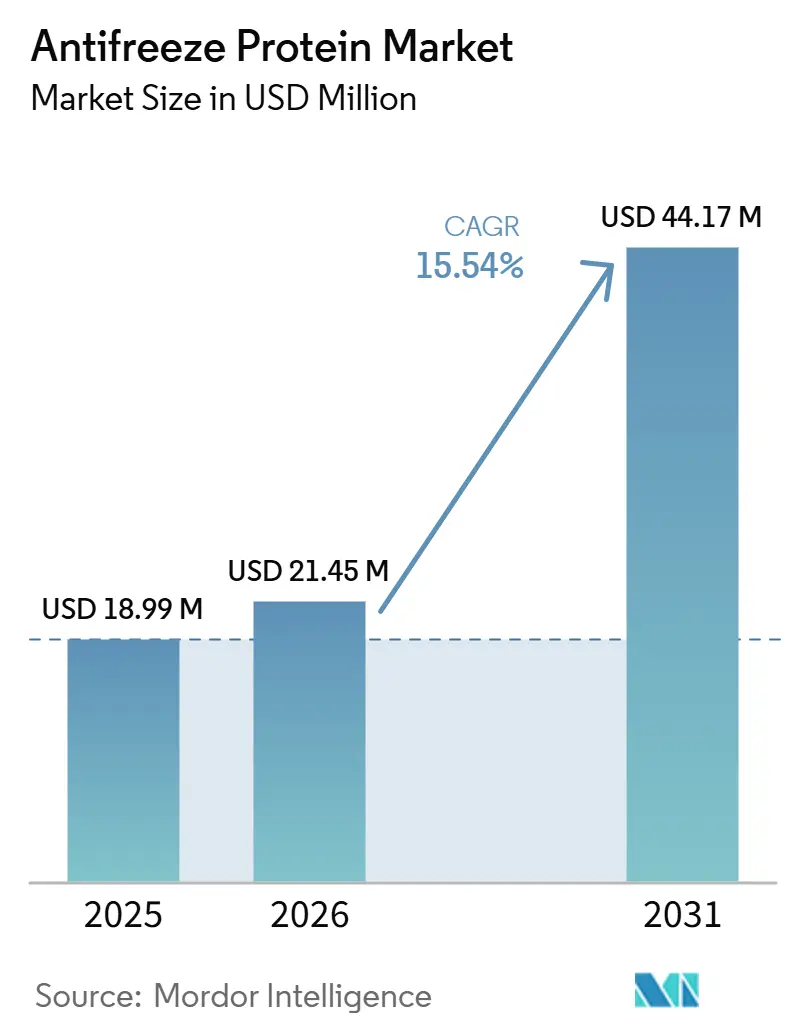
The antifreeze protein market size is expected to grow from USD 18.99 million in 2025 to USD 21.45 million in 2026 and is forecast to reach USD 44.17 million by 2031 at 15.54% CAGR over 2026-2031. The antifreeze protein market is entering a phase of accelerated commercial adoption, supported by expanding applications across food preservation, agriculture, and biotechnology industries. Increasing investments in recombinant protein production technologies are improving scalability and reducing manufacturing constraints, enabling broader industrial use. Demand is also rising for sustainable and bio-based cryoprotective solutions that can replace synthetic freezing additives in temperature-sensitive applications. Research collaborations between biotechnology companies and academic institutions are further advancing the development of high-performance antifreeze protein formulations.
Key Report Takeaways
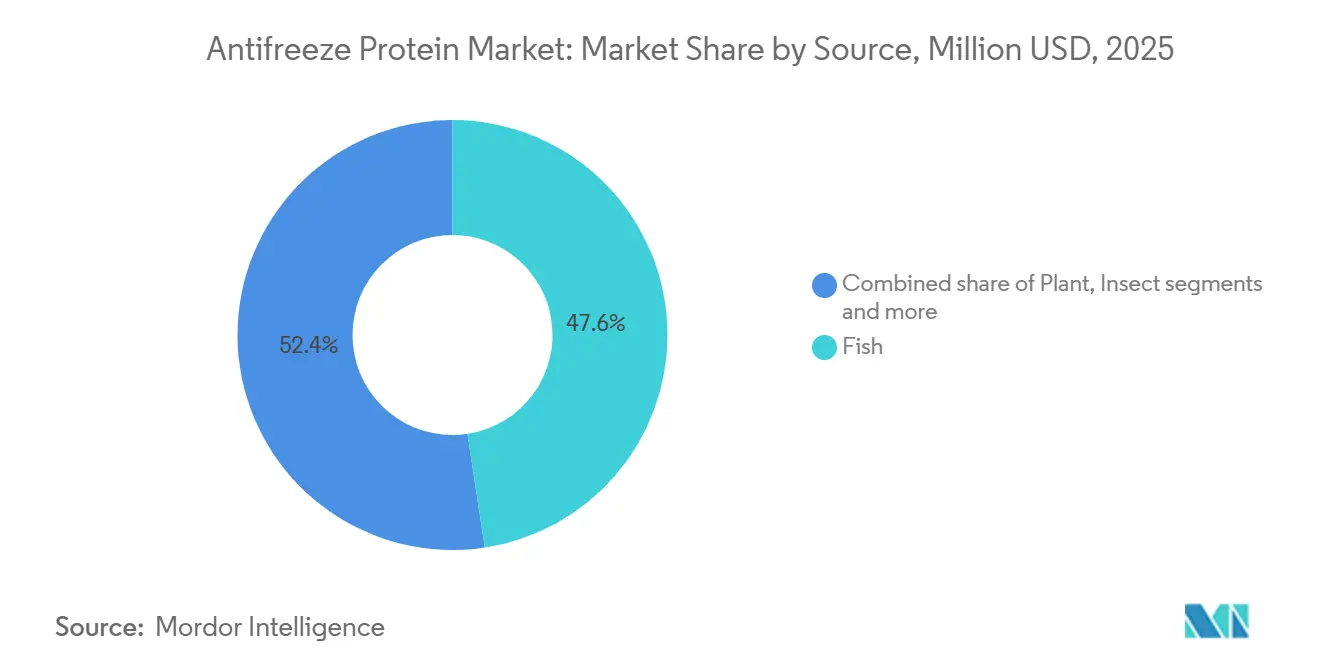
- By source, fish held 47.61% of the antifreeze protein market share in 2025, while microbial is forecast to grow at a 16.89% CAGR through 2031.
- By production method, natural extraction held 53.49% of the market in 2025, while recombinant production is forecast to grow at 17.22% CAGR through 2031.
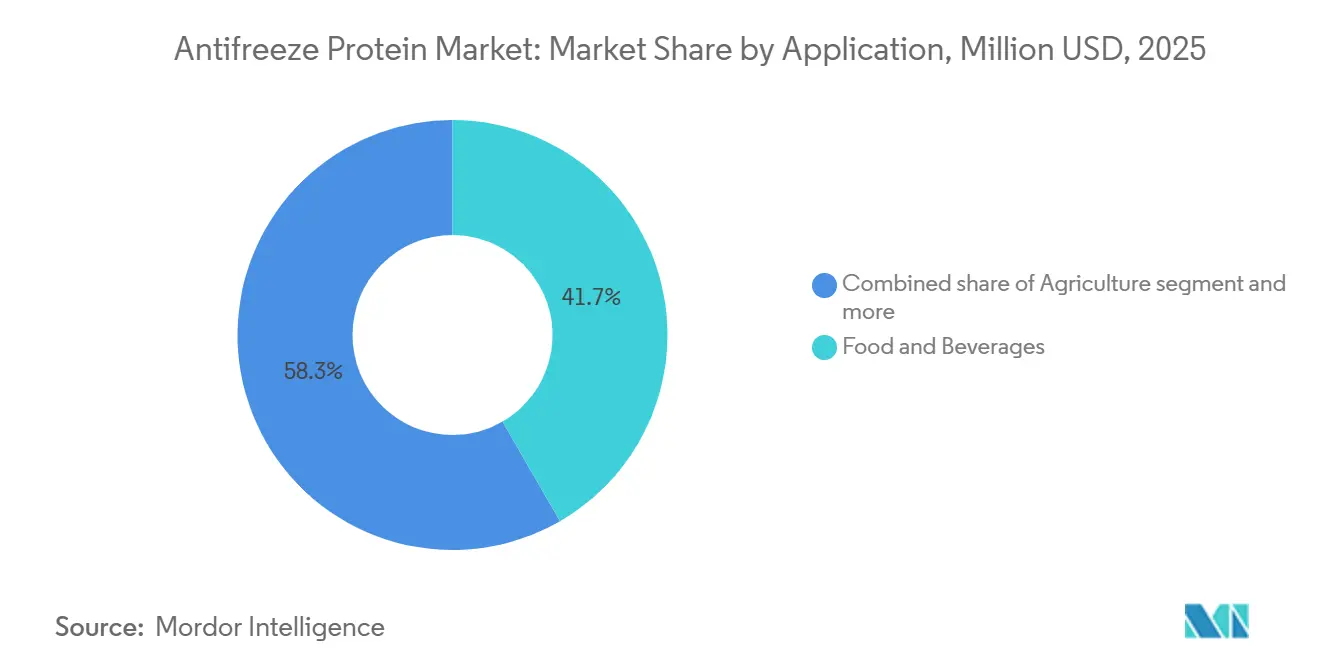
- By application, food and beverages held 41.67% of the market in 2025, while pharmaceuticals and biotechnology is forecast to grow at 17.45% CAGR through 2031.
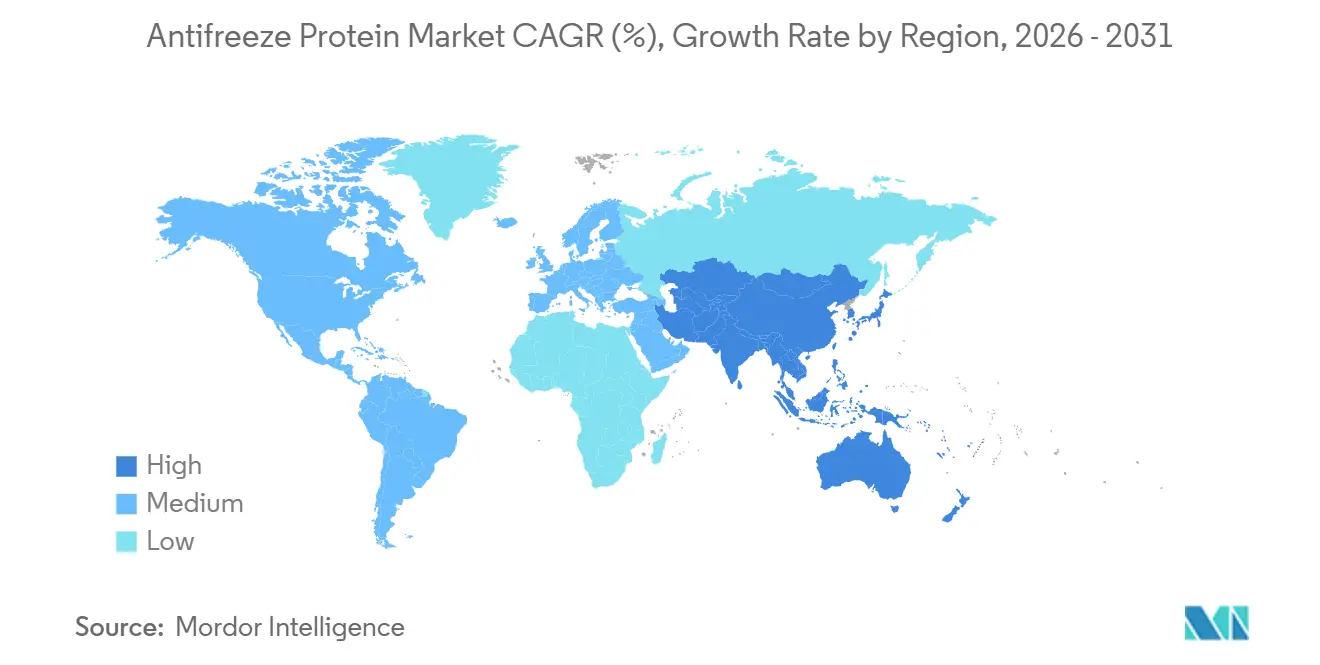
- By geography, North America accounted for 37.81% of revenue in 2025, while Asia-Pacific is forecast to grow at a 17.04% CAGR through 2031.
Note: Market size and forecast figures in this report are generated using Mordor Intelligence’s proprietary estimation framework, updated with the latest available data and insights as of January 2026.
Market Trends and Insights
Drivers Impact Analysis of Antifreeze Protein Market*
| Driver | (~) % Impact on CAGR Forecast | Geographic Relevance | Impact Timeline |
|---|---|---|---|
| Rising demand for cryopreservation in cell and gene therapy | +3.0% | North America and Europe, with expansion into Asia-Pacific | Medium term (2-4 years) |
| Growth in organ and tissue preservation research | +1.8% | North America, the European Union, and Japan | Long term (≥ 4 years) |
| Increasing use in premium frozen food products | +3.5% | Global, with early gains in Japan, the United States, and Germany | Short term (≤ 2 years) |
| Expansion of regenerative medicine applications | +1.5% | North America and the European Union, with Asia-Pacific emerging | Long term (≥ 4 years) |
| Advances in recombinant antifreeze protein production | +2.8% | Global, with production moving toward Asia-Pacific | Medium term (2-4 years) |
| Rising biologics and vaccine cold-chain requirements | +1.7% | Global, with concentration in the United States, the European Union, and India | Short term (≤ 2 years) |
| Source: Mordor Intelligence | |||
Rising demand for cryopreservation in cell and gene therapy
Cell and gene therapy programs required cryopreservation agents that maintained cell viability after thawing. Researchers continued to use DMSO widely; however, its cytotoxicity and potential effects on stem cell differentiation increased interest in safer and more effective alternatives. A 2024 study reported 77.5% tumor suppression in a mouse lymphoma model after researchers administered cryopreserved T cells using an antifreeze protein-inspired nanoparticle system[1]Source: ACS Publications, "Globular Antifreeze Protein-Inspired Nanoparticle-Based Large-Scale T‑Cell Cryoprotection System for Lymphoma Immunotherapy", pubs.acs.org. This result reached twice the rate achieved with DMSO in the same study, indicating stronger post-thaw functional performance. A 2025 study reduced the immunogenicity of Marinomonas primoryensis antifreeze proteins by 48% through hydrophilic modification and reported 96% NIH/3T3 cell viability after thawing. These findings supported demand in the antifreeze protein market from GMP-oriented cell therapy supply chains, while organ, tissue, and regenerative medicine research could have expanded the long-term customer base.
Increasing use in premium frozen food products
Frozen food applications provide an established revenue base for the antifreeze protein market. Antifreeze proteins suppress ice recrystallization at low concentrations, helping preserve texture during storage and repeated temperature changes. A 2026 study reported that a synthetic alanine-glutamic acid polypeptide was non-toxic, biodegradable, digestible, and active at microgram-per-milliliter concentrations. Research published in 2025 found that Glaciozyma proteins protected food products without reported taste changes across ice cream, meat, and dairy applications[2]Plos One, "Antifreeze proteins produced by Antarctic yeast from the genus Glaciozyma as cryoprotectants in food storage", journals.plos.org. Studies on chicken-skin and Antarctic-krill peptides also showed protection against myofibrillar protein aggregation during freeze-thaw cycles. Therefore, the antifreeze protein market can serve processors that require cleaner labels and improved texture retention in premium frozen products.
Advances in recombinant antifreeze protein production
Recombinant production remains central to the antifreeze protein market because it improves purity, repeatability, and supply reliability. A 2026 study described a plasmid-free route for producing Lolium perenne antifreeze protein in Saccharomyces cerevisiae. The study addressed repeat-sequence production challenges that had constrained earlier expression approaches. Ginkgo Bioworks stated that its DARPA-supported work uses Pichia pastoris fermentation to produce engineered hyperactive proteins for cold-weather applications. The antifreeze protein market benefits when strain selection and process engineering reduce the cost of high-activity proteins. These advances shift commercial attention from discovering new proteins to selecting production hosts and building reliable downstream processes.
Rising biologics and vaccine cold-chain requirements
Biologics, vaccines, and cell therapies require temperature control to protect product quality throughout storage and transport. The CDC currently provides separate handling guidance for products stored at ultra-cold and cryogenic temperatures[3]Source: Centers for Disease Control and Prevention, "Vaccine Storage and Handling Toolkit", cdc.gov. A 2026 review reported that 85% of commercial biologic conjugates rely on lyophilization and noted that continuous freeze-drying reduced cycle times threefold. These developments may create opportunities for antifreeze proteins to serve as lyoprotectants and cryoprotectants. University of New Hampshire researchers reported that antifreeze proteins can support research on mammalian cell and tissue preservation. The antifreeze protein market has a clearer route into pharmaceutical handling when suppliers demonstrate stable performance across validated cold-chain processes.
Restraints Impact Analysis of Antifreeze Protein Market*
| Restraint | (~) % Impact on CAGR Forecast | Geographic Relevance | Impact Timeline |
|---|---|---|---|
| High production and purification costs | -1.8% | Global, most acute in North American and European pharmaceutical channels | Medium term (2-4 years) |
| Limited commercial-scale manufacturing capacity | -1.4% | Global, with a concentration in Asia-Pacific agricultural and pharmaceutical segments | Short term (≤ 2 years) |
| Stringent regulatory approval requirements | -1.1% | European Union, North America, and Asia-Pacific national frameworks | Long term (≥ 4 years) |
| Protein instability during processing | -0.9% | Global, particularly in pharmaceutical downstream processing | Medium term (2-4 years) |
| Source: Mordor Intelligence | |||
High production and purification costs
Low natural extraction yields and high purification costs constrained the antifreeze protein market. Manufacturers faced added complexity because repeat-rich proteins complicated expression and downstream purification, especially when inclusion bodies formed. The cost gap remained wide between pharmaceutical-grade proteins and conventional cryoprotectants, such as glycerol or DMSO, which limited broader commercial adoption in cost-sensitive applications. Yeast systems offered a pathway to higher yields, but producers still required careful purification and quality control to meet performance and regulatory requirements. A 2026 collaboration between Ginkgo Bioworks and Invaio Sciences showed continued investment in industrial fermentation for peptide-based agricultural inputs. Cost reduction depended on scalable expression, simplified purification, and sufficient demand to keep production assets well utilized.
Limited commercial-scale manufacturing capacity
Small-batch producers still largely served the antifreeze protein market. Companies that aimed to scale from laboratory-grade material to GMP-grade commercial output needed capital investment, validated processes, quality systems, and consistent demand. However, suppliers found it difficult to meet these requirements, as the market remained small in absolute value in 2026. Manufacturing capacity also varied across regions and application areas, which limited the pace of commercialization. Large enzyme and biotechnology platforms leveraged existing fermentation assets to support production, while smaller suppliers pursued partnerships to access technical capabilities, infrastructure, and funding. Regulatory authorities reviewed each application closely, and companies also addressed protein stability challenges during processing. These factors further delayed commercialization, as each formulation required separate performance and safety evidence.
*Our forecasts treat driver/restraint impacts as directional, not additive. The impact forecasts reflect baseline growth, mix effects, and variable interactions.
Antifreeze Protein Market Segment Analysis
By Source:
Fish Retains the Largest Revenue Position While Microbial Sources ExpandFish segment accounted for 47.61% of the antifreeze protein market share in 2025, making it the largest contributor to overall market revenue. Fish-derived antifreeze proteins have long been the most established and commercially utilized source due to their well-characterized molecular structures and proven cryoprotective properties. These proteins are extensively used in food preservation, frozen seafood processing, and biotechnology applications where effective protection against ice crystal formation is essential. The availability of naturally occurring antifreeze proteins from cold-water fish species has supported consistent commercial supply and industrial adoption.
The microbial segment is projected to grow at the fastest CAGR of 16.89% through 2031, reflecting increasing interest in scalable and sustainable production methods. Microbial sources, including bacteria, fungi, and yeast, offer significant advantages in terms of controlled cultivation, reproducibility, and cost-effective large-scale manufacturing. Advances in recombinant technology and microbial fermentation are enabling higher production yields and improved functional performance of antifreeze proteins.



By Production Method:
Natural Extraction Leads While Recombinant Production Gains GroundBy production method, natural extraction accounted for the largest share of the antifreeze protein market in 2025, reflecting its long-standing commercial use and established extraction processes. Antifreeze proteins obtained through natural extraction are widely used in food preservation, seafood processing, and research applications because they retain their native biological structure and functionality. The availability of fish, plant, insect, and microbial sources has supported steady commercial production for specialized end-use industries. As a result, natural extraction remains the dominant production method across the global antifreeze protein market.
Recombinant production is projected to grow at the fastest CAGR of 17.22% through 2031, reflecting the increasing shift toward scalable and technology-driven manufacturing approaches. Recombinant production enables the large-scale synthesis of antifreeze proteins with high purity, consistent quality, and controlled functional characteristics. Advances in genetic engineering, microbial fermentation, and recombinant expression systems are significantly improving production efficiency and reducing dependence on natural biological sources.
By Application:
Food and Beverages Leads Revenue While Pharmaceuticals and Biotechnology Grow FastestFood and beverages held 41.67% of the antifreeze protein market share in 2025, making it the largest application segment in the industry. Antifreeze proteins are widely used in frozen food products, ice cream, seafood, and other temperature-sensitive food items because they help inhibit ice crystal formation and preserve product texture and quality. Their ability to improve freeze-thaw stability has made them valuable ingredients in premium frozen food formulations and long-term cold storage applications. Growing consumer demand for high-quality frozen and convenience foods has further supported the adoption of antifreeze proteins across food processing industries.
The pharmaceuticals and biotechnology segment is projected to grow at the fastest CAGR of 17.45% through 2031, reflecting expanding applications in advanced life sciences and medical research. Antifreeze proteins are increasingly being used in cryopreservation, organ and tissue storage, cell culture preservation, and biopharmaceutical manufacturing processes. Their ability to protect biological materials from freezing damage makes them highly valuable in regenerative medicine, stem cell research, and vaccine storage applications.
Geography Analysis
North America Antifreeze Protein Market
North America accounted for 37.81% of the antifreeze protein market revenue in 2025, making it the largest regional market. The region benefits from a well-established biotechnology and pharmaceutical ecosystem, extensive research infrastructure, and strong commercialization capabilities for specialty proteins. The United States leads regional demand due to its advanced biopharmaceutical manufacturing sector, increasing investment in cryopreservation technologies, and widespread adoption of high-value food preservation solutions. Antifreeze proteins are increasingly used in frozen food products, medical research, organ preservation, and industrial biotechnology applications across North America.
APAC Antifreeze Protein Market
Asia-Pacific is projected to grow at the fastest CAGR of 17.04% through 2031, driven by expanding biotechnology, pharmaceutical, and food processing industries across major economies such as China, Japan, South Korea, and India. Rapid industrialization and increasing investments in life sciences research are accelerating the adoption of antifreeze proteins in pharmaceutical manufacturing, cryopreservation, and agricultural biotechnology applications. The region is also witnessing rising demand for frozen and processed food products, creating additional opportunities for antifreeze protein use in food preservation and cold-chain systems.
EMEA and South America Antifreeze Protein Market
Europe represents a significant market due to its strong biotechnology research base, advanced food processing industry, and emphasis on sustainable bio-based ingredients. South America is gradually expanding, supported by growth in aquaculture, agriculture, and frozen food production, while the Middle East and Africa remain relatively smaller markets but are gaining attention through improving healthcare infrastructure and food preservation investments. Increasing research collaborations and biotechnology development initiatives across these regions are expected to support steady market expansion over the forecast period.

Competitive Landscape
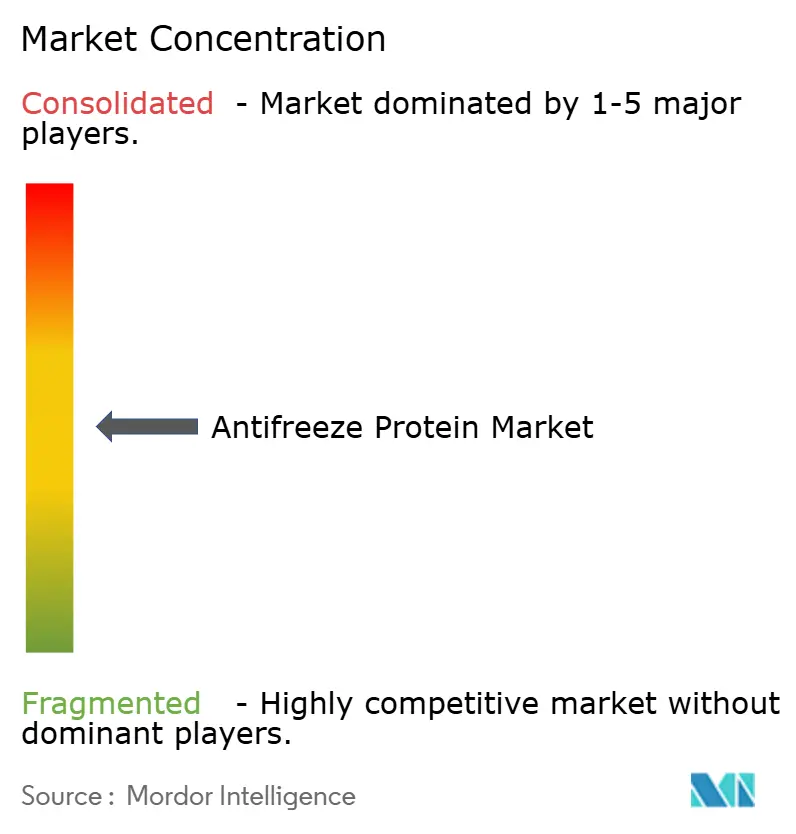
The antifreeze protein market is moderately fragmented, with the presence of several specialized biotechnology companies, research-driven firms, and emerging players focusing on the development, extraction, and commercialization of antifreeze protein-based solutions. The market structure is influenced by the complexity of production technologies, limited availability of commercial-scale manufacturing capabilities, and increasing demand from niche applications such as food preservation, pharmaceuticals, cryopreservation, and biotechnology.
Key companies operating in the market include A/F Protein, Inc., AquaBounty Technologies, Inc., and ArcticZymes Technologies ASA, among others. A/F Protein, Inc. is recognized for its focus on antifreeze protein research and commercialization, particularly for applications in food technology, biotechnology, and cryopreservation. The company has developed expertise in utilizing antifreeze proteins to control ice crystal formation and improve the quality and stability of frozen products. AquaBounty Technologies, Inc., while primarily known for biotechnology applications in aquaculture, contributes to the broader field of genetic engineering and biological innovation, which supports advancements in protein-based technologies.
The competitive landscape is expected to evolve as companies increasingly invest in recombinant production methods, sustainable sourcing strategies, and advanced protein engineering technologies. Partnerships between biotechnology firms, research institutions, and end-use industries are becoming increasingly important for accelerating product development and expanding commercial applications. Players are also exploring opportunities in pharmaceutical and biotechnology sectors, where demand for cryoprotective solutions is rising due to advancements in cell therapy, biologics, and regenerative medicine.
Antifreeze Protein Industry Leaders
-
A/F Protein, Inc.
-
AquaBounty Technologies, Inc.
-
ArcticZymes Technologies ASA
-
DSM-Firmenich AG
-
Kerry Group plc
- *Disclaimer: Major Players sorted in no particular order
Antifreeze Protein Market Companies Covered in this Report
- A/F Protein, Inc.
- AquaBounty Technologies, Inc.
- ArcticZymes Technologies ASA
- Novozymes A/S
- DSM-Firmenich AG
- Chr. Hansen Holding A/S
- Kerry Group plc
- Ingredion Incorporated
- Lallemand Inc.
- Ginkgo Bioworks Holdings, Inc.
- BASF SE
- Merck KGaA
- Thermo Fisher Scientific Inc.
- Sartorius AG
- Lonza Group AG
- Corning Incorporated
- Takara Bio Inc.
- Bio-Rad Laboratories, Inc.
- QIAGEN N.V.
- FUJIFILM Holdings Corporation

Recent Industry Developments in Antifreeze Protein Market
- April 2026: ArcticZymes Technologies secured a new patent for its proprietary RNA restriction enzyme technologies used in therapeutic RNA manufacturing, strengthening its intellectual property position in this field. The company also joined the Consortium for Advanced Analytical and Recovery Engineering as an associated partner, where it aimed to support advancements in viral vector bioprocessing.
- October 2025: ArcticZymes Technologies appointed Brenntag Specialties Pharma as its exclusive European distributor for the SAN-HQ and M-SAN HQ bioprocess nuclease product lines, expanding its distribution network across Europe.
- May 2025: ArcticZymes Technologies extended its three-year collaborative research partnership with the Austrian Centre of Industrial Biotechnology under the COMET program. Through this partnership, the company focused on developing salt-active nucleases for bionanoparticle purification.


Global Antifreeze Protein Market Report Scope
Antifreeze protein (AFP) is a specialized protein produced by certain fish, insects, plants, microorganisms, and other cold-adapted organisms that enables them to survive in freezing or subzero environments. The antifreeze protein is segmented by source, production method, application and geography. Based on source, the market is segmented into fish, plant, insect and microbial. Based on production method, the market is segmented into natural extraction, recombinant production and synthetic production. Based on application, the market is segmented into food and beverage, pharmaceuticals and biotechnology, agriculture and other applications. By geography, the market is segmented into North America, Europe, Asia-Pacific, South America, and Middle-East and Africa. For each segment, the market sizing and forecasting have been done in value terms (USD million).
| Fish |
| Insect |
| Plant |
| Microbial |
| Natural Extraction |
| Recombinant Production |
| Synthetic Production |
| Food and Beverages |
| Pharmaceuticals & Biotechnology |
| Agriculture |
| Other Applications |
| North America | United States |
| Canada | |
| Mexico | |
| Rest of North America | |
| Europe | Germany |
| United Kingdom | |
| Italy | |
| France | |
| Spain | |
| Rest of Europe | |
| Asia-Pacific | China |
| India | |
| Japan | |
| Australia | |
| Rest of Asia-Pacific | |
| South America | Brazil |
| Argentina | |
| Rest of South America | |
| Middle East and Africa | South Africa |
| Saudi Arabia | |
| Rest of Middle East and Africa |
| By Source | Fish | |
| Insect | ||
| Plant | ||
| Microbial | ||
| By Production Method | Natural Extraction | |
| Recombinant Production | ||
| Synthetic Production | ||
| By Application | Food and Beverages | |
| Pharmaceuticals & Biotechnology | ||
| Agriculture | ||
| Other Applications | ||
| Geography | North America | United States |
| Canada | ||
| Mexico | ||
| Rest of North America | ||
| Europe | Germany | |
| United Kingdom | ||
| Italy | ||
| France | ||
| Spain | ||
| Rest of Europe | ||
| Asia-Pacific | China | |
| India | ||
| Japan | ||
| Australia | ||
| Rest of Asia-Pacific | ||
| South America | Brazil | |
| Argentina | ||
| Rest of South America | ||
| Middle East and Africa | South Africa | |
| Saudi Arabia | ||
| Rest of Middle East and Africa | ||


Key Questions Answered in the Report
What is driving demand for antifreeze proteins?
Cell and gene therapy preservation, premium frozen foods, and biologics handling support the antifreeze protein market. These uses value the ability to limit ice damage during storage, transport, and thawing. The overall segment is forecast to grow at 15.54% CAGR from 2026 to 2031.
Which antifreeze protein source has the largest share?
Fish-derived proteins held 47.61% in 2025 because their structures and application history are well established.
Which production method is growing fastest?
Recombinant production is forecast to grow at 17.22% CAGR through 2031. It can offer tighter control over purity, batch consistency, and production volumes than many natural-extraction routes.
Why are antifreeze proteins used in cell therapy preservation?
They may help protect cells during freezing and thawing while reducing reliance on DMSO, which can create toxicity concerns. Their relevance rises when post-thaw cell viability and function affect the quality of a therapy.
Which application leads current revenue?
Food and beverages held 41.67% in 2025, supported by ice cream, frozen meat, and bakery uses.
Page last updated on:





