
Age Related Vision Dysfunction Market Size and Share
Market Overview
| Study Period | 2020 - 2031 |
|---|---|
| Market Size (2026) | USD 4.67 Billion |
| Market Size (2031) | USD 6.25 Billion |
| Growth Rate (2026 - 2031) | 6.03 % |
| Fastest Growing Market | Asia-Pacific |
| Largest Market | North America |
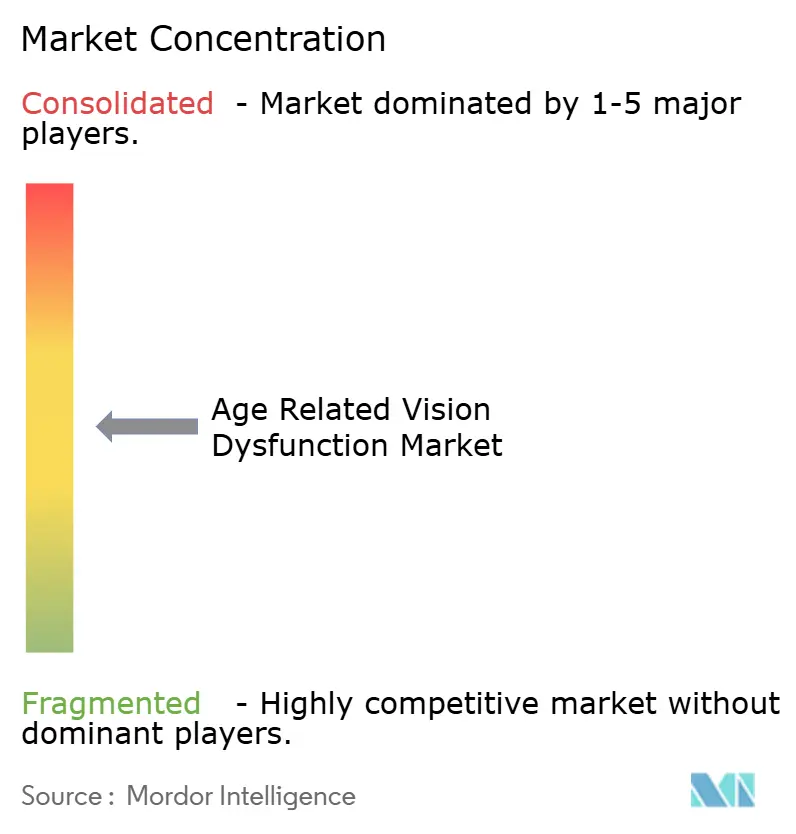
| Market Concentration | Medium |
Major Players *Disclaimer: Major Players sorted in no particular order Image © Mordor Intelligence. Reuse requires attribution under CC BY 4.0. | |
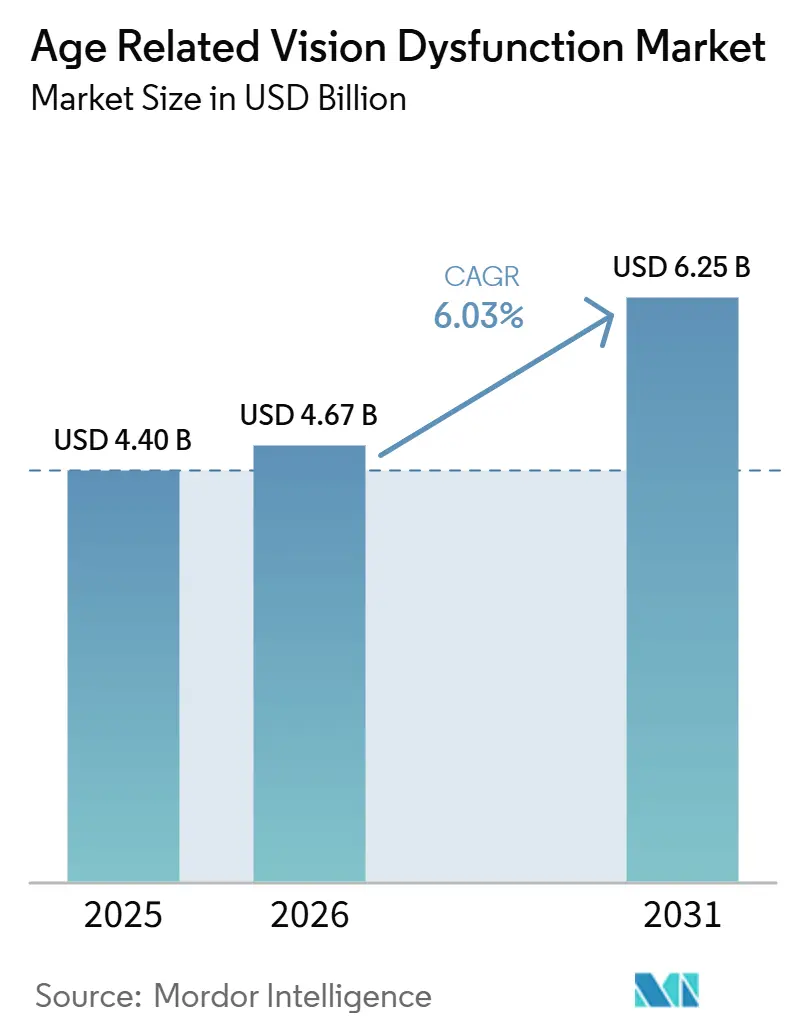
Age Related Vision Dysfunction Market Analysis by Mordor Intelligence
The Age Related Vision Dysfunction Market size is projected to expand from USD 4.40 billion in 2025 and USD 4.67 billion in 2026 to USD 6.25 billion by 2031, registering a CAGR of 6.03% between 2026 to 2031.
Population aging is increasing the number of people who require cataract, glaucoma, retinal, and low-vision care. Demand is also shifting toward earlier diagnosis and intervention, supporting procedure volumes and drug utilization. Technologies that reduce repeat visits, including extended-duration retinal therapies and improved surgical systems, are increasingly shaping the age-related vision dysfunction market. Companies are responding by expanding premium lens portfolios, developing glaucoma platforms, and preparing for lower-priced biosimilar competition. Access, reimbursement, and clinical capacity will determine how much of the underlying demand translates into paid treatment.
Key Report Takeaways
- By dysfunction type, cataract held 38.66% of the age related vision dysfunction market share in 2025, while glaucoma is projected to record the highest CAGR of 8.15% through 2031.
- By product, prescription drugs held 64.34% revenue share in 2025, while surgical devices are projected to grow at a CAGR of 9.80% through 2031.
- By treatment modality, pharmacological treatment held 67.89% revenue share in 2025, while surgical treatment is projected to grow at a CAGR of 10.45% through 2031.
- By end user, hospitals held 55.88% revenue share in 2025, while ophthalmology clinics are projected to grow at a CAGR of 7.56% through 2031.
- By geography, North America held 41.22% revenue share in 2025, while Asia-Pacific is projected to grow at a CAGR of 8.58% through 2031.
Note: Market size and forecast figures in this report are generated using Mordor Intelligence’s proprietary estimation framework, updated with the latest available data and insights as of January 2026.
Market Trends and Insights
Drivers Impact Analysis of Age Related Vision Dysfunction Market*
| DRIVER | (~) % IMPACT ON CAGR FORECAST | GEOGRAPHIC RELEVANCE | IMPACT TIMELINE |
|---|---|---|---|
| Population aging and rising disease prevalence | +1.8% | Global | Long term (≥ 4 years) |
| Anti-VEGF expansion and long-acting retinal delivery | +2.1% | North America, Europe | Medium term (2-4 years) |
| Premium intraocular lens adoption and spectacle independence demand | +1.2% | North America, Asia-Pacific core markets | Medium term (2-4 years) |
| Screening, imaging, and tele-ophthalmology for earlier diagnosis | +0.9% | Global, with early gains in Asia-Pacific, MEA, and South America | Medium term (2-4 years) |
| Treatment adherence gains from long-acting and procedural delivery | +2.1% | North America, Europe | Medium term (2-4 years) |
| Smartphone-enabled screening and tele-ophthalmology in underserved areas | +1.2% | North America, Asia-Pacific core markets | Medium term (2-4 years) |
| Source: Mordor Intelligence | |||
Population Aging and Rising Disease Prevalence
Population aging remains a key demand driver for the age-related vision dysfunction market, as it expands the patient base at risk of multiple vision conditions. The global population aged 60 years and older is projected to increase from nearly 1 billion in 2024 to more than 2 billion by 2050. GBD 2024 research projects cataract prevalence among adults aged 60 years and older to reach 160.8 million to 211.4 million cases by 2050, with 87.4% of the additional burden attributed to population growth rather than higher incidence rates.[1]Global, Regional, and National Burden of Cataract Among Older Adults From 1990 to 2024,” Frontiers in Medicine, frontiersin.org Among people aged 70 to 74 years, the age-standardized prevalence of blindness and visual impairment increased at an average annual rate of 1.02% between 1990 and 2021, with lower-income settings offering significant scope for scalable diagnosis, cataract surgery, and affordable chronic treatment.
Anti-VEGF Expansion and Long-Acting Retinal Delivery
Anti-VEGF therapy remains central to retinal care in the age-related vision dysfunction market, particularly for AMD and related retinal conditions. Biosimilar entry is reducing treatment costs and can improve patient access in markets where originator therapies have limited adoption. Formycon launched the aflibercept biosimilars Ahzantive and Baiama in the European Union in May 2026 after a March 2026 settlement with Regeneron and Bayer, and it secured a US launch window for Q4 2026 or earlier through a separate October 2025 agreement with Regeneron. Longer-duration delivery formats can reduce injection frequency and follow-up burden, supporting access, specialist distribution, and sustained treatment adherence.
Premium Intraocular Lens Adoption and Spectacle Independence Demand
Premium intraocular lenses are increasing the value of cataract procedures within the age-related vision dysfunction market. Consumer demand is driven by spectacle independence, not only the restoration of basic vision. Alcon agreed to acquire LENSAR in March 2025 for up to USD 430 million, adding the ALLY Robotic Cataract Laser Treatment System and Streamline software to its surgical portfolio. Premium adoption depends on clinical outcomes, surgeon confidence, and patients’ ability to pay, as standard insurance coverage generally excludes elective lens upgrades.
Screening, Imaging, and Tele-Ophthalmology for Earlier Diagnosis
Digital screening and imaging can bring untreated patients into the age-related vision dysfunction market sooner by shortening the path from detection to referral. An offline artificial intelligence-enabled smartphone fundus camera demonstrated referable AMD detection comparable to specialist image grading at a South Asian tertiary hospital. In December 2025, the Inter-American Development Bank reported that trained community workers using smartphones, portable cameras, and artificial intelligence could complete eye screenings in under 15 minutes per patient in indigenous Amazon communities, benefiting more than 100 villages. Wider adoption depends on reimbursement systems and reliable image quality to support referrals for cataract, glaucoma, and retinal disease before severe vision loss occurs.
Restraints Impact Analysis of Age Related Vision Dysfunction Market*
| RESTRAINT | (~) % IMPACT ON CAGR FORECAST | GEOGRAPHIC RELEVANCE | IMPACT TIMELINE |
|---|---|---|---|
| High out-of-pocket burden and uneven reimbursement | -1.5% | Global, most acute in Asia-Pacific, South America, and MEA | Long term (≥ 4 years) |
| Ophthalmic workforce, surgical capacity, and follow-up constraints | -1.6% | Global, with acute gaps in rural North America, Asia-Pacific, and MEA | Long term (≥ 4 years) |
| Injection, surgery, and follow-up adherence friction | -1.5% | Global, with the highest clinical effect in later-line settings | Medium term (2-4 years) |
| Diagnostic interoperability and data-quality gaps | -1.2% | South America, Middle East and Africa, emerging Asia-Pacific markets, and South Korea | Long term (≥ 4 years) |
| Source: Mordor Intelligence | |||
High Out-of-Pocket Burden and Uneven Reimbursement
Reimbursement rules directly influenced patient access to products in the age related vision dysfunction market. Established systems commonly covered standard cataract surgery, while premium IOL upgrades often required direct patient payment. Biosimilar competition improved access to retinal treatment but continued to pressure originator revenue. In China and India, broader support for basic cataract extraction than for premium IOLs and anti-VEGF biologics limited revenue per procedure, making localized pricing and payment models critical.
Ophthalmic Workforce, Surgical Capacity, and Follow-Up Constraints
Clinical capacity limited growth in the age related vision dysfunction market, even when patients received diagnoses and funding was available. A U.S. study projected a 12% decline in the ophthalmology workforce and a 24% increase in demand between 2020 and 2035, creating a 30% workforce inadequacy by 2035. Counties with no practicing ophthalmologists increased from 60.7% in 2010 to 62.7% in 2021, with rural communities facing the greatest constraints. Team-based care, optometrist-led management of non-surgical cases, and artificial intelligence-supported image review helped redistribute workloads, although frequent injections, surgery follow-up needs, and inconsistent diagnostic data continued to limit care completion.
*Our forecasts treat driver/restraint impacts as directional, not additive. The impact forecasts reflect baseline growth, mix effects, and variable interactions.
Age Related Vision Dysfunction Market Segment Analysis
By Dysfunction Type:
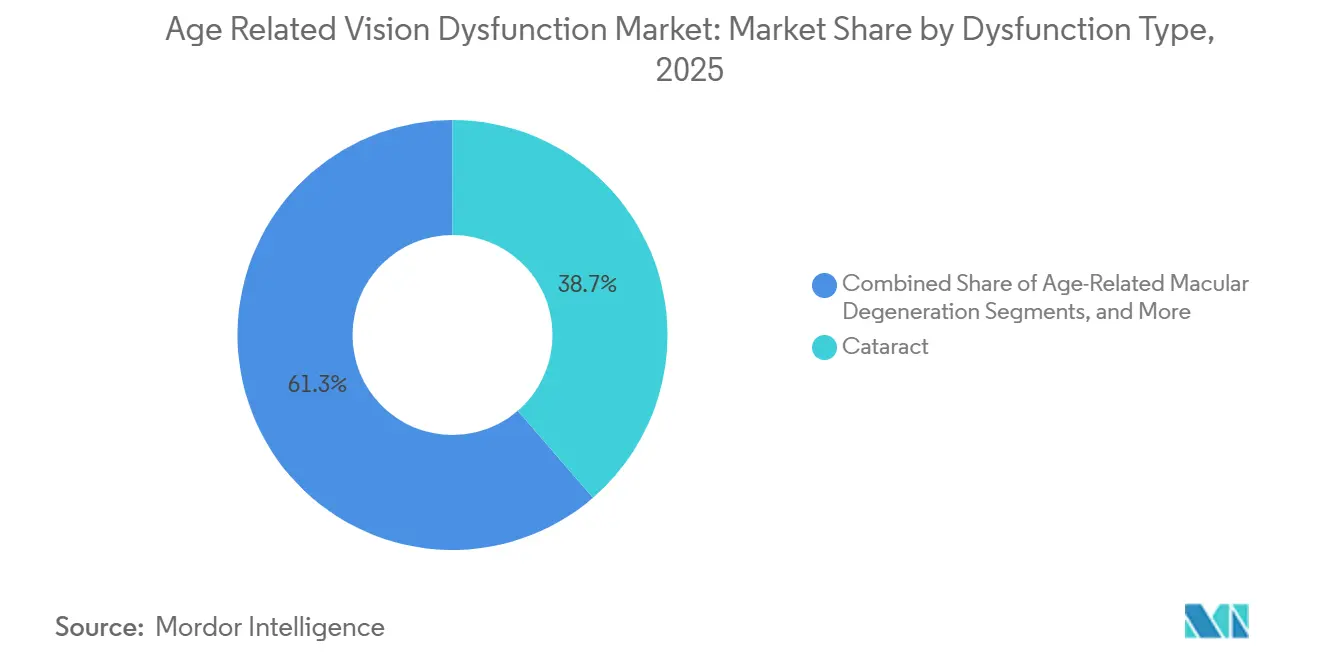
Glaucoma Growth Reshapes a Cataract-Led MarketCataract accounted for 38.66% of revenue in 2025, making it the largest dysfunction category. The segment benefited from a large procedure base and revenue gains linked to premium intraocular lens (IOL) adoption. Alcon cited approximately 32 million cataract procedures each year worldwide in its 2025 LENSAR announcement. Glaucoma is projected to record the highest CAGR of 8.15% through 2031, supported by earlier intervention, minimally invasive glaucoma surgery, direct selective laser trabeculoplasty, and chronic drug therapy.
Alcon completed its acquisition of BELKIN Vision in July 2024, adding direct selective laser trabeculoplasty technology for glaucoma care. The transaction included USD 81 million in upfront consideration and up to USD 385 million in sales-based milestones. AMD remains a major revenue contributor due to anti-VEGF treatment intensity and specialized care needs, while geographic atrophy therapies, presbyopia drops, diabetic retinopathy care, and low-vision technologies broaden the age-related vision dysfunction market.



By Product:
Surgical Devices Grow Faster Than Drug RevenuePrescription drugs held 64.34% of revenue in 2025, reflecting the established value of anti-VEGF biologics and chronic glaucoma therapy. Surgical devices are projected to expand at a CAGR of 9.80% through 2031, outpacing the overall age-related vision dysfunction market. Premium IOL adoption, glaucoma device volumes, and femtosecond laser-assisted cataract surgery support this growth.
Alcon’s LENSAR acquisition added a robotic cataract laser platform and strengthened its position in surgical devices. The prescription drug segment faces tougher pricing pressure as ranibizumab and aflibercept biosimilars become available. Formycon’s May 2026 European Union launch of Ahzantive and Baiama marked another step in aflibercept biosimilar competition, while protected implant designs and integrated procedure platforms help device manufacturers maintain pricing.
By Treatment Modality:
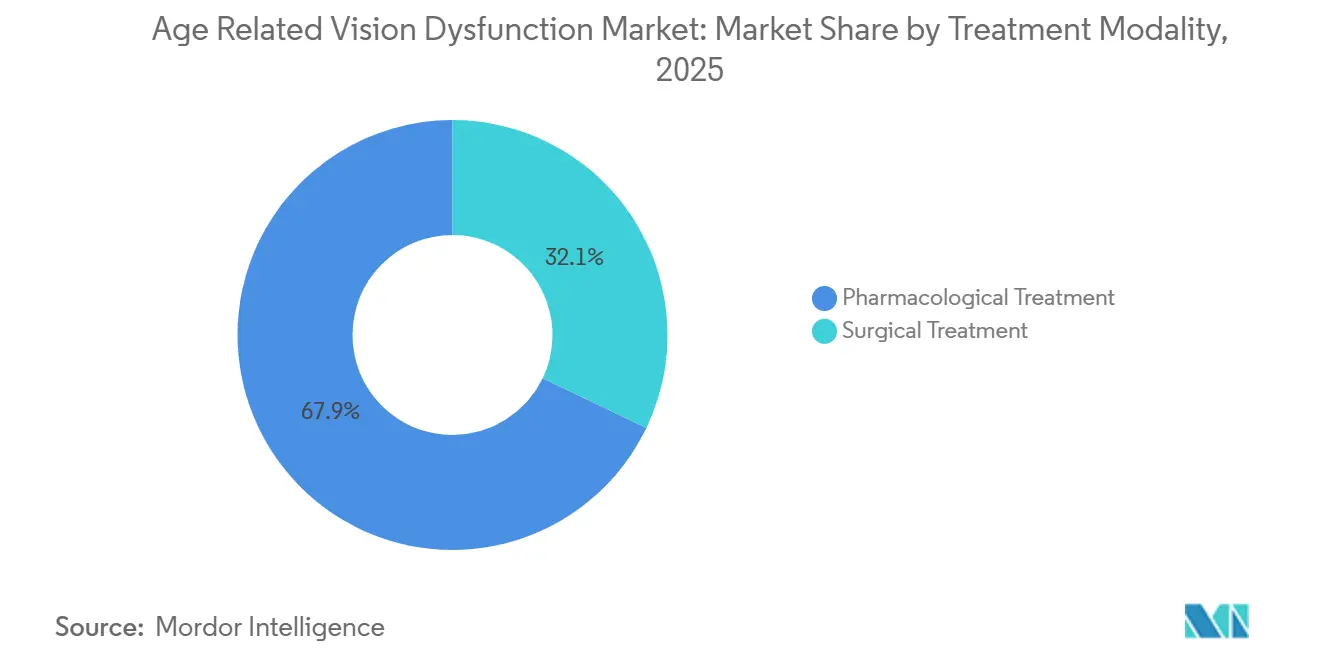
Surgical Treatment Gains Ground Through Procedure InnovationPharmacological treatment held 67.89% of revenue in 2025, supported by anti-VEGF therapies, chronic glaucoma medications, and nutritional products such as AREDS2-formulation supplements used by many dry AMD patients. Surgical treatment is forecast to grow at a CAGR of 10.45% through 2031. Premium lens conversion and minimally invasive glaucoma surgery are the main growth drivers.
Combined cataract and glaucoma procedures can reduce future medication burden and improve procedure efficiency. Retinal and vitreoretinal surgery remains important for advanced diabetic retinopathy and related conditions, while laser, photodynamic treatment, and long-acting drug delivery systems support procedural growth. Low-vision rehabilitation remains the smallest modality by revenue, but the estimated 36 million cases of blindness worldwide highlight the need for services beyond surgery and medication.
By End User:
Clinics and ASCs Take Share From HospitalsHospitals held 55.88% of revenue in 2025 because they managed complex retinal procedures, advanced glaucoma cases, high-cost injections, and patients requiring higher-acuity support. Ophthalmology clinics are projected to grow at a CAGR of 7.56% through 2031. Physician-owned clinics and ambulatory surgery centers support premium IOL services, specialist outpatient care, and efficient cataract procedure volumes without hospital overhead.
Retail optometry and optical practices remain important diagnostic entry points for presbyopia, early AMD, and moderate refractive error. These practices are adding optical coherence tomography and artificial intelligence-enabled imaging tools to improve referrals. Optometrists are expected to absorb more non-surgical demand as the specialist workforce gap widens, creating a complementary care structure across hospitals, clinics, ASCs, and retail optometry.
Geography Analysis
North America Age Related Vision Dysfunction Market
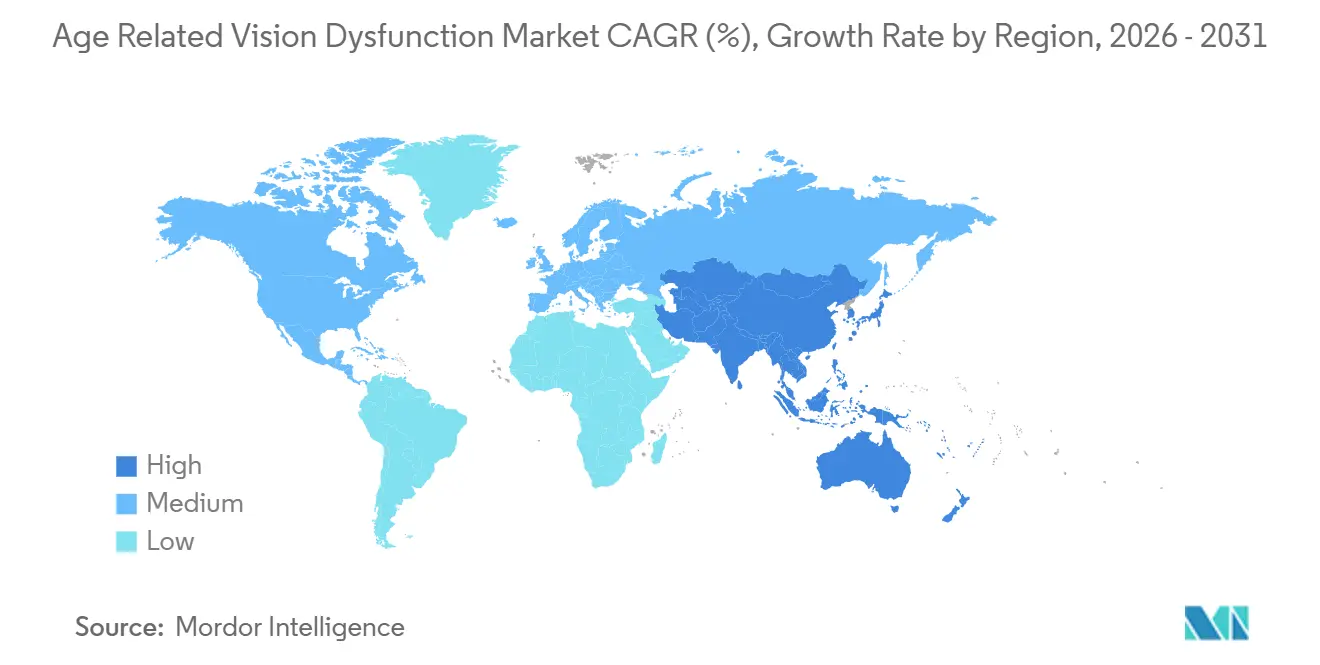
North America held 41.22% of the age-related vision dysfunction market share in 2025, supported by high ophthalmic spending, advanced diagnostics, and strong demand for premium cataract services. The United States accounted for an estimated 36% of global premium cataract surgery manufacturer revenue, with recent approvals and launches spanning prescription drugs, biosimilars, and premium IOLs. Canada sustained standard cataract and glaucoma volumes through public coverage, while Mexico’s private ophthalmology network added premium surgical capacity and supported cross-border patient flows. The projected 30% US ophthalmology workforce inadequacy by 2035 remained a practical limit on procedure capacity, though artificial intelligence-supported planning and optometrist-led triage helped providers manage demand.
Europe Age Related Vision Dysfunction Market
Europe is the second-largest regional contributor to the age-related vision dysfunction market, with Germany and the United Kingdom among its largest national markets. Regional reimbursement systems support standard care but apply detailed benefit and price assessments to newer medicines, while biosimilar availability supports cost-containment priorities. Formycon’s Ahzantive and Baiama became available in the European Union in May 2026. Differences in formulary rules and physician prescribing patterns across France, Italy, Spain, and other European countries can slow premium biologic adoption, while implant and IOL regulations favor established certified manufacturers.
APAC Age Related Vision Dysfunction Market
Asia-Pacific is projected to record the highest regional CAGR of 8.58% through 2031, supported by China’s 260 million seniors and India’s expanding urban patient base. South Asia had an age-standardized cataract prevalence of 17,756.6 per 100,000 older adults in GBD 2021 research, while Japan maintained high cataract procedure volumes through universal health coverage despite more limited patient payment for premium IOLs.

Competitive Landscape
The age-related vision dysfunction market has moderately competitive dynamics across drugs and devices. Retinal drug revenue has historically remained concentrated among originator suppliers, including Regeneron and Bayer with Eylea and Eylea HD, Roche and Genentech with Vabysmo, Susvimo, and Lucentis, and Novartis with Beovu. The device category remains more fragmented, covering premium IOLs, glaucoma implants, lasers, imaging systems, and surgical equipment. Biosimilar entrants are increasing price competition in retinal drugs, with Formycon launching Ahzantive and Baiama in the European Union in May 2026, expanding the aflibercept biosimilar field.
Alcon has advanced a broad surgical strategy through acquisitions and partnerships. It agreed to acquire STAAR Surgical for USD 1.5 billion in August 2025, adding the EVO implantable collamer lens family. Alcon also agreed to acquire LENSAR in March 2025 for up to USD 430 million and completed the BELKIN Vision acquisition in July 2024 for USD 81 million upfront, plus up to USD 385 million in sales-based milestones. These moves expand its presence across cataract, glaucoma, refractive correction, and surgical workflow, while Johnson & Johnson Vision has strengthened competition in premium lenses through TECNIS PureSee.
Opportunity areas include gene therapy for AMD and inherited retinal conditions, digital pathways that connect artificial intelligence diagnosis with surgery scheduling, and wearable support for low vision. Specialist-focused organizations can use biosimilars to enter retina channels that originator suppliers previously dominated. The age-related vision dysfunction industry remains challenging for generic device manufacturers because intellectual property protects implant geometry and delivery systems. Carl Zeiss Meditec’s intraoperative OCT work and Glaukos’s iStent portfolio highlight the value of proprietary technology in imaging and glaucoma implants.
Age Related Vision Dysfunction Industry Leaders
Novartis AG
Regeneron Pharmaceuticals, Inc.
Bayer AG
AbbVie Inc.
Alcon Inc.
- *Disclaimer: Major Players sorted in no particular order
Age Related Vision Dysfunction Market Companies Covered in this Report
- Abbvie
- Alcon
- Apellis Pharmaceuticals, Inc.
- Astellas Pharma
- Bausch + Lomb Corporation
- Bayer
- Carl Zeiss
- Eyenovia, Inc.
- Genentech
- Glaukos
- Johnson & Johnson
- Kodiak Sciences Inc.
- Novartis
- Ocular Therapeutix, Inc.
- Orasis Pharmaceuticals, Inc.
- Outlook Therapeutics, Inc.
- Regeneron Pharmaceuticals
- Santen Pharmaceuticals
- Visus Therapeutics, Inc.

Recent Industry Developments in Age Related Vision Dysfunction Market
- May 2026: Formycon launched its aflibercept biosimilars, Ahzantive and Baiama, in the European Union after settling with Regeneron and Bayer; a separate Regeneron agreement secured a US launch window for Q4 2026 or earlier.
- March 2025: Alcon agreed to acquire LENSAR for up to USD 430 million, adding the ALLY Robotic Cataract Laser Treatment System and Streamline software.
- June 2025: Alcon completed its BELKIN Vision acquisition, adding direct selective laser trabeculoplasty technology for glaucoma; the deal included USD 81 million upfront and up to USD 385 million in sales-based milestones.


Global Age Related Vision Dysfunction Market Report Scope
As per the scope of the report, age-related vision dysfunction is the gradual loss of sharp, clear eyesight as the body ages, driven by conditions like presbyopia, cataracts, and macular degeneration. It affects everyday tasks like reading, driving, and seeing in dim light.
The age-related vision dysfunction market is segmented by dysfunction type, product, treatment modality, end user, and geography. By dysfunction type, the market is segmented into cataract, age-related macular degeneration, glaucoma, presbyopia, age-associated diabetic retinopathy, and age-associated low vision and vision rehabilitation. By product, the market includes prescription drugs and surgical devices. By treatment modality, the market is segmented into pharmacological treatment, surgical treatment, laser and photodynamic treatment, and low-vision rehabilitation and assistive care. The pharmacological treatment segment includes anti-VEGF and other retinal biologics, prostaglandin analogues, beta-blockers, and combination drops, miotics and presbyopia eye drops, and nutritional and supportive therapies. The surgical treatment segment includes cataract extraction and intraocular lens implantation, trabeculectomy and tube shunt surgery, minimally invasive glaucoma surgery, retinal and vitreoretinal surgery, and refractive and presbyopia-correcting procedures. By end user, the market is segmented into hospitals, ophthalmology clinics, ambulatory surgery centers, retail optometry and optical practices, and others. By geography, the market is analyzed across North America, Europe, Asia-Pacific, the Middle East and Africa, and South America. The report also covers the estimated market sizes and trends for 17 countries across major regions globally. The report offers the market sizes and forecasts in terms of value (USD) for the above segments.
| Cataract |
| Age-Related Macular Degeneration |
| Glaucoma |
| Presbyopia |
| Age-Associated Diabetic Retinopathy |
| Age-Associated Low Vision and Vision Rehabilitation |
| Prescription Drug |
| Surgical Device |
| Pharmacological Treatment | Anti-VEGF and Other Retinal Biologics |
| Prostaglandin Analogues, Beta-Blockers, and Combination Drops | |
| Miotics and Presbyopia Eye Drops | |
| Nutritional and Supportive Therapies | |
| Surgical Treatment | Cataract Extraction and Intraocular Lens Implantation |
| Trabeculectomy and Tube Shunt Surgery | |
| Minimally Invasive Glaucoma Surgery | |
| Retinal and Vitreoretinal Surgery | |
| Refractive and Presbyopia-Correcting Procedures | |
| Laser and Photodynamic Treatment | |
| Low-Vision Rehabilitation and Assistive Care |
| Hospitals |
| Ophthalmology Clinics |
| Ambulatory Surgery Centers |
| Retail Optometry and Optical Practices |
| Others |
| North America | United States |
| Canada | |
| Mexico | |
| Europe | Germany |
| United Kingdom | |
| France | |
| Italy | |
| Spain | |
| Rest of Europe | |
| Asia-Pacific | China |
| India | |
| Japan | |
| Australia | |
| South Korea | |
| Rest of Asia-Pacific | |
| Middle East and Africa | GCC |
| South Africa | |
| Rest of Middle East and Africa | |
| South America | Brazil |
| Argentina | |
| Rest of South America |
| By Dysfunction Type | Cataract | |
| Age-Related Macular Degeneration | ||
| Glaucoma | ||
| Presbyopia | ||
| Age-Associated Diabetic Retinopathy | ||
| Age-Associated Low Vision and Vision Rehabilitation | ||
| By Product | Prescription Drug | |
| Surgical Device | ||
| By Treatment Modality | Pharmacological Treatment | Anti-VEGF and Other Retinal Biologics |
| Prostaglandin Analogues, Beta-Blockers, and Combination Drops | ||
| Miotics and Presbyopia Eye Drops | ||
| Nutritional and Supportive Therapies | ||
| Surgical Treatment | Cataract Extraction and Intraocular Lens Implantation | |
| Trabeculectomy and Tube Shunt Surgery | ||
| Minimally Invasive Glaucoma Surgery | ||
| Retinal and Vitreoretinal Surgery | ||
| Refractive and Presbyopia-Correcting Procedures | ||
| Laser and Photodynamic Treatment | ||
| Low-Vision Rehabilitation and Assistive Care | ||
| By End User | Hospitals | |
| Ophthalmology Clinics | ||
| Ambulatory Surgery Centers | ||
| Retail Optometry and Optical Practices | ||
| Others | ||
| By Geography | North America | United States |
| Canada | ||
| Mexico | ||
| Europe | Germany | |
| United Kingdom | ||
| France | ||
| Italy | ||
| Spain | ||
| Rest of Europe | ||
| Asia-Pacific | China | |
| India | ||
| Japan | ||
| Australia | ||
| South Korea | ||
| Rest of Asia-Pacific | ||
| Middle East and Africa | GCC | |
| South Africa | ||
| Rest of Middle East and Africa | ||
| South America | Brazil | |
| Argentina | ||
| Rest of South America | ||


Key Questions Answered in the Report
What is the projected value of age related vision dysfunction care by 2031?
The age related vision dysfunction market is projected to reach USD 6.25 billion by 2031, from USD 4.67 billion in 2026, at a 6.03% CAGR.
Which vision condition has the strongest growth outlook through 2031?
Glaucoma is projected to record the highest CAGR of 8.15%, supported by earlier intervention, minimally invasive surgery, laser treatment, and chronic drug therapy.
Why are surgical devices growing faster than prescription drugs?
Surgical devices are projected to grow at 9.80% CAGR through 2031 because of premium IOL adoption, glaucoma device use, and wider use of laser-assisted cataract procedures.
What limits patient access to advanced eye care?
Premium IOL upgrades often require direct payment, while reimbursement for advanced therapies differs significantly by country and product category.
Which region is expected to grow the fastest through 2031?
Asia-Pacific is projected to grow at 8.58% CAGR, supported by China's 260 million seniors, India's expanding patient base, and greater use of digital screening.
How are biosimilars changing retinal care?
Biosimilars can lower treatment costs and broaden access, while placing pressure on originator drug pricing, as illustrated by Formycon's May 2026 European Union launch of Ahzantive and Baiama.
Page last updated on:





