
Adult Vaccines Market Size and Share
Market Overview
| Study Period | 2020 - 2031 |
|---|---|
| Market Size (2026) | USD 45.84 Billion |
| Market Size (2031) | USD 68.54 Billion |
| Growth Rate (2026 - 2031) | 8.36 % |
| Fastest Growing Market | Asia-Pacific |
| Largest Market | North America |
| Market Concentration | Medium |
Major Players *Disclaimer: Major Players sorted in no particular order Image © Mordor Intelligence. Reuse requires attribution under CC BY 4.0. | |
Adult Vaccines Market Analysis by Mordor Intelligence
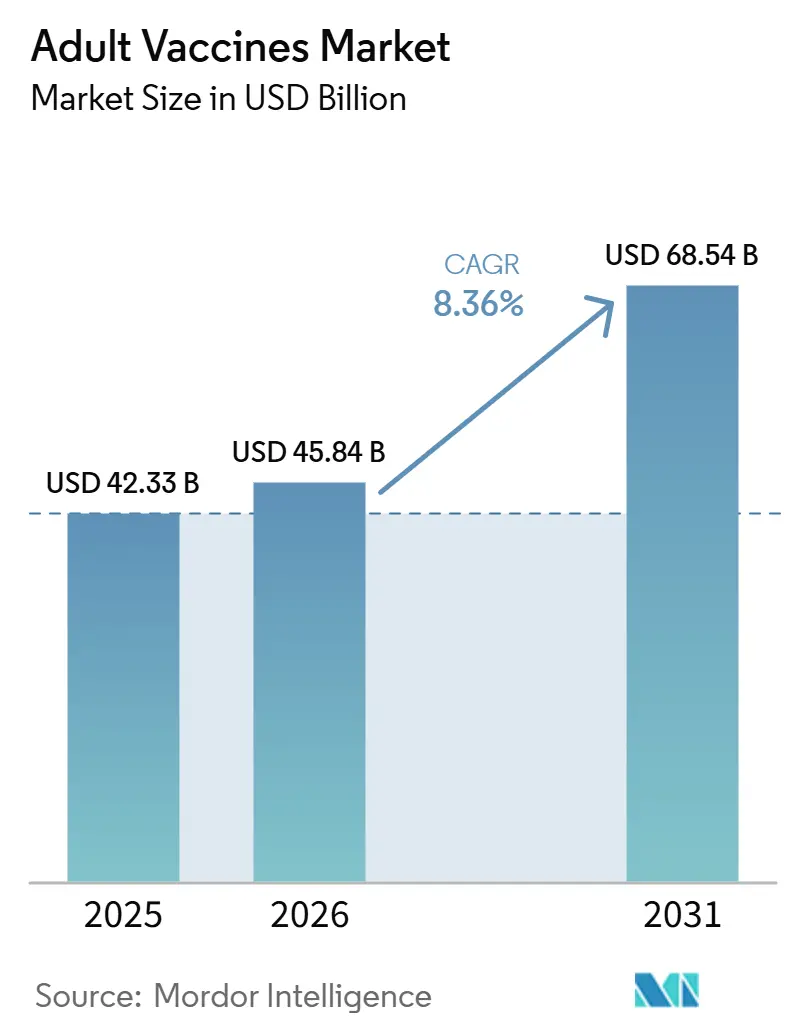
The Adult Vaccines Market size was valued at USD 42.33 billion in 2025 and is estimated to grow from USD 45.84 billion in 2026 to reach USD 68.54 billion by 2031, at a CAGR of 8.36% during the forecast period (2026-2031).
Commercial momentum in 2026 reflects the wider use of respiratory syncytial virus vaccines, the first full implementation cycle of the expanded pneumococcal schedule for adults aged 50 years and older, and broader use of mRNA capabilities for seasonal respiratory products. Schedule changes enlarge the eligible population before disease-specific demand models can fully capture the effect. Meanwhile, policy eligibility does not reliably translate into vaccination, which leaves manufacturers and providers with a sizable implementation challenge. Companies that combine product launches with pharmacy systems, digital reminders, and employer programs are better placed to convert eligibility into administered doses. The Adult vaccines market, therefore, depends on clinical recommendations, convenient access, and sustained public confidence rather than product availability alone.
Key Report Takeaways
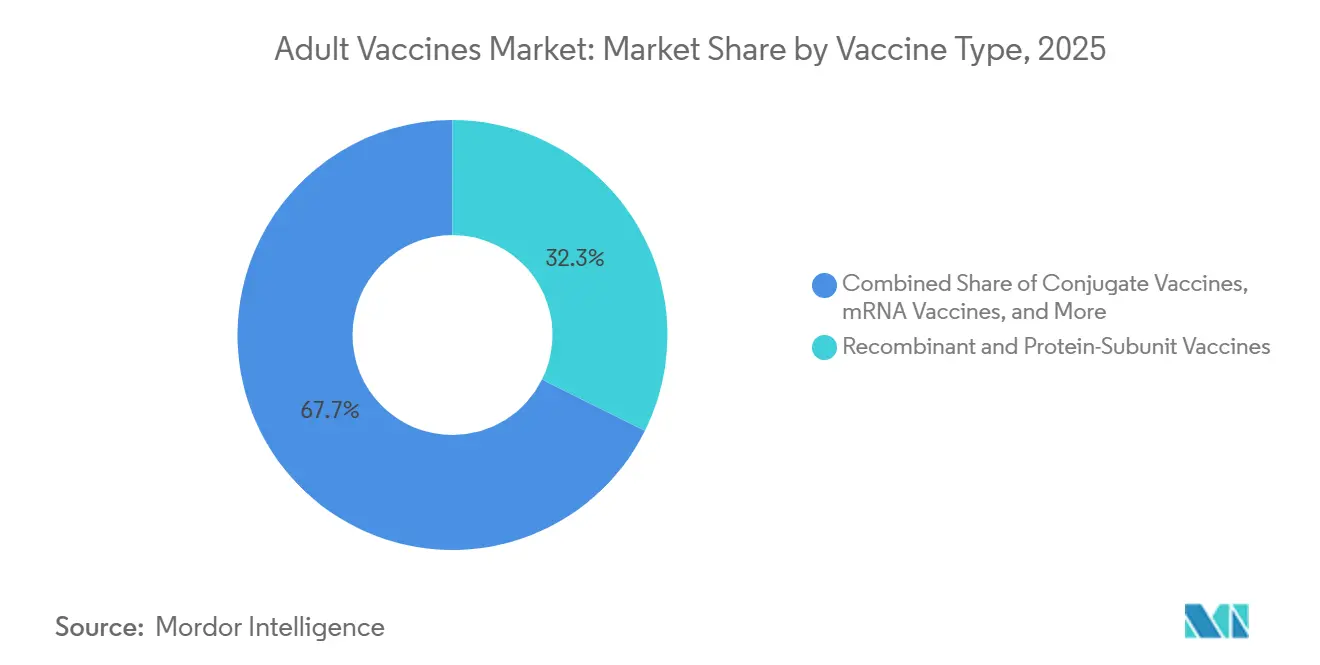
- By vaccine type, recombinant and protein-subunit vaccines held 32.34% revenue share in 2025, while mRNA vaccines are forecast to grow at a 12.38% CAGR through 2031.
- By indication, influenza accounted for 34.19% of the Adult vaccines market size in 2025, while respiratory syncytial virus is forecast to expand at an 11.47% CAGR through 2031.
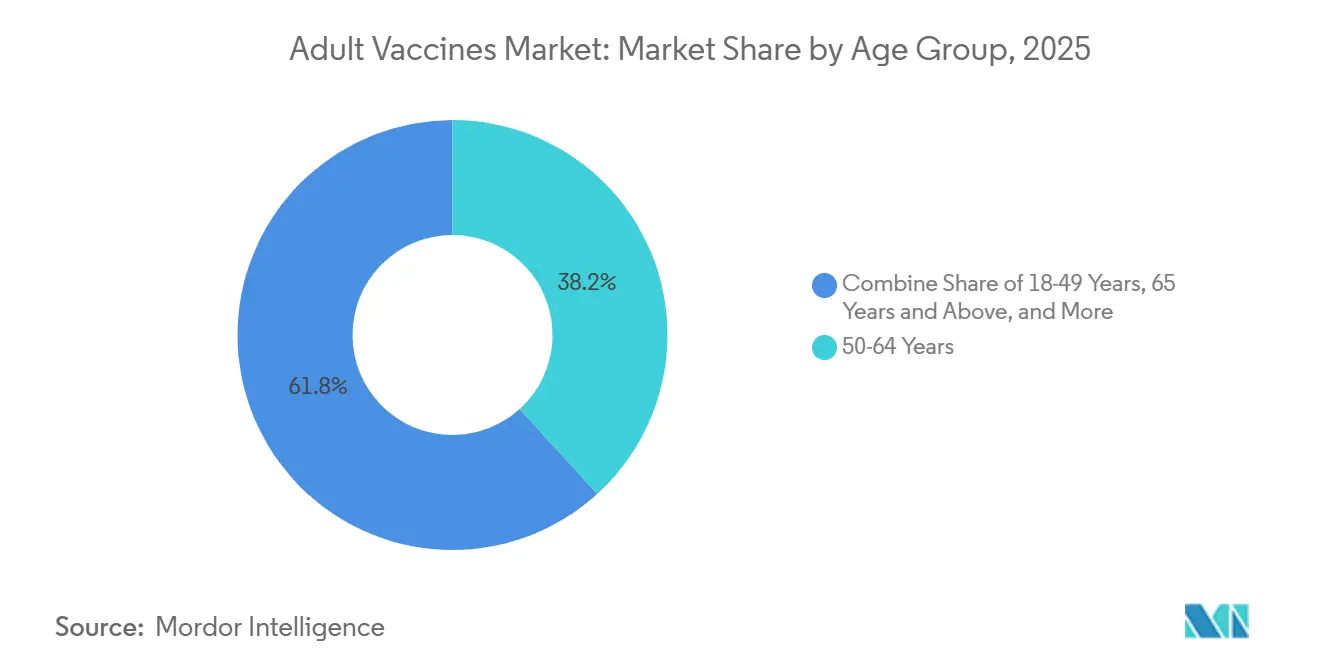
- By age group, adults aged 50-64 held 38.24% revenue share in 2025, while adults aged 65 years and older are forecast to grow at an 11.32% CAGR through 2031.
- By route of administration, intramuscular delivery held 72.13% revenue share in 2025, while intradermal delivery is forecast to grow at a 10.31% CAGR through 2031.
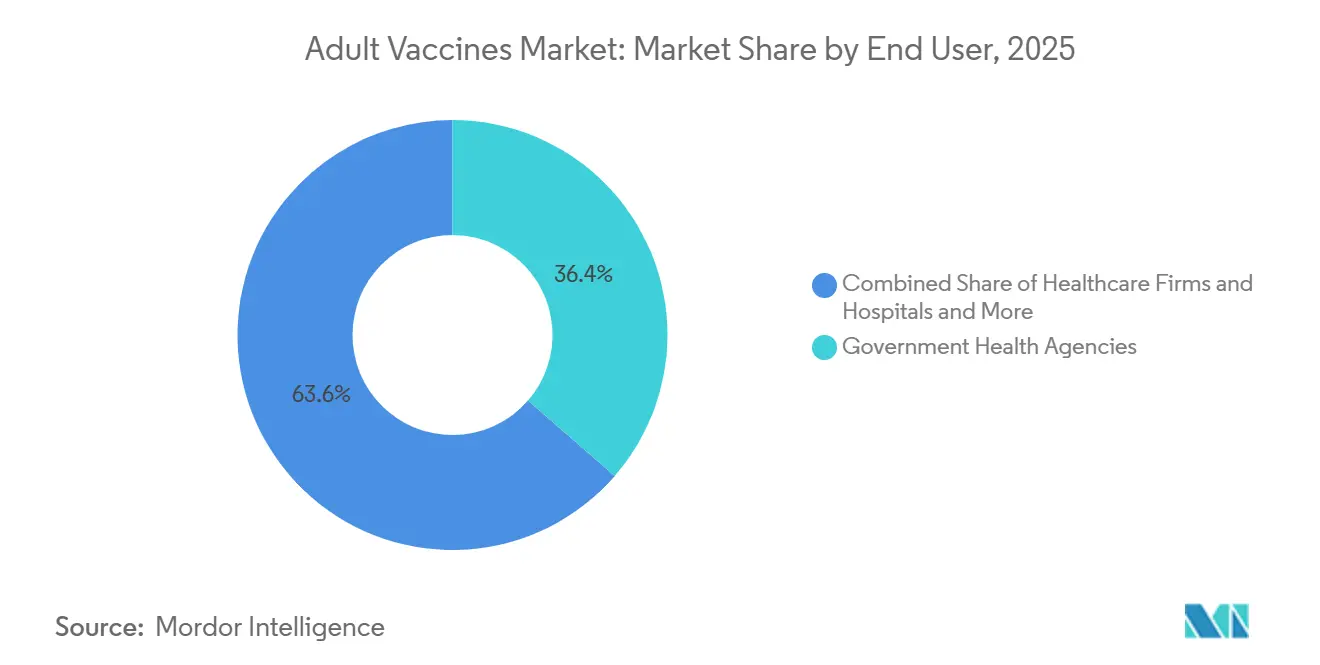
- By end user, government health agencies held 36.39% revenue share in 2025, while employers and occupational health programs are forecast to grow at a 12.87% CAGR through 2031.
Note: Market size and forecast figures in this report are generated using Mordor Intelligence’s proprietary estimation framework, updated with the latest available data and insights as of January 2026.
Market Trends and Insights
Drivers Impact Analysis of Adult Vaccines Market*
| Driver | (~) % Impact on CAGR Forecast | Geographic Relevance | Impact Timeline |
|---|---|---|---|
| Expansion of Adult Immunization Schedules | +2.1% | Global, with concentrated gains in North America, Europe, and Japan | Medium term (2-4 years) |
| Aging Population and Higher Burden of Severe Infection | +1.8% | Global, with concentration in Asia-Pacific, North America, and Europe | Long term (≥ 4 years) |
| Growth in RSV, Zoster, Pneumococcal, Influenza, and HPV Vaccination | +1.6% | North America and Europe as primary areas, with Asia-Pacific spillover | Medium term (2-4 years) |
| New Product Launches and Platform Innovation | +1.4% | North America, Europe, and Australia, with expansion to Asia-Pacific | Medium term (2-4 years) |
| Pharmacy-Led Vaccination and Adult-Care Integration | +0.9% | North America, Europe, and select Asia-Pacific and Middle East and Africa markets | Short term (≤ 2 years) |
| Source: Mordor Intelligence | |||
Expansion of Adult Immunization Schedules Widens the Eligible Population
mRNA development is moving beyond COVID-19 products toward broader respiratory vaccine portfolios. Moderna completed regulatory submissions for mRNA-1010, a seasonal influenza candidate, in the United States, Canada, Australia, and Europe, with potential approvals beginning in 2026. Pfizer's pipeline included an mRNA influenza candidate in Phase 2, a combined COVID-19 and influenza mRNA candidate in Phase 2, and a self-amplifying RNA influenza candidate in Phase 1. Platform agility can reduce the time required to update antigen sequences compared with egg-based influenza production. Developers also aim to improve thermostability, which could reduce cold-chain dependence and support access in lower-income settings. A 2026 review identified more than 35 active mRNA therapeutic and vaccine programs, including 6 in late-stage development. The Adult vaccines market could gain from these platforms where product development is matched with practical delivery and procurement requirements.
Aging Population and Higher Burden of Severe Infection
Adults aged 65 years and older have reduced immune responsiveness, which increases the need for adjuvanted and high-dose formulations within established vaccine categories. This group has lower naive T-cell output and can respond less strongly to standard-dose vaccine formulations. Pneumococcal pneumonia accounted for an estimated 225,000 adult hospitalizations annually in the United States, while invasive pneumococcal disease incidence in 2022 was 17.2 per 100,000 among adults aged 65 years and older and 13.2 per 100,000 among adults aged 50-64 years.[1]Centers for Disease Control and Prevention, “Expanded Recommendations for Use of Pneumococcal Conjugate Vaccines Among Adults Aged 50 Years or Older,” MMWR, cdc.gov. Black adults had peak invasive pneumococcal disease rates at ages 55-59 years, earlier than the non-Black population, with non-PCV13 serotypes contributing to the pattern. PCV21 covered 83% of invasive pneumococcal disease cases in adults aged 50-64 years, which supports a more targeted clinical approach for this cohort. The Adult vaccines market can benefit where outreach reflects this earlier disease burden and the needs of adults approaching older age.
Growth in RSV, Zoster, Pneumococcal, Influenza, and HPV Vaccination Sustains Broad Demand
Respiratory syncytial virus is the fastest-growing indication in the Adult vaccines market, with an 11.47% CAGR projected through 2031. The U.S. Food and Drug Administration expanded GSK's Arexvy to adults aged 18-49 years at increased risk in 2026, while Pfizer's Abrysvo and Moderna's mResvia were already indicated for younger at-risk adults. Cumulative respiratory syncytial virus vaccine doses administered to U.S. adults aged 50 years and older reached 17.8 million from the August 2023 launch through April 2026. England reported 27.00% first-dose Shingrix uptake among newly eligible 70-year-olds in the first quarter of the 2025-26 program, 2.6 percentage points above the prior cohort. British Columbia extended publicly funded human papillomavirus vaccination to adults aged 19-26 years and to selected higher-risk groups through age 45 years in July 2025. These changes increase the number of vaccine-related encounters in pharmacies and provider settings.
New Product Launches and Platform Innovation Redefine the Competitive Baseline
mRNA development is moving beyond COVID-19 products toward broader respiratory vaccine portfolios. Moderna completed regulatory submissions for mRNA-1010, a seasonal influenza candidate, in the United States, Canada, Australia, and Europe, with potential approvals beginning in 2026. Pfizer's pipeline included an mRNA influenza candidate in Phase 2, a combined COVID-19 and influenza mRNA candidate in Phase 2, and a self-amplifying RNA influenza candidate in Phase 1. Platform agility can reduce the time required to update antigen sequences compared with egg-based influenza production. Developers also aim to improve thermostability, which could reduce cold-chain dependence and support access in lower-income settings. The Adult vaccines market could gain from these platforms, where product development is matched with practical delivery and procurement requirements.
Restraints Impact Analysis of Adult Vaccines Market*
| Restraint | (~) % Impact on CAGR Forecast | Geographic Relevance | Impact Timeline |
|---|---|---|---|
| Vaccine Hesitancy and Misinformation | -1.2% | Global, with the strongest effects in North America, Europe, and high-smartphone-penetration areas | Short term (≤ 2 years) |
| Affordability, Reimbursement, and Cold-Chain Constraints | -1.0% | Middle East and Africa, South America, lower-coverage Asia-Pacific segments, and U.S. Medicaid | Medium term (2-4 years) |
| Fragmented Adult Immunization Records and Missed Clinical Opportunities | -0.7% | Global, with the strongest effects in decentralized health systems | Long term (≥ 4 years) |
| Source: Mordor Intelligence | |||
Vaccine Hesitancy and Misinformation Suppress Realized Uptake
The Adult vaccines market faces a behavioral barrier because exposure to unreliable health information can weaken willingness to receive recommended products. Adults who used social media for health information at least weekly were more likely to endorse the false claim linking vaccines and autism than non-users in a 2025 tracking poll. A 2025 study found that institutional trust and susceptibility to misinformation independently predicted vaccine skepticism, while prior health knowledge did not significantly offset those effects.[2]Jon Roozenbeek et al., “Trust in Institutions and Misinformation Susceptibility Both Independently Explain Vaccine Skepticism,” Scientific Reports, nature.com. Adults vaccinated against COVID-19 can still be hesitant about respiratory syncytial virus or zoster vaccines if they question the value of multi-dose schedules or later boosters. A randomized controlled trial found that messaging delivered before misinformation exposure could improve vaccination willingness. Pharmacy settings are important because they provide repeated adult vaccine encounters and can support clear, timely communication before misinformation becomes the deciding influence.
Affordability, Reimbursement, and Cold-Chain Constraints Limit Access Breadth
Provider payment can limit the availability of adult vaccines even when patients are eligible and a recommendation is in place. Estimated provider costs to administer an adult vaccine ranged from USD 15 to USD 23 per dose, while the median Medicaid administration payment was USD 13.62 per dose, and 8 state Medicaid programs had no separate administration payment. The gap matters most for newer, higher-priced products such as respiratory syncytial virus and pneumococcal conjugate vaccines. In rural Middle East and Africa markets and parts of South and Southeast Asia, storage at 2-8°C can lead to wastage when power is unreliable. Fragmented adult immunization records can further prevent providers from recognizing what is due during a clinical visit. These constraints can limit the adult vaccines market access, while thermostable lyophilized products and dissolving microneedle patches may ease some storage barriers later in the forecast period.
*Our forecasts treat driver/restraint impacts as directional, not additive. The impact forecasts reflect baseline growth, mix effects, and variable interactions.
Adult Vaccines Market Segment Analysis
By Vaccine Type:
Protein Platforms Lead While mRNA AcceleratesRecombinant and protein-subunit vaccines held 32.34% of Adult vaccines market share in 2025, making them the largest vaccine type. Mature zoster, human papillomavirus, and hepatitis B franchises support this position. GSK's Shingrix generated GBP 0.90 billion in second-quarter 2026 sales, an increase of 3% year over year. mRNA vaccines are forecast to grow at a 12.38% CAGR through 2031 as influenza and respiratory candidates supplement annual COVID-19 booster demand. Inactivated viral and bacterial vaccines remain relevant across influenza, hepatitis B, and typhoid vaccination.
Conjugate vaccines are central to adult pneumococcal vaccination after the 2024 schedule expansion to adults aged 50 years and older. Live-attenuated products retain a stable niche for measles, mumps, and rubella catch-up and varicella vaccination in selected adults. Other platforms, including self-amplifying RNA and viral vectors, remain in clinical development and are unlikely to generate substantial commercial revenue before 2028. The Adult vaccines market size for recombinant products benefits from established schedules that require repeated or multi-dose use. mRNA uptake will depend on regulatory decisions, seasonal demand, and the ability to demonstrate value beyond COVID-19.



By Indication:
Influenza Anchors Volume While RSV Sets the Growth TempoInfluenza represented 34.19% of the Adult vaccines market size in 2025, supported by annual procurement through government, employers, pharmacies, and travel health channels. The 2024-25 and 2025-26 seasons used trivalent formulations aligned with updated World Health Organization strain recommendations without meaningful supply disruption. Respiratory syncytial virus is forecast to grow at an 11.47% CAGR through 2031. Cumulative U.S. doses for adults aged 50 years and older reached 17.8 million through April 2026. Coverage among adults aged 75 years and older was 43.20% by February 2026, below the more than 70% levels common for established influenza vaccination in the same age group.
COVID-19 vaccines remain a material revenue category, although the 2025 label restriction reduced routine demand compared with the universal recommendation period. Zoster, pneumococcal disease, human papillomavirus, and hepatitis A and B vaccines form a higher-value prevention group with greater discretionary purchasing. The Adult vaccines market is influenced by whether providers explain eligibility and complete multi-dose schedules. Respiratory syncytial virus products remain supply-adequate, but demand has not yet matched the full eligible population. The Adult vaccines market retains room for providers, pharmacies, and manufacturers to improve coverage without waiting for another product category.
By Age Group:
The 50-64 Cohort Anchors Current Spend, Adults 65+ Drive Forecast GrowthAdults aged 50-64 accounted for 38.24% revenue share in 2025, the largest share among age groups. The result reflects the size of this population and catch-up demand from schedule expansions. The 2024 pneumococcal recommendation and the 2025 respiratory syncytial virus recommendation for at-risk adults aged 50-59 years broadened access within this cohort. Adults aged 65 years and older are forecast to grow at an 11.32% CAGR through 2031. Aging and the greater use of high-dose and adjuvanted vaccines support growth in this group.
Adults aged 18-49 years remain important for human papillomavirus catch-up programs and occupational vaccination. Pregnant adults have distinct formulation and safety requirements for maternal respiratory syncytial virus and influenza vaccination. Combination candidates for respiratory syncytial virus and influenza could be relevant for people aged 65 years and older who qualify for several vaccines. Fewer injections in one visit may improve completion where vaccine burden is a concern. Clear records and clinical discussion remain necessary for risk-based recommendations.
By Route of Administration:
Intramuscular Dominates, Intradermal Disruption BuildsIntramuscular administration held 72.13% revenue share in 2025 because it is used for most approved influenza, pneumococcal, zoster, respiratory syncytial virus, and human papillomavirus products. This position is not expected to change materially through 2031. Intradermal administration is forecast to grow at a 10.31% CAGR as evidence for skin-targeted delivery develops. A 2026 guinea pig study found that a programmable intradermal microneedle-array injector produced stronger Th1-biased CD8+ T-cell responses and dose-sparing effects than standard subcutaneous delivery.[3]Sarah Bouchard et al., “An Engineered Intradermal Microneedle-Array Device Enhances the Cellular Immune Responses in a Guinea Pig Model,” Frontiers in Immunology, frontiersin.org. This research does not establish broad commercial replacement of intramuscular delivery.
Dissolving microneedle patches with mRNA lipid nanoparticle formulations are in preclinical and Phase 1 development. Published work has shown the potential for thermostable vaccine preservation, which could reduce cold-chain requirements and enable nonclinical administration. Subcutaneous delivery continues to serve selected live-attenuated and conjugate formulations, while oral and intranasal routes remain largely experimental. Regulatory guidance will affect the timing of microneedle commercialization. The Adult vaccines market will rely on intramuscular delivery while newer methods establish safety, manufacturing consistency, and reimbursement pathways.
By End User:
Government Programs Set Volume, Employer Channels Command MarginGovernment health agencies held 36.39% revenue share in 2025, supported by national programs, public health standing orders, Medicare Part B billing, and tenders in Europe and Asia-Pacific. U.S. Medicaid programs, state health departments, and federally qualified health centers contribute to volume commitments for established vaccines. Reimbursement gaps can reduce provider participation in this channel. Employers and occupational health programs are forecast to grow at a 12.87% CAGR through 2031. Corporate health benefits increasingly include influenza, respiratory syncytial virus, and zoster vaccination.
Healthcare firms and hospitals remain significant institutional purchasers for inpatient and high-risk populations. Travelers and educational institutions create a smaller segment for hepatitis A, typhoid, and meningococcal vaccination. This segment recovered as international travel volumes increased. The Adult vaccines market benefits from employer programs that can reach working adults who may not visit a physician regularly. The mix of public, employer, and private channels determines how effectively countries reach adults with different affordability needs.
Geography Analysis
North America Adult Vaccines Market
North America held 43.17% of Adult vaccines market share in 2025, making it the largest regional contributor. The region benefits from ACIP-guided recommendations, Medicare and commercial insurance reimbursement, and extensive pharmacy vaccination networks. Employer-sponsored influenza and COVID-19 programs add demand beyond the public funding base in the United States. British Columbia expanded publicly funded human papillomavirus vaccination in July 2025 to all people aged 19-26 years and selected people through age 45 years. The change aligns with broader adult eligibility expansion in high-income jurisdictions.
Europe Adult Vaccines Market
Europe remains heterogeneous in its adult immunization systems and uptake levels. England reported 27.00% first-dose Shingrix coverage among newly eligible 70-year-olds in the first quarter of the 2025-26 season. In July 2026, the European Commission authorized Pfizer and BioNTech's XFG-adapted COVID-19 vaccine for the 2026-27 season, showing the ability to process updated respiratory formulations ahead of the season. Southern and eastern European countries have lower coverage for some non-influenza adult vaccines. This gap leaves the Adult vaccines market with room for established manufacturers that have regional distribution capabilities.
APAC Adult Vaccines Market
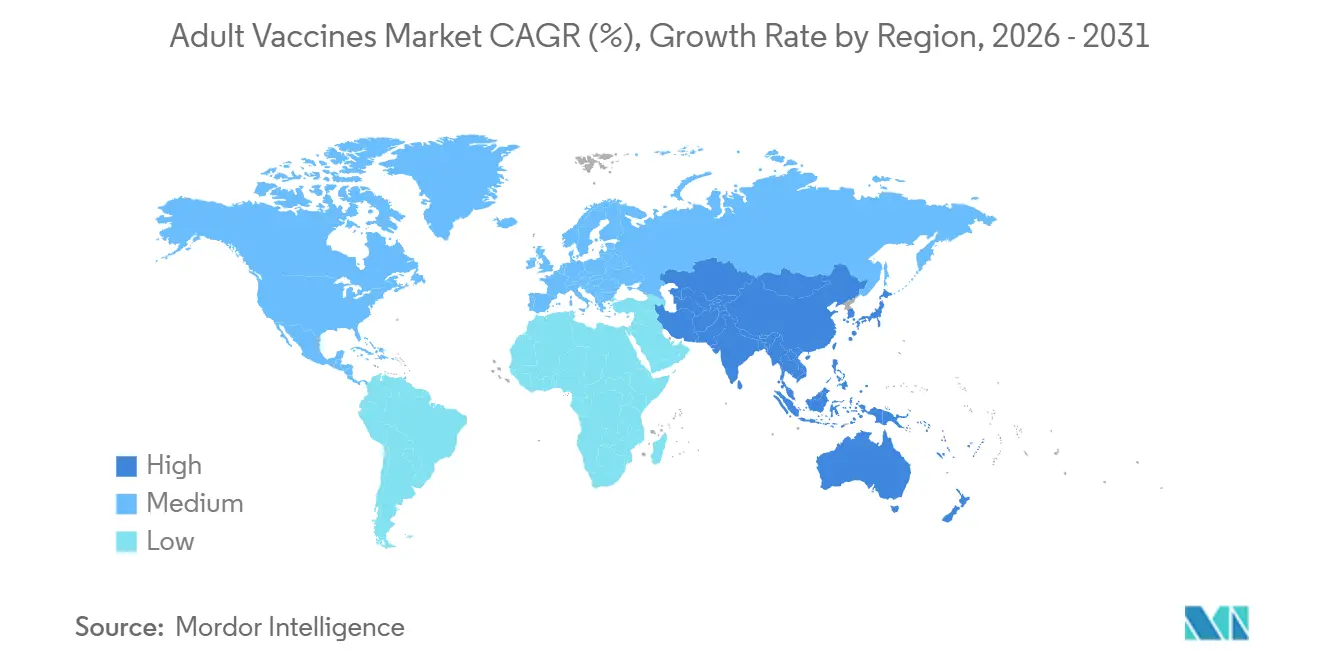
Asia-Pacific is forecast to grow at an 11.45% CAGR through 2031, the highest rate among regions in the Adult vaccines market. Japan faces fragmented national and local financing, which has limited adult vaccine uptake despite population aging. Australia reported that nearly one-third of eligible adults aged 65 years and older received at least 1 Shingrix dose in the first year of its national program, although remoteness and Indigenous status were linked with equity gaps. China is expanding through urban private clinics, while India is supported by higher private healthcare spending and greater awareness of hepatitis B and human papillomavirus vaccination.

Competitive Landscape
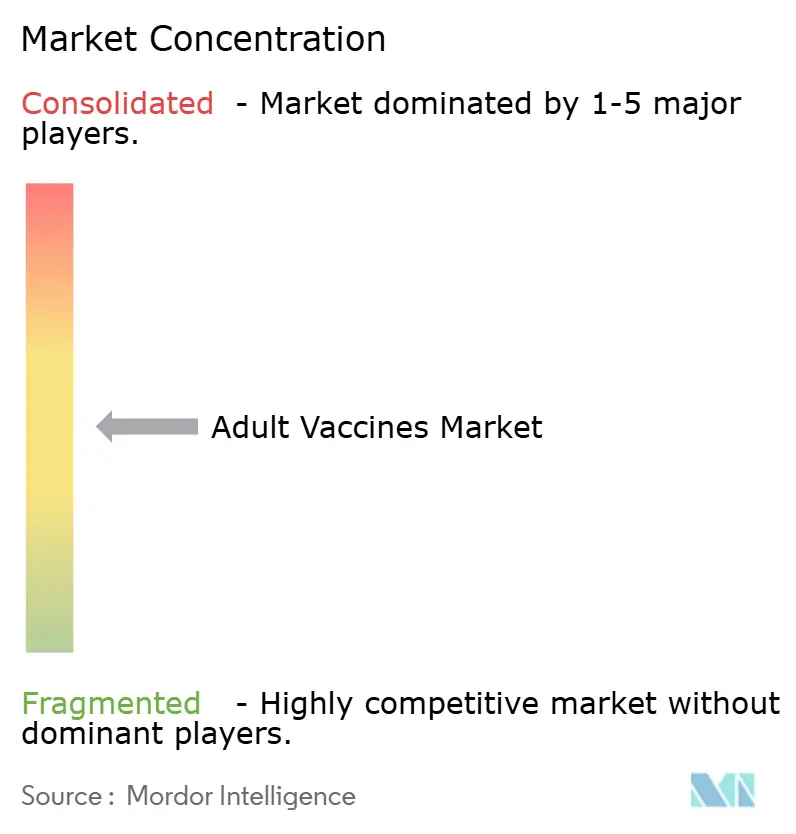
The Adult vaccines market is moderately consolidated, with Pfizer, GSK, Sanofi, Merck, Moderna, and CSL operating across multiple indications and regions. Competition is strongest at the product and indication level, so a supplier can be strong in respiratory syncytial virus but weaker in pneumococcal conjugate or human papillomavirus products. Respiratory syncytial virus is notable because 3 approved products from separate manufacturers have no ACIP preference hierarchy. Provider and pharmacy execution can therefore influence product choice. GSK reported GBP 2.3 billion in vaccine sales for the second quarter of 2026, an 8% increase year over year, while Arexvy revenue grew by more than 100%.[4]GSK plc, “GSK Delivers Strong Q2 Core Results Performance and Continued Momentum,” GSK, gsk.com.
GSK plans to begin more than 20 Phase 3 trials during 2026 and identified 7 asset accelerations across 18 indications that included vaccines. Its meningitis vaccines grew 21% in the quarter, while its pipeline plans indicate continued investment in new categories. Sanofi completed its USD 2.20 billion acquisition of Dynavax Technologies in February 2026, adding HEPLISAV-B and the Phase 1/2 Z-1018 shingles candidate. In May 2026, Eli Lilly announced agreements to acquire Curevo Vaccine, LimmaTech Biologics, and Vaccine Company, Inc. for a combined potential value of up to USD 3.83 billion. These moves show that established companies and new entrants are seeking capabilities in shingles and infectious disease prevention.
Sanofi announced the acquisition of Vicebio in July 2025 for USD 1.15 billion upfront and up to USD 450 million in development and regulatory milestones. Vicebio's Molecular Clamp platform targets respiratory syncytial virus, human metapneumovirus, and related respiratory viruses with formulations designed to avoid freeze-drying requirements. Microneedle patch developers and self-amplifying RNA owners remain potential partners, while formulation and delivery patents can create competitive differentiation. The Adult vaccines market remains competitive because established products fund portfolios while newer respiratory and delivery technologies reshape future choices.
Adult Vaccines Industry Leaders
CSL Limited
GSK plc.
Merck & Co., Inc.
Pfizer Inc.
Sanofi
- *Disclaimer: Major Players sorted in no particular order
Adult Vaccines Market Companies Covered in this Report
- AstraZeneca
- Bavarian Nordic
- Bharat Biotech International Limited
- Biological E
- CSL Behring
- Daiichi Sankyo
- Dynavax Technologies
- GlaxoSmithKline
- Hualan Biological
- Indian Immunologicals
- Johnson & Johnson
- Merck
- Novavax
- Panacea Biotec Limited
- Pfizer
- Sanofi
- Serum Institute of India
- Shenzhen Kangtai Biological Products Co., Ltd.
- Sinovac Biotech
- Valneva

Recent Industry Developments in Adult Vaccines Market
- July 2026: Pfizer and BioNTech received European Commission marketing authorization for their XFG-adapted COVID-19 vaccine (2026-2027 formula) for individuals aged 6 months and older across all 27 EU member states.
- May 2026: Eli Lilly announced definitive agreements to simultaneously acquire 3 vaccine-focused biotechnology companies, Curevo Vaccine, next-generation shingles prevention with improved tolerability, up to USD 1.50 billion, LimmaTech Biologics, up to USD 780 million, and Vaccine Company, Inc., Epstein-Barr virus and other infectious diseases, up to USD 1.55 billion.
- April 2026: The U.S. Adult Immunization Schedule was formally amended to incorporate ACIP's April 2025 respiratory syncytial virus recommendation for adults aged 50-59 at increased risk, adopted by the HHS Secretary on June 25, 2025 and effective in the published schedule from April 27, 2026.
- February 2026: Sanofi completed its acquisition of Dynavax Technologies Corporation, with Dynavax becoming a wholly owned indirect subsidiary following acceptance of all tendered shares at USD 15.50 per share in cash.


Global Adult Vaccines Market Report Scope
The adult vaccines market refers to the global industry focused on the development, manufacturing, distribution, and administration of vaccines designed to prevent infectious diseases in adult populations, including influenza, pneumococcal disease, shingles, HPV, and COVID-19. The market includes preventive immunization programs, commercial vaccine production, public and private procurement initiatives, cold chain and distribution networks, and vaccine delivery across healthcare systems, such as hospitals, clinics, pharmacies, and public health agencies.
The adult vaccines market is segmented by vaccine type, indication, age group, route of administration, end user, and geography. By vaccine type, it is further divided into inactivated viral or bacterial vaccines, recombinant and protein-subunit vaccines, conjugate vaccines, mRNA vaccines, live-attenuated vaccines, and other technology platforms. By indication, it is segmented into Influenza, COVID-19, herpes zoster, pneumococcal disease, respiratory syncytial virus, human papillomavirus, cervical cancer prevention, hepatitis A and hepatitis B, and others. By age group, the market is segmented into 18-49 years, 50-64 years, 65 years and above, and pregnant adults. By route of administration, the market is segmented into intramuscular, subcutaneous, intradermal, and others. By end user, the market is segmented into healthcare firms and hospitals, government health agencies, employers and occupational health programs, travelers and educational institutions, and others. The geography segment is further divided into North America, Europe, Asia-Pacific, the Middle East and Africa, and South America. The report also covers the estimated market sizes and trends for 17 countries across major regions globally. The report offers the market size and forecasts in value (USD) for the above segments.
| Inactivated Viral or Bacterial Vaccines |
| Recombinant and Protein-Subunit Vaccines |
| Conjugate Vaccines |
| mRNA Vaccines |
| Live-Attenuated Vaccines |
| Other Technology Platforms |
| Influenza |
| COVID-19 |
| Herpes Zoster |
| Pneumococcal Disease |
| Respiratory Syncytial Virus |
| Human Papillomavirus and Cervical Cancer Prevention |
| Hepatitis A and Hepatitis B |
| Others |
| Adults Aged 18-49 Years |
| Adults Aged 50-64 Years |
| Adults Aged 65 Years and Above |
| Pregnant Adults |
| Intramuscular Administration |
| Subcutaneous Administration |
| Intradermal Administration |
| Others |
| Healthcare Firms and Hospitals |
| Government Health Agencies |
| Employers and Occupational Health Programs |
| Travelers and Educational Institutions |
| Others |
| North America | United States |
| Canada | |
| Mexico | |
| Europe | Germany |
| United Kingdom | |
| France | |
| Italy | |
| Spain | |
| Rest of Europe | |
| Asia-Pacific | China |
| Japan | |
| India | |
| Australia | |
| South Korea | |
| Rest of Asia-Pacific | |
| Middle East and Africa | GCC |
| South Africa | |
| Rest of Middle East and Africa | |
| South America | Brazil |
| Argentina | |
| Rest of South America |
| By Vaccine Type | Inactivated Viral or Bacterial Vaccines | |
| Recombinant and Protein-Subunit Vaccines | ||
| Conjugate Vaccines | ||
| mRNA Vaccines | ||
| Live-Attenuated Vaccines | ||
| Other Technology Platforms | ||
| By Indication | Influenza | |
| COVID-19 | ||
| Herpes Zoster | ||
| Pneumococcal Disease | ||
| Respiratory Syncytial Virus | ||
| Human Papillomavirus and Cervical Cancer Prevention | ||
| Hepatitis A and Hepatitis B | ||
| Others | ||
| By Age Group | Adults Aged 18-49 Years | |
| Adults Aged 50-64 Years | ||
| Adults Aged 65 Years and Above | ||
| Pregnant Adults | ||
| By Route of Administration | Intramuscular Administration | |
| Subcutaneous Administration | ||
| Intradermal Administration | ||
| Others | ||
| By End User | Healthcare Firms and Hospitals | |
| Government Health Agencies | ||
| Employers and Occupational Health Programs | ||
| Travelers and Educational Institutions | ||
| Others | ||
| By Geography | North America | United States |
| Canada | ||
| Mexico | ||
| Europe | Germany | |
| United Kingdom | ||
| France | ||
| Italy | ||
| Spain | ||
| Rest of Europe | ||
| Asia-Pacific | China | |
| Japan | ||
| India | ||
| Australia | ||
| South Korea | ||
| Rest of Asia-Pacific | ||
| Middle East and Africa | GCC | |
| South Africa | ||
| Rest of Middle East and Africa | ||
| South America | Brazil | |
| Argentina | ||
| Rest of South America | ||


Key Questions Answered in the Report
What is the expected size of adult vaccines in 2031?
The Adult vaccines market is forecast to reach USD 68.54 billion by 2031, growing at an 8.36% CAGR from 2026.
Which vaccine type leads adult vaccination revenue?
Recombinant and protein-subunit vaccines led with 32.34% revenue share in 2025, supported by zoster, human papillomavirus, and hepatitis B products.
Which adult vaccine indication is growing fastest?
Respiratory syncytial virus vaccination is forecast to grow at an 11.47% CAGR through 2031 as eligibility expands to more at-risk adults.
Why are adults aged 65 years and older important for vaccine demand?
This group is forecast to grow at an 11.32% CAGR through 2031 because population aging and reduced immune response increase demand for high-dose and adjuvanted products.
Which region has the highest growth outlook for adult vaccination?
Asia-Pacific is forecast to grow at an 11.45% CAGR through 2031, with substantial differences in maturity and financing across countries.
What is limiting adult vaccine uptake?
Hesitancy, payment gaps, cold-chain constraints, and fragmented immunization records can prevent eligible adults from receiving recommended vaccines.
Page last updated on:





