
Acute Pyelonephritis Market Size and Share
Market Overview
| Study Period | 2020 - 2031 |
|---|---|
| Market Size (2026) | USD 356.53 Million |
| Market Size (2031) | USD 449.64 Million |
| Growth Rate (2026 - 2031) | 4.75 % |
| Fastest Growing Market | Asia-Pacific |
| Largest Market | North America |
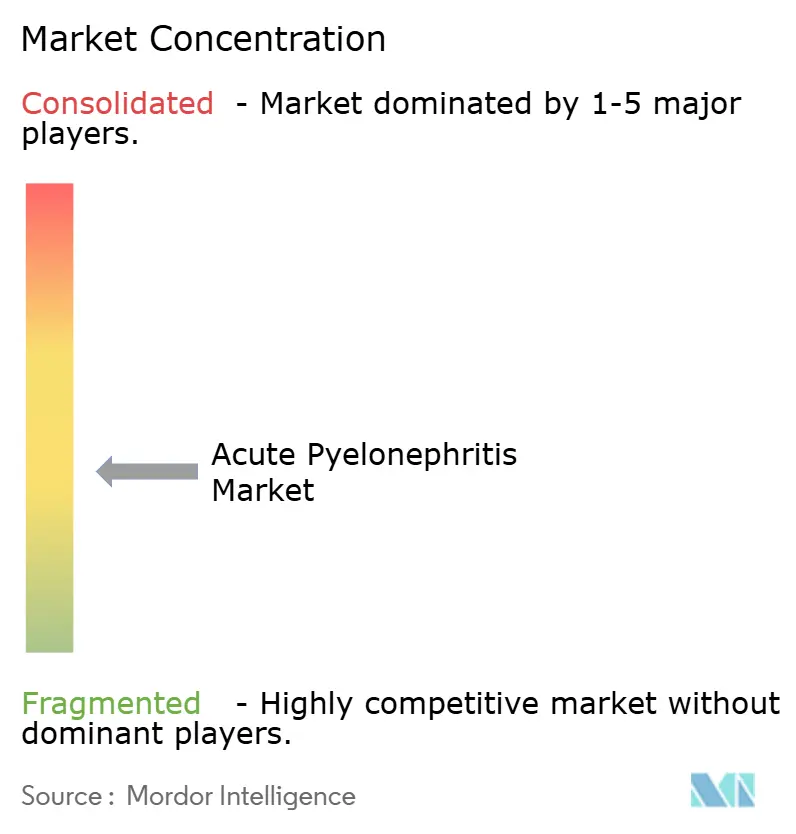
| Market Concentration | Medium |
Major Players *Disclaimer: Major Players sorted in no particular order Image © Mordor Intelligence. Reuse requires attribution under CC BY 4.0. | |
Acute Pyelonephritis Market Analysis by Mordor Intelligence
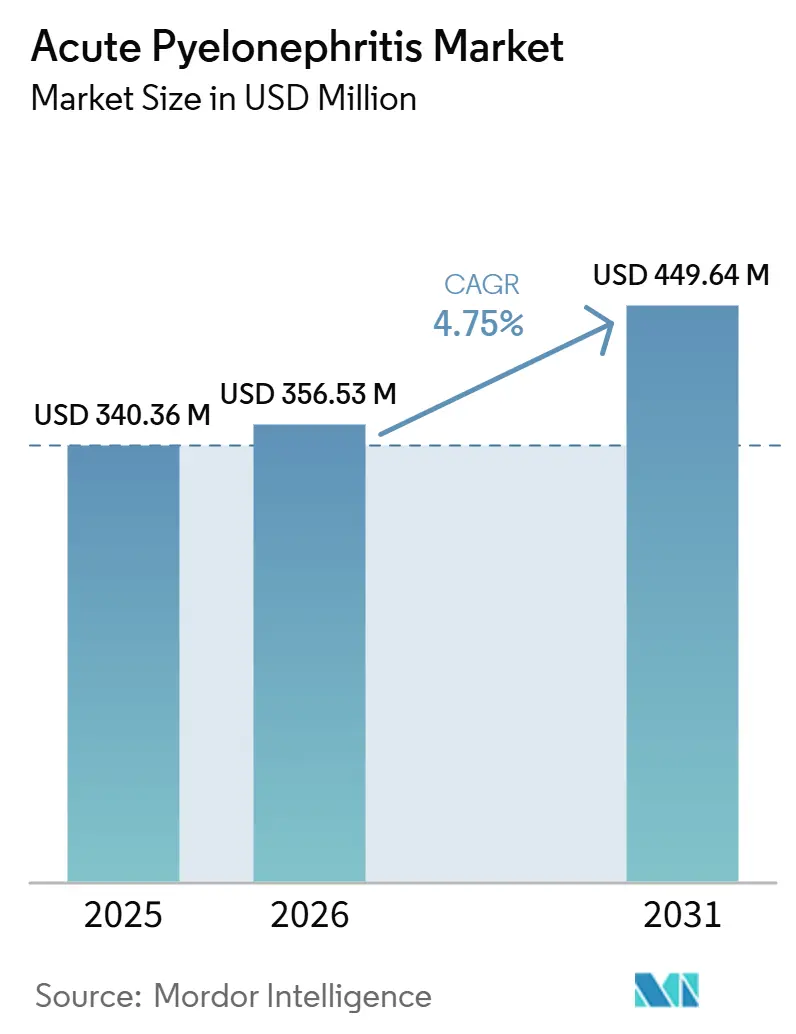
The Acute Pyelonephritis Market size was valued at USD 340.36 million in 2025 and is estimated to grow from USD 356.53 million in 2026 to reach USD 449.64 million by 2031, at a CAGR of 4.75% during the forecast period (2026-2031).
The acute pyelonephritis market is supported by the rising burden of complicated urinary tract infections, antimicrobial resistance, and the availability of newer treatment options. Resistance is changing prescribing decisions because empiric treatment is less dependable in serious gram-negative infections. This increases the value of timely testing and targeted therapy in the acute pyelonephritis market. New oral options can also move appropriate patients from hospital treatment to outpatient care. Competition is increasing as established drug companies, specialist antibiotic developers, and diagnostic companies pursue resistant infections and faster treatment decisions.
Key Report Takeaways
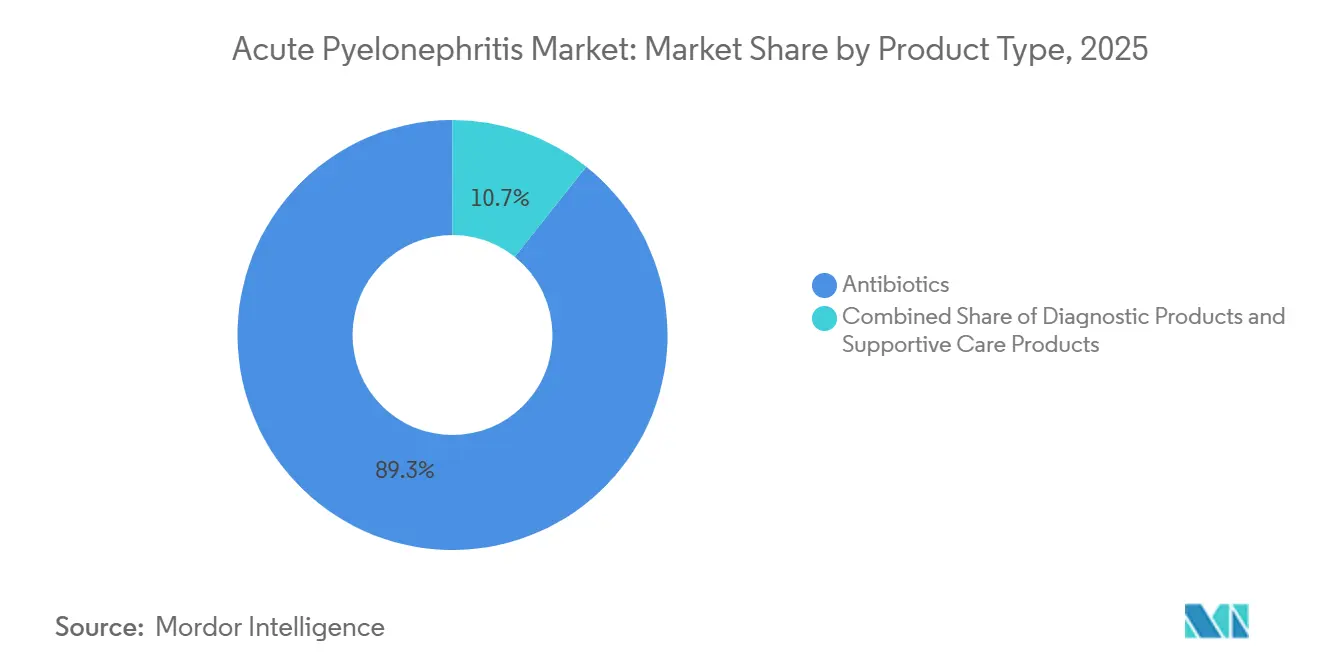
- By product type, antibiotics held 89.31% of acute pyelonephritis market share in 2025, while diagnostic products are forecast to grow at a 6.58% CAGR through 2031.
- By healthcare setting, outpatient settings held 55.24% of revenue in 2025 and are forecast to grow at a 6.22% CAGR through 2031.
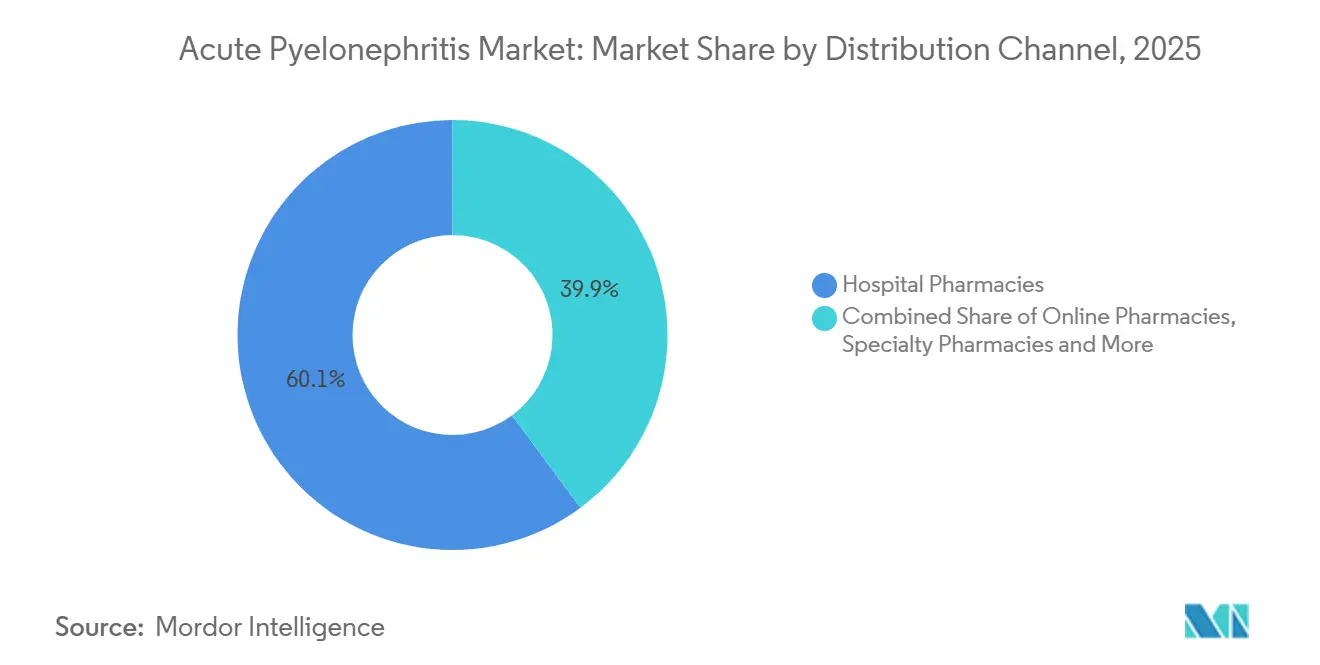
- By distribution channel, hospital pharmacies held 60.14% of revenue in 2025, while online pharmacies are forecast to grow at a 6.82% CAGR through 2031.
- By patient type, adult women held 65.21% of revenue in 2025, while pediatric patients are forecast to grow at a 5.85% CAGR through 2031.
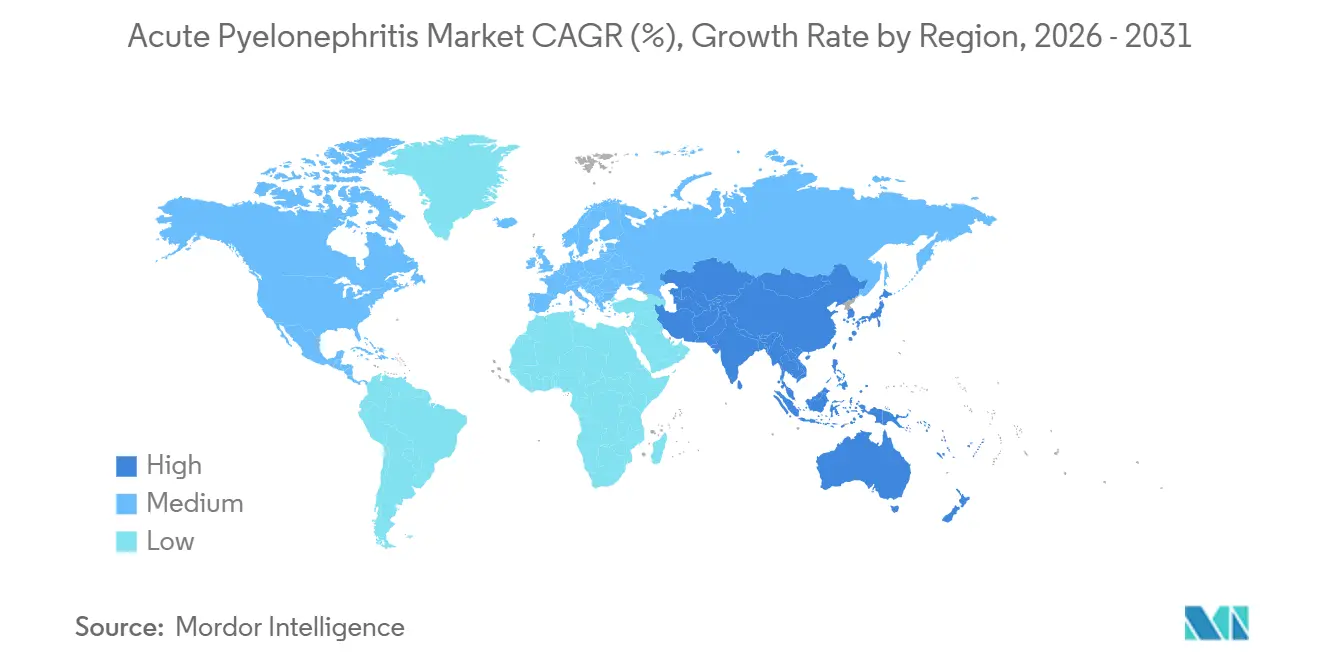
- By geography, North America held 38.61% of revenue in 2025, while Asia-Pacific is forecast to grow at a 7.25% CAGR through 2031.
Note: Market size and forecast figures in this report are generated using Mordor Intelligence’s proprietary estimation framework, updated with the latest available data and insights as of January 2026.
Global Acute Pyelonephritis Market Trends and Insights
Drivers Impact Analysis*
| Driver | (~) % Impact on CAGR Forecast | Geographic Relevance | Impact Timeline |
|---|---|---|---|
| Rising Burden of Complicated Urinary Tract Infections | +1.4% | Global, strongest in North America and APAC | Short term (≤ 2 years) |
| Increasing Multidrug-Resistant Gram-Negative Infections | +1.0% | Global, concentrated in South Asia, Southeast Asia, and Sub-Saharan Africa | Medium term (2-4 years) |
| Expansion of Rapid Urinary Pathogen and Resistance Testing | +0.8% | North America and EU, early-stage gains in APAC and MEA | Medium term (2-4 years) |
| Growth of Outpatient Parenteral Antibiotic Therapy | +0.5% | North America, Western Europe | Short term (≤ 2 years) |
| Increasing Treatment Demand Among Elderly and Diabetic Patients | +0.4% | Global, particularly APAC, North America, and Western Europe | Long term (≥ 4 years) |
| Development of Oral Step-Down Therapies for Resistant Infections | +0.5% | North America, EU, with spill-over to APAC | Short term (≤ 2 years) |
| Source: Mordor Intelligence | |||
Rising Burden of Complicated Urinary Tract Infections
The acute pyelonephritis market benefits from a growing clinical burden of complicated urinary tract infections. A 2025 analysis of Global Burden of Disease data reported that urinary tract infection incidence is increasing. It projected an age-standardized incidence rate of 6,486.39 per 100,000 by 2050. The same publication described a 43.5% increase from the 2022 level to the 2050 projection. These figures indicate continued demand for diagnosis and treatment when infections progress to complicated disease. Complicated cases carry higher treatment needs than uncomplicated urinary infections. The United States recorded more than 3 million complicated urinary tract infection episodes each year. Inpatient pyelonephritis cohorts had mortality ranging from 0% to 11%. When bacteremia occurred, 30-day mortality reached as high as 50%. These clinical risks support prompt diagnosis and appropriate antimicrobial treatment.
The acute pyelonephritis market also includes patients who receive complex treatment outside the hospital. Outpatient parenteral antibiotic therapy allows selected patients to receive intravenous medicines without a full inpatient stay. That care model still requires prescriptions, dispensing, clinical monitoring, and follow-up. It therefore maintains demand for intravenous therapies even when a patient is not admitted. The pathway changes where care occurs, rather than removing the need for treatment.
Increasing Multidrug-Resistant Gram-Negative Infections
Multidrug-resistant gram-negative infections are increasing the need for treatment options that address resistant organisms. Third-generation cephalosporin-resistant and carbapenem-resistant Enterobacterales, multidrug-resistant Pseudomonas aeruginosa, and carbapenem-resistant Acinetobacter baumannii are identified as priority pathogens. A 2024 Lancet review discussed the global importance of multidrug-resistant gram-negative bacterial infections. Resistant infections can make standard empiric treatment less successful. This creates demand for culture-guided care and agents active against resistant pathogens. The acute pyelonephritis market consequently depends more on diagnostic-supported prescribing.
The acute pyelonephritis market is affected because resistance changes both the treatment choice and the diagnostic pathway. Prescribers need susceptibility data when common options are no longer reliable. Resistance can increase demand for beta-lactam and beta-lactamase inhibitor combinations in confirmed cases. The February 2024 FDA approval of EXBLIFEP, cefepime and enmetazobactam, for this treatment need. Its role is to illustrate the movement toward resistance-targeted therapy.
Expansion of Rapid Urinary Pathogen and Resistance Testing
Rapid testing supports earlier treatment decisions in complicated urinary tract infections. A 2025 scientific review described more than 30 direct-from-specimen urinary diagnostic products in development. These products cover rapid pathogen identification, phenotypic antimicrobial susceptibility testing, and resistance gene detection. Conventional urine culture requires 48-72 hours. Faster systems can reduce the time to a clinically useful result. This gives the acute pyelonephritis market a greater role for testing alongside drug treatment.
A 2025 Nature Communications study found that metagenomic nanopore sequencing could profile complicated urinary tract infection pathogens and antimicrobial resistance genes in 4 hours. The study estimated a per-sample cost approaching USD 6 when negative samples were filtered out. Faster results can improve the choice of therapy when a resistant organism is present. They can also reduce reliance on prolonged empiric treatment. This supports the diagnostic component of the acute pyelonephritis market. Rapid testing also creates a separate diagnostic step within treatment. It can support reimbursement for testing alongside drug treatment where coverage is available. The gap reflects the increasing need to connect therapy to pathogen and resistance information. It also reflects the clinical role of diagnostics in more targeted prescribing. This supports a broader diagnostic contribution to the acute pyelonephritis market.
Development of Oral Step-Down Therapies for Resistant Infections
Oral step-down treatment is changing care for patients who can safely leave the hospital. GSK received FDA approval for Utebzi, tebipenem pivoxil, on June 17, 2026. The company described Utebzi as the first oral carbapenem antibiotic approved in the United States for adults with complicated urinary tract infections, including acute pyelonephritis. This approval gives prescribers an oral option for patients who might otherwise need longer intravenous treatment. It can support discharge planning for appropriate patients. The acute pyelonephritis market can therefore benefit from a treatment option that fits outpatient care.
A Phase 3 PIVOT-PO trial showed composite success of 58.5% for tebipenem pivoxil and 60.2% for intravenous imipenem-cilastatin. The company reported that the PIVOT-PO study was stopped early after an independent data monitoring committee review. A 2025 retrospective cohort study reported 30-day treatment failure of 4.9% for oral beta-lactam step-down therapy and 5.6% for standard oral alternatives. The findings support oral treatment pathways for selected hospitalized patients. They do not eliminate the need for clinical judgment.
The 2025 IDSA guideline states that fluoroquinolone-based step-down is becoming less relevant as resistance rates rise. The guideline also supports shorter courses for complicated urinary tract infections, including acute pyelonephritis, in appropriate patients[1]Pranita D. Tamma et al., “Clinical Practice Guideline, 2025 Guideline on Management and Treatment of Complicated Urinary Tract Infections,” Infectious Diseases Society of America, idsociety.org.. Oral carbapenems and oral penem alternatives can fit this direction when they meet clinical needs. They can reduce inpatient days and the need for outpatient intravenous treatment infrastructure. They also add branded treatment choices to a field long served by older generic oral drugs.
Restraints Impact Analysis*
| Restraint | (~) % Impact on CAGR Forecast | Geographic Relevance | Impact Timeline |
|---|---|---|---|
| Antimicrobial Resistance and Reduced Empiric Treatment Success | -0.8% | Global, most acute in South Asia, Southeast Asia, Sub-Saharan Africa, and Latin America | Medium term (2-4 years) |
| Antibiotic Stewardship and Shorter Treatment Duration | -0.6% | North America, EU, Australia | Short term (≤ 2 years) |
| Limited Reimbursement for Rapid Diagnostics and Novel Antibiotics | -0.4% | North America, EU, high-income APAC markets | Medium term (2-4 years) |
| Renal and Systemic Toxicity Risks Associated With Advanced Antibiotics | -0.3% | Global | Long term (≥ 4 years) |
| Source: Mordor Intelligence | |||
Antimicrobial Resistance and Reduced Empiric Treatment Success
Antimicrobial resistance can increase demand for new drugs while reducing treatment efficiency. Resistance can cause an empiric regimen to fail before a culture result guides a replacement. This can lead to repeat visits, rehospitalization, and additional antibiotic use. The 2025 IDSA guideline states that fluoroquinolone resistance exceeds the threshold for empiric use across all United States regions. The guideline therefore affects a treatment class long used in outpatient acute pyelonephritis care.
The economic effect of an unsuccessful treatment pathway can be substantial. A 2026 cohort study reported mean hospital costs of USD 35,082 for intravenous-to-outpatient parenteral antibiotic therapy transitions. The same study reported USD 27,905 for intravenous-to-oral transitions. Patients who completed intravenous therapy in hospital had mean costs of USD 53,359. These cost differences create pressure to identify patients who can transition to oral therapy safely. The acute pyelonephritis market is affected by this focus on efficient care delivery. Resistance also narrows the role of older generic antibiotics. It can shift prescriptions toward patented treatments with activity against resistant organisms. However, a narrower choice of usable agents can limit broad volume growth in the acute pyelonephritis market. The result is a more complex treatment pattern rather than a uniform expansion in every antibiotic class. Effective diagnostics and stewardship remain important in managing that constraint.
Antibiotic Stewardship and Shorter Treatment Duration
Antibiotic stewardship programs can limit the number of drug units used in each acute pyelonephritis episode. The 2025 IDSA guidance recommends shorter courses rather than longer courses for complicated urinary tract infections, including pyelonephritis. It identifies 5-7 days of fluoroquinolone therapy as preferable to 10-14 days in appropriate patients. Shorter treatment reduces avoidable antibiotic exposure. It may also reduce per-episode medicine revenue for established drugs.
A 2025 stewardship study that increased the use of Access-class antibiotics and reduced the use of broader-spectrum agents in emergency department urinary tract infection care. The underlying treatment direction is supported by IDSA guidance and antimicrobial stewardship standards. It favors appropriate, narrow, and time-limited treatment where the patient’s condition permits. Stewardship does not remove the need for new therapies. It can increase interest in oral options that reduce intravenous treatment without extending a course of antibiotics. These options must still be used only when clinically indicated. The acute pyelonephritis market must therefore balance premium therapies with the need to preserve antibiotic effectiveness. This is particularly important for resistant infections and patients with limited alternatives. The acute pyelonephritis market must align treatment value with responsible antibiotic use.
*Our forecasts treat driver/restraint impacts as directional, not additive. The impact forecasts reflect baseline growth, mix effects, and variable interactions.
Segment Analysis
By Product Type: Antibiotics Remain Dominant While Diagnostics Grow Faster
Antibiotics held 89.31% of the acute pyelonephritis market share in 2025. This concentration reflects the need for systemic antimicrobial therapy in acute pyelonephritis. The category includes fluoroquinolones, cephalosporins, carbapenems, aminoglycosides, and beta-lactam and beta-lactamase inhibitor combinations. The broad range of classes allows treatment to be adjusted for infection severity and resistance findings. Beta-lactam and beta-lactamase inhibitor combinations are moving quickly within antibiotics because resistant gram-negative infections require additional options.
Utebzi entered the United States treatment setting in June 2026 as an oral carbapenem option for adults with complicated urinary tract infections. Carbapenems continue to have an important hospital role despite stewardship pressure. Aminoglycosides also remain relevant in multidrug-resistant settings. A 2024 review discussed their high urinary concentrations, broad gram-negative activity, and limited collateral microbiome disruption compared with beta-lactams and fluoroquinolones. Supportive care products remain tied to hydration and renal monitoring in higher-acuity cases.
Diagnostic products are forecast to expand at 6.58% CAGR from 2026 to 2031. This growth rate is above the overall acute pyelonephritis market size CAGR of 4.75% over the same period. Urinalysis and susceptibility testing form the largest diagnostic area. Molecular systems can shorten the usual 48-72 hour culture-to-result process. The result is a faster basis for deciding whether standard therapy remains appropriate. A 2024 clinical evaluation of the Sysmex and Astrego PA-100 phenotypic antimicrobial susceptibility testing system reported 85% categorical agreement for ciprofloxacin. The study reported a turnaround time below 45 minutes. Blood tests and blood culture remain important in high-risk cases. Bacteremia occurred in 27-38% of hospitalized complicated urinary tract infection bacteremia episodes. These clinical needs maintain demand for pathogen identification beyond routine urine testing.



By Healthcare Setting: Outpatient Care Leads in Share and Growth
Outpatient settings held 55.24% of revenue in 2025 and are forecast to grow at 6.22% CAGR through 2031. This reflects care redesign rather than a reduced burden of serious disease. Selected patients can receive intravenous treatment through outpatient parenteral antibiotic therapy without a full hospital admission. The approach supports treatment access while reducing time in an inpatient bed. It also requires clear clinical selection and follow-up arrangements. A Scottish pathway published in 2024 lists outpatient intravenous gentamicin, amikacin, ceftriaxone, and ertapenem for adults with febrile pyelonephritis who do not need hospitalization[2]Scottish Antimicrobial Prescribing Group, “Outpatient Parenteral Antibiotic Therapy Pathway for the Management of Adults Over 18 With Pyelonephritis or Febrile UTI,” SAPG Scotland, sapg.scot.. The outpatient model remains supported by more recent care pathways and practice guidance.
Acute and inpatient settings remain necessary for severe presentations. The research states that 20% of pyelonephritis presentations require inpatient admission. Inpatient care remains relevant for patients with sepsis, obstruction, older age, or significant comorbidities. Those patients may need intravenous treatment, monitoring, and more extensive diagnostic work. Cost pressures favor a transition when it is clinically appropriate. The 2026 study reported mean inpatient costs of USD 53,359 for cases completed entirely with intravenous therapy in hospital. This is higher than the reported cost for intravenous-to-oral transitions. Hospital stewardship programs and payment models can reinforce the move toward outpatient parenteral therapy or oral transition pathways. The setting mix will therefore depend on clinical risk, treatment response, and the availability of follow-up care.
By Distribution Channel: Hospital Pharmacies Retain Leadership While Online Pharmacies Grow Faster
Hospital pharmacies held 60.14% of revenue in 2025. Their role is supported by the use of intravenous antibiotics in serious and resistant infections. Hospital dispensing also fits therapies that require infusion services, renal monitoring, or therapeutic drug monitoring. Beta-lactam and beta-lactamase inhibitor combinations, carbapenems, and aminoglycosides are commonly managed within institutional care pathways. This gives hospital pharmacies a durable place in the acute pyelonephritis market. The channel’s importance is linked to the clinical complexity of treatment. Hospital teams can monitor kidney function and adjust therapy when susceptibility information becomes available. They can also respond quickly when empiric therapy is unsuccessful. These services are less available in a standard retail environment. Specialty pharmacies provide additional support for home-based intravenous treatment, including supplies and monitoring services for outpatient parenteral antibiotic therapy.
Online pharmacies are forecast to grow at 6.82% CAGR through 2031. This is the fastest growth rate among the distribution channels. The growth is associated with oral therapies, digital prescribing platforms, and more patients managing recurring infections outside the hospital. Utebzi adds an oral carbapenem option that could be dispensed to eligible outpatient patients. Its use still depends on the approved indication and individual clinical circumstances. ORLYNVAH secured coverage for more than 3.5 million lives under Medicare Part D through a rebate agreement in early 2026. Iterum reported this coverage update in February 2026. Coverage arrangements can support the retail and online path for oral antibiotics. Retail pharmacies and drug stores continue to serve established oral therapies. These include fluoroquinolones, cephalosporins, and trimethoprim-sulfamethoxazole where clinically appropriate.
By Patient Type: Adult Women Generate the Largest Revenue While Pediatric Care Expands
Adult women held 65.21% of revenue in 2025. A 2025 Global Burden of Disease analysis documented the substantial gender difference in urinary tract infection burden. Women aged 30-49 remain central to treatment and diagnostic demand. Pregnant women are a distinct clinical group within adult women. These patients require dedicated treatment protocols and closer diagnostic attention. Prostatic and structural risk factors can contribute to longer treatment needs and broader-spectrum therapy.
Pediatric patients are forecast to grow at 5.85% CAGR from 2026 to 2031. Shionogi announced in July 2026 that the FDA accepted its supplemental new drug application for Fetroja, cefiderocol, in pediatric patients from 26 weeks gestational age with complicated urinary tract infections, including pyelonephritis. The filing addresses a gap in access to novel gram-negative treatment options for children. It also reflects the importance of age-appropriate antibiotic development. The status is FDA acceptance of the application, not an approval. Pediatric pyelonephritis can lead to renal scarring and hypertension when undertreated.
Geography Analysis
North America held 38.61% of revenue in 2025. The region benefits from advanced diagnostic infrastructure, high treatment costs, and recent approvals of new antimicrobial options. The United States is the main contributor within North America. GSK describes more than 3 million complicated urinary tract infection episodes and more than USD 6 billion in annual costs in the United States. These care costs support interest in effective treatment and transition pathways.
FDA QIDP and Fast Track designations are supportive of development for drugs targeting resistant gram-negative pathogens. Canada and Mexico add volume under different formulary and generic-use structures. North American demand, therefore, includes both hospital-based treatment and outpatient transition options. Europe is the second-largest regional area. Germany, the United Kingdom, France, Italy, and Spain are its main contributing countries. European prescribing is shaped by antimicrobial guidelines and the WHO Access-Watch-Reserve framework. The Scottish outpatient pathway supports community administration of selected intravenous treatments for eligible pyelonephritis patients. A 2025 practice guideline also reported successful treatment for more than 94% of patients in a retrospective cohort of 6,120 outpatient parenteral antimicrobial therapy cases.
Asia-Pacific is forecast to expand at 7.25% CAGR through 2031. This makes it the fastest-growing regional component of the acute pyelonephritis market size. Shionogi received National Medical Products Administration approval for cefiderocol in China in January 2026 for complicated urinary tract infections, including pyelonephritis. This provides a new treatment option in a major Asia-Pacific country. The Middle East and Africa are divided between higher adoption in GCC markets and limited access in Sub-Saharan Africa and South Africa. South America, especially Brazil and Argentina, was associated with higher health expenditure and high ESBL prevalence. Access to novel drugs remains uneven across lower-resource settings. Generic antibiotics consequently continue to have a substantial role. Regional performance will depend on testing access, reimbursement, and availability of resistance-targeted medicines.

Competitive Landscape
The acute pyelonephritis market is moderately fragmented. No company held a dominant position across both antibiotics and diagnostics. Pfizer, Merck and Co., GSK, and Johnson and Johnson were identified as large pharmaceutical groups with antimicrobial portfolios and established hospital relationships. bioMérieux, Danaher, QIAGEN, and Thermo Fisher Scientific were identified as diagnostic leaders with automated susceptibility testing systems and molecular panels. These companies operate in separate but connected parts of the patient pathway.
Allecra, Shionogi, Iterum, Melinta, Venatorx, and Spero are specialist companies pursuing niche positions. Their focus is on resistance-targeted agents and new treatment formats. Competition is shaped by the need to show activity against difficult gram-negative pathogens. It is also shaped by access to hospital formularies and regulatory approval. Diagnostic companies compete on the speed and clinical usefulness of testing results. GSK and Spero received FDA approval for Utebzi in June 2026. GSK stated that the medicine is the first oral carbapenem approved in the United States for adults with complicated urinary tract infections, including acute pyelonephritis.
Shionogi followed an Asia-focused regulatory sequence. It received Taiwan approval for FETROJA in February 2024. It then received China approval for cefiderocol in January 2026[3]Shionogi and Co., “Approval for Cefiderocol in China,” Shionogi, shionogi.com.. In July 2026, the FDA accepted Shionogi’s pediatric supplemental new drug application for Fetroja. These actions show a focus on geographic expansion and pediatric development. QIAGEN’s QIAstat-Dx cUTI Plus AMR Panel and Nanopath are identified as emerging diagnostic competitors. The 2025 scientific review supports the broader importance of direct-from-specimen molecular and phenotypic urinary testing. Diagnostic and therapy companies can benefit when resistance is identified earlier. European certification requirements can also create barriers for smaller diagnostic firms.
Acute Pyelonephritis Industry Leaders
Merck & Co., Inc.
Shionogi & Co., Ltd.
Melinta Therapeutics, LLC
Pfizer Inc.
Bayer AG
- *Disclaimer: Major Players sorted in no particular order

Recent Industry Developments
- July 2026: Shionogi announced FDA acceptance of a supplemental NDA for Fetroja (cefiderocol) covering pediatric patients with cUTI including pyelonephritis, addressing a critical therapeutic gap for drug-resistant gram-negative infections in children as young as 26 weeks gestational age.
- June 2026: GSK and Spero Therapeutics received FDA approval for Utebzi (tebipenem pivoxil) as the first oral carbapenem antibiotic for adults with cUTI including pyelonephritis. US patient availability is anticipated by end of 2026.


Global Acute Pyelonephritis Market Report Scope
As per the scope of the report, acute pyelonephritis is a sudden and severe infection of the renal pelvis and kidney tissue, typically caused by bacteria. It is characterized by symptoms such as fever, flank pain, chills, nausea, and urinary symptoms like dysuria and frequency. It requires prompt diagnosis and treatment to prevent complications.
The acute pyelonephritis market is segmented by product type into antibiotics, diagnostic products, and supportive care products. Antibiotics include fluoroquinolones, cephalosporins, carbapenems, aminoglycosides, beta-lactam/beta-lactamase inhibitor combinations, and other antibiotics. Diagnostic products include urinalysis and susceptibility testing, blood tests and blood culture, and other diagnostic products. By healthcare setting, the market is segmented into outpatient settings, acute and inpatient settings, and other healthcare settings. By distribution channel, the market is segmented into hospital pharmacies, retail pharmacies and drug stores, online pharmacies, and specialty pharmacies. By patient type, the market is segmented into adult women, adult men, pediatric patients, and other patient types. By geography, the market is segmented into North America, Europe, Asia-Pacific, the Middle East and Africa, and South America. The market report also covers the estimated market sizes and trends for 17 countries across major regions globally. For each segment, the market size and forecast are provided in terms of value (USD).
| Antibiotics | Fluoroquinolones |
| Cephalosporins | |
| Carbapenems | |
| Aminoglycosides | |
| Beta-Lactam/Beta-Lactamase Inhibitor Combinations | |
| Other Antibiotics | |
| Diagnostic Products | Urinalysis and Susceptibility Testing |
| Blood Tests and Blood Culture | |
| Other Diagnostic Products | |
| Supportive Care Products |
| Outpatient Settings |
| Acute and Inpatient Settings |
| Other Healthcare Setting |
| Hospital Pharmacies |
| Retail Pharmacies and Drug Stores |
| Online Pharmacies |
| Specialty Pharmacies |
| Other Distribution Channels |
| Adult Women |
| Adult Men |
| Pediatric Patients |
| Other Patient Types |
| North America | United States |
| Canada | |
| Mexico | |
| Europe | Germany |
| United Kingdom | |
| France | |
| Italy | |
| Spain | |
| Rest of Europe | |
| Asia-Pacific | China |
| Japan | |
| India | |
| Australia | |
| South Korea | |
| Rest of Asia-Pacific | |
| Middle East and Africa | GCC |
| South Africa | |
| Rest of Middle East and Africa | |
| South America | Brazil |
| Argentina | |
| Rest of South America |
| By Product Type | Antibiotics | Fluoroquinolones |
| Cephalosporins | ||
| Carbapenems | ||
| Aminoglycosides | ||
| Beta-Lactam/Beta-Lactamase Inhibitor Combinations | ||
| Other Antibiotics | ||
| Diagnostic Products | Urinalysis and Susceptibility Testing | |
| Blood Tests and Blood Culture | ||
| Other Diagnostic Products | ||
| Supportive Care Products | ||
| By Healthcare Setting | Outpatient Settings | |
| Acute and Inpatient Settings | ||
| Other Healthcare Setting | ||
| By Distribution Channel | Hospital Pharmacies | |
| Retail Pharmacies and Drug Stores | ||
| Online Pharmacies | ||
| Specialty Pharmacies | ||
| Other Distribution Channels | ||
| By Patient Type | Adult Women | |
| Adult Men | ||
| Pediatric Patients | ||
| Other Patient Types | ||
| By Geography | North America | United States |
| Canada | ||
| Mexico | ||
| Europe | Germany | |
| United Kingdom | ||
| France | ||
| Italy | ||
| Spain | ||
| Rest of Europe | ||
| Asia-Pacific | China | |
| Japan | ||
| India | ||
| Australia | ||
| South Korea | ||
| Rest of Asia-Pacific | ||
| Middle East and Africa | GCC | |
| South Africa | ||
| Rest of Middle East and Africa | ||
| South America | Brazil | |
| Argentina | ||
| Rest of South America | ||


Key Questions Answered in the Report
What is the projected size of the acute pyelonephritis market?
The acute pyelonephritis market is forecast to increase from USD 340.36 million in 2025 to USD 449.64 million by 2031, at a 4.75% CAGR.
Which treatment category held the largest share in 2025?
Antibiotics held 89.31% of revenue in 2025 because antimicrobial therapy remains central to treatment.
Why are diagnostic products growing faster than the overall sector?
Diagnostic products are projected to grow at 6.58% CAGR through 2031 because faster pathogen and resistance testing can support targeted treatment decisions.
Which care setting leads demand for acute pyelonephritis treatment?
Outpatient settings held 55.24% of revenue in 2025 and are forecast to grow at 6.22% CAGR through 2031.
What is driving online pharmacy growth for acute pyelonephritis therapies?
Online pharmacies are forecast to grow at 6.82% CAGR through 2031 as oral options, digital prescribing, and home-based management become more available.
Which region is growing the fastest?
Asia-Pacific is forecast to grow at 7.25% CAGR through 2031, supported by wider diagnostic coverage and a growing need for therapies against resistant infections.
Page last updated on:





