
Acute Muscle Injuries Market Size and Share
Market Overview
| Study Period | 2021 - 2032 |
|---|---|
| Market Size (2027) | USD 17.84 Billion |
| Market Size (2032) | USD 24.37 Billion |
| Growth Rate (2027 - 2032) | 6.44 % |
| Fastest Growing Market | Asia-Pacific |
| Largest Market | North America |
| Market Concentration | Medium |
Major Players *Disclaimer: Major Players sorted in no particular order Image © Mordor Intelligence. Reuse requires attribution under CC BY 4.0. | |
Acute Muscle Injuries Market Analysis by Mordor Intelligence
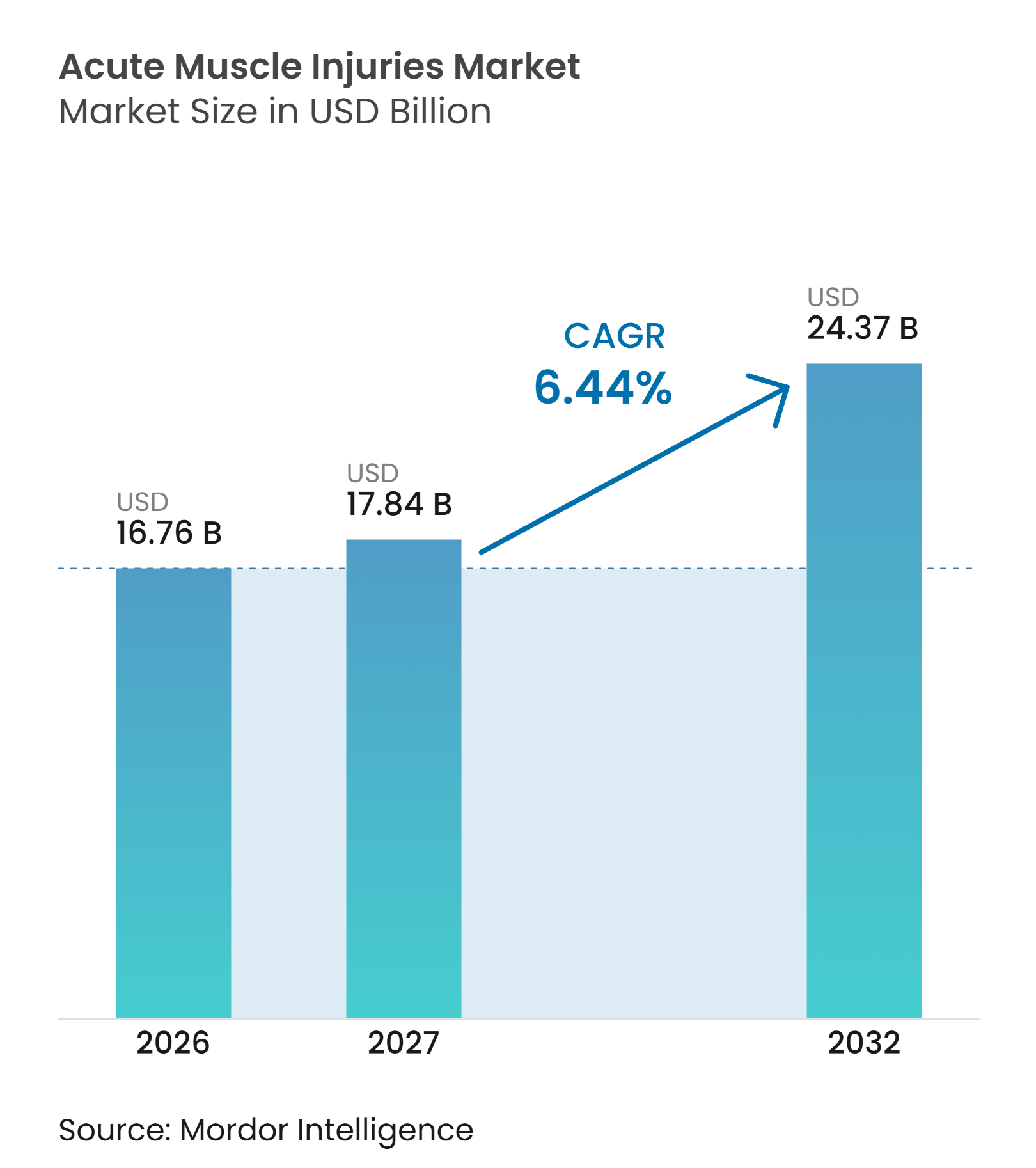
The Acute Muscle Injuries Market size is expected to increase from USD 16.76 billion in 2026 to USD 17.84 billion in 2027 and reach USD 24.37 billion by 2032, growing at a CAGR of 6.44% over 2027-2032.
The acute muscle injuries market is supported by the rising incidence of muscle strains, increased participation in recreational sports, and the continued shift toward non-opioid pain management. The market also benefits from a broader patient base, including physically active adolescents and older adults. In the United States, hamstring injury incidence across more than 121 million deidentified records increased from 11.61 per 100,000 in 2015 to 42.79 per 100,000 in 2024 and is projected to reach 56.2 per 100,000 by 2030. This trend is driving demand for rehabilitation, pain management, and post-injury monitoring, while home-compatible devices are expanding access to selected therapies beyond hospitals and clinics.
Key Report Takeaways
- By product type, therapeutic devices hold 43.56% in 2026, while pharmaceuticals and topical treatments are forecast to grow at a 7.66% CAGR through 2032.
- By injury type, muscle strains accounted for 45.67% in 2026, while muscle contusions are forecast to grow at an 8.34% CAGR through 2032.
- By treatment modality, conservative and first-line treatment holds 34.67% in 2026, while regenerative and interventional therapies are forecast to grow at a 9.35% CAGR through 2032.
- By end user, hospitals hold 35.88% in 2026, while home-use and direct-to-consumer care are forecast to grow at a 6.88% CAGR through 2032.
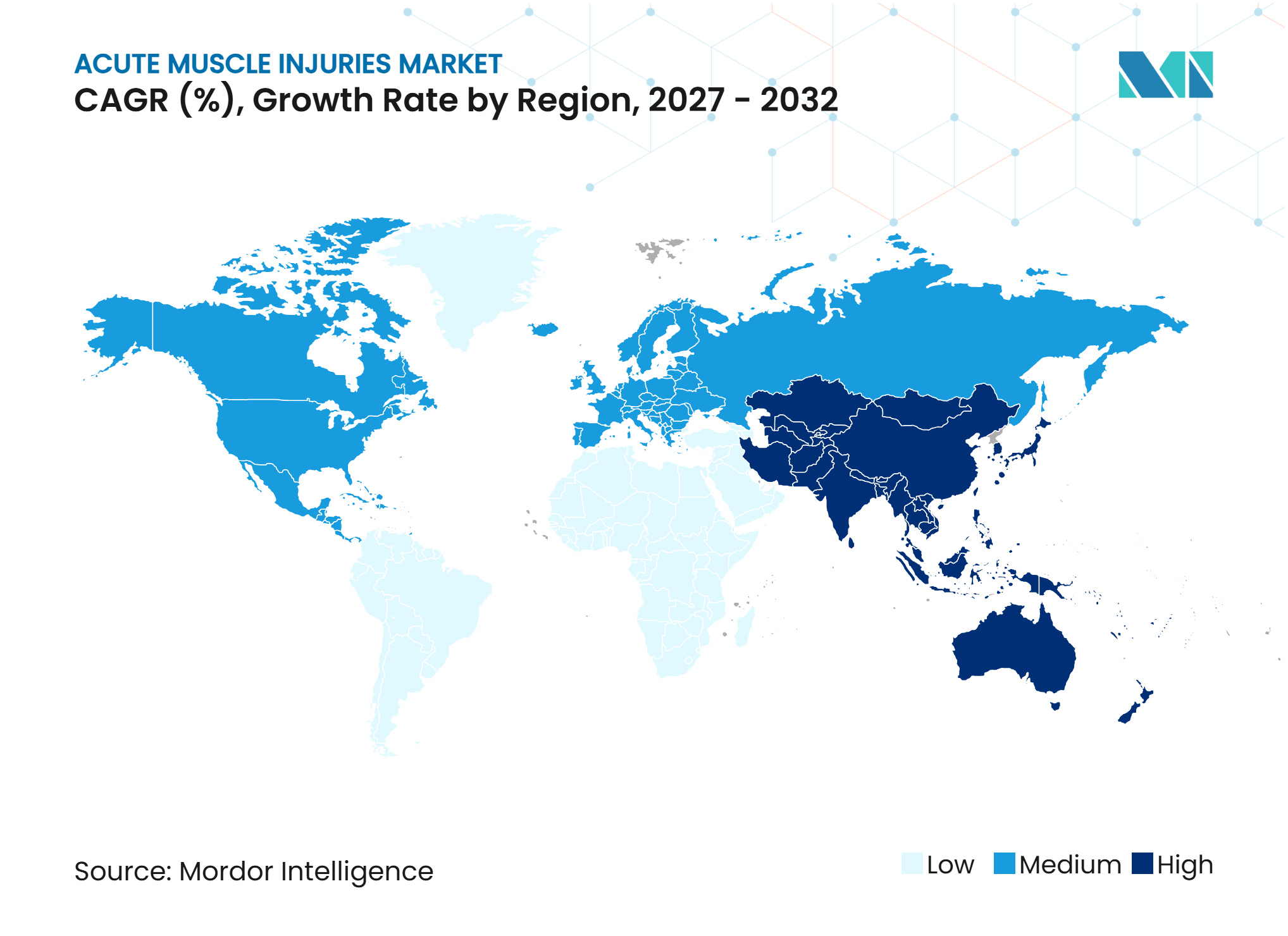
- By geography, North America holds 39.56% in 2026, while Asia-Pacific is forecast to grow at an 8.56% CAGR through 2032.
Note: Market numbers in this report are based on Mordor Intelligence's proprietary estimation framework, which combines nine months of actuals with Q4 projections for base year 2026.
Market Trends and Insights
Drivers Impact Analysis of Acute Muscle Injuries Market*
| Driver | (~) % Impact on CAGR Forecast | Geographic Relevance | Impact Timeline |
|---|---|---|---|
| Rising incidence of sports-related muscle strains | +1.3% | Global, with the highest concentration in North America and Europe | Long term (≥ 4 years) |
| Increasing participation in fitness and recreational activities | +1.1% | Global, with accelerating contributions from Asia-Pacific | Medium term (2-4 years) |
| Growing demand for non-opioid acute pain management | +0.9% | North America and Europe, with spillover to Asia-Pacific | Short term (≤ 2 years) |
| Expansion of outpatient rehabilitation and physiotherapy | +0.8% | Asia-Pacific core, with spillover to Middle East and Africa | Medium term (2-4 years) |
| Objective return-to-play and return-to-work assessment | +0.6% | North America and Europe, with early gains in East Asia | Medium term (2-4 years) |
| Increasing adoption of portable home-based recovery devices | +0.5% | North America, Western Europe, and Australia, with emerging use in Asia-Pacific | Short term (≤ 2 years) |
| Source: Mordor Intelligence | |||
Rising Incidence of Sports-Related Muscle Strains
Muscle lesions account for nearly one-third of sports injuries and more than one-quarter of injury-related absences. Hamstring strains represent 10% to 24% of injuries in field-based team sports. A United States study found that hamstring injury incidence increased from 11.61 per 100,000 in 2015 to 42.79 per 100,000 in 2024 and projected incidence to reach 56.2 per 100,000 by 2030.[1] Longer recovery periods and reinjury risks among adults aged 40 to 75 support demand for integrated acute muscle injury treatment and rehabilitation pathways, expanding opportunities across the acute muscle injuries market.
Increasing Participation in Fitness and Recreational Activities
Growing fitness participation is expanding the patient pool requiring care for strains, contusions, and other acute injuries. The National Sporting Goods Association reported participation increases in 49 of 61 tracked sports and activities in 2025, with hiking reaching 57.7 million participants and individual sports growing by 4%.[2]The association also reported nearly 7,500 new Pilates and yoga studios registered in the United States during 2025. Limited access to athletic trainers among recreational participants increases reliance on clinics, pharmacies, and emergency departments, supporting market demand beyond professional sports.[3]
Growing Demand for Non-Opioid Acute Pain Management
The United States Food and Drug Administration approved suzetrigine, marketed as Journavx, in January 2025 for moderate-to-severe acute pain. The medicine was the first in its class to target the Nav1.8 sodium channel without engaging opioid receptors, expanding treatment options for acute muscle injury pain. Clinical practice guidance published in 2025 outlined 22 recommendations for topical NSAID use in sports injuries. Topical NSAIDs remain relevant for first-contact care for strains, neck and back strains, and ankle sprains, supporting pharmaceutical demand without reliance on opioid therapies.
Expansion of Outpatient Rehabilitation and Physiotherapy
Outpatient rehabilitation provides a cost-effective treatment pathway that reduces the need for hospital-based care. The model is particularly relevant in markets with rising recreational sports participation and improving access to specialist services. Clinics that integrate assessment, guided exercise, manual therapy, and device-supported recovery can transition patients from initial injury management to longer-term rehabilitation programs. This approach drives demand for rehabilitation equipment and topical pain treatments while reducing reliance on emergency departments for conservatively managed injuries.
Restraints Impact Analysis of Acute Muscle Injuries Market*
| Restraint | (~) % Impact on CAGR Forecast | Geographic Relevance | Impact Timeline |
|---|---|---|---|
| Limited clinical evidence for several regenerative and biologic therapies | -0.9% | Global, with the greatest payer scrutiny in North America and Europe | Long term (≥ 4 years) |
| Fragmented diagnosis and underreporting of mild injuries | -0.7% | Asia-Pacific, Middle East and Africa, and South America, with a partial constraint in North America | Medium term (2-4 years) |
| Reimbursement variability for rehabilitation and home-use devices | -0.6% | North America and Europe, with a structural constraint in Middle East and Africa and Asia-Pacific | Medium term (2-4 years) |
| Inconsistent adherence to rehabilitation protocols and risk of recurrence | -0.5% | Global, particularly in home-use and direct-to-consumer care | Long term (≥ 4 years) |
| Source: Mordor Intelligence | |||
Limited Clinical Evidence for Several Regenerative and Biologic Therapies
PRP and bioinductive implants have attracted clinical and commercial interest; however, clinical outcomes remain inconsistent across patient groups and injury types. A 2025 umbrella review found that PRP reduced reinjury risk, with a risk ratio of 0.84 and a 95% confidence interval of 0.76 to 0.92. However, it found no statistically significant improvement in return-to-sport time and rated the certainty of outcomes as very low to low. This uncertainty limits reimbursement access and adoption beyond elite sports settings, constraining regenerative therapy uptake in the acute muscle injuries market.
Fragmented Diagnosis and Underreporting of Mild Injuries
Mild muscle injuries often remain unreported or undiagnosed, as patients may manage symptoms at home, resume activity, or delay clinical care. This reduces recorded treatment demand and complicates market measurement, particularly in lower-income settings with limited access to sports medicine and physiotherapy. Early assessment can identify injuries requiring rehabilitation before symptoms recur. Expanding accessible diagnostic pathways would support timely care decisions across the acute muscle injuries market.
*Our forecasts treat driver/restraint impacts as directional, not additive. The impact forecasts reflect baseline growth, mix effects, and variable interactions.
Acute Muscle Injuries Market Segment Analysis
By Product Type:
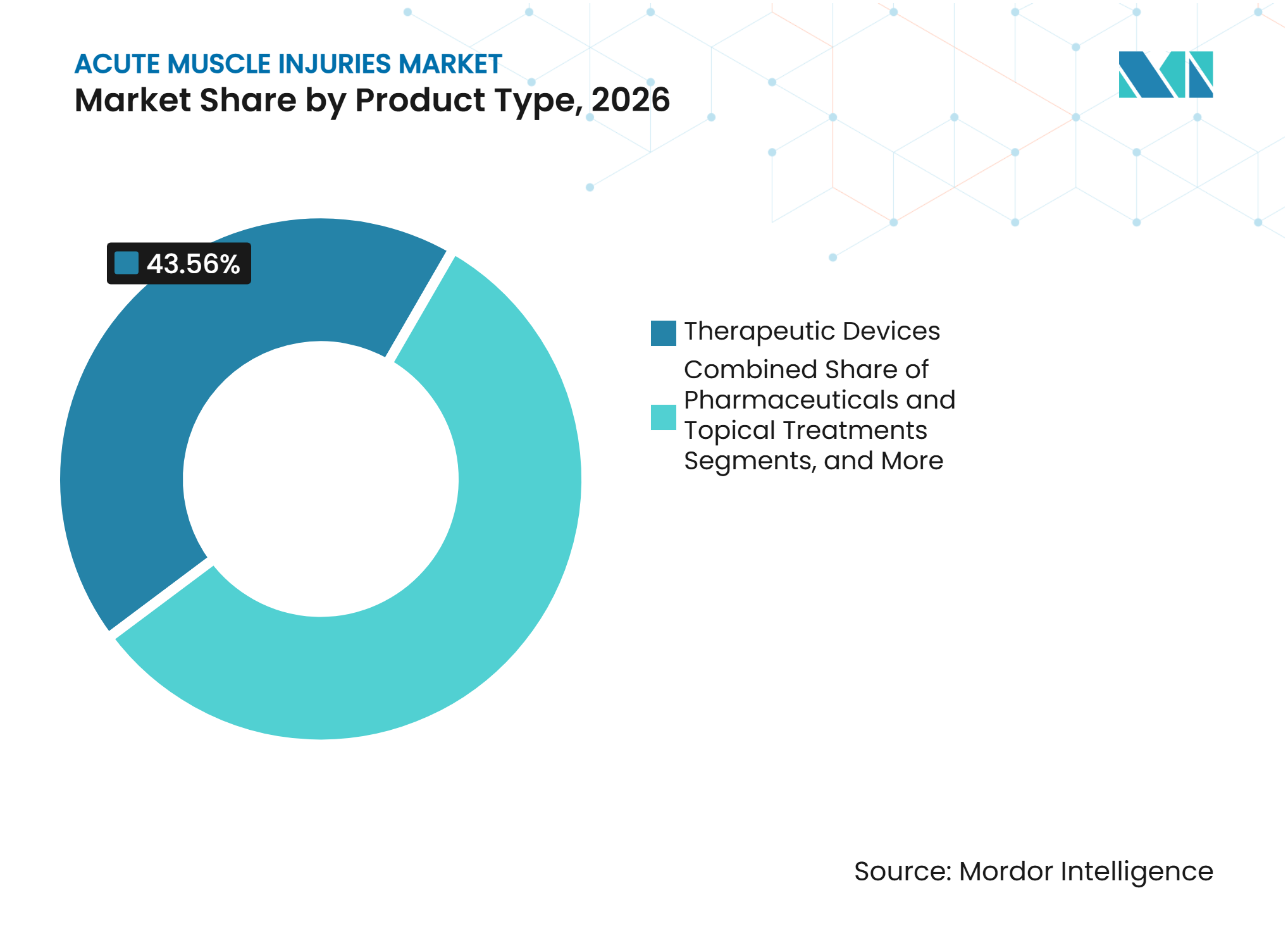
Devices Lead, While Pharmaceuticals AccelerateTherapeutic devices held a 43.56% share of the acute muscle injuries market in 2026. Hospitals and clinics use electrical stimulation, therapeutic ultrasound, and cryocompression systems to support early recovery and rehabilitation. Portable devices also enable patients to continue selected therapies after clinical visits, supporting direct-to-consumer distribution with appropriate clinical guidance.
Pharmaceuticals and topical treatments are projected to grow at a 7.66% CAGR from 2027 to 2032. The Food and Drug Administration approved Journavx in January 2025 as a non-opioid option for moderate to severe acute pain, while 2025 topical NSAID guidance supported their use for strains and sprains. Surgical, biologic, and rehabilitation products address complex injuries and support the shift toward home-based recovery.



By Injury Type:
Strains Dominate, While Contusions Gain Clinical AttentionMuscle strains accounted for 45.67% of the market in 2026 and remain common in athletic settings. Treatment ranges from rest and topical pain management to platelet-rich plasma (PRP) therapy or surgery for severe cases. In 2024, hamstring strain incidence in the United States reached 78.8 per 100,000 among individuals aged 15 to 19 years, supporting demand for pharmaceuticals, devices, rehabilitation, and specialist assessment.
Muscle contusions are forecast to grow at an 8.34% CAGR from 2027 to 2032, supported by participation in contact sports and recreational training. A prospective study of HYROX athletes documented the prevalence, burden, and risk markers of health problems in this participant group. Portable ultrasound supports outpatient assessment of blunt-force injuries, while a 2025 crossover study found that cryocompression reduced inflammatory markers and muscle soreness at 24 and 48 hours compared with passive recovery.
By Treatment Modality:
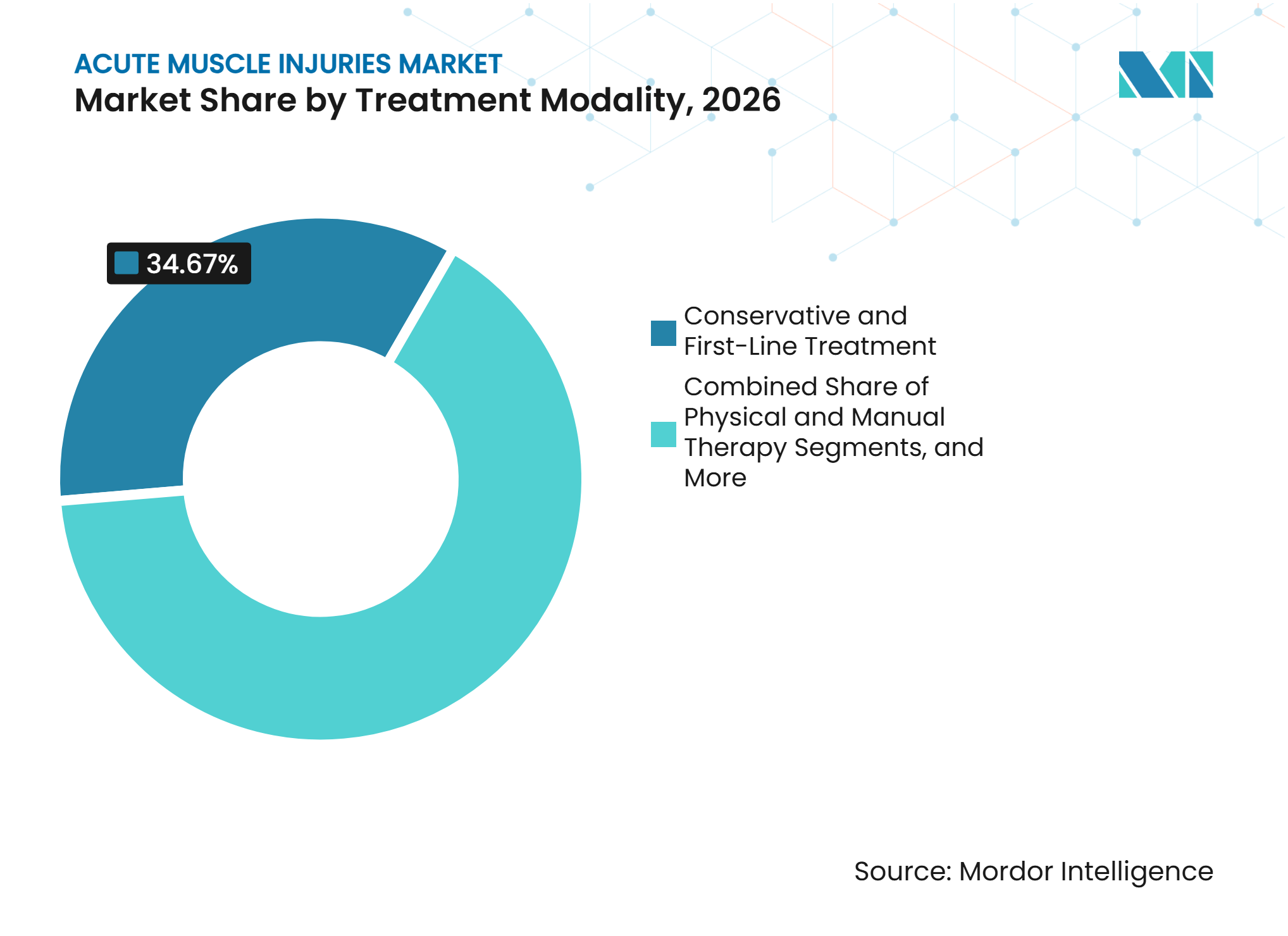
Regenerative Therapies Outpace Other ModalitiesConservative and first-line treatment helds 34.67% of the market in 2026. RICE and PEACE & LOVE protocols, oral and topical NSAIDs, and muscle relaxants remain standard options for initial management across care settings. This approach supports a high volume of cases managed without surgery, although rehabilitation remains important when symptoms or functional limitations persist.
Regenerative and interventional therapies are forecast to grow at a 9.35% CAGR from 2027 to 2032. A 2026 systematic review and meta-analysis of six randomized controlled trials involving 277 patients found that PRP reduced return-to-play time by 8.6 days, from 30.0 days to 21.4 days. Adoption depends on clinical evidence, reimbursement, and treatment protocols, while physical therapy, energy-based therapies, and surgical treatments address specific recovery needs.

By End User:
Hospitals Lead, While Home Use ExpandsHospitals held 35.88% of the market in 2026, driven by the management of major ruptures, severe strains, surgeries, and biologic injections requiring clinical supervision. Emergency departments also address acute pain and functional limitations that require immediate care. The Food and Drug Administration's approval of Journavx provides an additional non-opioid option for acute pain management in these settings.
Home-use and direct-to-consumer care is projected to grow at a 6.88% CAGR from 2027 to 2032. The segment includes TENS and EMS devices, cryocompression garments, and wearable ultrasound products that support recovery between clinical visits. Physiotherapy and rehabilitation centers continue to provide supervised exercise and return-to-activity assessments, while professional teams and school programs influence product adoption as clinical reference settings.
Geography Analysis
North America
North America helds 39.56% in 2026. High sports participation and established sports medicine and orthopedic infrastructure support care delivery across hospitals, clinics, and rehabilitation centers. The Food and Drug Administration approval of Journavx in January 2025 gives United States clinicians a non-opioid treatment option for moderate-to-severe acute pain. The National Sporting Goods Association recorded participation gains across 49 of 61 activities in 2025. Hiking reached 57.7 million participants, while individual sports grew by 4%. Canada has established physiotherapy capacity and coverage for selected rehabilitation services, while Mexico is expanding outpatient sports medicine demand through urbanization and fitness club growth. These factors support continued demand in the acute muscle injuries market.
Asia-Pacific
Asia-Pacific is projected to grow at a CAGR of 8.56% from 2027 to 2032. Indonesia, Thailand, India, Singapore, and South Korea are expanding outpatient sports medicine and physiotherapy capacity. Japan has a distinct healthcare environment, with national health insurance supporting a price-disciplined care system. Stryker Japan launched the AlphaVent Biocomposite Suture Anchor for shoulder surgery in January 2026. India is expanding private physiotherapy capacity, including the Physio Active and Medharbour clinic partnership in Gurgaon announced in August 2025.
Europe, the Middle East and Africa, and South America
Europe has an established physiotherapy workforce and centralized reimbursement systems in major markets, including Germany, the United Kingdom, and France. Smith+Nephew secured United States marketing authorization for REGENETEN in extra-articular ligament injuries in September 2025. This development supports future regulatory planning for bioinductive technologies in other markets. The Middle East and Africa remain at an earlier stage of sports medicine infrastructure development. Saudi Arabia and the United Arab Emirates are investing in healthcare and sports facilities under broader development programs. South America has high football participation and a growing private rehabilitation clinic base, particularly in Brazil and Argentina.
Competitive Landscape
Market Concentration
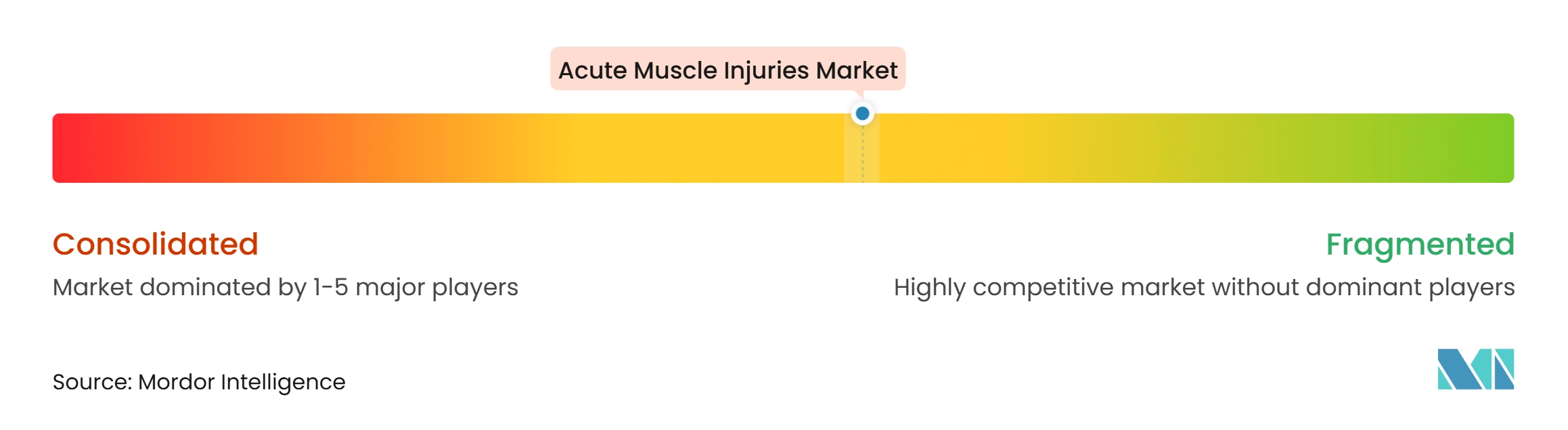
The acute muscle injuries market comprises diversified medical technology companies, pharmaceutical companies, rehabilitation providers, and wearable-device specialists. Competition is strongest among companies that integrate clinical capabilities, product innovation, and distribution across hospital and outpatient settings. Companies are expanding their presence across the care pathway, from injury diagnosis to at-home recovery. Smith+Nephew strengthened its shoulder repair portfolio through the acquisition of Integrity Orthopaedics in January 2026 for USD 225 million upfront, with up to USD 225 million in performance-based earnouts. The acquisition added the Tendon Seam rotator cuff repair system and targeted a large procedural base. This transaction reflected the growing focus on soft-tissue repair solutions supported by clinical outcomes.
Medtronic announced its intent to acquire SPR Therapeutics for USD 650 million in May 2026. The proposed transaction added the FDA-cleared SPRINT Peripheral Nerve Stimulation system to Medtronic's pain management portfolio. Real-world outcomes from 6,100 patients showed significant pain relief in more than 71% of participants. The transaction positioned a non-opioid pain management technology closer to the acute and post-injury care pathway. Such acquisitions can expand treatment options; however, clinical suitability and reimbursement remain critical. Companies also compete to address the patient segment between elite sports care and conventional recreational injury management.
CONMED launched BioBrace RC in August 2025 to support arthroscopic rotator cuff augmentation in under 10 minutes. BioBrace had been used in more than 14,000 patients across over 70 procedure types. Wearable therapy companies compete through portable products and direct-to-consumer access. Digital rehabilitation platforms and return-to-play assessment tools may further strengthen product differentiation. Clinical outcomes remain central, as patients, clinicians, and payers assess whether products improve recovery. Competitive positioning in the acute muscle injuries market will depend on clinical outcomes, ease of use, and access across clinical and home-care settings.
Acute Muscle Injuries Industry Leaders
-
Stryker Corporation
-
Smith & Nephew PLC
-
Zimmer Biomet Holdings Inc.
-
Arthrex Inc.
-
CONMED Corporation
- *Disclaimer: Major Players sorted in no particular order
Acute Muscle Injuries Market Companies Covered in this Report
- Anika Therapeutics
- Arthrex
- Breg
- Conmed
- Dynatronics
- Johnson & Johnson
- ManaMed LLC
- Medtronic
- Miach Orthopaedics Inc.
- Mueller Sports Medicine
- Neuro20 Technologies Corp.
- Organogenesis
- Ossur
- Performance Health Holdings Inc.
- RIVANNA Medical Inc.
- SmartAlpha Inc.
- Smiths Group
- Stryker
- Vericel
- ZetrOZ Systems LLC
- Zimmer Biomet
Recent Industry Developments in Acute Muscle Injuries Market
- May 2026: Medtronic announced its intent to acquire SPR Therapeutics for USD 650 million, adding the FDA-cleared SPRINT peripheral nerve stimulation system to its pain management portfolio, subject to regulatory approvals.
- January 2026: Smith+Nephew acquired Integrity Orthopaedics for USD 225 million upfront and up to USD 225 million in earnouts, expanding its rotator cuff repair portfolio with the 510(k)-cleared Tendon Seam system.
- March 2026: Vericel received FDA approval for its MACI manufacturing facility in Burlington, Massachusetts, enabling commercial production in Q2 2026 and supporting future international commercialization.
- September 2025: Smith+Nephew reported that its REGENETEN Bioinductive Implant reduced re-tear rates by 65% in the MALLAMANGUITO two-year randomized controlled trial and received the first United States marketing authorization for extra-articular ligament injuries.
Global Acute Muscle Injuries Market Report Scope
As per the scope of the report, acute muscle injuries are sudden damage to skeletal muscle fibers or tendons caused by a distinct traumatic event, excessive force, or rapid loading. They typically occur during sudden movements like sprinting, jumping, twisting, or a direct blow, rather than developing gradually from repetitive overuse.
The acute muscle injuries market is segmented by product type, injury type, treatment modality, end user, and geography. By product type, the market includes pharmaceuticals and topical treatments, therapeutic devices, surgical and biologic products, and rehabilitation equipment. By injury type, the market is segmented into muscle strains, muscle tears and ruptures, muscle contusions, muscle lacerations, delayed-onset muscle soreness, and other injury types. By treatment modality, the market is categorized into conservative and first-line treatment, physical and manual therapy, energy-based therapies, regenerative and interventional therapies, surgical treatment, and other treatment modalities. By end user, the market is segmented into hospitals, orthopedic and sports medicine clinics, physiotherapy and rehabilitation centers, ambulatory surgery centers, professional sports teams, home use and direct-to-consumer, collegiate and school sports programs, fitness centers and athletic training facilities, and other end users. By geography, the market is analyzed across North America, Europe, Asia-Pacific, the Middle East and Africa, and South America. The report also covers the estimated market sizes and trends for 17 countries across major regions globally. The report offers market sizes and forecasts in terms of value (USD) for the above segments.
Segmentation Overview
| Pharmaceuticals and Topical Treatments | Topical Nonsteroidal Anti-Inflammatory Drugs |
| Oral Nonsteroidal Anti-Inflammatory Drugs | |
| Acetaminophen | |
| Muscle Relaxants | |
| Analgesic and Anti-Inflammatory Combinations | |
| Other Pharmaceuticals and Topical Treatments | |
| Therapeutic Devices | Therapeutic Ultrasound Devices |
| Electrical Stimulation Devices | |
| Phototherapy and Laser Devices | |
| Cryotherapy and Thermal Therapy Devices | |
| Compression and Recovery Systems | |
| Other Therapeutic Devices | |
| Surgical and Biologic Products | Soft-Tissue Repair Implants |
| Tendon and Muscle-Protective Matrices | |
| Placental and Collagen-Based Matrices | |
| Platelet-Rich Plasma Systems | |
| Cell and Tissue-Engineered Products | |
| Other Surgical and Biologic Products | |
| Rehabilitation Equipment | Resistance and Strengthening Equipment |
| Balance and Proprioception Equipment | |
| Treatment Tables and Exercise Platforms | |
| Portable Home-Rehabilitation Equipment | |
| Other Rehabilitation Equipments |
| Muscle Strains |
| Muscle Tears and Ruptures |
| Muscle Contusions |
| Muscle Lacerations |
| Delayed-Onset Muscle Soreness |
| Other Injury Types |
| Conservative and First-Line Treatment |
| Physical and Manual Therapy |
| Energy-Based Therapies |
| Regenerative and Interventional Therapies |
| Surgical Treatment |
| Other Treatment Modality |
| Hospitals |
| Orthopedic and Sports Medicine Clinics |
| Physiotherapy and Rehabilitation Centers |
| Ambulatory Surgery Centers |
| Professional Sports Teams |
| Home-Use and Direct-to-Consumer |
| Collegiate and School Sports Programs |
| Fitness Centers and Athletic Training Facilities |
| Other End Users |
| North America | United States |
| Canada | |
| Mexico | |
| Europe | Germany |
| United Kingdom | |
| France | |
| Italy | |
| Spain | |
| Rest of Europe | |
| Asia-Pacific | China |
| India | |
| Japan | |
| Australia | |
| South Korea | |
| Rest of Asia-Pacific | |
| Middle East and Africa | GCC |
| South Africa | |
| Rest of Middle East and Africa | |
| South America | Brazil |
| Argentina | |
| Rest of South America |
| By Product Type | Pharmaceuticals and Topical Treatments | Topical Nonsteroidal Anti-Inflammatory Drugs |
| Oral Nonsteroidal Anti-Inflammatory Drugs | ||
| Acetaminophen | ||
| Muscle Relaxants | ||
| Analgesic and Anti-Inflammatory Combinations | ||
| Other Pharmaceuticals and Topical Treatments | ||
| Therapeutic Devices | Therapeutic Ultrasound Devices | |
| Electrical Stimulation Devices | ||
| Phototherapy and Laser Devices | ||
| Cryotherapy and Thermal Therapy Devices | ||
| Compression and Recovery Systems | ||
| Other Therapeutic Devices | ||
| Surgical and Biologic Products | Soft-Tissue Repair Implants | |
| Tendon and Muscle-Protective Matrices | ||
| Placental and Collagen-Based Matrices | ||
| Platelet-Rich Plasma Systems | ||
| Cell and Tissue-Engineered Products | ||
| Other Surgical and Biologic Products | ||
| Rehabilitation Equipment | Resistance and Strengthening Equipment | |
| Balance and Proprioception Equipment | ||
| Treatment Tables and Exercise Platforms | ||
| Portable Home-Rehabilitation Equipment | ||
| Other Rehabilitation Equipments | ||
| By Injury Type | Muscle Strains | |
| Muscle Tears and Ruptures | ||
| Muscle Contusions | ||
| Muscle Lacerations | ||
| Delayed-Onset Muscle Soreness | ||
| Other Injury Types | ||
| By Treatment Modality | Conservative and First-Line Treatment | |
| Physical and Manual Therapy | ||
| Energy-Based Therapies | ||
| Regenerative and Interventional Therapies | ||
| Surgical Treatment | ||
| Other Treatment Modality | ||
| By End User | Hospitals | |
| Orthopedic and Sports Medicine Clinics | ||
| Physiotherapy and Rehabilitation Centers | ||
| Ambulatory Surgery Centers | ||
| Professional Sports Teams | ||
| Home-Use and Direct-to-Consumer | ||
| Collegiate and School Sports Programs | ||
| Fitness Centers and Athletic Training Facilities | ||
| Other End Users | ||
| By Geography | North America | United States |
| Canada | ||
| Mexico | ||
| Europe | Germany | |
| United Kingdom | ||
| France | ||
| Italy | ||
| Spain | ||
| Rest of Europe | ||
| Asia-Pacific | China | |
| India | ||
| Japan | ||
| Australia | ||
| South Korea | ||
| Rest of Asia-Pacific | ||
| Middle East and Africa | GCC | |
| South Africa | ||
| Rest of Middle East and Africa | ||
| South America | Brazil | |
| Argentina | ||
| Rest of South America | ||
Key Questions Answered in the Report
What is driving growth in acute muscle injury treatment?
Rising recorded strain incidence, broader recreational sports participation, and demand for non-opioid pain options are supporting growth. The sector is projected to grow at a 6.44% CAGR from 2027 to 2032.
Which acute muscle injury product category has the largest share?
Therapeutic devices hold 43.56% in 2026, supported by clinical use of electrical stimulation, therapeutic ultrasound, and cryocompression.
Which treatment approach is growing fastest for acute muscle injuries?
Regenerative and interventional therapies are projected to grow at a 9.35% CAGR through 2032. PRP use is increasing, although evidence quality and reimbursement remain important constraints.
Why are non-opioid treatments important for acute muscle injuries?
The FDA approved Journavx in January 2025 for moderate to severe acute pain, adding a non-opioid option. Topical NSAID guidance also supports first-line treatment for sports injuries.
Which region is growing fastest for acute muscle injury care?
Asia-Pacific is projected to grow at an 8.56% CAGR from 2027 to 2032 as outpatient sports medicine and physiotherapy capacity expands.
What is the main challenge in home-based recovery care?
Home-use and direct-to-consumer care is projected to grow at a 6.88% CAGR, but inconsistent device use and rehabilitation adherence can increase the risk of recurrence.