
Acute Decompensated Heart Failure (ADHF) Market Size and Share
Market Overview
| Study Period | 2021 - 2032 |
|---|---|
| Market Size (2027) | USD 14.07 Billion |
| Market Size (2032) | USD 19.62 Billion |
| Growth Rate (2027 - 2032) | 6.88 % |
| Fastest Growing Market | Asia-Pacific |
| Largest Market | North America |
| Market Concentration | Medium |
Major Players *Disclaimer: Major Players sorted in no particular order Image © Mordor Intelligence. Reuse requires attribution under CC BY 4.0. | |
Acute Decompensated Heart Failure (ADHF) Market Analysis by Mordor Intelligence
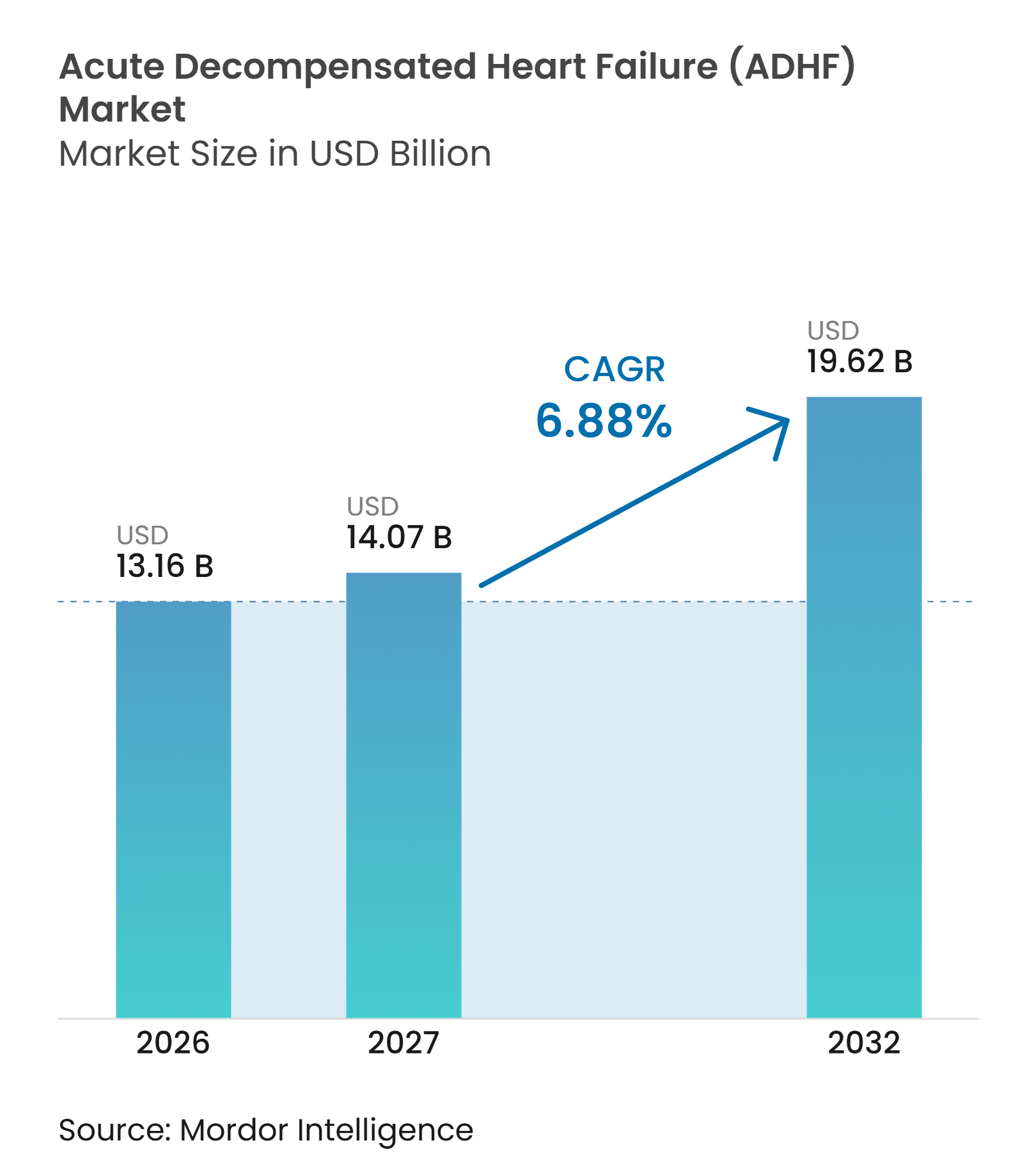
The Acute Decompensated Heart Failure Market size is expected to increase from USD 13.16 billion in 2026 to USD 14.07 billion in 2027 and reach USD 19.62 billion by 2032, growing at a CAGR of 6.88% over 2027-2032.
The acute decompensated heart failure market is driven by improved survival after myocardial infarction, increasing metabolic risk factors, and an aging population living longer with heart failure. In the United States, the condition accounts for more than 1.2 million hospital admissions annually and represents 40% of the estimated USD 32 billion spent on heart failure care each year. In England, heart failure hospital visits increased from 173,744 in 2014/15 to 264,417 in 2024/25, while the British Heart Foundation projected that diagnoses could double by 2040. Companies are prioritizing treatments and care models that support earlier congestion management, reduce hospital stays, and limit readmissions. Pricing pressure in established drug classes also increases the commercial value of differentiated devices, monitoring systems, and late-stage therapies.
Key Report Takeaways
- By product type, devices held 72.67% of the acute decompensated heart failure market share in 2026.
- By route of administration, oral administration held 56.34% revenue share in 2026, while subcutaneous administration is forecast to expand at a 10.24% CAGR through 2032.
- By clinical phenotype, HFrEF held 56.78% revenue share in 2026, while HFpEF is forecast to expand at an 8.51% CAGR through 2032.
- By end user, academic and tertiary hospitals held 54.87% revenue share in 2026, while ambulatory and observation-care providers are forecast to expand at a 9.21% CAGR through 2032.
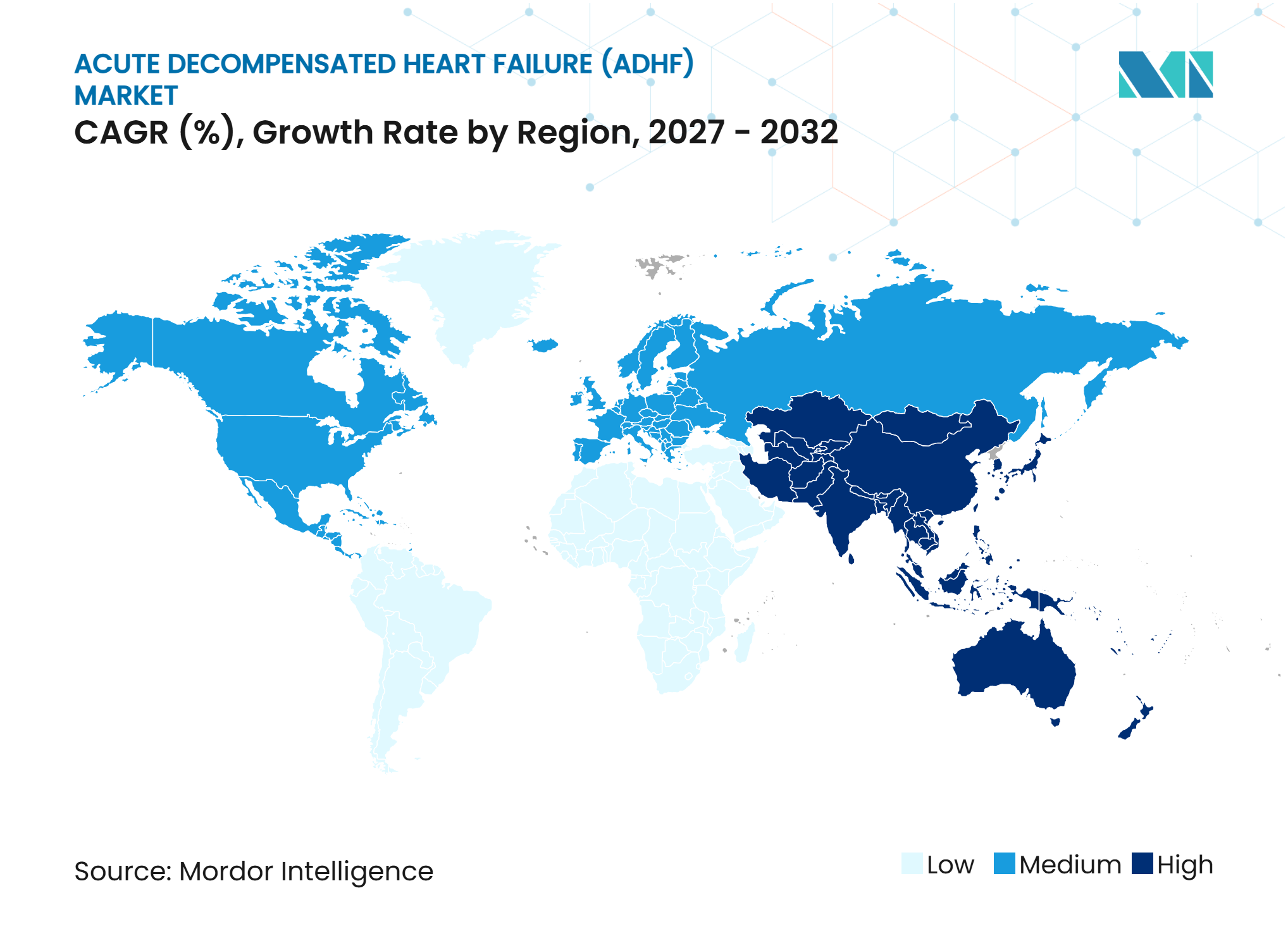
- By geography, North America held 39.22% revenue share in 2026, while Asia-Pacific is forecast to expand at a 7.76% CAGR through 2032.
Note: Market numbers in this report are based on Mordor Intelligence's proprietary estimation framework, which combines nine months of actuals with Q4 projections for base year 2026.
Market Trends and Insights
Drivers Impact Analysis of Acute Decompensated Heart Failure (ADHF) Market*
| Driver | (~) % Impact on CAGR Forecast | Geographic Relevance | Impact Timeline |
|---|---|---|---|
| Growing ADHF hospitalization burden | +1.4% | Global, most pronounced in North America and Western Europe | Long term (≥ 4 years) |
| Expansion of in-hospital SGLT2 inhibitor initiation | +1.2% | Global, with early gains in North America, Europe, and Japan | Medium term (2-4 years) |
| Hospital readmission penalties and demand for decongestion solutions | +0.8% | North America, with spillover to European value-based care frameworks | Short term (≤ 2 years) |
| Earlier recognition through natriuretic peptides, lung ultrasound, and remote monitoring | +0.7% | Asia-Pacific and North America, with spillover to the Middle East and Africa | Medium term (2-4 years) |
| Diuretic resistance creating demand for ultrafiltration and adjunctive decongestion | +0.6% | Global | Medium term (2-4 years) |
| Precision hemodynamic support for cardiogenic shock and low-output adhf | +0.9% | North America and Europe, with early adoption in Japan | Long term (≥ 4 years) |
| Source: Mordor Intelligence | |||
Growing ADHF Hospitalization Burden
Rising heart failure admissions in high-income and middle-income countries continue to drive demand in the acute decompensated heart failure market. Hospitalizations among adults younger than 65 years increased at an average annual rate of 2.2% from 2010 to 2022. England spent more than GBP 500 million (USD 653.56 million) on acute heart failure admissions in 2023/24, and 19.4% of hospitalized patients had at least one emergency heart failure admission in the preceding 12 months. Hypertension affected 79% of hospitalized patients, while atrial fibrillation affected 55%, supporting demand for multi-therapy treatment approaches.[1]
Expansion of In-Hospital SGLT2-Inhibitor Initiation
In-hospital initiation of SGLT2 inhibitors is becoming an established component of ADHF care pathways. The DAPA ACT HF-TIMI 68 trial and meta-analysis, involving 2,401 patients, reported a hazard ratio of 0.71 for early cardiovascular death or worsening heart failure and 0.57 for all-cause mortality.[2] A Spanish cohort of 2,016 ADHF patients linked prescription within 48 hours of admission to a 63% lower relative risk of in-hospital mortality and a 5.7-day shorter hospital stay than late initiation.[3] This practice expands the role of empagliflozin and dapagliflozin in the acute decompensated heart failure market.
Hospital Readmission Penalties and Demand for Decongestion Solutions
The U.S. Hospital Readmissions Reduction Program makes heart failure readmissions a direct financial concern for participating hospitals. CMS includes heart failure among six conditions covered by the program, making readmission reduction a key factor in hospital purchasing decisions. CMS fiscal year 2026 reports outlined payment-reduction exposure, while the assessment period covered July 2021 through June 2024. A real-world CardioMEMS analysis of more than 8,200 implants reported a 61% reduction in hospitalizations at one year, strengthening demand for remote monitoring and structured decongestion programs.[4]
Precision Hemodynamic Support for Cardiogenic Shock and Low-Output ADHF
Cardiogenic shock in patients with ADHF remains a high-mortality condition with limited indication-specific therapies. Ten-year DanGer Shock follow-up data reported an absolute mortality reduction of 16.3% with Impella CP support versus standard care in STEMI-associated cardiogenic shock. Patients receiving Impella CP support gained nearly 600 additional days alive over 10 years. These outcomes support the role of mechanical circulatory support and admission-time hemodynamic assessment in high-acuity treatment decisions and payer evaluation.
Restraints Impact Analysis of Acute Decompensated Heart Failure (ADHF) Market*
| Restraint | (~) % Impact on CAGR Forecast | Geographic Relevance | Impact Timeline |
|---|---|---|---|
| Genericization of core intravenous therapies | -0.9% | Global, most acute in North America and Western Europe | Short term (≤ 2 years) |
| Clinical heterogeneity and weak translation from trial endpoints to routine care | -0.6% | Global | Long term (≥ 4 years) |
| Renal dysfunction, hypotension, and electrolyte instability limiting treatment intensity | -0.5% | Global | Medium term (2-4 years) |
| Reimbursement and evidence uncertainty for devices, home-based care, and emerging therapies | -0.7% | North America and Europe | Medium term (2-4 years) |
| Source: Mordor Intelligence | |||
Genericization of Core Intravenous Therapies
Generic drugs are reducing revenue from established cardiovascular therapies despite rising treatment volumes. Lupin received U.S. FDA approval in January 2025 for 24/26 mg, 49/51 mg, and 97/103 mg sacubitril/valsartan tablets, marking the first approved generic equivalent to Novartis’s Entresto and increasing price competition in the post-stabilization ARNI segment. As loop diuretics, vasodilators, and positive inotropic agents are largely generic, manufacturers must differentiate through delivery pathways, clinical evidence, and service support. This trend shifts market value toward mechanical support, monitoring, and differentiated therapies.
Reimbursement and Evidence Uncertainty for Devices, Home-Based Care, and Emerging Therapies
Device and home-based care models may face extended timelines between clinical validation and broad reimbursement. CMS issued a national coverage determination for the CardioMEMS HF System in 2025, highlighting reimbursement challenges before innovators gain access to routine hospital budgets. A 2025 reappraisal of AVOID-HF found that the study ended early and its findings remain hypothesis-generating. Nuwellis ended the REVERSE-HF post-market trial in 2025 and redirected projected savings of USD 4 million toward outpatient heart failure programs, while the Phase 3 LEVEL trial of oral levosimendan did not meet its primary six-minute walk distance endpoint.
*Our forecasts treat driver/restraint impacts as directional, not additive. The impact forecasts reflect baseline growth, mix effects, and variable interactions.
Acute Decompensated Heart Failure (ADHF) Market Segment Analysis
By Product Type:
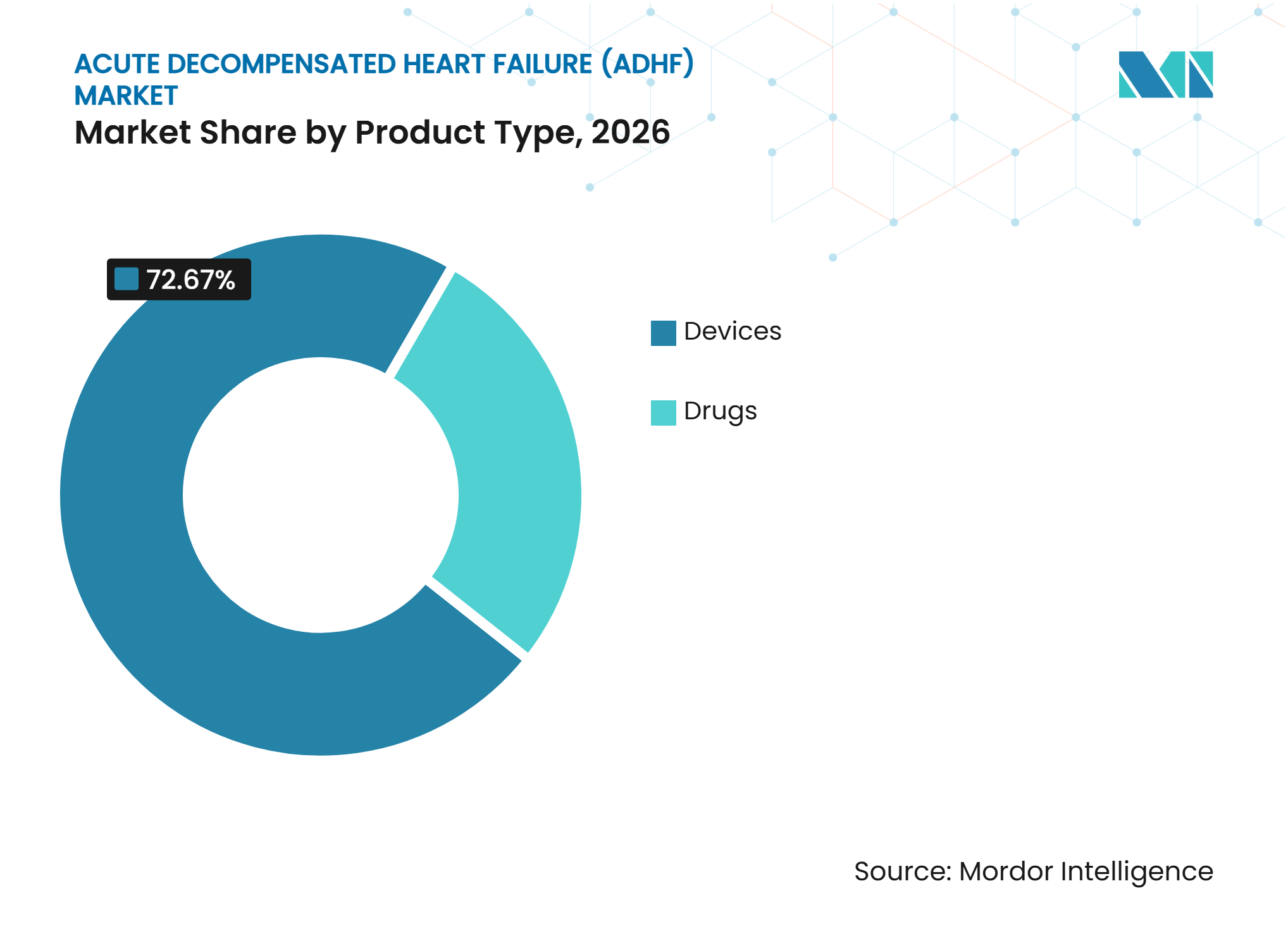
Devices Define Revenue Architecture, Drugs RepositionDevices held 72.67% of acute decompensated heart failure market revenue in 2026, driven by the high value of mechanical circulatory support, ultrafiltration, hemodynamic monitoring, and respiratory support per procedure or treatment episode. This revenue base is less exposed to generic competition than drug revenue. The drug category includes diuretics, vasodilators, positive inotropic agents, SGLT2 inhibitors, ARNI agents, and vasopressin receptor antagonists.
Oral SGLT2 inhibitors are adding a maintenance-care component to a category previously focused on acute inpatient treatment. Ultrafiltration remains relevant for patients with inadequate diuretic response, while Abbott’s 2026 CardioMEMS approvals are extending monitoring into chronic and ambulatory care. This creates recurring data and service opportunities and strengthens links between acute intervention and long-term patient management.


By Route of Administration:
Subcutaneous Access Rewiring Care PathwaysOral administration held 56.34% of route-of-administration revenue in 2026, supported by SGLT2 inhibitor and ARNI prescribing as patients transition from acute stabilization to outpatient care. Subcutaneous administration is forecast to record a 10.24% CAGR through 2032, supporting outpatient decongestion protocols that may reduce full inpatient admissions. Intravenous administration remains essential during early decompensation, particularly for loop diuretics, vasodilators, and inotropic agents.
The Japanese JCS/JHFS 2025 guideline provides ADHF management pathways, including intravenous diuretic dosing and in-hospital SGLT2 inhibitor initiation. Its focus on rapid oral treatment escalation after stabilization supports reduced reliance on prolonged intravenous therapy. Subcutaneous furosemide supports structured care outside conventional inpatient wards, enabling community hospitals and infusion centers to address capacity, readmission, and length-of-stay pressures.
By Clinical Phenotype:
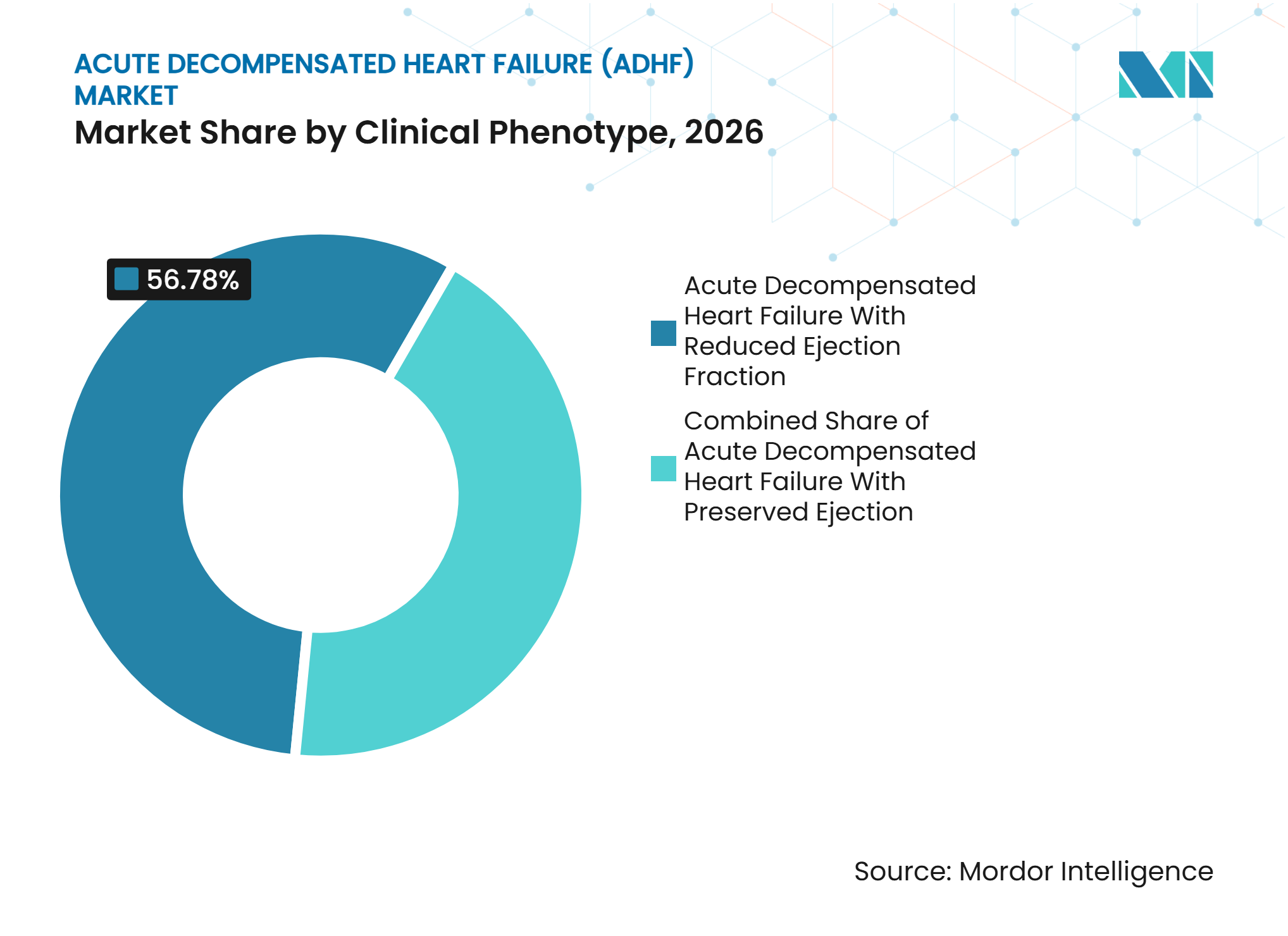
HFrEF Holds Majority, HFpEF Gains MomentumHFrEF accounted for 56.78% of clinical phenotype revenue in 2026, supported by a broad treatment base that includes SGLT2 inhibitors, ARNI agents, mechanical circulatory support, implantable monitoring, beta-blockers, and mineralocorticoid receptor antagonists. HFpEF is forecast to grow at an 8.51% CAGR through 2032, reflecting an expanding patient population and a less established approved treatment landscape.
A prespecified EMPULSE analysis reported similar clinical benefits with empagliflozin in de novo and acute decompensated chronic heart failure, regardless of ejection fraction. Lexicon reported statistically significant improvements in left ventricular mass, diastolic function, six-minute walk distance, and KCCQ scores with sotagliflozin in HFpEF patients without diabetes. Greater SGLT2 inhibitor activity and limited payer evidence may support premium pricing for differentiated HFpEF therapies.


By End User:
Tertiary Centers Anchor Volume, Ambulatory Care AcceleratesAcademic and tertiary hospitals held 54.87% of end-user revenue in 2026. These centers manage a higher volume of patients eligible for mechanical support and complex cases involving multiple comorbidities. They also participate in investigational device use and generate data that supports subsequent payer coverage. Ambulatory and observation-care providers are forecast to grow at a 9.21% CAGR through 2032.
Community hospitals face readmission penalties and limited specialist capacity, increasing the relevance of standardized decongestion protocols and tools that reduce readmissions. Specialty heart failure centers drive broader practice adoption through early SGLT2 inhibitor and ARNI protocol implementation and clinician training. Nuwellis’s 2025 decision to redirect resources from the inpatient REVERSE-HF trial to outpatient programs reflects the growing economic role of ambulatory care and is changing market demand patterns.
Geography Analysis
North America
North America held a 39.22% share of the acute decompensated heart failure market in 2026, supported by established device reimbursement frameworks and a high cardiometabolic disease burden. CMS readmission policies created financial incentives for U.S. hospitals to adopt solutions that reduced 30-day heart failure readmissions. A 2026 target trial emulation of 99,738 eligible patients reported 1-year mortality of 24.7% with early empagliflozin initiation, compared with 33.6% with delayed or no initiation, with a relative risk of 0.73 and a 95% confidence interval of 0.69-0.78. The INNOVATE trial and RESCUE HF-CS study reflected continued investment in advanced support, although provincial formularies slowed adoption of premium devices and newer therapies in Canada.
Asia-Pacific
Asia-Pacific is forecast to grow at a CAGR of 7.76% through 2032 in the acute decompensated heart failure market, driven by population aging, hypertension, ischemic heart disease, and broader insurance coverage. Japan’s JCS/JHFS 2025 guideline introduced structured recommendations for intravenous diuretic use and in-hospital SGLT2 inhibitor initiation, creating clearer adoption pathways for medicines and devices. The AMERICCAASS Registry included 6,732 patients across 21 countries and found that acute inpatient heart failure accounted for 30.1% of total heart failure care activity. China is expanding tertiary cardiology capacity beyond major cities, while South Korea’s reimbursement system and specialist base position it to adopt high-value monitoring and cardiac support tools after Japan.
Europe, South America, the Middle East, and Africa
Europe benefits from established hospital networks and clinical guideline adoption, although public health budgets can slow premium device uptake. NICE recommended pulmonary artery pressure monitoring for eligible heart failure patients in England, while 264,417 heart failure hospital visits in 2024/25 increased the need for cost-offset decongestion models. Orion’s intravenous levosimendan remained authorized in more than 60 countries outside the United States, supporting its presence in Europe and the Middle East. In South America, the AMERICCAASS Registry involved 119 institutions, while hospital modernization in Gulf Cooperation Council countries and South Africa expanded advanced care access despite affordability constraints across much of the Middle East and Africa.
Competitive Landscape
Market Concentration
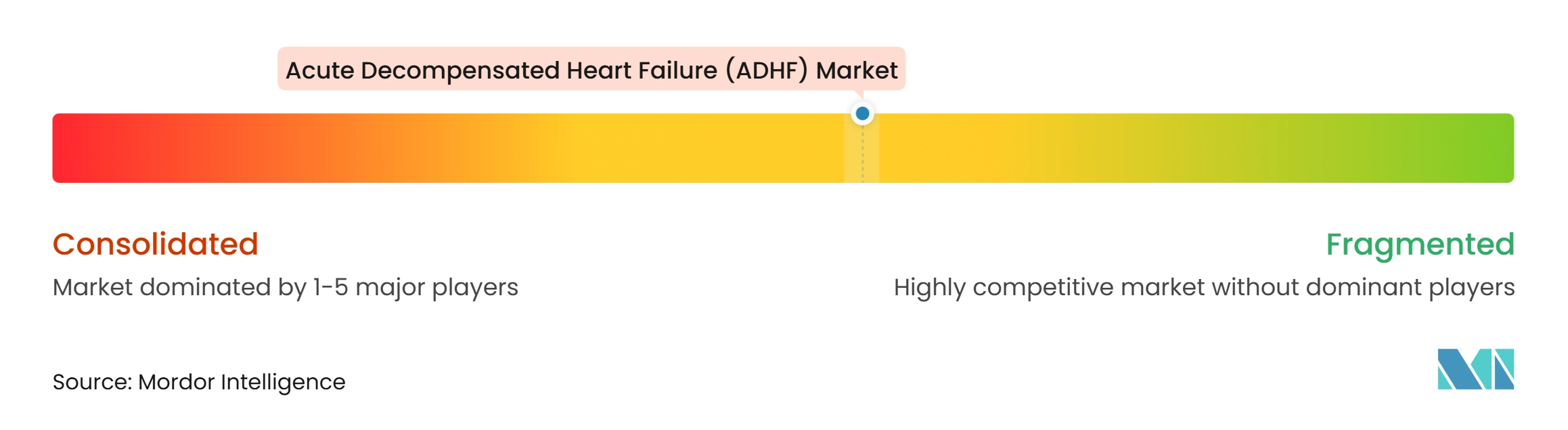
The acute decompensated heart failure market is moderately concentrated in devices and more fragmented in pharmaceuticals. Johnson & Johnson, through Abiomed, holds a leading position in mechanical circulatory support with Impella. DanGer Shock data supported Impella CP use in STEMI-associated cardiogenic shock at high-volume centers. In 2026, the company also assessed planned Impella 5.5 support in 100 high-risk cardiac surgery patients with a left ventricular ejection fraction of 35% or less. Clinical evidence and demonstrated reductions in readmissions increasingly shape suppliers’ competitive positions.
Abbott expanded its CardioMEMS portfolio through FDA approval of the HERO reader in February 2026 and the CardioGuide HF App with Dynamic Treatment Plan in October 2026. The app provides pulmonary artery pressure readings and personalized medication instructions, supporting patient-engaged disease management. The COAST post-market study of 304 patients across 37 centers in six countries reported a 69% reduction in heart failure hospitalizations one year after implantation. AstraZeneca, Boehringer Ingelheim, and Eli Lilly compete across SGLT2 inhibitor initiation and maintenance, while Novartis faces generic ARNI competition following Lupin’s approval. The market increasingly favors suppliers that integrate device data, clinical pathways, and follow-up care.
Key opportunity areas include pharmacological cardiogenic shock management and ambulatory decongestion. Ongoing development focuses on alternatives to established inotropes that can better address both contractility and relaxation. Procyrion’s Aortix micro-axial aortic pump is being studied in the DRAIN-HF randomized trial for patients with an insufficient diuretic response. These programs underscore continued competition in hemodynamic support and fluid management, as well as focused innovation in high-acuity care.
Acute Decompensated Heart Failure (ADHF) Industry Leaders
-
Novartis AG
-
Johnson & Johnson
-
Medtronic PLC
-
Eli Lilly and Company
-
Pfizer Inc.
- *Disclaimer: Major Players sorted in no particular order
Acute Decompensated Heart Failure (ADHF) Market Companies Covered in this Report
- Abiomed
- Amgen
- AstraZeneca
- Bayer
- Boehringer Ingelheim
- Edward Lifesciences
- Eli Lilly and Company
- Fresenius SE and Co. KGaA
- Getinge
- Johnson & Johnson
- Lexicon Pharmaceuticals Inc.
- Medtronic
- Merck
- Novartis
- Nuwellis Inc.
- Orion
- Otsuka Pharmaceutical Co. Ltd.
- Pfizer
- Sanofi
- Tenax Therapeutics Inc.
- Terumo
Recent Industry Developments in Acute Decompensated Heart Failure (ADHF) Market
- October 2026: The U.S. FDA approved updates to Abbott’s CardioMEMS HF System, enabling patient-facing features through the CardioGuide HF App, including smartphone access to pulmonary artery pressure readings and personalized medication instructions through a Dynamic Treatment Plan.
- August 2026: Orion and Tenax Therapeutics reported that the Phase 3 LEVEL trial of oral levosimendan for pulmonary hypertension due to HFpEF did not meet its primary endpoint of six-minute walk distance at 12 weeks. The LEVEL-2 global registrational study, initiated in December 2025, continued patient enrollment.
- August 2026: Lexicon Pharmaceuticals presented a post-hoc analysis of the Phase 3 SOLOIST-WHF trial at the ESC Congress 2026 in Munich, reporting that sotagliflozin consistently reduced cardiovascular death and heart failure-related events across baseline systolic blood pressure groups without increasing hypotension or acute kidney injury.
- May 2026: Johnson & Johnson presented IMPACT pilot trial results involving 100 patients at the AATS Annual Meeting, demonstrating the safety and feasibility of planned Impella 5.5 support in patients with a left ventricular ejection fraction of 35% or less undergoing high-risk cardiac surgery.
Global Acute Decompensated Heart Failure (ADHF) Market Report Scope
As per the scope of the report, acute decompensated heart failure (ADHF) is a rapid onset or sudden worsening of heart failure signs and symptoms that typically requires urgent medical care or hospitalization. It occurs when the heart cannot pump blood effectively or maintain normal pressures, leading to fluid buildup (congestion) in the lungs and other tissues and reduced blood flow to organs.
The acute decompensated heart failure (ADHF) market is segmented by product type, route of administration, clinical phenotype, end user, and geography. By product type, the market includes drugs and devices. Drugs include diuretics, vasodilators, positive inotropic agents and vasopressors, guideline-directed and post-stabilization therapies, vasopressin receptor antagonists and other therapeutics, and other drug classes. Devices include mechanical circulatory support (MCS) devices, extracorporeal fluid removal and ultrafiltration systems, hemodynamic and cardiac monitoring devices, respiratory support and decongestion delivery devices, and other devices. By route of administration, the market is segmented into intravenous, oral, subcutaneous, and other routes of administration. By clinical phenotype, the market is categorized into acute decompensated heart failure with reduced ejection fraction, acute decompensated heart failure with preserved ejection fraction, and others. By end user, the market is segmented into academic and tertiary hospitals, community hospitals, specialty heart failure centers, ambulatory and observation care providers, and other end users. By geography, the market is analyzed across North America, Europe, Asia-Pacific, the Middle East and Africa, and South America. The report also covers the estimated market sizes and trends for 21 countries across major regions globally. The report offers market sizes and forecasts in terms of value (USD) for the above segments.
Segmentation Overview
| Drugs | Diuretics |
| Vasodilators | |
| Positive Inotropic Agents & Vasopressors | |
| Guideline-Directed & Post-Stabilization Therapies | |
| Vasopressin Receptor Antagonists & Other Therapeutics | |
| Other Drug Classes | |
| Devices | Mechanical Circulatory Support (MCS) Devices |
| Extracorporeal Fluid Removal & Ultrafiltration Systems | |
| Hemodynamic & Cardiac Monitoring Devices | |
| Respiratory Support & Decongestion Delivery Devices | |
| Other Devices |
| Intravenous |
| Oral |
| Subcutaneous |
| Other Route of Administrations |
| Acute Decompensated Heart Failure With Reduced Ejection Fraction |
| Acute Decompensated Heart Failure With Preserved Ejection Fraction |
| Others |
| Academic and Tertiary Hospitals |
| Community Hospitals |
| Specialty Heart-Failure Centers |
| Ambulatory and Observation-Care Providers |
| Other End Users |
| North America | United States |
| Canada | |
| Mexico | |
| Europe | Germany |
| United Kingdom | |
| France | |
| Italy | |
| Spain | |
| Rest of Europe | |
| Asia-Pacific | China |
| India | |
| Japan | |
| Australia | |
| South Korea | |
| Rest of Asia-Pacific | |
| Middle East and Africa | GCC |
| South Africa | |
| Rest of Middle East and Africa | |
| South America | Brazil |
| Argentina | |
| Rest of South America |
| By Product Type | Drugs | Diuretics |
| Vasodilators | ||
| Positive Inotropic Agents & Vasopressors | ||
| Guideline-Directed & Post-Stabilization Therapies | ||
| Vasopressin Receptor Antagonists & Other Therapeutics | ||
| Other Drug Classes | ||
| Devices | Mechanical Circulatory Support (MCS) Devices | |
| Extracorporeal Fluid Removal & Ultrafiltration Systems | ||
| Hemodynamic & Cardiac Monitoring Devices | ||
| Respiratory Support & Decongestion Delivery Devices | ||
| Other Devices | ||
| By Route of Administration | Intravenous | |
| Oral | ||
| Subcutaneous | ||
| Other Route of Administrations | ||
| By Clinical Phenotype | Acute Decompensated Heart Failure With Reduced Ejection Fraction | |
| Acute Decompensated Heart Failure With Preserved Ejection Fraction | ||
| Others | ||
| By End User | Academic and Tertiary Hospitals | |
| Community Hospitals | ||
| Specialty Heart-Failure Centers | ||
| Ambulatory and Observation-Care Providers | ||
| Other End Users | ||
| By Geography | North America | United States |
| Canada | ||
| Mexico | ||
| Europe | Germany | |
| United Kingdom | ||
| France | ||
| Italy | ||
| Spain | ||
| Rest of Europe | ||
| Asia-Pacific | China | |
| India | ||
| Japan | ||
| Australia | ||
| South Korea | ||
| Rest of Asia-Pacific | ||
| Middle East and Africa | GCC | |
| South Africa | ||
| Rest of Middle East and Africa | ||
| South America | Brazil | |
| Argentina | ||
| Rest of South America | ||
Key Questions Answered in the Report
What is the forecast value of acute decompensated heart failure care products by 2032?
The acute decompensated heart failure market is forecast to reach USD 19.62 billion by 2032, from USD 14.07 billion in 2027, at a 6.88% CAGR.
Which product category holds the largest revenue position in ADHF?
Devices held 72.67% of revenue in 2026, supported by mechanical circulatory support, ultrafiltration, monitoring, and respiratory support.
Why are SGLT2 inhibitors important in ADHF treatment?
In-hospital initiation is supported by clinical evidence and can continue into post-discharge maintenance, expanding their role across care settings.
Which patient phenotype is growing fastest in ADHF care?
HFpEF is forecast to grow at an 8.51% CAGR through 2032, as the treatment landscape remains less established than for HFrEF.
Which care setting is growing fastest for ADHF management?
Ambulatory and observation-care providers are forecast to grow at a 9.21% CAGR through 2032 as eligible patients are directed toward structured outpatient decongestion.
Which region is forecast to grow fastest in ADHF?
Asia-Pacific is forecast to grow at a 7.76% CAGR through 2032, supported by aging populations, chronic disease burden, insurance expansion, and clinical guidance.