
Acesulfame Potassium Market Size and Share
Market Overview
| Study Period | 2022 - 2032 |
|---|---|
| Market Size (2027) | USD 407.19 Million |
| Market Size (2032) | USD 536.99 Million |
| Growth Rate (2027 - 2032) | 5.69 % |
| Fastest Growing Market | Asia-Pacific |
| Largest Market | Asia-Pacific |
| Market Concentration | Medium |
Major Players *Disclaimer: Major Players sorted in no particular order Image © Mordor Intelligence. Reuse requires attribution under CC BY 4.0. | |
Acesulfame Potassium Market Analysis by Mordor Intelligence
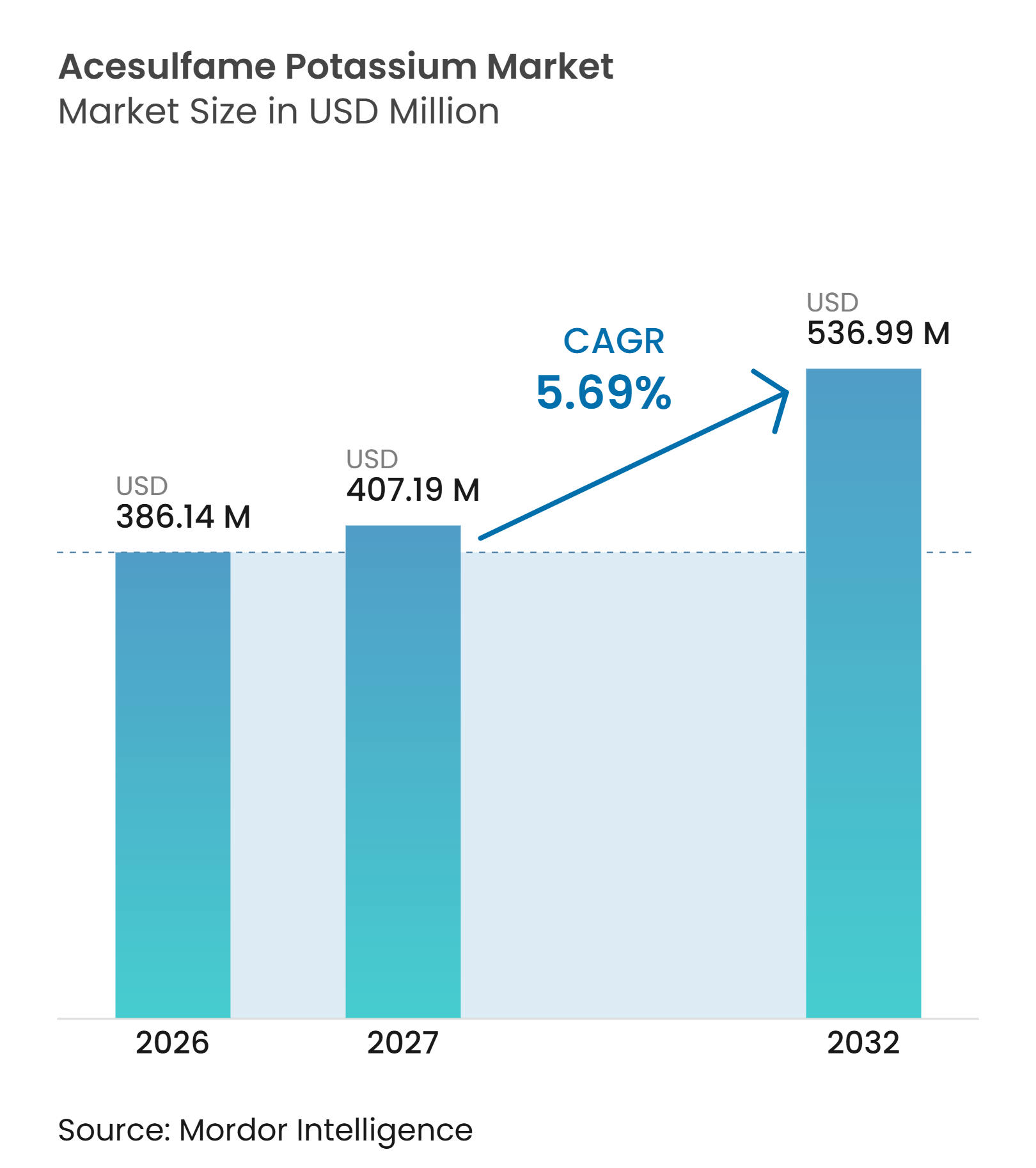
The Acesulfame Potassium Market size was valued at USD 386.14 million in 2026 and is estimated to grow from USD 407.19 million in 2027 to USD 536.99 million by 2032, at a CAGR of 5.69% during the forecast period (2027-2032). Acesulfame potassium, also known as Ace-K, is 200 times sweeter than sucrose. It remains stable at temperatures up to 200°C, supporting its use in high-heat and acidic processing applications. Sugar-reduction regulations, product reformulation initiatives, and use across beverages, pharmaceuticals, and personal care products drive demand in the Acesulfame Potassium Market. The supply base remains concentrated, with Chinese producers influencing global pricing and Nutrinova serving as the producer outside China. This structure affects sourcing and pricing cycles for formulators in North America and Europe. In Europe, the European Food Safety Authority's revised acceptable daily intake influences formulation parameters. However, clean-label preferences, a bitter aftertaste at higher usage levels, and reliance on blends with other sweeteners affect adoption in certain new product applications.
Key Report Takeaways
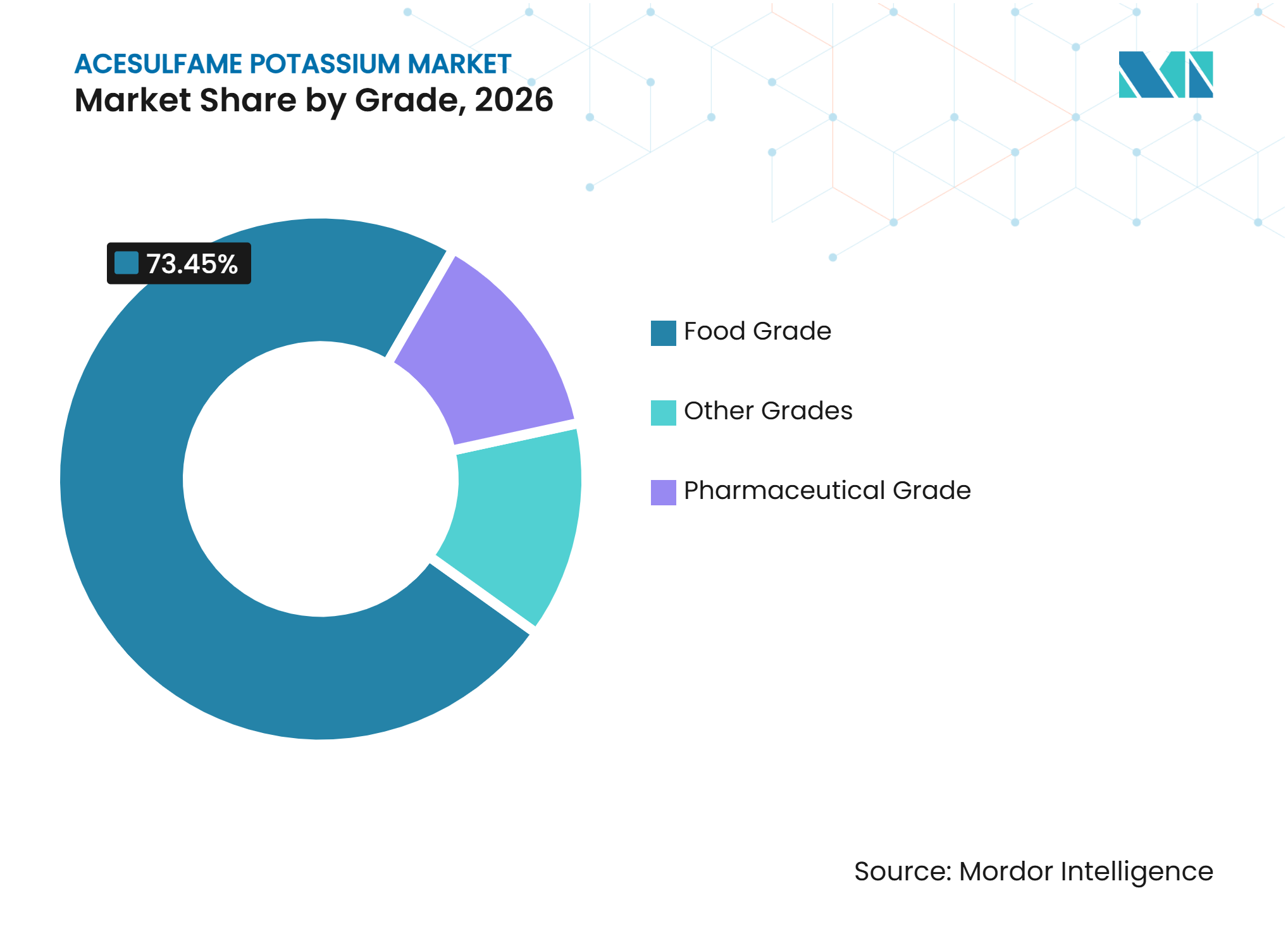
- By grade, Food Grade held 73.45% of the Acesulfame Potassium Market share in 2026, while Pharmaceutical Grade is forecast to grow at a 7.12% CAGR through 2032.
- By form, Powder accounted for 58.13% of the Acesulfame Potassium Market share in 2026, while Liquid is projected to expand at a 6.78% CAGR through 2032.
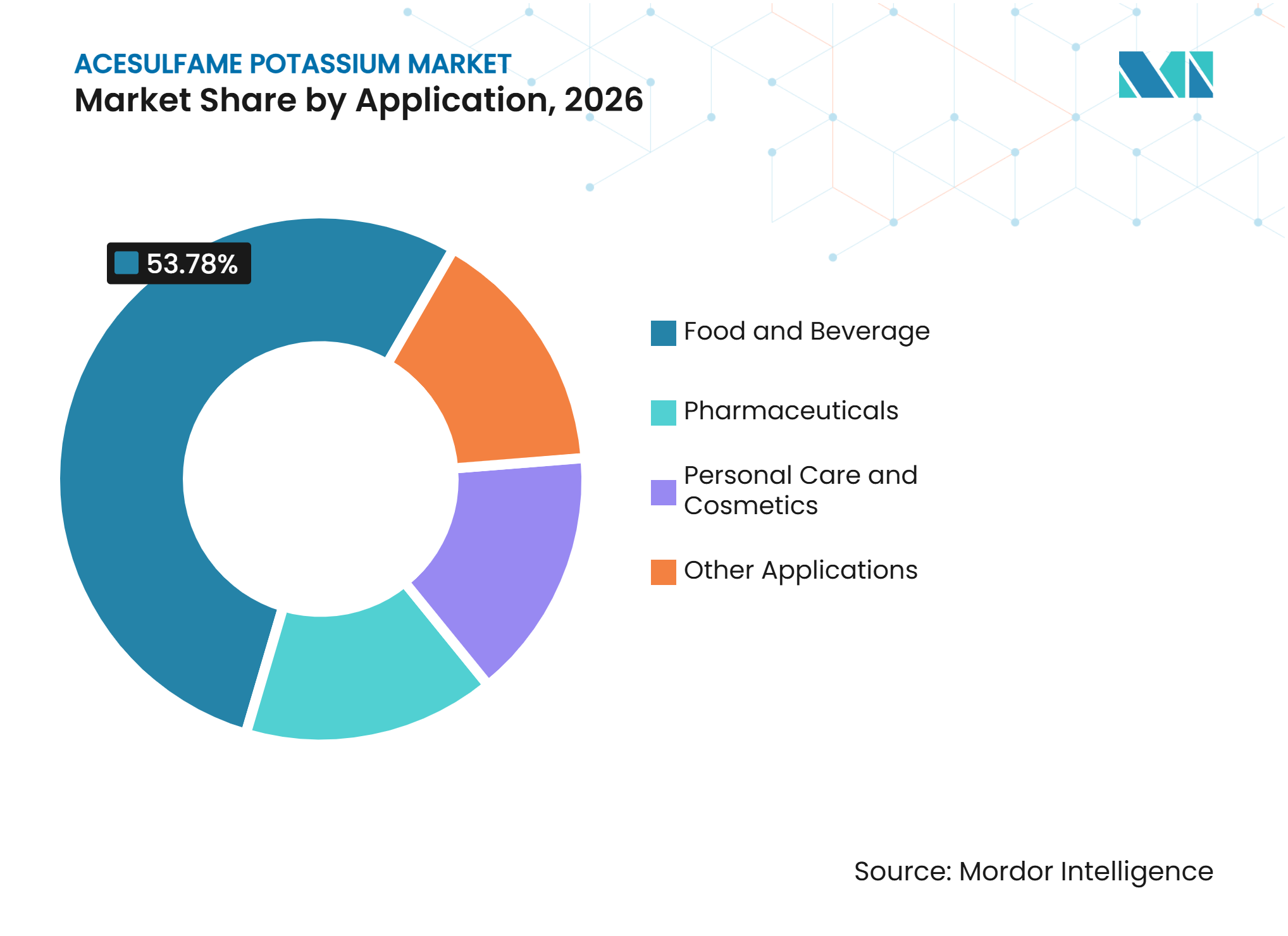
- By application, Food and Beverage held 53.78% of the Acesulfame Potassium Market share in 2026, while Pharmaceuticals is forecast to grow at a 7.67% CAGR through 2032.
- By geography, Asia-Pacific represented 42.34% of the Acesulfame Potassium Market share in 2026 and is projected to grow at a 6.91% CAGR through 2032.
Note: Market numbers in this report are based on Mordor Intelligence's proprietary estimation framework, which combines nine months of actuals with Q4 projections for base year 2026.
Market Trends and Insights
Drivers Impact Analysis of Acesulfame Potassium Market*
| Drivers | (~) % Impact on CAGR Forecast | Geographic Relevance | Impact Timeline |
|---|---|---|---|
| Sugar Reduction and Zero-Calorie Reformulation | +1.5% | Global, with intensity in North America, EU, and East Asia | Medium term (2-4 years) |
| Expansion of Functional and Energy Beverage Formulations | +1.0% | North America, Asia-Pacific (APAC) core, and spillover to Middle East and Africa (MEA) | Short term (≤ 2 years) |
| Pharmaceutical Taste Masking for Patient-Friendly Oral Dosage Forms | +0.8% | Global, with highest uptake in EU, Japan, and India | Long term (≥ 4 years) |
| Regulatory Headroom from Updated Safety Assessments | +0.5% | EU primary, with spillover to markets referencing European Food Safety Authority (EFSA) and JECFA standards | Medium term (2-4 years) |
| Source: Mordor Intelligence | |||
Sugar Reduction and Zero-Calorie Reformulation
Sugar tax regulations impose reformulation deadlines on beverage producers rather than presenting optional product upgrades. The United Kingdom Soft Drinks Industry Levy, South Africa's Health Promotion Levy, and city-level levies in the United States have increased the need for low- and zero-calorie formulations. Manufacturers use Ace-K with sucralose and aspartame because sweetener blends can more closely replicate the sweetness profile of sucrose than a single high-intensity sweetener. Kerry identifies the use of sweetener systems and flavor solutions to improve the sensory profile of zero-sugar beverages. Front-of-pack labeling reforms in Brazil, Chile, and Europe also reduce the time available for producers to address high-sugar product labels. These factors drive demand in the Acesulfame Potassium Market, as manufacturers require stable, cost-effective ingredients for reformulated beverage and food product lines.
Expansion of Functional and Energy Beverage Formulations
The shift toward zero-sugar energy drinks increases the use of Ace-K in acidic beverage systems. The ingredient remains stable in energy drink formulations at pH 2.5-3.5 and is compatible with caffeine, taurine, and B vitamins at standard processing temperatures. G FUEL lists acesulfame potassium and sucralose in its energy drink formulation information[1]. This combination enables brands to deliver sweetness without calories while maintaining a consistent flavor profile throughout production. Some brands position the absence of Ace-K as a clean-label formulation attribute, creating uneven demand within the energy drink category. Kerry also identifies flavor masking as an approach to improve zero-sugar energy drinks, which may lead some formulators to reduce Ace-K usage per serving.
Pharmaceutical Taste Masking for Patient-Friendly Oral Dosage Forms
Pharmaceutical demand for Ace-K extends beyond its conventional use as a sweetening excipient in syrup formulations. A 2025 study found that an acesulfame potassium ionic-liquid complex with albendazole increased maximum plasma concentration by 11-fold and oral bioavailability by 7.6-fold compared with an albendazole suspension in murine models. This finding supports interest in pharmaceutical-grade materials for oral solid dosage forms, in which drug solubility and patient acceptance are important considerations. Taste remains a key challenge for pediatric and geriatric medicines, particularly when the active ingredient is bitter. Ace-K provides rapid sweetness onset and is generally chemically inert toward many drug actives, supporting its use in taste-masking systems. Compliance with ICH Q3D elemental impurity requirements and USP/NF monographs remains important for suppliers targeting pharmaceutical customers.
Regulatory Headroom from Updated Safety Assessments
The European Food Safety Authority re-evaluated acesulfame K, also known as E 950, on April 30, 2025, under Regulation (EC) No. 1333/2008. The authority raised the acceptable daily intake to 15 mg/kg of body weight per day, up from 9 mg/kg of body weight per day. The revised assessment provides processors with greater flexibility to evaluate product exposure in higher-consumption food categories. It also strengthens the regulatory basis for Ace-K in European formulation activities as buyers review sweetener systems. China implemented GB 2760-2024 on February 8, 2025. The standard includes combined-use total-weight limits for applications of Ace-K with aspartame and aspartame-acesulfame salt. The regulation maintains Ace-K's permitted status while requiring compliance with labeling and formulation requirements.
Restraints Impact Analysis of Acesulfame Potassium Market*
| Restraints | (~) % Impact on CAGR Forecast | Geographic Relevance | Impact Timeline |
|---|---|---|---|
| Clean-Label Substitution by Stevia, Monk Fruit, and Erythritol | -0.9% | North America, Western Europe, Australia | Medium term (2-4 years) |
| Consumer and Institutional Scrutiny of Synthetic Sweeteners | -0.6% | Global, with greatest effect in EU, US, and urban India | Medium term (2-4 years) |
| Bitter Aftertaste and Co-Sweetener Dependence | -0.5% | Global, most pronounced in premium product segments | Short term (≤ 2 years) |
| Source: Mordor Intelligence | |||
Clean-Label Substitution by Stevia, Monk Fruit, and Erythritol
Clean-label substitution is most evident in premium, functional, and health-oriented product ranges, where ingredient origin and label simplicity influence purchasing decisions. In 2025, Tate & Lyle reported that more than half of respondents across seven global markets planned to reduce their sugar consumption. Its research on sweetener innovation also reflected demand for ingredients associated with plant- and fruit-based sources. Precision-fermented Reb M can provide a different sweetness profile; however, its higher cost limits its use as a complete replacement in mid-market products. In practice, many formulators reduce Ace-K levels within a blend and add stevia or monk fruit rather than eliminate Ace-K entirely. This approach can reduce the amount of Ace-K used in finished formulations while maintaining its role in the Acesulfame Potassium Market.
Consumer and Institutional Scrutiny of Synthetic Sweeteners
Consumer concerns regarding high-intensity sweeteners can affect new product launches, particularly in North America and Western Europe. A 2025 Food Chemistry review found that human studies generally supported the safety of Ace-K within the acceptable daily intake. However, preclinical models have identified microbiota changes at very high doses, indicating the need for more dose-relevant human studies[2]. The gap between laboratory findings and consumer interpretation can prompt risk-averse brands to prioritize stevia or monk fruit in new product development. Ace-K can also produce metallic or bitter notes at concentrations above 400 ppm, leading formulators to use blends or masking systems. These systems can reduce the Ace-K dose in a finished product, even when the ingredient remains in the formulation. Consequently, this trend can constrain near-term use rates in premium products and influence market perceptions of synthetic sweeteners.
*Our forecasts treat driver/restraint impacts as directional, not additive. The impact forecasts reflect baseline growth, mix effects, and variable interactions.
Acesulfame Potassium Market Segment Analysis
By Grade:
Pharmaceutical Grade Commands Premium GrowthFood Grade holds 73.45% of the Acesulfame Potassium Market in 2026, maintaining its position as the leading grade. This position reflects its established use in beverages, bakery products, confectionery, and dairy formulations. Food-grade Ace-K offers predictable sweetness equivalence and cost efficiency for large-scale production runs. Pharmaceutical Grade is forecast to grow at a CAGR of 7.12% from 2027 to 2032, driven by stricter purity requirements, drug master file registrations, and growing demand for oral dosage forms. Other grades, including those used for technical and industrial applications, account for a smaller residual share and are not expected to alter the overall grade distribution.
In November 2025, China’s National Health Commission accepted an application for fermentation-derived acesulfame potassium as a new food additive. The accepted application places biosynthetic production routes within the regulatory pipeline. Current chemical production relies on diketene and sulfur trioxide; therefore, fermentation could diversify the production technology base. This development could reduce Food Grade suppliers’ dependence on existing feedstock routes. Food manufacturers with sustainable procurement policies may also evaluate the production method during supplier qualification. Consequently, the Acesulfame Potassium Market could undergo an upstream shift in the supply chain that affects Food Grade sourcing criteria without changing its current market leadership.



By Form:
Powder Leads, While Liquid Supports Precision ApplicationsPowder holds 58.13% of the Acesulfame Potassium Market in 2026. It is suited for dry-blend powdered beverages, tabletop sweeteners, bakery premixes, and pharmaceutical tablets. Its free-flowing properties and long ambient shelf life support its use in bulk ingredient logistics. Granules serve a narrower role, particularly in applications where powder dust may create occupational exposure concerns in high-capacity facilities. This consideration is especially relevant for European processors subject to REACH-related compliance requirements. Powder is expected to retain its leading position in applications where dry processing and storage efficiency remain operational priorities.
Liquid is forecast to grow at a CAGR of 6.78% from 2027 to 2032. Its use is expanding in continuous liquid-phase production lines, where dry dosing may limit precision. Energy drinks, ready-to-drink tea, and sports nutrition beverages can use in-line systems to dose Ace-K solutions at defined concentrations. Nutrinova identifies liquid Ace-K as a suitable option for beverage production that requires consistent sweetness across batches. Liquid Ace-K also supports the production of pharmaceutical syrups and suspensions, as manufacturers can add it directly to a liquid vehicle. These applications position the liquid form as an important growth area within the Acesulfame Potassium Market.
By Application:
Food and Beverage Dominates While Pharmaceuticals Accelerate Beyond FlavoringFood and Beverage holds 53.78% of the Acesulfame Potassium Market in 2026. Zero-sugar carbonated beverages, energy drinks, flavored waters, and reformulated baked goods support this position. Ace-K remains stable in acidic beverage systems and performs effectively when combined with sucralose in many zero-sugar energy drink formulations. G FUEL lists Ace-K in its energy drink formulation information. Personal care and cosmetics represent smaller applications but remain technically relevant, particularly for oral care products. Nutrinova markets Sunett NXT for oral care applications, including mouthwash, toothpaste, and lip care products, where flavor masking and sweetness can support product functionality.
The pharmaceutical application is forecast to grow at a CAGR of 7.67% from 2027 to 2032. Its use extends beyond taste masking in pediatric and geriatric medicines to drug delivery development. A 2025 genome-wide association study identified a TAS2R-containing locus on chromosome 12 associated with individual differences in Ace-K bitterness perception. This finding is relevant to the acceptability of medicine and patient adherence strategies. Other applications include nutraceuticals and food-contact packaging flavor migration studies. Although these applications account for a residual share, they expand the addressable application base of the Acesulfame Potassium Market.

Geography Analysis
Asia-Pacific
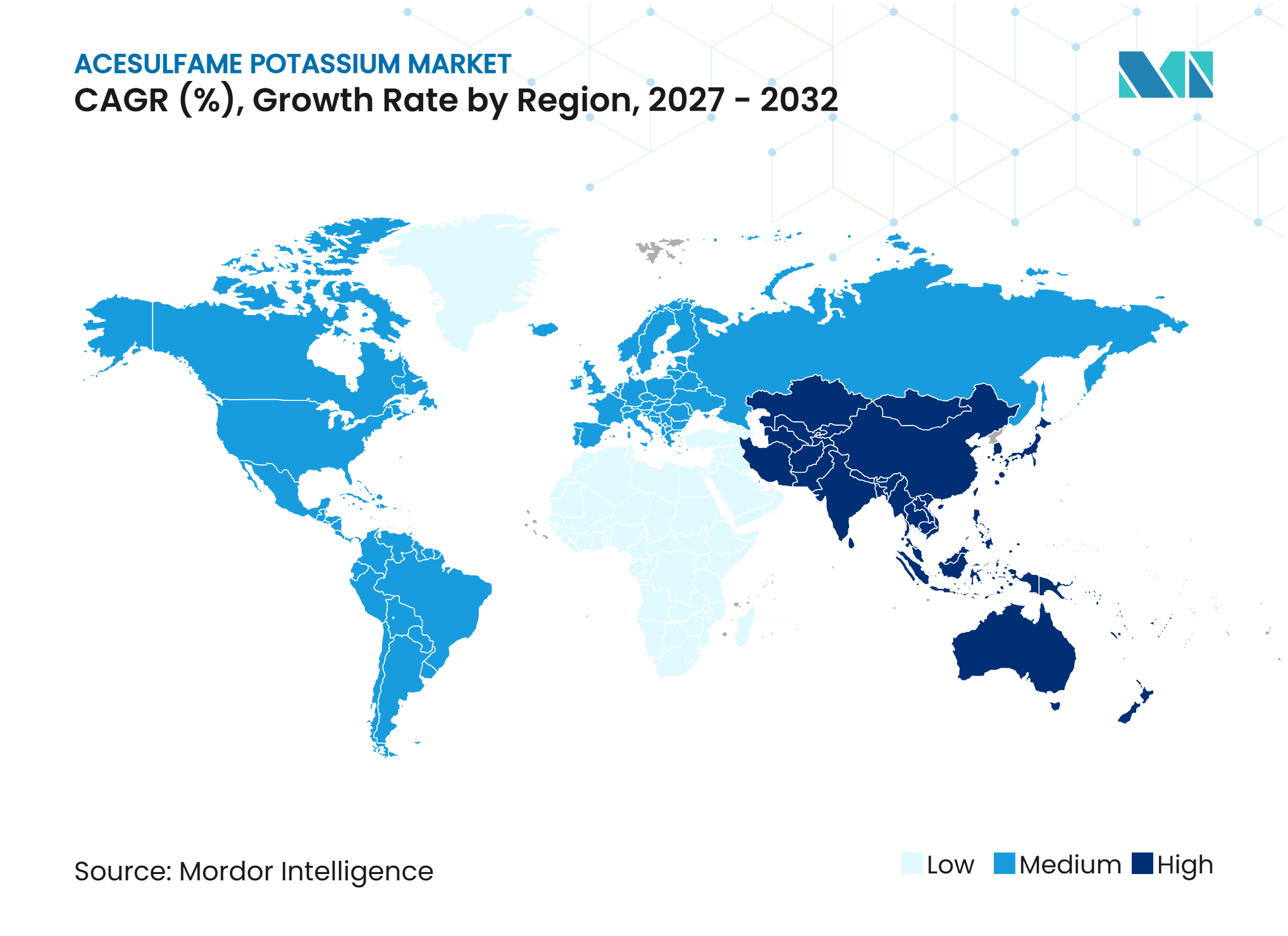
Asia-Pacific held 42.34% of the Acesulfame Potassium Market share in 2026 and is forecast to grow at a 6.91% CAGR from 2027 to 2032. China serves as the region’s production hub, and Anhui Jinhe Industrial has reported developments that reinforce its role in the sweetener manufacturing sector. The region also benefits from growing demand for sugar-free beverages. Japan and South Korea support demand through established categories for diet beverages and functional foods. China implemented GB 2760-2024 in 2025, providing formulators with an updated compliance framework for the use of food additives. India applies the Food Safety and Standards Authority of India's requirements to the use of sweeteners. These factors combine manufacturing scale, regional consumption, and regulatory access. The Acesulfame Potassium Market in Asia-Pacific also benefits from Ace-K’s use in zero-calorie beverage systems. Fermentation-route production under review in China is a development for regional supply options.
North America
North America is influenced by sugar-related levies and a competitive branded beverage sector that relies on sweetener blends. City-level beverage taxes in the United States create incentives for reformulation toward lower-calorie products. Mainstream energy drink brands continue to use Ace-K and sucralose combinations because they balance cost and sweetness performance. G FUEL provides an example of an energy drink formulation that includes Ace-K. Some emerging brands differentiate themselves by excluding Ace-K, resulting in varied demand across the energy drink market. U.S. Food and Drug Administration regulations and Health Canada frameworks remain key regulatory considerations for food and beverage formulators. The United States-Mexico-Canada Agreement (USMCA) trade area supports cross-border access to products that meet applicable requirements. Buyer focus on import availability and pricing can lead to cautious purchasing cycles. These conditions support use in established zero-calorie products while limiting adoption in some clean-label launches.
Europe, South America, and Middle East & Africa
Europe’s regulatory framework changed after the European Food Safety Authority (EFSA) reconfirmed the safety of Ace-K and raised the acceptable daily intake to 15 mg/kg of body weight per day in April 2025. Germany, the United Kingdom, and France support demand through reformulation in carbonated drinks, dairy beverages, and lower-calorie bakery products. EFSA also recommended that European specifications include a 0.1 mg/kg limit for 5-chloro-acesulfame, increasing the importance of supplier quality control. In South America, Brazil’s labeling environment is shaped by Agência Nacional de Vigilância Sanitária (ANVISA) oversight of food labeling and sweeteners. Economic conditions in Argentina can disrupt ingredient import cycles. Saudi Arabia and the UAE support demand for reduced-sugar foods and beverages through health-related policy priorities. Gulf Cooperation Council food safety requirements and front-of-pack labeling encourage multinational brands to adapt regional recipes. These regions have different demand patterns, but regulatory compliance and sugar reduction remain common drivers. Europe has an updated regulatory framework for product development, while Gulf markets support reformulation for cost-effective sucrose replacement.
Competitive Landscape
Market Concentration
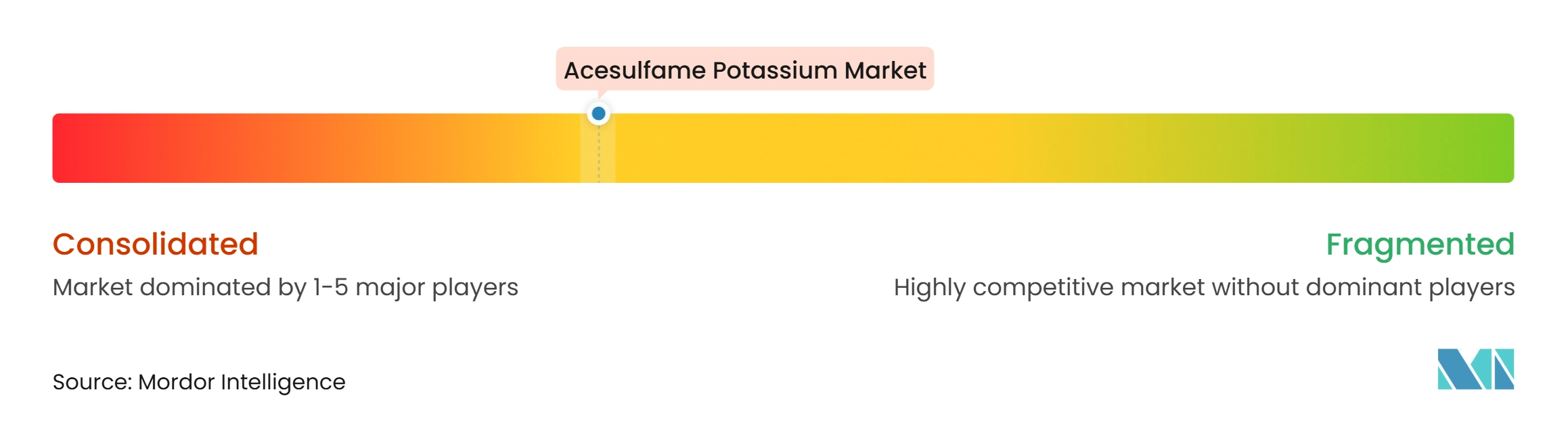
The acesulfame potassium market is moderately fragmented. Anhui Jinhe Industrial has reported expansion activity for a 15,000-ton-per-year acesulfame potassium project, and the company's capacity position gives it substantial influence in upstream supply. Nutrinova remains the primary alternative source for European and pharmaceutical buyers seeking Western supply-chain provenance. In August 2026, Celanese agreed to sell an additional 19% stake in Nutrinova to Mitsui & Co., lifting Mitsui's ownership to 89%. Celanese retained an 11% stake and operates the diketene raw material facility at Industriepark Höchst on a transitional basis. Mitsui has also outlined plans to integrate Nutrinova's upstream materials. This ownership change strengthens Nutrinova's supply-chain position.
Competition is also moving toward formulation support rather than the sale of the molecule alone. DSM-Firmenich has described integrated sweetening approaches that combine high-intensity sweeteners, plant-based ingredients, flavor modulation, and texture support. Such systems aim to rebuild the broader sensory role of sugar in reduced-sugar products. This model values application knowledge, not just manufacturing capacity, and may be less attractive to pure acesulfame potassium producers without comparable application support. The approach also gives large ingredient solution providers a way to serve formulators balancing clean-label expectations with cost control. Nutrinova continues to position its Sunett portfolio for food, beverage, pharmaceutical, and personal care applications. These examples indicate that technical service and application coverage are part of competitive differentiation.
Patent outcomes also shape the operating environment for ingredient suppliers. The European Patent Office dismissed Celanese International Corporation's appeal in Case T 1957/23 concerning acesulfame potassium compositions and processes, leaving the composition patent environment comparatively open for suppliers. For buyers, the larger issue remains the concentration of supply and the limited alternatives to Chinese production. A narrow manufacturing base can create a risk of supply tightening when production conditions change. Companies with reliable access to feedstock, qualifying documentation, and formulation expertise are better positioned to manage this risk. The acesulfame potassium market therefore combines high upstream concentration with more dispersed downstream application competition.
Acesulfame Potassium Industry Leaders
-
Anhui Jinhe Industrial Co., Ltd.
-
Nutrinova
-
dsm-firmenich
-
Suzhou Hope Technology Co., Ltd.
-
HYET Sweet
- *Disclaimer: Major Players sorted in no particular order
Acesulfame Potassium Market Companies Covered in this Report
- Ajinomoto Co., Inc.
- Anhui Jinhe Industrial Co., Ltd.
- Cargill, Incorporated
- Celanese Corporation
- dsm-firmenich
- HYET Sweet
- Ingredion Incorporated
- Nantong Changhai Food Additive Co., Ltd.
- Nutrinova
- Roquette Frères
- Suzhou Hope Technology Co., Ltd.
- Tate & Lyle PLC
- The NutraSweet Company
- Vitasweet Co., Ltd.
- Zibo Zhongshi Green Biotech Co., Ltd.
Recent Industry Developments in Acesulfame Potassium Market
- August 2026: Celanese Corporation signed a definitive agreement to sell an additional 19% stake in Nutrinova, the original inventor and only Western producer of Sunett acesulfame potassium, to Mitsui & Co., Ltd. for USD 152 million. The transaction increased Mitsui's ownership to 89%, thereby transitioning Nutrinova from an equity-method affiliate to a Mitsui-consolidated subsidiary. Celanese retained an 11% stake and continued to operate the diketene raw-material production facility at Industriepark Höchst in Frankfurt on a transitional basis.
- May 2025: Nantong Changhai Food Additive Co., Ltd. inaugurated its Nantong Synthetic Biology Manufacturing Base and commenced trial production under its first-phase 3,000-ton-per-year isomalt manufacturing project. This diversification into synthetic biology-derived sweeteners indicates that established acesulfame potassium producers are investing in adjacent fermentation-route sweeteners as the regulatory pipeline for natural sweeteners develops.
Global Acesulfame Potassium Market Report Scope
Acesulfame potassium (also known as Ace-K, acesulfame K, or E950) is a synthetic, zero-calorie artificial sweetener approximately 200 times sweeter than regular sugar. It is a white, odorless, crystalline powder that is water-soluble and remains stable under high temperatures, making it suitable for use in baked goods, beverages, and other processed food products.
The acesulfame potassium market is segmented by grade, form, application, and geography. By grade, the market is segmented into food grade, pharmaceutical grade, and other grades. By form, the market is segmented into powder, granules, and liquid. By application, the market is segmented into food and beverage, pharmaceuticals, personal care and cosmetics, and other applications. The report also covers market sizes and forecasts for acesulfame potassium across 15 countries in major regions. The market sizes and forecasts are provided in terms of value (USD).
Segmentation Overview
| Food Grade |
| Pharmaceutical Grade |
| Other Grades |
| Powder |
| Granules |
| Liquid |
| Food and Beverage |
| Pharmaceuticals |
| Personal Care and Cosmetics |
| Other Applications |
| Asia-Pacific | China |
| India | |
| Japan | |
| South Korea | |
| ASEAN Countries | |
| Rest of Asia-Pacific | |
| North America | United States |
| Canada | |
| Mexico | |
| Europe | Germany |
| United Kingdom | |
| France | |
| Italy | |
| NORDIC Countries | |
| Rest of Europe | |
| South America | Brazil |
| Argentina | |
| Rest of South America | |
| Middle East and Africa | Saudi Arabia |
| South Africa | |
| Rest of Middle East and Africa |
| By Grade | Food Grade | |
| Pharmaceutical Grade | ||
| Other Grades | ||
| By Form | Powder | |
| Granules | ||
| Liquid | ||
| By Application | Food and Beverage | |
| Pharmaceuticals | ||
| Personal Care and Cosmetics | ||
| Other Applications | ||
| By Geography | Asia-Pacific | China |
| India | ||
| Japan | ||
| South Korea | ||
| ASEAN Countries | ||
| Rest of Asia-Pacific | ||
| North America | United States | |
| Canada | ||
| Mexico | ||
| Europe | Germany | |
| United Kingdom | ||
| France | ||
| Italy | ||
| NORDIC Countries | ||
| Rest of Europe | ||
| South America | Brazil | |
| Argentina | ||
| Rest of South America | ||
| Middle East and Africa | Saudi Arabia | |
| South Africa | ||
| Rest of Middle East and Africa | ||
Key Questions Answered in the Report
What is current market size of Acesulfame Potassium Market?
The Acesulfame Potassium Market size was valued at USD 386.14 million in 2026 and is estimated to grow from USD 407.19 million in 2027 to USD 536.99 million by 2032, at a CAGR of 5.69% during the forecast period (2027-2032).
Which grade has the highest growth outlook for acesulfame potassium?
Pharmaceutical Grade has the highest forecast growth, with a 7.12% CAGR through 2032.
Why is acesulfame potassium used in zero-sugar beverages?
Ace-K is heat stable, works in acidic systems, and can be blended with other sweeteners to support zero-calorie beverage formulations. Those properties help beverage producers manage flavor consistency in carbonated drinks, energy drinks, ready-to-drink tea, and other products made on continuous production lines. Blending can also reduce the flavor limitations associated with using a single high-intensity sweetener.
Which application leads demand for acesulfame potassium?
Food and Beverage leads with a 53.78% share in 2026, supported by zero-sugar carbonated drinks, energy drinks, flavored waters, and reformulated foods. Demand is reinforced where sugar taxes, label requirements, or consumer calorie-reduction goals encourage manufacturers to adjust established recipes without sacrificing sweetness. Pharmaceuticals have the faster outlook as drug makers expand taste-masking and oral dosage work.