
Water-soluble Vitamin Feed Supplements Market Size and Share
Market Overview
| Study Period | 2021 - 2031 |
|---|---|
| Market Size (2026) | USD 640 Million |
| Market Size (2031) | USD 860 Million |
| Growth Rate (2026 - 2031) | 6.10 % |
| Fastest Growing Market | North America |
| Largest Market | Asia-Pacific |
| Market Concentration | Medium |
Major Players *Disclaimer: Major Players sorted in no particular order Image © Mordor Intelligence. Reuse requires attribution under CC BY 4.0. | |
Water-soluble Vitamin Feed Supplements Market Analysis by Mordor Intelligence
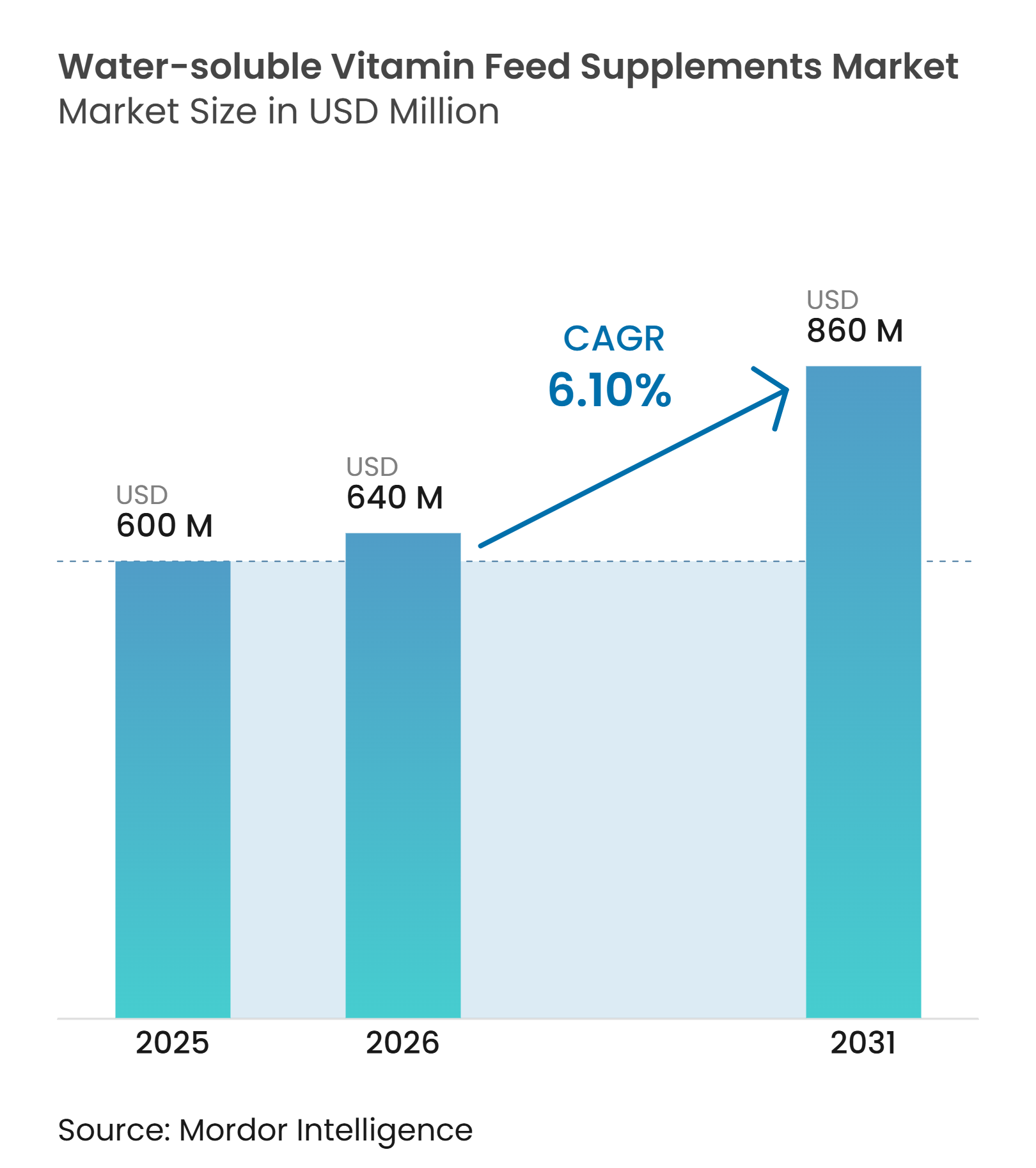
The water-soluble vitamin feed supplements market size was valued at USD 600 million in 2025 and is estimated to grow from USD 640 million in 2026 to reach USD 860 million by 2031, at a CAGR of 6.10% during the forecast period (2026-2031). The market is supported by more intensive poultry, swine, and aquaculture production, where reliable micronutrient delivery is tied to animal performance and standardized production protocols. Producers are also moving toward preventive nutrition as limits on antibiotic use encourage more focus on immunity, stress management, and consistent supplement delivery during demanding production periods. Stabilized vitamin formats and water delivery systems give suppliers ways to differentiate beyond standard powder ingredients, particularly in heat-stressed livestock and aquaculture programs. Supply concentration for several B vitamins and ascorbic acid continues to affect procurement decisions, while regional fermentation capacity can improve sourcing resilience, delivery speed, and access to alternative supply options.
Key Report Takeaways
- By vitamin type, vitamin B complex accounted for 58% of the water-soluble vitamin feed supplements market share in 2025, while vitamin C is forecast to grow at a CAGR of 6.23% from 2026 to 2031.
- By animal, poultry accounted for 45% of the water-soluble vitamin feed supplements market size in 2025, while aquaculture is forecast to grow at a CAGR of 6.9% from 2026 to 2031.
- By form, dry formulations accounted for 75% of the market in 2025, while liquid formulations are forecast to grow at a CAGR of 6.7% from 2026 to 2031.
- By application route, feed inclusion accounted for 70% of the market in 2025, while drinking water administration is forecast to grow at a CAGR of 7.0% from 2026 to 2031.
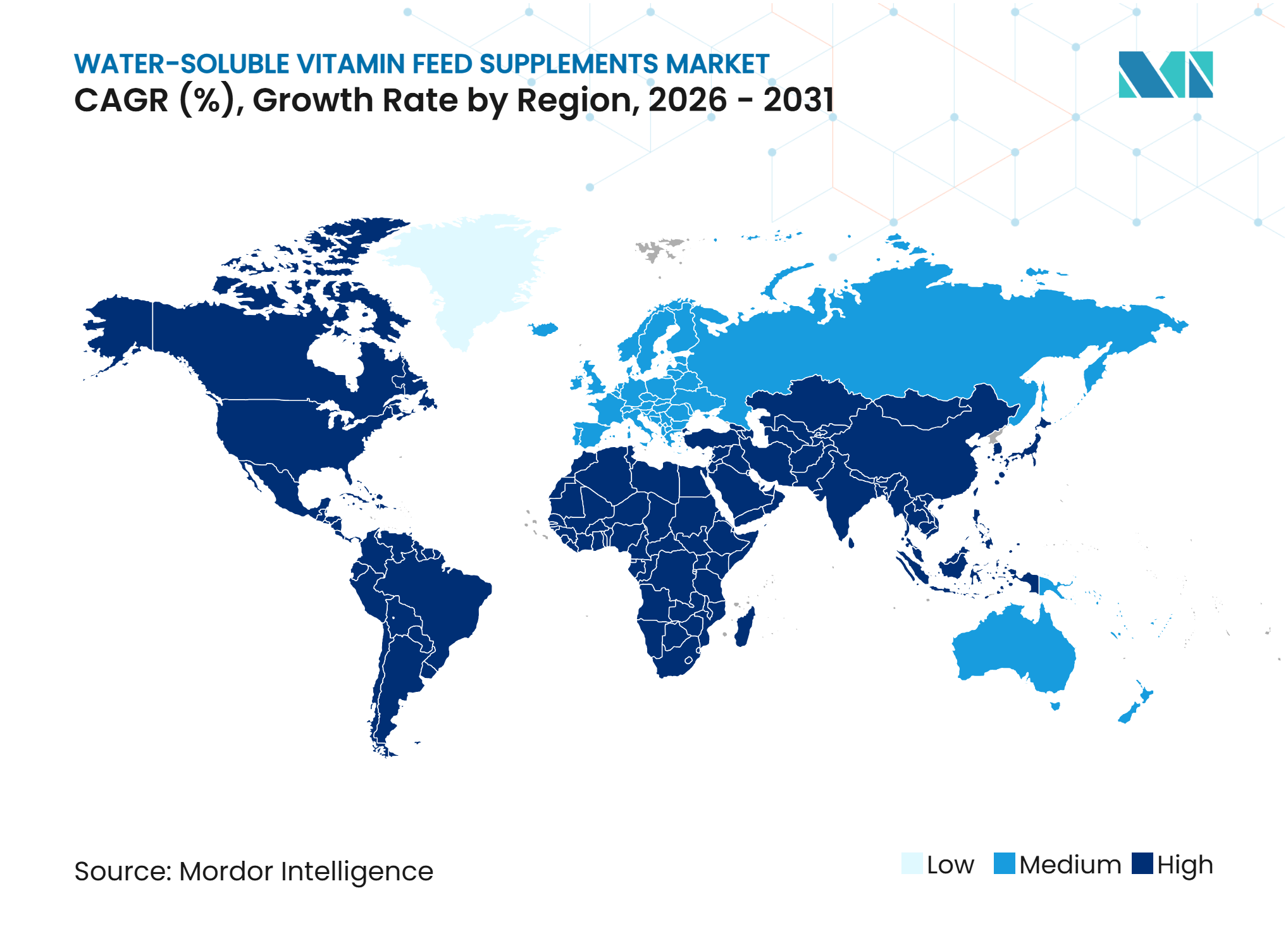
- Asia-Pacific accounted for 31.6% of the market in 2025, while North America is forecast to grow at a CAGR of 6.8% from 2026 to 2031.
Note: Market size and forecast figures in this report are generated using Mordor Intelligence’s proprietary estimation framework, updated with the latest available data and insights as of January 2026.
Market Trends and Insights
Drivers Impact Analysis of Water-soluble Vitamin Feed Supplements Market*
| Driver | (~) % Impact on CAGR Forecast | Geographic Relevance | Impact Timeline |
|---|---|---|---|
| Intensification of Poultry, Swine, and Aquaculture Production | +1.8% | Global, with highest uplift in Asia-Pacific, South America, and Africa | Short term (≤ 2 years) |
| Antibiotic-Free Production and Preventive Nutrition | +1.4% | North America and Europe core, with spillover to Asia-Pacific and South America | Medium term (2-4 years) |
| Water-Stable Delivery for Heat-Stressed Aquaculture | +0.9% | Asia-Pacific core, with spillover to South America and Middle East | Short term (≤ 2 years) |
| Microencapsulation and Controlled-Release Formulation Technology | +0.7% | Global, with early gains in Asia-Pacific and North America | Medium term (2-4 years) |
| Precision Dosing and Digital Feed Formulation | +0.5% | North America and Europe primary, with emerging adoption in Asia-Pacific | Long term (≥ 4 years) |
| Fermentation-Derived and Lower-Carbon Vitamin Production | +0.4% | Europe and India primary, with broader global supply chain effects | Long term (≥ 4 years) |
| Source: Mordor Intelligence | |||
Intensification of Poultry, Swine, and Aquaculture Production
High-density livestock and aquaculture systems increase vitamin demand per unit of animal output and make inconsistent micronutrient intake more apparent in production results. Fast-growing broiler genetics require reliable supplies of riboflavin, pantothenic acid, and niacin throughout broiler, layer, and breeder production programs. A 2025 study published in the Chinese Journal of Animal Nutrition found that Vitamin B complex supplementation improved growth performance, serum biochemical indexes, and rumen fermentation parameters in Hu sheep fed high-concentrate diets[1]. Fish and shrimp do not synthesize Vitamin C endogenously, making dietary ascorbic acid important for immunity, collagen formation, and reproduction. As producers seek to improve feed efficiency, growth rates, and animal health under intensive production systems, the need for consistent micronutrient supplementation is increasing. This supports the use of water-soluble vitamin formulations as part of standardized feeding and drinking-water nutrition programs. The water-soluble vitamin feed supplements market benefits when integrated farms standardize nutrition programs across poultry, swine, ruminants, and aquatic species.
Antibiotic-Free Production and Preventive Nutrition
The European Union Veterinary Medicinal Products Regulation requires species-level reporting of antimicrobial use through the European Surveillance of Veterinary Antimicrobial Consumption framework. The European Medicines Agency published its first surveillance report in March 2025, covering cattle, pigs, chickens, and turkeys[2]. Delegated Regulation (EU) 2024/1229 established methods for detecting 24 antimicrobial residues in compound feed from May 2025[3]. A 2025 study published in the Journal of the Hellenic Veterinary Medical Society found that ascorbic acid supplementation improved health and survival outcomes in African catfish. These conditions strengthen demand for nutritional programs that support health without relying on routine antibiotic inputs or subtherapeutic treatment practices. As producers adopt preventive nutrition strategies, vitamins are increasingly incorporated into feed and drinking-water programs to support immune function and maintain animal performance. This creates additional demand for water-soluble vitamin supplements that can be incorporated into routine nutritional programs across livestock and aquaculture production.
Water-Stable Delivery for Heat-Stressed Aquaculture
Vitamin C can leach from feeds in warm and oxidizing water, reducing the amount available to shrimp and finfish. A 2025 study published in Aquaculture International found that liposomal and nano-liposomal Vitamin C delivery improved bioavailability compared with conventional forms in grey mullet. Kemin Industries, Inc. offers Vibrell C for fish and shrimp feed applications requiring water, pelleting, and extrusion stability. These developments highlight the importance of maintaining vitamin stability and nutrient availability under aquaculture production conditions. As intensive tropical aquaculture expands, producers increasingly require formulations that can withstand feed processing, water exposure, and storage conditions. This supports demand for stabilized and premium water-soluble vitamin formulations that improve nutrient retention and delivery in aquatic production systems.
Microencapsulation and Controlled-Release Formulation Technology
Microencapsulation helps convert hygroscopic and heat-sensitive vitamins into more stable ingredients for pelleting, extrusion, and liquid dosing. A 2025 review reported that spray-drying and extrusion-based encapsulation methods can protect heat-sensitive compounds during manufacturing. Rumen-protected B-vitamin products create a separate opportunity in dairy and beef production because unprotected vitamins may be degraded before reaching the small intestine. Jefo reported trial results for protected B-vitamin programs that included lower morbidity and improved liver health in receiving cattle. Kaesler Nutrition GmbH and Impextraco NV compete through coated and phosphate Vitamin C formats that address ingredient stability. These formats give the water-soluble vitamin feed supplements market a path to performance-based pricing rather than commodity pricing, while limiting basic ingredient suppliers' ability to compete solely on volume.
Restraints Impact Analysis of Water-soluble Vitamin Feed Supplements Market*
| Restraint | (~) % Impact on CAGR Forecast | Geographic Relevance | Impact Timeline |
|---|---|---|---|
| Volatility in Vitamin Intermediates and Freight Costs | -1.2% | Global, with highest exposure in Asia-Pacific and Europe | Short term (≤ 2 years) |
| Water-Line Biofilm and Residual-Dose Risk | -0.6% | North America and Europe core, with spillover to South and Southeast Asia | Medium term (2-4 years) |
| Concentrated Upstream Supply Chain and Import Dependency | -0.8% | Global, with greatest exposure in Europe, North America, and Asia outside China | Medium term (2-4 years) |
| Complex Regulatory Compliance Across Jurisdictions | -0.5% | European Union, North America, and Japan primary, with emerging market divergence secondary | Long term (≥ 4 years) |
| Source: Mordor Intelligence | |||
Volatility in Vitamin Intermediates and Freight Costs
Production of riboflavin, folic acid, and Vitamin B12 intermediates remains concentrated in a small number of fermentation facilities. Plant shutdowns, energy cost increases, and export policy changes can be passed through to formulation costs, increasing procurement uncertainty for feed supplement manufacturers. Smaller premix suppliers may have limited ability to pass higher ingredient costs on to integrator customers under short-cycle contracts, putting pressure on margins. Higher input and logistics costs can also increase the cost of water-soluble vitamin formulations for feed manufacturers and producers, particularly when supply chains depend on imported intermediates. Producers in Africa and the Middle East may face greater exposure to freight-cost volatility due to longer, more complex import routes, which add to overall procurement costs.
Water-Line Biofilm and Residual-Dose Risk
Drinking-water delivery is increasingly used for heat-stress management and nutritional support during disease recovery, but line hygiene can affect dose consistency. A 2026 study published in BMC Microbiology found that persistent biofilms in broiler and pig drinking-water systems can act as reservoirs of microbial contamination and antimicrobial resistance. Biofilm accumulation and inadequate line cleaning can complicate the consistent delivery of water-soluble vitamin supplements through drinking-water systems, particularly when residues accumulate within water lines. Cleaning and disinfection may also require temporary interruptions to supplementation, creating an operational challenge during periods of heat stress or disease recovery when producers may rely more heavily on water-based delivery. The additional labor and sanitation requirements associated with drinking-water supplementation can therefore increase operational complexity for farms with less-developed water infrastructure.
*Our forecasts treat driver/restraint impacts as directional, not additive. The impact forecasts reflect baseline growth, mix effects, and variable interactions.
Water-soluble Vitamin Feed Supplements Market Segment Analysis
By Vitamin Type:
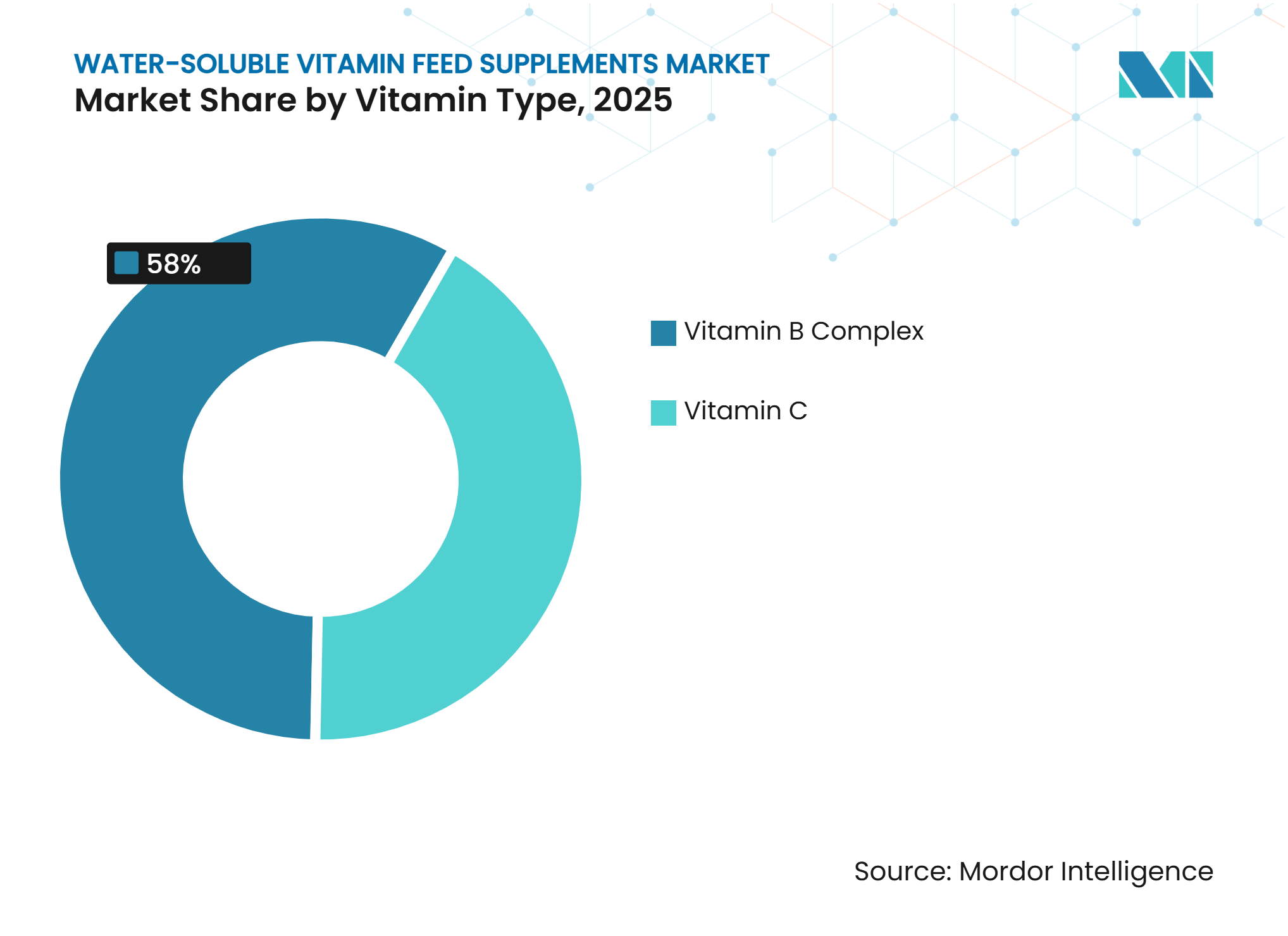
Vitamin B Complex Leads the Market, While Vitamin C Drives GrowthVitamin B Complex accounted for 58% of the water-soluble vitamin feed supplements market share in 2025. Thiamin, riboflavin, niacin, pantothenic acid, pyridoxine, biotin, folic acid, and cobalamin support energy metabolism, neurological function, immune activity, and reproduction across animal production systems. Their broad application across poultry, swine, ruminants, and aquaculture keeps Vitamin B Complex central to routine feed supplementation programs. The established use of B vitamins in regular nutrition programs provides a stable demand base, while suppliers are increasingly focusing on formulation stability and application-specific solutions.
Vitamin C is forecast to grow at a 6.23% CAGR from 2026 to 2031, making it the fastest-growing vitamin type in the water-soluble vitamin feed supplements market. In poultry and swine, Vitamin C supplementation is used to support immune function and manage nutritional requirements during heat stress, while in aquaculture, stabilized forms help improve vitamin retention under water-based feeding conditions. Phosphorylated, coated, and stabilized formulations can provide greater stability and targeted delivery compared with conventional ascorbic acid forms. Growing interest in preventive nutrition, heat-stress management, and improved nutrient stability is supporting the adoption of specialized Vitamin C formulations across livestock and aquaculture applications.



By Animal:
Poultry Leads the Market, While Aquaculture Drives GrowthPoultry accounted for 45% of the water-soluble vitamin feed supplements market size by animal type in 2025. Integrated broiler, layer, and breeder operations use standardized premix programs at a substantial scale, supporting consistent demand for vitamin supplementation. Broilers have high metabolic demands due to their rapid growth cycles, increasing the importance of B-complex vitamins within intensive poultry production systems. The established use of vitamin premixes in commercial poultry operations provides a broad, recurring basis for water-soluble vitamin supplements.
Aquaculture is forecast to grow at a CAGR of 6.9% from 2026 to 2031, making it the fastest-growing animal segment in the water-soluble vitamin feed supplements market. Shrimp and finfish production relies on dietary Vitamin C because these species cannot synthesize it endogenously, supporting its use in routine aquatic nutrition programs. The increasing adoption of intensive shrimp and finfish production systems is also creating greater demand for stable vitamin formulations that can maintain nutrient availability under water-based feeding conditions. This combination of nutritional requirements and increasing production intensity supports the expansion of water-soluble vitamin supplementation across aquaculture applications.
By Form:
Dry Formulations Lead the Market, While Liquid Formulations Drive GrowthDry formulations accounted for 75% of the water-soluble vitamin feed supplements market by form in 2025. Their longer shelf life, logistics compatibility, and suitability for pelleted and extruded feeds support their widespread use across commercial feed mills and centralized premix operations. Large integrators also favor dry premixes because they can be purchased and blended at an industrial scale. Spray-dried, water-dispersible, and microencapsulated powders can further support dissolution, stability, and nutrient retention during feed processing. The established infrastructure for dry premix production and feed manufacturing, therefore, provides a strong base for continued use of dry vitamin formulations.
Liquid formulations are forecast to grow at a 6.7% CAGR between 2026 and 2031. They are used in poultry, swine, and aquaculture during vaccination, heat-stress events, disease challenges, and weaning, when rapid and flexible supplementation can be valuable. Jefo offers VIT-AL, a soluble liquid B-vitamin complex for poultry and swine drinking-water applications. Automated in-line dosing can improve the practicality of liquid supplementation for farms with established water-treatment and dosing infrastructure. The expansion of drinking-water administration and precision dosing practices is creating additional opportunities for liquid vitamin formulations in intensive animal production systems.
By Application Route:
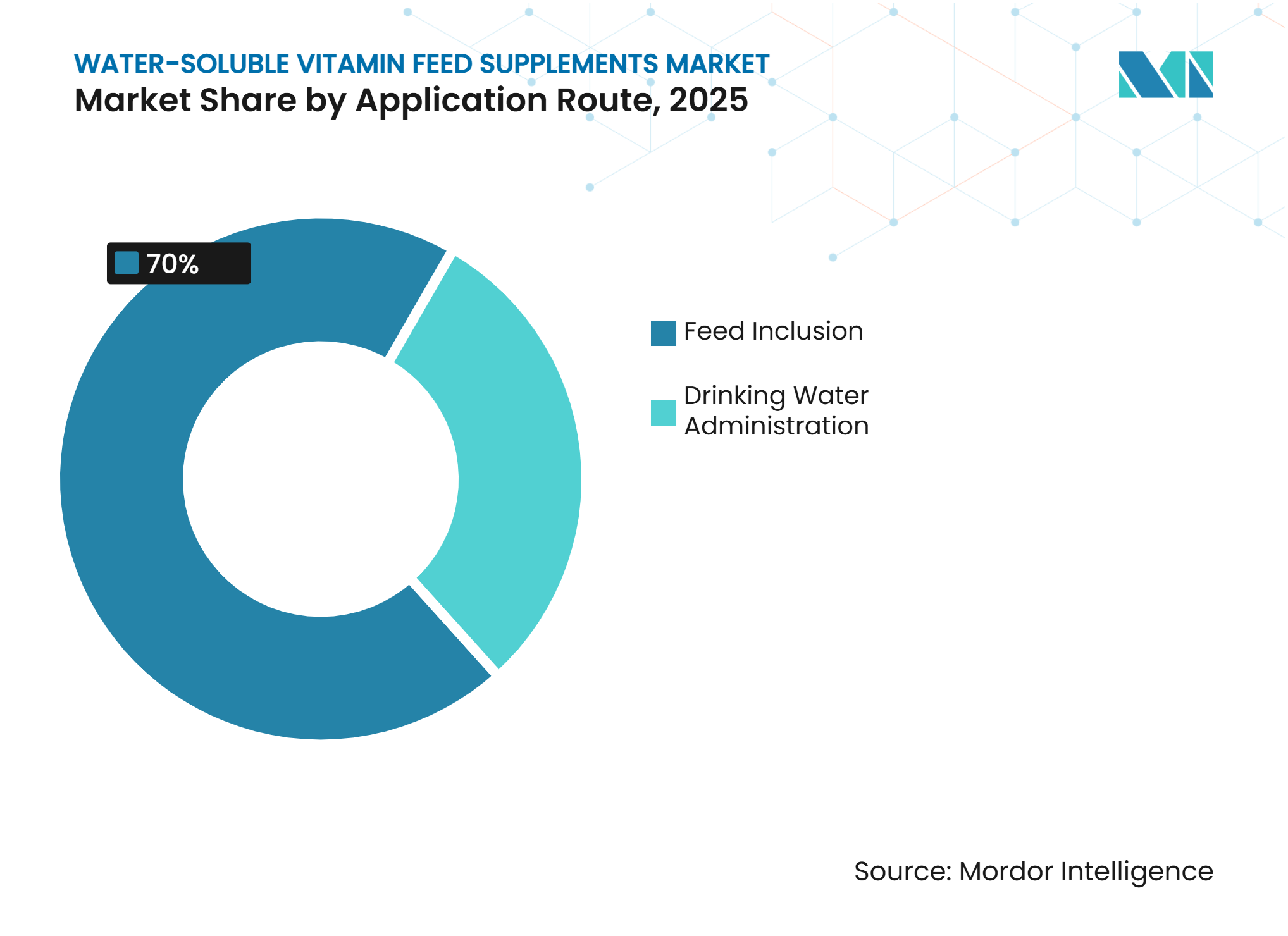
Feed Inclusion Leads the Market, While Drinking Water Administration Drives GrowthFeed inclusion accounted for 70% of the water-soluble vitamin feed supplements market by application route in 2025. Complete-feed and premix supplementation remains standard practice across large poultry and swine operations, where centralized procurement supports product consistency, supply reliability, and cost management for feed manufacturers and integrators. Digital feed formulation software can also help nutritionists adjust micronutrient inclusion according to species, production stage, and nutritional requirements. The established integration of vitamin supplementation into commercial feed manufacturing provides a broad and recurring demand base for feed-inclusion applications.
Drinking water administration is forecast to grow at a CAGR of 7.0% from 2026 to 2031, making it the fastest-growing application route in the water-soluble vitamin feed supplements market. Water delivery provides a flexible supplementation route when feed intake declines during heat stress, post-vaccination recovery, disease challenges, and other time-sensitive management events. AdvaCare Pharma markets VitaCare soluble multivitamin powder for water delivery to poultry, cattle, sheep, and pigs. Increasing adoption of drinking-water supplementation, supported by automated dosing and farm water-management systems, is creating additional opportunities for water-soluble vitamin products. However, water quality, line hygiene, and sanitation remain important for maintaining consistent delivery and supplementation outcomes.

Geography Analysis
Asia-Pacific accounted for 31.6% of the water-soluble vitamin feed supplements market in 2025, supported by its large livestock and aquaculture production base. China and India are intensifying livestock production, while Vietnam, Indonesia, Thailand, and the Philippines are expanding aquaculture. Increasing production intensity and investment in feed manufacturing infrastructure are supporting demand for standardized vitamin supplementation across the region. DSM-Firmenich AG's feed additive plant in Jadcherla, India, opened in August 2025, further supporting local supply and service capabilities for Asia-Pacific customers.
North America is forecast to grow at a CAGR of 6.8% from 2026 to 2031, making it the fastest-growing region in the water-soluble vitamin feed supplements market. Precision nutrition, antibiotic-free poultry and swine programs, and the use of stabilized vitamins in aquaculture are supporting regional demand. Established feed manufacturing infrastructure and increasing adoption of targeted supplementation programs are creating opportunities for water-soluble vitamin formulations across livestock and aquaculture applications. South America benefits from its large poultry and livestock production base, with Brazil's export-oriented chicken industry supporting demand for standardized vitamin premixes. Argentina and Chile also contribute to regional demand through livestock and aquaculture production.
Europe has a mature supplementation base supported by established feed manufacturing practices and feed additive compliance requirements. Antibiotic controls and preventive nutrition programs continue to support the use of B vitamins and Vitamin C in targeted animal nutrition applications. Russia also contributes to regional demand through its domestic feed production base. Africa and the Middle East are supported by expanding commercial poultry production and increasing adoption of structured premix and drinking-water supplementation programs. Heat-stress conditions in intensive production systems further create demand for nutritional strategies that support animal performance and health.
Competitive Landscape
Market Concentration
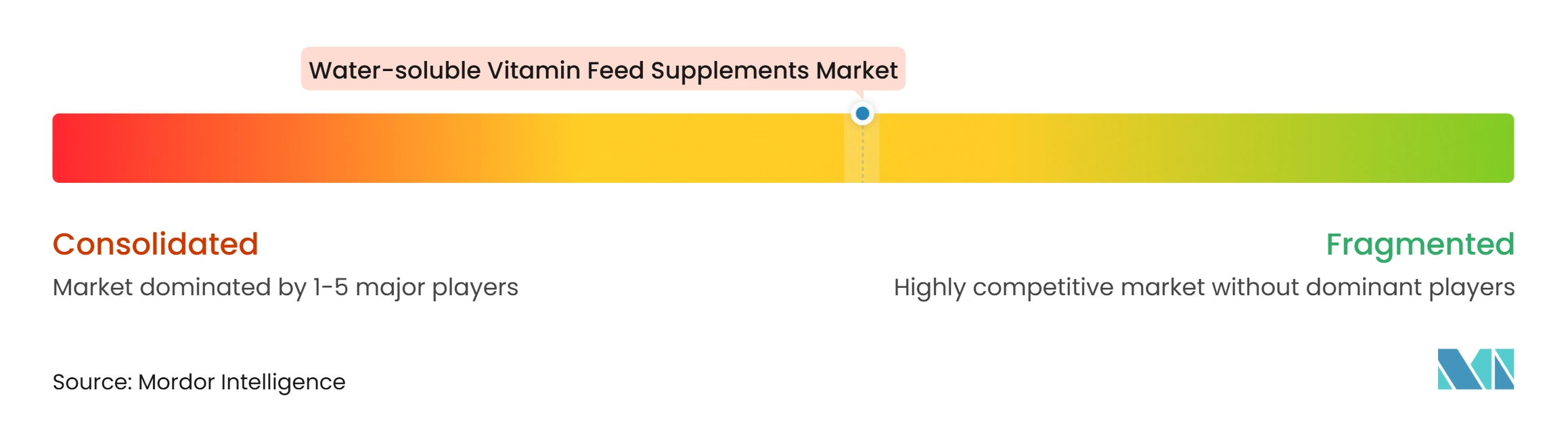
The water-soluble vitamin feed supplements market is moderately concentrated, with major suppliers maintaining distinct positions across production scale, formulation specialization, and regional service capabilities. DSM-Firmenich AG, BASF SE, Kemin Industries, Inc., Alltech Inc, and Nutreco N.V.'s Trouw Nutrition division are among the key suppliers, combining broad product portfolios with established manufacturing and distribution networks. Mid-tier specialists, including Orffa International Holding B.V, Vitafor, Impextraco NV, and Kaesler Nutrition GmbH, focus more on specialized formulations, such as stabilized and coated vitamin formats. This mix makes technical performance an important basis of competition alongside price, particularly for coated, stabilized, and water-administered formulations.
DSM-Firmenich AG received European Union authorization for Hy-D across aquaculture and all animal species in December 2025. The authorization expands the regulatory coverage of its fermentation-derived vitamin portfolio. Orffa International Holding B.V formed a distribution partnership with Co-Innova Animal Nutrition Technology in China in July 2025, supporting access to the Chinese market through a local distribution arrangement without requiring direct manufacturing investment.
Kemin Industries,Inc. offers water-stable Vitamin C through Vibrell C for aquaculture feed applications, demonstrating the use of formulation stability as a differentiation factor in specialized markets. DSM-Firmenich AG opened an Animal Nutrition and Health premix and additives plant in Sadat City, Egypt, in September 2024. The facility serves customers across Egypt, the Middle East, southern Europe, and Africa. Competitive opportunities remain in precision supplementation for smaller farms, integrated vitamin and probiotic programs, and diversified sourcing of vitamin intermediates. Suppliers that combine specialized formulations with application support can strengthen their position by helping producers address dosing, water-line sanitation, and species-specific nutritional requirements.
Water-soluble Vitamin Feed Supplements Industry Leaders
-
DSM-Firmenich AG
-
BASF SE
-
Kemin Industries, Inc.
-
Alltech, Inc.
-
Nutreco N.V.
- *Disclaimer: Major Players sorted in no particular order
Water-soluble Vitamin Feed Supplements Market Companies Covered in this Report
- DSM-Firmenich AG
- BASF SE
- Kemin Industries, Inc.
- Alltech, Inc.
- Nutreco N.V.
- Impextraco NV
- Orffa International Holding B.V.
- Vitafor N.V.
- Kaesler Nutrition GmbH
- Jefo Nutrition Inc.
- AdvaCare Pharma
- Durvet, Inc.
- BeFeed
- CENAVISA, S.L.
- TAV Veterinaria S.L. (Tavet Group)
Recent Industry Developments in Water-soluble Vitamin Feed Supplements Market
- September 2026: DSM-Firmenich AG launched Hy-D Poultry Tablets, a water-soluble formulation delivering 25-hydroxy Vitamin D₃ to support poultry during critical periods. The tablets dissolve within four to six minutes and are designed to provide targeted Vitamin D support when birds experience heat, enteric challenges, or reduced feed intake.
- July 2025: Orffa International Holding B.V. announced a strategic collaboration with Co-Innova Animal Nutrition Technology (Shanghai) Co., Ltd. to strengthen its presence in China. The partnership enables the distribution of Excential Energy Plus, a nutritional emulsifier, and Excential Selenium 4000, a selenium source, across key regions in China. The collaboration leverages Co-Innova's local network and technical capabilities and reflects Orffa International Holding B.V.'s continued investment in the Asia-Pacific animal nutrition market.
- July 2025: Alltech Inc increased its stake in Alltech Fennoaqua Oy, Finland, by acquiring Finnforel's ownership share, becoming the majority owner of Finland's only domestic fish feed production facility, reinforcing Alltech's commitment to sustainable northern European aquaculture nutrition with its water-soluble vitamin supplement portfolio.
Global Water-soluble Vitamin Feed Supplements Market Report Scope
The water-soluble vitamin feed supplements market comprises water-soluble vitamins formulated as feed supplements to provide essential micronutrients and support the health, growth, and productivity of livestock, poultry, aquaculture, and other animals.
The Water-soluble Vitamin Feed Supplements Report is Segmented by Vitamin Type (Vitamin B Complex and Vitamin C), by Animal (Poultry, Swine, Ruminants, Aquaculture, and Other Animals), by Form (Dry and Liquid), by Application Route (Feed Inclusion and Drinking Water Administration), and by Geography (North America, South America, Europe, Asia-Pacific, Middle East, Africa). The Market Forecasts are Provided in Terms of Value (USD).
Segmentation Overview
| Vitamin B Complex |
| Vitamin C |
| Poultry |
| Swine |
| Ruminants |
| Aquaculture |
| Other Animals |
| Dry |
| Liquid |
| Feed Inclusion |
| Drinking Water Administration |
| North America | Canada |
| Mexico | |
| United States | |
| Rest of North America | |
| South America | Argentina |
| Brazil | |
| Rest of South America | |
| Europe | France |
| Germany | |
| Italy | |
| Russia | |
| Spain | |
| United Kingdom | |
| Rest of Europe | |
| Asia-Pacific | Australia |
| China | |
| India | |
| Japan | |
| Rest of Asia-Pacific | |
| Middle East | Saudi Arabia |
| United Arab Emirates | |
| Turkey | |
| Rest of Middle East | |
| Africa | Egypt |
| Kenya | |
| South Africa | |
| Rest of Africa |
| By Vitamin Type | Vitamin B Complex | |
| Vitamin C | ||
| By Animal | Poultry | |
| Swine | ||
| Ruminants | ||
| Aquaculture | ||
| Other Animals | ||
| By Form | Dry | |
| Liquid | ||
| By Application Route | Feed Inclusion | |
| Drinking Water Administration | ||
| By Geography | North America | Canada |
| Mexico | ||
| United States | ||
| Rest of North America | ||
| South America | Argentina | |
| Brazil | ||
| Rest of South America | ||
| Europe | France | |
| Germany | ||
| Italy | ||
| Russia | ||
| Spain | ||
| United Kingdom | ||
| Rest of Europe | ||
| Asia-Pacific | Australia | |
| China | ||
| India | ||
| Japan | ||
| Rest of Asia-Pacific | ||
| Middle East | Saudi Arabia | |
| United Arab Emirates | ||
| Turkey | ||
| Rest of Middle East | ||
| Africa | Egypt | |
| Kenya | ||
| South Africa | ||
| Rest of Africa | ||
Key Questions Answered in the Report
What is the current size of the water-soluble vitamin feed supplements market?
The water-soluble vitamin feed supplements market was valued at USD 600 million in 2025 and is estimated at USD 640 million in 2026.
What value is forecast for water-soluble vitamin feed supplements by 2031?
The market is forecast to grow at USD 860 million by 2031, growing at a 6.10% CAGR from 2026 to 2031.
Which vitamin category leads demand for water-soluble feed supplements?
Vitamin B Complex led with 58% share in 2025 because it supports core metabolic functions across major animal production systems.
Which animal category is growing fastest in feed vitamin use?
Aquaculture is forecast to grow at a 6.8% CAGR from 2026 to 2031, supported by shrimp and finfish production.
Which region has the highest forecast growth for water-soluble feed vitamins?
North America is forecast to grow at 6.8% CAGR from 2026 to 2031, supported by commercial poultry expansion and low current supplementation penetration.