
Vocal Cord Paralysis Treatment Market Size and Share
Market Overview
| Study Period | 2020 - 2031 |
|---|---|
| Market Size (2026) | USD 3.41 Billion |
| Market Size (2031) | USD 4.29 Billion |
| Growth Rate (2026 - 2031) | 4.71 % |
| Fastest Growing Market | Asia-Pacific |
| Largest Market | North America |
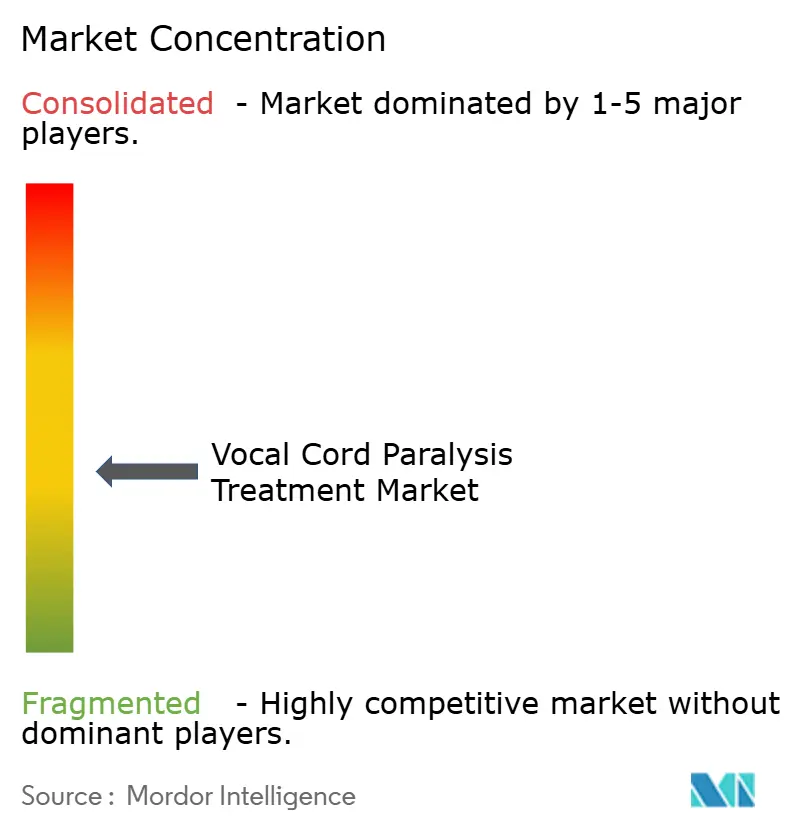
| Market Concentration | Medium |
Major Players *Disclaimer: Major Players sorted in no particular order Image © Mordor Intelligence. Reuse requires attribution under CC BY 4.0. | |
Vocal Cord Paralysis Treatment Market Analysis by Mordor Intelligence
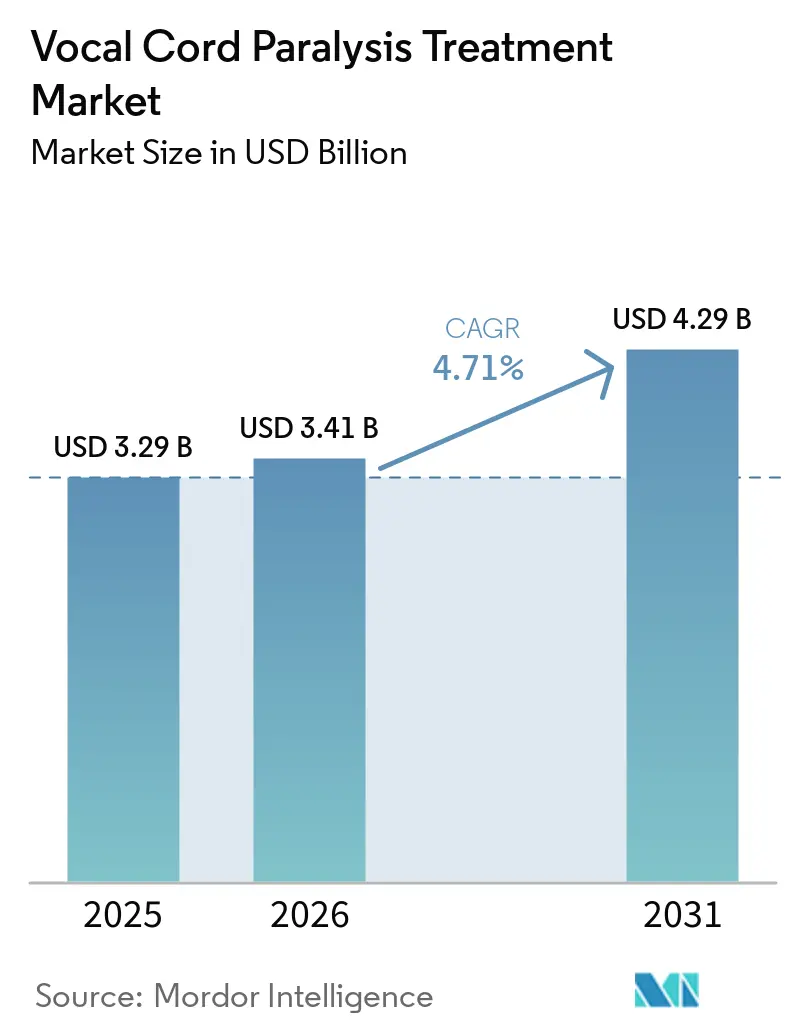
The Vocal Cord Paralysis Treatment Market size was valued at USD 3.29 billion in 2025 and is estimated to grow from USD 3.41 billion in 2026 to reach USD 4.29 billion by 2031, at a CAGR of 4.71% during the forecast period (2026-2031).
Growth is supported by a rising number of nerve injuries following thyroid, cervical spine, and cardiothoracic procedures. An aging population also increases the number of patients with neurological disorders and malignancies that affect vocal fold movement. The vocal cord paralysis treatment market is shifting toward earlier diagnosis and treatment, especially where aspiration risk or functional voice loss can be reduced. Office-based injections, tele-speech therapy, and improved imaging are moving more care beyond hospital operating rooms. Suppliers are responding by linking laryngoscopy, navigation, neuromonitoring, and voice assessment technologies within broader ENT care pathways.
Key Report Takeaways
- By type, unilateral vocal cord paralysis held 82.32% of the vocal cord paralysis treatment market share in 2025 and is projected to grow at a 5.12% CAGR through 2031.
- By treatment, surgical treatment accounted for 68.32% of the vocal cord paralysis treatment market size in 2025, while non-surgical treatment is forecast to grow at a 5.82% CAGR through 2031.
- By etiology, surgical trauma held 35.23% of revenue in 2025, while neurological disorders are projected to grow at a 5.79% CAGR through 2031.
- By treatment provider, hospitals held 55.36% of revenue in 2025, while specialty ENT and voice clinics are forecast to expand at a 6.34% CAGR through 2031.
- By geography, North America held 40.32% of revenue in 2025, while Asia-Pacific is projected to grow at a 6.45% CAGR through 2031.
Note: Market size and forecast figures in this report are generated using Mordor Intelligence’s proprietary estimation framework, updated with the latest available data and insights as of January 2026.
Market Trends and Insights
Drivers Impact Analysis of Vocal Cord Paralysis Treatment Market*
| Driver | (~) % Impact on CAGR Forecast | Geographic Relevance | Impact Timeline |
|---|---|---|---|
| Rising Thyroid, Cervical Spine, and Cardiothoracic Surgery | +1.4% | Global, with a core role in North America and Europe and rising relevance in Asia-Pacific | Long term (≥ 4 years) |
| Neurological and Malignancy-Associated Vocal Fold Dysfunction | +0.9% | Global, with the strongest relevance in Japan, Germany, Italy, and South Korea | Long term (≥ 4 years) |
| Office-Based Injectable Laryngoplasty | +0.7% | North America and Europe, with early adoption in Asia-Pacific urban centers | Medium term (2-4 years) |
| Earlier Intervention for Aspiration and Functional Loss | +0.5% | Global, especially in markets with active ENT specialist networks | Medium term (2-4 years) |
| Continuous Recurrent Laryngeal Nerve Monitoring Adoption | +0.6% | North America and Europe, especially Italy and Germany, with expansion into core Asia-Pacific markets | Long term (≥ 4 years) |
| AI-Assisted Laryngeal Imaging and Voice Assessment | +0.4% | Global urban markets, with early progress in the United States, Japan, and South Korea | Short term (≤ 2 years) |
| Source: Mordor Intelligence | |||
Rising Volume of Thyroid, Cervical Spine and Cardiothoracic Surgery
Iatrogenic injury during thyroid, parathyroid, and anterior cervical spine procedures remains a major path into the vocal cord paralysis treatment market. Recurrent laryngeal nerve injury occurs in 3%-8% of temporary cases and 1%-3% of permanent cases after thyroid surgery.[1]A 2025 randomized trial found that intraoperative neuromonitoring reduced temporary paralysis from 10% to 2% during open thyroid cancer surgery[2]. The same study found that monitored patients recovered their voice nearly 11 days sooner. Wider monitoring use can reduce new injuries, but it also supports demand for monitoring hardware, electromyography endotracheal tubes, and software. Integration with robotic and navigation systems, including Medtronic’s Stealth AXiS platform, may lower adoption barriers for these technologies.
Growing Neurological and Malignancy-Associated Vocal Fold Dysfunction
Neurological and oncology-related cases are expanding faster than surgical trauma cases in the vocal cord paralysis treatment market. Stroke, Parkinson’s disease, and head and neck malignancies can impair or compress recurrent laryngeal nerve pathways. A 2024 tertiary-center study identified neoplastic causes in 32.9% of cases and neurological causes in 8.2% of cases[3]. Lung cancer was the most frequent primary cancer within the neoplastic group. These patients often experience progressive or fluctuating symptoms rather than an immediate postsurgical loss of voice. Delayed presentation can increase treatment intensity and support closer laryngeal screening within neurology and oncology care.
Shift Toward Office-Based Injectable Laryngoplasty
The movement of injectable laryngoplasty into office settings is expanding access and changing where revenue is generated. Lower office reimbursement can be offset by higher procedure volumes and shorter scheduling times. This pattern favors specialty clinics that can perform awake injections and coordinate follow-up therapy. The vocal cord paralysis treatment market, therefore, has a broader route to treatment for patients who do not need a hospital operating room.
Earlier Intervention to Reduce Aspiration and Functional Loss
Many centers are narrowing the traditional 6-12 month wait before definitive intervention for suitable patients. Early temporary injection can reduce aspiration risk and help preserve glottic muscle tone during observation. A 2025 multicenter study in Malaysia found better outcomes from early surgical intervention than from conservative management.[4] The need for earlier action is especially relevant after pediatric cardiac surgery, where survival has improved, but diagnostic protocols remain inconsistent. Hyaluronic acid and calcium hydroxylapatite can provide temporary augmentation while recovery is assessed. This approach can increase the use of injectable materials while improving timely access to care. The Food and Drug Administration’s 510(k) pathway and Europe’s Medical Device Regulation shape validation and adoption for monitoring systems, AI-assisted diagnostic platforms, and laryngeal implants.
Restraints Impact Analysis of Vocal Cord Paralysis Treatment Market*
| Restraint | (~) % Impact on CAGR Forecast | Geographic Relevance | Impact Timeline |
|---|---|---|---|
| High Procedure Costs and Reimbursement Variability | -0.9% | Global, most acute in the United States and Europe and structural in lower-income Asia-Pacific and Middle East and Africa countries | Long term (≥ 4 years) |
| Shortage of Laryngologists and Specialized Speech-Language Pathologists | -0.6% | United States and rural markets globally, with similar constraints in the Middle East and South America | Long term (≥ 4 years) |
| Variable Recovery and Treatment Outcomes | -0.4% | Global | Medium term (2-4 years) |
| Limited Interoperability of Voice, Imaging, and Outcome Data | -0.3% | Global urban markets with fragmented electronic health record systems | Short term (≤ 2 years) |
| Source: Mordor Intelligence | |||
High Procedure Costs and Reimbursement Variability
Reimbursement differences create major access gaps for voice therapy, even when emergency airway procedures remain available. A 2025 study found that nearly half of patients referred for voice therapy did not start treatment. Insurance was the primary reason cited by those patients. Medicaid and several commercial plans can limit the number of sessions before functional recovery is complete. Site-neutral payment reforms are also reducing the historic reimbursement premium for hospital-based medialization thyroplasty. Documentation requirements for CPT 31591 and HCPCS L8607 can concentrate procedures in high-volume practices with stronger coding capacity.
Shortage of Laryngologists and Specialized Speech-Language Pathologists
Workforce distribution limits access even where overall procedure capacity appears adequate. The United States had 349 active primary laryngologists, while 63% of hospital referral regions had no specialist. The laryngology fellowship applicant-to-position ratio fell to 0.63 in 2025, leaving 50% of positions unfilled. The speech-language workforce faces a related capacity gap, with 3.4 million children needing services and only 60,000 speech-language pathologists available in the United States. This shortage can limit near-term treatment volume while encouraging the use of tele-speech platforms. Differences in patient recovery and fragmented voice, imaging, and outcome data further complicate consistent care across sites.
*Our forecasts treat driver/restraint impacts as directional, not additive. The impact forecasts reflect baseline growth, mix effects, and variable interactions.
Vocal Cord Paralysis Treatment Market Segment Analysis
By Type:
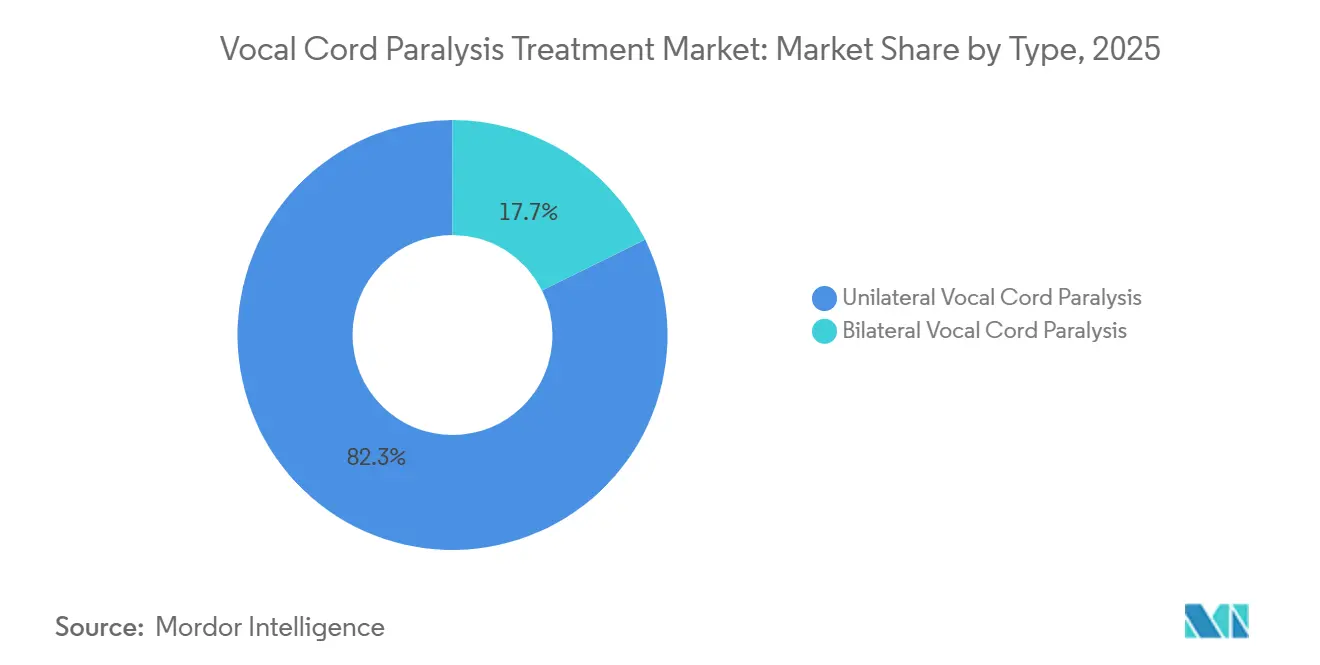
Unilateral Vocal Cord Paralysis Defines the Commercial CoreUnilateral vocal cord paralysis held 82.32% of the type segment in 2025 and is projected to expand at a 5.12% CAGR through 2031. The vocal cord paralysis treatment market centers on this form because it has the highest case frequency and several treatment routes. Those routes include temporary hyaluronic acid injection, medialization thyroplasty, and laryngeal reinnervation, each with different devices and materials. A pooled analysis of 967 patients across 5 studies found that unilateral cases occurred 3 times as often as bilateral cases, with iatrogenic surgical trauma as the leading cause.
By Treatment:
Surgical Treatment Remains Largest While Non-Surgical Care ExpandsSurgical treatment commanded 68.32% of the vocal cord paralysis treatment market size in 2025. It includes medialization thyroplasty, injection laryngoplasty, reinnervation, arytenoid adduction, and tracheotomy. These procedures remain important for persistent impairment or airway compromise. A 2025 meta-analysis of 896 patients across 13 studies compared injection laryngoplasty with medialization thyroplasty. It found comparable improvement in key voice measures, while injection laryngoplasty improved short-term jitter and thyroplasty improved long-term shimmer.
Non-surgical treatment is forecast to grow at a 5.82% CAGR through 2031. Digital and tele-speech therapy can extend care beyond specialist centers in the vocal cord paralysis treatment market. A 2026 study validated a high-sensitivity AI model for laryngeal lesion screening using the Bridge2AI-Voice dataset. The result supports telemedicine-ready assessment in underserved areas. A 2026 survey of 119 otorhinolaryngologists found that Korea and Taiwan favored injection laryngoplasty, while Japan favored laryngeal framework surgery.
By Etiology:
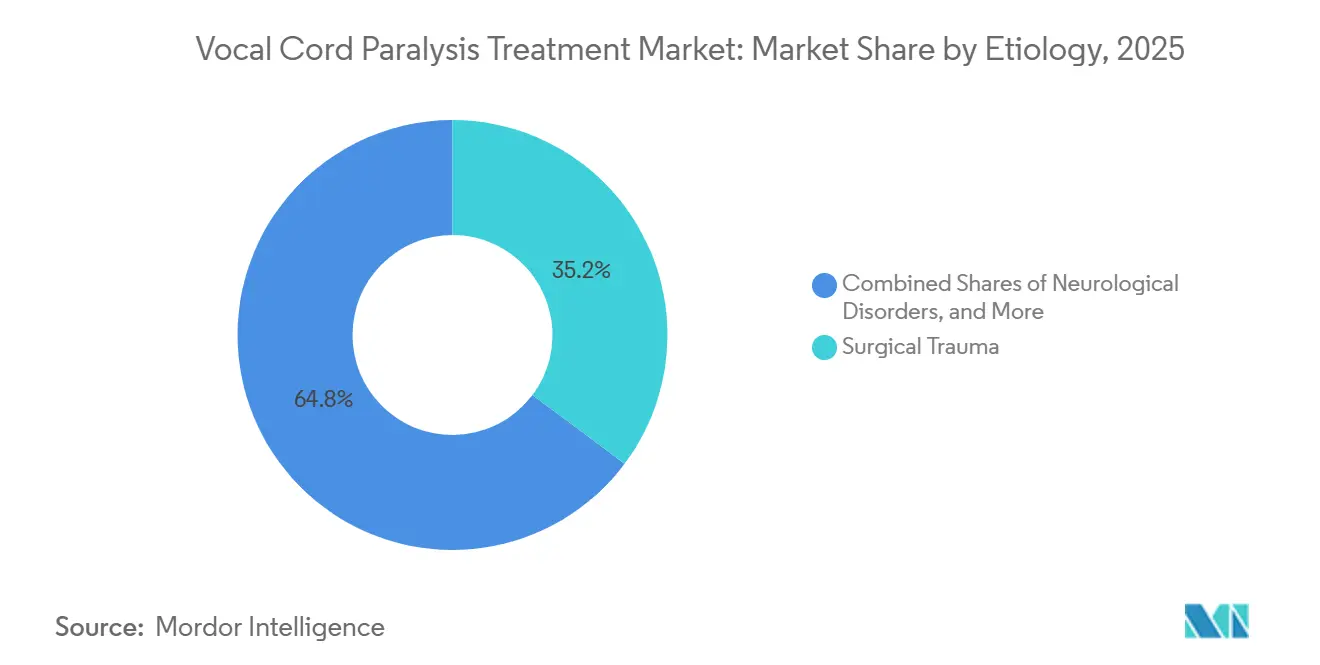
Surgical Trauma Leads While Neurological Disorders AccelerateSurgical trauma held 35.23% of the etiology segment in 2025. Injury during thyroid, parathyroid, cardiac, and cervical spine surgery remains the largest identifiable cause of vocal fold paralysis. Post-thyroidectomy incidence ranges from 0.5%-9.5%, depending on procedure complexity and monitoring use. The 2025 Russian cohort attributed 71% of cases to iatrogenic intraoperative trauma. Malignancy and idiopathic or post-viral conditions also remain meaningful patient groups.
Neurological disorders are projected to grow at a 5.79% CAGR through 2031, the fastest rate among etiologies. Parkinson’s disease, multiple sclerosis, and cerebrovascular events can create progressive vocal fold immobility and require joint neurology and laryngology care. A systematic review found a 31.6% spontaneous recovery rate for idiopathic paralysis over a mean of 139.4 days.
By Treatment Provider:
Hospitals Remain Central While Specialty Clinics Gain GroundHospitals held 55.36% of the treatment provider segment in 2025. They remain central for thyroplasty, arytenoid adduction, tracheotomy, and reinnervation surgery because these procedures can need general anesthesia and specialized infrastructure. Ambulatory surgical centers are taking on injection procedures previously performed in hospital operating rooms. Shorter scheduling times and lower care costs support this transition. Specialty ENT and voice clinics are forecast to grow at a 6.34% CAGR through 2031, supported by awake injections, office stroboscopy, and direct follow-up care.
Geography Analysis
North America Vocal Cord Paralysis Treatment Market
North America held 40.32% of regional revenue in 2025. The vocal cord paralysis treatment market benefits in the region from specialist capacity, established reimbursement, and coverage for injectable bulking agents. The United States has many tertiary voice centers but uneven access beyond major metropolitan areas. The lack of an active primary laryngologist in 63% of hospital referral regions supports tele-speech therapy and AI-enabled office diagnostics. Canada covers core procedures at major academic centers, while Mexico’s private hospitals are expanding ENT surgical capacity.
Europe and APAC Vocal Cord Paralysis Treatment Market
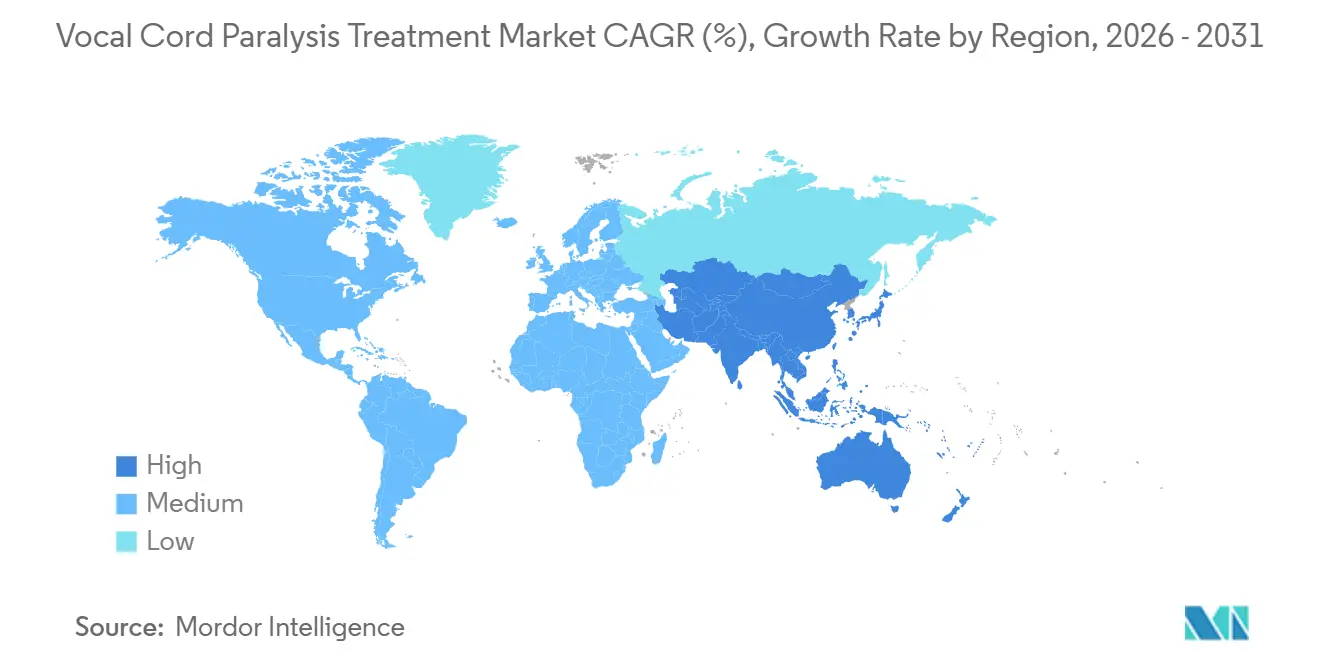
Europe is the second-largest regional area in the vocal cord paralysis treatment market, with Germany, France, the United Kingdom, and Italy anchoring demand. Germany’s formal voice therapy framework supports rehabilitation after diagnosis. Asia-Pacific is projected to grow at a 6.45% CAGR through 2031, the fastest regional pace in the vocal cord paralysis treatment market. Japan, South Korea, and China have expanding laryngology communities and rising procedure awareness. A 2026 survey found that Japan preferred laryngeal framework surgery, while Korea and Taiwan preferred injection laryngoplasty.
Competitive Landscape
The vocal cord paralysis treatment market is moderately concentrated at the highest level of care and fragmented below it. Mayo Clinic, Cleveland Clinic, Mass General Brigham, and Johns Hopkins Medicine are major referral centers for complex laryngology in the United States. Regional tertiary hospitals and community ENT departments form a much broader group with uneven laryngology capability. Competition is shaped by procedural innovation, research output, clinical trial activity, and digital care infrastructure. Academic centers also compete for referral volume by offering multidisciplinary voice, swallowing, and airway services.
Mass General Brigham is developing real-time AI-based vocal fold motion tracking from standard laryngoscopy video. The tool is intended to quantify motion and vibratory behavior during routine assessment. Mount Sinai Health System has also advanced 3D paraglottic-space modeling for implant customization in medialization thyroplasty. These programs show how clinical engineering and digital assessment can strengthen specialist-center differentiation.
Vocal Cord Paralysis Treatment Industry Leaders
-
Mayo Clinic
-
Cleveland Clinic
-
Johns Hopkins Medicine
-
Massachusetts General Hospital and Mass Eye and Ear
-
Stanford Health Care and Stanford Medicine
- *Disclaimer: Major Players sorted in no particular order
Vocal Cord Paralysis Treatment Market Companies Covered in this Report
- All India Institute of Medical Sciences
- Apollo Hospitals Enterprise Limited
- Charité - Universitätsmedizin Berlin
- Cleveland Clinic
- Johns Hopkins Medicine
- King Faisal Specialist Hospital and Research Centre
- Mass General Brigham
- Mayo Clinic
- Mount Sinai Health System
- NYU Langone Health
- Royal National Ear, Nose and Throat Hospital
- Sheba Medical Center
- Singapore General Hospital
- Stanford Health Care
- Toronto General Hospital
- UCSF Health
- University Hospital Heidelberg
- University Hospital Zurich
- University of Michigan Health
- University of Pittsburgh Medical Center
Recent Industry Developments in Vocal Cord Paralysis Treatment Market
- March 2026: Greater Baltimore Medical Center and Laronix, Inc. launched an investigational study of Laronix MIRA Voice for ICU patients with voice loss after tracheostomy or intubation.
- February 2026: The University of South Florida opened the Institute for Voice, Hearing and Swallowing Care and Research. The institute combines clinical research, patient care, and AI-laryngology collaboration.
Global Vocal Cord Paralysis Treatment Market Report Scope
As per the scope of the report, vocal cord paralysis is a condition characterized by the inability of one or both vocal cords (also known as vocal folds) to move properly. This paralysis can lead to symptoms such as hoarseness, breathiness, difficulty swallowing, and compromised voice quality.
The vocal cord paralysis treatment market report segments the market by type, including unilateral vocal cord paralysis (left-sided unilateral vocal cord paralysis and right-sided unilateral vocal cord paralysis) and bilateral vocal cord paralysis (acute bilateral vocal cord paralysis and chronic bilateral vocal cord paralysis). Based on treatment, the market is categorized into surgical treatment and non-surgical treatment. Surgical treatment includes medialization thyroplasty, injection laryngoplasty, laryngeal reinnervation surgery, arytenoid adduction, tracheotomy, and other surgical treatments. Non-surgical treatment comprises voice therapy, observation and conservative management, electromyography-guided treatment, and digital and tele-speech therapy. By etiology, the market is segmented into surgical trauma, neurological disorders, malignancies, idiopathic and post-viral conditions, trauma and mechanical injury, infections and inflammatory disorders, and other causes. Based on treatment provider, the market is divided into hospitals, ambulatory surgical centers, specialty ENT and voice clinics, and rehabilitation centers.
Geographically, the market is segmented into North America, Europe, Asia-Pacific, the Middle East & Africa, and South America. The market report also covers the estimated market sizes and trends for 17 countries across major regions globally. For each segment, the market size and forecast are provided in terms of value (USD).
Segmentation Overview
| Unilateral Vocal Cord Paralysis | Left-Sided Unilateral Vocal Cord Paralysis |
| Right-Sided Unilateral Vocal Cord Paralysis | |
| Bilateral Vocal Cord Paralysis | Acute Bilateral Vocal Cord Paralysis |
| Chronic Bilateral Vocal Cord Paralysis |
| Surgical Treatment | Medialization Thyroplasty |
| Injection Laryngoplasty | |
| Laryngeal Reinnervation Surgery | |
| Arytenoid Adduction | |
| Tracheotomy | |
| Other Surgical Treatments | |
| Non-Surgical Treatment | Voice Therapy |
| Observation and Conservative Management | |
| Electromyography-Guided Treatment | |
| Digital and Tele-Speech Therapy |
| Surgical Trauma |
| Neurological Disorders |
| Malignancies |
| Idiopathic and Post-Viral Conditions |
| Trauma and Mechanical Injury |
| Infections and Inflammatory Disorders |
| Others |
| Hospitals |
| Ambulatory Surgical Centers |
| Specialty ENT and Voice Clinics |
| Rehabilitation Centers |
| North America | United States |
| Canada | |
| Mexico | |
| Europe | Germany |
| United Kingdom | |
| France | |
| Italy | |
| Spain | |
| Rest of Europe | |
| Asia-Pacific | China |
| India | |
| Japan | |
| Australia | |
| South Korea | |
| Rest of Asia-Pacific | |
| Middle East and Africa | GCC |
| South Africa | |
| Rest of Middle East and Africa | |
| South America | Brazil |
| Argentina | |
| Rest of South America |
| By Type | Unilateral Vocal Cord Paralysis | Left-Sided Unilateral Vocal Cord Paralysis |
| Right-Sided Unilateral Vocal Cord Paralysis | ||
| Bilateral Vocal Cord Paralysis | Acute Bilateral Vocal Cord Paralysis | |
| Chronic Bilateral Vocal Cord Paralysis | ||
| By Treatment | Surgical Treatment | Medialization Thyroplasty |
| Injection Laryngoplasty | ||
| Laryngeal Reinnervation Surgery | ||
| Arytenoid Adduction | ||
| Tracheotomy | ||
| Other Surgical Treatments | ||
| Non-Surgical Treatment | Voice Therapy | |
| Observation and Conservative Management | ||
| Electromyography-Guided Treatment | ||
| Digital and Tele-Speech Therapy | ||
| By Etiology | Surgical Trauma | |
| Neurological Disorders | ||
| Malignancies | ||
| Idiopathic and Post-Viral Conditions | ||
| Trauma and Mechanical Injury | ||
| Infections and Inflammatory Disorders | ||
| Others | ||
| By Treatment Provider | Hospitals | |
| Ambulatory Surgical Centers | ||
| Specialty ENT and Voice Clinics | ||
| Rehabilitation Centers | ||
| By Geography | North America | United States |
| Canada | ||
| Mexico | ||
| Europe | Germany | |
| United Kingdom | ||
| France | ||
| Italy | ||
| Spain | ||
| Rest of Europe | ||
| Asia-Pacific | China | |
| India | ||
| Japan | ||
| Australia | ||
| South Korea | ||
| Rest of Asia-Pacific | ||
| Middle East and Africa | GCC | |
| South Africa | ||
| Rest of Middle East and Africa | ||
| South America | Brazil | |
| Argentina | ||
| Rest of South America | ||
Key Questions Answered in the Report
What is the projected value of the Vocal Cord Paralysis Treatment Market by 2031?
The vocal cord paralysis treatment market is forecast to reach USD 4.29 billion by 2031, growing from USD 3.41 billion in 2026 at a 4.71% CAGR.
Which form of vocal cord paralysis is most common?
Unilateral vocal cord paralysis led the type segment with 82.32% share in 2025 and is projected to grow at a 5.12% CAGR through 2031. It has the widest set of treatment routes, including temporary injection, thyroplasty, and laryngeal reinnervation.
Which treatments are growing fastest for vocal cord paralysis?
Non-surgical treatment is expected to grow at a 5.82% CAGR through 2031. Tele-speech therapy and digital assessment can extend care beyond tertiary centers, although surgical treatment remained the largest treatment category in 2025 because it covers several complex procedures.
Which region will grow fastest through 2031?
Asia-Pacific is forecast to grow at a 6.45% CAGR through 2031. The vocal cord paralysis treatment market in the region reflects higher thyroid surgery volumes, greater procedural awareness, and distinct treatment preferences in Japan, Korea, and Taiwan.
What limits access to vocal cord paralysis care?
Insurance gaps and specialist shortages are major barriers. Nearly half of patients recommended for voice therapy did not begin treatment in a 2025 study, while the absence of specialists in many referral regions concentrates complex cases in metropolitan centers.