
Vitamin Ingredients Market Size and Share
Market Overview
| Study Period | 2022 - 2032 |
|---|---|
| Market Size (2027) | USD 6.63 Billion |
| Market Size (2032) | USD 8.83 Billion |
| Growth Rate (2027 - 2032) | 5.90 % |
| Fastest Growing Market | Asia-Pacific |
| Largest Market | North America |
| Market Concentration | Medium |
Major Players *Disclaimer: Major Players sorted in no particular order Image © Mordor Intelligence. Reuse requires attribution under CC BY 4.0. | |
Vitamin Ingredients Market Analysis by Mordor Intelligence
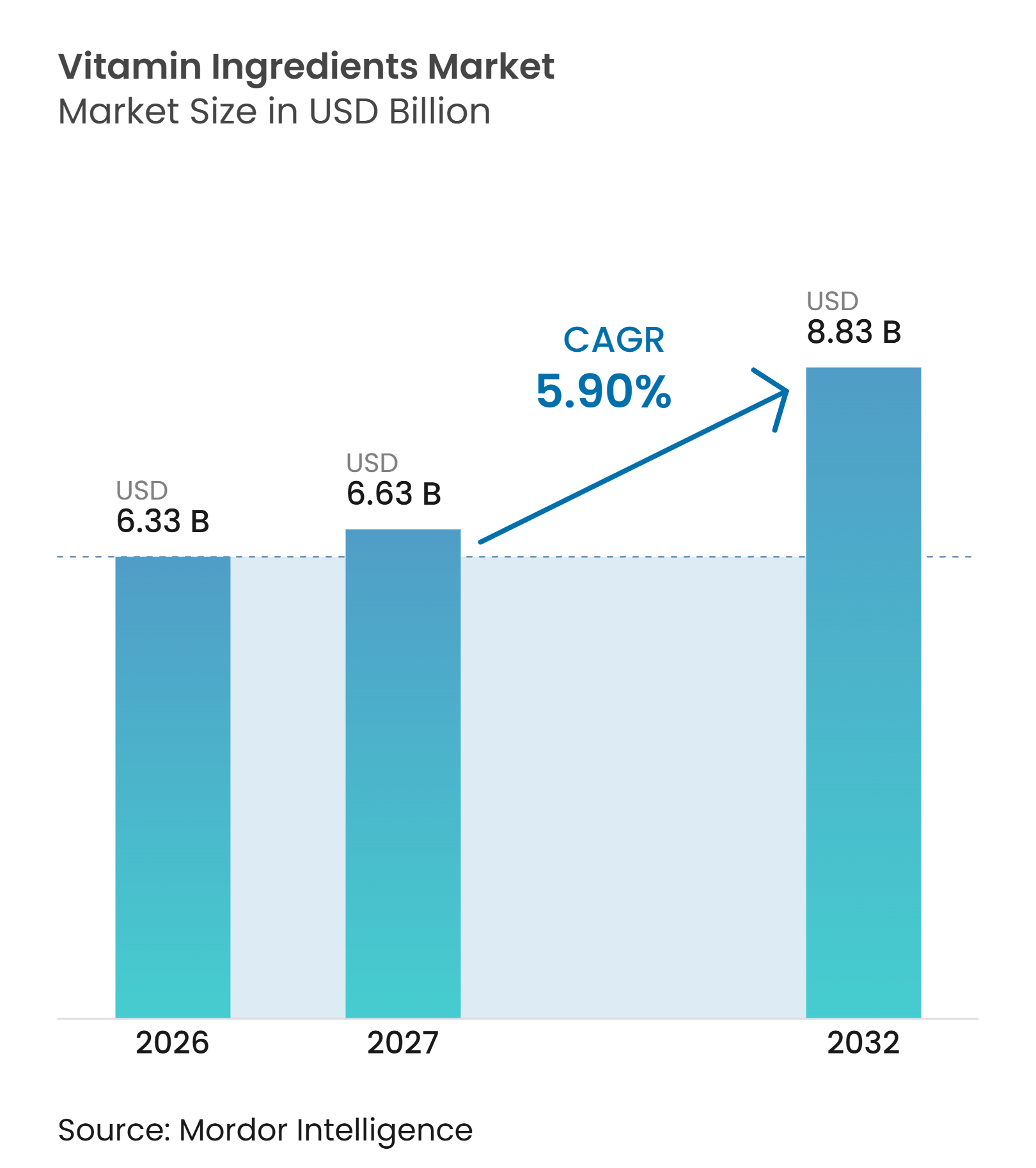
The vitamin ingredients market size is expected to grow from USD 6.33 billion in 2026 to USD 6.63 billion in 2027 and is forecast to reach USD 8.83 billion by 2032 at a 5.90% CAGR over 2027-2032. The market is experiencing steady growth, supported by increasing demand for nutritional enrichment, preventive healthcare, and functional ingredients across food, pharmaceutical, dietary supplement, and personal care applications. Growing awareness of micronutrient deficiencies and the importance of maintaining adequate nutrient intake is encouraging manufacturers to incorporate vitamins into a wider range of products. Advancements in ingredient production, including fermentation and biotechnology-based processes, are also supporting the development of more efficient and sustainable sourcing solutions. Additionally, the expanding use of vitamins in clinical nutrition, fortified foods, and functional beauty formulations is broadening their industrial applications. Continuous product innovation and evolving formulation requirements are further shaping demand for specialized vitamin ingredients across end-use industries.
Key Report Takeaways
-
By product type, Vitamin B held 29.73% of the Vitamin ingredients market share in 2026, while Vitamin D is forecast to grow at a 7.83% CAGR from 2027 to 2032.
-
By source, plant-based ingredients held 60.87% of the Vitamin ingredients market share in 2026, while microbial-based ingredients are forecast to grow at an 8.17% CAGR from 2027 to 2032.
-
By form, dry ingredients held 77.64% of the Vitamin ingredients market size in 2026, while liquid ingredients are forecast to grow at a 7.71% CAGR from 2027 to 2032.
-
By application, dietary supplements held 33.86% of the Vitamin ingredients market size in 2026, while personal care and cosmetics are forecast to grow at an 8.24% CAGR from 2027 to 2032.
-
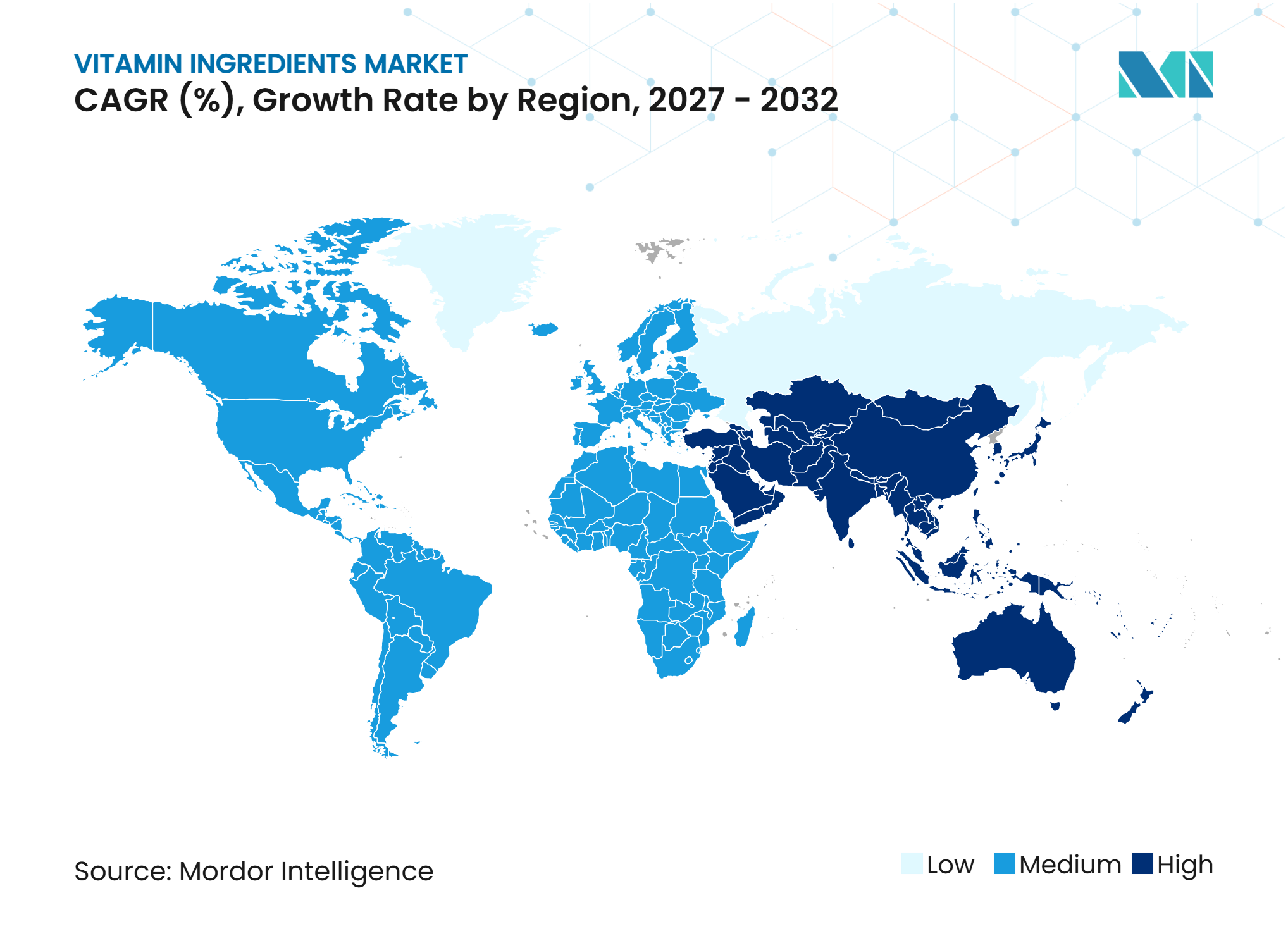
By geography, North America held 36.28% of the Vitamin ingredients market in 2026, while Asia-Pacific is forecast to grow at an 8.13% CAGR from 2027 to 2032.
Note: Market numbers in this report are based on Mordor Intelligence's proprietary estimation framework, which combines nine months of actuals with Q4 projections for base year 2026.
Market Trends and Insights
Drivers Impact Analysis of Vitamin Ingredients Market*
| Driver | (~) % Impact on CAGR Forecast | Geographic Relevance | Impact Timeline |
|---|---|---|---|
| Rising micronutrient deficiencies and preventive nutrition awareness | +1.2% | Global, with highest intensity in Sub-Saharan Africa and South Asia | Medium term (2–4 years) |
| Expansion of mandatory and voluntary food fortification | +0.9% | Global; near-term gains in Sub-Saharan Africa, South Asia, and South America | Medium term (2–4 years) |
| Growing consumption of vitamin-based dietary supplements | +1.0% | North America, Europe, Asia; emerging gains in India and Southeast Asia | Short term (≤ 2 years) |
| Increasing incorporation of vitamins into functional foods, beverages, and infant nutrition | +0.8% | Asia-Pacific core, spill-over to Africa; established in North America and Europe | Medium term (2–4 years) |
| Growing demand for pharmaceutical and clinical nutrition applications | +0.7% | North America and Europe; accelerating in Japan and South Korea | Long term (≥ 4 years) |
| Ageing population and rising demand for healthy-ageing nutrition | +0.6% | Japan, Western Europe, North America; long-term in China and Southeast Asia | Long term (≥ 4 years) |
| Source: Mordor Intelligence | |||
Rising Micronutrient Deficiencies and Preventive Nutrition Awareness
Persistent micronutrient deficiencies and growing awareness of their health implications are strengthening demand for vitamin ingredients across nutritional and healthcare applications. According to the World Health Organization (WHO), approximately 30% of women aged 15–49 years and 40% of children aged 6–59 months globally were affected by anaemia in 2025, highlighting the continuing need for improved micronutrient intake[1]. Furthermore, the Centers for Disease Control and Prevention's (CDC) 2026 nutrition assessment identified an increase of nearly 6 percentage points in both folate insufficiency and iron deficiency among women of reproductive age across the assessed survey periods. These nutritional gaps are encouraging greater emphasis on preventive nutrition, food fortification, dietary supplementation, and the incorporation of essential vitamins into functional food and healthcare formulations, supporting sustained demand for vitamin ingredients.
Expansion of Mandatory and Voluntary Food Fortification
The expansion of mandatory food fortification regulations and voluntary enrichment initiatives is strengthening demand for vitamin ingredients across food manufacturing applications. According to the Food Fortification Initiative (FFI), as of 2026, 86 countries had legislation mandating the fortification of at least one industrially milled cereal grain, including wheat flour, maize flour, or rice[2]. This growing regulatory emphasis is encouraging food manufacturers to incorporate essential vitamins, particularly folic acid, vitamin A, and B-group vitamins, into staple foods and processed food formulations. Additionally, voluntary fortification initiatives are broadening the use of vitamin ingredients in everyday food products, supporting demand from manufacturers seeking to improve the nutritional composition of their offerings.
Growing Consumption of Vitamin-Based Dietary Supplements
Growing consumer interest in preventive healthcare, nutritional self-care, and daily wellness routines is supporting demand for vitamin ingredients used in dietary supplements. According to a September 2026 survey by the Pew Research Center, 67% of United States adults reported currently taking vitamin or mineral supplements for their health, highlighting the widespread adoption of these products[3]. Increasing awareness of the role of essential vitamins in supporting immunity, bone health, energy metabolism, and general nutritional well-being is encouraging regular supplement consumption. This is supporting manufacturers' demand for a broader range of vitamin ingredients for multivitamins, single-vitamin formulations, and targeted nutritional supplements.
Increasing Incorporation of Vitamins into Functional Foods, Beverages, and Infant Nutrition
The growing demand for nutritionally enriched food and beverage products is encouraging manufacturers to incorporate vitamins into a wider range of everyday consumables. Increasing consumer preference for functional foods that offer benefits beyond basic nutrition is supporting the use of vitamin ingredients in fortified beverages, dairy products, cereals, nutritional bars, and ready-to-consume formulations. Additionally, the emphasis on balanced nutrition during early childhood is sustaining the incorporation of essential vitamins into infant formula, fortified baby foods, and specialized nutritional products. These applications are broadening the use of vitamin ingredients across food and beverage manufacturing while creating additional demand for application-specific formulations.
Restraints Impact Analysis of Vitamin Ingredients Market*
| Restraint | (~) % Impact on CAGR Forecast | Geographic Relevance | Impact Timeline |
|---|---|---|---|
| Raw-material, energy, and intermediate price volatility | -0.9% | Global; most acute in China, the United States, and Europe processing hubs | Short term (≤ 2 years) |
| Regulatory fragmentation and restrictions on vitamin-related health claims | -0.7% | Europe and cross-border markets; increasing in Asia-Pacific | Medium term (2–4 years) |
| Geographical concentration of global vitamin manufacturing and precursor supply | -0.5% | Global, with Europe and North America most exposed | Long term (≥ 4 years) |
| Vitamin degradation and retention challenges during processing and storage | -0.4% | Global; most acute in tropical climates and long supply chains | Medium term (2–4 years) |
| Source: Mordor Intelligence | |||
Raw-Material, Energy, and Intermediate Price Volatility
Fluctuations in the prices of raw materials, energy, and chemical intermediates can affect the production costs of vitamin ingredients. Manufacturing processes rely on various inputs, including petrochemical derivatives, fermentation substrates, solvents, nutrients, and specialized processing materials, whose prices can vary with supply-demand conditions and energy costs. Changes in the availability and cost of these inputs can increase production expenses, affecting manufacturers' operating margins and pricing strategies. Additionally, energy-intensive processing, purification, and drying operations expose producers to variations in electricity and fuel costs. These cost fluctuations can create uncertainty in procurement planning and make it challenging for manufacturers to maintain consistent production economics.
Regulatory Fragmentation and Restrictions on Vitamin-Related Health Claims
Differences in regulatory requirements across countries can create compliance complexities for manufacturers of vitamin ingredients and finished formulations. Variations in permitted vitamin levels, ingredient specifications, product registration procedures, labelling requirements, and health-claim approvals require manufacturers to adapt their products to individual market regulations. Restrictions on the use of nutritional and health-related claims can also influence how vitamin benefits are communicated in product labelling and marketing materials. Consequently, manufacturers must allocate resources to regulatory assessment, documentation, testing, and product reformulation to meet varying requirements. These differences can increase product development timelines and operational complexity, particularly for companies supplying multiple international markets.
*Our forecasts treat driver/restraint impacts as directional, not additive. The impact forecasts reflect baseline growth, mix effects, and variable interactions.
Vitamin Ingredients Market Segment Analysis
By Product Type:
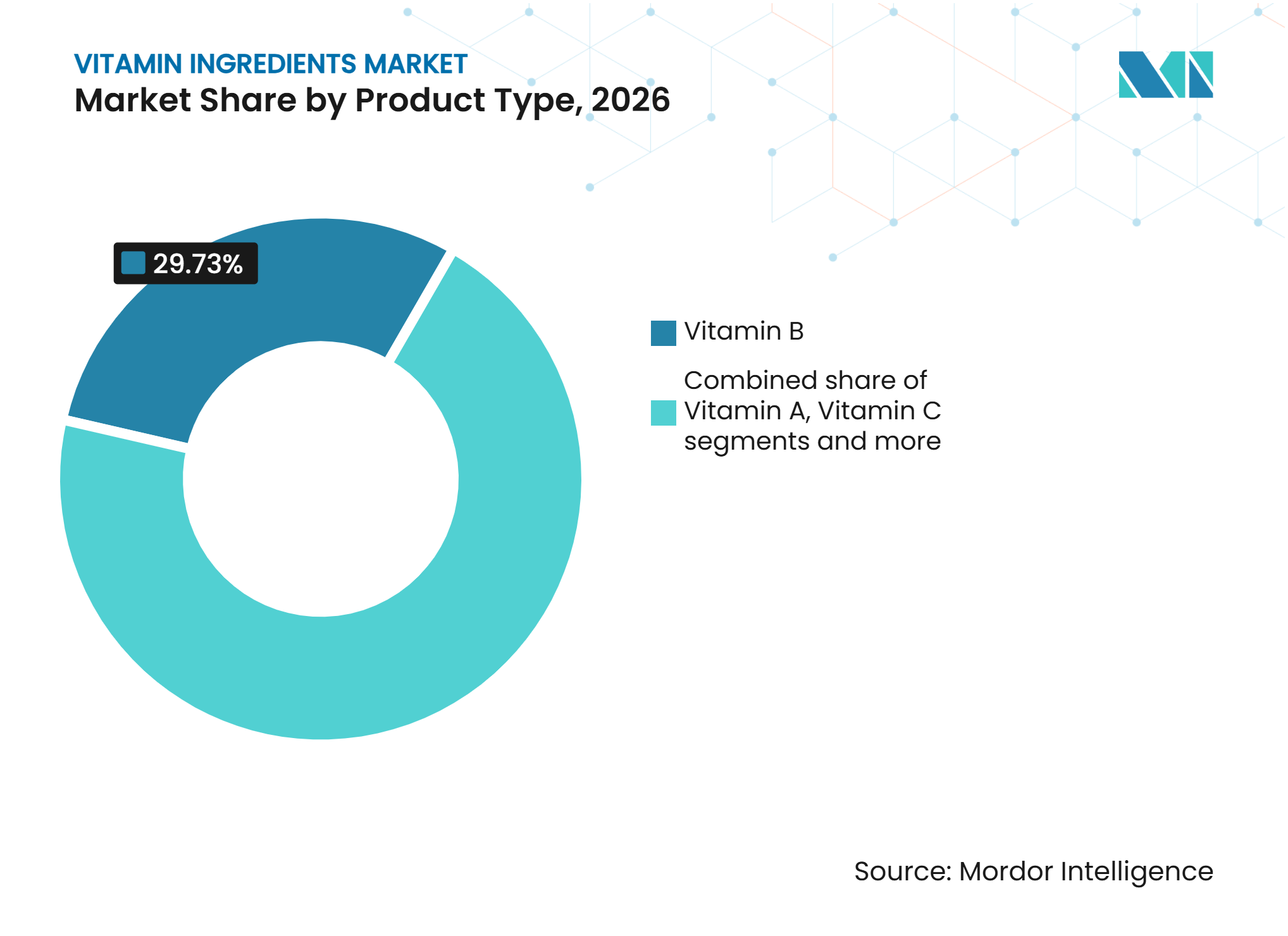
Vitamin D Outpaces the Field in GrowthVitamin B represents the largest product category in the vitamin ingredients market, accounting for 29.73% of the market in 2026. Its leading position is supported by its broad applicability across dietary supplements, food fortification, pharmaceutical formulations, and personal care products. The widespread incorporation of B-group vitamins into nutritional and functional formulations sustains demand across multiple end-use industries. Their versatility and established use in commercial formulations further support their significant market share.
Vitamin D is the fastest-growing product category, registering a projected CAGR of 7.83% over 2027–2032. Its growth is supported by increasing incorporation into dietary supplements, fortified foods, clinical nutrition products, and personal care formulations. Growing awareness of its role in bone health and immune function is encouraging its use across nutritional applications. Additionally, its expanding use in skincare formulations is broadening demand beyond conventional nutrition products and supporting its growth across end-use industries.



By Source:
Microbial Routes Gain Ground on Plant DominancePlant-based sourcing represents the largest source category in the vitamin ingredients market, accounting for 60.87% of the market in 2026. Its leading position is supported by growing demand for naturally derived ingredients across food, dietary supplement, and personal care applications. Increasing preference for plant-derived formulations is encouraging manufacturers to incorporate these ingredients into products targeting vegan, clean-label, and non-genetically modified organism (non-GMO) requirements. Their compatibility with evolving formulation preferences further supports their established position in the market.
Microbial-based sourcing is the fastest-growing production route, registering a projected CAGR of 8.17% over 2027–2032. Its growth is supported by advancements in fermentation technologies, microbial strain development, and biotechnology-based production processes. These approaches are expanding the possibilities for producing vitamins through controlled biological processes while improving production efficiency. Increasing interest in alternative production methods and consistent ingredient quality is further encouraging the adoption of microbial-based vitamin manufacturing across industrial applications.
By Form:
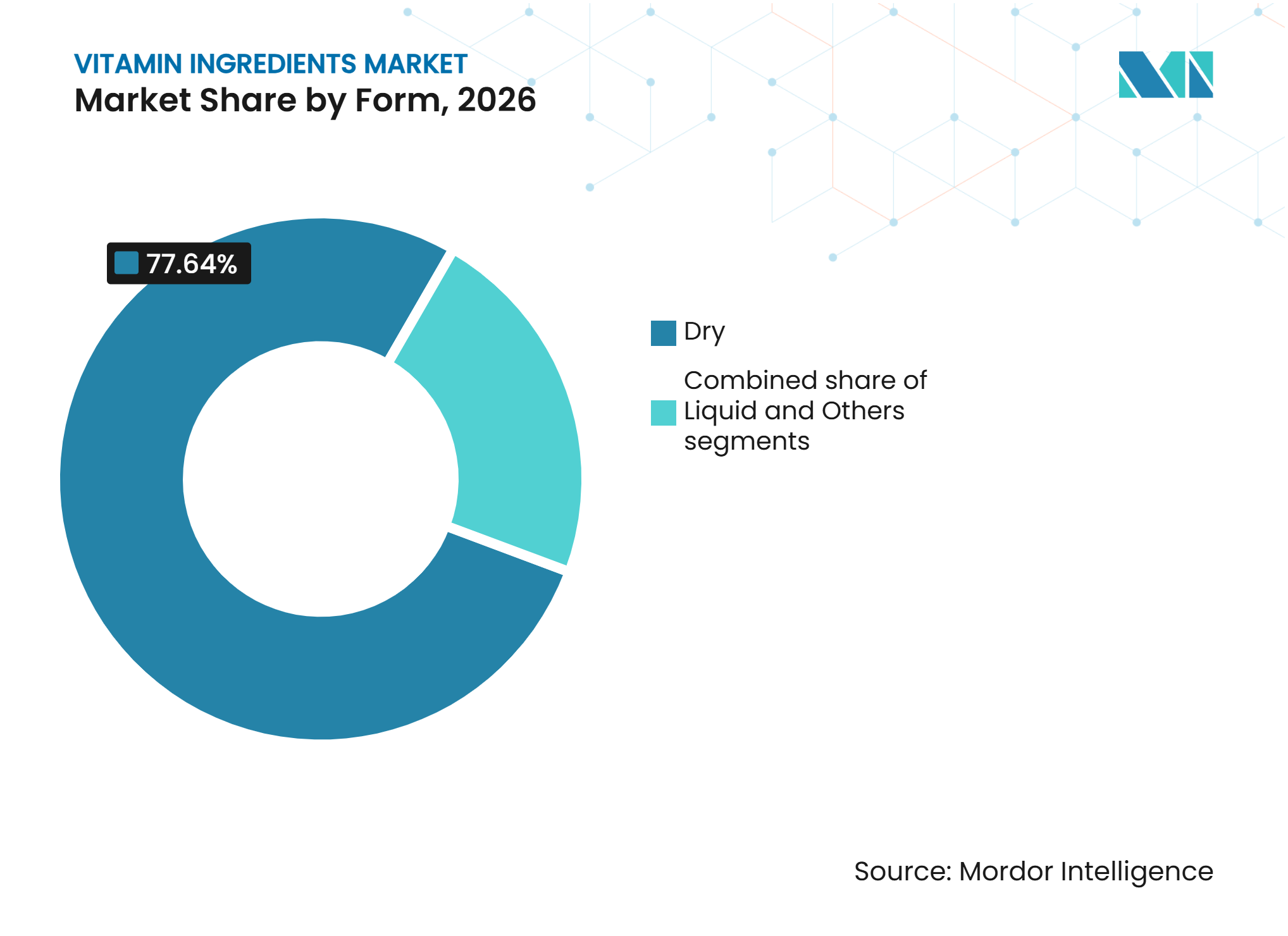
Dry Remains Dominant but Liquid SurgesDry form represents the largest segment in the vitamin ingredients market, accounting for 77.64% of the market in 2026. Its leading position is supported by advantages in storage, handling, transportation, and compatibility with industrial blending processes. Powdered and granulated vitamin ingredients are widely used in dietary supplements, fortified foods, dairy products, and bakery formulations. Their suitability for large-scale manufacturing and incorporation into standardized premixes further supports their widespread adoption across end-use industries.
Liquid form is the fastest-growing segment, registering a projected CAGR of 7.71% over 2027–2032. Its growth is supported by increasing demand for functional beverages, ready-to-consume nutritional products, liquid supplements, and infant nutrition formulations. The convenience of incorporating liquid vitamins into beverage-based and specialized nutritional products is encouraging their adoption among manufacturers. Additionally, advancements in liquid delivery and formulation technologies are broadening their applications across food, pharmaceutical, and nutritional product categories.

By Application:
Personal Care Redefines the Growth CeilingDietary supplements represent the largest application segment in the vitamin ingredients market, accounting for 33.86% of the market in 2026. Their leading position is supported by widespread consumer adoption of nutritional supplements and increasing interest in preventive healthcare and daily wellness. Vitamin ingredients are widely incorporated into multivitamins, single-vitamin supplements, and specialized nutritional formulations. The established demand for these products across pharmacy, retail, and online distribution channels further supports the segment's significant market share.
Personal care and cosmetics is the fastest-growing application segment, registering a projected CAGR of 8.24% over 2027–2032. Its growth is supported by increasing incorporation of vitamins into skincare, haircare, and other personal care formulations. Ingredients such as vitamin C, vitamin E, and niacinamide are increasingly used in products targeting skin hydration, antioxidant protection, and overall skin appearance. Growing consumer interest in functional beauty products and ingredient-focused skincare is further encouraging manufacturers to incorporate vitamin ingredients into a broader range of personal care formulations.
Geography Analysis
North America
North America represents the largest regional market for vitamin ingredients, accounting for 36.28% of the global market in 2026. Its leading position is supported by an established dietary supplement industry, widespread food fortification practices, and demand from pharmaceutical and functional food manufacturers. Mandatory fortification requirements, particularly for staple foods, sustain consistent demand for essential vitamin ingredients. Additionally, strong consumer awareness of preventive healthcare, nutritional supplementation, and functional beauty products is supporting their incorporation across diverse end-use applications. The region's established food processing and pharmaceutical industries further reinforce its demand base.
Asia-Pacific
Asia-Pacific is the fastest-growing regional market, registering a projected CAGR of 8.13% over 2027–2032. Growth is supported by expanding dietary supplement consumption, increasing awareness of micronutrient deficiencies, and the development of food fortification initiatives across emerging economies. The region also benefits from an established vitamin manufacturing base and growing investments in fermentation and biotechnology-based production processes. Rising demand for fortified foods, functional beverages, pharmaceutical formulations, and nutritional supplements is further expanding industrial procurement. Additionally, increasing healthcare expenditure and the growing adoption of preventive nutrition are supporting the broader application of vitamin ingredients.
Europe, South America, and Middle East and Africa
Europe, South America, and the Middle East and Africa represent emerging demand centres, supported by evolving nutritional requirements, food fortification initiatives, and expanding supplement consumption. In Europe, established pharmaceutical and food processing industries, alongside demand for specialized nutritional and personal care formulations, support vitamin ingredient procurement. South America's demand is supported by food fortification programmes and the expanding dietary supplement industry, particularly in major consumer markets. Meanwhile, the Middle East and Africa are witnessing growing adoption of fortified staple foods and nutritional products, supported by initiatives addressing micronutrient deficiencies. These developments are broadening the application of vitamin ingredients across food, healthcare, and nutrition industries.
Competitive Landscape
Market Concentration
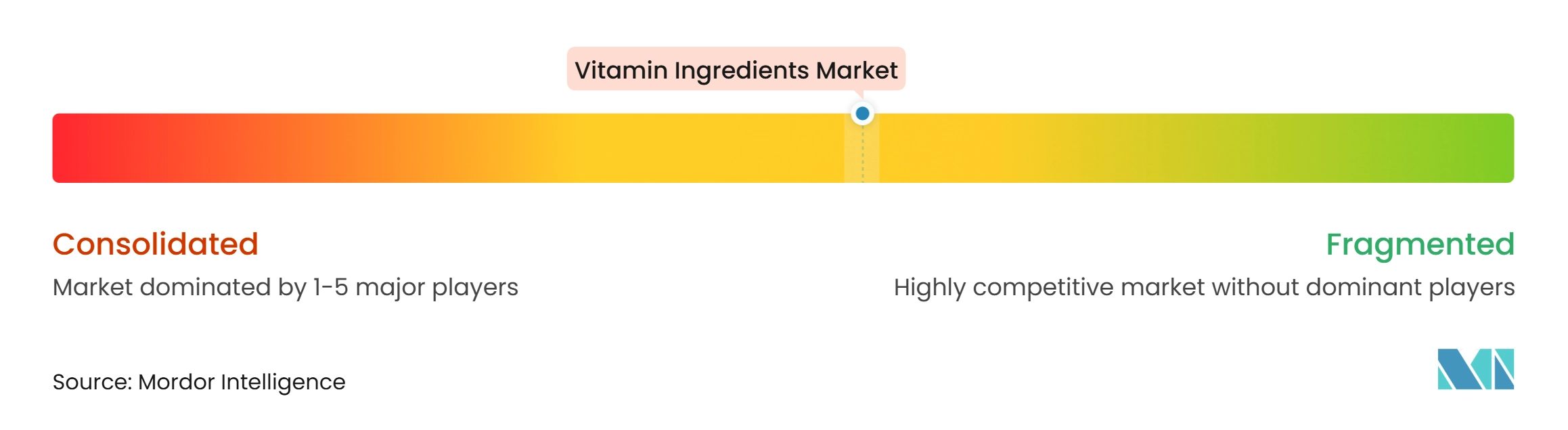
The vitamin ingredients market is moderately fragmented, with competition distributed among multinational ingredient manufacturers, established pharmaceutical companies, and specialized vitamin producers. Major market participants include dsm-firmenich AG, BASF SE, Zhejiang NHU Co., Ltd., Zhejiang Medicine Co., Ltd., and CSPC Pharmaceutical Group Co., Ltd. These companies compete through product portfolio breadth, manufacturing capabilities, quality certifications, research and development, and supply relationships with food, pharmaceutical, and dietary supplement manufacturers. The market also includes regional producers and specialized suppliers catering to specific vitamin categories and application requirements.
Leading players in the vitamin ingredients market are focusing on strengthening their manufacturing capabilities, optimizing production processes, and expanding their product portfolios to address demand across food, pharmaceutical, dietary supplement, and personal care applications. Companies are also investing in research and development, improving production efficiency, and advancing fermentation and biotechnology-based manufacturing processes. Additionally, strategic partnerships, capacity expansions, and portfolio realignments are being used to strengthen supply capabilities, improve operational efficiency, and support their competitive positions across key vitamin ingredient categories.
Emerging and specialized manufacturers are increasingly focusing on differentiated production technologies and application-specific vitamin ingredients to strengthen their market presence. Developments in plant-based sourcing and fermentation-based manufacturing are creating opportunities for suppliers targeting specialized nutritional, pharmaceutical, and personal care applications. For instance, Fermenta Biotech received an Indian patent in September 2025 for its proprietary plant-based vitamin D3 production process. Such technological developments are expanding the range of available sourcing options and creating opportunities for specialized producers to participate in the evolving vitamin ingredients market.
Vitamin Ingredients Industry Leaders
-
dsm-firmenich AG
-
BASF SE
-
Zhejiang NHU Co., Ltd.
-
Zhejiang Medicine Co., Ltd.
-
CSPC Pharmaceutical Group Co., Ltd.
- *Disclaimer: Major Players sorted in no particular order
Vitamin Ingredients Market Companies Covered in this Report
- dsm-firmenich AG
- BASF SE
- Zhejiang NHU Co., Ltd.
- Zhejiang Medicine Co., Ltd.
- Glanbia plc
- Adisseo
- CSPC Pharmaceutical Group Co., Ltd.
- Xiamen Kingdomway Group Company
- Fermenta Biotech Limited
- Jubilant Ingrevia Limited
- Prinova Group LLC
- SternVitamin GmbH and Co. KG
- Lycored
- Zhe jiang Garden Biopharmaceutical Co.,Ltd
- Northeast Pharmaceutical Group Co., Ltd.
- Divi's Laboratories Limited
- Piramal Pharma Limited
- Anhui Tiger Biotech Co., Ltd.
- Xinfa Pharmaceutical Co., Ltd.
- Shandong Luwei Pharmaceutical Co., Ltd.
Recent Industry Developments in Vitamin Ingredients Market
- September 2026: dsm-firmenich launches Biond pharmaceutical-grade vitamin portfolio. dsm-firmenich introduced Biond, a portfolio of high-purity pharmaceutical-grade vitamins developed for cell culture media and biopharmaceutical manufacturing. The portfolio includes vitamins intended to support biologics production, broadening the company's vitamin ingredient offering into specialized pharmaceutical applications.
- September 2026: dsm-firmenich and Brenntag establish a global distribution partnership for Biond. The companies signed a global distribution agreement under which Brenntag Pharma will distribute dsm-firmenich's Biond vitamin portfolio across North America, South America, Europe, the Middle East and Africa, and Asia-Pacific. The agreement is intended to expand the global availability of high-purity, good manufacturing practice (GMP)-grade vitamins for biopharmaceutical applications.
- May 2026: dsm-firmenich partners with Medisca to expand access to pharmaceutical-grade vitamin APIs. The partnership makes dsm-firmenich's portfolio of pharmaceutical-grade vitamin APIs available to the United States compounding market through Medisca's distribution network. The collaboration focuses on ingredients manufactured under European current GMP conditions and is intended to improve access for pharmacies and compounding facilities.
- December 2025: Fermenta Biotech approves INR 110 crore investment in vitamin D3 and derivative manufacturing. The company approved capital expenditure to expand its Dahej facility, including commercial-scale production of plant-based vitamin D3, vitamin D3 derivatives, and additional enzyme capacity. The investment is scheduled for phased implementation during financial years 2026 and 2027.
Global Vitamin Ingredients Market Report Scope
The vitamin ingredients market covers the production and supply of individual vitamins and vitamin derivatives used as functional ingredients in food and beverages, dietary supplements, pharmaceuticals, animal feed, and personal care formulations. The market is segmented by product type into Vitamin A, Vitamin B, Vitamin C, Vitamin D, Vitamin E, and other vitamins; by source into plant-based, animal-based, microbial-based, and other sources; by form into dry, liquid, and other forms; by application into food and beverages, dietary supplements, pharmaceuticals and clinical nutrition, personal care and cosmetics, animal feed, and other applications; and by geography into North America, Europe, Asia-Pacific, South America, and the Middle East and Africa. Forecasts are expressed in terms of value in USD.
Segmentation Overview
| Vitamin A |
| Vitamin B |
| Vitamin C |
| Vitamin D |
| Vitamin E |
| Vitamin K |
| Others |
| Plant-based |
| Animal -based |
| Microbial-based |
| Synthetic-based |
| Dry |
| Liquid |
| Others |
| Food and Beverages | Bakery and Confectionery |
| Snacks | |
| Dairy Products and Infant Nutrition | |
| Beverages | |
| Others | |
| Dietary Supplements | |
| Pharmaceuticals and Clinical Nutrition | |
| Animal Feed | |
| Personal Care and Cosmetics |
| North America | United States |
| Canada | |
| Mexico | |
| Rest of North America | |
| Europe | Germany |
| United Kingdom | |
| Italy | |
| France | |
| Spain | |
| Netherlands | |
| Poland | |
| Belgium | |
| Sweden | |
| Rest of Europe | |
| Asia-Pacific | China |
| India | |
| Japan | |
| Australia | |
| Indonesia | |
| South Korea | |
| Thailand | |
| Singapore | |
| Rest of Asia-Pacific | |
| South America | Brazil |
| Argentina | |
| Colombia | |
| Chile | |
| Peru | |
| Rest of South America | |
| Middle East and Africa | South Africa |
| Saudi Arabia | |
| United Arab Emirates | |
| Nigeria | |
| Egypt | |
| Morocco | |
| Turkey | |
| Rest of Middle East and Africa |
| By Product Type | Vitamin A | |
| Vitamin B | ||
| Vitamin C | ||
| Vitamin D | ||
| Vitamin E | ||
| Vitamin K | ||
| Others | ||
| By Source | Plant-based | |
| Animal -based | ||
| Microbial-based | ||
| Synthetic-based | ||
| By Form | Dry | |
| Liquid | ||
| Others | ||
| By Application | Food and Beverages | Bakery and Confectionery |
| Snacks | ||
| Dairy Products and Infant Nutrition | ||
| Beverages | ||
| Others | ||
| Dietary Supplements | ||
| Pharmaceuticals and Clinical Nutrition | ||
| Animal Feed | ||
| Personal Care and Cosmetics | ||
| By Geography | North America | United States |
| Canada | ||
| Mexico | ||
| Rest of North America | ||
| Europe | Germany | |
| United Kingdom | ||
| Italy | ||
| France | ||
| Spain | ||
| Netherlands | ||
| Poland | ||
| Belgium | ||
| Sweden | ||
| Rest of Europe | ||
| Asia-Pacific | China | |
| India | ||
| Japan | ||
| Australia | ||
| Indonesia | ||
| South Korea | ||
| Thailand | ||
| Singapore | ||
| Rest of Asia-Pacific | ||
| South America | Brazil | |
| Argentina | ||
| Colombia | ||
| Chile | ||
| Peru | ||
| Rest of South America | ||
| Middle East and Africa | South Africa | |
| Saudi Arabia | ||
| United Arab Emirates | ||
| Nigeria | ||
| Egypt | ||
| Morocco | ||
| Turkey | ||
| Rest of Middle East and Africa | ||
Key Questions Answered in the Report
What is the projected growth rate for vitamin ingredients through 2032?
The vitamin ingredients market is forecast to grow at a 5.90% CAGR from 2027 to 2032.
Which vitamin type is growing the fastest?
Vitamin D is forecast to grow at a 7.83% CAGR from 2027 to 2032.
Which source type leads vitamin ingredient supply?
Plant-based ingredients held 60.87% of supply in 2026, while microbial-based ingredients have the highest forecast growth rate at 8.17%.
Which region has the strongest growth outlook?
Asia-Pacific is forecast to grow at an 8.13% CAGR from 2027 to 2032.